The Street Fighter 6 senior team; director Takayuki Nakayama, producers Kazuhiro Tsuchiya, and Shuhei Matsumoto, and designer Yusuke Hashimoto had brought the franchise into the 21st century. This was not only from a technical standpoint, but in addressing the ugly roots of some of their characters. In the previous blog I mentioned how the studio had put progressive ideas of gender representation, and fluidity into the series through characters designs, and avatar options. As I was working through the World Tour I told my family that this game felt like it was fixing a lot of old issues. That the franchise was no longer going to perpetuate some old stereotypes, even if the fans expected them to. Let’s go back in time, and look at how the Street Fighter II designers approached the original lineup.
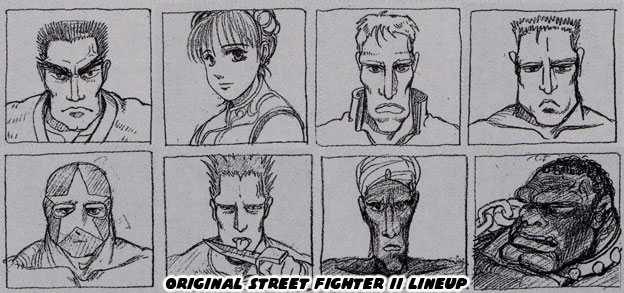
I had written a lot about the concept characters previously on the blog. Including the actual fighters like
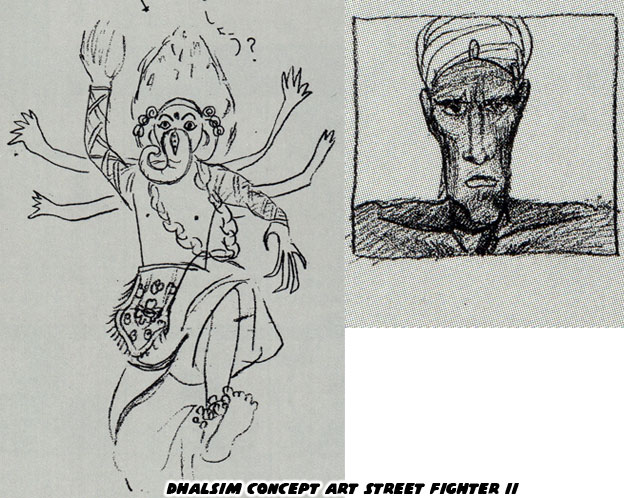
Yoshiji Soeno who influenced the creation of Sakurada Gashou. Sakurada was actually going to be the focus of SFII instead of Ryu. Thankfully the team did a lot of revision after the initial lineup. Of course if you didn’t know about the rough draft you were probably looking at the dark-skinned characters posted above. If you had time you could read about
Anabebe, and the roots of Blanka’s racist origins. You could also
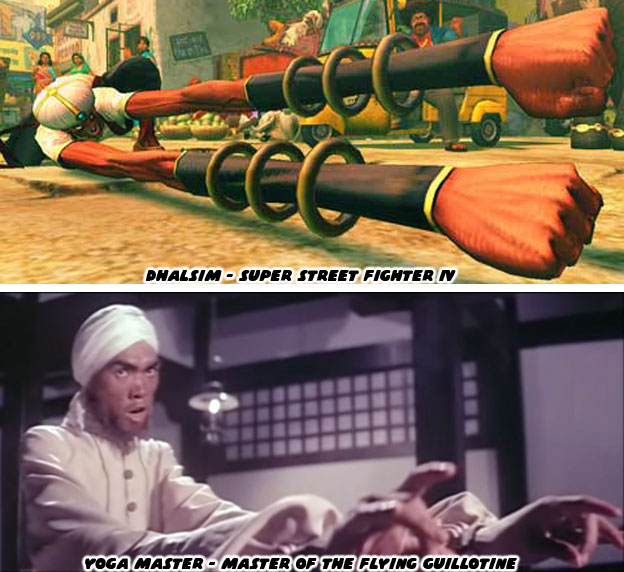
read about the kung-fu cinema origins of Dhalsim on an earlier blog. Thankfully the designers knew that these characters might be racist, or at the very least misinformed stereotypical in their origins. They went back to the drawing board, and created what could arguably be seen as the greatest fighting game lineup of all time.
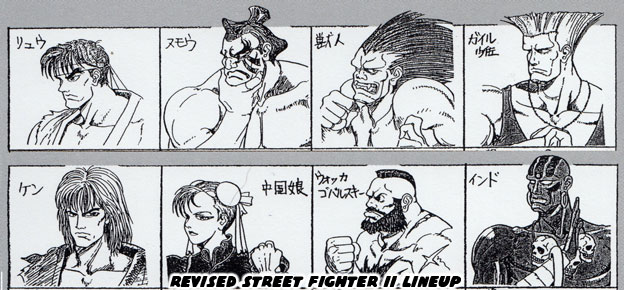
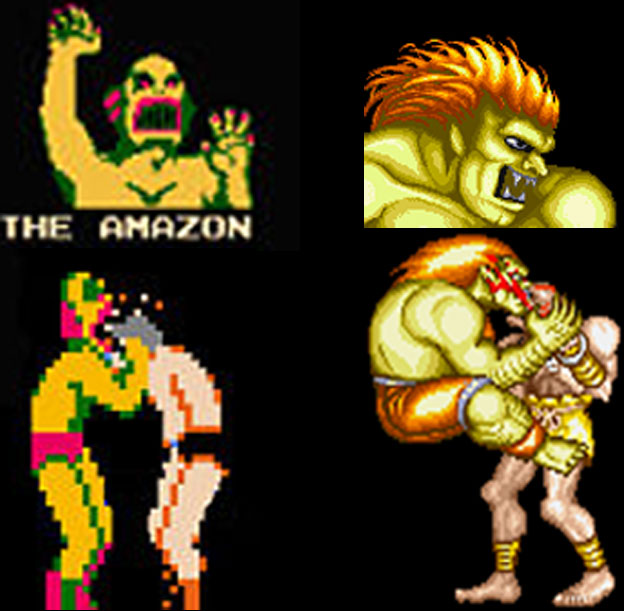
The majority of the cast represented an actual fighting art, such as karate, kung fu, military special ops, and wrestling. Then there were two characters as sort of oddballs. They were designed to add figurative, and literal color to the lineup. In the earliest drafts Blanka was easily the ugliest racist design you could think of. He was a dark skinned, big lipped, collar-wearing wild man. He had been captured by a hunter, and was going to be taken from battle to battle in a cage. This was instead changed to a green skinned wild man from the jungle. The entire roots of that change were because AKIMAN, the designer that gave us Chun-Li, always remembered how The Amazon would bite his wrestler’s face in the old Nintendo Pro Wrestling game. He wanted Blanka to be that same green skinned savage monster in this game. Both Dhalsim, and Blanka became popular with the fans, thanks to how they balanced out the cast, as well as how unique they were to play as. Capcom pretty much didn’t make too many changes to the characters over the next 30 years.
Blanka, and Dhalsim were rooted in some ugly history. People from the jungle, or natives that aided colonizers created
the Myth of the Noble Savage. Native dress was often parodied in popular media. I’m talking about costumes made of fur, and feathers with a bone through the actor's nose. These caricatures were seen as harmless like
Bumbo the wild man from Borneo, from a 1933 Little Rascal’s film the Kid from Borneo. Bumbo was a cannibal whose only line was "Yum, Yum Eat-Em-Up!" That ugly stereotype was used for decades in TV, and animation. Now I want you to imagine that you’re a Brown kid, or a Black kid that loves fighting games. At the same time you can’t help but notice that the only colored characters in your favorite games were either weirdos, or villains (M. Bison/Boxer). The community told you no, these characters were positive stereotypes, not negative stereotypes. Blanka, the only Brazilian in the series at the time couldn’t even speak. His game voice was nothing but screeches, and roars. Then Dhalsim’s only lines were “Yoga Fire, Yoga Flame, Yoga, Yoga, Yoga.” It’s fair to say that these characters might as well have been saying "Yum, Yum Eat-Em-Up!"
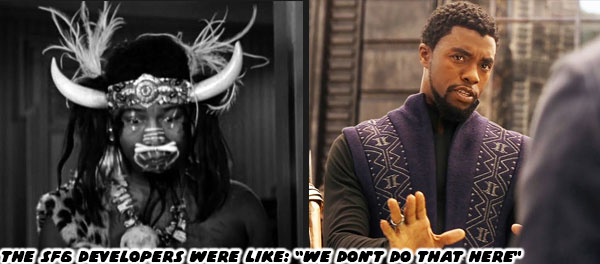
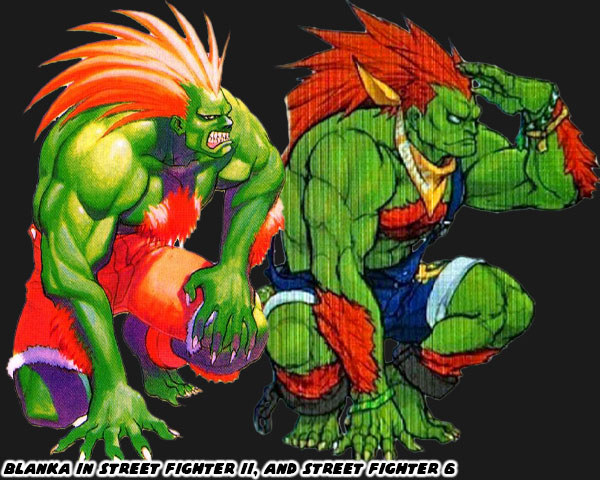
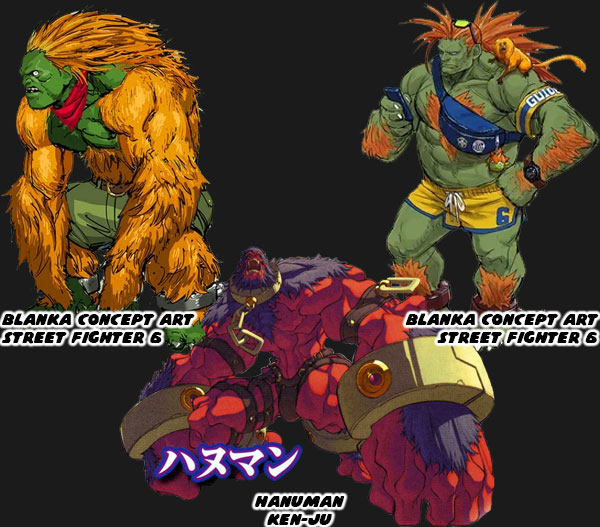
The Street Fighter 6 team took a hard look at these designs, at their roots, and decided that they would no longer pursue those tropes. The studio had essentially two choices when it came to redesigning the oddball characters. They could double-down on their origins, or they could try to soften, and fix the character. Let’s look at Blanka for example. In the early SF6 concept art the team was thinking of making him even more of a monster. He would be covered with even more orange fur, looking like a long haired ape, instead of a man. This would have essentially turned him into a lab experiment like
Hanuman from the game Ken-Ju. The other would be to have him look, and dress more like a human. He would remain a person with a sort of mutation that had to learn to survive in the jungle. He was aware that he was different from regular people, but was eager to make them see past that, and embrace the jungle for its beauty. The SF6 art team went with the second choice, and turned Blanka into a budding tour guide filled with childlike wonder.
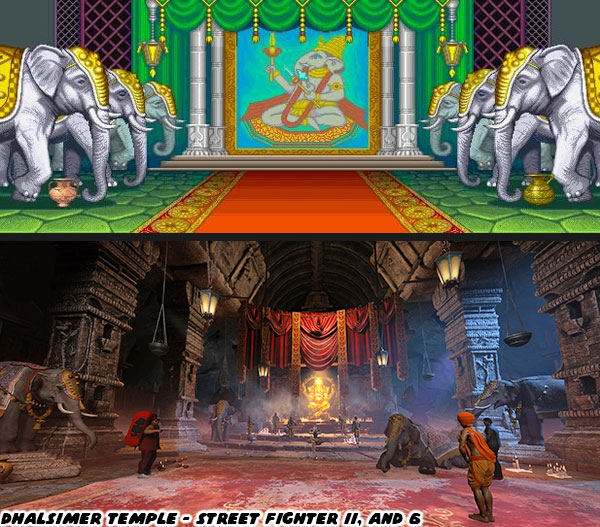
It was a good start, they did a number of similar things with Dhalsim. The first thing I noticed was his updated stage. In SFII the Dhalsimer Temple was a brightly painted stage with a mural of Ganesha in the background, and elephants in the wings. The updated version in SF6 had essentially recreated the temple, but presented it as how it might look if it actually existed. The colors were much more subdued. There was a statue of Ganesha now at one end of the temple. The tapestries, lanterns, carpets, column reliefs, and elephants looked much more authentic. The art team did not just study graffiti, and tattoo art for the game. They were being mindful of trying to understand, and reproduce the small details from other cultures. This was especially true of places that had a less than positive origin.
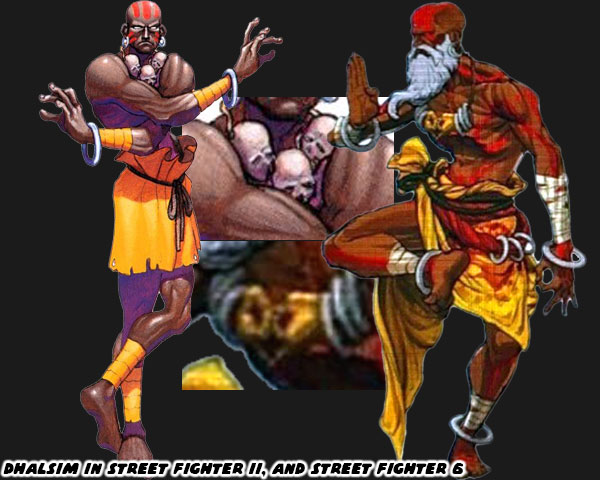
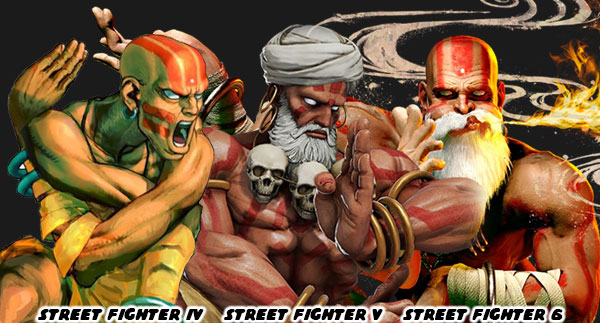
As for Dhalsim the changes applied to the character were more subtle. He was still a stretchy guy that breathed fire. However in every interaction with him, and the NPC visitors in the temple all carefully explained the purpose of yoga. They talked in reverence about the power of mediation, of being mindful, and the search for inner peace. The character hadn’t gone through many redesigns in over 30 years. He looked pretty much unchanged through SFII, SFZero, SFEX, and SFIV. In Street Fighter V his biggest change was his white beard. He was also playable with a turban. He actually wore the head wrap in his intro in SFZero, but would pull it off before the match started. Not all Hindus wore a turban, but at the same time it was a little disrespectful to have him toss it aside. In SF6 Dhalsim had a longer beard, and the turban was gone.
While I had spoken a lot in the past about how Dhalsim was essentially pulled from
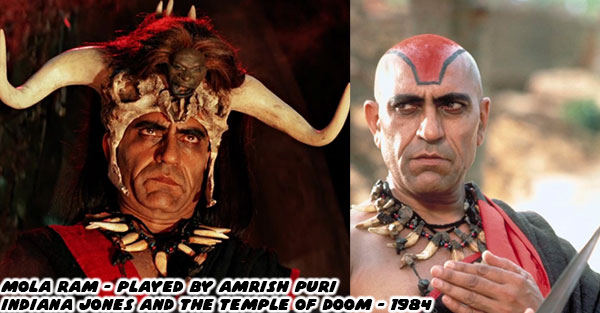
a villain in the Master of the Flying Guillotine, that only had to do with his stretchy powers. As for how the character came to have a bald head, and red paint. I would point to the character of Mola Ram. The villain of 1984’s most successful film; Indiana Jones and the Temple of Doom. The character was a cult leader, looking to usurp a young maharajah. He lead a group of Thuggee warriors, and was determined to bring his cult to prominence with the power of three sacred lingam stones. He didn’t have any stretchy powers, but he could rip the still beating heart out of a person’s chest, predating the Mortal Kombat fatalities even!
I believe that Capcom took design cues from the previously mentioned films. and managed to make a hero out of them. Unfortunately one of the ugliest elements in his design was the necklace that he wore through the past 30 years. There were three small skulls on a simple rope necklace. Dhalsim wore this in a form of penance. These were pulled from children that died in a famine. It was a barbaric design, and somehow it seemed okay for decades. The SF6 team thought that it was time to move past that. The skulls were ditched, and replaced with metal jewelry. There were two hands forming the jnana mudra. The mudra were almost 400 possible hand positions that you could hold during meditation. For example had the hands been inverted it would have been the chin mudra. Each of these hand positions had a purpose, and could have various health benefits. Dhalsim was a teacher, and thus it made sense that the specific mudra was related to knowledge. It could be used to invoke wisdom, peace and clear communication.
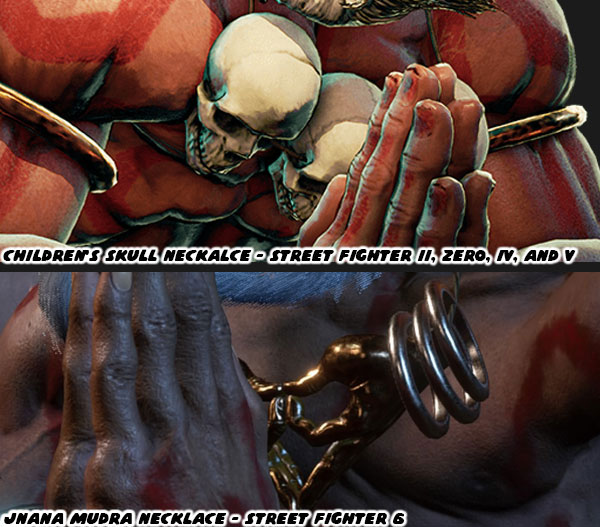
Getting rid of the skulls was a small gesture, an attempt by the designers to make up for past mistakes. Possibly earn the respect of their audience. It was the least they could do, but definitely a welcome change. The developers were also demonstrating that they were paying attention to the smallest details of the international community. Some might consider it another throwaway detail, but how many of you noticed that when Dhalsim spoke in the World Tour he would perform an
Indian head wobble? I would contend that this was another deliberate choice. It was meant to rectify an earlier mistake. In the Street Fighter II anime movie there was a three second shot of Dhalsim performing a head shake while fighting E. Honda. Those three seconds were actually my favorite shot in the entire movie.
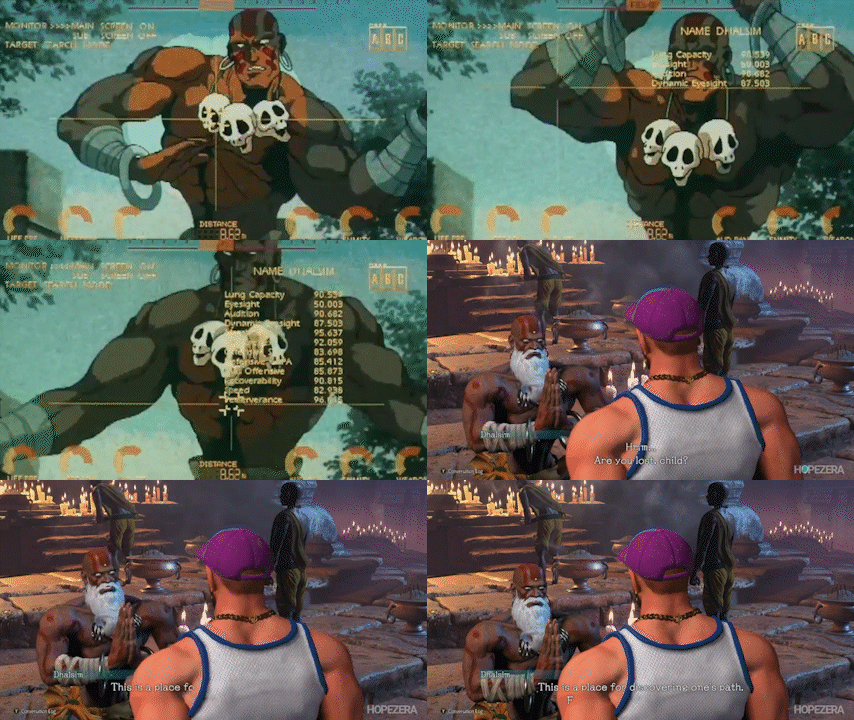
As nice as it was the head shake was not correct for the character. The way he moved his head from side to side in the anime was
based on traditional Balinese dance. There was some cultural cross pollination between India, and Bali, however their customary dances were quite unique. It looked like the SF6 team bothered to study the differences, and make sure that they approached Dhalsim with much more respect this time around. Could the same thing be said of the other dark-skinned characters returning in SF6? We will look at how in the next blog. I hope to see you back for the next entry. If you are a long time fan of Final Fight, or Street Fighter then I would like to hear your impressions of SF6. If you have never played any game previously then tell me your experiences in the comments section please. As always if you would like to sponsor me
please visit my Patreon page and consider donating each month, even as little as $1 would help make better blogs and even podcasts!