Showing posts with label streets of rage. Show all posts

Monday, June 13, 2022

Ken Masters, from champ to chump in Street Fighter 6

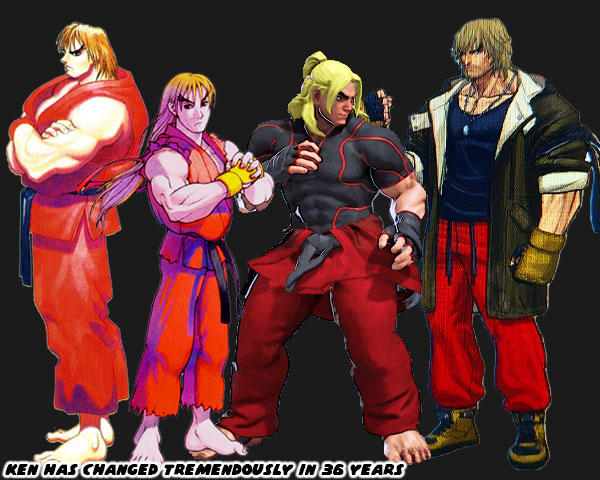
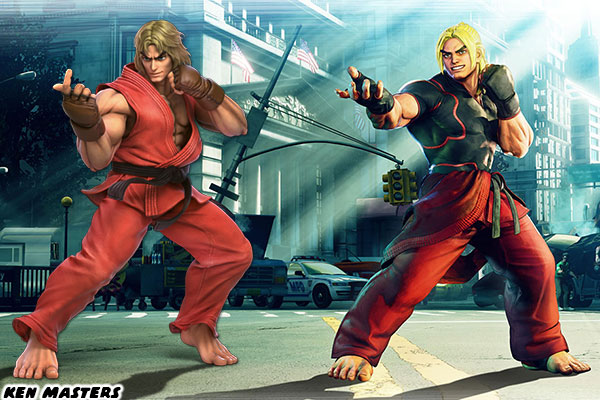
Ken Masters is a video game icon. He’s not only known in the fighting game community, but across the entire gaming landscape. Ken was the US equivalent to Ryu in the very first Street Fighter way back in 1987. I clearly remember the shaggy haired guy with the red gi when I was pounding the giant foam buttons on the original cabinet. The leaked design for Ken in SF6 was met with mixed reactions from the community. Most of them were negative. The very first take was that the redesign was poaching the same thing that developers Lizardcube, Guard Crush Games and Dotemu for Streets of Rage 4 did with the character Axel Stone. In short Capcom aged the character of Ken Masters, gave him a beard stubble and overcoat. Making him look like a washed-up version of his earlier self.
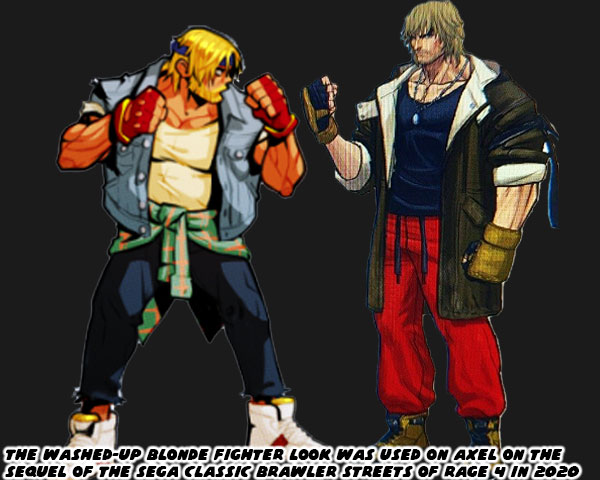
The thing is that this would not be the first time a Japanese developed did the same thing for the blonde-haired western character in a fighting game. Terry Bogard from SNK’s Fatal Fury series, and Paul Phoenix from Namco’s Tekken games had similar makeovers. Terry’s was handled slightly better, as it was a big time jump from the events of the original Fatal Fury. In Garou Mark of the Wolves he was already a seasoned master, and mentor to Rock Howard who was now seen as the star of the franchise. A lot of SF fans lamented that the son of Ken had not been inserted in his place in similar fashion.
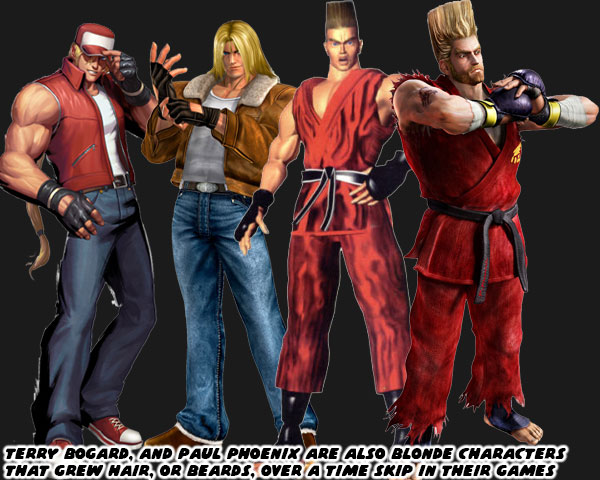
There’s not much I want to say about Ken’s new look. It’s sad, and uninspired. I’ve talked about the importance of color on this blog. Hopefully you know how important the assignment of bright primary colors, and complimentary secondary colors has been to the creation of memorable characters. With Ken the designers are throwing away the classic look. A blue shirt, brown jacket, brown gloves, and brown boots clashed badly with his primary red outfit. If Ken had given up on his purpose then I don’t understand why he would even be wearing red gi pants, as they don’t usually contain pockets, not to mention his black belt. The level of disrespect to his form of karate, to himself, his master, and Ryu is off the chart. It would have made more sense if he was presented in street clothes, or even a suit. This half classic Ken, and homeless Ken doesn’t make much sense. This is especially bad considering how much good will the company had created with the character.
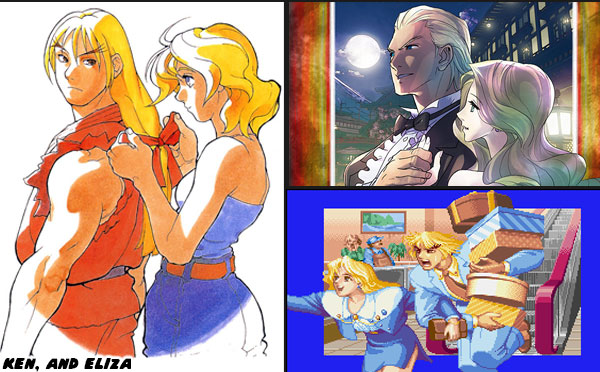
Ken was born into privilege, he didn’t have to work hard, but he did. He is considered to be on par, if not better than Ryu. He considers Ryu his brother. Through the series we got to see both grow up. Ken did a tremendous amount of personal growth when compared to Ryu. We saw his long-time girlfriend Eliza become his wife across several games. We saw them build a life together. They got to travel the globe while Ken racked up tournament victories. They set the standard of the perfect partnership. They seemed to have a better life than any other married couple in gaming. Then it got better. Ken became a father to Mel.
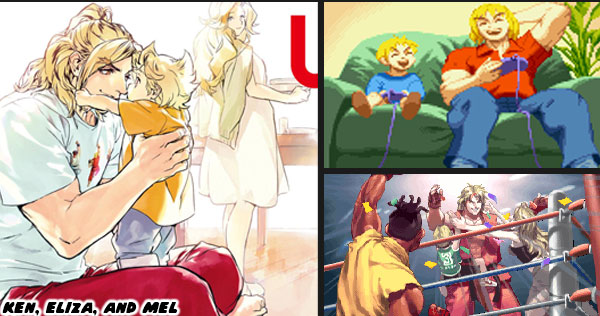
We got to see the baby be born, play games with his dad, throw his first punches. He idolized his old man, thought of Ryu as his uncle. Both Mel, and Eliza celebrated every victory with Ken. We saw all of this, and more character building in the game series, as well as in various manga, and comic book adaptations. Having him appear washed up, and “over” his life as a fighter doesn’t make any sense. Saying that Rose, and Menat predicted this path in a couple of lines in SFV feels like a cop-out. Capcom has not been sprinkling any clues that Ken, and his family were not happy with their lifestyle. Not one drop of apathy, or detachment to the fighting arts, or his own family over 35+ years. In fact the character did nothing but portray the opposite of that. Ryu was not the only one to continue climbing the mountain. Ken continually pushed himself to learn, and grow as well. His attacks became stronger throughout the series. His Shouryuu Reppa, Shinryuu Ken, and Shippuu Jinrai Kyaku were distinct variations of the legendary Dragon Punch, and Hurricane Kick that Ryu couldn’t do, or didn’t know how to do. These were techniques that canonically took him decades to develop. Why then would he suddenly stop doing everything?
Did Ken back away from everything because something happened with Mel, or Eliza? Did they get hurt, or are they dead? If that is the case then it would make sense that Ken was presented as a changed man in SF6. At the same time it would be a sad development for the franchise. Eliza, and Mel were fun characters. They gave Ken so much dimension. They connected Chun-Li, and some of the other characters together. I think it’s too ambitious if Street Fighter 6 Director Takayuki Nakayama wanted to create a come-back story for Ken, especially in one game. Street Fighter has always juggled multiple balls at the same time. We got to find out what happened to each, and every character in the tournament through their own cut scenes, and endings. Sometimes the scenes were comedic, others tragic, and some heroic. Some endings tied two characters closer together, or even pushed them apart.
In any case we could always count on Ken, and Ryu always choosing the right path. They were trusted protagonists that moved the series forward. For the company to suddenly change Ken’s appearance, and motivation off screen was a disservice to the character. I have more faith in Mr. Nakayama, Mr. Tsuchiya, and Mr. Hashimoto than I had in Mr. Ono when it comes to the direction of the series. If there is one saving grace about the leaked designs, it is that the producer, director, and designer can gauge the audience reaction, and make changes accordingly. I hope they consider adjusting the look, and motivation of Ken. They have enough time to do so. What do you think of the leaked Ken redesign? Do you like the character or no? What would you have done different, if anything? I’d like to hear about it in the comments section. If you would like to sponsor me please visit my Patreon page and consider donating each month, even as little as $1 would help make better blogs and even podcasts!
follow the Street Writer on Patreon!

Thursday, July 30, 2020

The Street Writer Podcast, Episode 12

The brawler series heats up as some of the absolute best brawlers of all time are released in the same year. Will Konami, or Capcom be crowned the king of the brawler?


If you would like to sponsor me please visit my Patreon page and consider donating each month, even as little as $1 would help make better blogs and even podcasts!
follow the Street Writer on Patreon!

Wednesday, April 13, 2016

The Abridged History of the Brawler, Part 6


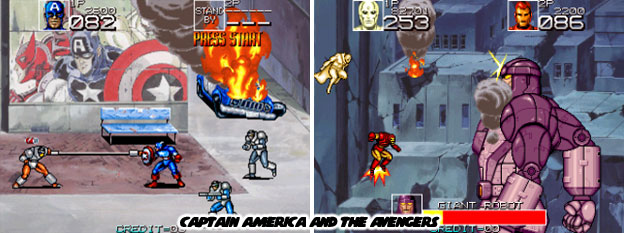
The start of the new decade, 1991, was a gold rush. Every arcade company wanted to make their fortune on a brawler. Data East saw the runaway success that Konami enjoyed with their licensed titles and decided to secure a high profile Western license for themselves as well. The result, Captain America and the Avengers, was without a doubt the biggest quarter-waster my brothers and I had the misfortune of playing.

The game featured Captain America, Iron Man, Vision and Hawkeye taking on the Red Skull and a collection of villains from Marvel Comics. Unfortunately the people at Marvel seemed to have little creative control once they signed up with Data East. The game played as if the Japanese developers flipped through some comic books in the lobby of Marvel studios and then never looked at them again. The character sprites were small and not detailed, possibly so players in the USA would not be offended by the gross disregard to the legendary designs. Playing as the characters was fun, I am not going to lie about that. Each character had ranged attacks and close up strikes. The first time I threw Captain America’s shield into the head of a robot and watched it bounce back to me I was quite giddy. I’ve enjoyed almost all of Data East’s arcade releases however this game left me disappointed.


The game ate quarters like mad. Every strike from rivals seemed to eat up health at an alarming rate. Quite honestly it probably ate quarters faster than P.O.W. Back then SNK had an excuse, the genre was just getting started. The line between difficulty for the sake of challenge and difficulty for the sake or ripping off players hadn’t been established yet. Data East had no excuse. Once they were out of health the characters would drop to their knees and exclaim “I can’t move…” at which point my brothers and I would yell out “Feed me another quarter!” The more time I spend talking about this game the more disappointed I get. So let’s move instead to another company that let me down and then redeemed themselves in the same year.

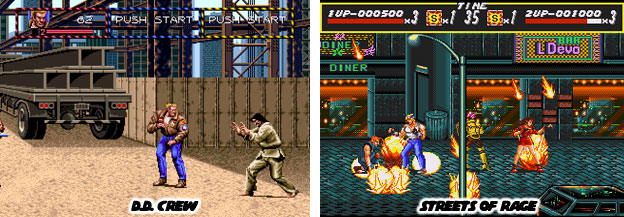
My friends know that I am passionate about Sega games, however D.D. Crew, the first traditional brawler from the publisher left me cold. Visually it was impressive. The size of the sprites, the level of detail and animations were pretty good. However watching Sega appropriate early Hip Hop culture and try to make a brawler “urban” and “street” was painful to watch, or rather listen to. The soundtrack consisted of an endless loop that sounded like a rip-off of a Whodini song with Tracy Morgan saying “Shut up already” over and over.


The game was as formulaic as it could be. There were four named characters, the buff King, the cool cop F.F., the black boxer Buster (possibly named after James “Buster” Douglas for which Sega had just released a Genesis game) and the elderly kung-fu master Gung Ho. They fought wave after wave of typical baddies on a way to fight yet another crime lord. The nonsensical phrases the bosses spouted off was laughable. There were two things I did enjoy with the game, the level set atop of a cable car which was great design. Too bad they had to fight a Bruce Lee clone. The other thing I enjoyed was being able to hurl opponents straight up in the air and watch them come crashing down a few seconds later. Other than that the game didn’t hold my attention, or the interest of the rest of the public for that matter. Sega managed to do far more for the genre in a game on a platform with less memory and processing power that same year.


Streets of Rage by most estimations, or at the very least the passionate Sega community, began the best console brawler series ever released. The variations on the formula were subtle but well executed. There were three playable characters, all undercover police officers and one of which was Blaze, a female cop. A strong female lead in a brawler hadn’t been seen since Tyris in Golden Axe. The three characters played more or less the same. Sega did not follow the conventions of having one being the slow strong one, the small fast one or one in the middle. Those character archetypes would be featured in the sequels.

Streets of Rage was a great game. The officers were on the trail of a crime lord. They had to beat up the gangs he controlled in order to get to him. The city was slightly futuristic and fairly original. I always felt that the rival designs were poached a bit much from Final Fight but it was still a great game. Where it innovated was in the use of crowd clearing moves. Players could earn special attacks which consisted of radioing for backup and having a cop car shoot a round of flaming mortar shells which rained down on opponents. This acted similarly to the magic spells in Golden Axe which affected all opponents on screen. By comparison Final Fight and other brawlers featured characters that could perform a crowd clearing move at the cost of some health points. I enjoyed the Sega mechanic much more.


1991 started out a bit rough for the arcades but things quickly improved. While not all the titles were winners, the majority were memorable. Sega showed that the arcade was no longer the exclusive domain of a great brawling experience. They managed to pick up where River City Ransom left off and brought the brawler into glorious 16-bit life at home . As for Capcom and Konami the rivalry to claim the title as greatest arcade developer would reach a fever pitch. The next blog will look at the single greatest year that both studios had in the arcade. As always if you enjoyed this blog and would like to sponsor me please visit my Patreon page and consider donating each month, even as little as $1 would help make better blogs and even podcasts!

follow the Street Writer on Patreon!

Wednesday, March 30, 2016

The Abridged History of the Brawler, a pre-rumble...


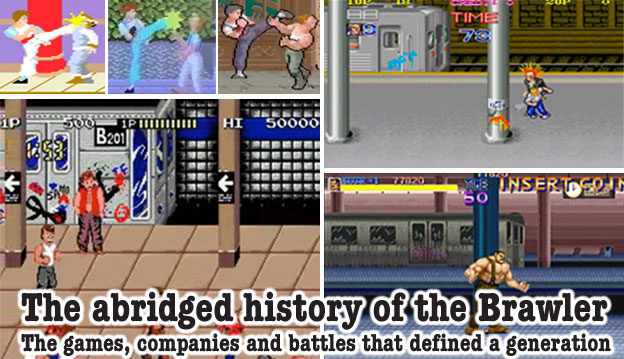
Over the next few weeks I'm going to be looking at one of my favorite all-time genres, the Brawler. This was originally a series that I ran on 1UP but I decided to revisit it and update a few entries. Now note that I call the genre the "Brawler." Other people and game sites call the genre "Beat-em Ups." But those people often call fighting games beat-em ups as well. I would contend that the fighting game and the brawler are actually two completely different genres. A fighting game is traditionally a one-vs-one game. Whether it's two martial arts masters, or a robot versus a demon or two dinosaurs going head-to-head, there is always one player versus another (sometimes a PC opponent instead). That is by my definition a fighting game. There are usually a few things that most fighting games have in common. There is a scoring system, a way to track health and often a time clock or ring out rule as well. Again the fight is usually one on one. There is the rare exception where the original Fatal Fury actually allowed two versus one battles and it would still be considered a fighting game. For the most part however a fighting game is one vs one.

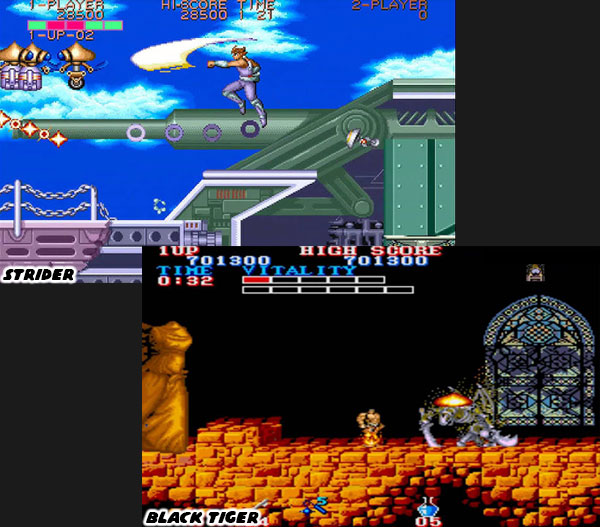
A Brawling game however is one or more versus many. The Brawling game usually revolves around unarmed combat. In some cases a character may pick up a bat, knife or gun along the way but a weapon usually does not last after a few uses. The difference between a Brawler and an action game, such as the Capcom arcade classics Black Tiger or Strider, is that a Brawling game allows two or more people to fight against waves of opponents. In at least one arcade game there was even a chance for six teammates fight against the bad guys or a single bad guy. This game would still be considered a Brawler. There are other genres that are cousins of the Brawler, the Run-and-Gun, also called the Action Shooter features characters that fought with guns and modern weapons instead of bare hands.

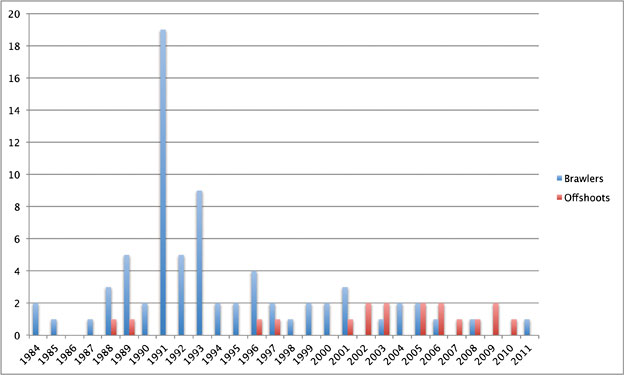
Also the Hack-and-Slash game is a brawler featuring classic swords and melee weapons instead of bare hands. In terms of popularity the Brawler had a quick climb to the top, in fact of all of the games I will be talking about the majority happened within a few years, from 1990-1993. Then they all slowly faded away. The brawler was eclipsed by the rise of fighting games. The genre never completely faded away but instead it slowly evolved. It would find waves of popularity in countries with developing PC markets like Korea and China. The core mechanics of the brawler would even become adapted into other genres. I will highlight many games and try to point out some things that made each game unique.


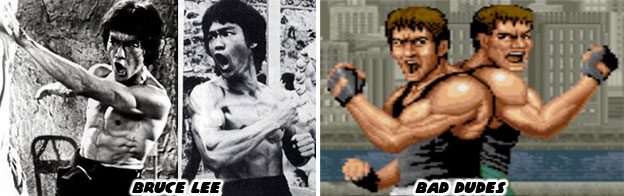
The Brawler, just like every other genre, came from somewhere. The early generation of arcade hits were inspired, if not outright stolen, from comics and movies. These games would then become adapted to the home consoles as a sort of faded copy of a familiar idea. Star Wars, Star Trek, various anime shows, manga and comic books all had a hand in shaping the history of game designs. The developers on the first batch of action titles often looked at action movies for inspiration. There was a lot of crossover to influences for the early action games, fighting games and brawlers. The action movie star was often a kung-fu expert. After all if you are going to have a story where one person can take out an army of opponents then they better know how to fight. There was no bigger star on the planet than Bruce Lee, at least this was the case back in the '70s. The young developers in Japan and the United States would have been greatly influenced by the man and his movies while growing up. When they started working on the first wave of action arcade games, almost a decade later, then there was usually one person they all looked to. It didn't matter how the artists colored or animated the early sprite heroes, there was something very familiar about the way they appeared...


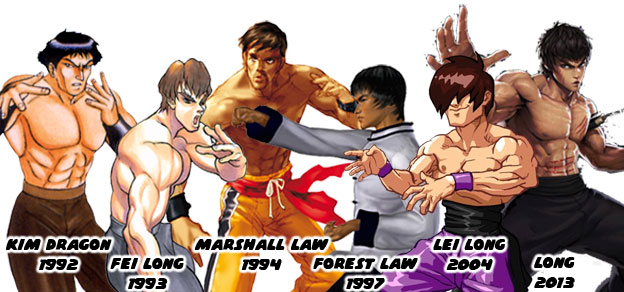
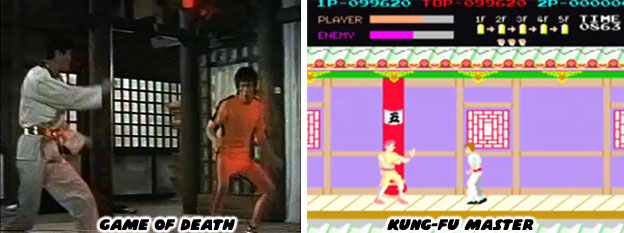
The presence of Lee actually worked in favor of these early games. We had an actor and martial artist that dressed in very clean and easy to read costumes in his films. The shirtless hero with dark pants would pop up on various character designs. When the early arcade and console systems had limited memory to work with then simple two-color costumes were perfect designs. Of course Lee's signature yellow jumpsuit with black stripe from the film the Game of Death would become iconic as well. The costumes that Lee wore, his haircut, stance and moves would influence character designs for the next few generations. From some of the earliest 2D fighting game characters to some of the first 3D fighting game characters, even the Flash-based fighting games and hybrid 2.5D fighters all had a Bruce Lee clone. Some of these were subtle nods to the actor but the majority stole his likeness.


Lee moved with a quickness that had never been seen before. He punched and kicked so fast that it was a blur on screen. These would be elements that would become adapted in the early brawlers. Resources were very limited on the arcade machines at the time, especially memory. Perhaps a character had two frames of animation between a punch and kick. This would have seemed impossible on a bulky character but a skinny fighter like Lee actually did strike that fast. Even the trademark yell of Lee, his facial quirks and mannerisms would be reproduced on many characters in fighting games and brawlers. The godfather of the brawler, the one that I believe started it all was Kung-Fu Master by Irem. It was released in 1984, a pivotal year for arcade games. The title was a subtle nod to Lee's final film, the Game of Death. Players had to climb a tower filled with various fighters, and it got progressively more difficult the higher you went. The main character "Thomas" was searching for his girlfriend "Sylvia." Of course the names were changed from the original title, Spartan X. What didn't need translating was the lighting-quick strikes and familiar yell of the hero.


The US didn't really have a connection to martial arts cinema in the '60s or '70s. The action movies that the USA enjoyed right through the '80s had a different type of violence, one which was rooted on guns and revenge. The anti-hero was a popular subject in many of the movies. As it turned out the settings were a character all to themselves. The fictional version of New York in the John Carpenter film Escape from New York lit the imagination of the Japanese studios. Cities in western-themed games had to be big, dirty and overcrowded. The walls had to be covered in graffiti and colorful gangs patrolled every corner. Japanese studios began creating impressions of these cities, based on cult films like Death Wish and Streets of Fire for the earliest and often most successful brawling franchises. Double Dragon and Final Fight were two of the biggest sellers and they introduced audiences to a modern "western" metropolis overrun with gangs.


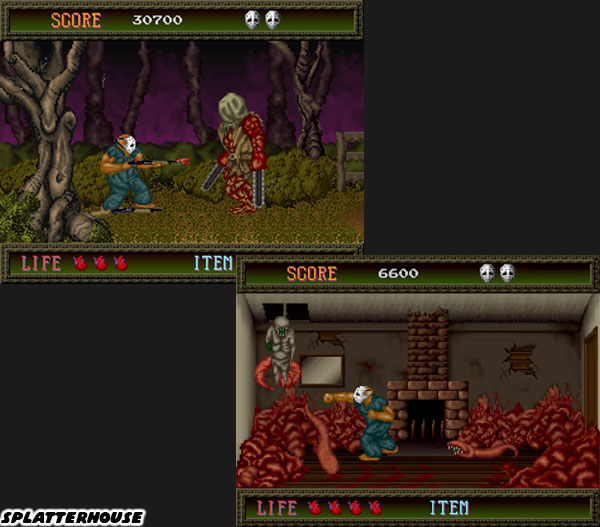
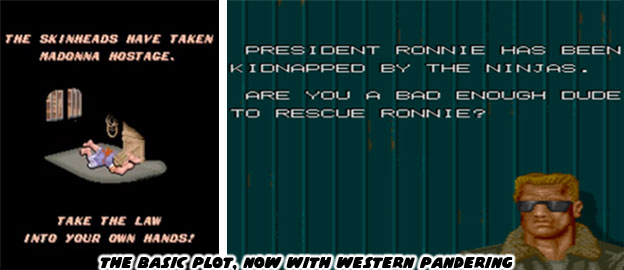
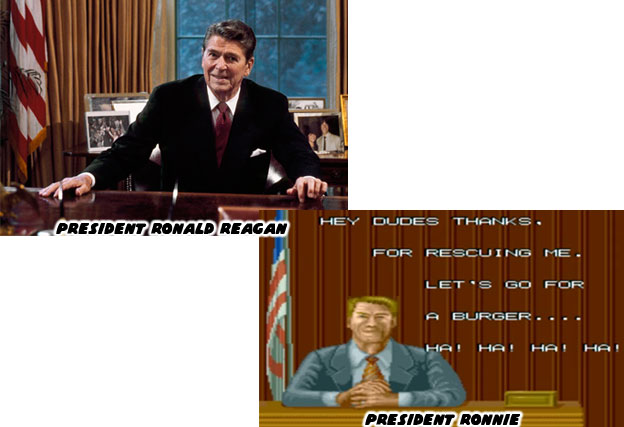
The setup for most of the games was simple. A person of interest was usually kidnapped, often a girlfriend, a finacee and at least in one case it was the President of the United States. Seeing as how the Japanese were shamelessly pandering to Western audiences they would drop names like pop singer Madonna and Ronnie, the nickname of President Ronald Reagan, into their games. If the brawler could be compared to a film genre then it would be the cult action film. Not quite a summer blockbuster yet not lowbrow enough to be a "grindhouse" picture (with the exception of Splatterhouse that is). The Brawler was nothing short of mindless action, it was like the perfect summer movie for eating popcorn, drinking soda and turning off your brain for an hour. After all, the payoff after saving President Ronnie was getting hamburgers. It was hardly Oscar-caliber material the Japanese were interpreting.


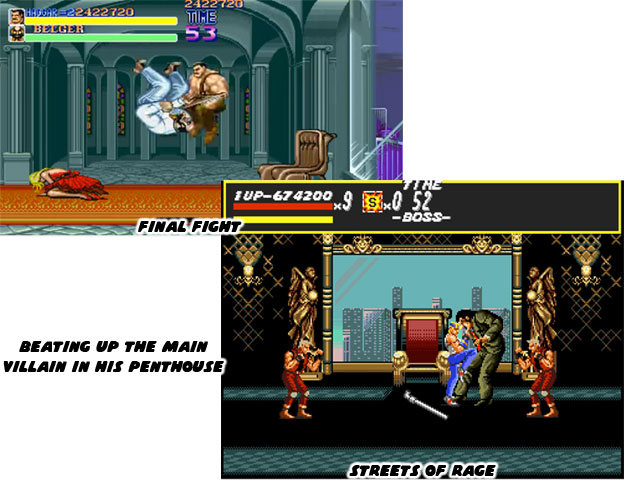
Of course for most of these movies audiences would wonder why the cops didn't stop the bad guys. There was usually two reasons for this. The cops were either too afraid of the gangs or they were being paid off not to do their job. The gangs often had leaders and these were not the typical thug. They were instead rich crime bosses living in the lap of luxury. Sometimes they were politicians or even heads of corporations. Players figuratively and literally fought their way to the top in many of the games. As dirty subways gave way to abandoned amusement parks and crowded alleyways the player would find themselves fighting in nicer and nicer neighborhoods. Eventually they would end up in the suite or penthouse of a millionaire. It turned out that the person that was pulling the strings was often the richest person in the city. They could have had it all but instead messed with the wrong people. The punishment for kidnapping or putting a city at war was often a long drop for the bad guy.


There were many other plots to explore, many more heroes to become and many more villains to throw through windows. The brawler was and continues to be a fun genre. I hope there are a few games mentioned in this series that rekindles some memories. Perhaps I'll highlight a few that you may not have played and give you a reason to track them down. Whatever the case I hope you stick around and as always share a comment. As always if you enjoyed this blog and would like to sponsor me please visit my Patreon page and consider donating each month, even as little as $1 would help make better blogs and even podcasts!
follow the Street Writer on Patreon!