Showing posts with label sodom. Show all posts

Tuesday, February 25, 2020

The unlikely origins of some Mad Gear bosses...

I've been playing through a number of classic games recently, and have been focusing on the Final Fight trilogy. It got me thinking about the details that Capcom put into the title. It also made me wonder where some of the characters came from. I'm particularly fond of the villains in the series, and I want to share what I think were the inspiration behind some of the most unique. For example, did you ever notice that there was an evil technician that was a boss character in the series? If you are a designer then how do you get across that a character is an inventor of sorts? Is it because of wild facial hair? A lab coat? Maybe goggles, or perhaps a bald head? How do audiences know what a crazy scientist looks like? When you think of evil geniuses in video games who usually comes to mind? I usually think of Dr. Eggman from Sonic the Hedgehog, but even he had to come from somewhere. Eggman did come from somewhere. Brian Ashcraft noticed how some of the early Studio Ghibli characters looked like Eggman. Of course this was a topic of a Reddit thread, and VGDensetsu tweeted the observation as well.


The roots behind the evil scientist go back even further. Possibly to the story of Frankenstein almost 200 years ago. In pop culture however the template for the evil scientist probably came from the Mad Doctor. The villain appeared in a Mickey Mouse cartoon in 1933. He was sporting a bald head, and wild facial hair long before Studio Ghibli or Sonic Team were created. He came back in game form for Epic Mickey 2 in 2012. Have you ever wondered if there could be a good mad inventor archetype? Again taking influences from Japan there was such a character. Cid Pollendina, my favorite of all the Cid characters, debuted in Final Fantasy IV way back in 1991. The airship engineer was the former Captain of the Red Wings in the game. He was burly, with a wild beard, physically strong, and a genius with mechanics. I believe he was the inspiration for the Skull Cross boss mechanic Caine.


Caine was located in a junkyard. He could only be reached if players were careful not to break a bus stop sign in Round 3. The top-heavy boss was cut from the same cloth as Cid. Overly muscular with goggles, and wild mane of hair instead of a beard. He would pin players with his thick welding gloves and smash them over the head with an enormous wrench. Talk about a cheap shot! Thankfully like most Final Fight bosses he was more brute than brains. He lacked the fighting techniques of the heroes. As neat a design as Caine was he wasn't even remotely the oddest of the bosses. In previous blogs I talked about the heavy metal stars, and films that inspired the creation of Final Fight. Sodom was a German metal band that formed in the early '80s. Their name and use of a masked military character on the album covers inspired the creation of the Mad Gear boss.


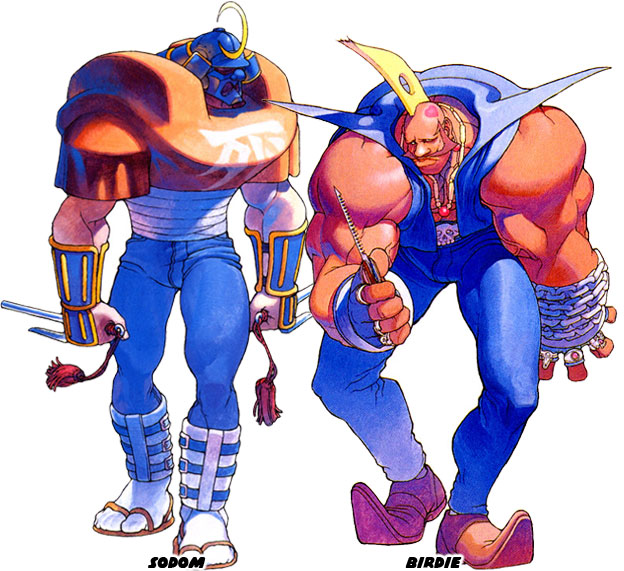
Depending on your point of view Sodom was either a harcore Japanophile or a certifiable kook. Either way he took his obsession with Japanese culture to extreme lengths. This came through in his game appearances, cut scenes, and official art from Capcom. Sodom fashioned a helmet and samurai "armor" out of football pads, jeans and a jersey. In the original Final Fight he would fight opponents inside of a wrestling ring. He used two katana swords and called them Masamune and Muramasa, named after the legendary Japanese swordsmiths. In The Street Fighter Zero / Alpha series he switched to jitte, the steel batons that Edo-period Japanese officers used. What if I were to tell you that aside from the metal band there was possibly a real-world inspiration for this character? Peter Thornley aka Kendo Nagasaki was a British wrestler that was obsessed with Japanese culture, and tradition. He was one of the biggest wrestling draws in Britain in the late '60s and early '70s. He even wrestled through the '80s, around the formative years of the Capcom staff.


The Kendo "gimmick" was very earnest. Thornley did everything he could to keep his identity a secret. He wore a mask in ring, and didn't lose it in any matches. He never gave interviews, and his manager did all the talking for him. When a plumber found out his identity Thornley was forced to come forward, but on his own terms. He unmasked himself in the late '70s during an elaborate, pseudo-Japanese ceremony. To this day Thornley claims that he is a spiritual vessel, and the host of a 300-year-old Japanese spirit. I have no doubt that Thornley believes in his claims. Sodom is drawn from the same level of obsession as Kendo. Both sometimes miss the details of the culture they are emulating. In canon Sodom speaks with very rough Japanese pronunciation. To emulate Japanese he will sound words out phonetically, like "It's Toe Show! Show Sea Send Bang! and Die Job Death Car!" The last phrase is pronounced "daijōbu desu ka?" and means "Are you alright?" When he wins a match he will sometimes say "Yo Parry," which is supposed to be "yappari" or "I thought so!"


The kanji on his jersey is supposed to read "Shi" or death in Japanese, but he missed a brush stroke so the character doesn't mean anything. When Sodom tried reuniting his gang during the events of Street Fighter Zero he painted kanji on the sign that was phonetically MA-DU-GI-A aka Madgear, but the combination of letters doesn't actually mean anything in Japanese. Sodom, like Thornley, was obsessed with keeping his identity a secret. Possibly because he was ashamed that he was not actually Japanese. In the Street Fighter Zero manga his mask was broken, and he covered his face out of fear of being found out. He claimed that he could not fight without it. The scene explained a lot about the character without having to go into further detail. He was probably the best example of the creative process behind the Mad Gear bosses. The villains often had layers of detail that went into their development. These most memorable were revisted by the studio. Which were some of your favorites? If you would like to sponsor me please visit my Patreon page and consider donating each month, even as little as $1 would help make better blogs and even podcasts!
follow the Street Writer on Patreon!

Thursday, July 16, 2015

Representation Matters! Or, what happened to Birdie, part 7...


After Street Fighter II was released the extra people brought aboard to help with character designs went back to their respective projects. This meant that that the Turbo and Hyper upgrades were put in by the smaller original designers. The upgrades were based on arcade feedback as well as what illegally hacked boards had done to the speed and combo abilities of the game engine. Development on Street Fighter III was stopped so that the studio could release one final upgrade kit, Super would introduce 4 new characters and a new boss villain, Gouki, into the universe. The characters in this upgrade felt incomplete, Cammy, T. Hawk and Gouki were furthest along in development but Fei Long and Dee Jay looked and played like rushed characters. It stood to reason because there were not the same eyes on the project as there was in the editing process for the earlier World Warriors.


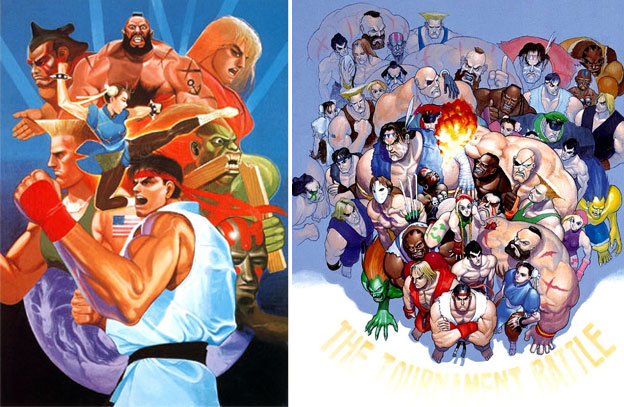
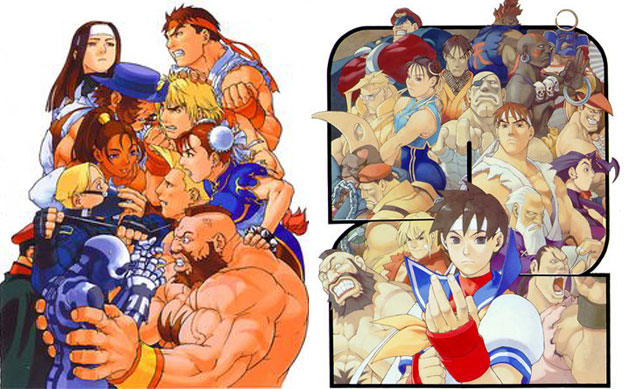
In fact not long after the release of Super Street Fighter II, producer Akira Nishitanti took about half the team that worked at Capcom and left to start up ARIKA studios. Even if Capcom wanted to bring everyone back together it would be almost impossible. Work on Street Fighter III was halted because of the shake up. The studio took inventory of who was left and was challenged to see how they could keep the Street Fighter series going. There was no reason to lose faith in those that remained. After all the sequel did very well after the original Street Fighter planner Takashi Nishiyami left to join rival studio SNK. The new designers Noritaka Funamizu, Haruo Murata and Hideaki Itsuno as well as the art team came up with a brilliant plan. Instead of making a sequel they would instead create a game that tied together the events of the first and second games. Not only that but it would also bring together heroes and villains from Final Fight to show that they were indeed part of the same continuity. By doing this they would not hurt the expectation of audiences. Those that wanted a "true" sequel would have to wait. Street Fighter Zero / Alpha was instead a celebration of the genre that Capcom had defined.

The plan worked better than expected. Audiences were falling over themselves at the radical new direction that the game had taken. The lead artist on the project, Bengus, created an entirely new aesthetic for the lineup. His design fell somewhere in between Japanese anime and Western comic book body types. His exaggerated proportions and strong but fluid lines would go on to influence artists on both sides of the Pacific. His fellow artists helped create memorable version of many iconic Capcom characters. They also took some creative chances with the handful of characters they introduced. The most important of which was the addition of new female characters.


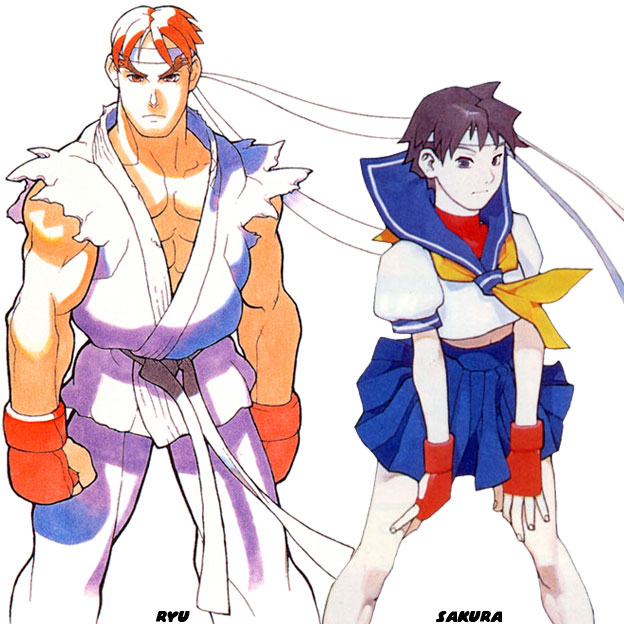
The genius in the planning was that each of the characters found some balance. A girl version of Ryu was introduced. She lacked the strength and range of Ryu but it made sense because her journey was just beginning whereas Ryu had been fighting for years. Sakura became the darling of game players around the world. She was a very positive role model. She had youth and enthusiasm on her side but we could tell that within a few years this character would grow into a woman as powerful as Chun-Li. Vega the Dictator was a villain of the story but not necessarily the only one.

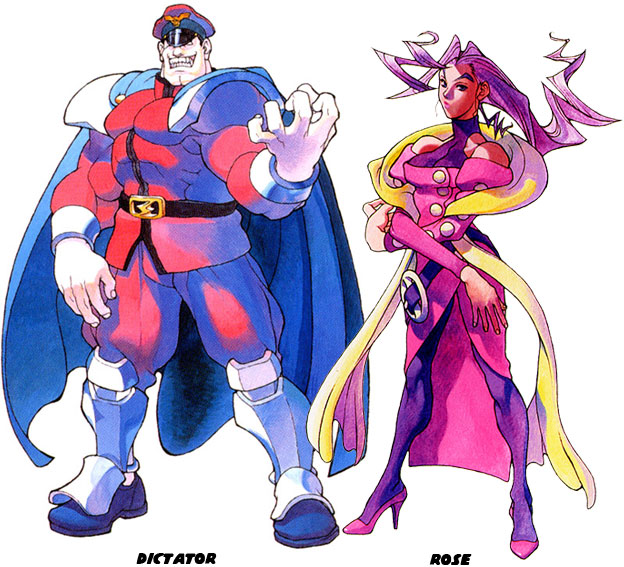
The Dictator was not a traditional martial arts master, he wore some sort of cartoonish military costume and not much was known about him. Little was revealed in the endings of Street Fighter II so audiences were left with many questions. The designers wanted to flesh out the character and get a little more into his origin. They had plenty of room to explore his mysterious powers and military conquests in the Zero series. Yet they did not want to give everything away. They still wanted to leave some things up to our imagination. The best way to do this was by giving him a counterpart with equally unique abilities. The team designed a female with a costume that slightly mirrored the Dictator's, just as Sakura had reflected Ryu's. Tripling the amount of playable female characters (a younger Chun-Li had returned as well) from Street Fighter II was a gamble and it payed off from a critical response as well as from an inclusive point of view.


Strong female characters of every age and background were rarely seen in fighting games. Most studios relied on sex appeal to sell their women to audiences but not Capcom. They wanted players to know that these characters could fight every bit as hard as the men. It did not matter if they came from China, Japan, England or Italy. Think for a moment how powerful that message was to the female fans of the series. It was a loud statement that happened in 1991 and again in 1995. For the next two decades girls and women would dress as Chun-Li, Cammy and now Sakura and Rose as well. The strong female role models from comic books were no longer alone. Video games were contributing great role models to pop culture and that list would only grow.

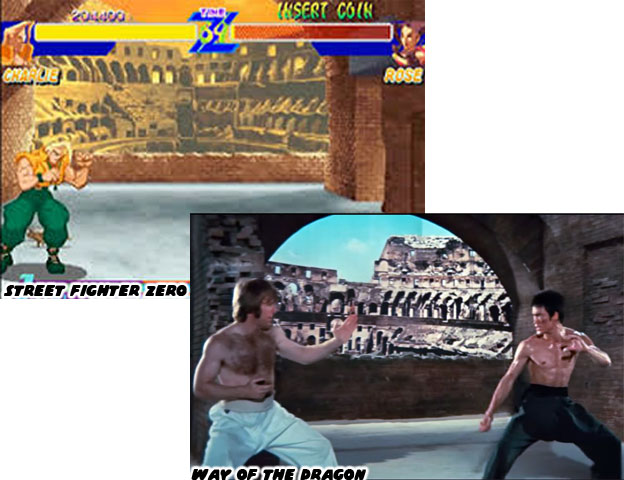
Just about every choice that the team did seemed like a right one for the game as well as for the genre. It was hard to believe that it had been four years, and many upgrades since Street Fighter II had appeared. Street Fighter Zero was very different from a graphics, gameplay and control standpoint, yet at the same time it looked and felt like an old friend. Part of the greatness behind the designs had something to do with how far Capcom had called out to all of their own influences as well as the legacy they had been working on. People that had grown up watching the same movies, reading the same comics as the developers felt like they were in on the jokes. Even a small thing like a level background became something special to players.


Capcom played up this bit of nostalgia by bringing back old faces and giving them a fresh new look. It had been eight years since players saw Birdie so he was given a big makeover. The studio did this so that he would become as timeless as the main cast. this initial makeover was something that this entire blog series was started on. Birdie went from a forgettable tough guy in the first game to a fully-formed bruiser. He had dimension and a personality that complimented his wild attacks. There was nobody like him before and would be nobody like him after. Birdie was joined by a pair of characters that hadn't been seen in six years as well. To be fair they were seen on console games but not in arcades for that length of time. You might think that it would be impossible to balance out somebody as colorful as Birdie but the team found a perfect matchup.

Sodom was a leader in the Mad Gear Gang. He was an underground wrestling legend that had an undefeated streak, thanks in part to his use of two samurai swords Musashi and Muramasa. Sodom was obsessed with Japanese culture and fashioned himself samurai armor which was made mostly from football gear. He was more over-the-top than any other Mad Gear gang member. He was given an assortment of moves that was every bit as unorthodox as those given to Birdie. To help tone down his range the team took away his swords and he was given a pair of jitte, an ancient Edo weapon. It still made dangerous but players had to get close to opponents in order to use them. Seeing the two classic bruisers return was like a dream come true for fans of the earlier games.


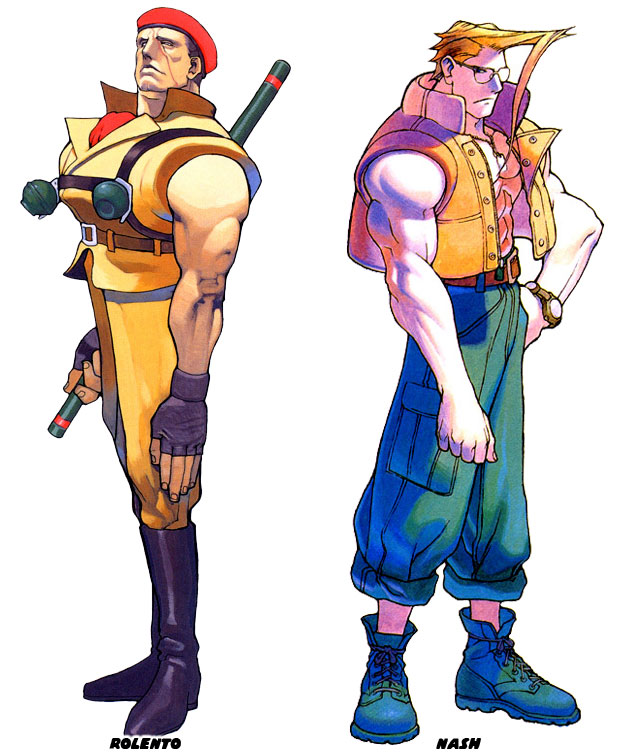
The Mad Gear gang was the precursor to Shadowlaw. They were not solely a gang that ran the streets of Metro City but actually a network of criminals and terrorists the world over. A group that large got their orders from a business tycoon named Belger. However he had his trusted gang leaders, that acted like generals, to help carry out his plans. Sodom was a lower-ranking leader but his right hand man was a mercenary named Rolento. The military specialist was a superb hand-to-hand fighter. His design was actually based on the Colonel a character from Hokuto No Ken. I'm telling you that Capcom wouldn't have made as many memorable characters if not for Tetsuo Hara! Anyhow Rolento was blindingly fast. He could take on Haggar, Guy and Cody in Final Fight all by himself. He fought with an assortment of throwing knives and even grenades. Players knew he was not somebody that would be trifled with.

Having a few villains from Final Fight was a great idea and Capcom balanced them out by including the heroic Guy. The military presence was also balanced out by a new hero. In addition to Rose and Sakura the team added a third figure designed to remind audiences of the original World Warriors. In this case it would be Charlie Nash, the best friend of Guile. The character fought similarly to Guile with a few unique touches. He was put in the game to help fill in the backstory of Guile. Nash had tracked down the Dictator through the fighting tournament but he was found out and shot by Shadowlaw soldiers before he could take the Dictator in. He thrown over a cliff next to a waterfall and presumed dead. Guile swore revenge and ended up in the fighting tournament during the events of Street Fighter II.


Filling out the continuity of the Capcom universe went over very well with audiences. It was great to see how all of these characters were interconnected but even greater to see the diversity of fighting styles. The game engine was perfectly suited to different types of gamers. Those that preferred fast-action combos had characters that could do that. Those that preferred power moves instead had those characters as well. There were even a few in the middle that had a unique mix of brawling and technique. It would be the elements of Street Fighter Zero that would be most repeated in Street Fighter IV and now V. Those games wanted to bring back as many characters as they could to please the requests of fans. However in doing so they missed the little things. How Ken, Chun-Li and Ryu looked younger in Zero. How they had matured in Street Fighter II and III. In IV they stayed mature but Sakura and Cammy had unexpectedly returned. Only it was a young Sakura from Zero and the older Cammy from Street Fighter II. These could be seen as minor issues but they could also be seen as how the teams working on the newer Street Fighter IV were not working as diligently on new character types as the previous teams had. It showed that they were not being as mindful of their legacy as previous teams were either.

The last time the majority of the people that had worked on Street Fighter II worked together was during the mid '90s. Most of the team reunited during he development of Street Fighter EX. Their purpose was to create an entirely new set of World Warriors and put them in a 3D engine. They wouldn't necessarily have to be 1-to-1 copies of the earlier cast either. To which I say thank goodness too because it might have sparked another Anabebe mess. The new female characters, Pullum Purna and Blair Dame were distilled from the ideas that made Chun-Li unique. Pullum, an Arabian fighter represented the youthful aspects of the original China Daughter and Blair represented the toughness of the adult Chun-Li. The wrestler Darun was a mirror for Zangief, Doctrine Dark was a Rolento-style military counter to Guile, Ryu and Ken had Kairi and Allen Snider to respectively deal with. The characters found their own niche to carve out without necessarily copying the formula exactly. The circus performer Skullomania was by far the most colorful of the lineup. He was a sort of Dhalsim / Blanka level of absurd. But again all of these character types worked within the universe.


The Street Fighter games post Zero and EX had the weakest amount of character creation and diversity. It stood to reason considering that many of the original members had gone to DIMPS, ARIKA and even SNK by this time. By not having triple the amount of people working on the cast then a lot of voices, a lot of insight was lost. The next blog will look at how Street Fighter III and IV began to deviate from the lessons set by the earlier games. I hope to see you back for that. As always if you enjoyed this blog and would like to sponsor me please visit my Patreon page and consider donating each month, even as little as $1 would help make better blogs and even podcasts!