Showing posts with label nio. Show all posts

Tuesday, March 19, 2024

Gouki in Street Fighter 6, the greatest fighting game villain has returned

Hello friends, I want to say thank you for visiting the blog, even though I am posting old 1UP blogs on Monday, and Wednesday, and trying to come up with new content on Fridays. I noticed in the past week I’ve gotten a significant bump in views following the release of the new Gouki / Akuma reveal trailer for Street Fighter 6, and more recently the first character voice trailers for the next Garou City of the Wolves. I put together a few words on what I picked up in the first trailer.

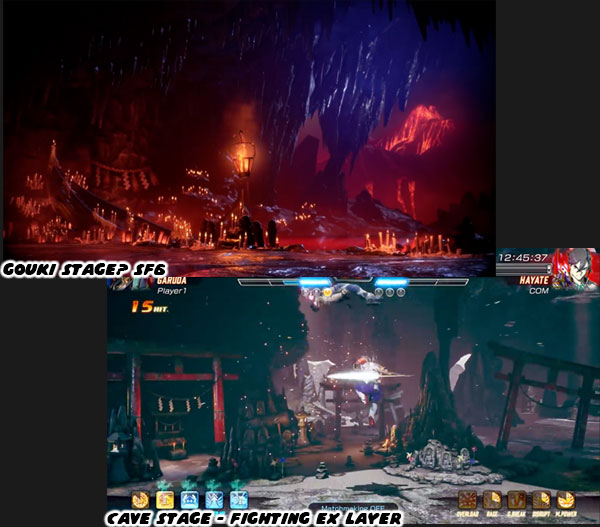
The first thing we saw was a variation of the cave stage, which had been used as the backdrop to Gouki since the days of Street Fighter Zero / Alpha almost 30 years ago. I have a feeling that the location presented in the trailer will be his actual stage in the game. Gouki has always lived as a hermit. Away from society, mediating, and training to turn his body, and mind into steel. There were a number of details in the trailer that meant a lot more to the Asian community rather than western audiences. We could tell that the stage was designed to be as intimidating as the character himself. It reminded me of the Garuda stage from Fighting EX Layer.

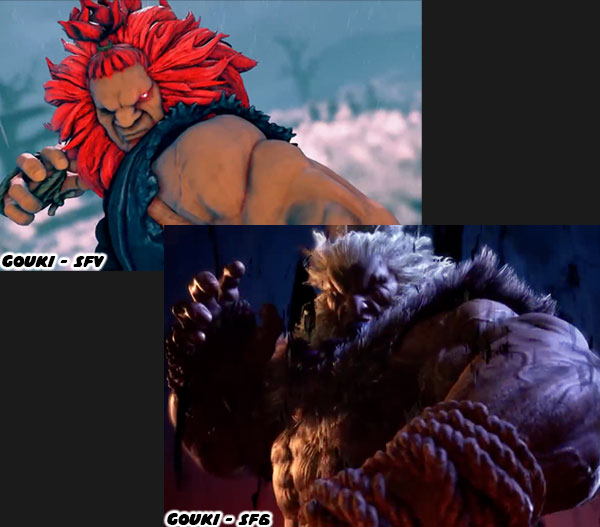
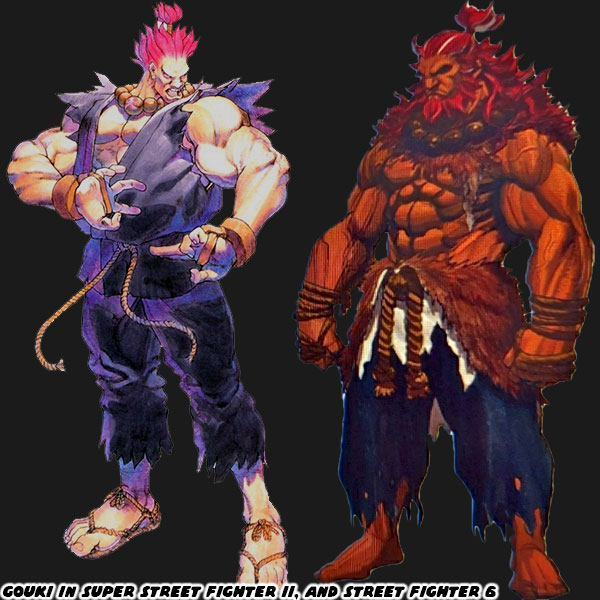
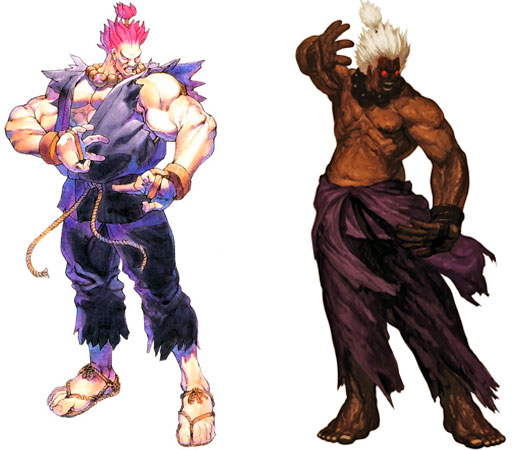
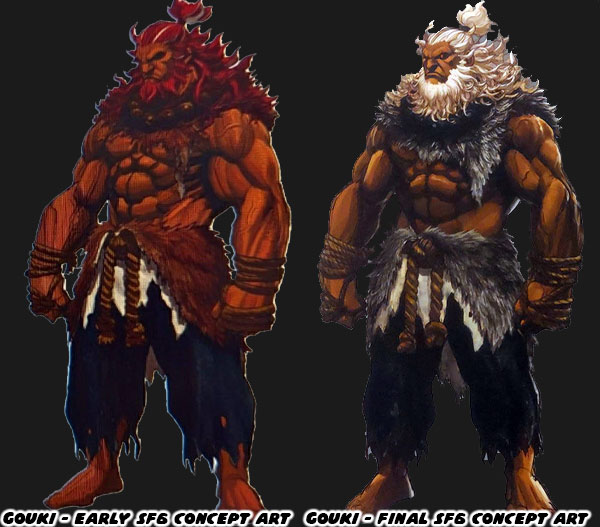
The other thing that stood out to me was that Gouki’s hair has finally gone from red to white. In the early leaked SF6 concept art he looked as intense as ever, but he still had red hair, with some white streaks which were a carry over from SFIII. The finalized version had all white hair, and even white fur on his costume. This was important for several reasons. First off it separated his appearance from that of any other game in the series. The other was that Capcom was willing to continue refining a design until the very last reveal. Remember all the details I pointed at from the original Lili concept art? A lot of that was changed by the time the game was released. Lili’s new look was both culturally sensitive, and culturally relevant. Gouki had several changes, more subtle than Lili’s, but also gave his appearance more of an impact.

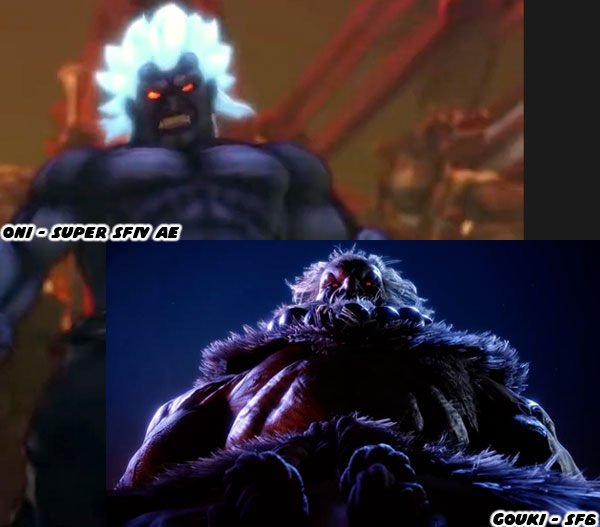
When we first got a good look at Gouki in the SF6 trailer we could tell he was designed to inspire fear. He had always been an imposing villain, however in previous incarnations he was not frightening. In order to tell audiences that they should be afraid the team at Capcom made him much more visceral. His body was more shredded, with veins, and muscles rippling over an entirely new 3D model. From a storytelling perspective they did the reveal slowly. We saw his frame, his massive torso, his thick arms, and his club-like fists. He looked like a nightmare brought to life. When the studio revealed him for Street Fighter V they literally just gave us a trailer made up of cool moves. By telling us nothing about his library of attacks in the SF6 trailer it would give audiences a chance to discover how truly powerful he was in person.

The other thing that the updated look do was signal that his transition from beast-like human into a literal demon. I had talked about it multiple times in the past, but Gouki’s design was based on that of a lion. Going back to Street Fighter IV the studio has transitioned his look into two phases, he went from inspired by a lion, and Nio, to being based on an oni. The white hair, and leathery skin made him a plausible human-turned-demon. In fact the whole trailer was filled with design cues from ancient Japan.

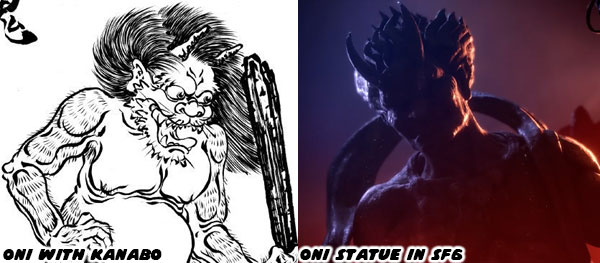
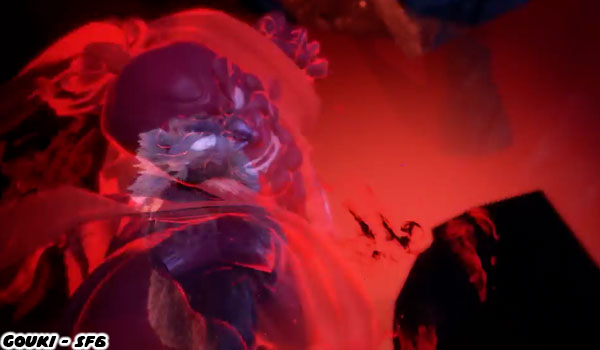
The cave where Gouki is training has several oni statues in the background. These are sometimes confused with the nio, which were the guardians of the gates of the afterlife. Oni were some of the various types of demons the roamed the countryside in ancient Japanese traditions. They were often seen wielding a spiked club, a kanabo. There were a few short shots in the trailer that would be easy to miss if you didn’t know to look for them. When Gouki lets his rage flow though his fist we can actually see a glowing spirit envelop him.

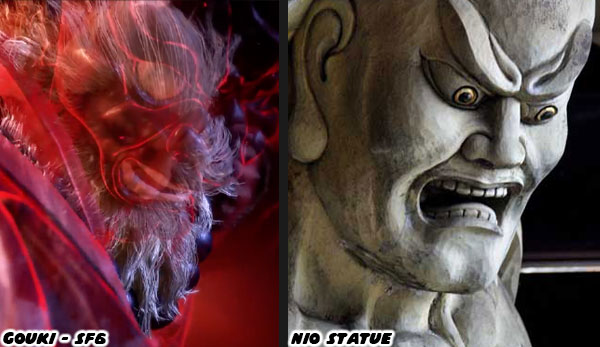
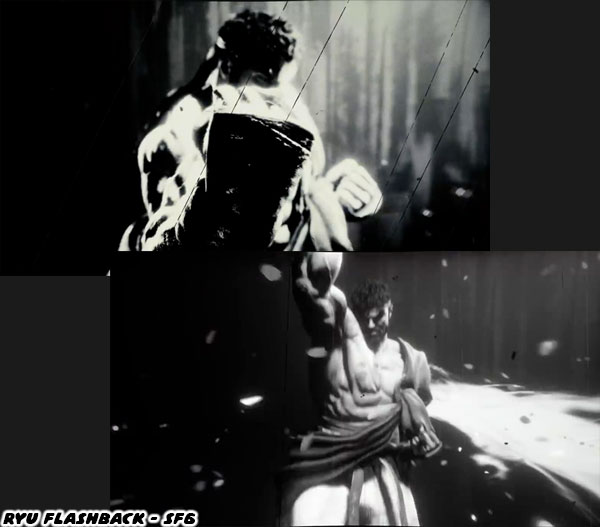
It almost appears that he is wearing the frightful mask of the nio. We can see the large eyes, curved brow, and open grimace. The focus of his rage was actually a few quick flashbacks of Ryu. To long-time fans of the franchise it was the confirmation that he was obsessed with Ryu. The pupil of his former master, and his own brother was certainly under his skin. Gouki was boiling with a supernatural rage. Punching at immovable statues, honing his strike to razor sharp precision. When he went for a shoryuken we could see him enveloped with a red aura. For a fraction of a second we could see Ryu in a white light performing a similar dragon punch, but he looked serene by comparison. It was a yin / yang opposite approach to the powerful strike. Gouki had become the living oni, the living nio.

This was the thing that I loved the most about the best of the Street Fighter designs. They were archetypes, inspired by equal parts real heroes, and mythology. The studio was creating plausible fighters with historical context. Certainly demons didn’t actually roam the Japanese countryside centuries ago, but consider that perhaps there were wild men, hermits built like brick buildings back then as well. There were people that enjoyed lifting heavy stones in order to prove their physical superiority. Those that lived off the land, killed animals with their bare hands, and only rarely interacted with villagers. Then there was the case that these settlers were from China, bringing over Buddhism, as well as the martial arts traditions. These types of outcasts could easily have inspired the rumors that there were fearsome ogres that lived on the outskirts of towns. Or Gouki was genuinely possessed by powers from the spirit world. It was the type of mystical ability that ARIKA used when creating Street Fighter EX, Fighting Layer, and Fighting EX Layer.

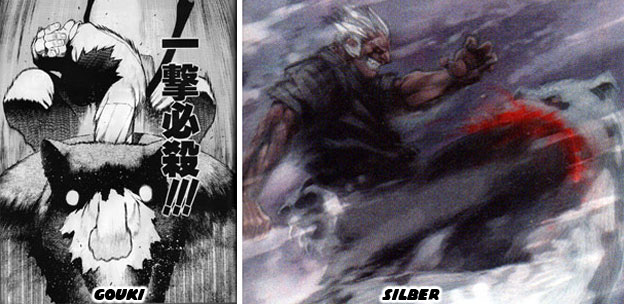
The fighting game archetypes that Capcom had developed over the past 35 years were icons in the gaming world. The artists, and designers at other studios could also exploit these visual storytelling cues when coming up with their own roster. Of the three greatest fighting game boss designs in my book, with Gouki being first, I would argue that Silver was the third best. He worked as a fighting tournament villain because he used many of the same elements as Gouki, however he was western based. I had had discussed Silber previously on this blog. As a quick primer in case you weren’t even born in 1999 when Buriki One was released. The insanely strong German created his own fighting form, and traveled the world seeking out opponents. He would fight wild animals to prove his ability, and had been painted smashing the face of a polar bear in official SNK art. He was very much cut from the same cloth as Gouki.

The animal pelt Silber wore on his gi was not to be confused as the fur lined jacket of a mafioso like Mr. Big. By a similar token Gouki had evolved past his black gi. His appearance in Street Fighter 6 was more feral than ever before. Losing his humanity to the Dark Hadou, the evil force that propelled him forward. That drove him to kill his master, and his brother as well. By having him shirtless with white hair the studio had amalgamated the Oni design from Super Street Fighter IV with his more recent Lion Mane SFV look. I don’t think the company would ever bring back the Shin-Gouki, or Oni characters as essentially Gouki in SF6 was a blend of the alternates. I am certainly interested in how he will be used in the story. I’d like to know your take on the character. Tell me in the comments section please. Now I have to make time to talk about Garou: The City of the Wolves for a future blog. As always if you would like to sponsor me please visit my Patreon page and consider donating each month, even as little as $1 would help make better blogs and even podcasts!
follow the Street Writer on Patreon!

Monday, June 27, 2022

The greatest fighting game boss returns to Street Fighter 6, a look at Gouki

Gouki / Akuma is slated to return in Street Fighter 6. Of the countless fighting games that have come out over the past 40+ years there is one boss character that I consider the greatest of all time. I’m certain that many would agree that Gouki is the bar by which all fighting game bosses are measured. There have been many great boss characters throughout history. Revenge against Geese Howard drove the plot in the Fatal Fury series. Then there was the villainous Heihachi Mishima, and his attempts to kill his own son in the Tekken tournament. Plus Bilstein set the galaxy on fire in Star Gladiator, and his ghost came back to continue his path of destruction in Plasma Sword. Despite all those great titles Gouki was still head, and shoulders above the competition.

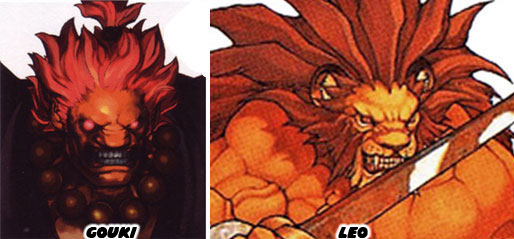
I’ve written a lot about the origins of this character, and his impact in the series. I considered Gouki the third most important character in the franchise. If you are new to the Street Fighter franchise Gouki is a master of Ansatsuken a fictional fighting art known as “Murder Fist.” He killed his brother Gouken, and their master Goutetsu to claim the title as the best in the world. Ken, and Ryu, the stars of the game, were trained by Gouken. So you can guess that his appearance helped motivate the lead characters. Gouki’s look was based on the mythological Nio, the guardians of heaven, and hell. Their statues can be seen at entrances to Buddhist temples. Not only that but he was created using the features of a lion. The flat nose, the sharp teeth, and red clay skin was all done to make him look like a supernatural being, while still being a plausible real person.

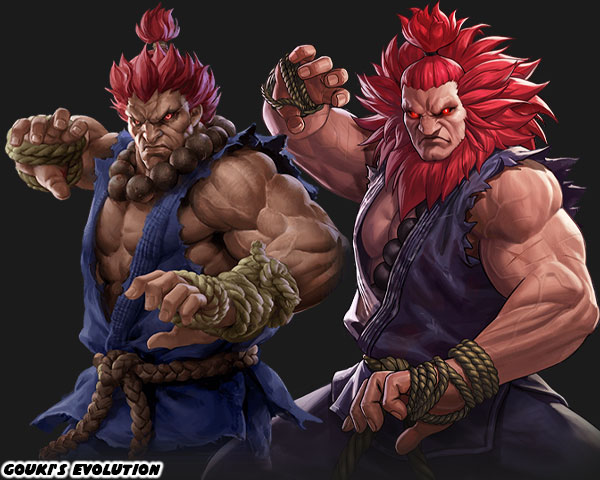
This animal look was expanded in Street Fighter V. The studio went ahead and grew out his hair, and gave him a beard in order to make it look like a full fledged lion’s mane. He was still wearing a rope belt, rather than a traditional black belt. His hands were wrapped in cord, rather than punching gloves. Plus he wore the beads of his master around his neck. Every design element placed on the character meant something, including the type of knot used on the belt. These were all very important details whether the audience knew it or not. For Street Fighter 6 the designers at Capcom decided to remove his top, and give him a cape of animal fur instead. I can almost imagine him training in the mountains of Japan, surviving in the harshest of conditions with this new getup. He looks less like a spiritual being, and more like a caveman now. Not that this was necessarily a bad thing. He is still has a physically imposing presence, and looks like he could break any returning character in half.

The latest version of Gouki looks amazing, but diffuses all of the design elements that made him iconic in the first place. If the newest version of Gouki were the one that first appeared in Super Street Fighter II Turbo, then I don’t think his impact would have been as big as it originally was. Gouki’s black gi was the opposite of Ryu’s white gi. His hair was red, and fiery. He wore a rope belt, and oversized prayer beads. This was a karate master that was as close to demon as we could get. Once the character was established the studio could adjust his appearance. Previously it was simple things, like streaks of white hair in Street Fighter III. Then it became a beard, and longer hair. Now it’s the mane, and streaks of white hair. I think by moving away from the karate uniform it breaks the best elements of his original design. Not to mention that the animal fur was almost the same shade as his skin. Thus muddying his primary colors. I’m not completely on board with the new design team at Capcom steering all the original World Warriors away from their original costume designs, and colors. Some appear better, like Zangief, Dhalsim, and Blanka. But changes to Ken, and Gouki seem to diffuse the impact that they used to have. That’s what I think anyhow, what are your thoughts on the newest look of Gouki? Do you care how the characters appear at all? Or are you more concerned with the game play? Let me know in the comments section please. If you would like to sponsor me please visit my Patreon page and consider donating each month, even as little as $1 would help make better blogs and even podcasts!
follow the Street Writer on Patreon!

Thursday, June 28, 2018

30 years of Street Fighter: 30 years of Characters #3

For the 30th Anniversary of Street Fighter we've talked about Ryu, the hero of the series. We've  talked about Sagat, his great rival and the template for a memorable martial arts boss. We've even talked about Vega / The Dictator as a way of redefining what a final boss villain could be. With every fighting game that's ever been and that will ever be, there is one boss that is considered the gold standard. His name is Gouki. You might know him as Akuma. He represents the peak of the mountain, the ultimate fighter if ever one existed. Designed with a frightening appearance he has elements pulled from Asian mythology, including demons, the afterlife, and even lions. His origins are part of a larger narrative. He is the estranged brother of Gouken, the master of Ken and Ryu. He murdered his master and his brother in a fit of rage. He is as complex as he is intimidating. The best renditions of the character coming from the talented hand of Bengus, one of Capcom's best artists.


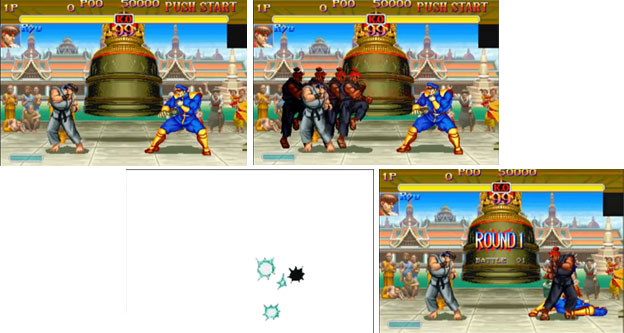
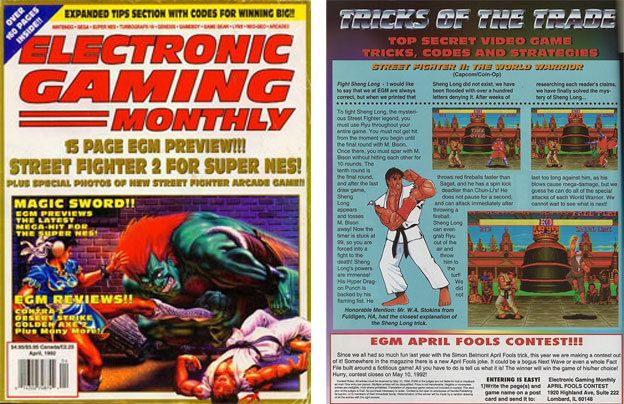
The origins of Gouki are obscure, owing more to an April Fool's prank rather than clever planning. The long defunct EGM magazine invented a character named Sheng Long who was supposedly the master of Ken and Ryu. He could only be fought under certain conditions. Capcom decided that they should introduce a version of this mythical fighter in one of the final Street Fighter II upgrades for the arcade. His debut in Super Street Fighter II became the stuff of legend. He only showed up at the end of the game if certain conditions were met. He absolutely destroyed Vega before the match started. His moves were far more impressive than Ken or Ryu's. He could throw fireballs while leaping, he could even teleport across the screen. He showed that even the best Street Fighter bosses were far beneath him. His popularity really took off as he was formally added as a playable character in the Street Fighter Zero series. He had his own story and ending to help explain his purpose in the universe. Gouki wasn't the main boss for every character in the Street Fighter universe and that made sense. He wanted to fight the best ever, and in particular see if his brother's students were any good. He was reclusive and you had to work hard to find him and even harder to beat him. He embodied every quality that made for a memorable final boss.


No studio was able to recreate what Capcom had stumbled into. After 30 years we have yet to see a boss character in the series that holds a candle to Gouki. Part of the reason why is because most developers, including the current Capcom stable, have a limited approach to their villain designs. They often create one-dimensional bosses, pure evil with amazing powers and no redeeming factors. Gouki was a murderer, that would never change, but he fought with his own code. He didn't kill everybody he ran into. He was obsessed with a worthy challenge. This was best explained in a drawing by Bengus. Gouki, selling fruit, probably by the side of the road. Earning some money to buy provisions and supplies. He could take whatever he wanted but he was no thief. He only became a monster when a fight was at stake. Gouki looked supernatural, he looked demonic but the thing that made him better than every boss character was his humanity. Gouki could have been a real person with a killer's instinct and that is truly frightening. It may be 30 years before Capcom ever creates a villain as memorable. What do you think about this character? Please let me know in the comments section. If you would like to sponsor me please visit my Patreon page and consider donating each month, even as little as $1 would help make better blogs and even podcasts!
follow the Street Writer on Patreon!

Friday, October 2, 2015

How fight culture became fighting game history, part 41

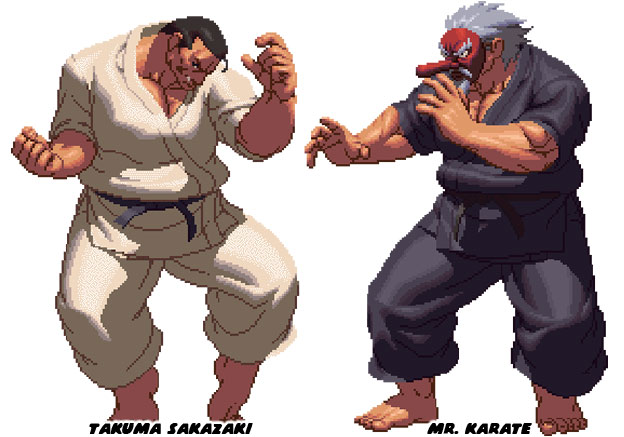
When Gouki debuted in 1994's Super Street Fighter II Turbo he set the standard for boss characters and villains in fighting games. The other studios took notice and tried to create legends of their own. SNK was a long time rival to Capcom. They had a masked fighter named "Mr. Karate" that predated Gouki by a few years. Takuma Sakazaki was the masked villain and final boss in the Art of Fighting. He was also the father of the heroes of the game Ryo and Yuri Sakazaki. The 1992 title did not originally feature the character as a pseudo demon but instead had him wearing a Tengu or devil mask. As the series went on the character of Mr. Karate grew more and more powerful until he took on a number of the same traits that Gouki had. His attacks became more powerful and he seemed to be a completely different person behind the mask. Most fans would consider the characters to be evenly-matched villains.


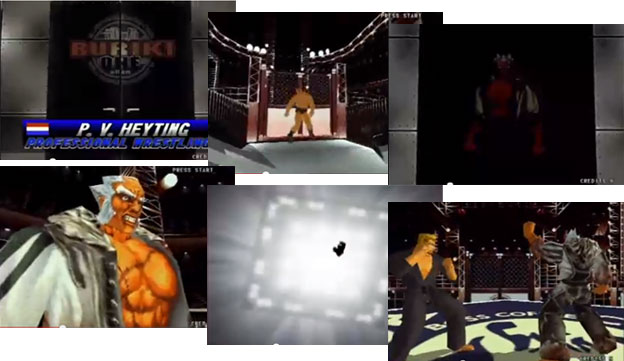
Not many fighting game aficionados however would remember that SNK had introduced a character that was eerily closer to Gouki in form and presentation than Mr. Karate. The 1999 arcade release Buriki One was one of SNK's first attempts at moving their IP into three-dimensions. The game had a cast of mostly new faces with the exception of Ryo Sakazaki, who had entered the tournament under the name of Mr. Karate II. Players fought masters of various styles and could beat the game by winning the tournament. The secret character in the game had an entrance that was reminiscent of the first appearance of Gouki. Players would go through their usual opening animation; where the selected character walked from backstage to the tournament platform. When the rival was announced the screen switched to the locker room. The opponent would be thrown through the double doors and crash into the caged-off platform. The true boss character would then appear. He was a muscular German named Silber. The character had a terrible gash over one eye and was covered in grizzly scars. The white-haired fighter looked nightmarish. He would rush the stage and take a superhuman leap over the barrier.


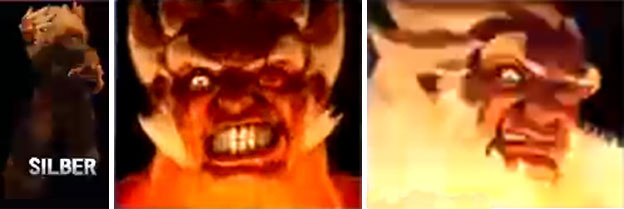
Silber had a very unorthodox stance and fighting style. The story behind the character was very interesting. The German had spend the last 30 years traveling the globe, fighting the best masters of other fighting arts and leaving few witnesses in his wake. He had developed his own form of karate which was unlike the traditional Japanese schools but just as lethal if not more so. When he learned there was a tournament to find out which was the best fighting style he decided to enter without an invitation. Silber was the first non-Japanese karate villain in a fighting game. The fact that SNK made him the boss character was even more impressive. It was as if the Japanese developers had suddenly come to realize that people from other nations could not only master foreign fighting arts, but they could also create their own contributions to the form. To help Silber stand out from Mr. Karate or the other bosses from SNK history the studio took a page from Capcom's school of design. They made the German look like a supernatural character. The patchwork of scars that covered his body made him appear like Frankenstein's monster. It was more than coincidence that his look was pulled from classic literary traditions.

Gouki had elements from Eastern mythology and Silber's design observed many Western ones. Centuries ago the Black Forest in Germany had been romanticized in fairy tales. The Brothers Grimm brought imps, dwarfs, witches and shapeshifters from classic folklore into popular culture. Snow White, Little Red Riding Hood and Sleeping Beauty were just some of the old stories that the brothers had adapted not only to entertain but to also put the fear of the unknown into children. In fact, some of the stories were not called fairy tales but instead "warning tales." The Black Forest, like many other forests in Germany, was once very dangerous. It hosted wild boars, bears and wolves that killed many a settler. Many of those creatures were hunted to extinction but the legends of dangerous predators remained in the stories. The designers at SNK thought to develop a new fable out of a creature that came out of the woods to hunt down man as well. Silber would take on the appearance of the animal-turned-human in the Buriki One tournament. The artists did not look at a lion for inspiration this time. The bright white hair and sideburns stuck out like the mane of a timber wolf. The look was enhanced by the fur-lined gi that he wore in competition. The character was certainly an alpha-predator. It was assumed that he had killed an animal and skinned it to line his uniform. The cold German winters would have made outdoor training unbearable without some protection. His clothing had dark black stripes that looked like claw marks to perpetuate the myth of the animal-like survivalist. The character art and profile featured in the game was unmistakable. This was a major villain, a nightmare from classic storytelling traditions.


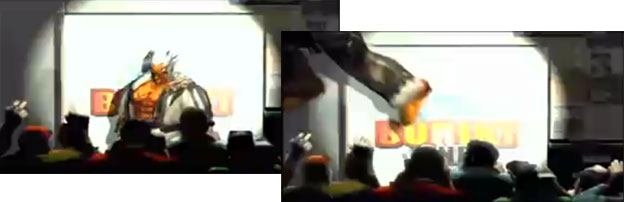
SNK wanted to make the character very mysterious. They gave him no dialogue or lines in the game. If a player managed to defeat Silber an ending animation would play before the credits. He survived the fight, stood up and took another superhuman leap to escape from the ring. If gamers managed to beat Silber with all of the regular characters then he too would become a playable character. This meant that Silber had his own stats, alternate costume and even ending cinema. Each character held a press conference at the end of the game where they talked about the fighting style that took them to the top. The credits would roll during the press conference and players could get filled into the plot.

Players that wanted to learn a bit more about Silber were disappointed with his ending. Nothing was revealed during his interview. He looked at the room full of reporters with disdain in his eyes. Instead of answering their questions he simply jumped off the screen. This bit of mystery would follow the character in all his future appearances. He was the boss character that would never stay down for long no matter how badly the player had beaten him. He would leap out of each game just as quickly as he arrived. It helped add an air of mystery to him and kept fans of the SNK universe guessing when he would turn up again. For older fans of animé the spectacular leaps that Silber made were a nod to the classic series Karate Baka Ichidai. The show was a serialized retelling of the life of Mas Oyama featuring his encounters against various fighting styles. This hinted that Silber was like a modern Oyama, only without scruples or compassion for other fighters.


There was something outside of the gruesome appearances that made Gouki and Silber similar. The two were not solely boss characters but also villains. They were not villains in the traditional sense of the word. They did not kidnap princesses or take Gotham City hostage. They were villains in the sense that they were both very evil men. They were both obsessed with power and were willing to achieve that power at any price. For professional and underground fighters this meant that they had to be the best that ever lived. In order to achieve that the duo had focused on nothing else except for training and fighting. They had no friends, no family and no sense of loyalty. Silber was rumored to have mentored the pro boxer and criminal Rob Python, also from the Buriki One universe. Gouki had a run in with his brother Gouken at several points during the training of Ken and Ryu. The wisdom and warnings from Gouki did not fall on deaf ears then. Despite these limited interactions with younger fighters the two had almost no contact with anyone else in canon or the games. There was something that made the characters truly evil though. The next blog will talk about the elements of evil design and how it inspired minority villains. As always if you enjoyed this blog and would like to sponsor me please visit my Patreon page and consider donating each month, even as little as $1 would help make better blogs and even podcasts!

Wednesday, September 30, 2015

How fight culture became fighting game history, part 40

In the three decades since the fighting game genre had been established there were dozens of forgettable bosses and only a handful that withstood the test of time. The best of these villains had achieved a mythical status. Some were as well regarded as classic movie, comic book or animation villains. For a generation growing up on videogames the boss characters were revered as much, if not more, than most of the heroes. Undoubtedly it was Capcom that set the bar for what defined a great villain was in Street Fighter II (SF II). The game already had an exceptional boss with M.Bison in the USA aka Vega in Japan. He was known commonly around the world as the Dictator. The Dictator was completely unlike the martial arts characters featured in the regular cast. Instead of a traditional fighting costume he wore a red military uniform. He had large metal wrist guards and heavy boots covered in armor. His assortment of moves had no definable style. He could leap well over players, come stomping down on their heads and even fly across the screen with an awe-inspiring psychic attack known as the Psycho-Crusher. The character did not seem cheap or overpowered. His moves were slightly superior than most characters but not to the point where it felt impossible for players to defeat him. He had elevated the standard set by the Muay Thai giant Sagat, who was the boss from the original game.


The Dictator seemed the perfect template for fighting game bosses. That was until one day Street Fighter II got an upgrade and introduced the world to the monster known as Gouki aka Akuma. The character was hidden in the game, he could only be fought after certain criteria were met by the player. The gamer could not lose any rounds and had to defeat most of their opponents with a Super Attack. It seemed like only the best players could meet these requirements. In most arcades whenever a player was about to face Gouki all of the other patrons would stop what they were doing to see the man in action. Just before the fight against the Dictator a new opponent appeared. Gouki had a move that allowed him to slide by his opponents, the Ashura Senkuu. In this case he would slide right past the player and pummel the Dictator with a flurry of strikes. Players didn't know it at the time but the attack was known as the Shun Goku Satsu, literally the Instant Hell Murder. He would then drop the defeated Dictator and turn his attention to the player and issue a challenge. It was one of the earliest cinematic experiences for the genre. This display of raw power was unnerving for the first players that reached him. Gouki had an assortment of moves that none of the other characters had. He could throw fireballs from the air, dive kick and throw opponent while leaping as well. He was absolutely relentless in battle. Unfortunate players would be dispatched by a Shun Goku Satsu. The legend of Gouki would only grow from there.


Players had no back story on the character so rumors began to circulate as to his origins. Why were some of his moves similar to Ken and Ryu? Was he the father of Ryu or was he some long-lost rival? Was he their former master? Why was he so powerful? Most important; where did he come from? The answers to these things would be revealed over time in many more Street Fighter sequels. The actual origins of Gouki were less inspiring. Capcom was asked to release upgrade after upgrade for the arcade hit. Bootleg CPS-II boards allowed cabinet owners to set up all sorts of special things that deviated from the regular gameplay. They could speed up attacks, allow players to switch characters on the fly and increase the combo system so that battles could take place mid-air. These variations of Street Fighter II often turned up in liquor stores and laundromats rather than arcades. Capcom released the Turbo and Championship Edition upgrades to arcade owners that wanted legitimate copies and not bootlegs. At the same time titles from SNK including the Art of Fighting and Fatal Fury as well as competition from the US in the form of Mortal Kombat had begun putting additional pressure on Capcom. The studio was at a crossroads. They could continue working on Street Fighter III or take some of those characters and make one final push for a SF II upgrade. Management pushed for the latter and Super Street Fighter II Turbo was born.


It was not enough to simply add some new moves, characters and animations to the original SF II lineup. The game needed a new boss character to go with it. Electronic Gaming Monthly had a hand in creating the Gouki myth. During one of their more elaborate April Fools jokes they created a hidden character called Sheng Long, named after the dragon punch used by Ryu. They included screenshots to help sell the character. They said that the only way to reach the true master of the game was not to lose any rounds and avoid getting hit by the Dictator until time ran out. At which point the master of Ken and Ryu would show up and beat up the Dictator. Those that didn't get the joke spent the better part of a summer trying to unlock the character. Rumors that the friend of a cousin in some unnamed arcade had seen Sheng Long in action. The myth stayed alive for years. The internet was not widespread in the early '90s so there was no way of proving if it was true or not until EGM had said something. Capcom learned about the prank and decided to put Gouki in the game using similar criteria. Unlike EGM the people at Capcom did much more than put a ponytail on Ken when they created him. They wanted players to remember this boss. In order to do that they had to make him absolutely terrifying and unlike any boss ever seen before.


The designers at Capcom in Japan put together the definitive style guide for fighting game bosses. Actually they had done such a good job that Gouki could be considered as one of the great villains in all of game history. They started by making Gouki appear less human and more animalistic. They flattened and broadened his nose. Instead of a normal skin tone they gave him dark red, almost clay-colored skin. He wore all black and had a rope belt. His hair was crimson, spiky and tied up in the back like a crown or horns. The artists actually looked at a lion for inspiration. The king of the animals was a great template to work from. Years later the studio would revisit the design when they created Leo, the warrior featured in Red Earth / Warzard fighting game. The dark eyes, with a red glint, the sharp teeth… Gouki could hardly be considered human. This was an important trait from both a design and a gamer perspective. The physical traits were used to intimidate players. Although there were bigger characters in the game none of them had the presence of Gouki. Players were not staring down a man as much as they were staring down a beast.

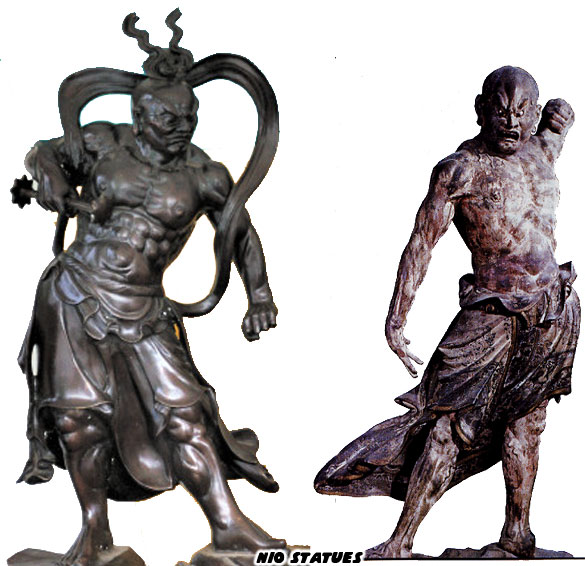
This was a fine line that Capcom was walking. The use of physical traits to make a person seem more animal than man was used in racist propaganda less than a century ago. By dehumanizing minority groups it was easier for the public to side against them and for segregational laws to be passed. In order to make players fear Gouki he also had to be dehumanized. The Dictator was an impressive boss but Gouki was the peak as far as villains went. Capcom was able to dehumanize Gouki without offending players or their sensibilities. Part of that was through the animal cues but part of it was also through spiritual and metaphysical traits. Gouki wore large wooden prayer beads around his neck. This did not make him a spiritual man but instead was a sign to demonstrate that he was a martial arts master. While most Westerners were familiar with the colored belt system used in karate Gouki had evolved well beyond that. He wore a rope instead of a colored belt. The beads were an older symbol, they were something that he had taken from his old master, a Chinese martial artist named Goutetsu. The poses and art featuring the character were pulled from ancient Chinese and Japanese mythology. The demonic protectors of the gates of Heaven and Hell were mighty warriors. They were muscular, crimson skinned, had fearsome scowls and spiky hair. The connections between Gouki and the ancient Nio were certainly more identifiable for the Asian community than the Western one.


This relationship between man and demon was not lost on westerners however. His design was believable but clearly supernatural. It was the way in which the industry reinforced the myth of the supernatural karate fighter that kept audiences coming back for more. The next blog will explore a similar villain created by SNK. As always if you enjoyed this blog and would like to sponsor me please visit my Patreon page and consider donating each month, even as little as $1 would help make better blogs and even podcasts!

Friday, July 17, 2015

How fight culture became fighting game history, part 8

Bodhidharma was a historical figure that helped spread the martial arts and Buddhism throughout Asia. By the time the Chinese fighting arts reached Japan there had been a blend of native Shinto beliefs and mythical stories spreading through the various kingdoms. As Buddhist monks traveled through Japan they spread Buddhism at a slow pace. The Japanese were very insular and wary of any foreign ideas, even more so than the Chinese. The philosophy of the monks became intwined with the Zen teachings in China during the sixth century. By the time Buddhism spread through Korea and reached Japan it was slightly different than what Bodhidharma had started out with. This did not reduce the status however of Bodhidharma. With his dominating presence and hermit-like tendencies the Japanese could see how Bodhidharma predated the wandering swordsmen of the feudal era. It was not hard to understand why he would be revered for his tremendous wisdom and martial prowess.
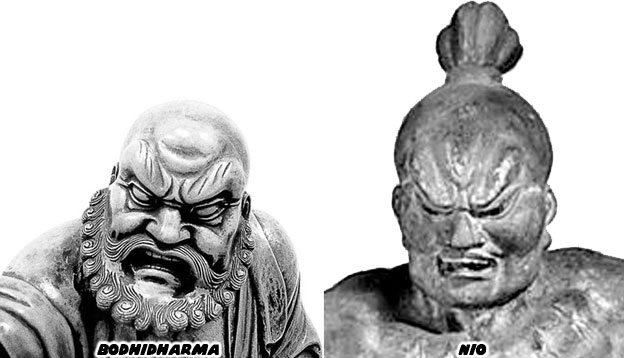

Bodhidharma seemed to be a physical manifestation of the ancient Nio and this appealed to the Japanese. Over the centuries the figure would become more and more recognized until he had also received some level of icon status. Statues and decorations bearing his likeness could be found in temples and also in homes all throughout Asia. Fast forward to the end of the 20th century when the designers at Capcom, and in particular the manga illustrator Masaomi Kanzaki, had to put a face on the master of Ken and Ryu. Up until that point gamers had no idea who their master was. Due to a translation error the west had only known of "Sheng Long." They assumed that it was the name of the master instead of the name of a dragon punch. In Japan the master was known as Gouken but he had only been written about and had never been seen. Kanzaki committed the original design of Gouken to paper in the original Street Fighter manga series. The design had stuck ever since. The master of Ken and Ryu was a bald man, sporting a beard, dressed like a monk with an imposing stature. He had abilities and wisdom that were borderline supernatural. Capcom introduced his evil brother into the Street Fighter series inspired by the myth of Sheng Long. Gouki, Akuma in the USA, had murdered Gouken in a fit of jealousy. The face of Gouki was modeled after that of a lion but his overall impression was that of the Nio. If you were to place Gouken and Gouki side by side it would become apparent that the figures were based in part on Bodhidharma and the Nio.
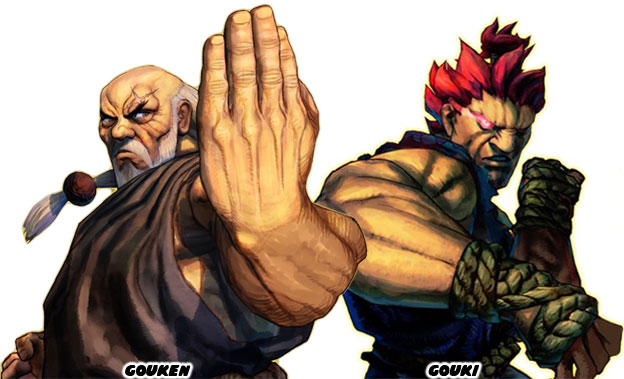
This connection to spiritual figures also explained why the alternate costumes for both fighters featured them wearing enormous Shinto ropes, called Shimenawa. Ropes were used to bind spirits, called Kami, into objects like rocks or trees in Shinto spiritual beliefs. The objects that attracted kami were known as Yorishiro. When the ropes were adorned with paper streamers, called shide, they marked the spiritual sacredness of the location or object. Throughout Japan there were trees and even islands bound by shimenawa and shide. Street Fighter, Samurai Spirits and a few other Japanese-developed games often made use of Shinto iconography. The unique thing for the spiritual belief was that kami could not only possess natural objects but also people as well. A Yorimashi or "Possessed Person" was a person that took the place of a Yoshiro. The rope belt that Gouki wore, instead of the cloth belt worn by traditional karate masters, would be a way for him to symbolically bind the kami to his body. The prayer beads he wore would be a way to keep the spirits under his control and not vice-versa. When Gouki would go crazy in the comic stories his prayer beads would break and scatter. Gouki would not longer be aware of himself as the Dark Hadou (evil spirits) had completely taken over. In the case of Gouken his belt and knot were designed to protect him from the forces of evil and give him the strength to endure.
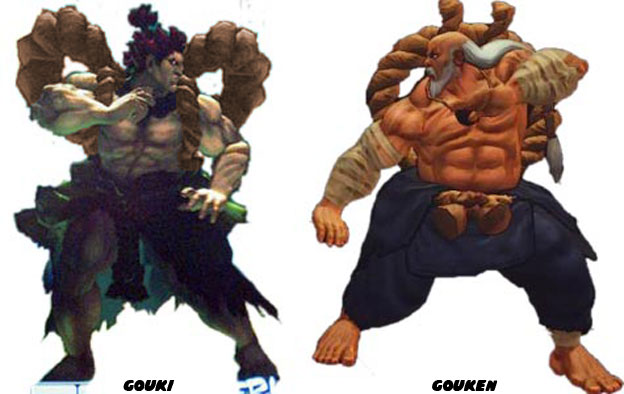
 

To make a crude comparison between the types of knots in Shinto beliefs think about the horseshoe mounted over the doorway in many western homes. If the horseshoe is pointing up then it collects fortune for whomever passes through the door. If the horseshoe is pointing down then it symbolically rains down fortune. The horseshoe can not be placed sideways and do a little of both. It is an up or down prospect or nothing at all. For the shimenawa knots it is either the defensive one where the ends point up, known as the Unryu or the offensive version called the Shiranui where the knot points down. Gouki being the more aggressive brother wears the Shiranui knot in his alternate costume. Sumo wrestlers, especially the grand champion (Yokozuna) celebrate the beginning and ending of the tournament season by replacing their synthetic fiber belts with the Shimenawa ropes, shide streamers and ornate knots. A traditional belt can be spotted as the alternate costume for the sumo wrestler E. Honda.
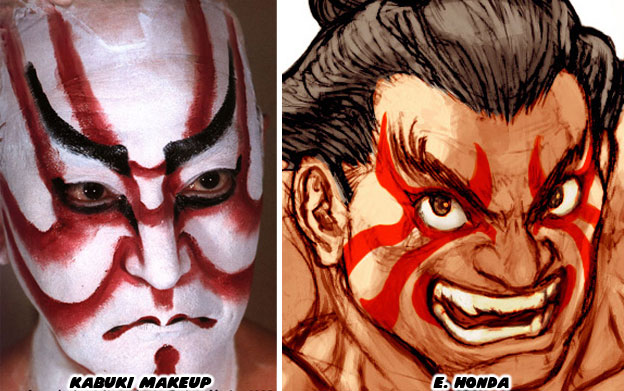
 

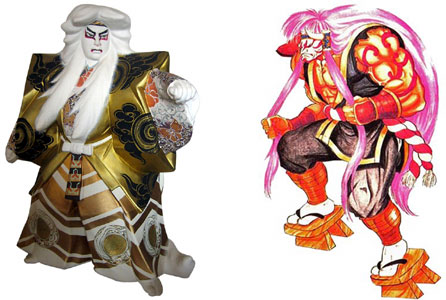
As an aside, the character of E. Honda was one of the first (slightly) controversial figures in the history of Street Fighter. Sumo wrestling was an ancient tradition, going back almost 2000 years. It had a lineage that could be traced back to Central Asia and India, just as karate could be traced back to aikido, kung-fu and older forms of fighting. Sumo above all other fighting forms was also known for having a strong connection to Shinto spirituality and was therefor revered by many nationals. The use of shimenawa belts, the referees that dressed in feudal-era uniforms and even practice of throwing salt in the ring to ward off evil spirits was all based in Shintoism. The decision to use the theatrical face paint of the secular Kabuki theater was seen as a slap in the face to tradition. The designers at Capcom meant no harm with his look, they used the makeup to make the character seem anything but traditional. Honda had to stand out when compared to the colorful cast that would fill out the rest of the World Warriors introduced in Street Fighter II. Characters inspired by kabuki theater would turn up again in other Capcom fighting games, like Final Fight 3, as well as in games by competitors.

There was an interesting character that Capcom had introduced in Street Fighter EX that was a blend of multiple influences, martial and spiritual as well. Kairi was a melancholy fighter, an amnesiac that was drawn to battle. Kairi's moves took on cultural significance. His fireball was not named the hadoken (punch, wave, fist) but instead the Maryu-Rekko. Maryu meant magical dragon, rekko meant beam / fissure of light. The hurricane kick was named the Mouryo-Kasen. Mouryo were little ghosts, goblins, devils and spirits from Japanese fairy tales. Kasen was a whirlwind / swirling / movement of force. His super fireball was called the Shinki-Hatsudo, which translated to God Ogre - spirit / benevolent energy. His Shungokusatsu-like move was named the Kyoujyarenbu, the "unlucky dance of the cursed tribe." The common translation of "kyo" was unlucky, as this move destroyed him almost as bad as his opponents. The names of his special attacks helped explain his design cues and purpose. They were details that shaped the character and helped explain why he was not only scarred but a loner-type character. We can infer several things from Kairi and his moves. The style of his strikes was based more on spiritual connotations, with a heavy dose of symbolism from Japanese mythology. Imagine that his special kick was possible because he floated on the breeze like little ghosts and goblins. Or that his chi-energy was the result of him tapping into a higher power.
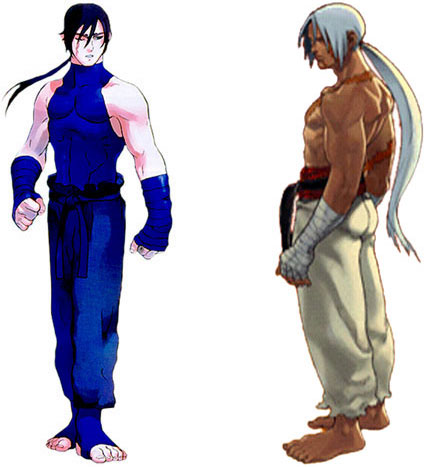

Western gamers wouldn't make sense of these things because most did not have exposure to Japanese mythology, spiritual beliefs or even have translations handy. Most Westerners could tell he was a cool character on the count of his scars and Ryu and Gouki-like moves, the rest of the symbolism was unimportant. While the moves were similar to the fireballs and dragon punches we had been seeing since 1991, their origins were unique. The developers at AKIRA and artists at Capcom were showing players that no one style had exclusive dominion over those special attacks. In a similar fashion Sagat's tiger fireball and uppercut (and knee) were born from Muay Thai rather than karate, Dhalsim's special moves were the result of Yoga and Guile's was a secretive form passed down from Charlie Nash. So what form did Kairi employ? Was it karate or something else?
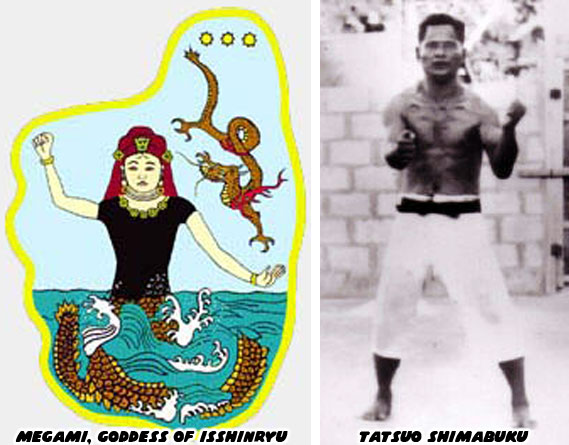


It had been suggested that he was an outcast from the Bushinryuu ninja clan, or a practitioner of the Kyoujarenbu, an "Iron Hand Technique." He was possibly even a practitioner of Mizugami (other times written as Megami or "Goddess") style of Karate. Mizugami style is sometimes dramatized in manga but is rooted in Isshinryu Karate. The form of karate was founded by Tatsuo Shimabuku. Tatsuo was born 1908 and studied in Kyan / Chan village under his uncle Kamusu Chan. The village had a fair share of Chinese immigrants. They were some of the first to introduce an older form of karate to the nation. Tatsuo became well versed in Shorinryu and Gojuryu karate while also studying classic Chinese forms. This diversity made him proficient in both armed and unarmed combat. He was actually one of the legendary fighters that predated Mas Oyama by a generation. Tatsuo avoided being conscripted into World War II by teaching Japanese soldiers how to fight.

Isshinryu meant "One Heart Method" and actually incorporated Goddess Mizugami on the patch sewn into the gi of practitioners. Ishhinryu had its roots in Okinawa but also in China where other martial arts influenced its development. It's spiritual connection was undeniable. I can draw a spiritual connection between Bodhidharma and Gouken and the Nio and Gouki. I can draw a legacy between Huo Yuanjia and Gen. I can even draw a physical connection between Wing Chun, Bruce Lee and Chun-Li but here is where it gets interesting. There was a master that taught Gouken and Gouki known as Goutetsu. The Chinese immigrant was a master of Ansatsuken, a generic term for the Assassin's Fist. Goutetsu was never written or presented as a particularly large or powerful man. In fact he was a slight figure in most game and comic presentations. Granted, he was elderly by the time he was killed by Gouki but in his younger days he was quite muscular. Tatsuo Shimabuku was to Mas Oyama what Kairi would become for Ryu. He was a martial arts master, a predecessor that was lost to history. He was nonetheless important in its evolution. ARIKA had designed Kairi to ask what would have happened if the two men had faced each other at the peak of their respective abilities. A bit of the ancient world and modern world colliding in video game form. In latter years Capcom would revisit the inspiration for Kairi and instead model Goutetsu after Tatsuo. Gone were the headscarf, long hair and beard, Instead the new Goutetsu, which debuted in the animé film Street Fighter Alpha Generations, looked eerily similar to Mr. Shimabuku.
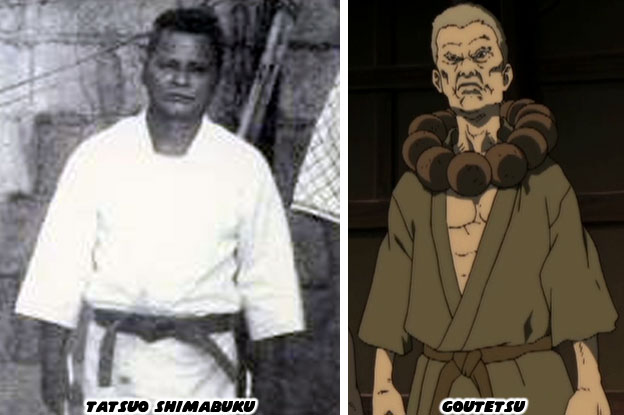


Isshinryu was a functional form of karate which included vertical strikes (shoryuken?) yet also maintained spiritual beliefs. It bridged the old traditions with the modern concepts of karate. It also predated Oyama's Kyokushin Karate by many years. Tatsuo was a Chinese descendant and the form his uncle introduced to him was rooted in classic Chinese systems. The spirituality behind Isshinryu closely mirrored the philosophy behind many Chinese forms. There was a science behind the fantastic feats of strength and endurance that martial arts practitioners could perform but for most of their history it was assumed to have spiritual importance. The next blog will look at how the myth of the fireball came into being. As always if you enjoyed this blog and would like to sponsor me please visit my Patreon page and consider donating each month, even as little as $1 would help make better blogs and even podcasts!
Wednesday, July 15, 2015

How fight culture became fighting game history, part 7

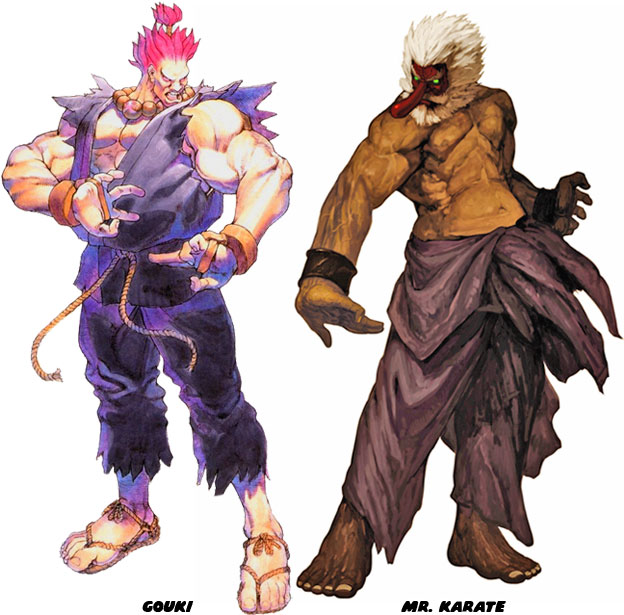
No character is truly original, none are pulled out from thin air, at least not the memorable ones. Gouki and Mr. Karate, the greatest "boss" characters from Capcom and SNK respectively, were inspired by mystical icons. To be specific the spiritual influences of Asian religions. These fighting game characters, their appearance, colors and even poses were based on the Nio. The Nio were the guardians of Buddha. They deterred evil man and demon from the gates of the afterlife and met the honorable ones as a friend when their spirit was ready to transcend this dimension. These figures could be found in temples as intricately detailed wooden carvings, some were life-sized and some were gigantic. They were also referred to as the the Benevolent Kings in other writings. The two most recognizable, the ones highlighted in manga and anime, being Agyo and Ungyo; the beginning and end, or "alpha" and "omega." The guardians were physically imposing figures, whose exaggerated muscles and proportions were meant to instill fear into those that would desecrate a temple. Although empty-handed in most representations they were nonetheless meant to be seen as fearsome warriors and masters of the martial arts.


Upon studying the statues, their origins and aesthetics we can see how the Nio could be incorporated into a fighting game. One of the most popular incarnations being Gouki / Akuma from Capcom's revolutionary Street Fighter series. Years later many of the fearsome elements from the Nio and earlier Vedic Traditions were pulled by Capcom once more to create the heroes and villains featured in Asura's Wrath. Given their importance in Buddhism and symbolically strong gestures they could not have been meant for anything less than "boss" status in their respective titles. The scowls, wide-eyes, raw power and menacing poses were universally understood even if their divine origin was not. All it took was for some artists to come along and update their designs, bring them into a contemporary setting.


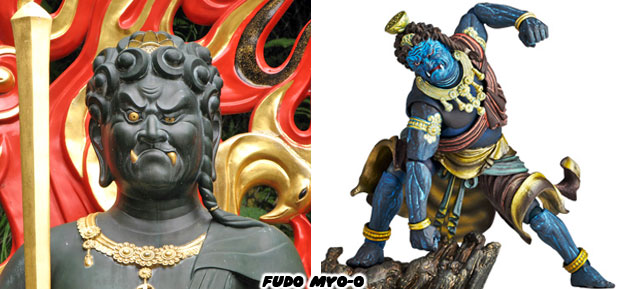
The Nio are sometimes mistaken for another figure from Buddhism. Fudo Myo-o AKA Acala is known as the "Immovable One." The fearsome-looking demon is actually a protector as well. He burns away all impediments and defilement so that living beings can reach enlightenment. The blue skin is supposed to recall elements of the supernatural. Gods and demons are often presented with blue or red skin. Many Hindu deities were presented with blue skin as well and possibly influenced the creation of the Chinese and Japanese spirits.


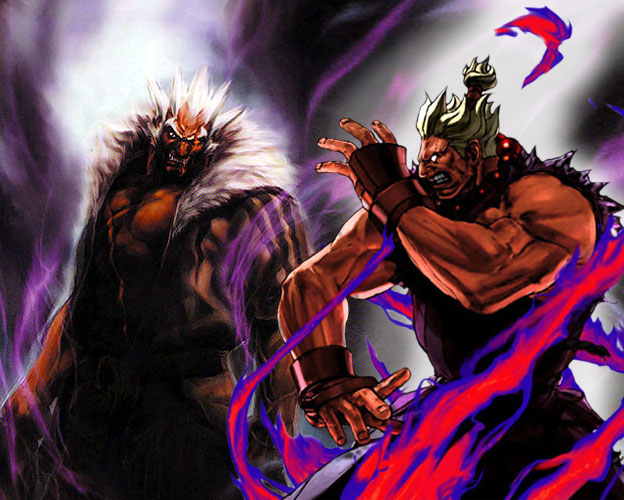
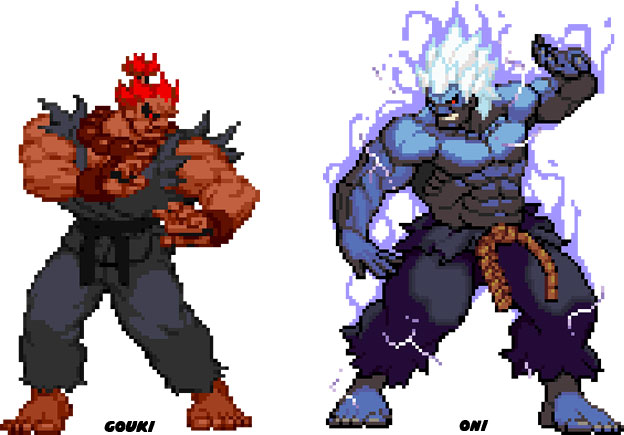
While Gouki was based on the Nio, a latter version of the character introduced in Super Street Fighter IV was known as Oni (the Japanese word for demon). The supercharged, blue-skinned version of Gouki was undoubtedly rooted in the design of Fudo Myo-o.


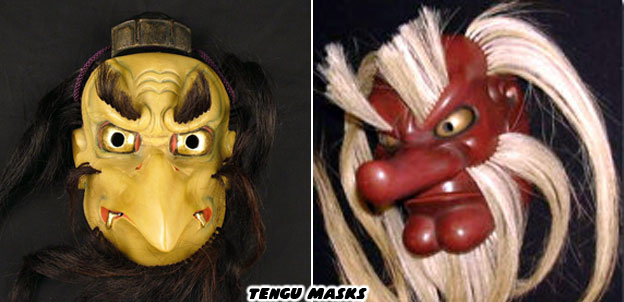
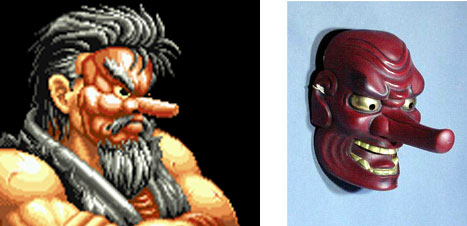
Mr. Karate from the SNK King of Fighters universe combined the Nio influence with a Tengu mask. Masks were very powerful symbols of culture, every culture had a mask tradition and were recognized for their symbolic properties. When used carefully by a game designer they could make an ordinary character extraordinary. In Japan, and in some regions, masks had an important ceremonial position. Originally carved from wood and later turned into a paper-maché craft, Iwami Kagura masks, which were similar to the Tengu masks were used in a historical and folk context. They were most commonly used for Noh plays as great storytelling devices. Even those without an understanding of Japanese culture could still find time to appreciate the colors, design and craftsmanship that goes into these amazing masks.


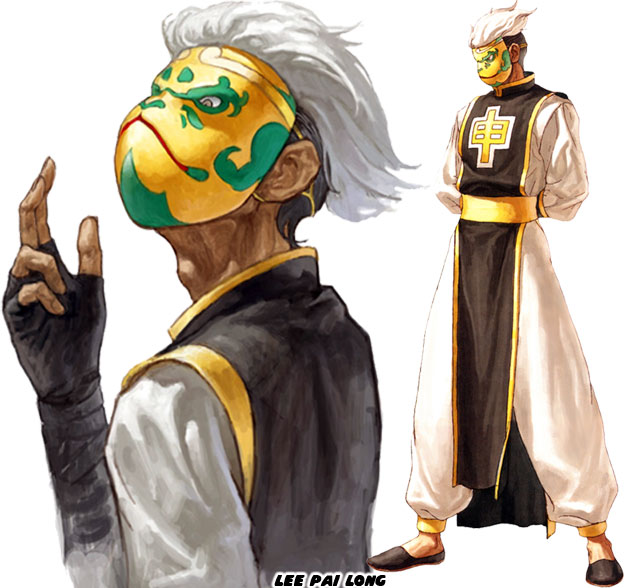
The use of masks as a storytelling device is also something featured in theSichuan Chinese opera. Stories based on the Romance of the Three Kingdoms and Journey to the West often feature performers in full face paint, if not ornately designed silk masks. Some performers were able to switch masks in a fraction of a second as a magic trick. This centuries-old practice was fiercely guarded by the Chinese and the techniques of the masked performers were often handed down to members of the immediate family only through a rigorous apprenticeship. In similar ways certain forms of kung-fu were also only trusted to immediate family members. While the Shaolin were willing to train other monks in the art of self defense many kung-fu practitioners were much more secretive. Many forms died out and it took a long time for certain lineages to be taught to foreigners, if at all. The fighting game character Lee Pai Long was a masked performer and master martial artist. His father was a legend and trusted his only son with his arcane knowledge of medicine as well as the martial arts. In SNK canon Lee Pai Long was a minor character but his design influences were notable. His mask had the pattern of the Monkey King on it. He came from a tradition that predated the Tengu mask.


The word Tengu translated to Heavenly Dog, a Shinto god. Sometimes the tengu mask had a beak and made the wearer appear like a bird. The more common version has red skin and a long nose with certain phallic qualities. Yes, there were some tengu masks with long flaccid noses as well! The term tengu and the characters used to write it in Japanese were borrowed from the name of a fierce demon from Chinese folklore called tiāngoǔ. The tengu were mythical characters, spirits, animals, goblins and such that existed before Buddhism reached Japan. As was the case in other locations the Buddhists pulled mythology of the region and incorporated it into their stories. The tengu stopped being representatives of ancient animistic Shinto figures and were written as opponents of Buddhism but also sometimes protectors of it. This dual nature worked in the favor of the characters designed for fighting games. The character of Mr. Karate was the alias for Takuma Sakazaki. As Takuma the character was heroic, noble and very honorable. Mr. Karate by comparison was a brutal fighter that held nothing back and showed no mercy to his opponents. Takuma was based greatly on the Japanese karate master Mas Oyama. However as soon as he put on the mask he developed a completely new personality. The father of Lee Pai Long was Lee Gakusuo, he was the martial artist that left an enormous scar across the chest of a young and arrogant Takuma. Gakusuo was what Mr. Chen was to the legend of Mas Oyama.


As a design choice it was a bold move from the people working at Capcom and SNK to feature martial artists disguised as divine beings. Imagine what a spectacle a real fighter would have created if they chose to protect their identity, or create a new personae with a mask? What would have happened if Mas Oyama or Huo Yuanjia had returned from their self-imposed exile to fight foreign champions while wearing a mask? What if they shunned the fame and had shown up at fighting tournaments unannounced and disappeared as soon as they beat their opponent? Imagine what the reaction would have been if Bruce Lee had lived and caught anonymously instead of promoted himself and his philosophies on movie screens. The stories and conspiracy theories surrounding their lives would be even stronger today.


The most unique designs in the King of Fighters and Street Fighter revolved around a distinct Japanese aesthetic. The Nio figures, the tengu masks and classic theater all had a part in shaping the legacy of fighting games. To ignore the origins of these characters was to deny the reason why audiences were so attracted to them. Western fans of the titles that lacked an understanding behind the Eastern religions, customs and traditions still appreciated these unique characters. I would argue that Gouki, Mr. Karate and other characters like them inspired Westerners to study more about Asian cultures and religions. There was no doubt that they found some influences with their favorite characters as they progressed deeper into history. The foundation for the King of Fighters and Street Fighter series was planted at the start of the 20th century not in the middle of the century. Mas Oyama was a central influence to both games but there were Japanese legends that existed before he did. When the designers at Capcom and SNK studied these men they were able to work them into the canon of each series. The next blog will get to the roots of the Japanese masters. As always if you enjoyed this blog and would like to sponsor me please visit my Patreon page and consider donating each month, even as little as $1 would help make better blogs and even podcasts!