Showing posts with label silber. Show all posts

Tuesday, March 19, 2024

Gouki in Street Fighter 6, the greatest fighting game villain has returned

Hello friends, I want to say thank you for visiting the blog, even though I am posting old 1UP blogs on Monday, and Wednesday, and trying to come up with new content on Fridays. I noticed in the past week I’ve gotten a significant bump in views following the release of the new Gouki / Akuma reveal trailer for Street Fighter 6, and more recently the first character voice trailers for the next Garou City of the Wolves. I put together a few words on what I picked up in the first trailer.

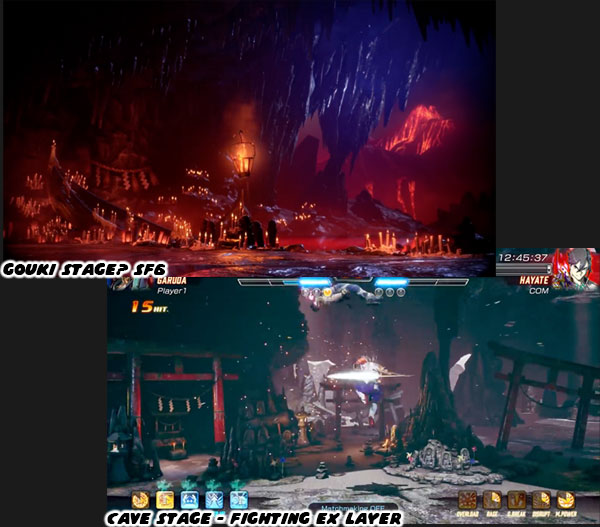
The first thing we saw was a variation of the cave stage, which had been used as the backdrop to Gouki since the days of Street Fighter Zero / Alpha almost 30 years ago. I have a feeling that the location presented in the trailer will be his actual stage in the game. Gouki has always lived as a hermit. Away from society, mediating, and training to turn his body, and mind into steel. There were a number of details in the trailer that meant a lot more to the Asian community rather than western audiences. We could tell that the stage was designed to be as intimidating as the character himself. It reminded me of the Garuda stage from Fighting EX Layer.

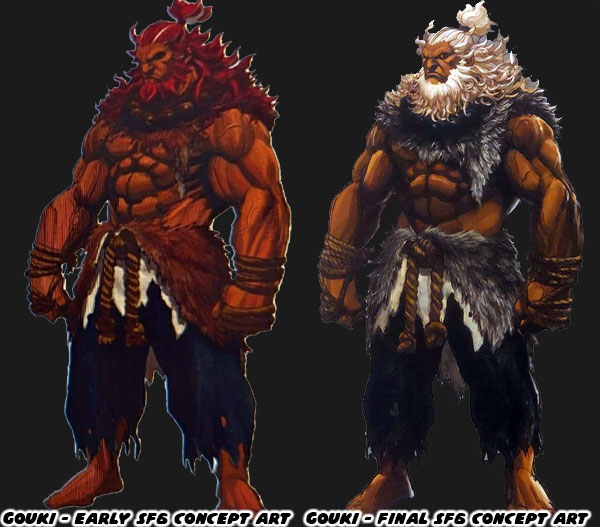
The other thing that stood out to me was that Gouki’s hair has finally gone from red to white. In the early leaked SF6 concept art he looked as intense as ever, but he still had red hair, with some white streaks which were a carry over from SFIII. The finalized version had all white hair, and even white fur on his costume. This was important for several reasons. First off it separated his appearance from that of any other game in the series. The other was that Capcom was willing to continue refining a design until the very last reveal. Remember all the details I pointed at from the original Lili concept art? A lot of that was changed by the time the game was released. Lili’s new look was both culturally sensitive, and culturally relevant. Gouki had several changes, more subtle than Lili’s, but also gave his appearance more of an impact.

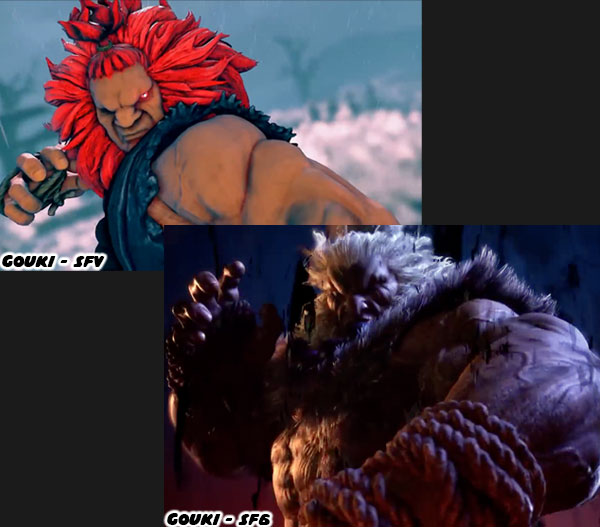
When we first got a good look at Gouki in the SF6 trailer we could tell he was designed to inspire fear. He had always been an imposing villain, however in previous incarnations he was not frightening. In order to tell audiences that they should be afraid the team at Capcom made him much more visceral. His body was more shredded, with veins, and muscles rippling over an entirely new 3D model. From a storytelling perspective they did the reveal slowly. We saw his frame, his massive torso, his thick arms, and his club-like fists. He looked like a nightmare brought to life. When the studio revealed him for Street Fighter V they literally just gave us a trailer made up of cool moves. By telling us nothing about his library of attacks in the SF6 trailer it would give audiences a chance to discover how truly powerful he was in person.

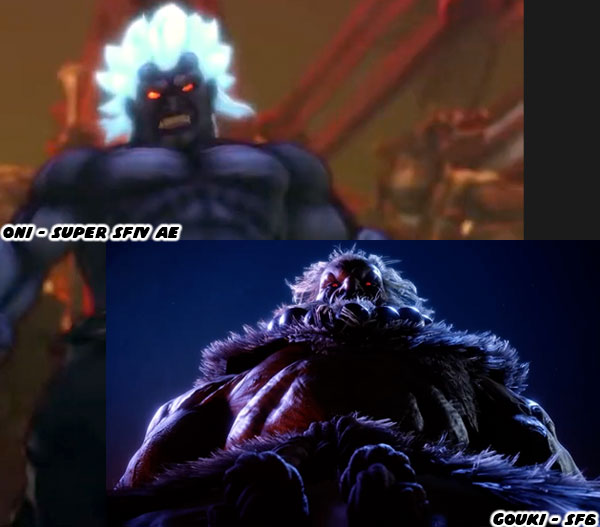
The other thing that the updated look do was signal that his transition from beast-like human into a literal demon. I had talked about it multiple times in the past, but Gouki’s design was based on that of a lion. Going back to Street Fighter IV the studio has transitioned his look into two phases, he went from inspired by a lion, and Nio, to being based on an oni. The white hair, and leathery skin made him a plausible human-turned-demon. In fact the whole trailer was filled with design cues from ancient Japan.

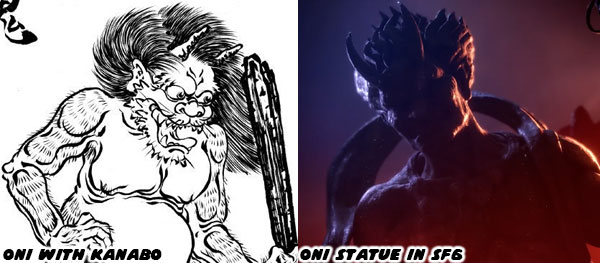
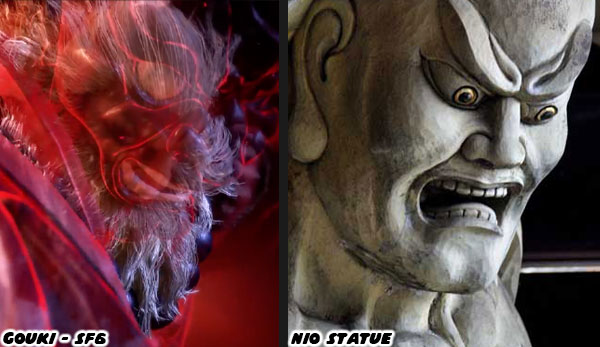
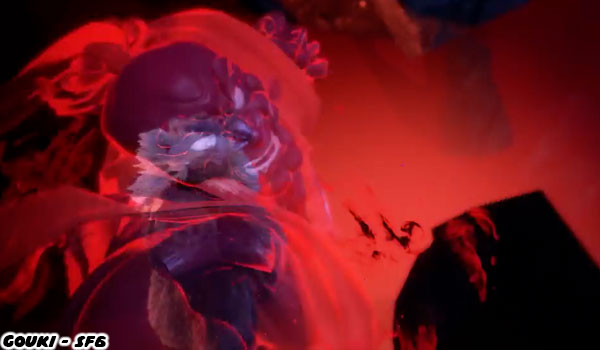
The cave where Gouki is training has several oni statues in the background. These are sometimes confused with the nio, which were the guardians of the gates of the afterlife. Oni were some of the various types of demons the roamed the countryside in ancient Japanese traditions. They were often seen wielding a spiked club, a kanabo. There were a few short shots in the trailer that would be easy to miss if you didn’t know to look for them. When Gouki lets his rage flow though his fist we can actually see a glowing spirit envelop him.

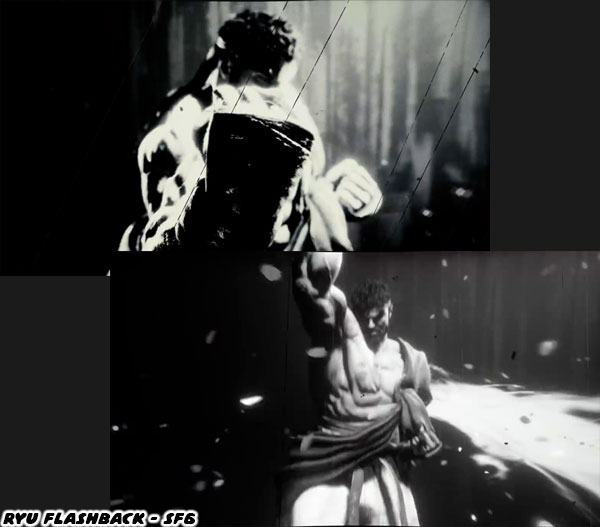
It almost appears that he is wearing the frightful mask of the nio. We can see the large eyes, curved brow, and open grimace. The focus of his rage was actually a few quick flashbacks of Ryu. To long-time fans of the franchise it was the confirmation that he was obsessed with Ryu. The pupil of his former master, and his own brother was certainly under his skin. Gouki was boiling with a supernatural rage. Punching at immovable statues, honing his strike to razor sharp precision. When he went for a shoryuken we could see him enveloped with a red aura. For a fraction of a second we could see Ryu in a white light performing a similar dragon punch, but he looked serene by comparison. It was a yin / yang opposite approach to the powerful strike. Gouki had become the living oni, the living nio.

This was the thing that I loved the most about the best of the Street Fighter designs. They were archetypes, inspired by equal parts real heroes, and mythology. The studio was creating plausible fighters with historical context. Certainly demons didn’t actually roam the Japanese countryside centuries ago, but consider that perhaps there were wild men, hermits built like brick buildings back then as well. There were people that enjoyed lifting heavy stones in order to prove their physical superiority. Those that lived off the land, killed animals with their bare hands, and only rarely interacted with villagers. Then there was the case that these settlers were from China, bringing over Buddhism, as well as the martial arts traditions. These types of outcasts could easily have inspired the rumors that there were fearsome ogres that lived on the outskirts of towns. Or Gouki was genuinely possessed by powers from the spirit world. It was the type of mystical ability that ARIKA used when creating Street Fighter EX, Fighting Layer, and Fighting EX Layer.

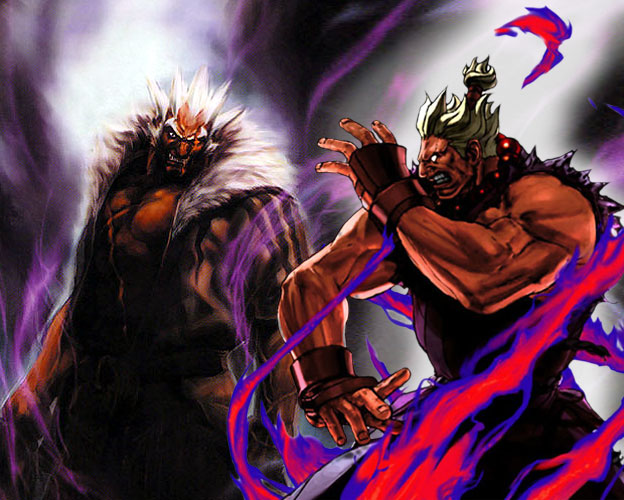
The fighting game archetypes that Capcom had developed over the past 35 years were icons in the gaming world. The artists, and designers at other studios could also exploit these visual storytelling cues when coming up with their own roster. Of the three greatest fighting game boss designs in my book, with Gouki being first, I would argue that Silver was the third best. He worked as a fighting tournament villain because he used many of the same elements as Gouki, however he was western based. I had had discussed Silber previously on this blog. As a quick primer in case you weren’t even born in 1999 when Buriki One was released. The insanely strong German created his own fighting form, and traveled the world seeking out opponents. He would fight wild animals to prove his ability, and had been painted smashing the face of a polar bear in official SNK art. He was very much cut from the same cloth as Gouki.

The animal pelt Silber wore on his gi was not to be confused as the fur lined jacket of a mafioso like Mr. Big. By a similar token Gouki had evolved past his black gi. His appearance in Street Fighter 6 was more feral than ever before. Losing his humanity to the Dark Hadou, the evil force that propelled him forward. That drove him to kill his master, and his brother as well. By having him shirtless with white hair the studio had amalgamated the Oni design from Super Street Fighter IV with his more recent Lion Mane SFV look. I don’t think the company would ever bring back the Shin-Gouki, or Oni characters as essentially Gouki in SF6 was a blend of the alternates. I am certainly interested in how he will be used in the story. I’d like to know your take on the character. Tell me in the comments section please. Now I have to make time to talk about Garou: The City of the Wolves for a future blog. As always if you would like to sponsor me please visit my Patreon page and consider donating each month, even as little as $1 would help make better blogs and even podcasts!
follow the Street Writer on Patreon!

Monday, October 2, 2017

Hiding the master in plain sight, the genius of SNK's character design... part 3

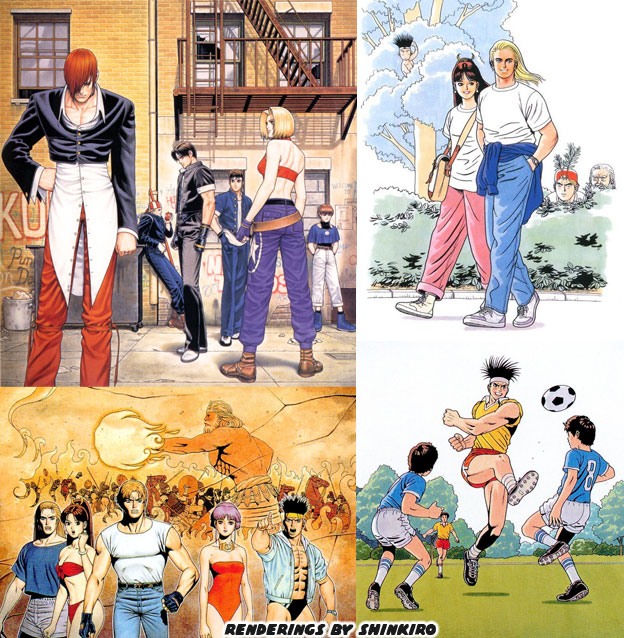
In previous blogs I established that Shinkiro had become one of the most influential fighting game artists of all time. The reason for this was obvious when comparing his work to other artists in the studio and abroad. He would render many of his subjects in realistic settings, with realistic clothing choices. They were often presented in casual settings, perhaps enjoying a cocktail, playing in the park or hanging out at the pool. Prior to that most character illustrations had the figures in fighting scenes and only in fighting scenes. Audiences were used to characters looking highly stylized, with exaggerated physiques. Guys were overly muscular and females were slim with large bouncy breasts. After all these were the types of physiques that manga and comic books expected the archetypes to have. Shinkiro changed all of that. You could look at his art and see people that very well could have existed. By looking at these figures you would necessarily be able to tell what martial arts form they represented. Again, he his that martial arts master in plain site.


Eventually all of the artists at SNK started to become attuned to what Shinkiro had brought to the genre. They understood that if they wanted to put a character into the Fatal Fury, Art of Fighting or King of Fighters, they they had to meet the elements that Shinkiro had established for the series. There would be no green-skinned Brazilian wild man or stretchy-limbed Indian for example. Those figures were not necessarily grounded in any sort of realism. The fighters did not have to be realistic, but they did have to have a sense of realism. The artist Hiroaki Hashimoto aka Hiroaki was an exceptional painter and considered an understudy of Shinkiro. He worked on a number of excellent pieces for the KOF series. In 1999 he was a lead on a new title called Buriki One. This game was set in the KOF universe but a bit in the future. There was a new tournament in town, inspired by the real world K-1 and Pride fighting championships in Japan. There was a call for representatives of the various martial arts. It was the closest that the team at SNK came to creating martial arts archetypes in the vein of the Street Fighter series. The final opponent was a new villain. Silber was very much an SNK answer to Gouki, he had traveled the globe defeating the masters of various arts and even a few wild animals.


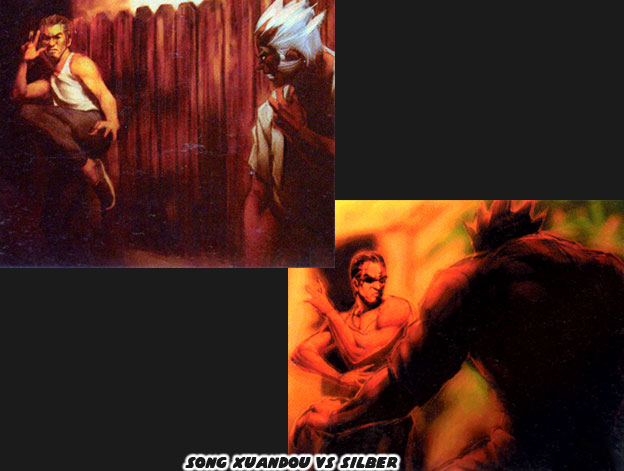
One of the competitors in the Buriki One tournament was an elderly Tai Chi master named Song Xuandou. It turned out that this was the only character that had a previous run in with Silber. Decades earlier, before MMA tournaments were being televised the only way for these fighters to find out who was the best was by actually visiting various dojos and exotic locations. There were no newspapers, no radio or film crews following these people. The fights that went down were the stuff of legend and only a handful of people actually saw them. This was how people like Mas Oyama earned a reputation. When Song was a young man he was lightning quick and very confident in his abilities. He took on Silber and lost. Although he was defeated it was a close battle. It could have been likened to the fight between Bruce Lee and Wong Jack Man. Song was one of the few people that could have claimed to have survived a fight with the powerful German. Silber was and remained a secretive figure in the world of SNK. It was entirely possible that he killed some of the people that he battled. Official character art for example featured him smashing in the face of a polar bear. When the designers of Buriki One called for a Chinese fighter to be put into the game Hiroaki gave audiences an elderly archetype. Nothing about the character seemed to stand out. But again, he was hiding the master in plain sight.


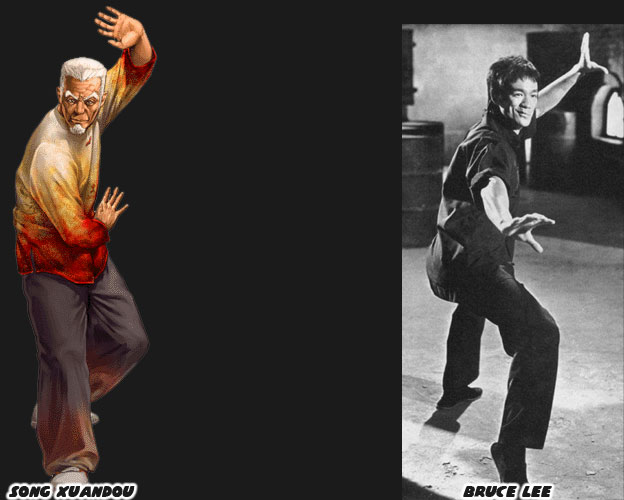
While Song no longer held the speed or flashy kicks of his youth, he retained most of his power. Song was modeled partly on Bruce Lee. This was a version from another timeline, say if he had remained in China and had stayed closer to the kung-fu traditions. This was why he didn’t move or fight like Marshall Law from the Tekken games. He was not just a carbon copy of the actor. Song had the vigor and even look of a youthful Lee in the ’60s. This was back when both he and Silber were getting started in their careers. Song had now distilled his techniques to a few deceptive moves. He could strike, trip and kick his opponents with ease. It was graceful watching him work in the tournament. You could have mistaken him for the old guy practicing Tai Chi in the park rather than a former martial arts superstar. Again this was the SNK school of design at their best, they hid the master in plain sight. It should be noted that not every SNK fighting game required this type of design. For example Shinkiro did a tremendous amount of promotional art for the Samurai Spirits / Shodown series. But he was not the only artist that influenced the fighters.


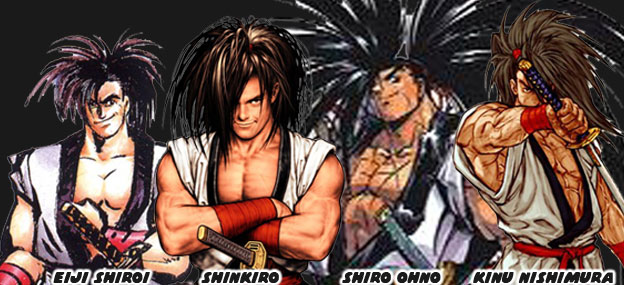
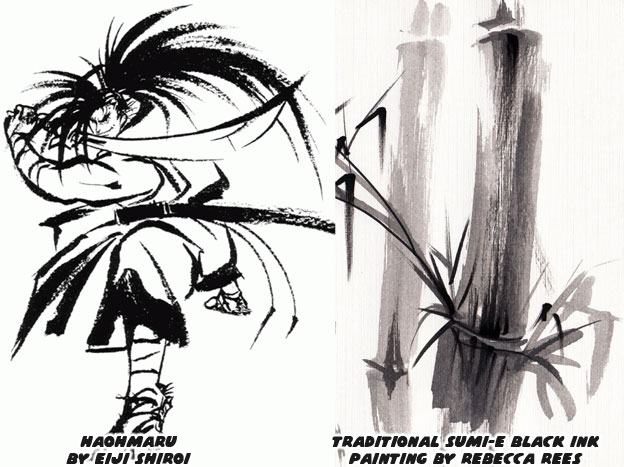
The game was set centuries ago, in feudal Japan. Gunpowder and steam were barely shaping the world, changing the course of the industrialized nations. Japan was insular during this period and held onto tradition longer than most other countries. SNK wanted to capture that era but not romanticize it. They wanted it to pop, to be vibrant, like an animé show. In order to do that the game had to be highly stylized. One of the artists that got picked up for the sequels was manga artist Shiro Ono. He had a very sharp style, with hard lines and exaggerated poses. At the same time the studio did not want the designs to be too outlandish. Shinkiro’s realistic style would have been in contrast with their goal. The artist that the company settled with was Jin Mera aka Eiji Shiroi. Her style was deceptively clean. No extra brush strokes in his renderings. The character designs were easy to read, her choice of color and style really stood out from her peers. In fact the thing that helped cement the look of the series were some paintings that she created using charcoal ink. The sumi-e style was traditional and went back centuries, if not thousands of years. Calligraphers and portrait artists used minimalism to create forms and figures.


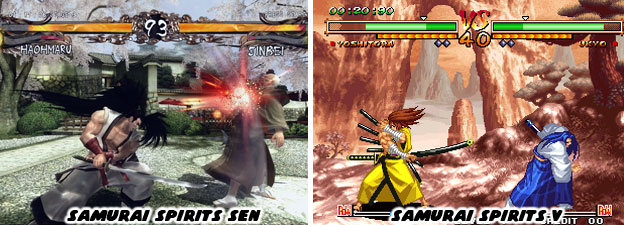
The solid black and white paintings that Ms. Shiroi created perfectly reflected the era that SNK was trying to capture. Eiji was a drawing teacher, her training and insight were perfect for this project. In the case of Samurai Spirits the masters of the various sword arts did not have to be hiding. They wore classic-looking costumes, some wore armor, and they all fought with traditional melee weapons. There were swords, daggers, cleavers, hammers and axes used by the various fighters. As the series grew these things began to include the occasional explosive and even a rifle. For the most part however combat was based on bladed weapons. The designs had to be clear and easy to read. A Chinese warlord for example had a different costume than a Japanese ronin. Even among the various Japanese sword masters there was a lot of diversity. Ms. Shiroi helped plan their look and assigned each person bright primary colors so that they all stood out. As the series aged SNK experimented with 3D and they discovered that the muted colors that were en vogue didn’t really work for Samurai Spirits. This was most apparent in Samurai Spirits Sen. Realism didn’t work very well for the fantastic swordsmen and women. So they returned to 2D shortly after with Samurai Spirits V.


Not every design that SNK created went over well. The studio had a lot of growing pains and made a lot of mistakes when they were trying to capture the fighting game crown. We’ll explore one of the most diverse lineups the company ever gave us in the next blog. As always if you enjoyed this blog and would like to sponsor me please visit my Patreon page and consider donating each month, even as little as $1 would help make better blogs and even podcasts!

 follow the Street Writer on Patreon!

Monday, October 5, 2015

How fight culture became fighting game history, part 42

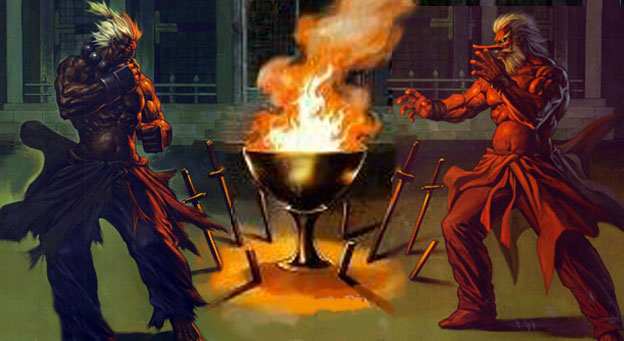
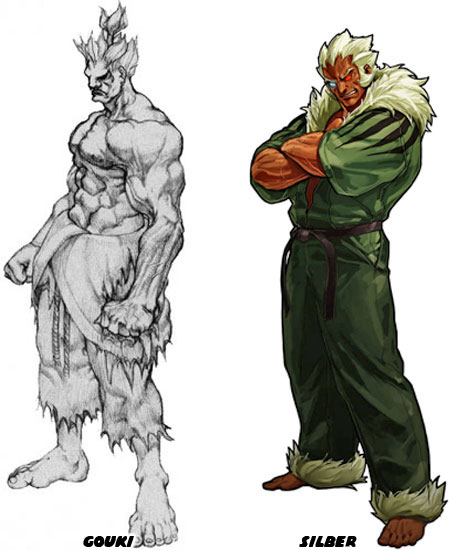
Gouki and Silber demonstrated the price that had to be paid to be two of the best fighting game bosses ever. They were willing to fight to the death at each and every encounter. Very few fighting game characters were ever written with that level of intensity. The pair were willing to kill in order to achieve their goals. The Dictator and the other bosses were willing to do the same but Gouki and Silber did not have a different agenda. They did not want to rule the world or even a small nation. They simply wanted to be the greatest fighters that had ever lived. By their definition the most lethal art proved who had true power. This took them out of the realm of bosses and made them symbols of evil.

The lack of respect that the two villains had for human life extended to themselves. These boss characters were willing to enter a fight even if the numbers were against them. They were willing to punish their own bodies, cripple their own bones and deform themselves for the sake of mastering killing strikes. Gouki and Silber had powerful bodies but gruesome expressions. Their faces were a mockery of the humanity they left behind. In the official character are they almost looked like they were wearing masks. Their features carved by a life of constant battle. The scars that Silber wore were clearly visible but Gouki's were hidden, they were scars on his soul. When Gouki killed his own master and brother he had done damage to himself that he would never be able to undo.
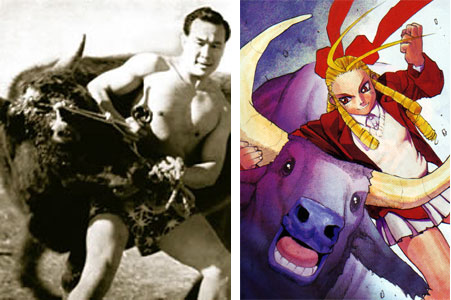
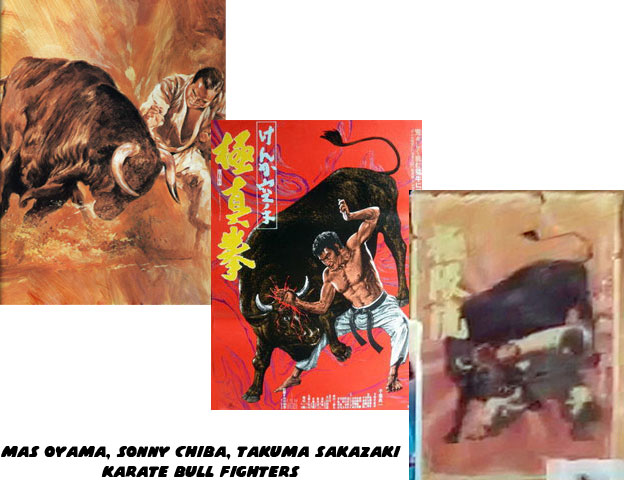
The pair had achieved a level of power that few could ever hope to reach in canon. Their training was so hard that no opponent was strong enough to spar with them and live to talk about it. The two had turned to nature to push themselves further. Instead of breaking rocks and trees they began fighting predators from the animal kingdom. This legend was taken from reality itself. Mas Oyama had travelled the world, defeating masters of just about every fighting style. When he ran out of people to fight he turned to animals. He would put on demonstrations of his Kyokushin karate style by fighting a bull. He would wrestle with the bull, break off its horns with a chop and then kill the bull with a punch to the head. When the bull was examined by a local butcher they would discover that Oyama had broken its ribs in several places and had actually shattered enough bone to make portions of the animal unfit for consumption. This legend evolved to make several Street Fighter characters seem as powerful in comparison and at a younger age at that!
It was such a powerful story that one of Oyama's students played his master in the film Karate Bear Fighter. Sonny Chiba appeared in several other moves based on the life of Oyama. These movies and characterizations helped shape the development of Takuma Sakazaki in the Fatal Fury and King of Fighters series.
Oyama inspired millions with his exploits and made many people believe that they too could follow in his footsteps. However none have proven to be a Godhand since. This was the cautionary tale of karate, the master that never quite made it. This was the lesson and legend of Willie Williams. Some karate practitioners took Soeno's fight against a bear as a literal challenge. Willie Williams was one of those. At 6" 7" and 230lbs. of lean muscle Williams was an imposing karateka. The African-American moved to Japan to train and follow the path laid out by Oyama. He immersed himself completely in the training regiment and wanted to prove that Kyokushin was indeed the Ultimate Truth.

You can imagine that a tall black man in Japan studying karate, dressing in traditional garb, training in the traditional format was a strange sight for conservatives and traditionalists. Surely no gaijin could grasp the nuances of Kyokushin, the fighting spirit. Williams, and most Americans are want to believe that anything is possible and a form can be learned and understood by the people, not solely the Japanese. To prove the authenticity of the karate format and dispel the legends from the truth Williams and his trainers staged some fights. One pitted the man against a bear. News reporters were invited to capture contest on film.When news of this encounter reached the states a few die-hards like Willie Williams began training in the Kyokushin style to become fighting machines as well. Williams even staged a match against a bear for the documentary "The Strongest Karate."
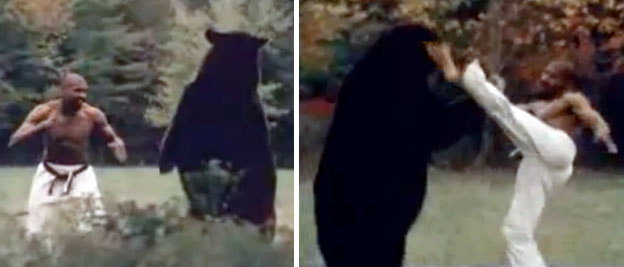
The "fight" was highly debated as the bear seemed disoriented. Critics argued that the bear was clearly drugged and possibly even declawed so that Williams wouldn't have been mauled by the animal. Despite the imposing frame that a young Williams carried his strikes seemed ineffective against the bear. The press that covered the event ended up participating is what was called nothing more than a propaganda film. Williams and his instructor, sensei Shigeru Oyama (no relation to Mas Oyama) spent a lot of time trying to prove the authenticity and effectiveness of the art. In 1980 he and Shigeru were suspended from the International Karate Organization Kyoukushinkaikan because of a fight they had participated in. Williams fought Antoni Inoki to a draw. Williams had suffered a broken arm and Inoki a broken rib. The legend of Inoki grew after the battle while Williams was relegated to the footnotes. It seemed that the best he could do was inspire characters for pop culture.

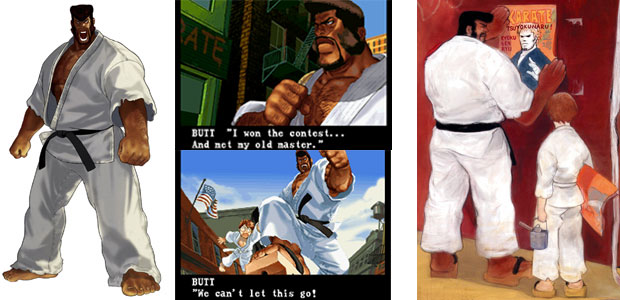
Marco Rodrguez (translated to Khushnood Butt for the US) for the game Garou, Mark of the Wolves was very closely modeled after Williams. To be fair he was inspired by William Oliver, Willie Williams and Charles Martin, the three black Americans better known as the Fighting Black Kings, from the 1976 documentary on the first world Kyokushin fighting tournament. Marco had immersed himself in the study of the fictional Kyokugen (extreme) form of Karate. This is the form invented by Takuma Sakazaki and passed onto his son Ryo and his friend Robert Garcia. Marco believed in the form as the absolute best and touted its superiority with a fanatical zeal in the game, his eyes welling with pride every time he thought about the art and his master. This level of passion, combined with his moves actually being solid, enamored him to gamers. The character worked abroad despite the double stigma of race and karate fool. Gamers were able to see past those conventions because he was a reliable karate-style fighter who played like the traditional Art of Fighting heroes even within a Fatal Fury title. Marco worked very well within the game as well as canon and wasn't simply a joke character for the sake of being a joke character.
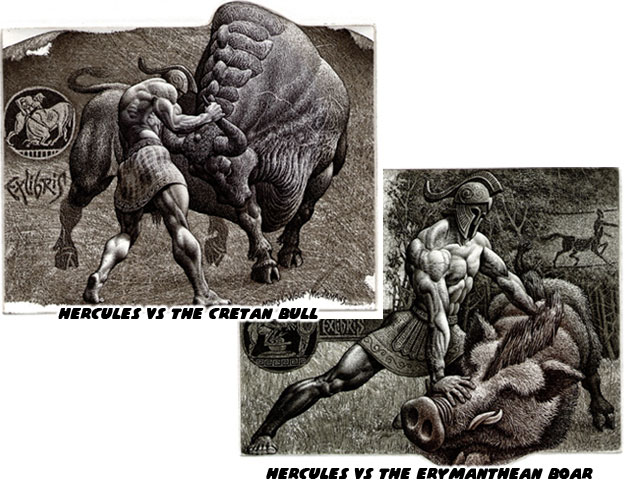
There was a world of difference between a bull and and actual predatory animal however. According to legend Oyama had once staged a battle with a bear. He did not dominate the creature and ended up fighting for his life. A version of that fight was featured in the manga and animé series Karate Baka Ichidai.The idea of a martial artist versus a wild animal had inspired many legends, but the stories themselves were sometimes inspired by actual events. In ancient tradition the heroes of a story were the ones that fought off a colossal beast. Sometimes these animals were real and sometimes they were mythical. In ancient Greece the hero Hercules was said to have wrestler both a lion and boar with his bare hands. The fabled 12 Labors included Hercules against The Erymanthean Boar, The Cretan Bull, The Nemean Lion, The Lemean Hydra and The Cerberus. These were certainly monsters perfect for a video game. Also unlike Mas Oyama the contest was not a fight for survival but a chance for the character to cement his legendary strength.
Oyama and his fans would pontificate on his karate and how it was used to defeat other fighters and other forms. Some of his lessons were based on actual encounters. He would describe in detail how his karate form was used to beat boxers and pro wrestlers from the west. These lessons would then be applied in the abstract and authors (including Oyama himself) would come up with scenarios where karate could be used against wild animals. Imagine the situation where a karate expert is ever wandering through a forest and is attacked by a wild ape. The fighter would be no match for the strength of the beast but they would be able to use their long legs to target open spots on the body. Not unlike fighting a musclebound wrestler I'm sure. The story of karate versus an ape would be used by other manga storytellers over the years. The ape would take on demonic features in many retellings and become more of a monster than wild animal when the legends became animated.
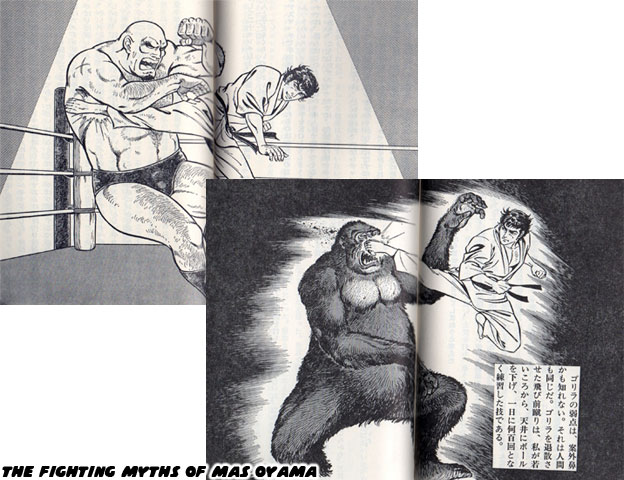
Some of the myths that Oyama shared were based on recorded history. Such as a samurai having to defend himself from a pack of wild dogs. The fighter would have to find a way to use the environment to their advantage and not allow themselves to be surrounded by the dogs. Then they would have to focus their attacks so that every strike was lethal. A miss could leave the fighter open to a counter-attack and that could be the difference between life and death. Wandering swordsmen in feudal-era Japan were sometimes targeted by bandits and these same lessons would have been used to ensure their survival. But when it came to bare handed fighting against natural predators there weren't too many success stories to rely on. Oyama had defeated bulls but he often wondered how he, or his karate form would have faired against a more aggressive predator.

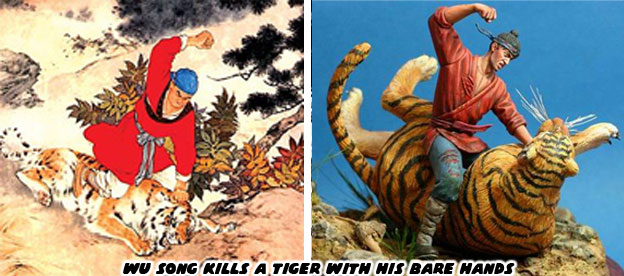
It turned out that a thousand years ago there was an encounter that could go down as something too amazing to be true. The pilgrim Wu Song was traveling through a village in China. He had stopped by an in for some rest. The villagers warned Wu that there was a man-eating tiger nearby and that it was dangerous to take a certain bridge out of town, especially once it started to get dark. After a few drinks Wu thought that it would be a good idea to take the bridge and see what happened. Sure enough the tiger was there and being courageous (or crazed with booze) Song attacked the tiger. He had a stick with him but the tiger broke that quickly. Song in a fit of rage managed to get close to the tiger and kill it with repeated blows to the head. Wu Song was a character in The Water Margin. The character was fictional but many of the men and women in the novel were inspired by actual events. It was possible that a kung-fu practitioner with more ability than sense actually did kill a tiger with his bare hands. When the writer of the Water Margin heard of the legend he figured out a way to incorporate it into the series.
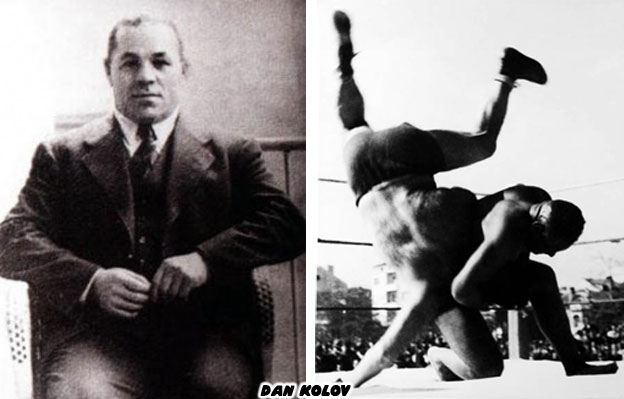
Oyama wasn't the first time that the man versus bear legend had been based on reality. The Bulgarian Dan Kolov was a wrestler and had to fight off a bear attack while he was out hunting. He lost his rifle for a moment when the bear was upon him, he grabbed and pulled at the bear with such ferocity that he pulled chunks of skin and fur off of the creature. Kolov was a self-taught catch wrestler, and circus strongman that was considered by some the greatest wrestler that ever lived. He regained his rifle after a brief struggle and killed the bear with a shot. With such a reputation he became a big draw for wrestling promoters. It was possible that the legend of Kolov had a hand in inspiring the legend of Zangief, who was known to wrestle bears in Street Fighter canon.

Domesticated bears had actually been used in some circus sideshows for over a century. The bears would usually only "wrestle" their trainers, because they were comfortable with them. Bears felt like they were playing and not actually fighting. In some rare cases a circus might let an audience member try to wrestler a muzzled bear. The bear would usually knock the person over and sit on them easily to end the match. But every now and then a story would come out where a person got the upper hand. This was the inspiration behind the Australian folk song about William Sinclair who defeated a bear in a match in Queensland.
It's easy to imagine that a version of these man-vs-beast myths could end up shaping the development of various fighting games. In the early days of the genre the developers did not have to go very far to bring the legends to the game screen. In Karate Champ the designers at Data East introduced a bonus stage that had fighters kicking stacks of tile. Oyama and his karate predecessors had often given breaking demonstration to audiences wherever they went. Sometimes they broke stones, bricks and blocks of ice. Karate Champ was the first fighting game to feature the bonus level and even had players take out a charging bull with a punch or kick.
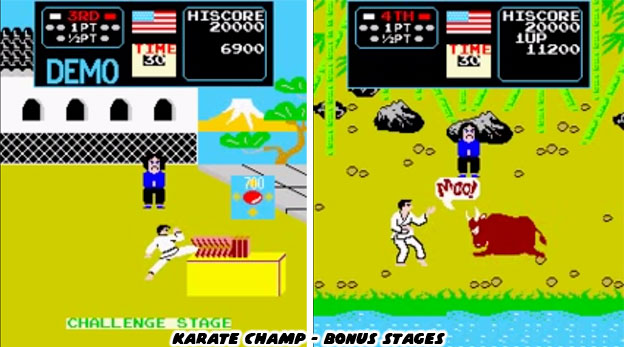
As the developers got more comfortable with the genre they began experimenting with enemy types. The early fighting games had masters of various fighting styles competing against each other. After the studios ran out of identifiable forms they started throwing in monsters, animals and even robots and aliens to keep the genre interesting. A tiger, giant falcon, and even shark would be included in Fighting Layer, a game developed by former Street Fighter II designers.

In Battle K-Road the secret boss was named Mr. Bear. It turned out to be an actual grizzly bear and was among one of the most difficult opponents in any game. The game was over-the-top as one could imagine but it retained some charm. These types of encounters would not have been acceptable in the genre if not for people like Oyama and Kolov who actually fought the beasts and lived to tell the story.
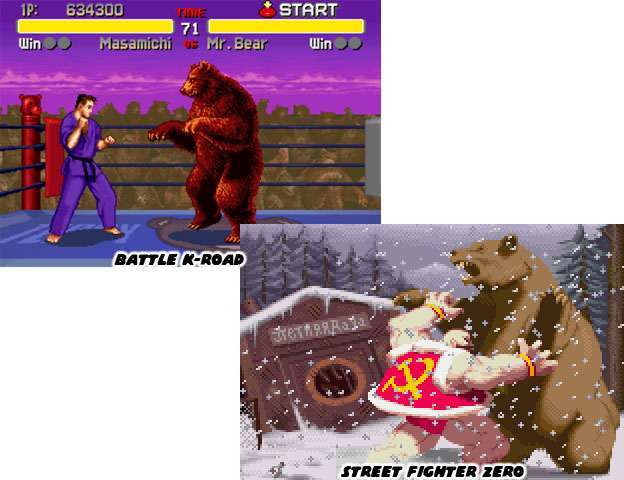
Gouki and Silber should not be confused with the previously aforementioned legends. They did not spar against wild animals with their bare hands, they hunted them down. The two could not only dominate the other fighters that they came across but also the biggest and strongest creatures in nature. In canon Gouki had killed a large bear that was the terror of a nearby forest. A young and inexperienced Ryu went out trying to kill the bear himself but was almost gutted by the creature. Gouki jumped into the fight and punched a hole through the head of the bear. He did not do it as much to save the life of Ryu but to warn him there were things in the world that should be feared and respected more than any animal.

In a similar fashion Silber traveled the globe putting down the animals he tested himself against. He showed little mercy for the other fighters he faced and was willing to put them out of their misery as well. Silber seemed to relish in his power and technique. It had been speculated that the fur on his uniform was taken from a polar bear he had killed and not from a wolf. Few aside from Silber himself knew what points around the world he had visited. Gamers were left to believe that he had wandered into the frozen arctic looking for a new challenge and had returned with the pelt after finding no suitable opponent.
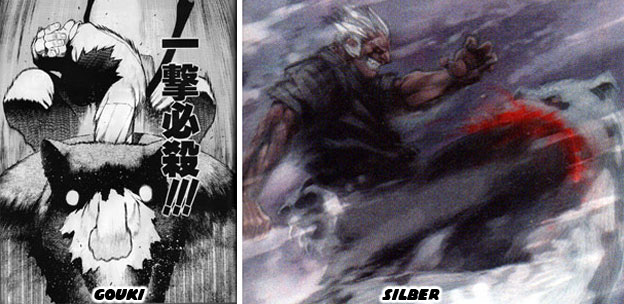
Gouki and Silber were fantastic character designs from Capcom and SNK respectively. They commanded the attention of the audience and held their interest throughout the battle. Each time they appeared in game they were treated with the same sense of awe and respect. Although they were powerful bosses and seemingly superhuman fighters they were not cheap characters from a balance perspective. They did not have attacks that were overpowered or could defeat a player with one or two hits. Even the Shun Goku Satsu at the most took 2/3 of an opponents energy and not the entire health bar. Every character in the game stood a chance against these villains provided that the player were willing to play aggressively and make few mistakes.

The physical appearance and attacks of the two bosses made them stand apart from the cast and even other villains. Yet there was a point where villains were too powerful and too evil for the genre. When pushed to the extreme ends the evil characters could break the suspension of disbelief from the gamer. Gouki had one such makeover in Street Fighter IV. It turned out that Gouki or even Shin Gouki (the white-haired variation) were not the most powerful incarnation of the character. A third form known only as Oni or Demon in Japanese was introduced by the SF IV designers. Oni was the manifestation of the Dark Hadou, or evil power which Gouki possessed, or rather which had possessed Gouki. The character grew long, spiky white hair, and a large underbite like an ogre with small tusks protruding. His skin even went from clay-colored to blue. Gouki no longer had the elements of a humanized lion but instead the wholesale appearance of a Nio, or protector of the underworld.
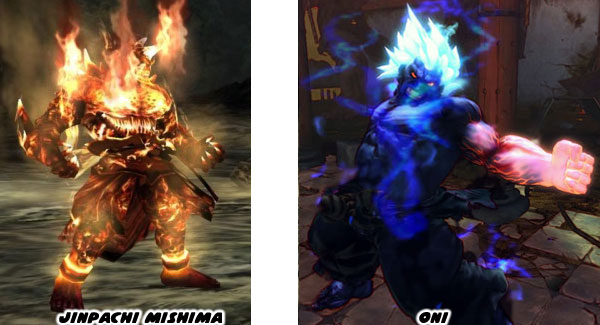
In Tekken a similar character had been unveiled as well. Jinpachi Mishima was a warlord and founder of the Mishima clan. He had spent a few decades locked under the Mishima castle. It was a sentence in Hell but Jinpachi had become so powerful that he broke out and returned to the real world. Oni and Jinpachi were so overpowered that seemingly no other character in the series could have even hurt them. Capcom had ignored all of the elements that made Gouki such an interesting character. They moved right into the realm of the absurd with Oni. The same thing could be said for Namco and the Tekken universe which Jinpachi now occupied. The two studios had been skirting the line between what was good character design, what was bad and what was simply pandering to the masses. Before Oni and Jinpachi the major challenge for the studios was showing gamers the creation of a villain right in the middle of a series. The next blog will look at how Capcom used the template of Gouki to rewrite the Street Fighter mythology. As always if you enjoyed this blog, and would like to sponsor me please visit my Patreon page and consider donating each month, even as little as $1 would help make better blogs and even podcasts!
follow the Street Writer on Patreon!

Friday, October 2, 2015

How fight culture became fighting game history, part 41

When Gouki debuted in 1994's Super Street Fighter II Turbo he set the standard for boss characters and villains in fighting games. The other studios took notice and tried to create legends of their own. SNK was a long time rival to Capcom. They had a masked fighter named "Mr. Karate" that predated Gouki by a few years. Takuma Sakazaki was the masked villain and final boss in the Art of Fighting. He was also the father of the heroes of the game Ryo and Yuri Sakazaki. The 1992 title did not originally feature the character as a pseudo demon but instead had him wearing a Tengu or devil mask. As the series went on the character of Mr. Karate grew more and more powerful until he took on a number of the same traits that Gouki had. His attacks became more powerful and he seemed to be a completely different person behind the mask. Most fans would consider the characters to be evenly-matched villains.


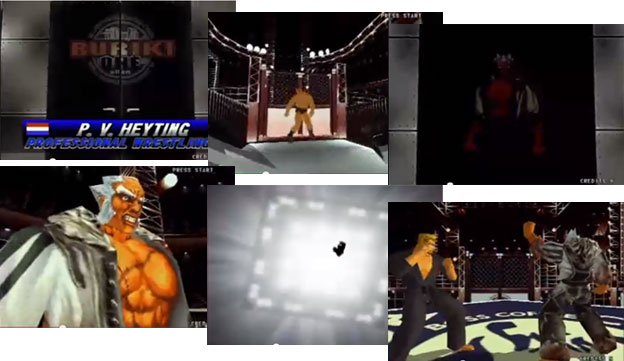
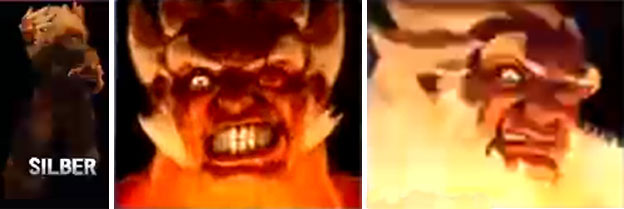
Not many fighting game aficionados however would remember that SNK had introduced a character that was eerily closer to Gouki in form and presentation than Mr. Karate. The 1999 arcade release Buriki One was one of SNK's first attempts at moving their IP into three-dimensions. The game had a cast of mostly new faces with the exception of Ryo Sakazaki, who had entered the tournament under the name of Mr. Karate II. Players fought masters of various styles and could beat the game by winning the tournament. The secret character in the game had an entrance that was reminiscent of the first appearance of Gouki. Players would go through their usual opening animation; where the selected character walked from backstage to the tournament platform. When the rival was announced the screen switched to the locker room. The opponent would be thrown through the double doors and crash into the caged-off platform. The true boss character would then appear. He was a muscular German named Silber. The character had a terrible gash over one eye and was covered in grizzly scars. The white-haired fighter looked nightmarish. He would rush the stage and take a superhuman leap over the barrier.


Silber had a very unorthodox stance and fighting style. The story behind the character was very interesting. The German had spend the last 30 years traveling the globe, fighting the best masters of other fighting arts and leaving few witnesses in his wake. He had developed his own form of karate which was unlike the traditional Japanese schools but just as lethal if not more so. When he learned there was a tournament to find out which was the best fighting style he decided to enter without an invitation. Silber was the first non-Japanese karate villain in a fighting game. The fact that SNK made him the boss character was even more impressive. It was as if the Japanese developers had suddenly come to realize that people from other nations could not only master foreign fighting arts, but they could also create their own contributions to the form. To help Silber stand out from Mr. Karate or the other bosses from SNK history the studio took a page from Capcom's school of design. They made the German look like a supernatural character. The patchwork of scars that covered his body made him appear like Frankenstein's monster. It was more than coincidence that his look was pulled from classic literary traditions.

Gouki had elements from Eastern mythology and Silber's design observed many Western ones. Centuries ago the Black Forest in Germany had been romanticized in fairy tales. The Brothers Grimm brought imps, dwarfs, witches and shapeshifters from classic folklore into popular culture. Snow White, Little Red Riding Hood and Sleeping Beauty were just some of the old stories that the brothers had adapted not only to entertain but to also put the fear of the unknown into children. In fact, some of the stories were not called fairy tales but instead "warning tales." The Black Forest, like many other forests in Germany, was once very dangerous. It hosted wild boars, bears and wolves that killed many a settler. Many of those creatures were hunted to extinction but the legends of dangerous predators remained in the stories. The designers at SNK thought to develop a new fable out of a creature that came out of the woods to hunt down man as well. Silber would take on the appearance of the animal-turned-human in the Buriki One tournament. The artists did not look at a lion for inspiration this time. The bright white hair and sideburns stuck out like the mane of a timber wolf. The look was enhanced by the fur-lined gi that he wore in competition. The character was certainly an alpha-predator. It was assumed that he had killed an animal and skinned it to line his uniform. The cold German winters would have made outdoor training unbearable without some protection. His clothing had dark black stripes that looked like claw marks to perpetuate the myth of the animal-like survivalist. The character art and profile featured in the game was unmistakable. This was a major villain, a nightmare from classic storytelling traditions.


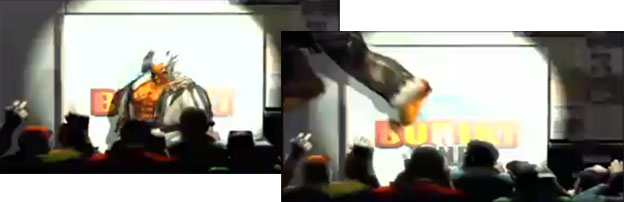
SNK wanted to make the character very mysterious. They gave him no dialogue or lines in the game. If a player managed to defeat Silber an ending animation would play before the credits. He survived the fight, stood up and took another superhuman leap to escape from the ring. If gamers managed to beat Silber with all of the regular characters then he too would become a playable character. This meant that Silber had his own stats, alternate costume and even ending cinema. Each character held a press conference at the end of the game where they talked about the fighting style that took them to the top. The credits would roll during the press conference and players could get filled into the plot.

Players that wanted to learn a bit more about Silber were disappointed with his ending. Nothing was revealed during his interview. He looked at the room full of reporters with disdain in his eyes. Instead of answering their questions he simply jumped off the screen. This bit of mystery would follow the character in all his future appearances. He was the boss character that would never stay down for long no matter how badly the player had beaten him. He would leap out of each game just as quickly as he arrived. It helped add an air of mystery to him and kept fans of the SNK universe guessing when he would turn up again. For older fans of animé the spectacular leaps that Silber made were a nod to the classic series Karate Baka Ichidai. The show was a serialized retelling of the life of Mas Oyama featuring his encounters against various fighting styles. This hinted that Silber was like a modern Oyama, only without scruples or compassion for other fighters.


There was something outside of the gruesome appearances that made Gouki and Silber similar. The two were not solely boss characters but also villains. They were not villains in the traditional sense of the word. They did not kidnap princesses or take Gotham City hostage. They were villains in the sense that they were both very evil men. They were both obsessed with power and were willing to achieve that power at any price. For professional and underground fighters this meant that they had to be the best that ever lived. In order to achieve that the duo had focused on nothing else except for training and fighting. They had no friends, no family and no sense of loyalty. Silber was rumored to have mentored the pro boxer and criminal Rob Python, also from the Buriki One universe. Gouki had a run in with his brother Gouken at several points during the training of Ken and Ryu. The wisdom and warnings from Gouki did not fall on deaf ears then. Despite these limited interactions with younger fighters the two had almost no contact with anyone else in canon or the games. There was something that made the characters truly evil though. The next blog will talk about the elements of evil design and how it inspired minority villains. As always if you enjoyed this blog and would like to sponsor me please visit my Patreon page and consider donating each month, even as little as $1 would help make better blogs and even podcasts!