Showing posts with label zero. Show all posts

Friday, April 28, 2023

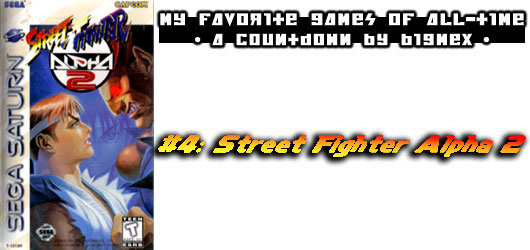
My favorite Games of All-Time #4: Street Fighter Alpha 2 - Originally published on 1UP - July 28, 2006

Street Fighter Alpha 2 is the greatest fighting game ever made. That's all I should have to say about it. A decade after it's release it still had not been topped, not even by Capcom. But I can't leave it at that, I have to explain why it ranks so high on my list. Above so many fine RPG's, racing and adventure games.

The game meets all my criteria for what I consider a great title. It is a title that is easy to pick up and learn, yet impossible to master. If I could sum up the game in one word it would be "balance." I don't mean solely a balance between characters in the game. I mean a complete balance behind the development and execution of every element in the game... I should elaborate.

Street Fighter Alpha 2 (SFA2) is a title that works on multiple levels. The more you look into the details the more you will discover. From the control, to the graphics and sound, pay attention now. Peel back each layer of the game and you will discover something yet to be duplicated.

SFA2 picks up on the heels of the original Alpha. Many felt that the first Alpha was rushed for release, Capcom countered by updating the game and fleshing out the experience with new levels, moves and characters. The game was nothing short of perfect.
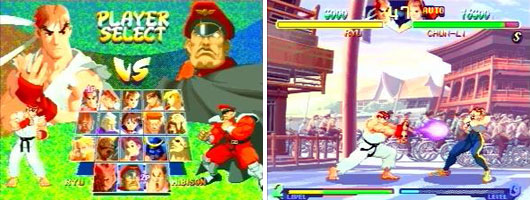
Capcom had recently lost a good portion of the Street Fighter II team and was nervous about the next fighting project. With a good number of former Capcom employees working on the Samurai Showdown series a rivalry was building. SF II was such an incredible game that topping it was going to be near impossible with members of the team missing.

In fact Street Fighter II was the reason that many left Capcom. Management kept pushing the developers for updates to SF II rather than allowing them the time to develop a proper Street Fighter III. Many elements that were supposed to debut in III were added in the final version of Super Street Fighter II. In protest many members of the team walked away. The rest as they say is history...

Okay, so it really wasn't cut and dry.

Noritaka Funamizu and Yoshiki Okamoto were the last senior men left from the original team. They knew that without Akira Nishitani (who left Capcom to start ARIKA and create Street Fighter EX), making a proper SF III would be next to impossible, the universe of Street Fighter had grown very quickly. Would SF III be a new beginning or would it return to the plot of SF II?

Rather than release part III, Noritaka turned the clock back and created a legacy that tied together the first two SF games. In a word it was genius. There was no way Noritaka could have developed a proper trilogy when a good portion of his team had jumped ship. What he gave us instead was an epilogue far more enjoyable than any Street Fighter before.

It began with a careful selection of characters.

Of course Ken and Ryu were in the game, they are the stars. Or as it turned out, Ken and Ryu are part of a larger world where the supporting cast influences their fate and the fate of the Street Fighter universe as well. These people include Nash (I use the original Japanese names), the soldier and best friend of Guile. Aside from being a great character, Nash was placed in the game to add depth and back story to Shadowlaw and the murderous Vega.

The women in the game were all strong characters. None of them had enormous breasts that bounced all over the screen. None of the women wore anything too revealing. The women, like all of the characters in the game, took on multiple meanings. Sex appeal was substituted for substance and history. Chun-Li, returning from SF II in a younger guise with her traditional kung-fu, Sakura as a parody of the girl fighters in SNK games. Rose as a mystic who reveals some of the origin of Vega.

Rolento, Guy and Sodom tie the Street Fighter and Final Fight universe together. Final Fight was originally titled Street Fighter '89 and all of the characters in the series were meant to replace Ken and Ryu as the stars of the universe. Instead there became a melding in Alpha and all of the characters were allowed center stage. Birdie was a returning character from the original Street Fighter. Dhalsim and Zangief were returning from Street Fighter II. These were all nods to the legacy of the series, the creators and even the people that left Capcom.

This balance of the new and old was brilliant. Between strong female characters and familiar male characters there was little more the game needed. That's when Capcom piled on the substance and turned a potential good fighter into the "greatest."
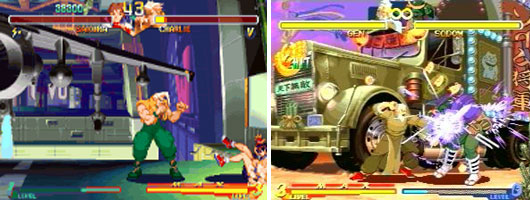
The move selection for each character was great. The special moves, super moves and combos were unique and balanced. Large characters actually had a fighting chance against smaller, faster characters. Those in the middle weren't impervious to either extreme in character or style. Unlike the latter games, the ones I mention in the Primal Rage blog as "combo pornography," Alpha had just the right amount of multiple hit combos and even defense against those combos.

I mention styles because each character in the game represents a particular form of the martial arts. Noritaka and crew went to great lengths to make sure that the characters not only looked unique, their style of fighting and associated strategy was unique as well. These styles balanced each other, moreover there was always more than one character to handle a particular form. Zangief's wrestling could be countered by Birdie's brawling or Sodom's hybrid budokan. Ken and Ryu's fireballs proved ineffective to Rose or Dhalsim's mystic powers... etc.

The final group of characters I mention help round out the plot of the series. Dan is another parody of the SNK characters, his pink uniform is a blend between Ken and Ryu's red and white uniforms. Dan, like Muay Thai fighter Adon, exists to be a thorn in the side of Sagat. Sagat being the original boss in Street Fighter and second-to-the-end in Street Fighter II. The "best" fighters in the game blend classic forms and mythology.

Gen is returning from the original Street Fighter and is on his last legs as a master of the old forms of kung-fu. His purpose, like the purpose of Ken and Ryu is to end the murderous spree of Gouki. Gouki was meant to be the original boss of Street Fighter III but was instead introduced in the sequel. Now with a stronger purpose in Alpha, Gouki serves as the true boss and best fighter in the game. Vega ties in the plot from SF II and shows how the tournament became a front for his criminal organization.

Still with me?
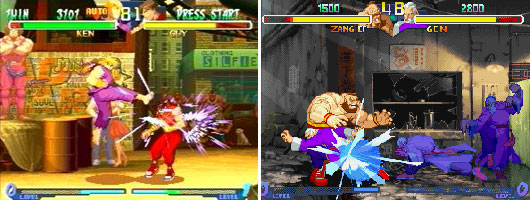
The plot of the game is complex. Whether stated or implied there are layers of subtlety in the story. Each characters plays their role, if you can actually allow yourself the freedom to get lost in the world of a fighting game. The beauty of the game being that the endings and relationships between characters were open to different interpretations. It is one thing to tell an audience what happens in the story, it is another to allow the gamer the freedom to explore the possibilities. That type of game design is unfathomable. Moreover it was easy to become immersed in the story thanks to the detail in the levels.

Each level in SFA2 has as much personality as the fighters. Some levels are an homage to the previous games. Some levels filled with characters and locations from Final Fight. These characters would return in Alpha 3 and the eventual SF III. There was even a level brought in from the Street Fighter II anime movie because it was so influential.
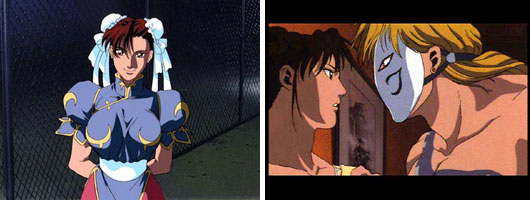
The art direction in the game was the icing on the cake. The immortal Bengus was credited for the look of the characters. At the time that Killer Instinct's SGi-workstation characters wowed audiences, Mortal Kombat 3's live actor models were different, as were Primal Rage's clay dinosaurs or Virtua Fighter 2's polygon models. The only way Street Fighter could compete in that arena was with sprites that oozed style and substance. Bengus' designs were pure genius. Always working behind the scenes at Capcom, Bengus was responsible for some of the best art and design ever to come out of the studio. His body of work went on to influence all of the artists working there and at rival companies for years to come.

His characters were all unique, colorful, bold-and-yet-subdued, just by looking at the designs you could tell a lot about them. They had a history, both the good and bad "guys" had a story to tell. They spoke volumes without saying a word. Such is the work of a talented artist, possibly the greatest videogame artist ever.
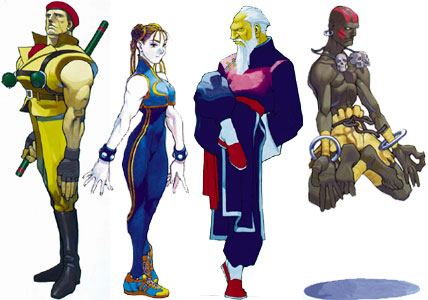
Bengus was responsible for the exaggerated, anime-look of the Alpha characters and the creatures in the Vampire (Darkstalkers) series. The sprites Capcom produced based on his work were nothing short of amazing. The characters were so universally loved that for the next decade Capcom would pull these sprites and use them on other games. This art, this game, influenced untold fighting games for many years after.

The legacy of Street Fighter has no equal. Street Fighter Alpha 2 made certain that Capcom would forever remain as the greatest company ever to produce a sprite-based fighter. Although the company has turned their back on sprite-based games, and has officially killed the 2-D sprite wing they cannot deny that it was the Street Fighter series that put them on the map. They cannot deny that Bengus carried them with his awe-inspiring art.

Street Fighter Alpha 2 will remain on my favorites list for all-time. I doubt that I will live long enough to see a better fighter. I hope that you get a chance to play it if you haven't already. Have a great weekend people! Next week begins the top-3, can you believe it?

I’d like to hear your personal top-10, top-20, top fighting games, top sports games, or top games in any genre. Let me know in the comments section please. As always if you would like to sponsor me please visit my Patreon page and consider donating each month, even as little as $1 would help make better blogs and even podcasts!
follow the Street Writer on Patreon!

Monday, September 26, 2016

Some of my favorite Street Fighter collectibles, part 2...

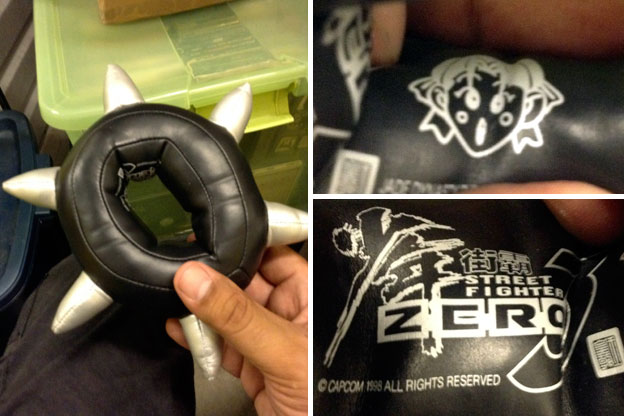
In the previous blog I highlighted some of my favorite collector covers from the Chinese Street Fighter comics. Today we're going to look at some of the other memorable special issues that they printed. Often a special issue not only came with a unique cover, it also came with a collectible. Some of these things were postcards, puzzles or calendars featuring the best covers from the past year. Sometimes these issues came with an embroidered hat or sweatband featuring a character. The best were even more original. Take Chun-Li for example, when the publisher wanted to celebrate the character in Street Fighter Zero they distributed spike bracelets to their fans.


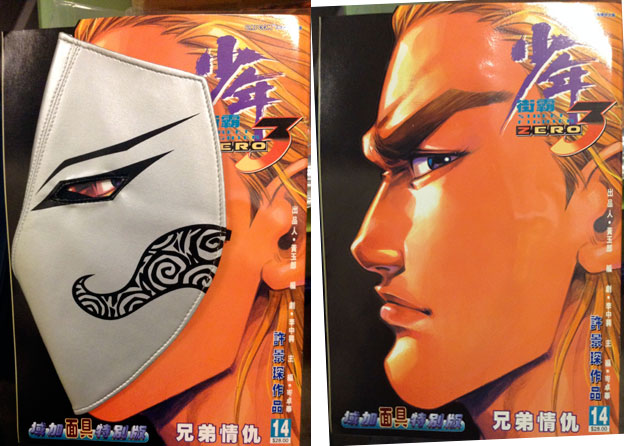
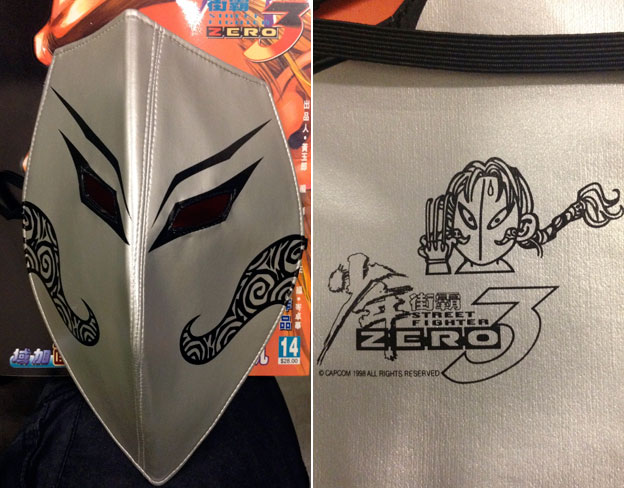
Of course the bracelet was foam wrapped in vinyl, but it was a very clever marketing toy. In what other country did Capcom create anything like that for their fans? Another soft good that they distributed through the comics was actually attached to the cover of a comic. The Spanish assassin Balrog (Claw) wore a trademark mask. The publisher of the Street Fighter Zero comics created a die-cut cover of Balrog wearing the mask. Fans could remove the mask and wear it. Imagine being a kid and being a huge fan of Street Fighter. How awesome would it be if your favorite comic book came with a goody on a regular basis? What if Marvel did the same for Spider-Man, or DC for Batman? People would be all over it.


Granted in the US there have been unique collectibles released with comics as well. The Batman trade paperback A Death in the Family came with a grotesque Joker mask and the Court of Owls came with an owl mask. Fans had to wait until the specific series had ended and was put into a TPB before they could buy it. Yet overseas these giveaways are more common. In Italy for example the Topolino (Mickey Mouse) comics sometimes come with toys, called gadgets. The most popular Chinese comics came with all sorts of soft goods and toys on a more regular basis.


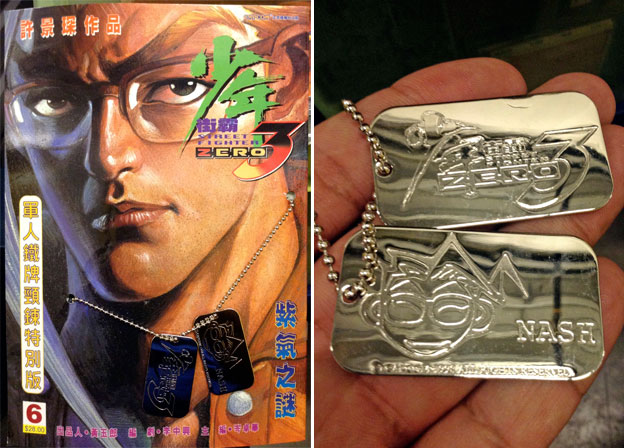
Of all the collectibles I've gotten from the Chinese Street Fighter comics the best one was without a doubt the dog tags worn by Charlie Nash. Like the Balrog issue this comic also had a die-cut cover. There were two holes poked in the sides of the neck were a metal chain and polished metal dog tags were on display. These were full-size dog tags with the name and likeness of Nash. To make sure collectors picked up the issues there was even an embossed Capcom license on them. I wonder how many people that cosplayed as Guile ever tracked down these dog tags.


What about you? Do you have any rare or unique Street Fighter items in you collection? If so I'd like to hear about it! As always if you would like to sponsor me please visit my Patreon page and consider donating each month, even as little as $1 would help make better blogs and even podcasts!

 follow the Street Writer on Patreon!

Friday, July 8, 2016

Why is Street Fighter playing with Dolls?

I've been very critical of Yoshinori Ono's direction with the Street Fighter franchise on Capcom-Unity as well as my personal blog. Street Fighter IV and V keep rehashing old characters and old themes which I believe makes them more in tune with the Street Fighter Alpha / Zero series. A "true" sequel should feature a new plot, new characters, new boss and maybe one or two returning faces. It was the rule established in Street Fighter, and observed in Street Fighter II and Street Fighter III. Yet when half the team left Capcom after the development of Super Street Fighter II the studio was left with a void. Remaining senior member Noritaka Funamizu was tasked with creating a new sequel. It was near impossible to do with a lot of the best talent gone. So instead of trying to come up with a new plot, new characters and new boss he went back and connected the various games in the Capcom universe. This way he would not disappoint fans of the franchise by creating a sub-par sequel because technically it was something entirely new. The result, the Street Fighter Zero series was creative genius.


Final Fight, Street Fighter and SF II characters were all part of the same canon. Explaining how the characters crossed paths in between each series was inspired design. The art direction and creative risks they took were bold. Lead artist Bengus created an entirely new look and feel for the cast. They were younger, more cartoonish in proportion and presentation. They looked unlike characters from any other series and really stood out because of this. The entire game was a love letter to the respective franchises and a not so subtle nod to the Street Fighter fandom. As the series progressed it became more and more rooted in dramatic characters and over-the-top plots. Street Fighter was no longer about being the best fighter in a tournament, it was instead about saving the world from Shadowlaw. The fighters became like GI Joe special agents. It worked for the Zero series because it was very cartoonish, very animated. Design elements were pulled from typical anime shows. Otaku or nerd culture became a contributing factor in the design choices. Where I take Mr. Ono to task is that those ideas were fresh in 1995, reusing the formula 20 years later but putting the graphics in 3D was not revolutionary. His ideas of putting oily men, fat men, effeminate men and ugly minority caricatures in the series were poorly conceived.

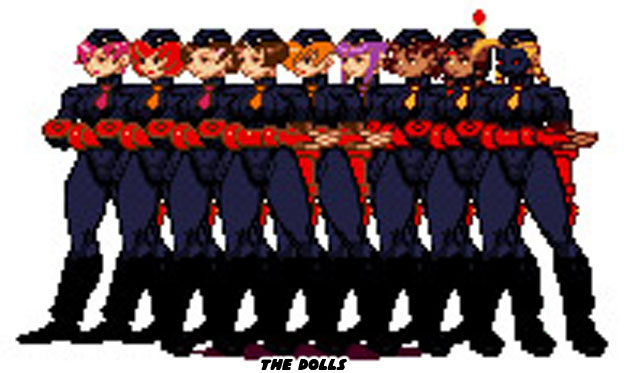
 Look back at the legacy that Street Fighter Zero created. The young schoolgirl Sakura would become the breakout star of the game. She was introduced in Street Fighter Zero 2 in 1996. She would be joined by Cammy in Street Fighter Zero (SFZ) 3, released in 1998. She was presented younger than their original Street Fighter II versions. Young female leads were going over well with audiences, Karin Kanzuki (the rival to Sakura), R, Mika, Juni and Juli were also added in SFZ3. The reaction was so well to this influx of female stars that the studio decided to flesh out the origins of Cammy and explain her connection to Shadowlaw. This was when Bengus and the team introduced us to the infamous Dolls.


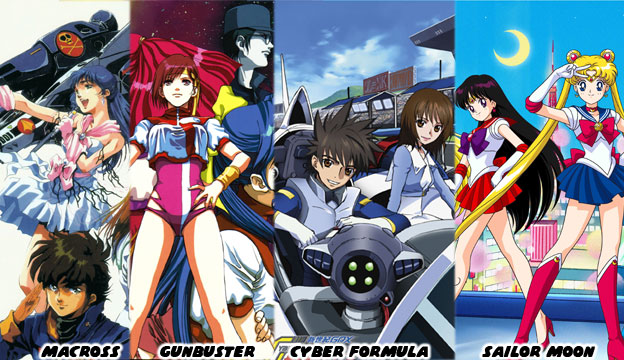
Vega / M. Bison (Dictator) had surrounded himself with young highly trained special agents. Cammy was his star pupil nicknamed Killer Bee. The other Dolls were named after the months of the year. Juni and Juli were German for June and July. Each of them wore tight costumes with small ties on. As if they were some sort of military school uniform. Each Doll was a highly-trained assassin whose appearance was meant to be deceptive. Most were brainwashed and programmed to be specialists, some were naturally gifted, others had gone through genetic modification so that they were stronger or faster than any normal soldier. The girls were around 16-years-old making the Dictator seem like a creep but there was a precedence for his young apprentices. Japanese comics, animated shows and OVAs often revolved around teenage heroes. This went back to the earliest days of Japanese animation. The stars of the shows often tended to be much younger than heroes in western media. Comic book heroes in the USA were often adults and teenagers were sidekicks. That formula was almost opposite in Japan. The greatest pilot, race car driver, magician, or warrior in the stories were usually young and sometimes girls. This made them extremely popular with school-age audiences.


The designers at Capcom were all too familiar with the teenage tradition and created the Dolls as a sort of homage to the female leads in pop culture. Rather than just create a group of Cammy clones they decided that they would each come a different nation, each one would specialize in something. The studio didn't really have enough time to make Juni and Juli more unique than they had planned but the seeds were definitely planted some 18 years ago. Here's some news that certain to make a lot of Street Fighter fans feel old. There is a good chance that many of the new Street Fighter IV and V players were not born when the series began. They might have not even been around when the Alpha series ended or Street Fighter III was released. There are many characters that they are unfamiliar with from games they didn't know existed. It's likely they are wondering where the Dolls featured in Street Fighter V's Story Mode came from.


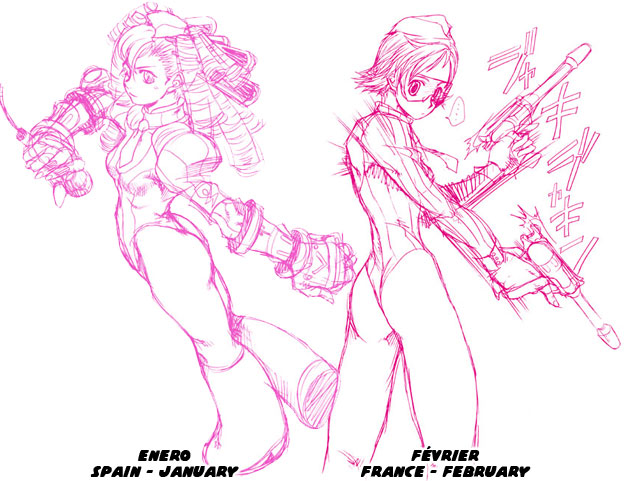
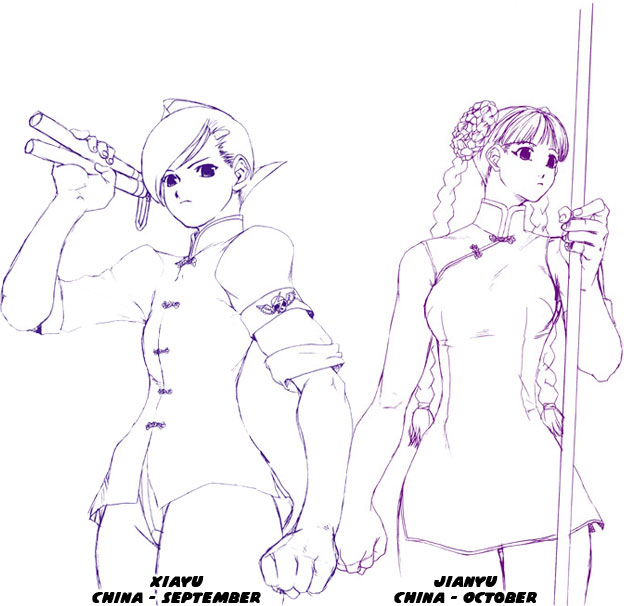
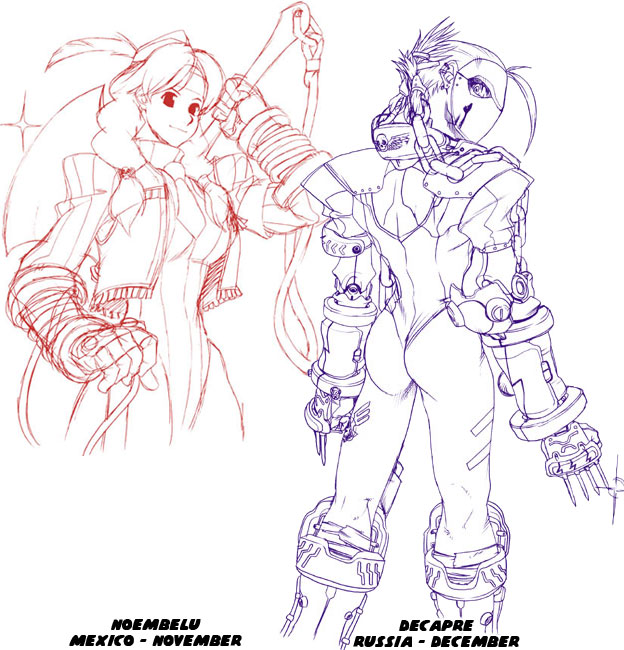
The Dolls had been featured in the Street Fighter comics by Udon and had cameos in the licensed comics in Japan and Hong Kong as well. However I believe that the definitive fan illustrations of the Dolls came from Ataru (NSFW) almost 20 years ago. He took the notes for each character and sketched out versions of each Doll that captured their personality and origin. Enero specialized in communications yet she was presented as a sort of idol character, hence the microphone. Many animé characters want to be idols in their own series. There are models and spokespersons but the singing kind of idol is the most popular. A good portion of the entertainment industry in Asia, including K-Pop from Korea and C-Pop from China, revolves around finding the next idol. Février was an expert at firearms and while she has a more traditional-looking firearm in Street Fighter V in Atatu's version her pistols were more like the science fiction revolvers that could be found in a classic animé series like Space Pirate Captain Harlock or Cobra.


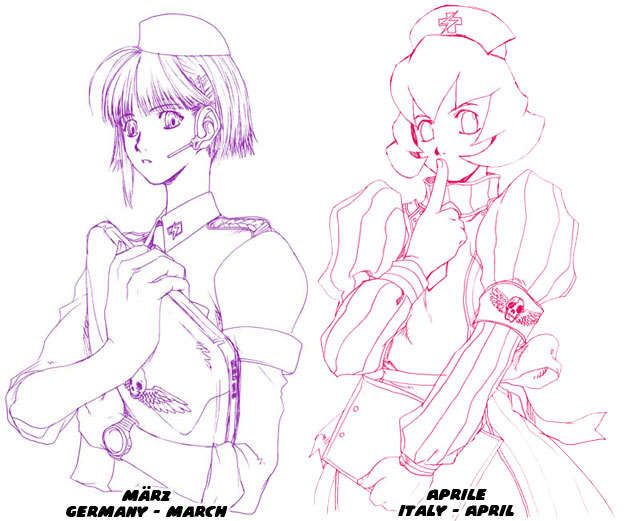
März was an information specialist and she kept her laptop with her everywhere she went. There were many hyper-intelligent / nerdy characters in animé. März filled in the role of hacker / genius for Shadowlaw very well. Aprile was a medic and cute nurse characters always went over well on both sides of the Pacific. There was a long-standing tradition in animé however where nurse characters often attacked lecherous boys with a bazooka-sized syringe. No word if Aprile could use one of those in combat.


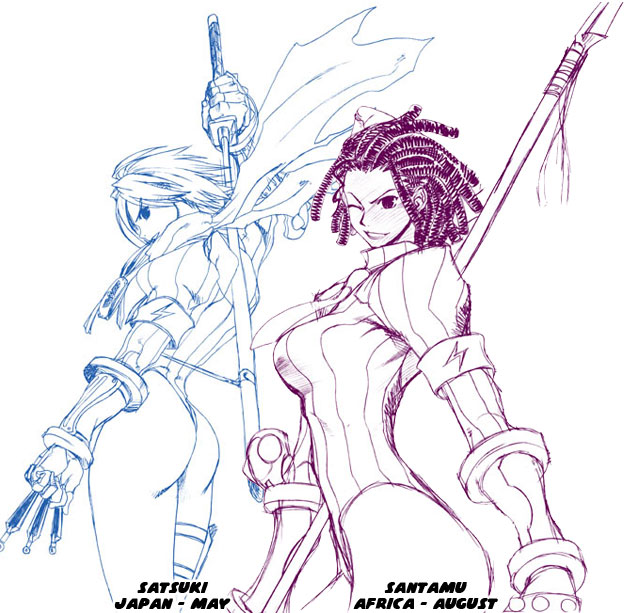
The first half of Dolls were spies or specialists of some sort while the second half were fighters. Each one studied a different form of combat and often used a weapon. Satsuki was the ninja of the Dolls. She had the familiar flowing scarf, It was seen countless times in manga and anime. In video games the scarf was synonymous with the assassin's fist. Galford and Hanzo in Samurai Spirits each had the long scarf, Capcom icon Strider and Sega mascot Shinobi also had a scarf. Santamu was originally Vietnamese but changed to Ethiopian. She was a sort of jungle girl trope. She had a spear and even small monkey when she went into battle.


Of course no girl fighting team would be complete without Kung-Fu masters. The two Chinese characters each specialized in a particular weapon. Xiayu used a nunchaku and Jianyu used a staff. When Ataru sketched out the characters he made sure to get the subtlety of each character. The nunchaku was a non-traditional weapon that had actually been adapted from equipment used by rice farmers to separate the rice from the chaff. It was used by peasants to fight off bandits thousands of years ago but was made popular more recently in the Bruce Lee films. Lee was an unorthodox master that incorporated Eastern and Western fighting arts and conditioning into his regiment. He represented a break from tradition, the new form. Xiayu was symbolically cut from the same cloth, the new school kung-fu master. Her haircut and weapon reminded audiences of that. By comparison Jianyu used one of the oldest martial arts weapons ever created. Her costume her form was very traditional, she had more in common with Chun-Li than Bruce Lee. Both characters and even Chun-Li could be considered derived from the Pooh sisters. The enemies of Strider known as the Kuniang Martial Arts Club. Ataru did a fantastic job of conveying this in his illustrations.


The last two fighters had a the strongest connection to the Street Fighter II universe. Noembelu was a member of the same tribe of Native Americans that T. Hawk was. Her braid, leather vest, oversized tomahawk and headdress were also suppose to reflect the native themes. Of all the Dolls I think Decapre was the most popular and most mysterious. She was seen as an Evil Cammy. She looked like an identical clone of Cammy but wore a dark metallic mask. Ataru gave Decapre armor that looked brutal. He went one step further and replaced the braids of Decapre with chains. It was a bold stylistic choice that really made her look like the evil twin fans never knew existed. It's great that the Dolls have returned to Street Fighter. I wish they had been featured in SF Zero 4 to be honest, they seem out of place in SF V. They are undoubtedly bringing in many new fans to the series and making them wonder where these characters came from. I hope this blog helped answer some questions. You can find out more about the Dolls and see how their look changed from Ataru's fan art to the modern interpretation by picking up the Udon comics. Be sure to leave a comment and tell me what you think about the Dolls in SF V. As always if you enjoyed this blog and would like to sponsor me please visit my Patreon page and consider donating each month, even as little as $1 would help make better blogs and even podcasts!
 follow the Street Writer on Patreon!