Showing posts with label noembelu. Show all posts

Wednesday, June 15, 2022

A look at Lili, the new native Mexican fighter in Street Fighter 6

We're going to look at Lili today. The new fighter from Mexico is fairly straightforward. I'd say a safe design even. Previously I mentioned how El Fuerte was a great character in the early stages of his planning, but the more Yoshinori Ono insisted they focus on his personality through cooking, instead of lucha libre, the worse the character got. The same thing could be said of Hakan, and his focus on oil, or Birdie, and his focus on eating. The crown jewel of great character designs thrown out for the sake of comedy was when King Cobra becoming Rufus. But I digress...
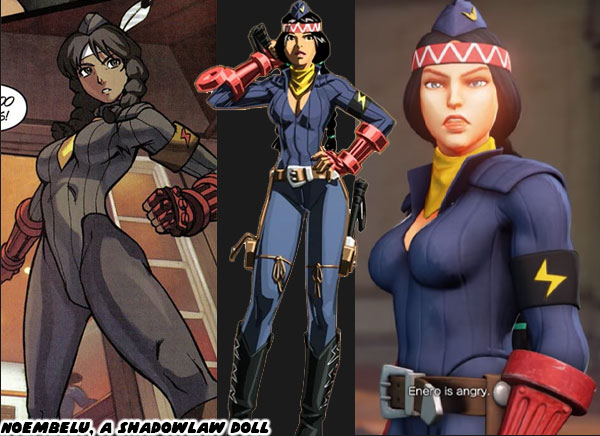
I’m fairly certain that most long-time Street Fighter fans were convinced that Lili, the new native character would turn out to be Noembelu, the Mexican “Doll” agent from Shadowlaw. The dark skin, braids, and feathered headband were spot-on matches. Not to mention that audiences were familiar with Noembelu. She was seen in previous in-game cut scenes, as well as in the comic books. The character fought with dual axes, and this new girl in SF6 fought with dual clubs. Perhaps she was deprogrammed by the government, and returned to her tribe? Something similar happened with Cammy after all. While they could take the agents away from Shadowlaw, they never could take away their ability to fight. When I first saw the new character, I did not think she was a Doll agent. The reason why was because the Street Fighter 6 Director: Takayuki Nakayama, and Producer: Kazuhiro Tsuchiya said they wanted to push the series forward. They would not be trying to tell yet another story related to SFII. Those were things already done to death in SFIV, and SFV. Also because this new character was young, if it were Noembelu she would have been older, based on the current timeline.
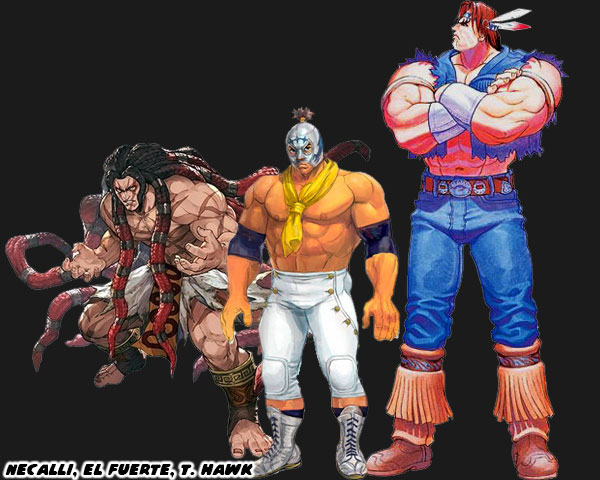
Lili is not the first Mexican character in the series. Let alone the first Mexican fighter across the genre. The studio gave us the gigantic T. Hawk in Super Street Fighter II in 1993. At that time Capcom was in the planning stages of Street Fighter III. The native Mexican was supposed to be the new "Zangief" for the game. He was included along with Cammy, Dee Jay, and Fei Long into the franchise in the form of an upgrade instead of a proper sequel. The other Mexican, or at least character from the peninsula, was Necalli. The wild-haired brute from SFV was an ancient warrior that stole the power from other fighters, and sometimes ate them in the process. Of all the fighters in the series he was possibly the strangest addition. Even fire-breathing Indian mystics made out of rubber were sensible by comparison.
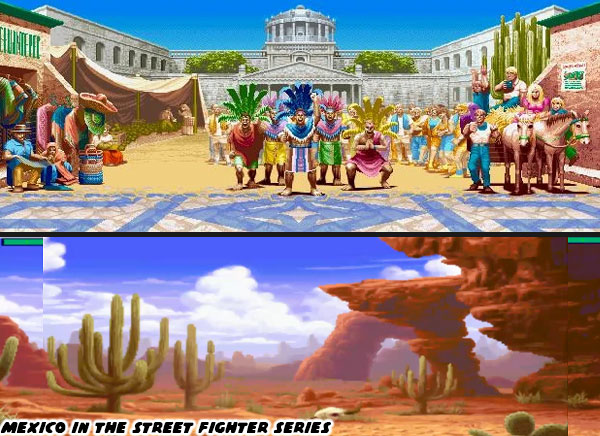
Fighters like T. Hawk, El Fuerte, and Necalli were based on surface level knowledge of Mexico, and Mexican traditions. In pop culture Mexico is often used as set dressing. Piñatas, tequila, Dia de los Muertos, papel picado, fireworks, and masked wrestlers are things incorporated into many fighting games. The architecture, and traditions of small towns are often the centerpiece in stage backgrounds. Mexico is rarely presented as having any modern cities in videogames, even though the capital of Mexico City is a metropolis with one of the biggest populations in the world. The same surface level was applied to the design of characters. A masked wrestler is 90% of how Mexicans are presented in games. With the remaining 5% being guys with big mustaches wearing sombreros, and 5% being professional boxers. T. Hawk, was a native who wore jeans, moccasins, and a feathered headband. A "safe" choice for the series, but a little uninspired. Lili seems to be cut from the same cloth.
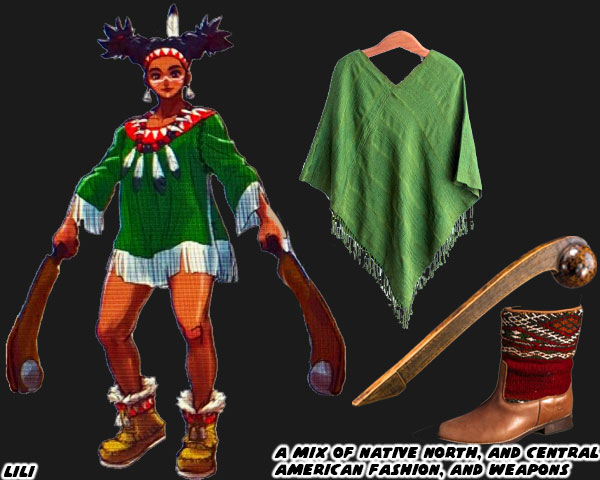
Lili has many of the elements of classic SF designs, but also falls into similar stereotypical traps. Green is her main color, with white, and red accents. I hope that the people reading this realize that she is literally wearing the colors of the Mexican flag. On top of her face paint, and native headdress she is fighting with a club. The cuauhololli, was a club used in Mesoamerica. Here’s the thing that you want to avoid if you are a character designer. It’s something that doesn’t just happen to the people at Capcom, but at other game, and animation studios the world over. Lili, T. Hawk, and other native-styled characters are usually a mix of different regions. They may be wearing clothing from desert, jungle, or mountain environments at the same time. This includes face paint, tattoos, or markings from different tribes, cultures, and even historical periods. Lili’s outfit Inspired in part by Mayan fashion, which is more Central American, than Mexican. The Aztec, and Mayan cultures did not exist at the same time, nor in the same part of Mexico. Many character artists don’t necessarily know this, but lack of knowledge is not an excuse for coloring all natives with one brush. There were hundreds, if not thousands of unique indigenous tribes in North, Central, and South America. Lili is an okay design, much better than the joke characters featured in SF IV, or the cannibal featured in SFV.
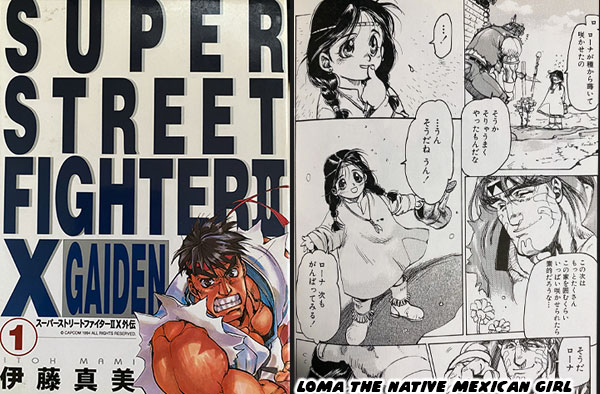
When I first saw Lili I didn’t think she was Noembelu, instead I thought she was an older version of a character featured in Super Street Fighter II X Gaiden. The anthology from Gamest comics was created by Masami “Mami” Itoh. It was one of the best series filling in the events of Super SFII. In one chapter we see T. Hawk, and the few remaining members of his tribe on a reservation. A tiny girl named Loma is introduced. She calls T. Hawk uncle and wants to make flowers bloom in the dry valley. She was an adorable design, with a simple native dress, and large expressive eyes. I thought that it would be great if this little girl had grown up to be a fighter like her uncle. It wouldn’t be the first time that a manga artist had created a character that appeared later in the SF series. Masahiko Nakahira invented Karin Kanzuki, the rival for Sakura in the pages of Sakura Ganbare!. Perhaps SF6 Designer Yusuke Hashimoto might be able to retcon her into the story. There’s still time. What I’m getting at is that the design had been seen before. It was a bit safe, but I understand too that Lili could have been a lot worse.
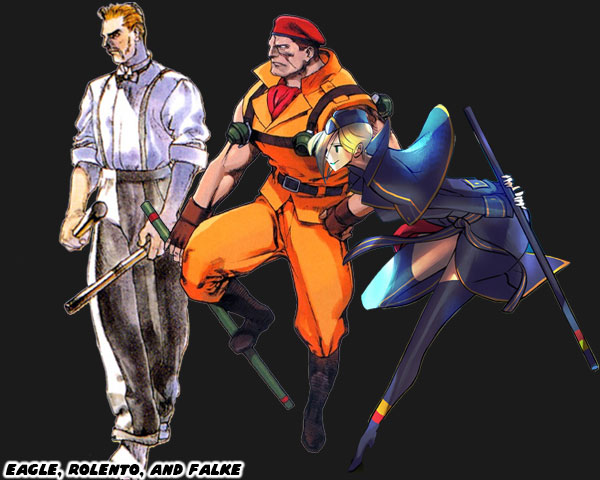
I’m not mad that she fights with a weapon. It makes sense if characters her size need the help of a weapon. Lili wouldn’t stand a chance against someone as massive as Zangief, but a stone, and hardwood club would be a great equalizer. In addition to that there have been several fighters that used weapons in the series. This goes all the way back to Eagle in the original Street Fighter. He fought with two clubs. The military leader Rolento appeared in both Final Fight, and Street Fighter Zero. He fought with a staff, as did Falke from Street Fighter V. I’m eager to see what moves, and special attacks are assigned to Lili. I’m hoping that her alternate costumes are more grounded in reality, like Luke, or Kimberly. I think it’s okay to move away from native pandering for Mexican characters. What about you? What do you think of this character, and her inclusion? Do you like the leaked designs so far? Is there anyone you’d like me to write up next? Please tell me in the comments section. If you would like to sponsor me please visit my Patreon page and consider donating each month, even as little as $1 would help make better blogs and even podcasts!
follow the Street Writer on Patreon!

Friday, July 8, 2016

Why is Street Fighter playing with Dolls?

I've been very critical of Yoshinori Ono's direction with the Street Fighter franchise on Capcom-Unity as well as my personal blog. Street Fighter IV and V keep rehashing old characters and old themes which I believe makes them more in tune with the Street Fighter Alpha / Zero series. A "true" sequel should feature a new plot, new characters, new boss and maybe one or two returning faces. It was the rule established in Street Fighter, and observed in Street Fighter II and Street Fighter III. Yet when half the team left Capcom after the development of Super Street Fighter II the studio was left with a void. Remaining senior member Noritaka Funamizu was tasked with creating a new sequel. It was near impossible to do with a lot of the best talent gone. So instead of trying to come up with a new plot, new characters and new boss he went back and connected the various games in the Capcom universe. This way he would not disappoint fans of the franchise by creating a sub-par sequel because technically it was something entirely new. The result, the Street Fighter Zero series was creative genius.


Final Fight, Street Fighter and SF II characters were all part of the same canon. Explaining how the characters crossed paths in between each series was inspired design. The art direction and creative risks they took were bold. Lead artist Bengus created an entirely new look and feel for the cast. They were younger, more cartoonish in proportion and presentation. They looked unlike characters from any other series and really stood out because of this. The entire game was a love letter to the respective franchises and a not so subtle nod to the Street Fighter fandom. As the series progressed it became more and more rooted in dramatic characters and over-the-top plots. Street Fighter was no longer about being the best fighter in a tournament, it was instead about saving the world from Shadowlaw. The fighters became like GI Joe special agents. It worked for the Zero series because it was very cartoonish, very animated. Design elements were pulled from typical anime shows. Otaku or nerd culture became a contributing factor in the design choices. Where I take Mr. Ono to task is that those ideas were fresh in 1995, reusing the formula 20 years later but putting the graphics in 3D was not revolutionary. His ideas of putting oily men, fat men, effeminate men and ugly minority caricatures in the series were poorly conceived.

 Look back at the legacy that Street Fighter Zero created. The young schoolgirl Sakura would become the breakout star of the game. She was introduced in Street Fighter Zero 2 in 1996. She would be joined by Cammy in Street Fighter Zero (SFZ) 3, released in 1998. She was presented younger than their original Street Fighter II versions. Young female leads were going over well with audiences, Karin Kanzuki (the rival to Sakura), R, Mika, Juni and Juli were also added in SFZ3. The reaction was so well to this influx of female stars that the studio decided to flesh out the origins of Cammy and explain her connection to Shadowlaw. This was when Bengus and the team introduced us to the infamous Dolls.


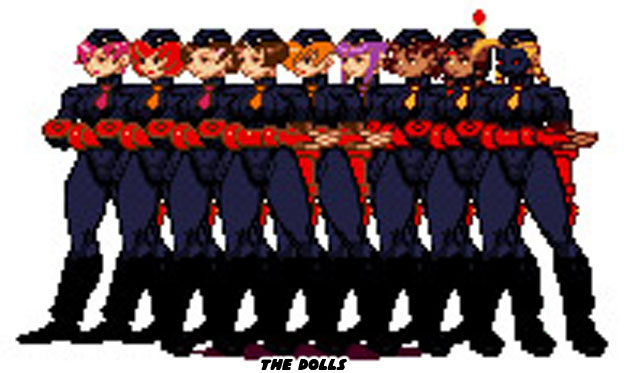
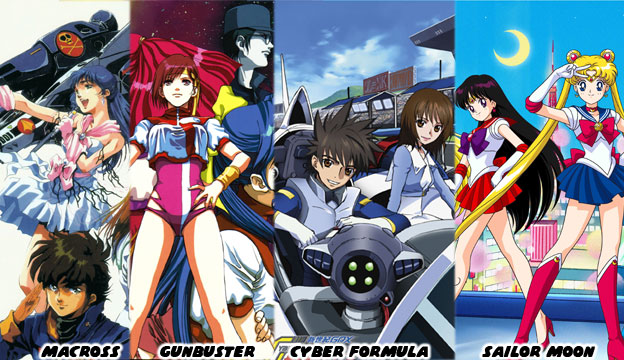
Vega / M. Bison (Dictator) had surrounded himself with young highly trained special agents. Cammy was his star pupil nicknamed Killer Bee. The other Dolls were named after the months of the year. Juni and Juli were German for June and July. Each of them wore tight costumes with small ties on. As if they were some sort of military school uniform. Each Doll was a highly-trained assassin whose appearance was meant to be deceptive. Most were brainwashed and programmed to be specialists, some were naturally gifted, others had gone through genetic modification so that they were stronger or faster than any normal soldier. The girls were around 16-years-old making the Dictator seem like a creep but there was a precedence for his young apprentices. Japanese comics, animated shows and OVAs often revolved around teenage heroes. This went back to the earliest days of Japanese animation. The stars of the shows often tended to be much younger than heroes in western media. Comic book heroes in the USA were often adults and teenagers were sidekicks. That formula was almost opposite in Japan. The greatest pilot, race car driver, magician, or warrior in the stories were usually young and sometimes girls. This made them extremely popular with school-age audiences.


The designers at Capcom were all too familiar with the teenage tradition and created the Dolls as a sort of homage to the female leads in pop culture. Rather than just create a group of Cammy clones they decided that they would each come a different nation, each one would specialize in something. The studio didn't really have enough time to make Juni and Juli more unique than they had planned but the seeds were definitely planted some 18 years ago. Here's some news that certain to make a lot of Street Fighter fans feel old. There is a good chance that many of the new Street Fighter IV and V players were not born when the series began. They might have not even been around when the Alpha series ended or Street Fighter III was released. There are many characters that they are unfamiliar with from games they didn't know existed. It's likely they are wondering where the Dolls featured in Street Fighter V's Story Mode came from.


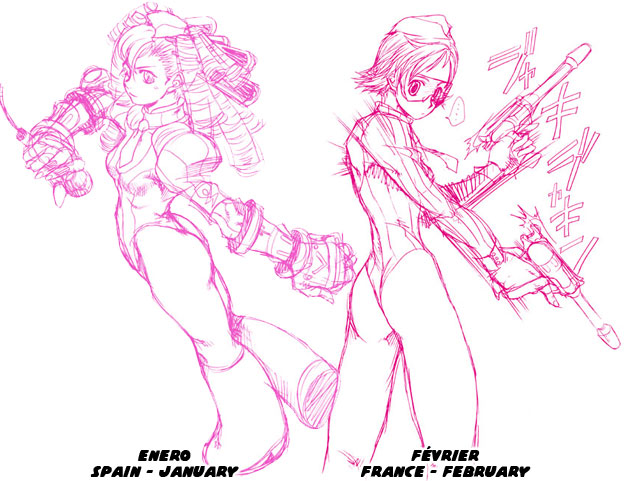
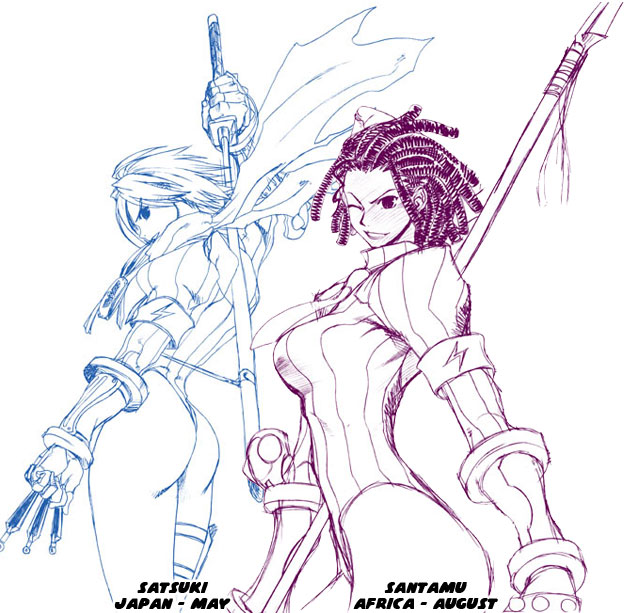
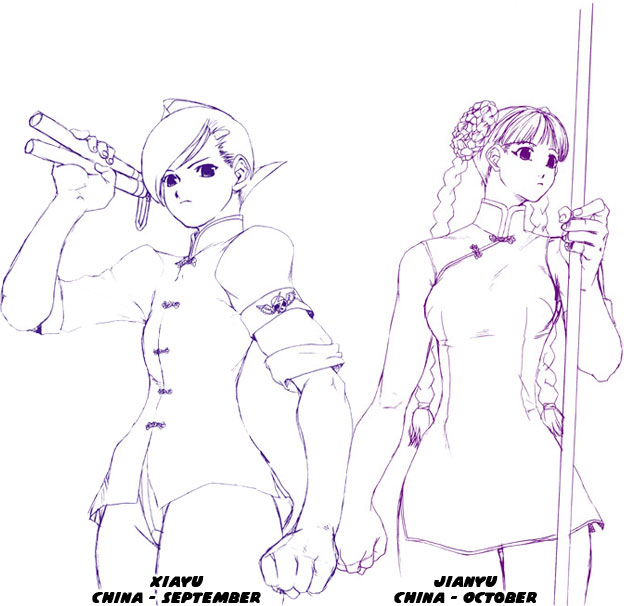
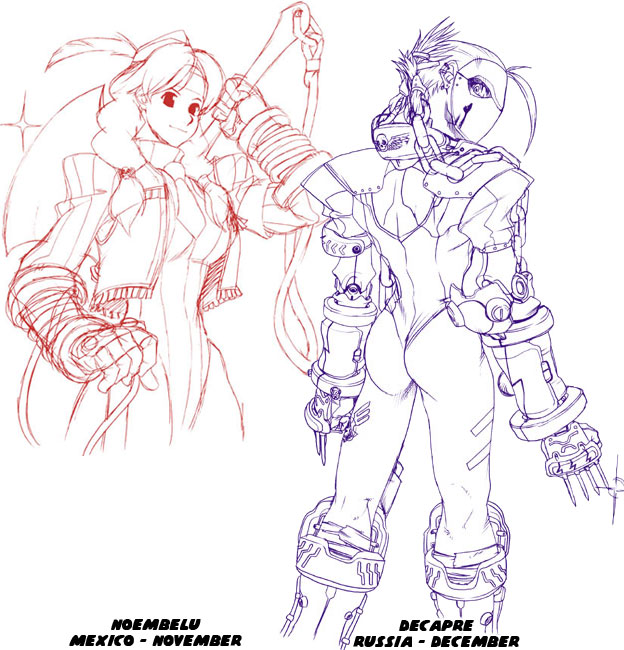
The Dolls had been featured in the Street Fighter comics by Udon and had cameos in the licensed comics in Japan and Hong Kong as well. However I believe that the definitive fan illustrations of the Dolls came from Ataru (NSFW) almost 20 years ago. He took the notes for each character and sketched out versions of each Doll that captured their personality and origin. Enero specialized in communications yet she was presented as a sort of idol character, hence the microphone. Many animé characters want to be idols in their own series. There are models and spokespersons but the singing kind of idol is the most popular. A good portion of the entertainment industry in Asia, including K-Pop from Korea and C-Pop from China, revolves around finding the next idol. Février was an expert at firearms and while she has a more traditional-looking firearm in Street Fighter V in Atatu's version her pistols were more like the science fiction revolvers that could be found in a classic animé series like Space Pirate Captain Harlock or Cobra.


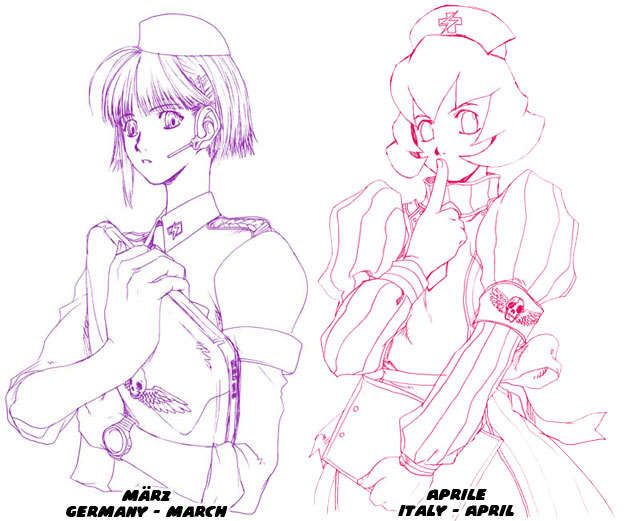
März was an information specialist and she kept her laptop with her everywhere she went. There were many hyper-intelligent / nerdy characters in animé. März filled in the role of hacker / genius for Shadowlaw very well. Aprile was a medic and cute nurse characters always went over well on both sides of the Pacific. There was a long-standing tradition in animé however where nurse characters often attacked lecherous boys with a bazooka-sized syringe. No word if Aprile could use one of those in combat.


The first half of Dolls were spies or specialists of some sort while the second half were fighters. Each one studied a different form of combat and often used a weapon. Satsuki was the ninja of the Dolls. She had the familiar flowing scarf, It was seen countless times in manga and anime. In video games the scarf was synonymous with the assassin's fist. Galford and Hanzo in Samurai Spirits each had the long scarf, Capcom icon Strider and Sega mascot Shinobi also had a scarf. Santamu was originally Vietnamese but changed to Ethiopian. She was a sort of jungle girl trope. She had a spear and even small monkey when she went into battle.


Of course no girl fighting team would be complete without Kung-Fu masters. The two Chinese characters each specialized in a particular weapon. Xiayu used a nunchaku and Jianyu used a staff. When Ataru sketched out the characters he made sure to get the subtlety of each character. The nunchaku was a non-traditional weapon that had actually been adapted from equipment used by rice farmers to separate the rice from the chaff. It was used by peasants to fight off bandits thousands of years ago but was made popular more recently in the Bruce Lee films. Lee was an unorthodox master that incorporated Eastern and Western fighting arts and conditioning into his regiment. He represented a break from tradition, the new form. Xiayu was symbolically cut from the same cloth, the new school kung-fu master. Her haircut and weapon reminded audiences of that. By comparison Jianyu used one of the oldest martial arts weapons ever created. Her costume her form was very traditional, she had more in common with Chun-Li than Bruce Lee. Both characters and even Chun-Li could be considered derived from the Pooh sisters. The enemies of Strider known as the Kuniang Martial Arts Club. Ataru did a fantastic job of conveying this in his illustrations.


The last two fighters had a the strongest connection to the Street Fighter II universe. Noembelu was a member of the same tribe of Native Americans that T. Hawk was. Her braid, leather vest, oversized tomahawk and headdress were also suppose to reflect the native themes. Of all the Dolls I think Decapre was the most popular and most mysterious. She was seen as an Evil Cammy. She looked like an identical clone of Cammy but wore a dark metallic mask. Ataru gave Decapre armor that looked brutal. He went one step further and replaced the braids of Decapre with chains. It was a bold stylistic choice that really made her look like the evil twin fans never knew existed. It's great that the Dolls have returned to Street Fighter. I wish they had been featured in SF Zero 4 to be honest, they seem out of place in SF V. They are undoubtedly bringing in many new fans to the series and making them wonder where these characters came from. I hope this blog helped answer some questions. You can find out more about the Dolls and see how their look changed from Ataru's fan art to the modern interpretation by picking up the Udon comics. Be sure to leave a comment and tell me what you think about the Dolls in SF V. As always if you enjoyed this blog and would like to sponsor me please visit my Patreon page and consider donating each month, even as little as $1 would help make better blogs and even podcasts!

 follow the Street Writer on Patreon!