Showing posts with label r: racing evolution. Show all posts

Monday, July 21, 2014

The Ridge Racer Legacy, part 14...

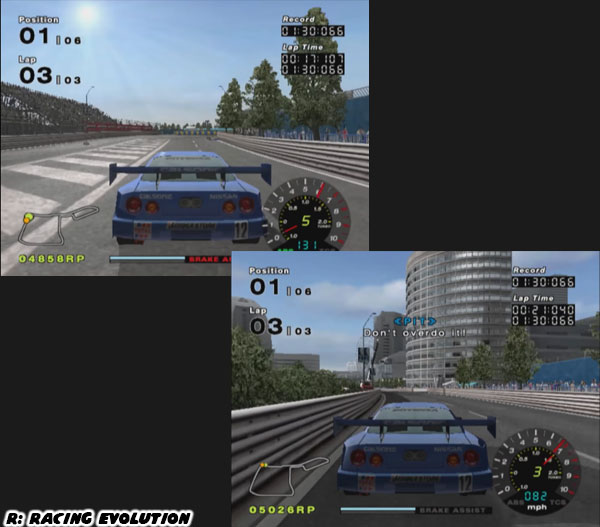
The first issue that long-time Ridge Racer fans had with R: Racing Evolution (RRE) was how Namco had tried to distance themselves from their arcade legacy. The studio went for a sim experience regarding the physics and control of the cars. They also licensed actual cars instead of using the timeless racers that they had spent a decade refining. Namco had done a great job capturing the handling of different classes of cars and creating virtual tracks to race them on. Yet they were going after the market that Gran Turismo had cultivated.

Sony's Polyphony Studio had spent years making each generation of the game superior to the previous in every aspect. The obsession to detail was well known to fans of Polyphony. The producers were known for fitting microphones inside and outside of cars as they raced them over different terrain just to they could capture authentic sounds. They would travel the world and meet with car designers and even the people that sewed the upholstery for the seats just to gain an ounce of knowledge that they could reflect in the game. Gran Turismo 3 A-Spec had been released in 2001, a few years before R: Racing Evolution had come out, yet it had more than four times the number of race cars. Polyphony had set the bar and the best Namco could do was try to meet it because they would never be able to exceed it.

The title of the game also did not sit favorably with audiences. It featured Rena Hayami, an EMT driver for Ridge City. She represented the hometown of Ridge Racer but Namco could not bring themselves to call the game Ridge Racer 6. It was as if they lacked faith in their concept. Where the game really began to fall apart was in the treatment of the main characters in Racing Life mode. In the previous blogs I applauded Namco for having the courage to make a female the main character and the insight for the villain to be a corporation. Yet I should have known better. As the game progressed it became more and more obvious why the designers at Namco had selected a female lead and female rival for the game.

It would be hard to defend some of the cinemas featured in the game. I mean what purpose would it serve to have a (non-nude) shot of Rena taking a shower after a race? If the star of the game were a male chances are this scene wouldn't have made the cut. I understand that sex sells and if this were a movie about a female race car driver then the director would have done the same thing. But this was a game after all and scenes like this did nothing to advance the plot. When I was younger these scenes didn't mean as much. As I got older and wiser (and got married) I suddenly had a daughter that I had to be accountable for. It was then that I began taking another look at the way women had been presented in the game. I could show my daughter how cool it was that Rena went from driving an ambulance and getting a job offer as a professional race car driver. She was a role-model at that point. Yet a few races into the game the next time we see her she is naked. How am I supposed to justify the decision to do that in a racing game?

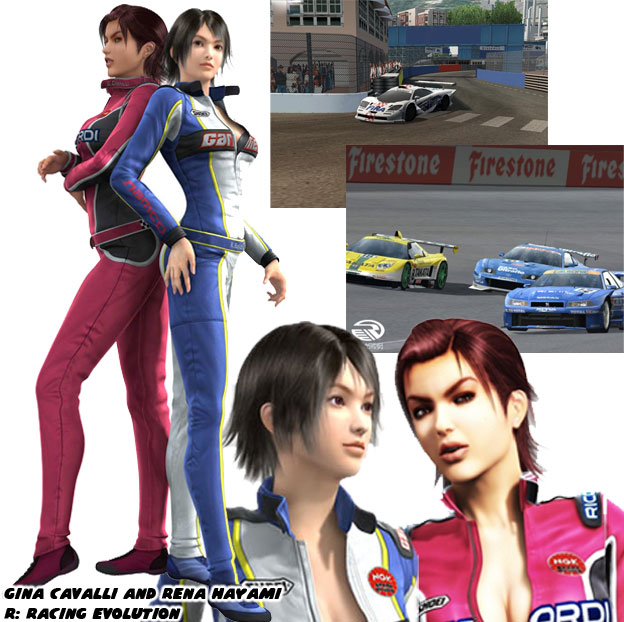
Things were bad before the shower scene actually. The very first time players were introduced to rival Gina Cavalli the camera was fixated on her cleavage. Every scene featuring the character was framed to make sure that her boobs were in the shot. Both Gina and Rena actually wore their racing suit zipped down to reveal their bust line. Every other driver and mechanic was zipped up of course. Rena had a modest black bra for everyone to see while I think Gina was pretty much nude under her suit. I should have been celebrating the decision by Namco to introduce a Spanish female main character into canon. Different ethnic groups and nationalities were and continued to be sorely underrepresented in games after all. While I could tell my daughter that Namco once made a racing game where the two main characters were females I would be ashamed to show her how they were represented.

There were other great games that were hampered by what audiences perceived. For example Marc Ecko's Getting Up was a great narrative on graffiti culture as well as corporate and political corruption. Yet before I could show people the actual graffiti portions of the game I had to spend the majority of the time sneaking up on cops and smashing paint cans on the back of their heads. A blow like that would more likely kill a person than knock them out. How was I supposed to convince viewers of the merits of the game if all they saw was violence instead of art? A similar dilemma had happened with RRE. The racing portions were well done but the only thing that would stick out to viewers (no pun intended) would be the boobs.

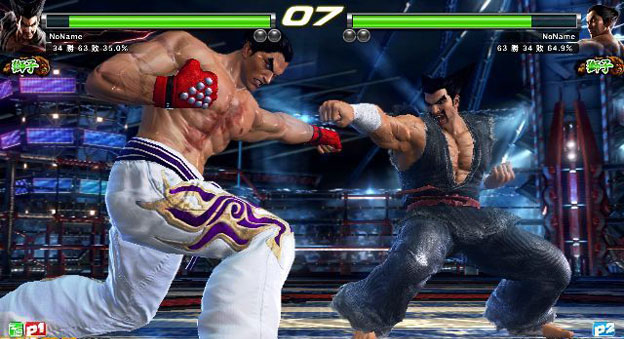
It wasn't the first time that Namco, or other Japanese studios for that matter, had been fixated on breasts. For example the Dead or Alive fighting game series by Tecmo was notorious for its "jiggling" breast physics and the original Killer Instinct by Rare featured the character Orchid that would flash her breasts at opponents and give them a heart attack. Pandering to the masses had become the rule rather than the exception in other Namco titles. In the Tekken Tag Tournament 2 they featured rapper Snoop Dog and his own level, The scantily clad women dancing at his side would have been typical in one of his music videos, where Namco really went for exploitation was in offering 150 different bikinis that players could earn for their fighters.

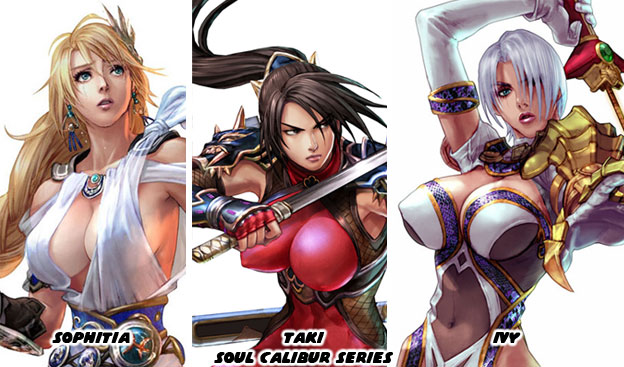
The shorts and loin cloths they put on the male character were tame compared to the strings that made up some of the female costumes. Sex sold in the short run but only substance could sustain a franchise. Many of the female sword fighters in Namco's Soul Calibur series had become more and more busty as the games progressed. The outfits of many of the characters became tighter and more revealing, making Gina seem modest by comparison. The outrageous bust sizes gave the mostly male fan base a reason to overlook the lack of gameplay innovation through the series. Namco was guilty of following the trends of their contemporaries rather than relying on the strength of their developers.

The studio could not manage to win over audiences with RRE despite the number of innovative ideas they had brought console racers. It was a combination of things that cost the publisher from having a hit on their hands. Competing against Gran Turismo was a major problem, but not capitalizing on the Ridge Racer name and trying to inject sex into an otherwise well laid-out plot had doomed the game from the onset. Namco had actually planned to feature Rena and Gina in several other titles if RRE had become a hit. They would continue to use the characters to sell future versions of Ridge Racer, with Gina being the cover star in the Nintendo DS release of the game. Yet any further developments with the characters and teams would be highly unlikely.

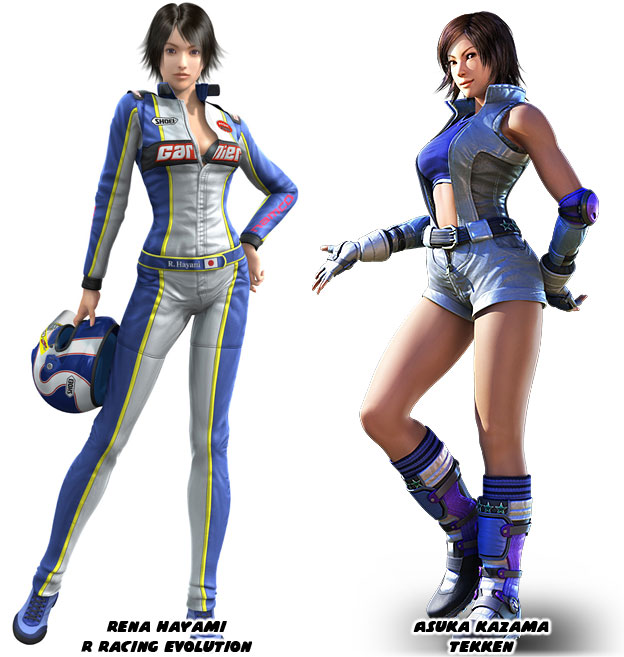
The studio did at least develop a new character inspired by Rena a year after RRE was released. Fans of Tekken 5 noticed that Asuka Kazama had a lot of similarities to Rena. The physical and costume traits were obvious but personality wise they were complete opposites. Asuka was presented as a very immature and ditzy schoolgirl. She ended up playing the fool for the rich schoolgirl Emilie "Lili" De Rochefort. It was a shame that Namco could not find a similar use for Asuka. Her brother Jin was a main character in the series and ran the Mishima Zaibatsu whereas she had been relegated to sidekick status. In fact the objectification was a little more insulting to female fans because Asuka's breasts were the punchline in two different Tekken endings. By comparison Rena was presented with much more confidence and maturity whether she was behind the wheel of an ambulance or race car.

Women had actually been an important part of the Ridge Racer legacy yet Namco did not really know how to present them within the context of the races themselves. The next blog will look at the muses behind the Ridge Racer series. As always if you would like to sponsor me please visit my Patreon page and consider donating each month, even as little as $1 would help make better blogs and even podcasts!
follow the Street Writer on Patreon!

Thursday, July 17, 2014

The Ridge Racer Legacy, part 12...

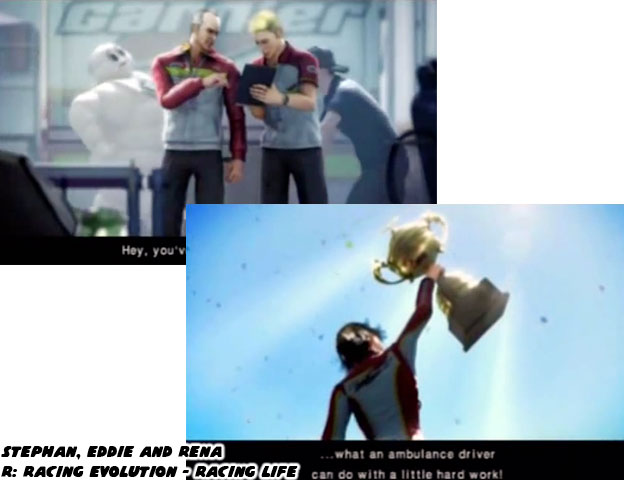
R: Racing Evolution was an earnest attempt by Namco to turn an arcade racing series into a memorable console franchise. It did not have violence, zombies, monsters, aliens or even high-profile voice actors like other genres. What it did have however was a solid driving experience and a unique plot. The game could be played in the traditional arcade mode where cars could be raced on a variety of tracks in shorts increments. The heart of the experience however was called the Racing Life mode. In it players assumed the role of Rena Hayami a young EMT driver for Ridge City. At the start of the game she is rushing an unknown race car driver and his team captain Stephan Garnier to the Ridge City hospital.
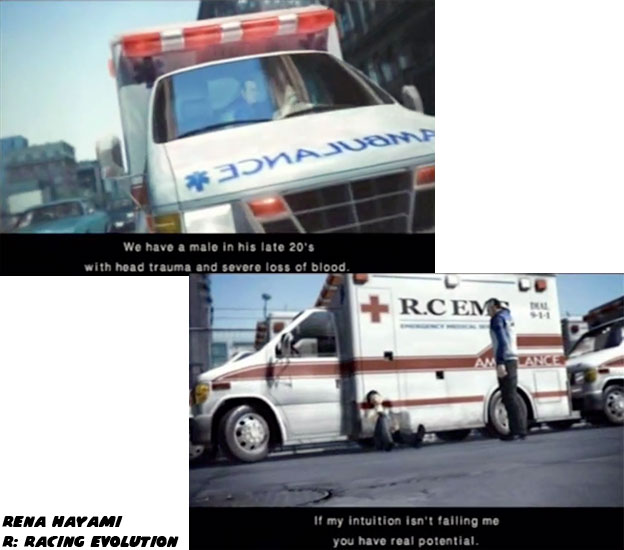
The driver had severe head trauma and Stephan feared that he might die on the way to the hospital. He asked if Rena knew of any shortcuts. She did and decided to cut down alleyways and side streets to bypass all of the traffic. Her actions potentially saved the life of the unknown driver and impressed Stephan. In fact he was so impressed that he offered her a spot on his racing team. It didn't take long for Rena to accept his offer. It was a bold and refreshing change of pace that the star of the racing game would be a female character. The team at Namco was really taking a chance. The majority of video game heroes (and race car drivers) were mostly men. The addition of a back story with Rena acting as an ambulance driver made her a standout character. Her job after all was associated with heroic traits. It was believable that she had more than a natural affinity for racing. Her job demanded serious driving skills on a daily basis.
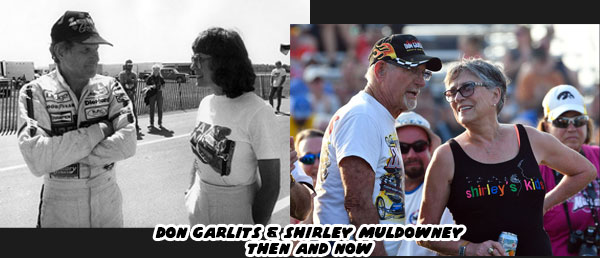
Many legendary race car drivers came from different walks of life. Carroll Shelby, whom I mentioned a long time ago on this blog, was a world-class driver but was also an accomplished test pilot and had a day job as a chicken farmer. Richard Petty of NASCAR fame (the King in Pixar's Cars film) honed his skills at a young age by running moonshine through the hills of North Carolina. The first licensed female top fuel race car driver was Shirley "Cha Cha" Muldowney. As a teenager she didn't find school appealing and just wanted to race hot rods all day. Her boyfriend was a mechanic and built her first dragster. She was a naturally gifted driver and won several world championships and tore down many barriers along the way. I wish I could say that Rena was inspired by Shirley Muldowney or CART icon Lyn St. James but she wasn't. Her inspiration was derived more from fictional characters in Japanese racing manga. I will spend more time on the female racing legacy from Namco in a future blog, for now I want to say that it was a great decision to have Rena be the star of the game.
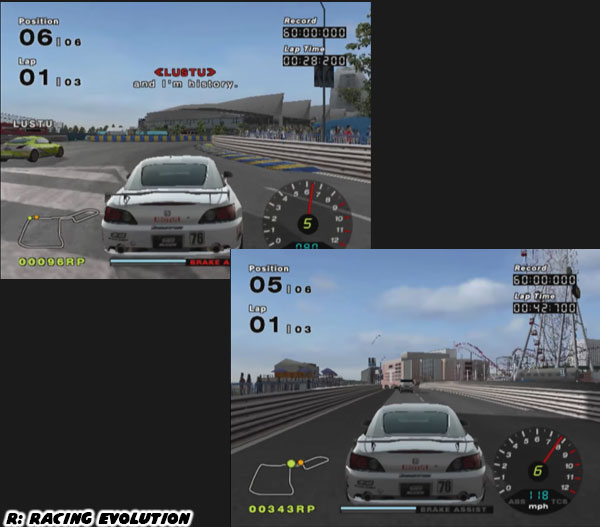
It turned out that there was nothing simple about becoming a professional race car driver. Rena had to work her way through the classes and earn her place on the team. Game players got a chance to enjoy the different stages of a pro drivers life and see how competitive the job could really be. The cars in each class handled differently and Rena, or rather the player, was expected to adapt right away to the changing conditions. What surprised me was the introduction of a villain in Racing Life mode. At first players assumed that the Spanish race car driver Gina Cavalli was the antagonist.
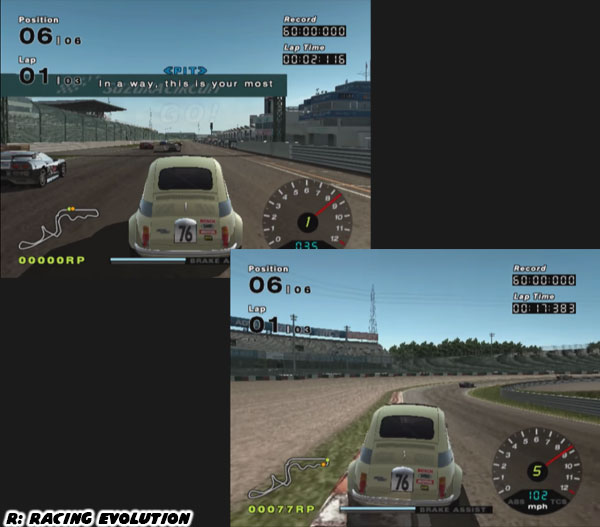
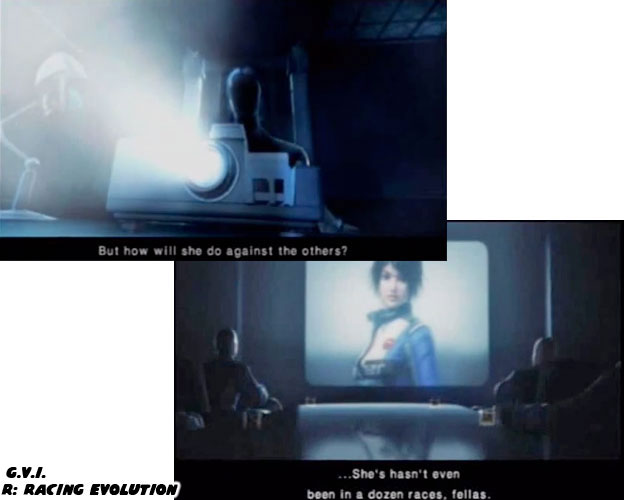
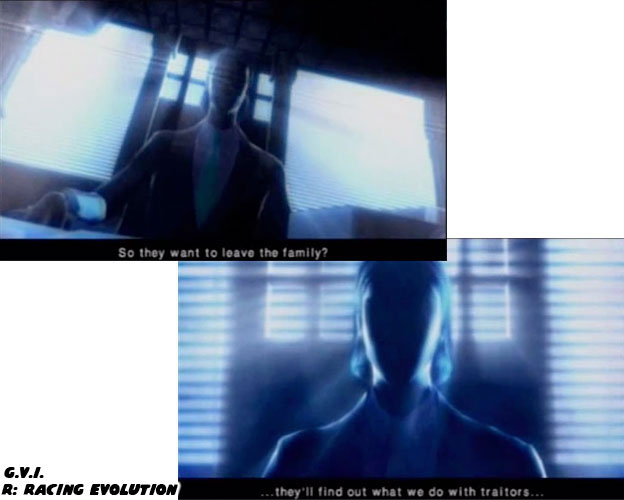
The rivalry was framed with Gina being a seasoned driver that had worked her way up to the pros and now felt threatened by a younger upstart. It turned out that Gina was nowhere near the biggest threat to Rena or any of the other drivers. The bad guy in the game not a person but a corporation. G.V.I. (a fictional company) was the benefactor behind Stephan Garnier and his team. The senior shareholders and president of G.V.I. were shown at several points through the Racing Life mode. They were kept in the shadows of a board room. Cigar smoke filled the air and chilled drinks sat on coasters in front of the members. They watched the progress of their most recent "investment" on a projector. Namco meant for these men to come across as extremely powerful and somewhat creepy. They were doing a good job at reflecting the drama that many real world corporations had in professional racing.
Wherever there was money there would also be greed and corruption. It followed every major sport the world over including auto racing. There was certainly a division between what the fans thought they knew and what actually went on behind the scenes. The technology battle between the engine, aeromotive, transmission, tire and manufacturing partners are as heated as those working on billion dollar military contracts. All of those companies guard their patents ferociously yet are always looking to exploit a leak from a rival corporation.
Teams are not always transparent. They try to groom a driver that has a personality that appeals to the public yet is inaccessible to the masses. They sometimes have to contend with moles on a crew leaking information to rivals. The more high profile the racing events are the more important the back room dealings become. Imagine what type of pull it takes at a community, county and state level to get a Formula-1 race to happen. People like F1 boss Bernie Ecclestone do not hang out with celebrities as much as they socialize with kings, sultans and presidents.
The logistics of getting hundreds of thousands of fans in and out of a venue is just part of the challenge. Racing organizations have a brand to protect and a certain image to project. The mayor and city council members of a town know what the expectations are if they are selected to host a race. Police will spend more time rounding up petty criminals or forcing homeless people to move out of a district so that visitors get a favorable impression during race weekend. Environmental concerns over excessive noise and traffic on a delicate ecosystem can get overlooked. Permits may be denied for people that try to air grievances or assemble during the event.
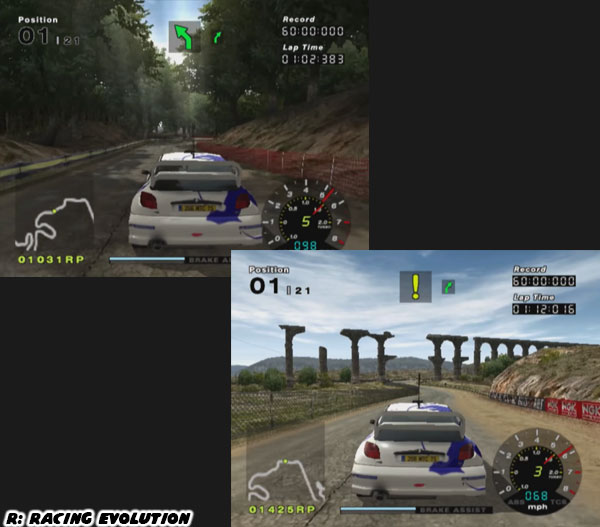
The people with the money and the political pull can even bend the rules for the racers themselves. All of the major motorsports have an organizing body. They make sure that cars and drivers adhere to specific rules, weights, engines and classes. On race day any car that does not meet the outlined specifications is supposed to be pulled from a race. Yet those in the know have heard a few stories where someone from "upstairs" phones in the officials after a car is sidelined and allows it to compete. A popular driver gets people in the stands, and more important, gets people to spend their money. A savvy team manager and crew chief knows when they can push their luck and get an unfair advantage from the system. They have earned the favor of corporations who stand to make billions while a driver earns millions.
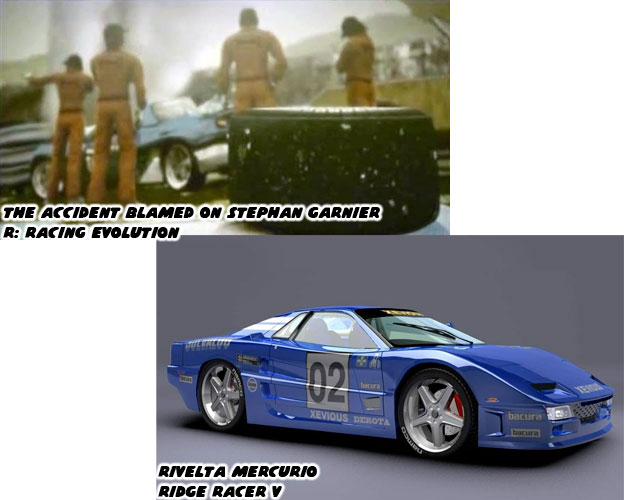
G.V.I. represents the organizations that are so massive that they do not own one, but instead multiple teams under different banners. They do not mind pitting their own drivers against each other just to see which ones they will continue to invest in. In Racing Life mode the story of Stephan Garnier is revealed in flashbacks. He used to run his own team but an accident almost took the life of his star driver. Long-time Ridge Racer fans noticed that the car featured in the accident photo was a Rivelta Mercurio from Ridge Racer V. It was the only fictional car featured in the otherwise all true-life manufacturer lineup. Fans were hoping to see how the Ridge Racer cars would hold up to the best real super cars of the current era.

Sadly Namco decided that in this continuity there would be no crossovers. But I digress… Stephan found it difficult to keep going amid the controversy and had to go to G.V.I. for help. The corporation picked him up for his knowledge and expertise. Yet they ran like the mob and expected unconditional loyalty and a hefty return on their investment. With his back to the wall Stephan took a major gamble on selecting Rena Hayami to replace his driver. He didn't tell her what the stakes were when she joined his team, nor that she was actually replacing the driver she had saved at the start of the game. Over the course of several races Garnier crew chief Eddie and rival driver Gina warned Rena about the influence that GV.I. had, specifically that they were capable of pulling the strings of Stephan.
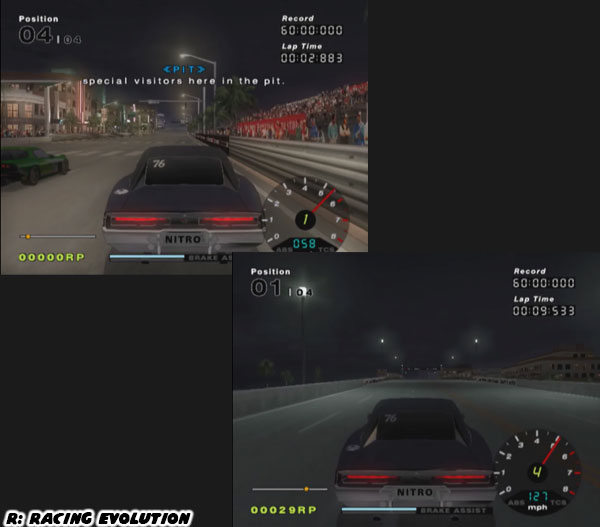
Gina Cavalli turned out to be a friendly rival in the end. Her sponsors at Team Riccardi had stayed away from G.V.I. and their illegal activities. It would take the player the entire game to find out just what made G.V.I. so bad to begin with. Rena and Stephan would be challenged on and off the track. Winning a series would become their only means to break away from G.V.I. Near the end of the game Stephan had enough of G.V.I.'s oversight. He quit his spot and asked Rena via a letter to leave them and join his new team instead. They would become partners and get a fresh start. It took Rena a few more races to make her decision but in the end she would join team Garnier and bring along crew chief Eddie. The news of this decision did not sit well with the senior members of G.V.I. In one final cinema the president warned what they would do to those that tried to leave the "family."
The racing community had its eyes on Team Garnier and G.V.I. couldn't exact any revenge in public. Instead they continued to pull the strings behind the scenes. As a team owner and driver Rena suddenly found it much more difficult to place as well as she used to. Certainly there was a gap with her R&D budget compared to the well-off G.V.I. teams. Yet there was also the hint that G.V.I. was making sure that the calls were coming from upstairs to give her team more oversight from officials and make it harder for them to qualify. Rejecting the advances of corporate benefactors was a risk that many privateer teams have had to endure over the past century.
Seeing this type of drama turned into the plot of a racing videogame was sublime. It had not been done before or since for that matter. The team at Namco had demonstrated that they could turn an arcade racer into a simulator title, capturing completely different gameplay elements in the process. This would not have been possible without allowing the villains to dictate the pace of the game. It was something that Namco had become very good at over the past few decades. Challenge and conflict were the biggest motivators in the most successful titles from the studio. The next blog will look at this legacy. As always if you would like to sponsor me please visit my Patreon page and consider donating each month, even as little as $1 would help make better blogs and even podcasts!
follow the Street Writer on Patreon!

Wednesday, July 16, 2014

The Ridge Racer Legacy, part 11...

The consoles of the early millennium were amazing powerhouses compared to every previous generation. An increase in media storage capacity, improved graphics, sound and memory meant that the new generation of games could be more immersive than ever before. It was up to developers to entertain their audiences while also providing a suitable challenge. The game players of the '80s and '90s had grown up and expected some more refinement in their titles. They wanted new and unique experiences and did not enjoy playing the same title over and over. In essence they wanted an experience that lasted much longer than the average arcade game. Even the other console hits, like the Mario Bros. and the Legend of Zelda had to adapt with the times.

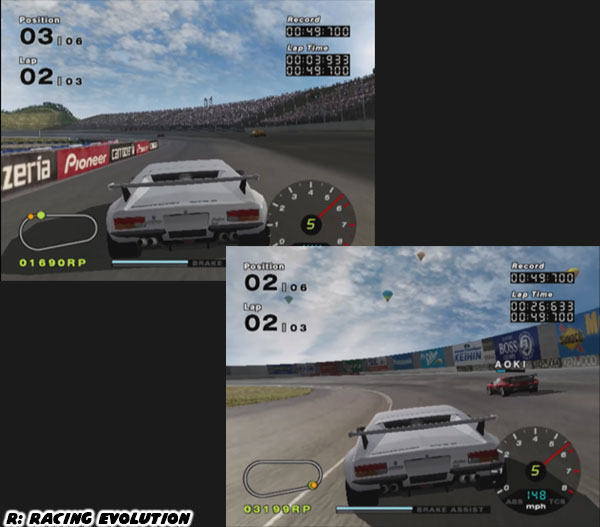
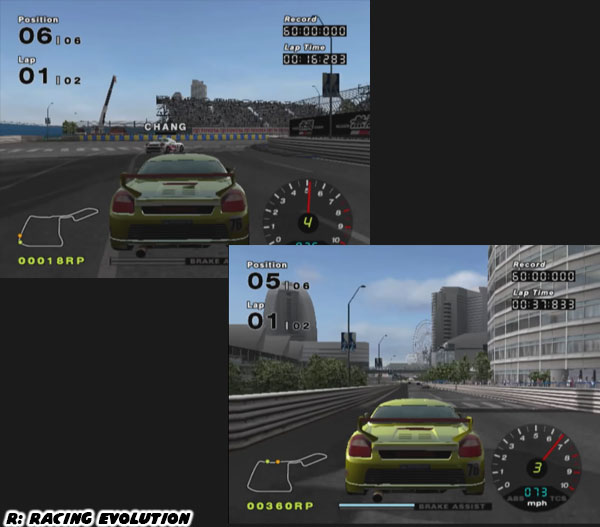
Ridge Racer V was a solid racing game but if left audiences wanting. Namco rethought their approach and created a game that pulled many elements from Ridge Racer Type 4 as well as other contemporary hits. It took the studio several years to release a new title. In that time millions of dollars and thousands of work hours were spent in development. The end result was R: Racing Evolution. The 2003 sleeper that was released on the Nintendo GameCube, Microsoft Xbox and Playstation 2. It was a game that the studio meant to be the spiritual successor to the Ridge Racer series. They began by breaking from tradition. It was the first game in Ridge continuity that featured real world production cars and race cars. It was not however the first Namco racing game to use real world sports cars.

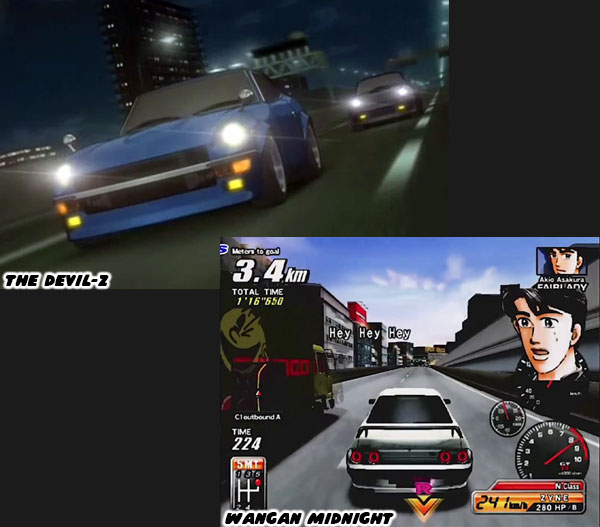
A few years prior, in 2001 to be exact, the studio had released the arcade game Wangan Midnight. It was based on the popular manga series that revolved around a group of street racers. Like the Megalopolis Expressway films from the '80s, Wangan Midnight helped inspire the original Ridge Racer game. It was a series that started in 1990, predating the wildly popular Initial D by 5 years. In it the main character, Akio Asakura, drove a custom Fairlady Z that was dubbed the "Devil Z." The impossibly fast and incredibly hard to control Devil Z undoubtedly planted the seeds for the Devil 13 in Ridge Racer. The cars in the comic and game were based on real tuned cars from Nissan, Porsche, Toyota and Mazda. Namco needed to secure a license from several manufacturers in order to make the game true to the comic. Since the company was working on their proprietary arcade hardware they were able to adapt the game and eventually series of games for the PS2 and PS3 easily. The work with the cars and licenses in Wangan Midnight got the Ridge Racer Project team working on something more ambitious.

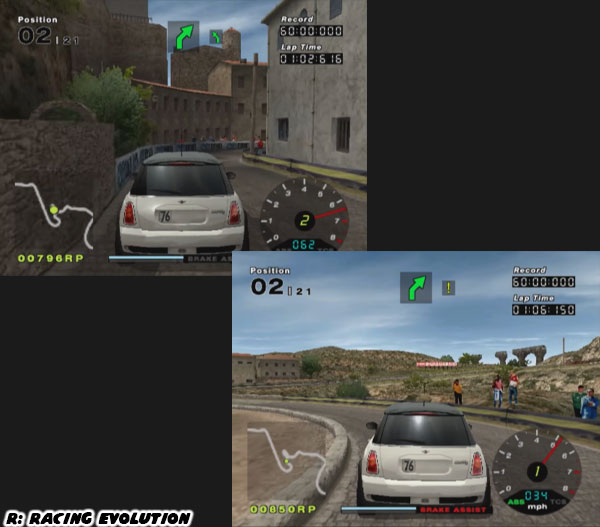
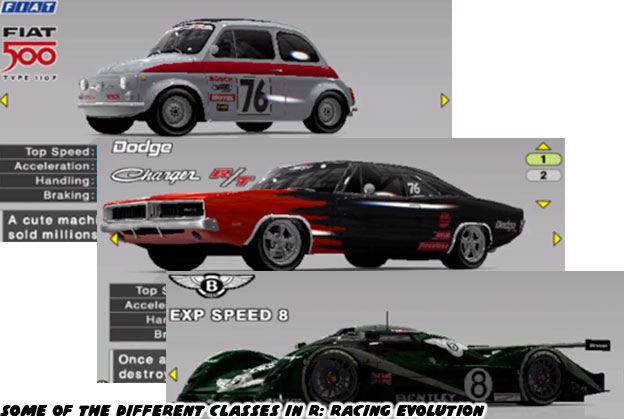
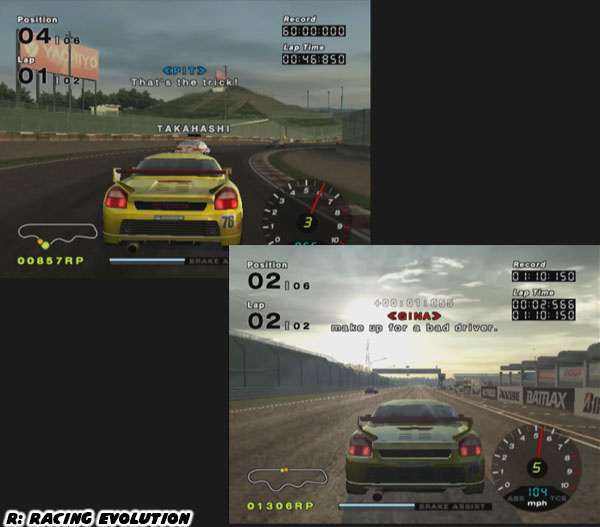
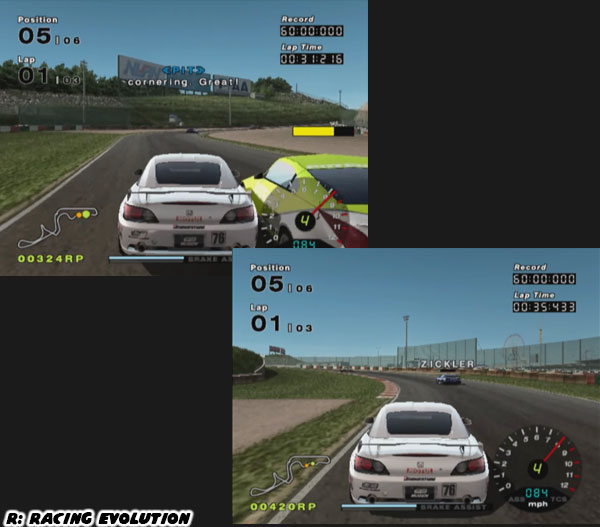
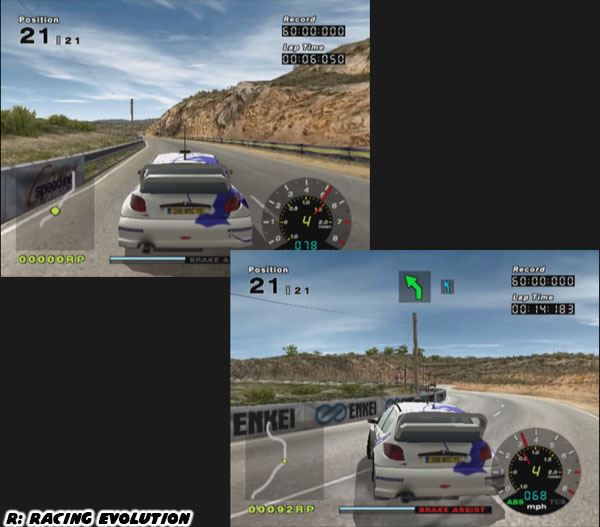
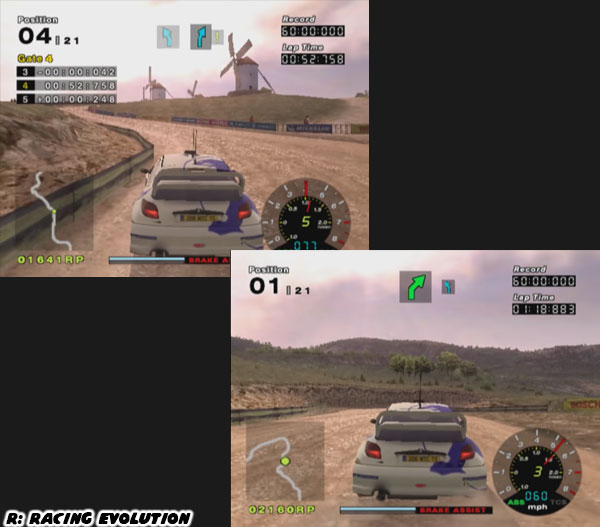
R: Racing Evolution featured racing in multiple different classes. Granted in Ridge Racer there were classes as well however some of them, like the Duel class, were fictional. From the muscle cars in the Drag Racing category to the four wheel drive beasts in the Rally class, as well as the GT Production and Prototype classes, everything in R: Racing Evolution was grounded in reality. The cars handled believable, they responded fairly accurately and had the sights, details and sounds to help put the players in the moment. The game ran the spectrum of the biggest racing types, ensuring that fans in the US, Japan, the UK and Europe would find something they could identify with.

The most famous manufacturers were represented along with a handful of lesser known (to the US) auto companies. It was much more of a racing sim experience than audiences had ever expected from Namco. The studio was taking a break from the arcade experience to see if they could capture the fans of titles like Gran Turismo on the Playstation and Project Gotham Racing on the Xbox. Where they really surprised audiences was in the story-based "Racing Life" mode. The game revolved around two female drivers. A seasoned professional named Gina Cavalli and a young rookie named Rena Hayami.

Players took on the role of Rena and were made to see Gina as a not-too-friendly rival. In fact from the very onset the cattiness between the two was played up for the sake of drama. It seemed a little bit much at the beginning of the game, making the characters appear one-dimensional. The whole story would reveal itself one chapter at a time, highlighted by different races and different classes of cars. Every character introduced would become more well rounded by the end of the game. These characters could be fearful, dubious or arrogant depending on the situation. By providing a decent script and a range of emotions for the animators to work with the characters came to life. In this way players would learn to empathize with them and have a greater understanding and appreciation of race culture.

Namco had taken a page out of their Ridge Racer Type 4 playbook. It was only natural that they followed what worked previously. Ridge Racer V could be interpreted as a "do over" like Rage Racer was on the original Playstation and Namco needed to really step up their efforts in the next release. The studio did change some things around. Instead of speaking to the player in second-person and having them choose between four sponsors and four manufacturers the studio focused on the most important storytelling elements. They put audiences on one team that was as fleshed out as those in R4. This team had a back story, a history that would be revealed from the different characters in the game. The team captain, a seasoned veteran named Stephan Garnier would speak to them directly and in some cases have a navigator / crew chief named Eddie talk to them during a race. All the while players got to experience the different classes of racing, different manufacturers and sponsor cars as well. The developers then created an avatar for players to assume the role of to help place themselves in the context of the story. That character was not the Michelin Man, although his cameo was a high point in the Racing Life mode.

Namco had good reason to create a unique protagonist specifically for the game. It seemed as if the most successful titles in Japan and the US revolved around a human character. Even in the most elaborate science fiction, fantasy or historical period just about every AAA blockbuster had a human character for audiences to play as and identify with. It was true in Metal Gear, God of War and Assassins Creed titles. The stars of those games had a very deep back story and a very rich supporting cast. Audiences were expected to enjoy the gaming experience but they were also expected to empathize with the characters and become emotionally invested in the plot.

Namco had planned for R: Racing Evolution to become a blockbuster hit by learning from their contemporaries in other genres. Few racing games have had a story as interesting as the one they had developed. Few racing games ran the gamut of classes and car types with a solid sense of realism. Namco did a good job at marrying the two for a whole new console generation. The publisher wanted Rena, Gina and Stephan to become icons in the world of racing games. They had planned for them to become mascots, as well recognized as the heroes from other genres, yet that did not come to pass. There were a number of missteps that prevented the vision from becoming a reality. The next blog will cover some of the lessons learned from this title. As always if you would like to sponsor me please visit my Patreon page and consider donating each month, even as little as $1 would help make better blogs and even podcasts!
follow the Street Writer on Patreon!