God of War Ascension offers a grand adventure, comparable to the early GoW titles. However it has another major selling point, it is also the first time that Sony Santa Monica created a multiplayer combat title using the GoW engine. The studio wanted to see if it was possible to assign Kratos-like combat to an online game. Would it still be engaging to audiences? Would the type of combat work well when scaled up from 2 vs 2, 3 vs 3, or 4 vs 4? How large, and interactive would the maps have to be so the stages wouldn’t feel limited? The only way to find out was to build the game, and see. Not many people know that for GoW III the studio was starting to build an entirely new combat engine from scratch. One that would control, animate, and feel like the previous GoW titles. Except that the new engine would actually work in 3D environments when fighting opponents with similar powers, and abilities. The transition to the new fighting engine was so seamless that most people didn’t even notice.
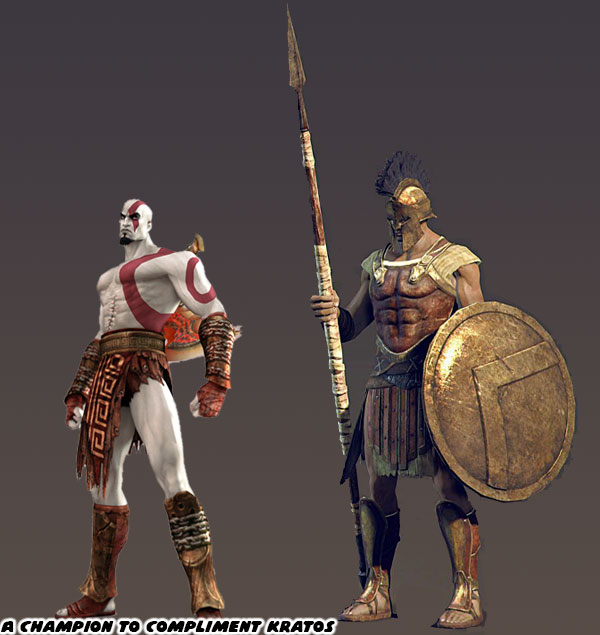
One of the first steps in designing a multiplayer game would be coming up with a leading character, somebody that worked in the GoW universe. This person had to have roughly the same size, and build as Kratos. By doing this the developers could work with roughly the same camera angles, and stage layouts that they had been used to. They wouldn’t have to completely change the assets used in the game for Kratos. The other advantage was for audiences. They would already be familiar with the attack range, and defense of the character if he was the same size as the ghost of Sparta. There were a few Kratos-sized figures in Ascension that could have fit the bill. In one cut scene we visited the streets of Sparta, and saw his soldiers becoming him to return. One of those faceless Spartans could have been a good fighter to start with. Instead Sony Santa Monica wanted a blank slate for players to identify with, and play through. It was decided to create a bald (or shaved head) muscular figure, almost exactly the same build, if not slightly more muscular than Kratos.
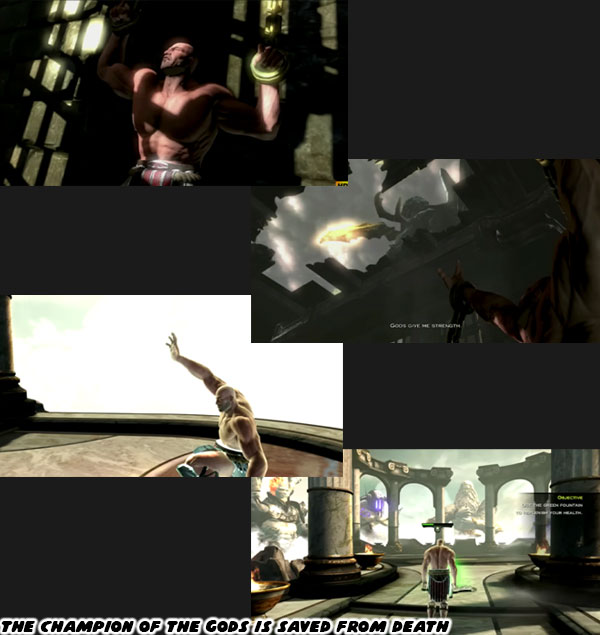
The studio referred to this nameless person as the Redeemed Warrior, he would eventually earn the title as Champion of the Gods. We first saw him in the early stages of Ascension. Kratos is chasing after Megaera while in the prison of the Hecatonchires. The warrior praises the gods because he thinks Kratos is there to liberate him. Instead an infected arm of the Hecatonchires breaks the roof of the cell, and it appears that the monster kills the warrior, but instead he actually disappears in a flash of light. When the multiplayer game begins we are returned to that cut scene, but see the warrior reappear in the Rotunda of Olympus. It is a circular arena surrounded by the statues of several gods. Here we are prompted to represent one of the patrons; Zeus, Ares, Hades, or Poseidon in their tournaments. Each god has specific blessings that they grant the warrior. These are advantages in attacks, or defense with magic, and physical strikes. The diversity of different strengths, and weaknesses helps make each selection unique.
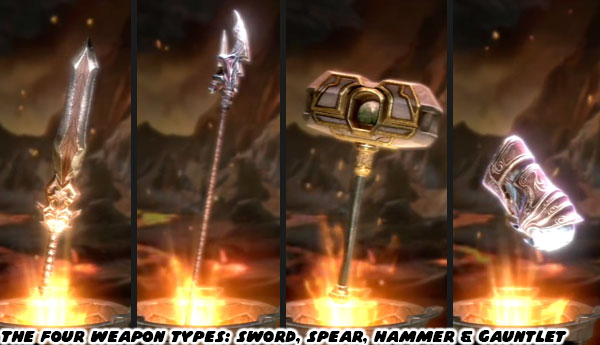
The Redeemed Warrior may have been as big as Kratos, but he wasn’t his equal in combat. He was just a hair slower, he moved, dodged, climbed, and recovered just a fraction slower than the god of war. The idea for the champion was that he was superior to a regular warrior, but not the equal to the ghost of Sparta. WIth that said he was someone that could have served as a Lieutenant in the Spartan army under Kratos. Sony Santa Monica did not want to create the Blades of Chaos for the champions to use, but they did introduce different armaments that were just as memorable. Once a player had selected which god to represent then they were prompted to use one of four main types of weapons. These were sword, spear, hammer, and gauntlet. Those that were familiar with the previous three numbered GoW titles had experience with each weapon. They would remember that some had greater range than the Blades of Chaos, or did more damage in close combat. Not only that, some of the named weapons such as the Blade of Artemis (GoW), the Barbarian Hammer (GoW II), the Nemean Cestus (GoW III), and the Spear of Destiny (GoW II) could be earned by winning multiple tournaments.
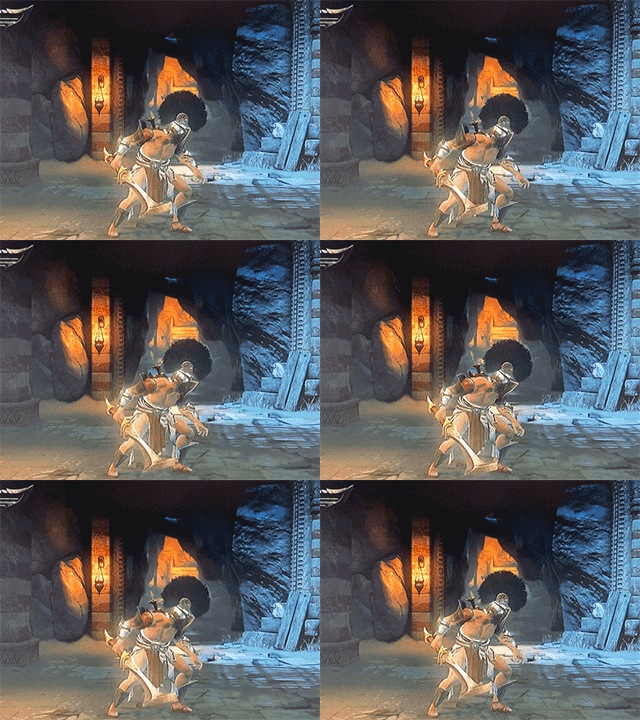
Not only could audiences fight with a main weapon type, they would also be able to pick up secondary weapons that spawned around the various stages. These second weapons were not as powerful as the main ones, not only that, but they would eventually break if overused.
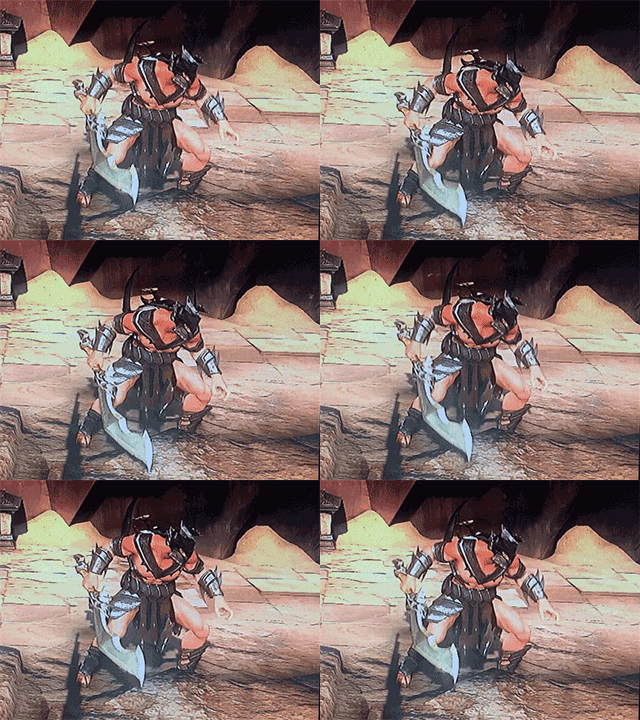
The nice thing was that they were still useful to set up combos, and even be thrown at opponents to break their defenses. The five secondary weapons were actually featured during the Kratos story in Ascension. The first of these was the Sword. The developers at Sony Santa Monica created more than just one look for the secondary weapons. We could pick up alternate versions of the sword.
There was also a Shield, but that wasn’t half as interesting as the Club.
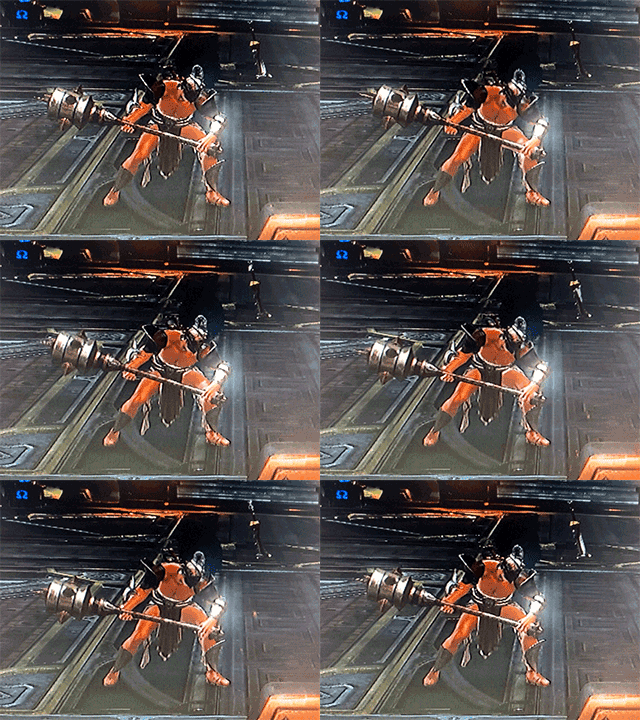
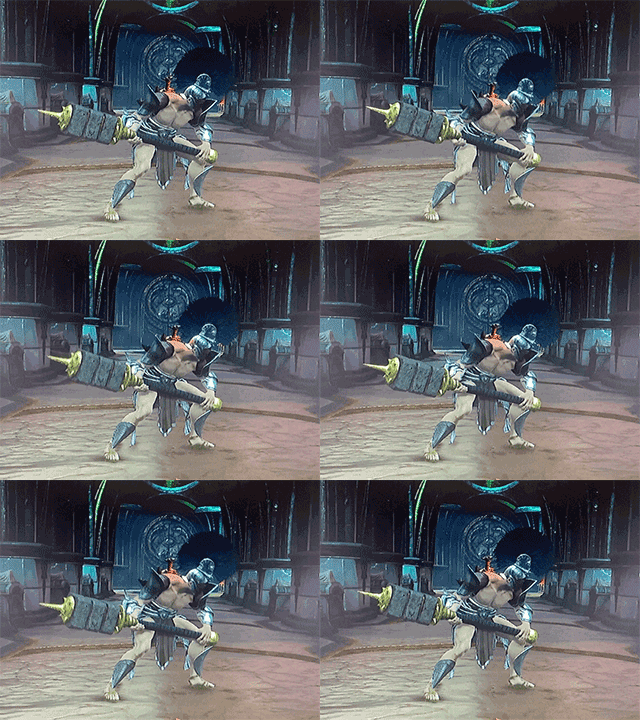
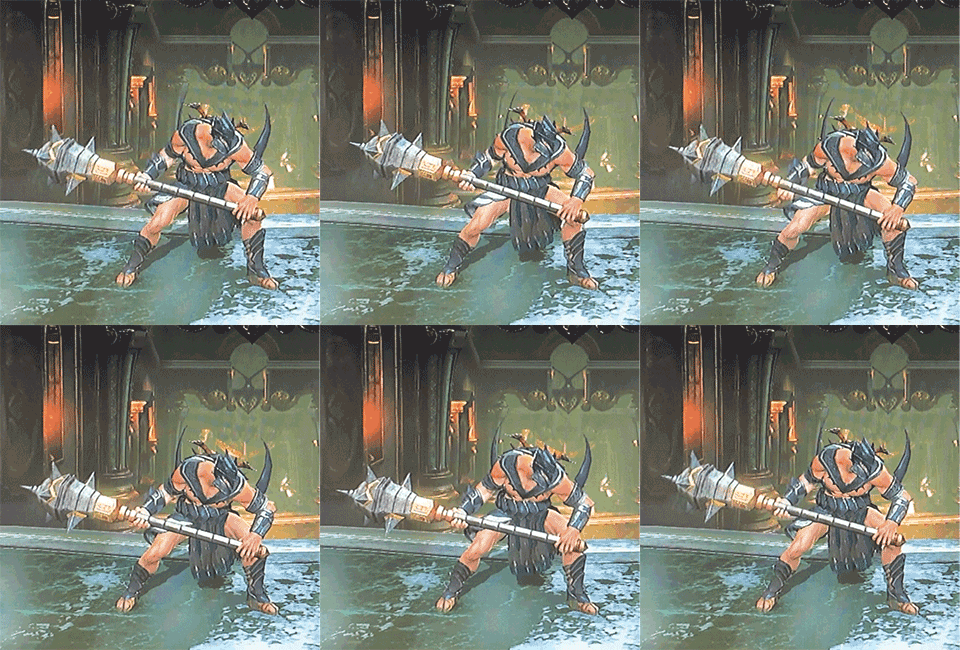
You might find a club had a stone build. Or the club was forged of iron. Or the club was polished metal with spikes.
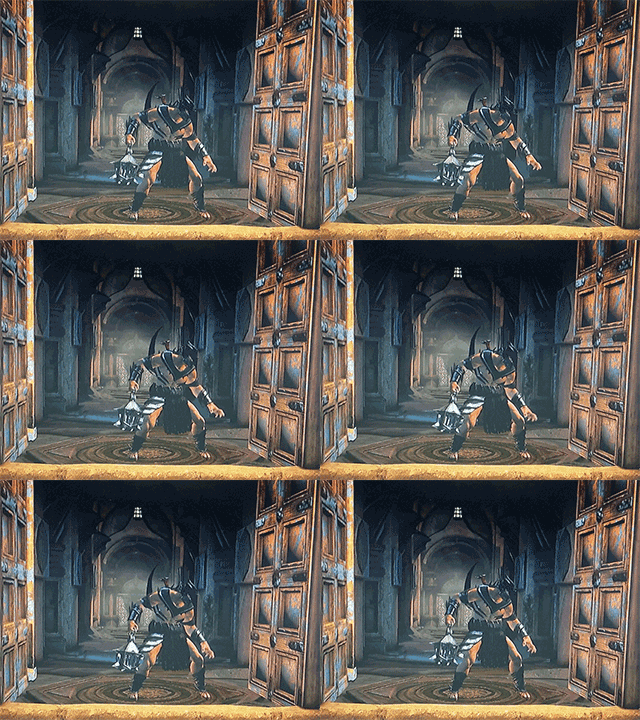
There was also a ranged weapon known as the Sling.
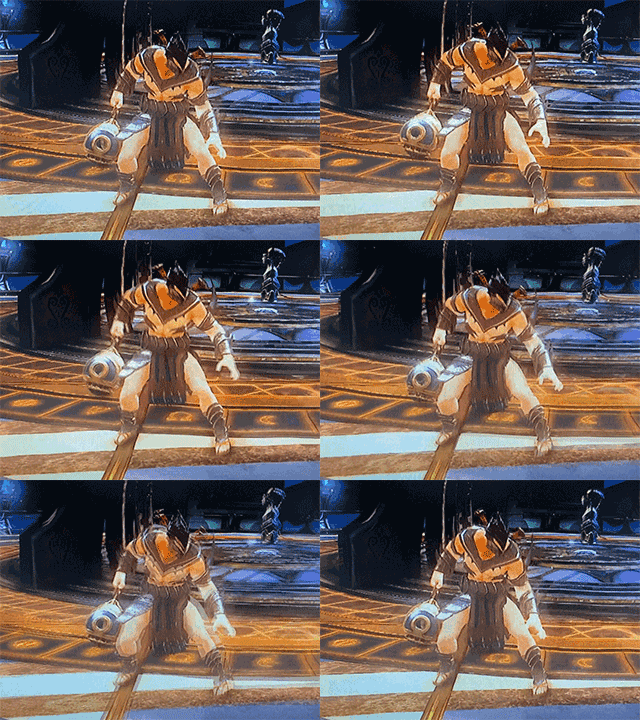
You could hurtle fireballs at opponents, but also swing it up close like a mace.
The other ranged weapon was the Javelin.
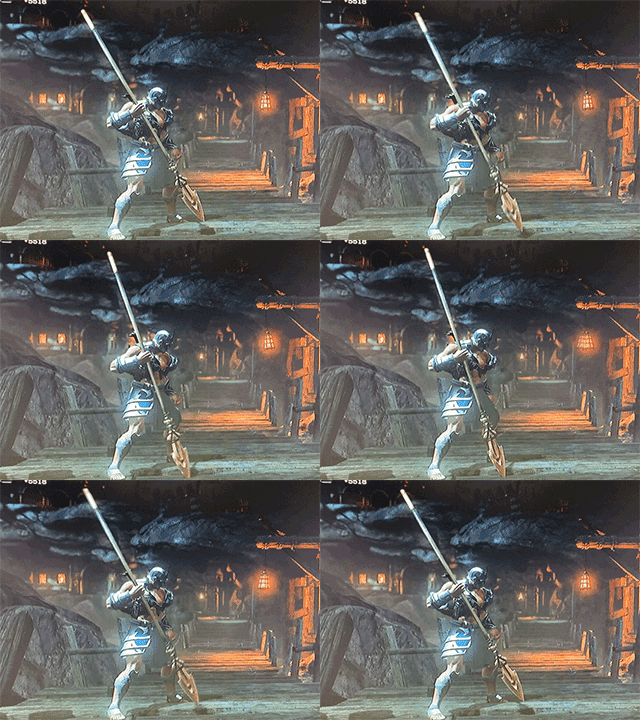
The secondary weapons actually played differently than the main ones. The majority of secondary weapons were one-handed. This meant that they were mostly smaller, and lighter than the main weapons. Even the two-handed ones like the Club, did not play at all like the Hammer. They were faster to use than main weapons, so a combo could be started with a secondary weapon, but the majority of the damage would come from primary weapons. Sony was aware that some players didn’t want to grind to earn main weapons. They could purchase DLC as well. Some of these weapons I think gave us a hint as to where the franchise would be headed next.
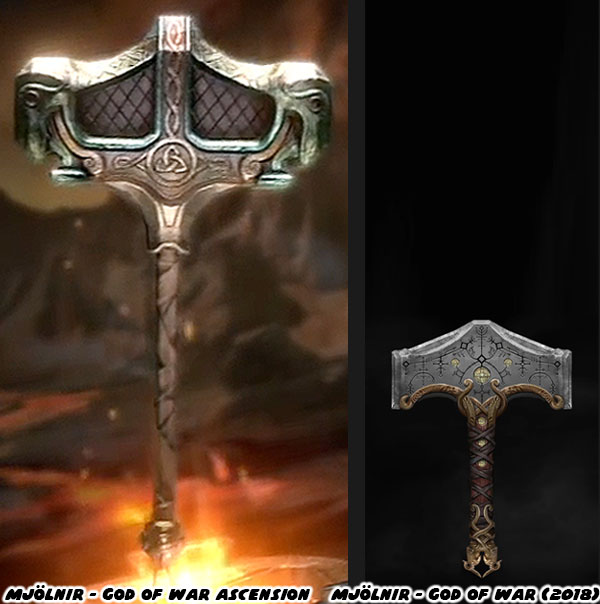
Previously in the blog I talked about how the series had introduced multiple weapons for Kratos to earn, and upgrade. Unfortunately I thought that they were too similar to the Blade of Chaos, or didn’t change the game play enough to warrant wasting experience points on them. Sony Santa Monica found the best way to expand the game play was by adding these disposable secondary weapons. They were fun to use, and could be traded out when a different one was found.
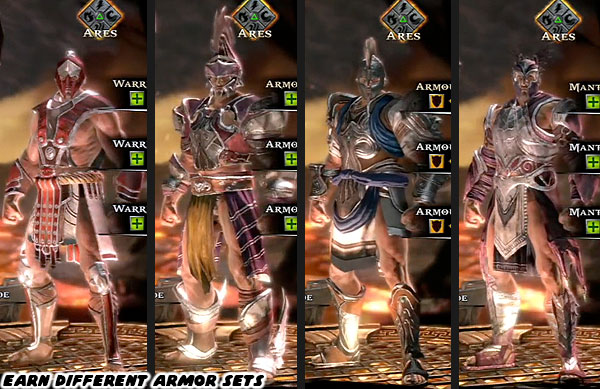
The multiplayer experience not only allowed gamers to collect different weapons, but also entirely different armor sets as well. They weren’t just aesthetic differences between the armors, but gave buffs to defense, attacks, and even resistance to magic as well. Some of these outfits were limited DLC, and some were rewards by being in a test group. Several alternate costumes were even available to replace Kratos during the story mode in Ascension. Of course having a unique library of weapons, and armor wouldn’t mean anything if the combat, and the environments were fun to play.
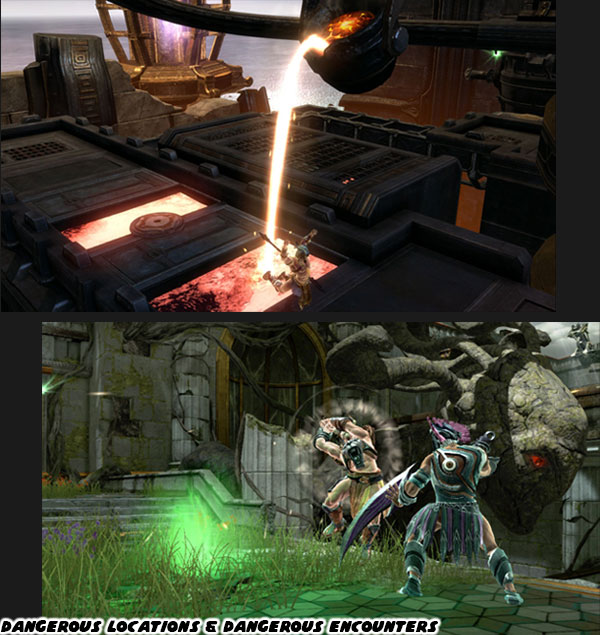
There were several different types of multiplayer games. Team Favor of the Gods, Capture the Flag, Match of Champions, and Trial of the Gods. They didn’t all necessarily have to be 4 vs 4 battles. They could be enjoyed with smaller groups, against a boss, such as Hercules, or with a one-person wins all challenge. Those that had a score to settle with an online opponent could even call them out in a 1V1 Bout of Honor.
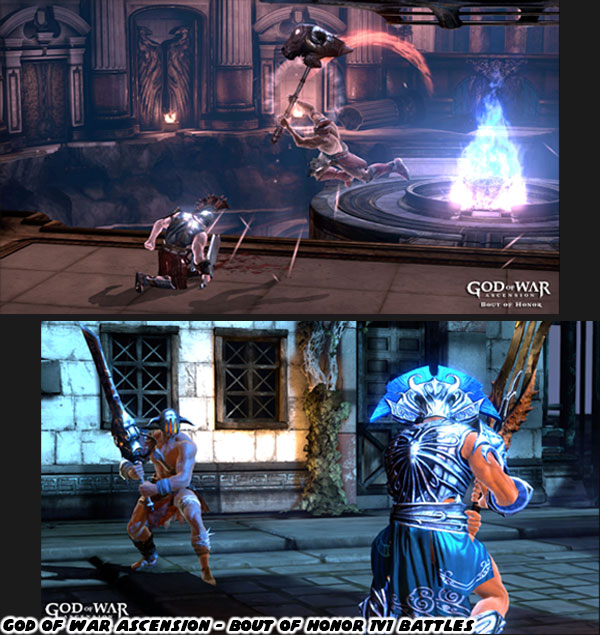
The four main weapons, and five secondary weapons helped make the multiplayer game unique. It allowed audiences to discover what sort of armament, and play style suited them best. Some players were defensive, some preferred magic, and others just threw themselves headfirst into battle. There were certain combinations of armors, and weapons that worked best for them. Players could even switch patronage to a different god if they wanted to explore what special features they offered.
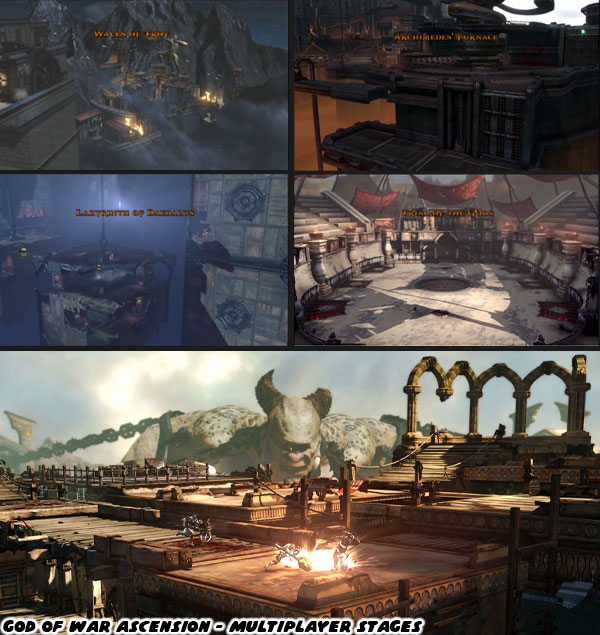
The stages were by far the most impressive thing that Sony Santa Monica delivered for the experience. They contained multiple objectives, traps to spring onto opponents, goals that evolved as the stage progressed, and were layered so that the action was distributed evenly on every corner of the map. Almost every location was a call back to a place that Kratos had visited during his journey. These included several sites from Ascension, such as Archimedes Furnace within the Statue of Apollo, the Streets of Sparta, the Oracle’s Chamber, the Tower at Delphi, the Landing at Delos, the Whirlpool of Alecto, and the Canyons of Kirra.
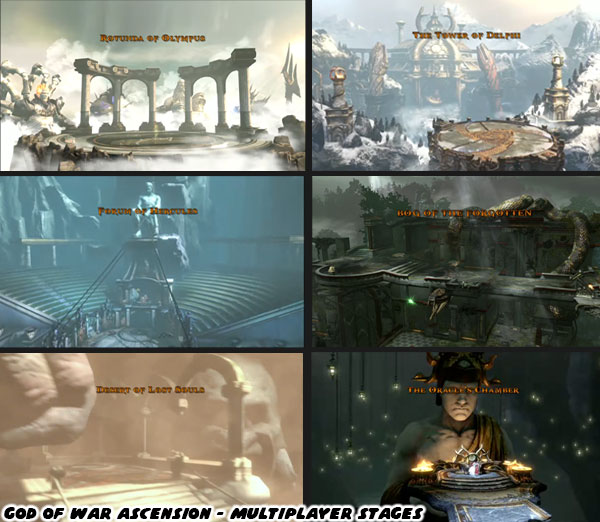
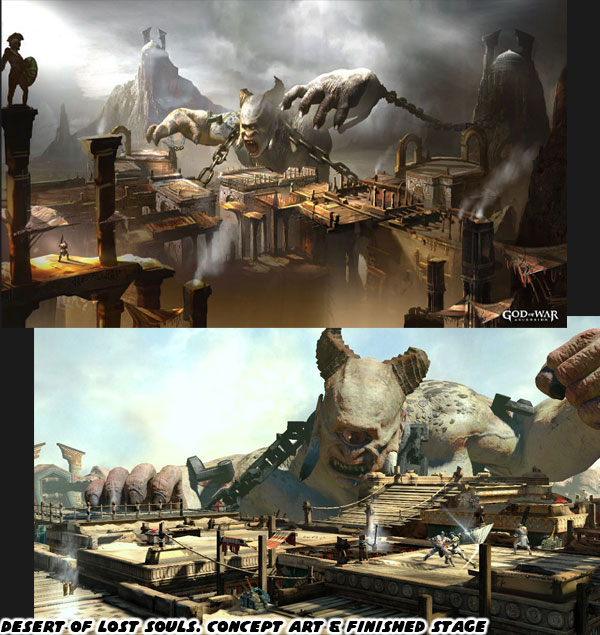
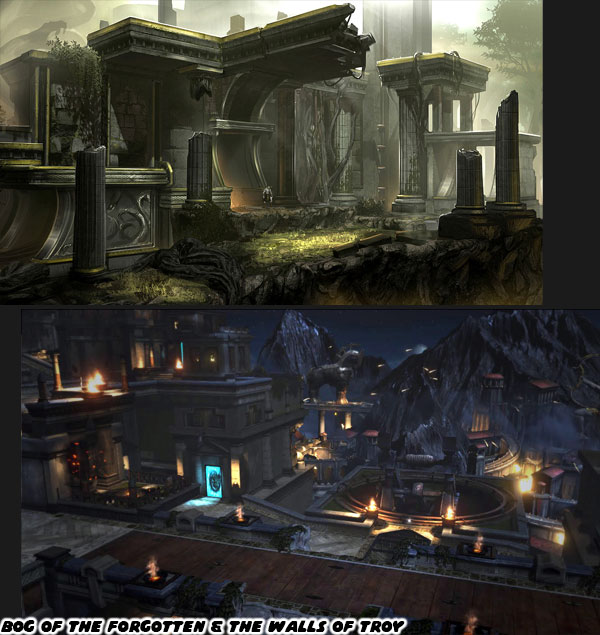
The other stages were essentially a love letter to the franchise. From GoW III there was the Chamber of the Flame, The Labyrinth of Daedalus, and the Forum of Hercules. We had fought Zeus, Skorpius, and Hercules at each spot respectively. We visited the Desert of Lost Souls, which was featured in the original GoW. It was the place that Cronos had wandered with the Temple of Pandora chained to his back. This time there was an enormous cyclops named Polyphemus (the cyclops from the Odyssey) menacing players from center. There was the Bog of the Forgotten. It was near the Ruins of the Forgotten, and the Temple of Euryale from GoW II. This temple featured the captured body of the giant gorgon Stheno. She was the sister of Medusa, and Euryale. The original stages created for multiplayer were brilliant as well. The Rotunda of Olympus, the Coliseum of Persia, and especially the Walls of Troy. The mythology geek in me absolutely loved the details that were packed in these stages. The Trojan horse, and Statue of Apollo were in the background of Troy, but teams could launch fireballs at both from a catapult in the foreground, and destroy them. The fact that I could revisit these locations again, and again made it feel like the classic GoW experience was infinite. The world of Ancient Greece lived on through these places. The fact that the stages were dynamic, and the teams were unpredictable meant that no tournament was going to be even remotely similar.
Sony hoped that the multiplayer games, and DLC would continue to generate profit for the franchise. The company had plans to roll out new armor sets, weapons, and stages had Ascension, and the online matches continued to sell. Unfortunately the response from fans, and reviewers was tepid at best. Ascension didn’t sell the units that Sony wanted. Many felt as if the GoW series had just burned out. No matter how well this game was made audiences just didn’t show up in the numbers that Sony required. Which was a shame. In recent years many gamers that stream or have YouTube channels are coming around, and admitting that the multiplayer in Ascension was quite good. Not only that, there is nothing even remotely close to it today. It gave the series life well beyond its release date.
I can only hope that in the future Sony considers creating a separate GoW adventure, and GoW multiplayer game so that the developers can focus on one thing at a time. That’s me wishing out loud. As amazing as Ascension turned out there was actually much more in the planning stages that was cut. In the next blog we're going to look at the ideas that the studio had developed for a co-op mode. For now I’d like to hear your thoughts on God of War Ascension. Did you play the multiplayer game? Do you think that the GoW series could work as an online multiplayer experience? Let me know in the comments section please. As always if you would like to sponsor me
please visit my Patreon page and consider donating each month, even as little as $1 would help make better blogs and even podcasts!