Showing posts with label craig marduk. Show all posts

Wednesday, August 19, 2015

How fight culture became fighting game history, part 22

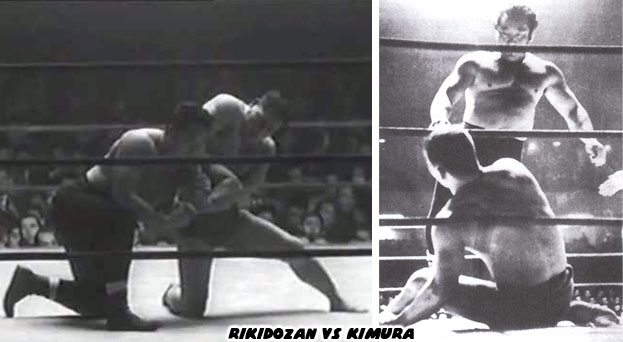
After Helio Gracie lost to Masahiko Kimura the Brazilian Ju-Jitsu scene exploded in popularity. The Gracie family would open schools and spread their technique all over South, Central and North America. Tragedy seemed to follow Kimura by comparison. Kimura had done some pro wrestling to help make ends meet as judo instructor did not pay as well. It was said that the only reason he became a pro wrestler was to make enough money to help pay for his wife's tuberculosis medication. He had partnered with another pro wrestler named Rikidozan before and after the fight with Helio. The two decided to start a feud to raise their profile and generate ticket sales. In case you don't know much about "pro" wrestling, many of the big names often start a feud and go town to town generating buzz through highly publicized matches. These matches are often pre-determined and no wrestler ever seems to get the upper hand. Many times the matches end at a draw or disqualification. When the audiences can take no more, usually after a few months, a world champion match is set where both of the performers get a big payout. Unfortunately in the first match Rikidozan decided to fight Kimura for real and put himself "over" as the better athlete. He delivered a neck chop with full force to knock Kimura out in December 1954.


The loss was a few months after Kimura had defeated Helio. This win made Rikidozan an even larger-than-life figure than he already was. The Yakuza was incensed at the betrayal, chances were they were taking part of the gate and expected a big return on an ongoing feud. They called Kimura to let him know they would kill his opponent. Years later they made good on their promise by stabbing Rikidozan in a club. He died a few weeks later from an infection.

The life of Rikidozan was actually a unique case of martial arts storytelling. The man was born Mitsuhiro Momota, a Korean-Japanese that tried to hide his heritage. Koreans were and continue to be looked down upon socially by the Japanese. It was interesting that Mas Oyama and Rikidozan were seen like fighting gods to many of the same people that considered Koreans inferior people. But I digress! Mitsuhiro wanted to be a sumo wrestler and faired decently in many matches. But the social stigma was getting to him and he needed to find another source of income. Mitsuhiro had an impressive physique and was destined to find greatness in pro wrestling. He was a bit of a "stiff" worker, that was he was green and didn't always pull his punches. What he lacked in in-ring ability he made up for with a strong gimmick. During the '50s pro wrestling was as hot in Japan as it had ever been in the USA. Rikidozan would often partner up with another Japanese wrestler to fight against the US talent. Back in the wrestling heyday the matches would have several rounds, like a boxing match. For two rounds the US performers would "work" over the Japanese wrestlers. They would sometimes use illegal moves and cheat and somehow never get caught by the referee. This made the audiences have a great sense of despair during the matches. The US were occupiers after all and following the events of World War II nobody wanted to see the Westerners beat up any more Japanese.
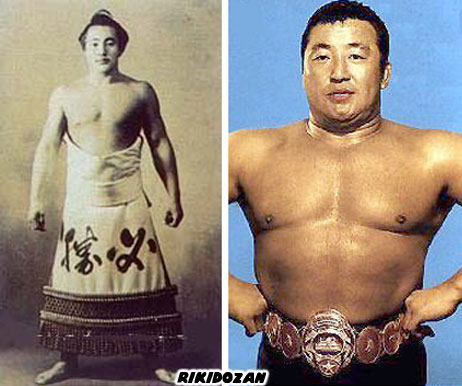
 

Just as everything seemed at a loss Rikidozan would turn up in the third round and absolutely crush the Americans with broad "Mongolian" chops and big kicks. The audiences exploded as they watched Rikidozan seemingly rise from the ashes like the fabled Phoenix and destroy his opponents. It was very cathartic for the fans, no matter how far down the Japanese had been beaten they would find a way back. A similar experience could be said to have happened to the audiences that watched the first Godzilla movie. The monster of atomic warfare had a name and a face and the Japanese would withstand his worse time and time again. But again I digress. When Rikidozan traveled to the US the gimmick was reversed and he was the heel or bad guy. He would dominate and cheat when he could but always lose in the end. Rikidozan was as big a star as any wrestler could be in Japan. He was like Hulk Hogan, Steve Austin and Ric Flair all rolled into one. He was also a very hard living man. He drank and partied like there was no tomorrow and became very full of himself. Through the '50s his battles and style became the template for Japanese pro wrestling or "puroresu," sometimes written as "puro" for short. By the end of the decade he assumed that he could begin calling the shots. His streak ended in the early '60s when the Yakuza had tired of his antics. Japanese game developers grew up with the legend of Rikidozan and all of the wrestlers that followed in his footsteps. Many of the big stars in the US worked in Japan where they developed very strong gimmicks. Those with the biggest personalities often found themselves being repurposed as fighting game characters.

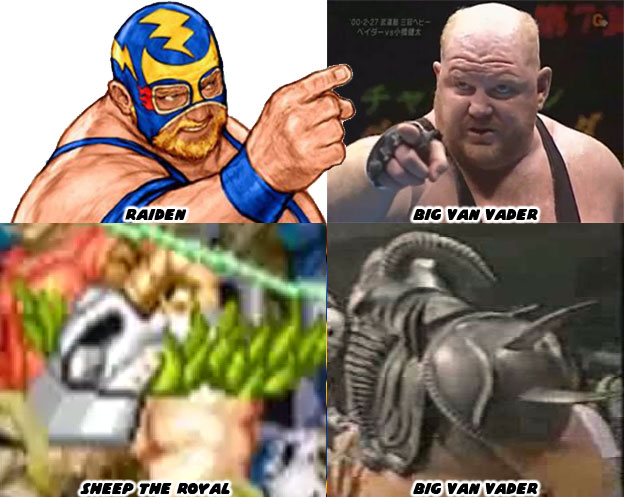
One such personality was Leon "Big Van Vader" White. His large frame, extreme physicality and in-ring presence gave kids nightmares and delighted adults. He had a mask and shoulder pads fashioned that made him look like a live action "henshin" villain. It would even blow smoke as he made his entrance. He was such an inspiring figure that several characters were molded after him in the early days of fighting games. SNK created Raiden and Big Bear (Raiden without the mask) for the Fatal Fury and King of Fighters series. Capcom developed Sheep the Royal aka Alexander the Grater after Vader in the Muscle Bomber / Saturday Night Slam Masters series.
   

I will spend much more time talking about the influence of pro wrestlers in fighting games a little later on. Right now lets gets back to seeing how mixed martial arts developed in the new world.
The next few decades would see a lot of interesting, controversial and lethal consequences for being in the fight game, this was not limited in Japan either! The Gracie family pretty much had a target painted on their back after the Kimura battle. The sons and grandchildren of Helio and his brothers were pretty much guaranteed to be enrolled in the school of hard knocks from the get go. They would have to defend the family name and school wherever they went. When doing clinics they would get called out to prove the superiority of their style. On the street, in the gym, on the beach and in any other public venue the family would get called out. Such was the case for Rickson Gracie, the son of Helio, when he had to deal with Hugo Duarte for slandering the family name. Even in the professional ring it was a tough going. Fighters from every background would test their mettle against the Gracie clan again and again.
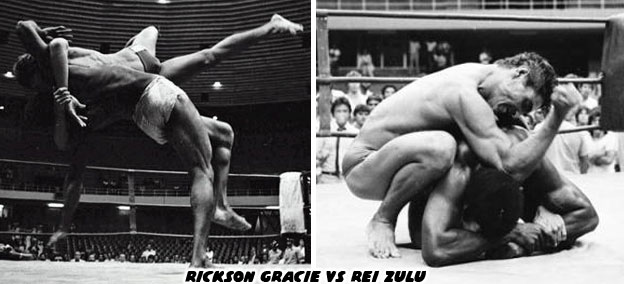

One such character was an underground legend that went by Rei Zulu. Literally the "Zulu King." The big man, about 6' 4" and had earned a reputation on the street for being a natural born fighter. He was tough, wily and adapted well to his opponents. He had compiled an undefeated streak in some of the toughest parts of Brazil. He had a record of allegedly of 150-0 when he challenged Rickson Gracie to prove who was the best "Vale Tudo" fighter. In Brazil the fighters were called luttadores, or wrestlers. Luta Livre was their version of pro wrestling and a pretty rough version at that. They had a more violent form of fighting as well called Vale Tudo or anything goes. Knees, elbows, just about anything was allowed short of eye gouges. Instead of closed fists most of the fighters had to use open hand slaps or palm strikes to subdue opponents. That rule was not always observed however.

Anyhow in 1980 Rei Zulu was served with his first ever defeat. It seemed that everyone in Brazil witnessed the fight or knew someone that was there in person. Rickson and the name of Gracie had become even bigger. For some Zulu was a hero from the streets that could never be defeated in a fair fight. For others he was like the neighborhood bully and used his strength and natural ability to push people around. Unfortunately for him natural ability did not prepare him for the techniques that the Gracie family had been refining for over two generations. Zulu called out Rickson a few years later. The rematch in 1984 drew an even bigger crowd. Zulu lost again. Unlike the manga comics that were made on the life of Oyama there would be no caricatures made of Rickson or Zulu. It would be a shame too. Both men had such different upbringings that they had deserved the same treatment of the Japanese superstars.
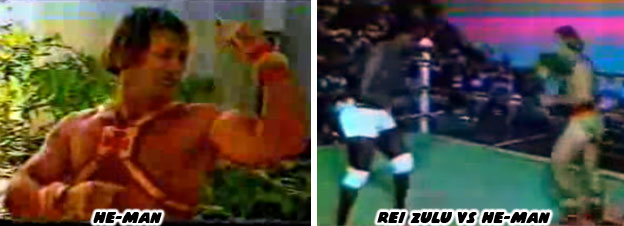

Not everyone would or could become a hero like Helio Gracie even in defeat. It was the sad reality of fighters that lost and Rei Zulu was no exception. The man was born, raised and lived in poverty for most of his life. The Gracie family cleverly marketed their name, built their schools, legacies and successes. The family would end up very well off while Zulu would be relegated to the outskirts. The people Rei faced seemed to be as big characters and underground legends. This included the blonde wrestler from Paraguay named He-Man. Lenine "He-Man" Alves Batista pulled his look and gimmick from the Mattel toy and cartoon character. He was beloved by all audiences because he extolled the virtues of clean living, represented wrestlers from America and could prove they were the best fighters. The fight between Zulu and He-Man was a high point in many young South American kids eyes. It was like Hulk Hogan fighting and beating Andre the Giant at Wrestlemania.

Sadly He-Man would hold onto the gimmick well past his prime. The long haired barbarian with a bit more paunch still plied his craft in Brazil until 2010. He worked for a circus and would take on all challengers, in a way it was a nod to the wrestlers of old. For the right money capoiera fighters, karate fighters, vale tudo fighters and even random people could step into the ring to challenge him. He fought 30 men at once in one encounter, in another he fought a group of women. The ring was makeshift and falling apart but fans still packed the stands. They had grown up watching the man wrestle in the late '80s and early '90s. They gave him all the awe and respect that people in the US would have reserved for Hulk Hogan or Roddy Piper. He was shot by his father-in-law for unexplained reasons when he returned to Paraguay. The martial arts community didn't seem to notice. Had the wrestler been doing the same gimmick a century earlier, without cameras to capture the battles and only eyewitness testimony to go on then he would probably be written about as a fighting god.
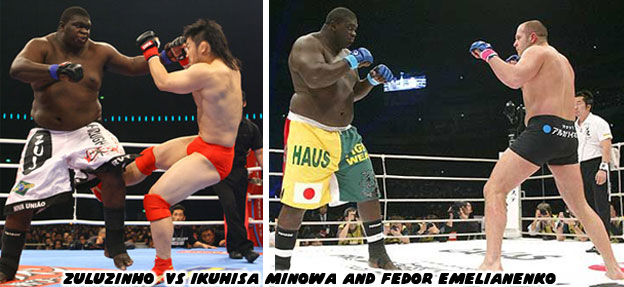

It was tragic when the heroes fell, got old or never grew out of their character. He-man and Zulu suffered much in the same way. Never quite becoming superstars in their own right, never being recognized out of their own neighborhood. Zulu, alive today, still lived in relative poverty and despite being over 60 was still looking for a fight if the money was right. His legacy would also continue through his bruiser-of-a-son named Zuluzinho. The "kid" was 6' 7" and neared 400 lbs. The son of Zulu did not gain his reputation by going building to building and beating up the local tough guys. Instead he tried making his money in legal cage fighting tournaments. His record was not as impressive as his father's, in fact more people seemed to be interested in the spectacle that his fight provided more than the idea that he could win. Thankfully he had the support of sponsors and media coverage to ensure that his moment in the spotlight would generate more money for him than his father had earned in a lifetime. People like Zulu and his son were spectacles that would find a modicum of success in professional fighting.

It is true that larger and heavier fighters hit harder than small fighters. It is also generally accepted that they tend to be able to absorb more damage than smaller opponents. But it comes to a point where the fighters are so massive that they end up being too slow to achieve a world championship. Well, this is not necessarily true in the Sumo arena, but in the mixed martial arts arena the most massive fighters rarely fare that well. They do attract audiences because of the spectacle they provide like Zuluzinho. It becomes apparent however that no amount of size or strength can compensate for a lack of technique or speed, especially against slightly smaller opponents.
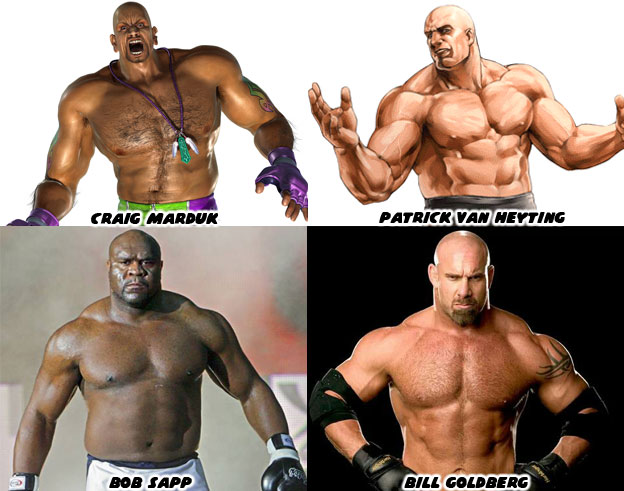
 

The massive fighter is still a fan favorite around the world, and doubly so in the pro wrestling community. These fighters become recreated in various fighting games, including those from Capcom as well as SNK, Namco and Tecmo. Certainly they change some of the details, alter the color of the skin or nation of origin but the inspiration is unmistakable. People like Zuluzhino, or the more muscular Bob Sapp (6'7") or Bill Goldberg (6'4") look very much like the templates used for the massive fighters in 3D titles. Okay, to be fair the Australian wrestler and actor Nathan Jones (7') was also an inspiration for Marduk from Tekken and US wrestler and actor Stone Cold Steve Austin (6'2") was also influential with the design of Von Heyting from Buriki One. In gaming form the massive characters tend to stick around a little longer than they do in real life. That's a good thing for fans.

It turned out that Brazil had only just begun influencing the fight community. The next blog will explore how the younger brother of Rickson Gracie would change the way the world thought about Ju-jitsu as a fighting art. As always if you enjoyed this blog and would like to sponsor me please visit my Patreon page and consider donating each month, even as little as $1 would help make better blogs and even podcasts!

Sunday, May 10, 2015

Introducing Gigas, an original idea or more of the same? Let's take a look!

Fighting game fans were in for a shock when the fighters for Tekken 7 were unveiled. Familiar faces had returned along with a new young girl and handsome man which were part of the long-running Namco themes. What caught fans off guard was a massive bruiser that looked completely unlike anything featured previously in the series. The massive red humanoid, known only as Gigas, seemingly came out of nowhere and was poised to topple the most powerful fighters in the series.


Fans from the west were certain that the Japanese developers were catering to Western tastes. It seemed that many heroes and villains from Western video games, comics and movies were massive, muscle-bound monsters. It didn't take long for the comparisons between Gigas and his influences were being pointed out in online forums. An obvious similarity between Gigas and US designs could be seen with the Red Hulk, a villain from the popular Marvel Hulk comics and the mysterious Big Daddy from the BioShock series.


Yet there was several design cues that came from a different property also from the West. The Batman: Arkham series of games has featured several versions of the character known as Bane. The one featured specifically in Arkham Origins seemed the one directly responsible for the appearance of Gigas. There was the massive torso, large arms and tubes connected to the various major muscle groups on both characters. Yet there was much more to Bane than simply being a genetically-enhanced monster. When the character was introduced decades ago he was created to be the ultimate rival of the Batman. The man was a former prisoner-turned-assassin. He was subjected to various surgeries and treatments which enhanced his natural abilities. Batman was considered to be the supreme human physical specimen in DC comics. He was the perfect fighter and Bane was trained to match him in every mental and physical arena. The advantage that Bane had over Batman would be a drug called Venom which gave him a temporary increase in muscle mass, speed and dexterity. He used this to defeat Batman in unarmed combat and even break his back.


Sadly for Bane the writers and artists working at DC could not find a way to improve the character so they began changing his purpose as a worthy rival to the Bat. The character became over-reliant on Venom and in just about every subsequent appearance Batman would either cut off Bane's supply of Venom or cause him to overdose on it. Bane went from a cold, calculating villain to a musclebound stooge over a matter of years. The Joker would return to prominence as the main rival to Batman and Bane would be a supporting character in comic story arcs. The changes for the character were easy to see in animated form. When he first appeared in the Batman Animated Series he was very much rooted in his original comic book design. When he returned a few years later in the new Batman shows he would become more and more exaggerated and dark in his designs. One of his last designs made the character look more alien than human. Part of the reason for that was because the team of artists working on the character designs had previously worked on the Ben10 animated series. Ben10 if you may know was based on a kid that could change from a human into an alien host. The muscle on the new Bane were far larger than ever before, his strength increased tenfold and ability to withstand punishment increased. His skin had even been turned red. If these were not the roots of Gigas then I don't know what else to tell you.


The changes in the appearance of Bane were only part of the equation. Over the past few years many artists had been experimenting with how far they could push the designs of fan-favorite characters. The Joker had been a staple in the Batman comics for decades. His look had changed only slightly over the years but DC shook the community with a recent redesign. The character had cut off his own face and wore it as a mask to add a certain level of grotesque to his already macabre appearance. Many of the Batman villains received the same make-over. In order to give Bane a new look the artists working at DC and even at video game publisher Rocksteady had to push the envelope. As with any design the question remained; how far could the character be pushed and still retain the core elements? How would this character be identified by fans? It seemed that Bane could be made very grotesque and audiences would still recognize the character.


Yet even Bane was not an original idea. The man-becoming-a-monster was a staple of classical storytelling. It was not always a physical transformation to show a person becoming man, such as with Ahab in the story of Moby Dick. Other times a monster represented the mistakes of man, such as the creature created by Dr. Frankenstein. More than a century before Bane was created there was a character called Mr. Hyde. Robert Louis Stevenson (author of Treasure Island) wrote a novel on a scientist named Dr. Henry Jeckyll that used a chemical mixture to become a powerful monster known as Edward Hyde. The monster was more beast than man and terrorized the citizens of Victorian England. The characters of Jeckyll and Hyde would become synonymous with extreme personality changes and not necessarily physical changes.


The Hyde character would be revisited by Alan Moore in his graphic novel the League of Extraordinary Gentlemen. The story would be turned to film and Hyde would get yet another on-screen interpretation. In order to create a monster even more terrifying than Hyde the movie introduced Dante, a soldier that overdosed on the secret formula. The end result was an extremely grotesque and disproportionate man. He hardly looked human at all and could be considered one of the first 3D representations of the extreme comic book proportions that artists were placing on their figures. Yet to say that Hyde begat Bane begat Gigas in Tekken would be an insult to the Japanese designers.

Game designers in Japan as well as artists and illustrators had been creating monstrous characters for decades. They had been working on absurdly disproportionate muscled figures for as long, if not longer, than Western artists had. In fighting games there were many presidencies set by Japanese studios before Gigas had even been dreamed of. Capcom, SNK, Arc System works and various developers had been pushing the envelope on the "strong man" character trope. To help the characters stand out the artists often gave them large shoulders and thick arms while keeping their legs thin and heads small. This visual made many of the bruisers memorable.


The proportions featured on Gigas were not as extreme as they were on characters like Potemkin or Abubo but they were close. What Gigas had going in his favor was that he was one of the few Japanese characters designed in 3D with the exaggerated aesthetic. Because Bane had been presented in 3D previously most audiences simply assumed that the designers at Namco had simply poached the style. This was far from the truth. Both 2D and 3D fighting games from Japan had characters like Gigas for decades. Monsters and demons of the Gigas scale had already prepared audiences for what was to come. One of the first 3D monsters that predated Gigas was also from Japanese designers. Gandara appeared in Samurai Showdown / Samurai Spirits 64. The title from 1997 was not well received by audiences. It lacked polished control and featured crude graphics. Something that was well done however were the character designs, especially the demonic Gandara.


Gandara lacked the tubes and mad science theme of Bane, but was still bound in service. It was not technology but rather magic that kept Gandara enslaved. The tortured appearance was a bold artistic statement and made Gandara one of the most memorable fighting game designs of all time. Shifting the focus back on Gigas though we should note that Namco had actually set a precedence for massive fighters ever since the very first Tekken was released in 1994. The "strong" type fighter in the original game was a cyborg named Jack. The character looked like an army soldier, with a square blonde mohawk and a massive torso. As the series evolved so too did the designs for Jack. The skin would be replaced by metal and even hexagonal armor. Although the character developed a personality the Jack models would become disposable within the canon of the Tekken series. The character was bound in servitude to the Mishima Zaibatsu. The private military conglomerate run by Heihachi Mishima. Any version of Jack that demonstrated self consciousness would be destroyed by the company. It made Jack a likable cyborg especially as he became a pacifist. There was an earlier build of Jack that was also in the original Tekken tournament, known as P-Jack or Prototype Jack. This all-metal version of Jack wore sunglasses and was absolutely loyal to his programming. It made the character more dangerous in canon.


The robots of Tekken continuity were considered some of the strongest fighters in the series. The proportions of each version of Jack were similar to those of Gigas. But there was a missing-link of sorts. An MMA brute named Craig Marduk was introduced in Tekken 4. The seven-foot Australian was a champion fighter and an absolute genetic freak. He could out-muscle his opponents easily but was also a well-rounded technician in the ring. He was as close to being a Bane-type character minus the Venom. Marduk could go toe-to-toe with the Jack robots and just about any other character in the series. I would argue that Gigas was a mix in between Jack and Marduk. Whomever invented this fighter wanted the best of the physical abilities of Marduk but with the programmable loyalty of P-Jack. I believe Gigas is an entirely new weapon being developed by the Mishima Zaibatsu. The company has undoubtedly learned from their genetic experimentations. Many of the Tekken Tournaments are a front for the company. The plot of the games involve genetic manipulation, stolen DNA and cybernetic enhancements to soldiers and assassins. The characters Yoshimitsu, Anna and Nina Williams and Brian Fury have a mix of genetic manipulation if not all-out cybernetic enhancements. These figures were created to lead robots into battle, if not to act as a fail-safe in shutting down the machines. As impressive as Jack and P-Jack are they are far from being the biggest robot bruisers in the series. That honor would belong to NANCY-MI847J, a robot as large as a trailer truck.


Gigas could be deployed where the Robot NANCY would be a target to missile launchers. With the ability of some reasoning Gigas could also replace the faulty logic of the Jack models. It is the science-fiction that the Tekken series adheres to that I find most interesting. The teams working at Namco are intimately aware of how each game connects to a bigger storyline. They also know that the continuity of one series often marries into the canon of a different title. The Ridge Racer racing game, Tekken fighting game and Ace Combat fighter jet titles are all part of the same universe. The technology developed by one fictional conglomerate in the universe will turn up again and again and even become refined in different games. One of the more interesting features of Gigas is the helmet.


Cybernetic eyes and helmets had been featured in the design of the cyborg ninja Yoshimitsu. The multiple cameras where the eyes should be act almost like spider-eyes. They allow Yoshimitsu and in this case Gigas to have a greater view range than regular human eyes. The helmet worn by Gigas is a bit different than the ninja however. The hexagonal series of cameras are reminiscent of the COFFIN interface from the Ace Combat series. In the most advanced fighter jets in the series the pilot can see a full 360 degrees around the plane without ever having to turn their head. Cameras replace the open canopy of traditional fighter jets and feed the visuals directly to the mind of the pilot. In the case of Gigas he can see above, to the side and even almost all the way behind without having to turn his head. This makes the genetic creation impossible to sneak up on and even more dangerous in unarmed combat. Tekken is an amazing series from a design standpoint because it has humans fighting robots, but it doesn't end there. Monsters and even Angels and Devils could be seen as genetic anomalies rather than supernatural creatures thanks to the science in the series. I can't wait to see how Gigas develops and what his role will be in the greater scheme of things. What do you think about his design? If you would like to sponsor me please visit my Patreon page and consider donating each month, even as little as $1 would help make better blogs and even podcasts!
follow the Street Writer on Patreon!