Showing posts with label rob python. Show all posts

Tuesday, October 10, 2017

Hiding the master in plain sight, the genius of SNK's character design... part 5

SNK had exploded on the scene in the early ‘90s. The success of the Neo Geo console in the arcade, and the steady stream of fighting games made sure they would be around for the long haul. I had mentioned previously that the success to their school of design was based in hiding the masters of the martial arts in plain sight. A karate master didn’t have to be Japanese or wear a gi. This was demonstrated in the Art of Fighting (AoF); Robert Garcia was an Italian playboy that drove exotic cars, wore thousand-dollar shoes, tailored suits, and could go toe-to-toe with the ambassador of Kyokugenryu karate, his friend Ryo Sakazaki. King was a Muay Thai goddess but you would never have suspected it as she dressed like a high-class bartender. Shinkiro and the art team didn’t have a chance to create these plain-clothes masters for every new release but that didn’t stop them from experimenting. Before they found their groove they were as guilty as the other developers of following the trends. Boxers Michael Max, Axel Hawk and Micky Rogers were very generic designs. Pulled in part from real-world fighters Mike Tyson and George Foreman. All of that changed in 1994 when the studio released King of Fighters ’94 (KOF). From this point on it was almost mandated that the figures looked like cool manga characters instead of martial artists.


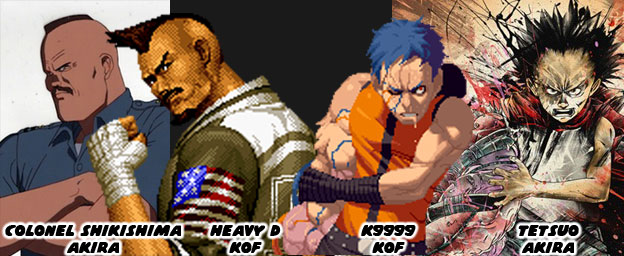
Manga and animé were very influential to the design of early fighting games. The team at Capcom were influenced by Buronson and Tetsuo Hara’s work on Hokuto No Ken / Fist of the North Star. The people at SNK were influenced by Katsuhiro Otomo’s science fiction masterpiece AKIRA. The people at SNK were so influenced by the book that it shaped the story of later KOF games. The entire plot revolving around clones and the paramilitary government organization N.E.S.T.S. was roughly pulled from the plot of AKIRA. Even the character K9999 from King of Fighters 2001 was eerily similar to Tetsuo, the antagonist in AKIRA. The likeness was so much so that publisher Kodansha took SNK to court and got them to remove any likeness of the character from future releases and official publications. I would argue that the imposing Heavy D, mohawk, square jaw and all was based on Colonel Shikishima from AKIRA as well. Thankfully SNK made him a dark-skinned character so the comparisons wouldn’t be as obvious. From that point forward the artists at SNK were taking very bold creative chances.
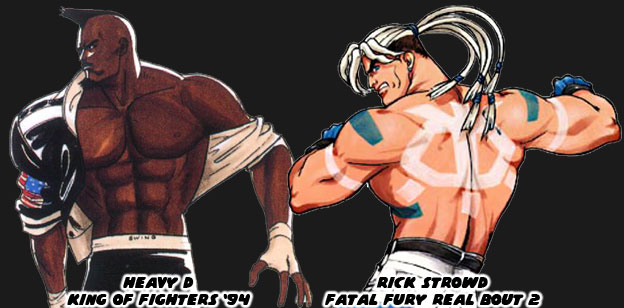
 

Heavy D started the trend of non-traditional boxers in the KOF universe. His street fashion, paired with his leather jacket and wild haircut made him look like an intimidating opponent. His was the type of look that audiences expected from SNK. It was their follow-up that was even more unique. One of the most unusual boxers in the SNK universe was Rick Strowd. He first appeared in Fatal Fury Real Bout 2 in 1998. I say he was unusual because of his appearance. He was as physically strong as any other character but that wasn’t unusual. He was actually a Native American character although he didn’t look like a typical one that we might have expected. Rick had pale skin, long white hair and bright paintings covering his body. His white pants and blue gloves were solid color choices, they matched the markings painted on his chest and back. He was not rooted in any actual native group, nor were his markings reflective of any tradition. The inverted skull painted on his back looked a bit too cartoonish for example. SNK was experimenting with different influences, different stylistic choices and different ways of presenting a traditional fighting art. They figured that they could shake things up by presenting a unique looking character and call him a Native. Their decision worked for the most part. From that point on the studio realized that boxing was not the only thing that American characters could represent.
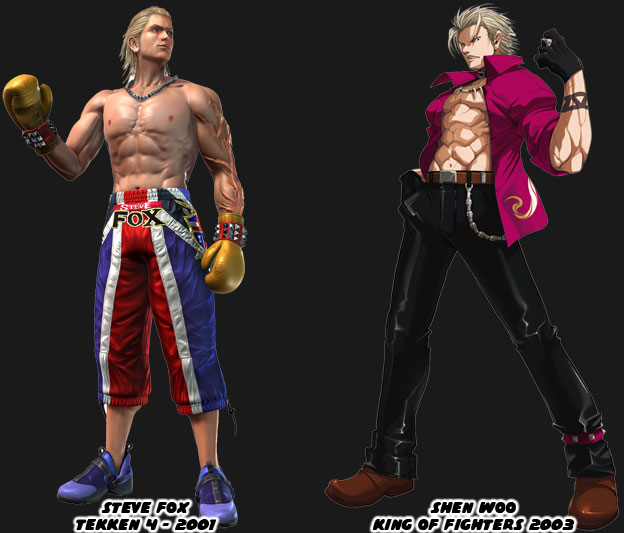
 

The other thing that the artists at SNK, and a few other Japanese studios, realized post Rick Strowd was that boxers did not all have to be big black guys. Two leaner blonde boxers made their marks after 2000. Namco introduced the fighting community to Steve Fox in Tekken 4. The British boxer had an athletic build and not too bulky. Most Tekken characters were nowhere near as swollen as the Capcom or SNK fighters. Fox had long slick blonde hair and most of his costumes in the series were street outfits. Even his “traditional” costume broke the mold. His boxing trunks were actually long training pants. His most unique element were the enormous scars covering his arm. He wasn’t sure how he got them or what their purpose was, making it an interesting side story for the character. Not to be outdone SNK dropped Shen Woo into KOF continuity in 2003. This blonde boxer was cut from the save cloth as Fox but his look and style were even more street. The Shanghai native was mostly a self-taught fighter, similar to Terry Bogard, and had gained a reputation as one of the most dangerous men in South China. Many of the tournament stars in the KOF series were young cool guys with street clothing so Woo fight right in. If the design had any failings it was that SNK had started relying on the street look too much. Prior to Woo the company had introduced a boxer that I would consider one of the best designs in the past 20 years. This character was named Rob Python from Buriki One.
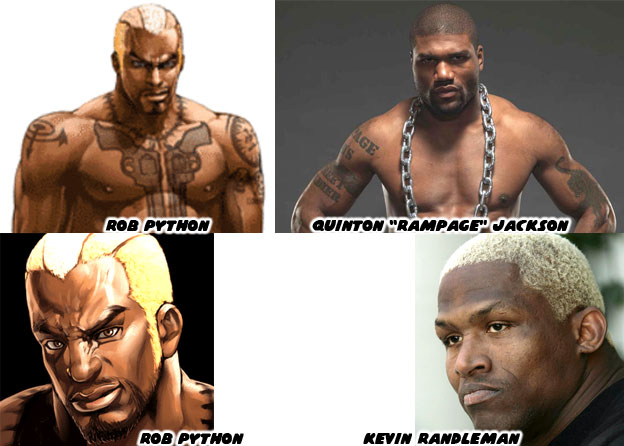
 

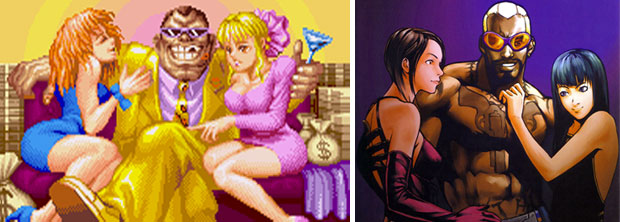
Python represented a break from tradition, he was reflective of the next-generation fighting black superstar. His look was inspired in part by actual MMA fighters Quinton “Rampage” Jackson and Kevin Randleman. They were wildly popular in Japanese tournaments. SNK knew that audiences had outgrown the clean-cut look of a young Tyson and the aging Foreman. They had been playing Neo Geo fighters for almost a decade and wanted new blood. The next boxer had to ooze personality and in the case of Python, he also had to ooze a sense of danger. He was among one of the most dangerous fighters in the Buriki One tournament and also the rival to Gai Tendo, the star of the game. Python was an understudy of Silber, whom I had mentioned previously on this series. Python’s tattoos were as much a part of his costume as his gloves or shorts were. No character before or after had ever looked as imposing. The enormous pair of Colt revolvers tattooed on his chest were meant to intimidate his opponents. It was assumed that he spent time in prison where he had learned of Silber. SNK, and in particular the talented artist Hiroaki, had changed the formula yet again. Python was not a fighting master hidden in plain sight, instead he was a killer masked as a boxer. It would take Capcom almost 17 years to reinvent the boxer by going full circle as well.
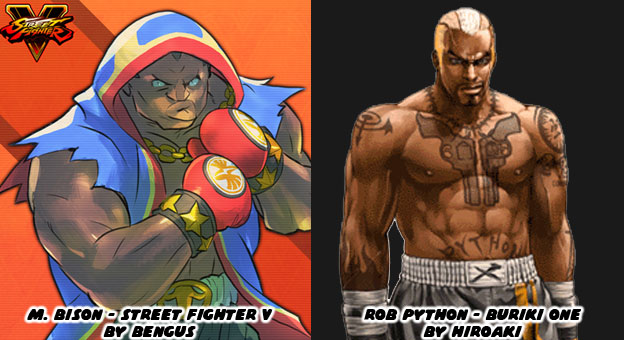
 

In 1991 M. Bison had pretty much set the standard that other boxers were compared against. There wasn’t a fighting game in the ‘90s that wasn’t compared to Street Fighter II. Every boxer was compared to Bison. His look had stagnated in the late ‘90s while SNK was committed to experimenting. Capcom finally conceded and created their own hidden master with Dudley in Street Fighter III (1997). The aristocratic boxer had a unique library of moves but long-time fans of Bison had a soft spot for tradition. Senior Capcom artist (and personal hero) Bengus was called in to work on the Street Fighter V (2016) designs. While he did not develop the original M. Bison, that was more likely AKIMAN and Shoei, Bengus was responsible for the new look. He wanted Bison to have the same big, brash personality but with an updated costume. The Capcom style of design was rooted in making traditional fighting archetypes. Their karate masters had to look like karate masters, their kung-fu masters had to look like kung-fu masters, and their boxers had to be boxers. Bengus went full-bore Americana with red white and blue trunks but then wrapped everything in a red, white and blue robe, with torn sleeves and gold jewelry to boot. The “Crazy Buffalo” now sported elements of the street, elements of real pro boxers and even cartoonish archetypes. He was still classic layered underneath modern accents.
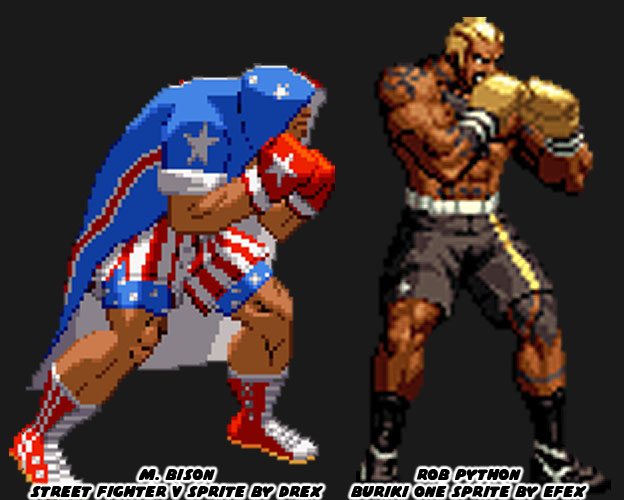
 

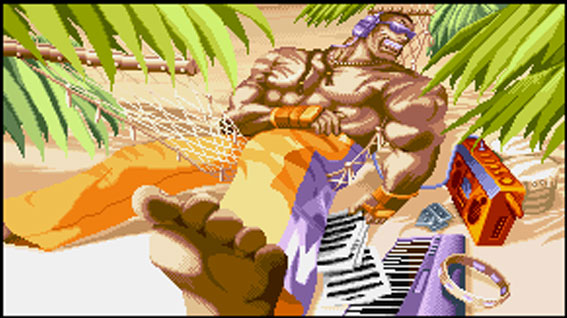
This was not to take anything away from Rob Python and all of the work that SNK had done with boxers over the past 25+ years. Their fighters had been among the most unique, most colorful and most diverse ever assembled. I honestly wish that they would revisit their Buriki One cast for the future installments of the KOF series. With that said they still managed to break new ground. One of their most stylish boxers debuted in 2000, right on the heels of Python. The new fighter was a mysterious special agent named Vanessa. She had taken up boxing when her lover was killed. Like King she was a master hidden in plain site. Her pants and suspenders were a nice touch under her sleeveless shirt and tie. The look was very chic. It wasn’t the first time than SNK had explored the dangerous femme. Vice and Mature, the valets for early KOF sponsor Rugal Bernstein were assassins in disguise. Vanessa was a hero using a similar fashion aesthetic. The trio predated and were more than likely the inspiration behind Crimson Viper in Street Fighter IV.


The most recent boxer in KOF canon was a mix of traditional and modern. Nelson debuted in the King of Fighters XIV, also released in 2016. He was a dark-skinned Brazilian and up-and-coming phenom. The young fighter was involved in a hit and run leaving the gym one night. He lost an arm and his girlfriend was put into a coma. A secretive sponsor paid for his cybernetic replacement arm and saw him enter the KOF tournament. SNK embraced his back story and and incorporated the tire tread motif on his boxing gloves and workout gear. His scars were very bright and spread across his face and torso, giving him the look of someone with the skin disease vitiligo. While I think there may have been too many color choices and design elements placed on the character he worked within the series. Like Vanessa he was a progressive character. His appearance might have appealed to people with disabilities or those recovering from amputations. I would like to see how SNK builds on their library moving forward. Speaking of which, some of the more recent entries in the KOF universe were also a mixed bag of design choices. We’ll look at these in the next blog. As always if you enjoyed this blog and would like to sponsor me please visit my Patreon page and consider donating each month, even as little as $1 would help make better blogs and even podcasts!
 follow the Street Writer on Patreon!

Monday, September 14, 2015

How fight culture became fighting game history, part 33

The fighting game characters highlighted in the previous blog were examples of how pop culture had colored the design of minorities. Unfortunately the pop culture choices that the Japanese designers were pulling their cues from were built from old stereotypes. The black characters featured in many Japanese games were often happy-go-lucky characters. They were presented as smiling, friendly figures, yet also never the lead character in any game. Minority characters were usually never featured in anything but a supporting role in either Eastern or Western produced titles. Could any gamer remember the last time there was a black lead in a game or even a black villain? CJ from San Andreas or the Agent from Crackdown were possibly the first and last entries of a console generation. They were well rounded characters but more the exception than the rule for the industry.

Unfortunately the perpetually grinning, carefree black man was one of the oldest negative stereotypes about African-Americans. That distorted caricature was called a Sambo. He was always happy but had no desire for work. By making the black characters happy and one-dimensional it was easy for bigots to think of them as less than human. The Sambo was created during the final years of slavery in the United States. Half a century after slavery had been abolished that image had permeated US culture to the point that the grinning figure was seen on advertising, in cartoons and even on household items. It was not until the civil rights movement that the mass consciousness grew to accept that the image was demeaning and hurtful to an entire population. Products lost the offensive art and black characters began to be drawn more realistically by advertisers. People the world over did not get that memo however. They did not experience the civil rights movement and had no idea what was to be considered offensive. They may have assumed that this was an acceptable way to present black characters.


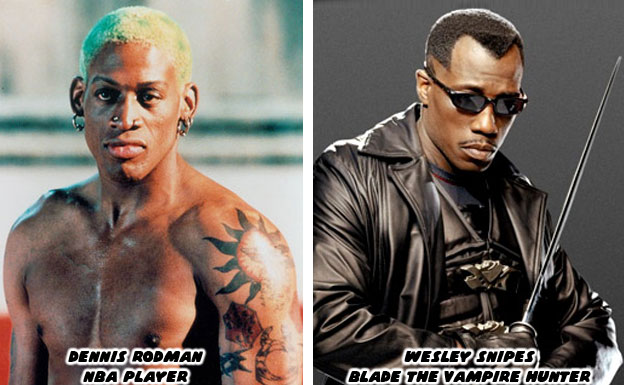
There was a period of time where I wondered if Sega were capable of introducing a black character into an arcade game that was not perpetually grinning. The games the characters appeared in were very well done but the minority characters looked tokenized. This was not an issue exclusively with Sega. When many Japanese studios began incorporating black characters into their games they went to the long standing designs from the West. In some cases they did not dig deeper than recreating the look of popular athletes and actors from the late '80s and early '90s. The controversial NBA player Dennis Rodman and action movie star Wesley Snipes were just two people that ended up inspiring a series of characters through the golden years of the fighting game genre.


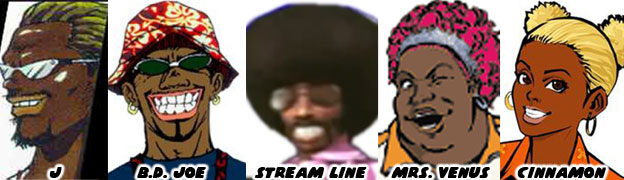
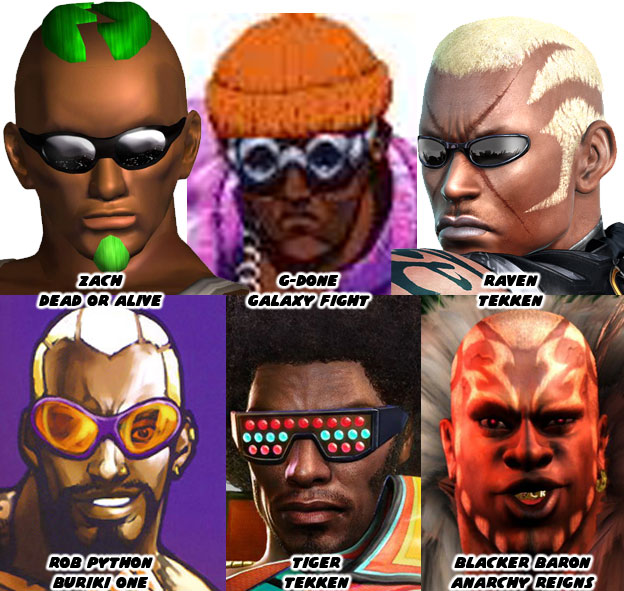
Being a black wasn't enough to make the character unique to the Japanese developers. The characters almost universally had to be very "cool," almost to the point that they were too cool to be seen in the game itself. How did the developers accomplish this? Quite simple, they often gave black characters sunglasses and unique hair styles. Sometimes they would even have gold teeth. Truly right out of a rap video! Rare and unique fighting arts were often assigned to all of the other characters but it often seemed secondary to black fighters. They had to appear cool first and foremost or else audiences would not know what to make of them.


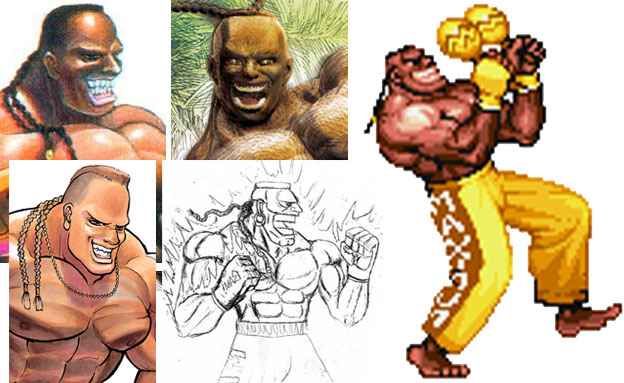
Sega, Capcom, Namco, Square-Enix and SNK were some of the Japanese publishers that ended up running with the skewed look at minorities. By making a non-threatening black person the studios thought they were showing diversity. The colored characters were like cartoon mascots however, emotionless and simply there to make people feel good about diversity. The fighting genre never had a Sambo, although Dee Jay from Super Street Fighter II certainly came close. The character wore a perpetual grin and danced with maracas whenever he won a fight. No other fighter in the series had ever carried such a silly expression while battling or celebrated with dubious overtones. The celebratory dance of Dhalsim though, whose head shaking and wide armed gyrations could have been considered as culturally insensitive and out of place.

DeeJay was actually designed and named after James "DJ" Goddard, a former Capcom USA employee. The Japanese therefor assumed that the character was appropriate. The basketball playing, breakdancing, fighters that emerged in the mid '90s could be considered leftovers from a less enlightened era. In the history of the US there were actually multiple racial caricatures that had been created to demean and dehumanize African-Americans. The Sambo was one of the earliest but the ones that followed became uglier and more widespread. The nicknames given to these representations of blacks were so grotesque that I wouldn't want to repeat them on this blog. There was an excellent documentary that explored the history of the stereotypical images. I would advise that everyone reading this blog should watch Ethnic Notions. Readers would be able to look at black character designs, especially in fighting games with a more critical eye thanks to the film.


The defense sometimes used to explain characters like Dee Jay, Magic Dunker or Boggy were that the studios were simply trying to show the personality of the fighters from within the game. Many of the characters carried with them some sort of national pride. Guile was in the military and therefore the US Flag tattooed on his shoulders and camouflage pants made sense. Chun-Li was Chinese and had gone undercover in the fighting tournament so her pseudo-traditional costume also made sense. Like his namesake Dee Jay was a Jamaican entertainer first and foremost. He was a musician and happy about life in general. It just so happened that he was also a master of kickboxing and according to canon more powerful than the Thai boxers Sagat or Adon. Of course you would be hard pressed to find a game player that would consider Dee Jay a better character in canon or design. In context it was appropriate that Dee Jay carried maracas or a boombox with him wherever he fought. However the impact on gamers would have been wasted if the final boss in the original Street Fighter were a Jamaican layabout (that could not lose the ugly grin even in his sleep!) instead of a seven foot Thai boxer with an eye patch.


Dee Jay was inspired in part by martial artist and movie star Billy Blanks. Blanks had played an assortment of heroes and villains throughout his movie career but none were as lacking as Dee Jay. Aside from skin color and haircut there was not much that united the man and caricature. Dee Jay certainly skirted the line of Sambo. His carefree, perpetually grinning facade hid a lack of empathy and understanding about powerful black fighters and the ways they should be presented in gaming.

The Japanese studios by and large did not recognize that they could have associated a genuine fighting style with a minority character. It would not have offended the sensibilities of the game players. It would not have "broken" the game in any way. Characters like Dee Jay, Boggy, Ten Count, J. and Magic Dunker would have obviously remained black but their personality did not have to be dependent on sports or entertainment. Unfortunately the only alternative to basketball-playing fighters was to have those characters be arrogant, womanizing boxers.


Again, if people in the West were offended by the image it was most likely because this was the mirror that Japan was holding up to them. In athletics the black man had been depicted as a brute, loudmouth or womanizer for the last half of the 19th century and the better part of the 20th century. Changing global perception would mean undoing almost 200 years of negative campaigning. Some of these myths were reinforced by actual personalities throughout history. Part of the stigma was due to the bravado of fighters like the legendary heavyweight champ Muhammad Ali and fighters that came before and after. Ali would put on press conferences denouncing the stereotypes perpetuated by his rivals. He would carry on with boisterous and very arrogant overtones. In the eyes of many he was as misrepresentative of black culture as he accused his opponents of being.

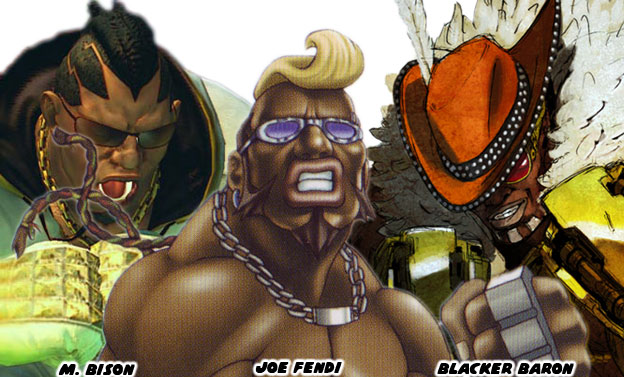
In the later part of the 20th century several fighters began combining that showmanship with demonstrations of excess. Fighters like Floyd "Money" Mayweather would flaunt their success, travel with full entourages and flash gold and money as if they were living out a rap video. Since it seemed that all of the boxing champs acted this way on television then the stereotypes must have been true. M. Bison, Joe Fendi and Rob Python were just a few of the black boxers presented in fighting games that reflected these images.


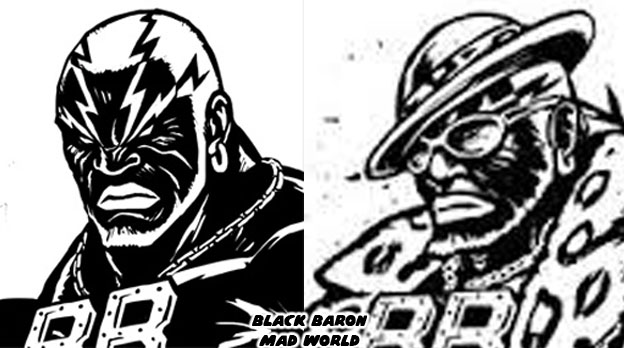
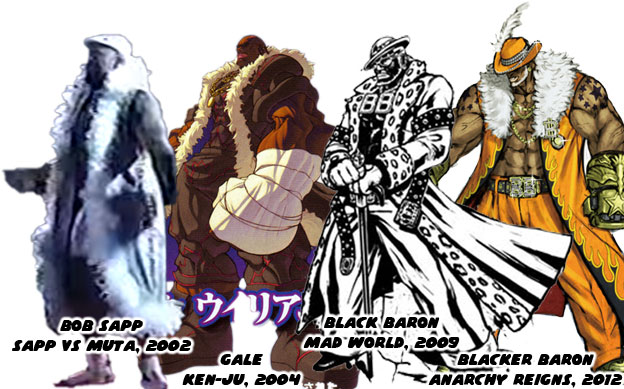
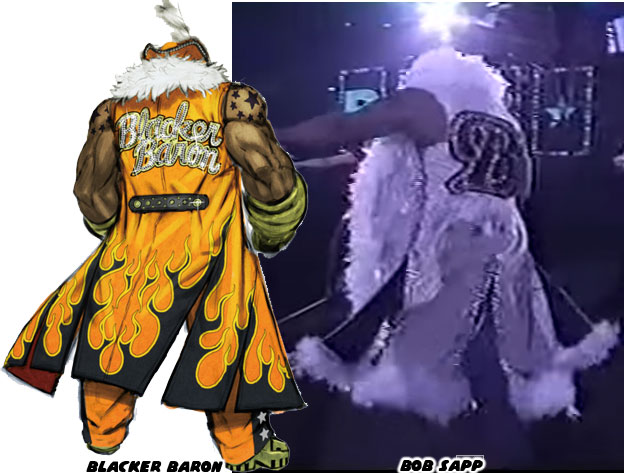
The Japanese developers were a little heavy handed with the pandering through most of the '90s. Black fighters in the games were almost all boxers. Yet it wasn't enough to be a boxer. These characters had to once again look and act cool otherwise audiences might not give them a chance. What could be cooler than boxers that wore sunglasses, jewelry and fought with gold and silver gloves? In the offshoot of the fighting genre, the brawler, the trope could not be escaped. The Blacker Baron from Anarchy Reigns was a revised version of a character that had appeared previously in Mad World. Both games were completely over-the-top and meant to shock players. In Mad World the Black Baron sported large lips and wore a "pimp" costume. I have been accused of being too sensitive to the portrayal of minorities in fighting games. But I have to ask if past a certain point is it not the responsibility of the gamer to ask why the characters have to appear this way?


The Japanese designers seemed locked in a circular school of design. They would borrow points of reference from each other but never bother to venture outside of what they knew. The occasional bell bottoms and platform shoes here, or the big afro and sunglasses there. This was what it meant to be a black character right? They could not seem to break the mold when it came to black boxers. Even the characters for cancelled projects had the same aesthetics as designs from years later. The jewelry, the long pimp coat and exaggerated proportions were almost interchangeable between titles. It did not help that the wrestling and sometimes MMA promotions would have the black fighters wear costumes that perpetuated the stereotypes. The long coat with the fur trim, jewelry and sequins was not really from the "street" as much as it was from show business. The origins of the costumes did not seem to be a concern for the fans as long as they were being entertained.


In order to make black fighters more endearing to Japanese audiences they often had to be very flamboyant. Dancing, entertaining and always smiling. The thing was that a one-time appearance like this from a big-name fighter, like football player-turned-mma-turned-pro wrestler Bob Sapp, would carry forward in game design for years and years. Japanese promotions were not the only ones to push a heavy handed stereotype on audiences. In the US the WWE had Mexican characters that rode lawn mowers and low riders and had to "lie, cheat and steal" in order to win. They had Irish wrestlers get accompanied to the ring by leprechauns. They had black pimp characters call out the Ho's so they could dance with them in the ring. Minorities had to have a gimmick first and foremost. In-ring talent was an afterthought.


In other cases it was an attitude or even a hairstyle that would be most ingrained in the minds of Japanese developers. The contribution of black martial artists to wrestling and MMA would become secondary to a sneer.


Not all of the studios were following these trends however. Some of the more memorable black fighting game characters were making waves in early 2D and 3D releases. The next blog will look at these pioneers. As always if you enjoyed this blog and would like to sponsor me please visit my Patreon page and consider donating each month, even as little as $1 would help make better blogs and even podcasts!