Showing posts with label antonov. Show all posts

Wednesday, October 26, 2016

The best championships in fighting games, part 1

If you are a fan of fighting games then you're probably familiar with the different fighting styles represented. Kung-fu, karate, judo, muay thai and boxing are among some of the more common forms featured in the genre. One of the stand out forms is pro wrestling. In video games the pro wrestlers are often the characters wearing the brightest costumes and using the flashiest, most impractical moves. These days they are thought of less as fighters and more as "sports entertainers" thanks to the WWE. If you have been following this blog then you know that pro wrestling is among the oldest of the fighting arts. There are some legitimately tough fighters that know actual grappling moves. Many consider themselves true professional wrestlers.

In the fighting game genre the most memorable characters often represent the best fighters in a particular form. Ken and Ryu for example are not simply practitioners of karate or ansatsuken, they are the absolute best in the world. Chun-Li is not a very good kung-fu practitioner, she is the best living kung-fu artist. She represents a legacy that includes the earlier Street Fighter masters Gen and Lee. Sagat is not a muay thai expert, he was formerly the greatest fighter in the world. Zangief is not simply a massive wrestler, he is a Russian hero. Fighting games are designed to answer the question of who was the best fighter and what is the best style. What would happen if the best boxer that ever lived squared off against the best karate master?
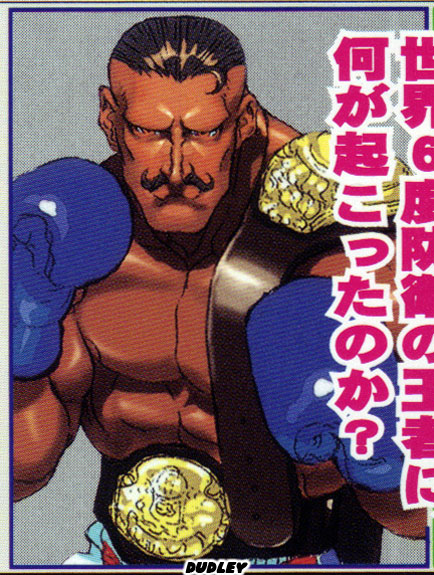
   

A small detail that you may or may not have noticed is how few characters in fighting games are presented wearing a championship belt. After all, real pro fighters don't wear their titles while fighting. But this is something that makes some game characters visually appealing. Dudley has a great design but he doesn't go around with his belts. The aesthetic choice of having him dressed in civilian clothing worked well in the lineup. Street Fighter III was a chance to introduce a new generation of fighters, one that wasn't as campy as the original cast. Yun and Yang for example had classic Chinese shirts and pants but also paired that with modern sneakers. Alex was an MMA star but wore overalls and heavy combat boots instead of trunks. As long as Dudley wore his boxing gloves it was painfully obvious what type of fighter he was. In canon Dudley had at least two, of what can be assumed, world championship belts. Here's a short list of some memorable champions in the genre, if not their fancy belts.
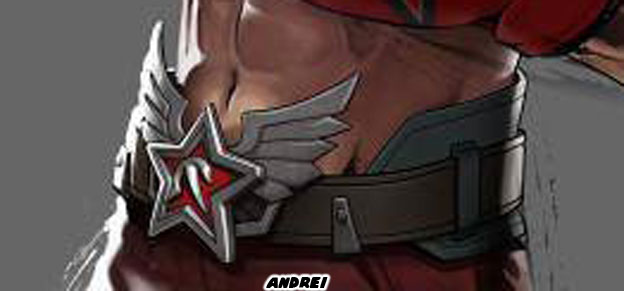
   

Not many boxers flashed their belts in game, one of those that did was Andrei. The Russian boxer was featured in King of Combat. The young boxer had a great belt design. The star, sickle and hammer were supposed to conjure up images of the old Soviet Union. It was perfect for the upstart. He was proud of his country. It showed in his Cryllic tattoos, amulet he wrapped around his boxing glove and militaristic haircut. In the best designs from the various studios every detail of a costume has to reinforce the personality of the fighter. The details should each tell a story. Whether it's a torn sleeve, a spiked bracelet or even an eye patch. They all have to mean something and not simply be a superfluous detail. There were other fighters in the various games that were as accomplished as Dudley and Andrei.
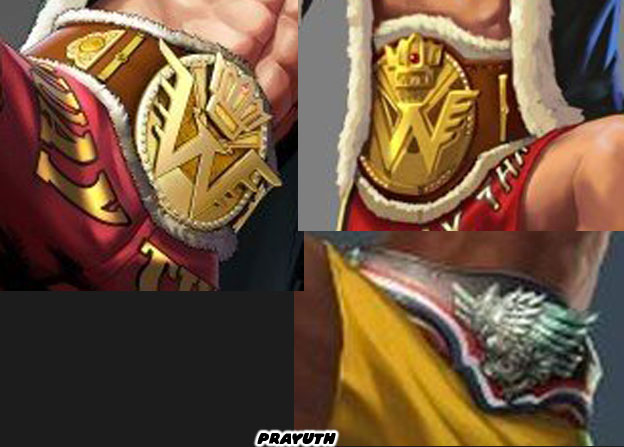
   

Muay Thai master Prayuth had a hefty belt that he wore in the King of Combat. The large circular fur-lined plate was reminiscent of modern championship belts. Flamboyant champions are nothing new in professional fighting. The best in the world wanted to show off from time to time. Over the past century and a half many different champions would add their own flare to the titles. They would encrust their belts with ribbons, fur and eventually gold plating and jewels. Some belts were even made of leather that had been dyed to a brilliant red or bright green. Prayuth's belt was representative of modern belts but its fur-lining also served a practical purpose. It could be worn while fighting. It wouldn't scrape or irritate his skin even with sweat. The developers on King of Combat even had an alternate color scheme and with it an alternate belt for Prayuth. The alternate title was more in tune with a classic championship belt. Instead of the sponsor logo there was a head of the mythical Garuda. It celebrated the spiritual origins of South Asian, specifically behind Indonesian and Thai culture. If Prayuth was the best Muay Thai fighter in the world then his belt should reflect the culture that created that form of fighting.
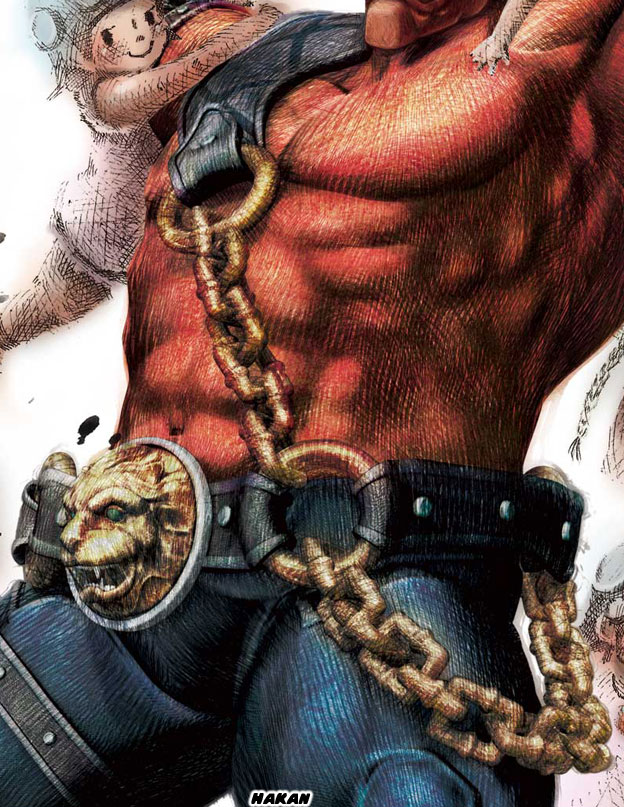
 

A belt that celebrated a culture and also looked intimidating belonged to Hakan from the Street Fighter IV. I was not a fan of his design, how he misrepresented yağlı güreş or Turkish oil wrestling. I was not a fan of the color of his skin and absurd blue hair. One thing that I cannot deny is the costume he wore. The chain and strap symbolized strength but it was the roaring lion that really caught my eye. I cannot say with any certainty that this was a championship belt. Modern oil wrestling championships are sometimes a trophy and sometimes a belt that looks like a modern wrestling title. Hakan's belt might have simply been a family crest or his business logo. In all regards it was a fine belt, accessorized by large metal chains and rings. Anyone could tell that only the absolute strongest could wear this ensemble.
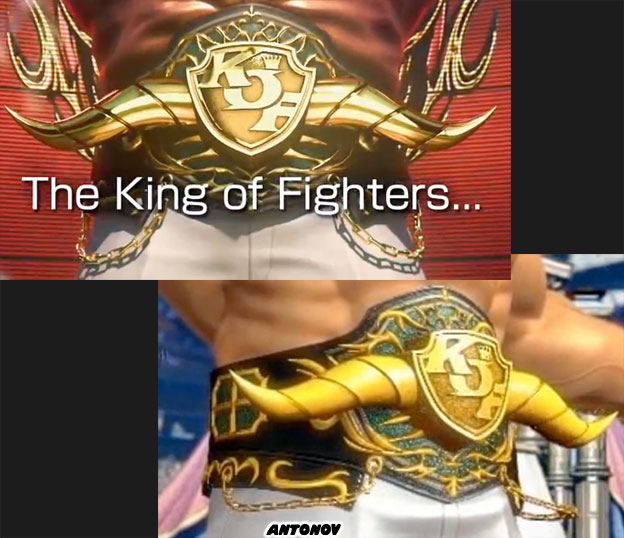
   

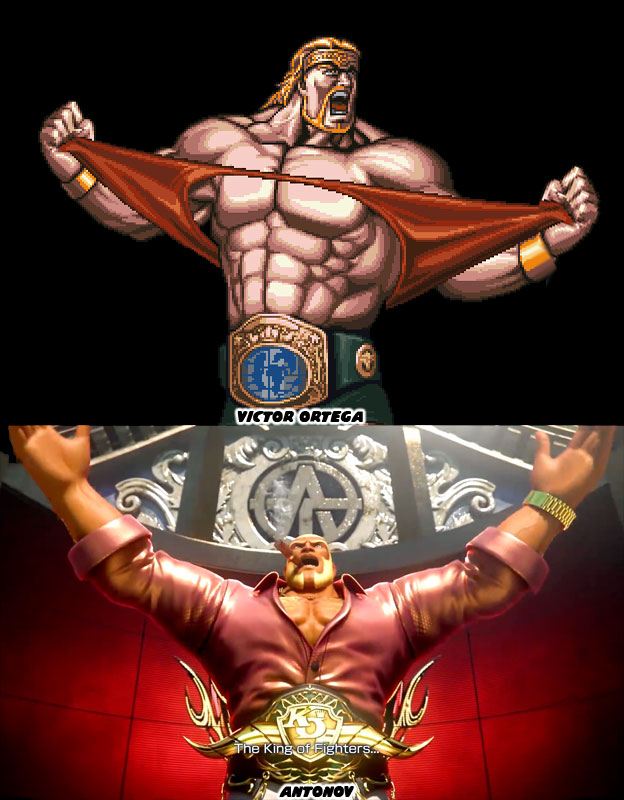
One of the biggest and possibly gaudiest championship belts belongs to Antonov. The self proclaimed original King of Fighters champion wears the belt in KOF XIV. Although I would argue the legitimacy of his claim with the iconic Geese Howard and Terry Bogard who had been there since the first tournament. Anyhow the belt is plated in gold, with thorn tribal patterns, gold chains and enormous bull horns. Aside from being bulky it would not be sensible to wear in a fight. The horns would limit the range of motion for the wearer. I can only imagine the number of times Antonov split his forearms open each time he threw a punch. The reason that Antonov wore it was two-fold. It showed off that he was the champion obviously but less known was that he was hooked on smoking and he kept his trademark cigars hidden in the front plate. If it were reproduced I can only imagine that a combination title and humidor would make it among the most expensive belts ever built. Antonov's belt was meant to be over-the-top, bigger and gaudier than any other title in any fighting game. It was not supposed to look like a traditional belt as with Dudley, nor was it supposed to have elements of a particular culture like Hakan or Prayuth. If I could find an example of a belt that balances culture and gaudiness it would have to be Darun Mister's Indian elephant title.
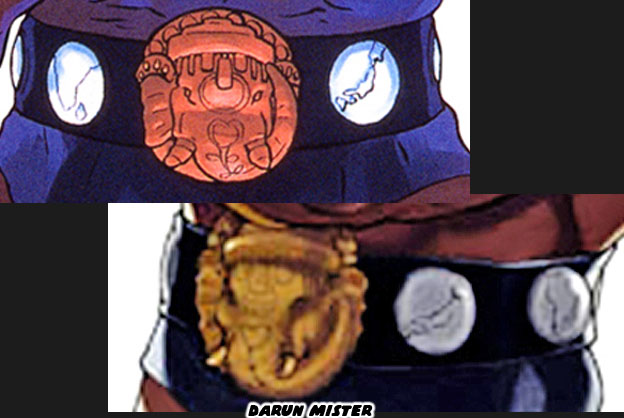
 

The main plate, in gold or bronze, is a sculpture of an elephant wearing a ceremonial headdress. The side plates are silver and have the outlines of the global continents. It symbolized that this belt had been defended or recognized by promotions around the world. The elephant has a number of details. The flower pattern on the trunk and filigree on the ears mirrors the long standing custom of painting the elephants as a sign of reverence. The elephant has powerful cultural context, especially when considering the relationship that the Hindus have with the god Ganesha. This belt is not representative of Ganesha but it is supposed to make Indians feel proud. There was more forethought to this championship title than say the stages created for Dhalsim in Street Fighter II and Zero / Alpha which pandered heavily the symbol of Ganesha. Unlike Antonov's belt there is nothing that would interfere with the wearer. The elephant trunks are short and stubby, they wouldn't catch a person like bull horns could.
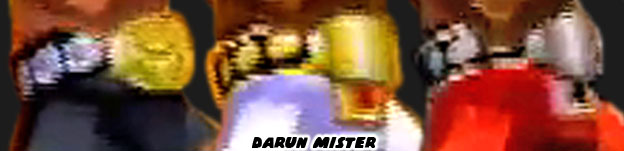
   

Darun was a unique character, inspired by various legendary Indian wrestlers including the Great Gama. In Street Fighter canon I would argue that he was a greater wrestler and champion than Zangief. I could back up this claim by pointing out that Darun not only held the elephant title, his alternate costumes featured two other belts. The gold and silver titles had a flat cut to them, they seemed to be from other, possibly Western promotions. Darun was a multi-promotion heavyweight champion and possibly the best pure wrestler in Street Fighter canon. Darun however was not the most decorated fighting game champion. In the next blog we will look at the character that had more belts than any other Street Fighter icon combined! As always if you enjoyed this blog and would like to sponsor me please visit my Patreon page and consider donating each month, even as little as $1 would help make better blogs and even podcasts!
 follow the Street Writer on Patreon!

Wednesday, June 22, 2016

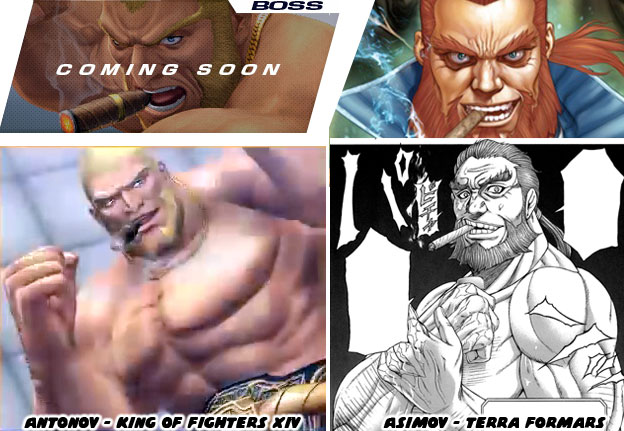
Before Antonov there was Asimov, a take on the King of Fighters XIV host.

A question I get asked all the time is "Noe, what do you think of the new boss of the King of Fighters Tournament? Is he a good design? Where did he come from?" Well actually nobody talks to me. I never get asked that question, not once. Also the new boss character, recently revealed on YouTube courtesy of SNK Playmore and Atlus is not the actual final boss of the game but rather the host of the tournament. The cigar-chomping muscular man with a hefty KOF champion belt goes by the name of Antonov. He is a Russian billionaire who looks to be middle-aged yet in extreme physical condition. He has supposedly purchased the rights to the KOF Tournament. I can only suppose he bought the rights from Geese Howard or Rugal Bernstein or Magaki, or whomever had the previous rights. Anyhow, this new character has declared himself the "First Champion." Of course whether that means he was a former KOF champ that retired and decided to give it one more go or is claiming to be the new champ for a new generation has yet to be revealed. But I digress. The origins behind the character design are easier to understand.


I believe that Antonov was heavily influenced by Sylvester Asimov. The wickedly powerful Russian character with the unique hair style, beard and cigar. He debuted in the manga, later turned animé Terra Formars. The series was written by Yu Sasuga and illustrated by Kenichi Tachibana. It debuted on January 2011 in Miracle Jump, and was later picked up by Weekly Young Jump. Asimov is a strong fighter that has been genetically modified. On top of superhuman strength and endurance he has the ability to regenerate lost limbs. This is especially important on distant planets where his soldiers have to sometimes perform hand-to-hand combat against powerful aliens. Asimov actually works out heavily and supplements his modifications with drugs via his cigar which is more like a vape machine. I have a strong suspicion that his features, the sharp facial hair, overall physique, national origin and cigar-chomping look of Asimov was the basis for Antonov. What do you think? If we turn the way-back machine on and connect the dots we can actually find some precedence for Antonov and Asimov. Specifically where did the middle-aged-champion strongman came from and how he got into fighting games.

The early generation of fighting game heroes were based on real-world figures. They may have been wrestlers, karate practitioners or mythical kung-fu fighters. In some instances they were also inspired by fictional characters in movies and comics. One of the comic book artists that influenced the early fighting game icons was Tetsuo Hara. His landmark title, Hokuto No Ken / Fist of the North Star (HNK) debuted in 1983. Hara, along with writer Buronson created a world where masters of fictional fighting arts fought on a colossal scale. The lead character, Kenshiro, was a post-apocalyptic martial arts hero. The techniques he used were far more fantastic than any move in real life. He and some of his opponents could kill people with a single touch, slice arms and legs off of people with their fingertips and decimate small armies using their bare hands. When two or more of these masters fought against each other it was a site to behold. The comics would build up for a showdown over several issues and then have some of the most violent, and bloody, exchanges in any comic series. The heroes and villains of the comic would use all sorts of amazing super attacks against each other in order prevail. The designers behind Street Fighter and Fatal Fury were inspired by HNK and other martial arts manga. The games they created captured just a fraction of the energy and violence from the comics. They didn't necessarily steal characters from a comic or movie in order to get the job done. Yet at the same time it didn't hurt the developers to poach some characters when they started running low on ideas.


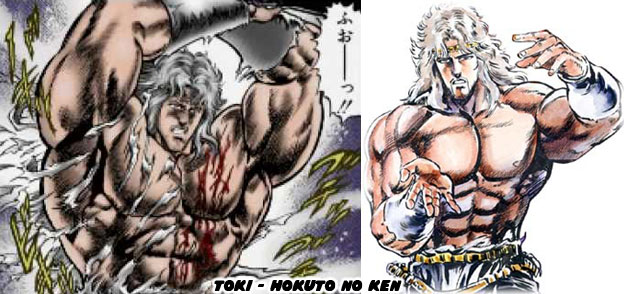
The middle-aged strongman archetype of Asimov and Antonov could be traced back to some of the recurring characters in HNK. Most of the fighters in the series were adults, as opposed to the young teenage fighters in more modern fighting manga. Some of the important figures, including the main villain Raoh and his pacifist brother Toki were even middle-aged. Toki was a master of Big Dipper fighting school and possibly the one most naturally inclined to its secrets. The character was a pacifist however and didn't really figure into the heart of the series until 1985. Toki was designed as a post-apocalyptic Christ-like character. With his beard, long hair and headband he was supposed to invoke a comparison to Jesus. Of course this would be a "swole," world-champion bodybuilder Jesus and not the lean Jesus featured in most paintings and statues. Toki was a healer, considered a miracle worker wherever he went. He fought only as the last resort. While his adoptive and blood brothers could kill people with a single punch, their opponents died in agony. Toki could also kill with a single touch but his enemies experienced a pain free bliss as they died. His particular form of fighting was known as JuNo Ken aka the Gentle Fist. The super-powerful yet older fighter template was unique to Mr. Hara. In other comics there were often elderly martial arts masters that were thin and frail but that wasn't really seen in the older characters in HNK. Instead his characters just got bigger and stronger. Mr. Hara had himself been influenced by television and movie characters. Kenshiro was based in part on Bruce Lee. His mannerisms and even trademark yell made it into the comic and anime series. His larger, stronger, more muscular characters, were inspired by professional wrestlers.


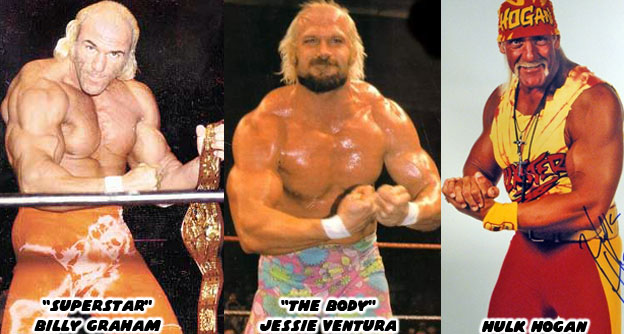
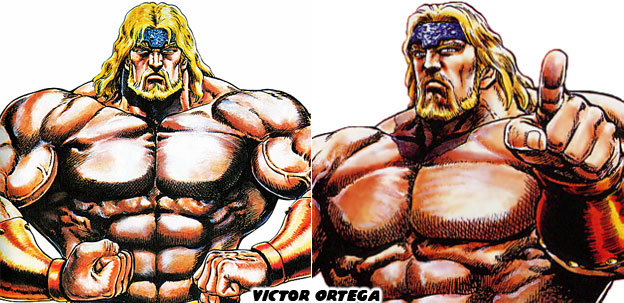
Tetsuo Hara was a huge fan of pro wrestling. Through the late '60s and '70s he watched the best in Japan and the US compete. He learned many things from modern pro wrestling. A wrestler did not necessarily have to know actual moves and holds in order to be liked or even be remembered by fans. The people that talked a good game on the mic or had an impressive physique were the ones that went over well. If a wrestler were a stiff on the microphone they often had a manager that did all the talking. Television turned these people into celebrities. The cornerstone of the top physical specimen could be traced back to "Superstar" Billy Graham. He was a bodybuilder-turned-wrestler that used to work out with Arnold Schwarzenegger. He created the template that would be copied by Jessie "The Body" Ventura, Hulk Hogan and "Big Poppa Pump"Scott Steiner. Graham was not exactly a young man when he peaked in popularity. His physique took years to develop and at the height of his career he was wrestling people much younger than him. Not that it mattered, fans couldn't get enough of the Superstar. In addition to his chiseled body he wore bright costumes and really stood out on television. His tan, blonde hair and sharp sideburns gave him a distinct look. Elements of his style would be found on other wrestlers that followed. It would trickle down to the characters created by Tetsuo Hara and by extension the fighting games that followed. Toki had a lot of the counter-culture, free spirit, massive bodybuilder look that Graham was famous for. Almost a decade after HNK debuted Capcom asked Hara to design the characters for a wrestling game called Muscle Bomber / Saturday Night Slam Masters. It didn't take Mr. Hara long to design the champion, a non-playable character known as Victor Ortega. Like Toki this new character was a surrogate to Graham. The middle-aged bodybuilder that still had some gas in the tank.


Victor Ortega would be revised and become bigger and stronger in the follow-up. Super Muscle Bomber / Ring of Destruction: Saturday Night Slam Masters II debuted in 1994. The character had retired as the first undefeated champion from the Capcom Wrestling Association (CWA). When he ran out of worthy opponents he simply disappeared. He was lured out of retirement with the promise of new challengers from the CWA as well as the rival promotion the Blood Wrestling Association (BWA). Ortega was massive to the point of being grotesque. Despite his age he was the most muscular character in the Street Fighter universe. He even made Zangief look small. It was a unique aesthetic that Mr. Hara had created. Just because a character got older there was no reason they could not become more powerful. After 1994 the frail retired master was a dated concept for fighting games. Ortega would challenge convention, show up with his belt and clean house. It was up to SNK to make audiences believe that Antonov was cut from the same cloth. Could he take on characters half his age that were well established and still make for a believable champion?


I am eager to see what sorts of moves Antonov is assigned. Will he be a striker, a brawler, a grappler or have nothing but power moves? Will he be a playable character when KOF XIV comes out? We should hopefully find out these answers soon. What do you think of Antonov's design? Would you consider playing as a character that was a little older than the main cast? As always if you enjoyed this blog and would like to sponsor me please visit my Patreon page and consider donating each month, even as little as $1 would help make better blogs and even podcasts!
 follow the Street Writer on Patreon!