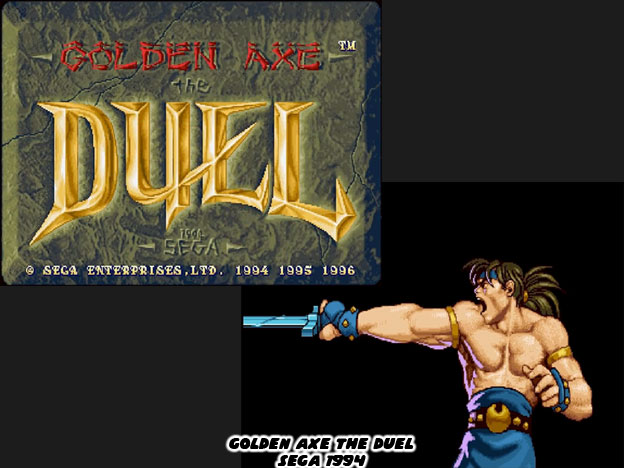
The first fantasy fighter of merit was Golden Axe The Duel. It was developed by Wow Entertainment and published by Sega in 1994. The game was important for many reasons. Sega, just like every major publisher at the time, wanted to create a hit fighting game. Virtua Fighter, released in 1993, was a moderate hit but it did not generate the buzz of Street Fighter II. AM2 developed Virtua Fighter and would focus on trying to represent realistic fighting styles in their 3D engine. It didn’t quite have all of the elements that made Street Fighter II work. By contrast Wow Entertainment thought that by creating a cast of stylized characters, and allowing magic and realism to co-exist in the fighting engine they would be able to capture lighting in a bottle. They came close to doing just that.
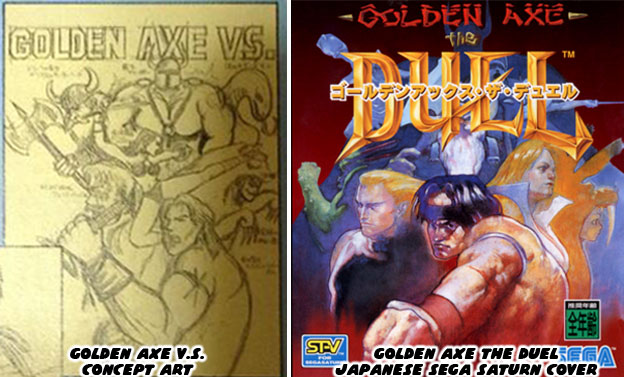
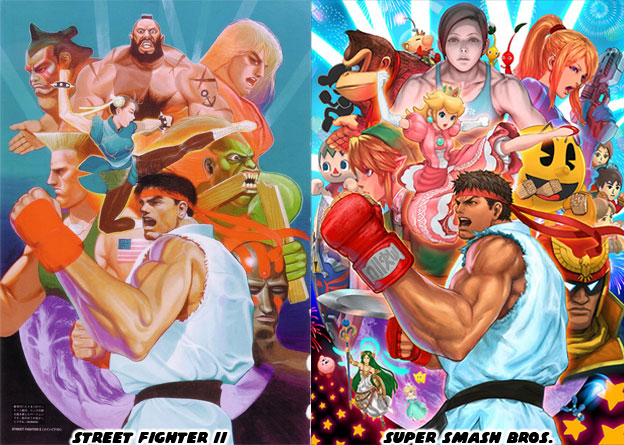
Sega was following the template laid out by Capcom very carefully. It was apparent in the earliest stages of the game design. The original poster sketch for The Duel looked very familiar. It would be changed by the time the game was released in the arcade and later the Saturn home console. In case you are not old enough to remember the original Street Fighter II poster from 1991, it featured Ryu in a side profile. Behind him were the rest of the World Warriors. The poster concept for The Duel featured Kain Blade in the same pose with the other characters around him. Capcom’s painting was such an iconic piece that Nintendo would reproduce it almost 25 years later to celebrate the inclusion of Ryu in the Smash Bros. game.
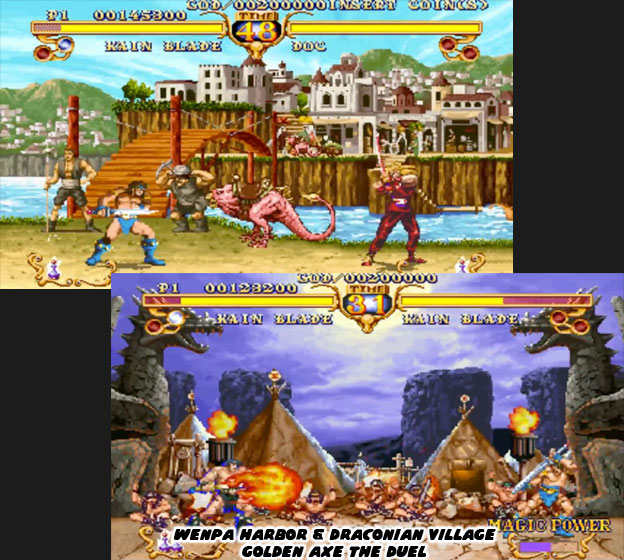
Every fantasy game that I bring up over the course of this series will have a few things in common. The fantasy elements in each game will have a decidedly western theme. Even though the majority of the games will be from Japan, they will be using mostly western images. This goes with literal dungeons and dragons, skulls, faeries, orcs, ogres, castles, swamps, basically anything that’s ever been referenced in a western fantasy world. In some cases the studio might mix in a few Eastern fantasy characters and demons but for the most part they will be reflecting the themes explored by western writers. For example in Golden Axe The Duel, the audience will be brought into the world of Yuria. Just about every fighting game in the early ‘90s featured some sort of map. The fantasy ones were no different.
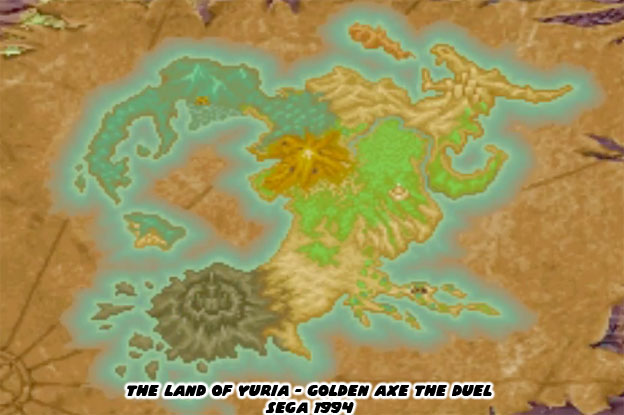
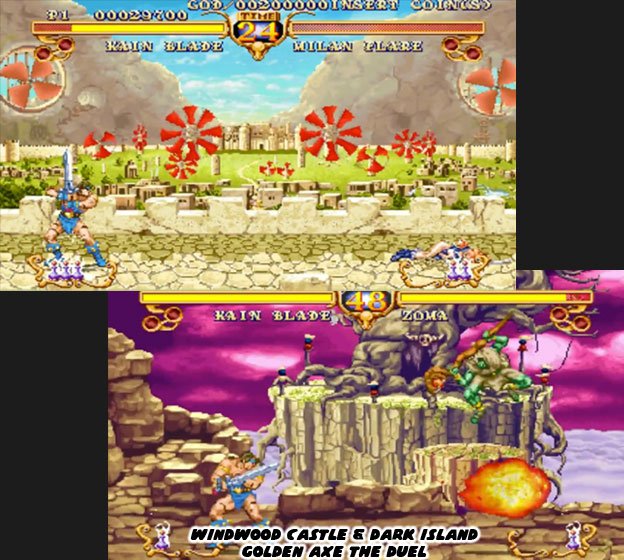
Some of the maps were animated, featuring floating castles, sea serpents and other mythical characters decorating the edges. Each stage featured in the various titles brought forward some unique locations. Golden Axe The Duel had some of the most memorable visuals of any fighter. Sega wanted to create a world with some consistent elements. This was not a strictly medieval world but something with steam elements to it as well. The more advanced kingdoms, such as that of Windwood, harnessed the power of the wind, whereas Dark Island were a twisted place where magic reigned supreme. Depending on where you were in the world there was often a mix of fantasy and realism.
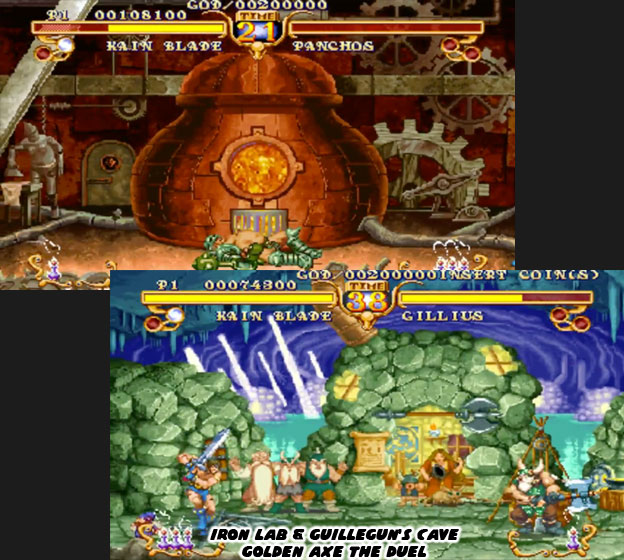
The industrious dwarfs lived in caves, drank heartily and mined for their resources, yet this didn’t mean that they had sole dominion over the metallurgical arts. The human fighter Panchos was also a steampunk inventor. His stage, set near a gigantic boiler, featured some mechanical creations, including a feminine robot that was ironing some clothes. These were whimsical details but they all added layers to the world Sega was trying to present. They helped frame the characters and show the the world of Yuria was just as interesting as any other fantasy video game world.
Some of the villages featured in The Duel were trading outposts. They were filled with many colorful characters and weird monsters. These things often called out to earlier games in the series. The towns ranged from open and welcoming to secluded and backwards. Any artist studying level design should take apart the stages featured in The Duel. They might learn a few things about storytelling through the environment.
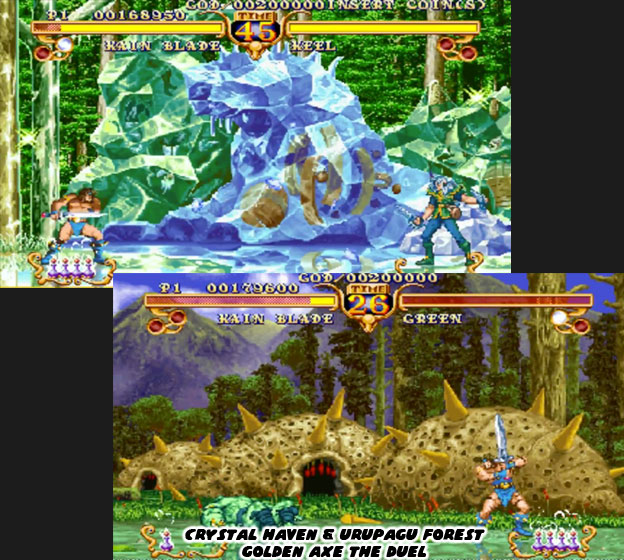
For example look at two of the most exotic places in the game, the Crystal Haven and the Urupagu Forest. There are no places like this on Earth, nor have places like this even been featured in most fantasy movies. Look at the colors used in the stages. The transparencies, lighting, and layers of detail. How long have these places been around? What magic or curse turned them into hideouts for the most desperate villains? How did the stages reinforce the theme applied to the character? The Crystal Haven was an oddity, there were inventions, ships and even people frozen in crystal. It was the stage for Keel, a mysterious Dark Elf that had mage control over water and ice and could even shape shift into liquid. Did he create the stage or did he discover some form of magic while exploring it? Urupagu Forest seemed equally exotic and just as dangerous. There was a cloud of swamp gas floating in the background, the settlement in the background seemed to be made of a giant husk covered in poisonous barbs. Its resident fighter was a savage man named Green who was also covered in poisonous barbs.
Golden Axe The Duel had an advantage over Virtua Fighter when it debuted. Sega had been in operation for decades and they had name recognition on their side. Although they did not create the first fighting games Golden Axe the Duel was part of a legacy almost as old as Street Fighter II. The Duel was borrowing characters and canon from one of the most influential brawlers of all time. Of course I am referring to the original Golden Axe. In 1989 the brawler, sometimes called the beat-em-up was growing by leaps and bounds. That year saw the introduction of three important games, Golden Axe, Nekketsu Kōha Kunio-kun (River City Ransom) and Final Fight. Of the three games Golden Axe was the only one based in a swords and sorcery world. It had influences, including audio cues pulled directly from the film Conan. The game featured three adventurers, Ax Battler, Gilius Thunderhead and Tyrus Flare. The three warriors were on the hunt of the giant known as Death Adder. The game was considered a godfather of the hack-and-slash sub-genre.
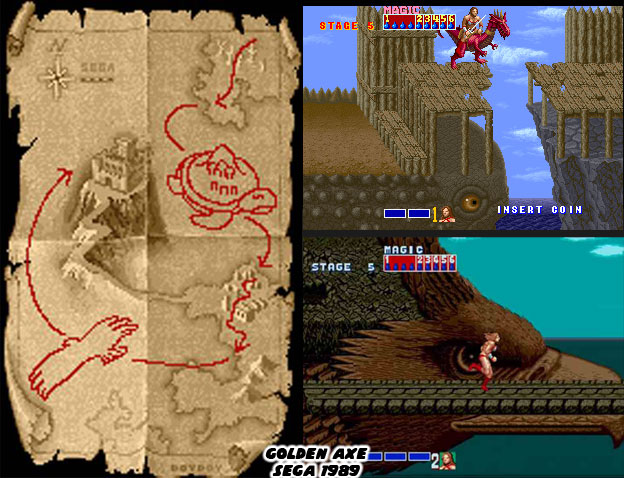
Golden Axe was one of the first brawlers to feature mounts as well as branching paths. Players could explore the world of Yuria, the tiny outposts, small villages, castle ruins and even find themselves riding atop a giant eagle or sea turtle. It was very much ahead of its time. The game was very popular in the arcade and would get released on multiple consoles and the PC. It would get a number of sequels that expanded on the canon established in the first game. Some of the sequels featured just one or two of the original characters yet all of the games were related in some way.
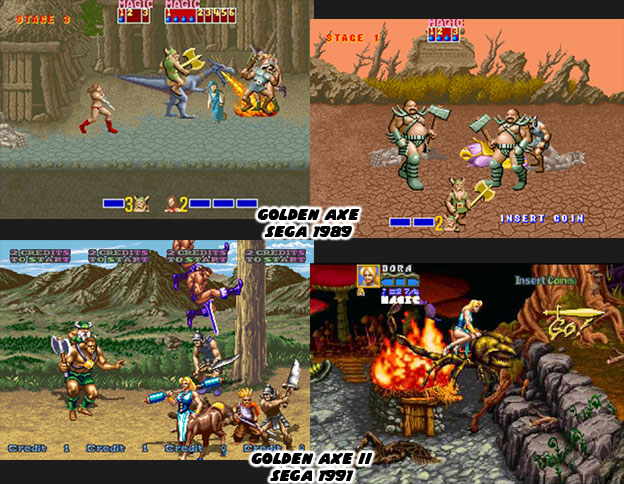
Sega hoped that the Golden Axe name would bring fighting audiences around. It worked for the arcades that did have the title. Despite pulling influences from Street Fighter, it was closer to Samurai Spirits/Shodown games from SNK in that the characters all fought with swords. The fighters all had unique special attacks using their specific fictional martial art. The “super” attacks were the results of using magic vials. The magic system had been established in the early brawlers and this simply carried the tradition over. Characters that were not wizards or spell-casters could still use magic, they did this by using bottles of magical potion that summoned dragons, monsters and even earthquakes. It was a unique gameplay mechanic that hadn’t been explored in any other fighting game.
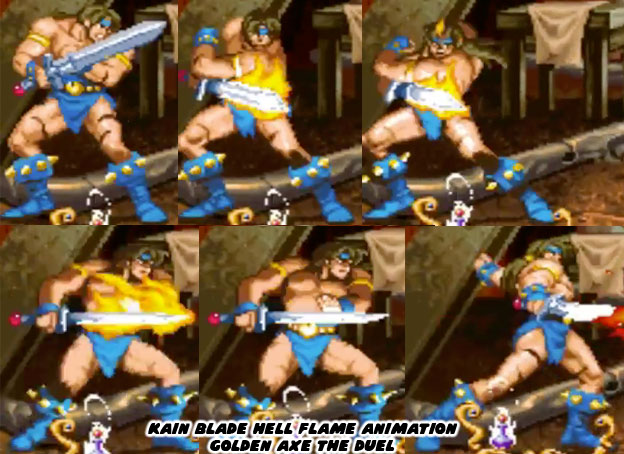
The game used a sprite-based graphics engine, as did the majority of fighting games of that era. Where Sega separated it from the crowd was in the scaling of the sprites and stages. There was some scaling technology used in the Samurai Spirits titles as well. The engine used for The Duel allowed for an extreme degree of scaling. It also allowed for transparencies and other effects to be rendered in layers on screen. This graphics engine was superior to the one that Capcom had used in Street Fighter II. The artists at WOW Entertainment tried to make the most out of the extensive color palette. They tried to preserve the design aesthetic of the series, based loosely on the fantasy paintings by Frank Frazetta. When Kain performed his flame attack for example the colors used on the sprite created the illusion of shadows, and reflections on his skin. It was a brilliant detail on the otherwise two dimensional character.
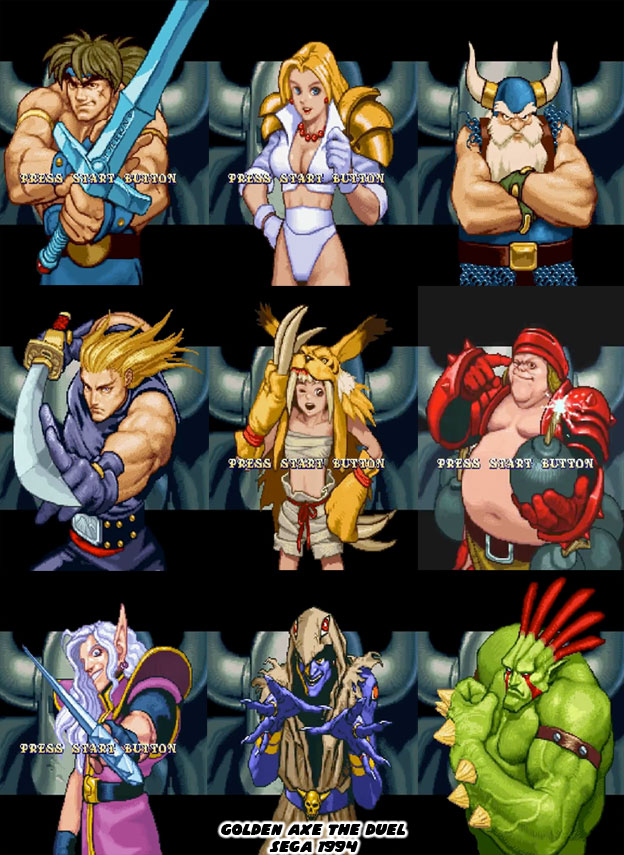
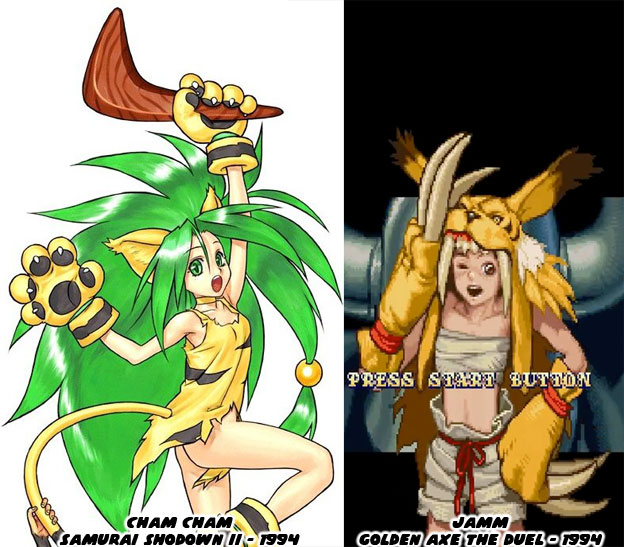
Despite the bold sprites the cast was filled with tropes. The first three characters mirrored the heroes from the original brawler. Which was fine but some of the other characters were a little bit questionable. The feral, jungle-girl character Jamm debuted at about the same time as Cham Cham from Samurai Shodown II. Few people could say they ever saw Jamm in a game but an entire generation remembers Cham Cham. The amazonian character was revisited again with Rila Estansia from Breakers, a Visco title from 1996. Again, not many fighting game fans remember these wild women, save for Cham Cham.
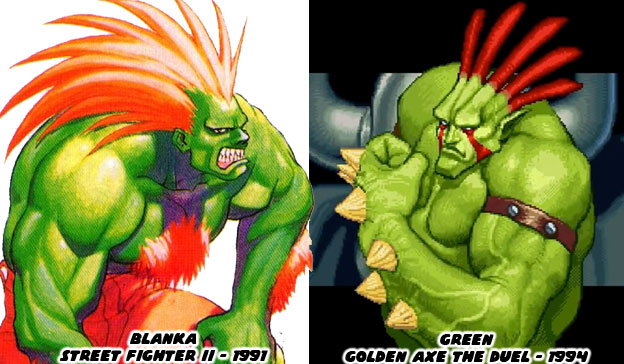
Golden Axe The Duel made a critical mistake. It broke one of the cardinal rules of fighting game design and stole the look of a character. This was obvious with Green, a wild man that wanted to become human and be with his own kind. In look and temperament he was almost a dead-ringer for Blanka, the Brazilian wild man from Street Fighter II. This blatant rip-off hurt the credibility of the publisher.
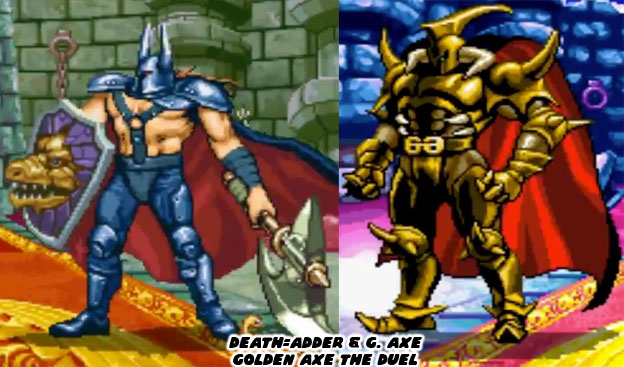
Sega tried to create a diverse cast with different moves and abilities to appeal to the fans of the genre. They even made the main villain of the original game, Death Adder into a boss character. They were acknowledging the Golden Axe legacy while creating a lineup that appealed to everyone. Where they really surprised audiences was with the true final villain in the game. Death Adder was a powerful opponent but he was subservient to the magical Golden Axe.
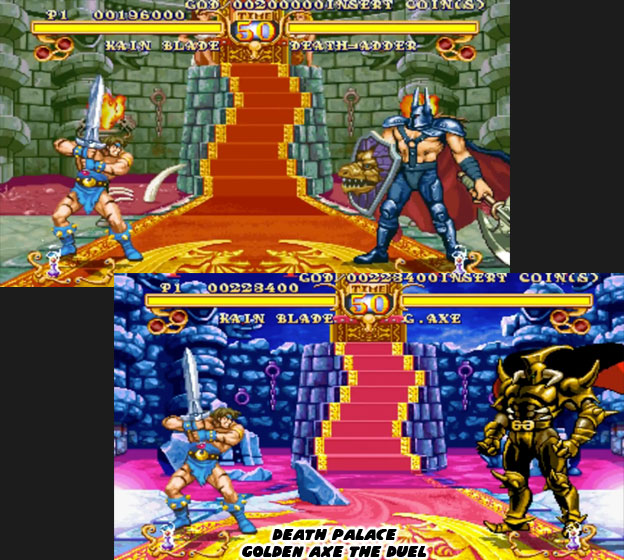
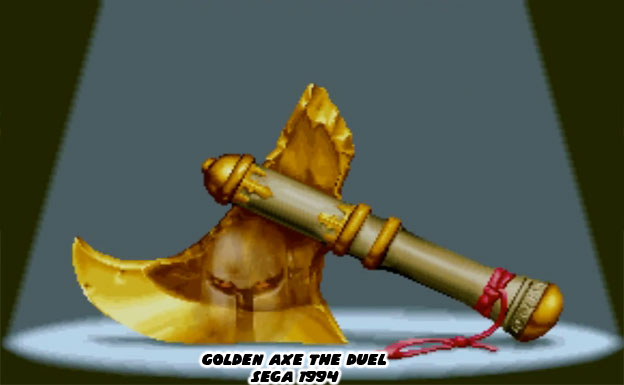
It turned out that the axe could manifest itself as a golden armored warrior. The magical creature was even bigger than the already gigantic Death Adder. Every character had their own reason for wanting the Golden Axe. Some craved its power, some feared it. Others wanted to seal it away or use it as an ingredient in a magical spell. Whatever the reason it pushed the plot of the game forward and helped add more dimension to the universe that Sega had created.
Sadly it would be the only fighter based on that universe. The majority of the characters, locations and canon featured in The Duel would not return in other versions of the franchise. Those that enjoy emulated fighting games should check it out and see how it stacks up to other fighting games from the era. Those that enjoy diverse themes and presentations might also get a kick out of this game.
Did you get a chance to play this in the arcade? Were you a fan of the Golden Axe series? I'd like to hear about it in the comments section. As always if you enjoyed this blog and would like to sponsor me please visit my Patreon page and consider donating each month, even as little as $1 would help make better blogs and even podcasts!