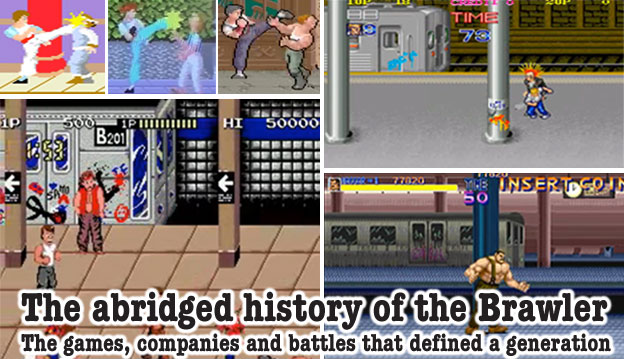
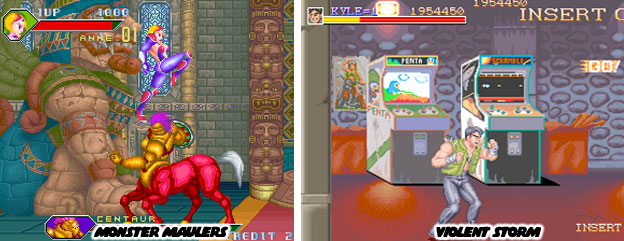
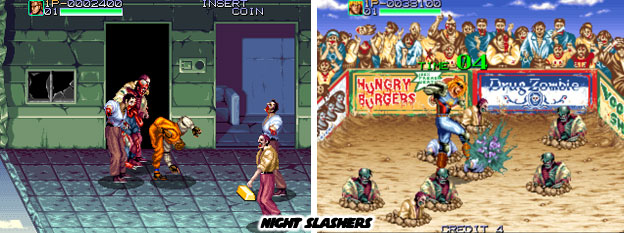
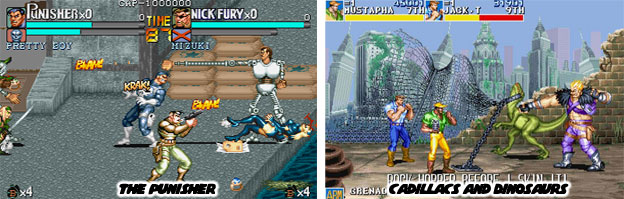
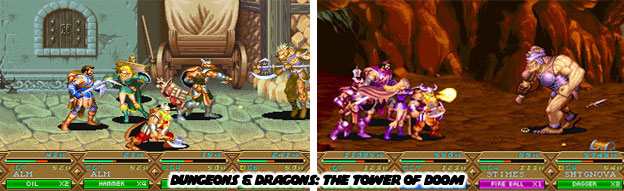
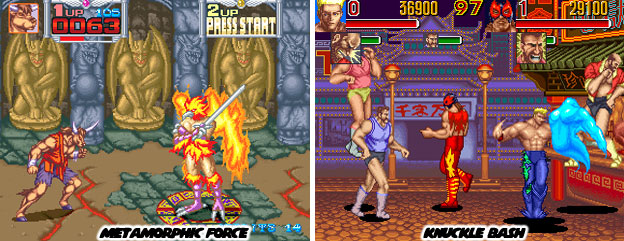
In the previous blog I talked a little bit about the inspiration behind some of the Mad Gear bosses. It got me thinking about the roots of other designs in the series. It made me realize that Metro City may have been a nexus for some science fiction franchises. Before we do a deep dive we should acknowledge the state of Capcom during this period. What games were they working on, what games that they published in the arcade, and home consoles? The early '90s was unique for the industry because the brawling game was declining in popularity at the same time that the fighting game was exploding. While the two genres were similar, they each had their own audience. In any case Capcom was knee-deep in keeping both formats alive. The teams working on arcade and home brawlers had some crossover. In 1993 the studio published Final Fight 2 for the Super Nintendo, and released The Punisher, and Cadillacs and Dinosaurs in the arcade.

In 1995 when the studio published the last entry in the Final Fight series, they were also releasing a new version of Street Fighter. They used this time to tie together the events of several games. For the Street Fighter Alpha / Zero series it was connecting Street Fighter, Street Fighter II, and Final Fight into one narrative. For Final Fight 3, on the SNES, it was calling out the various brawlers that the studio had worked on. There was dealership selling the very distinctive Cadillac cars. There was also a stage set aboard a moving bus. There were even details pulled from the Alien vs Predator arcade game from 1994. Capcom had every right to be proud of the legacy that they had created. Final Fight 3 was overlooked for how it tied together various properties.
Before I get ahead of myself let's talk about one of the bosses, and his design inspiration. So
we've established that films like Escape from New York, Streets of Fire, and the Wanderers inspired the creation of the Final Fight series. Those films from the early '80s had a unique take on science fiction, and gang culture. They framed the characters, and story of the original Final Fight. The sequels therefor pulled influences from later films. The villain Stray from Final Fight 3 was a boss in the Skull Cross organization. He was nowhere near as memorable as the bosses from previous FF games. His look however had some familiar elements.

The appearance of the armored warrior was more than likely inspired by the bad guys in Cyborg. The film from 1989 featured Jean-Claude van Damme. The post-apocalyptic science fiction movie had gangs patrolling the wastelands of the southern US. Actor Vincent Klyn played Fender Tremolo, leader of the pirates. Ralf Möller was the second in command, named Brick Bardo. Both were cruel, and very strong. Their group murdered countless families in the movie. In the canon of Final Fight 3 Stray had murdered the family of Dean, one of the heroes. I would argue that the look, and costume of Stray was an amalgamation of the two villains. But the inspiration from science fiction cinema ran so much deeper than that. The stage where players fought Stray was set inside of a giant factory. The heroes fought on top of metal grates, suspended over boiling metal. It looked very much like the steel mill at the end of the 1991 James Cameron film Terminator 2: Judgement Day.

Final Fight 3 was peppered with nods to science fiction cinema. These Easter Eggs were more than an homage to the great films from the '80s and early '90s. Capcom was trying to connect the movie and game continuities together. During the development of the arcade and home brawlers the studio had become well versed in the canon of the popular science fiction films. They did a deep dive into those worlds because they were working on high profile licenses. They went over production notes, design books, comic books, and various cuts of the film to try and squeeze out anything that could be used in a game. Capcom did not get a license to create a Terminator game, however during their research they made an important connection. As a wink to sharp-eyed audiences they put in a number of these cameos, and let players figure things out.

Final Fight 3 was not about breaking up the Mad Gear gang. Nor was it about defeating the crime lord Belger. A new gang called Skull Cross had taken over Metro City. They were headed up by a rogue military leader named Black. The arms merchant was trafficking illegal firearms through the city. They ran operations out of a company called SIM Inc. Veteran fighters Mike Haggar, and Guy reunited to save the city. They were joined by Detective Lucia Morgan, and the mysterious Dean. Their hunt for Black lead them all throughout the city. As they put the pieces together they found where the weapons were being manufactured. It turned out that SIM Inc. was working on more than just guns. In a side room of one of their factories there was a cybernetic arm in a glass case. This was a nod to the same arm featured in the Terminator 2 film. This technology from Cyberdyne Systems, would lead to the creation of the Terminator cyborgs and
Skynet.
As the heroes of Metro City fought their way to the top they raided the headquarters of SIM Inc. Inside there were even more nods to science fiction canon. In a glass case there was a Work Loader. It looked identical to the ones featured in the 1986 movie Aliens. In film canon Weyland Corp built and patented the P-5000 Powered Work Loader in 2025. Caterpillar Inc. would make commercial versions later on. Was SIM Inc. the actual manufacturer of these machines? Did they secure government contracts to help develop this technology for Cyberdyne? To further connect Final Fight continuity to those of other Capcom brawlers there were also display cases filled with the latest weapons developed by SIM Inc. In the Aliens film it was never stated who had created the weapons used by the Marines in the far future.

So why are all of these Terminator / Aliens connections so important? Why would they be featured in a Capcom fighting game set in an urban city? Aside from the easy answer; that the developers were just calling out all of the other games the studio published. The truth was that Capcom had very subtly managed to link three of the biggest science fiction franchises together in a licensed game. The timelines from Terminator, Predator, and Aliens were all interconnected thanks to the Alien vs Predator arcade game that the studio released in 1994.
Cracked put the pieces together several years ago. If you haven't heard here is how everything fits; so you may know that Arnold Schwarzenegger played the Terminator in the 1984 film by the same name, and he also played Dutch Schaefer in the 1987 film Predator. What if I were to tell you that the reason the characters looked similar was not because they were played by the same actor, but because in canon they shared the same DNA?

In his story Dutch was already a well regarded mercenary, but he became legend as the first human to kill a Yautja, or Predator in a one-on-one fight. Years after the initial encounter he lost an arm during what was called the 2nd Alien War. Cyberdyne Systems retrofitted him with a cybernetic arm, which doubled as a gun. With his newly enhanced strength he could now go toe-to-toe with both Alien and Predator lifeforms. This enhanced version of Dutch was recorded as CDS-170A3. This numbering was important. In the Terminator 2 film it was explained that Dr. Miles Dyson, director of Special Projects was working on the next generation of cybernetics. He helped develop the CDS T-800 Endoskeleton. More commonly known as the Terminator. Cyberdyne undoubtedly used Dutch's martial training, military tactics, and weapons proficiency to program the perfect killing machine. It only made sense that they also used Dutch's DNA to clone human flesh and muscle to go over the robotic frame.

Lt. Linn Kurosawa, a cyborg from the 13th Colonial Marine Corps, was also featured in Alien VS Predator. Linn was younger, and featured newer technology than Dutch. Her skeleton and frame were enhanced with synthetics. She was essentially the next generation of human. Cyberdyne Systems would eventually evolve into
Hyperdyne Systems. The company would create Synthetics, human-passing androids designed by Michael Weyland. Eventually his company would merge with another and create
Weyland Yutani Corporation. The synthetic named Ash (Hyperdyne Systems 120-A/2) was featured in the original 1979 film Alien, and another named Bishop appeared in the James Cameron-directed sequel. Being partly synthetic would explain why Kurasawa was able to keep pace with the larger Dutch, and their Predator teammates.
I believe that the reason that Capcom went with a new villain named Black, and an organization called SIM Inc. was so that they could expand on the brawling worlds they had built. Metro City, and Final Fight by extension allowed the studio new paths for their cast to explore. It allowed crossovers from Street Fighter, or another franchise I way to fit into continuity. I'm holding out hope that we might get a new Final Fight, or at least another new brawler from Capcom in the near future. Which were your favorite Capcom brawlers? Were there any hidden details that you enjoyed in any of the games? I'd like to hear about it! If you would like to sponsor me
please visit my Patreon page and consider donating each month, even as little as $1 would help make better blogs and even podcasts!