Showing posts with label 3D. Show all posts

Wednesday, January 10, 2024

The return of a lost fighter? - A 1UP classic from October 16, 2008

Hello friends, what are you up to? Things could be better over here. I shouldn't have gloated about the brownies yesterday. It seems that karma does not like gloaters. I got a parking ticket at work because I forgot to display my staff permit. I'll see if the school can do anything about it since I am staff, only I forgot to put up the permit. Then at home one of the light sockets went out. It's another wiring issue in the old house and the money is running out before the family can do something about it. Going to have to squeeze the belt tighter to take care of things.

I'll just focus on videogames and my lawn before things get worse. The other day it was announced than another classic fighting game would return. Given the momentum that SF IV and KOF XII are generating it was only a matter of time before other fighters were resurrected. The weapons-fighting game Battle Arena Toshinden is coming back on the Wii. Kotaku stole the news from Famitsu about this release.

Despite getting four titles over it's lifespan, Toshinden was always a sub-par fighting game. It was proof that even the Japanese were not immune to cashing in on the fighting craze of the 90's. It played ugly and looked worse. It was slow and cumbersome, with music and sound effect that were laughable by early-90's standards. It truly was forgettable compared to the hits of the era.

Toshinden is almost lost to history but is actually more than a footnote in the era of fighters. It was the first 3D fighter to use weapons, it came out in 1994, a full year before Soulcalibur and one year after the debut of Samurai Spirits. Toshinden debuted in the same year as Tekken. It represented the changing tide of technology and in bringing arcade graphics to home consoles. Toshinden, like Tekken, were arcade titles and 1st generation Playstation games. They looked almost indistinguishable between home and arcade. The only problem for Toshinden was how bad it looked and played when compared to Tekken, Virtua Fighter or Samurai Spirits.

The only memorable things to come from the franchise were the character designs. Director Masami Obari and character designer Tsukasa Kotobuki had a field day creating animé-friendly, in some cases, bouncy-breasted archetypes. Feathery-haried, wafish protagonists with long swords swords battling oafish brutes with clubs. Funny how it pre-dated Final Fantasy VII by three years. Too bad that the designs and the actual polygon models were worlds apart. Perhaps the Wii is powerful enough to do a remake justice. We'll see as more news from this game develops. As always if you would like to sponsor me please visit my Patreon page and consider donating each month, even as little as $1 would help make better blogs and even podcasts!

follow the Street Writer on Patreon!

Monday, April 24, 2023

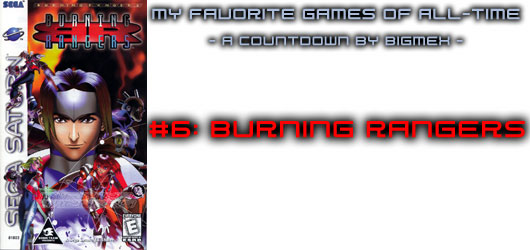
My favorite Games of All-Time #6: Burning Rangers - Originally published on 1UP - July 14, 2006

Most people know that I'm a Sega fan. Always have been, always will. Sonic Team used to be the best development team over there. I say used to only because Yuji Naka burned out shortly after the release of this game. For a while I held him in high regards. Easily the best at Sega and one of the best designers ever. In fact, I have yet to find any Japanese game designer whose library of work I enjoy more. For reference I think David Jaffe has the best USA lineup ever.

Burning Rangers is proof that gameplay, and game design are king. The game is short, very, very short. Other adventure games like Tomb Raider and God of War are credited for longer experiences. Longer games don't always mean better experiences though. In that span of Burning Rangers we get two things, a play through a fantastic world and a glimpse into the genius of Naka.
Burning Rangers crosses genres, despite its brevity the game touches many bases. It combines anime with science fiction and high adventure. The Burning Rangers are an elite group of firefighters. They rescue people from collapsed structures where other firefighters cannot reach. Their skin-tight suits are fire proof, water proof. They can even fly and float with the aid of rocket packs fashioned to look like wings. The subtext is that they are high-tech angels sent to rescue people in their greatest time of need.

Naka helped craft a world that was believable and also perfect for a game. The Burning Rangers fought fires with blasts of energy, these energy blasts absorbed heat and converted fire into energy crystals. These crystals became important because they could be used to power a teleporter and send rescue victims out of harms way. The faster the fires were put out, the lower the chance that explosions would follow the player. The number of people saved, time spent and crystals left over helped set the points for the game. Players that wasted too much time not only received poor scores, they also had to deal with violent fireballs that chased them through the level.
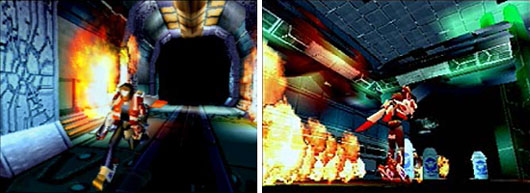
Naka pioneered a few important things in this game. The levels could be randomly generated after a first play-through. The rooms themselves wouldn't change, only certain doors and tunnels not previously accessible would open up. The possibilities kept the game new and fresh for multiple play-throughs. Random level generators are nothing new to RPG fans but a whole new experience to adventure gamers.

Naka also wanted to emphasize the use of our senses in the game. Rather than just running and gunning between floors players had to listen for backdrafts. A rush of wind was a cue to jump back and prepare for an explosion. If not the player would be injured by the resulting fireball. The controls were simple and became intuitive with little time. We could scour every floor quickly for survivors, put out fires quickly and even listen for cues as to the next hot spot or survivor while in the middle of a fire fight.
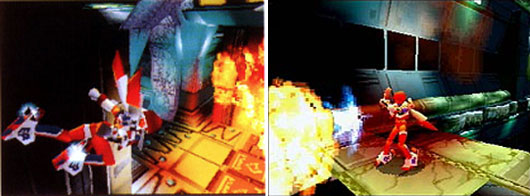
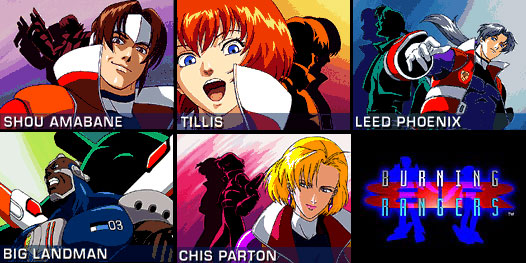
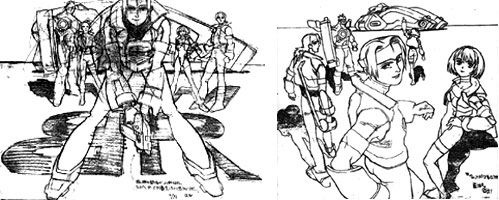
The characters all fit the template of classic anime. There is the level-headed leader Chris, the strong guy "Big," the aloof member Lead and the two playable rookies Tillis and Shou. The original design was for multiple players to be able to choose members of the team and help find victims in massive levels. There were plans to have network co-operative play. Given the development cycle and limitations with the hardware much of that was scrapped. From time to time we still get to see team members appear on a level, sometimes through the glass a floor below. The AI still helps us with a portion of the game and one can only imagine how much fun it would have been with two players or more.

The game itself is memorable for many reasons. The action and exploration elements were important. What helped cement the game was the impeccable level design. Each level was self-contained and fully realized. Details abounded on each level. Doors with working lights and locks, an environment that was visible through windows. The illusion of depth and dimension maintained through the whole game. While clunky by todays standards, the graphics and lighting effects were far ahead of their time.
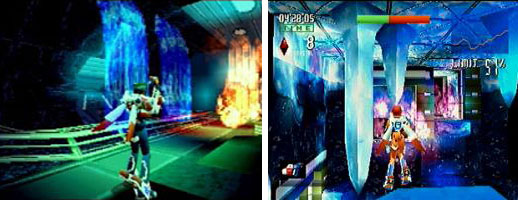
Always thinking of the future the levels are not designed with either an Eastern or Western influence but rather something in between. The look was clean and high-tech but not dated. Each of the levels had a theme which helped make them unique. Unfortunately there were only four levels in the game. A fuel factory, an underwater lab, a space station and a massive space barge. Each level came with obstacles aside from mini puzzles, victims and fires. They also included crazed robots, security droids and massive bosses.

Each person scattered on these levels in need of rescue had something to say. Whether is was a simple thank you, a cry for help or even a plot point Sonic Team made sure that these people all had names and all reacted in a different way when they saw you. The idea of making a player give an emotive reaction to a game has been the talk in the industry for the past few years. Sonic Team was way ahead of the curve. When rescuing a child the first thing a character does is tell them everything is going to be okay. If you find a victim that is unresponsive he or she is knocked out, Chris gives you statistics on some of the rescues and tells you which ones are in bad shape. The thought of making sure every floor, every room, every corner is clear of survivors pushes you against the clock. Some times you even get e-mail updates from those that you rescue. Whether it's a note of thanks or important information related to the story, every little bit becomes appreciated. The survivors help add dimension to the gameplay. In the end it's an emotive reaction makes me appreciate real firefighters and paramedics each and every day.
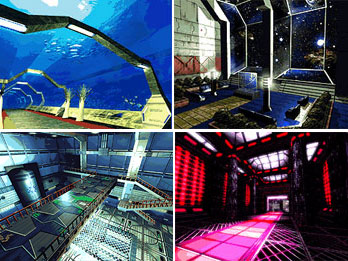
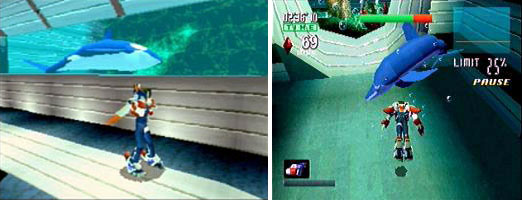
A signal from space is causing the electronics to go haywire on Earth. The fuel factory and underwater lab, for example, suffered from explosions shortly after the signal was received. The underwater lab was my favorite level. Portions of the stage had you swimming underwater and even rescuing a dolphin and killer whale. Tillis has a latent psychic ability and could communicate with the sea life. This comes in handy when you need to use a dolphin to take you to levels unaccessible by swimming under your own power.

I had a blast controlling the characters underwater and certainly wish I had a dolphin pull me along on some levels in, oh let's say God of War... Not to mention that this was also the same underwater lab where school kids were at during a field trip. So not only do you end up fighting fires and trying to find your way through sealed off underwater tunnels, you also have children to worry about. No level in God of War ever pulled that much emotion from me.
The bosses in the game were as impressive as the levels themselves. Massive in scale and reminiscent of the designs used in Sega's Virtua On or Taito's Darius, the bosses in Burning Rangers were nothing short of awe-inspiring. The machinations that you fought were created by the signal from space. Each boss was unique to it's environment. The boss at the fuel factory shot fire, the one at the underwater lab was a robotic fish with a pulse bomb and torpedoes.

Each of the bosses was directly tied into the plot of the game. These bosses are the result of a haywire sentry program that was designed to protect a girl with an incurable disease. She was in suspended animation inside an unmanned space barge. When word of a cure was sent from Earth, the space barge responded by sending back a defensive program and causing havoc. Sonic Team used a variation of this story in Sonic Adventure 2.
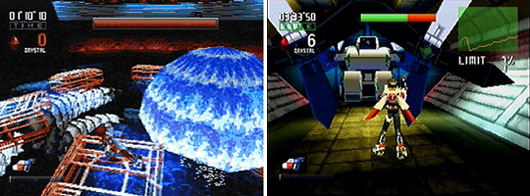
The Burning Rangers are led from one encounter to the next and eventually find the source of the signal. The space barge has become massive by collecting space debris over the years. An unfortunate side effect due to its defense programming. Now more a small moon than a satellite it would lead to disaster if it re-entered Earth's atmosphere. The Burning Rangers are placed in their most dangerous assignment ever. Get past the defenses of the barge, rescue the girl and prevent the barge from colliding with the Earth. Hey, not a problem at all for the world famous Burning Rangers!
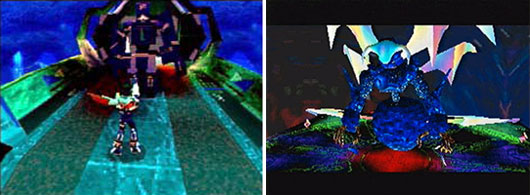
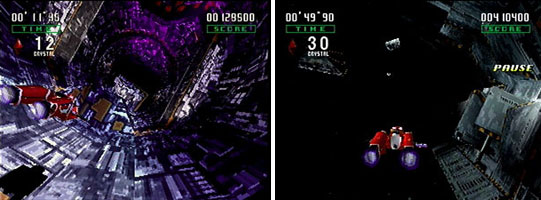
Did I mention that in one level you actually get to pilot the Burning Ship into space and use it to breach the defenses of the space barge? This game really does have it all!
Few videogames accomplish anything of such magnitude within a few levels. That is the genius of Naka. We get to see everything that he wanted to put into the game, albeit a shorter version than he envisioned but also things that would have been completely cut out if done by another designer or team. We get a taste of what could have been if only Sonic Team were given more time and resources and yet find no faults with the game we are left with. That is what drives me crazy about Naka and the state of game design today.

With a high to moderate budget, using an engine he designed, on the final cycle of releases for the aging Saturn, Yuji Naka and Sonic Team completely knock one out of the park. No other designer, to this day (save for Miyamoto) has accomplished more with less. It almost seems as if Naka and co. are capable of greatness only when they are left with few resources. I believe the more they had the worse their games were. Epic games can be short and sweet, no studio could ever lay claim to something remotely close to Burning Rangers.
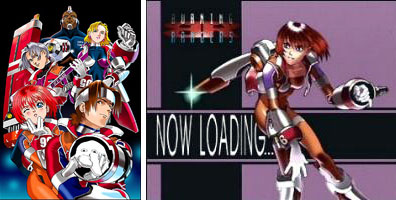
As a bonus Naka always played up to the fans. Those that bothered to play through the game multiple times were rewarded with codes and secrets. Allowing players to choose different Burning Rangers for the levels and even unlock a mini game with the Burning Ship. If you put the game disk into a computer you could even get several wallpapers and system sounds for your e-mail featuring the voice actors from the game.
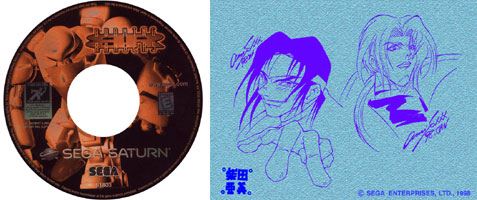
The curse with this game is its brevity. At double the size, with all of the features that Naka envisioned it might have been a contender for the number 1 spot. As with some of Naka's great games I am left wanting more. I would love to see a sequel worthy of the name. I would love to see an anime series based on it. But instead I will settle with what has been, an experience that will remain with me all my days.

You should play it if you haven't already and see how great adventures could be made.
I’d like to hear your personal top-10, top-20, top fighting games, top sports games, or top games in any genre. Let me know in the comments section please. As always if you would like to sponsor me please visit my Patreon page and consider donating each month, even as little as $1 would help make better blogs and even podcasts!
follow the Street Writer on Patreon!

Wednesday, May 10, 2017

The aesthetic versus graphics debate, part 1...

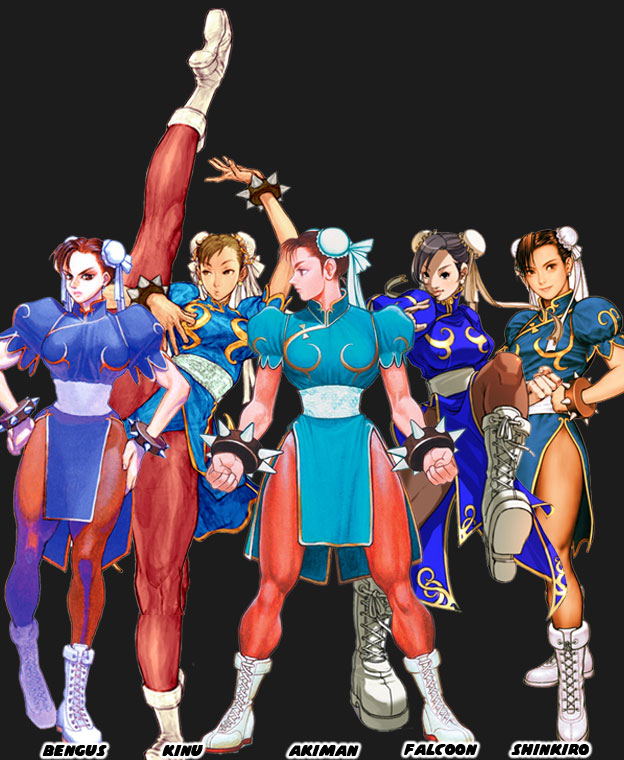
Aesthetics were critically important in fighting games. They were the visual cues that set each company apart. In the previous blog I showed that a number of games and studios were developing on the same graphics engine. This made the titles all look eerily similar whether they were made in Japan, the US or the UK. A great fighting game had to set itself apart from the competition. The longest surviving studios knew this. It was the reason why many companies hired teams of unique artists. Look very carefully at the way different artists, from within Capcom and outsiders, presented Chun-Li.


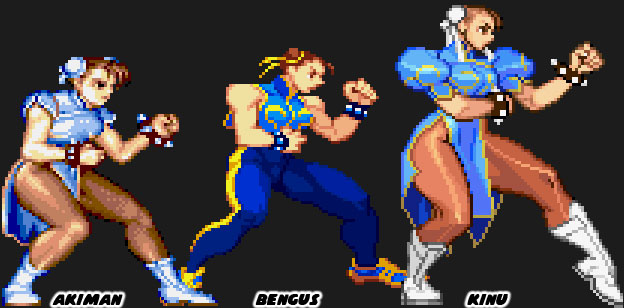
The costume was the same but the style varied widely from artist to artist. Perhaps one artist drew her make up and the other with none. Style also trickled down to the details. Things like how big the spikes on the bracelet should be, how tall her boots were, how slender Chun-Li’s waist was or how wide her thighs should be. All of these things depended on the artist. Once the artist finalized the designs they created turnarounds so they could see the character from all sides. These turnarounds were used for the official character guides. In this way every other artist and animator at the studio could be consistent. Back when fighting games were in 2D is was very easy to capture an artists’ individual style.


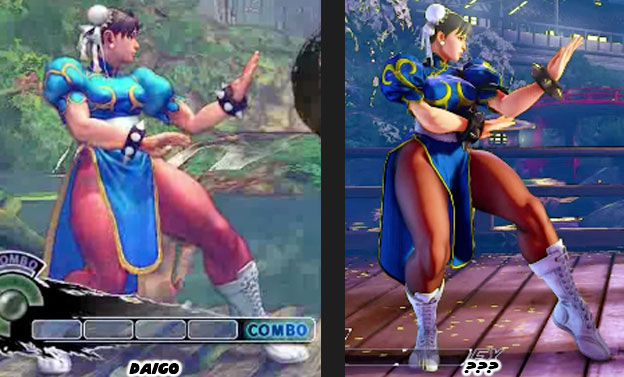
Once the game engines started going into 3D then things got much harder. The proportions used in 2D wouldn’t necessarily work in 3D without making the characters appear grossly disproportionate. This became more obvious as the entire Street Fighter cast was more swollen in SF IV. Suddenly Chun-Li looked like a tank. She was almost as wide as she was tall. This mass made sense for the burly Zangief but not for Chun-Li. Her increase in size didn’t really go with her lighting quick moves and it broke the player’s suspension of disbelief. This was especially obvious with the character Rufus, a man that was extremely fat yet moved as fast as Chun-Li. Capcom tried to pay more attention to aesthetics in Street Fighter V. They listened to the feedback that they got from the community and they slimmed down the cast. There was a difference in how Daigo Ikeno’s Chun-Li looked in SFIV and how the new version looked in SFV. Sorry but the name of the new lead artist escapes me. Capcom was moving in the right direction but I was surprised that they didn’t learn from the past a little bit sooner.


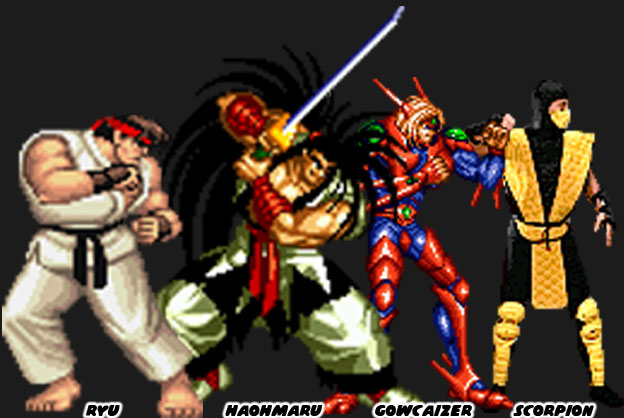
In the first wave of fighting games, during the early to mid-1990s, each studio had their own unique style. The games that were lost to time, titles like Fighters History and Martial Masters, copied the Street Fighter II aesthetic but failed to innovate the format. They didn’t do much in terms of new control schemes, moves or even character origins. Other studios like SNK and Midway learned that in order to stand out each game had to have a distinct visual style. All of the studios were using similar sprite technology but their aesthetics varied widely. Compare how different the lead characters were in Street Fighter II, Samurai Showdown, Voltage Fighter Gowcaizer and Mortal Kombat. The games were released within five years yet were vastly different in terms of aesthetics. Many fans simply commented on how great the graphics looked between games even if they were all built with comparable hardware and software.


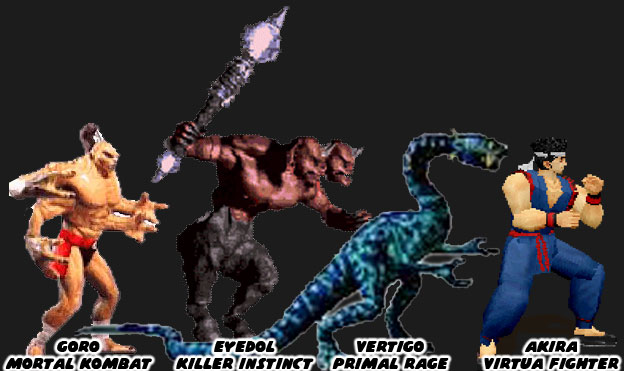
As technology evolved so too did the techniques used to build a fighter. Midway and Atari experimented with stop motion figures to create the monsters featured in Mortal Kombad and Primal Rage respectively. Rare began creating sprites out of high-end CGI workstations for Killer Instinct. Aesthetically speaking all of these games were very diverse too. Then Sega planted the seeds for the future of the genre, and the industry itself. They used a polygon-based graphics engine. It didn’t have the detailed backgrounds or high speed game play of the 2D titles but it did have an entirely new aesthetic. Clean, simple shapes, creating actual 3D objects that had weight, dimension and shape.


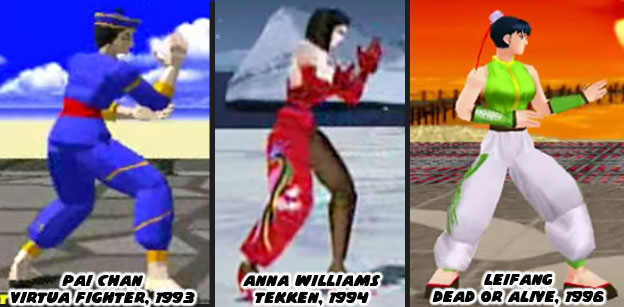
In the mid-90s other studios saw the potential of 3D engines. The technology could be applied in multiple formats and genres. Space shooters, racing games, RPGs, action titles and even platformers could all be done in 3D. When the studios began developing 3D fighting games it was as if they had reset the clock on aesthetics. Every studio was so focused on learning the new technology that they did not bother to push the envelope on aesthetics. The original 2D fighting games all stuck to the tropes. A karate master, a kung fu practitioner, a boxer and wrestler could all be guaranteed to appear in the early games. They were all drawn in a style that fell somewhere in between a Japanese animé or manga. The exact same tropes happened in 3D. There were some minor differences but think about how Chun-Li set the standard for the Chinese fighter. Pai Chan (and her father Lau Chan) was the first Chinese polygon star in Sega’s Virtua Fighter (1993). Her color scheme of blue with gold trim was very much based on Chun-Li. This set the template for the Chinese dress on Tekken’s Anna Williams (Namco 1994) and Dead or Alive’s Leifang (Tecmo 1996). The graphics were cutting edge at the time yet the aesthetics in the games were almost universal.


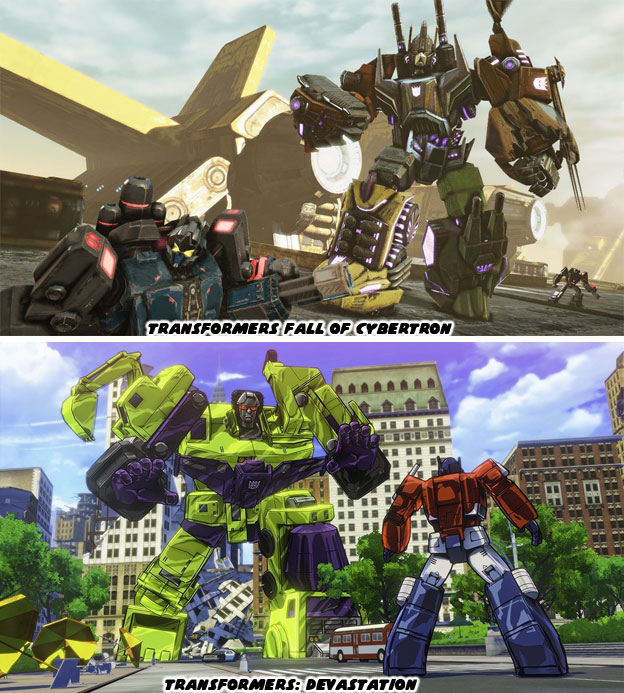
Think about how the majority of the fighting games today are built on the same graphics engine. Think about how the majority are using the same aesthetic. From Street Fighter IV to Injustice, every modern title was dark and gritty. It was as if the studios forgot everything they had learned in the ‘90s. How they forgot the importance of having a strong aesthetic. It stands to reason however, many of the new designers and developers were kids when the first fighting game boom happened. They are now programmers, artists and animators in their own right. They are recreating all the things they loved about their favorite games. This is where I present a challenge to them. Do not recreate what was great. Do not settle for what the graphics standards are now but instead carve out an entirely new path. Take a creative risk. Change up the format without erasing the original formula. Fighting games, and video games in general, are very much a visually based form of storytelling. Just because you are given the same tools as your contemporaries it doesn’t mean your games have to all look the same. Think about what makes an animé unique when compared to a CGI film. Think about the Transformer’s series of the ‘80s and the live action Transformers film of today. The reason that fans remembered the original was because of how unique it looked when compared to the western cartoons. Thirty years later when a western and eastern studio developed a 3D version of the franchise there was a striking difference between the aesthetic styles. One managed to capture the look of the animated series while the other looked like every other 3rd person shooter.


Be bold with your designs! Regardless of what surveys tell you simply know that the fans are there. They are waiting for something to change their perception. The market will follow those that take a chance. Street Fighter II was only the beginning of the revolution. Mortal Kombat, Samurai Shodown, Primal Rage, King of Fighters and Killer Instinct were some of the biggest risk takers. Their gambles didn’t always pay off but they gave audiences a reason to return. In doing so the market grew and grew. More people were playing fighting games because of the diversity in subjects and aesthetics. A good director knows when to push the envelope, when to challenge their designers. They know what things the audience expects and doesn’t. In the next blog we will look at the impact a good director and a strong aesthetic can have on the industry. As always if you enjoyed this blog and would like to sponsor me please visit my Patreon page and consider donating each month, even as little as $1 would help make better blogs and even podcasts!

 follow the Street Writer on Patreon!

Monday, May 1, 2017

Battle Fantasia, the great fantasy fighting games, final part...

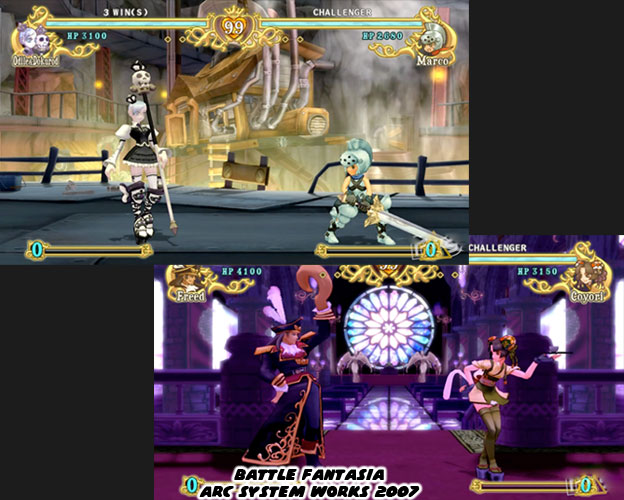
The final game in our series of fantasy fighters debuted a decade ago. Battle Fantasia was created by Arc System Works. The studio had been in business since 1988. In the early days they were contract developers for Taito, Sega, Atari, Namco and Capcom. They learned a tremendous amount from the industry by working on many major console adaptations. They had experience in racing games, brawlers, platformers and sports titles. When it came time to create their own games they were always very imaginative. Their biggest hits came from the fighting game arena. It stood to reason to, their very first project was a Sega Master System adaptation of Double Dragon in 1988. Being one of the first studios to see the popularity of brawlers first hand certainly stuck with the company. Battle Fantasia was a tribute to everything they had learned over the generations. Many gamers unfortunately slept on the title when it debuted in 2007. Looking back at it we can’t help but appreciate how innovative it was.


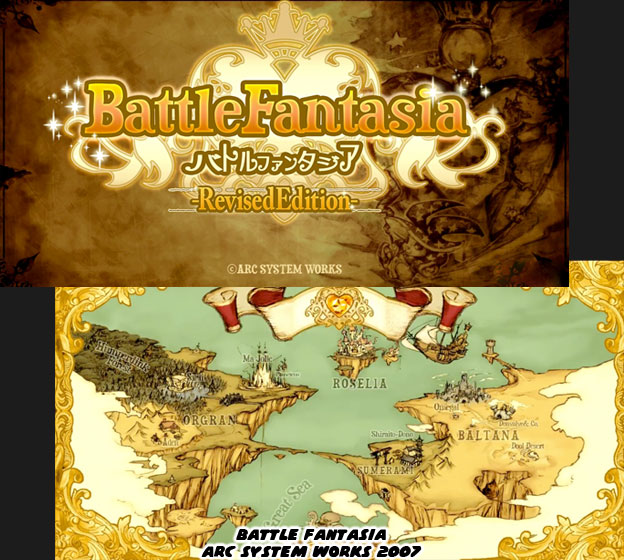
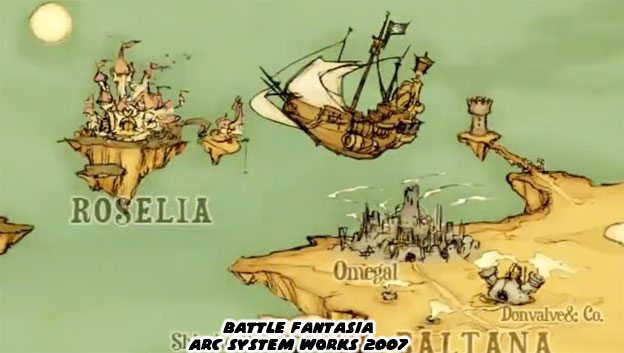
Battle Fantasia had all of the important elements that I had brought up over the course of the series. It was a Japanese take on a traditional western fantasy story. The setting, character classes, and mix of magic and medieval weaponry was something that most audiences would have expected. What no one could expect was how the Japanese were going to reinterpret the western tropes. As with other titles featured on the blog this game took us to a whole new world. This world had an origin, it had alliances, entire kingdoms, remote villages and uncharted territories. We were given a glimpse of the world in the loading screen. Each of the main characters came from a unique place on the map.


The game was meant to evoke images of classic fairy tales, as if you were looking at animated pages in a book. The soft colors, subdued lighting and animation style were very inviting, they were very family friendly. Arc System Works (ASW) tried very hard to make sure that each and every fighting game they created had its own unique style. When they worked on an IP owned by a different company they made sure that it was in the exact style of that publisher. For example the fighting game Persona 4 Arena maintained the look that Atlus director Katsura Hashino and designers Atsushi Watanabe and Azusa Kido had worked to create. When ASW developed Sengouku Basara X for Capcom they made sure that it carried the over-the-top sword-fighting mechanics that Koei had used in the original 3D brawler but with a new “Capcom-style” 2D aesthetic. When ASW developed Dragon Ball Z: Supersonic Warriors for the Game Boy Advance they maintained the look of the classic Akira Toriyama show and the familiar Super Nintendo adaptations. In many ways ASW was like a chameleon, able to adapt to the work of another studio without anyone noticing. However when they created their own IP things really stood out.


No other fighting game before or since looked like Battle Fantasia. The world created by ASW was perfect to get lost in. The characters were the types of heroes and villains we’d like to see return again and again. It was easy to fall in love with the game because of how unique this fantasy world was. It could never be mistaken for poaching the ideas of Games Workshop or any other western studio. I mean who else could have thought up of a knight carrying around a two-cylinder gas powered light saber? The title was directed by Emiko Iwasaki. She was one of the main artists behind Guilty Gear. If you know your fighting game history then you remember that in 1998 Guilty Gear was a breath of fresh air for the genre. It was completely unlike anything that SNK or Capcom had released, yet at the same time it honored their contributions to the format. Guilty Gear had the bold designs and weapons-based combat from SNK with the fluid animation and exaggerated proportions of a Capcom title. Guilty Gear and it’s spiritual successor BlazBlue were deeply rooted in an anime style but Battle Fantasia really stood apart for its storybook appearance.


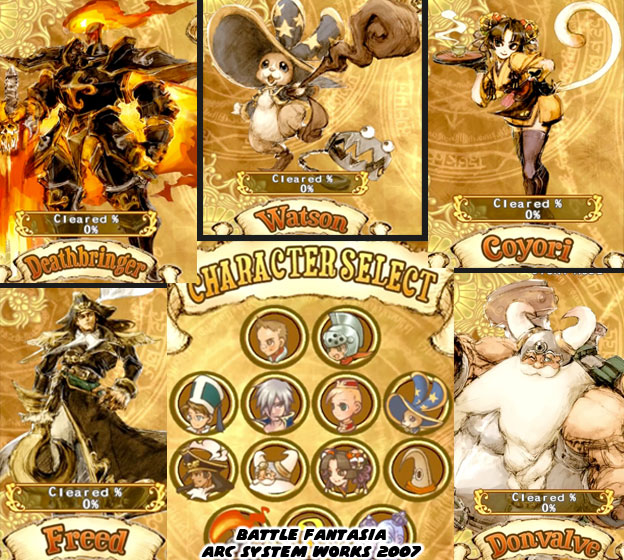
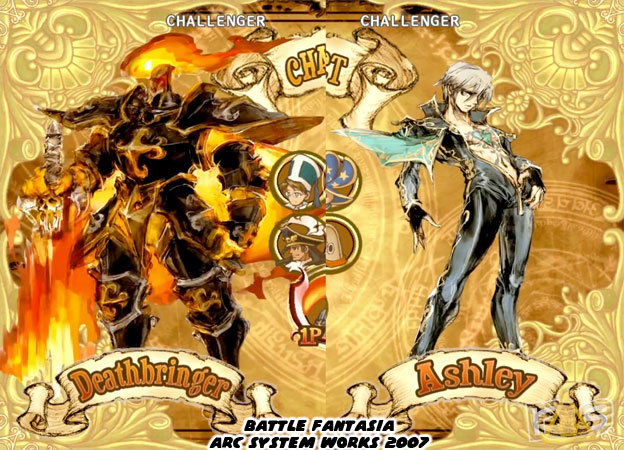
To be fair, the designs in Battle Fantasia did have a hint of the rockstar vibe that Guilty Gear was built on. Some of the men looked like feathery-haired models rather than the swollen barbarians you might expect from a western-produced RPG. Yet at the same time there were fear inducing monsters, covered in black armor occupying the same world. There were variations of the traditional classes of heroes and villains, knights, princesses, etc. Then there were maids, pirates, gunslingers and magical rabbits as well. Battle Fantasia covered a number of different classes and influences with a fresh perspective. The painted portraits on the character select screen captured the spirit that Emiko was going for.


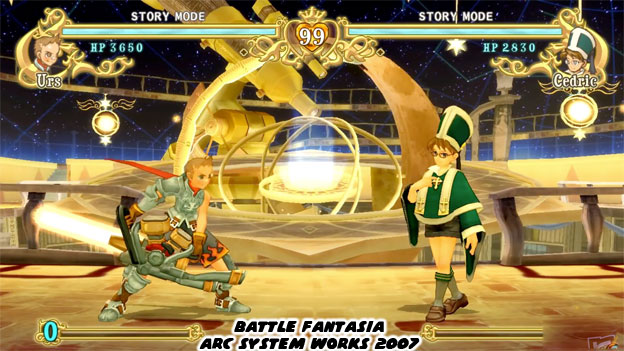
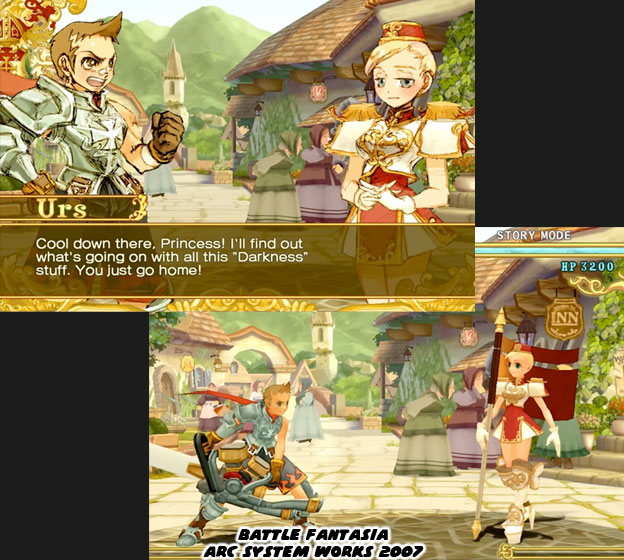
Battle Fantasia had multiple game modes as audiences had come to expect from a fighter. The story mode brought audiences in and allowed them to explore the different relationships in the game. It also allowed them to sink their teeth into a game that had more personality than most other titles. This game like several other ASW titles had a certain level of humor written into it. Characters could be sly or cheeky, their moves meant to reinforce their personality. Their in-game and cut scene animations showed a wide range of expressions. The young knight Urs carried a light sword that was equal parts magic and motor. He was brave but he could be a little bit clueless at times. Princess Olivia had a heart of gold but her daintiness did not stop her from being an exceptional fighter. Marco Van de Land, the younger brother of Urs, was among the smaller characters in the game yet deftly wielded a sword twice his size. There weren't many fighting games that I would ever call whimsical, Battle Fantasia was one of them.


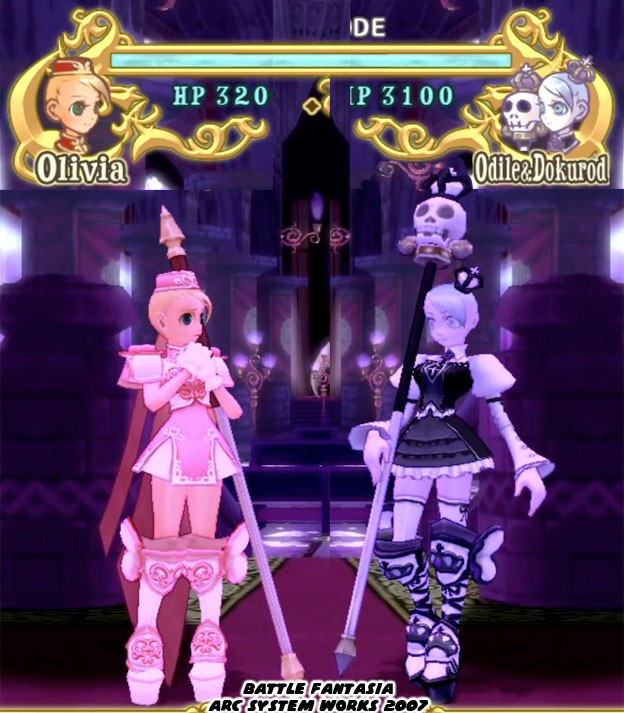
Arc System Works had been in the industry for a long while they knew the subtleties that every great fighting game needed. For example, every great fighting game had a cast of complimentary character designs. That is to say that there was a lot of symmetry when the studio was building a cast. The main characters often had a rival, sometimes a friendly rival like Ken and Ryu in Street Fighter. Sometimes they were bitter enemies, like Sub-Zero and Scorpion in Mortal Kombat. These rivals often had some sort of visual design that was a balance to the main character. Not every major studio knew about this idea or used the concept. Some studios eventually discovered the value of having new characters balance out the established fighters. They would add these characters in a sequel. Such was the case of Iori Yagami introduced as an evil rival for Kyo Kusanagi in the King of Fighters series. For Battle Fantasia it was the delicate Olivia getting balanced out with the chaotic Odile and her animated skeleton staff Dokurod. Olivia's design was rooted in "lolita" fashion rather than the traditional princess gowns in western games. Lolita clothing consisted of ruffled dresses, ornate petticoats and bright stockings worn by trendy Japanese girls. This fashion made its way overseas as did many things that young Japanese trendsetters did. Odile by comparison was clothed in "gothic lolita" fashion, substituting black and white for pastels and looking more grim in appearance.


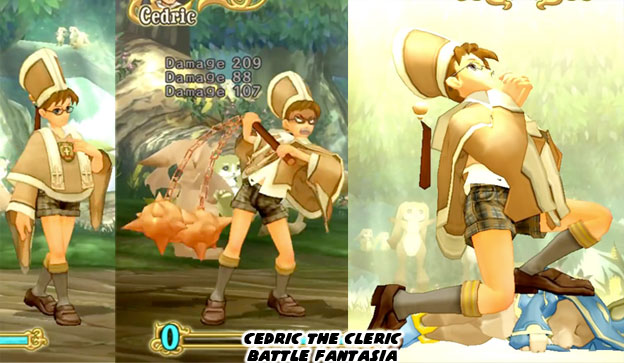
Arc System Works also knew enough about role playing game (RPG) tropes to include them in the game too. This game displayed hit points during attacks as they would have during a turn-based RPG. Each physical and magical attack did x-amount of damage. Characters that used healing spells would even recover x-amount of health. Most studios would simply whittle away at the opponents health or reward players points for long combo strings. The character classes that ASW introduced also revolved around the classic RPG tropes. Cedric for example was a cleric. He appeared bookish, sincere and very devout in his faith. He came across as a little bit snobbish and this rubbed Urs the wrong way. Yet beneath the charm of schoolboy-meets-healer was a vicious persona. When his faith was put to the test he fought with a spiked ball and chain and all manner of brutal techniques. His face twisted into an evil grimace as he flogged his opponents. Then to add insult to injury after each round he would kneel on top of his defeated opponent to offer a prayer. ASW was great at storytelling in every detail they added.


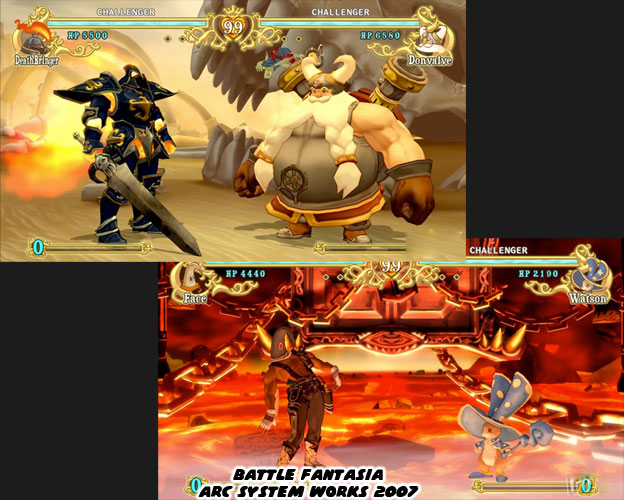
There were so many wonderful characters that I hadn't even mentioned. The cartoonish gun-toting outlaw Face, the massive inventor Donvalve, the magical rabbit Watson. These were the creative types of figures that first caught my eye. Sadly the game did not generate a lot of buzz. A reason for that had a lot to do with the decline of the arcade. There were few places to see, let alone play the game outside of Japan. Even then there were not a lot of new fighting games that would have brought in new crowd to try this out. Thankfully a year after it came out it was brought over to the Playstation 3 and Xbox 360. In 2009 it found its way onto PSN and in 2015 it was brought to Windows PCs with some additional balance. Each iteration helped shed more light onto this gem. While it did not achieve enough success to warrant a sequel it did have an impact on the development of future fighting games.


Arc System Works has always believed in the fighting game market. When many other publishers abandoned the genre they stayed with it. Through the years they demonstrated that a well designed fighting game could always generate a following. They did not always rely on licenses and established IP. They took chances and created new experiences along the way. Guilty Gear was an attempt at a new type of fighter. It was not set in any known time or place, but influenced by equal amounts hard rock and anime. Fans took notice of this game right away. Battle Fantasia was another grand experiment. Instead of using sprites, as they did with the original Guilty Gear, ASW was trying out 3D models on traditional 2D play mechanics. It was not the first but possibly most influential 2.5D fighter. They used textures, modeling and lighting effects to make the graphics appear like the concept paintings. They were able to have a game that played like a classic fighting game but with all new technology. This inspired Yoshinori Ono at Capcom to pursue development on Street Fighter IV. He revealed in a 2009 Gamasutra article that Battle Fantasia demonstrated that the formerly 2D character models wouldn't necessarily look weird in 3D. Battle Fantasia also served as a sort of introductory fighting game. It was not as difficult as some of the biggest titles had become. It was easy to pick up with no previous fighting game experience, yet with enough content to make it rewarding for veteran players.


I think that Battle Fantasia was just the start of something even greater. Arc System Works had big plans for this game just like the other fantasy fighting games I had talked about. Every studio I had mentioned was trying to build a franchise title. Those plans gave way to reality. The market was not ready, or not interested in what they were developing. This did not mean that the games were necessarily bad. Every studio big and small took a chance on a new type of fighter. They transported audiences to a new world. One which was far more interesting than the typical fighter. These worlds had histories, mythologies and heroes. These games put down a template that could be copied even today. The industry learned how magic, armor and leveling could work in a fighter. They saw how different technology would affect their graphics engines. They discovered that great storytelling could be applied even in the most action-oriented of genres. Battle Fantasia, like the games previously mentioned, deserved a second chance. I don't think of it as last great fantasy fighter, just the last one for a while. You never know where the next great fantasy fighter will come from. Soon enough a studio will decide that they are ready to tell a new story, to take another chance. Maybe it will be a free-to-play web game. Maybe it will be for a mobile device. In which ever shape or form it takes I will be eager to explore this new world. I hope that you will be willing to come along for the ride. Thank you for staying with me. Please leave a question or comment if you have enjoyed any entry in this series. As always if you enjoyed this blog and would like to sponsor me please visit my Patreon page and consider donating each month, even as little as $1 would help make better blogs and even podcasts!
 follow the Street Writer on Patreon!