Showing posts with label playstation. Show all posts

Wednesday, January 10, 2024

The return of a lost fighter? - A 1UP classic from October 16, 2008

Hello friends, what are you up to? Things could be better over here. I shouldn't have gloated about the brownies yesterday. It seems that karma does not like gloaters. I got a parking ticket at work because I forgot to display my staff permit. I'll see if the school can do anything about it since I am staff, only I forgot to put up the permit. Then at home one of the light sockets went out. It's another wiring issue in the old house and the money is running out before the family can do something about it. Going to have to squeeze the belt tighter to take care of things.

I'll just focus on videogames and my lawn before things get worse. The other day it was announced than another classic fighting game would return. Given the momentum that SF IV and KOF XII are generating it was only a matter of time before other fighters were resurrected. The weapons-fighting game Battle Arena Toshinden is coming back on the Wii. Kotaku stole the news from Famitsu about this release.

Despite getting four titles over it's lifespan, Toshinden was always a sub-par fighting game. It was proof that even the Japanese were not immune to cashing in on the fighting craze of the 90's. It played ugly and looked worse. It was slow and cumbersome, with music and sound effect that were laughable by early-90's standards. It truly was forgettable compared to the hits of the era.

Toshinden is almost lost to history but is actually more than a footnote in the era of fighters. It was the first 3D fighter to use weapons, it came out in 1994, a full year before Soulcalibur and one year after the debut of Samurai Spirits. Toshinden debuted in the same year as Tekken. It represented the changing tide of technology and in bringing arcade graphics to home consoles. Toshinden, like Tekken, were arcade titles and 1st generation Playstation games. They looked almost indistinguishable between home and arcade. The only problem for Toshinden was how bad it looked and played when compared to Tekken, Virtua Fighter or Samurai Spirits.

The only memorable things to come from the franchise were the character designs. Director Masami Obari and character designer Tsukasa Kotobuki had a field day creating animé-friendly, in some cases, bouncy-breasted archetypes. Feathery-haried, wafish protagonists with long swords swords battling oafish brutes with clubs. Funny how it pre-dated Final Fantasy VII by three years. Too bad that the designs and the actual polygon models were worlds apart. Perhaps the Wii is powerful enough to do a remake justice. We'll see as more news from this game develops. As always if you would like to sponsor me please visit my Patreon page and consider donating each month, even as little as $1 would help make better blogs and even podcasts!

follow the Street Writer on Patreon!

Wednesday, April 19, 2023

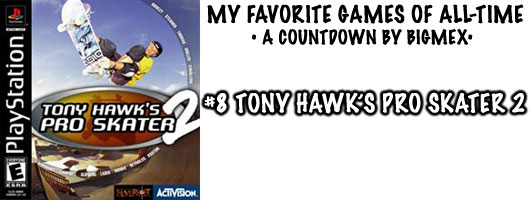
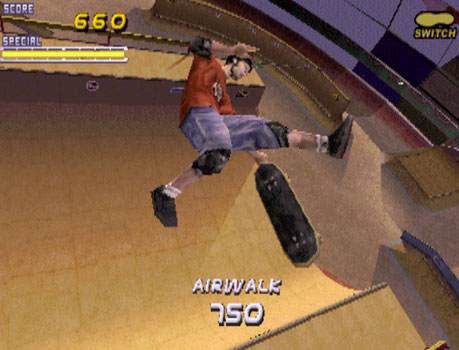
My favorite Games of All-Time #8: Tony Hawk’s Pro Skater 2 - Originally published on 1UP - June 30, 2006

Tony Hawk's Pro Skater 2 should be a videogame in everyone's collection. It doesn't matter if you are an RPG nut, sports fan, import snob, racing junkie, RTS kook or a FPS virtuoso. THPS 2 crosses genres and appeals to many types of gamers. It is the perfect balance of skateboarding culture and game.

There is never a reason not to own a copy of the definitive title in the series. The first game was groundbreaking, revolutionary, phenomenal and just about any other word you can think of to describe a title that completely rewrote the history books.

Neversoft put themselves on the map in 1999 with the release of the original Tony Hawk's Pro Skater. The game came out under the radar. But when combined with tremendous word of mouth and Tony Hawk landing the first 900 in competition helped turn the game (and the art of skateboarding) into a sensation.

A series usually takes a little time to find it's rhythm. For example Gran Turismo has only gotten better since the original. Some purists will tell you that very few games past the first are ever better. THPS 2 is the exception to the rule. No skate game before or since was better.

Tony Hawk's Pro Skater became successful because it appealed to both skaters and gamers. Gamers with no interest in skateboarding enjoyed the arcade feel of the title. They liked that they could learn the controls quickly and begin building a library of tricks and combos within minutes. Skaters that were casual gamers enjoyed the game because it offered the creativity and details of actual skateboarding. The names, tricks, animations and even skaters themselves pulled from real life.

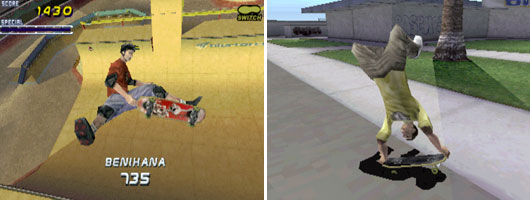
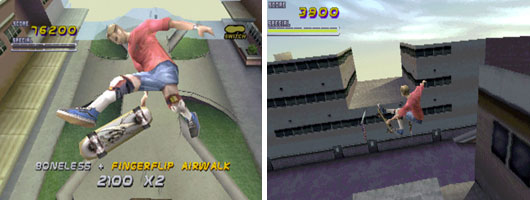
The sequel gave both gamers and skaters more of what they wanted and then some. The addition of the manual, allowed for trick chains to become longer and scores to go up exponentially. But this alone would not put the game on my top-10 list. The graphics were sharper, the music better, the characters larger, the control tighter, the trick library expanded, the animation more fluid and the details... well the devil was in the details. Detail is what carries this game into my top-10 favorites.

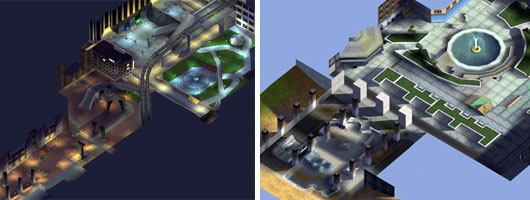
Each skater in THPS 2 had their own look and feel. Their personality shone through their special trick selection. We could see great differences in the way street and vert skaters handled on each area. Even the levels had their own personality. Parts of New York and Philadelphia made famous in skateboard videos turned up as an amalgamation for each level.

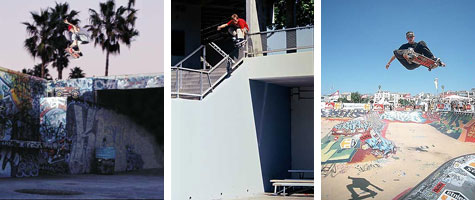
Neversoft managed to cater to all audiences in this game. Knowing that there was an actual Leap of Faith in San Diego, Venice Beach skatepark in Southern California or Mariseille skatepark in the south of France did not make the game any better for those that played. Even the inclusion of Skate Street, a real-world skatepark that many of the Neversoft crew frequented did not make the game more memorable.

The levels were important because they changed the psyche of the gamer. They changed the perception of the mainstream audience. The thought that real places like those featured in THPS 2 began to get players hyped on the world around them. Gamers would never look at a bench, a set of stairs and a rail in the same way again. Every block became a potential skate spot. The game made kids want to learn to skateboarding.

Skateboarding enjoyed a renaissance in the late 90's. ESPN says the X Games are partially responsible for that. Well, Tony and his games should also be allowed to take some of the credit.

I don't recall the last time a Madden game made a kid want to learn to play football... but skateboards became a magical vehicle, like a flying carpet, everyone wanted one. More important, everyone wanted to learn to ride, grind and kickflip everything in their path. Casual gamers learned that the world was a playground for pro skaters. The best never had to do anything else but skate and enjoy success. THPS 2 gave both a player editor and a park editor. There was no reason we could not live vicariously in Tony's world as well.

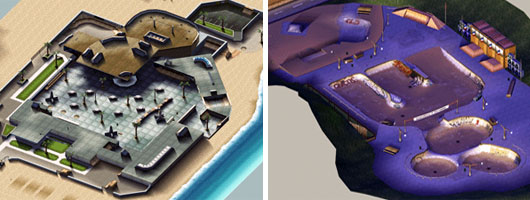
As a rule there will never be two levels as fun in a skate game as Venice Beach and Marseille. Both of these levels inspired by the real-world beauty of skating by the beach. Both of these locations legendary in skateboarding circles. Venice became famous for breeding the most technical and dirty skate rats around. As it was in the heyday of Dogtown as it is today, "locals only." On the other side of the globe many a pro cited Marseille as the greatest skatepark ever designed. With smooth concrete and lines that flowed for days. If anything Marseille was the complete opposite of Venice, whose harsh angles, cracked concrete and rough facade weren't organic at all.

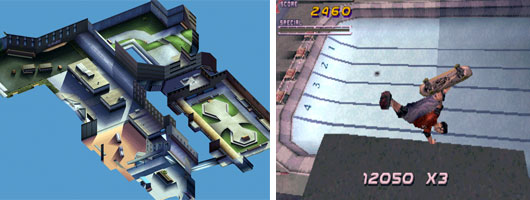
Neversoft took the genre a step further by introducing many hidden elements. The School II featured details from schools actually used in many skate videos. What made the level memorable was the hidden pool accessible only by grinding the "Open Sez Me" rail when the school bell rang. This hidden pool didn't show up in many maps and was unknown by many gamers for months. Try keeping a secret like that today!

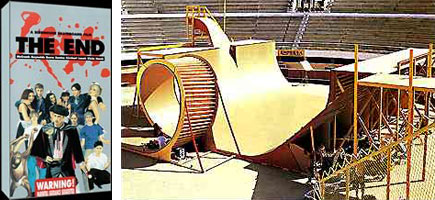
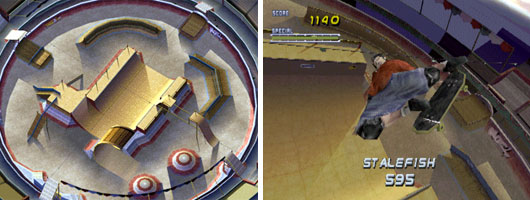
By the time THPS 2 hit Tony Hawk was at the top of his game and planned on going out of competitive skateboarding. Tony wanted to release a video with his absolute best stuff and then just walk away from competitions. This part was in the Birdhouse skateboard video "The End" released a half a year before THPS 2. In it Tony skates one of the largest ramps ever constructed for a video part. According to Tony the inspiration for the infamous "Bullring Ramp" was part Hot Wheels track and part Animal Chin. Neversoft didn't just recreate the ramp and the loop for the game, they also created an entire level around it.

The End was one of my favorite videos of all-time and seeing that ramp come back in game form almost brought a tear to my eye. The parks after that level, assuming you managed to get gold in every competition, were even more incredible. The best of which was Skate Heaven.

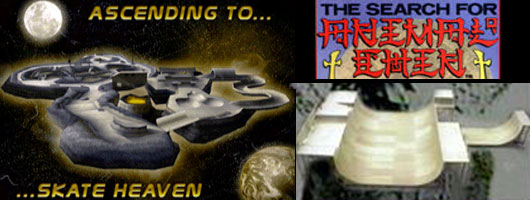
Skate Heaven features the best portions of parks that are no longer around. These include the plexiglas ramp that Tony Alva and the Z-Boys would skate in the early 70's, the snake run and full pipe from the Pipeline Skatepark, the Combi Pool from Del-Mar where toughest punks in skateboarding like Duane "the Master of Disaster" Peters would compete, the Kona ditches from Hawaii, the rail from San Dieguito elementary school and even Tony Hawk's backyard ramp from before his father passed away. They were all in one place.

All of these details, many legendary in the eyes of a skateboarder, defined the game. For that Neversoft would always have my respect. The legacy of the game would be cemented in the third hidden portion for the game (the second was in Marseille). A certain rail caused the volcano in Skate Heaven to erupt. If a player managed to jump into the volcano during the eruption they would be transported to the core of Skate Heaven. A ramp titled the "Enema Chen" and based on the ramp featured in the cult Powell Peralta skate film "the Search for Animal Chin" waited for them. As in the movie this ramp even featured a secret tunnel that allowed players to skate through to the other side.

Neversoft managed to put both the Bullring Ramp and the Animal Chin ramp in one game... I was completely blown away by their efforts.

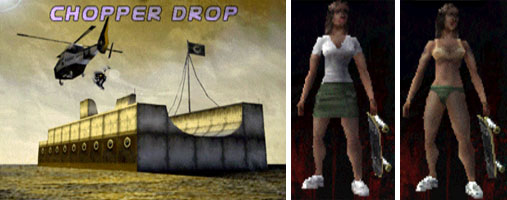
Other secrets included "McSqueeb," the way Tony looked like in the late 80's. Complete with bright pink shirt, knee-high socks and the (Flock of Seagulls) flop haircut. "Kid Mode" where all of the skaters could played as their childhood contemporary. The "Chopper Drop," a competition level floating on the ocean served as the other secret level aside from Skate Heaven.

After locating every "Blue Text Transfer" bonus in the game players were rewarded with every teenage boy's skateboarding dream gal, Private Carrera.

With every secret and playable level in THPS 2 Neversoft managed to make a skateboarding game more epic that Sega's Top Skater. If the control was not on par with the level design then the game would have been a bust. When I say Neversoft rewrote the history books I mean it. Without them the experience that was Top Skater would never have been brought home. It would have never been expanded and made better.

Neversoft is one of the most underrated game studios in the world. Many people might think of them as a one trick pony but it couldn't be further from the truth. I say they are as good as Incognito Inc. or Sony Santa Monica. While the latter studios were allowed to develop new IP, Neversoft has been pushing out sequels for one game under the watchful eye (and pressure) of publishing giant Activision. Lest anyone forget that Neversoft also created the original Spider-Man engine for the PS1 and Gun for the modern systems and PSP. They are a studio that is capable of so much more if given the chance.

I doubt that it was easy to make THPS2 and make it so well within a year of the first title. It is tough to improve upon perfection. Neversoft has not made a better skateboarding game since.

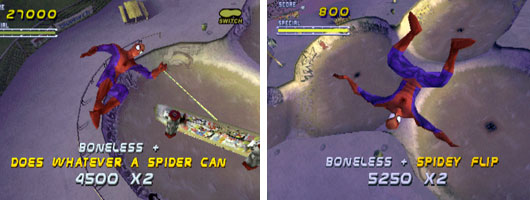
All of that praise said before I even mention that Spider-Man was also hidden in THPS 2! Any game great enough to break my top-10 is special. Any game from a US developer that breaks the top-10 is extra special. Tony Hawk's Pro Skater 2 is the greatest skateboarding game ever made. It will never fall from this spot. Believe it.

I’d like to hear your personal top-10, top-20, top fighting games, top sports games, or top games in any genre. Let me know in the comments section please. As always if you would like to sponsor me please visit my Patreon page and consider donating each month, even as little as $1 would help make better blogs and even podcasts!
follow the Street Writer on Patreon!

Friday, January 27, 2023

Learning how to tell a story from movies, and the studio that sold the Playstation to me

We’ve been going through a bit of personal history in the past couple of blogs. I’m going to keep digging in because these things definitely helped shape what I enjoy in my favorite forms of entertainment, and will tie back into my love of the God of War series. Bear with me please. All through my childhood repeatedly consuming games, comics, and movies made me aware of the types of stories I enjoyed. I learned the techniques that writers used to help shape a story thanks to my English teachers. I copied my favorite artists work hoping that I would pick up how they see the world. I’d rewatch movies on VHS, and later DVD to pick up how sometimes movie studios got things right, and sometimes they missed the point. It was easier to figure out what worked best when creating big budget projects. When movies were at their best it seemed almost easy to make a sequel. There were a lot of amazing sequels that my brothers, and I grew up with. I didn’t always believe in trilogies, and often wished that some stories ended sooner.
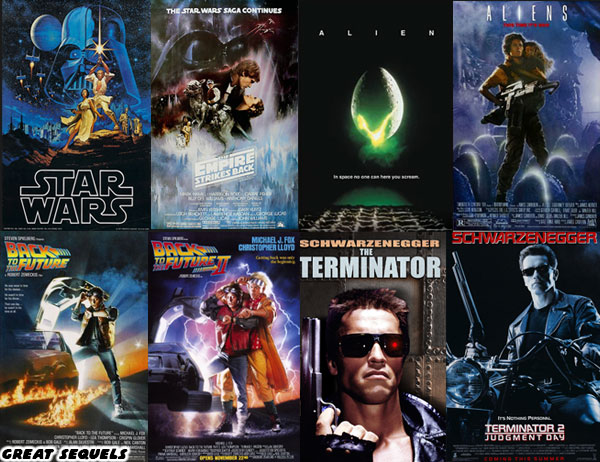
There were a few things that I thought made up great sequels. First is that the stakes had to be much higher in the next movie. It couldn’t simply be more of the same thing. Yes there had to be familiar elements, but the challenge had to be cranked up tremendously. From Alien to Aliens for example, Ripley went from surviving a single xenomorph in a horror film type setting to being an action hero against an army of xenomorphs. In Back to the Future II the original villain Biff completely changed history. It was up to Doc, and Marty to restore the timeline. In Terminator 2 the killer T-800 cyborg was sent back in time to protect Sarah Connor from an even more dangerous robot. Terminator 2, Aliens, and Back to the Future II were almost a complete reversals of the original movies. Audiences loved it, and to me the film series could have wrapped up then. My favorite blockbusters created heroes, and villains that I wouldn’t mind seeing for a movie, or two. Ripley, Sarah, or Marty would be fun to follow for a few adventures. However at some point I thought their story should wrap up. There were a few characters that seemed better suited for a series of adventures. People like Indiana Jones, or Rick O’Connell (the Mummy 1999) were the types of heroes that I thought could easily carry a series of films. The sequels could raise the stakes in unique ways, such as Indy being a father figure in the Temple of Doom, or helping his own father recover the literal Holy Grail in The Last Crusade. The video game equivalents of Laura Croft, and Nathan Drake were adventurers that we’d be happy to follow along with as well.
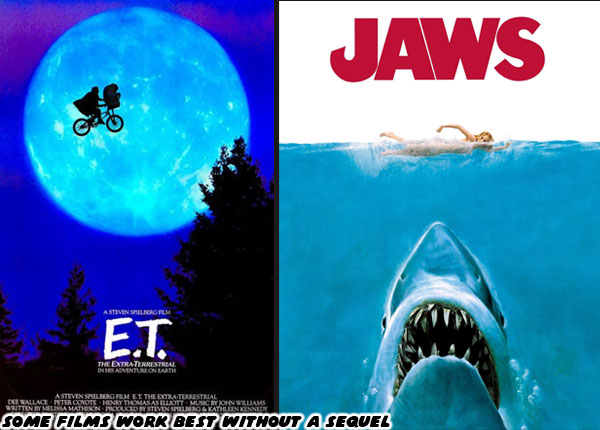
Then there were some films that I thought worked so well that they didn’t need a sequel. I’m forever grateful that E.T. never got a sequel despite calls to do this from the studio. That film wrapped up so well that there was nothing else that needed to be said. The pressure to revisit the property was tremendous, but thankfully Steven Spielberg stuck to his guns. He wanted to focus on original stories. Then there were films that didn’t really need a sequel. The Jaws films for example were nothing more than cash grabs from the studio. The most interesting characters in the original film died after all, those being the shark, and the shark hunter Quint. Even if Police Chief Brody, or ichthyologist Hooper turned up in other movies the plot, and chemistry couldn’t repeat the magic of the original. I applied what movies had taught me to the games I played. Did some games deserve a sequel? Or were they better as one-off experiences? If they did get a sequel then how did they raise the stakes, or completely rewrite the direction of the franchise? The leap from 16-bit pixel games, to the early stage of 32, and 64-bit polygons helped make sequels much stronger. Developers had a chance to expand on the worlds they wanted to create thanks to a bump in storage capacity, audio, and graphic technology.
We were blessed to have the several consoles while growing up. Our parents sacrificed a lot of time, money, and sanity making sure that they could keep their three boys happy. Starting with the Atari 2600, then every few years another console. The NES, Super Nintendo, Genesis, Saturn, GameCube, and Dreamcast to name a few. After the Genesis our parents made sure that my older brother, and I worked (part-time) to pay for our own games, and consoles. My younger brother was able to get out of that rule for a few more releases. None of us ever believed in console bandwagons. We knew that great games were on every platform. Nobody could claim to be the absolute best. We also knew that the best developers made the best games, regardless of hardware. Sony was the newest entry in the console wars, by having Namco bring arcade hits Tekken, and Ridge Racer to the Playstation helped us decide if we’d be spending money on it. Remember that 3D games were still relatively new for home consoles. Seeing polygons with textures, and higher frame rates than we had seen in the past was revolutionary. Although near arcade perfect adaptations helped sell the PS, it was actually original hits by independent studios that made the console matter to us. We started to notice that some studios really spoke to us. As if everything they did was gold. One of those was SingleTrac.
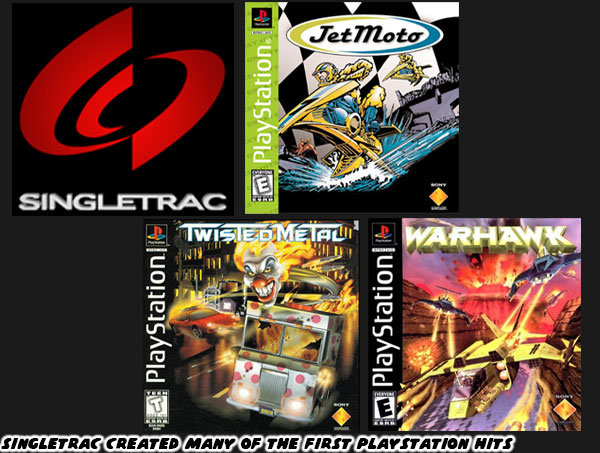
Three of the first games they released for the PS were amazing. Jet Moto, Twisted Metal, and Warhawk. Each of these games was an original idea, something new to the genre, if not carving out a new niche altogether. Jet Moto was a sci-fi racing game, Twisted Metal a vehicle combat game, and Warhawk an air combat game. Many early PS fans would remember WipeOut as Sony’s response to Nintendo’s F-Zero, but that wasn’t the only futuristic racer on the console. Jet Moto was as good, but at the same time a different kind of beast. The flying jet bikes went over land, and sea, allowing it to play like the best parts of Namco’s Ridge Racer, with Nintendo’s WaveRace 64. Warhawk was a futuristic air combat game, with a plane that could both fly, and hover. It found the balance between fighter jet, helicopter combat, and third-person shooter. Twisted Metal was a post-apocalyptic vehicle combat shooter. Of the three it was a breakout hit for the console. The graphics, control, sound, characters, levels, game play, and storyline were brilliant. They were a far departure from the mascot-driven games of the late ‘80s, and early ‘90s. The crazed contestants of the Twisted Metal tournament could never be mistaken for the friendly faces of Mario, Pac-Man, or Sonic. If there was something that SingleTrac understood better than their contemporaries was that audiences was getting older, and looking for more mature themes in their gaming.
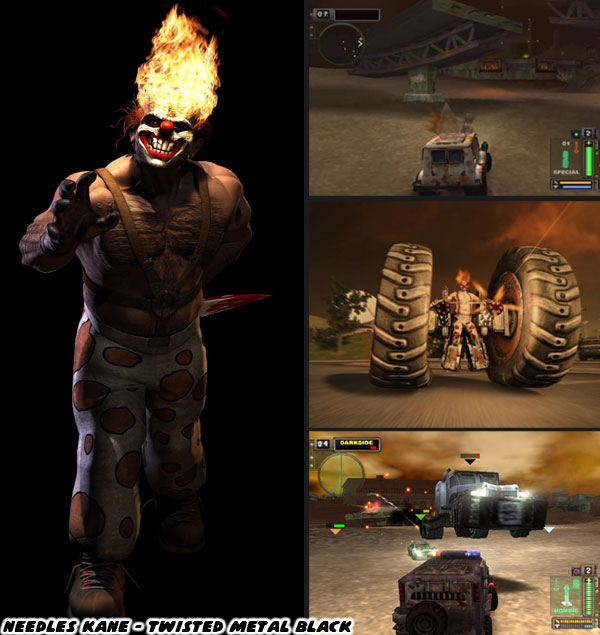
Twisted Metal, the most recognizable character Needles Kane, and his Sweet Tooth ice cream truck became synonymous with the console. For a while many fans, including Sony, considered him a mascot for their platform. The studio had a hit, and the sequel was even more amazing. New characters were introduced, the story was fleshed out, and every element of the game became better, and more polished. What happened next was Sony shooting themselves in the foot. Imagine how important it was to have a studio capable of cranking out so many memorable first generation titles, and all original so that Sony didn’t have to pay for an IP? You would think that Sony gave SingleTrac a massive budget to continue building hits. What actually happened was the publisher turned around, and gave the property to 989 Studios. 989 released the dismal Twisted Metal 3, and 4. The backlash against the game was almost instant from critics, and gamers. My brothers, and I could tell that the new studio was not at the same caliber of SingleTrac. We were sorely disappointed in what happened. Their version of the franchise was a sluggish, and ultimately forgettable mess. I talked about it extensively on an earlier blog when I compared what Sony did to Twisted Metal, to what SCI did with the Carmageddon game. In the end SingleTrac broke up, but from the ashes an even more amazing studio named Icognito Entertainment was born. Sony went back to the game creator, a guy named David Jaffe, and asked if they could develop a new Twisted Metal for their follow-up console the Playstation 2. David said yes, as long as they would get more creative freedom. Sony agreed, and the rest was history.
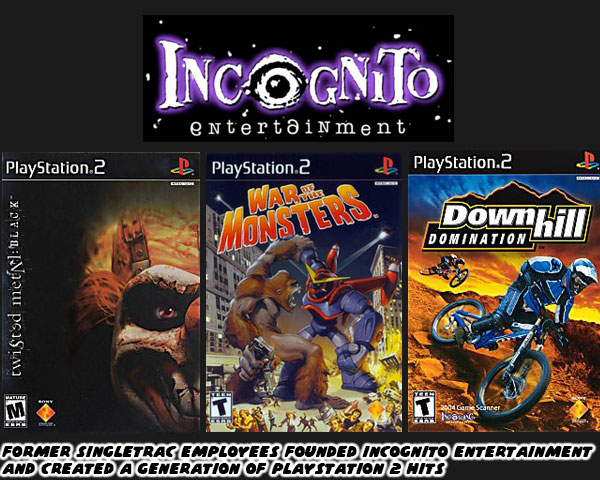
Twisted Metal Black was one of the darkest games seen in any generation. At the same time it was also one of the best PS2 games ever released. Jaffe, and the team knew better than most Hollywood studios on how to craft a sequel. They kept their content fresh, even when revisiting familiar themes. They added new faces to the lineup, upped the challenge, but made sure the game was still easy to pick up, and play. You didn’t necessarily have to have played the previous versions to get the most out of it. The studio once again demonstrated that they had the pulse of the audience. More so than just about any other studio in the industry. The Gen-X community that made up a huge portion of the video game market was entering adulthood, and they wanted their games to mature as well. Yes they still wanted a challenge, and they still wanted a diversity of traditional gaming experiences. But they also wanted the serious games to become more serious, or in the case of Twisted Metal, to become more over-the-top with the violence, and carnage. Incognito Entertainment was the second coming of SingleTrac. Every title they developed was completely new, and unique. They didn’t bother with nailing down an IP from any movie, or comic book. They didn’t copy what other studios were doing. The proof of was in their other PS2 games.
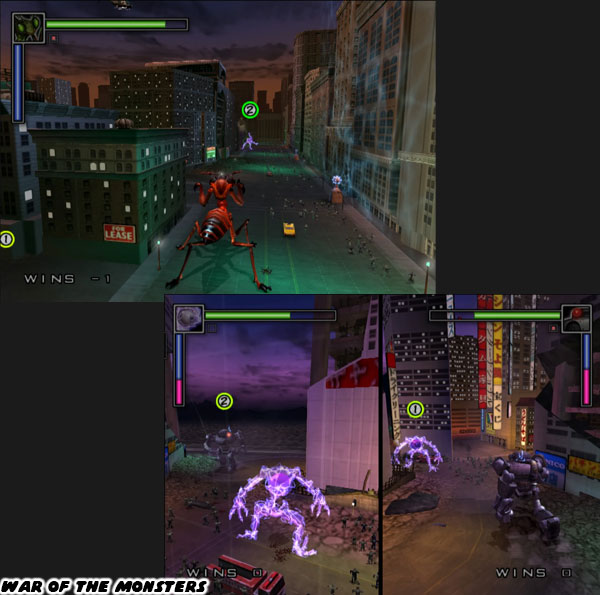
War of the Monsters was one of the greatest games for the Playstation 2. It showed off what the hardware was capable of from an animation, graphics, sound, music, and control aspect. It was easily one of my favorite games of all time. It was almost criminal how little buzz it generated from audiences, and critics. Jaffe, and the studio created a giant monster fighting game that played better than most 3D brawlers, and believe me when I say I’ve played almost every brawler that’s ever been released. None were as smooth, as memorable, or as addictive as what Incog Ent. had delivered. You might think a game without licensed giant monsters wouldn’t be any good, but by the lineup was inspired by a mixed theme of creatures from the golden age of monster films. We’re talking gigantic baddies from the ’50s, through the ‘70s. The studio was able to deliver archetypes from the US, the UK, and Japan. Yet somehow they all managed to work well together. It’s one of the few games that I sorely wish had gotten a sequel. It wasn’t the only critically underrated game that Incog developed.
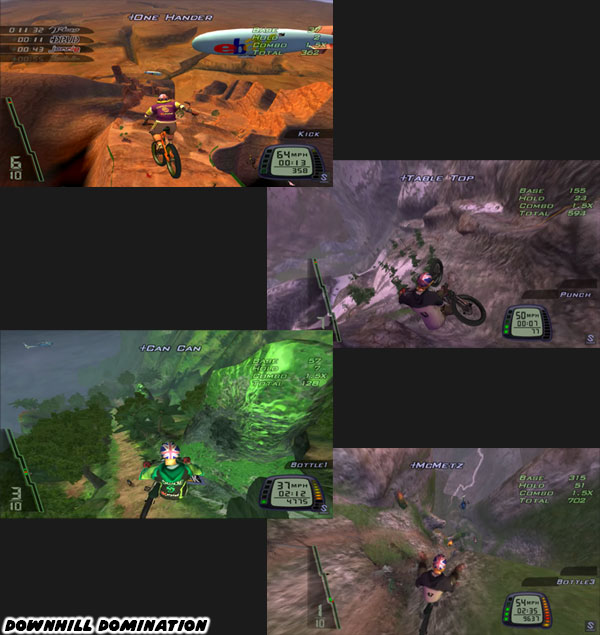
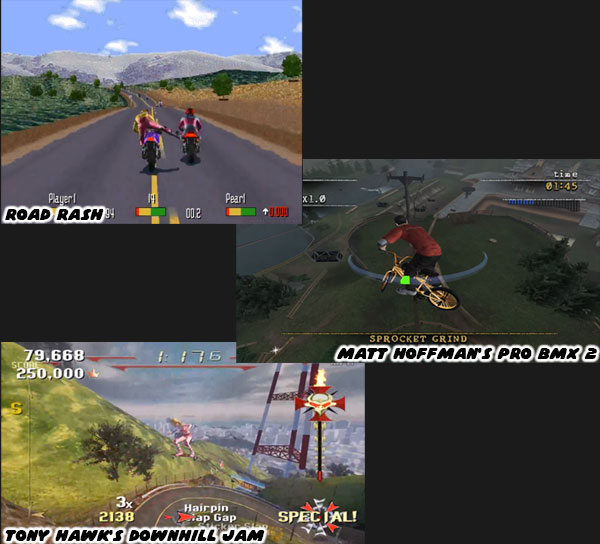
Downhill Domination was an arcade style mountain bike racing game. From a visual standpoint it was one of the best-looking PS2 games ever released. Players took riders down several mountain stages scattered all around the world. Incog got a chance to show off all the tricks they had been learning with the hardware. Every stage had a mix of different elements, terrain, and even weather. This included snow, gravel, dirt, grass, rocks, and even lava. Tracks were set along ski courses, they had waterfalls, and rivers running through them. You'd have to watch out for hikers, and wildlife scaling the mountain. There were tons of lines to find, and hidden paths down the courses. There was nothing as amazing as racing side-by-side with another maniac while trying to survive a lightning storm sparking a forest fire in your path. As if racing down a mountain wasn't challenging enough the computer opponents could kick, and punch you. You could return the favor, and earn upgrades like sticks, and bottles of water to throw at them. In order to earn better weapons, and sponsorship money you could perform freestyle tricks while racing. The enormous leaps you had down precarious cliffs gave you several seconds to perform all sorts of freestlye moves. Incognito had approached the racing genre with the same sort of creative freedom that went into JetMoto. The best way I could explain the brilliance of Downhill Domination would be to say it took the racing combat of Road Rash, the BMX freestlye tricks of Matt Hoffman Pro BMX, and the fun characters, and massive stages of Tony Hawk's Downhill Jam. It didn't do these things okay, in many ways it did these things better than the aformentioned games.
I was in awe of how wonderful each game the company developed turned out. The diversity, and game play they created over the years should never be understated. When I heard the studio was absorbed by Sony I was heartbroken. That meant I'd more than likely never see another War of the Monsters, Dowhnill Jam, or any other original idea. It would probably all be licensed IP, or sequels to other hits. I wouldn't mind the team creating another Twisted Metal, but that was up to the publisher now. I had little faith in Sony. Thankfully they proved me wrong with what they were working on. David Jaffe, and many of the team members he had worked with in the past were cooking up something new. It would be an action fantasy game the likes of which had never been seen before. The game was called God of War. I was not ready for it. We'll talk more about it in the next blog. Did you ever play any of the SingleTrac, or Ingonito Entertainment games? Did you have a favorite? Let me know in the comments section please. As always if you would like to sponsor me please visit my Patreon page and consider donating each month, even as little as $1 would help make better blogs and even podcasts!
follow the Street Writer on Patreon!

Friday, July 25, 2014

The Racing Tangent, part 1...

The West had not been sitting idly by letting the Japanese developers create all of the great racing experiences. Atari and Kee Games had been putting the first racing titles into arcades in the '70s. Of course Atari and Midway went on to publish and distribute some of the early Namco hits in the USA through the '80s. Atari though never stopped developing its own memorable titles. The single-screen Super Sprint series, which began in 1986, was one of the oldest arcade releases that had been adapted from black and white to color. It featured up to three human drivers and one computer-controlled car competing on a challenging and tight course. Players were rewarded for picking up wrenches on the race track, which they could use to upgrade the performance of their car in between races. It was one of the first games to offer that feature. Although it lacked the third person camera of Pole Position it was nonetheless a beloved series. The game was ported to multiple consoles and computers and got a follow up upgrade package for arcade owners. The company knew that sprite-based titles were on the way out and by the end of the decade they had released their first 3D title. Hard Drivin' from 1989 was an interesting hybrid of simulator and arcade racer. It was one of the first game to feature a clutch and even a key ignition. Players actually had to start their car before they could start playing and the car could even stall during the course. In Hard Drivin' players chose which path they wanted to drive on, either a road course or a stunt track with a full 360˚ loop. On the way players had to avoid oncoming cars and traffic. The game had very stiff force feedback steering and was one of the most authentic driving experiences ever created.


The studio followed up with Race Drivin' in 1990. The game had dramatically improved in the graphics department and the "Super Stunt Track" was a challenging course that few people could claim to have beaten. I practiced that course for a long while and could complete it and the follow-up race against the computer controlled rival "Helen Wheels." The game was completely unlike any of the Japanese-developed titles and that uniqueness drew me to it.. The company had a certifiable hit in the middle of the decade with San Francisco Rush in 1996. The game was ported to multiple consoles and was one of the first real 3D games to make the transition from arcade to home console. Its sequel Rush the Rock in 1997 was an even bigger hit. Proving that the US was in the running for memorable racing experiences. There was a trend that was developing from the West when it came to driving game. Developers did go through different racing genres and experiences, from sim to arcade. However the West seemed to infuse more action into their racers than the Japanese. It was as if decades of action movies and high speed pursuits and shootouts on TV shows had permanently changed the tastes of Western audiences. Going as far back as the Exidy game from 1976 named Death Race where players had to run over zombies in a graveyard. Of course I'm not a social studies major so it's just a random observation. Whatever the case studios in the US and the UK seemed to enjoy a bit more violence and action in their driving experiences. 

The original Playstation game Twisted Metal, released in 1995, pretty much set the bar for the vehicle combat sub-genre. There were vehicle combat games that came before and after and I might talk about those titles in some future blog. I want to focus on the non-weaponized racing experiences. There was another car-based hit from 1995 that was also on the Playstation. Destruction Derby was developed by Reflections and published by Psygnosis. The game was notable because it featured 3D cars that took damage and responded accordingly during the game. Too much damage to the body, frame or engine could result in overheating and slower performance. Of course too much damage would result in a complete breakdown. The game featured some spectacular crashes framed by a loud alternative rock soundtrack. By comparison the Japanese racing games featured pristine cars that no matter how much they slammed into each other or the course would take no damage. That school of design didn't change until Sega released Daytona USA in 1994. The stock cars would rarely finish a race intact. Fenders would be torn off, the door and trunk would be flapping in the wind. It was as if they were giving the West exactly the type of brutal racing that they wanted.


Reflections would go on to create the Driver and Stuntman series. Their work in 3D vehicle handling and damage was groundbreaking. In Stuntman audiences drove an entire host of vehicles that all responded accordingly. Cars could actually be tossed end over end and flipped upside down based on the severity of a crash. In many 3D games, especially those from Japan, it was all but impossible to turn cars over. To many developers an overturned car killed the game playing experience. These things may seem inconsequential today but were important for the evolution of the racing combat genre. Reflections may not be an important name to most audiences but they had predated the frenetic car chase physics in the Grand Theft Auto series by Rockstar / Take Two. The contribution by Reflections to the genre and the rise in high speed action racing wouldn't develop for another decade. Realism rather than reality helped make the impossible seem plausible in 3D games. Cars could take tremendous damage and keep on rolling. Audiences would actually turn out to see the carnage in these fictional worlds. The developer Stainless Software would release the cult PC/Mac hit Carmageddon in 1997. That game took everything that made Destruction Derby fun and threw in violence and gore by the bucketful. Carmageddon was set in a dystopian future, like Twisted Metal, where a tournament was held allowing race cars to earn points for killing other drivers as well as pedestrians. The cars were heavily armored but also very powerful. They could survive a fall off of a skyscraper and keep on running. If the players managed to land on a human or wipe out an entire row of them in the process they would earn "Style Points."


The content was so controversial that it was one of the games cited by the US Congress as the reason why video games needed to be censored. The gaming industry fought tooth and nail and developed a movie industry-like ratings system. Carmageddon went on to get a sequel which improved greatly in the 3D modeling arena. Drivers could smash through windows and their cars could fall apart and even split in half depending on how hard they crashed. Stainless lost the rights to publisher SCi. The following Carmageddon games were terrible and the series was pretty much over in the eyes of long-time fans. Almost 15 years later Stainless regained the rights and used Kickstarter to relaunch the franchise. This was celebrated in the community and considered a dark day for concerned parents everywhere. Aside from violence there was something else that the West looked for in videogames that wasn't exactly in tune with Japanese developers. The next blog will look at the shift in graphics once the world of gaming moved to 3D. If you would like to sponsor me please visit my Patreon page and consider donating each month, even as little as $1 would help make better blogs and even podcasts!
follow the Street Writer on Patreon!

Monday, July 14, 2014

The Ridge Racer Legacy, part 9...

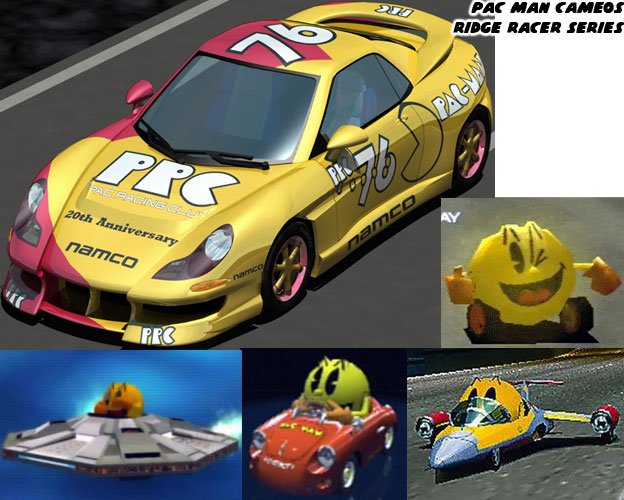
Namco was willing to reward the most diligent players with the occasional goody. They did it in Ridge Racer Revolution through the Galaga mini game but they really wanted players to earn the rarest of prizes in Ridge Racer Type 4. It was a daunting task for die-hard racing fans to unlock all 320 cars in R4. Those that did earned the greatest mascot-based car ever. A three-wheeled car shaped like the iconic Pac Man was the big surprise. Up until then Pac Man was simply referenced as a sponsor sticker or as the livery for an entire racing team but he had never appeared as an actual character. From that point forward Pac Man would appear in almost every sequel driving a unique vehicle. Whether it was a small coupe, a rocket sled or even a ship featured in Galaga or Xevious the legendary ghost chaser would help add some whimsy to the universe.

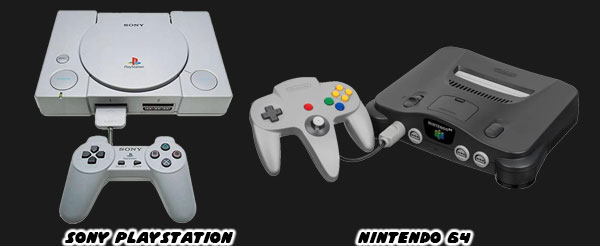
Sony was reaping the rewards of having Namco develop AAA titles for their console. It was enough to make the other manufacturers just a little bit jealous. Nintendo wanted to have a solid racing game of their own for the Nintendo 64 that was not a sequel from the in-house Mario Kart series. They tasked Namco to develop a version of Ridge Racer that would be as good as every other version but would fit on a cartridge. This was going to be a programming nightmare for the team at Namco. They had developed their own arcade engines, were among the pioneers of 3D technology in gaming and had found a way to translate the arcade experience to consoles.

As talented as they were they seemed to be tasked with the impossible. The N64 cartridges with the most capacity were 64MB while the smallest were 4MB. By comparison a CD-ROM could hold 650MB worth of data and left space for two dozen music tracks as well. The hardware was among the most complex to program for and even though Namco had developed some games for the console they had not tried anything as ambitious as a new version of Ridge Racer just for the console.

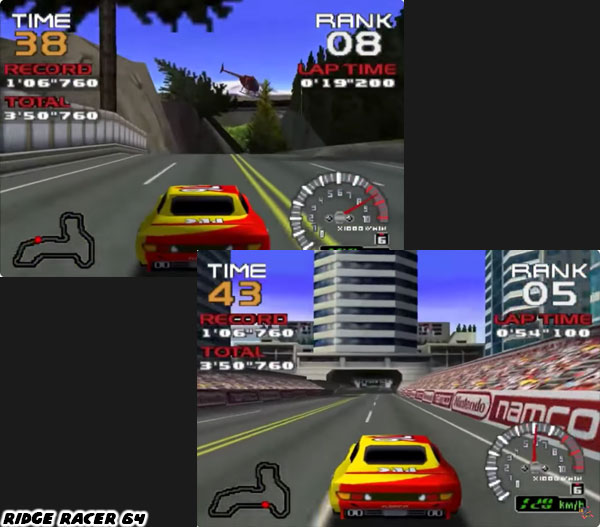
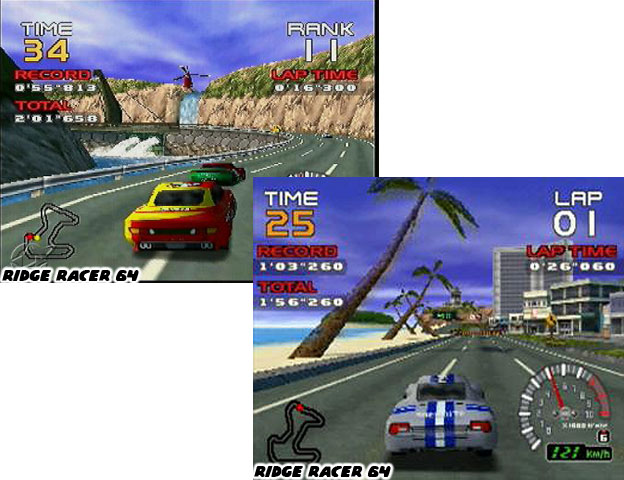
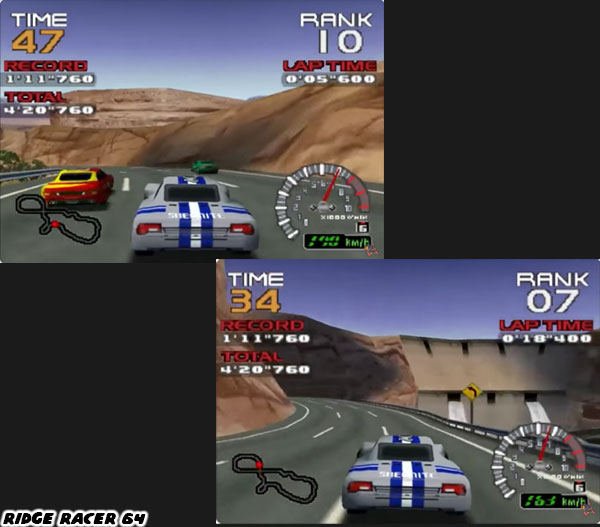
Published in 2000 Ridge Racer 64 was a brilliant title. It achieved fantastic visuals that were on par, and some would argue superior to R4. It didn't have the sheer number of cars of R4 but the 32 that were in the game and the collection of tracks from Ridge Racer and Ridge Racer Revolution including the exclusive desert Renegade track were nothing to sneeze at. It also had 10 fantastic music tracks that preserved the electronic traditions of other games in the series and even the option for 4-player racing. The system really got a chance to shine thanks to Namco as well as the programming talent of the DigiPen school (which Nintendo was a main benefactor of).

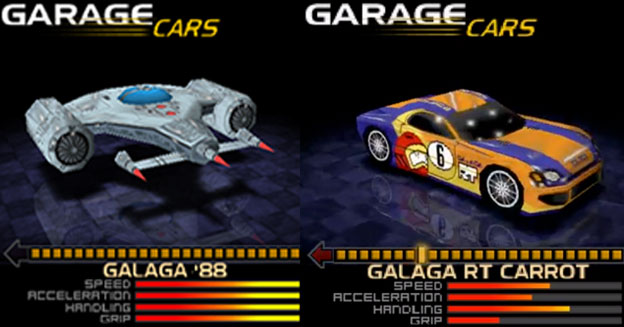
The title provided a genuine challenge for long time arcade gamers as well as console vets. There was nothing watered down about the experience. In fact Namco made sure to include a few surprises for audiences. The game included the classic Galaga '88 mini game and some of the cars featured the stickers and themes of classic arcade games. The biggest shocker were the "cars" that they hid in the game. The studio included the ghost Blinky from Pac Man and a Pooka from Dig Dug. Sony would have been upset if Pac Man had been placed in the game, to keep some sense of exclusivity they included the ship from Galaga '88 as the ultimate prize.

Players learned that they could destroy the competition with a spaceship that could accelerate in a flash, turn on a dime and had the fastest top speed in the game. Of course the trick was that players had to beat the ship in order to unlock it. The lesson learned from battling the Devil 13 all those years earlier had returned. Players had to race dirty and block the Galaga '88 at every opportunity and just stay ahead of it until the finish line.

The new millennium would see many changes with Ridge Racer. The next generation was coming out and Sony expected Namco to have a game ready in time for the debut of the Playstation 2. The new architecture and storage media would allow Namco to release a racing game for a home console that visually was on par with their best arcade efforts. It would be a chance to take back the bragging rights from Sega. But in order to do that they had to deliver a game worthy of the Ridge Racer legacy. The next blog will highlight the title that tried to change everything. As always if you would like to sponsor me please visit my Patreon page and consider donating each month, even as little as $1 would help make better blogs and even podcasts!
follow the Street Writer on Patreon!

Thursday, July 3, 2014

The Ridge Racer Legacy, part 2...

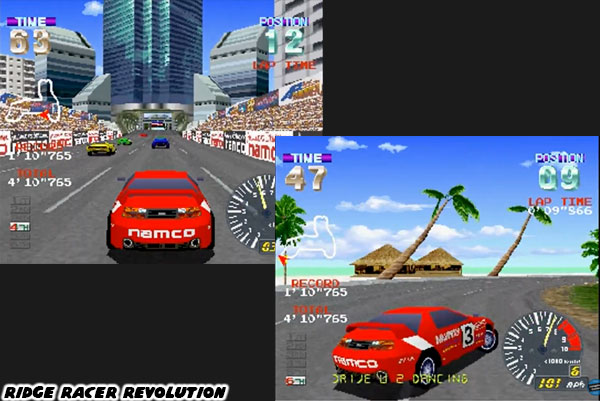
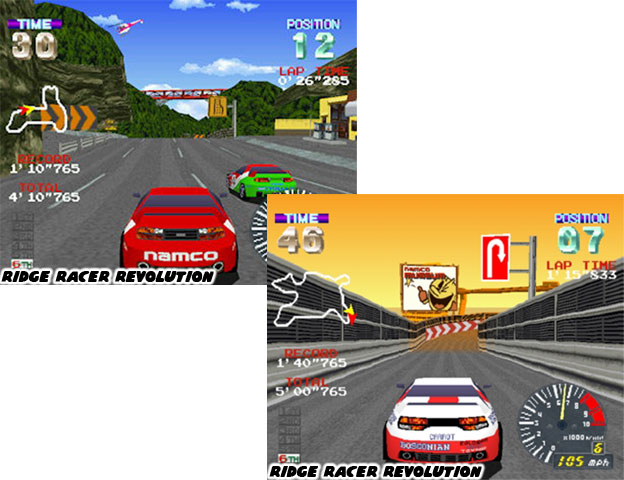
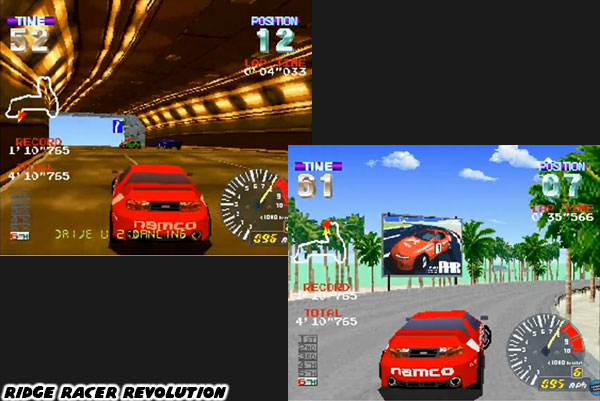
Many arcade manufacturers found that they could get into the console publishing business by adapting existing games. There was little change for many of the titles, in fact some of the teams learned simply to switch the code to allow for unlimited free play / continues on otherwise straight ports. The newly formed Ridge Racer Team at Namco decided that the best game they could debut would be a title that incorporated all of the elements of Ridge Racer 1 and 2 for the Playstation. The 1996 debut of Ridge Racer Revolution was similar to the arcade version in many instances. It featured the music from the games, the same track layouts, car selection and even identical map, gauge and position icons. It even saved fastest times per track and allowed players to enter their initials at the Game Over screen in true arcade fashion. At first it seemed like another direct arcade port. It was the layers of nuance that Namco added to distinguish it from every other Playstation release.

Ridge Racer Revolution featured all sorts of modes for players to unlock. Each of the modes made the game visually different and some more difficult. Players could play through the game with the familiar daytime lighting. Or they could try and race the courses in noon, evening and night modes. Each mode made less of the track visible and thus more difficult to navigate. The different daytime settings also came with changes in the music. The game caused the biggest stir with long-time arcade fans when Namco included a mini-game to make the loading times bearable. Namco had filed a patent on mini games during game loading screens that year which meant that the feature would most likely never show up again on any other console unless Namco was publishing it. The mini game was a stage from Galaga '88 featuring the classic arcade graphics and sounds. Normally there were four cars for players to choose from but it they managed to knock down all of the alien ships then an even dozen cars (these were the opponent cars) would become playable as well.

The Galaga series was iconic. It was one of the first space shooters that did well on both sides of the Pacific and a breakout hit for Namco. It was so well regarded in arcade circles that to this day some people argue that Galaga '88 was the finest shooter ever made. I wouldn't go so far as to say that but it was a fantastic surprise for racing fans to discover. That was not the only surprise waiting for audiences. If players managed to defeat all of the alien ships during the loading screen in exactly 44 shots then the Buggy Mode would be unlocked. The Buggy Mode made all of the cars short and stubby, basically it was a port of the Pocket Racers arcade game that I had mentioned previously on this blog.

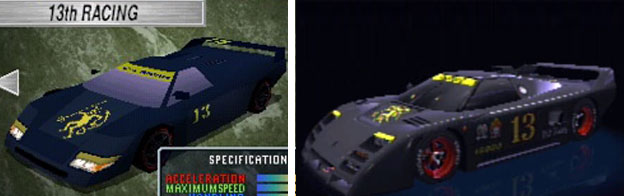
The game also featured a "boss battle" of sorts. It was one of the first racing titles to do that. In the arcade there was one car that could outperform every other class. The mysterious 13th Racing car, sometimes referred to as Devil 13, would wait for opponents on a dark track. It was actually a rare surprise for those players that managed to see it on the course. Like an urban legend a player would drive past a black race car parked on the side of the road. It had red wheels and a yellow devil logo on the hood. No sooner did a player pass it than they would see it appear in the rear view mirror, meaning that it could accelerate impossibly fast. Before the player knew it this car would fly past them. If it got far enough it would simply stop and wait at the side of the road where the player saw it the first time. It was a lopsided game of cat and mouse. No matter how well a player drove they could never escape the shadow of the Devil. The only way to beat the car was to use the rear view mirror and try to block it before it could pass. If the player stayed ahead before the finish line then they would unlock the car.

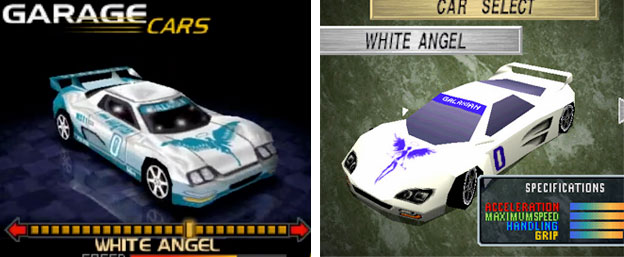
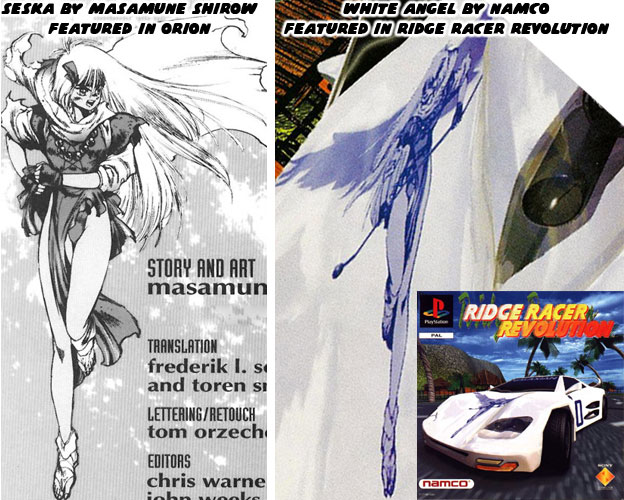
The reaction was very strong to the obscenely powerful race car. The Devil 13 would be revisited time and time again through the series, each time the car would be changed to make it more unique and aggressive. The Devil 13 was not the final surprise that Namco had in store for gamers. Just as they had mastered every course on the game and thought that they had unlocked every secret there would be something else that popped up to challenge them. Ridge Racer Revolution was the debut of the White Angel or the Angel 0 car as well. This car perfectly complimented the Devil 13 in almost every category. Players could challenge it by meeting the right criteria on the Intermediate Track but found that beating it was extremely difficult as well. Some players swore that the only way to beat the Angel was by using the Devil. Like the Devil 13 this car would get redesigned in future versions of the game as well. Both cars became symbolic as the most powerful racers in the game.

Die-hard car fans fell in love with these fictional vehicles. There was only one thing however that kept me from jumping on the bandwagon.When I saw the first Ridge Racer Revolution ad I was angry. The logo on the hood of the car was clearly mirrored from the character Seska as featured in the Orion manga. I grew up on the stories of Masamune Shirow and held him in very high regards. I spotted the misuse of his work right away. The thought that somebody would so blatantly steal one of his illustrations and try to get away with it upset me. Namco realized the error of their ways and redesigned the Angel logo for the next iteration of the game.

Despite my grievances I could be one of the millions of fans that could attest that the studio had given audiences far more than they expected, especially for an arcade port. Sega was doing amazingly well in the arcade but they would begin losing ground as the decade progressed. Despite the major difference in graphics between consoles and the arcade Namco was giving audiences a reason to stay home. It seemed lucky that the new Ridge Racer Team turned out to be more influential than the original. This was due to many factors, not the least of which were the car fans that still remained at the company. The full scope on why Ridge Racer would become an iconic series would not be understood for many years. The devil as the saying goes was in the details. Once players began to connect the dots they saw there was a divine hand at play as well. The next blog will look at the importance of finding Heaven and Hell in the Namco universe. As always if you would like to sponsor me please visit my Patreon page and consider donating each month, even as little as $1 would help make better blogs and even podcasts!
follow the Street Writer on Patreon!