We’ve been going through a bit of personal history in the past couple of blogs. I’m going to keep digging in because these things definitely helped shape what I enjoy in my favorite forms of entertainment, and will tie back into my love of the God of War series. Bear with me please. All through my childhood repeatedly consuming games, comics, and movies made me aware of the types of stories I enjoyed. I learned the techniques that writers used to help shape a story thanks to my English teachers. I copied my favorite artists work hoping that I would pick up how they see the world. I’d rewatch movies on VHS, and later DVD to pick up how sometimes movie studios got things right, and sometimes they missed the point. It was easier to figure out what worked best when creating big budget projects. When movies were at their best it seemed almost easy to make a sequel. There were a lot of amazing sequels that my brothers, and I grew up with. I didn’t always believe in trilogies, and often wished that some stories ended sooner.
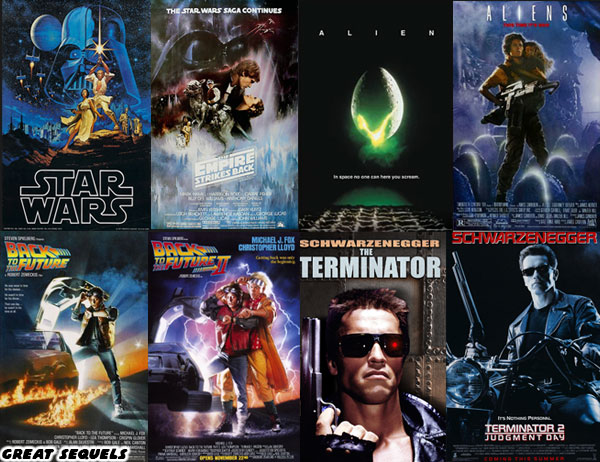
There were a few things that I thought made up great sequels. First is that the stakes had to be much higher in the next movie. It couldn’t simply be more of the same thing. Yes there had to be familiar elements, but the challenge had to be cranked up tremendously. From Alien to Aliens for example, Ripley went from surviving a single xenomorph in a horror film type setting to being an action hero against an army of xenomorphs. In Back to the Future II the original villain Biff completely changed history. It was up to Doc, and Marty to restore the timeline. In Terminator 2 the killer T-800 cyborg was sent back in time to protect Sarah Connor from an even more dangerous robot. Terminator 2, Aliens, and Back to the Future II were almost a complete reversals of the original movies. Audiences loved it, and to me the film series could have wrapped up then. My favorite blockbusters created heroes, and villains that I wouldn’t mind seeing for a movie, or two. Ripley, Sarah, or Marty would be fun to follow for a few adventures. However at some point I thought their story should wrap up. There were a few characters that seemed better suited for a series of adventures. People like Indiana Jones, or Rick O’Connell (the Mummy 1999) were the types of heroes that I thought could easily carry a series of films. The sequels could raise the stakes in unique ways, such as Indy being a father figure in the Temple of Doom, or helping his own father recover the literal Holy Grail in The Last Crusade. The video game equivalents of Laura Croft, and Nathan Drake were adventurers that we’d be happy to follow along with as well.
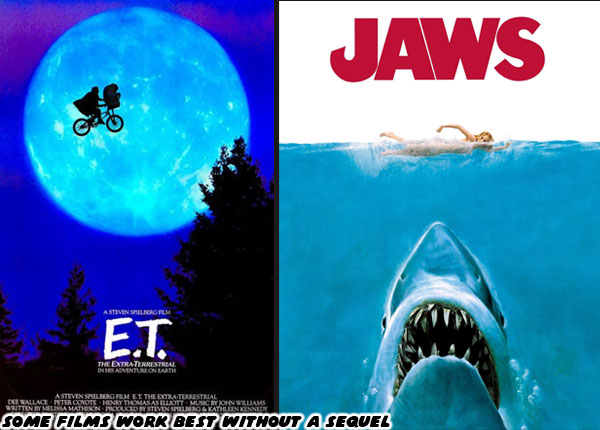
Then there were some films that I thought worked so well that they didn’t need a sequel. I’m forever grateful that E.T. never got a sequel despite calls to do this from the studio. That film wrapped up so well that there was nothing else that needed to be said. The pressure to revisit the property was tremendous, but thankfully Steven Spielberg stuck to his guns. He wanted to focus on original stories. Then there were films that didn’t really need a sequel. The Jaws films for example were nothing more than cash grabs from the studio. The most interesting characters in the original film died after all, those being the shark, and the shark hunter Quint. Even if Police Chief Brody, or ichthyologist Hooper turned up in other movies the plot, and chemistry couldn’t repeat the magic of the original. I applied what movies had taught me to the games I played. Did some games deserve a sequel? Or were they better as one-off experiences? If they did get a sequel then how did they raise the stakes, or completely rewrite the direction of the franchise? The leap from 16-bit pixel games, to the early stage of 32, and 64-bit polygons helped make sequels much stronger. Developers had a chance to expand on the worlds they wanted to create thanks to a bump in storage capacity, audio, and graphic technology.
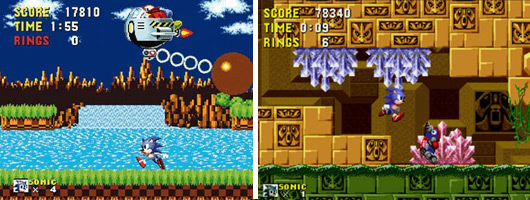
We were blessed to have the several consoles while growing up. Our parents sacrificed a lot of time, money, and sanity making sure that they could keep their three boys happy. Starting with the Atari 2600, then every few years another console. The NES, Super Nintendo, Genesis, Saturn, GameCube, and Dreamcast to name a few. After the Genesis our parents made sure that my older brother, and I worked (part-time) to pay for our own games, and consoles. My younger brother was able to get out of that rule for a few more releases. None of us ever believed in console bandwagons. We knew that great games were on every platform. Nobody could claim to be the absolute best. We also knew that the best developers made the best games, regardless of hardware. Sony was the newest entry in the console wars, by having Namco bring arcade hits Tekken, and Ridge Racer to the Playstation helped us decide if we’d be spending money on it. Remember that 3D games were still relatively new for home consoles. Seeing polygons with textures, and higher frame rates than we had seen in the past was revolutionary. Although near arcade perfect adaptations helped sell the PS, it was actually original hits by independent studios that made the console matter to us. We started to notice that some studios really spoke to us. As if everything they did was gold. One of those was SingleTrac.
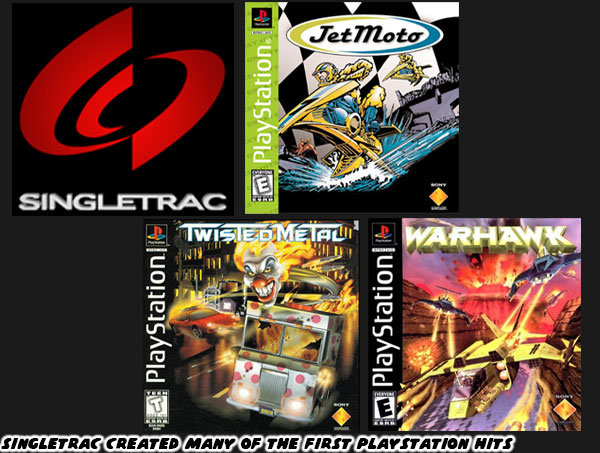
Three of the first games they released for the PS were amazing. Jet Moto, Twisted Metal, and Warhawk. Each of these games was an original idea, something new to the genre, if not carving out a new niche altogether. Jet Moto was a sci-fi racing game, Twisted Metal a vehicle combat game, and Warhawk an air combat game. Many early PS fans would remember WipeOut as Sony’s response to Nintendo’s F-Zero, but that wasn’t the only futuristic racer on the console. Jet Moto was as good, but at the same time a different kind of beast. The flying jet bikes went over land, and sea, allowing it to play like the best parts of Namco’s Ridge Racer, with Nintendo’s WaveRace 64. Warhawk was a futuristic air combat game, with a plane that could both fly, and hover. It found the balance between fighter jet, helicopter combat, and third-person shooter. Twisted Metal was a post-apocalyptic vehicle combat shooter. Of the three it was a breakout hit for the console. The graphics, control, sound, characters, levels, game play, and storyline were brilliant. They were a far departure from the mascot-driven games of the late ‘80s, and early ‘90s. The crazed contestants of the Twisted Metal tournament could never be mistaken for the friendly faces of Mario, Pac-Man, or Sonic. If there was something that SingleTrac understood better than their contemporaries was that audiences was getting older, and looking for more mature themes in their gaming.
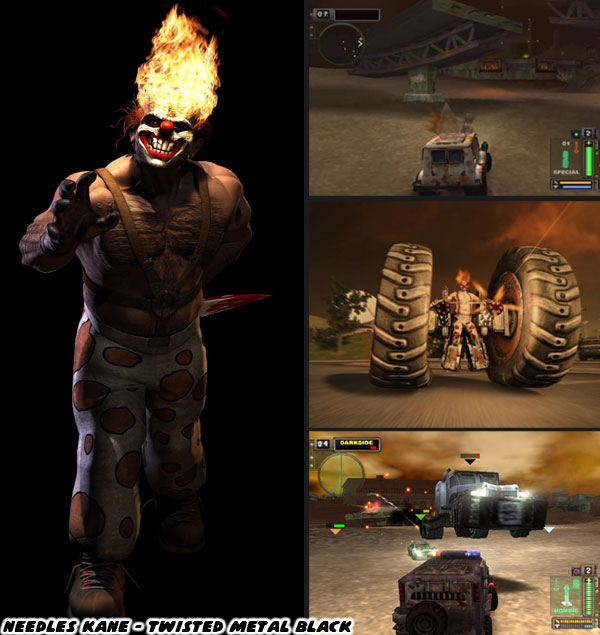
Twisted Metal, the most recognizable character Needles Kane, and his Sweet Tooth ice cream truck became synonymous with the console. For a while many fans, including Sony, considered him a mascot for their platform. The studio had a hit, and the sequel was even more amazing. New characters were introduced, the story was fleshed out, and every element of the game became better, and more polished. What happened next was Sony shooting themselves in the foot. Imagine how important it was to have a studio capable of cranking out so many memorable first generation titles, and all original so that Sony didn’t have to pay for an IP? You would think that Sony gave SingleTrac a massive budget to continue building hits. What actually happened was the publisher turned around, and gave the property to 989 Studios. 989 released the dismal Twisted Metal 3, and 4. The backlash against the game was almost instant from critics, and gamers. My brothers, and I could tell that the new studio was not at the same caliber of SingleTrac. We were sorely disappointed in what happened. Their version of the franchise was a sluggish, and ultimately forgettable mess. I talked about it extensively
on an earlier blog when I compared what Sony did to Twisted Metal, to what SCI did with the Carmageddon game. In the end SingleTrac broke up, but from the ashes an even more amazing studio named Icognito Entertainment was born. Sony went back to the game creator, a guy named David Jaffe, and asked if they could develop a new Twisted Metal for their follow-up console the Playstation 2. David said yes, as long as they would get more creative freedom. Sony agreed, and the rest was history.
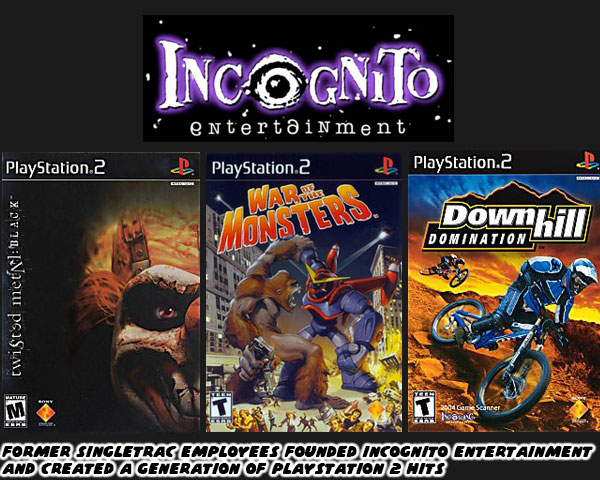
Twisted Metal Black was one of the darkest games seen in any generation. At the same time it was also one of the best PS2 games ever released. Jaffe, and the team knew better than most Hollywood studios on how to craft a sequel. They kept their content fresh, even when revisiting familiar themes. They added new faces to the lineup, upped the challenge, but made sure the game was still easy to pick up, and play. You didn’t necessarily have to have played the previous versions to get the most out of it. The studio once again demonstrated that they had the pulse of the audience. More so than just about any other studio in the industry. The Gen-X community that made up a huge portion of the video game market was entering adulthood, and they wanted their games to mature as well. Yes they still wanted a challenge, and they still wanted a diversity of traditional gaming experiences. But they also wanted the serious games to become more serious, or in the case of Twisted Metal, to become more over-the-top with the violence, and carnage. Incognito Entertainment was the second coming of SingleTrac. Every title they developed was completely new, and unique. They didn’t bother with nailing down an IP from any movie, or comic book. They didn’t copy what other studios were doing. The proof of was in their other PS2 games.
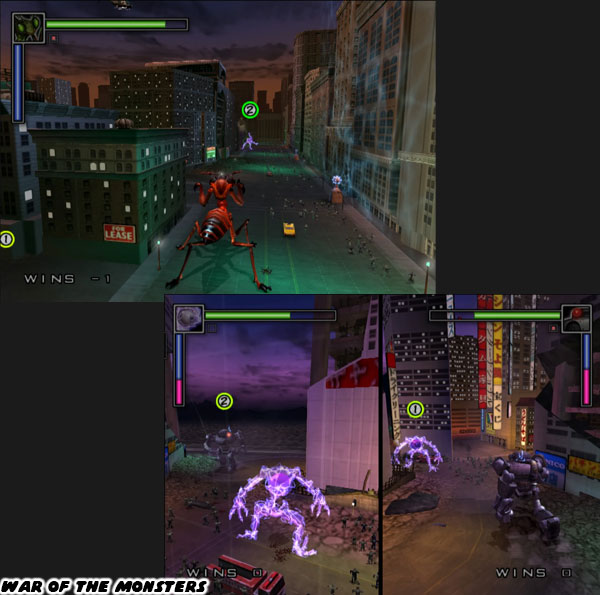
War of the Monsters was one of the greatest games for the Playstation 2. It showed off what the hardware was capable of from an animation, graphics, sound, music, and control aspect. It was easily one of my favorite games of all time. It was almost criminal how little buzz it generated from audiences, and critics. Jaffe, and the studio created a giant monster fighting game that
played better than most 3D brawlers, and believe me when I say I’ve played almost every brawler that’s ever been released. None were as smooth, as memorable, or as addictive as what Incog Ent. had delivered. You might think a game without licensed giant monsters wouldn’t be any good, but by the lineup was inspired by a mixed theme of creatures from the golden age of monster films. We’re talking gigantic baddies from the ’50s, through the ‘70s. The studio was able to deliver archetypes from the US, the UK, and Japan. Yet somehow they all managed to work well together. It’s one of the few games that I sorely wish had gotten a sequel. It wasn’t the only critically underrated game that Incog developed.
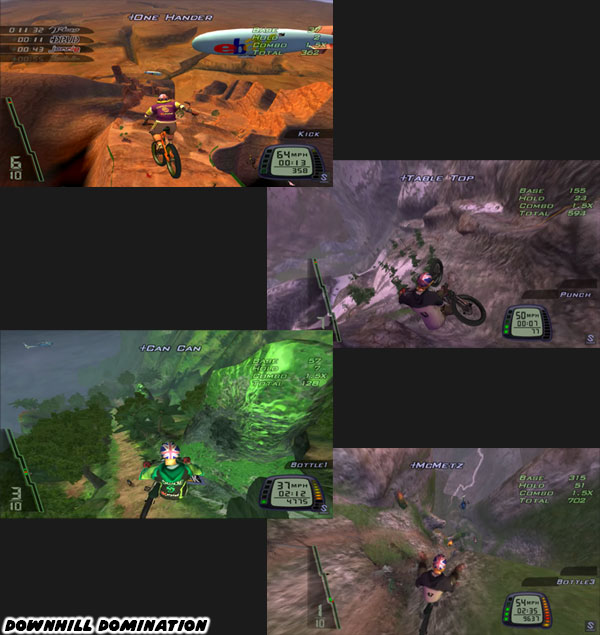
Downhill Domination was an arcade style mountain bike racing game. From a visual standpoint it was one of the best-looking PS2 games ever released. Players took riders down several mountain stages scattered all around the world. Incog got a chance to show off all the tricks they had been learning with the hardware. Every stage had a mix of different elements, terrain, and even weather. This included snow, gravel, dirt, grass, rocks, and even lava. Tracks were set along ski courses, they had waterfalls, and rivers running through them. You'd have to watch out for hikers, and wildlife scaling the mountain. There were tons of lines to find, and hidden paths down the courses. There was nothing as amazing as racing side-by-side with another maniac while trying to
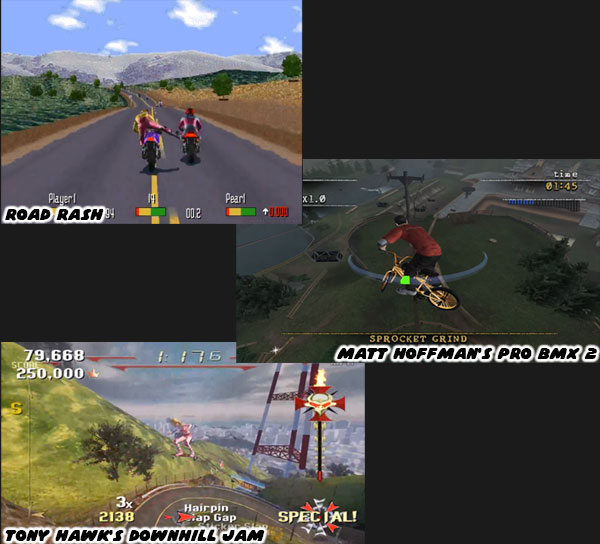
survive a lightning storm sparking a forest fire in your path. As if racing down a mountain wasn't challenging enough the computer opponents could kick, and punch you. You could return the favor, and earn upgrades like sticks, and bottles of water to throw at them. In order to earn better weapons, and sponsorship money you could perform freestyle tricks while racing. The enormous leaps you had down precarious cliffs gave you several seconds to perform all sorts of freestlye moves. Incognito had approached the racing genre with the same sort of creative freedom that went into JetMoto. The best way I could explain the brilliance of Downhill Domination would be to say it took the racing combat of Road Rash, the BMX freestlye tricks of Matt Hoffman Pro BMX, and the fun characters, and massive stages of Tony Hawk's Downhill Jam. It didn't do these things okay, in many ways it did these things better than the aformentioned games.
I was in awe of how wonderful each game the company developed turned out. The diversity, and game play they created over the years should never be understated. When I heard the studio was absorbed by Sony I was heartbroken. That meant I'd more than likely never see another War of the Monsters, Dowhnill Jam, or any other original idea. It would probably all be licensed IP, or sequels to other hits. I wouldn't mind the team creating another Twisted Metal, but that was up to the publisher now. I had little faith in Sony. Thankfully they proved me wrong with what they were working on. David Jaffe, and many of the team members he had worked with in the past were cooking up something new. It would be an action fantasy game the likes of which had never been seen before. The game was called God of War. I was not ready for it. We'll talk more about it in the next blog. Did you ever play any of the SingleTrac, or Ingonito Entertainment games? Did you have a favorite? Let me know in the comments section please. As always if you would like to sponsor me
please visit my Patreon page and consider donating each month, even as little as $1 would help make better blogs and even podcasts!