Showing posts with label destruction derby. Show all posts

Wednesday, March 9, 2016

Building a gaming legacy, the Games Workshop series, part 11...

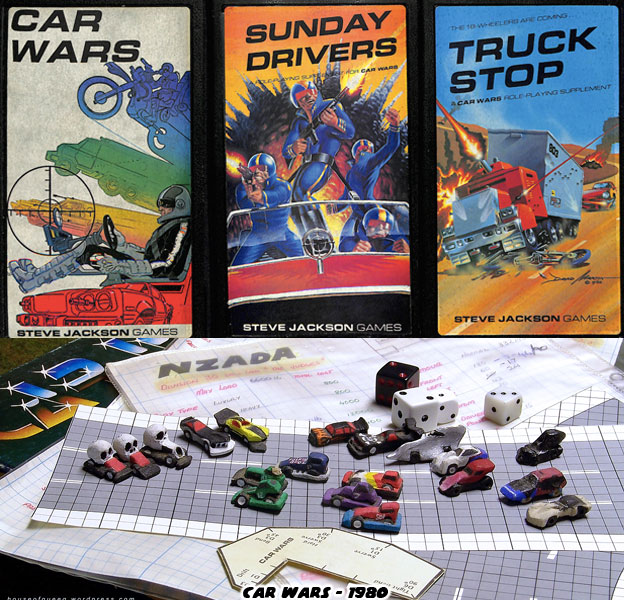
A few blogs back I mentioned that Adeptus Titanicus, the system created by Games Workshop to introduce Titan warfare to the public was a response to the wildly popular Battletech system by FASA. It wasn't the first time nor would it be the last time that Games Workshop had to cater to the trends in tabletop gaming. Another system that Games Workshop studied was among the oldest car combat systems around. In 1980 Steve Jackson Games released a system called Car Wars. It was set in a dystopian future where vehicular combat was the norm. People specialized in combat, offered their services as patrol officers, mercenaries, transports and assassins. Car combat had become so popular that it was even organized at the professional level and turned into a sport. Steve Jackson was a well regarded developer of many gaming systems. He and his team would create games on a variety of topics. They would develop clean and simple rules and release the games in hobby stores.


The genius of the Steve Jackson Games was in the designs themselves. Steve was a master of clean design and trusted his audience to fill in the details with their imagination. The majority of his games and components could be printed on paper or cardstock. This kept the prices low and allowed him to sell bundles of games and expansions in small plastic sleeves, no bigger than a deck of playing cards. The audience only needed some dice and a pencil to handle the combat and management system of the games. Car Wars and the reviewed version known as Autoduel would be no different from his other systems. Players could use small tokens to represent their cars or even model some Micro Machines for the job and keep them in the case. Each expansion that Steve developed helped flesh out the world of Car Wars. There were scenarios that could be explored, including the ever popular escort missions. New vehicle types would be added, new weapon rules would be created and there was a solid sense of balance between the heavily armored trucks and the small motorcycles. Best of all Steve would continue to support the system in the pages of Autoduel Quarterly. The small magazine introduced more scenarios, weapon types and vehicles. On the back page there were templates for roads, hazards and obstacles. These could be photocopied and cut out to keep the game fresh. The Steve Jackson Games were among the first to permit some of the content to be copied and distributed. We take it for granted these days thanks to public licenses and internet distribution but this was a revolutionary concept back in the '80s. Since every company was struggling to make a profit it didn't make sense to give away some of your best ideas. That was what made Steve Jackson such a respectable developer and helped spread his games through the community.
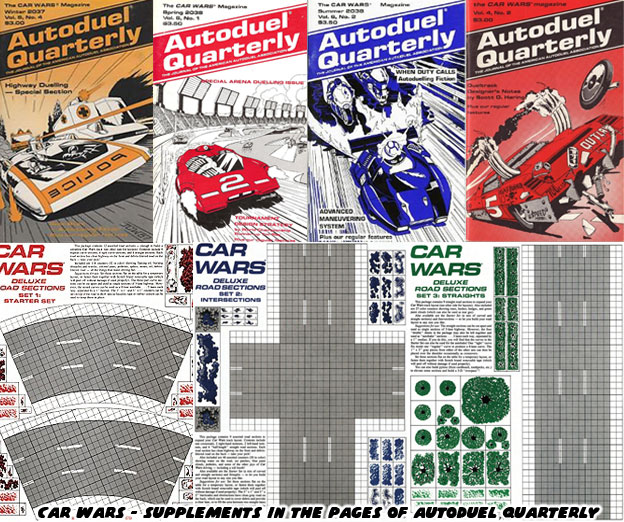

I enjoyed Car Wars for the world that Jackson had created. It was not as bleak as the world of Mad Max or The Road Warrior, the 1979 film and its 1981 successor. The George Miller films were the basis for just about all modern car combat franchises. Instead Car Wars had a sense of futurism. Cars were computer piloted, had engines that ran on diesel, gas, rocket fuel, batteries or hybrid technology. GPS navigation, camera systems and self-healing tires were standard. His team predicted everything that DARPA, Tesla, Google and the other auto manufacturers would dream up 30 years later. The art that was featured in the pages of Autoduel Quarterly were heavily influenced on manga designs. The vehicles were not quite mecha and not quite hot rod cartoon but something in between. There was no doubt that Car Wars set a standard that would be copied by the video game industry.
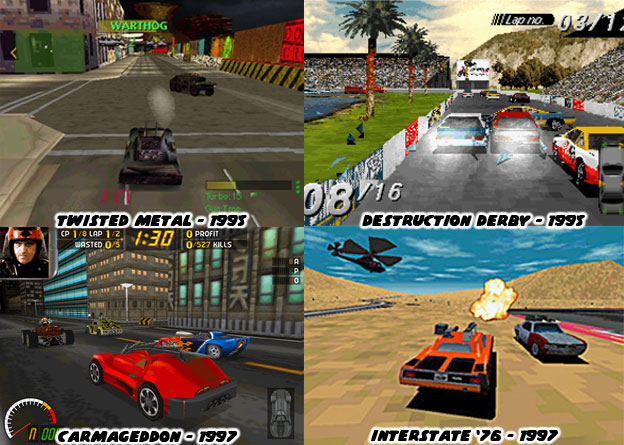
 

In 1985 Origin Systems released an Autoduel PC game. It was a top-down perspective game that predicted the format that would be used by the original Grand Theft Auto. However it was the vehicle combat games that followed in the '90s that owed a bit more to Steve Jackson than Mad Max. In 1995 the Playstation debuted and solid 3D games on the home consoles were a possibility. SingleTrac released Twisted Metal, it set a new standard for violence and depravity. It had a dark sense of humor too that appealed to the Gen X gamers. That same year Reflections Interactive (which would develop the Driver series) released Destruction Derby. It had impressive vehicle physics and models for the time. A few years later Activision released Interstate '76 and Stainless Games released Carmageddon. Whether the world was retro or futuristic, there was something for every fan of the genre. Cars, guns, crashes and violence was an industry all to itself. The themes explored in each of the titles had been featured in Car Wars many years prior.
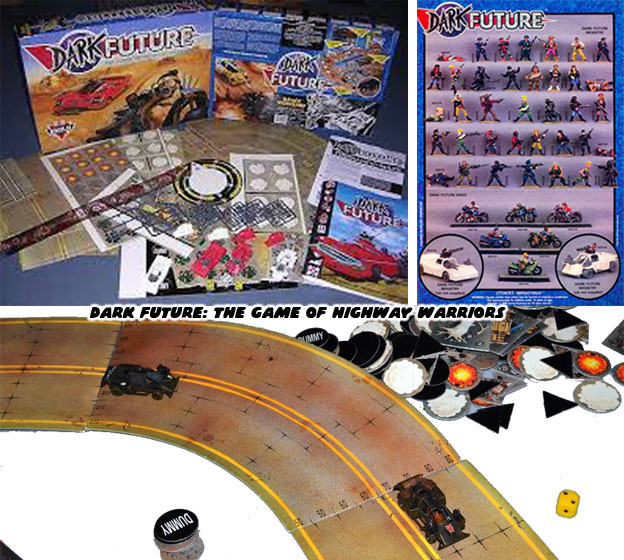
 

Games Workshop had been following the trends and thought that they could create a superior vehicle combat game. In 1988 they came out with Dark Future: The game of highway warriors. Like the other self-contained games from GW they made sure to include rules, templates and hobby pieces that would help create an unlimited amount of scenarios. It was one of the rare entries from the publisher that was not connected to the Warhammer Fantasy or Warhammer 40,000 timelines. Games Workshop had been paying attention to the elements that made Car Wars work and scaled up the experience. The vehicles and roads in Dark Future were larger than Car Wars, about 1/64 scale or roughly Hot Wheels-sized. The game included rules for certain vehicle types and weapons but where it really set itself apart from any other game was the emphasis on gangs and gang warfare. These were the sorts of collaborative experiences that Games Workshop would revisit in Necromunda.
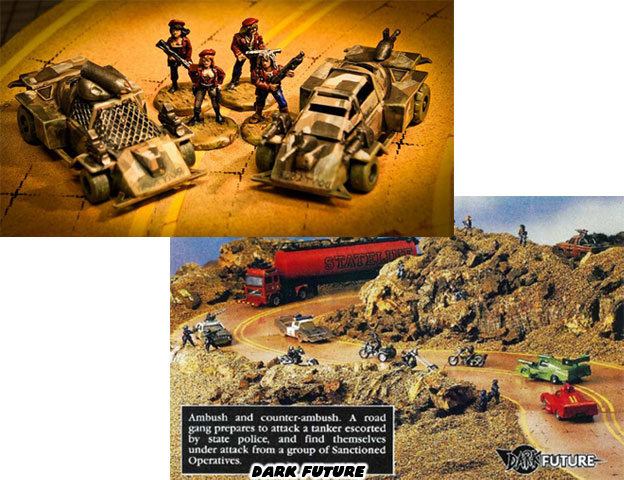

The developer went all in with the system and began supporting it in unique ways. Novels on the Warhammer Fantasy and 40K universes were sporadically released however Dark Future had an entire library of books published shortly after its release. It was as if Games Workshop were trying to catch up to the adventures printed in the pages of Autoduel Quarterly. Fans of the various systems had always wanted to see more stories, comics and graphic novels featuring their favorite characters. Games Workshop did honor the various IP in their magazines and even comic book runs but for some reason Dark Future got a very hard push when it was released. I was certainly surprised with the coverage, hobby tips and articles on all things Dark Future in the pages of White Dwarf magazine.
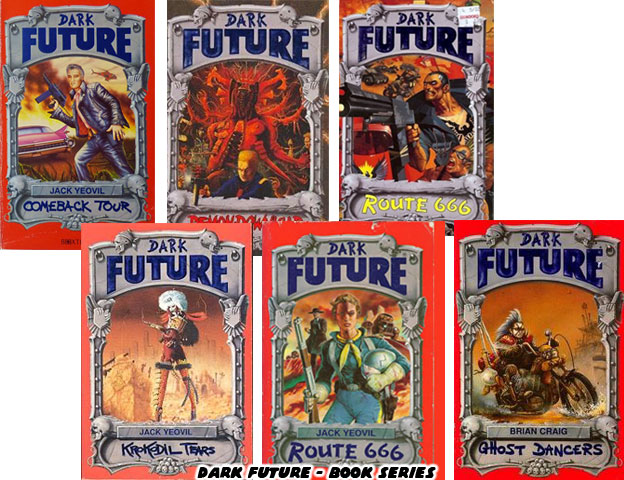
 

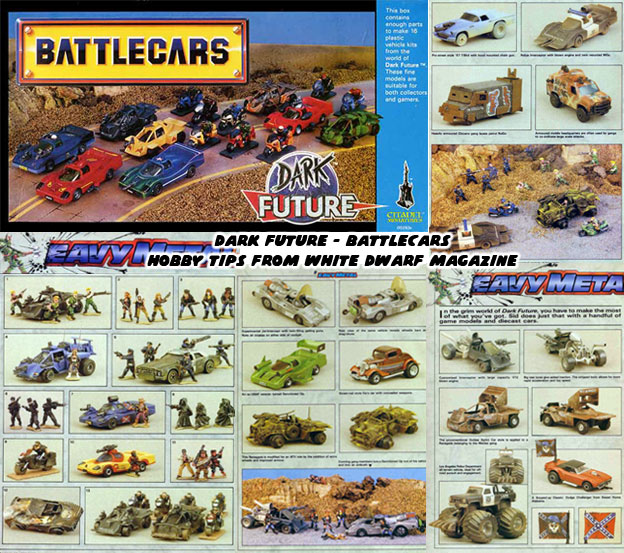
Players were encouraged to develop their own gangs and vehicles for use with the system. In White Dwarf we could see various Hot Wheels and Matchbox toy cars being used as the basis for some amazing conversions. There were police officers, armored corporate goons and rebel alliances featured throughout the various articles. The pages of White Dwarf dedicated to the hobby elements were known as 'eavy Metal. This was of course because miniatures had been cast in lead for years and years. Thankfully when Games Workshop started to go after a more mainstream audience the studio began to focus on plastics. For the more dedicated hobbyists the studio switched to pewter and resin miniatures. The cars in Dark Future were mostly plastic with a few motorcycles being published in plastic.
 

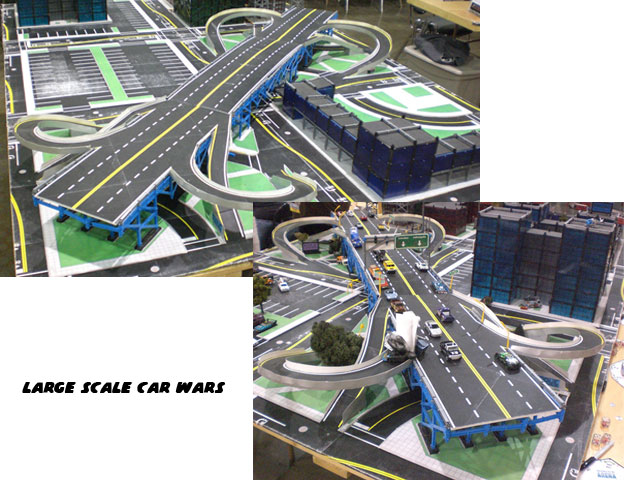
Dark Future did get a sizable following and the system stayed in circulation for a few years. However the popularity of Car Wars remained. At independent game conventions you could still find hobbyists organizing Car Wars tournaments. The best part about the system was how scalable it was. Just because the original system was designed to fit in your pocket it didn't mean that it couldn't work in a larger scale. Hobbyists would build elaborate models for their games and invite new as well as veteran players to see why the system was still fun after 30 years.

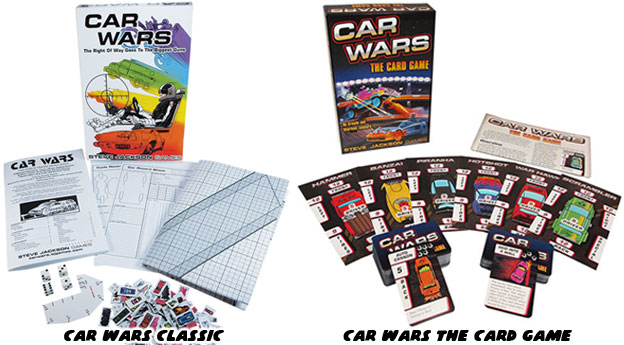
Dark Future was eventually scrapped, along with the other great GW systems like Man 'O War, Battlefleet Gothic and Necromunda. Yet Car Wars remains in publication. You can even find it in the board game section of your local Target!. Steve Jackson Games still offers the original version, now known as Car Wars Classic and a newer version designed for the CCG audience known as Car Wars the Card Game.
 

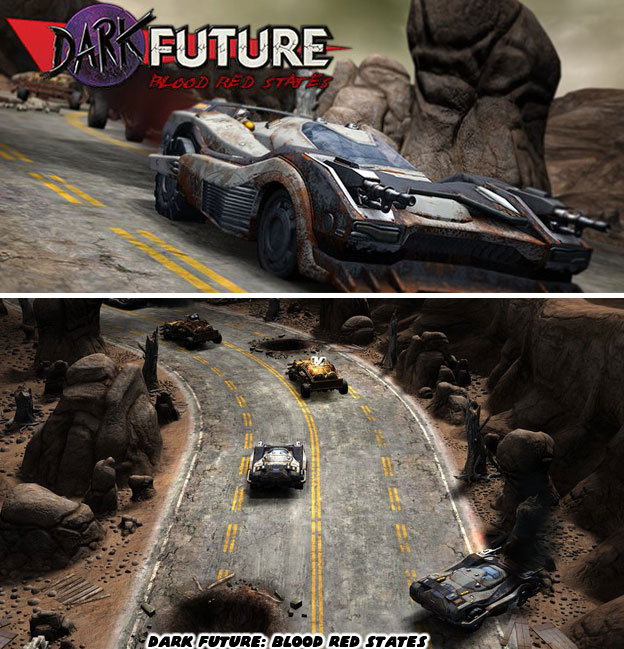
Just like the other games I have been mentioning over these past few weeks, it turned out that Games Workshop was breathing new life into classic systems. It was announced that Dark Future would receive a video game as well. Dark Future: Blood Red States was announced at the end of 2015. It was being developed by Auroch Digital and the details on the game remained hazy. Hopefully there would be enough of the classic system in the new game so that players could see why it was so popular in the late '80s.
 

There was a system that Games Workshop developed in the '80s that stayed red hot for more than a decade. Of all the self-contained experiences there was one game which was possibly the most popular and filled with the most potential for a video game adaptation. It was none of the games that I have mentioned so far but it was connected to a part of the established universe of Games Workshop. We'll take a look at this game and the legacy it created on the next blog. Until then I hope you are interested in checking out some classic systems or mobile versions of these great games. As always if you enjoyed this blog and would like to sponsor me please visit my Patreon page and consider donating each month, even as little as $1 would help make better blogs and even podcasts!
 follow the Street Writer on Patreon!

Friday, July 25, 2014

The Racing Tangent, part 1...

The West had not been sitting idly by letting the Japanese developers create all of the great racing experiences. Atari and Kee Games had been putting the first racing titles into arcades in the '70s. Of course Atari and Midway went on to publish and distribute some of the early Namco hits in the USA through the '80s. Atari though never stopped developing its own memorable titles. The single-screen Super Sprint series, which began in 1986, was one of the oldest arcade releases that had been adapted from black and white to color. It featured up to three human drivers and one computer-controlled car competing on a challenging and tight course. Players were rewarded for picking up wrenches on the race track, which they could use to upgrade the performance of their car in between races. It was one of the first games to offer that feature. Although it lacked the third person camera of Pole Position it was nonetheless a beloved series. The game was ported to multiple consoles and computers and got a follow up upgrade package for arcade owners. The company knew that sprite-based titles were on the way out and by the end of the decade they had released their first 3D title. Hard Drivin' from 1989 was an interesting hybrid of simulator and arcade racer. It was one of the first game to feature a clutch and even a key ignition. Players actually had to start their car before they could start playing and the car could even stall during the course. In Hard Drivin' players chose which path they wanted to drive on, either a road course or a stunt track with a full 360˚ loop. On the way players had to avoid oncoming cars and traffic. The game had very stiff force feedback steering and was one of the most authentic driving experiences ever created.


The studio followed up with Race Drivin' in 1990. The game had dramatically improved in the graphics department and the "Super Stunt Track" was a challenging course that few people could claim to have beaten. I practiced that course for a long while and could complete it and the follow-up race against the computer controlled rival "Helen Wheels." The game was completely unlike any of the Japanese-developed titles and that uniqueness drew me to it.. The company had a certifiable hit in the middle of the decade with San Francisco Rush in 1996. The game was ported to multiple consoles and was one of the first real 3D games to make the transition from arcade to home console. Its sequel Rush the Rock in 1997 was an even bigger hit. Proving that the US was in the running for memorable racing experiences. There was a trend that was developing from the West when it came to driving game. Developers did go through different racing genres and experiences, from sim to arcade. However the West seemed to infuse more action into their racers than the Japanese. It was as if decades of action movies and high speed pursuits and shootouts on TV shows had permanently changed the tastes of Western audiences. Going as far back as the Exidy game from 1976 named Death Race where players had to run over zombies in a graveyard. Of course I'm not a social studies major so it's just a random observation. Whatever the case studios in the US and the UK seemed to enjoy a bit more violence and action in their driving experiences. 

The original Playstation game Twisted Metal, released in 1995, pretty much set the bar for the vehicle combat sub-genre. There were vehicle combat games that came before and after and I might talk about those titles in some future blog. I want to focus on the non-weaponized racing experiences. There was another car-based hit from 1995 that was also on the Playstation. Destruction Derby was developed by Reflections and published by Psygnosis. The game was notable because it featured 3D cars that took damage and responded accordingly during the game. Too much damage to the body, frame or engine could result in overheating and slower performance. Of course too much damage would result in a complete breakdown. The game featured some spectacular crashes framed by a loud alternative rock soundtrack. By comparison the Japanese racing games featured pristine cars that no matter how much they slammed into each other or the course would take no damage. That school of design didn't change until Sega released Daytona USA in 1994. The stock cars would rarely finish a race intact. Fenders would be torn off, the door and trunk would be flapping in the wind. It was as if they were giving the West exactly the type of brutal racing that they wanted.


Reflections would go on to create the Driver and Stuntman series. Their work in 3D vehicle handling and damage was groundbreaking. In Stuntman audiences drove an entire host of vehicles that all responded accordingly. Cars could actually be tossed end over end and flipped upside down based on the severity of a crash. In many 3D games, especially those from Japan, it was all but impossible to turn cars over. To many developers an overturned car killed the game playing experience. These things may seem inconsequential today but were important for the evolution of the racing combat genre. Reflections may not be an important name to most audiences but they had predated the frenetic car chase physics in the Grand Theft Auto series by Rockstar / Take Two. The contribution by Reflections to the genre and the rise in high speed action racing wouldn't develop for another decade. Realism rather than reality helped make the impossible seem plausible in 3D games. Cars could take tremendous damage and keep on rolling. Audiences would actually turn out to see the carnage in these fictional worlds. The developer Stainless Software would release the cult PC/Mac hit Carmageddon in 1997. That game took everything that made Destruction Derby fun and threw in violence and gore by the bucketful. Carmageddon was set in a dystopian future, like Twisted Metal, where a tournament was held allowing race cars to earn points for killing other drivers as well as pedestrians. The cars were heavily armored but also very powerful. They could survive a fall off of a skyscraper and keep on running. If the players managed to land on a human or wipe out an entire row of them in the process they would earn "Style Points."


The content was so controversial that it was one of the games cited by the US Congress as the reason why video games needed to be censored. The gaming industry fought tooth and nail and developed a movie industry-like ratings system. Carmageddon went on to get a sequel which improved greatly in the 3D modeling arena. Drivers could smash through windows and their cars could fall apart and even split in half depending on how hard they crashed. Stainless lost the rights to publisher SCi. The following Carmageddon games were terrible and the series was pretty much over in the eyes of long-time fans. Almost 15 years later Stainless regained the rights and used Kickstarter to relaunch the franchise. This was celebrated in the community and considered a dark day for concerned parents everywhere. Aside from violence there was something else that the West looked for in videogames that wasn't exactly in tune with Japanese developers. The next blog will look at the shift in graphics once the world of gaming moved to 3D. If you would like to sponsor me please visit my Patreon page and consider donating each month, even as little as $1 would help make better blogs and even podcasts!
follow the Street Writer on Patreon!