Carmageddon would never have been developed by any major studio in the ‘90s. No AAA team would approach the idea. Management would fire anybody that had pitched something similar. Decades later some of the biggest games revolve around sex, guns, violence, and fast cars. Studios are falling over themselves to corner the mature market. The biggest of the mature titles is the Grand Theft Auto (GTA) series. GTA V has made Rockstar Games an unbelievable amount of money. Disney, and 20th Century Fox tout the billions made by Avatar, and the Avengers. When it comes to a return on an investment nothing comes close to GTA. Avatar for example made $2.8 billion, on a budget of $237 million. That’s impressive but GTA V made $6 billion on a budget of $265 million. Even if you factor in marketing costs the numbers are simply unbelievable. When GTA was first released in 1997 it was nowhere near as notorious as Carmageddon. I would often have a laugh when people would ask “if you love Carmageddon, why don’t you like GTA?” Back then the camera was top-down, and the game play didn't compare. I would sometimes move the camera to top down in Carma, and say, “there, now it’s GTA.” To be fair there was one other major studio that beat both Stainless Games, and Rockstar to the punch. That was SingleTrac, and their breakout hit Twisted Metal, which was published by Sony.

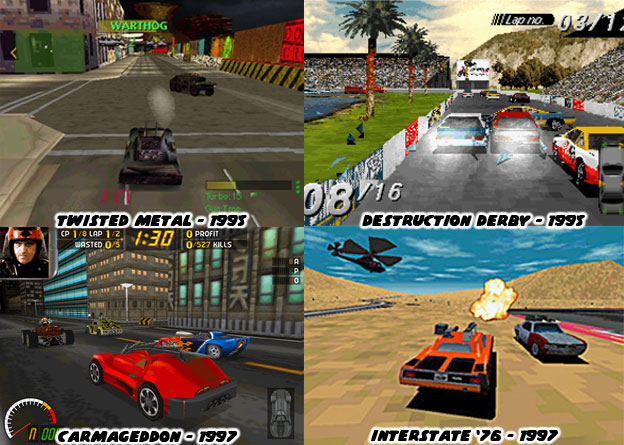
It was not surprising that Sony published Twisted Metal. They understood that the audiences growing up on consoles were getting older. They were targeting the families that already had a Sega, or Nintendo system. Most of those kids had outgrown Sonic, and Mario. They wanted a game with more blood, and action. If it wasn't on the Sega, or Nintendo machines, they were willing to switch. The wave of violent fighting games, and 3D shooters in the early ‘90s, such as Atari’s Primal Rage, Rage’s Killer Instinct, Midway’s Mortal Kombat, and id's Doom were proof that mature titles were selling. Aside from fighting games where else could the genre incorporate violence? David Jaffe and his team at SingleTrac melded vehicle combat, with a first person shooter. Throw in an over-the-top story involving a tournament, and you’d think that Stainless Software was poaching the concept. The ideas featured in Twisted Metal, and Carmageddon actually came from many different places. Vehicle combat was nothing new, and had roots in traditional tabletop gaming.

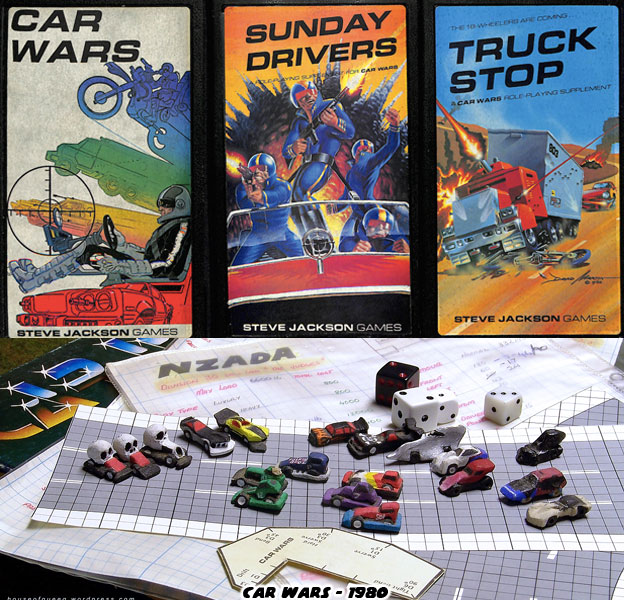
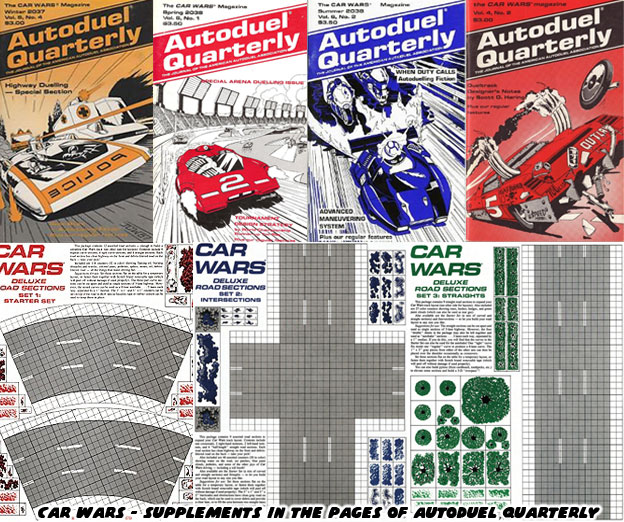
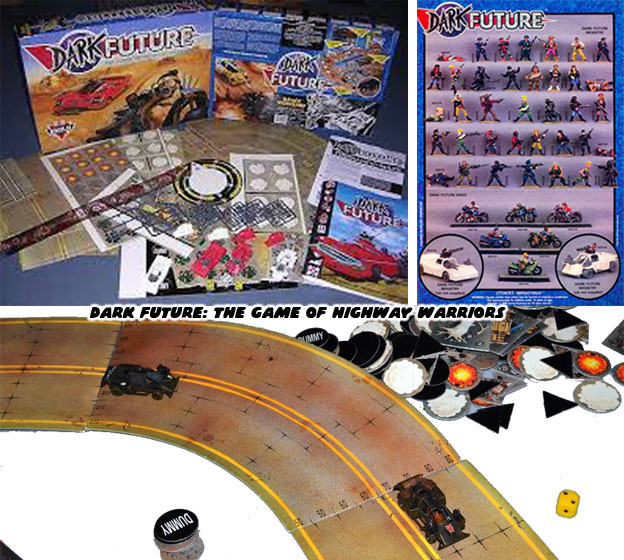
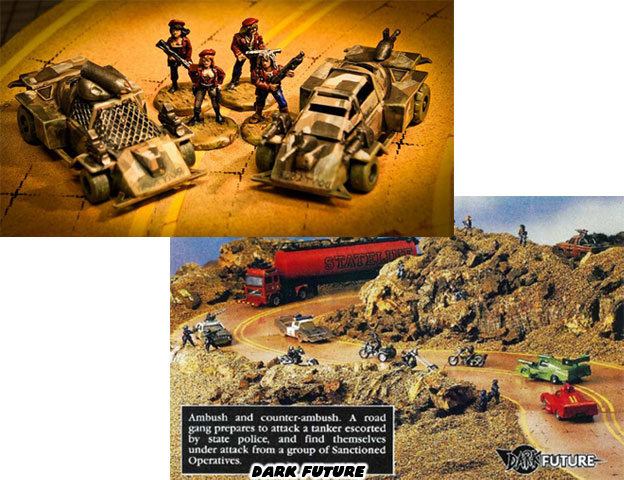
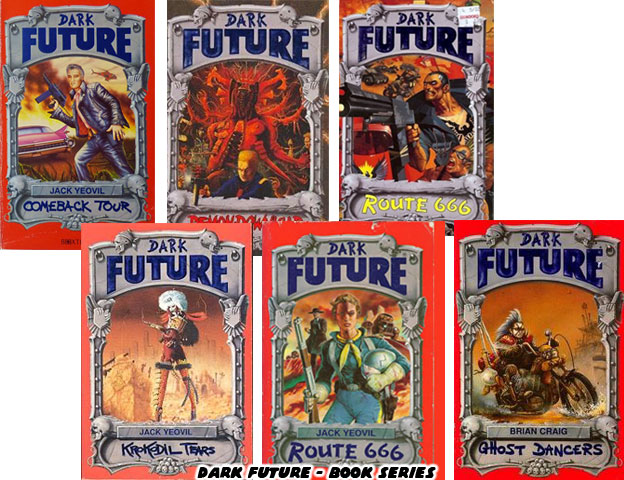
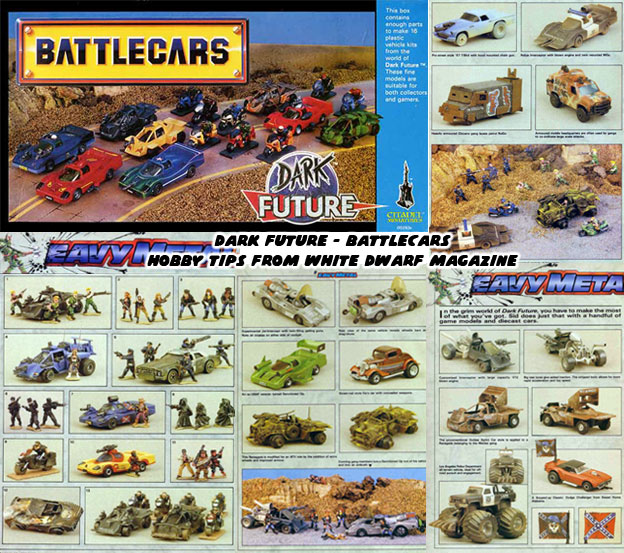
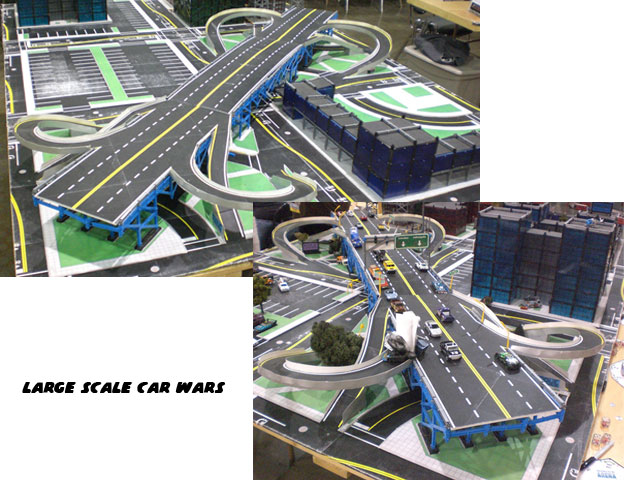
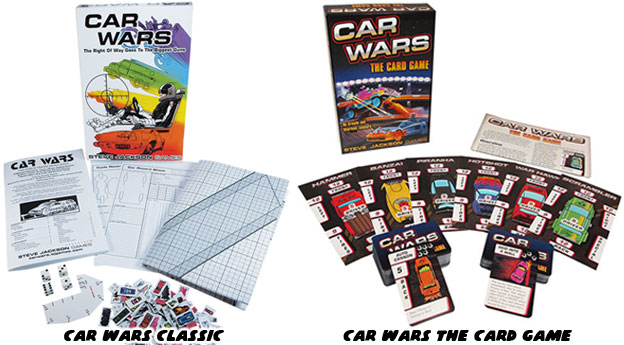
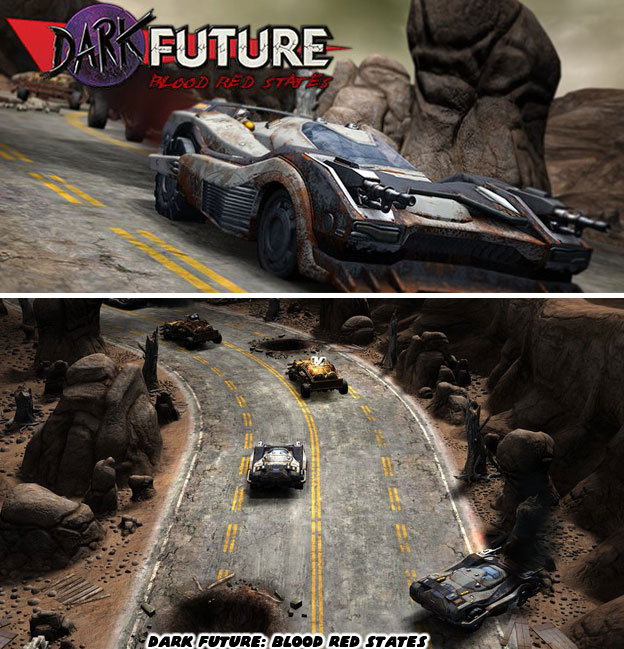
Steve Jackson Games was responsible for publishing dozens of original tabletop gaming systems. Those are the ones that require dice, some miniatures, and a score sheet. One of the more popular titles was Autoduel. This role playing system from 1985, received a PC game by Origin Systems in 1987. The rules of Autoduel would eventually become standardized in GURPS, the Generic Universal Role Playing System, which was first published in 1986. These systems, and games were based on an even older Steve Jackson game. Car Wars the tabletop game series first published in 1980. It has always remained popular in the tabletop gaming community. The sixth edition was published in 2019. The newest tabletop game to join the genre was called Gaslands. It was released by Osprey in 2017. Games Workshop released Dark Future in 1988. It faded in popularity over the years but was brought back as a PC game with Dark Future: Blood Red States in 2019, by developer Auroch Digital. All of these titles had a hand in influencing the creation of the vehicle combat genre.

Video games would bring the tabletop experience to life. I already mentioned Twisted Metal, however the ‘90s, and ‘00s saw the genre grow. Twisted Metal received a number of sequels. I will talk about the varying quality of those later. Other publishers knew the trend was coming, and had their own games lined up. One of the more stylish entries was Interstate ’76 by Activision. The game came out in 1997 same as GTA, and Carmageddon. Its physics engine was amazing, and stylish polygons gave it a retro feel. The combat mechanics found the line between Twisted Metal, and Carmageddon. The sequel was Interstate ’82, which came out in 1999. The series also inspired the Vigilante 8 games, which were designed with consoles in mind rather than the PC. Rogue Trip Vacation 2012 was a spiritual successor to Twisted Metal by SingleTrac. It came out in 1998. David Jaffe wouldn’t touch another vehicle combat game until 2007, when Incognito Entertainment released Calling All Cars! Not to be outdone Slick Entertainment released Scrap Metal for Xbox Live in 2010. All of those aforementioned games had tremendous planning, and lots of market research. This ensured the publisher could have a game delivered on time, and on budget. Carmagedon wasn't the result of spreadsheets, and data analysis. It came about more by accident.

When the developers at Stainless would get bored with racing games, they would turn around, and see what chaos they could create by driving head first into traffic. They saw that most games handled collisions poorly, if at all. Some didn’t even allow you to turn around completely. They were fans of Banger Racing. It was a sort of demolition derby-style race that had a following in Britain. They knew that there was a market for a game like that, and started putting together a prototype. The work they were doing would influence a generation of game developers. These included Criterion, famous for the Burnout series, Evolution Studios which created MotorStorm, Black Rock Studio which developed Split/Second, and Rockstar which created GTA. Fellow UK developer Reflections Interactive actually beat them all to the market. They released Destruction Derby for the Playstation in 1995. For a console game the physics engine was amazing. It gave a real sense of weight, and speed to the cars. Vehicles were deformed in pileups, this was the opposite of Gran Turismo, where Sony promised the manufacturers that their cars would never so much as be dented in the game. This focus on realism was also very noticeable when compared to Twisted Metal. The engine Reflections built got better in the Driver series, and Stuntman for the Playstation 2, both of which added different types of vehicles.

Destruction Derby, and Twisted Metal helped put the Playstation on the map in 1995. Stainless had started working on their own vehicle combat system in 1994. One of the things they were trying to figure out was how to avoid pedestrians in their open-world game. They decided they should make running them over a part of the game play. There weren’t any publishers willing to take the call to talk about their idea. Fellow Brits at Sales Curve Interactive (SCi) had worked with Stainless in the past. Having the studio adapt PC games for the Mac. They decided to take a chance on the game. To increase the odds of getting published they were looking for a license to attach the game to. One of the front runners was the Mad Max series. The trilogy by George Miller started in 1979, and had sequels in 1981, and 1985. The films had a cult following the world over. The title character fought roving gangs in a post-apocalyptic wasteland. It is entirely possible that Max Damage was named after Mad Max. At the very least some of the “Auto Scum” gang members in Carmageddon could be traced to designs featured in the Miller films. The series was big enough to be recognized, but not so big as acquiring the license would be wildly expensive. SCi had difficulty finding out who owned the rights to the property. Since Miller had made the films in Australia, different studios in the US, and the UK were responsible for rights, and distribution.

SCi hit a literal dead end trying to get the rights for Mad Max. They didn’t pull the plug on Stainless. They kept them in business by assigning them other projects in the interim. While doing research SCi discovered an even older cult film revolving around cars, and violence. This film had even more in common with what Stainless was going after, including awarding points for killing pedestrians. Death Race 2000 had been released in 1975. Featuring David Carradine, an actor that became famous from the TV show Kung Fu. As well as a young Sylvester Stallone before he created the first Rocky movie. The characters were very crass, and over-the-top. Carradine played two-time winner Frankenstein, “who lost a leg in ’98, an arm in ’99, with half a face, and half a chest, and all the guts in the world.” His face was covered by a rubber mask, and he sported a helmet similar to Darth Vader’s two years before Star Wars premiered. Many people noticed that Kutter from Carmageddon looked very similar to Frankenstein. Stallone played mob enforcer Machine Gun Joe Viterbo, his moll Myra was played by Louisa Moritz. These were not unlike Alfonzo Spaghetti, and Madam Scarlett respectively. There were many more such characters in the film, such as Nero, Calamity Jane, and a Nazi named Matilda the Hun. Each character had an outlandish supercharged race car, covered in spikes, horns, and even teeth. The Hawk, and Eagle from Carmageddon were undoubtedly based on The Monster.

In the film the high-speed cars run a transcontinental rally, rather than just around a city. The rule changes for the year 2000 were explained in the film; women are worth 10 points more than men in all age brackets. Teenagers are worth 40 points. Toddlers under 12 are worth 70 points. Anyone over 75-years-old was worth 100 points. The movie featured nudity, sex, drug use, vulgar language, and misogyny, on top of all that violence. Of course audiences accepted that this was a dark comedy set in a dystopia. Many films from the ‘70s were about exploitation. Death Race 2000 had shlock value like other titles from that era. With the fancy sets, actual race car props, and various locations used, it was essentially a polished “grindhouse” movie. A full year later the video game industry had its first controversial game. The title was called Death Race, it had nothing to do with the movie, you could imagine that many people assumed it did. Exidy had released its first title Destruction Derby (no kidding!) in 1975. Their follow up was Death Race, in which the Grim Reaper in a hot rod drove over “gremlins,” and not people. Each time players ran over a character there would be a scream, followed by a tombstone left on the screen. The game made headlines as parents were upset with the content, trying to get arcade operators to pull the cabinet. Reporters were shocked as well, and published brutal reviews. This negative publicity of course increased orders through 1977.

SCi had no luck with the owners of Death Race 2000 either. They were afraid that a video game allowing you to run over pedestrians was too controversial. It would bring down the value of their film. Yes, the same producers that had no problem with Sylvester Stallone punching his girlfriend in the face, a man getting stabbed in the crotch by a bumper-mounted knife, a Nazi expounding the values of the master race, and Frankenstein assassinating the President of the USA was okay. A video game with only a fraction of that content was simply too much! The talks seemed to be going well for Stainless, or so they thought. The studio didn’t even get a chance to change the program name before the it was published. If the title managed to suddenly quit on the Mac, or PC it would say that “Deathrace” has crashed. This did not deter the team from putting their efforts into making the best game that they could. That was easier said than done. No other studio had attempted what they were going for. Stainless didn’t really work from a template, they literally made things up as they went along. Part of this meant doing research on actual car crashes, as well as running over pedestrians. No, really!

On an earlier blog I mentioned that Tony Taylor played Max Damage in the “Prat Cam.” He was a general handyman, and a friend of the team. He was also a sort of amateur stuntman. When the studio was recording footage for the Prat Cam he yelled, and jerked himself around as if he was in the Eagle. In order to get the shot of him getting crashed into from behind he had the team hit him as hard as they could in the back of his head with a pool cue. Thankfully he was wearing his helmet at the time. It was only the beginning of his exploits. I think the statute of limitations has expired on the things that Stainless Games had gotten away with during the development of Carma. Frankly it’s a miracle that nobody was killed! We will look at what the creative, and physical risks the studio took in the next blog. If you would like to sponsor me please visit my Patreon page and consider donating each month, even as little as $1 would help make better blogs and even podcasts!