Showing posts with label kazuya mishima. Show all posts

Monday, December 14, 2015

The Tekken 7 reveal, superb fighting game storytelling...

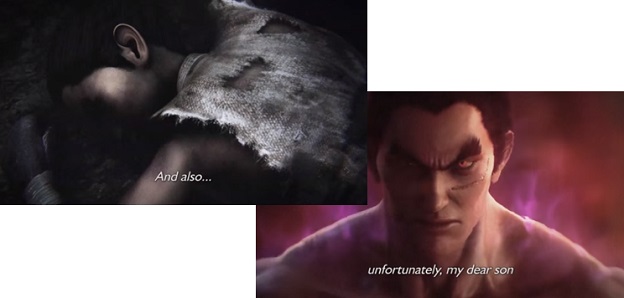
The Tekken 7 trailer released last year was one of the greatest video game trailers of all time. It turned out to be only half of the story that was planned for the game. There were things spoken of in the original trailer that explained a lot about the main characters, Heihachi and his son Kazuya. It also introduced us to Kazumi, the mother of Kazuya. She narrated the trailer and we could see that was leaving a message to someone. Thanks to some well placed edits the audience assumed that the mysterious person in the background was Heihachi Mishima. When he opened the door to the dojo viewers assumed that this was the night that Heihachi had had killed his wife. It was great framing, we could sense the tension as if Kazumi were trapped in some sort of domestic hell.

Through every version of Tekken the audience knew that the father and son hated each other. Heihachi was afraid that his son would turn on him and take over the family business. Heihachi had done that to his own father after all. There was reason to be afraid of Kazuya but it was more than just a jealousy that caused this. Kazuya had a "Devil Gene" which allowed him to turn into a powerful monster. Audiences assumed that this was a gene that skipped a generation. It turned out however that Kazumi was the one that passed the "Devil Gene" down to Kazuya.

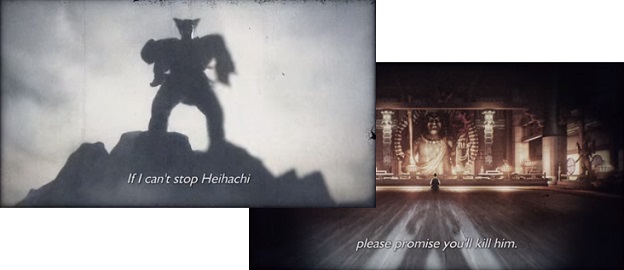
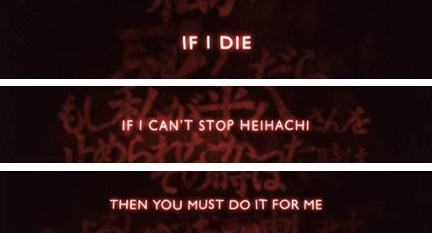
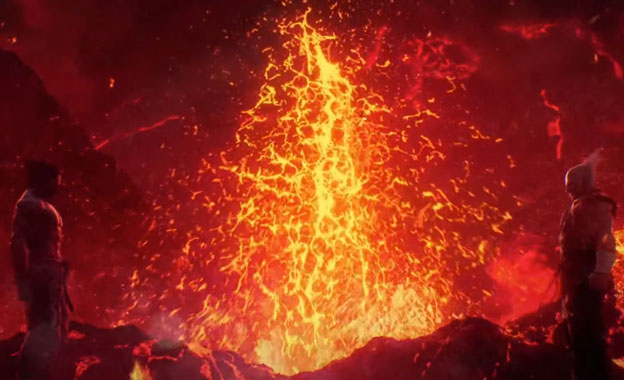
Kazumi had actually planned on killing the leader of the Mishima clan herself. However she also left some specific instructions, if she could not stop Heihachi then she was leaving the task to someone else. The trailer immediately cut to Kazuya and Heihachi staring at each other from within an erupting volcano. Audiences assumed that she was leaving instructions for Kazuya. They assumed that some day he would be strong enough to avenge her death.

Father versus son, a wife betrayed, a mother assassinated. This was something right out of a Shakespeare play! Even the setting featured in the trailer was important. The volcano was used again and again throughout the history of Tekken. Both Heihachi and Kazuya had taken turns trying to kill each other over the past 20 years by throwing each other into an active volcano. I had actually talked about the volcano and the origins of the characters on an earlier blog. If this were indeed the last battle then it had to be one for the history books!

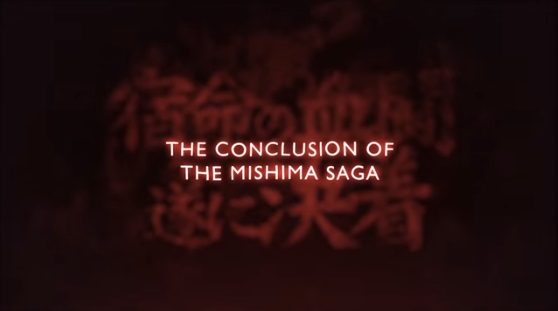
The ending of the trailer, where Kazumi revealed that despite everything she loved Heihachi and he loved her was one of the most powerful moments of any game cinema. The team at Namco wanted to make sure that audiences were paying attention. All of the loose ends created in every sequel would be tied up and they even promised that this would be the end of the Mishima Saga. Kazuya would kill Heihachi or the other way around and the story would be concluded. Those that hadn't seen trailer could watch it below. 


It turned out that Tekken series producer Katsuhiro Harada had something even greater in mind for the game. The second half of the story arc was unveiled on the heels of the Capcom Cup and EVO fighting game tournaments. Tekken 7: Fated Retribution would be the name of the new expansion. The trailer for the game completely blew away everything that fans of the series thought they knew.

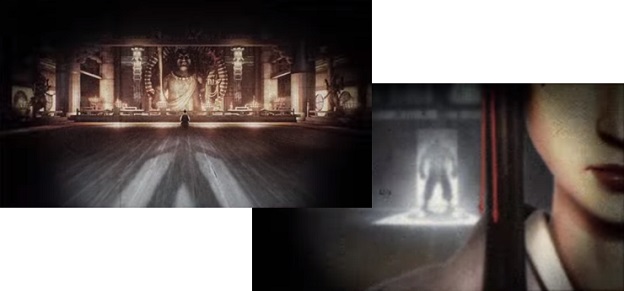
It began very similarly to the previous trailer and we could hear Kazumi leaving instructions. Except that this time it was obvious that she was telling someone they had to kill Heihachi, but Kazuya was only a child at this point. So she was talking to someone else.

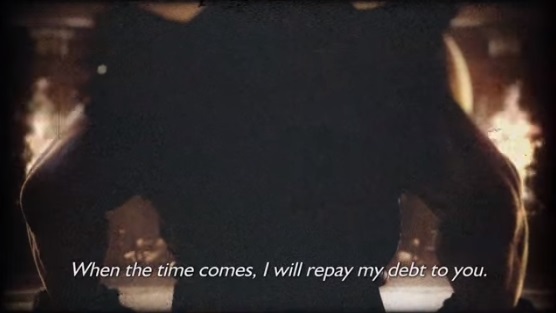
The mysterious figure in the doorway spoke. It wasn't Heihachi as many gamers had assumed. Instead it was the person tasked to kill him. As soon as he spoke the long-time Street Fighter fans had a reason to freak out. The baddest character in all fighting game history had returned. This character was absent in all known footage of Street Fighter V. He was indebted to Kazumi, how would certainly have to be explained!

This martial arts assassin had killed his master and brother in canon. If Kazumi could not kill her husband then rest assured that the mysterious figure would. But this reveal was not enough for the producer of the series. At the end of the trailer Kazumi left a very specific instruction. After killing Heihachi he would be tasked with killing her son.

It now made sense that the Mishima Saga would really be concluded. An outside fighting game character universally recognized as powerful enough to actually be able to kill both Kazuya and Heihachi was brought in. It was possibly the only way that Tekken fans would have believed the outcome.


Katsuhiro Harada pretty much dropped the mic on the critics with this reveal. The new trailer was pretty much a knockout punch to everyone that wasn't already on board with the game. He hid in plain sight one of the greatest fighting game villains of all time and tied this character masterfully into the series. It was something that Street Fighter IV and V producer Yoshinori Ono seemed incapable of doing. It demonstrated a certain level of planning and design that required both patience and maturity. These were things that I cannot say Ono possessed. But don't take my word for it, watch the first and then second trailers and tell me what you think. Did the trailers for Street Fighter IV or V give you the same level of anticipation? Do you think that this approach is something that Capcom is lacking? Or will Street Fighter be fine without the heavy-handed drama? Let me know in the comments section. I’d like to hear about it on the comments section. As always if you would like to sponsor me please visit my Patreon page and consider donating each month, even as little as $1 would help make better blogs and even podcasts!
follow the Street Writer on Patreon!

Friday, July 18, 2014

The Ridge Racer Legacy, part 13...

The world of Namco was ripe with conflict. Many players overlooked it but the Ridge Racer cars were actually covered in stickers of opposing factions. There were many purposes for the logos. Primarily they made the cars look like actual racing machines. Many actual race cars had memorable colors and patterns as the team livery, yet the most famous also prominently featured sponsor logos on the body. Even non race fans could remember that there were cars with huge Tide, STP, Red Bull or Marlboro logos placed in plain view. The sponsor logos signified the games that the Ridge Racer Project members had worked on as well as the legacy of Namco.
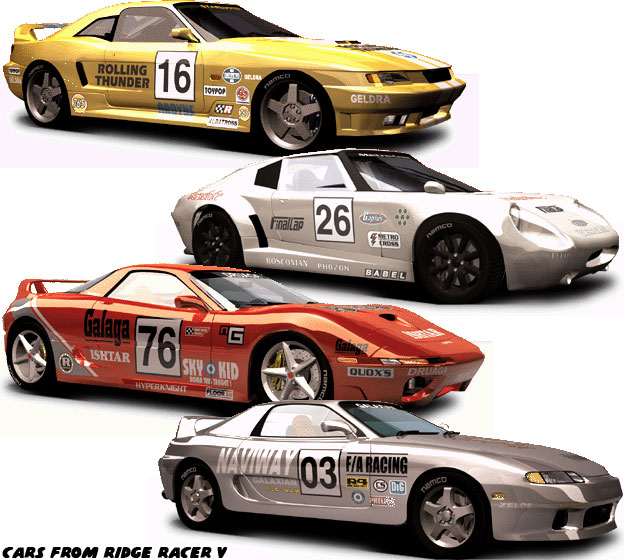
The stickers also served as a reminder of the wars waged away from the race tracks. Conflict and not peace were the driving forces behind every great game. Come to think of it, a well presented conflict was also the root to every great book and film as well. The most heated races, especially the 500 mile, 1000 mile and 24 hour endurance races could make drivers feel as if they had just survived a military battle. The Ridge Racer games were set on the days that there were no major conflicts in the Namco universe, which seemed few and far between. These races, like those from the classic Sega arcade racers, took place on the most utopian day ever. Yet conflict was never very far away in Namco continuity.
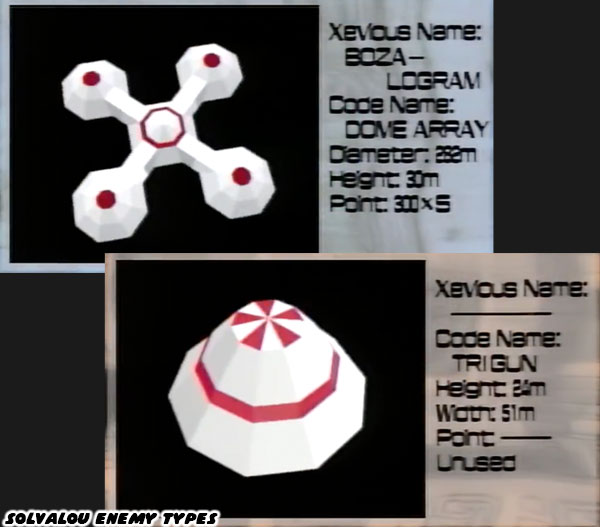
The largest forces in Namco continuity were reflected on many of the sponsor logos. I don't necessarily mean specific heroes and villains but rather corporate interests. These were the massive companies like G.V.I. which was featured in the previous blog. These were the companies that used race cars to make their brands seem desirable. Even the companies that were terrible villains in Namco continuity knew the power of good PR. Take Geldra for example.
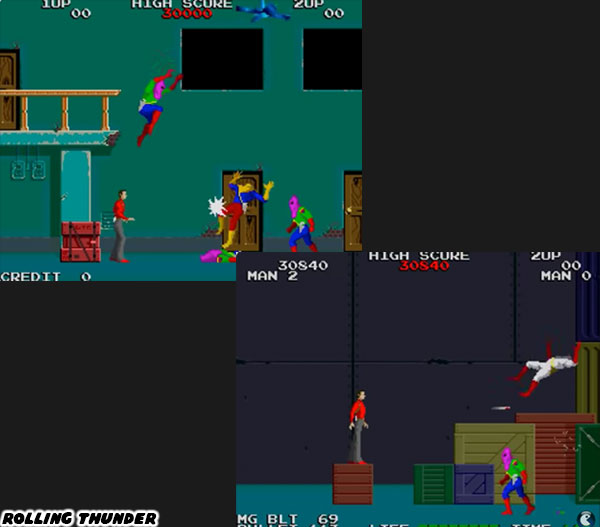
The logo for the terrorist organization was featured prominently on several Ridge Racer teams over the years. The group had first appeared in the 1986 arcade hit Rolling Thunder. It was not a racing game but instead a side scrolling action-shooter. In the game special agent "Albatross" from the World Crime Police Organization was tasked with bringing down Geldra and rescuing fellow agent Leila Blitz from the clutches of their mutated leader Maboo. Geldra turned up again and again in the Rolling Thunder sequels. Each time the scale of their operations had become much grander. Expanding to every corner of the globe and even to the nearest satellites circling the Earth. Even though the game series ended in 1993 it would forever remain a part of Namco canon. I would imagine that in the unmarked warehouses and corporate towers surrounding some of the Ridge Racer courses Geldra was busy rebuilding and plotting to take over the world once more. Of course Albatross and his fellow agents would be infiltrating those locations as well.
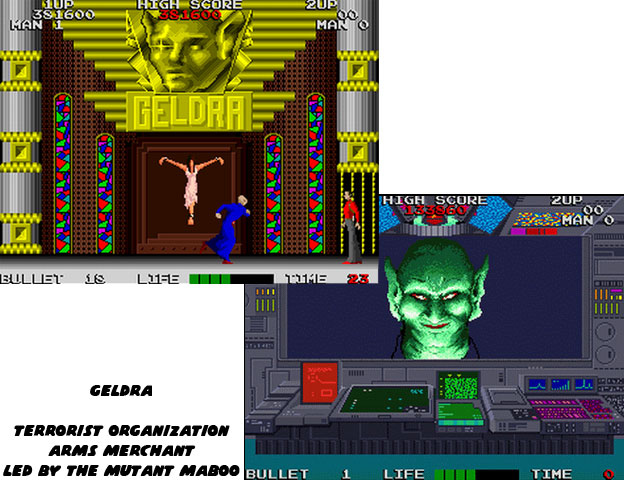
In the real world there were corporations that used racing sponsorships to sell products or ideology that weren't necessarily healthy or beneficial for humankind. Alcohol and tobacco companies made themselves appealing by aligning themselves with popular sports and celebrities. Some people might find it questionable that recreational drugs could advertise in these venues, and specifically sticker their logos all over race cars. Yet Geldra was in a different league. They were like a multinational defense contractor putting their brand on the cars. It Lockheed Martin, Northrop Grumman, General Dynamics or Boeing advertised on a race car most people in the West might not notice or even mind. However to those living in a nation, say in the Middle East, that was negatively impacted by those defense contractors then sponsoring a race car could be seen as subversive.
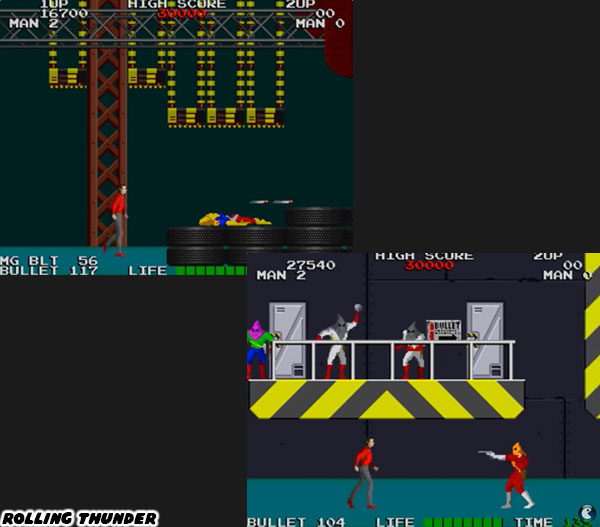
In a similar fashion tech company Arkbird created the aeronautics technology, the fancy wing, spoiler and body kits featured on many Ridge Racer cars. Arkbird was also the company that created the low-orbit military platform featured in the Ace Combat series. Arkbird and Geldra were parallels to companies like Lockheed Martin or Boeing. They were not the only defense contractors parallels featured in Namco canon.
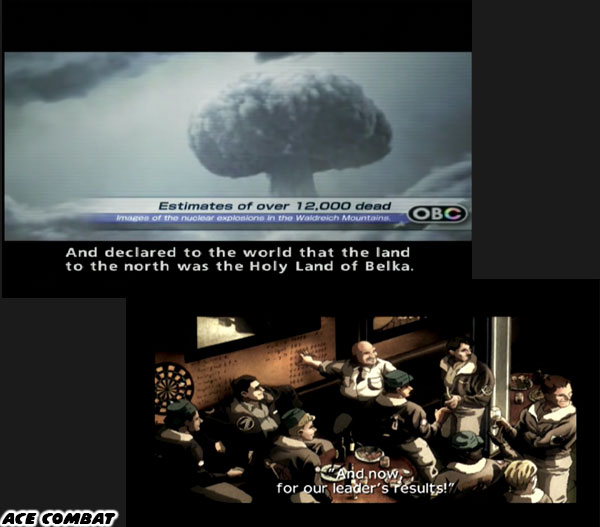
The most violent corporation with the greatest PR in the Namco world would be the Mishima Zaibatsu. That corporation sponsored the King of the Iron Fist, better known as the Tekken fighting series. The tournament brought out millions of fans and billions of virtual dollars in Namco continuity. It also brought out the greatest fighters, spies and assassins in that universe as well. In the game series fans did not necessarily fight in a competition setting, although some of the matches did take place in arenas. The majority of the conflicts were on the streets or in disputed military zones.
Mishima Zaibatsu was one of the largest, if not the largest, science, technology and military contractor in Namco continuity. Yet as powerful and influential as the corporation was they were in a constant battle from within. Three generations of the Mishima clan starting with Heihachi and going down to his son Kazuya and grandson Jin were constantly vying for control of the corporation. It would be four generations of conflict if the series producers would determine the life or death status of Heihachi's father Jinpachi. These men did not battle it out in the boardroom with lawyers, arbiters or hostile takeover attempts but instead with their actual fists.
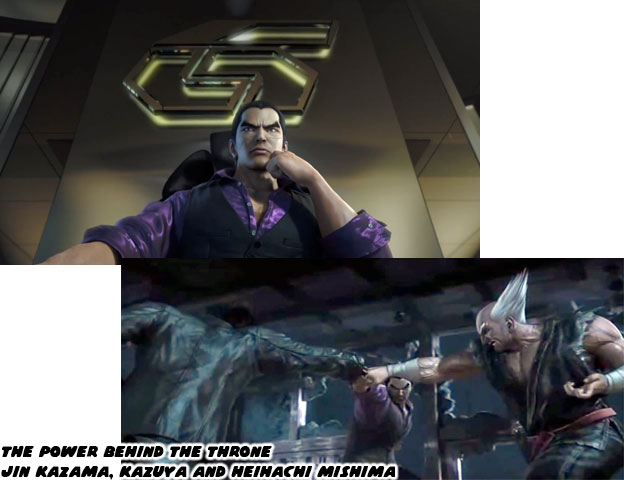
The citizens in Tekken continuity had no idea that the wars and terrorist attacks in various regions of the planet were often the results of a single families strife. In various comics and games it was revealed that the Mishima clan surrounded themselves with political figures and corporate allies to try and distance themselves from the conflict. By advertising in popular events, including the Ridge Racer series, the Mishima Zaibatsu group made themselves appear like a defense contractor and not a military powerhouse.Yet for each bridge they built there was always a new rival added to oppose them. The biggest obstacle to the Mishima Zaibatsu was the G Corporation, which was run by Kazuya Mishima. The leader in biological technology had amassed a private army that would rival the Zaibatsu. The G Coporation researchers had been on the cutting edge of biotechnology and were able to create clones, halt and even reverse the aging process and tap into the mythological "devil" gene.
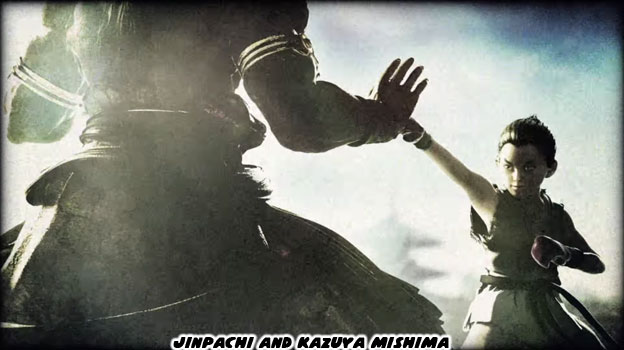
The weapons and technology featured in the Tekken, Ridge Racer and Ace Combat titles were always ahead of the curve. They had a certain science fiction element to many of their designs. Wars in the future were decided by the private armies that had access to the greatest technologies, granted they were not far removed from the private contractors of the current era. Except in Tekken continuity the soldiers were sometimes outfitted with strength-enhancing armor and giant robots instead of tanks. Some of the assault troops were completely made up of cyborgs instead of people as well. The leaders of the paramilitary branches of the G Coporation and Mishima Zaibatsu were also some of the most powerful fighters in the Tekken series. Names like Bruce Irvin, Bryan Fury, Raven and Sergei Dragunov carried a lot of weight among fans of the series. These men were mercenaries and leaders of military units from various nations. Some sided with the Mishima clan and some were trying to bring them down.
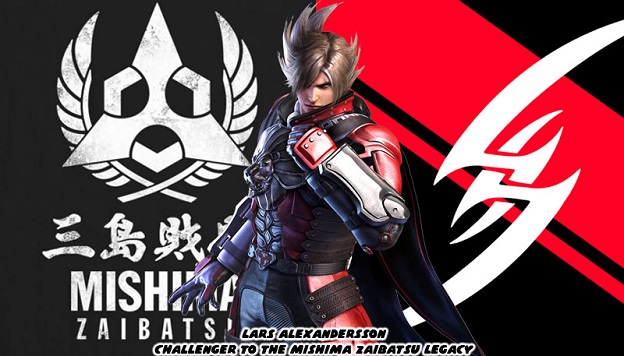
Even from within the armies there was strife. The step-son of Heihachi, Lars Alexandersson was a self-made leader of the Tekken Force. An expert fighter and brilliant strategist he fought alongside his men rather than made calls from the corporate offices like his half-brother Kazuya or father Heihachi. As such he earned their trust and admiration. He completed a successful coup d'état to assume control of the Zaibatsu military wing. His purpose was not to start a whole new war against the G Corporation but to bring an end to the conflict. He had travelled the world and had seen first hand how much destruction both groups had brought in their wake. The peace would not be long lived. As fans of the Namco titles could tell you it would only be a matter of time before the next firefight would begin.
It would give producers a reason for a new Tekken game. Yet for those few months where the guns fell silent the attention of the masses would be drawn to the next Ridge Racer Project. The Mishima clan, Geldra, General Resource LTD., Neucom Incorporated and various other organizations that charted the future of the Namco universe would continue to make their presence felt by sponsoring the teams that turned Ridge City into the ultimate destination for racers and race fans. Yet something went wrong for Namco after they introduced a huge corporate villain into the Ridge Racer continuity. G.V.I. was not the reason R: Racing Evolution failed to become a hit with race fans. The next blog will look at where Namco made some missteps and what they learned from the game. As always if you would like to sponsor me please visit my Patreon page and consider donating each month, even as little as $1 would help make better blogs and even podcasts!
follow the Street Writer on Patreon!

Friday, July 4, 2014

The Ridge Racer Legacy, part 3...

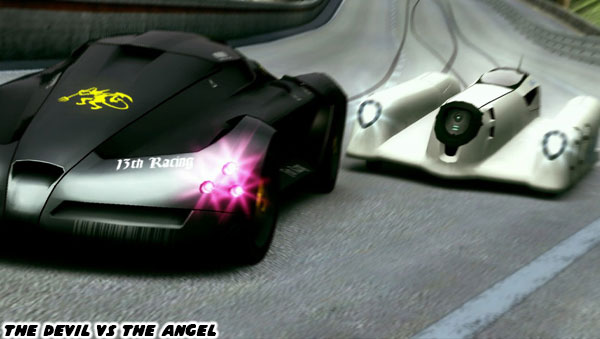
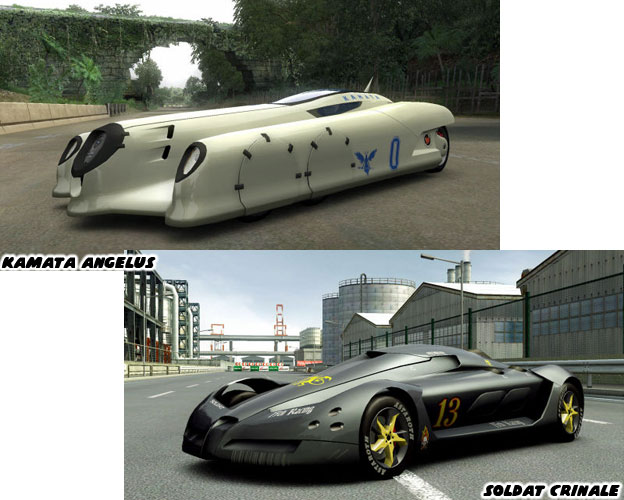
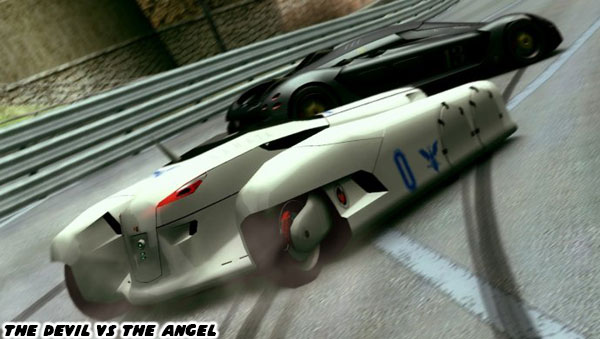
The Angel 0 and Devil 13 had become iconic cars in the Ridge Racer universe. Each version of the series following Ridge Racer Revolution had a new Angel and Devil to battle against and unlock. The designs of each car were culled from the most exotic race cars and sports cars ever produced such as the Ferrari F-40 and McLaren F1. Eventually the team at Namco got to the point where they no longer had to look at real-world cars for each of their designs. In fact, for the Angel and Devil it turned out to be a good thing that they looked unlike anything that has ever existed. The last time that both cars were sytled similarly was for the Xbox 360 exclusive Ridge Racer 6 in 2005. The two cars were still unique but both looked like expensive GT super cars.. The duo got a radical makeover in Ridge Racer 7, a Playstation 3 exclusive in 2006. The respective manufacturers for each car had been solidified as well. High-tech Japanese company Kamata had a concept racing car dubbed the Angelus. Rival German company Soldat had the menacing Crinale. The Crinale had previously been manufactured by Italian company Rivelta before they were bought out by the Germans. It was interesting that there was an actual continuity happening between all of the fictional manufacturers, teams and cars going back to the original Ridge Racer.

Car fans could tell that the vehicles looked like they came from a particular nation. In the early days the designers at Namco were taking many styling cues from real world production sports cars. The Rivelta cars for example were modeled after the Ferrari and Lamborghini Italian super cars. All of the previous Devil 13 cars had a certain Italian aesthetic to them as well but by Ridge Racer 7 that suddenly changed. The German-influenced design was much more bold and aggressive. By contrast the Japanese auto-manufacturer aesthetics, even for concept cars, focused on seamless integrated technology. In official game art Namco was sure to juxtapose natural and industrial elements to highlight the balance that each car brought into the canon of Ridge Racer.

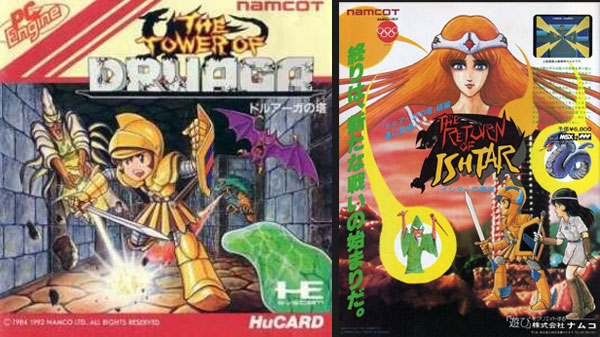
There was tremendous symbolism at play on both cars. The Crinale sported few sponsor stickers but the brand of tires that it sported were from Astaroth. This was a recurring tire manufacturer in the series but the name carried a lot of weight with it. The name Astaroth was derived from the Phonecian Astarte. Also known as the Crowned Prince of Hell. Astaroth had an equivalent to the Babylonian Ishtar, the female goddesses of love. The ancient mythology had been revisited time and time again by Namco. The studio had released an adventure RPG named The Return of Ishtar in 1986. It was the second game in the Babylonian game series based on the mythology of ancient Babylon. It was the sequel to the Tower of Druaga, a cult favorite from 1984. There was no mistake that the Angel and Devil in Ridge Racer were symbolic of Astaroth and Ishtar. The entire interplay between good and evil, dark and light were universally understood by audiences. The team at Namco was well aware of the legacy before they painted the devil and pitchfork or winged goddess logos onto the hood of the cars.

The name Astaroth was also given to a golem in the Soulcalibur series. The large axe-wielding warrior was a force of evil in the game and appeared to be indestructible. He was just one of the otherworldly forces at play in the game. Soulcalibur was a sword fighting game set in ancient times, but not as far back as Druaga's timeline. Soulcalibur was filled with mythical and historical warriors. There was a very thin thread that connected the mythology from the Tower of Druaga to the sword fighters from Soulcalibur. That game, its alliances, good and evil characters and canon were the ancestors to the modern fighters in the Tekken series. That was over 3000 years of history that Namco had sprinkled over their various games, including the sponsor logos featured in Ridge Racer. The mythology of the Namco characters was taken in earnest by the company.

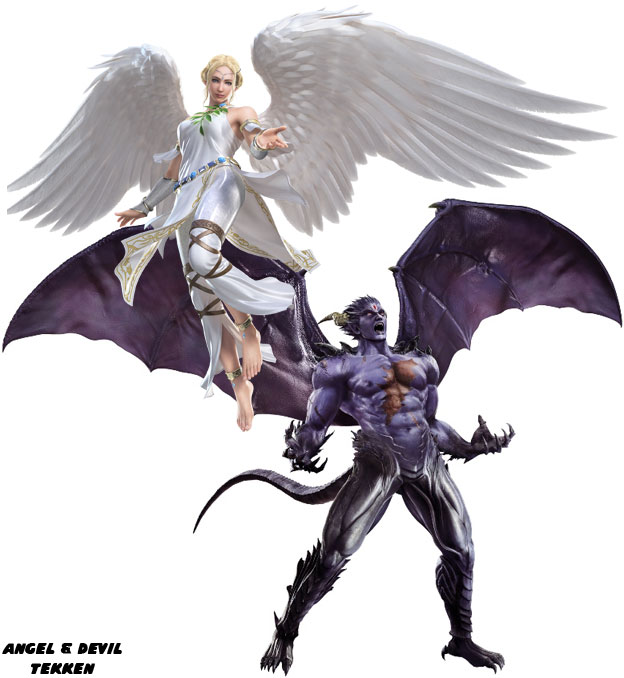
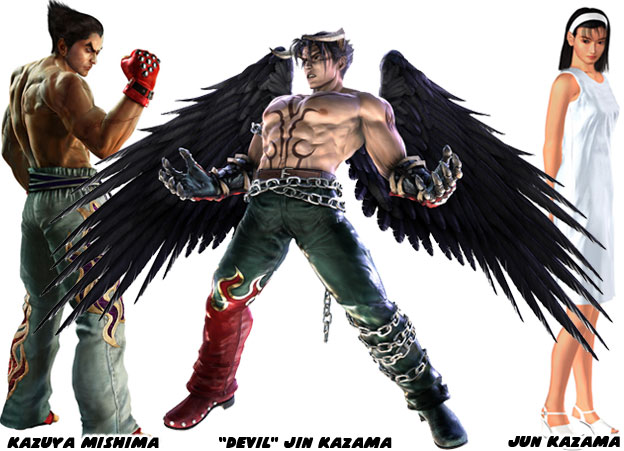
There was an Angel and a Devil personified in the Tekken series as well. In canon humans had been visited and controlled by metaphysical forces several millennium ago. Some of the descendants to these ancient creatures had survived to the modern era. Within very few people were were the genetic traits of these mythical creatures. Kazuya Mishima, a main character from the Tekken series, carried the "Devil Gene" within him. It activated when he became enraged, like the Hulk. Except instead of getting the emotional temperament of a child he became a vicious winged monster. An angel appeared from time to time to try and save the soul of Kazuya from his devil persona. The gene was passed on to his son Jin Kazama.

There was an aberration to the gene however. The mother of Jin was a good person. Jun Kazama was an officer for a wildlife conservation group. She was tasked to arrest Kazuya but fell in love with him early on in Tekken continuity. Jun had a very innocent personality, very angelic. As such there was a sort of in-between state that Jin existed in when he mutated. He did not quite become a leathery winged devil, nor did he become a dove winged angel but something else entirely.

Little by little the rest of the Namco universe had begun to shape the evolution of the Ridge Racer series. It began to make sense as the series continued to grow. The programmers, artists, animators, composers and designers that were pulled together once the original Ridge Racer Team had left the company worked on various puzzle, RPG, fighting game and space shooters. They did not necessarily bring with them an intimate knowledge of car designs, race history or track layout but they did have experience and the willingness to learn. The next blog will look at how they signed their work and changed the direction of the series. As always if you would like to sponsor me please visit my Patreon page and consider donating each month, even as little as $1 would help make better blogs and even podcasts!
follow the Street Writer on Patreon!

Friday, May 2, 2014

The manga and fighting game connection, part 2...

The long-standing fighting games had a number of unique elements that made them rise above the crowd, especially during the '90s when arcades were packed with the genre. Solid animation, control, character design, music and levels were all important to the most successful franchises. Some of the titles had a serious tone while others were more cartoonish. Tekken by Namco was one that superbly incorporated science fiction, fantasy and horror elements into the series. It was one of the first franchises in 3D and did not rely solely on the spectacle offered by early 3D models and textures but had the balance and control scheme that arcade visitors expected from more popular 2D titles. The game actually revolved around a very dysfunctional family. Heihachi and Kazuya Mishima were the father / son pair that loved to hate each other. Heihachi was the original boss in the series. The man was the head of the Mishima Zaibatsu corporation and the organizer of the King of the Iron Fist Tournament.


The Tekken series was the first game that really embraced dark characters as leads. Gamers were not aware of what Heihachi had done to gain his position of power, or what terrible things he had done to his son. Heihachi for example overthrew control of the company from his father, Jinpachi and went so far as to imprison him under a mountain, letting him starve to death. Heihachi had been raised brutally by his old man. The upbringing turned the man spiteful. Jinpachi said that having a son made him weak and when Kazuya was born he said Heihachi was weak as well. To prove that he was not weak, nor was his son, Heihachi dropped a then five-year-old Kazuya off of a cliff. He said if he was a true heir to the Mishima clan that he would not only survive but return many years later as a powerful man.

Mind you, most game players had no idea of the sordid history between the father and son. They only saw two characters that looked different than the leads in other fighting games. The ending for Kazuya was one of the most unnerving cinemas that gamers had seen at the time. In it Kazuya gently lifted Heihachi and carried him away. Players did not know right away that the two were related but assumed that it was a father and son. It was touching the way Kazuya carried the elderly man until he got to the edge of a cliff and then dropped him. The camera panned in to the face of Kazuya and caught a smile. It turned out to be the same cliff that his father had dropped him off of years earlier.


When the game first came out audiences had no idea how depraved the Mishima family was. Most fighting games of the era played the story very straight. Good guys fought the bad guys and the winner won a trophy. The endings reflected these simple scenarios. Tekken forever changed the formula. Players enjoyed the fighting style and design of Kazuya but had no idea that he had developed such a mean streak. It turned out that his physical and mental scars were mostly due to the abuse suffered at the hands of his father. Gamers had no idea that he was a bad guy until he end of the game. Even then the psychology of the character was understandable. The sequels expanded on the canon of the universe and the history between the father and son came to the forefront. Only in time did players realize how unique the world of Tekken really was.


It turned out that the protagonist and antagonist that spawned a franchise were actually rooted in the work of Osamu Tezuka. In an issue of Black Jack titled "Amidst Fire and Ashes" the doctor was introduced to a cruel tycoon. The issue opened with a volcano, Mt. Roar, that was erupting near a research center. There was a man in a suit looking down into the volcano before he turned and walked away. A park ranger spotted a charred body in the crater and lowered himself down to rescue the man. The body was badly burned but the person was still alive.

The body was taken to a visitor's center. A man sprung forward and announced himself as the father of Ryohei, the burn victim. He seemed distressed that his son was dying. Black Jack offered his services but for some ungodly high rates. He knew full well that the man was the CEO of Nippachi Trading and could easily afford the ¥20 million bill to save his son. The man reluctantly agreed but only after Black Jack produced a note from the son, saying that something may happen to him and he wanted the brilliant surgeon there when his father visited. Ryohei had a suspicion that his father may do something drastic and his hunch was right. Despite the lack of witnesses the CEO certainly felt the pressure to save his son. He agreed to Black Jack's demands and let him operate.


Mt. Roar continued erupting and the visitors were evacuated. Unfortunately Ryohei was in no condition to travel and only Black Jack and the CEO were left behind. The CEO actually tried to leave with the crowd until he was called out by the doctor. Even after Black Jack had saved his life the father was eager to kill the son. He tried wheeling out the body towards the volcano when he was stopped by Black Jack. The doctor punched out the suit and said he would never allow harm to come to the man he just saved.

It didn't take too much prodding from Black Jack to get a confession. It turned out that Ryohei did not want to inherit the company. It had dealings that he found unsavory. His first action would have been to dissolve the corporation. His father could not let that happen to the company he built himself. He wanted his son to be strong, in the business world people had to be cutthroat as he was. Eventually the CEO came to terms with what he had done and was willing to stay with his son and make sure that he recovered. The name Ryohei actually could be translated to "good boy," making the betrayal sting harder to readers. The two actually died on the mountain when it exploded. When rescuers found the bodies they said their hands were clasped tight together.


It was a bittersweet ending for Black Jack, but then again most of the stories were melancholy. The seeds for the evil corporate archetype had been planted in that adventure. The CEO was without a doubt the basis for Heihachi Mishima. The haircut and mustache were the obvious physical traits. Namco actually went one step further and tied the relationship between the story and game in Tekken 2. Kazuya did take over the company during his father's "absence." Heihachi survived the fall and used the time away to train and become stronger. When he returned he made sure to go after his son once more. In his ending Heihachi did not drop his son off of a cliff but instead right into the heart of an active volcano. When the camera panned into the face of Heihachi they could see a smile, mirroring the ending of the original game. Heihachi demonstrated all of the traits that made for great fighting game villains. He was cold, relentless and concerned only with power. In my personal ranking of fighting game villains he was number four. He was behind Silber but ahead of Mr. Karate. Not to say that I thought Heihachi was more powerful or even a greater fighter than Mr. Karate but Takuma Sakazaki did at least care for his own family. The top four villains in my book had no friends or family to speak of, two of them even tried killing off the family that they did have!


The evil CEO was such a well done villain that a variation returned in manga form years later. Daikenjuro Kanzuki, the father of Karin Kanzuki from the Street Fighter Zero / Alpha series, was another dead-ringer for the CEO. He was not in the game series but instead the manga based on the game. He shared the same haircut and mustache of the Nippachi Trading CEO. Daikenjuro was similar to Heihachi in that the two had amassed a fortune that could only exist in a fictional world. I'm talking about Scrooge McDuck levels of wealth. They both had private armies at their command, corporate offices in every corner of the globe, residences that stretched over several hundred acres of prime real estate and politicians in their back pocket. They both seemed untouchable. Of course both also had family members who were eager to dethrone them. This made for an interesting dynamic in the game and manga titles.


The characters in Tekken were based on other sources including cinema, animé and actual fighters. The canon of the universe however, specifically the two main villains, were rooted in the work from the "God of manga" Osamu Tezuka. It stood to reason that the series had the depth to carry it forward for almost 20 years. One studio however decided that it was not enough to use incidental characters from Black Jack but instead to try and adapt the main character for a game. The next entry will look at this character in depth. If you would like to sponsor me please visit my Patreon page and consider donating each month, even as little as $1 would help make better blogs and even podcasts!
follow the Street Writer on Patreon!