The long-standing fighting games had a number of unique elements that made them rise above the crowd, especially during the '90s when arcades were packed with the genre. Solid animation, control, character design, music and levels were all important to the most successful franchises. Some of the titles had a serious tone while others were more cartoonish. Tekken by Namco was one that superbly incorporated science fiction, fantasy and horror elements into the series. It was one of the first franchises in 3D and did not rely solely on the spectacle offered by early 3D models and textures but had the balance and control scheme that arcade visitors expected from more popular 2D titles. The game actually revolved around a very dysfunctional family. Heihachi and Kazuya Mishima were the father / son pair that loved to hate each other. Heihachi was the original boss in the series. The man was the head of the Mishima Zaibatsu corporation and the organizer of the King of the Iron Fist Tournament.
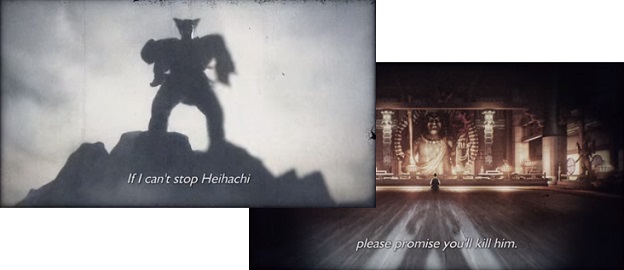
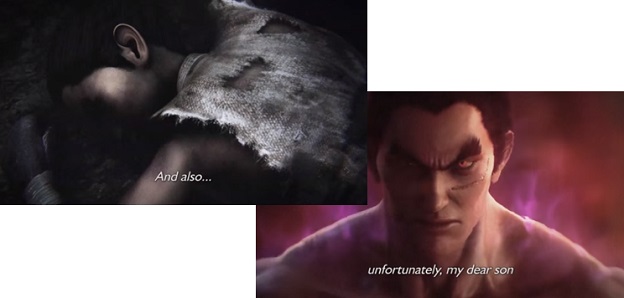
The Tekken series was the first game that really embraced dark characters as leads. Gamers were not aware of what Heihachi had done to gain his position of power, or what terrible things he had done to his son. Heihachi for example overthrew control of the company from his father, Jinpachi and went so far as to imprison him under a mountain, letting him starve to death. Heihachi had been raised brutally by his old man. The upbringing turned the man spiteful. Jinpachi said that having a son made him weak and when Kazuya was born he said Heihachi was weak as well. To prove that he was not weak, nor was his son, Heihachi dropped a then five-year-old Kazuya off of a cliff. He said if he was a true heir to the Mishima clan that he would not only survive but return many years later as a powerful man.
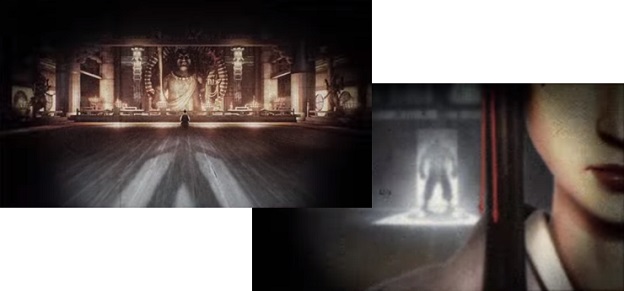
Mind you, most game players had no idea of the sordid history between the father and son. They only saw two characters that looked different than the leads in other fighting games. The ending for Kazuya was one of the most unnerving cinemas that gamers had seen at the time. In it Kazuya gently lifted Heihachi and carried him away. Players did not know right away that the two were related but assumed that it was a father and son. It was touching the way Kazuya carried the elderly man until he got to the edge of a cliff and then dropped him. The camera panned in to the face of Kazuya and caught a smile. It turned out to be the same cliff that his father had dropped him off of years earlier.

When the game first came out audiences had no idea how depraved the Mishima family was. Most fighting games of the era played the story very straight. Good guys fought the bad guys and the winner won a trophy. The endings reflected these simple scenarios. Tekken forever changed the formula. Players enjoyed the fighting style and design of Kazuya but had no idea that he had developed such a mean streak. It turned out that his physical and mental scars were mostly due to the abuse suffered at the hands of his father. Gamers had no idea that he was a bad guy until he end of the game. Even then the psychology of the character was understandable. The sequels expanded on the canon of the universe and the history between the father and son came to the forefront. Only in time did players realize how unique the world of Tekken really was.

It turned out that the protagonist and antagonist that spawned a franchise were actually rooted in the work of Osamu Tezuka. In an issue of Black Jack titled "Amidst Fire and Ashes" the doctor was introduced to a cruel tycoon. The issue opened with a volcano, Mt. Roar, that was erupting near a research center. There was a man in a suit looking down into the volcano before he turned and walked away. A park ranger spotted a charred body in the crater and lowered himself down to rescue the man. The body was badly burned but the person was still alive.
The body was taken to a visitor's center. A man sprung forward and announced himself as the father of Ryohei, the burn victim. He seemed distressed that his son was dying. Black Jack offered his services but for some ungodly high rates. He knew full well that the man was the CEO of Nippachi Trading and could easily afford the ¥20 million bill to save his son. The man reluctantly agreed but only after Black Jack produced a note from the son, saying that something may happen to him and he wanted the brilliant surgeon there when his father visited. Ryohei had a suspicion that his father may do something drastic and his hunch was right. Despite the lack of witnesses the CEO certainly felt the pressure to save his son. He agreed to Black Jack's demands and let him operate.

Mt. Roar continued erupting and the visitors were evacuated. Unfortunately Ryohei was in no condition to travel and only Black Jack and the CEO were left behind. The CEO actually tried to leave with the crowd until he was called out by the doctor. Even after Black Jack had saved his life the father was eager to kill the son. He tried wheeling out the body towards the volcano when he was stopped by Black Jack. The doctor punched out the suit and said he would never allow harm to come to the man he just saved.
It didn't take too much prodding from Black Jack to get a confession. It turned out that Ryohei did not want to inherit the company. It had dealings that he found unsavory. His first action would have been to dissolve the corporation. His father could not let that happen to the company he built himself. He wanted his son to be strong, in the business world people had to be cutthroat as he was. Eventually the CEO came to terms with what he had done and was willing to stay with his son and make sure that he recovered. The name Ryohei actually could be translated to "good boy," making the betrayal sting harder to readers. The two actually died on the mountain when it exploded. When rescuers found the bodies they said their hands were clasped tight together.

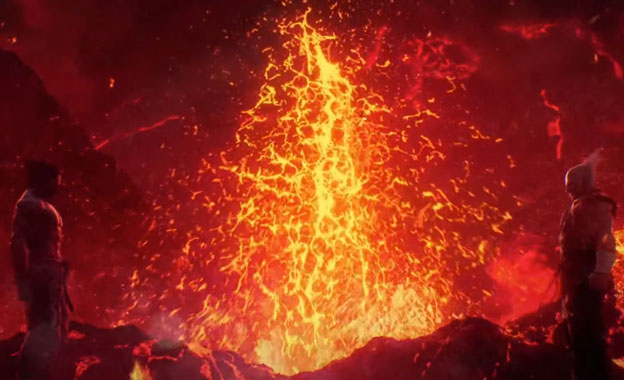
It was a bittersweet ending for Black Jack, but then again most of the stories were melancholy. The seeds for the evil corporate archetype had been planted in that adventure. The CEO was without a doubt the basis for Heihachi Mishima. The haircut and mustache were the obvious physical traits. Namco actually went one step further and tied the relationship between the story and game in Tekken 2. Kazuya did take over the company during his father's "absence." Heihachi survived the fall and used the time away to train and become stronger. When he returned he made sure to go after his son once more. In his ending Heihachi did not drop his son off of a cliff but instead right into the heart of an active volcano. When the camera panned into the face of Heihachi they could see a smile, mirroring the ending of the original game.
Heihachi demonstrated all of the traits that made for great fighting game villains. He was cold, relentless and concerned only with power. In my personal ranking of fighting game villains he was number four. He was behind Silber but ahead of Mr. Karate. Not to say that I thought Heihachi was more powerful or even a greater fighter than Mr. Karate but Takuma Sakazaki did at least care for his own family. The top four villains in my book had no friends or family to speak of, two of them even tried killing off the family that they did have!
The evil CEO was such a well done villain that a variation returned in manga form years later. Daikenjuro Kanzuki, the father of Karin Kanzuki from the Street Fighter Zero / Alpha series, was another dead-ringer for the CEO. He was not in the game series but instead the manga based on the game. He shared the same haircut and mustache of the Nippachi Trading CEO. Daikenjuro was similar to Heihachi in that the two had amassed a fortune that could only exist in a fictional world. I'm talking about Scrooge McDuck levels of wealth. They both had private armies at their command, corporate offices in every corner of the globe, residences that stretched over several hundred acres of prime real estate and politicians in their back pocket. They both seemed untouchable. Of course both also had family members who were eager to dethrone them. This made for an interesting dynamic in the game and manga titles.
The characters in Tekken were based on other sources including cinema, animé and actual fighters. The canon of the universe however, specifically the two main villains, were rooted in the work from the "God of manga" Osamu Tezuka. It stood to reason that the series had the depth to carry it forward for almost 20 years. One studio however decided that it was not enough to use incidental characters from Black Jack but instead to try and adapt the main character for a game. The next entry will look at this character in depth. If you would like to sponsor me
please visit my Patreon page and consider donating each month, even as little as $1 would help make better blogs and even podcasts!