Showing posts with label orochi. Show all posts

Wednesday, December 6, 2023

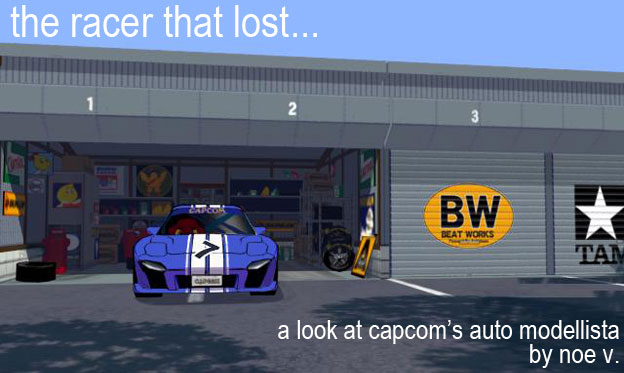
The racer that lost... a look at Capcom's Auto Modellista. A 1UP classic from Feb 25, 2013

Auto Modellista, a console title game from 2002 was an attempt for Capcom to get a franchise racing game established. The studio was better known for their fighting and adventure titles more than their racing games. Their previous high-profile title MotoGP was actually started by Polyphony Studios, the people that created the Gran Turismo series for Sony. Before that Capcom had not made a serious effort to get a racing game in their library since Slipstream, an arcade racing game from 1995. At that time Capcom was a little late in trying to jump on the racing bandwagon. Slipstream used pixels instead of polygons for their graphics engine. By 1995 the two major arcade racing developers Namco and Sega had long since moved away from sprites to 3D textured polygon models. Slipstream looked like a better version of Namco's Final Lap, the 1987 spiritual successor to Pole Position 2. By 1994 Namco had released the all-polygon Ace Driver a year before Slipstream. Although crude when compared to modern 3D racing games it was years ahead of the technology used by Capcom.
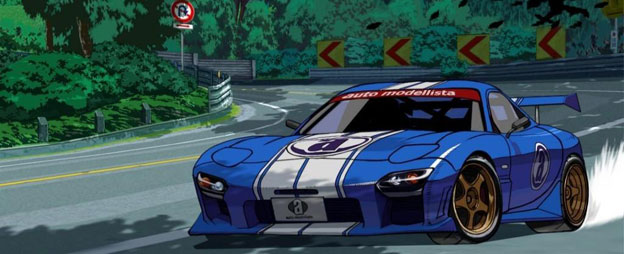
Racing leagues including Formula-1, NASCAR and GT had already been done by other publishers. Genres like kart racing, rally racing, boat racing, monster truck racing, combat racing and even science fiction racing had also been explored on various consoles as well. Capcom would have to come up with something unique to stand out from the glut of racing games on the market. The wanted to have several things that no other racing game offered, the defining feature would be the graphics. The game used cel-shading to help give the cars an animé quality. Not many games have been released using the graphics technique and very few of them, like the 2001 arcade sleeper Wild Riders were racers. 

By going with cel-shading Capcom was able to make great use of lighting, shadows, colors and even textures on the track. The high contrast between the cars and environments made for a game which looked good from every angle. Small details like the brakes heating up and changing color could be made out behind the spinning wheels. The engine even rendered "speed lines" like an illustrator would to convey movement on the edges of the frame while players raced. The faster they went the more speed lines they would get. To put it succinctly no other console racer looked like Auto Modellista.
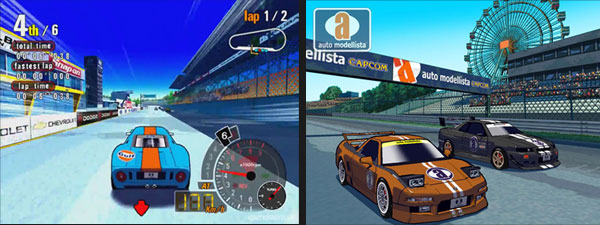
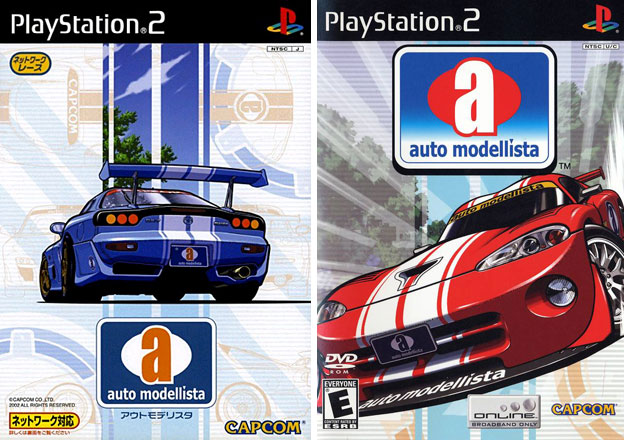
The cars featured in the game were licensed from real world rides. Most of the major manufacturers from Japan and the US were represented. The game did not have the hundreds of makes and models from a title like Gran Turismo, instead it focused on the sportier cars from the major companies. In Japan the legendary street racer the Mazda RX-7 was the poster child for the game. In the US it was the Dodge Viper. The game actually had a couple of releases in Japan because not all the licensed cars were in the original release. After the US and UK got their versions with a few more rides then Japan got the full version with online support. The game was one of the rare PS2 racing games that supported 8-player online play. Some bundles in Japan included a special network adaptor for the PS2 to try to get more players interested in the release.
There were only a handful of courses in the game but they were all based on real Japanese locations. There were several mountain stages from rural areas and big city circuits. The Suzuka raceway was the most high-profile track in the game. The city circuit tracks were set at night and offered players a chance to drive the circuits in the rain. This meant carefully tuning each car for maximum efficiency and changing the tires from racing slicks to radials. There was a bonus track for players that completed all of the challenges. The Tamiya Kakegawa Circuit was the site of many remote control car racing championships. Once a player had unlocked this track then they could take any car to it. The car would be miniaturized and made to look and sound like an actual R/C car. Players could see the pins holding down the body kit as well as the antenna sticking out of the frame. Even the sound of a tiny electric motor would replace the usual engine sounds. It was a treat watching the world pass by from the POV of a toy on the road.

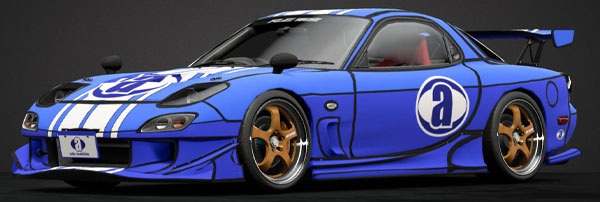
To make the game even more unique it offered players the chance to personalize cars in the Garage Life mode. The body kits, tires and aftermarket parts were all licensed from real companies. Players could not only assemble their ideal rides, they could also tune it up, paint it and even cover it in real or created stickers if they wanted to. To help further set this game apart from the other racers on the market there was a Video Mode as well. Before Auto Modellista there had been games that allowed players to save and edit replays of races. Auto Modellista allowed players to add music, filters and video effects in addition to the usual editing tools. Players could make replays that were as dazzling as music videos and save them to their memory cards.
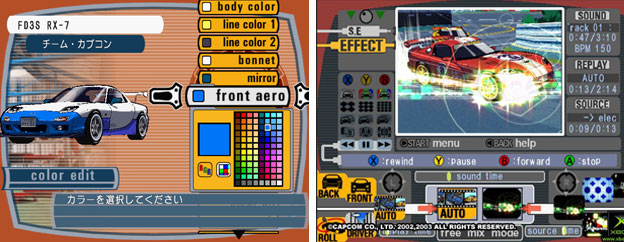
The music featured in the game was composed by Tetsuya Shibata and Isao Abe. It was an eclectic mix of jazz, electronica and trip-hop that did not rely on any licensed music. Some people would argue that the music was actually the best part of the game. The two-disk soundtrack is actually one of the rarer Capcom albums sought by collectors.

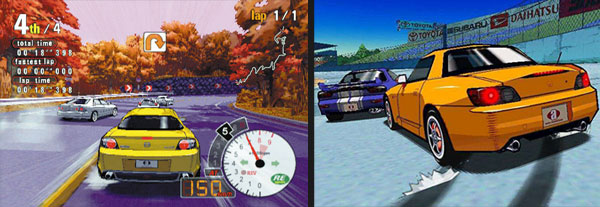
The game had a distinct visual look, a great soundtrack, a decent lineup of cars, customization and online support but it was missing something very important. It lacked solid control, the most crucial element to any game. The cars did not handle realistically, nor did they handle in an exaggerated arcade style. For a game that featured numerous mountain stages the absence of drifting or sliding the cars around corners was shocking. It was seemingly impossible to get the cars to even commit to a slide. Players could choose the most powerful car in the game, give it slick tires and put it on a rainy track and it would still not drift more than 10 feet without coming to a screeching halt. Even the R/C cars that players could race on the Kakegawa circuit did not respond realistically. A remote control car raced and handled much differently than a real world car. At scale the small cars could go over 300MPH and hug turns impossibly close to the edge without losing control. Conversely if the driver wanted to have a drift race with an R/C car then they could also make the small cars race completely sideways at command. That lack of detail for the real and R/C physics broke a game that was filled with tremendous possibilities as much as it was filled with style.
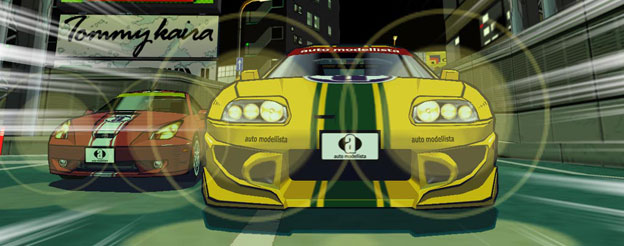
Perhaps it was the focus on style rather than substance that ultimately lead to the game being panned by critics and players alike. The courses were well done but players were expecting more locations. Instead Capcom offered an uphill and downhill version of the two mountain stages and a clockwise and counter-clockwise version of the city circuits. The great visuals exploited on each track were done in by the lack of diversity. The novelty of the graphics wore off once players had mastered the tracks. There was little else to do than play dress-up with the cars a player had unlocked. Perhaps this was the greatest strength that the game had overlooked by most players and editors.

Auto Modellista means car designer in Italian. It does not mean racing simulator. The focus on the game was more on the look and design of the cars rather than racing. It never aspired to be taken as seriously as Gran Turismo. The game was designed to make car enthusiasts slow down and appreciate the cars and car culture. If ever there was a videogame that required players to approach it differently than other titles in the same genre then this was it. I would compare the experience of Auto Modellista to the Japanese concepts of food preparation and presentation. 
The nation of Japan was known for their elaborate tea ceremonies however they were also known for creating sophisticated but inexpensive box lunches. The bento box put different but complimentary food choices into small compartments. By doing so none of the flavors would cross contaminate the others. This also allowed crisp food and moist food from spoiling each other. The bento boxes and ekiben or bento boxes for train commuters evolved to include a number of unique food combinations that would stay fresh for travelers. Some of the boxes, especially the ceramic kind were designed to be saved, collected and reused. Even the plastic boxes were designed with some forethought. They were sometimes decorated with sumi, or ink wash style paintings. Those that slowed down from their busy schedule to enjoy each meal appreciated the flavor combinations and even the preparation that went behind the meal. Every facet of Auto Modellista was compartmentalized and meant to be savored individually. The unlocking of cars and tracks. The customization of the tires, engine, suspension and body. The ability to paint and cover the car with sponsor stickers. The ability to remix race videos. All of these things were well done individual components. The whole could then be appreciated especially when compared to the other racing games on the market.
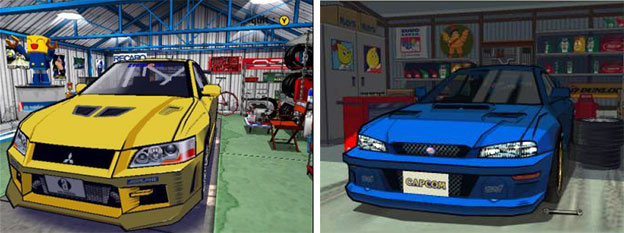
Garage Life Mode was used to hold the attention of players and help them acknowledge the differences in the title. Gamers could choose from three types of garage, the racing, contemporary and tudor styles. Each garage could then be decorated with items collected by winning races. Trophies and plaques were the obvious choices to hang on walls but beyond that players could set up their space any way they wanted to. They could put down and organize cabinets, tool boxes and machine parts. Players could unlock vintage tin signs, old cans of oil and antique radios to put on shelves. Posters from real world locations and billboards could be hung along the walls. Even the Servbots from Mega Man Legends could be displayed as trophies. Layer after layer could be built up in each garage. The items placed and displayed would tell something about the racing fan as much as the car featured in the room. It was very much like assembling a bento box suited to the tastes of the gamer. The minutiae provided by Auto Modellista were often overlooked in other racing games. Players rarely, if ever, had the time to spend simply appreciating the cars they had unlocked. Assembling a virtual collection of car memorabilia was unheard of, as was making music videos out of saved races.

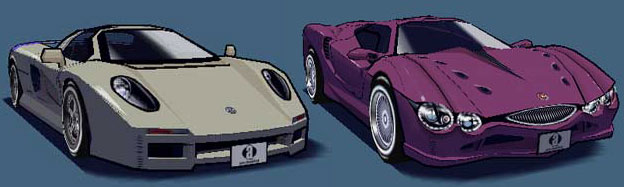
The majority of the cars in the game were fairly well known to car circles; the Corvette, Mustang, Cobra, RX-7, 350Z and even Skyline had great racing reputations. Some of the other choices for the game had never been featured in a racing game. The Jiotto Caspita by Dome Co. was a very rare Japanese exotic car that could actually give the other supercars in the game a genuine challenge yet was virtually unknown to most gamers. The other, the Orochi by Mitsuoka was described by the hosts of the British show Top Gear as the ugliest car ever made. I think the Top Gear commentators were a bit full of themselves when they came to that conclusion. The lines and styling on the Orochi were very bold, as bold as those from the Italian Ferrari or Maserati designers. To me the car looked aggressive and even threatening. If it were not the perfect Interceptor from the game Spy Hunter brought to life then I wouldn't know what other car would fit the bill. Placing these two rare cars into the game was like adding a complex taste, if my bento box metaphor were appropriate. They might not be appreciated or even acknowledged by gamers but they were unique choices that helped make the game stand out.
Auto Modellista offered tremendous originality, glimpses at courses and experiences that were uniquely Japanese. Like most gamers I was put off by the controls and lack of realistic physics applied to the cars. Once I beat the game I went back through it to see what details I had overlooked. It was at that point that I discovered how much work Capcom had put into the title. Little by little I began unlocking items for my garage. I began spending more and more time setting up my dream layout. Deciding the exact placement of my stereo, toolbox and air compressor. Making sure my trophies were displayed not too discreetly. The various batteries and oil cans sorted into their own shelves. Classic tin signs framing the old racing gloves and helmets on my wall of fame. The garage suddenly had a lived-in feel. Whenever I parked a car in the garage it seemed to fit just right.

Then I went back to the roads and began driving the courses again. I noticed the high speed train running over the bridge in Osaka, as well as the low flying jet in Tokyo. The LOVE sign in Shinjuku. At night the streets belonged to the racers. There were no fans obscuring the sidelines, especially not in the rain. The lens blur effect from the headlamps, small rooster tails shot up by wheels and speed lines applied by the graphics engine made the experience feel more intimate. It was about the cars and the road, not the spectacle of professional racing. It was the experience of driving reduced to the most important components. A player that was in tune with their car knew how hard they could push it on turns, where the best lines were on the road and how to move through the gears. They could appreciate the experience of driving, absorb the details from the environment and the challenge of overtaking opponents in the middle of a race. Players were expected to live in these moments and internalize them, to make the races as individual as Garage Life mode.
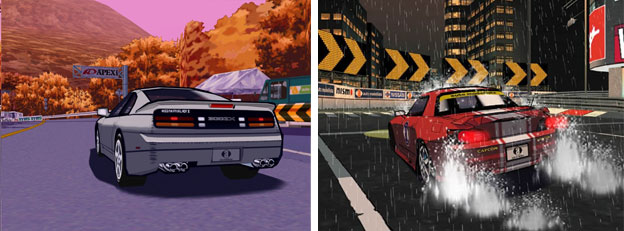
None of the courses were more inspiring than Akagi Hill. Going from sea level to almost 5000 feet in elevation in just over 12 miles Mt. Akagi had been the site of numerous road races, bicycle races and trail marathons. It had been featured before on games like Initial D and other racing games based in Japan. It never looked as memorable as it did in Auto Modellista. The eternal autumn that painted the mountain orange. The strong shadows cast on the road by overhanging trees. The bright leaves on the ground that could be kicked up by the cars. The setting sun that blinded some of the turns. This course was like a snapshot, a moment frozen in time. These were the best sports cars of a generation on one of Japan's most memorable roads. The beauty of car and course would be preserved forever in Auto Modellista. Only those that took a moment to appreciate the splendor of the course would understand what Capcom was trying to capture.
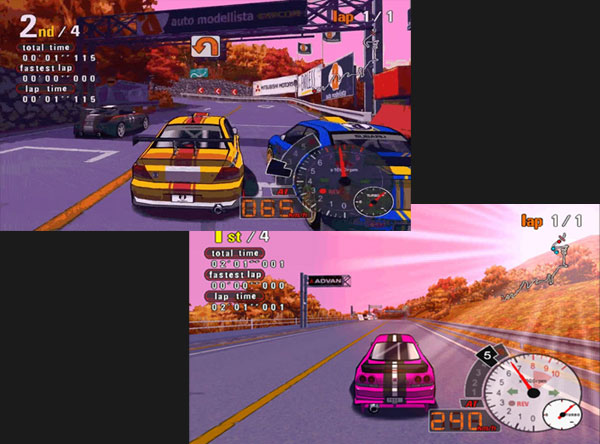
Auto Modellista never became the franchise that Capcom wanted it to be. Who knows where the series would have taken players if only it had done better? In the rush to complete the title as fast as possible most gamers never gave it a fair chance. The experience of Auto Modellista was more esoteric than players were used to. They tuned cars, raced them and won trophies as they had dozens of times earlier. Because of the brevity of courses and lackluster gameplay the entirety of Auto Modellista was panned. Playing as a car designer was what gamers missed. To appreciate the beautiful coexistence man and machine the player had to be willing to put more time into the game. Passing through the title was simply not good enough. To grasp the experience that Capcom was going for a player had to invest more time in the garage and more miles on the road. The only thing that would be remembered by gamers were the visuals. No racing game before or since had colored the genre so profoundly. The look of the original PS2 and Xbox release continued to inspire, even at the dawn of the PS4 and Xbox 720. The gamer that gave up on Auto Modellista without giving the entire experience a thorough chance was ultimately the racer that lost.
Were there any racing games, or other video games that failed with critics, and audiences that you still find joy in? Tell me about it in the comments section. As always if you would like to sponsor me please visit my Patreon page and consider donating each month, even as little as $1 would help make better blogs and even podcasts!
follow the Street Writer on Patreon!

Monday, July 25, 2016

The Street Writer Podcast, Episode 7

On the previous blog I had talked about the Bancho, Japanese school delinquents that knew how to fight. They were made popular in the '80s thanks to manga and anime. In the '90s they would be incorporated into fighting game design. We begin today in the early '90s. The stand alone King of Fighters franchise hadn't been born yet and SNK was a crossroads. Should they keep taking chances in the fighting game genre or branch out with other formats? The studio had found moderate success with their fighting games but they wanted to create a breakout hit, like Street Fighter II or Mortal Kombat. In order to do this they had to take some chances with the genre and introduce some new blood to the lineup. They had done some experimentation previously, the ability to jump between the foreground and background in Fatal Fury was revolutionary. The large scaling sprites in the Art of Fighting gave it a cinematic feel. Budgets were tight during the development of the King of Fighters '94 (KoF) and risking it all on a completely new cast was out of the question. It made sense to bring together the Art of Fighting (AoF) and Fatal Fury (FF) groups. Those titles had both evil and heroic fighters that audiences were already familiar with. Reaching out and including the Ikari Warriors and Psycho Soldiers would ensure some non-fighting game players would check out the title too. As the teams were being finalized the studio decided that they had to take a chance on some new faces. They did not want to place either the AoF or FF teams as the stars of the game but rather a new group which the plot would focus on. The designers bet that the new teams would become as iconic as the previous franchise characters. Well the studio was half right. Team Japan would grow a tremendous following. These fighters would become pivotal in the canon of the series while the members of Team USA would fade into obscurity.


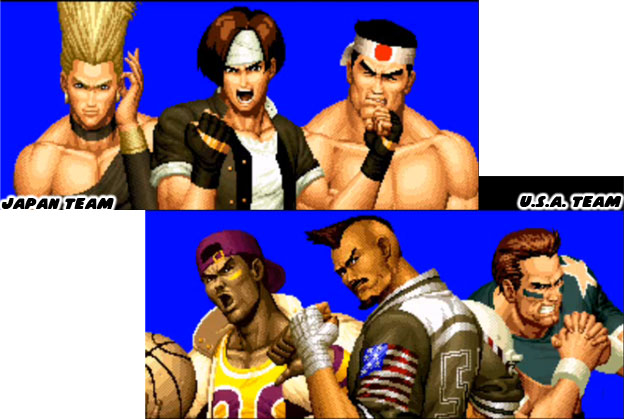
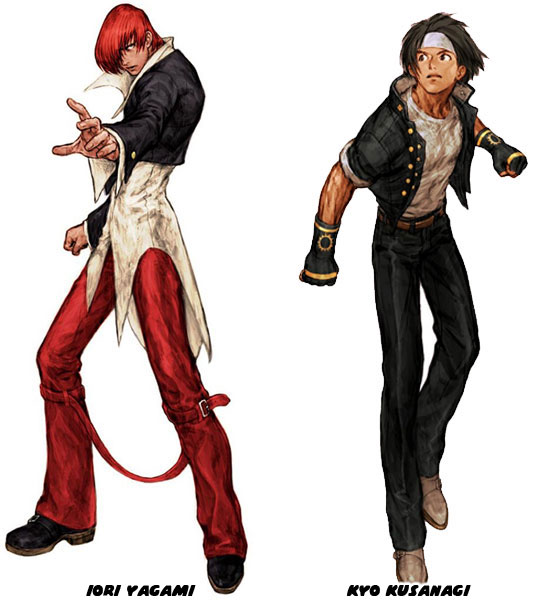
As the first generation of fighting games tapered off the developers began looking for new influences. Team Japan and Team USA were pulled mainly from pop culture rather than fight culture. The references worked in favor of Team Japan. The team captain was Kyo Kusanagi was a young and handsome high school student. His design was was very clean cut but deceptive. His uniform looked like a traditional gakuran, yet there was something unique about his design. Think about a character like Ryu, he certainly looked like a traditional karate fighter, yet most traditional fighters did not wear a gi with torn sleeves and frayed pant cuffs. Nor did they let their hair grow too long and unruly. At first glance you were supposed to know that Ryu was a karate fighter, but the details of his costume told a story. Similar details applied to Kyo's design. His hair was long and held up with a headband rather than a cap, his jacket was open allowing him a wide range of movement. His sleeves were rolled up and he wore fingerless black gloves. He was certainly a fighter more than a scholar. His teammates represented other aspects of Japanese culture. The flamboyant Benimaru Nikaido, whose crop-top, earrings and tall blonde hair were very counter-culture. The character had a unique fighting style and the ability to generate electricity and shock his opponents. Benimaru was modeled closely on Jean Pierre Polnareff from JoJo's Bizarre Adventure. The third member, Goro Diamon, was the bruiser of the team and the one with the closest traditional fighting style. He was a Judo gold-medalist yet also had the ability to perform some superhuman feats of strength. When deciding who would represent Japan in the KOF global tournament there was an MMA tournament. Kyo defeated his two partners and became team captain.


The team that represented the USA was based on basic knowledge of the US. If anything they were stereotypes of Western culture. The team captain was a street boxer named Heavy D. possibly after the rapper with the same name. His partners were a basketball player named Lucky Glauber who was not unlike Kobe Bryant, even wearing the Los Angeles Lakers gold and royal colors. He even had a distinct "swoosh" logo on his cheek, certainly without Nike's knowledge or consent. He could summon basketballs to throw at his opponents instead of fireballs. The third, Brian Battler, had a football shoulder pad and a few tackling moves. In the KoF manga by Gamest the character was introduced as a stock car driver that was seemingly indestructible. Having walked away from a burning car crash just a few moments after being introduced in the series. It was obvious that the US team didn't have the same level of forethought that SNK had used when creating Team Japan. There was no doubt that international audiences would understand that they were typical "American" characters with their focus on sports. Past that there was little that made the US figures interesting. Each character had a few neat moves but none really looked like a fighter except for Heavy D. One character couldn't really carry the team and that was part of the reason why they faded into obscurity. The members were seen after KOF '94 but weren't the stars that SNK had hoped for. That gamble had only partially paid-off.


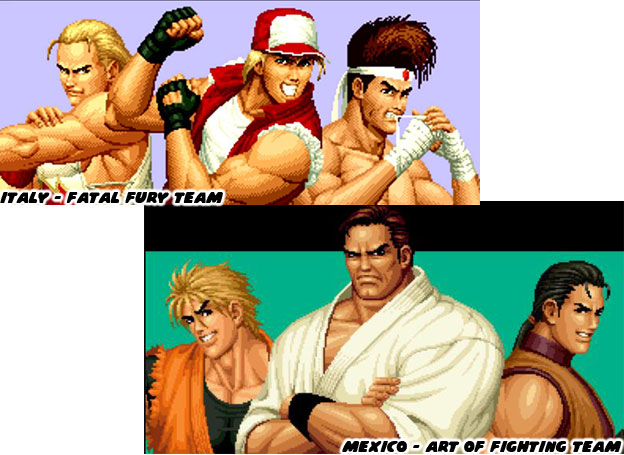
Team Japan and Team USA were planned as being the counter points to the Fatal Fury and Art of Fighting teams, so that no one country (or series) could claim to having the best fighters in the SNK universe. In canon Team Japan was written as the winners of the first three KOF titles. It was obvious from the onset that the team had some staying power. None of the new characters introduced had a bigger following than Kyo. The bancho had finally found a mainstream fighting game. Like Ryo Sakazaki and Terry Bogard before him there was a star that would help keep SNK on the map and give audiences somebody to root for, somebody to follow and most important somebody to play as. With the introduction of Kyo something was missing. He lacked a rival. In promotional material Team Japan was featured sided against Team Italy, the Fatal Fury group. Yet many players didn't see that as a balanced lineup. Terry was an older and more experienced brawler, his brother Andy had mastered the Shiranui ninjitsu art and Joe Higashi was also a muay thai striker and not a grappler. None of the men were as outlandish as Benimaru or as large as Goro. Also, despite being teams of three the team captain was usually recognized as the most interesting or most popular character. Whomever was going to rival team Japan needed to have someone as interesting as Kyo. This was going to be a problem.


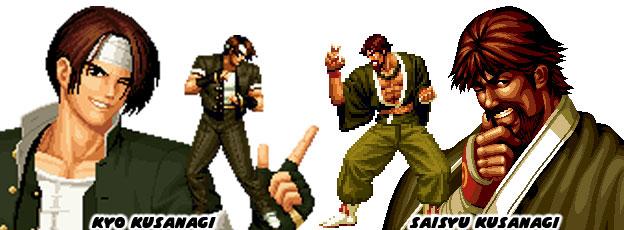
Kyo wasn't just a really good fighter, he had the ability to project fire from his hands. It was the special attack that allowed him to hold his own against Ryo or Terry plus it was a very well animated effect. As the series grew it was revealed that Kyo had mastered the art of fire at the age of 15. It was a secret technique known only to the members of the Kusanagi clan. At a young age he had passed all of the trials of his family and had even surpassed his father Saisyu in fighting ability. Yet in typical fatherly (stubborn) fashion Saisyu would never admit that he was no longer the greatest warrior in his clan. Just as Takuma Sakazaki would never admit that he was ready to defer the throne to Ryo. Both men felt that they still had something they could teach the next generation. Saisyu would turn up in King of Fighters '95 as a sub-boss. He had an interesting design, his costume was closer to a fighting monk with the family crest, an eclipsed sun on the back of his robe. Kyo had the same logo on the back of his jacket. Yet Saisyu was not a great rival for Kyo. The animosity was not there. The two would never be rivals like Heihachi and Kazuya Mishima from Tekken. The studio had to dig a little deeper in order to create just the right rival. It turned out that the SNK had made a similar design error previously.


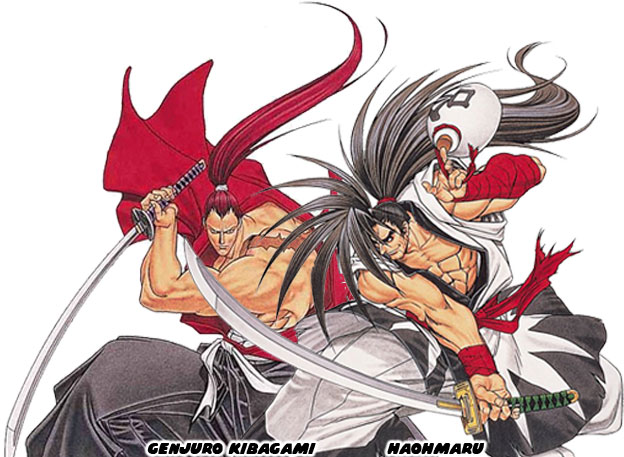
In 1993 the studio had released a smash hit called Samurai Shodown / Samurai Spirits in Japan. It was one of the first and best weaponized fighting games ever developed. It had very bold character designs, inspired by fictional and real sword fighters from the feudal era. The star of the game was the hard-drinking, wild-haired Haohmaru. A wandering swordsman very loosely based on the actual Miyamoto Musashi. While the first game had many other sword fighters none really matched the design of Haohmaru or could be considered his main rival. A year later the studio finally crafted a rival that was beat-for-beat every bit as interesting as the main character, if not more so. Genjuro Kibagami was the red-haired rival with a nasty scar running the length of his back. It was given to him by his mother after Genjuro killed her lover. In return he killed his own mother. There was a whole lot of drama in the series and I might talk about it some day, but the main beef among the cast was between Genjuro and Haohmaru. They used to be friends but that friendship turning into a rivalry. It made things difficult for the star of the game, knowing that not only did he have to deal with the main villain, usually a demon of some sort, but that there was another sword master out there looking to take his head. SNK looked at this rivalry and found the missing ingredient for the King of Fighters. It didn't really matter if Team Japan had a person to balance out Benimaru or Goro as long as there was somebody for Kyo to deal with.


Heavy D from the USA did not seem interesting enough to merit a rivalry with Kyo. Team captains Terry and Ryo had their own rivalries and their own villains to contend with, not to mention that they were older and more seasoned fighters than Kyo. SNK decided to create an age-appropriate and culturally similar rival. This young fighter was Iori Yagami, like Kyo he was a high school student, a bancho without a gang to lead. He had his own unique spin on the school uniform, with an un-tucked long shirt, bright red pants and suspenders tying his knees together. His look was so bold that audiences instantly knew that he was the perfect rival for Kyo. Nothing had to be stated in canon in order for audiences to see that this character was going places. As the series went on it was revealed that the fire powers of Kyo, and odd blue fire of Iori were from their respective clans. The two were part of a lineage that was destined to battle the Orochi, historically this was an eight-headed, eight-tailed serpent from Shinto mythology. In KOF canon it could instead be represented as a human. The original creature was an Earth god and required a sacrifice every year. The sun goddess Amaterasu (the star of the Capcom game Okami) cast her brother Susanoo down from Heaven for tricking her. While on Earth Susanoo found out about the sacrifices and fought the Orochi. First by getting each head drunk and then cutting the monster into pieces. There was a fantastic science fiction retelling of the legend in the manga titled Orion by Masamune Shirow. But I digress...

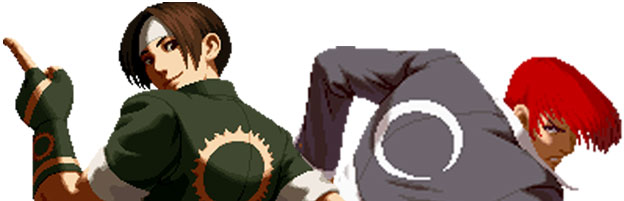
There was tremendous symbolism involved with the design of both Kyo and Iori. The fire techniques that each held were not scientific but spiritual in nature. The Kusanagi house symbol was a sun in eclipse. This unbroken ring represented both Amaterasu as the sun, but also symbolized the return of the Orochi. The eclipse was the moment that her light was no longer touching / protecting or enlightening the Earth. It was fire that would subdue the Orochi again. This layer of design was a bit more heavy-handed with Kyo's father. Saisyu had prayer beads, tabi socks and a robe that looked closer to that of a Shinto priest. The sun on the back of his costume was much more pronounced. Iori was a representative of the Yagami clan, they had built a blood feud with the Kusanagi clan going back untold generations. The Yagami had also been put in charge of keeping the Orochi at bay, and were also masters of the sacred fire techniques. At some point in the past they were seduced with promises of power. So they released the Orochi and in doing so they did gain more power than the Kusanagi. The family symbol on the back of Iori's gakuran was a crescent moon. The moon was a celestial counter to the sun, it was also mysterious to the ancient tribes on Earth. The silver globe in the sky seemed to have magical properties of its own. It illuminated the night and could even be seen during the day. The logo was more than the balance to Kyo's family crest. The sun was in heaven and the Orochi was bound to Earth. The Orochi could only break out with the help of the moon, the gateway between the Earth and the Heavens. It did this by blocking the sun during an eclipse or by following an opening at night. The crescent moon of the Yagami clan was specifically a waning moon. This was a moon that was on its way to becoming completely dark. The circle was broken, letting the darkness out, or perhaps in the case of the Yagami letting the darkness in.


The power that the Orochi promised was delivered but it came at a price. The sacred flame the Yagami created now turned blue. This supernatural power drove the Yagami members into a frenzy and shortened their lives in the process. Iori came from the same cursed blood and was a ticking time bomb. It wasn't high school pressure, nor was it runaway hormones driving him mad. The only thing that could satiate his bloodlust was the destruction of the Kusanagi lineage, at least that was what the Orochi promised. Kyo may not have believed in the myth or he may have been so confident in his powers that he actually seemed bored with his role. Kyo was young, the era he was living much different from ancient Japan. Bullet trains now criss-crossed the countryside, every phone had internet access and cars practically drove themselves. The superstition of the Orochi didn't quite fit in with his world view. It made sense that the high school student was being a little immature at the start of the KoF series. He was looking for a purpose and he found it in a girl, a classmate named Yuki. The sudden love interest was something that happened to bancho manga heroes Takagi Yoshiyuki and Taison Maeda in Osu Karate bu and Rokudenashi Blues. As Kyo grew up he also learned that his gift could be shared rather than coveted. Again, like Takagi and Taison there was a lot of growing and teaching happening in the series. Kyo and later-on his father, began teaching his classmate Shingo Yabuki their secret fighting techniques. Kyo would have an apprentice whereas his rival would have none. It seemed that the wisdom of Amaterasu did manage to get through to him.

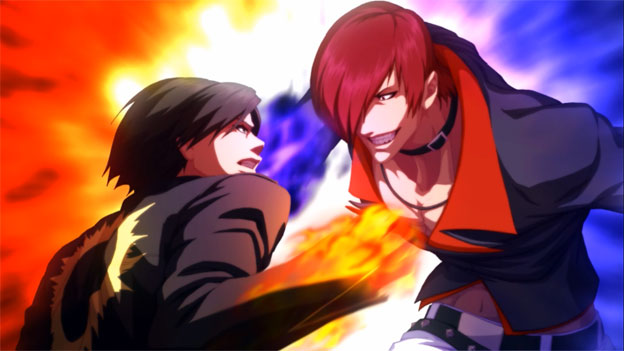
Kyo matured into his role. He discovered other beings with inexpiable powers in the King of Fighters tournament. He discovered that cults and demons were real. The tournament was a front to bring together the greatest fighters and recruit them or kill them once learning their secrets. Kyo became central to the plot of NESTS; militant extremists bent on controlling the world with their super-powered clones. They were able to extract Kyo's blood and give other fighters some new powers. Iori was in the tournament not to represent his country but to finish the Kusanagi lineage. He didn't care for his teammates, opponents or anyone else in his path. If he could destroy the previous champion. If he could do it on the international stage with the world watching then it would be his perfect outcome. Kyo had an unnamed style of fighting but it was very direct and smooth. By comparison Iori fought like a wild man. Slashing at his opponent with his long fingers, stomping on them and just shy of biting their faces off. He would even slash at his own throat and draw out his blood for the temporary power boost it provided. The raw energy coursing through his veins made him one of the most dangerous fighters in SNK canon. Some villains tried to offer Iori a "cure" by allowing him to transfer his energy to them but that would leave him powerless to stop their agenda. At least one character, Ash Crimson, was able to steal part of his abilities and use it for his own devices. Ash would become a fighter that both Kyo and Iori would unite against.


SNK wanted to create a fighting game that would become a phenomenon. One that would steal the thunder away from Capcom, Sega, Namco and Midway. They took many chances, team battles, mixing old characters and new faces, and expanding the plot to make it more cinematic. Many of the risks they took paid off. The new stars of the series would hold up to the first generation of fighting game all-stars. The bancho hero and villain were definite Japanese character tropes. It turned out that fans around the world and not just the Japanese loved the duo. Kyo and Iori ended up eclipsing the popularity of the entire USA Team. Their inclusion worked out better than another pairing of martial arts masters. It was one of the first titles that brought the concept of the fighting master into the 21st century. SNK taught the industry that a great rivalry could make or break a series. For more than 20 years the most heated rivalry in the SNK universe wasn't between an orphan and a businessman, nor was it between two sword masters that used to be friends. The greatest rivalry was between two kids right out of school. No one could have predicted it. Especially not the Generation-X players that grew up living that rivalry.

Kyo and Iori had most of the elements that I had talked about throughout this series. They were well balanced, they represented unique styles, were visually interesting and had contrasting purposes. Both were headstrong, talented and dangerous fighters. They were assembled from various pop culture cues. They celebrated a cultural archetype, the roguish delinquent that just so happened to work perfectly for the genre. SNK also knew that they should plan a unique back story so they could keep bringing these fighters back. Best of all Kyo and Iori divided the community. The best rivalries always began with fans choosing a side. Some rooted for the hero and some for the anti-hero. Most rivalries I had talked about had fans siding with the hero. Great gameplay, great animation and great control were the things that kept fans coming back. After 25 years the King of Fighters tournament was still alive. Proof that a great fighting game could withstand the test of time. The feud between Kyo and Iori could now be enjoyed by a new generation. SNK would have it no other way. I would like to thank you for following me on this journey and I have some final questions for you. Through this series which rivalry was your favorite? Do you think that Kyo and Iori were the most memorable rivals in the SNK universe? Which series handled the rivalry best of all? Which rivalry do you want me to talk about? Please let me know and take care. As always if you would like to sponsor me please visit my Patreon page and consider donating each month, even as little as $1 would help make bigger and better recordings and videos.

 follow the Street Writer on Patreon!

Saturday, July 25, 2015

Necalli, a first look and second take on the new Street Fighter V character...

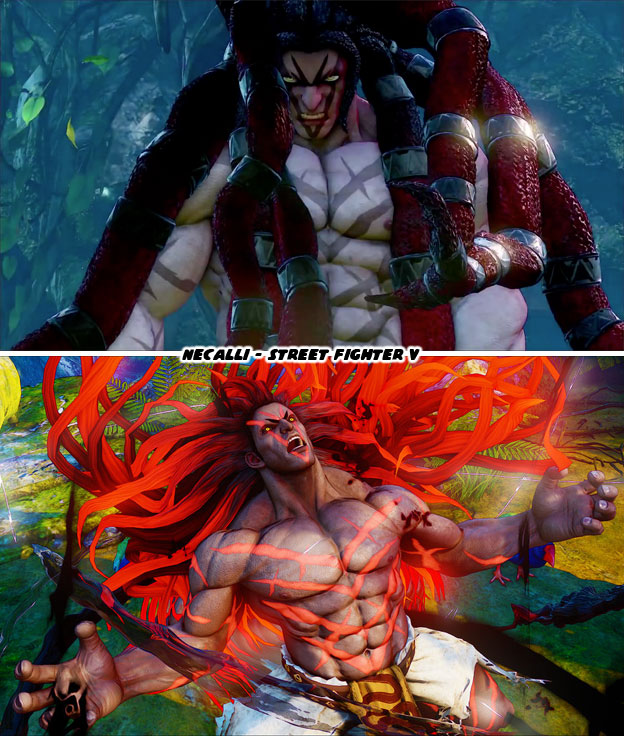
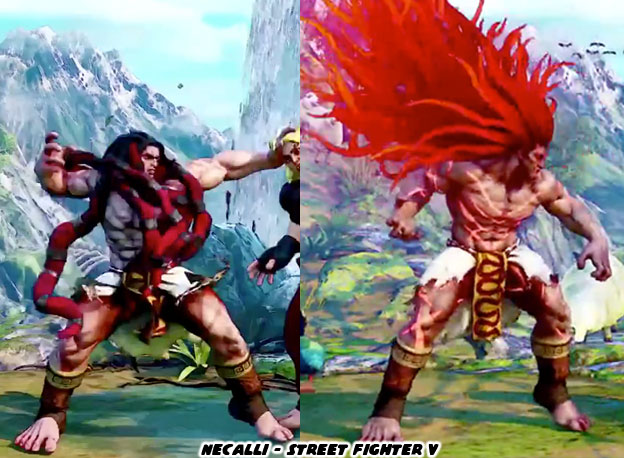
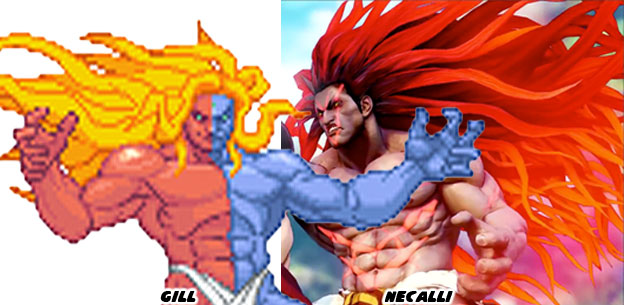
Okay friends let's talk a little bit about the new guy, Necalli, recently announced for Street Fighter V. I'll break this blog into my initial reaction, and them my thoughts as I saw him in action and then my early observations for his reveal. In case you haven't seen the character here he is in his two "modes."


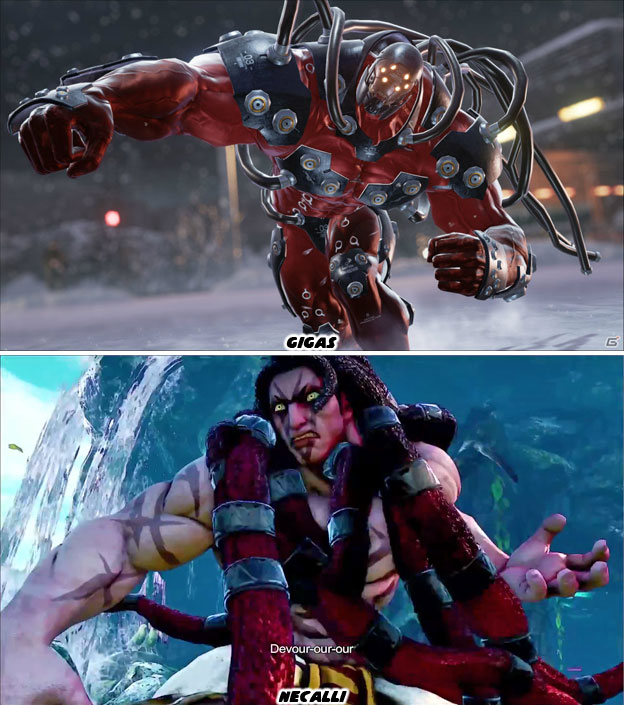
Teenage me would have been all over that design. I mean he's got long dreads and tattoos! How cool is that? Then when he goes into Beast Mode his tattoos glow and his hair becomes big and red. That is crazy! Clearly this is going to be a popular character with guys that like rampaging all over opponents. When I first saw him I had two thoughts cross my mind and that you might not expect. The first was that this character was in response to Gigas, one of the new fighters in Tekken 7. Street Fighter producer Yoshinori Ono was friends with Tekken series producer Katsuhiro Harada. Was this a jab at the new fighter?


When I saw the hoses sticking out of Gigas all I could think was how distracting they were. The dreadlocks on Necalli seemed a little bit distracting as well. They were very thick and lumpy yet they bounced all over the place as he moved. The yellow eyes, red and black braids in Necalli's hair mirrored the color scheme of Gigas as well. Of course it could also be a coincidence.

The second thing I thought of was who this character was designed to appeal to. Was he designed for Japanese players? Young audiences? Older fans? Perhaps he was designed to appeal to players in the West. However I had a feeling he was designed to appeal to Chinese audiences.


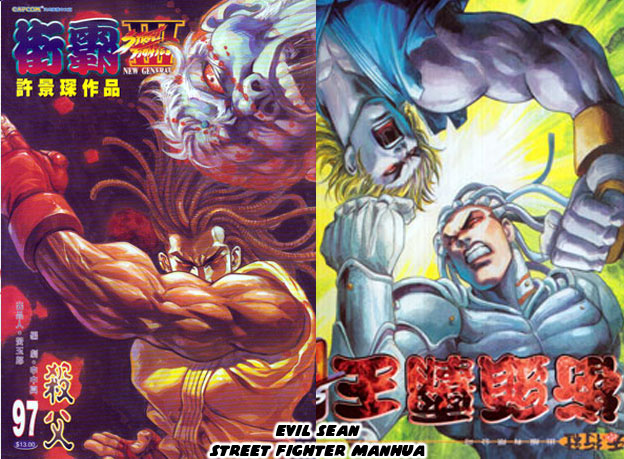
The reason I say this is because in Chinese manhua, comic books, the characters are often very over-the-top. They tended to combine many contrasting elements into the designs of a fighter, you know like, masks, tattoos, super powers, dreadlocks... Some of the more memorable designs from Japan and the US usually focused on a few defining elements. In China the characters can sometimes be overloaded with multiple cues. Such was the case for Sean from the Street Fighter series. The Chinese comics featuring the character took great artistic liberties with him. He was a sidekick character that looked similar to his game counterpart. He was young with short hair early on in the comics. Many issues later artists then made an "evil" version of the character that was slightly older with long braids. This version was decapitated and came back as a cyborg with metallic braids. I can't make this stuff up! I wondered if Necalli's various elements, the braids, the tattoos and transformation were combined in order to make him appealing to Chinese players.


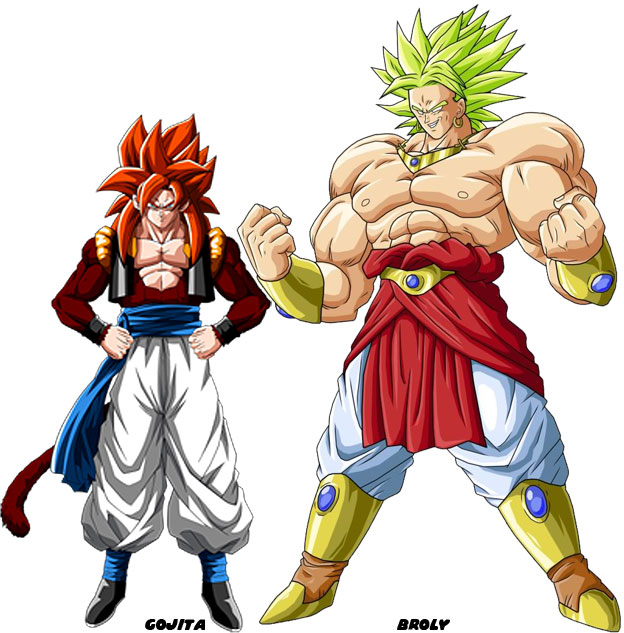
The next thing that I thought of after that was his costume and ability to transform. The tribal costume and hair color shift made me think of two distinct franchises. The first was the obvious one… Dragon Ball. The glowing red hair was very reminiscent of Gojita and the ability to manhandle opponents came from Broly. The colors on the clothing may also have been inspired by these fighters.


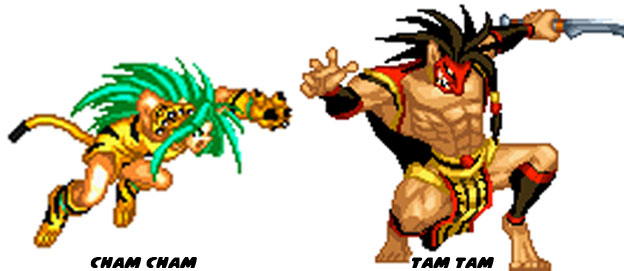
However the shredded clothing and leg bands were a staple for jungle fighters, for "noble savages" like Cham Cham and Tam Tam from the Samurai Spirits series. When I saw Necalli's hair I actually thought of Cham Cham. Characters from the jungle were often presented in a type of pre-Columbian native wear. Perhaps with a loin cloth or some sort of animal skin as the costume. The designers at SNK and Capcom didn't invent the trope. These images were as old as pulp comics in the US and stories from the "exotic" locations from around the world printed in Victorian newspapers. The Japanese were instrumental in making the jungle fighter uniquely animé.


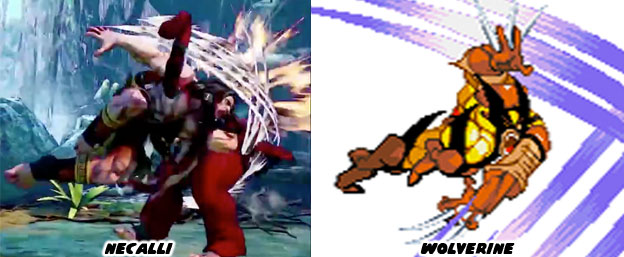
What I looked at next were the moves that Necalli was given. It consisted of mostly slashing attacks, stomps and throws. To make a crude comparison he slashed with the ferocity of Wolverine.


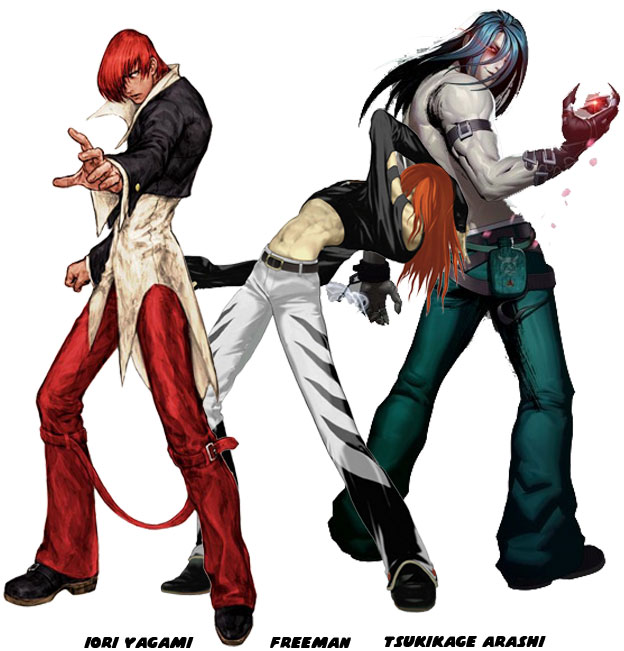
Anyone that has been playing fighting games for a few years could point at many other characters that slashed at opponents as well. Some were dressed in plain clothes such as Tiger from Martial Masters, some were dressed in regal uniforms such as Vold Ignitio from Fighting Layer. There were also those that were cool guys like Iori, Freeman and Tsukikage respectively from the King of Fighters, Garou: Mark of the Wolves and King of Combat. Each of these characters also slashed at opponents with their bare hands.


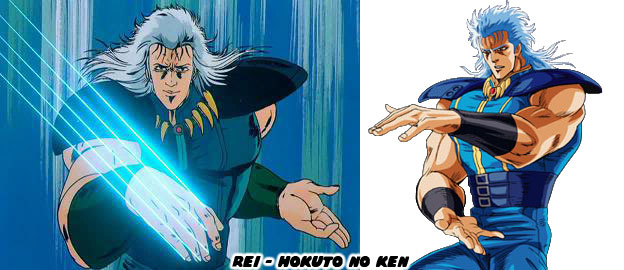
The template for the long haired slasher was older than Street Fighter itself. The hero Rei from Hokuto No Ken / Fist of the North Star, could cut his opponents to shreds using his fingers. The series debuted in 1983 and was highly influential on the artists at Capcom and their designs for Street Fighter, Final Fight, Street Fighter II and a few other arcade hits from many other studios.


What concerned me about Necalli wasn't as much his design as it was his moves and how this character would effect the balance of the series. Necalli had a design that was very much boss-like. The fact that he could transform into a more powerful character with long flowing hair, glowing eyes and neon tattoos pretty much cemented the qualifications for a boss character, see Gill from Street Fighter III as an example. If he weren't a boss then he certainly was a sub-boss with those attributes.


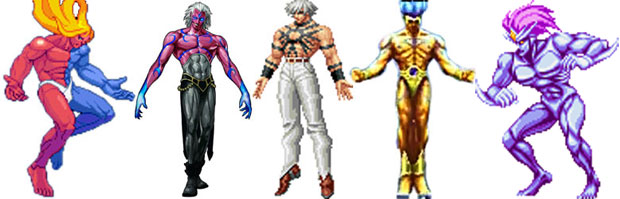
The thing was that we had seen the long haired, brightly colored, overpowered boss so many times in fighting games that it was starting to become predictable. In games from SNK, Capcom, Sega, Namco and various other studios there had been at least one boss character that fit the bill. He was humanoid but not necessarily a human. A demon or alien was the most popular type of long haired, omnipotent boss.


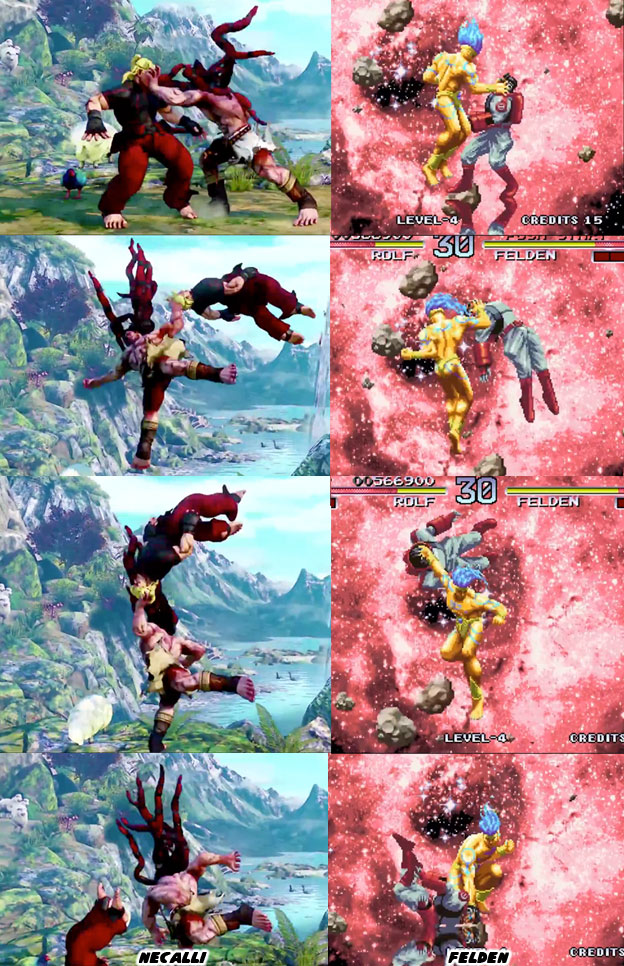
When you want to show how powerful the boss is then you have him manhandle his opponent with ease. With one hand if possible, and in the case of some bosses no hands are needed!


Even though Necalli is a playable character the idea that he can transform into a more powerful being concerned me greatly. Not because of what it did to the canon of the game but because what it did to the core mechanics of the game itself. A character with more than one style had been done before and done well, see the kung-fu master Gen. Players could with between his forms with the press of a button. But in Street Fighter IV and now V we have seen a shift in the game balance. One that requires the character to build a special meter in order to unlock the full potential of an attack or a library of moves.

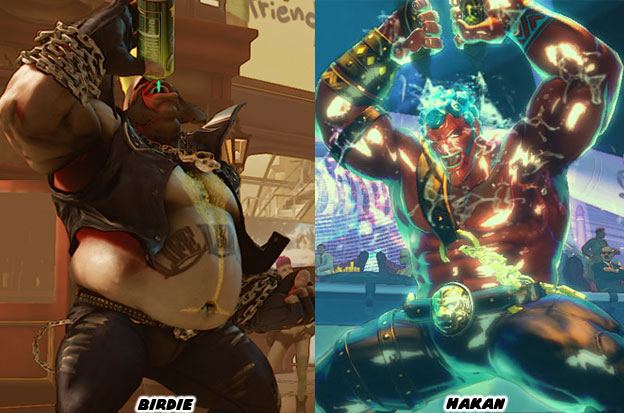
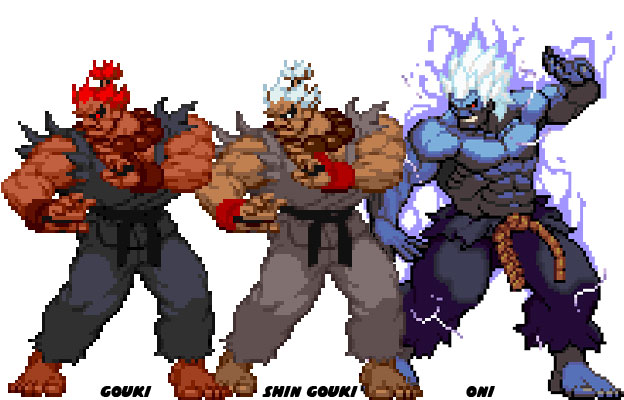
It started with having to continuously pour oil on yourself for Hakan. Now we have Birdie that has to keep eating and drinking junk food in order to receive the benefits of a "V-Meter." It might be a "buff" or "armor" or some other bonus that the character earns once they fill the meter. I mean where does it end? Should Ryu be able to reach into his pocket and break some boards to get his armor started? Or should Chun-Li eat some dumplings to make her kicks more powerful? What if Akuma does 10 ShunGokuSatsu's in a row, will that allow him to become Shin Gouki?


Will the game will suffer because players are forced to fill the special in order to play the character at their full potential? What if Necalli only had one form and full access to his abilities from the get-go? Would the character be more or less interesting? Would the game be more balanced?

I'd rather enjoy the game rather than focus on who can fill a special meter the fastest. Ultimately what concerns me is how the designers at Capcom are missing the lessons of the shows and titles that they are influenced by just so they can get a cool looking character in the game.


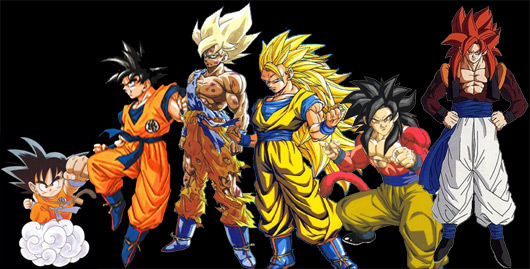
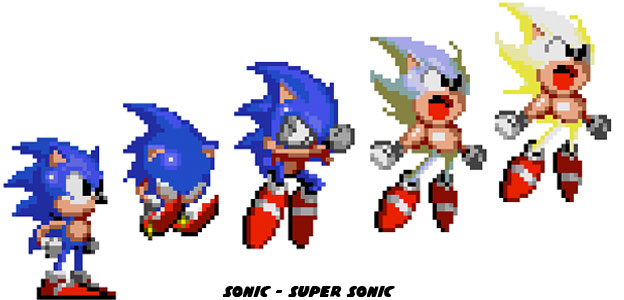
Dragon Ball was a highly influential series. It completely rethought the way that super-powered characters were supposed to fight. The fact that Son Goku could transform into a Super Saiyan was revolutionary. He was already a powerful character but then he could become 100 times more powerful. His hair would even turn to gold just to highlight how powerful he had become. This visual went on to influence every aspect of the entertainment industry. It was certainly not missed by the developers working on Sonic the Hedgehog.

But what many people forget was that it took a generation for Son Goku to grow up. There were many memorable adventures with his friends, and countless battles before he reached the point and was able to become Super. Once the proverbial super genie was let out of the bottle then it became a gimmick that was used again and again within the span of a few years.


Once Son Goku could become Super, then his opponents had to become more powerful as well. It got to the point where Son Goku kept on evolving, his hair and costume becoming even more outlandish. Goku would outclass all of his robotic and alien opponents and soon could only fight gods. This formula became stale after a while. All of Son Goku's friends were so pitifully outclassed that there was little reason for them to be in the comics or cartoons. They either had to evolve or simply be written out of the plot. After 20+ plus years the creators went back to the drawing board and "rebooted" the franchise to the timeline where he could only turn Super Saiyan and even then it was barely enough to keep pace with his rivals. In doing so his supporting cast was able to return as well and join him on his adventures.


When I see what the team at Capcom is doing to Street Fighter I wonder if they missed the part where characters can only become so powerful before audiences begin to lose interest in them. Gouki was a fantastic character. He had the features of a lion. He was evil incarnate and had the attacks to prove it. But then came Shin Gouki, a more powerful incarnation. Audiences accepted the change, seeing it as a sort of Super Saiyan version of the character. Then there was Oni, and even more powerful version. I began to wonder what was the next transformation after that. Would he fuse with his back-from-the-dead brother to become Goukita? Would he become a god too?

Perhaps it would take another 20 years or another Necalli before the team realized that putting overpowered characters in a lineup was a flawed design approach. If they kept on that path then Ryu, Ken, Chun-Li and the rest would have to become boss-like characters as well or be replaced by Necalli-like figures. Or perhaps I was over-analyzing his introduction and Necalli was designed to be the extreme character, the Blanka or Dhalsim for this version of the game. The studio says they have at least three more new characters yet to debut, so we'll have to wait and see where Necalli fits in. I'd like to hear what audiences think of the characters revealed so far. As always if you enjoyed this blog and would like to sponsor me please visit my Patreon page and consider donating each month, even as little as $1 would help make better blogs and even podcasts!