Showing posts with label carl jung. Show all posts

Friday, April 25, 2025

Sonic Superstars and beyond. Sega makes up for lost time, part 4...

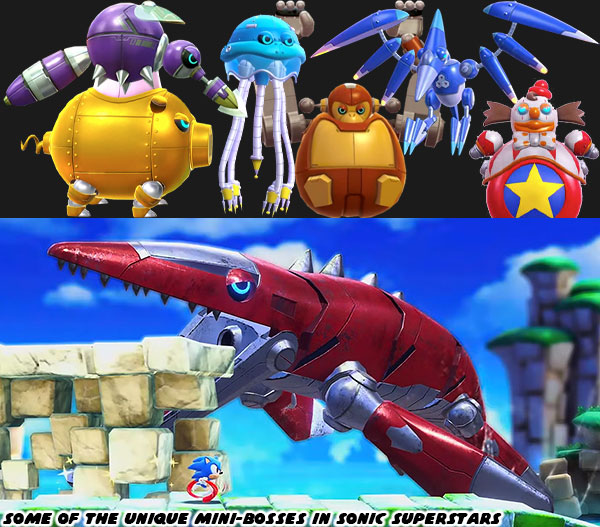
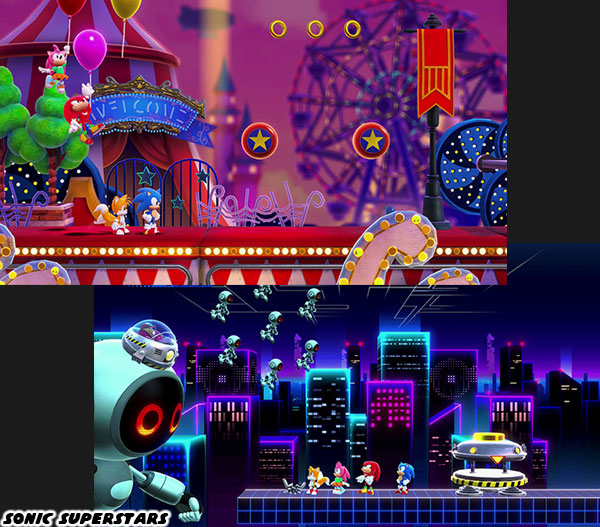
In the previous entry I talked about how there were two versions of Sonic, and two distinct types of game play for each. The “modern” version which allowed 3D exploration, and race sequences along a track, and the “classic” version that was strictly on a 2D plane. I was a huge fan of the classic versions. Sega was able to explain this, and use turn it into a memorable game called Sonic Generations. The game Sonic Superstars focused entirely on the classic style of game play. Visually it improved on the formula in just about every way. However technical issues, especially frame rate drops made portions of the game almost unplayable to me. The other thing that threw me for a loop was the difficulty of the game. There were a number of times that I felt frustrated with the balance of the mini boss, and boss battles. I checked online, and saw that a number of people also had difficulties with certain encounters. It made me feel better knowing that I wasn’t alone in my assessment.

Classic Sonic boss battles were usually not too difficult. It was about figuring out Dr. Eggman’s method of attack, and timing the strikes correctly. Perhaps you might die a few times in the process, but it wouldn’t take long to figure it out. Sonic Superstars had some encounters that seemed much more difficult than the previous 2D titles. Part of the reason for this was because of the technical issues I described. I would sometimes be in the middle of a battle, or just about to start a battle when frame rate issues made me mistime a jump, and lose rings in the process. Another reason was because the battle had to be balanced for every playable character, and not allow any one to get an unfair advantage. The most important reason for the spike in difficulty were the Chaos Emeralds. Some of the emeralds were great offensive weapons. They might allow you to get an extra strike in, others allowed you to navigate the stages easier. The boss battles had to be challenging whether or not you used the emeralds. With all of these things in mind you could imagine that the boss battles felt much more difficult than any of the classic encounters with Eggman.

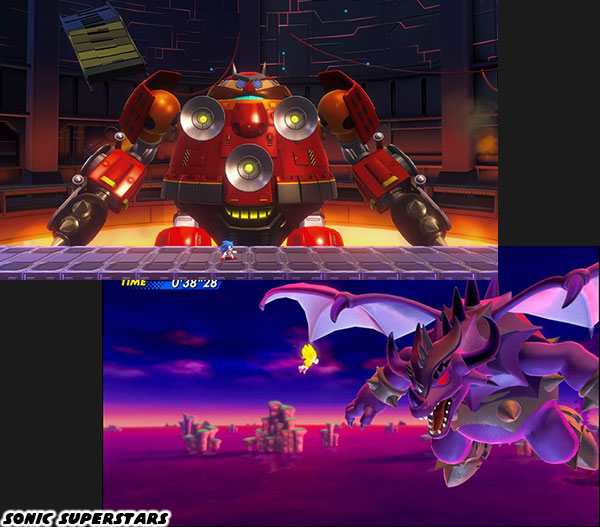
I enjoyed the art, and design of the game. I especially loved some of the boss encounters themselves. The entire final stage in the main story, and Trip’s story with the time reversing mechanic absolutely blew my mind. That sequence was among the best ideas ever executed in the entire Sonic franchise. With that said the last fights in the game were frustrating. I died again, and again in trying to learn the patterns, and different evolutions of the fight. It disillusioned me to no end. I’d manage to survive the first wave, only to be undone by the next stage of the battle. It made me question my skills as a gamer. I had managed to beat every modern God of War challenge, and didn’t remember being as disgruntled with Valkyrie or Berserker encounters. Those were notoriously tough but the last fights in Sonic Superstars just made me angry. Thankfully I wasn’t alone in my feelings as other people voiced the same issues online.

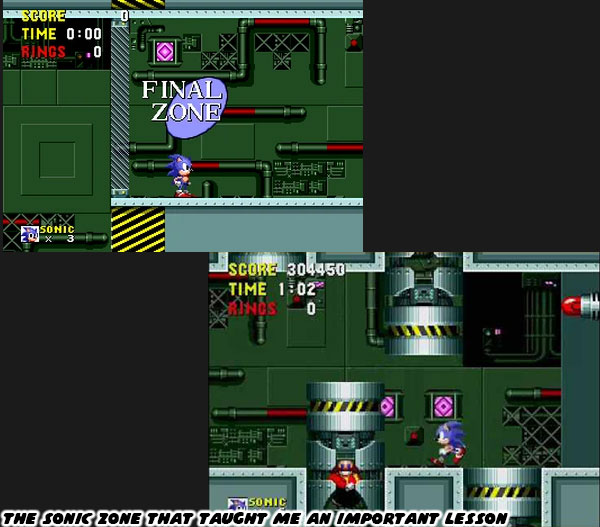
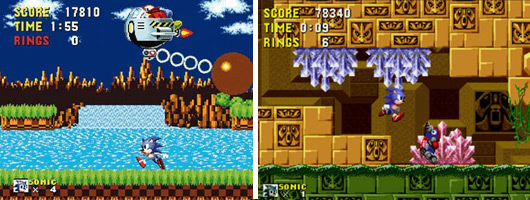
I eventually managed to beat the robot encounters at the end of the main, and Trip’s story. Then I discovered that there was a dragon boss for the actual final battle. This one left me royally upset. It was a challenge that seemed to get harder the better I played. I couldn’t believe that I had managed to beat every other Sonic challenge over the past 30 years, only to be stumped by a dragon. After hours of attempts I finally had a breakthrough moment. I remembered the lesson taught to me by the very first game, and some insight from my big brother. I was very good at getting through the stages very quickly in the original Sonic the Hedgehog. I even became good at collecting all of the Chaos Emeralds. Yet the first time I reached the Final Zone I died over, and over again, using multiple continues in the process. To me it didn’t seem fair that I had no rings, and Dr. Eggman had a random pattern. I would mistime my jumps, or get squashed under a piston. It seemed impossible at the time. That was until my brother asked an important question. “How much time do you have to beat him?” I said about 10 minutes. He replied “Then slow down.” I had become so focused on getting through the game as quickly as possible that it never occurred to me that Sonic was allowed to be played more slowly and methodically.

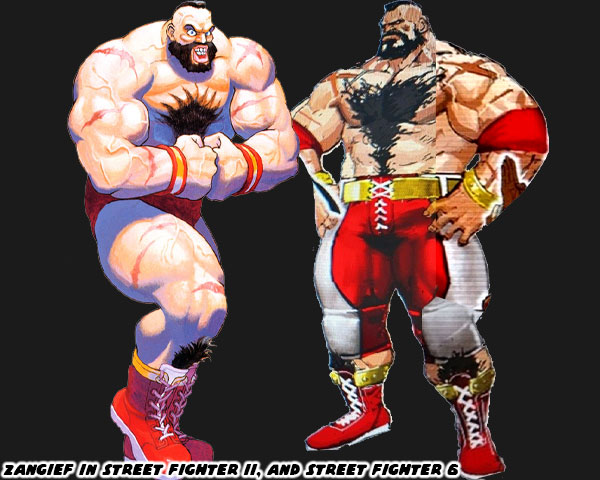
Sure enough on the next play through I timed my jumps more carefully, avoided the pistons, and beat Eggman. My brother was a genius. He saw the flaw in my play, and helped me get better. So in Sonic Superstars I needed to slow down as well. I focused on gathering rings so that I could retain my Super Sonic form much longer. I helped me get through the different stages of the dragon encounter, and wasn’t as frustrating as I had made it out to be. It also gave me tremendous insight on the type of game player that I was. I had been playing video games for almost half a century, but I never gave much consideration to the kind of player I was. My family, and friends considered me a good game player. I even won my locals, and made it into the semis on the Blockbuster game tournaments in the ‘90s. What I didn’t realize was that my biggest strength was in being an efficient player. I looked for weaknesses in a game and exploited those. The more efficiently I could go through the game the more I used that tactic. For example I’m pretty good at Street Fighter, my main is Zangief, and the other heavy hitters. I chose the character because I could do tremendous damage with a couple of spinning piledrivers. I didn’t need to learn a bunch of fancy multi-hit combos. The same amount of damage that any other character could do to me in seven hits I could do to them in two hits.

This straightforward approach allowed me to get through the computer-controlled opponents with relative ease. The downside was that I never liked playing against human opponents because they were unpredictable, and not easy to be efficient against. What I was doing wrong in Sonic Superstars boss battles, especially the final dragon fight was being too efficient. The better I got at hitting the dragon the faster I went through rings. The faster I ran out of rings the quicker Sonic would run out of power. The evolving battle was not designed for my style of play, and that absolutely frustrated me. In order to beat the final battle I had to delay myself, and skip openings. That was counter to how most every other fight would go. That was when I realized that the other boss battles were designed to be won in a very specific way. The developers were not allowing any type of creative thinking, or aggressive strategy. This was a design choice that I think disappointed a lot of fans. It was counter to all of the previous lessons that Sonic Team had taught me about the series.

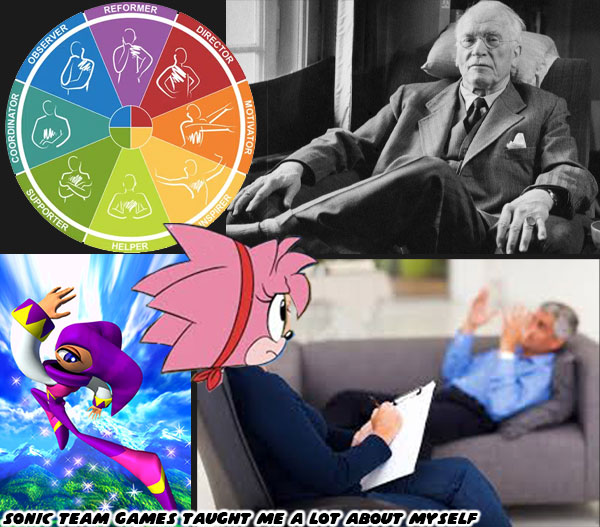
Over the past 30+ years Sonic Team not only made some of my favorite games, but they also taught me a lot about myself. Many of my favorite games they created actually came out when I was starting college, and learning how to learn. When I ran a computer lab I would give out personality tests to the counseling students. Those tests got better through time, and were based on the 16 Meyers & Briggs Personality Types. The test showed me how I learn, and what my strengths were. I just didn’t realize that the learning type also applied to video games. Looking back from what I learned during Sonic Superstars made me realize that gaming was a part of my core personality. The passion for gaming made me want to find out why NiGHTS into dreams… affected me so. It made me want to look up the works of Carl Jung. The Japanese developers were able to reach me on multiple levels, and I wasn’t even aware of it for years, and years. If you were curious you can take a test and find out what your personality type was as well.

Setting aside the technical issues the biggest problem with Sonic Superstars were the boss encounters. The spike in difficulty seemed to be contrary to the design of the classic titles. Yes some of the early fights could be challenging, however I do not remember them being absolutely frustrating. The threats that Sonic faced were global in scale, if not intergalactic, however at no point did audiences feel overwhelmed. How Sonic Team originally dressed the bosses was just as important as how they created memorable heroes. I want to talk about creating a family-friendly world in the next blog entry. Right now I’d like to hear from you. Did you play Sonic Superstars? Did you find any technical glitches or difficulty with some of the bosses? Tell me about it in the comments section. As always if you enjoyed this blog, and would like to sponsor me please visit my Patreon page and consider donating each month, even as little as $1 would help make better blogs and even podcasts!
follow the Street Writer on Patreon!

Monday, April 14, 2025

Making a Sonic Team fan, part 4...

Sonic Team had always gone above and beyond when creating new titles. Sonic, Burning Rangers, NiGHTS into dreams, and Billy Hatcher were all fantastic with unique game play elements. Like many AAA developers there were volumes of unused assets that remained on the cutting room floor as the games were each finalized. In some cases the remains of a beta stage, character, or even music could be found in the game data itself, waiting to be discovered by the community. The Sonic games had several examples of beta material being left on the Genesis cartridges. Similar things were expected for the Saturn disks, the only problem was getting to that data was hard. It took decades for home-brew programmers to get to the info, and compile it into a workable format.
In the previous blog I mentioned that Mecha NiGHTS had been uncovered during a data mine. Even more shocking was the possibility that there was a cut boss named Selph planned for the game. While combing through the data files people found all sorts of models, animations, and unused game assets, but nothing about another boss. In the logs they discovered the file names, and unused icons for the bosses. Gillwing, Clawz, Gulpo, Puffy, Jackie, Reala, and the final boss named Wizeman. For a while the only mention of an eight boss was text only. Self, sometimes spelled Selph would have appeared before the final boss. Yet there had never been any sort of concept art, or model that could be found. Until one day a single icon was isolated.

The community was split over what we were looking at. Even when there was an update to Selph following the datamine To me, and many others it was a pointy headed alien-like creature with dark eyes. Others saw a giant claw, or pincer. I began wondering how the character would have looked, and more important how this character would have fit into the game. Up until that point NiGHTS had faced many of the boss battles in head-on fights. Some bosses, like Clawz, and Gulpo required more strategy. Two other bosses, Jackie, and Reala also wore a hat similar to NiGHTS, and they could fly. If Selph were to appear just before the final boss, or even as a hidden boss, then it must have been a special encounter.
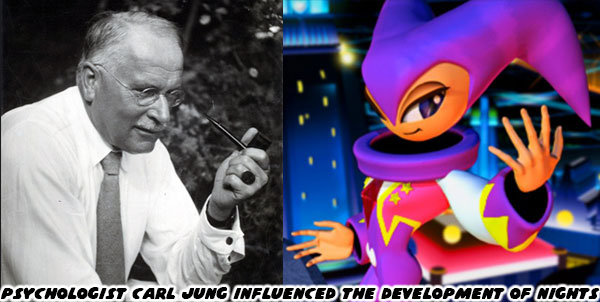
The name Selph was very significant for Sonic Team. In order to build the game the studio had to become well versed in the psychology behind dreams, and their meanings. One of the most influential psychologists that they often cited in interviews was Carl Jung. His theory of analytical psychology was very profound. He developed the idea of ways people present themselves, or mask their intents. The idea of a collective conscious, and unconscious as well as the concept of Self. Naoto Ohshima, Yuji Naka, and the Sonic Team crew became adapt at interpreting the dreams of their coworkers. They were so good at being amateur psychologists that many in the company shared a lot of personal information. Years later they realized that that they knew much more about their Sega counterparts than they should have. Talk about an HR nightmare! But I digress... I was inspired to create how I think Selph would have appeared in the game. 
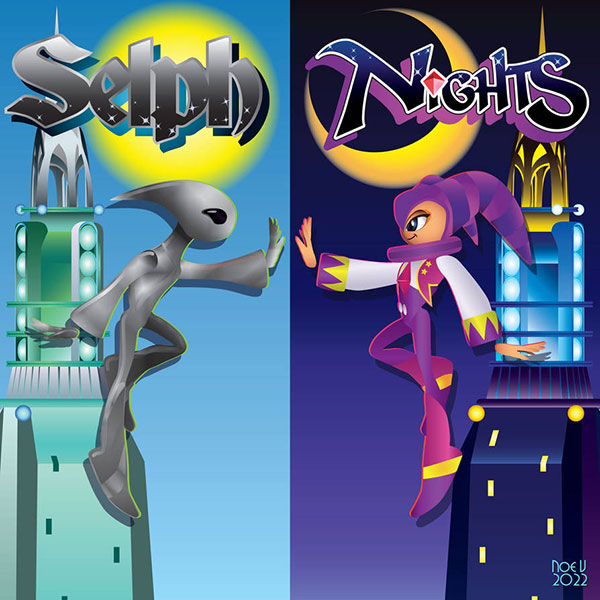
The original release of the game was not necessarily understood by audiences when it came out. It became something special to those that figured out what Sonic Team accomplished. It was all the more important because the game conveyed a message without one word of dialogue, or anything to translate. NiGHTS into dreams… was more than a story of boy meets girl. It dealt with anxiety, especially anxiety in kids in a way that no other game or media had ever attempted. The question that many in the community had was how would a battle agains the “Self” have played out?

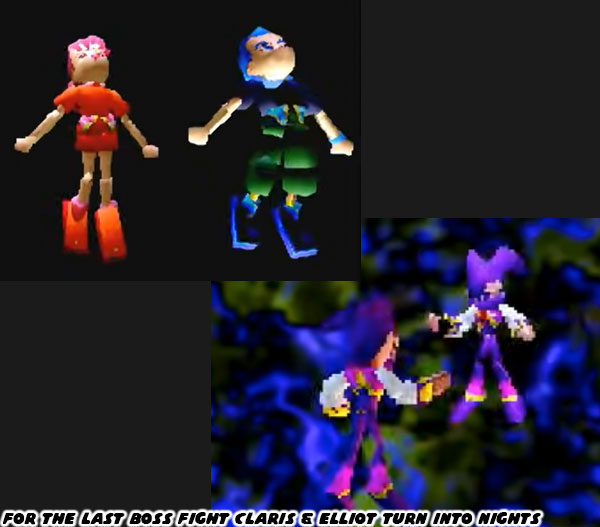
I would argue that the boss battle would have worked out to more of a chase sequence. There wouldn’t have been actual punching, kicking, or tackling involved. As this was something that NiGHTS already did with every other boss battle. Instead I think the battle would have been a series of encounters. A way for the main characters to chase after their true selves. I believe that Elliot, and Claris, the human stars of the game would have each turned into their own version of NiGHTS at the end of the sequence. Then they would then have had the power to confront the big boss Wizeman in the dream world without having to rely entirely on NiGHTS.

I think this scenario made sense for a number of reasons. In the final shared stage of the game both Elliot, and Claris had to work together to free NiGHTS from a prison. After doing so they would merge, or “Dualize” with the main character. This would give each of them the powers of NiGHTS, and the ability to take down the gigantic villain themselves. In essence they needed the courage to face their own fears. I believe that Selph was going to be a distinct boy, and girl version of NiGHTS, with their own identifying colors that matched Claris, and Elliot. It made a lot more sense to me than seeing two versions of the dream jester at the end of the game.
This was the way I interpreted Self based on the game icon, but also because I had played through every Sonic Team game ever made. I understood the way the studio framed the levels, and approached their battles. Not only that but I had studied Carl Jung in my anthropology classes, it gave me an additional insight into dream personas. So what happened with Selph? Why was the boss cut? Sonic Team had a tight deadline. They needed to have a killer app ready for the launch of the 32-bit Sega Saturn console in 1995. Sadly the game wouldn’t be ready until a year after the console’s launch. Pressed for time they began seeing what they could cut. This boss, a new battle, a new 3D model were put on the chopping block. The only thing they forgot to scrub from the game data was the name, and icon.
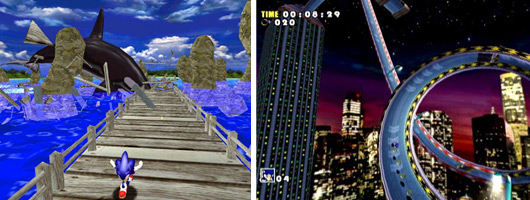
Sega was working on the Dreamcast console, while the Saturn was still finding its legs. To many, myself included, this was the death knell for the console division, and the company as a whole. At the same time this would be a chance for Sonic Team to return to the blue blur, and bring the hedgehog into fully realized 3D. NiGHTS came out in 1996, and Sonic Adventure in 1998. Ask any AAA studio what an absurdly short turnaround time that was, especially for completely new hardware. The studio acknowledged that the Nightopians were the prototype A-Life characters that inspired the development of the Chao in Sonic Adventure. I don’t think that was the only thing the team brought over from their previous work. Selph was a great concept that deserved a second look. Sonic Team. Sonic would fight Eggman in his new adventure, but he needed a bigger opponent as whell. Perhaps a shape shifting creature that started off small, but became progressively bigger, and more dangerous as the game went on. I would argue that the studio took another look at Selph, and with a few changes turned the design into Chaos.
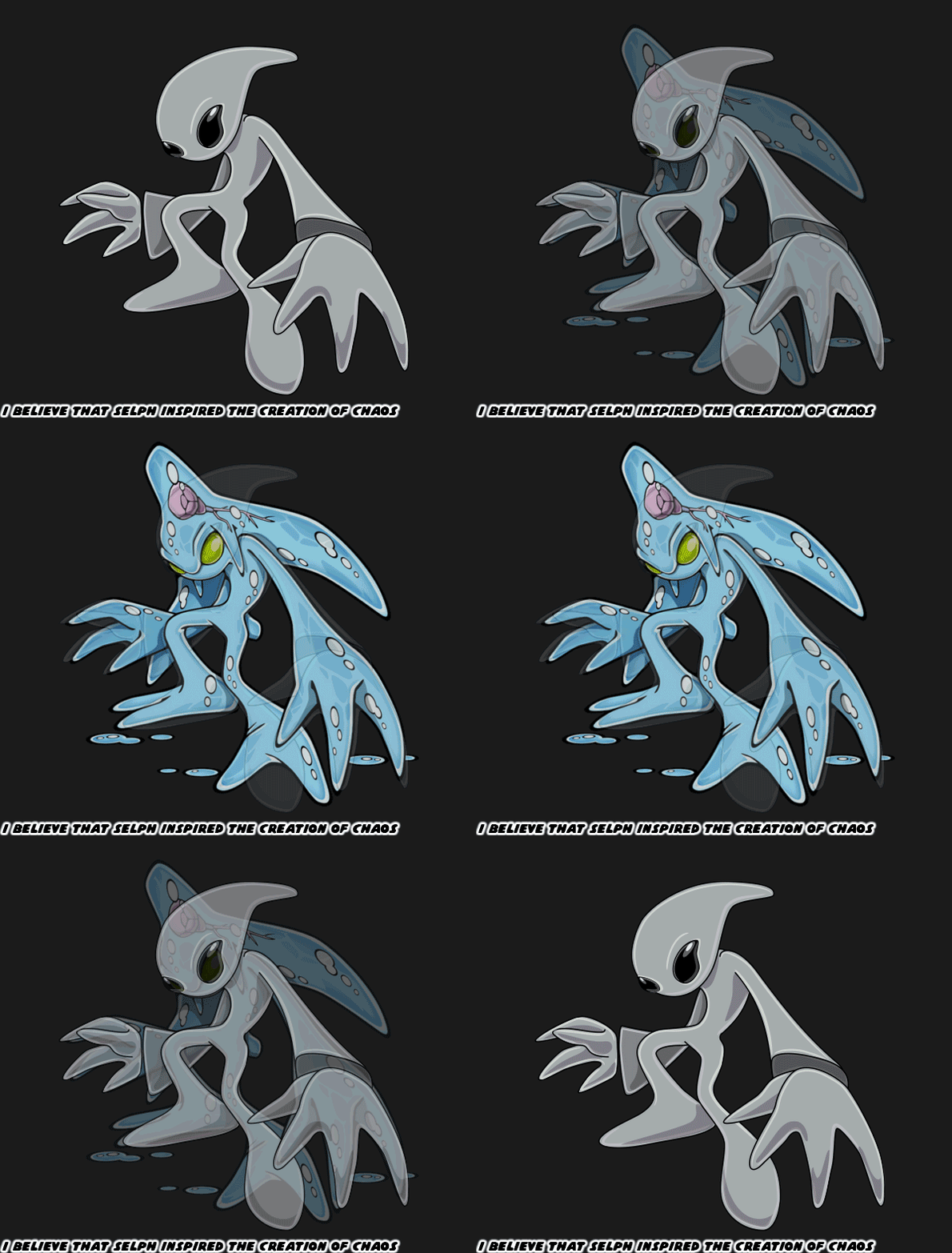
This was all conjecture on my part, based on a single file name, and a single game icon. I’m sticking with it though until I hear otherwise from Sonic Team members. There was more art that I had done recently based on NiGHTS, but it was not quite what you might imagine. I’ll share more of it on the next blog. Until then I want to hear about the unused content, stages, bosses, or heroes that you wish you would have gotten to see. Tell me about it in the comments section. As always if you enjoyed this blog, and would like to sponsor me please visit my Patreon page and consider donating each month, even as little as $1 would help make better blogs and even podcasts!
follow the Street Writer on Patreon!