Showing posts with label miniatures. Show all posts

Monday, April 20, 2026

Bookmark This Page; the Games Workshop series

I love games of all types, even the tabletop games that existed before video games were created. If you want to learn the history of one of the most influential companies ever then Bookmark This Page.

Building a gaming legacy, the Games Workshop series, part 1...

Building a gaming legacy, the Games Workshop series, part 2…

Building a gaming legacy, the Games Workshop series, part 3…

Building a gaming legacy, the Games Workshop series, part 4…

Building a gaming legacy, the Games Workshop series, part 5…

Building a gaming legacy, the Games Workshop series, part 6…

Building a gaming legacy, the Games Workshop series, part 7…

Building a gaming legacy, the Games Workshop series, part 8…

Building a gaming legacy, the Games Workshop series, part 9…

Building a gaming legacy, the Games Workshop series, part 10…

Building a gaming legacy, the Games Workshop series, part 11...

Building a gaming legacy, the Games Workshop series, final part

The passing of a legend, remembering Wayne England.

Why limited-edition tabletop game items are so cool. A 1UP classic...

Bungie drops something very familiar - A 1UP classic from November 29, 2012 


Freeblade, the elements of great game design...

Did you ever play any tabletop games? Let me know about it in the comments section. As always if you enjoyed this blog, and would like to sponsor me please visit my Patreon page and consider donating each month, even as little as $1 would help make better blogs and even podcasts!

follow the Street Writer on Patreon!

Wednesday, February 18, 2026

Building a gaming legacy, the Games Workshop series, final part

EDIT 2025: As I was going back through my blog history I discovered that I never wrapped up a series that I started on Games Workshop back in 2016. Sorry for the delay. This post was actually featured on "The Grind 1UP's RPG Blog" in 2012. The links to the rest of the series are at the bottom of this entry. 

One of the greatest contributions that Games Workshop gave the tabletop gaming community were the stand alone games. Some of the best self-contained board games, like Talisman, Hero Quest and Space Hulk were originally created to be an alternate to the larger tabletop systems. Many of the most memorable games were revised and rereleased over the decades. Many of the games however disappeared and would only be supported in a limited capacity through GW's Specialist Games range. The loss of many great games through the 90's was lamented by the long-time GW supporters. The bottom line seemed to be more important to the company than supporting the players.

Tabletop gaming shifted through the 90's with collectable card gaming (CCG) system like Magic: the Gathering and Pokémon the CCG began taking the focus away from miniatures and dice games. Independent studios that decided to stick with miniature gaming had to provide radically fresh designs in order to appeal to gamers. Studios like Rackham from France and Privateer Press from the USA flourished when they introduced their systems to players. It took Games Workshop the better part of a decade to realize that the card based systems were not a threat to their miniature based systems. If anything they could help compliment the Warhammer universe greatly.

The inked a deal with Fantasy Flight Games to develop a series of CCG based on their IP. These games were easy to get into and play and were easily portable, unlike the miniature systems. Like other CCG games there were expansion packs featuring wonderful character illustrations and new scenarios and rules that could help diversify the experience. More important, by going to CCG systems GW and Fantasy Flight were able to resurrect fan favorite games in a new format. Blood Bowl Team Manager took the popular fantasy football system and brought it to a new generation of gamers. Independent game stores reported issues keeping the game in stock. Players were still very much interested in the game even if GW were not really updating the system for miniature players.

The Blood Bowl CCG had everything that two players needed to enjoy the game. It was very reminiscent of the self-contained boxed sets that GW used to produce.

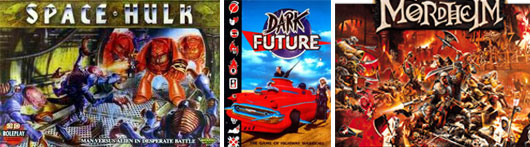
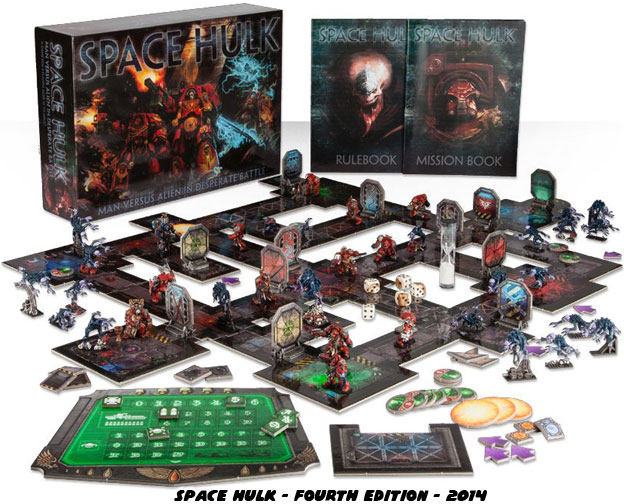
In the past few years GW had been listening to the long time supporters and began releasing limited-edition sets that were in the spirit of their classic experiences. However instead of reprinting old rules and models for nostalgic players they went about completely recreating the boxed set. Space Hulk for example was a stand-alone game that introduced Terminator Marines to the Warhammer 40,000 universe. It featured the Terminators against hordes of aliens known as Genestealers. I had mentioned a few years ago on this blog The Return of Space Hulk and why it was important to the community.

The new game featured embossed interconnectable card stock tiles with bright laser printed graphics. These tiles worked together with plastic scenery and doors that made the game feel very well put together. The production value was years ahead of the original Space Hulk. The sculpts of the Terminators and Genestealers were not rehashes of existing models either. They were very well made and insanely detailed, bridging the modern aesthetic with the classic proportions of Citadel sculpts. These miniatures that would never get reproduced in any other system or be available in a catalog. This distinction earned the collector a rare find.

The Third Edition of Space Hulk won awards from the gaming community and was produced in relatively small numbers, driving many collectors crazy. While it was a welcome release for the community GW was still missing something. The company had earned many followers by producing original boxed games that stood alone. New tabletop players had never known the stand alone experiences aside from the CCG. Those gamers had little knowledge of the experiences that GW used to develop. Long-time players were starved for something new and not another iteration of an existing system. Veteran game designer Phil Kelly heard the call and developed a new game called DreadFleet.

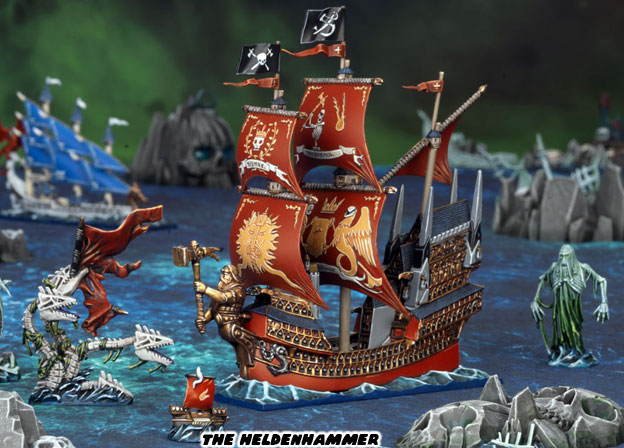
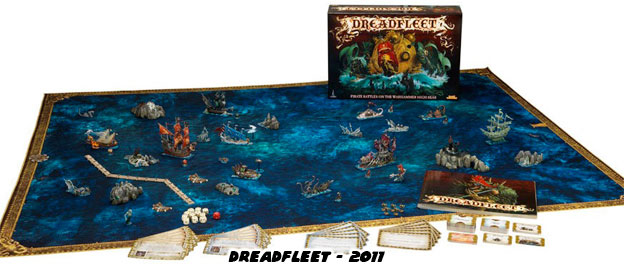
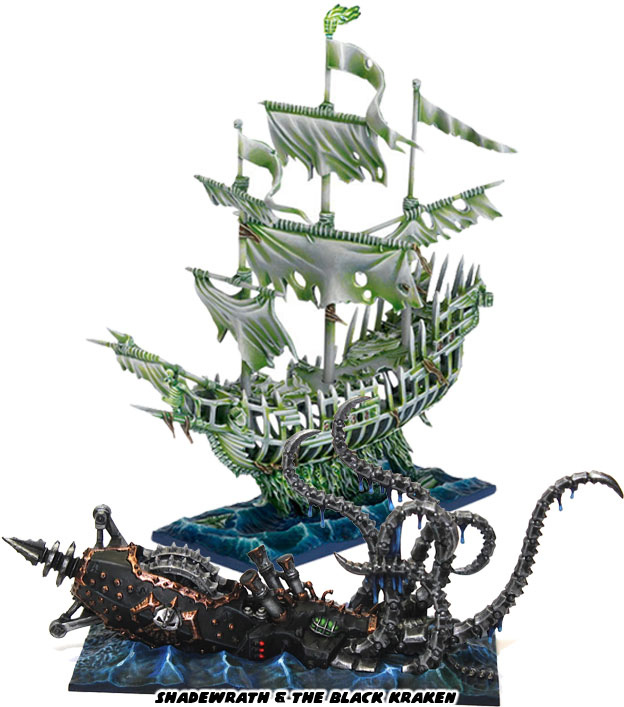
The story behind the game was conceived and written by Phil himself. It revolved around a cursed fleet lead by the vampire Count Noctilus. They made up a great gallery of classic warships, including a Tomb King death barge and a mechanized Chaos Dwarf Black Kraken. The Dreadfleet had been terrorizing the Warhammer high seas for years. A pirate captain named Jaego Roth set about to avenge the death of his family by recruiting or blackmailing some powerful privateers and friends. The game picked up at the climax of the book and allows players to experience different scenarios and choose sides. Easily this was the best new game produced by the studio in over a decade.

Dreadfleet was instantly appealing to new and veteran gamers because it did many things well. The miniatures were a powerful hook but the opportunity to experience a slice of the Warhammer world in a stand alone game was something unique. The game was a self-contained title that included highly detailed plastic models, that still required paint, markers, scenery and a color printed canvas map that represented a raging sea. That approach had not been seen in a long while, not since the original Blood Bowl boxed set had turned the fantasy universe on its head. Seasoned gamers were reminded of another old system that GW had developed and then abandoned. Man-O-War was the first boxed naval combat game set in the fantasy universe. It included rules for all of the major races, miniatures, markers and scenery to get a game going right out of the box. The game did fairly well and even saw an expansion set, the Sea of Blood, and additional miniatures released for the system. What Dreadfleet was not was the second coming of Man-O-War. It was a stand alone game with no plans for expansions or sequels. This both delighted and saddened players.

Veterans knew that if the release did not do well then GW would not support it and rules, errata and miniatures would be released sporadically through the Specialist Games store. The best way to preserve the legacy of the game was by making sure that the single experience was the best possible naval combat system the studio could produce. If players supported it then there was a chance that GW might consider making more stand alone games as well as they had done in the late 80's and early 90's. When the studio had their focus on the board game there wasn't another company that could touch them. Seasoned players were hoping that the company would return to that mentality and consider releasing other stand alone experiences. They would still be expected to support their core Warhammer Fantasy and 40,000 universes, as they had done decades ago, while making new experiences.

The stand alone game was also a gateway to the tabletop gaming hobby. It was a way to appeal to new players with a minimum level of investment required. Painting and assembling the Dreadfleet could help introduce the player to the hobby aspect while the easy-to-read markers and straightforward rule system got them into the gaming aspect. The appeal to many tabletop system was that there was something tangible to play with. Whether it was a CCG system or a miniatures based system, gamers had something to collect and personalize. Players did not need a television or console to enjoy these experiences. Best of all the stand alone format could compliment an existing universe or IP. A well design game with easy to follow rules could make a comic book, movie, cartoon or even videogame into a great board game. These games would not necessarily be a substitute for the series but instead a continuation of them. Bungie and Microsoft discovered this when Halo was licensed out for the Clix system of gaming. More recently Epic Games discovered this when they licensed Gears of War as a board game.

Studios like Games Workshop and Fantasy Flight Games were bridging the gap from casual gaming to hobby gaming by making great stand alone systems. This approach was actually nothing new to the industry. Decades ago the earliest videogame to board game titles were nothing more than copies of screen mechanics to paper boards. This was done to cash in on the craze of videogaming rather than to satiate the gaming desires of the public.

Games Workshop found success over the past couple of years by returning to the card and board game systems that made young players get interested in the hobby so many years ago. The further the studio shifted the focus from original ideas with great play elements to more established systems the more isolated they became. A similar thing could be said of Nintendo, which used to make card games, toys and stand-alone handheld electronic games. They all had their own unique play elements that turned young gamers into fans. Both GW and Nintendo had spent the better part of the 90's pandering to fans without catering to the play elements that helped create new followers. Only in the start of the new millennium did the studios begin going back to basics. But that would be a topic best saved for some other blog...

I hope my short look at Games Workshop has gotten you interested in tabletop gaming. Those that are interested should consider investing in some paints and brushes and getting the Dreadfleet game. Good things can come to those who play.

Building a gaming legacy, the Games Workshop series, part 1...

As always if you enjoyed this blog, and would like to sponsor me please visit my Patreon page and consider donating each month, even as little as $1 would help make better blogs and even podcasts!
follow the Street Writer on Patreon!

Friday, February 21, 2025

The horse jumped over the moon, the story of Namco, part 7

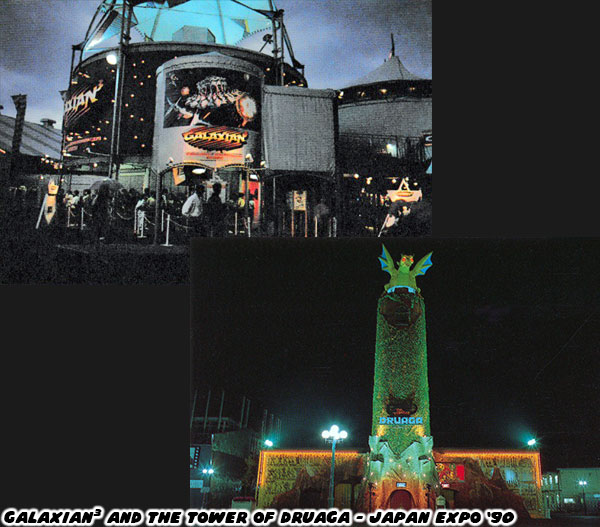
Expo ’90 at Tsurumi Ryokuchi, Osaka Japan was a turning point in the world of entertainment. Namco was able to evolve the amusement park experience with what they called “Hyper Entertainment.” This was the hybrid attraction that was part arcade game, part amusement ride, and part themed environment. The fantasy RPG Tower of Druaga in the previous blog was one of their arcade hits-turned-hyper entertainment attraction, and the other was the science fiction shooter Galaxian³. When astronaut Neil Armstrong took his first steps on the Moon in 1969 he said “That’s one small step for man, one giant leap for mankind.” Namco took the “giant” part literally when designing this attraction. I had already sung the praises for this game previously on the blog, and I would no doubt talk about it again in the future.
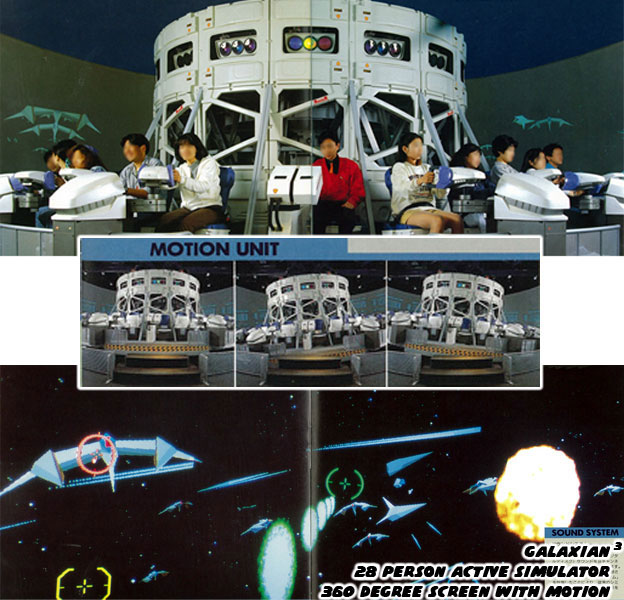
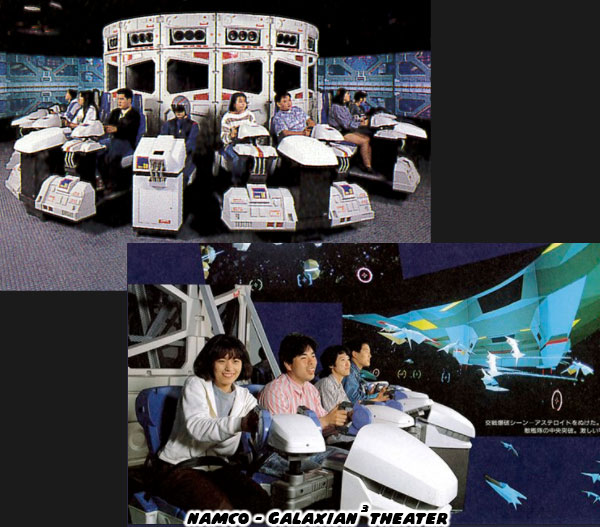
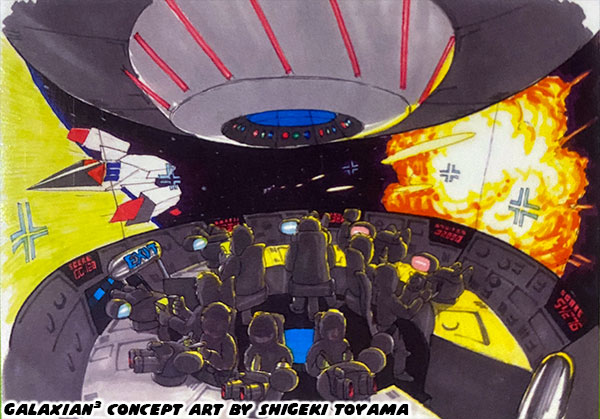
If you had no idea what I was talking about, the Galaxian³: Project Dragoon attraction was the largest video game in history. It was a polygonal interactive shooter on a gigantic moving platform that supported 28 people at the same time. Shigeki Toyama was in charge of concept planning, system design, mechanical design, graphic design, logo design, decorative design, etc. He had a singular focus; revenge on the 1985 Tsukuba Expo committee for not giving Namco a proper Pavilion. Revenge for not being prepared to have Namco show their best work five years prior. He literally challenged his team to make audiences feel like they were the heroes of Star Wars. They were already fans of the Star Tours attraction in Disneyland, and Tokyo Disneyland. They still wanted to make something far superior. His goal was to get the nation talking about how fantastic Namco’s showing was in the ’90 Expo in Osaka. Since I was still praising it 35 years later I would argue that it was mission accomplished.
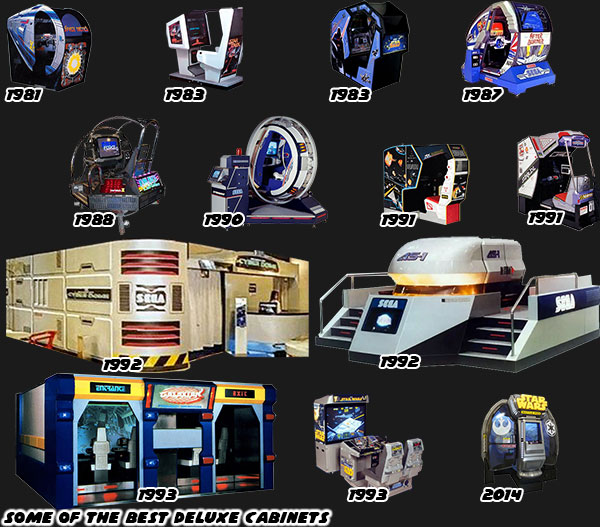
I don’t think you understand how epic this experience was to Generation-X in Japan. Up until that point the evolution of space simulator cabinets had been slow but steady. Although the space shooter video game genre started in the ‘70s, the use of deluxe cabinets to immerse the players started in 1981. Sega/Gremlin released Space Tactics, the deluxe sit down cabinet was very much a Space Invaders-meets-simulator. Instead of a joystick the player sat behind a gunners yoke, with an illuminated display. It was one of the early space shooters that reinforced the idea of fully realized simulators. They followed up in 1983 with Star Trek: Strategic Operations Simulator. It was a vector graphics space combat simulator. It had the same synthesized voice from Space Fury. The game was poorly received, especially when compared to Star Wars by Atari which came out that same year. Sega would elevate the cabinets by adding motion to them starting with After Burner in 1987. The full timeline, and importance of these gradually bigger, and bigger cabinets was discussed previously on my blog.
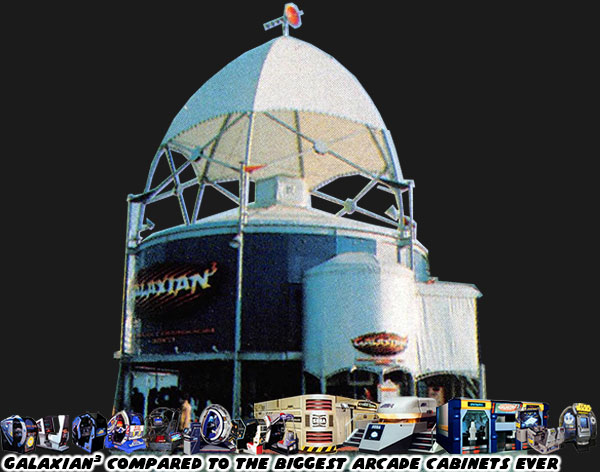
Namco, and Sega had been going back-and-forth in the racing, and space genres for decades. Everything from game design, to gameplay were hotly contested by fans of the studios. Sega’s motion cabinets could be seen as superior to anything Namco had ever released. While Namco lead the shift to polygons for the industry, Sega managed to get a lot more attention for their efforts. I would argue that Galaxian³ was created in part because it would be all but impossible for Sega, or any other studio to top. How confident was I of that statement? My friend asked if the Mario Kart attraction at the Super Nintendo World at Universal Studios could be considered a bigger video game. While it took a bigger footprint I would argue that it wasn't a bigger game. The Mario Kart attraction had six groups of four riders each for the Mario, Luigi, Daisy, Peach, Toad, and Yoshi teams. That's 24 concurrent players on the same game, still four shy of Namco’s record.
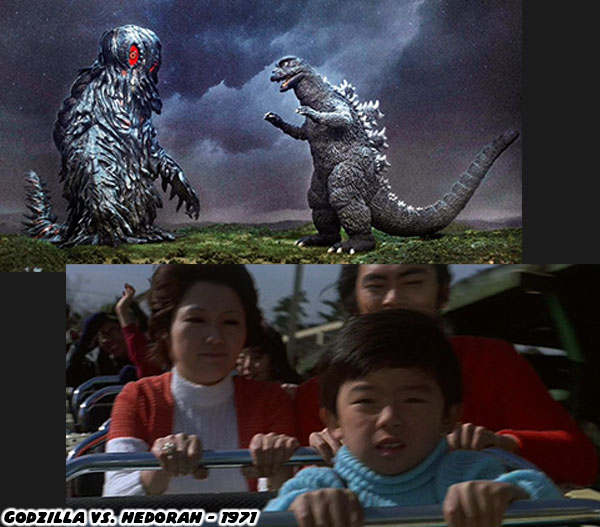
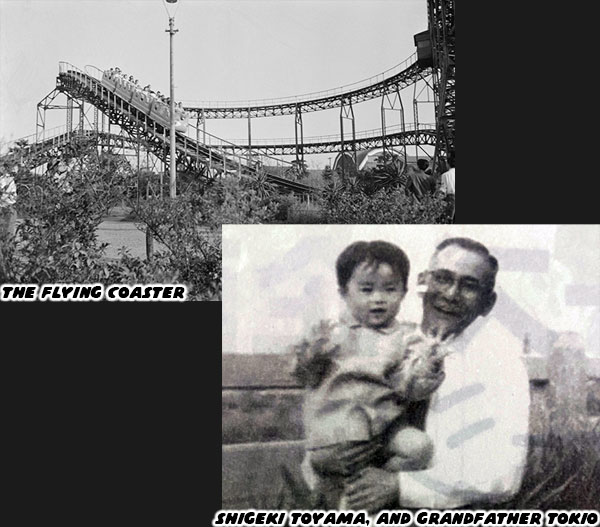
Mr. Toyama joined Namco as an industrial designer in the early '80s. He said that he knew nothing about video games. That part was true, but his love of out of home entertainment ran in the family. His grandfather Tokio designed the “Flying Coaster” at Futakotamagawa Garden in Setagaya, Tokyo. Here’s a bit of trivia for you, the flying coaster appeared briefly in the 1971 film Godzilla vs Hedorah. While the movie was in theaters before I was born, I remembered seeing it in reruns. When I was a little kid the local drive in theaters would feature a Godzilla movie marathon during the summer. It was a cheap way for our parents to keep my brothers and I entertained. We would stuff our faces with hot dogs, and popcorn while watching the rubber suit battles. I was terrified of the smog monster because it melted people with its toxic spray. But I digress…
As a kid Mr. Toyama would practice his illustrating skills by drawing the various attractions in Futakotamagawa Garden. He would end up working at the park before graduating from college. This history would help him plan arcade cabinets for Namco, and later on the largest attraction of his career. The location of the park would become very important for Namco’s history, but we would get to that in a future blog. Mr. Toyama’s team, included fellow designers Hideyuki Kikuchi, Wataru Yanagawa, Tatsuya Ishikawa, Takashi Yano, and Katsunori Mizuno. Yasunori Tashiro as the producer, Koichi Tashiro who was in charge of parts, and assembly, Hajime Nakatani directing, with planning from Hiroyuki Takejima. Kimimasa Matsuura, Norimasa Matsuura, and Jinto Saito handled programming duties. The mechanical structure, and external negotiations were handled by Akira Osugi and Takashi Sano, the electrical design was handled by Masataka Yamada. Fumio Ishikawa was in charge of overall operations, including production, installation, and removal. The team had quite an adventure putting together the enormous Galaxian³ machine.
Osaka was a massively busy city on the island of Honshu off the coast of mainland Japan, it was known for turbulent changes in weather, this was especially true during the construction of the “Flower Expo.” Namco arrived in February, and the expo started on April 1. Remember that the company had to get both of their untested Hyper Entertainment attractions up, and running in that window. While they did the majority of the work at Namco, taking everything apart, and putting it back together on site was a different battle. They wanted the best graphics, and simulator experience they could get . This meant that they ended up literally debugging, and programming the gigantic hydraulic cabinet with entirely new software, and hardware on site. The team actually had a small office hidden off to the side of the platform where they could troubleshoot any problems during the expo. They were 99% certain that they would not be able to get it ready for opening day. In order to accomplish the impossible Namco added a couple new faces. Mr. Satoru Yano, who designed the motion unit, and Mr. Katsunori Mizuno, who designed the visual, and hydraulic data joined late into the project.
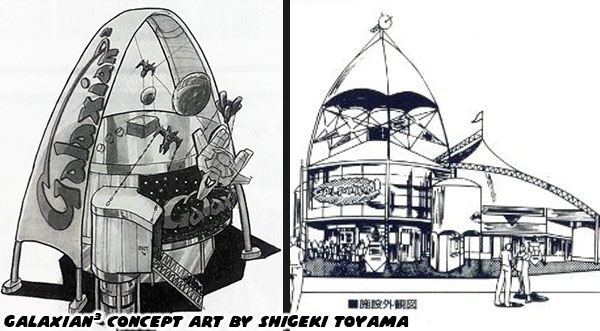
The team worked around the clock in the chilly winter weather. Mr. Toyama placed a sleeping bag under the hydraulics of the attraction, he called it “Hotel Galaxian.” The staff said they survived the freezing winter rainstorms thanks to consuming a massive amount of hokaron (hand, and body warmers). Several of them called it the "Cursed Galaxy" as team members kept getting seriously ill. Mr. Nakatani contracted acute hepatitis, Mr. Takahoku was run over by a motorcycle while riding his bicycle, breaking his arm in the process. The team didn't slow down because Masaya Nakamura, the president of Namco would be visiting on opening day. The final touches, the facade, hallways, airlocks, lights, bulkheads, and other decorations were done within a set budget. Mr. Toyama was not happy with the initial look, he felt it looked sparse, and even cheap. He spent his own money adding additional details, pipes, lighting, painting, and weathering the sets. Sleeping on the floor, and detailing everything down to the very last second when guests arrived. Their biggest compliment came from visitors who assumed they had spent millions on the attraction instead of a fraction of that. According to them it rose to the standard of the Star Tours by Disney Imagineering.
The group in Osaka teased the Namco sound team as having the easiest part of the job. Shinji Hosoe aka Megaten, Ayako Sasou, and a few others were indeed the luckiest during the entire ordeal. Megaten was the main composer, and musician. He was most famous for scoring Ridge Racer, and a number of Namco’s biggest hits. He even worked on Street Fighter EX, which was one of my favorite SF soundtracks. For Galaxian³ he was tasked to come up with five original pieces that were cinematic, and a response to John Williams’ Star Wars music. It was no small task. Especially since he started at the end of February, as the attraction was being put together. The genius composer shocked his coworkers. He cranked out his five pieces in five days. He would write the songs in the morning, and arrange them in the afternoon. The team said great, from that point on he should compose everything that R&D threw at him.
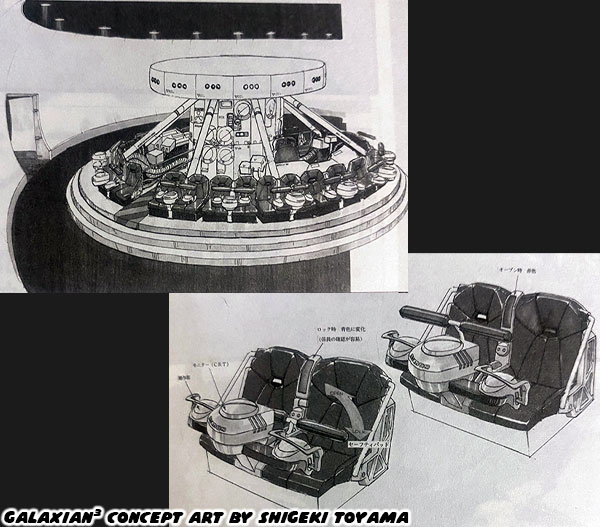
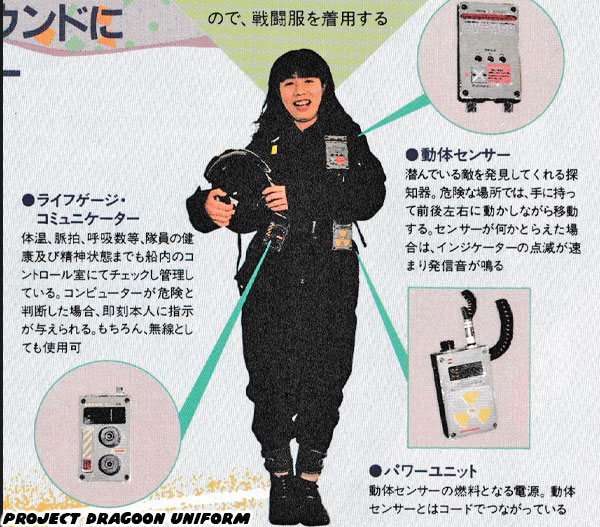
The guests that played the “Active Simulator” absolutely loved it. Best of all the staff loved the employee uniforms that ride operators were given. They said they looked very cool, up until they had to clean up the seats whenever a guest vomited. Namco conducted surveys of the visitors “most people said it was amazing and they were impressed, but 2 out of every 1,000 people said, "I don't want to do it again!" This reaction was mainly from people that got motion sickness from the rocking action. The platform would rise, and fall up to six feet. This happened dozens of times over the course of eight minutes. The guests were warned about the movement during the pre-show video that played in the queue. Of course some people still thought that stuffing themselves with carnival food, and then riding a motion ride was a good idea. 
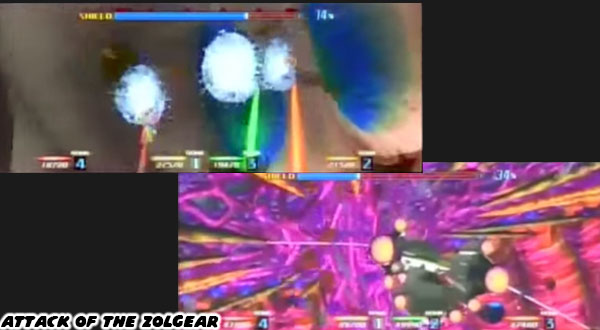
Between the classic carnival attractions they built, many of them still operating decades later, as well as The Tower of Druaga, and Galaxian³ Namco had proven they were the best entertainment company at Expo ’90. This forced all of the other studios, especially Sega, to step up their game. There was little else Namco could do except dismantle the attractions after September 30th, 1990 when the expo had reached its conclusion. The thing was that the company, and its employees had poured so much of themselves into the attractions that they didn’t want to see it all end. That was with the exception of the sales department, who asked them to never again to spend so much building a one-off attraction. The team scaled down Galaxian³ to a 16-person screen for dedicated locations. They even offered a 6-person Galaxian³: Project Dragoon cabinet for arcades that wanted to advertise the “World's Largest Video Game.” Their revolutionary engine would even get two expansions, The Rising of Gourb, and the Attack of the Zolgear.
Variations of Galaxian³ lived on after Expo '90, and however the Tower of Druaga would have been lost to history if it wasn’t for a bold idea. President Masaya Nakamura believed in the power of play. His company flourished because they created games at a time when society (and corporate culture) said it was a waste of time. What if his teams could combine everything they had learned over their 35 years in business? What if play was the critical to the next evolutionary step of themed entertainment? They might end up creating something wonderful. We will explore the roots of this revolutionary idea in the next blog. Were you a fan of the Namco space shooters? Had you ever heard of them before today? I’d like to hear about it in the comments section. As always if you would like to sponsor me please visit my Patreon page and consider donating each month, even as little as $1 would help make better blogs and even podcasts!
follow the Street Writer on Patreon!
Wonder Eggs, and Egg Empire research collected from: Wonder Eggs Guide Map, Namco Graffiti magazine, the book “All About Namco II", NOURS magazine, The Namco Museum, Namco Wiki, Ge-Yume Area 51 Shigeki Toyama Collection, mcSister magazine, first person attraction details from Yoshiki. Event details from Hole in the Socks

Wednesday, February 19, 2025

The horse jumped over the moon, the story of Namco, part 6

In the previous blog I talked about The Tower of Druaga, one of the two games that Namco had turned into an attraction at the Expo ’90 in Osaka Japan. The company felt that the Expo ’85 organizers in Tsukuba, Ibaraki Japan did a disservice to the company. They decided to go all-out and create an entirely new type of attraction for the “Magical Cross” amusement area in Osaka. It would be something completely different from the roller coaster, carousel, or Ferris wheel at the park. In fact the company considered what they were building to be something different from what was available in amusement parks, or even theme parks. They called their attractions “Hyper Entertainment.” Unlike most amusement rides where the audience were passive the Namco attractions promised to put the rider in the role of the hero. They would be challenged in different ways every time they rode.

Akatsuki Kogei was in charge of planning and directing the Tower of Druaga. He had to find the key elements of the three games of the Babylonian Castle Saga. At the time those were the Tower of Druaga, The Return of Ishtar, and The Quest of Ki. The other eight titles in the series hadn’t come out yet. What were the elements that went into the game? What did audiences remember about the experience, and what highlights could be turned into tangible scenes for an attraction? It was clear who the heroes, and main villain would be, but what about the various enemy types introduced in the games? How would 2D sprites look in a 3D environment?

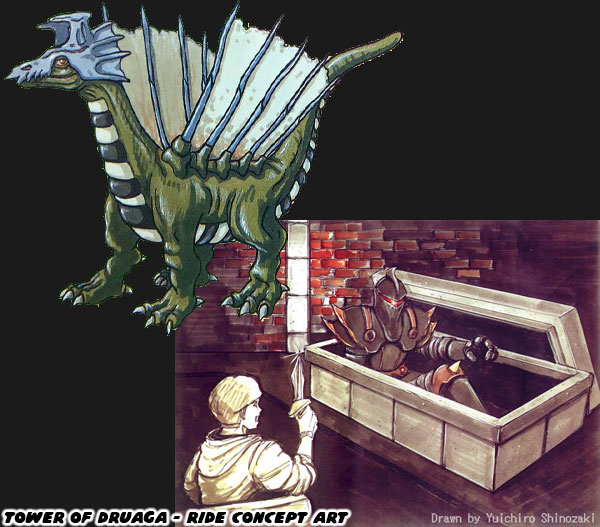
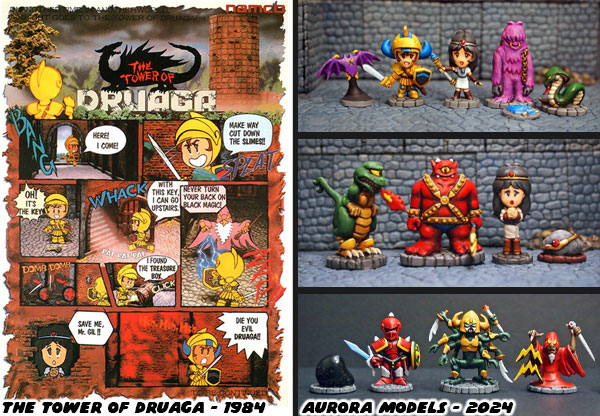
Despite being a video game Namco made sure that when audiences thought of the Tower of Druaga they imagined it as a physical location. They wanted audiences to think that the story happened in a real place, and time. This came through in the original poster for the game. Rather than create a fantastic rendering Namco artist Yuichiro Shinozaki combined physical models, with paintings of the cast. It was presented in a western comic book format, going so far as to feature word balloons in English. This was rare for Japanese game flyers. It explained how to play the game, and even how to approach some of the different enemy types. This advertisement highlighted the western influence of the game. The use of painted miniatures owed a lot to classic tabletop systems such as Dungeons & Dragons by TSR, but also Warhammer Fantasy Battle by Games Workshop. Namco would eventually release novels, and role-playing supplements, as well as a board game based on the Tower of Druaga in Japan. They also released board games for Pac-Man, Xevious, and their other hits. For many kids in Japan this was their first introduction to traditional tabletop RPGs. Aurora Models even released a series of miniatures to celebrate 40 years of Druaga.

Mr. Kogei knew that the sets, animatronics, and location had to have an ancient western feel, and not a Japanese look. Mr. Shinozaki worked on the concept art for the various scenes in the attraction. Making sure that it felt as authentic as possible to the original game. The team had to figure out how to pace the experience, and put the audience in the role of Gilgamesh, the hero. The arcade hit was known for being difficult. It was credited for establishing “notebook carrying” games. In Japan the most dedicated players would map everything they found in notebooks, including layouts of the various floors in the game. Mind you this was before the home version was released. These notebooks predated game guides published by the studios, or game magazines.

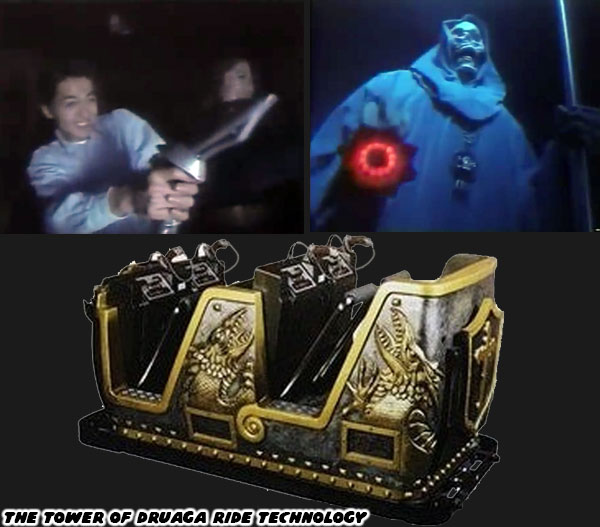
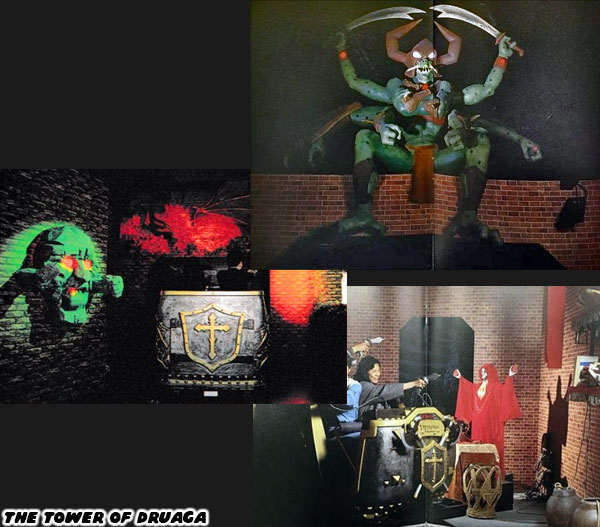
The goal for Mr. Kogei, and his team was create an attraction that was “the first role-playing game ride with multiple scenarios and multiple endings.” Up to 4 players at a time would ride in armored carts, as they made their way through the tower. Players used a light gun, which was shaped like Gil’s sword against against all sorts of monsters, and demons. The actual length of the attraction, and score was determined by which targets you hit, and when you hit them, rather than just blasting everything. Audiences had to listen to their opponents carefully, as well as watch for clues during the ride. You could earn “treasure,” or rather clues on each opponents weaknesses as you progressed through the various rooms. Regular scores earned a Bronze ending, and the ride went right to the exit. If you paid attention to hints, the ride went a bit further and featured a battle with a dragon. Players that managed to defeat the dragon earned a Silver ending, and then the ride was over. If you defeated the dragon, and then Druaga then you got the Gold ending. This meant that you would reach, and rescue Kai before exiting the ride.

Those that played through the attraction would say how fun it was, but also that it was indeed difficult. Namco certainly understood that the people that were raised on arcade experiences were getting older, and looking forward to the evolution of the format. The Tower of Druaga not only predicted, but also predated the Disney attractions such as Buzz Lightyear’s Space Ranger Spin by 8 years, Toy Story Midway Mania by 16 years, and Web Slingers A Spider-Man Adventure by 31 years. Can you imagine how much fun Pirates of the Caribbean would be if you could shoot back at the various scenes in the attraction, earn a longer ride, and perhaps a treasure at the end?

Namco partnered up with coaster manufacturer Togo for the ride system. Togo had been in business longer than Namco, and had a great reputation in Japan for their roller coasters. Their joint venture was called N&T, and was designed to create the next generation of amusement attractions, and amusement parks. With the Tower of Druaga pulling guests 4000 years into the past, the next featured attraction from Namco would send them centuries into the future. We will look at this attraction in the next blog. If you were a fan of the Babylonian Castle Series then I’d like to read about it in the comments section. As always if you would like to sponsor me please visit my Patreon page and consider donating each month, even as little as $1 would help make better blogs and even podcasts!
follow the Street Writer on Patreon!
Wonder Eggs, and Egg Empire research collected from: Wonder Eggs Guide Map, Namco Graffiti magazine, the book “All About Namco II", NOURS magazine, The Namco Museum, Namco Wiki, Ge-Yume Area 51 Shigeki Toyama Collection, mcSister magazine, first person attraction details from Yoshiki. Event details from Hole in the Socks