Showing posts with label dreadfleet. Show all posts

Wednesday, February 18, 2026

Building a gaming legacy, the Games Workshop series, final part

EDIT 2025: As I was going back through my blog history I discovered that I never wrapped up a series that I started on Games Workshop back in 2016. Sorry for the delay. This post was actually featured on "The Grind 1UP's RPG Blog" in 2012. The links to the rest of the series are at the bottom of this entry. 

One of the greatest contributions that Games Workshop gave the tabletop gaming community were the stand alone games. Some of the best self-contained board games, like Talisman, Hero Quest and Space Hulk were originally created to be an alternate to the larger tabletop systems. Many of the most memorable games were revised and rereleased over the decades. Many of the games however disappeared and would only be supported in a limited capacity through GW's Specialist Games range. The loss of many great games through the 90's was lamented by the long-time GW supporters. The bottom line seemed to be more important to the company than supporting the players.

Tabletop gaming shifted through the 90's with collectable card gaming (CCG) system like Magic: the Gathering and Pokémon the CCG began taking the focus away from miniatures and dice games. Independent studios that decided to stick with miniature gaming had to provide radically fresh designs in order to appeal to gamers. Studios like Rackham from France and Privateer Press from the USA flourished when they introduced their systems to players. It took Games Workshop the better part of a decade to realize that the card based systems were not a threat to their miniature based systems. If anything they could help compliment the Warhammer universe greatly.

The inked a deal with Fantasy Flight Games to develop a series of CCG based on their IP. These games were easy to get into and play and were easily portable, unlike the miniature systems. Like other CCG games there were expansion packs featuring wonderful character illustrations and new scenarios and rules that could help diversify the experience. More important, by going to CCG systems GW and Fantasy Flight were able to resurrect fan favorite games in a new format. Blood Bowl Team Manager took the popular fantasy football system and brought it to a new generation of gamers. Independent game stores reported issues keeping the game in stock. Players were still very much interested in the game even if GW were not really updating the system for miniature players.

The Blood Bowl CCG had everything that two players needed to enjoy the game. It was very reminiscent of the self-contained boxed sets that GW used to produce.

In the past few years GW had been listening to the long time supporters and began releasing limited-edition sets that were in the spirit of their classic experiences. However instead of reprinting old rules and models for nostalgic players they went about completely recreating the boxed set. Space Hulk for example was a stand-alone game that introduced Terminator Marines to the Warhammer 40,000 universe. It featured the Terminators against hordes of aliens known as Genestealers. I had mentioned a few years ago on this blog The Return of Space Hulk and why it was important to the community.
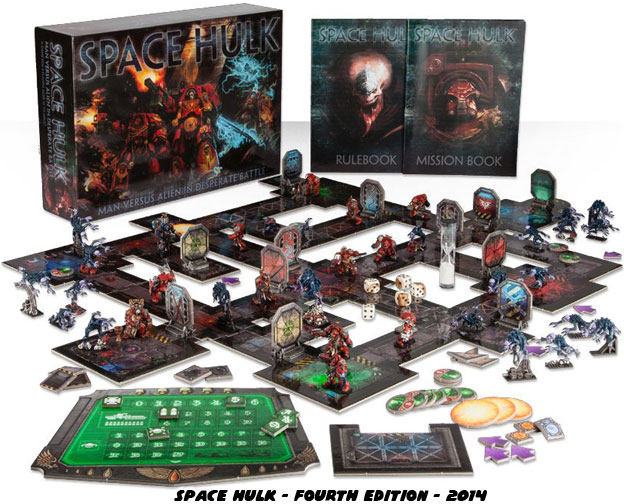
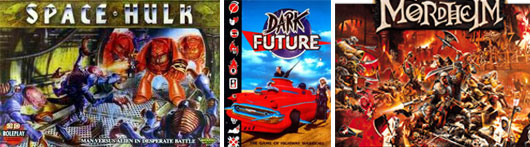
The new game featured embossed interconnectable card stock tiles with bright laser printed graphics. These tiles worked together with plastic scenery and doors that made the game feel very well put together. The production value was years ahead of the original Space Hulk. The sculpts of the Terminators and Genestealers were not rehashes of existing models either. They were very well made and insanely detailed, bridging the modern aesthetic with the classic proportions of Citadel sculpts. These miniatures that would never get reproduced in any other system or be available in a catalog. This distinction earned the collector a rare find.

The Third Edition of Space Hulk won awards from the gaming community and was produced in relatively small numbers, driving many collectors crazy. While it was a welcome release for the community GW was still missing something. The company had earned many followers by producing original boxed games that stood alone. New tabletop players had never known the stand alone experiences aside from the CCG. Those gamers had little knowledge of the experiences that GW used to develop. Long-time players were starved for something new and not another iteration of an existing system. Veteran game designer Phil Kelly heard the call and developed a new game called DreadFleet.
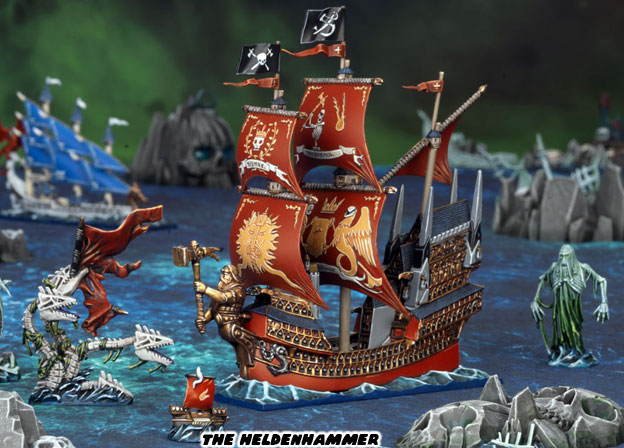
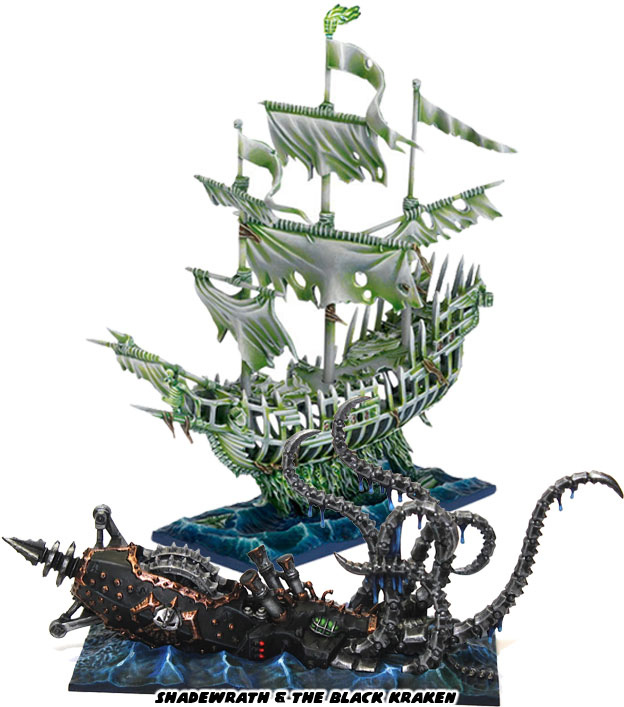
The story behind the game was conceived and written by Phil himself. It revolved around a cursed fleet lead by the vampire Count Noctilus. They made up a great gallery of classic warships, including a Tomb King death barge and a mechanized Chaos Dwarf Black Kraken. The Dreadfleet had been terrorizing the Warhammer high seas for years. A pirate captain named Jaego Roth set about to avenge the death of his family by recruiting or blackmailing some powerful privateers and friends. The game picked up at the climax of the book and allows players to experience different scenarios and choose sides. Easily this was the best new game produced by the studio in over a decade.

Dreadfleet was instantly appealing to new and veteran gamers because it did many things well. The miniatures were a powerful hook but the opportunity to experience a slice of the Warhammer world in a stand alone game was something unique. The game was a self-contained title that included highly detailed plastic models, that still required paint, markers, scenery and a color printed canvas map that represented a raging sea. That approach had not been seen in a long while, not since the original Blood Bowl boxed set had turned the fantasy universe on its head. Seasoned gamers were reminded of another old system that GW had developed and then abandoned. Man-O-War was the first boxed naval combat game set in the fantasy universe. It included rules for all of the major races, miniatures, markers and scenery to get a game going right out of the box. The game did fairly well and even saw an expansion set, the Sea of Blood, and additional miniatures released for the system. What Dreadfleet was not was the second coming of Man-O-War. It was a stand alone game with no plans for expansions or sequels. This both delighted and saddened players.
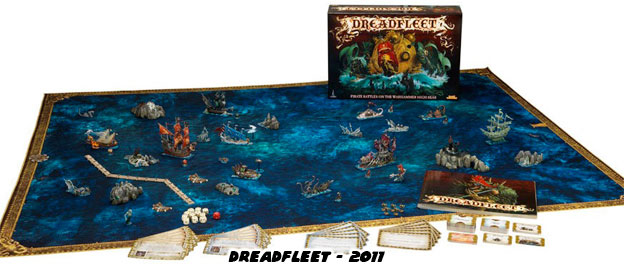
Veterans knew that if the release did not do well then GW would not support it and rules, errata and miniatures would be released sporadically through the Specialist Games store. The best way to preserve the legacy of the game was by making sure that the single experience was the best possible naval combat system the studio could produce. If players supported it then there was a chance that GW might consider making more stand alone games as well as they had done in the late 80's and early 90's. When the studio had their focus on the board game there wasn't another company that could touch them. Seasoned players were hoping that the company would return to that mentality and consider releasing other stand alone experiences. They would still be expected to support their core Warhammer Fantasy and 40,000 universes, as they had done decades ago, while making new experiences.
The stand alone game was also a gateway to the tabletop gaming hobby. It was a way to appeal to new players with a minimum level of investment required. Painting and assembling the Dreadfleet could help introduce the player to the hobby aspect while the easy-to-read markers and straightforward rule system got them into the gaming aspect. The appeal to many tabletop system was that there was something tangible to play with. Whether it was a CCG system or a miniatures based system, gamers had something to collect and personalize. Players did not need a television or console to enjoy these experiences. Best of all the stand alone format could compliment an existing universe or IP. A well design game with easy to follow rules could make a comic book, movie, cartoon or even videogame into a great board game. These games would not necessarily be a substitute for the series but instead a continuation of them. Bungie and Microsoft discovered this when Halo was licensed out for the Clix system of gaming. More recently Epic Games discovered this when they licensed Gears of War as a board game.

Studios like Games Workshop and Fantasy Flight Games were bridging the gap from casual gaming to hobby gaming by making great stand alone systems. This approach was actually nothing new to the industry. Decades ago the earliest videogame to board game titles were nothing more than copies of screen mechanics to paper boards. This was done to cash in on the craze of videogaming rather than to satiate the gaming desires of the public.

Games Workshop found success over the past couple of years by returning to the card and board game systems that made young players get interested in the hobby so many years ago. The further the studio shifted the focus from original ideas with great play elements to more established systems the more isolated they became. A similar thing could be said of Nintendo, which used to make card games, toys and stand-alone handheld electronic games. They all had their own unique play elements that turned young gamers into fans. Both GW and Nintendo had spent the better part of the 90's pandering to fans without catering to the play elements that helped create new followers. Only in the start of the new millennium did the studios begin going back to basics. But that would be a topic best saved for some other blog...

I hope my short look at Games Workshop has gotten you interested in tabletop gaming. Those that are interested should consider investing in some paints and brushes and getting the Dreadfleet game. Good things can come to those who play.

Building a gaming legacy, the Games Workshop series, part 1...
As always if you enjoyed this blog, and would like to sponsor me please visit my Patreon page and consider donating each month, even as little as $1 would help make better blogs and even podcasts!
follow the Street Writer on Patreon!

Friday, February 26, 2016

Building a gaming legacy, the Games Workshop series, part 9...

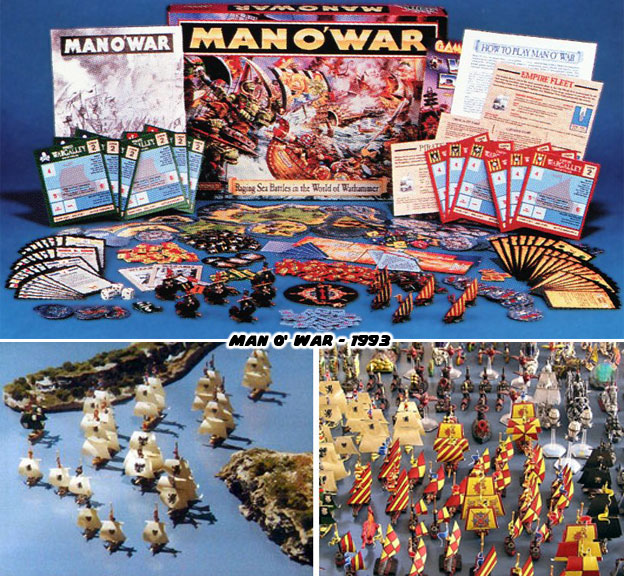
The system I'll be highlighting today did not come before Battlefleet Gothic but it did have a sizable following and possibly was the better of the two systems. The title is top notch storytelling and easily one of the most underrated tabletop games ever released. Man O' War is set during the Warhammer Fantasy era rather than the sic-fi setting of Warhammer 40,000. Both are still about naval battles but of course one is in space. When most people think of fantasy naval battles they might think of pirates and clipper ships, and the game does have that, however it extends far beyond their imagination. Man O' War is set in the canon of the classic Warhammer universe. This is a world where magic exists, also where creatures like dragons and ogres patrol the countryside and where humanity has made alliances with dwarfs and elves. The ancient world of Warhammer is not without its own interesting factions and science. Gunpowder does exist as are some basic steam machines so ranged weapons and explosives do make the naval battles more interesting. The ships themselves are very diverse, with small rowboats, paddlewheels, schooners and massive galleons making up just some of the ship types. The biggest of the wooden ships in Man O' War are far greater than the biggest wooden battle ships ever built and on par with modern battleships and aircraft carriers. The scale of conflict in the Old World is just as intense as any battle in 40K. This is what makes battles in Warhammer Fantasy so unique. In most fantasy stories there are maybe two great battles that involve every army on the face of the planet at least once a century if not once every thousand years. In the universe of Warhammer these epic clashes happen every other day. Tens of thousands of warriors live and die for battle on every corner of the map. As it turns out these battles also take place on the open sea. Games Workshop developed a system that allowed just about every race in the system to field their own navy.


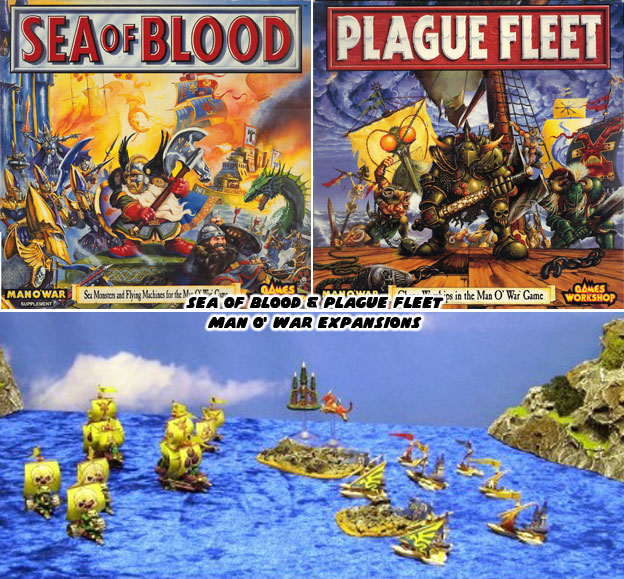
The battles out to sea were every bit as fantastic as the land skirmishes were if not more. The ships used by the Empire, the classic one not the Space Marine one, were exaggerated versions of the classic wooden warships we know and love. The biggest ones crewed an entire city's worth of soldiers and had hundreds of cannons lined up row after row on the sides. The biggest ships had enough firepower to cripple a small nation. When they did battle it was a sight to behold. Some of the enemies had equally impressive ships and featured their own special weapons. Some ships were crewed by the undead, they would row after opponents without tiring. Other ships were piloted by agents of Chaos, their ships were surrounded by clouds of poisonous gasses and the sails were pushed by strange magical energy. Some of the elvish ships unleashed dragons from their hulls, not unlike aircraft. The industrious dwarfs had ironclad ships and had small helicopters and balloons that they could send out to drop bombs on opponents. The Dark Elves had ships that were castles built on the backs of enormous sea dragons. It was a scale of fantasy and combat that hadn't been attempted by any other system. The Games Workshop magazine, White Dwarf, kept audiences up to date on the latest happening on the high seas of the Old World. We discovered that not only were the ships something to be reckoned with but there were sea creatures and even the god of the seas that the kingdoms had to do battle with.


Just like the other games that the studio released during the late '80s and early '90s the entire experience was in the box. Friends could share the game, take it to their local hobby store and compete against the locals. The counters and "islands" were pre-printed cardstock, making it easy to imagine a ship raiding a port town, or setting up an ambush with your fleet on the far side of a volcano. All a gamer had to do was supply a table to enjoy the game, a blue tablecloth was optional. Hobbyists had tremendous fun creating three dimensional islands and forts as terrain pieces. Like the previous systems Games Workshop followed up with some expansions that added more unique elements to the title. The Plaguefleet and Sea of Blood expansions came out in 1993, right on the heels of the release of Man O' War. Thanks to the monsters and rules of magic the ocean became far more dangerous than any land encounter that could be found on land. Chaos had a tremendous presence on the sea and even the little seen Chaos Dwarfs got in on the action. Their ships belched black smoke, were loaded with armored rockets and stained the water around them. Everything they did was a gritty version of their heroic cousins. The grudges the two sides had was palpable. These were just some of the rivalries that could be settled in The system lasted for many years and built a cult-like following. Sadly it never got a chance to experience any success on the PC or home consoles.


When Man O' War was discontinued there was a tremendous sense of loss in the community. Original systems, that had amazing miniatures, tight rules and a high level of production value were hard to come by. Most games of the nautical nature were flat card stock games that left much to be desired. It seemed that this would be the way things would have to be since not many studios were interested in naval tabletop games. That was until almost two decades later Games Workshop got a clue and decided to revisit the world of Warhammer Fantasy ship to ship combat. Senior designer Phil Kelly had an idea in his head that he had been honing for years. He had been working on a cast of heroes, of scoundrels and rouges that exist on the outskirts of the Warhammer universe. Unlike the generals that are celebrated in the lore of Warhammer these men and women and monsters that Kelly had dreamed up were instead the masterminds of the secret wars. These were the conflicts that are never remembered and never spoken of in Warhammer canon. They are the pirates rather than privateers that do battle against the forces of Chaos and evil races that would wipe humanity off the planet. Phil presented these characters in a novel titled DreadFleet. His game was named on that story. It was a manifestation of this unique vision of the Old World.


Mr. Kelly created a self-contained game in the tradition of the classic GW titles. Yet instead of having generic ships as there were in Man O' War this new game featured unique ships that represented the peak of each race. There was a ghost ship, a Vampire Count ship, an Elvish and Dwarf ship, the humanoid rat men known as Skaven had a ship made of the living copse of a giant fish, the undead legions from Nehekhara has a ship as well. There was even a mechanical submarine from the Chaos Dwarfs known as the Black Kraken. These would never be reproduced elsewhere and were in a scale much larger than the ships in Man O' War so that players could make out an insane amount of detail. There were beautiful models, for the good and evil sides, as well as terrain pieces all using the latest plastic modeling techniques. There were some playing card pieces but almost every important piece was represented with a miniature. The studio had even created a mat to play on, it was printed with brilliant hues that simulated a stormy ocean. It could be rolled up and folded without cracking or fading. I don't think something of that scale had been done by the company in almost 20 years! Dreadfleet was among one of the freshest game experiences in a generation and it really brought back all of the memories that made Man O' War such a great system as well.


Dreadfleet won several awards and gained critical acclaim yet it never became the phenomenon that Games Workshop had hoped. Nonetheless it should be remembered for being a return to the elements that put GW on the map in the first place. With a number of classic Games Workshop systems getting mobile releases as well as getting adapted for the PC on Steam then perhaps there might be space to be reintroduced to the Man O' War. If not then at the very least there might be a chance to see Dreadfleet get a new lease on life.

The worlds that Games Workshop had created was fantastic no matter what era you looked at. It didn't matter if it was the ancient world of Warhammer or the futuristic world of Warhammer 40,000. If you focused on just one part of the continuity chances are you would find an amazing game to build out of it. The next blog will explore the systems that focused on these details. As always if you enjoyed this blog and would like to sponsor me please visit my Patreon page and consider donating each month, even as little as $1 would help make better blogs and even podcasts!

 follow the Street Writer on Patreon!