Showing posts with label imperial guard. Show all posts

Tuesday, January 19, 2016

Building a gaming legacy, the Games Workshop series, part 2...

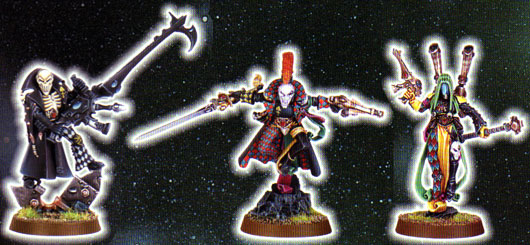
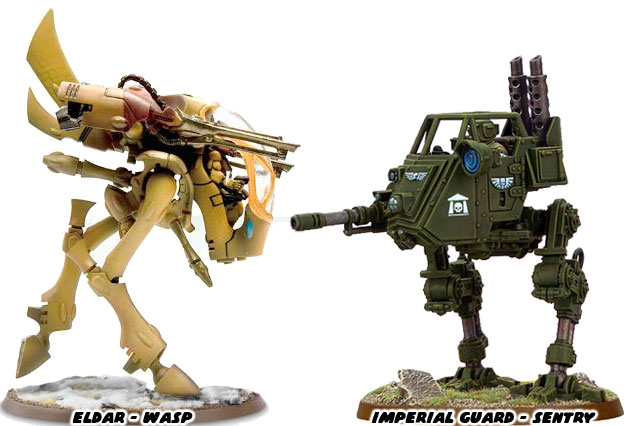
In the previous blog I mentioned that the sculptors working at Games Workshop create some fantastic miniatures for the Warhammer 40,000 system. Specifically these sculptors, sometimes freelancers, work for Citadel, the studio responsible for making the paints, models and tool kits for Games Workshop. Citadel is owned and operated by GW but have the responsibility of all the hobby elements that go into the system. In 40K the sculptors have to create vehicles and machines that reflect the aesthetics of each race. From human to alien, each species has a certain look, a certain style. The designers at GW help put together the back story and origin of each species. The sculptors at Citadel help translate the paintings and illustrations of the artists into three dimensional figures. The work that they do is beyond exceptional, they are awe-inspiring. For example in 40K there are aliens called the Eldar. Think of them like space elves. They are tall, slender and have weapons, armor and vehicles that are sleek. The lines on their war gear are smooth and flowing, inspired in many regards by the beauty of nature. Their weaponry is run on an exotic crystal fusion. By comparison the humans have weapons that we could imagine are forged from iron and steel and are run on diesel fuel. Take a look at the single-pilot walkers that the Eldar and Imperial Guard use in combat. Both machines are prime examples of science fiction storytelling. They have mounted weapons on a robotic frame with two legs but one seems to be half the weight and able to glide across the battlefield while the other stomps around like a clumsy wind-up toy.


These aesthetic choices are by design and help reinforce the species that make up 40K. The Eldar are very proud of themselves and think that all of the other aliens are primitive and crude. The word that they have for humans is Mon-kei. Some of the aliens that they speak of certainly fit the bill. The Orks for example have heavy, cumbersome weapons that double as clubs for the savage greenskins. They manage to cobble together weapons, artillery and spacecraft using whatever crude material they have on hand. In a way they are engineering savants. Their work is not pretty but it gets the job done. On the other side of the cosmos are the Tau. The gray-skinned aliens are very advanced and are trying to bring peace throughout the cosmos, by conquest of course! The technology they exploit is neither fluid like the Eldar or gothic like the humans but instead something completely different. I would compare the design aesthetic applied to the Tau like mecha designs featured in Japanese anime. Not surprising is how well it balances out the technology exploited by the other aliens. These things are especially obvious when you look at the robotic armor that the races can field. Space Marines have Power Armor, Terminator Armor and other forms of armor and battle suits that they can wear. They are not the only ones that benefit from this type of armor.
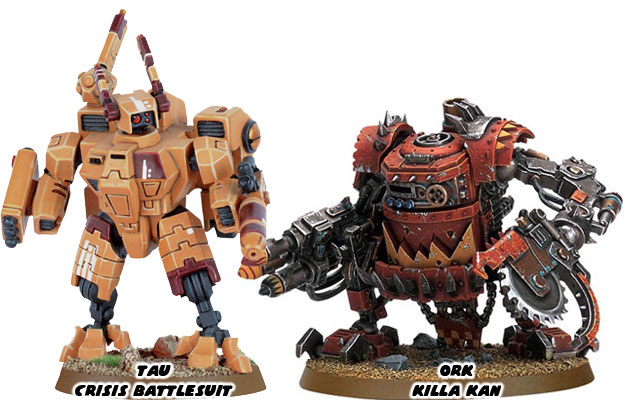
 

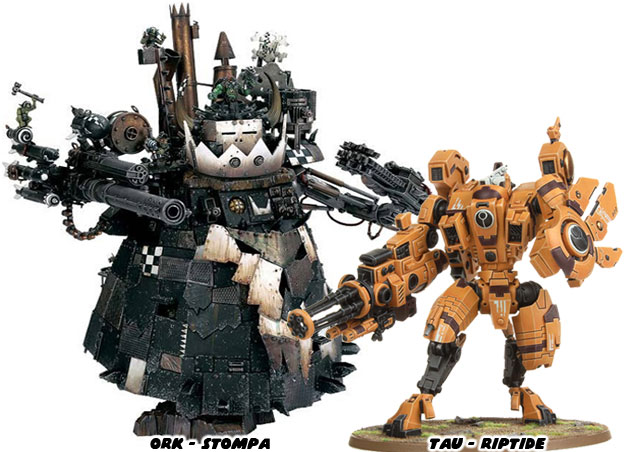
The Tau have a fast and powerful suit called the Crisis Battlesuit. By comparison the Orks have a crude, but equally lethal, robot they can pilot called the Killa Kan. Even though the subject matter of a future that was eternally at war was quite grim the game designers always found a way to put some humor in the system. It's easy to see the differences in alien technology when you compare the weapons side-by-side. When GW was designing the 40K system they learned early on that every alien race needed some sort of counterpart to a particular troop type or weapon. If an alien had a single-person speeder then humans and other species ended up with their own variation on that speeder. If an alien had a tank or transport then humans and other creatures had their own version as well. This sense of balance went from small handheld weapons and armor all the way up to gunships and space craft. The 40K universe always had a great sense of scale. The volumes written and drawn about the universe gave audiences an idea that there were countless other planets and stories waiting to be discovered. When it came to war there were giant robots that made human soldiers seem inconsequential. The artists and sculptors working on the gigantic models never forgot to reflect the technology behind each species. Take a look at the enormous Ork Stompa and Tau Riptide. They were not far removed from their smaller robotic suit counterparts.
 

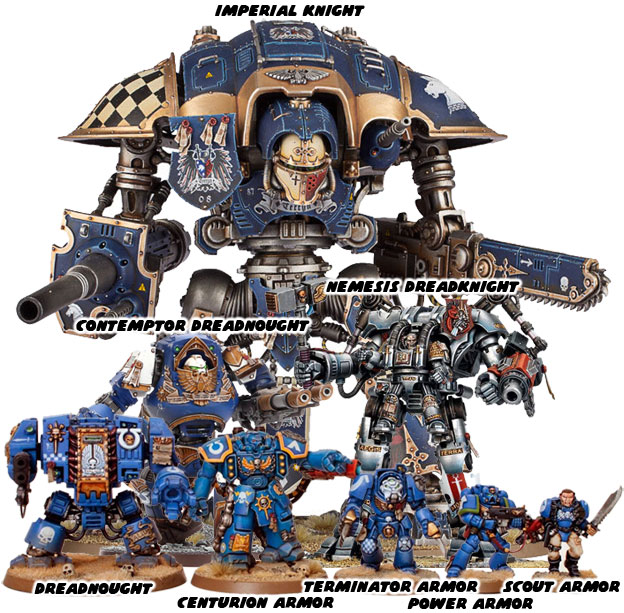
Robotic suits of armor were the backbone of the Space Marine armies. I mentioned that there were more than one set of power armor that a unit could wear. There was a reason for these different types of armors and as you can imagine the bigger ones were designed for more dangerous encounters. The sculptors at Citadel had been refining the armor designs for almost three decades. These are easily some of the best miniature figures you will ever see. The detail applied to each piece is amazing. When you see them side-by-side you can only imagine that the team spent countless hours not only creating these models, but they had to turn around and create a balance for each of the alien races as well. Of the single-pilot suits of armor the largest is the Imperial Knight. This was the armor featured in the game Freeblade. This suit of armor was at a scale to combat the enormous robots like the Riptide and Stompa.

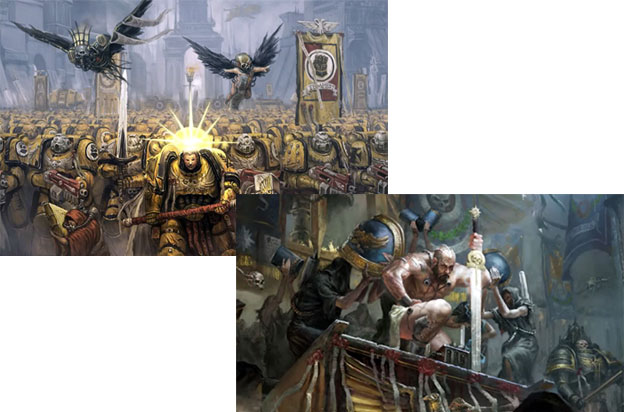
What made the robots used by humanity, and specifically by the Space Marines, different than those piloted by the aliens was the neural interface. Pilots of the Imperial Knight actually became a part of the machine. Their brains and life support systems were tied into the robot during a process called the "Becoming." The consciousness remained with the robot for centuries if not for thousands of years. Only in death would the service to the Imperium end. At which point the robot would be taken apart, reassembled and a new pilot be selected. The robotic host was a tradition that went back to the early days of 40K. The Space Marines were long-lived and super resilient yet even the greatest Space Marine eventually succumbed to injury. Rather than "retire" those warriors and lose much valued military knowledge and experience the best underwent something similar to the Becoming. Those marines were interred in Dreadnought Armor. Their life support systems were connected to the machine and they would be able to fight on for centuries more.
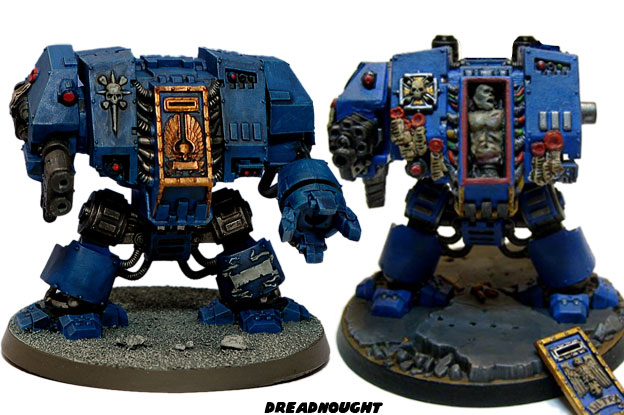

A collection of servitors, or robotic servants would attend to the Dreadnought when not in battle. A Dreadnought was treated like a holy relic. The servitors cared for the mechanical and organic parts with incantations, litanies and sacred oils. The robots received the same care that a nun would give a leper in the slums of poor countries. In many instances the warrior within would sleep for decades at a time until his services were needed once more. One of the great examples of the importance of a Dreadnought in the universe was explored in the comic book Damnation Crusade. A portion of the story is told from the point of view of Tankred, a member of the Black Templars. It's one of the best examples of the sacrifice that the Space Marines make in order to keep humanity alive against the cruel aliens and twisted demons of Chaos. It was great science fiction storytelling and went over amazingly well in the game system.
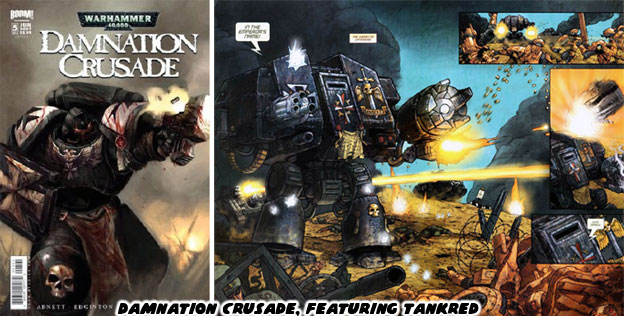

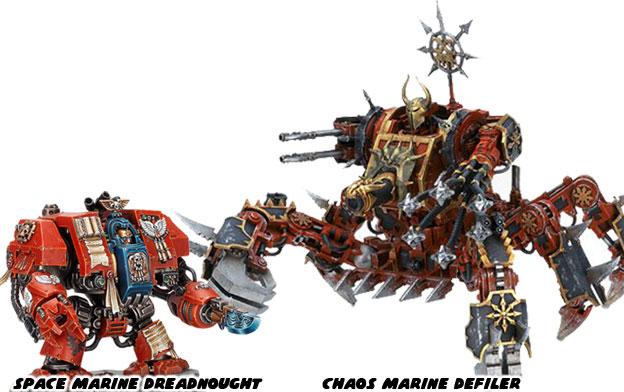
Each legion had its own unique Dreadnoughts, they were honored members and brought into battle an assortment of heavy weapons. The weapons they used, the literal arms on each robot, could be replaced depending on the battle. They had robotic hands that could tear open tank armor, flame throwers that could burn down buildings and plasma cannons that could blow holes through the biggest opponent. The idea of man and machine unified was something that made the science fiction in the world dark and foreboding. This technology was not exclusive to the Space Marines but had a variation in the alien races as well. The most interesting combinations of living tissue and robot came in the forms of the Chaos engines of destruction. The forces of chaos could turn man into beast and heroes into demons. Those that were previously pilots and crews on tanks and artillery became fused with the machines. Not thanks to technology but the magic of the warp, that part of the galaxy that exists beyond our concepts of time and space. Bones became forged into the structure of the machines and blood replaced oil in the infernal contraptions. Skin was stretched across the joins like some macabre hide. Just look at how more intense the Chaos Defiler looks when compared to the already enormous Dreadnought.

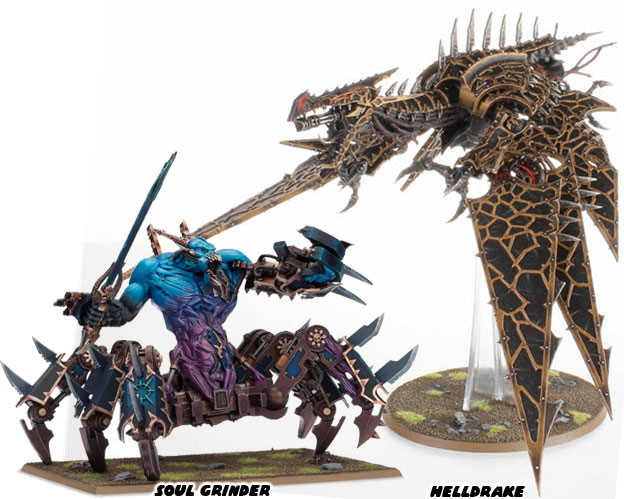
The more powerful the demon the more powerful the living weapon they would become. Some of the larger machine and creature hybrids dwarfed the mighty Dreadnought. Just take a look at the Soul Grinder. The multi-legged robot was far more than a Defiler and yet not quite a demon prince but instead something in between. The forces of Chaos rewarded their champions with awesome powers. Some became larger and more grotesque monsters, some were given weapons with magical properties. Other machinations of chaos were metal birds that could take on any assault jet. The larger weapons of chaos had a purpose, they were a counterpart for the most powerful artillery in an army. Citadel did a fantastic job bringing these creations to life. The designs created by the studio went on to influence other miniature gaming systems and even video game development as well. Several of these monsters-turned-vehicles began popping up in Games Workshop video games.
 

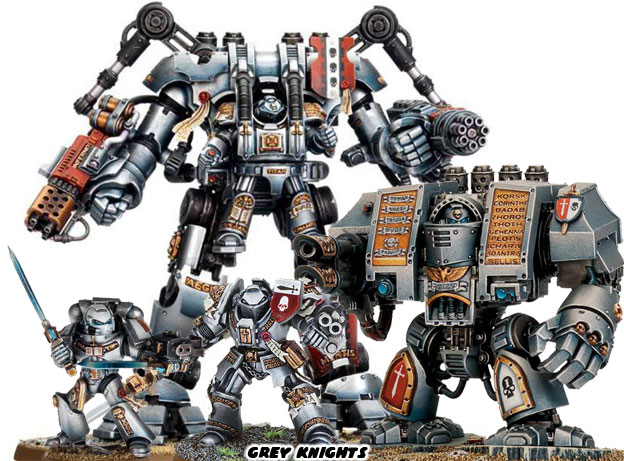
For years the Dreadnought was considered the most valuable single-pilot robot in canon. The Space Marines and Chaos Space Marines made great use of these machines. Just a handful of the robots could change the course of a battle. Yet as the system grew over the past 30 years the threats became bigger and stronger. Thanks to aliens that became more aggressive and dangerous it was not enough for a Dreadnought to take on the most powerful opponents. Games Workshop began creating more powerful armor for the Space Marines. The Terminator Armor was the best for a long time, then the studio introduced Centurion Armor as well. Gray Knights even had access to a gigantic walking frame so that they could face demon princes in hand-to-hand combat. Yet these bigger and better armor choices were not always enough for the biggest enemies in the 40K universe. This would become the task of an even larger robot. The Imperial Knight, the star of the mobile game Freeblade, would become the most powerful single-pilot robot in the ranks of the Imperial Army. The best part of this robot, aside from its awe-inspiring design, was that it was created so that it could freely move between armies. It did not have to adopt the livery of any particular army. Instead it was a freelance robot that had its own legacy recorded on its own armor. It could have its own insignia and even custom weapon choices to wear in battle. Then it was free to move to another sector of space where it was needed by a different legion.
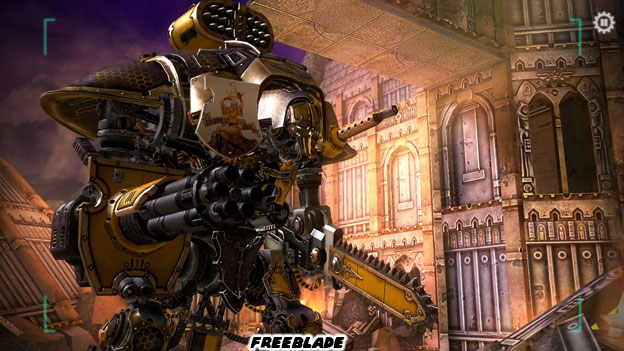
 

The Imperial Knight was a force to be reckoned with. The forces of Chaos and the different races learned to feel the mechanical giant in battle. Yet when it came to the history of Warhammer 40,000 it turned out that the Imperial Knight was not at the top of the robotic food chain. If you can believe it there were robots even bigger helping keep the torch burning bright for humanity. The next blog will feature these colossal machines. As always if you enjoyed this blog and would like to sponsor me please visit my Patreon page and consider donating each month, even as little as $1 would help make better blogs and even podcasts!
 follow the Street Writer on Patreon!

Wednesday, January 13, 2016

Building a gaming legacy, the Games Workshop series, part 1...

The mobile game Freeblade that I had talked about earlier on this blog really got me thinking about Games Workshop and all the fantastic systems they've released through the years. I decided I should make my next blog series about those games and how they were translated to PC, console or mobile games or deserve to be translated. I also wanted to talk a little bit about the ups and downs of Games Workshop, how they have evolved or haven't and why the hobby community is still a strong draw. Before we get into all of that we need to explore the world of Warhammer 40,000 (40K for short). This was the universe featured in Freeblade. Many of my readers might already be familiar with that universe and others may not. So I'm going to point out some things that I really enjoy in the sic-fi epic. The thing that many people recognize about 40K are the Space Marines. In the far future these are genetically enhanced super soldiers that are one of the defenders of humanity. These soldiers have gone through mental and physical changes are are far more than average people when they undergo their transformation. Most Space Marines are over seven feet tall and have denser bones, organ implants and musculature that is superhuman. Part of the Space Marine ritual and by extension the entire 40K universe is how much spirituality and science fiction are mixed into canon. The Space Marines were created by the Emperor of Terra (Earth) around the year 30,000. He created many chapters but half turned to evil, seduced by the forces of Chaos and the rest remained loyal and defended Terra during the Horus Heresy.


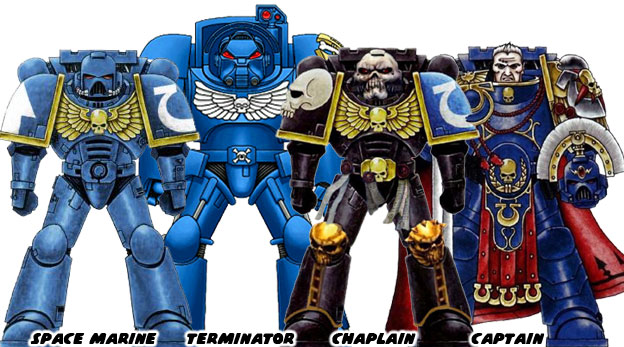
Now fast forward 10,000 years and humanity is still scraping out an existence throughout the cosmos thanks to the protection of the Space Marines. Yet the entire process of creating a Space Marine, as well as the weapons and munitions they use are considered sacred. In some cases the bravest and longest-serving leaders may actually get to use ancient weapons in battle, these relics are as potent now as they were 10,000 years prior. In many instances good and evil are constantly scouring the universe for lost technology and other relics that they can use to change the tide of battle. Even the armor that a Space Marine uses can be passed down through the generations. The types of armor that they wear actually depends on their rank, position and battle. The traditional Space Marine that most people imagine, with large shoulder pads and a jet pack, is called "Power Armor." There are many other types of armor in the universe. The First Company, made up of the most experienced Space Marines from a chapter get to wear Terminator Armor, this is reserved for the most dangerous assignment or inhospitable planets or while boarding alien vessels. There are Chaplains, who keep the faith in the Emperor of Terra burning bright in the Companies, as well as Librarians who are the psychic members of the Space Marine forces. There are also heroes and Captains, each with their own armor and weapons.


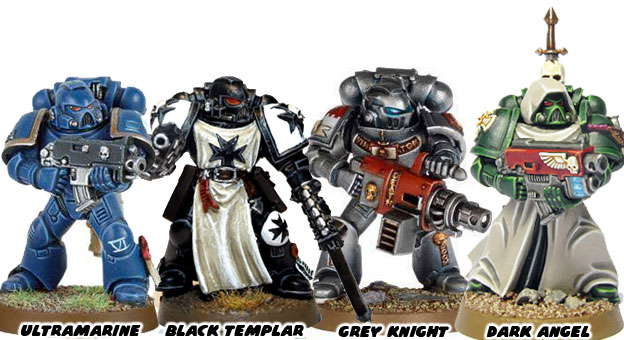
There are countless Space Marine chapters in the Imperium. One of the greatest things that Games Workshop did was create rules and encourage players of the 40K system to create their own chapters. These can be related to existing chapters and may identify with their own goals and methods. Prior to the Horus Heresy there were almost two dozen founding chapters. After the heresy they were broken up because the chapters were so powerful that any one could be considered a serious threat to humanity, especially if the leaders became seduced by Chaos. By breaking apart the chapters and forcing them to create sub-chapters it created a sort of checks and balances for all of the units. Some of the most famous founding chapters remained post-heresy and Games Workshop does create special models and rules for these groups. The Ultramarines, which are featured in the great console game Space Marine by Relic Entertainment, are very popular and reminiscent of ancient Roman legions. The Black Templars were stubborn and refused to "downsize" when the Imperial Fists were disbanded and the second founding was created. So that they would not break the treaties of the other Space Marines they decided to launch a crusade against all the threats of the Imperium and take the battle to the stars. In this way they could remain united, hold a higher concentration of actual members in one place and at one time and answer little to administrations.


The Grey Knights are made up of powerful psychics or "psykers" and are the military wing of the Inquisition. They are the elite squadron when it comes to fighting demons and the forces of Chaos. In the 10,000 years since they were founded they have never lost a member through corruption. They have access to some ancient weaponry that would be the envy of other chapters. Their weapons however are designed to take out demons rather than aliens. The Dark Angels by comparison were the first chapter created by the Emperor and have been fighting for redemption ever since the heresy. Some of their own became traitors during the war and caused the entire chapter to become suspect. Because of this they have spent the past 10,000 years hunting down the traitor chapters and atoning for their sins. Something that makes the universe of 40K so unique is how each chapter guards its secrets and how little they may know about each other. Few people in the Imperium even know about the Grey Knights for example, they are a secret army in the fight against demonic possession. They are spoken of in legend but never seen, even by other Space Marine chapters. Some chapters look down on mutants, psykers or abhumans and would never associate with them or fill their ranks with them. While in other cases a chapter may be tolerant of mutants because they remain loyal warriors. And in very rare cases some chapters have fought alongside aliens against mutual enemies, usually the forces of Chaos. When playing the game it really helps to understand the psychology of each chapter and find out what makes them tick. Of course the other great thing is getting into the science fiction part of the hobby and building an army of unique-looking warriors.


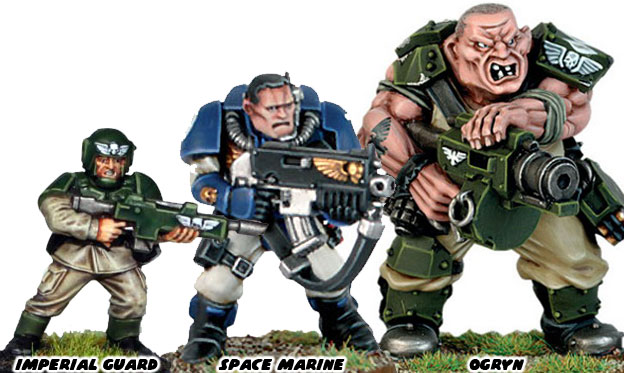
Every army in the Imperium has its own collection of weapons and war gear. Some are even exclusive to a certain chapter. The scale and aesthetics of each race, whether human or alien, is unique in their own ways. This is something that the sculptors working at Games Workshop know very well. They are able to sculpt weapons and war gear for different sizes of humanoid and alien races while making everything look plausible. For example in 40K the Imperial Guard are the human-sized soldiers. They have access to the greatest artillery in the future. Enormous tanks, high speed fighters and fortifications that could withstand thousands of years worth of conflict. While they are not as big and powerful as the more popular Space Marines, they do have their own strengths with regards to the weapons they yield and the vehicles they can take into battle. You don't really realize how much larger the Space Marines are until you put them next to an Imperial Guard soldier. Even outside of the Power Armor the Space Marine stands much larger than an average person. But even a Space Marine is not the biggest humanoid in the universe. In 40K there are space ogres, known as Ogryn. These men are considered "abhumans." Most mutants or abhumans exist on the outskirts of society. Those that don't kill themselves, or are turned into slaves end up in prison or work as beasts of burden. Ogryn are the exception. They are big, strong and tough and love to fight. They are very dumb however and require a strong leader. In battle they are extremely resilient to the elements and weapons. They can easily shrug off attacks that would kill a normal human and seriously wound even a Space Marine. This makes them dangerous warriors and perfect human shields for the Imperial Guard.


The weapons and technology, the alien races and backstory behind Warhammer 40K are unique among every other science fiction game out there. It actually holds up very well against the biggest movies and television shows over the past half century as well. Of course for those that want some amazing weapons they probably won't find anything better than those featured in 40K. From the small but powerful las-pistol of an Imperial Guard infantryman to the transmission-sized Ripper Gun of the Ogryn, the hand-held weapons of the future are awe-inspiring. But these things are nothing compared to the weapons of war that all of the races bring into battle. When you add giant robots into the mix things get much more interesting. The next entry will look at the robots that serve the Imperium and those of the enemy. As always if you enjoyed this blog and would like to sponsor me please visit my Patreon page and consider donating each month, even as little as $1 would help make better blogs and even podcasts!
 follow the Street Writer on Patreon!

Friday, November 6, 2015

Why you should celebrate Games Workshop during BlizzCon...

I had a really long post ready for this year's BlizzCon but instead I just sum up my frustrations with Blizzard by posting something that long-time gamers remember about the company. There was another game system that existed more than a decade before Blizzard's two biggest hits. These games were the inspiration for Blizzards success yet they rarely get coverage in the gaming media.

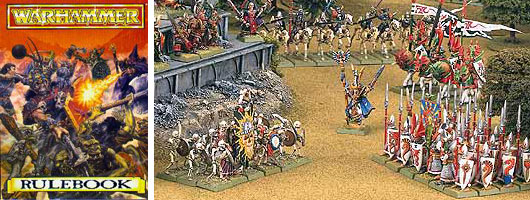
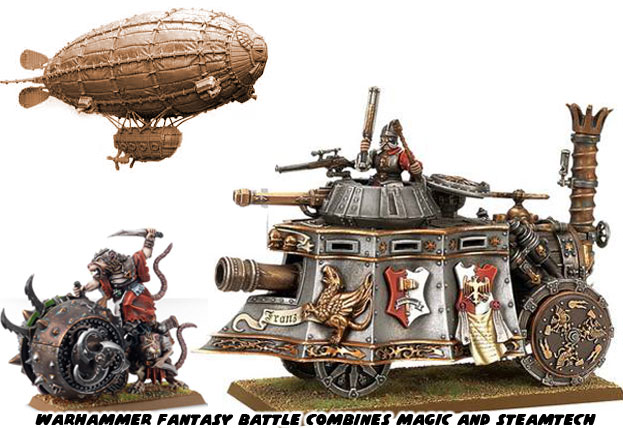
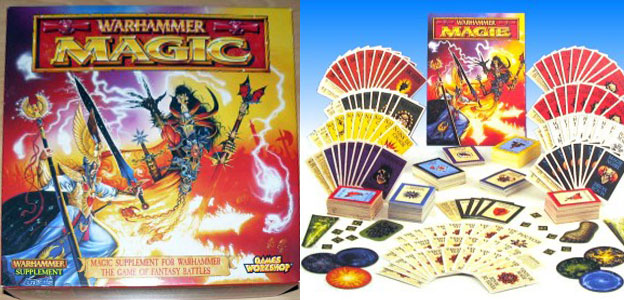
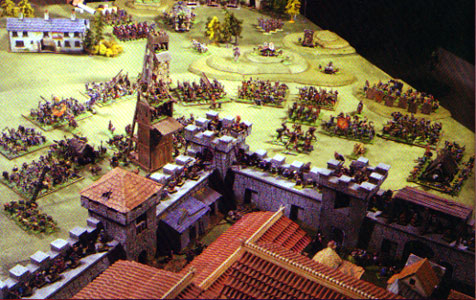
Warhammer Fantasy Battle, or Warhammer for short was first published by Games Workshop in 1983. It was a tabletop gaming system by set in a world that was similar to the Dark Ages. There were knights and kings, damsels and dragons. Games Workshop developed the rules for playing as and against the various classes. Citadel was their miniature studio and they created the figures for gamers to collect, assemble, paint and customize.

The universe of Warhmmer was not simply a fantasy version of medieval England. Magic existed but so did some steam machinations and lighter-than-air craft. It was as if the Jules Verne inventions were placed centuries earlier. There were sailing ships as well as some steam-powered ships. There were even submarines and machines that drilled through the Earth!

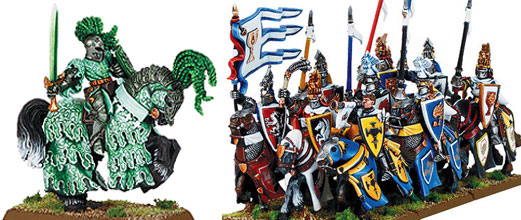
There were towers that gathered the sorcery "winds" and fortresses that floated on currents of magic. This mix of magic and technology was unique to the genre. It made the characters that lived within the world much more unique than those of our own ancient world. There were two large human kingdoms in Warhammer, those of Bretonnia and the Empire. The Bretonnians were similar to Medieval England. This was a kingdom of magic, dragons and knights. It had a heavy emphasis on the Arthurian legends.

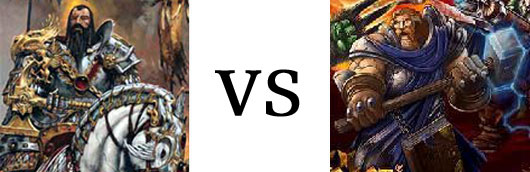
The Empire was an amalgamation of Germanic and French provinces in their universe. The Emperor of the ancient world, at this era was known as Karl Franz, he held Ghal Maraz (dwarf for skull splitter) the actual "warhammer" that the game was named after. Some of the heroes in the universe rode horses, others rode lions, bears, unicorns and gryphons. Those that think WarCraft invented fantastic "mounts" were sorely misinformed.

Humanity formed alliances with the dwarf and elf kingdoms during the early wars of survival. These were the precursors to the heroic "Alliance" in World of WarCraft and of course all of the evil races went into the "Horde."

In the Warhammer universe the evil forces usually fell under the banner of Chaos but there were also evil races that had nothing to do with Chaos as well.

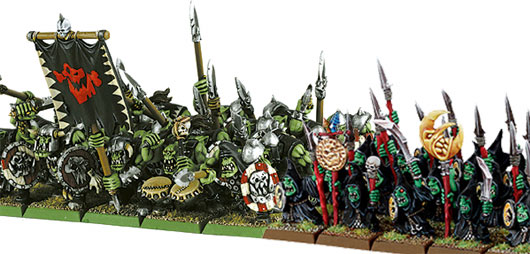
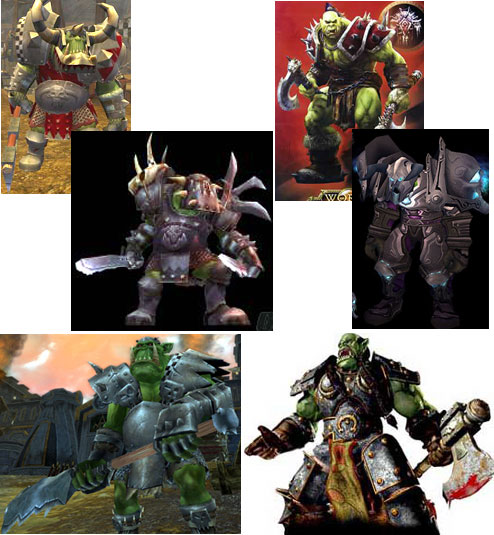
Orcs and goblins also inhabited the world of WH. The designs of these "greenskins" was possibly the single thing most copied over the next 30 years. I know that Games Workshop did not invent the orc, hobgoblin, goblin or troll. Those came from various legends from around the world. The descriptions of these monsters was fairly well known. The creatures were brutish, with leathery green skin and sharp teeth. Some lived in swamps and marshes, some could spit poison and even control the creatures of the night.

What Games Workshop did do was popularize the designs. In essence most orcs and orc variants that you see in video games were based on Games Workshop designs. The scale and proportions of the heads and bodies varied depending on which studio produced the art.

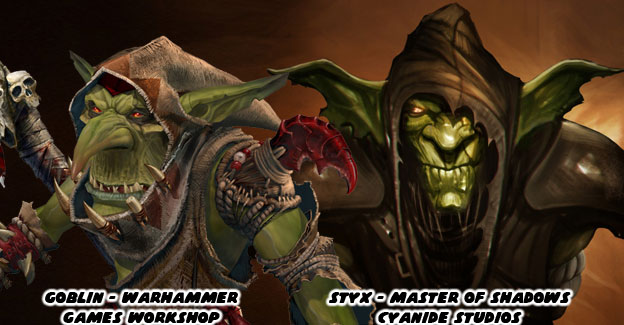
Take for example the stealth game Styx Master of Shadows. The game by Cyanide Studios did a great job of combining the stealth gameplay and exploration of Assassins Creed to the fantasy design of Games Workshop. It was no coincidence either, Cyanide Studios developed the Blood Bowl PC games which were based on the Games Workshop's fantasy football game.

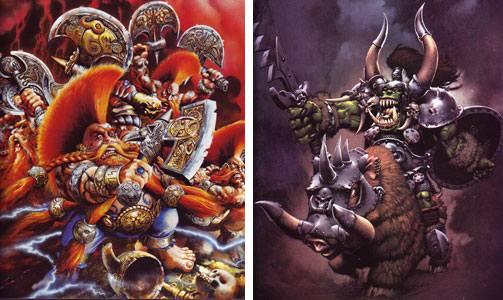
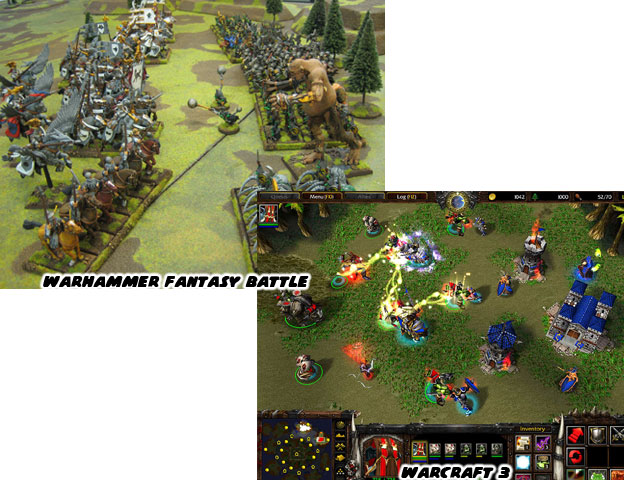
Aesthetically the creatures in WarCraft were very reminiscent of those from Warhammer. If anything they were made slightly simpler. Side by side here was art from Games Workshop and Blizzard, you tell me if there were any similarities.

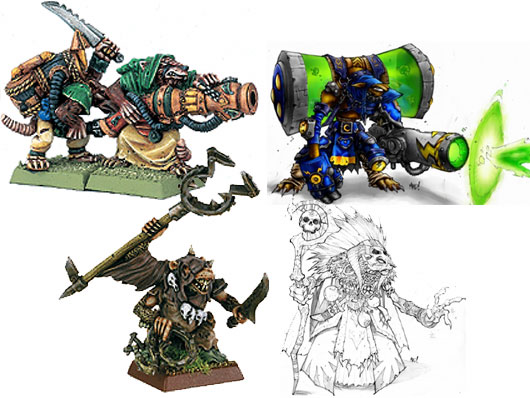
Aside from the classic fantasy characters there are also creatures unique to the Warhammer world. One of the evil races occupying the world are mutated, highly-intelligent rats known as Skaven. The Skaven could be considered the mechanical equivalent of the industrious dwarfs. They did not use fossil fuels or steam for their machines. Their diabolical inventions ran on green radioactive "warpstone." This poisonous stone caused almost as much damage to the Skaven as the creatures they attacked.

Surprisingly enough Blizzard did not poach the Skaven designs, somebody else did. Rat-like characters named "Whiskers" armed with poison green weaponry had popped up in designs by comic book artist Joe Maduera for a video game called Dungeon Runner. Below are the Skaven miniatures compared to the Whiskers concept art. Coincidence?

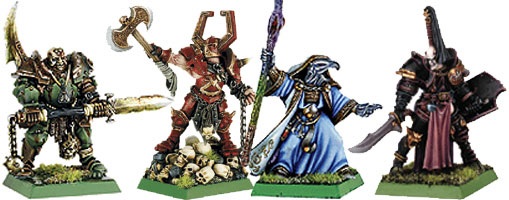
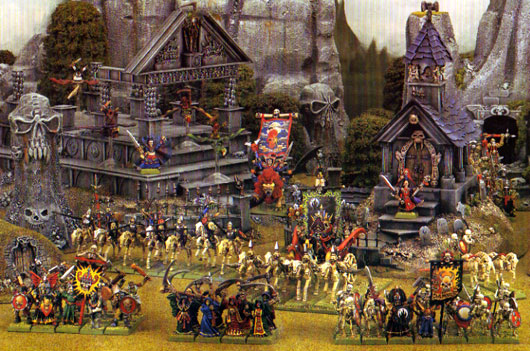
The other great contribution that Games Workshop had to fantasy design was with the development of the chaos warriors. These misshapen men, women and creatures were representatives of the chaos gods. They were similar to the Four Horsemen of the Apocalypse from biblical verse. There were chaos gods that identified with war or pestilence, they reward faithful subjects by turning them into demons and giving them magical powers. The miniatures for these chaos warriors were among the best ever sculpted. Accordingly, when Games Workshop was firing on all cylinders they were also the best painted in the world.

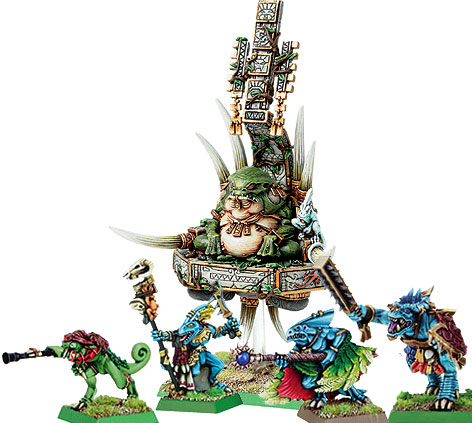
Among the oldest tribes in the WH world were the Slann, later renamed the Seraphon. These reptile creatures lived in a part of the world similar to pre-Columbian America. True to form this meant that the architecture and weaponry employed by the Slann was reminiscent of Aztec and Mayan culture. The Slann were known for their very powerful mages, among the most powerful magic creatures in all of Warhammer.

WarCraft didn't poach the Slann or Skaven but instead looked at other animals, like bulls or Tauren, on which to create a race on. The Chaos soldiers were often corrupt humans but almost every race in Warhammer had an evil opposite. There were Dark Elves (called Night Elves in WarCraft), and Chaos Dwarfs that fought against their noble kin. There were are also armies of the undead, led by the Vampire Counts.

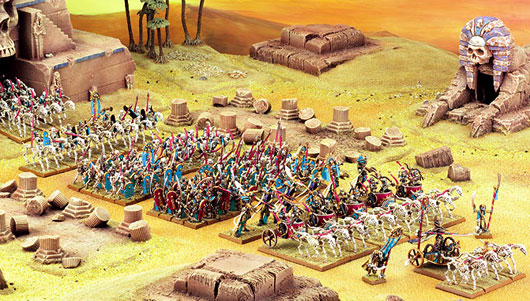
What was interesting to notice is the evolution of the armies in Warhammer. The system did not stay the same over the years and evolved quickly. In order to keep players interested the system had to keep expanding and introducing new races and quests. The same things that World of WarCraft would do in order to keep subscribers engaged. For example early skeleton armies were controlled by Necromancers and Vampire counts. While the classic skeletons were still around, new dedicated skeleton armies were controlled by ancient Pharaohs or Tomb Kings from the south had been introduced to the world.

Through the '80s Warhammer was great fun and limited only by your imagination. For those that were into a more traditional role-playing experience, Games Workshop also offered a fantasy roleplay system set in the Warhammer universe. If, however your imagination was running on empty then the hobby tips provided in White Dwarf magazine (also published by Games Workshop) could inspire you.

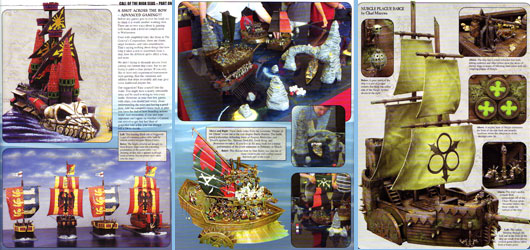
One of the best features that Games Workshop built into the game were adding ship combat to the universe. This was years before naval combat had existed in any MMO, and especially before WarCraft. The articles in White Dwarf included how to make your own ship, custom ship ideas as well as sample campaigns.

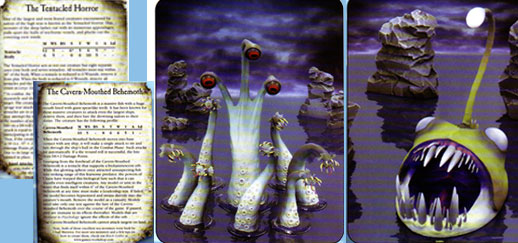
To top it off White Dwarf even published rules for using sea monsters with the ship game and how to model these monsters yourself.

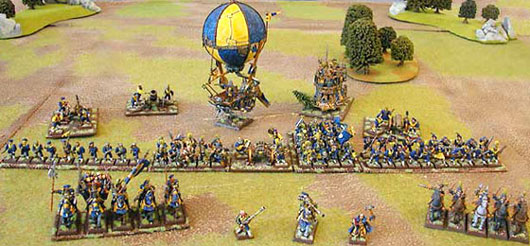
Now take a step back and look at the big picture. How long had this gaming system been around? What was it like to see the various races fighting for power? Each race with its own strengths and weaknesses. Its own special units, magic, heroes and tactics. Imagine these armies clashing in a tabletop war. Hundreds of brightly painted characters smashing each other in glorious combat. Imagine what it must have been like to witness these games 25 years ago as a budding game programmer, designer or artist. Squint your eyes if you have to. Is this starting to look like the original Warcraft RTS game?

Games Workshop developed rules for controlling units, what bonuses they received when equipped with the right weapons or controlled with the right leaders. In the video game these things became known as "buffs." Games Workshop figured out effective ranges for each type of fighter and squad and more important, figured out how to keep the armies balanced out. A solid strategy and a few good dice roles could help ensure victory.

What Blizzard did was adapt those rules, those ranges, unit types, bonuses and random dice roles and turned them into a PC game engine. This made things a lot easier for people that did not want to measure out the strikes of their units using a ruler, for those that did not want to read all of the rules of engagement or figure out if line-of-sight was in effect when battling. Instead fighting a battle was done with the press of a few buttons and the virtual armies moved themselves on the battlefield.

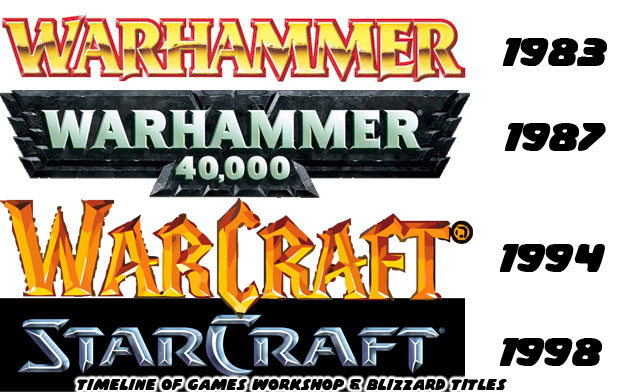
There was no doubt that Warhammer was influential on the development of WarCraft. Sadly none in the game press bothered to call out Blizzard for these similarities. But more shocking was how a few years later Blizzard released StarCraft. This was a science fiction RTS game that swapped out knights for space marines and introduced aliens instead of fantasy creatures.

Games Workshop released Warhammer 40,000 in 1987. It was set in the far future and featured Space Marines battling all sorts of alien lifeforms across the galaxy. The original monsters in the game were simply space versions of fantasy characters. The Elves became Eldar, yes, there were Dark Eldar as well. The Orcs became Orks and still used crude weapons and machines in battle.

StarCraft debuted in 1998, more than a decade after Warhammer 40,000 or 40K for short. Blizzard pretty much poached the concept that worked for WarCraft and set it in the future. What was shameless was how much one of the "new" alien races looked like a Games Workshop one.

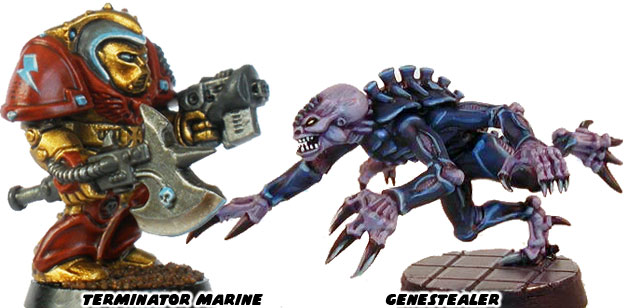
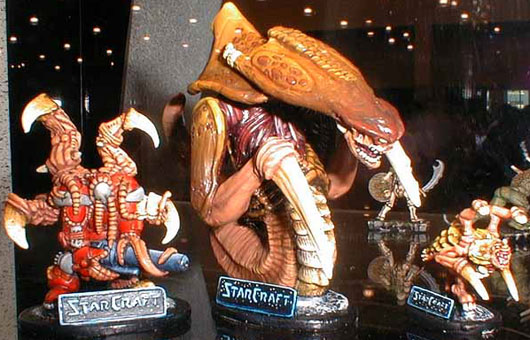
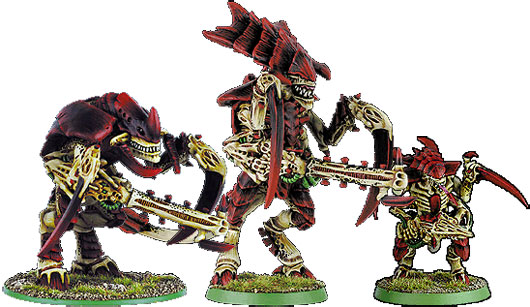
The Genestealers, which to be fair were poached from the Alien movie, were released in 1989. They were the new 40K aliens featured in the game Space Hulk. The Genestealers would become the shock troops for an alien race called the Tyranid. These clawed creatures appeared in 1990 in the Advanced Space Crusade adventure. The Tyranid were without a doubt the basis for the Zerg aliens.

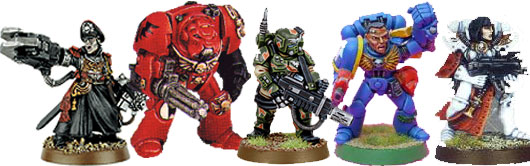
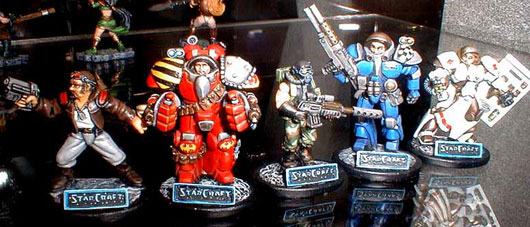
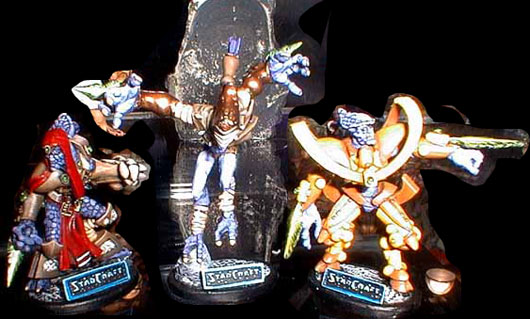
In shameless style Blizzard had the audacity to announce their own miniatures for a tabletop gaming system. Of course every miniature they unveiled looked eerily similar to one released by Games Workshop years earlier.

Above were some 40K minis including Imperial Guard, Space Marines, Space Marines in Terminator armor and Sisters of Battle. Blizzard had the nerve to do the same thing for the alien species in StarCraft as well.

Maybe when I put the Tyranids after the Zergs you might notice the similarities.

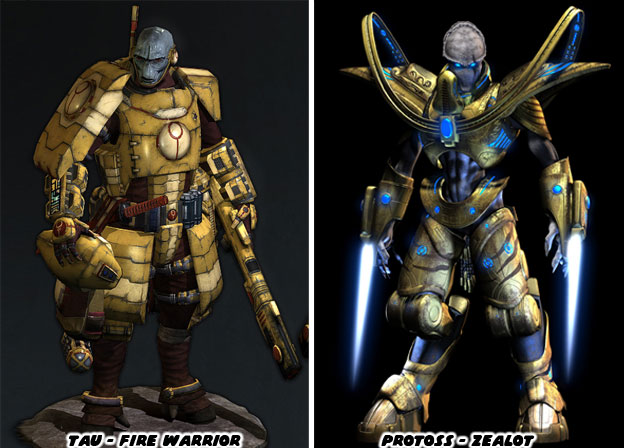
There were other aliens in StarCraft though. The blue-skinned Protoss for example.

To be fair though Blizzard did have the Protoss in their games four years before Games Workshop introduced the Tau and Kroot warriors. The Necrons however (robotic skeletons controlled by alien Pharaohs) were as old as StarCraft.

The inspiration for the Tau was based on feudal Japan, with the weapons and vehicles based on mecha. The code that the aliens lived by was somewhat imperialistic but could also be highly religious. It was as if great technology was still governed by ancient scriptures. Similar things could be seen in the Protoss aliens.

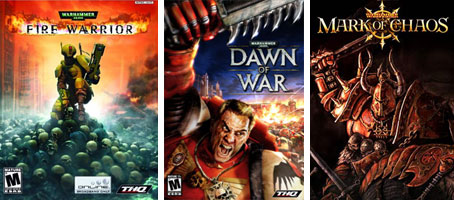
Too bad Games Workshop had nothing but crappy video game licenses up until now or else the world of video gaming would be very different. Not that it matters, the damage was done and Blizzard made billions of dollars off the ideas of another company.

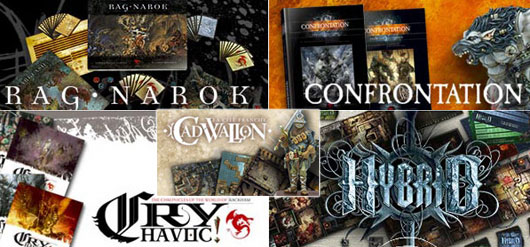
Now that Blizzard was a huge publisher they could hire all sorts of artists, programmers and designers and no longer have to poach the ideas of another studio. Especially not a French tabletop gaming company named Rackham that went toe-to-toe with Games Workshop in the early 2000's, right?

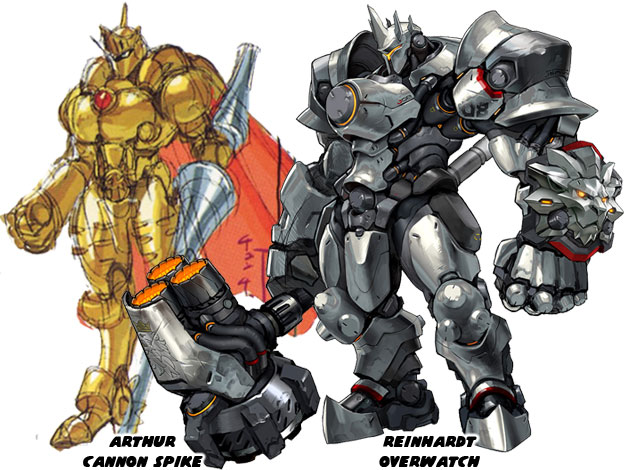
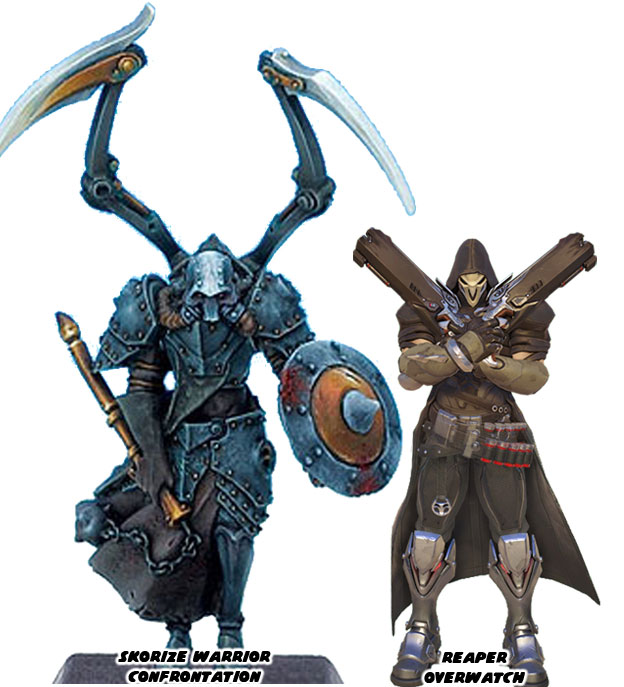
I mean maybe it's a coincidence that the new shooter Overwatch has different alien archetypes mixed with Western and Eastern heroic designs. It was just coincidence that the Reaper and robotic Reinhardt were reminiscent of designs from outside studios.

Arthur from Cannon Spike, how many Capcom fans had even played that game from 2000? Many gamers could guess that Overwatch was Blizzard's answer to the smash hit game Team Fortress 2. There were various classes of shooter, each with their own strengths and weaknesses.

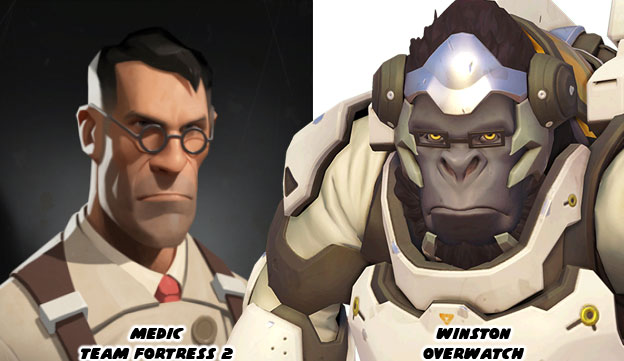
To mix things up Blizzard introduced robots, aliens and cyborgs into Overwatch. In this way they could never be accused of poaching the classes from Team Fortress. Where else could you play as a genius with an unorthodox weapon? That character certainly doesn't exist in Team Fortress 2...

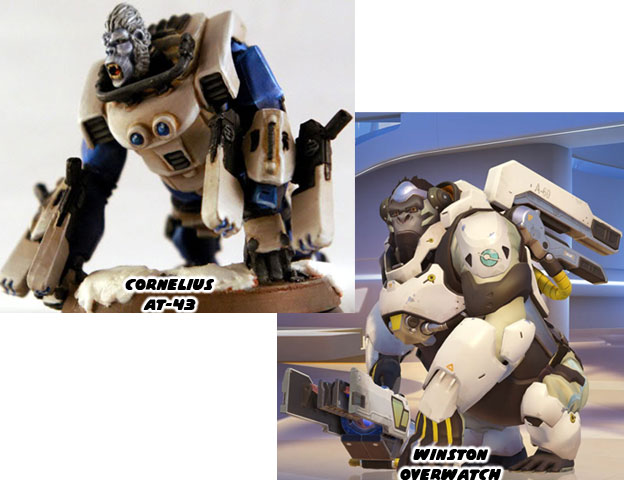
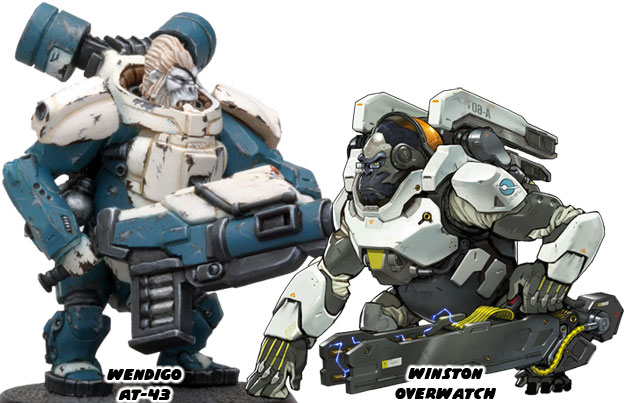
Of course an ape in power armor looks great in any setting but I would have been more impressed if the design for Winston did not poach the designs of the Karman alien characters from AT-43. It was a Rackham Studios game from 2007.

Rackham released the game AT-43 as a rival to Warhammer 40,000. A few years prior they had released Confrontation as their rival to Warhammer Fantasy Battle. AT-43 was a well designed system and not without its own subtle humor. The Karman were highly intelligent ape-like creatures with art deco-styled vehicles. As ferocious as they were they were also meant to be a jab at the Space Marines. They were big, brutish and carried all the heavy weapons into battle. In 40K the Space Marines were sometime big and brutish, they were genetically modified humans, much taller and stronger than ordinary people.

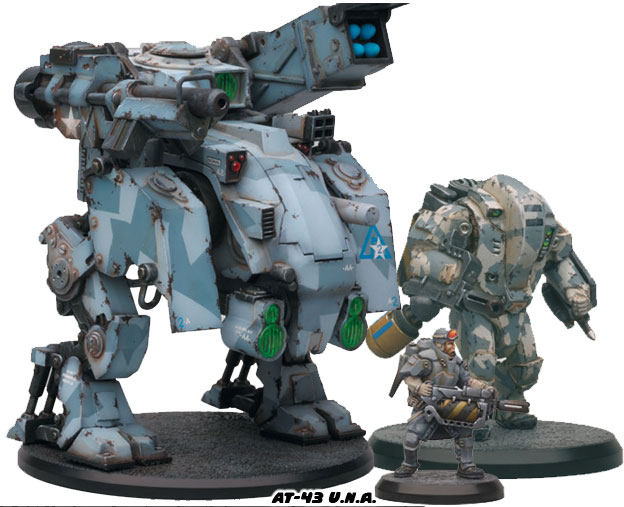
The humans in AT-43, those of the U.N.A. were meant to be compared to the Imperial Guard soldiers from 40K. Humans in both systems were the ones that had access to the tanks and artillery while the Space Marines did most of the fighting up close with their bolt guns.

The Karman were fantastic aliens and the miniatures released on them were some of the most memorable ever created. If you did not follow the tabletop gaming scene then you might not have known. I'm sure Blizzard thought that they could get away with poaching some more characters for their new game. They had done it in the past and would probably keep on doing it. It's not like any game journalist would ever call them on it, right? I’d like to hear about it on the comments section. As always if you would like to sponsor me please visit my Patreon page and consider donating each month, even as little as $1 would help make better blogs and even podcasts!
follow the Street Writer on Patreon!