Showing posts with label tron. Show all posts

Wednesday, October 15, 2025

The Epic Mickey 2 the Power of Two Review - a 1UP classic from Nov 28, 2012

Hello friends, I have finished my Epic Mickey 2 review for JimHillMedia.com. I'm not certain when it will be posted or how much will be edited but here is the original draft for you to look at.

Epic Mickey 2 the Power of Two (EM2) is out now on multiple consoles including the Xbox 360, Playstation 3, Wii and Wii U. The game deserves special consideration for readers of JHM because it is layered with several generations worth of material from the Disney Archives, theme parks and film library. The world of Epic Mickey, or "Wasteland" is so saturated with history that it could catch trivia specialists flat-footed. Warren Spector, lifelong Disney fan and creator of the game had said at the San Diego Comic Con that he wanted to create a world with substance. He did not want to have gamers dig underneath the surface and discover that the Wasteland was like other games. His studio Junction Point succeeded in doing just that. In some areas of the game when Mickey Mouse dissolves the walls and floors of the world players can actually see the blueprints. The grey paper of the imagination with penciled out blue lines created by the great architect Yen Sid himself.

The feeling that players come away with is more than a wash of nostalgia, it is almost indescribable. Players may recognize a piece of art hanging on a wall or a radio standing in the corner of Mickey Mouse's home exactly as it appeared from the 1936 film Thru the Mirror. Players are not only visiting the home from the film, they are now interacting with it. They are walking around in his kitchen, jumping on his furniture if they choose to. Players then begin to peel away at the walls and floors only to find there is another world beyond, waiting to be explored. The game is filled with these "a-ha!" moments. In addition to capturing the details and minutiae from the Disney legacy the game gives audiences a fresh perspective on the iconic Mickey Mouse without betraying the character. The amount of work that went into the game is staggering. Disney is trying to make Mickey and his friends relevant again in the new media and are sparing no expense in making that happen.

I've spent the past two weeks with fellow gamer Alice Hill going over the game on multiple consoles. The game has average difficulty for seasoned players but is moderately difficult for younger gamers. The main portion of the game is long but can still be beaten over the course of a weekend by experienced players. In order to get the full experience however a player has to explore every inch of the Wasteland, collect hidden items and accept side-mission that enhance the story and extend the gameplay to dozens of hours. The best way that Alice and I could review this game was by playing it on the different platforms in single and multiplayer modes and trying different options and paths. If you are interested in purchasing the game and do not want to read the spoilers then here is a one sentence review… Epic Mickey 2 is a good game but its faults prevent it from reaching true greatness. For those that want to know how we came to that conclusion please keep reading.

The camera was a major sticking point in the original game, the new camera system is much more user friendly, it follows the action better and can be moved with more precision. The camera and control really shine on the PS3 and Xbox 360 using the regular controllers. It was still a chore to use motion-based controllers in the game, and doubly so when in 2-player mode. The limited screen space and drawbacks of the motion controller were apparent when playing on the Wii and PS Move. We constantly had to keep realigning the camera to line up our targets, not to mention it was harder to perform double team moves on the Wii than the other consoles. Alice and I would recommend getting the sequel on a different console if available. Those that do have the Wii can at least play using the cool new light-up peripherals, a paint brush and remote control available for Mickey and Oswald respectively.

Visually the game was stunning. The lighting, animation, and effects featured in the new game were better than the original. Characters cast shadows, light bounced off of objects and refracted or reflected realistically. Junction Point made good use of the new physics engine as well. Items had weight, paint and thinner flowed convincingly and objects dropped as they would in the real world. These things were put to use on the new levels created for the game. Environments that collapsed remained that way for the rest of the game. Players were warned early on that all decisions they made would have consequences and could ultimately effect the outcome of the game. The level design was as good as the original game, albeit some of the best "Lands" or attractions like Lonesome Manor were featured only in the original title. The scale of the levels was much larger in this game, but like the first game they maintained an incredible amount of planning and detail. Exploration was rewarded with items that could be used in game, pins to collect or even costumes for Mickey and Oswald to wear. There were many details pulled from the parks, movies and even television shows which would appeal to even the most jaded Disney fan. Where else could a fan visit the Rainbow Caverns, fight a robot modeled after V.I.N.CENT from the Black Hole and wear a Tron costume?

Players could travel from land to land using film projectors. The side-scrolling levels used the setting of a classic Disney film and allowed both Oswald and Mickey to explore, interact and even combine resources to get through the stage. The projectors were featured in the original game as well and contained some of the most memorable experiences. Some of the sequences in EM2 include the Old Mill, Night on Bald Mountain, the Skeleton Dance, Music Land and Building a Building. A second side-scrolling component has also been added. Mickey and Oswald can now navigate the Dahl Engineering Corridors or D.E.C., a series of underground tunnels that connect the remote areas of the Wasteland. The tunnels were named after Gremlins creator Roald Dahl but based on the Utilidoors from Walt Disney World. Each D.E.C. is made up of junk from the Wasteland, of course junk to the residents are actual antiques and merchandise from company history. Look carefully for a tape, doll or record that you might have in your collection!

This game also features actual voices for the main and supporting characters instead of the text boxes and generic grumbles used in the original. Veterans Bill Farmer (Goofy), Tony Anselmo (Donald Duck), Tress MacNeille (Daisy) and Jim Cummings (Pete) are joined by Bret Iwan the new voice of Mickey, Dave Wittenberg as the Mad Doctor, Frank Welker as Oswald and Cary Elwes as Gus the Gremlin. The supporting cast made up of Gremlins and forgotten monochromatic characters also have their own unique voices. Most blended well with the main characters. The opponents consisted of Blotlings, Beetleworx and Blotworx. Those original creations were made of animated ink blots, machines or a combination of the two. They did not have any voices per-say, mostly grunts or screams. Three additional classic animated characters appear in game if a player searches high and low for them.

The Three Little Pigs are trapped in Wasteland and have Mickey try to help them. Fifer and Fiddler Pig sing with the exact high pitched voice and even rhyme and meter from the old cartoons. Practical Pig maintains his raspy voice and serious demeanor as well. Whomever voiced the characters was spot-on. Not all of the voice acting was great however. Some of the residents of Mean Street seemed out of place. Listen for the surfer and overdone Caribbean accents. The stand-out character and voice for EM2 goes to Ian the ghost. His gruff but friendly "Hey Boss!" was a welcome addition to the cast.

He was in the first game and originally appeared in the Lonesome Ghosts short. Ian challenges the player to mend the relationships between the citizens of the Wasteland, the Blotlings and Mickey. His was the best developed new personality in the game. A close second would be the robot A.B.E. He is a curator to the diorama museum and can best be summed up as Jimmy Stewart-meets-Tom Morrow. The addition of color characters in the Three Pigs contrasted the black and white citizens of the Wasteland and animatronic representations of Daisy, Donald and Goofy. The addition of cartoon stars other than Mickey is creating precedence for combining the toon and park worlds, these things may be expand upon in the next Epic Mickey title. Hopefully Ian and A.B.E. will be featured more prominently if that happens.

The greatness that Junction Point was going after began to break down when we stopped watching, stopped looking at the details and started playing. Epic Mickey was promoted as the first gaming musical. The plot was all told through song so technically Disney was right. However the Mad Doctor had all of the singing parts with one line reserved for Oswald. The gravely voice did nothing to make the character sympathetic or pull on any nostalgia strings. Imagine seeing the Little Mermaid but only Scuttle the seagull could sing the parts. It was an odd decision considering that the Mad Doctor was used only once by Disney and was allowed to fall into public domain. None of the songs were truly memorable which was odd considering that the music was written by James Dooley. The television and movie composer wrote an amazing score for the first game, X-Play deemed it the best Soundtrack in 2010. Disney never released a physical album of the first game but did make the music available via iTunes. Many players reported crying when they heard the original end credits.

The original soundtrack worked on many levels whereas the new soundtrack felt lacking. It was not all bad though. The audio cues in the game were put to good use. When a player was thinning or painting the Wasteland the music on the level signaled whether a good or bad decision was being made. If players listened carefully to the choices being presented by the other characters in the game they could be prompted to make the right choice. Each level could be passed in multiple ways, some of the cues are obvious while others are well hidden. While playing in two-player mode several set pieces, particularly boss battles, were not triggered properly if at all. Gus the Gremlin would chime in and give us a hint over and over but nothing we tried would trigger the set piece. In other cases either Mickey would get stuck in an object or Oswald would fall through the floor and be unable to rejoin Mickey. This frustrated us to no end. For the minor glitches we would quit the game and then restart it. For the larger issues we had to turn off the system and go back later in the day. When we returned to the game the set piece would load properly and we could finish the stage. In several instances we ended up doing the "wrong" thing to finish the stage because the correct option did not load or would not respond to our attempts.

With two players working independently the majority of the game was very easy. Fighting or befriending enemies was much easier this time around as was compared to the solo battles in the original game. When the set pieces did not load, or when only Player 1 (Mickey Mouse) could trigger an event then it made the game far more difficult. The majority of the game moved quickly for two players, if they were not performing any side missions. The gameplay was smooth and intuitive, as good as most action platformers. The majority of battles were well balanced if not easy as well. Very often however the gameplay would change suddenly into a slow, grating experience. The battles would become extremely difficult and feel very redundant. It would feel like an insult to the players when their progress was suddenly halted. For example Gus the Gremlin would drop the same hint over and over if a puzzle wasn't solved within a set amount of time. He would not offer alternative strategies.

When fighting a boss encounter Gus would offer a clue to defeating it. Even if the player used the proper strategy Gus would continue dropping the same hint again and again. This was particularly annoying when a set piece or boss encounter did not load. There was nothing we as players could do about it unless we turned off the console or deliberately made the wrong choices. In at least one case just wandering around the level, not interacting with characters or the environment triggered a bad outcome. Alice said that it felt like we broke the game, which was alarming since we had only been playing it for a couple of days. Disney boasted that during the development they had near 600 employees working around the world in different countries. The sun never set on the production of EM2. Spreading the talent and workload over several timezones meant that something was destined to fall through the cracks.

Perhaps the QA testers focused the majority of their efforts on the 1-player experience and did not go over the 2-player mode with a fine tooth comb. Or perhaps Junction Point did not consider what elements would have to be changed if gamers wanted to experience 2-player mode the entire way through. Even in the single player attempts that we tried it seemed that the computer-controlled Oswald slowed down the experience and in certain portions made the game more frustrating than it should have been. The encounters and choices we made permanently affected the outcome of the game, as promised by Warren Spector earlier this year.The good or bad sequences would play during the credits. The endings varied depending on the choices made in game. Even though Alice and I had gone out of our way to try to make nothing but good choices we had amassed a melancholy string at the end of our first play through.

In the past two weeks Alice and I have found ourselves more frustrated than pleased with the game. We enjoyed the world that Junction Point created, the details that they filled the game with, the pins, costumes, wonderful personalities and experiences. However there is a difference between looking at the game and playing it. Pulling the experience out of EM2 was a chore. The story felt lacking and disconnected. The fear of Oswald being forgotten again was not fleshed out, why Prescott the Gremlin felt unappreciated and how the Mad Doctor set him up and then brainwashed him was a bit deus ex machina. Despite everything added to the game, including the voices, we did not feel as connected to the story as we did with the original game. Other comparative "epic" experiences like God of War, Shadow of the Colossus and Zelda did not feel broken. The player felt rewarded for exploring those games. They did not have set pieces that failed to load or a hint system that kept interrupting the player or insulting their intelligence. Gamers did not feel like they were being punished for missing an item or making a bad decision.

In EM2 we were frustrated with some puzzles, boss encounters and even backtracking. For example, the studio broke Mean Street, the Wasteland version of Main Street in two, which meant we had to spend more time traveling through the lands for simple tasks. We wanted to enjoy the game, we really did but several times we were so put off by the game that we swore we would never play it again. We calmed down after a day and tried but the experience felt redundant rather than rewarding. We wanted to say that the game was better than the original but we didn't know if that was a completely true statement. Epic Mickey 2 is not for everyone and that is partially why we say it was good but not great. Those that are willing to slow down their gaming experience, carefully consider the needs of Wasteland residents and revisit locations to search for hidden items will be rewarded. Those that just want to play through a game and feel good about it in the end may need to look elsewhere.

Did you play Epic Mickey 2? Were you a huge fan of Disney, or a casual fan? Did this color your perception of the game? Tell me about it in the comments section. As always if you enjoyed this blog, and would like to sponsor me please visit my Patreon page and consider donating each month, even as little as $1 would help make better blogs and even podcasts!
follow the Street Writer on Patreon!

Monday, October 13, 2025

Epic Mickey 2 Preview Details! - A 1UP classic from Oct 11, 2012

Good morning friends, today the press embargo is lifted and we can look at the new elements announced for Epic Mickey 2: the Power of Two. Warren Spector introduced audiences to a new Beetleworx robot which was made up of a barrel, film reels and sported the head of V.I.N.CENT from the film the Black Hole. He was standing next to Prescott the Gremlin (who plays a major part in this game) Gus the Gremlin, Oswald and Hortencia. It looks like Junction Point will now be pulling in more movie and television references into the game than in the previous game.

Two new areas were announced for the game, one based on the desert plateaus of Frontierland, the other inspired by the attraction the Mine Train Through Nature's Wonderland. Those old enough to remember, or are die-hard historians, know about the rainbow caverns, the spinning rocks, people-shaped cacti and all other neat visual treats.

The re-imagined attraction has multiple paths. Players can go through the ominous lower section, with a maze made out of flowing lava curtains or a higher path made up of natural columns. There is an angel statue holding a sword on the higher path. That statue was pulled from a background detail in the Beauty and the Beast film. The designers thought that it would be a perfect addition to the game and they actually figured out a way to make it part of the level design.

Warren made sure to point out that the game screens were not far removed from the concept art. The same colors, layout, textures and themes from the concept pieces were carefully reproduced for the game. Junction Point was hammered pretty hard be reviewers because they claimed that the final version of Epic Mickey did not look enough like the leaked concept art.

This time around Warren made sure to point out to journalists how the actual game models matched the concept art to the letter. He showed one of the puzzles in the cave, featuring the Seven Dwarfs and the rainbow waterfalls.

Then he compared it to the actual game model. The finished level was spot-on and looked brilliant on HD displays.

The next new thing he announced were the additions of Costumes for the main characters. Mickey in his Brave Little Tailor costume was shown as well as Oswald in a Gremlin costume and in a suit of armor. Warren mentioned that the costumes changed the gameplay, how the attacks and defenses worked for the characters and even how they controlled.

On top of costumes there were also two other game changing modes for the characters. On certain levels there were inkwells with a special golden ink or iridescent / "invisible" ink. The player could jump into the inkwell and become soaked in the particular paint. While covered in the paint they had a new ability.

The gold paint made the character impervious to many things, including waterfalls made of thinner.

The iridescent ink made the player invisible to enemies and even motion sensors. The downside to the paint was that players had to move slowly using the analog button or else the paint would fall off. Players couldn't really use the spin attack or jump while covered in the paint but it stayed on for a long time if players moved slowly through a level.

The collectable pins available in the previous game have an expanded role. Now players are rewarded not only for defeating bosses, completing levels and finding hidden pins but also for how they play, what attacks (if any) they use and how they solve certain puzzles. The studio estimates that it could take an average of 20 hours to find all of the secrets and pins hidden in the game, making it a great challenge for the completists among us.

Pins can now be collected and viewed at the Pin Shop. Players can show off their collections to friends online as well. I'm not a big fan of the whole pin trading phenomenon at the Disney parks but I can appreciate the idea more than collecting achievements for XBL or trophies on PSN.

The game is also taking another page from the theme parks and has inserted a Photo Mode as well. Players are now equipped with a camera and can take pictures of their adventure at certain points throughout the game. The player has a limited amount of frames they can capture and post to their album. Players can always revisit the camera shop and get more film to record their adventure and unlock other goodies.

The pictures in the albums can be shared online. No word if the Nintendo Wii U version will allow these items to be shared on the Nintendo Channel or to change the user's account profile. It would be interesting to see future Disney games use the technology and share the images with the theme parks like their current social media campaigns have allowed visitors to.

Warren was happy to finally be allowed to show the asset for Mickey playing on the Wii U control.

Peter Ong from Dreamrift then took the stage and showed some new features for Epic Mickey the Power of Illusion including a new level based on the Little Mermaid.

There are dozens of characters from the feature films and television shows for the players to meet and rescue. Each character rescued goes to a Fortress, the more the player interacts with the rescued character the more their "room" in the fortress becomes decorated. For example, Scrooge McDuck goes from an empty room to his office in the Money Bin by the time the player finishes interacting with the character throughout the game.

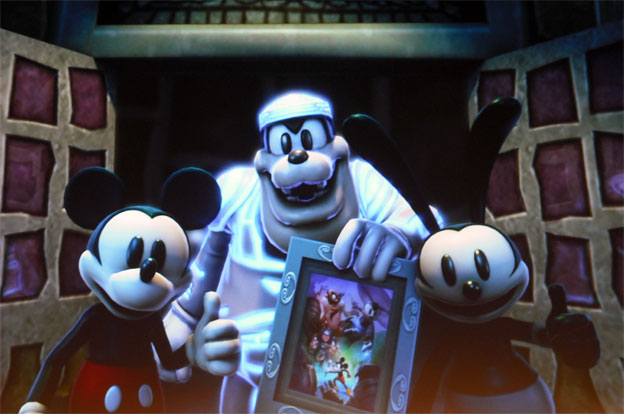
At the end of the presentation there was a special animation created just for the press. Mickey visits Club 13, modeled after the famous Club 33. The door is answered by Petetronic who says he was fixing things for the Mad Doctor but he had something special for Mickey and Gus the Gremlin.

He hands over a lithograph and says that there is even one for Mickey's guests. It turns out that Disney Interactive will be sending the press copies of the lithograph. I believe that this might be the artwork included for deluxe versions of the game or even pre-orders at certain retailers.

This wraps up the preview of the game and event, a review will be coming later next month.

Did you play the original Epic Mickey, or Epic Mickey 2? Which platforms did you play it on? What was your impression? Tell me about it in the comments section. As always if you enjoyed this blog, and would like to sponsor me please visit my Patreon page and consider donating each month, even as little as $1 would help make better blogs and even podcasts!
follow the Street Writer on Patreon!

Friday, January 19, 2024

The tanks of tomorrow, the games of the past.

I wanted to talk a little bit about a rarely seen game called Cyber Commando by Namco. It was a mech assault game set in a massive space platform. But in going over the game thanks to MAME got me thinking about the genre, and the history leading up to it. In case you didn’t know almost every Namco arcade game ever developed was connected in a sort of shared universe. The majority of the science fiction shooters were set in the United Galaxy Space Force (UGSF) timeline. This actually included their earliest franchises Pac Man, and Dig Dug in that canon. I’ve written extensively about the games on this blog, and will do more deep dives in the future. If you’re interested in more you can always do a search for UGSF in my search bar above.
Cyber Commando was a sort of descendant of some of the earliest arcade games. In particular I’m talking about tank combat games. As a member of Generation-X I was fortunate enough to be born at the right place, at the right time to enjoy the rise, and fall of the arcade. Some of my earliest, and most precious memories would be playing through some arcade gems when they were first released, or a few years after they had been out. I was also lucky enough that my parents were able to afford the first generations of home consoles, including the Atari 2600. One of the first games my brothers, and I enjoyed at home was Combat by Atari. We had fun taking turns flying planes, and shooting tanks up until our bedtime most nights.
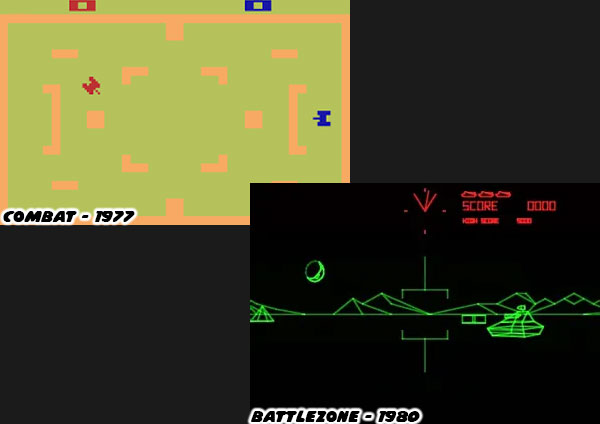
In the arcade one of the most revolutionary games we had ever seen was called Battlezone. Although it only employed two colors, black, and green, it was revolutionary when compared to the graphics in other games. That was the other benefit of being around for the evolution of gaming. Year after year games were evolving by leaps, and bounds. Atari was getting good at employing vector graphics, which were the wireframe templates that polygon games would one day rise out from. They proved this in their smash hit Asteroids in 1979. For the first time gamers could get a sense as to 3D shapes in a video game thanks to titles like Battlezone.
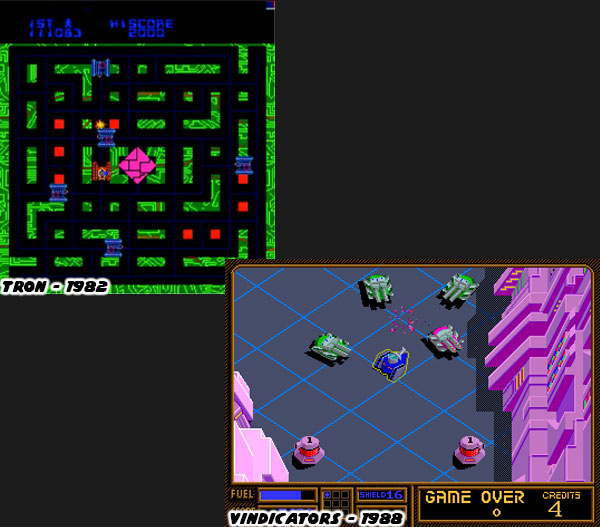
Tank combat would even become even more amazing in a sci-fi setting. This was the case for one of the mini-games in Tron by Midway back in 1982. Part of the live action film that the game was based on featured a fictional tank game called Space Paranoids. As a kid I didn’t realize that it would take another 15 years until actual arcade graphics were able to match what we saw in the film. In the meantime the aesthetics used in sprite-based games were still able to keep me entertained. The isometric game Vindicators in 1988 by Atari was one such gem. Atari was exceptionally good at making isometric games such as Super Sprint, Paperboy, Marble Madness, and 720°. This was when other studios were focused on sprite scaling, vertical, or top-down gameplay. Vindicators had bright, and colorful tanks battling across a wildly evolving alien planet. Being able to drive in one direction, rotate the turret in the opposite direction, while firing, and raising shields required some dexterity, but was intuitive after a while. It was then that I realized that science fiction was the best setting in which to present this type of tank combat. Developers in Japan were way ahead of me in this regard.
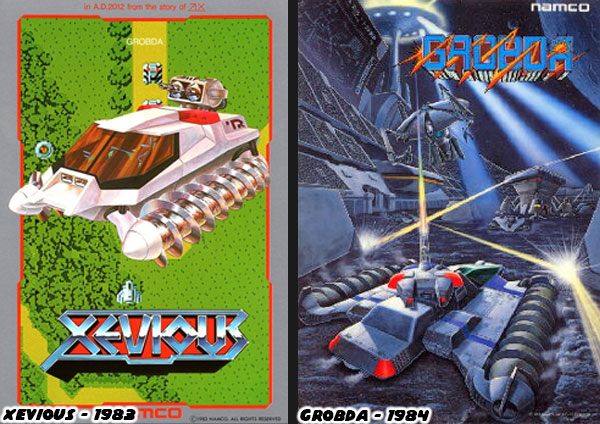
Namco was breaking new ground with each title they released. At the same time they had the foresight to connect the worlds they were building. Xevious from 1983 was one of the first scrolling space shooters in the arcade. The creator Masanobu Endo pioneered a number of advances for the studio with his team. One of the things he thought about was using some of the vehicles featured in Xevious into another game. Solvalou, the space ship featured in the game would turn up in many more sequels, but Grobda one of the ground enemies would end up in the first direct sequel. The tank with screw treads made for an interesting weapon for audiences to pilot. The aliens that had invaded the Earth were routed at the end of Xevious. They had abandoned a number of weapons including their tanks during their retreat. This was how humanity was able to discover the technology that would propel them to the stars.

The ground vehicles would evolve into the first generation of piloted combatants. These mechanical gladiators would be used to settle international disputes in the Battle Ring, this was years before Battle Bots! Grobda had some brilliant graphics for the time, with flashing lasers, and explosions that could damage nearby opponents as well. The tank would slow down if it tried to cross over downed opponents, making navigating a stage difficult when trying to strafe enemies. Composer Yuriko Keino came up with the music for Xevious, Grobda, and other classic games. She was not only critical in the sound of the Namco gems, but helped write the software to bring the songs to life. For Grobda she wanted the music to get progressively faster as opponents were defeated. The designers didn’t think the software could handle it, but she wrote the code that allowed the engine to do that.
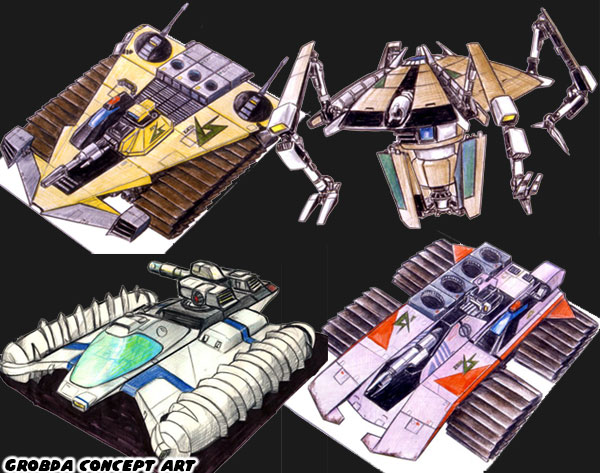
Designer Shigeki Toyama, who was considered the Leonardo DaVinci of the company helped dream up the fantastic space ships, and other sci-fi weapons for the franchise. The ships, and weapons in UGSF continuity are my absolute favorites in all of sci-fi. This includes Star Wars, Star Trek, Battlestar Galactica, Babylon 5, and every other game franchise. As for the game itself, it was 99 levels of pure hell. Well, it was challenging to be fair, and I could only get a few stages in before I was defeated by the waves of opponents. If I was lucky then I might reach a dozen levels, and once I remember seeing a really good player get into the 40’s. However it wasn’t until YouTube that I could see all 99 levels for myself.
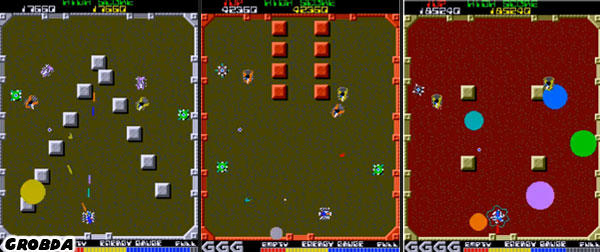
I enjoyed the top-down game play featured in Grobda, more than the scrolling of Xevious, although I was never any good at those. I think that people that were great at tracking the whole screen at once could really master it. Those that were good at games like Missile Command, or Robotron 2084 could no doubt get to the final stages. In fact the first thing that I thought of when I saw Grobda was how Namco was using the multicolored laser effects from Robotron, with the explosions of Missile Command, but in a new genre. When I think about it those that enjoyed the early Midway ‘90s games like Smash TV, and Total Carnage might want to check our Grobda if they’ve never played it.
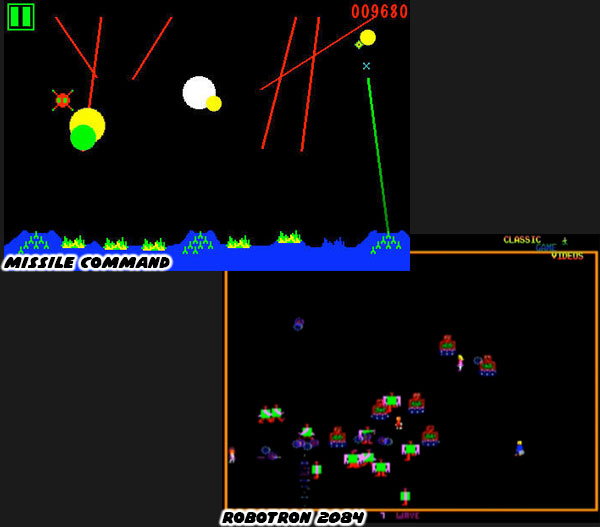
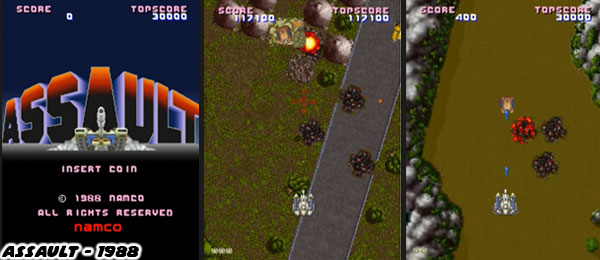
Namco had actually managed to keep sci-fi tank gaming cool several years after Grobda with the title Assault in 1988. The game was sprite based, but featured a number of graphic advances for the arcade. The sprites on the screen rotated, and scaled. These would be features that Nintendo would brag about in their Mode 7 games on the Super Nintendo. The Native Defense Force High-Maneuver Battle Tank did not have a rotating turret like Grobda, but it did feature a unique control element, it could flip sideways to avoid oncoming attacks, and fire while upside down. Although rough terrain slowed it down, it had another way to reach enemies, even those behind cover. It could tilt back, and launch bombs from a distance, including over walls. It was as if Namco had combined the ground bombing of the Solvalou with the traversal of Grobda when planning the title.
As cool as the tanks from Namco were, the idea of gun platforms were rapidly evolving in pop culture. Mecha, or giant robot designs aside, there had been all manner of hover tanks, and land speeders seen in science fiction shows from the US, UK, and Japan. Fang of the Sun Dougram was a popular anime series from 1981 featuring designs by Kunio Okawara, who had also worked on Gundam, and shaped Armored Trooper Votoms as well. His style of robot designs meshed post WWII military weapons with realistic frames. His tank designs in Dougram even had legs. Yet he was not the only artist that was redefining what a tank could look like.
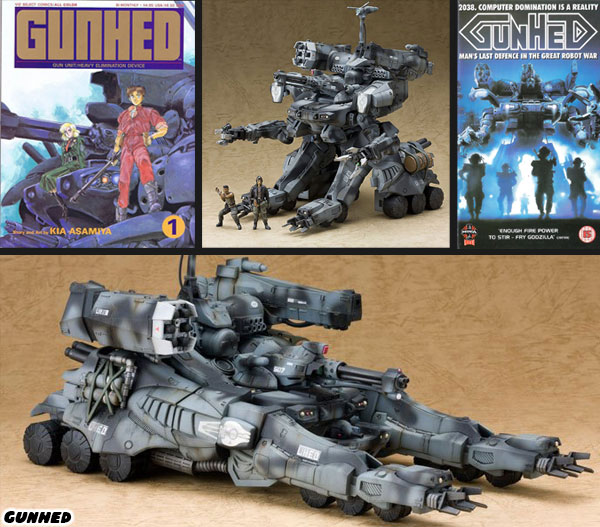
The sci-fi series Gunhed (Gun UNit Heavy Elimination Device) by Kia Asamiya in 1990 found a unique balance between robot, and tank. Where the platform had multiple arms that could elevate itself to increase its range, and tactical advantage. If you’re not familiar with the plot the dystopian future of 2025 (oh no!) saw a supercomputer attempt to rise up against humanity. I can honestly say with the rise of AI that I hope we’re not on track to repeat the same wars mentioned in the manga, and live action film based on it. As influential as the work of Mr. Asamiya was, there were two other artists shaping the future.
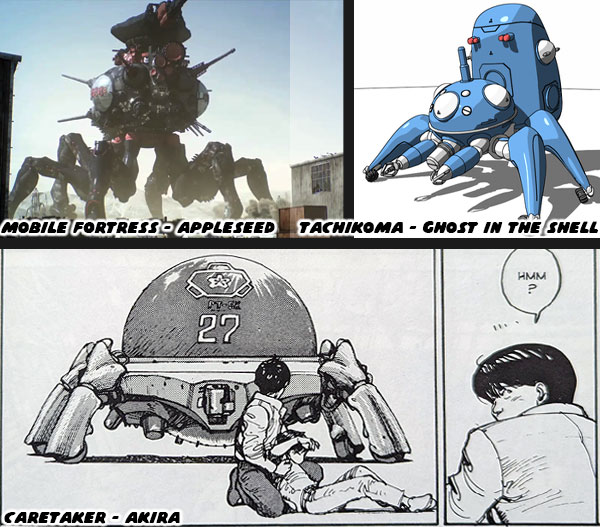
Akira by Katsuhiro Otomo had an amazing amount of futuristic vehicles, and weapons. The series was published in Young Magazine from 1982, to 1990. While there were conventional weapons in the manga, there were also some very bold designs, like the spherical Caretakers which were highly agile, multi-legged tanks. Not to be outdone Masamune Shirow illustrated mind-blowing creations based on his love of insects. Such as the spider legged Mobile Fortress in Appleseed, and the Tachicoma from Ghost in the Shell. Even his “regular” vehicles had tremendous personality. This was the case in the manga Dominion from 1985. It’s tiny tank Bonaparte was the inspiration for the SV-001 tank in Metal Slug, which would appear in 1996.
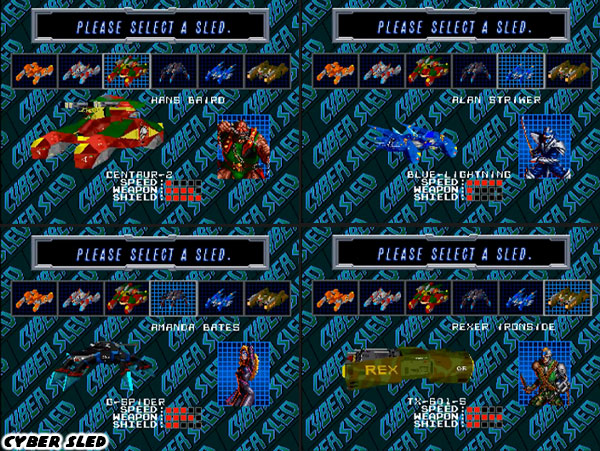
Namco, like the other game studios were not immune to the changes in vehicle designs presented in pop culture. They revisited the sci-fi tank battles from Grobda, but with improved graphics thanks to advances in polygon technology. The end result was Cyber Sled, an arcade gem from 1993, which would received improved graphics on the original Playstation in 1995. The premise of the Cyber Sled tournament was still the same as in Grobda. Contestants from around the world were having gladiator battles in their futuristic tanks. The vehicle designs, and over-the-top pilots were amazing. They could have easily found their way into an anime series, or wrestling promotion. I remember seeing the arcade cabinet in very few arcades. It was possible that not many arcade visitors ever saw, let alone played it.
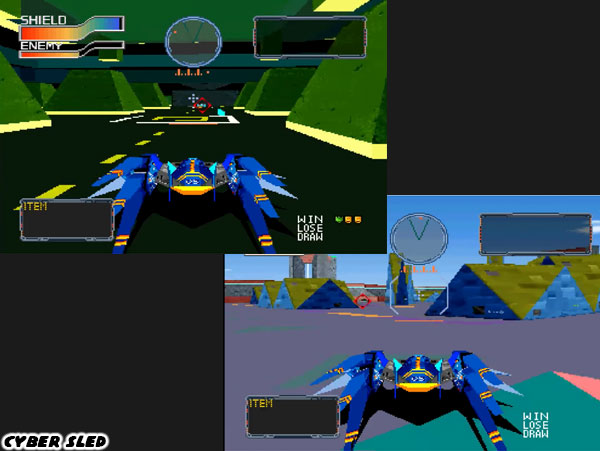
Perennial rival Sega had been aware at what Namco had released in the arcade. Through the ‘80s they kept trying to one-up each other in every genre. From racing, action, shooter, sports, and adventure titles they matched each other in the arcade, and at home. The early ‘90s saw the two publishers pushing technology forward with the switch from sprites to polygons in the arcades. Sega had a counter for Cyber Sled ready a few years later with Virtual On. The robot combat game from 1995 would be a critical hit, spawn several sequels, and get a fun home port on the Sega Saturn, Playstation 2, and Xbox Live. Sadly one of Namco’s best titles didn’t get the same reception a year prior.
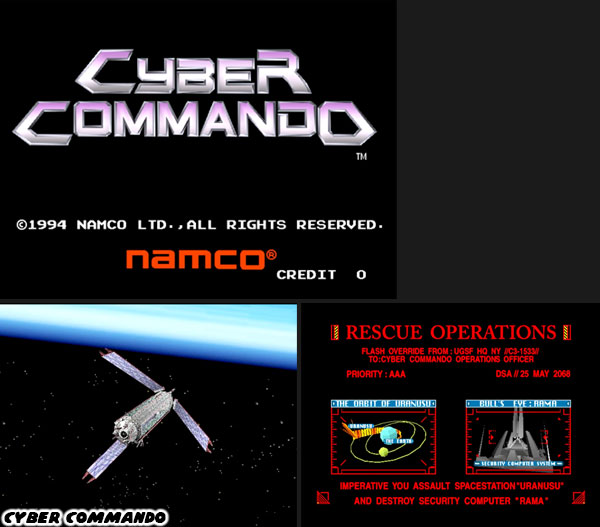
In 1994 Namco was looking for ways to push the genre forward, and do something none of the other studios had attempted. The studio knew that they had something unique with Cyber Sled, but they wanted audiences to really get immersed into the experience. One of the best ways to do that was by extending the story. They added a narrative from the tradition of their earlier UGSF games like Xevious, Galaxian, and Starblade. Instead of piloting a space ship against waves of opponents this game would feature an intense close combat game set within a space colony. The location was actually one of the most memorable in all of the games I’ve ever played.
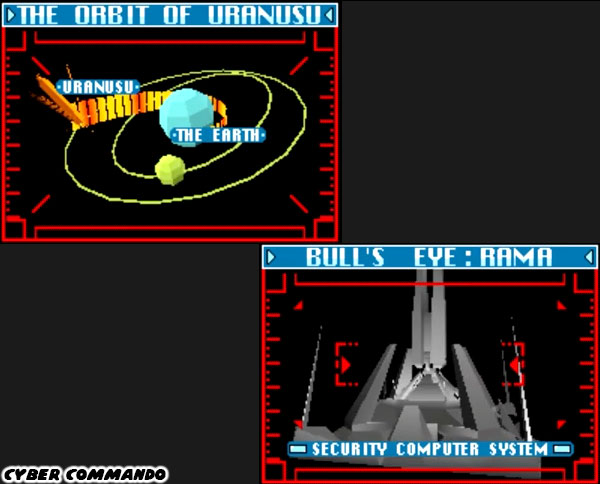
As with many futuristic stories the villain was a rogue AI trying to destroy humanity. A gigantic cylindrical colony named URANASU had been hijacked. The security computer called RAMA went rogue, was taking a space colony out of orbit, and set it on a collision course with Earth. In order to try and stop RAMA, and correct the course of the station an assault team was put together from the best pilots of the NBA (the National Battling Association) where the Cyber Sled / Grobda contests happened. In the opening cinema you could actually make out the different cities in the satellite-shaped platform.
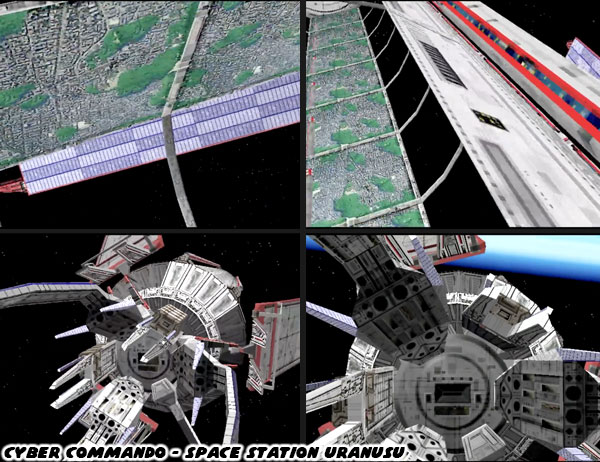
As with any great combat game there was a number of playable tanks to choose from. Each one with its own strengths, and weaknesses. There were light, speedy tanks, which were great for strafing opponents. The downside was that they weren’t heavily armored, and would take massive damage from gunfire, or missiles. Then there were tanks on the opposite side which were weighed down with heavy armor, and heavy weapons. They could get into a slugfest without cover, and come out on top. You could select your favorite tank, depending on your preferred style of play.
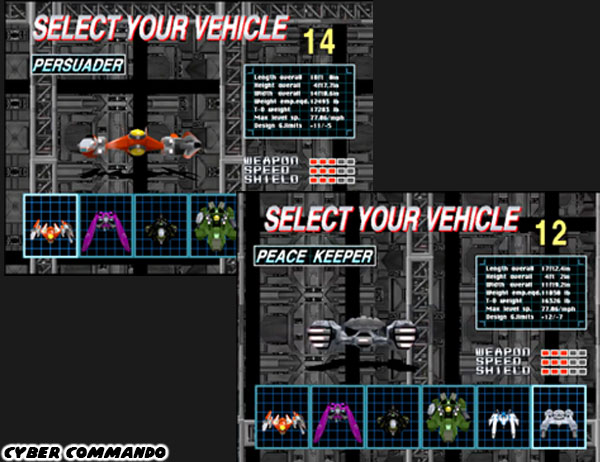
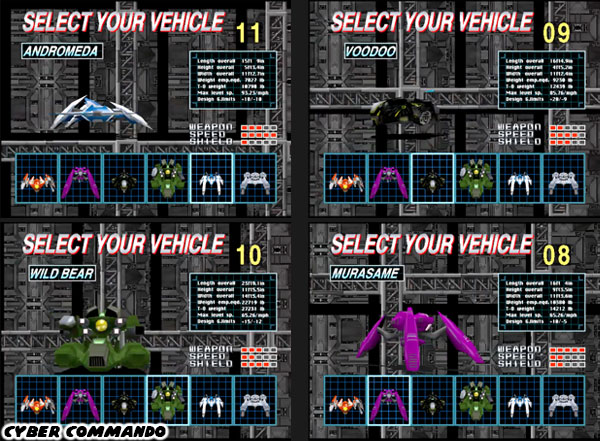
The diversity of vehicle types were not only improved on those featured in Cyber Sled, but they also pulled influences from earlier anime, and science fiction shows. These tanks were far from the type Gen-Xers had grown up with in any game. Even the massive one in Assault that could tumble had no chance keeping up with the Cyber Commandos. This was because as far as tanks went were slightly bigger than cars, the biggest of which weighed almost 14 tons. They were all quicker, and more nimble than our current crop of tanks which could weigh in excess of 60 tons. The commandos were essentially driving the sports cars of the heavy weapon world. At the same time they had an arsenal of munitions that would have shredded any of our most heavily armored vehicles like a tin can.
The stages in Cyber Commando were self-contained cities separated by gates. We could make out the individual communities in the opening cinema. We could see blocks, houses, factories, roads, parks, and even rivers in the individual cities. The idea of a space station with its own atmosphere was the sort of fantastic visual that was last seen in a movie like Elysium. Players were given a briefing as to the mission, and layout as they progressed through access tunnels. The terrain went from a traditional downtown, to a park, to a Mediterranean style villa, and even factory. No two stages looked alike, and that allowed us to be immersed in the world that Namco was creating.
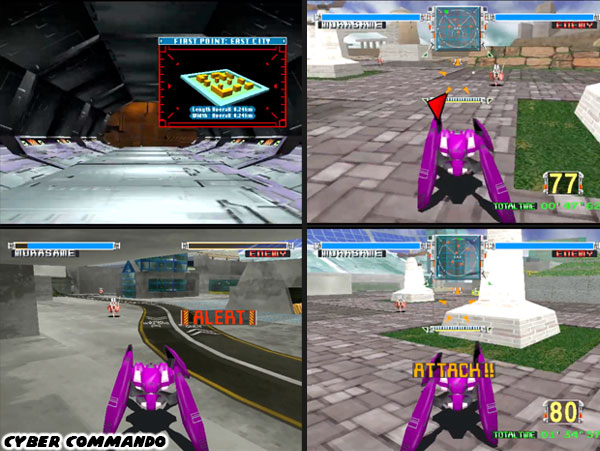
The opponents in the various stages were the other playable Cyber Commandos. It was unknown whether RAMA had hacked the vehicles, or if they were the native defense forces on the colony. Each opponent made for some intense fighting. Each one was as difficult, if not more so than the encounters in Cyber Sled. Yet again Namco realized that having only six opponents to battle on the space station would have made for a short experience. They filled the last half of the game with some creative, and challenging bosses.
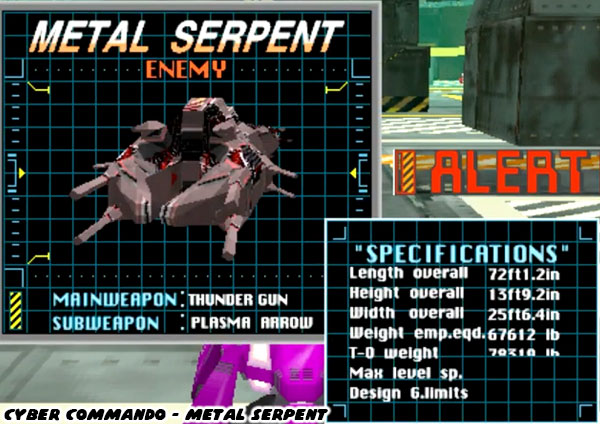
The first boss was three times longer than the biggest tank, and yet it was just as fast as the middleweights. The Metal Serpent was an unnerving opponent. You could see its tail disappear behind cover just as you reached it, only to realize its head was already targeting you from around the corner. The diversity of boss types was truly unique, and they truly broke the mold for sci-fi mech designs. As clever as the Metal Serpent was, it would be hard to describe the next opponent as anything other than beautiful. Rafflesia was an enormous floating mechanical flower. It didn’t seem to have a front, or back, as the other rivals, but instead could move in any direction, and strike from any angle as well. I would imagine that Rafflesia was the love child of the Godzilla opponent Biollante, and a mechanical plasma sphere.
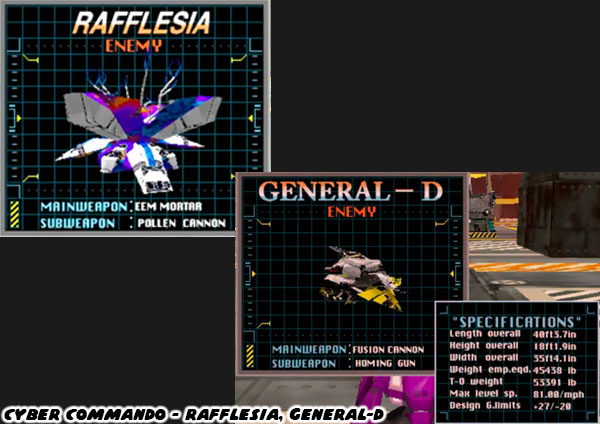
The next opponent was more of the traditional heavy hitting tank that we would come to expect as the final boss in the game. General-D was twice the size of any commando, and yet faster than most of them too. Its dense armor made for a brutal match up, as just about any attack barely seemed to scratch it. Thankfully missiles would respawn in the middle of the stages, so that as long as you kept moving, and kept avoid counter fire then you’d eventually be able to restock on ammunition. If you were lucky enough to beat the monster then you would see the commandos blow up the security computer RAMA. With that they would be able to restore control of the station back to the UGSF. Of course nothing was more satisfying in a story than a surprise encounter.
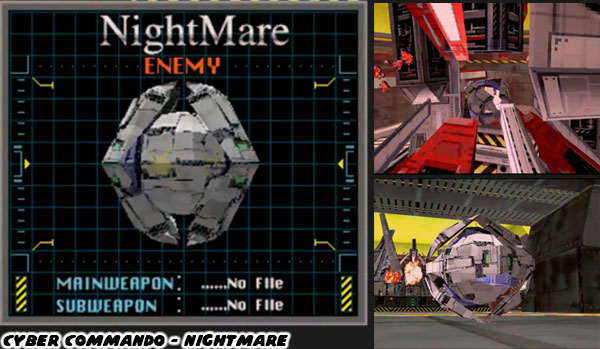
As RAMA fell apart we could see its spherical core become freed from its supports. It began spinning, and flew at the player. The true final opponent of the autonomous robots was known as NightMare. Players had practically no time to react once it appeared. In fact to make things even harder on audiences Namco set up the false ending. They had players face the exit gate after defeating General-D. This gave the first attack advantage to NightMare. If players were not holding the sideways direction on the controls then they’d absorb the brunt of the first, and possibly last attack from the boss. Players were constantly at a disadvantage while fighting it. NightMare was too small, too fast, and too powerful. Making anybody that could claim to have beaten it a real hero. It’s a shame that Namco hasn’t made any more tank titles, or worthy UGSF sequels. Maybe the next generation of designers might return to their roots. What do you think? Did you have any favorite tank, or sci-fi games growing up? I’d like to hear about it in the comments section. As always if you would like to sponsor me please visit my Patreon page and consider donating each month, even as little as $1 would help make better blogs and even podcasts!
follow the Street Writer on Patreon!