Showing posts with label superstars. Show all posts

Wednesday, April 23, 2025

Sonic Superstars and beyond. Sega makes up for lost time, part 3...

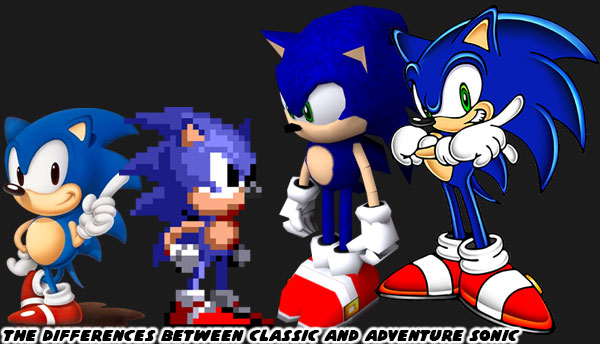
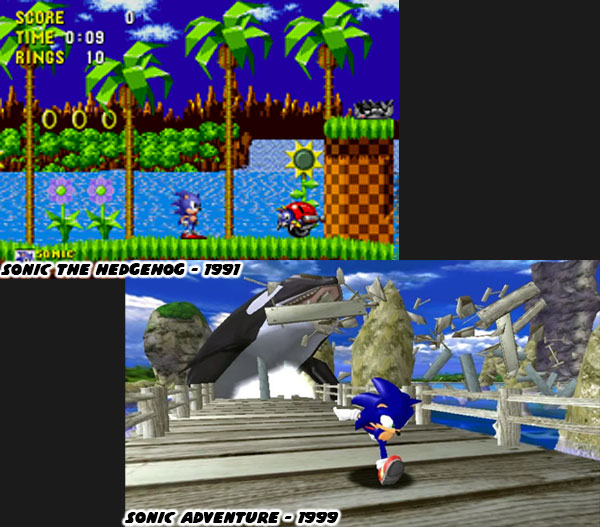
In the previous blog I talked about the new game mechanic added to Sonic Superstars. Sonic, and his friends could harness the power of the individual Chaos Emeralds. Each one provided a temporary power-up for the heroes. I said that the reason why Sonic Superstars used the Chaos Emeralds instead of the Wisps from Sonic Colors was because there were two different Sonics. To be more specific there were two Sonics from two different universe / timelines. The version featured in Superstars was based on the original game from 1991. That was to say the animation, direction, and game play were based on the original Sonic Team designs. This version of the blue blur was young, and idealistic. The challenges, and threats he faced were scary, but also family friendly. In the original trilogy none of the characters spoke, not even Dr. Eggman. The entire game was told through pantomime. The version of Sonic that spoke, the one that people knew from the movies, or games like Sonic Frontiers was based on the “modern” version. This version debuted with Sonic Adventure in 1999. It was something that I do not think most casual fans understood.

For the longest time I don’t think that Sega themselves understood that there were two distinct versions of the character. Two distinct versions of the supporting cast, timeline, enemies, and especially the game play. The cosmetic changes made to Sonic, Tails, Amy, and Knuckles in Sonic Adventure were done to make the characters easier to animate in three-dimensions. The modelers extended the length of the arms, and legs. They changed the proportions of the head, and body. The needed to do this because the old proportions were difficult to track with a three-dimensional camera. To audiences it looked like Sonic had grown up, matured in his new titles. As the series went on it started to become more, and more obvious that the look, and feel of Sonic in three-dimensions was a different thing entirely to the 2D Sonic that launched a franchise.

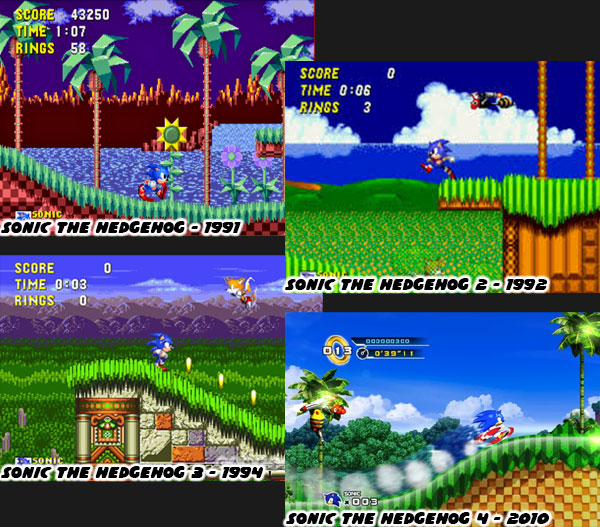
The distinction between the original, and post Adventure Sonic came to a head in 2010. The 20th anniversary of Sonic was coming up, and a new game was expected. The original game came out in 1991, Sonic 2 in 1992, and Sonic 3 in 1994. Sega teased something called “Project Needlemouse” with a promise to go back to the classics. Sure enough they went back to the 2D game play with 2.5D graphics. Yet they used the proportions, and game play of the modern character. Sonic, Tails, and the rest of the cast were not classic at all. Sonic 4: Episode I debuted in 2010. It was met with harsh criticism because it vaguely captured the look of the classic game, but completely missed the feel of the title. It felt like it had one foot in two different universes, and didn’t fully commit to being a worthy sequel. A number of the control, and design issues were ironed out for Sonic 4: Episode 2 in 2012.

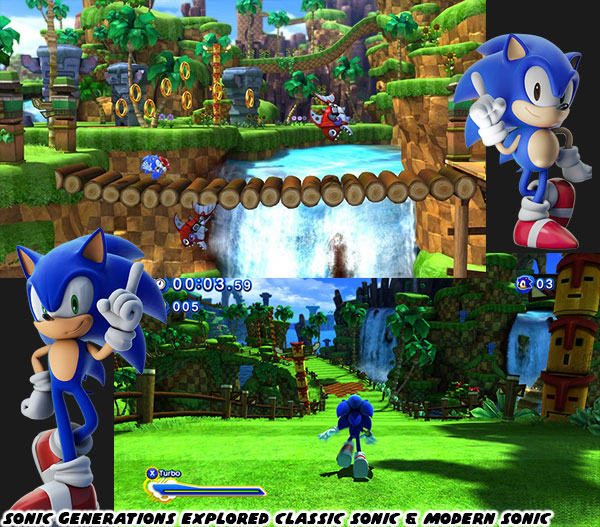
Thankfully Sega didn’t put all their chips on one title at the start of the 2010’s. The studio released Sonic Generations in 2011. The game established the canon of two timelines, and two distinct versions of Sonic. The classic version that I grew up with, and the modern version that my kid knew. Playing through the game was literally a way for us to bond as a family. It played like a highlight reel for the mascot. We got a chance to revisit tons of familiar locations in updated 3D graphics. This was done much better than what we saw in Sonic 4. They set a standard that would only be topped by Colors, and later on by Superstars. The best part was the game play perfect for each version of Sonic. Although they both visited locations used in Sonic’s 1-3, Sonic Heroes, Sonic Unleashed, etc. the ones played by classic Sonic were all set in a 2D perspective, and the modern Sonic raced on open 3D tracks. The developers clearly understood the assignment, and made certain that fans of each type of game play were rewarded.

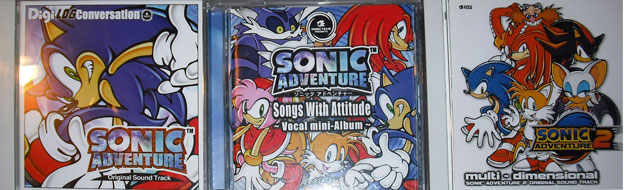
Reactions to Sonic games post Sonic Adventure 2 (those released through the 2000’s) were a mixed bag. Some of the console, and handheld titles were beloved. Some took a while to warm up to, and a few were despited by long-time fans. The one thing that was consistent good were the soundtracks. The music featured in the games had always been well done. In the ‘90s I made sure to run down to the Japanese bookstore, and put in an order for the CDs whenever a game had come out. From Dreams Come True to Crush 40, wether the scores were pop, hard rock, or even Hip Hop the composers delivered in each title. Sonic Generations redid the scores from the various sequels to great effect. It featured a classic, and modern variation of the songs that complimented the originals. Generations helped introduce new players to the fun game play, and memorable songs better than just about any anniversary title in the past 20 years.

Despite all the praise I heaped on Sonic Superstars it was not without its failings. The game suffered from a number of technical issues that ranged from minor inconveniences, to game play breaking problems. The biggest technical issue that I had with the title was constant frame rate drops. This was especially upsetting because Sonic is all about hight speed action, but certain parts of the game felt unplayable when you couldn’t see the character. Timing jumps, spotting enemies, and making it through critical sections were almost impossible. I was on the Playstation 4 version, but the fact that it wasn’t an issue during play testing, or patched after release disappointed me. Watching videos on YouTube I could see that my version was possibly the one that suffered the most.

Normally I couldn’t wait to play through a Sonic game again after completion. The performance issues made me rethink how eager I was for a replay. It betrayed all of the love that went into the game itself. Despite the greatest intentions Sonic Superstars couldn’t surpass Sonic Mania Plus. This had much more to do than just a difference between using 3D models over 2D sprites. So where did it go wrong for Sega? I’ll explore that in the next entry to this series. Did you get a chance to play this game? If so what were your thoughts. I’d like to hear about it in the comments section. As always if you would like to sponsor me please visit my Patreon page and consider donating each month, even as little as $1 would help make better blogs and even podcasts!
follow the Street Writer on Patreon!

Monday, April 21, 2025

Sonic Superstars and beyond. Sega makes up for lost time, part 2...

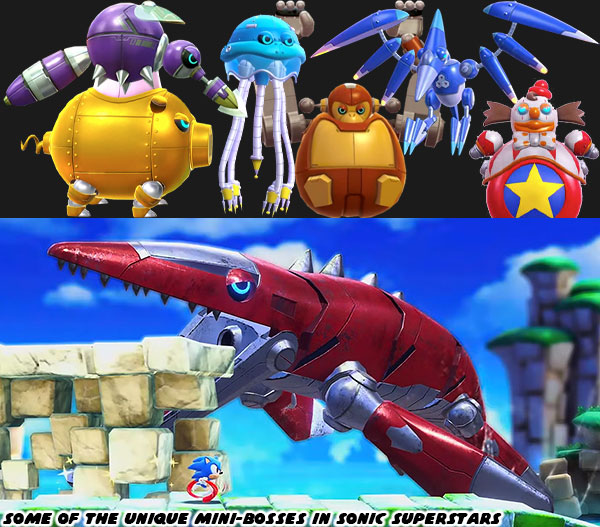
In the previous blog I mentioned a few of the things that Sonic Superstars did exceptionally well. The call-out to the classic art style, and aesthetics. The level designs, animations, storytelling and presentation were every bit as good as those featured in the original Sonic games. The only difference was that everything was now wrapped in stylish 3D graphics. There were many things that Sonic Team and the developers at Arzest did to honor the legacy of the decades old franchise while still giving us something new. For example Superstars made use of many unique sub-bosses, or mini bosses. The original titles never had sub-boss battles before the main fight with Dr. Eggman. These were more of a modern concept, yet they managed to work quite well in the classic format.

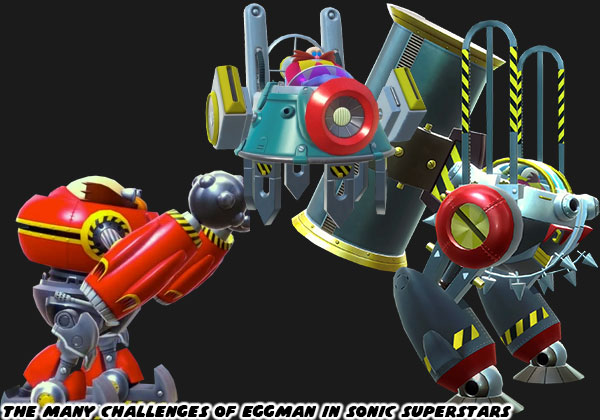
Eggman was known for creating robot minions that mirrored real animals. Robotic beetles, rabbits, sharks, and eagles that Sonic could defeat with a single strike. The mini-bosses in Superstars were much larger variations on the theme. They required several hits to take down. For example Instead of a robotic chimp throwing coconuts at you from a tree you had to battle a robotic gorilla that could flatten you in a press. Instead of a robot vulture there was now a robot pterodactyl that had more firepower than a fighter jet. Hidden inside of these constructs were massive versions of the critters that were trapped in the “Badniks” like Ricky the squirrel, Pocky the rabbit, and Flicky the bird. The designs of these robots, and the chubby animals trapped inside were brilliant. The cartoonish proportions, and exaggerated personalities fit perfectly in with the other constructs from the mad doctor. Speaking of which. Sonic Superstars might have featured some of the best variations of the classic Egg Mobile battles in the franchise history. As was tradition Eggman would show up in his flying vehicle, and then equip in with more armor, and weapons for the fight. To raise the stakes both the mini-bosses, and Eggman fights would evolve into more complex challenges. They required pattern recognition, and creative thinking in order to advance through.

The real challenge for the developers were not only in creating memorable battles, but in designing them for all the different playable characters; Sonic, Amy Rose, Tails, Knuckles, and Trip. Playing as each character meant that the levels had to be accessible for all of them, and their particular style of play. All of the characters could run quickly, and roll into a ball to squeeze through tight passages. Tails could also fly, Amy Rose fought with a hammer, and Knuckles could climb on vertical surfaces, and glide as well. The new character Trip was an anthropomorphic bearded dragon. She could roll into a spiked ball, and she too could climb surfaces. The stages had to allow room for exploitation, without being too easy or hard depending on your choice of hero. Making sure that the zones, or boss characters could not be exploited easily by a single character must have been a challenge for the designers. At the same time the game actually had a dedicated level for each of the stars. This allowed them to shine, and push the plot forward. Remember that the entire story of the game was told without words. Characters pantomimed their feelings, and it came through quite well. At various points through the game the cast could actually be seen in the background sabotaging Eggman’s plans. This made players feel like it really was a collaborative adventure.

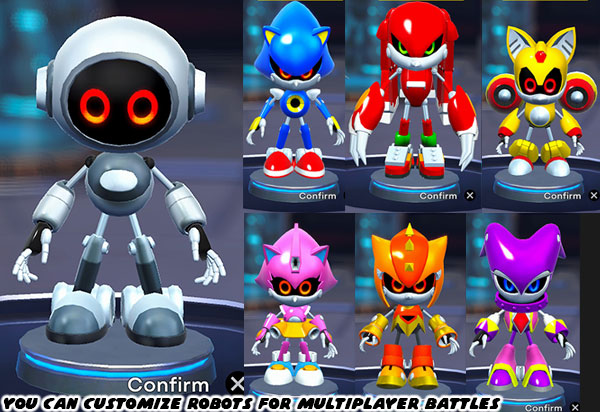
Sega really had their work cut out for them. Not only did they have the ambitious goal of making a 2.5D successor to Sonic Mania Plus. They also wanted to give fans a multiplayer experience. Sonic, and most of the classic mascot titles weren’t really known for being team games. I mean aside from cameos in Olympic, or kart racers. There were various mini-games in Superstars that supported local, and online play. Not only that but you could unlock, and customize a robot to use in the battles instead of the main characters. You could purchase accessories, paint, and patterns for your robot. This allowed you to recreate the classics like Metal Sonic, but also the rarer Metal Knuckles, and all-new Metal Amy, Metal Tails, Metal Trip, and even a Metal NiGHTS. Of course the robot version of my favorite game character absolutely blew my mind. I had all sorts of fun with the robots, making red, yellow, and black versions of Metal Sonic just to see what they would look like. Needless to say they were pretty cool.

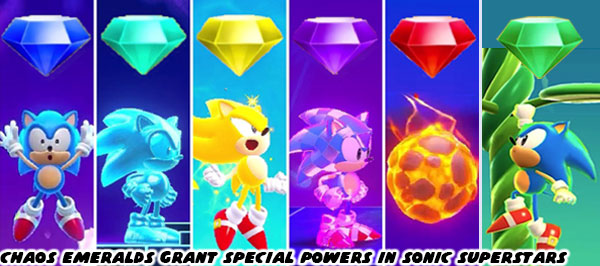
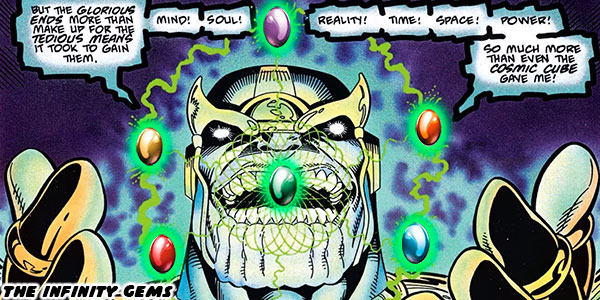
The most overlooked thing that Sonic Team, and Arzest did in Superstars was turn each of the Chaos Emeralds into a playable feature. As the levels progressed you could unlock a new emerald, and each one granted you some temporary powers. One emerald allowed you to turn into water, and swim upstream through the background. One allowed you to blast through the air like a fireball, one allowed you to slow down time, one of them allowed you to create multiple versions of yourself to run interference. Then there were the emeralds that allowed you to grow a massive plant from the ground, see invisible rings, and platforms, as well as a gem that allowed you to throw small tornadoes at enemies. If you unlocked all of the emeralds then you could become a “Super” version of your character. It occurred to me how similar the Chaos Emeralds were to the Infinity Gems from the Marvel Comics. You might be familiar with the gems thanks to the Marvel cinematic universe, but their use in comics had gone back over 50 years.

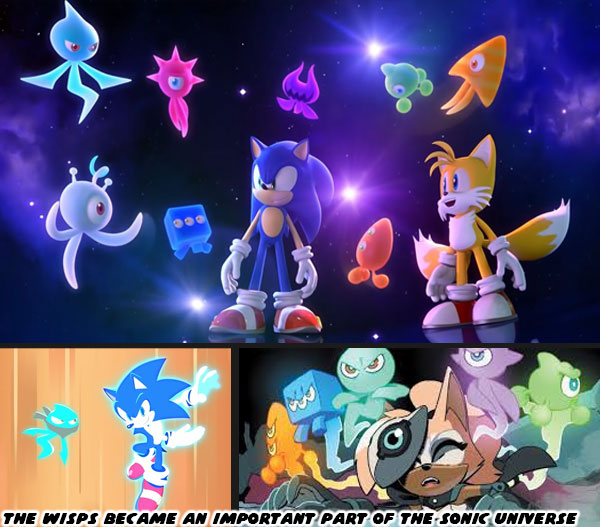
The Infinity Stone first appeared as a “Soul Gem” in the 1972 issue of Marvel Premier #1. As the cosmic adventures of Adam Warlock, and the Silver Surfer continued through the ‘70s, and ‘80s more gems, and their unique powers were revealed. The six Elders of the Universe were their custodians. You might know some of the elders such as the Grandmaster, the Collector, and the Champion from the game Marvel Contest of Champions. In 1990 the Thanos Quest was the comic arc where the villain tracked them all down to create the Infinity Gauntlet. It was interesting that this story took place a year before the release of the original Sonic the Hedgehog. It made me wonder if Sonic Team was aware of this development, or if having multi-colored gems with awesome powers was just a coincidence. Either way having the ability to freely switch between the different gems, and use their powers was a way to elevate the classic Sonic experience. I believe that Sonic Team had a secondary reason to add this new element to the game. The studio used a similar mechanic in the game Sonic Colors. In it Sonic could temporarily use the powers of alien creatures known as Wisps.

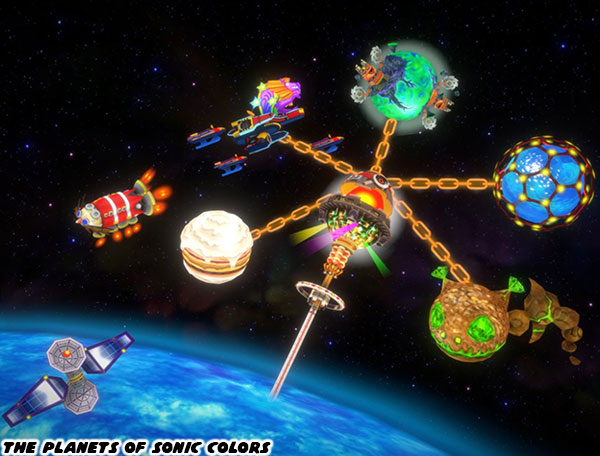
The ability to have Sonic use new abilities helped mix up the familiar game play. You could revisit stages and discover all sorts of secrets once you had unlocked new Wisp powers. In a similar way you could replay levels in Sonic Superstars using the different Chaos Emeralds as well. For those unfamiliar with Sonic Colors; it was developed by Sonic Team, and released November 11, 2010. I would argue that it was possibly the best post Sonic Adventure 3D game from Sega. It certainly had one of the most memorable soundtracks. It featured music from just about every veteran Sonic composer with the exception of Dreams Come True. Instead of battling across different zones the game actually took place across several themed planets. Sonic had to save the Wisp alien species from enslavement by Dr. Eggman. The animated short Rise of the Wisps helped explain the plot of the game.

The power ups from the Wisps were temporary. They allowed Sonic to rocket through the air, drill through the ground, climb vertical surfaces, or even shoot across a stage like a laser beam. The new powers didn’t break the game, nor did they feel like a forced add-on. The designs of the creatures perfectly complemented the character art from the modern Sonic universe. They were quickly adopted into the pages of the IDW comics. The Wisp powers, and use as weapons, or “Wispons” turned up in later games. Looking back it seemed obvious that Sonic Team had always meant for the Chaos Emeralds to be used individually. Each emerald helped open up the experience, and especially made the boss battles a little bit easier. If the template was already proven to work why didn’t Sonic Superstars use Wisps? Would you believe that it was because there were two different versions of Sonic? The one from Superstars hadn’t met the aliens yet. We’ll explore the duality of Sega’s franchise mascot in the next blog. Did you play Sonic Superstars? Did you have a favorite game in the series? I’d like to hear about it in the comments section. As always if you would like to sponsor me please visit my Patreon page and consider donating each month, even as little as $1 would help make better blogs and even podcasts!
follow the Street Writer on Patreon!

Friday, April 18, 2025

Sonic Superstars and beyond. Sega makes up for lost time, part 1...

Hello friends. I hope that you are doing well. I wanted to do a follow up on my love of Sonic Team. Writing about the developers made me realize that I hadn’t played any new Sonic titles in a few years. Part of the reason why was because a lot of the people that made up the core of the original Sonic Team had retired or moved on to different companies. Plus many of the latter 3D Sonic games seemed to be lacking the soul of the titles that I really vibed with. So I stayed clear of them for a long time. Sonic Mania Plus was the title that reignited my passion for the franchise. The original Sonic Mania came out in 2017. It featured a literal who’s-who of the most passionate members of the fan community. Instead of Sonic Team it was developed by Christian Whitehead, Headcannon, Hyperkinetic Studios, PagodaWest Games, Tantalus Media, and published by Sega. It seemed that it took that many people to rekindle the magic from the early ‘90s.
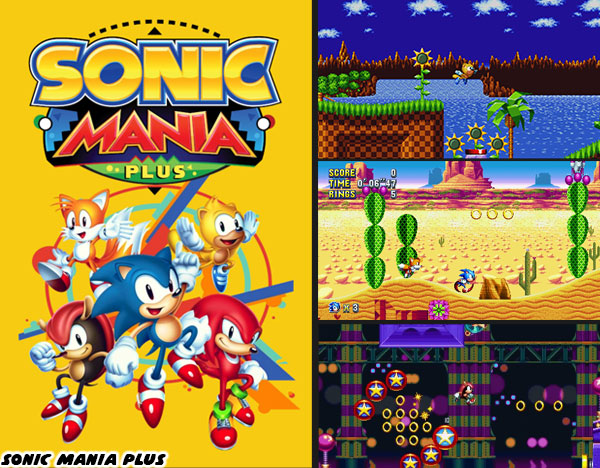
Sonic Mania played like a highlight reel of the greatest moments from the first few Genesis / Mega Drive titles, including Sonic CD. It wasn’t a collection of levels that could be found in an anthology like Sonic Origins (highly recommend!). Instead Sonic Mania had tons of new elements poured in. It was a way for new players to discover exactly why the series was so beloved, and inspire them to check out all the other games in the series. Playing it did more than send me back in time, it updated the experience and pulled it into the modern era. It was instantly embraced by gamers, and critics alike. To remind you about how much I loved the originals I said Sonic the Hedgehog 2 as my #3 favorite game of all-time. An improved Sonic Mania Plus was released in 2018. In it the developers added even more elements, and most important brought Ray the Flying Squirrel, and Mighty the Armadillo back into the spotlight. These rare characters were easily my favorite duo from the franchise. By extension I said Sonic Mania Plus had now replaced Sonic the Hedgehog 2 on the list. It turned out that wouldn’t be the only game in recent memory to give Sonic 2 a run for the money.
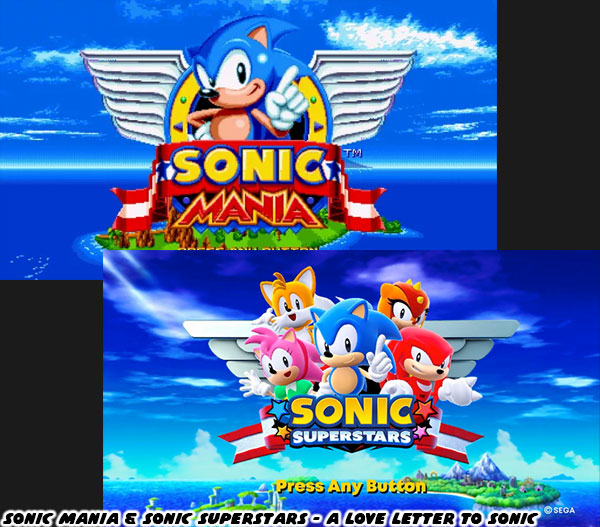
Sonic Superstars was developed by Arzest, and Sonic Team. It was published by Sega on October 17, 2023. It was reported that the game was a way for Sega to return back to the familiar 2D gameplay while committing the Sonic engine to 3D graphics. That kind of game was more commonly known as a 2.5D title. Several classic titles had sequels in that format for some time. The ones from Capcom including Bionic Commando: Rearmed, Mega Man 11, and DuckTales: Remastered were examples of this. Several of the previous Sonic titles were strictly in 3D, and had mixed reactions from players. The company wanted to move away from sprites in order to make their game appeal to a broader audience. Unfortunately they stopped the plans for a Sonic Mania 2, and instead created Sonic Superstars. It was a shame really. I don’t blame the studio for their decision. Developing on 3D was more cost effective for the publisher. It was just good business, although many of us long-time fans did prefer sprite art in certain genres. With that said the game itself very much looked like, and felt like a classic title.
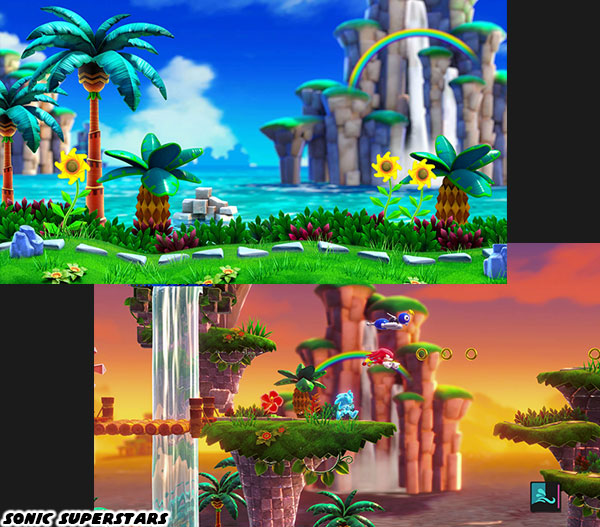
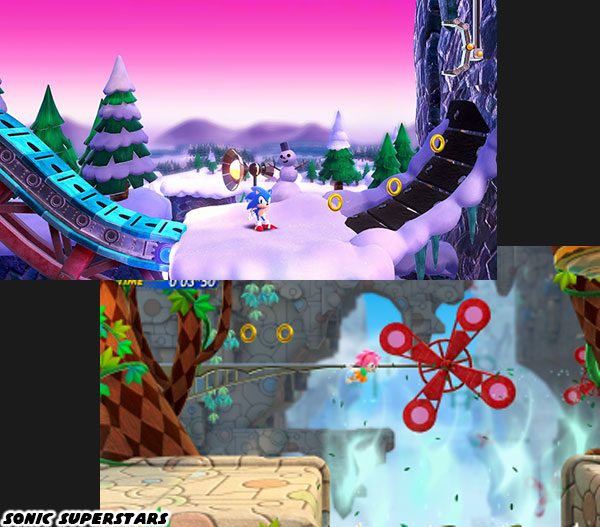
Sonic Superstars preserved the aesthetic of the early titles in a way that was hard to describe. The environments, architecture, landscape, and level layouts in the early Sonic games weren’t quite comic book, anime, or cartoon, but something in between all three. It’s hard to understand exactly what I’m referring to unless you played through them. The construction of the stages, or zones in Sonic Superstars honored the original Sonic Team art. The 3D environments were not a recreation of classic zones but instead they were new places that complimented everything that came before. I’m talking about islands, deserts, snowy mountains, and hidden temples. I instantly felt at ease running through the environments because they were so well done. There were branching paths, long coaster-like sections, narrow platforms, and tight jumps to navigate. They mirrored the best elements in any of the classic 2D Sonic titles.
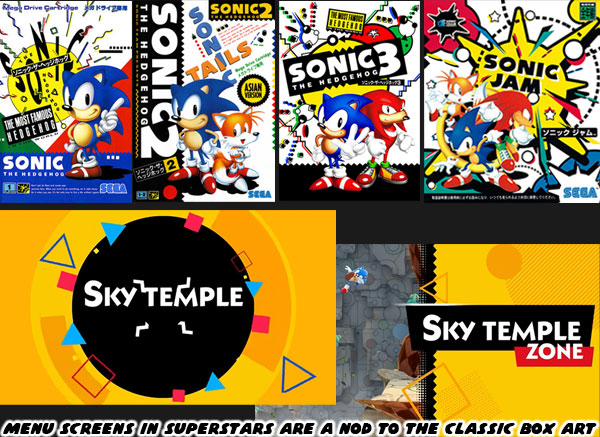
The team at Arzest understood the nuances in the graphics, and design of the classic (pre Sonic Adventure) games. Superstars was layered with obvious, but also subtle nods to more than 30 years of Sonic history. There were no throw away details to be found. As a lifelong fan I was able to appreciate the big, and the little things. For example the the look of the menus, and loading screens had familiar geometric shapes, dashes, and jagged angles. The original title, and its sequels would use the bright colors, and shapes in every loading screen. We had seen variations of these elements in other games. These were sometimes synonymous with late ’80s / early ‘90s graphic design. If you knew your history however they were a direct nod to the original series Japanese box art. This was far from the only thing the developers used to make the game look, and feel like a Sonic game.
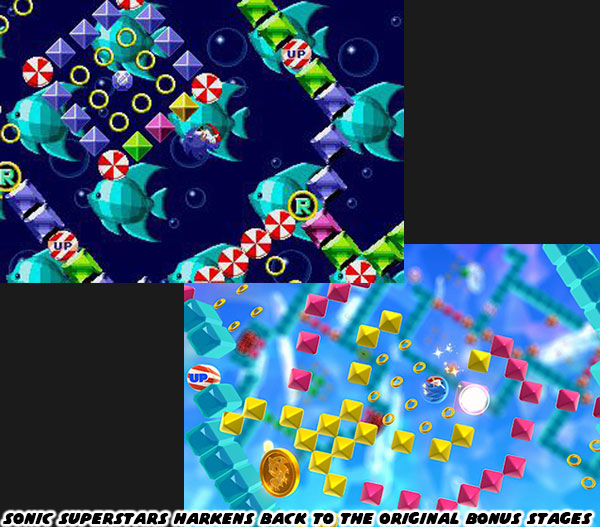
There were different bonus stages in Superstars that took equal turns in 2D, and 3D mechanics. As with all of the bonus stages throughout the franchise they required patience, and timing to become proficient at. One of which that I never thought would return were the spinning mazes from the original title. Way back in 1991 the idea of a rotating level was thought impossible on the Sega hardware. The Sega Genesis did not have a mode that allowed the hardware to scale or rotate sprites, unlike the Super Nintendo’s fabled Mode 7. The rotating mazes in the first Sonic were a programming masterpiece from Yuji Naka. It wouldn’t be the only time he showed his peers how much performance he could get out of the hardware. The bonus stages in the original Sonic were difficult, but not impossible to navigate. The updated version from Superstars actually featured layers of the spinning maze to navigate through. Plus they added new game play features with branching maze paths, and switchable paths to make them fresh. Revisiting the bonus stages could reward players with gold Sonic tokens which could be used to buy elements for the multiplayer games. More on that in a moment.
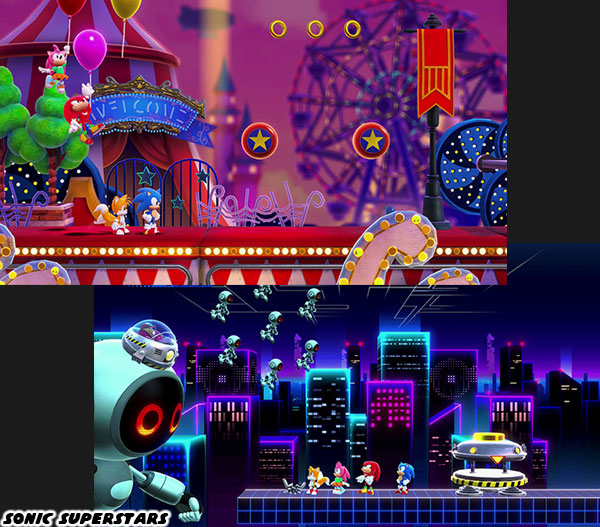
Capturing the aesthetic of those early games was only a small part of what Sonic Team, and Arzest were able to achieve. Moving the visuals to 3D allowed the developers add effects that were impossible on older technology. For example they could light the zones in a warm morning glow, or a bright midday sun. They even had some stages set at dusk, lit by moonlight, or with weather elements including clouds, dust, and fog. These details added tons of atmosphere without breaking the classic feel. Moreover the game gave audiences the ability to play through the adventure with different characters. Sonic, Tails, Amy, and Knuckles were all playable from the get-go. A new character Trip the Sungazer could be unlocked as well.
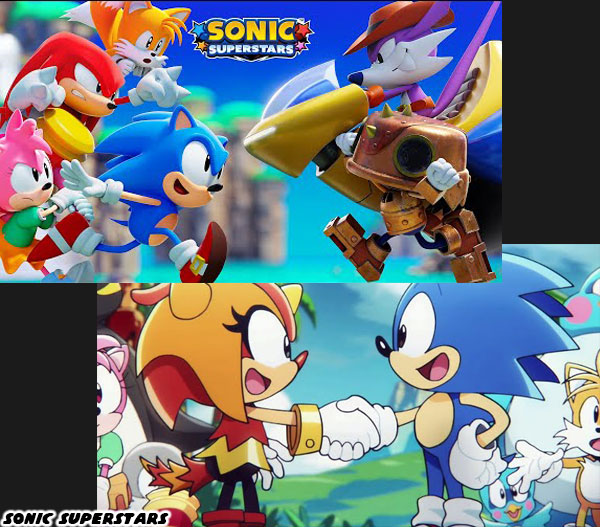
The attention to detail that went into the menu design, bonus stages, and world building was doubled on the heroes. The artists at the studio managed to create some of the best 3D models I had ever seen in the classic style. They also layered them with personality through their various animation cycles. Little things like the way the characters looked up, and down, when they balanced on the edge of a platform, and even how they changed their stance during an idle were are pulled from their earliest appearances. Moreover they added new details, for example when pushing a heavy object we could see the mascots struggling. They made facial expressions, and their legs trembled as they pushed a heavy weight. These were negligible to casual audiences, but instantly noticed by the veteran players. What I greatly appreciated in the animation was how the entire story was told through pantomime. There was no dialogue, no exposition, not explaining what was happening. The characters traveled through an adventure without any recorded audio. Dr. Eggman was especially memorable as he mocked the heroes. He would open his mouth wide as he laughed at them from the comfort of his Egg Mobile, then quickly panic with flop sweat as his plans fell apart.
A great portion of the design work, and animation stylings featured in Superstars were coming from the talented hands of Tyson Hesse. The creator was a master cartoonist, and storyteller. As a fan he had the insight as to what made Sonic a beloved character to the community. He helped Sega make the Sonic universe relevant to a new generation through his art, and direction. When the “Ugly Sonic” movie trailer was released the fan backlash was immediate. Thankfully Sega and Paramount realized their mistake and consulted with Tyson to help redesign the characters for the movie, and it’s sequels. In addition to that he directed several animated shorts, including Sonic Mania Adventures. The series of cartoons told an entire story featuring the cast of Sonic Mania Plus, but did so without any dialogue. It demonstrated that storytelling through pantomime could be universally understood. It was expanded upon in the Sonic Superstars follow up. The animated short Trio of Trouble explained what Dr. Eggman was up to, and how he had recruited the services of Fang the Hunter, and Trip the Sungazer. Directors Evan Stanley and Tyson Hesse again manage to do all this without any dialogue.
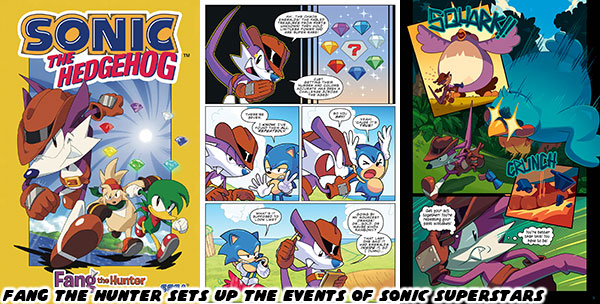
For the fans that wanted to dive even deeper into this world IDW Publishing released the Fang the Hunter series. It was the precursor to the Trio of Trouble, and everything that happened in Superstars. The animation, comic, and game were beautifully made. There was much more that I wanted to highlight in Superstars. I'll dig deeper in the next entry to this series. Did you get a chance to play this game? If so what were your thoughts. I’d like to hear about it in the comments section. As always if you would like to sponsor me please visit my Patreon page and consider donating each month, even as little as $1 would help make better blogs and even podcasts!
follow the Street Writer on Patreon!