Showing posts with label super nintendo. Show all posts

Wednesday, June 10, 2026

Bookmark This Page; The story of Maui Mallard

Did you know that there was a time when Disney was making some of the best sprite based games of the 16-bit era? Donald Duck, or rather a look alike named Maui Mallard was going to be the next big mascot. If you want the full breakdown then Bookmark This Page.

Remaking an Icon, Maui Mallard, part 1

Remaking an Icon, Maui Mallard, part 2

Remaking an Icon, Maui Mallard, part 3

Remaking an Icon, Maui Mallard, part 4

Remaking an Icon, Maui Mallard, final part

Did you have a favorite Disney game in any console era? Tell me about it in the comments section. As always if you enjoyed this blog, and would like to sponsor me please visit my Patreon page and consider donating each month, even as little as $1 would help make better blogs and even podcasts!

follow the Street Writer on Patreon!

Monday, July 3, 2023

Rock and Roll, and Combat Cars Racing - Originally published on 1UP - March 30, 2009

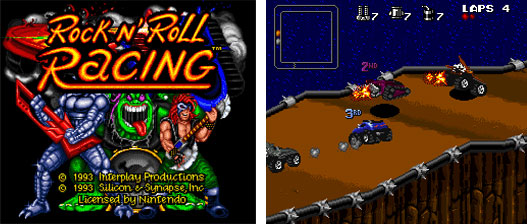
In the early 90's I was finishing high school and looking for new challenges in gaming. The arcade scene was still growing steadily but some of the best times I had were on the consoles. The Super Nintendo and Genesis split my time evenly. Two of the more memorable racers were in the combat genre, years before Twisted Metal was even announced. Rock and Roll Racing (RnRR) had a number of things going for it. The characters were a mashup between mutants and heavy metal gods. The cars they drove were equally intimidating, sports cars with monster truck tires or jet cockpits on tank treads. The game was established around an intergalactic competition so the rides could be as eccentric and intimidating as any science fiction movie. Tracks consisted of grades and jumps, not really explored in RC Pro Am or most other console racers. The mix of rock music, bright graphics and monstrous protagonists said this was a boys game. Even "the voice" of motor sports, Larry "Supermouth" Huffman lent his talents to this 1993 title by Silicon & Synapse, before they became Blizzard Ent.

Rock and Roll Racing was an isometric car combat game. Not quite as fast paced and frenetic as RC Pro Am but whose graphics and sound effect were absolutely top-notch. The digital covers of many rock standards made it stand out to many gamers.

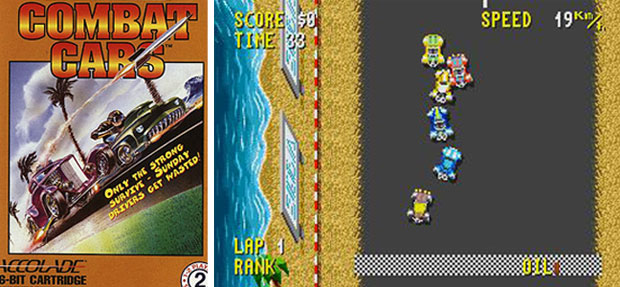
A year later the Genesis saw its own car combat game named, what else, Combat Cars. The game by Accolade seemed kind of dated. It was presented in the overhead view rather than isometric. The characters seemed like the usual assortment of ugly guys and mutants. The music was some odd type of electronica, rock music was out. There was no air of authenticity to this game, no connection to the racing world as there was with Rock and Roll Racing. That was with the exception of the cover art. Car art legend Ed "Newt" Newton was the person that designed the box art. That little detail was enough to get me to pick up the title.

These differences between this game and Rock and Roll Racing didn't amount to much as the game was very well made. The racing element in particular was very solid. In addition to being mindful of the track players had to line up shots and avoid opponents. The tracks were diverse, upgrade options numerous and the gameplay very fast paced. The design of the combat buggies even grew on me, more so than the three basic car types in RnRR. To many it was graphically inferior to Rock and Roll Racing but the play experience was anything but lacking. It was proof that a studio could create a fun experience with the overhead format. Make the player handle multiple elements in a racer and they will step up to the challenge. Provided that the balance is there, the controls are dialed in and the multiplayer mode isn't lacking. Combat Cars had all of the above.

Ten years earlier I would have never thought that a memorable overhead racer was possible, let alone on a console. Bally published a racing game, not one year after the amazing Spy Hunter, which almost killed the momentum of the overhead genre. I hope to see you back tomorrow to find out which game it was.

Were there any rare games that you enjoyed? Let me know in the comments section please. As always if you would like to sponsor me please visit my Patreon page and consider donating each month, even as little as $1 would help make better blogs and even podcasts!
follow the Street Writer on Patreon!

Wednesday, April 5, 2023

My favorite Games of All-Time #14: Chrono Trigger - Originally published on 1UP - May 19, 2006

Chrono Trigger (CT) is the final RPG on my list. I actually debated putting Mother, Secret of Mana or Final Fantasy Tactics in this place. There simply was no swaying me from the final decision though. I would be lying if I defined myself by a series of RPG games, they just aren't my favorite genre. I still have tremendous respect for them and that is why CT holds this spot. Although CT does not break my top-10 that is not to say it is not a great game and not worthy of admiration. Chrono Trigger is considered one of the best RPG's ever made and possibly the greatest game ever made. It is easy to defend either argument.

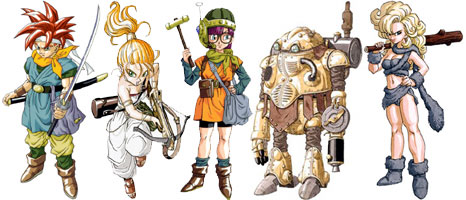
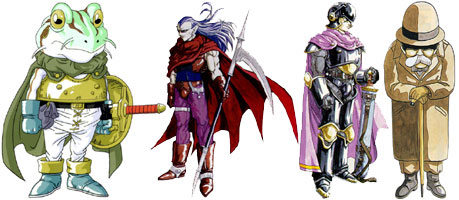
Chrono Trigger was loved by gamers and applauded by critics. CT represents the pinnacle of Squaresoft's RPG efforts. CT was produced by Final Fantasy's Hironobu Sakaguchi and directed by Dragon Quest's Yuji Horii. The character designs, which many believe to be the best styled in any RPG were done by "Dr. Slump" himself Akira Toriyama, better known as the creator of Dragon Ball Z. It has been a long time since anything so noteworthy had come out of Square. A collaboration of this magnitude may never be reached again.

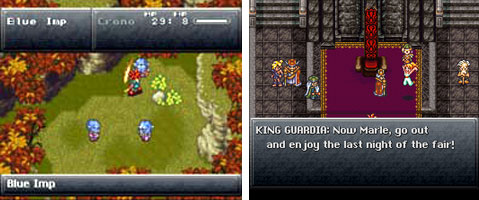
Like all great games the story begins very simply. The main characters Crono, Lucca and Marle are your typical young adventurers from the kingdom of Guardia. What was not typical was the use of strong female characters and personable supporting adventurers. Characters did not exist in this game to fill out a token slot. They all had back sotry, they were designed to be atypical, charismatic plot-driven devices. People that played the game can often say who and why their favorite characters were in CT.

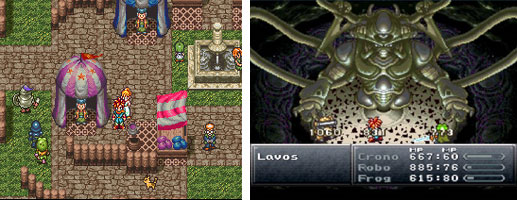
Sometimes the greatest direction of the game is the one that isn't even noticed. All great forms of entertainment move the viewer to new places. These are done so subtly that we never notice the inner-workings of the genius behind the scenes. Chrono Trigger is possibly the best example of a game where all of the components were perfectly crafted. The pairing of the main three character was no accident. As an errant message was delivered to a young man named Luke Skywalker in the first Star Wars movie. Crono, Lucca and Marle show up at the Millennia Fair at the same time at the beginning of the game. The plot quickly takes off when Marle accidentally gets teleported to the past and changes history. It is then up to Crono and Lucca to travel back and forward in time defeating enemies, adventuring with new friends and figuring out the mystery of Lavos, the alien parasite and would-be destroyer of the world.

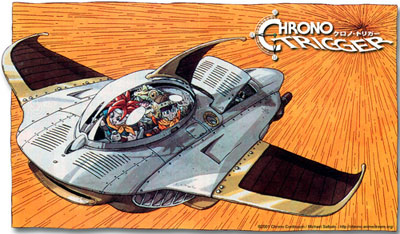
Chrono Trigger excels in the use of time travel as a plot device. I dare say that this game was better executed than the films Back to the Future or Bill and Ted's excellent adventure. No Delorean or telephone booth could rival the Epoch, a fantastic flying ship that allowed the characters to travel between time. Every choice the main character made in the past and every mission they took on effected the plot and even look of future levels.

The combat system was possibly the most unique element to the game. Characters could raise their levels of physical and magical attacks as in traditional RPG's. However players were encouraged to learn team attacks using their party. Characters like Robo the robot, Ayla the cavewoman and Frog the prince helped diversity the types, range and damage of the team moves. Different combinations of characters resulted in diverse and often incredible special effects (for the time) during combat. Robo for example had a special attack that was nothing short of a one-person rave complete with laser show and dance routine. Questing and exploration were key to unlocking paths and characters.

This open type questing and ability to travel through time was so well done that players used to traditional RPG games weren't braced for the ending. Rather for the possible endings that could be accomplished. Square is credited with inventing my favorite game device in recent years. The use of Game + data. Once a player had beaten the game, they could start a new adventure while keeping all of the stats from the previous game. Thus allowing them to explore the game further, unlock new paths and team members or just beat the tar our of Lavos as soon as the game started. The variables allowed for the player to get many different endings, some subtle and some major.

Critics argue that getting a player to connect emotionally with a character is the holy grail of game design. Supposedly it can only be done with next-generation graphics. I can say that fancy graphics have only cheapened the Square games. The more time wasted on pretty cinemas the less connected the gamer becomes with the character. I already said that the opera scene in Final Fantasy VI was one of the most powerful game moments ever. It was proof that the emotive experience is not limited by simple graphics. Think of Chrono Trigger as carrying the opera scene through the entire game. CT uses the same type of pacing, writing, detail and development but through a multiple path adventure. In essence Chrono Trigger becomes far more than the sum of its parts. This why it connected with me as a gamer more than any other RPG.

I hope that you are one of the lucky people that actually played this game. For those that didn't I wish that Square-Enix did not halt the progress on Chrono Resurrection. But there is always hope that one day we can all experience the adventure one more time...

Have a great weekend people!

I’d like to hear your personal top-10, top-20, top fighting games, top sports games, or top games in any genre. Let me know in the comments section please. As always if you would like to sponsor me please visit my Patreon page and consider donating each month, even as little as $1 would help make better blogs and even podcasts!
follow the Street Writer on Patreon!

Tuesday, September 23, 2014

Remaking an Icon, Maui Mallard, part 4


After everything that Maui had endured above, below and inside the heart of a tropical paradise he only had a few challenges remaining. Maui would have to return the remains of the great Muddrake shaman Quackoo to his final resting place. In order to do this Maui had to cross over and journey into "The Realm of the Dead." Disney Interactive had hoped that they had given players enough time to practice all of Maui and Cold Shadows moves because the final stage required gamers to switch between the personalities on the fly. Maui had to shoot ghosts, swing over bottomless chasms and even "swim" through green semi-transparent ectoplasm in order to navigate the complex stages.

Just about every element in this game was a fresh change of pace from Disney Interactive. The use of tiki imagery, the undead and occult elements might not have gone over well at just about any other era at the company, including today! Having the trust with the developers that this was what the community wanted in a game was unheard of. The decisions at most big game studios were based on research and marketing data instead of original ideas from the developers. The marketing person leading the research could skew the data to support his or her beliefs. This would lead to a mediocre game that failed to win over audiences and of course the developers would be blamed for that and be let go instead of the marketing "gurus." Maui Mallard in Cold Shadow was one of the rare games in the Disney game history that was almost completely unobstructed. I would dare say that not even Epic Mickey took as many chances with the IP.


The Realm of the Dead was one of the levels where the Super Nintendo version of the game looked amazing when compared to the Sega Genesis build. The colors and details really popped on the Nintendo console. Everything from the fire effects to the rippling ectoplasm to the enormous duck eye tracking our hero in the background were brilliant.

This level also offered the one place in the game that gave me a genuine fright. Buried in several places throughout the stage were zombie ducks. The would reach out of the ground for our hero while letting out a loud yell. I was startled the first time I played through the level because I didn't know what to expect. Nothing had me prepared for that.


The zombie ducks were grotesque and required multiple shots to be killed. As players unloaded their bug gun the zombies would fall apart but continue advancing. It was probably the most gruesome thing ever featured in a Disney game but at the same time it was also one of the coolest.


The final part of the Realm of the Dead stage was also one of the hardest portions of the entire title. Players had to escort the jar containing the remains of Quackoo to an altar. The jar rose steadily through the air and players had to use Maui and Cold Shadow to keep enemy spirits from stealing him away. Players could try to get ahead of the jar and shoot ghosts before they came around but they never wanted to be too far from Quackoo in case a ghost managed to sneak around them.

Once Quackoo arrived at the altar the stage had finished. This was the only stage in the game that did not feature a boss battle but that was perhaps because the next level, the Mojo Stronghold, was one long boss battle.


It seemed that Maui was not a moment too soon. The evil Witch Doctor had the idol of Shabuhm Shabuhm in his clutches and was casting a spell on it. As the idol rose into the sky a storm broke out. The clouds turned an eerie shade of crimson, this supernatural power would surely destroy the island and its inhabitants unless Maui could do something about it.


Before they could reach the Witch Doctor players had to disable his protection. Large glowing crystal balls created a shield around the villain. Players had to shatter those before they could advance.


Once a player was able to get close enough they discovered that the bug bullets did nothing against the Witch Doctor. The final battle would have to be hand-to-hand combat using Cold Shadow.


The Witch Doctor would shoot fire and teleport all over the platform, making it difficult to get more than one hit on him at a time. Even up close the Witch Doctor was not easy. He would kick and strike at Cold Shadow using his magic staff.


If a player managed to survive the conflict then the Witch Doctor would burst into flames. It was an awesome site in the Genesis and PC versions of the game.


Once the great evil had been defeated then the idol of Shabuhm Shabuhm was finally free to return to Earth. Maui fell from the sky and landed in a soft patch of grass. Unfortunately for him so too did the idol. Thankfully Maui cushioned the impact with his body and the Muddrakes were able to carry it off in one piece. There was a final gag that the team at Disney Interactive wrote for the idol but I'll let you play the game and find out what it was.


Hernea the High Mojo Sorceress returned to congratulate our hero. It turned out that she had misjudged him and owed him a debt of gratitude. Of course it was difficult for Maui to hear any of the apology considering he was buried upside down in the soft Earth.


Instead of telling Maui what reward he had earned she decided to show him instead. A calypso version of "Here Comes the Bride" was mixed in with the various Maui themes during the end credits. Were wedding bells in the future for Maui Mallard?


The audience was left with the satisfaction of completing a challenging platform game but also with the knowledge that Maui would return. The character and the universe that he inhabited was inspired. It would be a shame if this was the one and only chance for the character to shine. His destiny was written in the stars after all...


Disney Interactive was not content with delivering one completely original game. They had started work on a sequel. What became of it and what hampered the development of the original game will be covered in the next blog. I hope to see you back for that. If you would like to sponsor me please visit my Patreon page and consider donating each month, even as little as $1 would help make better blogs and even podcasts!
follow the Street Writer on Patreon!

Monday, September 22, 2014

Remaking an icon, Maui Mallard, part 3


When we last saw our hero Maui Mallard he was thrown into a volcano by the native Muddrakes. "The Sacrifice of the Maui "was the fourth stage of the game and the stakes had never been higher. Everywhere the player looked there was lava with only a few small stones to leap onto. Players had to turn into Cold Shadow right away and use his bo-staff to swing over opponents and a certain fiery death. Since Cold Shadow was constantly losing his Yin Yang energy it was up to the player to keep moving. To keep climbing higher and higher and try to avoid transforming back into Maui until he reached the end of the stage.


Some of Cold Shadow's ninja abilities came in handy on the level. He could run at super speed over long patches of magma without injuring himself. Of course doing so came at the raid loss of his Yin Yang energy.

The level made good use of light and shadow to frame a hellish scene for our hero. Depending on the version played the background was made up of cascading walls of magma (PC / Sega Mega Drive) or an eerie skull shaped cave (Super Nintendo). The graphics were amazing with lots of little details poured into every corner of the cartridge based systems. In other Disney games one would expect to see "Hidden Mickeys" but in Maui Mallard the developers made sure to hide as many duck shout-outs as they could. Temples, rock-work and even puffs of smoke had hidden duck faces within them. Because this level was meant to invoke fire and brimstone it was reminiscent of another great stage from the library of Earthwork Jim.


The opponents in this stage were unique. Every stage in Maui Mallard featured opponents that reflected the level and this was no different. Inside the volcano players faced bats made out of fire and goggle-clad fire sprits mixing drinks and spitting fire at our hero. They could be taken out with bug bullets or with the staff depending on the strategy of the player.


The level was quite challenging because on certain portions the player would be stuck on a tiny rock as the magma rose. If a player could transform into Cold Shadow then they might get ahead of the magma and find some treasure in the process. Sooner or later however the player would have to land back on that tiny rock and then navigate their way through tunnels that became increasingly smaller. As if that weren't enough the magma would rise faster and faster until the player was navigating the smallest corridors at breakneck speed.


The final boss for this level was an enormous fire spirit shaped like a snake. The player had to keep breaking off pieces of the creature using either bug bullets or well-timed staff attacks until all that was left was a gigantic head. The Genesis version of the character looked far more intense than the SNES one. 

After another Babaluau bonus stage the story continued. You would think that Maui had enough of the Muddrakes at this point but Herneae returned to say that he needed their help in order to recover Shabuhm Shabuhm and save the island. It would be a shaky truce and before the Muddrakes would help Maui he had to prove himself in a "Test of Duckhood."

The fifth stage in the game was a completely different experience depending on which version of the game you played. The Super Nintendo build had our hero attached to a vine that acted like a bungee cord. He was dropped from high above the forest canopy and would have to take out moving Muddrake targets as he fell and bounced back up. It was tricky but not impossible to master with a few tries. The Genesis and PC versions were much better experiences. In it Maui was still tethered to a bungee cord but the level designers had players use bungee physics in order to navigate through the complex levels. They would have to find high platforms to leap from in order to generate enough of a recoil to be snapped into a higher portion of the stage. 


In other portions of the Genesis / PC build the character has to walk hand over hand while tethered to the vine. The stages were tricky mazes with sharpened bamboo posts blocking the player above as well as below. Navigating the stages took some practice but again the springy mechanics were a welcome change of pace.


I'm certain that many players saw the similarity between the bungee mechanics and those featured in the Major Mucus battle in Earthworm Jim. For the SNES version of Maui Mallard there was a similar level of difficulty. Players had to avoid the jagged edges of a Muddrake maze while carrying the little ducks to safety. The final battle in the SNES version against a gigantic frog was a bit anti-climactic. The frog sat there while Maui shot his belly forcing the frog to snap up Muddrakes using his extending tongue. The frog eventually ate all of the Muddrakes and then Maui could proceed. In the other version of the battle players had to use exploding bug shots and time them to fall into the mouth of the frog every time he opened it. All the while they were tethered to a cord and would be pulled back into the jungle canopy. 


At this point in the story Maui had passed the Test of Duckhood. The Muddrakes welcomed him as a brother and were now willing to help him in his quest. The Muddrake chieftain said that his magic was not powerful enough to track down Shabuhm Shabuhm and the only one that could was an ancient Muddrake shaman named Quackoo. The catch was that the remains of Quackoo were at the bottom of the ocean, resting inside of a haunted pirate ship. Just another day at the office for Maui when you stop and think about it.

The Muddrake chieftain put a spell on the duck which allowed him to breathe underwater. The following stage, "The Flying DuckMan" was one of the most memorable ever put in game form. Maui could not transform into Cold Shadow in this stage. It wasn't a bad thing considering the unique game mechanics that Disney Interactive featured on the levels. Maui moved in slow motion as one would expect underwater. He jumped further than normal but also much slower. The ship was enormous and navigating it meant that Maui would have to find some sort of propulsion. It turned out that firing the bug gun underwater allowed Maui to move in any direction. Players learned to shoot opposite of the direction that they wanted to move. It was an amazing experience that really set this title apart from Earthworm Jim and every other 16-bit classic.


With the newfound ability to move through "three-dimensional" space our hero could get into every corner of the ship while seeking out the remains of the Muddrake Quackoo. Finding hidden treasure along the way was a bonus for our ninja detective. Of course nothing in the game was easy and neither would navigating the Flying DuckMan be. Puffer fish and pirate ghosts were waiting at every turn to bring Maui down. The animation and character designs throughout the game were all amazing but the ghostly ducks really set the bar for console animation.


An underwater tempest would rage on certain portions of the DuckMan stage. The tempest would rip the ship apart in chunks and it was up to the player to navigate through the maze-like ship before the wall of foam and debris claimed Maui as well. The side-scrolling portions of the tempest kept me on edge as I fired my bug gun furiously in an attempt to stay just ahead of the wave of destruction. 


In the end of the stage Maui found the remains of the Quackoo inside of a glass jar. A pirate duck took Maui off the ship aboard a tiny schooner named the Sea Hag. Of course getting away without a fight wouldn't make sense. In this case the floating head of the pirate captain rose out of the captains quarters and launched sea mines and puffer fish at our hero. If he managed to get enough shots in on the giant head then he would finally be allowed to surface and continue on his journey. The next blog will feature the final stages in the game. I hope to see you back for that. If you would like to sponsor me please visit my Patreon page and consider donating each month, even as little as $1 would help make better blogs and even podcasts!
follow the Street Writer on Patreon!

Friday, September 19, 2014

Remaking an icon, Maui Mallard, part 2


Maui Mallard in Cold Shadow had a specific theme that was evident as soon as the game started. The fonts and colors used in the menus and story screens harkened back to classic Hollywood. The art deco movement was punctuated by crisp lines, sharp angles and stylized lettering.


The cool blue and black color motifs featured in the menu and story screens helped create a noir feel. The addition of an island setting and related theming added a tiki atmosphere over the entire title. The combination of noir and tiki gave the game a unique style, possibly one that will never be matched. This blog will cover the various versions of the game including the PC, Super Nintendo and Sega Mega Drive (the name for the Genesis console in Japan and the UK) versions but not the horrid GameBoy version.


The game set the tone right away, the opening story and all cut scenes were hosted by a detective named Maui Mallard. The laid-back private investigator was working on a case of a missing idol named Shabuhm Shabuhm. The natives believed that the idol was sacred and without it the entire island would destroy itself within a day. The set up was typical of most adventure games, recover an item, avoid some traps, fight some bosses and save the day. It was the levels and supporting cast that made the experience memorable. The design of Maui for example, the red Hawaiian shirt and blue baseball cap were based very much on the popular Magnum PI, the TV detective played by Tom Selleck.


Since Maui was a detective working a case against mysterious forces then he had to be armed. Yet giving a Disney icon a gun in a game would not have been acceptable to audiences. Thankfully this was not Donald but some distant cousin named Maui. But even then it was not enough to appease worried parents. There had been a precedence for having Disney hero with a firearm previously. The character Darkwing Duck had a gun that shot sleeping gas. It seemed to be an acceptable firearm for afternoon TV cartoons.


Disney Interactive gave Maui a gun that shot bugs instead of bullets. Since Maui did not have any melee attacks then the gun had to have to be good up close as well as at range. Plus this weapon had to be accessible while climbing, jumping or even swimming underwater! Animators did a great job at allowing Maui to move freely across the levels, climb and drop while still being able to shoot from his pistol. The oversized gun would not be mistaken for a real firearm because the proportions and even color were over-the-top. Moreover the speed of the bug bullets were slowed for player to track them across the screen.

In the Genesis and PC versions the player could shoot the weapon with an unlimited supply of regular bug ammo. The SNES version would recharge if all 50 default shots had been expired. The bugs themselves, giant beetles, became a unique ammunition type that helped expand the gameplay. In addition to unlimited bug shots the player could find fire, lightning and exploding bugs hidden in the stages. These bugs could deal more damage or even seek out opponents. These bug types could also be combined for different results; a fire and lightning bug would cause a homing electric spark, an exploding bug with a fire bug would yield a multiple burst flame shot. If all three additional bug ammo types were used then a flash would wipe out all the opponents on the screen.


A rare fourth bug, a light bug, could not be fired from the gun but could illuminate dark corridors or hidden paths on certain levels. It was a unique effect that was featured more in the early stages of the SNES version of the game than the PC and Genesis builds. It made the macabre first level of the game, the Mojo Mansion, even creepier.


There were some similarities between the versions aside from the bug gun. Our hero had a health meter that could be built above 100% by collecting magical talismans as well as by drinking Power Punch. To keep things consistent with the island theme there were glasses and pitchers of a bright red tropical punch located all over the island.


The game was lighthearted but it also had a creepy tone to it. The artistic direction was far more mature for a Disney title than the usual kid-fare. The design was gothic but not too grotesque, at least everything prior to the zombie parts. The main characters had more of the irreverence of the classic Disney park attractions like Pirates of the Caribbean and the Haunted Mansion.

Maui might have taken a cue from Magnum PI but the design of the character and this universe had more in common with the tone, humor and style of Quack Pack than the classic Duck Tales. Even the color and design of the Hawaiian shirt was an opposite of the shirt Donald wore in the Quack Pack series. Maui Mallard could be considered the book-end to the classic Capcom side scroller Duck Tales. It was one of the greatest 8-bit console games ever made. The game, animation and music all helped shape the memories of an entire generation. Although it lacked the same impact Maui Mallard in Cold Shadow was one of the greatest 16-bit games ever created. It had advanced music, animation and level designs that reflected the changing tastes of the audience as well as the technology.


Not convinced that there could be such a thing as an adventurous and macabre adventure for Maui? Then perhaps the reader should listen intently at the music featured in the first level, the Mojo Mansion, written by Michael Giacchino (yes the Academy Award-winning movie composer) and Patrick J. Collins. The trail of the idol Shabuhm Shabuhm lead players to the first level in the game, an enormous mansion layered with atmosphere, secret panels, statues, ghastly butlers, poltergeists and giant spiders. In the song players can hear all sorts of fun sound effects and clever musical ideas. There were many differences between the console and PC versions of the game. The only way to truly appreciate the vision that the team at Disney Interactive was going for would be to try both console builds (and if possible the PC version) and see what elements each preserved.

The SNES version had brighter and more contrasting colors on the sprites whereas the Genesis version had more animations and details which made it closer to the PC version. For example hidden monsters inside the butler's serving tray, while hinted at in the cinemas on the SNES side, only appeared in the Genesis and PC versions. Poltergeists in the walls, ectoplasm spitting tiki masks and other minor details also appeared in the Genesis and PC versions but not the SNES build. It was not known if this was to tone down the creepiness or because the publisher didn't have time to put those details into the Nintendo cartridges. Each console version had a scaled-down soundtrack with a few digitized voices but by far the PC soundtrack was the best of the three versions.


Each version of the game was unique and had many themes which balanced the elements featured across the title. The Mojo Mansion layout and puzzles were slightly different between the Genesis and the SNES but neither could really be called superior.

Where the Genesis and PC builds were vastly different were in the animation and especially with the often darker bosses. The boss character for the Mojo Mansion was a giant mechanical spider. It looked menacing in the SNES version but was downright scary in the Genesis build. It moved faster and provided much more of a challenge.


Gamers that defeated the boss and did well on a level got a chance to do a bonus game titled Babaluau Baby. This level allowed players the chance to gain an extra life, a continue or magical properties for Maui's alter ego. The SNES version required players to get a certain percentage of hidden treasure before being whisked away to a giant theater stage.

Players had to collect all the hidden dancing tiki idols before time ran out in the bonus level. Grimacing suns and goofy moons hanging from the rafters provided the platform for gamers to jump on. A successful play through of each Babaluau level could only be achieved if players were careful with each leap. Otherwise they would end up falling to the floor and have to start climbing through the stage again. Players had to launch fireworks attached to the suns and moons within two minutes or else all of the bonus items they collected would be forfeit. Afterward the gamers would be rewarded with a level code which allowed them to restart a stage with all their saved items.


Reaching the Genesis and PC versions of the Babaluau stages had a completely different requirement. Instead of tracking down all the treasure in the regular stages players had to shoot a specific villain before it could run away. This character would drop a golden ticket. If gamers didn't catch the ticket as it fell then the game would skip past the Babaluau level at the end of the stage.


The Genesis / PC version of the bonus stage had a completely different gameplay mechanic. The level was still based on a giant theater stage and the cloud, sun and moon props were everywhere. Maui was not timed while searching for bonus items and there were no fireworks to launch. The lack of a time clock was a blessing. Instead Maui was given four different bonus items, small golden tiki idols of different shapes right at the start. Players had to avoid getting hit while navigating to the exit in order to keep these bonus items.

To make things interesting Maui was riding a unicycle on a bamboo roller coaster track and could only go left, right and jump. He lost one item for each time he was hit and the level ended if he fell through a platform before reaching the end of the track. It was undoubtedly one of the hardest but most memorable bonus stages in console history.


The Genesis and PC versions of this level had characters mentioned in the SNES material but which never actually appeared in the game. These were the Amazon Ducks and Fire Juggling Drakes. The Amazons could knock Maui around with a slap from a large wooden shield. They would send him to different tracks but not take any items, if Maui got hit with a torch however he would lose a bonus item.


As the story progressed Maui decided that the secrets within the Mojo Mansion were hiding something far more sinister, it was time to take off the gloves. He went to explore the mystery of Shabuhm Shabuhm in the ruins of a lost city dubbed the Ninja Training Grounds. After the first bonus level the game changed pace. Maui’s alter ego, Cold Shadow was finally allowed to take center stage. While exploring the ruins of the Training Grounds Maui came across an evil Witch Doctor. This point in the game was the second time that the weather became an important background detail. In the Mojo Mansion some gale force winds made it difficult for Maui to advance outside of the mansion. In the Training Grounds the sky was blue and sunny while as Maui but as soon as the Witch Doctor showed up storm clouds appeared and lighting cascaded in the distance. Environmental effects were not a new thing in console gaming but were rarely seen. In a few points through the game the weather set the mood and increased the challenge for players.

The tiki-masked Witch Doctor striped the ninja spirits out of Maui. At some point in his past Maui had been trained in the martial arts but had given up his fighting ancestry to pursue a new life as a detective. What a great back story! Anyhow the evil with doctor scattered the ancient ninja spirits across the levels. Maui would now have to collect Yin Yang Coins in order to have enough energy to summon his alter ego. When players accomplished this they would trigger his transformation with a button combination. Maui spun in place and changed his clothes, stance and personality. The ninja Cold Shadow ran on spirit coins and had a countdown meter in the Genesis / PC builds. Once out of energy Cold Shadow reverted back to Mallard. In the SNES version the coins did not count down except for when the player performed a combo attack.


The Ninja Training grounds served as a playground to give gamers a chance to explore the full range of attacks and abilities as Cold Shadow. It was a different experience altogether from playing as Maui Mallard. The stages in the game were designed to offer each character a unique challenge, neither Maui nor Cold Shadow could complete a level without the aid of all of the others' character moves.

Players had to defeat the various ninja ducks scattered across the island, each one representing a spirit that Maui was stripped of. The other ninja ducks could perform almost the same attacks as Shadow. They tiptoed across the levels with bo-staff in hand and struck as fast as the player could. Some had different colored belts and others different colored outfits.


An interesting detail missing in the Genesis build was the color-changing belt on Shadow. In the SNES version Cold Shadow’s belt changed color with the more yin yang coins he got. Like traditional martial arts belt-ranking systems, the belt changed colors from white to yellow to red and brown until he reached black belt status.


As if having two distinct character options for our hero wasn't enough there was a third option that could be played as in certain stages. If Maui defeated a series of straw-built sparring partners then he could command a gigantic stone duck monument. The juggernaut was slow and unstoppable, plowing through walls and allowing our hero to get to places previously blocked off. Unfortunately the player could not keep this character for long, once he walked to the other sides of the level the statue would stop and spit out our hero.

Cold Shadow fought in a completely different way than Maui. He had only melee attacks and had to be relatively close to opponents in order to beat them. The other ninja ducks seem impervious to the bug bullets of Maui so players were forced to get up close and fight them. The staff attacks could do much more damage than the bug ammo in any regard. From this point forward Maui could transform back and forth into Cold Shadow on almost every stage with the exception of the bonus levels.


Cold Shadow could navigate the levels in unique ways. He could leap further and run faster than Maui. There were also idols scattered around the Training Grounds that he could grapple onto and swing from using his staff. This allowed players to avoid spike pits and bottomless chasms. It also allowed Cold Shadow to swing into higher platforms and locate hidden items. The best 16-bit games allowed for more than one gameplay mechanic. Earthworm Jim was not only about the running and gunning. The game also allowed the hero to swing from location to location in a seamless fashion. The SNES swinging mechanic for Cold Shadow was far more forgiving than the Genesis build and almost as good as the Earthworm Jim one.

Where Disney Interactive exploited a new mechanic for a platform game was where Cold Shadow could climb vertically using his bo and some well timed jumps. The “Salmon Ladder” climbs were unique and not entirely easy to perform. Timing was important when climbing. Players could accidentally let go before leaping and end up dropping, or wait too long to extend the pole after a jump and end up staying in place. Additionally some of the walls would break away and cause our hero to tumble back down a shaft. Timing became very important in order to progress through the game. Thankfully the team at Disney Interactive made sure the use of the climbing mechanic never felt labored. A little bit of practice went a long way in the game and the Ninja Training Grounds made sure that audiences memorized the moves of Cold Shadow before the boss battle.


The bo staff as a weapon and means of navigation was something that helped keep the stages unique and made the character memorable. Navigating a level in unique ways was a staple for the best titles. The triple jump, wall jump and grappling hook were some ways that other developers beat the old run and jump titles.

At the end of the Ninja Training Grounds our hero had to fight waves of ninjas in front of a large statue. The altar of an ancestral fighting duck released explosives, ninjas and tropical punch in equal measure.


Once the ninjas were defeated Maui was confronted by a large floating orange globe. It released a leggy duck named Herneae in a flash of magical energy. It was the "dame" that Maui mentioned in the game manual and the person that put Maui on the trail of Shabuhm Shabuhm.

She was more than just another pretty face. The High Mojo Sorceress told Maui that there was a legend that foretold of a great warrior that would help save the natives. She assumed it was not Cold Shadow so he was warned him to stay out of the way. She disappeared back into the magical orb and flew away. Our hero was not dissuaded and followed the trail of Shabuhm Shabuhm deeper into the jungle.


The next level took our hero into the middle of the Muddrake village. These tiny native ducks, called the Muddrakes, were equal parts fearsome warrior and comedic classics. Easily the scene stealers in the game the natives leapt at Maui with reckless abandon. They would scream “There he is!” and “Get him” at the top of their lungs. They attacked Maui with an arsenal of weapons. Blow darts, boomerangs and buzz saw yo-yos. They would use these when they weren’t trying to dog pile on Maui. If Maui could get a shot on them then they might lose their shorts, leaving the tiny natives feeling rather embarrassed.


Our hero was allowed to explore levels made up of straw huts, muddy slopes, piranha infested waters. The leader of the Muddrakes, a shaman wearing a skeleton headdress delighted in turning our hero into a miniature version of himself. The magic was even powerful enough to shrink down the Bug Gun. This diminutive Maui was scaled smaller than even the already short Muddrakes. In this form however he could enter their huts and even fight through the tunnels left by giant wasp larvae.

In the Genesis / PC versions our hero could fight the worms but they were nonexistent in the SNES version. Also Maui could not turn into Cold Shadow when in miniature format. For those keeping score this was the fourth unique type of character that Maui could turn into. The gameplay and level design changed based on which element was applied to the character.


These constant changes to the gameplay helped keep the overall experience fresh and unique. Disney Interactive was demonstrating to gamers that it understood the diversity of gameplay styles that appealed to audiences. Platformers had expanded greatly since the days of the Mario Bros. Earthworm Jim was considered the peak of the format to most console players but by the second stage in this game Disney was giving Shiny Entertainment a run for their money. Maui Mallard played up the elements of great design and control while injecting a good deal of the irreverence and comedy that made Earthworm Jim work so well.

The boss battle in Muddrake Mayhem was located inside or a tiki coliseum. Maui found himself surrounded by Muddrakes cheering on the spectacle. A half dozen Muddrakes hiding behind gigantic mask would throw spears and use blow darts against our hero. Attendants would throw out bonus ammo or even Power Punch to help even the odds. The SNES version of this level was very minimalistic, with just one row of Muddrakes cheering or doing the “wave” whereas the Genesis / PC build had multiple rows of spectators cheering and bringing up sign cards taunting Maui.


If players survived several waves of the Muddrakes then he would be rewarded for proving his bravery. In traditional format the bravest warrior was thrown into a live volcano as a sacrifice. The challenges and levels would only get harder and more unique as the game progressed. We shall explore these in the next blog. If you would like to sponsor me please visit my Patreon page and consider donating each month, even as little as $1 would help make better blogs and even podcasts!
follow the Street Writer on Patreon!