Friday, August 12, 2022

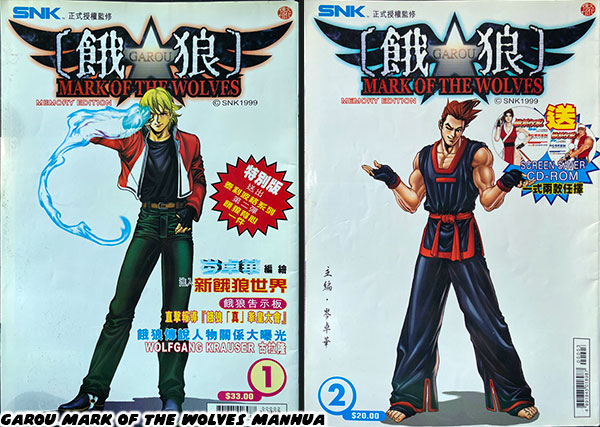
Garou Mark of the Wolves, the manhua part 1

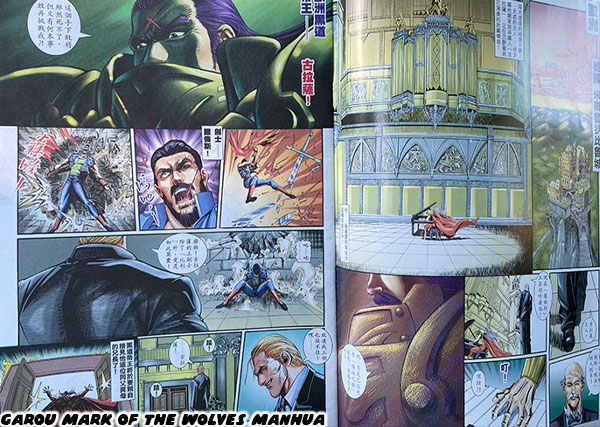
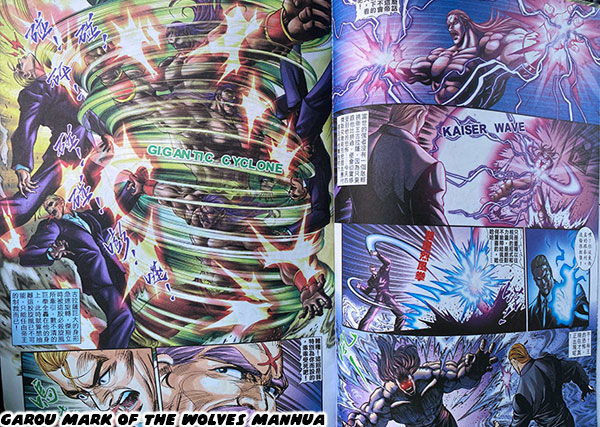
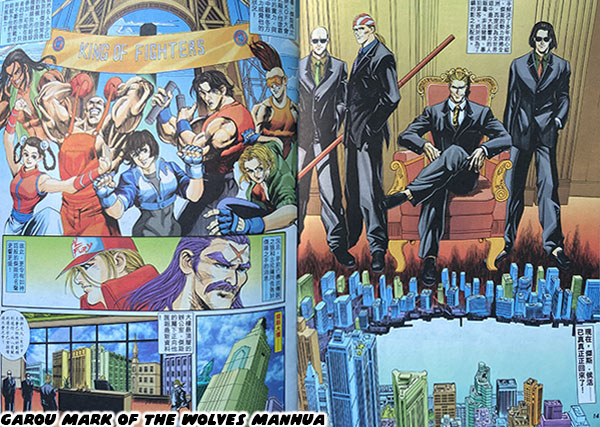
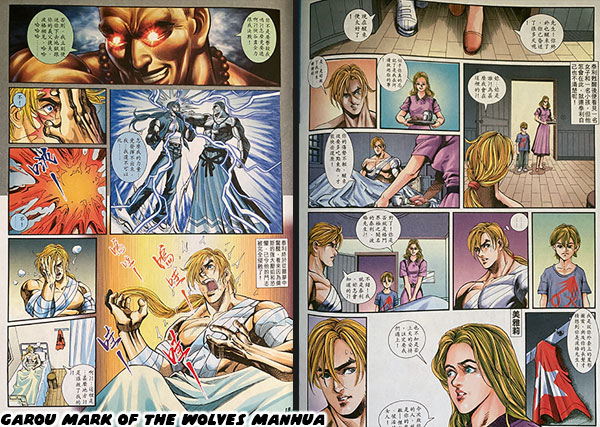
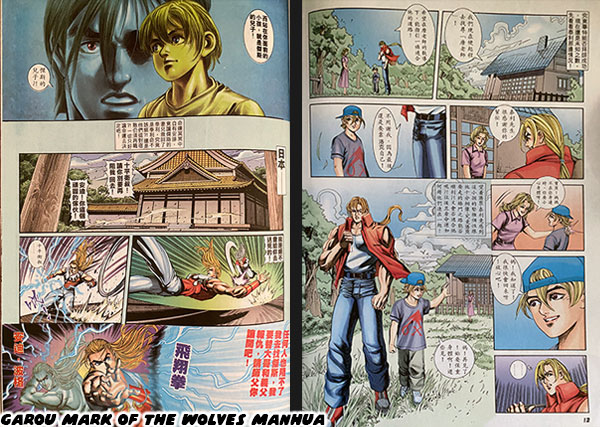
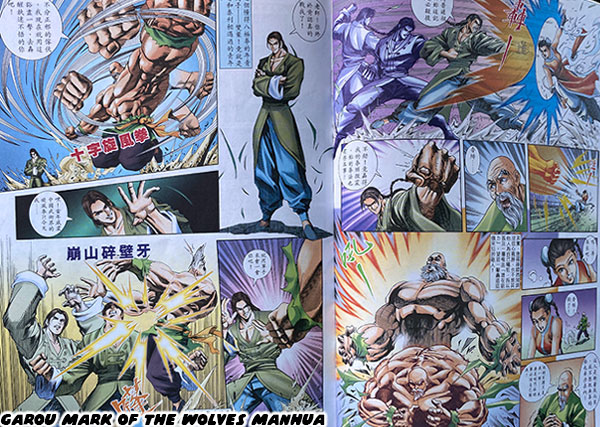
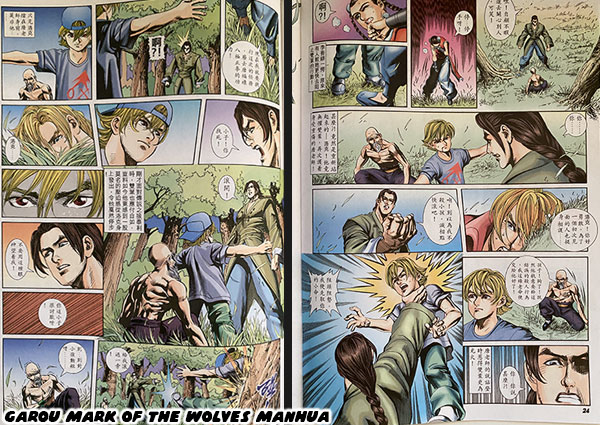
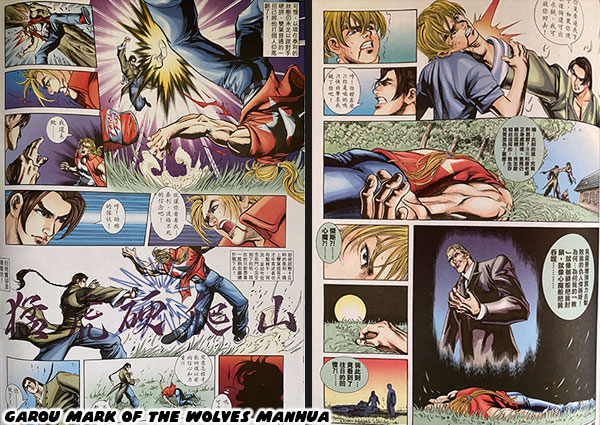
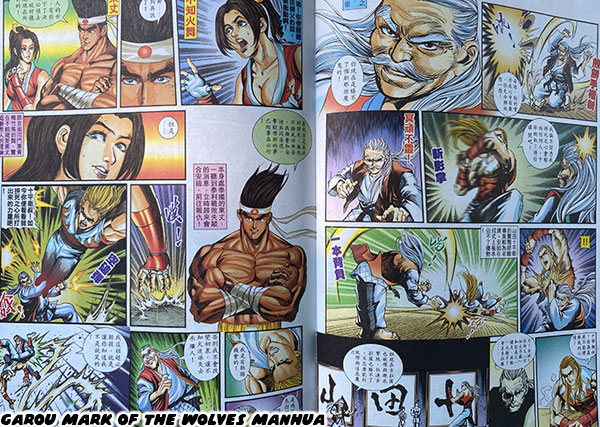
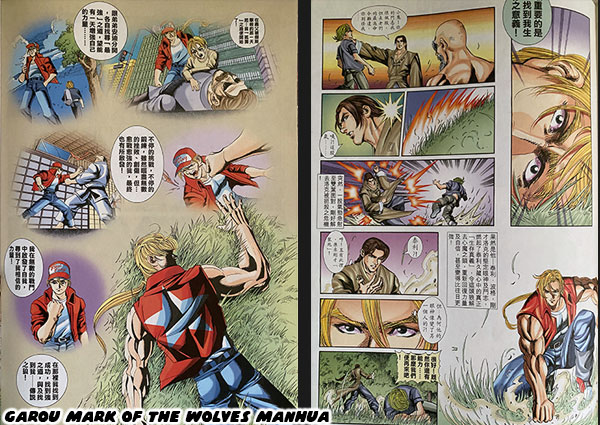
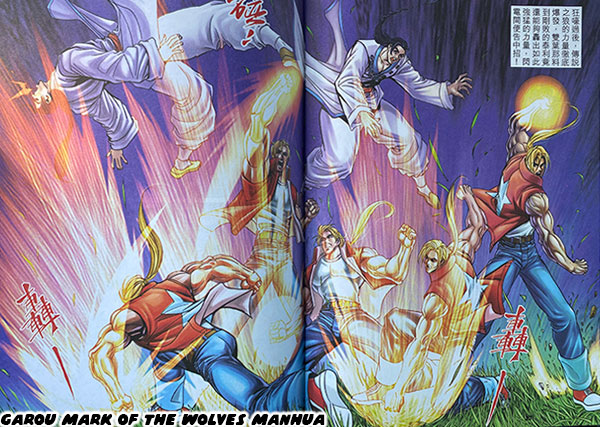
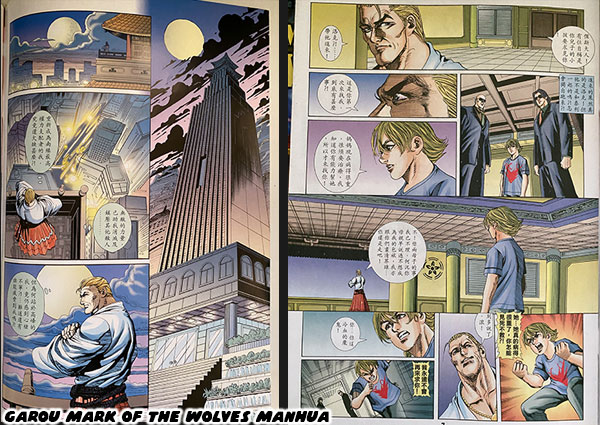
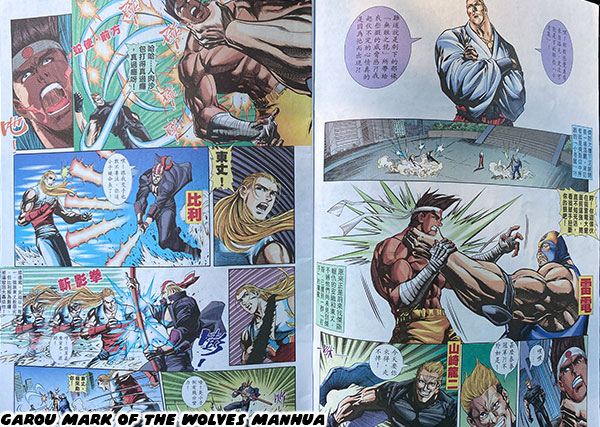
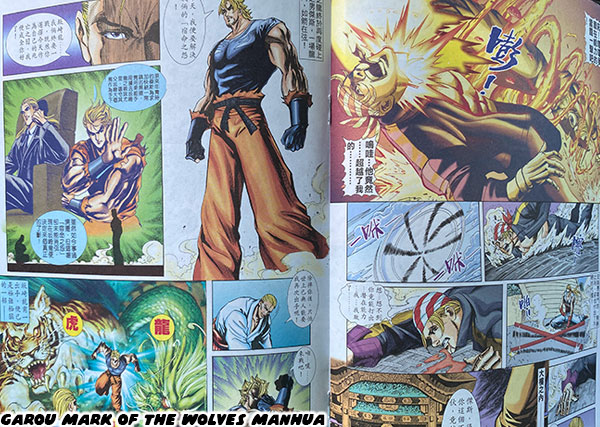
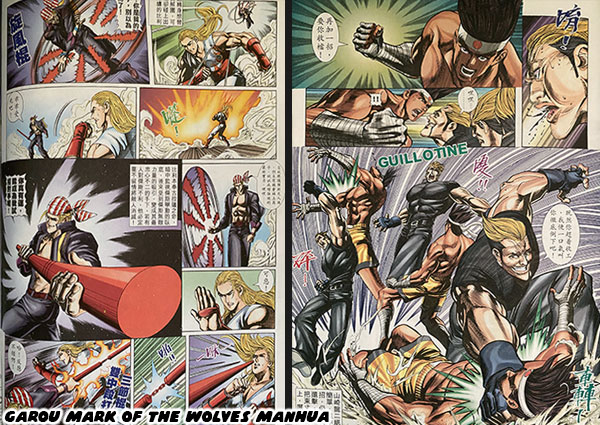
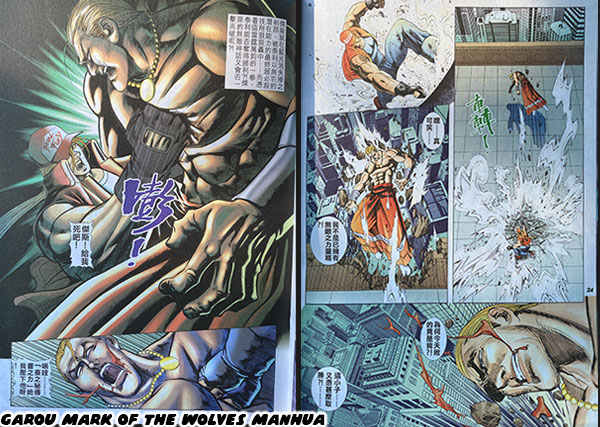
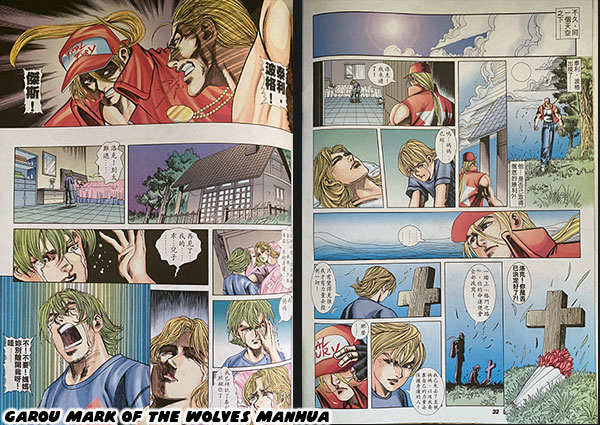
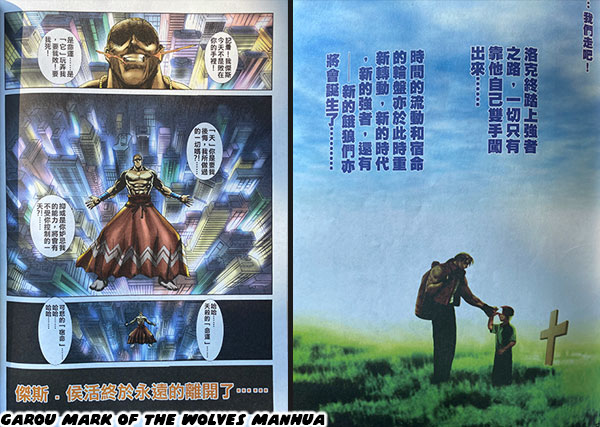
Recently I discovered that there was a manhua, a Chinese comic series based on Garou Mark of the Wolves (MOTW). There were 10 issues in total. The books came out in 1999, the same year that the game debuted. I got them from a collector in California, and thankfully didn’t have to pay a lot. The first thing that I noticed when they arrived were that they were much larger than standard comic books, or manhua. The standard comic book size was 6-5/8 inches wide by 10-1/4” tall, the Garou MOTW books were 7 1/2” wide by 10 1/2”. These issues were almost as big as magazines.

The issues were a great primer on the main players in the Fatal Fury (FF), and Art of Fighting (AoF) series. Specifically focusing on the villains Geese Howard, and the protagonist Terry Bogard. The first several issues actually got us caught up on the events that happened across the first few Fatal Fury games. I’m not certain if there ever were licensed AoF, or FF comics in China in the early ‘90s. There may have been, and like Street Fighter there may have been several unlicensed comics as well. In all my years doing research, surfing bidding sites, I’ve never seen a collection of classic SNK comics from China prior to 1997. I know there were many from the King of Fighters series, and the various games, including KOF 98, 2000, SNK vs Capcom, and KoF Maximum Impact. The fact that the Garou MOTW manhua retold the plot of the first few FF games, including the creation of the KOF tournament helped get audiences up to speed. The events of Garou MOTW are set a decade after what happened in the first FF game.

The series actually begins with a look at the battle between Geese, and his half-brother Wolfgang Krauser, head of the Stronheim family. Geese had long sought revenge on Wolfgang, and his father Rudolph, because they abandoned his mother Maria, and left her to die penniless in America. As a long-time fan of fighting games this was the type of action, and storytelling that I looked for. The panels were filled with lots of action, and we got a chance to see each character use their trademark special attacks.

Seeing the fights in print was a way to determine which parts of the game were canon, and which were pure speculation. Not every fighting game gave us concrete answers, or tied up the plot points. More often than not they read as a sort of “what if?” series of events, that were loosely connected. For the longest time I fancied Wolfgang as being the stronger brother. He was older, and much stronger, but Geese had greater fighting experience. After a fierce battle Geese took out Wolfgang to take control of the family assets. With that taken care of he returned to Southtown to run it from the shadows, and sponsor the King of Fighters tournament.

It actually takes a few issues of the Garou MOTW manhua before we even get past the original FF timeline. We actually get a chance to inhabit the complex web of characters, and their relationships. We get to see Toni Sakata from FF Wild Ambition making a cameo when he meets with Geese. We get to see Andy Bogard training with Mai Shiranui, and Jubei Yamada. We also get to see the fallout from the first time an adult Terry Bogard, and Geese Howard do battle. Geese shows him no mercy, and defeats him with relative ease. Terry is bruised, and beaten. Marie, Geese’s estranged wife nurses Terry back to health, and introduces him to a young Rock Howard. The two live in a modest home away from Southtown.

Terry worries about Rock, the legacy he hails from, and what his future might hold. Marie has a rare medical condition that she keeps from Rock. She asks Terry to watch over the young Howard, especially in the event that anything happens to her. Terry promises to take care of him while he continues training, with the hopes of getting a rematch with Geese.

We get to see Terry pick up training with Tung Fu Rue, arguably the most powerful elderly kung-fu master in the entire KOF universe. Tung is attacked by an upstart master named Gato.

Terry tries to intervene, but he is still not at 100%. Both he, and Rue take some punishment from Gato. Rock steps in, and tries to get Gato to leave them alone. Gato retaliates by strangling the boy.

Terry is out of commission for several pages. The story uses that time to look at the history of Terry, and his younger brother Andy. It shows the reader the origins of their vendetta against Geese. We get to see the orphan brothers trying to protect their adopted father Jeff Bogard as he gets pummeled by Geese. We get to see them being trained how to fight in different schools, both before, and after the murder of their father.

We see that Terry blames himself for not being stronger, for not being able to protect his brother. Eventually the two part ways in search of a master. Their relationship strained. Andy decides to study under the same masters that their father studied with, in the hopes that he could defeat Geese.

Terry on the other hand learns to fight in the street. Living up to his lone wolf reputation.

Terry eventually snaps out of it when he realizes that Rock is about to experience the same trauma that he, and his brother endured. He digs in deep, and turns the tables on Gato.

As all this happens Rock discovers that his mother is dying from her condition. He knows that his father is rich, and powerful, and he goes to him to beg for help. Geese wants nothing to do with him or his wife. Rock calls him a cold blooded devil, when he realizes that Geese probably could get Marie the medical attention she needs, but doesn’t care enough to do so. Rock vows never to beg him for anything again.

Andy, Terry, and their good friend Joe Higashi are now older, and more experienced. They decide to challenge Geese in the same high rise building that Rock had visited. They are ambushed by Geese’s hired goons, including the wrestler Raiden, yakuza hitman Ryuji Yamasaki, and stick master Billy Kane.

The next part of the story was new to me. The version of the events in the Garou manhua had Ryo Sakazaki as the first to reach, and do battle with Geese. Ryo was from the Art of Fighting game series. In the original game he was hunting down the man that kidnapped his sister Yuri. It turned out that the kidnapper was a masked man known as Mr. Karate. The end of the original AoF reveals that Mr. Karate was actually their father, Takuma Sakazaki. Takuma was forced to work for Geese as an enforcer under the threat that his children would be killed. This leads us to AoF 2, and the chance for Ryo to take out the kingpin.

Ryo follows the clues right up to Geese, and gives him a decent fight. Unfortunately it isn’t enough, and the young Sakazaki is defeated. The battle rages on outside with Andy, and Joe barely holding their own against Geese’s best men.

Terry eventually makes it to Geese as well, and they have the battle made famous in the first Fatal Fury. Terry knocks Geese off the roof of his building, seemingly to his death. Of course it turns out that it’s not that easy to kill him.

On the other side of town Marie was in the final stages of her disease. We see Rock, and Terry with her when she passes away. Terry promises to take care of Rock. Marie dies peacefully on her bed, and is buried not far from her house. However according to Kain R. Heinlein Rock's mother is still alive. So if the events of the manhua are canon, that means the lady that was buried may not have been Rock's actual biological mother. It would explain why Geese was so indifferent to her, especially since he had also been abandoned as a boy, and knew Rock's pain. At least that's my theory.

All of this carries us through most of the Garou manhua. However as you may know there are new faces, and changes to existing characters when the King of Fighters Maximum Mayhem tournament is created. The tournament organizer Kain R. Heinlein, the brother of Marie, and uncle of Rock is trying to recruit Terry, and Rock into his organization. He wants to rule Second Southtown following the power vacuum when Geese is defeated.

Those that have played Garou know that there were many new characters introduced in the game, and most get at least a panel or two of an introduction. We’ll look at the events in the remaining issues on the next blog. I hope to see you back for that. As always if you would like to sponsor me please visit my Patreon page and consider donating each month, even as little as $1 would help make better blogs and even podcasts!
follow the Street Writer on Patreon!

Wednesday, August 10, 2022

Garou Mark of the Wolves 2, the return of a legendary series.

The EVO 2022 Tournament in Las Vegas had a lot of entertaining matches, and reveals over several days. On the Street Fighter front both Kimberly, and Juri were officially unveiled. I had already covered their look on this blog. My guess that Kimberly was a ninja turned out to be correct. She seems to be fascinated by ‘80s pop culture. That she probably has in common with the new Street Fighter developers. I’ll be talking more about SF more in the future, as the rest of the cast gets unveiled. Right now I want to talk about SNK, and all the buzz they have been generating in the past few weeks. It all started when someone got their hands on beta material for the unreleased Garou Mark of the Wolves 2. Sprites, unfinished stages, and some other content was dropped online. It set the community on fire.

The original Garou MOTW was released in 1999. The game was set in the shared universe of the King of Fighters franchise. This includes the characters, and relationships unveiled in Fatal Fury, Art of Fighting, Buriki One, Ikari Warriors, and more. Garou MOTW was centered around a young star named Rock Howard. He was the son of Marie Heinlein, and Geese Howard. Geese, as you may know was the main villain in the Fatal Fury series. Geese was one of the great fighting game heavies, and was such a profound character that my second podcast for this blog was about the rivalry between Terry Bogard and Geese Howard. The Fatal Fury games were created by Takashi Nishiyama, the creator of the original Street Fighter. Once he left Capcom to join SNK he (and many members of the fighting game community) considered Fatal Fury to be the spiritual successor to Street Fighter.

Rock Howard was created by Nobuyuki Kuroki in 1998. Mr. Kuroki, and Yasuyuki Oda wanted to create a young successor to Terry Bogard. They decided that Rock would carry the torch in the Garou series. Terry would still be in the game for fans of the original star, however the plot, and cast were centered on Rock. The game was a generational love letter. Kim Kaphwan was the taekwondo star of the Fatal Fury series. His sons Kim Jae Hoon, and Kim Dong Hwan were also youthful stars of Garou MOTW. Terry was presented as a mentor to the young Howard. Many assumed it was because he had a guilty conscience. That was a fair guess considering that he kicked Geese off the roof of his office building. Over the years it was revealed that Terry had become a father-figure for Rock. He had a genuine affection for the kid. It was revealed in the official character art. In the sprites used through the series, and in the game cinemas.

Every fighting game needs a villain. It would have been interesting if Rock had to battle his father, but that rivalry was usually reserved for Terry. Not to mention that the father, and son rivalry had already been done in the Tekken franchise. Instead the Garou series would pull in not one, but two heavies for Rock. There was Kain R. Heinlein his biological uncle, and Abel Cameron aka Grant, his other father figure. This dynamic would make for an interesting plot. Abel was an enforcer for Kain, he wore a mask while performing his dirty work, not unlike Takuma Sakazaki as “Mr. Karate” when he worked for Geese. The reason Terry was helping raise Rock was because his mother had died. Geese wanted nothing to do with his son, Kain kept his distance for a large chunk of his life. So it was Abel, and Terry that took over duties, especially Terry. One of the biggest revelations in the game (BIG SPOILERS) was that Rock’s mom was allegedly alive. Sadly there was no resolution to this plot twist as SNK was in a bad financial situation post 1999. They cancelled development on the sequel, and had to restructure the company. Fans could only guess what was the fate of Rock, and the rest of the cast.

The game had a very strong reaction from audiences. It was considered one of the greater sprite-based fighters of the ‘90s. The animation was brilliant, balance was spot on, and cast memorable. On the aesthetic front the game looked like the Street Fighter Zero / Alpha version of Fatal Fury. It was such a beloved game that fans never gave up hope on seeing a sequel. Even before the actual sequel sprites were released there were developers that wanted to pick up the license. DotEmu developed Streets of Rage 4, a sequel to a beloved ‘90s brawler series by Sega. They created some fan art of what their version of Garou 2 would look like. It set the FGC ablaze. The community would create animations, and concept backgrounds for what they wish had been. The Jaguar Bridge concept level by Jesús “Nerkin” Campos was an absolute work of art. Many artists never forgot how great the game was, and never gave up hope for a sequel.

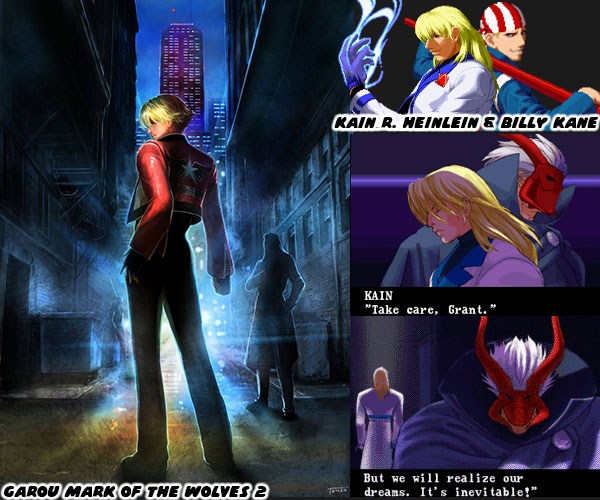
After more than 20 years it looked like nothing would ever become of Garou 2. That was until EVO 2022 when SNK dropped what could be argued as the biggest bomb of the tournament. SNK talked about the updates to KOF XV, and Samurai Showdown, including new characters, cross play, and rollback support for online play. Then they showed an illustration by Tonko aka Aki Senno featuring Rock Howard. The framing of the art was clearly done with purpose. The alleyway might be in Second Southtown, the large building in the distance may be Geese Howard’s. In the background are Billy Kane, a well known enforcer for Geese, and Kain Heinlein. From a storytelling perspective this might be Rock Howard being pulled to the “dark side” in a power struggle over Second Southtown. As of this writing we have no idea who else is going to be in the game, or what the story could be. We don’t even know if the studio is finishing the sprite-based version, or starting from scratch with a whole new cast.

As far as the canon of the game went, there were the events, and relationships specifically mentioned in the title. Some had straightforward endings, some were open-ended. These things really didn’t influence the direction of the King of Fighters tournament in one way or the other. There was not much else in terms of anime, or manga that covered the events of the game. For sure I thought it would have gotten highlighted in the King of Fighters Destiny cgi series. Sadly it did not. Many popular games had a corresponding show or comic book series. Capcom had one of the first illegal, and licensed comics in the world for Street Fighter II. SNK was just behind with the Art of Fighting, and King of Fighter manga. Through the ‘90s the various games would get a licensed manga in Japan, and sometimes that book was translated, and released in the US as well. Licensed books were also created in the Chinese market, these were known as manhua.

I had collected both Street Fighter manga, and manhua, and more than a few manhua books from the various SNK games. Only recently did I learn that there was a manhua series based on Garou MOTW. I managed to get all 10 issues of the limited run comic. As far as I know they have never been translated into another language. I scanned in several pages, and will be sharing them on this blog over the next few days. I hope to see you back for that. I’d like to know if you collect any comics, manga, or anime on a favorite game. It doesn’t have to be a fighter. What do you collect, and what’s one of your favorite pieces? I’d like to read about it in the comments. As always if you would like to sponsor me please visit my Patreon page and consider donating each month, even as little as $1 would help make better blogs and even podcasts!
follow the Street Writer on Patreon!

Wednesday, July 13, 2022

Figuring out the changing Street Fighter Style, final part

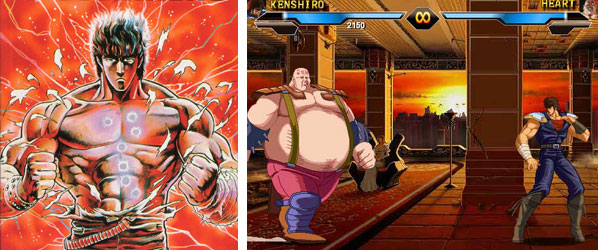
In the previous blog I mentioned that the characters in the King of Fighters, and King of Combat series tended to go over well with the broader Asian market, especially the Chinese. If you wondered why Asian-style leads were younger, or less muscular than the archetypes that Americans tended to favor I want you to think about pop culture. Think about every anime, and manga you had ever seen. There were some very muscular stars throughout history. Hokuto No Ken / Fist of the North Star, Dragon Ball Z, and Baki featured swollen leads. However those titles were the exception, and not the rule. The vast majority of manga, and anime featured characters with skinny-to-average builds. More often than not the stars were high school, or middle school kids. It wouldn’t make any sense for them to be huge, or vascular.

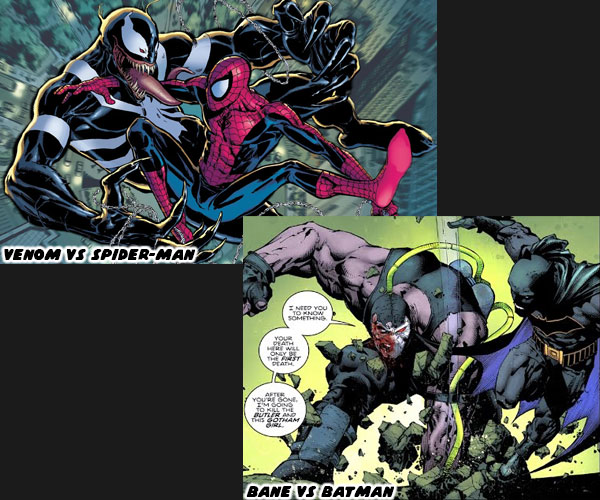
By comparison comic book, and animation heroes in the US were fully grown adults. They almost all had bodybuilder physiques. The villains were sometimes even more physically imposing than the heroes. Think of the difference between Batman, and Bane, Spider-Man, and Venom, the Hulk, and the Abomination. There was a distinct size advantage to the rivals. Even relatively young characters like Robin, or Kid Flash were often drawn more muscular than the average child. It stood to reason that Japanese studios would try to create equally buff characters when trying to appeal to the west. 

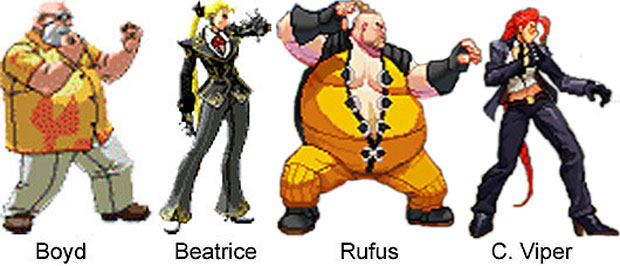
I think that the market had a bigger influence on the design changes happening at SNK, and Capcom than they had discussed publicly. Money talked, and if a studio wasn't hitting their goals then they had to find a new direction. In the previous blog I mentioned that DIMPS had co-developed Street Fighter IV. It was something that not everybody in the fighting game community was aware of. I believe that they had a hand in influencing the look of C. Viper, and Rufus. Even studios outside of Japan got a chance to shape the direction of the series. The Malaysian company Streamline Studios helped in pre-planning and development of Street Fighter V It wasn't the only time that an outside studio had shaped the direction of a flagship title. Most publishers outsourced some work to smaller developers. They might have built assets from the game, painted backgrounds, or created the title, and ending credits. The bigger the budget the more work a studio had to build from, and possibly outsource. If a game didn't perform then the publisher had a reason to cut down the team size, or try something different.

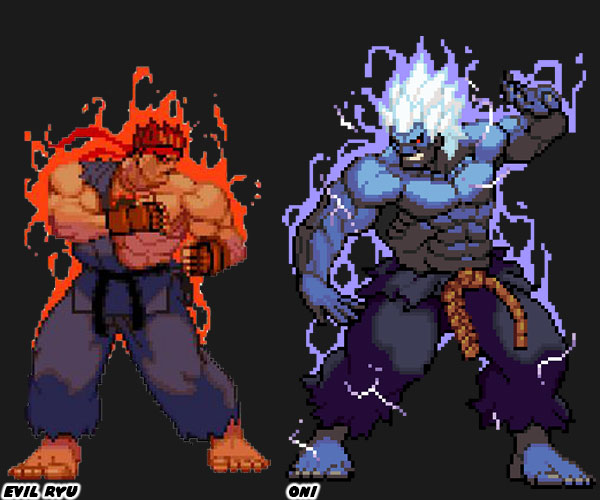
Street Fighter IV sold over 9 million units, across all versions, and platforms. It was credited with relaunching the fighting game craze. Street Fighter V sold over 6 million units, across all versions, and platforms. Both were hits, but they did not outsell Mortal Kombat X, which was just shy of 11 million units, and Mortal Kombat 11 which sold 12 million. The lack of numbers compared to MK, plus the drop off in sales from SF IV to V probably had a hand in seeing Yoshinori Ono leave Capcom. It wasn't the only reason that a change was warranted. Mr. Ono had lead the company to some interesting places during his tenure. He brought back a number of classic characters, but also introduced a number of odd ones as well. Rufus, Hakan, and F.A.N.G. stretched the idea of what worked in the series. They looked, and played like he was trolling audiences. He brought Gouken back from the dead. His murder was integral to Ryu, and Ken's story. All of a sudden he was alive without explanation. Then he introduced Kage, and Oni which were evolved versions of Evil Ryu, and Gouki respectively. These characters were already well designed, they didn't need an upgrade. To many in the community he was pushing the series very far from its roots. 

A new team made up of internal members had to step in. Director Takayuki Nakayama was joined by Producer Kazuhiro Tsuchiya, who had been with Capcom since 1992, Produced Asura’s Wrath, and was the lead Producer on the Mega Man series since 2018. Producer Shuhei Matsumoto had worked on Street Fighter: 30th Anniversary Collection, Marvel vs. Capcom: Infinite, Ultra Street Fighter II: The Final Challengers. Designer: Yusuke Hashimoto had Produced Bayonetta, and Directed Bayonetta 2. It was up to them to steer the ship in a new direction, without losing the Street Fighter Style. They had mentioned in interviews how they wanted the game to feel like a worthy successor to SFII. That meant they wouldn't have as many fantastic elements, and over-the-top characters as audiences had seen previously. The game would be focused on fantastic, but plausible fighters. Closer to the World Warriors, rather than Rufus, and other joke designs. So let’s have a thought exercise. If you were Japanese employee, working at Capcom, and tasked with creating a character that would appeal to American audiences, who would you come up with? It might be a pro wrestler, as wrestling was still popular, or it could be a more contemporary mixed martial arts (MMA) star.

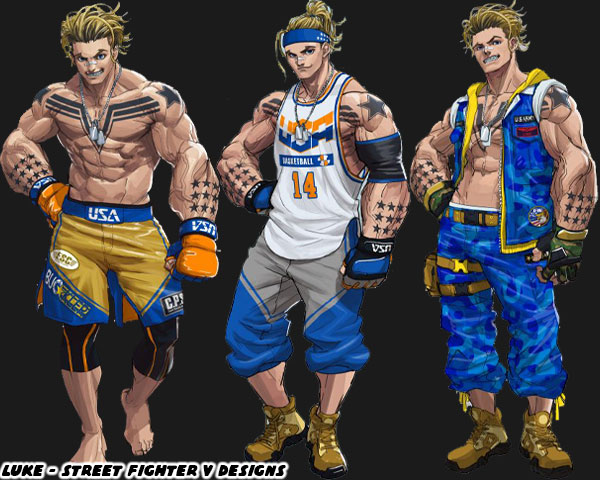
Luke appeared like an up-and-coming MMA star. The new designers followed the rules that Capcom had established in 1987. He was a muscular, blond haired white guy. He could certainly never be mistaken for the skinny Kyo, or Shun’ei. The difference for Capcom this time was that the character was much younger than the other leads in the series. He was younger than Ken, Alex, and Abel when they made their debuts in SF, SFIII, and SFIV respectively. He was roughly the same age of Ryu in Street Fighter Zero / Alpha. Using the SF style of character design they tried to give him a pseudo-traditional martial arts outfit. MMA fighters often wore shorts, sometimes a rash guard. Luke was given both. He also had striking gloves instead of larger boxing gloves. His color scheme was distinct, he wore gold, and blue, the colors of the Capcom logo. The pride in his nation was displayed on his main, and alternate costumes. The USA logo, the dog tags, the US Army fatigues, and Team USA basketball jersey to name a few.

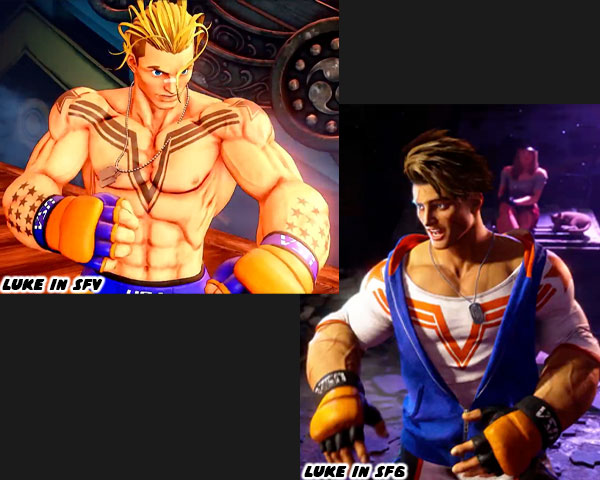
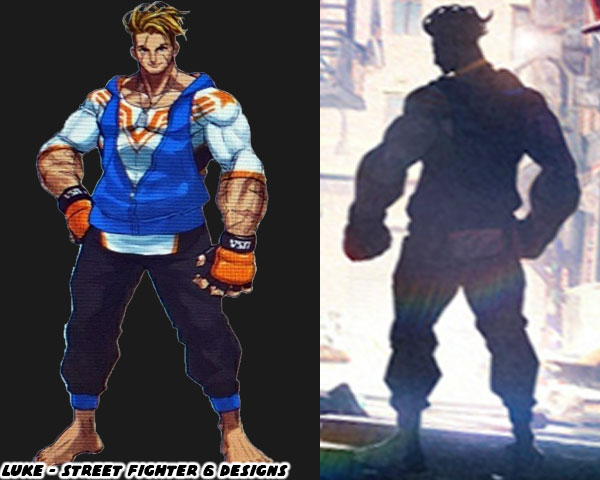
Despite his age he was a special forces op. He was a skilled fighter with a patriotic duty, somewhere in between Cammy, and Guile. The thing about his main costume was that it didn’t allow much material to establish his color, and identity. By comparison think about how much the colors, and costumes on Ryu, Ken, Chun-Li helped frame them. The designers at Capcom made up for it by covering his arms, and chest is solid black tattoos. It wasn’t the only thing the studio did to give him a distinct look. They gave him cartoonishly large forearms, this completely changed his profile. It made it so that despite his height, it looked as if he could hold his own with larger characters. They were design choices that wouldn’t have necessarily been used in a newer KOF game. The differences between Luke, and Shun’ei reflected both the aesthetic of Capcom, and SNK, as well as the target audience that they were going after. Capcom wanted to push the series forward in SF6, age the cast slightly, and give them new costumes. Luke’s uniform was changed to cover him up. Not only that but he lost the logo colors, going now to black, blue, white, and orange. His forearm tattoos were replaced with scars, and the chest tattoo was put on his rash guard. I think it was a good choice to leave the tattoos behind because patriotic symbols had been co-opted by the far right in recent years. 

Despite these changes you could still identify him even with just his outline because of his cartoonish proportions, and wavy haircut. I’m not sold on the colors selected for the fighter. I think that blue, and gold worked better for him. That’s my opinion anyhow. I think he would still be popular among new players. With character costumes becoming more casual, and more conservative in SF6 do you think that Capcom was moving closer to the SNK style? That's how it seemed with designs like Cammy, and DeeJay. Was this a good idea to attract new players? Do you think this was a business decision? I’d like to hear your take in the comments section. Let me know what you think defines the Capcom, SNK, or any other publisher style. As always if you would like to sponsor me please visit my Patreon page and consider donating each month, even as little as $1 would help make better blogs and even podcasts!
follow the Street Writer on Patreon!

Monday, July 11, 2022

Figuring out the changing Street Fighter style, part 3

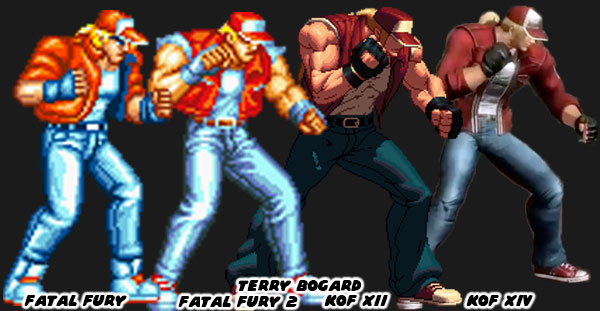
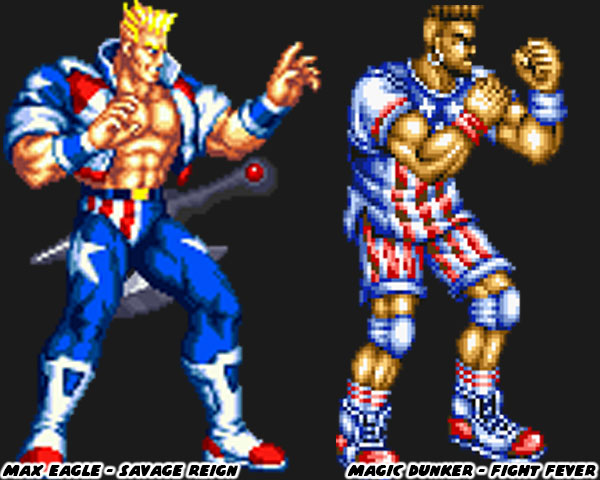
In the previous blog I talked about how different studios tried to create fighting game characters by using Capcom’s template from Street Fighter II. One of the missteps that some studios made was in overtly pandering to the western audience. The examples I used were Max Eagle, and Magic Dunker who wore costumes made up the stars, and stripes of the USA flag. There was no mistaking who these characters were, and what they represented when they literally wore the nation’s colors on their shorts. Yet great character design was more often subtle. It was subtle in the sense of how people thought Chun-Li’s costume was traditionally Chinese even if there wasn’t’t really anything classical about it. There was another way this subtlety was accomplished. SNK would not always use traditional outfits on their fighters. Instead they would put their martial arts masters in street clothes. But they weren’t just any outfits from the mall. They were on the leading edge of fashion, if not predicting it by a few years. These outfits were more than just flashy, they were carefully assembled to tell a story. The star of Fatal Fury, and poster boy for a lot of SNK’s greatest hits was Terry Bogard. Take a look at the evolution of his costume over 30 years, and see what you could identify. For the sake of this blog I am going to leave out the updated look that he received in Garou Mark of the Wolves. Since that involved a time jump.

Terry was the “Wild Wolf” of the King of Fighters universe. He didn’t represent any traditional form, like his brother Andy, instead Terry learned how to fight on the streets. He was a western character, the typical blonde-haired protagonist, however SNK didn’t play up those features. They covered him up with a trucker cap. His colors were red, white, and blue, but they weren’t the shades that you would find on the US flag. The blue on his jeans was a very faded light blue. This signaled to players that he spent a lot of time living, and working outdoors. He wore a white tee shirt, something classic, and humble. He wore a leather jacket, tough, and durable. It had a single star on the back, but it was saturated with more orange than crimson. He wore white sneakers, casual, but sporty. These would be swapped out for red ones which contrasted better with his outfit in later revisions. The tweaks that SNK gave his outfit only further reinforced the story elements from his costume. The sleeves on his jacket would be torn off to reveal huge muscles. By King of Fighters XII he was at his most muscular form. A few years later he was slimmed down, and the sleeves put back on his jacket. His jacket turned from leather to jean material, lighter, and more flexible. The majority of characters got similar makeovers post KOF XIII. Why was this?

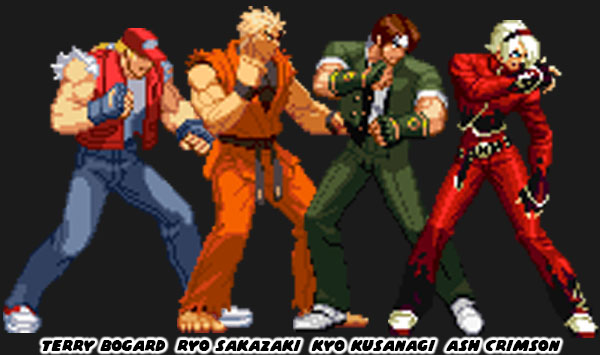
With the exception of Ryo Sakazaki, SNK had mainly pushed leading characters in very fashionable street costumes. The character that carried the torch in the KOF series was Kyo Kusanagi, he wore a very hip take of a gakuran, or school uniform. Not unlike the way Jamie wore his kung-fu outfit with a Hip Hop vibe in SF6. The young Kyo’s powers were cloned for the even more fashionable Ash Crimson. There were many characters introduced in the KOF series who wore flashy outfits. This was one of the things that distinguished their lineup from Street Fighter’s. SNK changed the look, feel, and overall aesthetic of KOF with XIV. They saw that the swollen characters in XII, and XIII weren’t necessarily going over well with audiences. The studio then put former Capcom developer, and SFIV team member Yatsuyuki Oda in charge of KOF. He focused more on making cool-looking characters that would appeal to their target audience. In this case they wouldn’t try to guess western tastes, but instead try to create archetypes that would be more popular in Asia.

Fighting games enjoyed popularity all around the world. North, and South America, the Middle East, Europe, and England had millions of fans, all eager to get the next game, and hopefully see a little representation in the lineup. In Asia there were countless fans, more so than just Japan. People in Malaysia, Singapore, Hong Kong, Taiwan, Korea, and Thailand loved the game. There were a number of changes happening between developers, and publishers all throughout Asia, some of which directly influenced the franchises. 37Games from China bought a majority stake of SNK in 2015. The studio created, and distributed browser, and mobile games in North America, and Europe, as well as China. The owners were fairly large company with a market cap of $7.14 billion. By comparison Capcom headquartered in Japan had a market cap of $5.18 billion. Both companies were of course mindful of the new media juggernaut. The biggest publisher in China was Tencent. That company had a market cap of $446 billion, by comparison Disney had a market cap of $175 billion. It would make sense to try and get Tencent’s attention, and become partners on a game somewhere down the road.

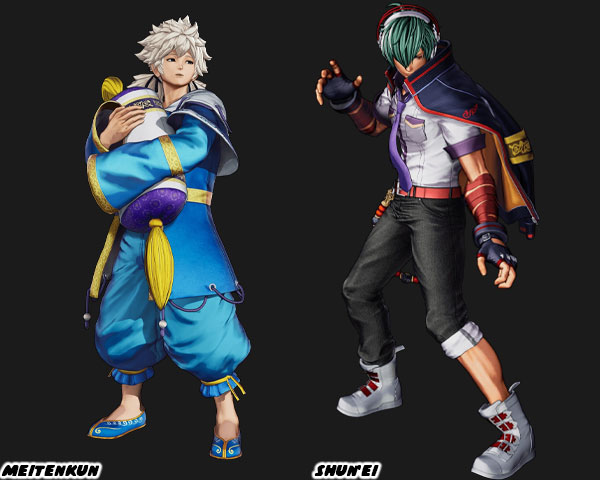
Since China was becoming the biggest gaming market. It only made sense for SNK to make a title that could win over Chinese fans. This was why the two new leads in KOF were added to Team China. Meitenkun, and Shun’ei made more sense in that role than the “Psycho Soldier” team of Athena, and Sie Kensou. The team also had the elderly master trope of Tung Fu Ru, who was a mentor to Terry, and Andy Bogard. Meitenkun, and Shun’ei were decidedly unlike the super-strong brawlers that Americans were used to seeing. They weren’t tall, weren’t buff, and weren’t “manly” by western standards. The sleepy Meitenkun was a decidedly soft boy with incredible internal power. He was a sort of pretty boy that could be appealing to female fans. His name actually sounded like the Mandarin saying “mei tian kun” which meant “sleepy everyday". The other character Shun’ei was meant to be the star character. He was an updated take on the cool guy, the new Kyo essentially. His school uniform was just as fashionable, and he even wore it with one pant leg rolled up, take that Jamie! The designers behind Rock Howard, the young star of Garou Mark of the Wolves, had a hand in creating Shun’ei.

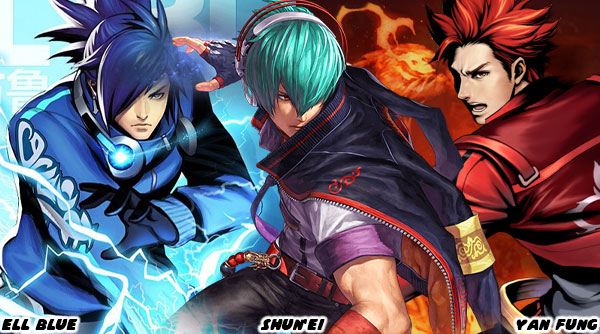
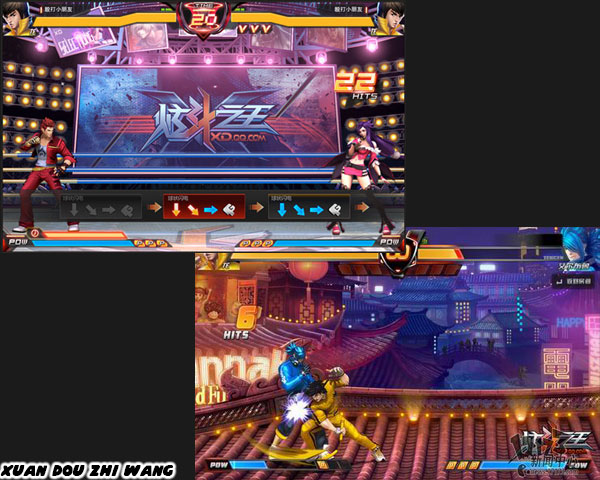
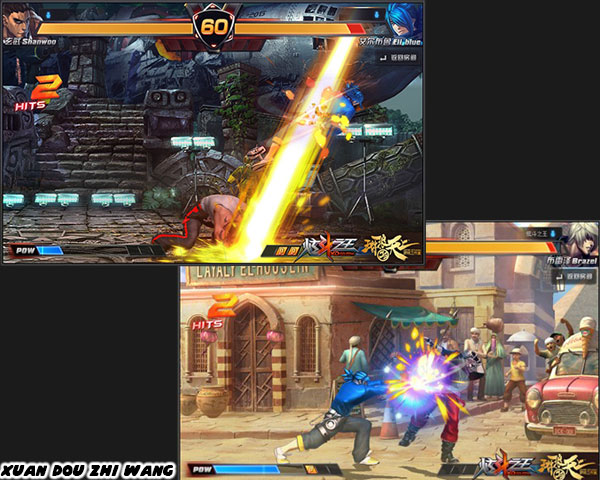
Many of the KOF star characters did not represent a traditional martial arts style, they were given awesome powers instead. Very much like comic book heroes. Kyo had flame powers, as did Ash. Shun’ei had both flame, and water powers. These were reflected in the red, and blue psychic hands that he attacked with. The design, and choice of colors I think was done in response to the popular home-grown Chinese game Xuan Dou Zhi Wang aka King of Combat. Jade Studio developed the game for publisher Tencent Games in 2011. It would receive new characters, and stages over the next eight years. This was well before 37Games acquired SNK. Those that had seen King of Combat, and had played it could say that it was a clone of the KOF series. The character selection, and even stage design seemed lifted from SNK’s best work. I had already talked about this connection with Shun’ei, but essentially his look was an amalgamation of Ell Blue, and Yan Fung, the stars of that game. 

Two years before SNK was sold Tencent announced a crossover where KOF characters would appear in King of Combat. This raised the status of the game, and made the copycat title appear more legit to the Chinese fighting game community. It also helped make sure that the aesthetic that SNK used would remain more Asian influenced. These things helped explain the shift in changes from slim-to-buff, back-to-slim characters in KOF. There was something happening in Capcom as well. I'm going to talk about it on the next blog. I hope to see you back for that. I’d like to hear your take in the comments section. Let me know what you think defines the Capcom, SNK, or the style of any publisher. As always if you would like to sponsor me please visit my Patreon page and consider donating each month, even as little as $1 would help make better blogs and even podcasts!
follow the Street Writer on Patreon!

Friday, July 8, 2022

Figuring out the changing Street Fighter style, part 2...

The previous blog had us trying to figure out the Street Fighter Style of character design. I used Chun-Li, and Jamie as examples. Capcom had historically done a great job at creating fighters from various nations in pseudo-traditional costumes. This made it so that audiences from any country could easily figure out who the character was, and what form they represented. Even if you didn’t speak English, or Japanese, you could look at just about anybody in the SFII lineup and tell a lot about them. There were two karate guys, one wore red, and one wore white. There was a huge wrestler, a sumo wrestler, and a female kung-fu practitioner. There was a buff American in military fatigues. The odd ones were a stretchy Indian, and a green skinned beast man. They were the outliers that literally added some color to the lineup.

Every successive Street Fighter made sure to strike a balance between easily identifiable archetypes, with the occasional oddball thrown into the mix. Capcom made a fortune with SFII, and the successive updates. They were so good at what they did they gave some studios the impression that it would be easy to make their own fighting game. I mean all you had to do was follow the template right? Here was where design, and experience came into play. The artists in every company had their own style, their own aesthetics. An art team in Japan drew differently than a team in Taiwan, or Korea, or Hong Kong. Yet there was some aesthetic overlap, and audiences in the West could tell that the designs were from Asia, even if they couldn’t necessarily pinpoint the country of origin. Now imagine if a studio wanted to make their own fighting game, and put archetypes from a certain country in it. They wanted to release this game in all the markets, and capture some of the sweet arcade money that Capcom had enjoyed. If they didn’t want to use the military look for an American then how else could they convey their nationality to audiences?

The studios could absolutely say “here’s Number One Yankee GI Joe”, and wrap that character in the stars, and stripes. Audiences the world over would instantly be able to tell a lot about that person. In fact it would be fair to do that. The point of reference about westerners many studios in Japan had were the over-the-top wrestling personalities, and sports stars they saw on TV. Even in formal karate tournaments they had seen actual contestants from the USA show up in gaudy outfits. The obnoxious red, white, and blue gi of Allen Snider from Fighting EX Layer was based on reality. Of course this type of character design could also be seen as pandering. It didn’t always translate well with the target audience. The lack of cultural understanding, or sensitivity also had a lot to do with it. In 1994 SNK published three fighting games where the Black characters were given basketball attacks, and a fourth game where the Black guy used dance attacks. Imagine the fallout if a studio perpetuated the stereotype of Blacks only being good at dancing or basketball today. Experience with the target audience helped senior designers know when they needed to change the direction of a character, or cut them altogether. For over 30 years Capcom had designed characters with Western markets in mind. The focus on guessing western tastes became more prevalent starting with Street Fighter IV.

By now you were aware that Capcom originally created a tall Black character as a rival to Ken. A sort of Sagat for the US legend. This character evolved to become King Cobra. Unfortunately his style of fighting was called “breakdance kung-fu.” The idea of a dancing Black guy in 2008 was outdated, and I’m sure despite his awesome appearance it wouldn’t have been appreciated by everyone in the community. Those dance fight moves would eventually find their way to Jamie in SF6. King Cobra would evolve to become Rufus, which I would consider to be the worst fighting game character of the past 20 years. There were plenty of odd choices coming from Capcom. 

It turned out that part of the reason why some of the character designs seemed out of place was because their roots were not necessarily from Capcom. The studio had outsourced some of the development work to DIMPS. That company was filled with former SFII staffers. They had created some amazing 3D fighting games, including the Dragon Ball Z Budokai series, Spikeout: Battle Street, and The Rumble Fish. Two of the characters from The Rumble Fish looked to have directly influenced two new characters slotted for SFIV.  It was becoming apparent that the Producer Yoshinori Ono had been steering the franchise in a silly direction. It was as if he had not paid attention to the process that Capcom had used previously. The studio would talk about how Western audiences playing early builds of the game were not drawn to the characters they had created specifically for them. If you understood the design elements that I had mentioned previously then you would understand why Abel stood out.

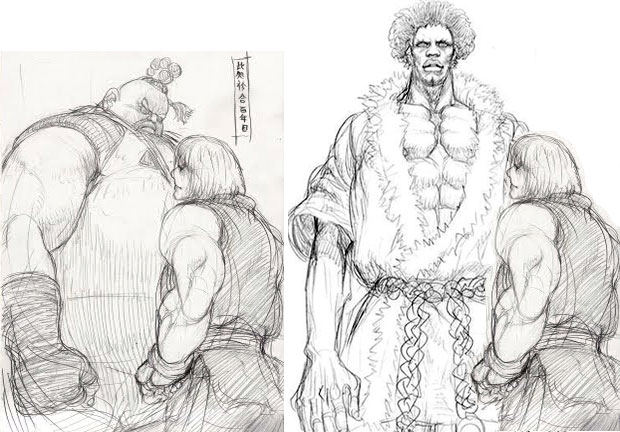
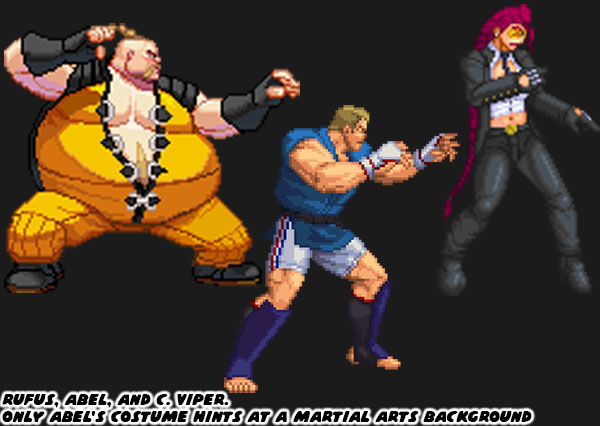
Abel had the pseudo-traditional costume. Given his size, and build, he looked like an actual fighter. By comparison audiences skipped Rufus because he was seen as a fat joke character. Crimson Viper looked like a sexy spy. Mr. Ono assumed that Western players would be drawn to this mysterious character. Instead test players immediately went to Abel because he looked authentic. Mr. Ono misread this attraction because of his size. He thought that western players would only use characters if they were hyper muscular. It would help explain why every male character in SF IV was absolutely swollen. Even “skinny” characters like Dhalsim were much bulkier than ever before. The trend continued with every expansion, and DLC fighter especially Gouken. By the time of Street Fighter V the biggest character in SF canon was put into the game as well. Abigail was eight-feet-tall. He was so massive he wore truck tires around his biceps as if they were armbands. It was definitely pandering as if Yoshinori was saying “here he is, look at this super buff American for you to play with.” I don’t think he was aware of how to fix the bad character ideas, or how to improve on the good ones. We could see that through Hakan, and El Fuerte, as well as his insistence of adding Rufus to the lineup. If we dug deeper we could also see the fixation on muscles with the original design of Abel.

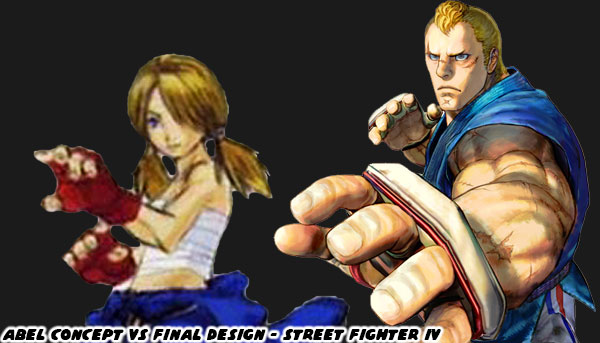
The earliest version of Abel was a sort of oddball character, like Blanka, or Dhalsim. The character was still a judoka, however he was not massive. In fact he was a skinny little androgynous boy in pigtails. Age wise he might have been the youngest person ever featured in the series. He was supposed to be incredibly quick, and have the ability to flip any character onto their head. I think that Daigo Ikeno had come up with the earlier concept because he was trying to put together a lineup with different sizes, and abilities. Maybe Abel would have always ended up being a big man, or maybe he was pushed in that direction because the team didn’t understand his appeal. Whatever the reason the changes went over well with the test audiences. What I think this did for the team was reinforce the idea that people in the US wanted to see big blonde characters in leading roles. That somehow the game narrative should be written around them. It was a tradition they started with Ken in 1987, and Guile in 1991 because they wanted to give Americans someone to play as. They never considered that Ryu, Chun-Li, Cammy or another character would be more popular with westerners. They repeated that way of thinking when Alex was introduced as the star of Street Fighter III: New Generation in 1997. Yoshinori saw the reaction to Abel, and it must have influenced his decision to push for Cody, Ed, and Luke as central to the story. Big muscular guys didn’t guarantee a fighting game would be more appealing to westerners. It was simply an aesthetic choice, this was a lesson that SNK learned in 2009.

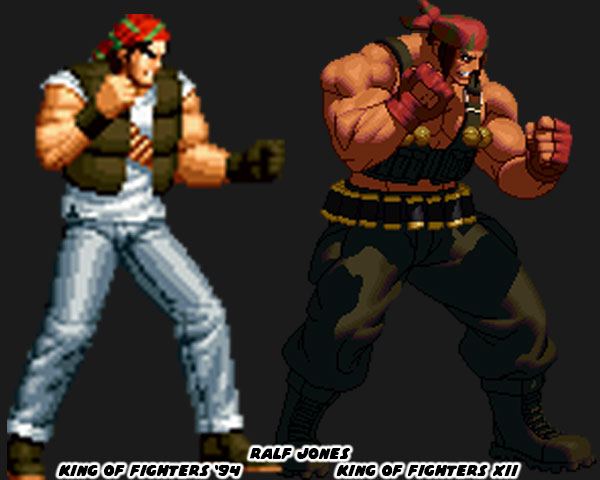
The King of Fighters series could be considered one of the true rivals to the Street Fighter series. The SNK school of design differed from Capcom in that they often had their cast in street wear. The costumes on the characters from 1994 to 2022 were roughly the same. At least there was more consistency in their look than the jump Capcom had between Street Fighter V, and 6. In 2009 SNK published KOF XII with completely new sprite art. SNK mastered Dot Art graphics which allowed for larger sprites with more frames of animation, and greater fidelity than their rivals. Several of the characters in the game were far more muscular than they had ever been. They made the changes Mr. Ikeno put on the SFIV cast pale by comparison. I’m not sure if SNK had assumed that the new swollen characters would instantly be embraced by western audiences. The game sold well, and it got a sequel with KOF XIII in 2010. However the time, and price of developing high resolution sprites didn’t seem worth it to the publisher. By KOF XIV the studio switched to 3D graphics as well. That was not the only change from the studio. They decided to steer their school of design away from the west. We will look at how Capcom, and SNK adapted to their audience in the next blog. I hope to see you back for that. If you have any thoughts on the topic please share them in the comments section. As always if you would like to sponsor me please visit my Patreon page and consider donating each month, even as little as $1 would help make better blogs and even podcasts!
follow the Street Writer on Patreon!

Wednesday, July 6, 2022

Figuring out the changing Street Fighter style, part 1...

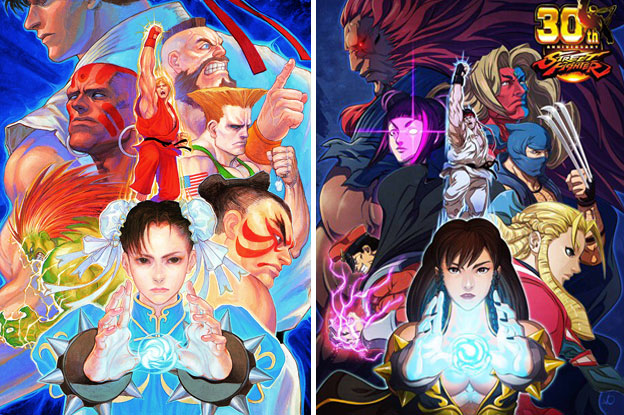
Over the last month I had talked a lot about the new, and returning faces in Street Fighter 6. I studied their outfits, the colors assigned to them, their nationality, and physical build. I did my best to try to figure out their roots, and fighting method, and share it with the visitors to my blog. In the end it reminded me that there was a style of character design that could be considered uniquely “Street Fighter.” By that same token there was a style of design that worked for Mortal Kombat, Tekken, King of Fighters, and Killer Instinct. The aesthetic of Capcom was distinct. This was thanks to the legacy of artists that had worked there. Akiman, Shoei, Bengus, Daigo Ikeno, Edayan, Kinu Nishimura were brilliant artists that had a hand in developing the style, and direction of the SF series.
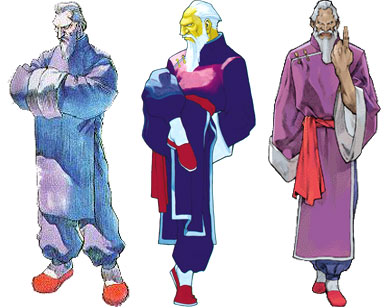
The newest designer Yusuke Hashimoto, was now putting his own unique stamp on the lineup. Yusuke had produced Bayonetta, so he was comfortable designing all manner of characters with different outfits, skin colors, builds, and body types. In short, he was the perfect person to shape the direction of this generation of fighters. With that said let’s try to figure out what made the “SF Style” distinct. The most obvious thing would be the costumes the characters wore. Could you really put a SF character in just any outfit, and would it work within the context of the game? I’m not saying that every character had to be wearing an authentic martial arts costume. That type of visual storytelling did not work great in SF. Instead there was a mix of pseudo-authentic costumes, and casual uniforms to break up the monotony. Consider for a moment what it would look like if everyone in the lineup wore casual clothing. Concept artist Xin Wang came up with fashionable makeovers for the SF cast in the Chinese mobile game Street Fighter: Duel. I would argue that Mr. Hashimoto’s designs were sort of a counter to that. He wanted to bring back the classics, but not go overboard with their costumes.
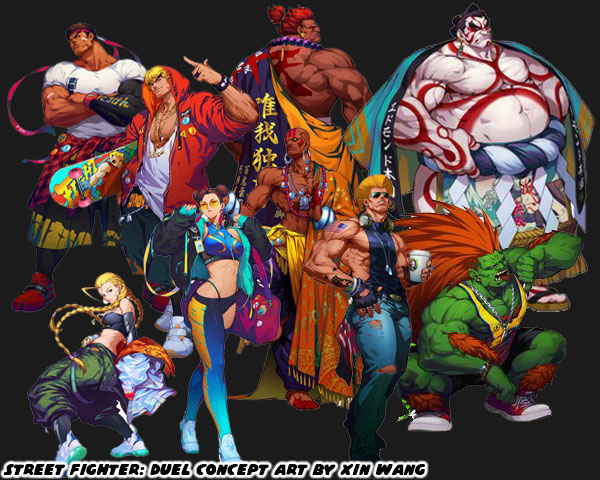
Long time fans would enjoy seeing their favorite characters in new outfits. However what did this do to new players? How did the game change by shifting just one element? Were new players able to make out the style of fighting that a character represented based on casual wear? Were they able to figure out what they could do based on the color of their skin, or their physical size? Now consider what costumes affected from a game play perspective. Was it easy to read the action on the screen if a character was covered up with long sleeves, or pants? What about vivid patterns, or clashing color choices on an outfit? Did these things make it easier to play the game, or were they distracting? I could argue similar points for excessive splashes of color, lightning, fire, smoke, etc. while the characters performed special attacks. There were many individual elements that made up the main costume choices for the SF cast. In the early days arcade cabinets, and game consoles lacked the memory, and processing power to render anything too detailed. The developers were limited to a simple outfit, and a primary color. This set the standard that was copied the world over. Now that consoles, and even mobile devices were more powerful then it became easier to create characters with highly detailed outfits, and millions of color choices. Was is then critical to take advantage of all this processing power? Or did putting too much into a costume’s detail take away from the overall presentation of the character?
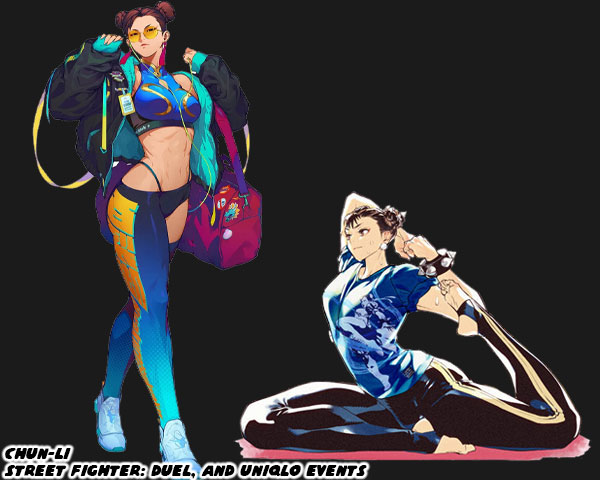
I welcomed the addition of Story, Arcade, and Battle costumes that were put into the library in SFV. I was not against a character getting an updated main costume in the series, as long as it didn’t stray too far from the original design. The importance of a primary costume still remained. This was why I had no objections to the new designs for Dhalsim or Blanka in SF6. There was even a chance for the studio to take a good idea, and make it even better. I thought this was the case for Juri’s update. I saw the studio taking a step backwards when they revealed the new look of Chun-Li. They took away the small details that added up to make her costume truly stand out not only in the lineup, but across the spectrum of fighting games. Chun-Li perfectly encapsulated the Street Fighter school of design. It didn’t matter if you were from the Middle East, South America, or Europe. It didn’t matter if you had played a million fighting games, or if this was your first. When you looked at Chun-Li for the first time you almost instantly thought “Chinese Fighter.” Why was this? 
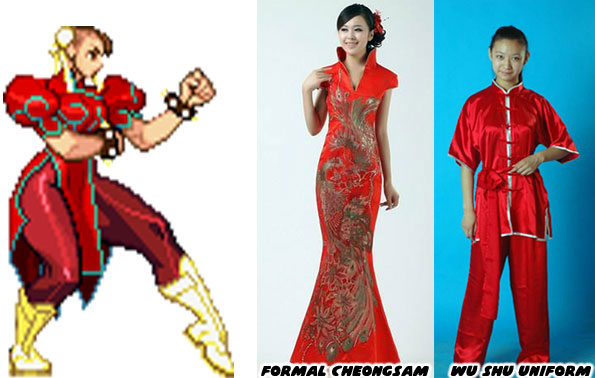
Audiences had seen Chun-Li’s prototype appear in pop culture generations before the game came out. Whether in story, film, photo, television, cartoon, or comics. The artists working at Capcom were pulling from various influences. People saw the repetition of heroic Chinese fighters, especially in Taiwanese, and Hong Kong cinema. They had seen physical Chinese representations in the form of certain hairstyles, makeup, and fashions. The cut of a dress, the use of ribbons, belts, sashes, and how they were assembled could be considered Chinese, or Mexican, or French, or American. Audiences had seen some combination of a wu shu uniform, or a traditional cheongsam at some point in the past. These were actual, traditional outfits from China. The genius of Capcom was how Akira “Akiman” Yasuda arranged certain elements when designing Chun-Li. The puffy shoulders, the pantyhose, wrestling boots, wide belt, and weighted bracelets had never been used in an actual martial arts costume, let alone any traditional Chinese dress. Audiences filled in the blanks with what they knew. They saw elements that they had seen before, and they assumed the rest was traditional Chinese. It was an absolutely brilliant trick, and set a standard that few studios could match. Yusuke Hashimoto showed that he was aware of what Akiman had done. Jaime in Street Fighter 6 followed the exact same design path of Chun-Li.
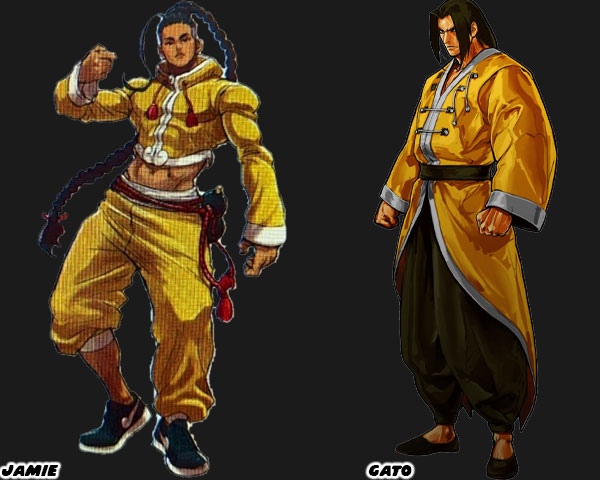
I want you to compare Jamie, and Gato who was a fighter from SNK’s Garou Mark of the Wolves. I had already highlighted Jamie’s various elements on my blog, but let me point them out again. Street Fighter 6 Director Takayuki Nakayama, Producers Kazuhiro Tsuchiya, and Shuhei Matsumoto, along with Yusuke Hashimoto spoke about the influence that Hip Hop had on SF6 in several interviews. Jamie was from Hong Kong, and at first glance it looked like he was wearing a traditional kung-fu outfit, but his costume had a decidedly urban flair to it. Just like Chun-Li it wasn’t apparent until you looked closer. The crop top, long sleeves, and wide collar were tailored to his frame, they were not baggy at all. This fit hadn’t really been worn in any traditional form of Chinese kempo, or kung-fu. The pants with one leg rolled up was a style from USA Hip Hop circles. The color of the fabric looked authentic, until you looked closer, and saw that it had a Louis Vuitton-inspired pattern on it.
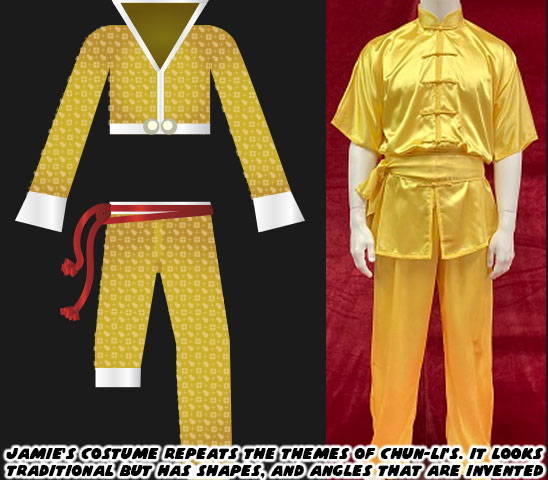
Jamie also wore sneakers with a cloud pattern at the front of what looked like the Nike swoosh design. Even his haircut wasn’t quite traditional. The long braid was supposed to make audiences think of the queue worn by men during the Qing Dynasty. Yet that hair style required the men to shave the front part of their scalp. Jamie instead had a modern fade on the sides, and back of his head. Jamie had a red rope belt with a wine gourd strapped to his hip. Many classical heroes in Chinese mythology such as Lu Zhishen, Ji Gong, and Li Tieguai carried a wine gourd as well. Capcom swore that Jamie was drinking a special juice, and not booze from the gourd. Jamie’s design really captured the SF Style, but it did not reflect the quality of the designs placed on some of the returning characters.
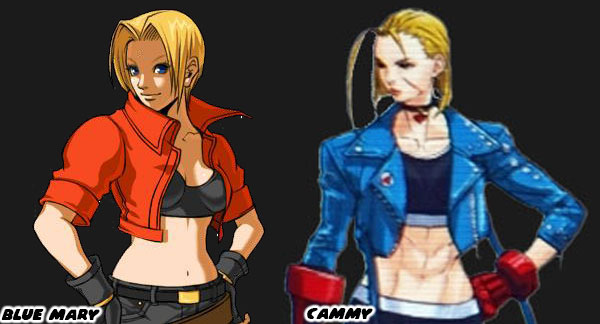
Cammy for example had an entirely new look that was much more casual than earlier looks. I felt that her short jacket, and leggings outfit betrayed the spirit of her original military-inspired uniform. My old friend DarthEnderX mentioned that she looked like a knock-off Blue Mary. That was a valid comparison. I had done a three part series on Blue Mary from the Fatal Fury series by SNK. Mary was essentially a female version of the protagonist Terry Bogard. She wasn’t a Sakura in terms to counterpart either, but more of a super cop like Chun-Li. Her look of jeans, and jacket was warranted as she was supposed to be very Western character. The casual costumes featured on the majority of SNK characters helped distinguish their lineup from Capcom’s. The Street Fighter-Style of character design relied on putting fighters in pseudo-traditional outfits. They had to be instantly recognizable to represent a certain country, school, or style. Like Ken, Ryu, Chun-Li, and Jamie. SNK had an entirely different approach. The genius of SNK’s design was that they hid the martial arts master in plain sight. They might be wearing a three-piece suit, a tuxedo, or a Hawaiian shirt, and flip flops. In every case they were unstoppable brawlers.
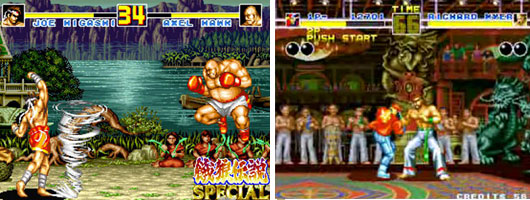
A good chunk of the Fatal Fury, Art of Fighting, and King of Fighters lineup were trained martial artists in street clothes. There were some with classical outfits sprinkled through the series, like Gato, Joe Higashi, and Kim Kaphwan. These traditional designs helped connect the audience to the well-dressed modern archetypes. If you are a budding designer, and are trying to figure out if your style works for SNK, Capcom, or other studios then practice creating fighters of common martial arts. See if you can put a karate fighter in a pseudo traditional gi. Or what that fighter would look like in a suit. How would audiences be able to tell that this person was a fighter? It’s a difficult exercise for sure. Capcom, and SNK had actually been broadcasting who their designs were targeted for in the past decade. We will explore these things in the next blog. I hope to see you back for that. If you have any thoughts on the blog please let me know in the comments section. As always if you would like to sponsor me please visit my Patreon page and consider donating each month, even as little as $1 would help make better blogs and even podcasts!
follow the Street Writer on Patreon!