Monday, July 4, 2022

Some details in the Street Fighter 6 trailer I wanted to talk about

Thank you to everyone that visited the blog as I went through all of the formerly announced, and leaked characters in Street Fighter 6. I wanted to take a moment, and talk a little bit about some of the other things that were shown in the first trailer. You may or may not know that I am a huge fan of the Final Fight series. I like to remind new fans of the fighting game genre that Final Fight was released after Street Fighter. It was originally called Street Fighter ’89. The success of Double Dragon made Capcom want to make their own version of a brawler. The team wanted to replace Ken, and Ryu with Cody, and Guy respectively. Plus a big wrestler named Mike Haggar to round out the lineup. Arcade owners liked the concept, but they also wanted to see a formal one-vs-one fighting game as well. So the studio relabeled it Final Fight, and started work on an actual Street Fighter II which was released in 1991. Over several games, manga, cartoons, and comics Capcom officially connected the characters, and events featured in Street Fighter, Final Fight, Muscle Bomber / Slam Masters, and Rival Schools games. Having the studio circle back to Metro City in the latest version of a Street Fighter was almost a love letter for long time fans.
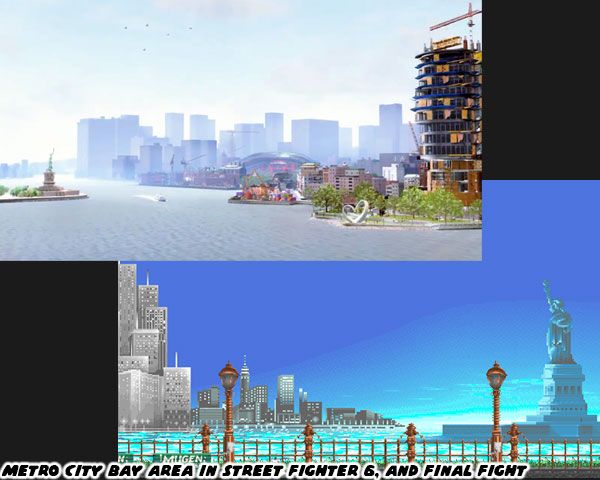
In the Luke preview I talked a little bit about Metro City, and how the SF6 trailer began in the Metro City gym. That was the same place where Final Fight began more than 30 years ago. If you had never played the game then let me set the scene. Mike Haggar was a former wrestler, and street fighting world champion. He was born, and raised in Metro City. He saw that it had become corrupt, and run down so he decided to clean it up. He was elected mayor, and no sooner was he settling into his new role than the Mad Gear gang tried to extort him. They kidnapped his daughter Jessica, and told him to stop trying to turn the city around. Instead of negotiating with the thugs he recruited Jessica’s boyfriend Cody, and his friend Guy to literally take the fight to the gang.
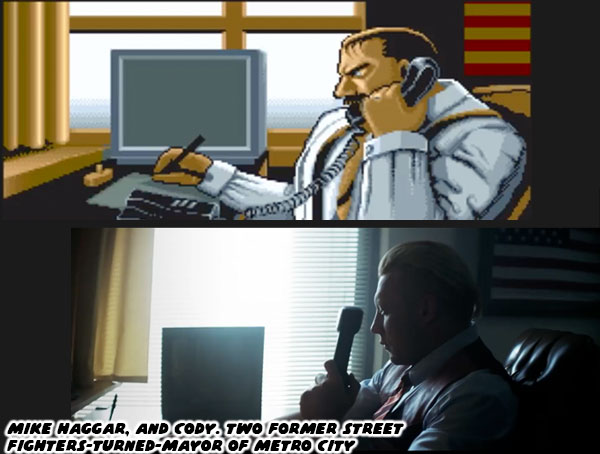
The trio fought through every borough on the trail of Jessica, and the ringleader of the gang. They discovered that they couldn’t even trust the cops of Metro City, as one of their biggest officers Edi E. was also a Mad Gear boss. This didn’t deter the heroes as they fought all sorts of memorable characters. The search for Jessica lead them all the way to the top of a skyscraper where they discovered that a kingpin named Belger was pulling the strings. The three defeated the gang, but Cody ended up throwing Belger out of his penthouse office. He would be arrested for the murder of the villain, and sadly there was nothing that Haggar could do to keep him out of jail. Cody spent a few years behind bars. Upon his release he was still a dangerous fighter, but decided to pick up where Mike had left off. He ran for, and became the new mayor of Metro City.
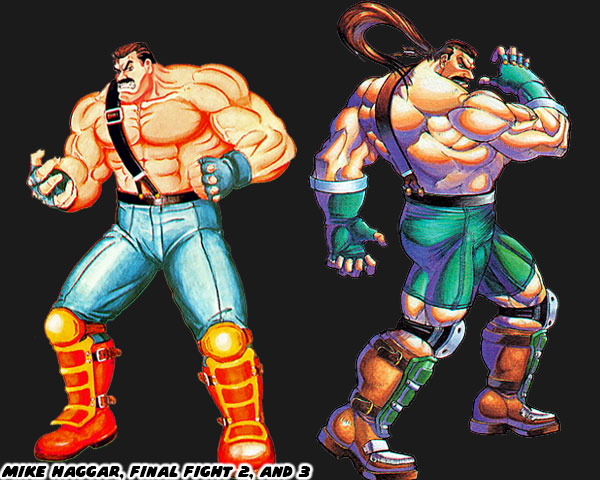
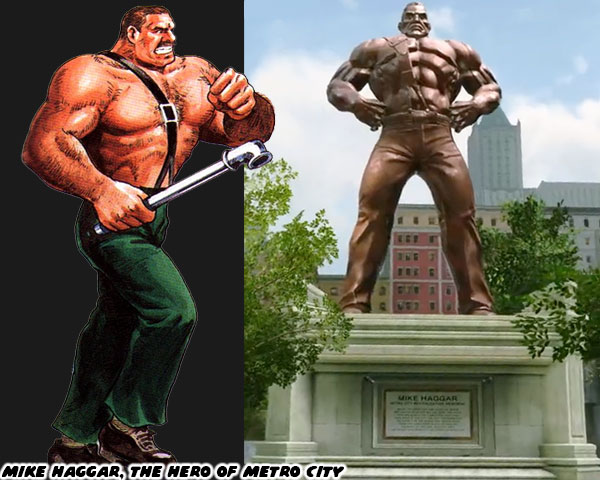
Haggar ended up fighting for the people a few more times. The Mad Gear gang had unfinished business with Mike, they kidnapped Guy’s finance’, and her father. So Haggar was recruited by Maki, a ninja that trained alongside Guy, and Carlos, a South American swordsman to take the battle around the world in Final Fight 2. By the time he returned to Metro City a new gang had set up operations. This time they were run by an evil general named Black. In Final Fight 3 Haggar recruited Guy, a good cop named Lucia, and a mysterious newcomer named Dean to take out the Skull Cross gang. We can assume after all of this traveling, and fighting it was time for the Mayor to retire. The Street Fighter 6 debut trailer featured a shot of multiple areas around Metro City. In on particular scene we saw a statue dedicated to Haggar. A lot of fans online, myself included, were worried that the statue was erected following the death of the former mayor. I’m hoping that the statue was built because he managed to actually turn the city around. He fought corruption, and crime with his bare hands. He made the people feel safe, turned the economy around, and made Metro City a beacon of hope. Perhaps the big reveal in the game was that Haggar was now running for Governor, Senator, or a higher office.
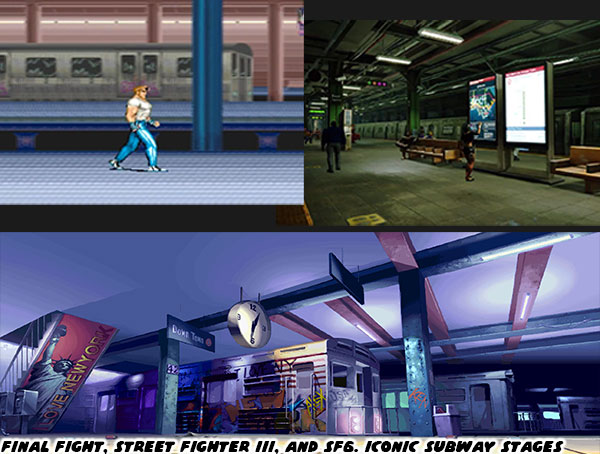
The SF6 developers were shouting out a lot of other Metro City locations in the debut trailer. I have a feeling that a number of them would be used as background stages in the SF6 tournament. For example we saw a subway. The subway took our heroes through the boroughs in Final Fight. But it was also used in one of the memorable stages in Street Fighter III. I’m wondering if players will be able to visit every corner of the city, and whether or not they will have to fight Mad Gear members along the way.
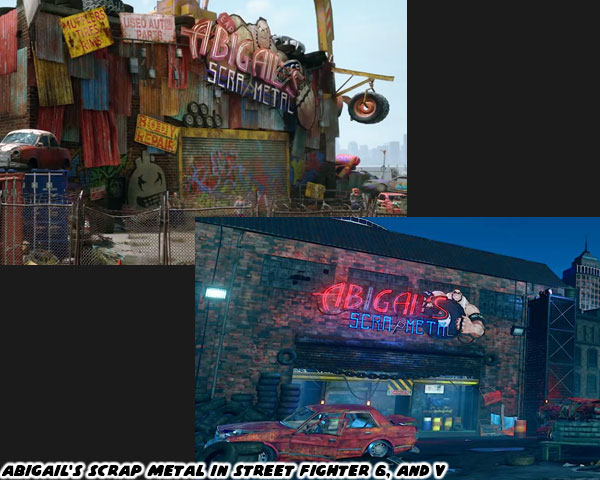
We saw China Town, basketball courts, and downtown Metro City as well in the footage. The studio made sure to give everybody a glimpse of Abigail’s Scrap Metal shop. Abigail was the biggest character in the Street Fighter universe. This was saying something because every member of the Andore family was well over seven feet in height. Abigail was eight-feet tall, and had a bad temper. He was one of the Mad Gear bosses, who happened to run his own small business on the side. I had talked about Hugo, and Abigail in the history of giant fighters.
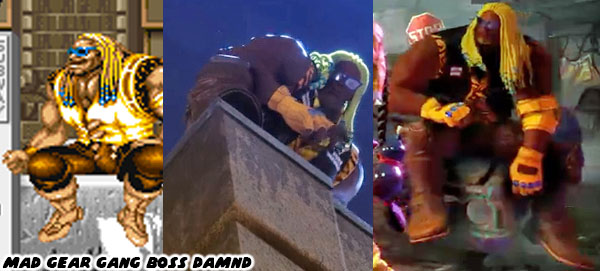
Even though Haggar had cut off the head of the snake, by defeating Belger, and Retu. The individual soldiers, and generals of the gang were still very much alive, and active. Even if we did not get Abigail as a playable character, it was a great nod to the history of the franchise to give him a shout-out. He was not the only general we saw in the trailer. Damnd / Thrasher was a low-level general in the organization, and the person that called Haggar in the very first Final Fight. He was the first general we had to fight in the game. He was a good brawler, but he tended to hang back, and whistle for reinforcements to do most of the fighting for him. Seeing him in the trailer now in the role as the President of the Mad Gear Gang Motorcycle Club was a nice touch. I had talked about the origins of the Mad Gear Gang, and its members earlier on the blog. Damnd seemed to be in charge of faceless villains taking on Jamie in the trailer. Well to be fair, they were not faceless, these people instead wore boxes over their heads.
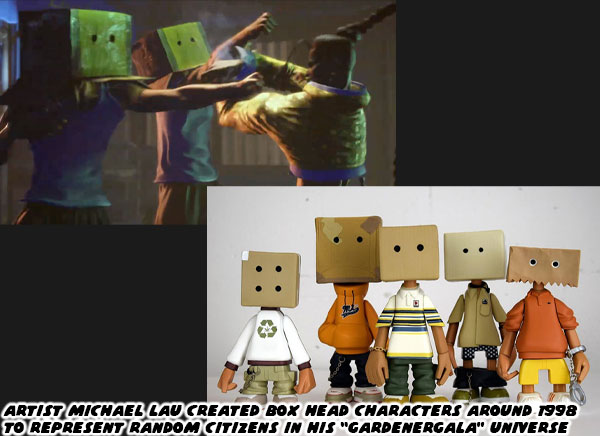
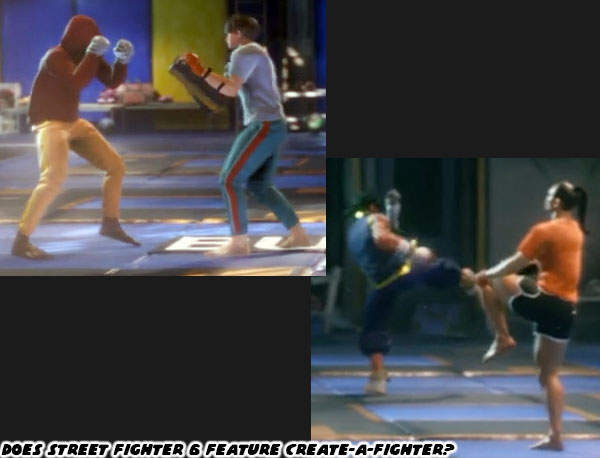
The idea of generic people being represented with box heads had actually been done by Hong Kong artist Michael Lau. He had a comic strip in East Touch magazine featuring the “gardeners” they were kids from the street. He eventually made 12-inch figures out of his original characters, and helped spark the urban vinyl movement. He had gallery showings in Japan, and the US with these figures. They went on to influence character design in animation, gaming, and toys. The majority of the gardeners had distinct looks, then there were a handful of generic pedestrians that had boxes for heads. This was over 20 years ago, and I have no doubt had a hand in influencing the generic Mad Gear fighters in the trailer. Speaking of faceless characters, I’m wondering if Street Fighter 6 features a create-a-fighter option.
The trailer has a nameless, faceless fighter walking the streets of Metro City. It was inferred that SF6 would be the first open-world Street Fighter game. Yet instead of walking around as Ken, or Ryu we actually see a guy in a hoodie wandering around. The trailer made sure to hide the face, and identity of this person, but I could see from the corners of his face, finders, and ankles that this was a Black person. I’m pretty sure this is not supposed to be Black Cobra, but instead a generic fighter.
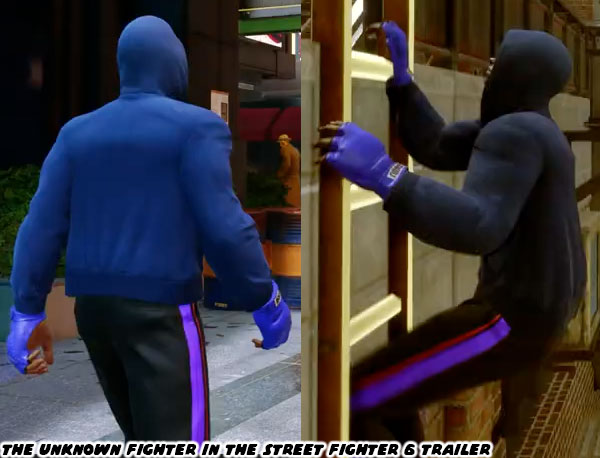
The thing about this generic person is that we see a number of them in the opening scenes at the Metro City gym. While Luke is punching a heavy bag there are a number of male, and female fighters sparring, stretching, and exercising as well. The thing about all of these background characters is that they are almost all the same build. They are the same height, and weight. They do have different skin colors, heads, and are barefoot or with shoes. I don’t think these models were created only to be background people. The gloves, striped pants, and sneakers of the person we follow around on the trailer were also used on the gym members. I have a feeling that players will be able to customize their walk around character as well.
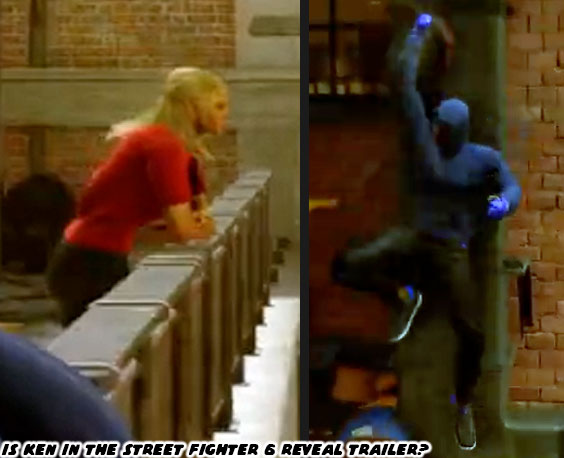
The other thing that I thing that I think was leaked, or suggested in the trailer was that this character can learn things from the various named Street Fighters they came across. Or they pick up new moves by completing side missions. It looked like the character climbed a ladder in China Town, and came across Ken Masters. Then in the next frame we see the character performing a Dragon Punch. Maybe the person in the background was some random long haired blonde, and not Ken, but that’s what I made out. Did you see anything different about this? Street Fighter 6 wouldn't be the first time in the series that you could have a character learn moves. The Cycloid cyborgs in Street Fighter EX had moves from every character in the game. The character ACE in SF EX 3 could copy moves as well. The Cyborg in the Street Fighter II Movie game could also steal moves. Twelve in Street Fighter III could copy an entire character. Of course the boss character Seth from Street Fighter IV could also copy moves from the cast. 
There were countless other call outs to Final Fight, and Street Fighter games of the past. The back alleys, China Town, downtown, and playgrounds all looked very familiar. Other web sites pointed out that stage backgrounds in SF III were recreated in parts of Metro City. Many people inferred that some of the levels took place in New York City, but Capcom might have been retconning it to take place in Metro City instead. There were plenty of shop signs, and billboards that made direct reference to characters like Hakan, Hugo, Gill, and Marisa. Did you notice any other details that piqued your interest? I’d like to hear about it in the comments section. As always if you would like to sponsor me please visit my Patreon page and consider donating each month, even as little as $1 would help make better blogs and even podcasts!
follow the Street Writer on Patreon!

Friday, July 1, 2022

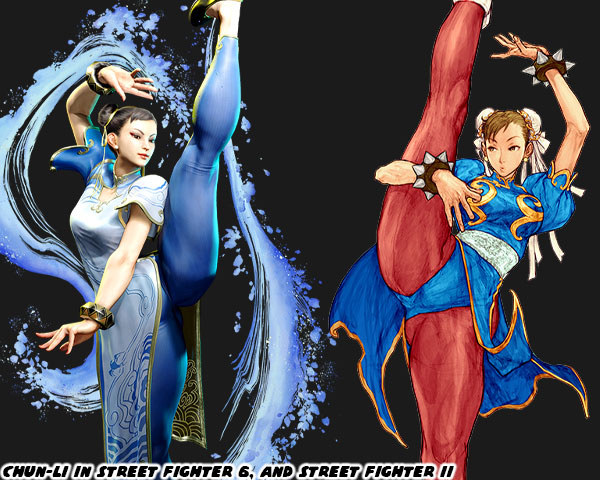
Chun-Li's new look in Street Fighter 6. Is it a step backwards?

Today we are going to look at the last character I had yet to talk about for Street Fighter 6. Chun-Li was an icon. I had her listed #2 on my list of the 30 most important Street Fighter characters of the past 30 years. When she appeared in the SF6 debut trailer audiences all over the world celebrated. Fan art started pouring in online featuring her in the new costume. The reaction so far had been overwhelmingly supportive. I’m sure this pleased SF6 Designer Yusuke Hashimoto. I was happy to see her return, along with the rest of the original World Warriors. What I didn’t care for frankly was her new outfit. I think it's actually regressive, and betrays the spirit, and design that made Chun-Li unique.

Let’s take a deep dive into the origins of Chun-Li. The nation of China and the Chinese martial arts were perfect for video games. They were celebrated for their visual splendor, and fancy moves. Especially in Hong Kong cinema. Fan and Star were featured opponents in Yie Ar Kung-Fu, released by Konami in 1984. They were the first female martial arts fighters in a game. They predated Chun-Li by six years. In fact before Capcom even created Chun-Li they had designed a trio of female martial artists that could hold their own against the titular character Strider Hiryu in the arcade game Strider. The Kuniang Martial Arts Team aka The Tong Pooh Three Sisters appeared in 1989. Chun-Li would not appear until 1991. The sisters were fabled bounty hunters, selling their deadly talents to the highest bidder. Their pseudo-traditional Chinese martial arts uniforms beguiled their amazing powers. The sisters could cut tanks in half with their powerful kicks. They were the perfect challenge to the futuristic ninja Hiryu.

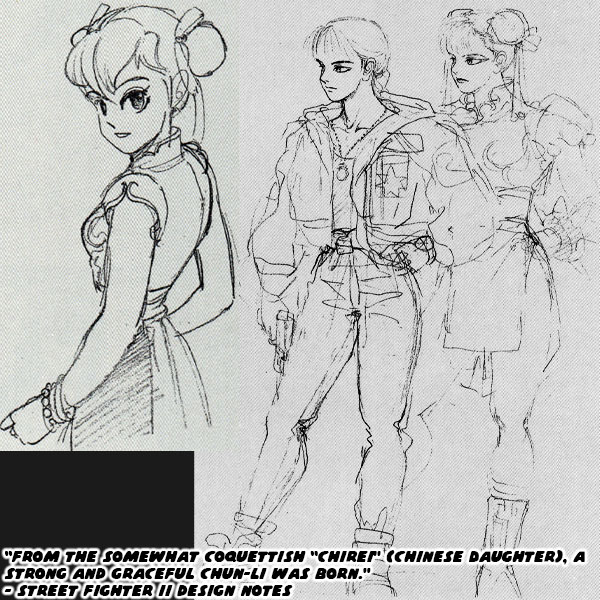
In some of the earliest design notes Chun-Li was essentially credited as another one of the sisters. Her method of fighting was originally listed as Northern Praying Mantis. Not only that, but her special attack was based on whipping her hair. Capcom was one of my favorite companies growing up. I loved their games, yet looking back I could see that some cultural stereotypes were also perpetuated by the studio. Chinese characters in fighting games were often presented in some sort of pre-revolutionary martial arts costume. It didn't matter if the characters were appearing in a current timeline. They were often dressed in the costume that would have been appropriate in the late 19th century rather than in casual modern clothing. For example the Three Sisters were presented in outfits that made more sense in classical Chinese Opera rather than in the science fiction future that Strider was set in. Even Chun-Li was presented in a pseudo-traditional costume in Street Fighter II. Within the context of the game however her costume made sense. It took a lot of subtle changes to get Chun-Li just right. Let’s talk about her evolution.

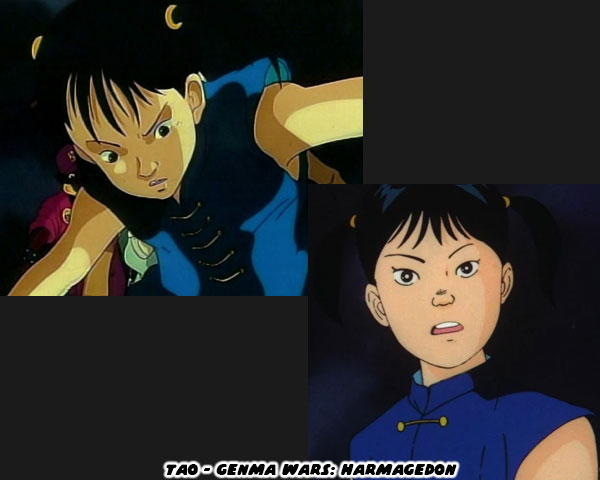
Chun-Li was going to be a very generic female kung-fu practitioner. According to the “father” of Chun-Li; Akira “Akiman” Yasuda said she was inspired by Tao from the anime Genma Wars: Harmagedon (1983). Japan had a fondness for setting stories in China, or borrowing cultural touchstones from China in the '80s. This included putting characters in traditional dresses, even if they didn’t reflect contemporary Chinese fashion. Lynn Minmay was a half-Chinese heroine in Super Dimension Fortress Macross (1982), Son Goku in Dragon Ball (1984) was a retelling of Journey to the West, then there was Pai from 3x3 Eyes (1987), and Ranma from Ranma ½ (1987) to name a few. Chun-Li was going to be as middle-of-the-road Chinese character as you could get. Even in the early design notes from Capcom she was labeled “Chirei” which translated to Chinese Daughter. Something amazing happened though. The studio kept going back and revising the cast again, and again. They poured more people into the development of Street Fighter than had ever been assembled on any other Capcom game. The end result was nothing short of amazing.

It was the insistence of all the senior developers in making the lineup better than any of their concept art. Producer Yoshiki Okamoto, and Designers Akira Nishitani, and Akira Yasuda pushed the staff to create a lineup that would not only define a franchise, but set the standard for the genre as well. With Chun-Li they really dug into the heart of the character. They knew that it would be great to have a representative of the different fighting arts as playable figures. In the earliest drafts they even had a military contractor, and capoeira master set for SFII. Yet they knew that audiences wanted more than a plain karate guy, or kung-fu girl in the roster. These characters needed to have more dimension, more personality, and more details than were provided in Yie Ar Kung-Fu. Chun-Li came to life when the studio realized that she was actually an undercover cop in a fighting tournament.

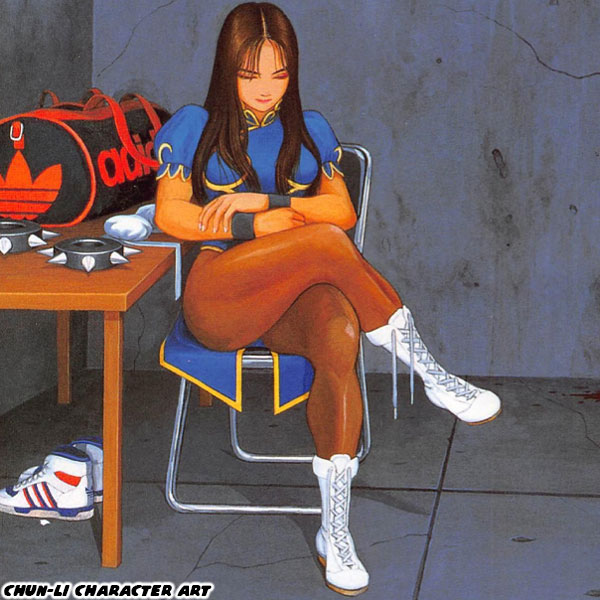
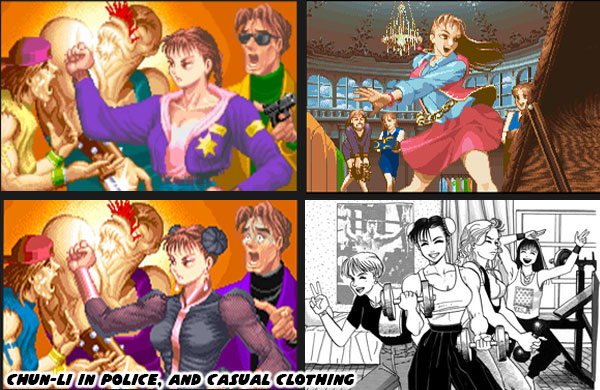
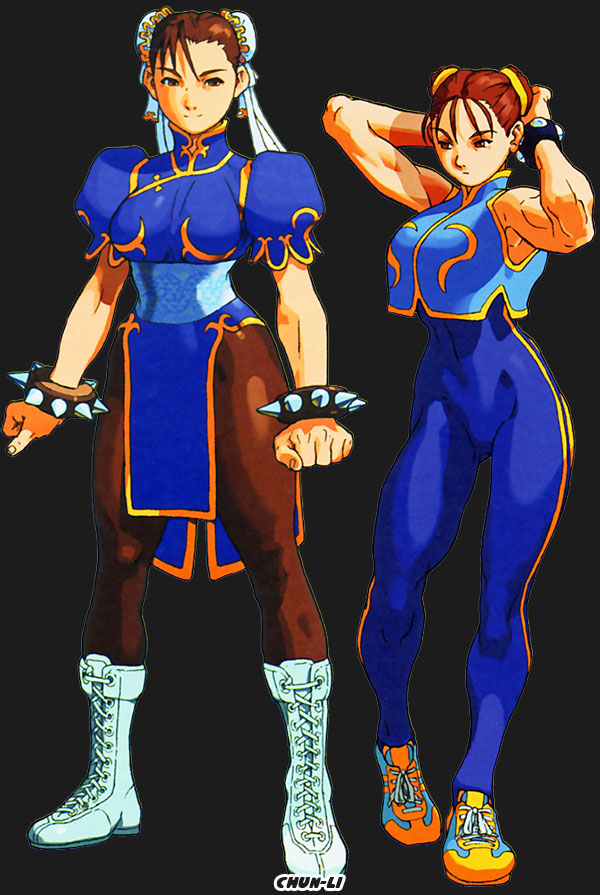
Her costume was literally a disguise, it was something to hide her true identity. Although the cut, and color of the outfit seemed authentic, there was nothing remotely classical about it. The short dress with open sides, large puffy shoulders, dark tights, wrestling boots, and weighted spiked bracelets had never been worn by an actual practitioner of any Chinese martial art. The genius of Akiman was that he assembled all the elements in such a way that on first glance they looked like authentic kung-fu garb, that was until you looked closer. Akiman, and SHOEI would paint official character art to remind us what Chun-Li was like in between fights. They presented her with her hair down, sometimes without makeup. She was an actual person. These were some of the most important illustrations that defined the character. We could see that she had an Adidas sports bag where she kept all her gear. She would rather be wearing sneakers when traveling instead of slippers or boots.

Audiences were reminded again, and again in the ending screens that she was a modern woman. She was not a stereotypical Chinese girl from manga, or anime. Chun-Li was often presented either in her police uniform, or in casual urban clothing. She didn’t stay in costume once the fighting was done. Sometimes she was seen in workout gear, or while going out on a date with her friends. This didn't really change until 1999, when in Street Fighter 3: Third Strike the company turned her into a sort of martial arts instructor that stayed in costume. Prior to that the studio did a major revision to her in Street Fighter Zero / Alpha in 1995. They created a costume for a young Chun-Li. With it they had her in a striped bodysuit, weighted bracelet, a pseudo-traditional crop top, and sneakers. She kept the Capcom logo colors of blue, and yellow even in this outfit. It went over well with audiences as they were reminded of the striped bodysuit worn by Bruce Lee in his final film the Game of Death. The original, and young versions of the outfits were so well crafted that it would be easy to dismiss them as traditional Chinese, but were actually costumes put together for a modern woman. These were the things that Capcom had started ignoring when designing alternate costumes for her in Street Fighter V. The goal seemed to be make Chun-Li sexier, and sexier with every revision.

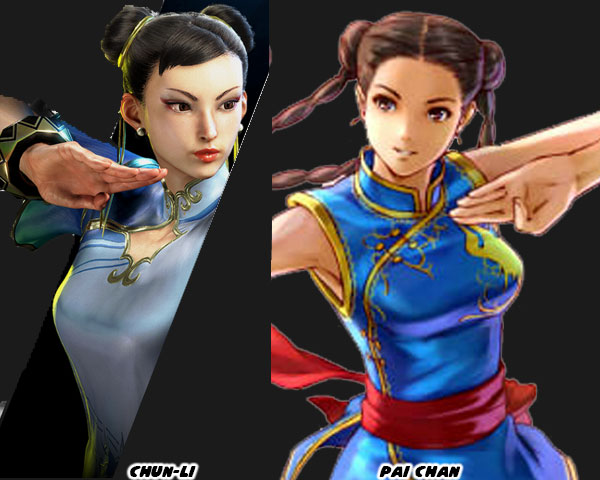
I think the SF6 developers completely missed the mark with her as well. It was as if they took that first-glance understanding of Chun-Li, and perpetuated only the Chinese stereotypes. They essentially regressed the character to Chunrei. Her costume became more formal, the dress became longer, with pants, and flats. No more wrestling boots, gone was her spiked bracelet, replaced by a more modest gold, and mahogany bangle. Her subversive design elements became more conservative. Chun-Li had inspired the creation of other female kung-fu masters in the genre. Most of the developers working on their own variation never got past the Chinese Daughter look. Sega most notably had Pai Chan, the daughter of Lau Chan in Virtua Fighter from 1993. It was no accident that her costume was blue with gold trim, or that she had her hair in braids. Pai’s costume was much more authentic, and it made sense in context. Sega was trying to make their series look, and feel more realistic than Street Fighter. The plausible fantastic was one of the things audiences enjoyed most with the design of the World Warriors. It was possible to have a seven-foot one eyed muay thai master, it was possible to have an air force pilot with a wild flat top. You might never see them, but they could be out there. With Chun-Li's new look she was easily out there because her outfit was so middle-of-the-road. 

When I look at the changes that Capcom made to Chun-Li I saw them going backwards. They were forgetting her evolution, and what the countless artists working at the studio changed during the revision process. She was never designed to be an ancient Chinese master, like Gen, or Lee. She was an Interpol officer working an undercover assignment. The world seemed to offer more for her other than fighting in the story mode. Seeing her floating in the air like Ip Man, acting like a movie hero in the SF6 trailer made me doubt the studio. I’m sure she still plays like Chun-Li, and will be a top tier character. No doubt about it. I do hope that they consider her original design, and purpose moving forward. I’ll be eager to see what DLC outfits they have planned for her. Like Ken, Ryu, and Cammy, I’m not feeling her new look. That’s my take anyway. Please let me know what you think about Chun-Li’s updated design. Will she be a character you try out on day one? Tell me about it in the comments section. As always if you would like to sponsor me please visit my Patreon page and consider donating each month, even as little as $1 would help make better blogs and even podcasts!
follow the Street Writer on Patreon!

Thursday, June 30, 2022

Ryu becoming the master in Street Fighter 6, a look at his new path

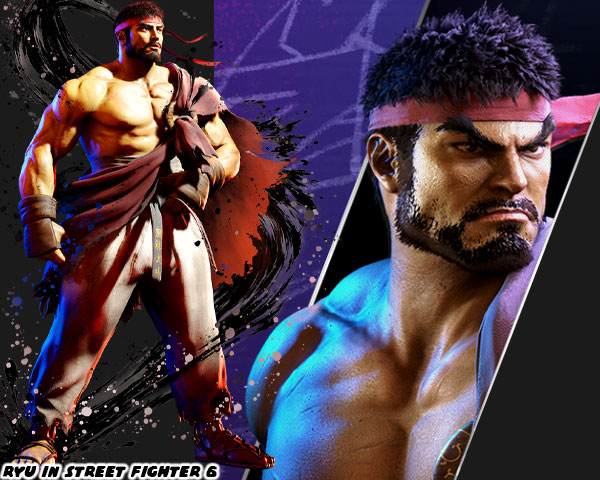
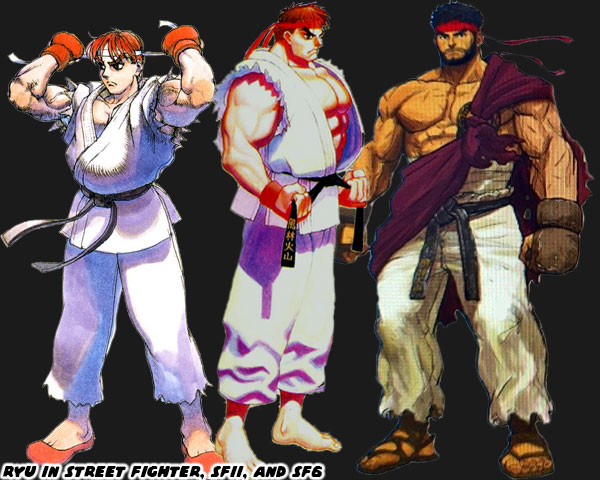
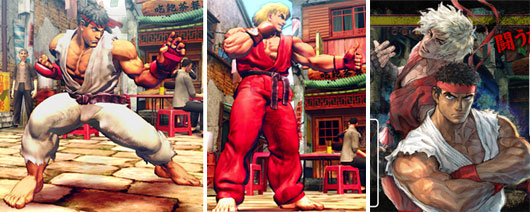
Today we are going to look at the evolution of Ryu in Street Fighter 6. In case you didn’t see him recently, he was presented a little older than any other appearance, plus he had a beard now. The biggest change for the character came with the look of his uniform. For the longest time Ryu wore a traditional, albeit torn, karate gi. Now he was without his top. In SF6 Designer Yusuke Hashimoto now had him wearing a kasaya or Buddhist robe over his shoulder. The design was very interesting. I’m not quite sure it worked in its current form, but let’s take a look at where the tradition came from.

The custom of having marital arts masters wearing classical costumes went back to the birth of the genre. Karate Champ by Data East in 1984 gave us the white, versus red uniform karate guys. A year later Yie Ar Kung Fu by Taito gave audiences multiple opponents, representing different styles. Aside from the way they fought, these characters had costumes that players would have seen in kung-fu cinema. You didn’t have to be an expert on the various styles, and their histories, as long as you had seen at least a few movies. The seeds for Street Fighter were planted then.

The martial arts spread thanks to Buddhist monks. I had documented it previously in the blogs. The monks traveled all throughout Asia, bringing with them the fighting arts. They didn’t learn to fight as a way to seek out opponents, but rather as a way to defend themselves from bandits. The Shaolin developed in China was a form of Buddhism known as Chan, or meditative Buddhism. The school fostered a Northern, and Southern version of their martial arts studies. These various forms would be influential in shaping kung-fu, and karate as well. The interesting thing was while there were many classically styled Chinese fighters throughout game history there were actually few Shaolin characters in the genre. The look was rare, but had been seen in Street Fighter.

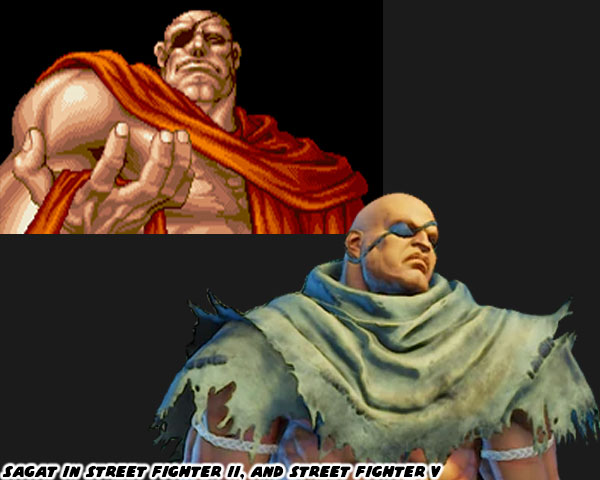
Ryu’s main rival in the original Street Fighter was actually the first in the series to be presented with a kasaya. Sagat was satisfied that he had indeed beaten the best in the world. He had achieved a level of peace with the victory that seemed transformative. He appeared in the ending of Street Fighter II with the robe while meditating on Ryu. That look made sense for Sagat. Years later the alternate costumes of Sagat in Street Fighter IV worked incredibly well. Especially the ones where he wore a tattered wrap. Part of the reason for this was because in pop culture we had seen people from Asia, and South Asia wearing the robes. In my home town of Long Beach we had a large Cambodian, and Vietnamese community, and I had grown up seeing lots of people wearing the robes. Japanese martial artists were rarely, if ever shown in the same way. Instead of the familiar orange robes we would see the elder Japanese master wearing a uniform with one bare arm.

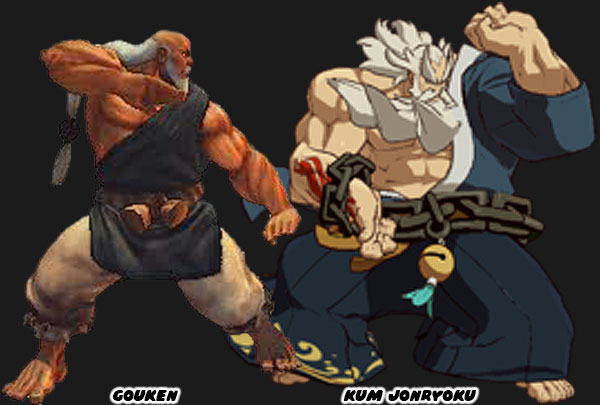
Gouken in the earliest concept art actually wore a gi like Ken, and Ryu. The only difference was that he had a rope belt, instead of a black belt. It was only in later revisions, and his playable debut in Street Fighter IV, when he was given a robe. A similar character appeared in the Guilty Gear series. Kum Jonryoku was a robot made to look like an elder master. He was created, and piloted by Kum Haehyun,a young, and talented scientist. Both fighters represented the peak of the martial arts. They had been studying a specific technique all their lives, if they didn’t invent their own style. These types of people were physically, and mentally stronger than any other person on the planet. Very rarely were they ever seen in mid-life. Gouken was seen in middle-age in Street Fighter manga, and comics books when he took on a young Ken, and Ryu as students. At that time he was not at the peak of his abilities. He was still studying under his master, the elderly Goutetsu. Prior to Ryu’s makeover in Street Fighter 6 there had been at least one young master with a similar look.

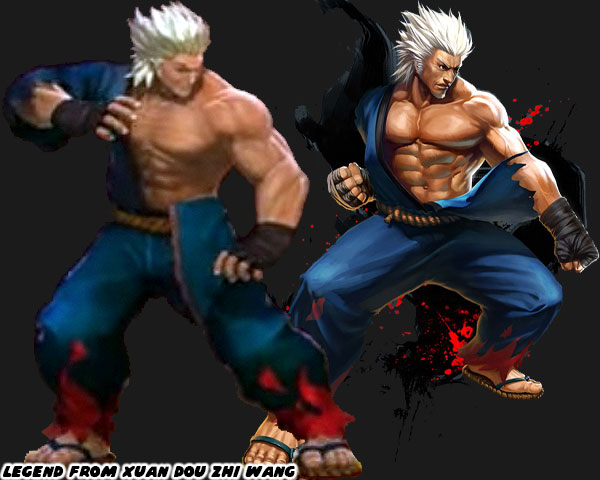
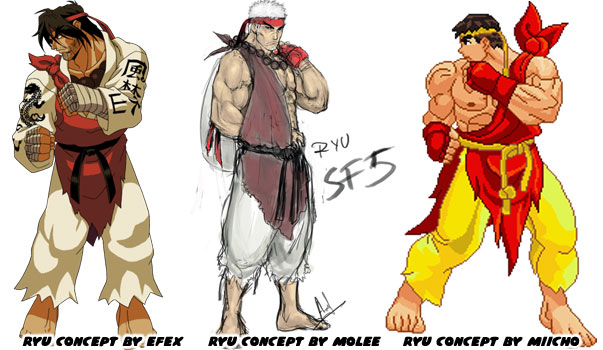
Xuan Dou Zhi Wang aka King of Combat was a Chinese-developed game first published in 2011. It had updates over the following years that patched the control, added levels, and characters. It had characters whose looks, and styles were sampled from various other fighting games. The title already had a Ken / Ryu clone named King. What they lacked was a Gouki / Akuma. That was until they updated the roster, and added a guy called Legend. This person was not much older than King, but more advanced in power, and ability. This person had white hair, no beard, but didn’t look elderly at all. The white hair might have been an aesthetic choice, or to signify that he had some sort of divine revelation. In any case there had been precedent for a young master in fighting games. Not only that, but many artists had been creating their own concept art for Ryu if the series ever did a time jump.

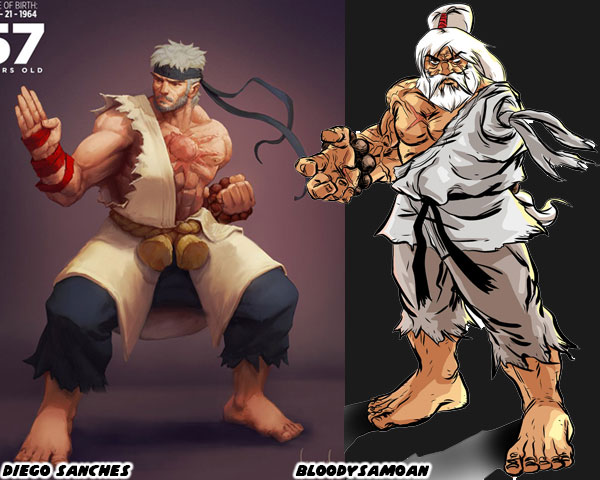
A few designers had a variation of the robe over one shoulder as a nod to Oro becoming his new master. A couple of artists pushed the idea of having the robe be made of Ken’s old gi. This idea had been circulating in the SF community for a long time. One of the older one-armed Ryu illustrations was by the artist BloodySamoan in 2010. In it he also gave Ryu one eye, his red headband now held up a ponytail, and he wore the beads of his master around his wrist. It was a unique take on the fighter for certain. In 2020 the Brazilian illustrator Diego Sanches did a series on older SF characters. He put Ryu in the colors, and costume of Gouken. He also gave him a beard, and gray hair. It also worked well.  

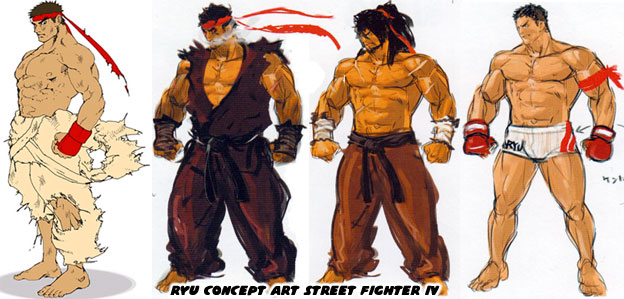
It is highly possible that the creative team working on SF6 was aware of all of the fan art that had come out pre, and post SFIV. They must have been especially aware of the tastes of Western artists as the game had historically sold very will in North, and South America. I’m almost certain that Designer Yusuke Hashimoto, and Director Takayuki Nakayama were aware of these illustrations, and it had a hand in influencing the new look of Ryu. The reason I can say this was because the official concept art for Street Fighter IV, and V coming out of Capcom did not have Ryu wearing a Buddhist robe. Instead they had him with long hair, or with a tattered gi, or in MMA gear. They even had several versions of Evil Ryu, and the stronger Kage variation. But none of Ryu as a Buddhist. Sure it could have been because SF IV, and V were set before he studied under Oro, but even then Oro was added as a DLC character as well.

Mr. Nakayama said the new look was to honor his mentor Gouken, but I’m not sold on that idea. From SFII to today it had been established in the game endings that Ryu was not interested in trophies, or accolades. He was the opposite of Ken in this regard. The only thing that pushed Ryu forward was finding the next challenge. To continue developing as fighters both Ken, and Ryu had to prove that their form of Ansatsuken was the best. Why Ryu would suddenly decide to dress up like his mentor didn’t make much sense. He was walking his own path, and not his master’s path. Visually I don’t think the look works. Wearing a brown kasaya across his torso contrasted with the solid white of his original costume. Perhaps if Ryu wore all brown it might work better, but then his colors would be too close to Ken’s.

I’m interested in seeing Ryu continue his path. I want to see what the studio has planned for him. But I’m also interested in seeing a classic uniform DLC because right now I don’t think his new look works. The costume changes for several of the returning characters aren’t as strong as their original look. That’s what I think anyhow. I’m sure Capcom will continue tweaking the look right until the games release date. They did many visual changes to previous games when they were first previewed versus when they were published. Street Fighter 6 should be no different. Maybe Ryu’s outfit would still get updated. I’d like to read your takes in the comments section. Do you like Ryu's updated look? Would you have done anything different? Tell me about it! As always if you would like to sponsor me please visit my Patreon page and consider donating each month, even as little as $1 would help make better blogs and even podcasts!
follow the Street Writer on Patreon!

Wednesday, June 29, 2022

Meet Kimberly, is she the Urban ninja of Street Fighter 6?

Hello friends, today we are going to look at another new character in Street Fighter 6. Kimberly may be the most anticipated of the new members in the lineup. She was first teased at the end of the Street Fighter 6 announce trailer. Her picture came up in the background of the Battle Arena. Leading many to believe she would be the next character to get a full reveal. Her look is actually layered with tons of elements. Let’s dig in to the colors, costume, and origins of Kimberly. First off the team working on SF6 is going full Hip Hop in the music, art, and aesthetic of the game. We saw that with the graffiti version of the Capcom logo in the first trailer, but it went much deeper. SF6 Producer Shuhei Matsumoto explained the Hip Hop connection to the series to Rolling Stone magazine. I had also called out the multiple Hip Hop elements applied to Jamie. Kimberly is no exception to the rule.

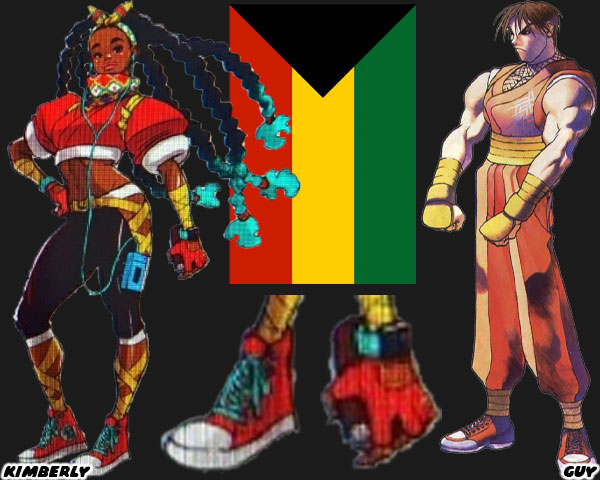
As a Black character Kimberly had a number of “urban” elements put on her. It wasn't the first time. In 1989 Guy broke the mold by being a modern ninja, with just the use of Nike Air Force 1's on his costume. With Kimberly there were a lot more modern details. She was sporting long braids with turquoise colored tips. She was wearing sneakers, a smart watch, listening to her Walkman, and holding a spray can. She had ribbon on her forearms, leggings, and wrapped around her ankles. I believe it is inferred that she is also a trained dancer. Capcom seemed to go all-in on her Black roots. Her color scheme seemed busy, but was very pro-Black, especially if she had been planned in the ‘90s. The colors of her outfit were very intentional. The Pan-African movement started over a century ago as a way to create a brotherhood among Black peoples in every nation. The colors of their flag were black, red, yellow, and green. Black represents the peoples of Africa, Red represents African bloodshed during the years of European occupation, Yellow represents the African riches plundered under occupation, and Green represents the fertility of the land. We get these details all over Kimberly’s costume. If I didn’t know better I’d say the studio was intentionally creating a femme version of Miles Morales.

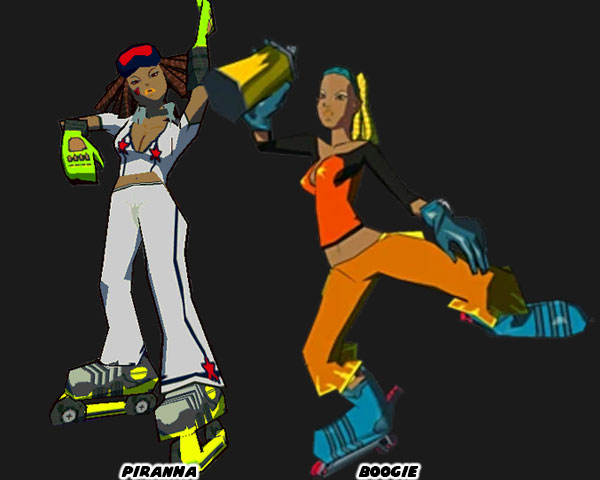
Prior to Kimberly there were two characters created in Japan that were Black, and very Hip Hop in gaming. Piranha from Jet Set Radio (2000), and Boogie from Jet Set Radio Future (2002). Technically I think both were meant to be the same character, but I digress. Smilebit was a Sega developer that created what I would argue to be the greatest Hip Hop games ever published. Both Jet Set games featured all four elements of Hip Hop. The characters could breakdance, and spray painting graffiti was part of the game play. Lastly the music, and plot was pushed forward by the emcee, and DJ Professor K. The kids of Tokyo-To were fighting for freedom of expression under an oppressive police state, and their corporate overlords. Every group of inline skating “Rudies” reflected different gangs in the series. The heroic GG’s were made up of positive figures of all colors, and Nationalities. The Jet Set series had a profound influence on art, gaming, music, and design for several generations. I wouldn’t put it above the Capcom developers to have grown up on this game. I’m not the only one that had this opinion. Kotaku said Ryu’s new theme belonged in Jet Set Radio.

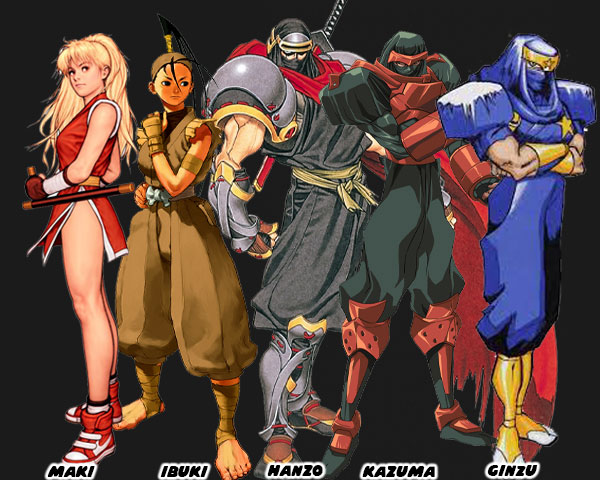
The color, and cut of Kimberly’s top was a familiar red, and white. We had seen the sneakers, and martial arts outfit combination originally placed on Guy from 1989’s Final Fight. I had Guy as #11 on my 30 most important Street Fighter characters. As you may know Guy was a Bushinryu Ninja, that was originally created to replace Ryu as the star of the franchise. With Cody replacing Ken. Street Fighter 6 was set to take place mostly in Metro City, where Final Fight took place. Anyhow the early take was that Kimberly was the first Black female ninja in the series. There were many ninjas in the Street Fighter universe. Geki was a NPC from the original SF. Then there was Maki, another sneaker-wearing member of Guy’s ninja clan in Final Fight 2. Final Fight 2 was a Super Nintendo exclusive. The first playable ninja in a numbered SF game was Ibuki, she debuted in SFIII. If Kimberly is a ninja as well then Capcom has done a good job of masking her costume in what appears to be plain clothing. The oversized shoulder pads was a classic ninja costume choice that had appeared in manga, anime, and other games. For example I talked about Kazuma, and Ginzu on my Galaxy Fight blog. Ninjas in pop culture also often wore face coverings, or sashes. Kimberly had a headwrap, and scarf with the Pan-African colors. I’m curious to see what moves, attacks, and specials she will be given. There is still a long way to go until the game was released, but I was eagerly watching each development. What about you? What do you think of Kimberly, or are you waiting to see how the other characters turn out? Please let me know in the comments section. As always if you would like to sponsor me please visit my Patreon page and consider donating each month, even as little as $1 would help make better blogs and even podcasts!
follow the Street Writer on Patreon!

Tuesday, June 28, 2022

Let's talk about A.K.I., the Dragon Lady of Street Fighter 6

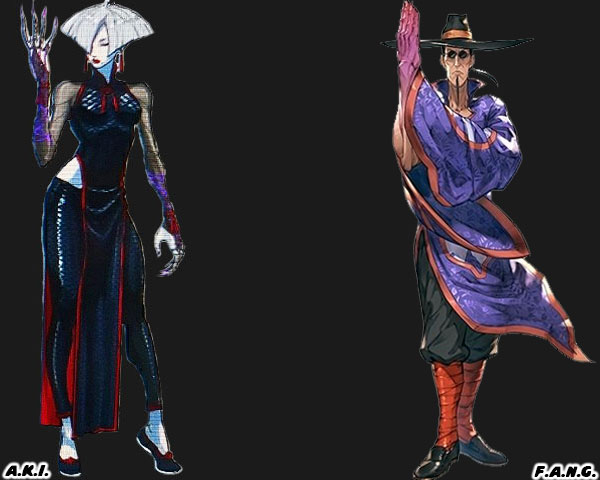
Today we are going to look at a new character slated for Street Fighter 6. A.K.I. is listed from China, and I mentioned previously on the Symmetry blog that she seems to be a new rival to Chun-Li. Maybe she is a leader of a Triad organization, maybe she's an assassin, or maybe she's just a fashion model mixed up in a fighting tournament. In my previous post I summed up their look this way. Both A.K.I, and Chun-Li hail from China, but they seem to be set as polar opposites. Chun-Li represents a classical fighting tradition. Her kicks are legendary in the series, as is her sense of duty to the police. A.K.I. by contrast looks like a villain right out of a comic book, or possibly action movie. She might be being set up as the ultimate rival. Her porcelain-white skin is eerie, making her appear almost supernatural. She wears flats like Chun-Li, but the similarities end there. Her costume is black, a sinister shade, and form fitting. She has pant leggings, and tulle-sleeves over her pale arms. She lacks the muscle definition of Chun-Li, but has claw-like jewelry. She's signaling that she is not a kicker, but a slasher. Just like Han, the villain from Bruce Lee's Enter the Dragon. I almost wonder if her claws have poison, similar to the nails of another Street Fighter villain.

When I look at A.K.I. I get the same feeling that I have from other Street Fighter 6 characters. Namely that she is an attempt to improve on an idea that was used in Street Fighter V. I think the moves of Jamie, and rivalry to Luke were originally going to apply to King Cobra. I also think that JP, was an attempt to redo the character of G. A.K.I. appears to be designed to replace the Shadowlaw general F.A.N.G. I know that I am not the only person in the fighting game community that has these same thoughts. Other people think that Manon is an attempt to redo the character of Abel. I’ve said that no good idea really dies, but perhaps some tropes need to be retired. I’m not sure what the abbreviation A.K.I. stands for, but in Japanese the name Aki can mean bright, brilliant, radiance. Aki itself is not a Chinese name. There were a lot of design elements behind F.A.N.G., but the character seemed like a giant troll. He was silly, goofy, and just plain stupid in the lineup. I think he reflected Yoshinori Ono’s sense of humor perfectly. Along with Rufus, and Hakan, these were gag characters that really didn’t belong in the series. The other reason the character didn’t work was because part of his design was based on the evil Chinese mastermind trope. When I look at A.K.I. there are hints of stereotypical elements to her look as well.

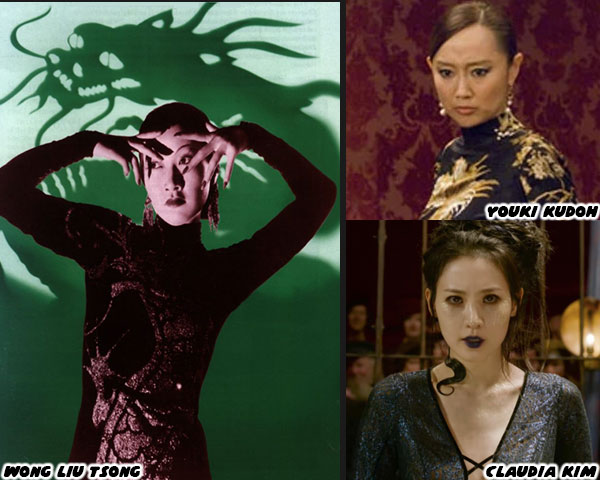
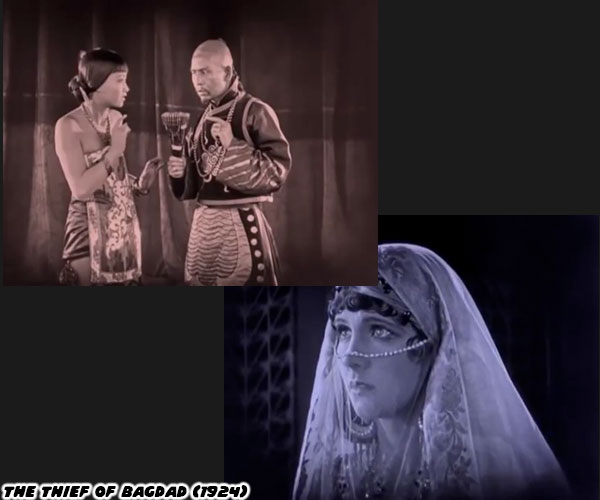
In a nutshell A.K.I. seems to be cut out of the Dragon Lady trope. There were several heavy-handed ethnic stereotypes created in the earliest days of Hollywood. One of the oldest was the dangerous “exotic” femme fatale, better known as the Dragon Lady. Wong Liu Tsong aka Anna May Wong was a gorgeous silent film star that fought for better roles all her life. She was a villain in the 1924 film the Thief of Baghdad, but went on to push for less stereotypical portrayals. The trend continued for decades. When they weren’t presented as dangerous assassins, like Rush Hour 3’s Jasmine played by Youki Kudoh, they were literally written as snakes. This was the case in Fantastic Beasts 2 Nagini played by Claudia Kim. Her character name was based on the Naga, which was a divine race of snake-human hybrids from South Asian mythology. Claudia was a Korean actress, but representing creatures from a completely different culture. The lack of ethnic understanding was something that the Harry Potter author JK Rowling had been criticized for in the past. Remember that she named the only Asian character in the Harry Potter series “Cho Chang”? The other characters Parvati Patil, and Padma Patil were South Asian.

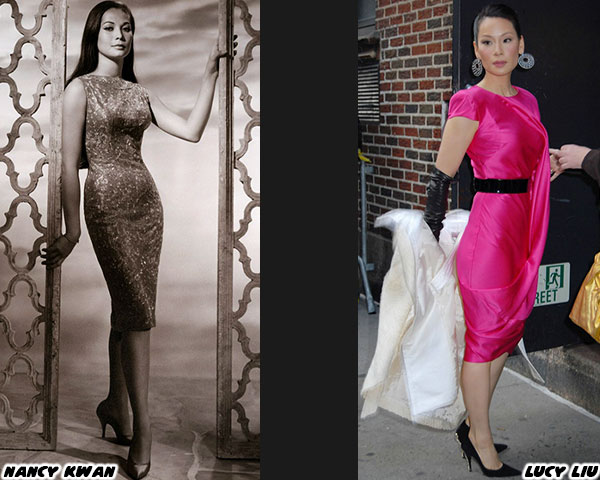
The Dragon Lady trope had multiple angles. These women could use their charm to spy, or seduce the heroes. They didn’t always have to be expert martial artists. In almost every regard an Asian female in a Hollywood movie was a fetish object. Anna May pushed for better roles, and many years later Nancy Kwan did the same for actresses in the ‘60s. Nancy’s break-out role was in the film The World of Suzie Wong, based on a novel of the same name. Instantly she became a sex object. Her dress in the film, a traditional cheongsam started being called the “Suzie Wong dress.” I’m almost certain that a bit of Chun-Li’s design, and international appeal comes from the seeds planted by Nancy Kwan. But as all things entertainment go, there was always a cycle. Decades after Nancy there was Lucy Liu, who was often cast as a cold-hearted Dragon Lady in film, and television. Lucy also pushed for better roles, and representation, but Hollywood was slow to change.

With A.K.I. I am reminded that the video game industry can also be slow to change. When she makes her debut in Street Fighter 6 it will be almost 100 years since Anna May Wong first appeared on screen. Maybe A.K.I. can rise above the Dragon Lady trope. She might actually be the surprise star of the game. Or she might be and ugly over-the-top character like F.A.N.G. Only time will tell. What do you think of this character? Are you eager to see a new rival to Chun-Li in the game? Someone that represents the Chinese underground? Or perhaps is a double agent in disguise? I want to find out more, that’s for certain. Let me know your thoughts in the comments section. As always if you would like to sponsor me please visit my Patreon page and consider donating each month, even as little as $1 would help make better blogs and even podcasts!
follow the Street Writer on Patreon!

Monday, June 27, 2022

The greatest fighting game boss returns to Street Fighter 6, a look at Gouki

Gouki / Akuma is slated to return in Street Fighter 6. Of the countless fighting games that have come out over the past 40+ years there is one boss character that I consider the greatest of all time. I’m certain that many would agree that Gouki is the bar by which all fighting game bosses are measured. There have been many great boss characters throughout history. Revenge against Geese Howard drove the plot in the Fatal Fury series. Then there was the villainous Heihachi Mishima, and his attempts to kill his own son in the Tekken tournament. Plus Bilstein set the galaxy on fire in Star Gladiator, and his ghost came back to continue his path of destruction in Plasma Sword. Despite all those great titles Gouki was still head, and shoulders above the competition.

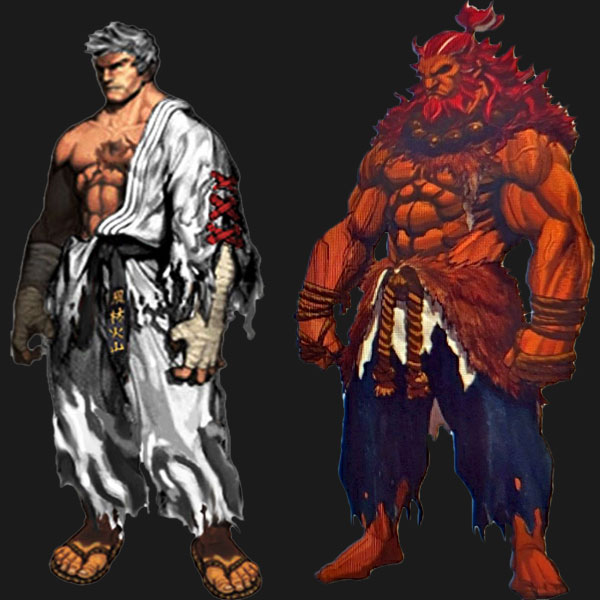
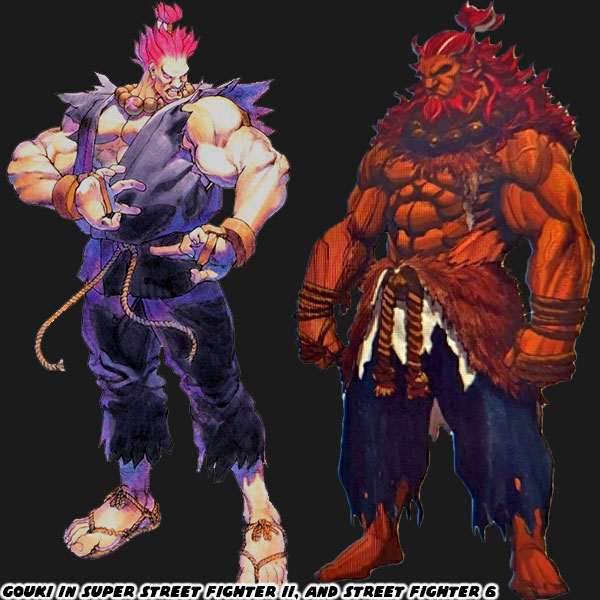
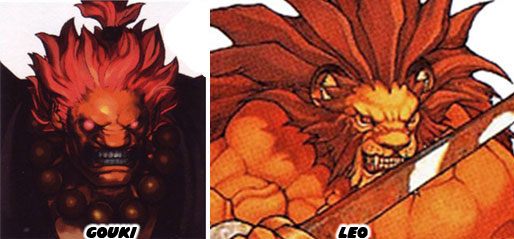
I’ve written a lot about the origins of this character, and his impact in the series. I considered Gouki the third most important character in the franchise. If you are new to the Street Fighter franchise Gouki is a master of Ansatsuken a fictional fighting art known as “Murder Fist.” He killed his brother Gouken, and their master Goutetsu to claim the title as the best in the world. Ken, and Ryu, the stars of the game, were trained by Gouken. So you can guess that his appearance helped motivate the lead characters. Gouki’s look was based on the mythological Nio, the guardians of heaven, and hell. Their statues can be seen at entrances to Buddhist temples. Not only that but he was created using the features of a lion. The flat nose, the sharp teeth, and red clay skin was all done to make him look like a supernatural being, while still being a plausible real person.

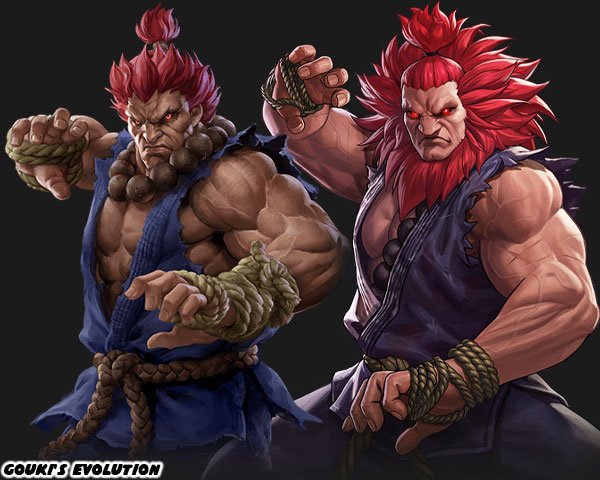
This animal look was expanded in Street Fighter V. The studio went ahead and grew out his hair, and gave him a beard in order to make it look like a full fledged lion’s mane. He was still wearing a rope belt, rather than a traditional black belt. His hands were wrapped in cord, rather than punching gloves. Plus he wore the beads of his master around his neck. Every design element placed on the character meant something, including the type of knot used on the belt. These were all very important details whether the audience knew it or not. For Street Fighter 6 the designers at Capcom decided to remove his top, and give him a cape of animal fur instead. I can almost imagine him training in the mountains of Japan, surviving in the harshest of conditions with this new getup. He looks less like a spiritual being, and more like a caveman now. Not that this was necessarily a bad thing. He is still has a physically imposing presence, and looks like he could break any returning character in half.

The latest version of Gouki looks amazing, but diffuses all of the design elements that made him iconic in the first place. If the newest version of Gouki were the one that first appeared in Super Street Fighter II Turbo, then I don’t think his impact would have been as big as it originally was. Gouki’s black gi was the opposite of Ryu’s white gi. His hair was red, and fiery. He wore a rope belt, and oversized prayer beads. This was a karate master that was as close to demon as we could get. Once the character was established the studio could adjust his appearance. Previously it was simple things, like streaks of white hair in Street Fighter III. Then it became a beard, and longer hair. Now it’s the mane, and streaks of white hair. I think by moving away from the karate uniform it breaks the best elements of his original design. Not to mention that the animal fur was almost the same shade as his skin. Thus muddying his primary colors. I’m not completely on board with the new design team at Capcom steering all the original World Warriors away from their original costume designs, and colors. Some appear better, like Zangief, Dhalsim, and Blanka. But changes to Ken, and Gouki seem to diffuse the impact that they used to have. That’s what I think anyhow, what are your thoughts on the newest look of Gouki? Do you care how the characters appear at all? Or are you more concerned with the game play? Let me know in the comments section please. If you would like to sponsor me please visit my Patreon page and consider donating each month, even as little as $1 would help make better blogs and even podcasts!
follow the Street Writer on Patreon!

Saturday, June 25, 2022

Cammy gets an entirely new look for Street Fighter 6, let's see how

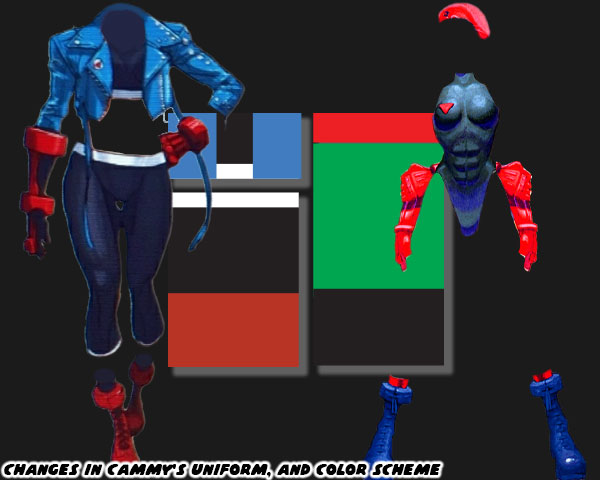
In the previous blog I mentioned that Street Fighter 6 Director Takayuki Nakayama, Producer Kazuhiro Tsuchiya, and Designer Yusuke Hashimoto had decided to redo the costumes of every returning character in the franchise. Some of the designs are obvious, but work in the context of the fighter, like Zangief having red pants, instead of red wrestling trunks. Even the ones that look the same, like Juri, and Rashid, are actually new fits. The changes to the cut, and color for their uniform that I think makes for better overall designs. However I cannot say the same for every returning character. The more casual designs I think hurt the impact of a classic fighter. This was the case with Ken, as his tee shirt, jacket, and boots seemed out of place from his previous red karate gi. I think the same argument could be made for Cammy White.

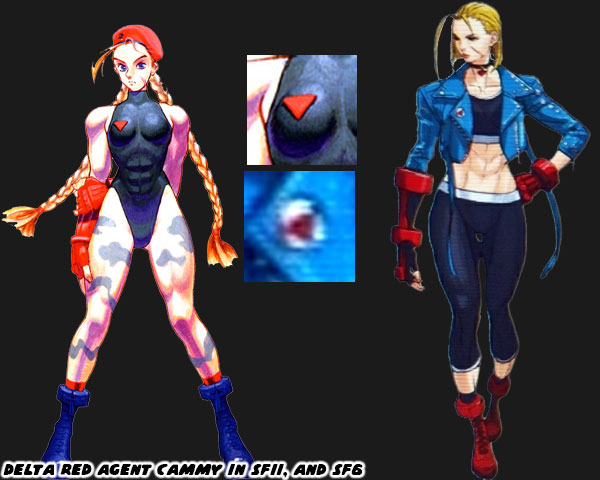
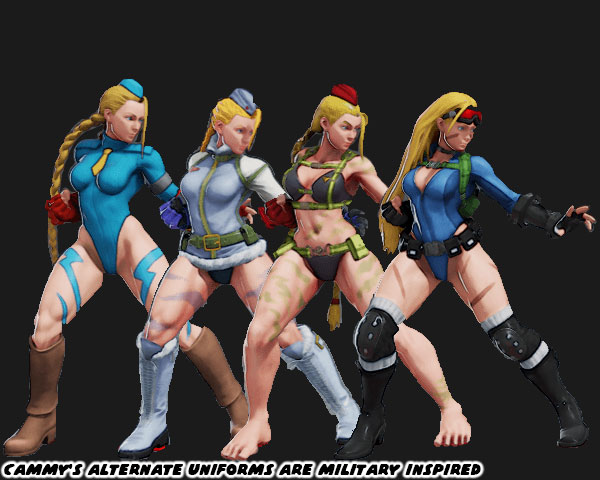
Cammy as you may know is a member of Delta Red. A super secret British military strike force. Despite her diminutive size, she is actually quite strong, and exceedingly fast. Her uniform consisted of a green leotard, red beret, red gauntlets, red socks, and combat boots. Also she wore camouflage paint on her legs. Like the other women in the cast she also had a unique hair style. Hers were two long blonde braids ran the length of her back. This was usually her outfit when she was on missions with her team. The new design of Cammy has her wearing something closer to modern street wear. She has what appears to be workout leggings, and a sports bra. Over which she wears a cropped blue jacket, with a long belt. She also has one full-arm gauntlet, and one red glove, with red combat boots. Her trademark hair has been cut short. Her somewhat military inspired look has pretty much been stripped away. The only connection to her training goes to a small Delta Red pin on her jacket. Many fighting game fans said there was little setting her apart from the more recent design of Sonya Blade in Mortal Kombat.

If you remove the character, and just look at the costume you’ll see a stark contrast in her design. I argue that color is one of the most important things you can assign any fighting game character. The ones that had solid colors, and a complimentary second color withstood the test of time. I said that this was a sort of happy mistake. Because game consoles in the ‘80s couldn’t have too many colors on the screen, then sprites were assigned bright primary colors so they could stand out from the backgrounds, and their opponents. This started a trend that at least Capcom stayed with through most of the ‘90s. The artists stayed with solid primary colors for each fighter even when they had hardware capable of presenting thousands of colors on screen at the same time. The original design for Cammy was no exception. She had a lime green associated with her uniform, this was a lighter shade than the green assigned to Blanka. Plus her red, and black accent colors were different than the rest of the Super SFII cast. Some of the returning characters in SF6 have perhaps a new accent color assigned to their outfits, while others have entirely new color pallets assigned to them. Cammy falls into the latter category.

Cammy has had different variations of her uniform through Street Fighter Zero / Alpha, Street Fighter IV, and V. In every instance it was military inspired, even if it was a “sexy” version of spy gear. Without her long hair, red beret, and military look is she still Cammy? I think it’s fair to ask what the SF6 designers think defines the character? For that matter, what do you think makes Cammy unique? I think the changes they made were counter to the spirit of her original design, similar to their approach to Ken Masters. Also why were most of the blonde characters (Ed, Ken, and Cammy) all given jackets? Was Mr. Hashimoto even aware that he did this? I suppose as long as Cammy still plays in a similar fashion that she used to then she will be well received. I’d like to hear your thoughts on hew new look in the comments section. If you would like to sponsor me please visit my Patreon page and consider donating each month, even as little as $1 would help make better blogs and even podcasts!
follow the Street Writer on Patreon!

Friday, June 24, 2022

The Red Tornado returns in Street Fighter 6, a look at Zangief.

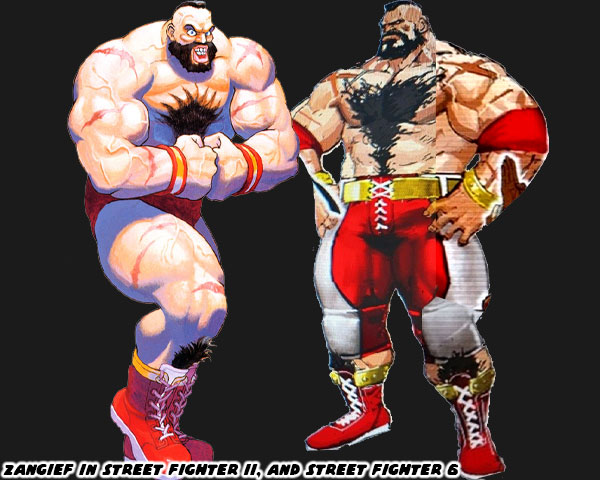
Today we’re going to look at Zangief, and his updated look in Street Fighter 6. For the most part very little was done with the character. He doesn’t seem to have aged much, if at all. There is no gray in his hair, or beard. Also he remains as massive as ever. The primary color associated with him remains red. In Street Fighter II he wore red trunks, and boots with gold trim. This time he is wearing red pants with white, and gold accents. Given his size these aren’t normal pro wrestler pants, but instead the kind worn by USA football players. They do incorporate kneepads as well. The only other changes made to him are the addition of red elbow pads, and the tape on his wrists have been replaced with gold bracelets. I’m kind of surprised at this stage in his career he isn’t presented with the Capcom Wrestling Association championship belt. Similar to the way Darun Mister wore his belts in Street Fighter EX, and Fighting EX Layer. All in all I think this redesign maintains the classic look that we’ve come to expect from the Red Tornado.

By now you should have noticed that not one returning character in the series is wearing their same costume. They may have similar color choices, like Zangief, or go with a different color scheme like Ken, but in either case nothing is exactly the same in this sequel. These are bold directions from Street Fighter 6 Director Takayuki Nakayama, Producer Kazuhiro Tsuchiya, and Designer Yusuke Hashimoto. Previously the studio did their best to incorporate as many details from the sprite-based versions featured in SFII when being adapted for 3D. Even “minor” details like Ryu having ragged edges on his gi, while Ken had hemmed edges were not overlooked by Yoshinori Ono, and the team working on Street Fighter IV. I am not on board with all of the changes that they have made, but I do appreciate the tweaks that they made to designs to make them stronger. Changing the cut of Rashid’s uniform, as well as the cut, and color choices for Juri were well done. Completely revising Luke helped make him look less like a nationalist.

What do you think of the decision to completely redo the costumes for everyone revealed so far? Was this a good idea? Are you eager to get DLC of the classic costumes if Capcom offers them? My friends, and family know that I love playing as Zangief in the game. I can't wait to see how the studio has updated his move set, and special attacks. Did you ever play any of the wrestling characters in the franchise? I’d like to read your thoughts in the comments section. If you would like to sponsor me please visit my Patreon page and consider donating each month, even as little as $1 would help make better blogs and even podcasts!
follow the Street Writer on Patreon!