Sunday, January 8, 2017

The CoolRain Interview

This is a reprint of an interview I did in 2008, the reason that I am posting this again is because the artist will be showing at the LA Art Show during the second week of January 2017.

Lee Chan Woo is a South Korean figure artist better known as CoolRain. I first learned of him via Victor aka Crazytoyz 0709's web page and forum. When I first saw Coolrain's art I was reminded of Michael Lau, yet also saw some elements that made him unique. Like Lau his inspiration is part street culture and part reality. If Michael has his pulse on global street culture then CoolRain's figures are closer to home and more intimate.
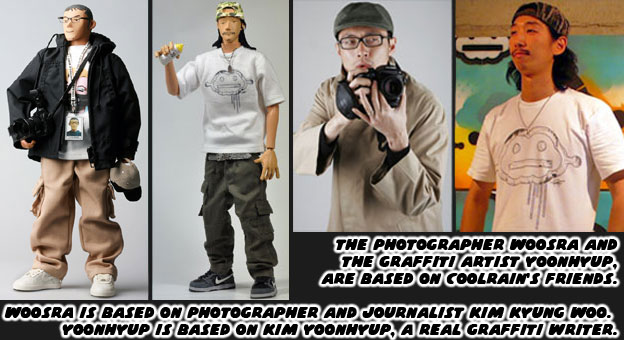
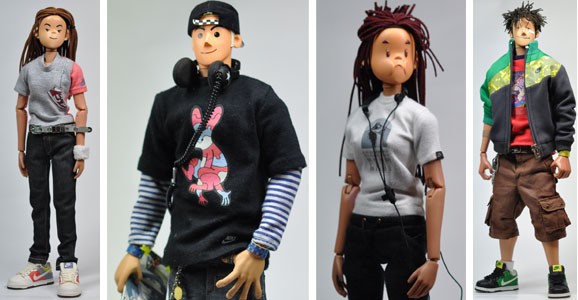
For example photographer and journalist Kim Kyung Woo is the inspiration for the figure Woosra. His other friends are b-boys and as such are also inspirations for these stylized figures. CoolRain has been active in the community since 2003. He cut his teeth recreating Lau's classic Gardeners before finding his own look. Now after building a following and client list that includes several large companies and having several gallery shows it is my honor to present his first English interview. 

Noe V.: Hello Coolrain, welcome to my 1UP blog. Before we get to questions about your figure art I think we should get to know a little more about you. Please tell us little bit about yourself. What are your hobbies? 

CoolRain: I like collecting figure and artbooks. Also fan of SF movie and animation.

NV: What were your favorite toys as a kid?


CR: I was fascinated with super-heroes such as superman, batman and so on.

NV: Were you into cartoons, comics or animation as a kid?

CR: Genres didn't matter. I liked cartoons, comics or animation all.

NV: Did you play sports?

CR: Yes, I liked to play Basketball. And there are many basketball players I loved. 
NV: Did you have any other hobbies like playing music or collecting things?

CR: I collect art book, illustration and movie book.

NV: Who were your favorite characters or which were your favorite shows?

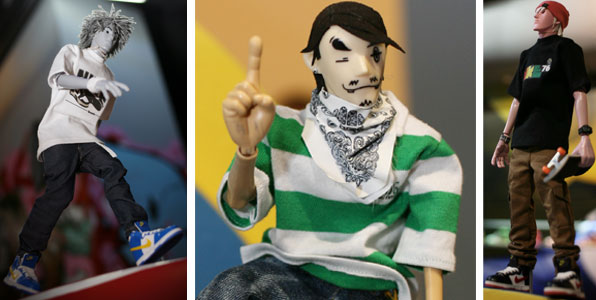
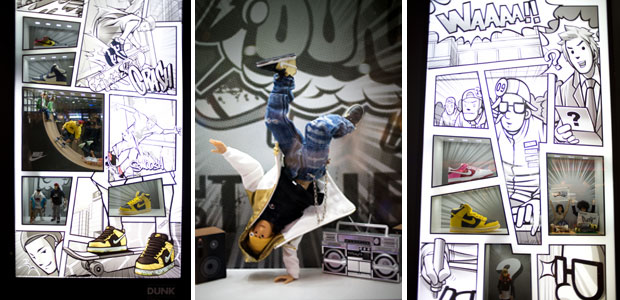
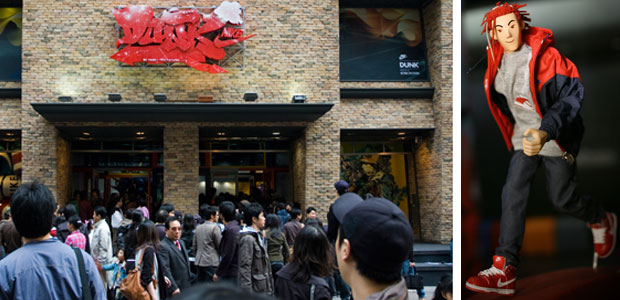
CR: I like my 1st design figure series "Monsterz Crew". I love Dunk. Of course my favorite shows are all related with sneakers, especially Nike dunk exhibitions.

NV: Are you also into computer or console videogames?

CR: I don't play videogame. But I make game. This is irony. But I like game images and animation.

NV: Which were your favorite games and why?

CR: I love Final Fantasy. I liked characters and images in it. 
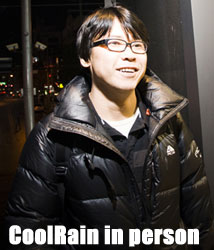
NV: I understand that you are an artist and animator, which schools did you go to or are you self-taught?

CR: I have been self-taught. No teachers, only my curiosity was my teacher. At beginning, I couldn't find enough books, so I used to study watching Videos and books in English. Mostly I gathered a lot of information through movie-related books(creature art book).

NV: Can you say which company you work for or which projects you have worked on?

CR: Nike, KTF (Korean major mobile phone company), Motorola, Adidas, SAKUN (Korean street brand), Delitoys, etc. And some projects with making original character building (Figure style) and also works of CG in CF clips.

NV: You've been building a name in the figure art community for the past few years. Can you tell us how you got started in that?

CR: I started as 3d animator. My dream is still producing animation. That explains why I like main characters in animations. First I made characters with CG, that led me to think "I want to make them by hand." That's how I got started making figures. 
NV: Who were your influences within the figure art world as well as from outside the community?

CR: Before I made figures, I started to collect them. Those were design figures of Michael Lau, Eric So and lovely ones of Nightmare before Christmas of Tim Burton. Basically I like their works and colors. Besides that, I love the works of Otomo Katsuhiro, who is genius comic animator and also illustrator.

NV: Was it hard or easy to make the transition from 2D to figure art?

CR: In fact, 3d modeling and 2d sculpting are similar in some ways. So I didn't have much trouble to transite from 2d to 3d. Only difference is finishing part. Like the project with Park, Ji-sung(Manchester United Korean Player), modeling 3d real object was first experience. But it was not such a burden because I had some experiences with 3d works.

NV: What things did you have to learn along the way? Were there any parts that you took for granted or found difficult to do?

CR: To be a good figure artist, 2d and 3d is just a matter of technique or methods. But I found out that most important work for figure-making involves meeting with people, talk with them, understanding the world of their minds. It needs human- relation skills and manners too. You have to respect them and love them. Easy to say, but not simple works. If I understand them better and know their minds, the result came out much better always. 
NV: Did you ever consider creating traditional super hero figures, action figures, soldiers or space men or was street culture more natural to you?

CR: I am crazy for the super heroes, space suites for astronauts. Someday, I am going to make them someday. Space suites are my works in my dream all the time. 
NV: Some of your figures, the "Monsterz Crew" is based on a b-boy group. Do you or your friends breakdance?

CR: Of course, the models of Monster crew are the top-notch B-boys. Some of my friends are rappers, B-boys, and graffiti artists.

NV: I understand one of your friends, Kim Yoonhyup, is a graffiti artist, have you ever experimented with graffiti art?

CR: I like and admire their works and themselves. I try hard to experience them and see them work on their projects.

NV: Critics would say that you are copying from Michael Lau, with the use of Hip Hop themes and street clothes in your figures. Which isn't fair to say because other artists like Tim Tsui, Jason Siu, Pal Wong and Eric So have also followed similar trends. Have you ever had to defend your work from critics?

CR: Thanks for comparing my works with Michael Lau. ~ I respect Lau a lot. My work experience is just beginning. Of course basic materials for my works are the similar ones (leather or suede hair and sneaker). Also sometimes my works centers on similar concepts(Hip-Hop themes). My work and I are in constant progress and evolution. All of my hand-made methods are time consuming and challenging physically. That's why I love this way of work. Whenever I see the results, I feel some sort of catharsis.  As a figure artist, I am just beginner. I have a lot of things to do in the future. I usually don't pay attention to all the critics much. I just want to follow my curiosity and work with the styles that I want. My next theme could be urban culture or maybe totally new ones. I just enjoy what I am doing right now. I don't know how long could I pursue my career as a figure artist. It could be years or tens of years. I just love to make figures and hand-made sneakers.

NV: Have you had to defend your format from people that think figure art is just a passing trend or not as credible as a sculpture or canvas painting?

CR: That's not the issue I care about. I do collaborate with sculpture artists and painters for the shows or some specific projects together. For every artist, the difference is just tools they choose to express their idea and thoughts. My canvas or tool is the figure. With figures, I can do my best to express my ideas.

NV: What do you think defines art?

CR: Definition for art depends on every people's mindset. If someone can express something with any means, it's art, I think.

NV: Is there a difference between toy, craft, art or collectable?

CR: It depends on anyone's thought. For someone, it could be toy, craft, art, or collectable. It's relativistic concept.

NV: Do you feel that working with Nike and Stussy on high-profile projects has validated your place in the figure community?

CR: I don't know. From my childhood, I like Nike. And I like graphics of Stussy & Supreme. I was happy when I got contact from NIKE. Of course, those working experiences with NIKE and Stussy gave me new horizon for my work career as a full-time figure artist. 
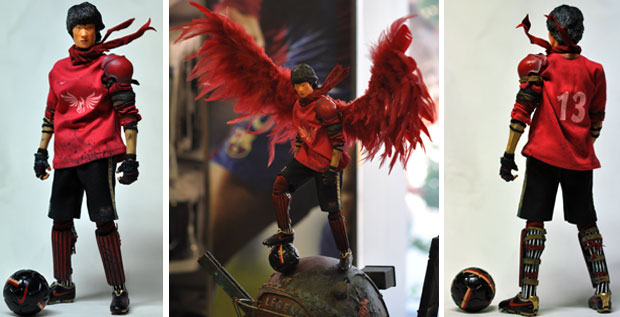
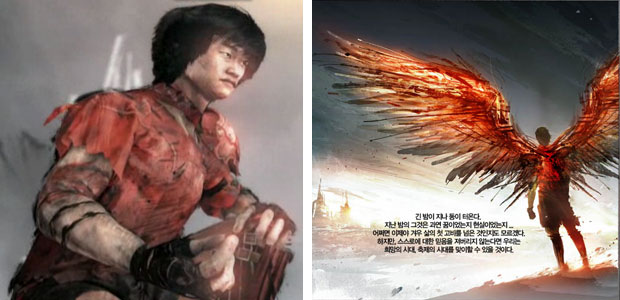
NV: The current Nike campaign in South Korea "Legend of the Phoenix" is built around footballer Ji-sung Park. Can you explain the importance of working on a campaign like that. Turning Ji-sung into a figure and even the symbolism behind the Phoenix?

CR: For the Legend of the Phoenix project, it was planned as congratulation for new release of Jisung Park product releases, the icon and captain of Korea National soccer team and also member of Manchester United team. Final products include 3D animation, graphic-noble and Figures. Each item has been made under the same theme added with each participating artist's own characteristics. It is the first of its kind total campaign in sports star marketing in Korea. Figure was made with only rough images of JS Park, the other forms of artworks are expressions of its kind for Warrior JS PARK. 
NV: How do you challenge yourself when creating art?

CR: To make 100% copy of something is one challenge. But the real challenge is how to put character's spirits in each figures. That's my challenge.

NV: What makes you stand out in the figure world?

CR: Stand out? I don't know well. From the start on, I just tried to express what I like. I like Figures and sneakers. I just like to make it perfect for me.

NV: Explain to us the process of making a figure. How does it begin? What are the stages?

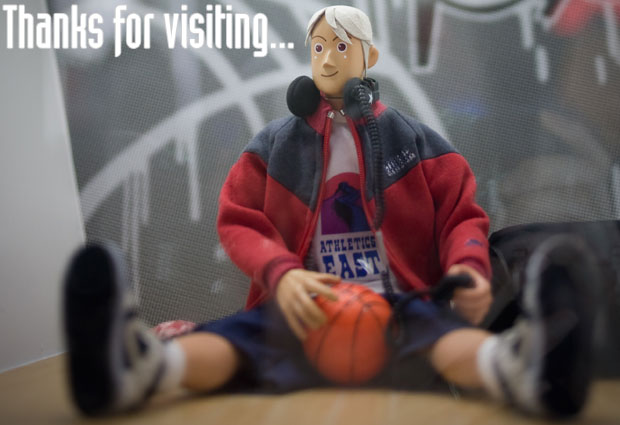
CR: Making figures is not cool at all like nickname.~It's continuity of hard work with many processes. I get ideas of character image from my friends around me. I just pick their main characteristics and from there, I start express them with the scale of 6/1. In details, too many thing to do. Make head and hair pattern with leather, dye them. Work for the graphics for the clothes with computer. Make patterns for shoes. Logos, metal parts, if necessary. Another matching dyeing processes to match the colors of shoes, etc. So many details to do finish just one character.

NV: How many hours or days does it take to make the clothes, shoes, heads, accessories or details like tattoos and logos?

CR: In fact, it depends. Differences with each character. But for the example of hair, if I have to implant every hair, it takes 2-3days just for the hair work. In sneakers with patterns already done, it would take 6-8 hours. But ones with many patterns, 2-3days (In case of air Jordan series, sneakers with too many different detailed patterns). 
NV: How many figures do you make for a particular release, like P-Nix and Che? How long does it take you to make these sets?

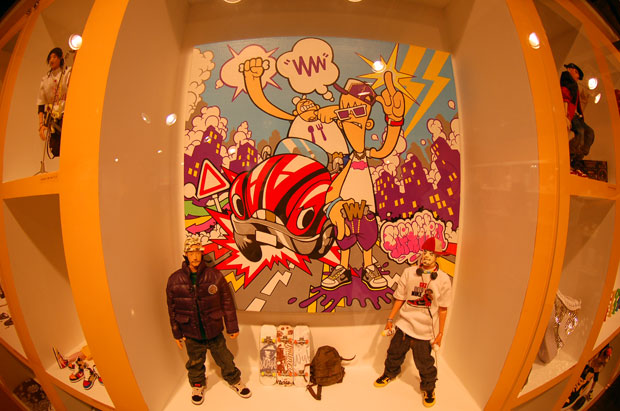
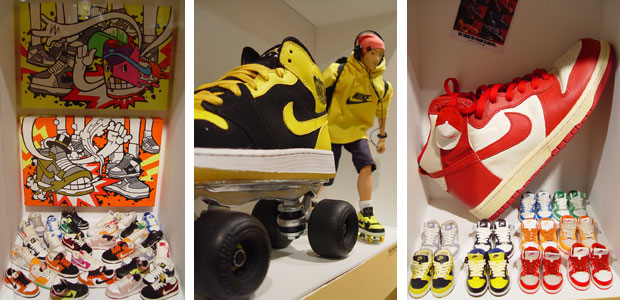
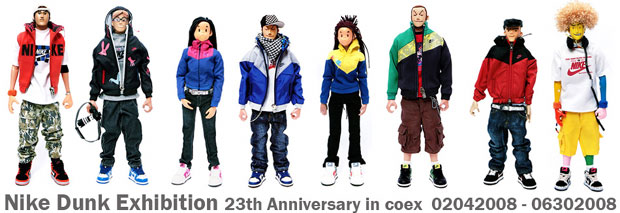
CR: For Monster crew, there are P-nix, Jutt, Che, Speedy finished right now. And next one to add will be Andy. Usually it would take 2- 3 months to finish one character, from idea to mailing to customers. It could take more if there are shows, Nike campaigns, or other extra activities at the same time. Early this year with the projects of Nike Dunk, I made 70 characters on display. For Dunk shoes, finished 100 pieces including the ones released in Korea for the S/S season. Total time for that, 6-7 months, long but worthwhile.

NV: The faces of your figures are very distinct and cartoonish. Are these influences from your work as an animator?

CR: Yes, that's correct. I like animation. That gave my figures a lot of influences. And for the comment, there are some simplified figure heads. They could be customized with simple drawings, like Bearbricks. 
NV: Have you thought about turning your figures into animations or have you already begun working on that?

CR: I love figures and also animations. I can make both of them together. (if I enough time). Actually through shows and exhibitions, I would like to introduce my figures to the people. When I have those shows, it would be a great chance to show animations with actual figure at the same time. I would give people more interests in figures and understanding, hopefully loves for my figures. I have plans in my mind; some of them are in progress little by little.

NV: Would you ever like to produce an animated show or even videogame featuring your characters? If so what types of games or adventures could you see your characters in?

CR: Of course that would be great. It's a work for character to give breath and reality. For Monster Crew, they are B-boyers. So I want them to be nice B-boy game. But before do into the animation processes, I would like to make figures that cover their life styles and progresses with them. I want to express not just fixed b-boying styles, but also their lives with b-boying.

NV: I understand that you are a family man. What do your kids think about your figures?

CR: How did you know... it's secret~ Even though I love figure, I am a daddy of a twin. They are cute babies. For them, figures are nothing but toys. They like playing with my figures and they are happy playing with them. I want to make figures that could be source for joy and smile for the people.

NV: What advice would you give artists that hope to transition from 2D to figure art? Are there any skills they should learn?

CR: Basically similar. So you don't have to hesitate or think it difficult. It's just small difference of methods. 2D or 3D, computer or hand-made is just difference of method. That's it. What's the most important factor is how much you try hard to give it full efforts to make it perfect to meet the standard you pursue for. Work, Work and Work hard. 

NV: Would you advise making friends in the community or finding a mentor to learn from?

CR: If I didn't find figure making, I couldn't make any relations with lots of people that I know until now, The common ground for us is "Love Figures." If you just follow your heart with ones that you like to do, then all the mentors and good friends come along automatically.

NV: How should an artist deal with criticism and how can they stay motivated when there are so many great artists in the world?

CR: The most important thing is to express what you like and what you want people to see. If you have interests in expressing anything as much as you like, you can accept any kinds of criticism with ease of minds. For any works that I do, I have to like and be satisfied with. Self-esteem is my standard for any kinds of my projects. I do work until I am fully satisfied with the results for myself.

NV: Are there any other words of wisdom you would like to leave the people of 1UP with?

CR: Love what you do right now, and just enjoy it. At present the most important thing to do is making figures. Just like that~~ enjoy your life!

NV: Thank you for your time and we look forward to seeing what you have in store for the rest of 2008 and beyond! If you'd like to see some more of CoolRain's work be sure to visit his blog. Please be sure and spread the word to your friends and editors about this artist. I have a feeling that the future is very bright for him! Thanks for visiting! 
As always if you enjoyed this blog and would like to sponsor me please visit my Patreon page and consider donating each month, even as little as $1 would help make better blogs and even podcasts!

follow the Street Writer on Patreon!

Sunday, November 13, 2016

Did Warner Bros Animation just give a nod to Street Fighter?

The good thing about being raised on a steady diet of comic books and cartoons is that you learn appreciate the best things in life. Those of us who remember the late '80s and '90s experienced the fighting game revolution as well. Kids that got a chance to live through that era were influenced by a lot of different things. Those kids eventually grew up to become artists, animators and producers in their own right. It looks like they did not forget the things that meant the most to them.


Warner Bros Animation has come up with a spiritual successor to The Justice League and Justice League Unlimited series. The new series is called Justice League Action and has a style that falls somewhere in between the original Teen Titans and JLU shows. A lot of classic voice actors have returned as well as rare DC heroes and villains. I'm glad that Plastic Man finally has a chance to shine but even more happy that they are keeping things light with the pop culture references.


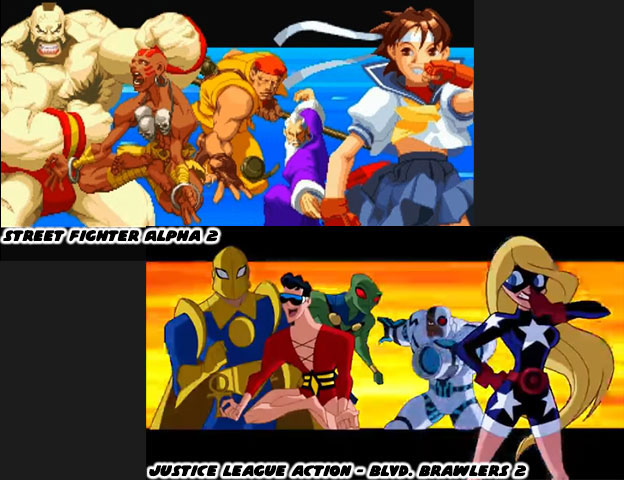
In one of the new episodes the Toy Man makes the Justice League fight against each other in a game called Blvd. Brawlers 2. It is beat-for-beat identical to the introduction of my personal favorite Street Fighter Alpha 2.


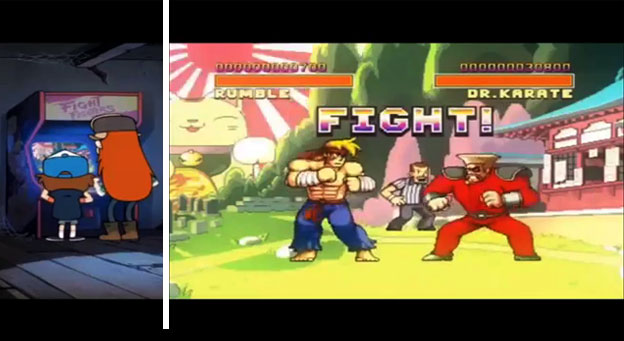
Warner Bros isn't the only studio that gets a shout out for the Street Fighter love. Remember that Disney's Gravity Falls had an episode that centered around "Fight Fighters" a Street Fighter II knock-off?


Are you happy that the JL series is giving the nod to Street Fighter instead of the Injustice games? What are your favorite pop culture Street Fighter nods? I'd like to read about them in the comments section. As always if you enjoyed this blog and would like to sponsor me please visit my Patreon page and consider donating each month, even as little as $1 would help make better blogs and even podcasts!

 follow the Street Writer on Patreon!

Friday, October 28, 2016

The best championships in fighting games, part 2

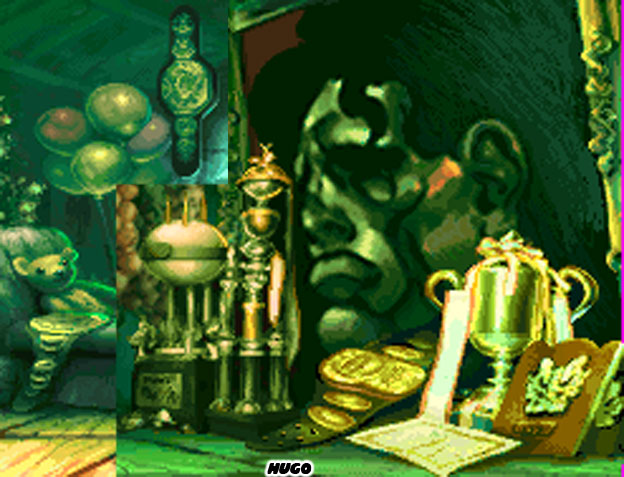
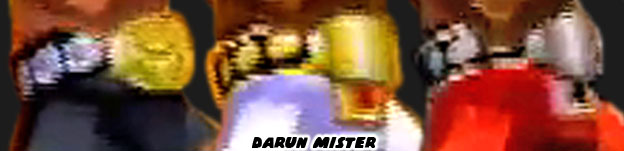
In the previous blog I had pointed out the unique belts and champions featured in fighting games. From the small symbolic belt of Russian boxer Andrei in the King of Combat to the gaudy bull horn belt of Antonov from King of Fighters. There was a championship for every form of fighting. The wrestlers in these games seemed to have the best titles. While Darun Mister of Street Fighter EX fame had a total of 3 championship belts he was nowhere near the most decorated champion. Hugo Andore, the German giant from Street Fighter III also had three championship belts and at least 5 other trophies and awards from different promotions. These were all visible in his stage from Street Fighter III 3rd Strike.


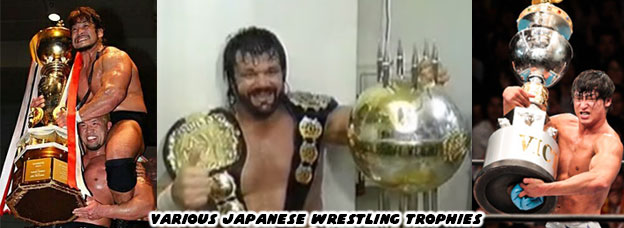
The accolades given to Hugo were based on real-world championships. Take a look below at some of the Japanese promotions that inspired the gold. In some promotions the best wrestlers are given statues, plaques or towering cups wrapped in streamers. They are the result of winning a tournament or even beating multiple opponents in a "battle royal." In the multiple endings in Street Fighter III: Giant Attack Hugo was written as having different tag team partners, there was a chance that one of his belts or trophies was won with the help of a partner. It was never established who the actual person was but many assumed it was Alex, the American MMA star.


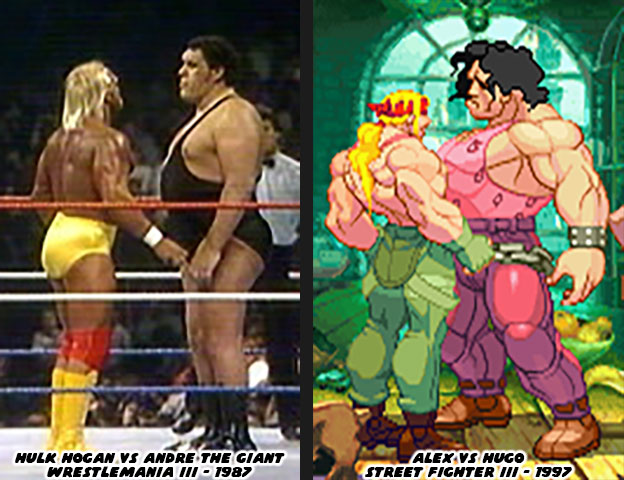
Hugo was a Mad Gear Gang-member-turned wrestler. He along with the Andore family from the Final Fight series was inspired by Andre the Giant. The French wrestling star was huge (pardon the pun) in the '70s and '80s. He traveled the world and made a following wherever he landed. In his younger days he was quite athletic and could actually perform some high risk 1st and 2nd rope leaping moves. He had a large head of hair, almost like an afro which gave him a wild appearance when he debuted. As he got older he gained some weight, slowed down and cut his hair a little bit shorter. Age did nothing to curb his awesome strength and legendary drinking ability. The character of Hugo is a sort of amalgamation of the young and old Andre. He has some of the speed, moves and hair of the younger version with the raw power of the older self. One of Andre's great rivalries, and even tag team friendships was with Hulk Hogan. This insight from the developers was celebrated as a special animation whenever he fought Alex. The two would have a stare down before the round, similar to the Wrestlemania III match.


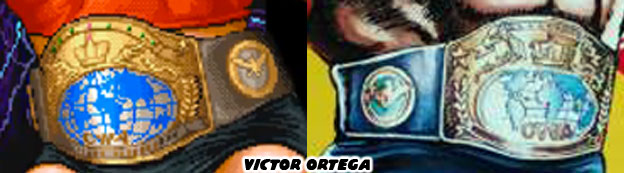
Andre had beaten many of the best wrestlers around the world. Yet he was not necessarily the person who would be considered the heavyweight champion for a particular company or promotion. He never held the title for any length of time because he was constantly travelling. Andre was a sort of sideshow attraction. He would only appear from time-to-time so that his marketability and thus legend would remain intact. Promoters knew that audiences would eventually tire of seeing him squash all of his opponents, so he was considered a gimmick fighter and only hired him for a few weeks at a time. Any belt he won was usually won back by the hometown champ before he left the country. Hugo on the other hand was a runaway terror. He took the belts and steamrolled every promotion he went to. There was no one in the Street Fighter universe that seemed capable of stopping the giant. But did that make him the best wrestler in the SF universe? I would argue no, he was not the best wrestler and certainly not the best fighter. Guy, Cody and Mike Haggar from Final Fight have all shown that they could take him, and his extended family of giants in a stand up brawl. Despite Hugo's collection of belts and trophies he is missing a very important one. He does not have the Capcom Wrestling Association or CWA belt. This would be THE title held by Victor Ortega in Muscle Bomber / Saturday Night Slam Masters. Hugo also does not possess the rival promotion Blood Wrestling Association or BWA belt.


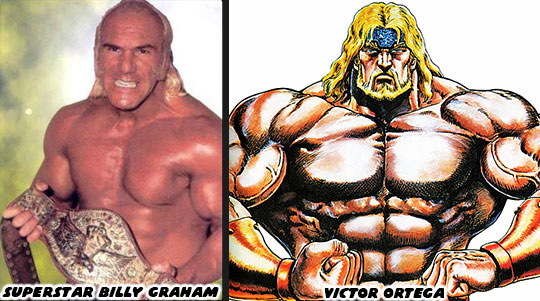
I have talked previously about the middle-aged phenom known as Victor Ortega on previous blogs. This character and his title was created by Tetsuo Hara. The co-creator and artist behind Hokuto No Ken / Fist of the North Star. is a huge wrestling fan. Many of the big wrestling names from the '70s inspired several of the characters in his comic book series through the '80s. These in turn inspired the artists working at Capcom through the '80s and '90s. When they began designing the villains in Street Fighter and Final Fight series a few were based on the work of Mr. Hara. When the company wanted to create a wrestling-inspired brawling and later fighting game they went directly to Tetsuo Hara. He created a cast of characters and set the pro wrestling canon of the Street Fighter universe. At the top of the chain was Victor Ortega, based on the flamboyant and photogenic Superstar Billy Graham. Billy had a bodybuilder physique and looked incredible in televised matches. It didn't matter if other wrestlers were technically more sound, because they didn't look and act like a champion they often had to "work" (lose a match) to Graham.


The version of a champion that Mr. Hara created may have been visually inspired by wrestlers like Graham, however his in-ring skills were the real deal. Ortega had legitimate punching, kicking and grappling skills. Despite his size he was also very fast and very flexible. He needed to be a great all-around champion considering the different styles of wrestlers that filled both the CWA and BWA rosters. Some were technicians, some brawlers, some were high flyers and some were shooters (submission fighters). Victor Ortega was easily the most muscular character set in the Street Fighter universe. This undoubtedly made him intimidating, even to a giant like Hugo. I would like to think that not only did Hugo fail to capture the CWA title, but that he was afraid of Ortega.

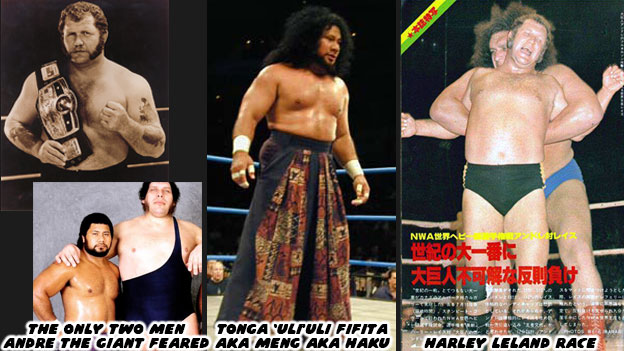
In the real world Andre the Giant faced all sorts of opponents, including some almost as tall and as strong as he was. Outside of the ring he sometimes had to fight off hecklers, drunks and angry wrestlers. He beat just about all of them, most with ease. After all of his travels and all of his victories there were only two men that Andre was afraid of. According to former wrestler and manager Bobby "the Brain" Heenan the two men were Harley Race and Tonga Uli'uli Fifita. Both men had reputations for being tough as nails. They were strong, intimidating and did not appreciate being messed with. Both were also fiercely loyal, good to their friends and stand-up men whose word was their bond. The two men were also a foot shorter than Andre.


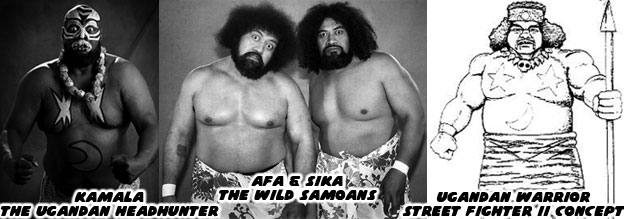
Tonga was the younger of the two hard legends. He was a trained martial artist and had actually been picked up as a teen to learn the art of Sumo by a Japanese stable. While in Japan he was able to adapt to life in the squared circle. He was gifted with great strength and stamina. These things came in handy as he fought many Japanese legends. They were trained in the "hard style" of wrestling where people barely pulled their kicks and punches. Karl Gotch was a pioneering grappler that took his classic techniques with him to Japan. Pro wrestling in Gotch's day was much more about grappling and submission holds than the "sports entertainment" it tries to be on television. He wanted his students and opponents to come at him with the same ferocity of the turn-of-the-century wrestlers. He wanted them to know how to legitimately catch holds and counter attack. Tonga was already a tough person but his time in Japan tempered him into a dangerous weapon. It was not hard for him to find work in any promotion acting as a heel or bad guy. In the '70s and '80s the large Pacific Islanders were often marketed as savages or wild men by the various promotions. This worked to their advantage as they intimidated opponents and audiences alike. The gimmick had gone over so well that one of the concept fighters for Street Fighter II was a Ugandan warrior. This character had elements of the Wild Samoans, the body paint of Kimala (the original Ugandan warrior) and the frame of Tonga.

The bar fights that Tonga participated in were the stuff of legend. The majority of the time all he wanted was a drink and to be left alone but trouble would find him. Many of his friends were astonished by how often people would pick fights with him. There are stories of how he took on groups of people and even the police in the melees. The scariest were stories of how he bit the nose off of an attacker, or how he reached into a man's mouth and pulled out his teeth. The stories were gruesome and certified by witnesses. He worked with Andre a few times and they got along great, possibly because Andre avoided him outside of the ring and never tested him. It would be interesting to see a redesign of this character by the people at Capcom, one that captured more of the presence of Tonga without pandering to the wild man mystique. The other person that Andre feared had an equally interesting history.


Harley Race was similar to Karl Gotch in that he came from a different era. Harley was a tough guy, even at a young age. As a teen he was thrown out of school for beating up his teacher. He decided that he wanted to be a wrestler and actually joined up with a carnival where he learned the ropes from actual carney catch-as-catch can fighters and strongmen. This was a direct link to another time, literally a connection to the 19th Century, when wrestling was real. Before promotions divided the talent and before television turned it into a soap opera. Harley had no amateur wrestling experience, unlike his opponents which often came from college backgrounds. As he went from town to town he had to take on any and all challengers. Some were men, some were teens but most had experience on the mat. Harley learned that he had to adapt quickly to these people and try to get a pin or submission right away. If he lost then he didn't get paid. Not only that but his handlers would beat him up as well. Harley survived a car accident as a young man and was told he'd never walk, let alone wrestle again. Harley recovered and became one of the hardest men in the business. He was a legit shooter and knew a countless number of ways to hurt someone. He picked up many things along the way from pro wrestlers which complimented his street experience. Harley was soft spoken but intense, his promos became legendary. It was his mastery of the ring and respect for the business that earned him followers the world over.


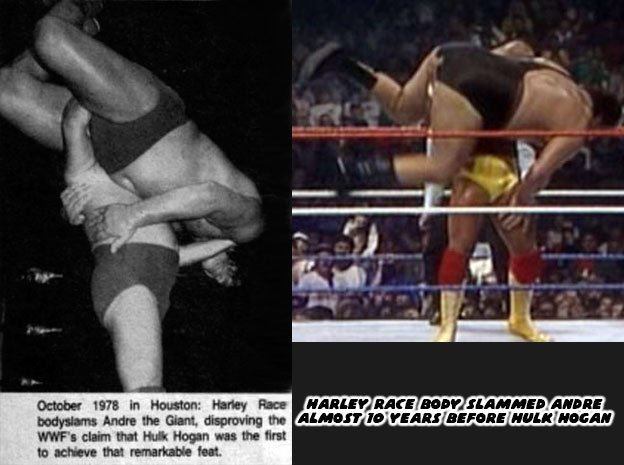
Harley, like Tonga, did not get into wrestling the easy way. He knew many different ways to seriously hurt people but instead worked to make his opponents look great and have long careers. He was just over 6 feet tall but had worked with many bigger men including Andre. Audiences soon forgot about the size difference in their matches because his presence was so commanding. It was Harley and not Hulk Hogan that had first slammed Andre the giant. Harley would often chaperone the big wrestlers when they traveled abroad. It was said that just a look from Race was enough to make the biggest wrestler back down when they crossed the line. Harley's old-school origin and NWA championship, which represented some 30+ or 40+ independent promotions / territories was the ultimate prize for a pro wrestler. There were other "world's" titles, including those from WCW, ECW, WWF and NJPW but among the purists you could not really consider yourself the heavyweight champ unless you held the same belt that Harley did. Andre the giant did not hold that belt. He once wrestled Harley to a 60-minute draw but that's as close as he ever got. When Harley joined the WWF he won the first Royal Rumble and became the King. When he felt ready to leave the business there was only one person he felt appropriate to lose the crown to and his name was Tonga.

Hugo may have been a beast but he was not the best. Mike Haggar had the chops to be the true CWA champion. Zangief and Darun probably have the chops too. As for Hugo, well, if he doesn't have the belt then he has not beaten the best. Or more likely he is scared to fight Ortega. Do you have a favorite video game champion? Or a favorite title? Who do you think is the best game wrestler? I'd like to read about it in the comments. As always if you enjoyed this blog and would like to sponsor me please visit my Patreon page and consider donating each month, even as little as $1 would help make better blogs and even podcasts!

 follow the Street Writer on Patreon!

Wednesday, October 26, 2016

The best championships in fighting games, part 1

If you are a fan of fighting games then you're probably familiar with the different fighting styles represented. Kung-fu, karate, judo, muay thai and boxing are among some of the more common forms featured in the genre. One of the stand out forms is pro wrestling. In video games the pro wrestlers are often the characters wearing the brightest costumes and using the flashiest, most impractical moves. These days they are thought of less as fighters and more as "sports entertainers" thanks to the WWE. If you have been following this blog then you know that pro wrestling is among the oldest of the fighting arts. There are some legitimately tough fighters that know actual grappling moves. Many consider themselves true professional wrestlers.

In the fighting game genre the most memorable characters often represent the best fighters in a particular form. Ken and Ryu for example are not simply practitioners of karate or ansatsuken, they are the absolute best in the world. Chun-Li is not a very good kung-fu practitioner, she is the best living kung-fu artist. She represents a legacy that includes the earlier Street Fighter masters Gen and Lee. Sagat is not a muay thai expert, he was formerly the greatest fighter in the world. Zangief is not simply a massive wrestler, he is a Russian hero. Fighting games are designed to answer the question of who was the best fighter and what is the best style. What would happen if the best boxer that ever lived squared off against the best karate master?


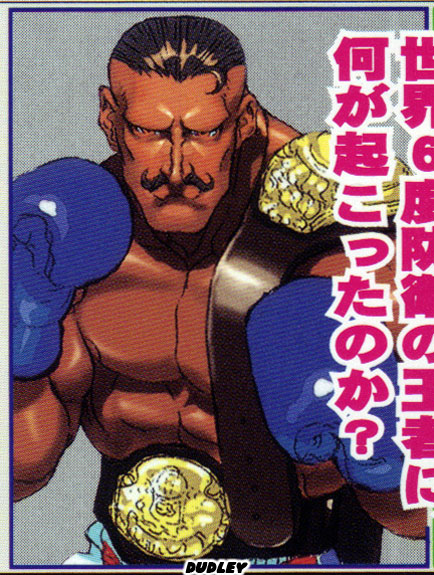
A small detail that you may or may not have noticed is how few characters in fighting games are presented wearing a championship belt. After all, real pro fighters don't wear their titles while fighting. But this is something that makes some game characters visually appealing. Dudley has a great design but he doesn't go around with his belts. The aesthetic choice of having him dressed in civilian clothing worked well in the lineup. Street Fighter III was a chance to introduce a new generation of fighters, one that wasn't as campy as the original cast. Yun and Yang for example had classic Chinese shirts and pants but also paired that with modern sneakers. Alex was an MMA star but wore overalls and heavy combat boots instead of trunks. As long as Dudley wore his boxing gloves it was painfully obvious what type of fighter he was. In canon Dudley had at least two, of what can be assumed, world championship belts. Here's a short list of some memorable champions in the genre, if not their fancy belts.


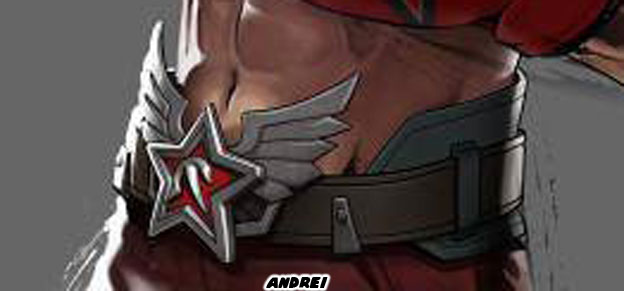
Not many boxers flashed their belts in game, one of those that did was Andrei. The Russian boxer was featured in King of Combat. The young boxer had a great belt design. The star, sickle and hammer were supposed to conjure up images of the old Soviet Union. It was perfect for the upstart. He was proud of his country. It showed in his Cryllic tattoos, amulet he wrapped around his boxing glove and militaristic haircut. In the best designs from the various studios every detail of a costume has to reinforce the personality of the fighter. The details should each tell a story. Whether it's a torn sleeve, a spiked bracelet or even an eye patch. They all have to mean something and not simply be a superfluous detail. There were other fighters in the various games that were as accomplished as Dudley and Andrei.


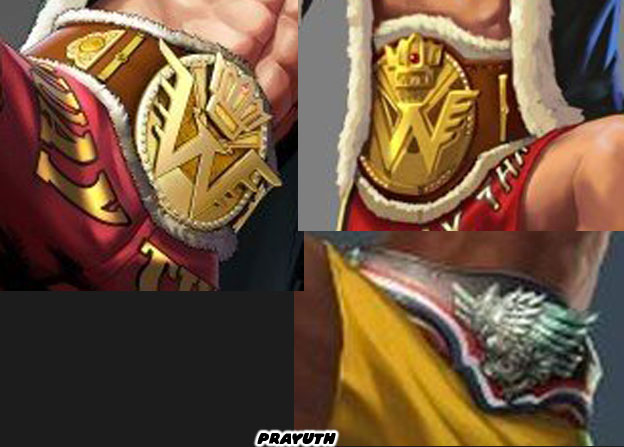
Muay Thai master Prayuth had a hefty belt that he wore in the King of Combat. The large circular fur-lined plate was reminiscent of modern championship belts. Flamboyant champions are nothing new in professional fighting. The best in the world wanted to show off from time to time. Over the past century and a half many different champions would add their own flare to the titles. They would encrust their belts with ribbons, fur and eventually gold plating and jewels. Some belts were even made of leather that had been dyed to a brilliant red or bright green. Prayuth's belt was representative of modern belts but its fur-lining also served a practical purpose. It could be worn while fighting. It wouldn't scrape or irritate his skin even with sweat. The developers on King of Combat even had an alternate color scheme and with it an alternate belt for Prayuth. The alternate title was more in tune with a classic championship belt. Instead of the sponsor logo there was a head of the mythical Garuda. It celebrated the spiritual origins of South Asian, specifically behind Indonesian and Thai culture. If Prayuth was the best Muay Thai fighter in the world then his belt should reflect the culture that created that form of fighting.


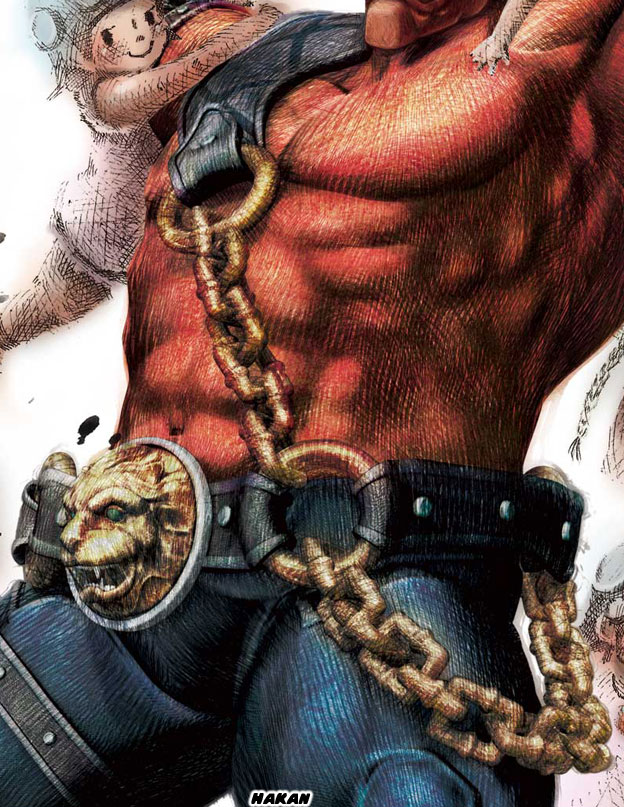
A belt that celebrated a culture and also looked intimidating belonged to Hakan from the Street Fighter IV. I was not a fan of his design, how he misrepresented yağlı güreş or Turkish oil wrestling. I was not a fan of the color of his skin and absurd blue hair. One thing that I cannot deny is the costume he wore. The chain and strap symbolized strength but it was the roaring lion that really caught my eye. I cannot say with any certainty that this was a championship belt. Modern oil wrestling championships are sometimes a trophy and sometimes a belt that looks like a modern wrestling title. Hakan's belt might have simply been a family crest or his business logo. In all regards it was a fine belt, accessorized by large metal chains and rings. Anyone could tell that only the absolute strongest could wear this ensemble.


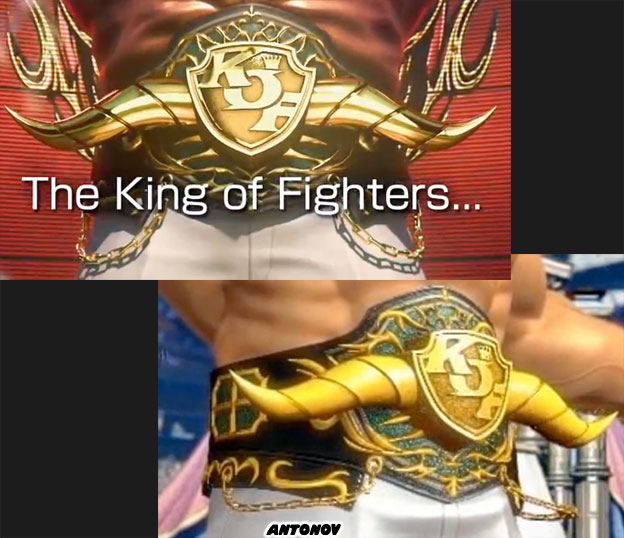
One of the biggest and possibly gaudiest championship belts belongs to Antonov. The self proclaimed original King of Fighters champion wears the belt in KOF XIV. Although I would argue the legitimacy of his claim with the iconic Geese Howard and Terry Bogard who had been there since the first tournament. Anyhow the belt is plated in gold, with thorn tribal patterns, gold chains and enormous bull horns. Aside from being bulky it would not be sensible to wear in a fight. The horns would limit the range of motion for the wearer. I can only imagine the number of times Antonov split his forearms open each time he threw a punch. The reason that Antonov wore it was two-fold. It showed off that he was the champion obviously but less known was that he was hooked on smoking and he kept his trademark cigars hidden in the front plate. If it were reproduced I can only imagine that a combination title and humidor would make it among the most expensive belts ever built. Antonov's belt was meant to be over-the-top, bigger and gaudier than any other title in any fighting game. It was not supposed to look like a traditional belt as with Dudley, nor was it supposed to have elements of a particular culture like Hakan or Prayuth. If I could find an example of a belt that balances culture and gaudiness it would have to be Darun Mister's Indian elephant title.


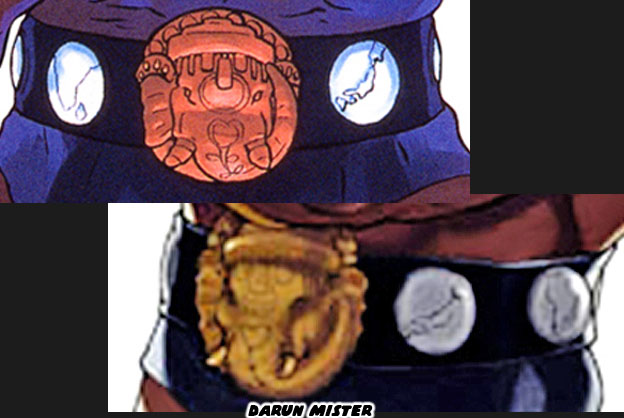
The main plate, in gold or bronze, is a sculpture of an elephant wearing a ceremonial headdress. The side plates are silver and have the outlines of the global continents. It symbolized that this belt had been defended or recognized by promotions around the world. The elephant has a number of details. The flower pattern on the trunk and filigree on the ears mirrors the long standing custom of painting the elephants as a sign of reverence. The elephant has powerful cultural context, especially when considering the relationship that the Hindus have with the god Ganesha. This belt is not representative of Ganesha but it is supposed to make Indians feel proud. There was more forethought to this championship title than say the stages created for Dhalsim in Street Fighter II and Zero / Alpha which pandered heavily the symbol of Ganesha. Unlike Antonov's belt there is nothing that would interfere with the wearer. The elephant trunks are short and stubby, they wouldn't catch a person like bull horns could.


Darun was a unique character, inspired by various legendary Indian wrestlers including the Great Gama. In Street Fighter canon I would argue that he was a greater wrestler and champion than Zangief. I could back up this claim by pointing out that Darun not only held the elephant title, his alternate costumes featured two other belts. The gold and silver titles had a flat cut to them, they seemed to be from other, possibly Western promotions. Darun was a multi-promotion heavyweight champion and possibly the best pure wrestler in Street Fighter canon. Darun however was not the most decorated fighting game champion. In the next blog we will look at the character that had more belts than any other Street Fighter icon combined! As always if you enjoyed this blog and would like to sponsor me please visit my Patreon page and consider donating each month, even as little as $1 would help make better blogs and even podcasts!

 follow the Street Writer on Patreon!

Wednesday, September 28, 2016

Capcom is hiring a Fighting Game Associate Producer! Should I pack my bags and move up North?

You ever get the feeling you were born in the wrong era? Or maybe a great opportunity comes up at the wrong time? I'm getting a healthy dose of that right now. It looks like Capcom is hiring Fighting Games Associate Producer. I've been a vocal critic of the company but also a passionate supporter of their franchises for more than two decades. I lack formal development experience and a degree in Japanese for business. I do have experience in most of the software the job requires and of course I can learn new programs quickly. I might not get an interview but I would hope that the studio would even consider me in the first place.


If you are serious about fighting games and want a career in game production then there is no better place to start. Capcom has the most influential library of fighting game titles in the industry, including ones that deserve a new lease on life (Darkstalkers?!). If you love the community and want to see it grow and create the best experiences then why not apply? As for myself. I don't live in the Bay Area and I have a wife and daughter to support. My current job pays well, has a great team and benefits. It wouldn't challenge me the way that Capcom could but right now stability is more important than satisfying my ego. What do you think? Would you like to see me as a producer on Capcom fighting games? As always if you enjoyed this blog and would like to sponsor me please visit my Patreon page and consider donating each month, even as little as $1 would help make better blogs and even podcasts!

 follow the Street Writer on Patreon!

Monday, September 26, 2016

Some of my favorite Street Fighter collectibles, part 2...

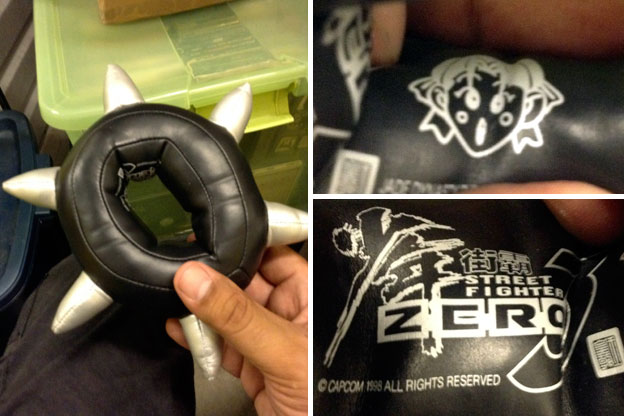
In the previous blog I highlighted some of my favorite collector covers from the Chinese Street Fighter comics. Today we're going to look at some of the other memorable special issues that they printed. Often a special issue not only came with a unique cover, it also came with a collectible. Some of these things were postcards, puzzles or calendars featuring the best covers from the past year. Sometimes these issues came with an embroidered hat or sweatband featuring a character. The best were even more original. Take Chun-Li for example, when the publisher wanted to celebrate the character in Street Fighter Zero they distributed spike bracelets to their fans.


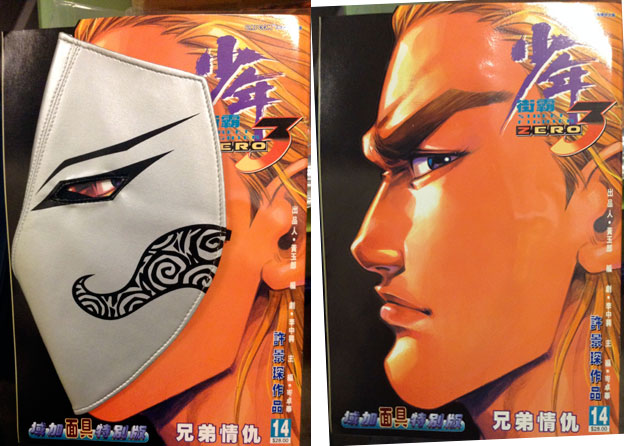
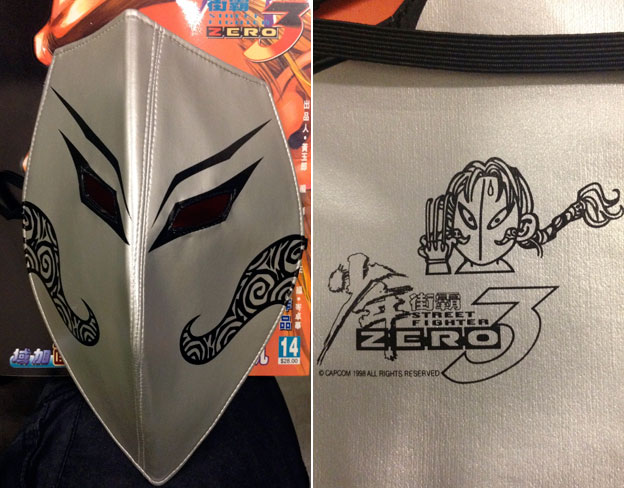
Of course the bracelet was foam wrapped in vinyl, but it was a very clever marketing toy. In what other country did Capcom create anything like that for their fans? Another soft good that they distributed through the comics was actually attached to the cover of a comic. The Spanish assassin Balrog (Claw) wore a trademark mask. The publisher of the Street Fighter Zero comics created a die-cut cover of Balrog wearing the mask. Fans could remove the mask and wear it. Imagine being a kid and being a huge fan of Street Fighter. How awesome would it be if your favorite comic book came with a goody on a regular basis? What if Marvel did the same for Spider-Man, or DC for Batman? People would be all over it.


Granted in the US there have been unique collectibles released with comics as well. The Batman trade paperback A Death in the Family came with a grotesque Joker mask and the Court of Owls came with an owl mask. Fans had to wait until the specific series had ended and was put into a TPB before they could buy it. Yet overseas these giveaways are more common. In Italy for example the Topolino (Mickey Mouse) comics sometimes come with toys, called gadgets. The most popular Chinese comics came with all sorts of soft goods and toys on a more regular basis.


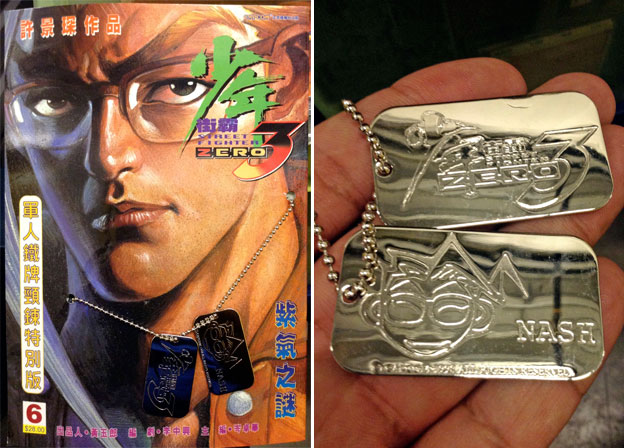
Of all the collectibles I've gotten from the Chinese Street Fighter comics the best one was without a doubt the dog tags worn by Charlie Nash. Like the Balrog issue this comic also had a die-cut cover. There were two holes poked in the sides of the neck were a metal chain and polished metal dog tags were on display. These were full-size dog tags with the name and likeness of Nash. To make sure collectors picked up the issues there was even an embossed Capcom license on them. I wonder how many people that cosplayed as Guile ever tracked down these dog tags.


What about you? Do you have any rare or unique Street Fighter items in you collection? If so I'd like to hear about it! As always if you would like to sponsor me please visit my Patreon page and consider donating each month, even as little as $1 would help make better blogs and even podcasts!

 follow the Street Writer on Patreon!

Thursday, September 22, 2016

Some of my favorite Street Fighter collectibles, part 1...

Howdy friends and visitors. I apologize for the lack of updates. I was working on a new series when my computer crashed. I was in the process of gathering images and history for a few projects actually. It was the reason I had started a Patreon to help me raise some money. I knew the days of my computer were numbered so I wanted to get a back up as well as new system. Unfortunately it died before I could do either. I am saving up my money to get a new computer and hopefully salvage the data on my old hard drive. Once I am up and running I may actually be able to put together podcasts and even videos a little bit faster, that is the goal after all! I was saving some of the text and image links on my email for those future projects just in case. This way I didn't have to start from scratch when I got a new computer. The next few posts might be a little short, I hope you understand.

Like many of you I am a huge fan of Street Fighter and I like to collect SF merchandise. I focus on things that are not common in the USA, so I have a lot of books and guides from Japan. Udon made a fantastic comic book series out of the franchise, no doubt about it! When it came to collector issues and special issues Udon gave the fans what they wanted. Some of my favorite Street Fighter comics actually came from China. As great as the comics were in North America I have to say that the Chinese comics sometimes had the better exclusives. Best of all these were not bootlegs, but actual licensed items!
 

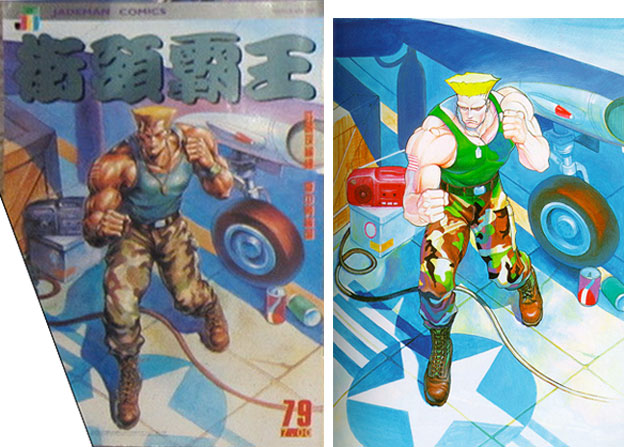
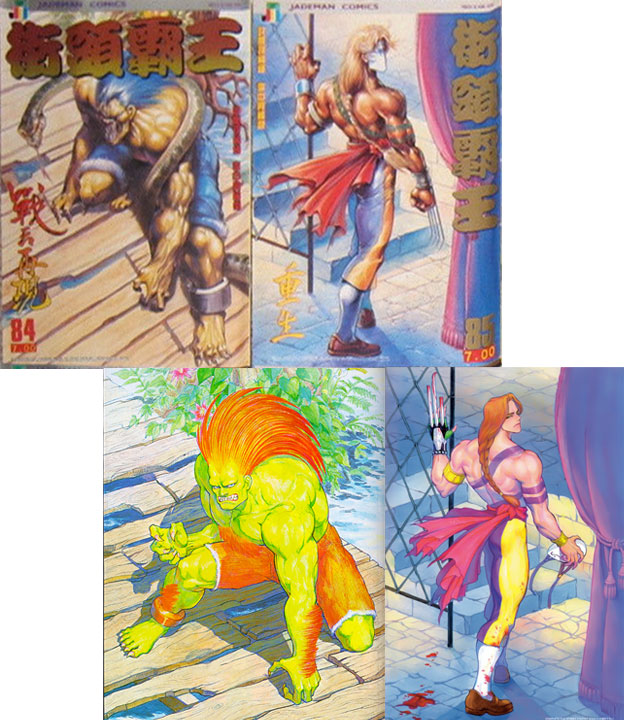
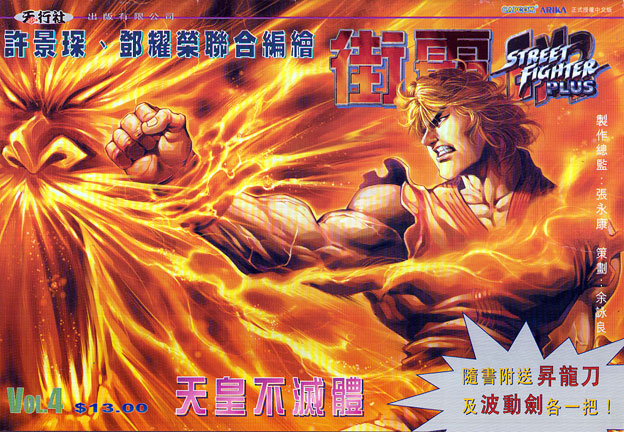
Let's be completely honest when talking about licensed Chinese comics, or manhua as they are traditionally known. From a print standpoint these comics are inferior to those from the West. The paper the comics are printed on are not as good as the magazine quality paper used in comics from North America. In fact they still use the old 4-color process instead of modern digital printing, except for the covers. The covers are glossy and sometimes feature wrap-around painted images. Yet the best cover poses are often stolen from the official character art from Capcom in Japan.


Sometimes it's even more shameful than a repaint of a classic Akiman illustration. The artists working on the manhua will actually redraw, or repaint the art from a licensed Japanese manga and change the main characters around! It's tough to be a fan where there is so much shameless poaching on the part of the Chinese. It happens in comics, in film, toys, gaming, fashion and electronics. Yet to be fair they do this with everything that is popular, not just Street Fighter. The nation doesn't necessarily correlate copying with a bad thing, at least not the people that run the companies. They consider it more of an "imitation is the sincerest form of flattery" or just smart business to follow the popular trends. The consumers on the other hand have a less favorable opinion on copies or counterfeit items.


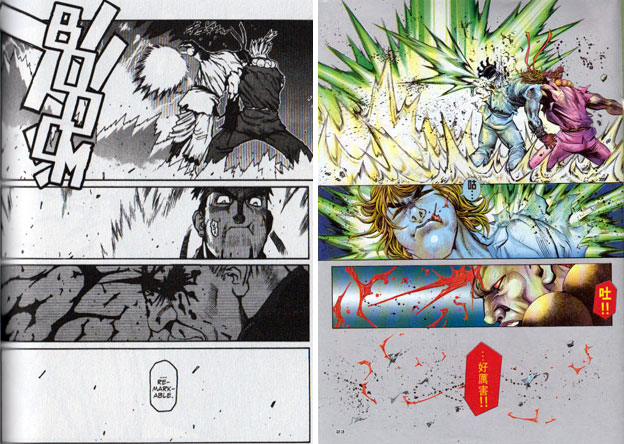
But I digress... the reason I like some of my Chinese Street Fighter comics more than those from Udon are because of the painted panels. They are few and far between but some of the better covers and spreads in manhua are actually brush paintings instead of digital color illustrations like in the US comics. There is something to be admired in the art form, in the ability to create an actual physical painting and see it reproduced in print. These original panels and covers were rare, but when done right they jumped off the page.


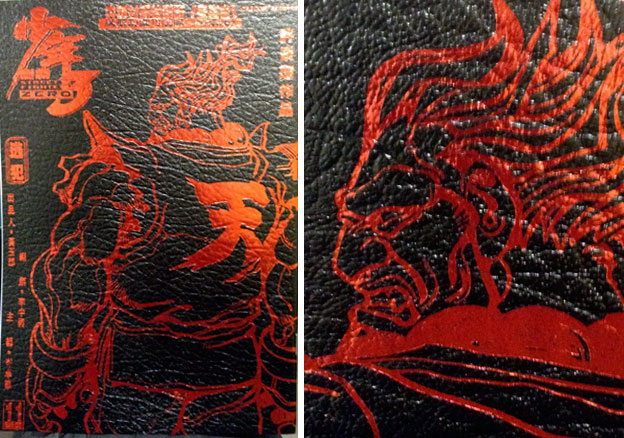
The other reason I enjoyed the SF manhua were because of the special issues. Limited runs, foil, hologram and other gimmick covers had been used by Udon and other publishers for years. In China they went the extra mile when creating the exclusive covers. One that they released for Street Fighter Zero3 featured Gouki in a red metallic ink. It was printed over a black vinyl cover, that looked a bit like leather. It was a classic pose but not poached from any official Capcom art.


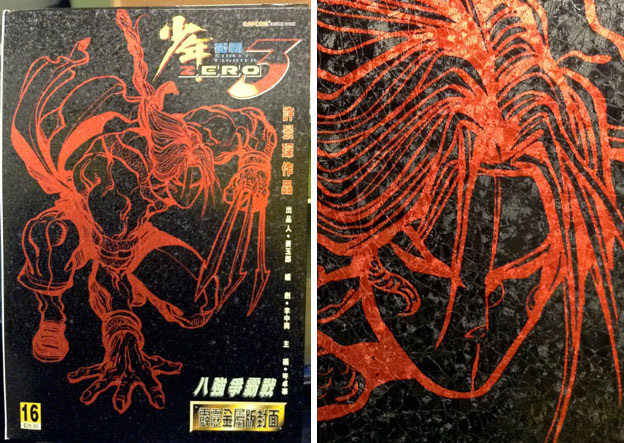
The special edition covers are often placed over the regular covers. I have a few issues with both the regular and special edition covers. What makes these covers unique is that no two are printed exactly the same. A different black and red cover that I had featured Balrog (Claw). It was also printed in a red metallic ink yet the cover was a hard black plastic with tiny cracks that gave it a prismatic effect. It was a great pose which highlighted how the Chinese artists had their own unique aesthetic, their own unique was of interpreting the character that was every bit as memorable as those from Japan and the USA.


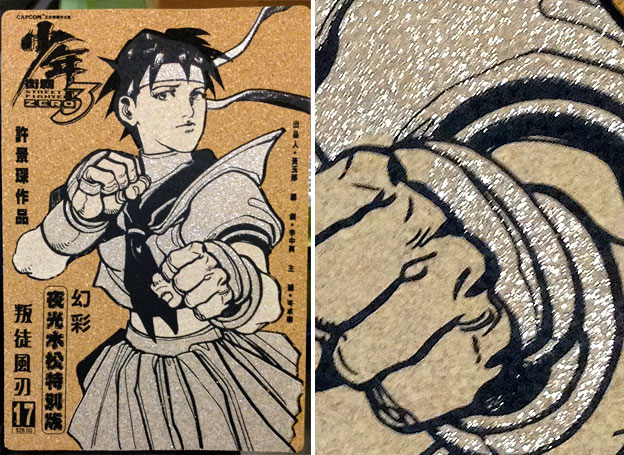
Some of the covers I had celebrated the fan-favorite characters. A Sakura cover for example was printed on a very thin piece of corkboard. It was printed in black and silver-flake ink. The inspiration behind this cover was school related. The corkboard was supposed to rekindle images of doodling on folders and pinning favorite pictures on a study area. The cover actually had a lot of hand-drawn details. Once printed the finishing touches were applied by hand. Some of the hair and costume were hand-painted in black ink. It's hard to tell from my fuzzy pictured but you can actually see the brush strokes and different shades of black ink used by the artists.


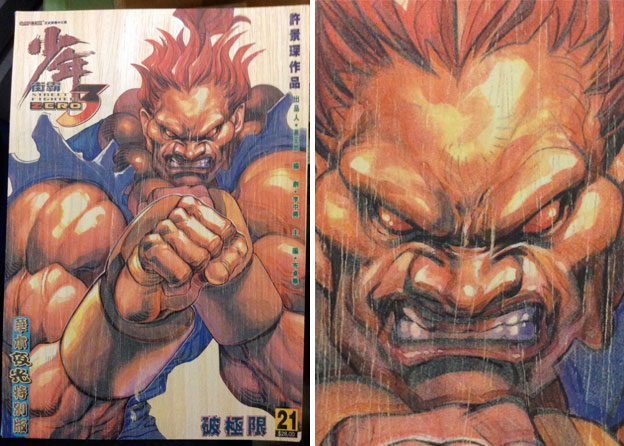
Possibly the most unique of the custom covers again featured Gouki. This cover was printed on a paper-thin piece of bamboo and then laminated to prevent splitting. The texture was unique and thanks to the printing process no two covers would ever be exactly alike.


There are a few more special issues that I would like to share with you, but I'll save it for next time. Are there any Street Fighter comics that you are proud of or are your favorites? Please let me know in the comments. As always if you would like to sponsor me please visit my Patreon page and consider donating each month, even as little as $1 would help make better blogs and even podcasts!

 follow the Street Writer on Patreon!