Showing posts sorted by date for query fatal fury. Sort by relevance Show all posts

Friday, May 9, 2025

Why I'm not talking about Fatal Fury: City of the Wolves

Hello friends. Thank you for dropping by. You probably know that I’m a huge fan of fighting games. I’ve been playing them for 45 years. The first fighter I remember playing was Warrior by Vectorbeam. I wrote about this when I was doing a look at the Virtua Fighter relaunch. With that said I’ve avoided posting on the Fatal Fury: City of the Wolves for some time now. People may think that I’m biased against SNK, or only write about Street Fighter, but that is far from the truth. In fact the very first blog that I posted here in 2014 was dedicated to Mr. Karate from the SNK universe. I’ve written a lot about the history of Fatal Fury, the creators, and the characters on this blog. I was such a fan of the Garou series specifically that I tracked down the manhua (Chinese comics) based on Garou: Mark of the Wolves. I loved all fighting games, it’s just I loved some titles more than others.

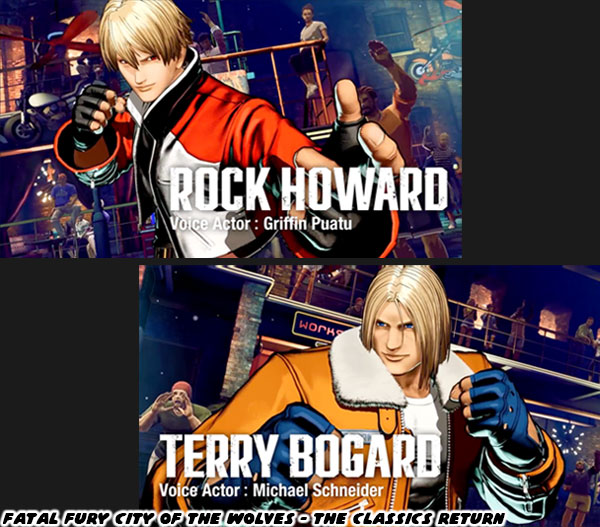
I was very passionate about the Garou / Fatal Fury: City of the Wolves project for some time. I started talking about the development of the game in 2022. It had been ages since I was excited for a classic game to return. By March of 2024 I shared everything that I could pull from the character reveal, and gameplay trailers. I did a look at how the characters featured in the game evolved from concept art. With the guest character reveals of Mai, and Terry in Street Fighter 6 I had to mention why Mai Shiranui was important in fighting game history. Yet once the final details of the game were announced this year, and released on April 25, 2025 I had yet to say anything.

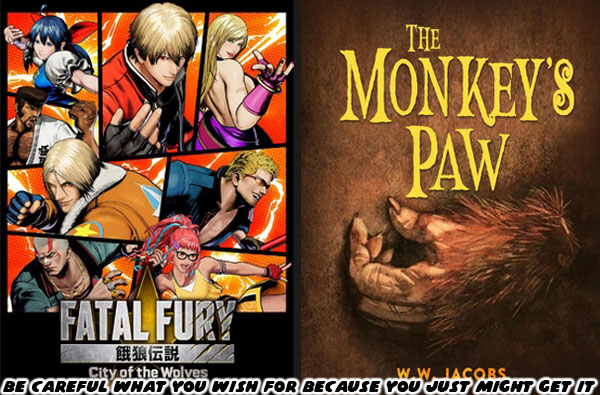
Why would I walk away from a sequel that I had been waiting on since November 26, 1999? That was when the original Garou: Mark of the Wolves came out. After a quarter-century wasn’t it going to be worth the wait? Sadly the answer would be no. The game was the embodiment of The Monkey's Paw. The short story taught us to be careful of what you wish for. Sometimes it’s better for things to stay dead, and buried. Even though SNK said that their new Saudi owners would not influence the direction of the games it was obvious that wasn’t entirely true. The game would be pandering to pop culture, rather than celebrating the fighting game legacy that built an industry. Will Borger with Digital Trends summed up everything that needed to be said about Fatal Fury: City of the Wolves. Mr. Borger's review touches all the basis for the game itself, but does us all a favor and explains why it doesn't reflect the fighting game community at all.

There was a quick answer as to why I walked away from the game after a release date was announced. The two guest characters revealed were shockingly disappointing. Rather than include a classic character from the SNK universe, or any crossover characters from Capcom, Sega, ARIKA, or Namco. The developers decided that a professional futbol / soccer player, and a DJ would be the welcome additions. These two people were so outside of the fighting game orbit that they would have never been voted on by the actual players. The athlete himself had been in the news for sex crimes. As for the Swedish-Bosnian DJ... he might be a global superstar but I had never even heard of him. Apologies to Super Greg for being overlooked as a better Hip Hop representative. It was obvious that the Saudis were directly influencing the development of the game. SNK would not bother to do as much of a cultural deep dive as Capcom did with Street Fighter 6.

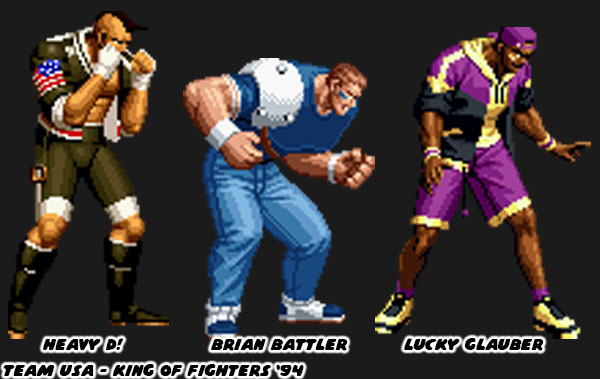
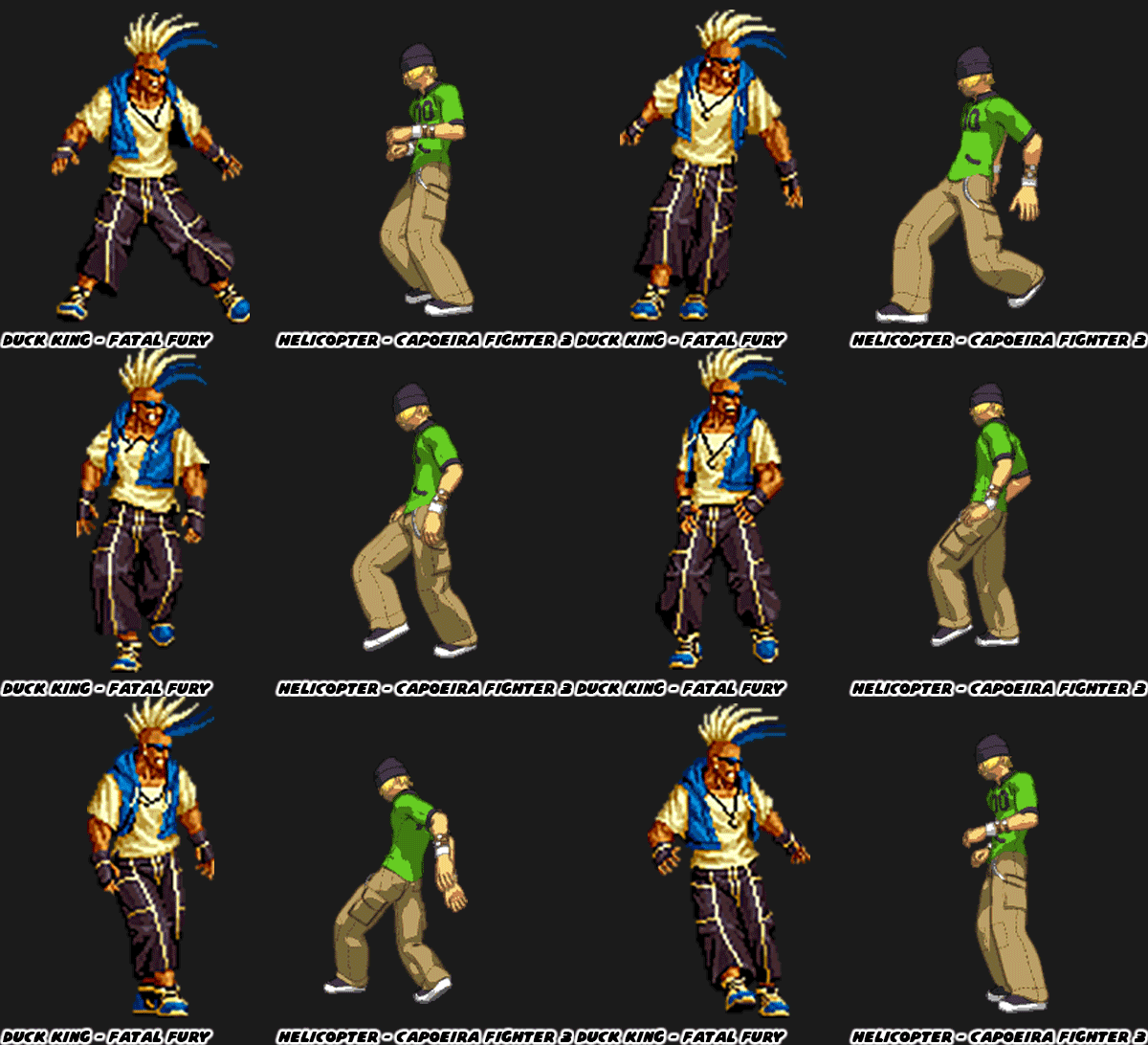
That is not to say that a soccer character couldn’t be used in a fighting game. Roberto Miura from the Capcom game Rival Schools: United by Fate showed us that it was possible way back in 1997. Not only that but athletes had already been used in an SNK fighting game. Team USA aka Team American Sports appeared in King of Fighters ’94. These was a professional boxer named Heavy D! A pro football player / race car driver named Brian Battler. Lastly there was the basketball pro named Lucky Glauber. So yes the game could have used pro sports athletes, as long as they were made somewhat fantastic, and not just a copy / paste of an existing athlete. As for the DJ… fighting breakdancers could be done well. See Helicopter in Capoeria Fighter 3.

In many ways the bigger insult to the Fatal Fury series was in adding a real DJ to the game (whom I would also not name). Hip Hop already had a representative in the series called Duck King. This character debuted in the original Fatal Fury on November 25, 1991 then appeared another 11 times over the decades. The mohawked star was a literal street fighter. He was a battling b-boy (breakdancer) using tumbles, and sweeps to great effect. He was followed by a crew of baby ducks, wore street clothes, had a flamboyant personality, and was beloved in the fighting game community. Even if it was revealed that mentored the DJ in the new game it would have been better to stay with the original South Town legend. It was clear that the people working on SNK today didn’t understand the tone, and feel of the original series.

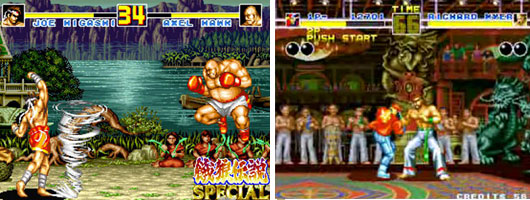
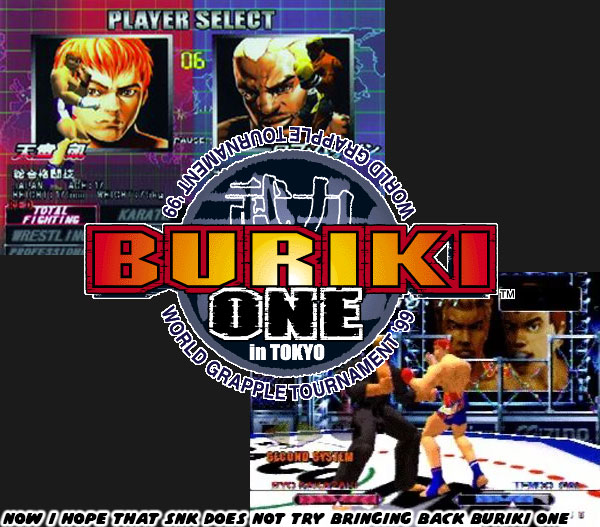
The early days of the arcade era were very experimental for most studios. In the ‘80s SNK was known for its bold game designs. They did combat game exceptionally well because SNK founder Eikichi Kawasaki was a boxer in his younger days. He wanted the fights in his games to be more visceral. This meant that masters of various forms were welcome to be represented in their releases. That was why SNK introduced Capoeira to arcade goers way back to 1989. The developers had a great appreciation for fighting in all styles. When MMA started to surpass all combat sports in the late ‘90s they developed a rare 3D title called Buriki One in 1999. It was the same year that they released Garou: Mark of the Wolves. Many of those team members had since retired, or moved to other studios. The current team at SNK was good at recreating themes, and elements of classic games with modern art, aesthetics, controls, and game play. The thing they seemed to lack was the imagination, and appreciation of the influences that created the iconic series. 

The new developers didn’t seem to know how to add a new character into the franchise that wasn’t pulled from old design notes. Worse yet they were listening to the whims of their Saudi owners, and just throwing in real people for no reason. This made me afraid that they would try to reboot Buriki One next. Or they might reconsider bringing back other games based on the cold reception of Fatal Fury: City of the Wolves. At least I hoped they would do better if they were thinking about it. What about you? Did you pick up the game? Was it your first time playing an SNK game, or were you a veteran player like me? I’d like to hear about it. Tell me about it in the comments section. As always if you enjoyed this blog, and would like to sponsor me please visit my Patreon page and consider donating each month, even as little as $1 would help make better blogs and even podcasts!
follow the Street Writer on Patreon!

Saturday, December 28, 2024

The Return of Virtua Fighter, part 2...

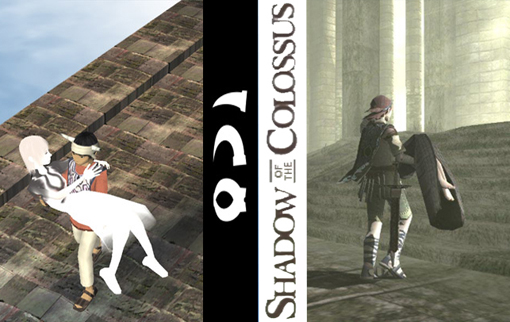
The announcement of a new Virtua Fighter at the 2024 Game Awards was a pleasant surprise. The only reveal I was more excited about was a new game from Fumito Ueda, and his team at gen DESIGN. These were the people formerly on Team Ico at Sony Studios Japan. Both ICO, and Shadow of the Colossus were a revelation for me. The game reveals were also a little melancholy for me. A long time had indeed passed between titles. I’m talking about major life changes; new jobs, getting married, raising a kid before I saw another sequel. I began thinking of how much history I had with the games. I began thinking of how much the industry had changed throughout the decades. I especially began to focus on how my love of Sega games went back a few generations.
There was another reason why the game reveals made me reflect. You see in November of 2024 I celebrated my 50th birthday. It was a bittersweet time. A relative came down with a medical emergency in the fall of 2024. My wife sprung into action, and moved in to help take care of this person. The original plan was for a few days, maybe a week. That had turned into almost 4 months and counting. We were apart for our wedding anniversary, Halloween, my birthday, Thanksgiving, Christmas, and the New Year. The time, and distance had been heavy for us, especially with no reunion in sight. This health issue made me think of my own life, and mortality as well.
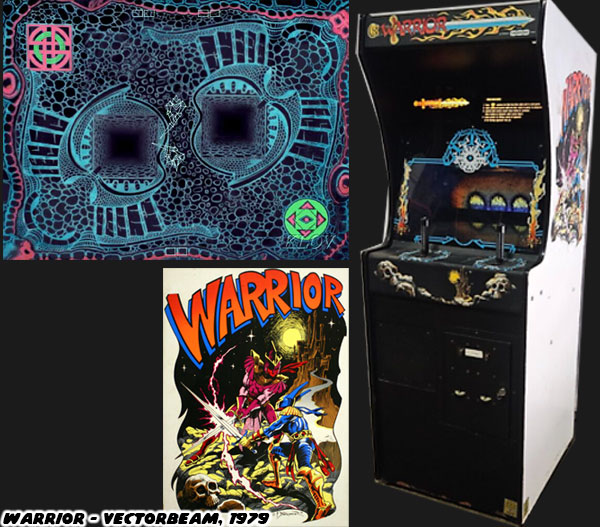
I realized that I’d been a fan of video games, and specifically fighting genre for almost as long as I’d been alive. Yet at no point did I ever think that it was time wasted. My first fighting game memory went back years before the creation of Street Fighter. It was the extremely rare Warrior by Vectorbeam. I was five-years-old when it came out. The innovative top-down view, sword combat, and painted background of the arcade cabinet sparked my imagination. It also made me realize that fighting games could be more than a boxing sim. They could be about knights, karate masters, and even dinosaurs! I would argue that 1984 was the most important year for the development of the fighting genre. This was two years before the original Street Fighter, and the template of the brawler was revealed through Renegade.
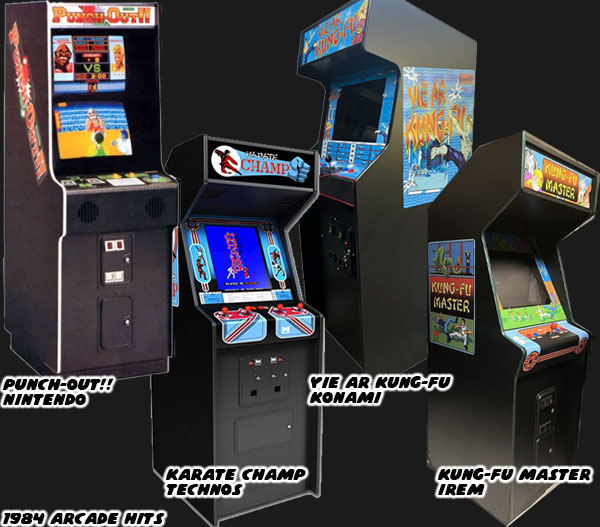
Punch-Out!!, Karate Champ, Yie Ar Kung-Fu, and Kung-Fu Master all came out in ’84. Each influenced the studios, and developers that would create the modern fighting game. I was grateful that I had a chance to play through them when they debuted. In fact I was born at the perfect time to experience the peak years of the arcade revolution. The memories I had of the dozens of arcades I frequented, and hundreds of games that I’d played were irreplaceable to me. I would not have changed one thing about the time I spent playing video games. Especially not after I discovered fighting games. I was grateful for each, and every title that I enjoyed over my time on Earth. Knowing that Virtua Fighter was getting a reboot, and celebrating 30 years made me realize that I first played the game when I was 20-years-old. This also meant that the architects of the genre were getting old too.
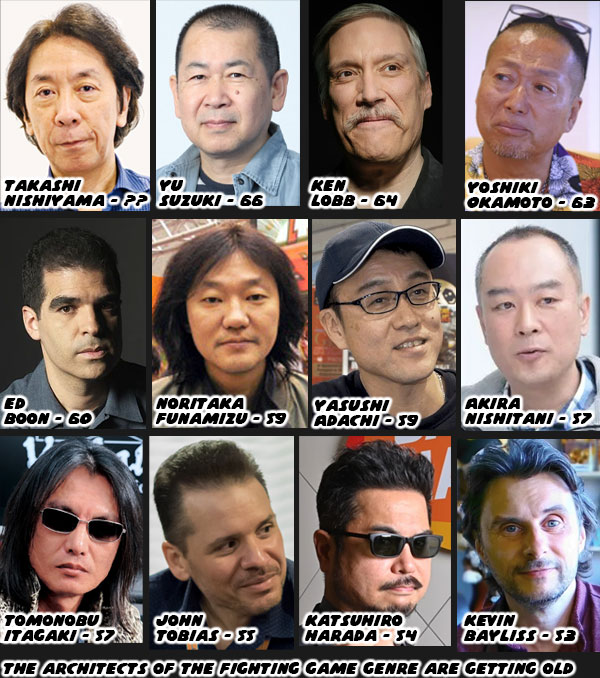
The masterminds behind Street Fighter, Fatal Fury, the King of Fighters, Mortal Kombat, Killer Instinct, Tekken, Samurai Shodown, Virtua Fighter, and more were now in their 50’s, and 60’s. A few of them were retired, if not considering retirement. This meant that some games, and entire genres could potentially die off. It was important for the publishers to have younger talent take over the projects. New directors, and producers to be just as passionate about the genre as their mentors. This ensured that the games would continue to grow, evolve, and remain fresh. I wasn’t a fan of Yoshinori Ono as the producer of Street Fighter IV, and V. I did appreciate his enthusiasm, and how he pushed Capcom to bring the franchise back after almost a decade after SFIII had been released. I believe that his eye would have worked better on a series like Vampire / Darkstalkers.
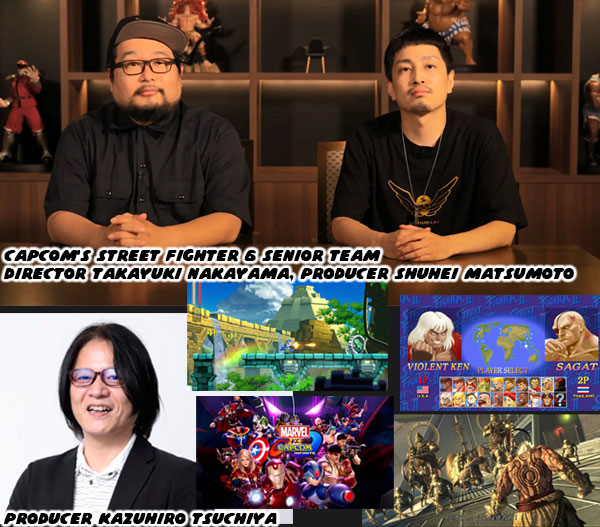
I was much happier with the team putting together Street Fighter 6. Mr. Nakayma, Mr. Matsumoto, and Mr. Tsuchiya had been with Capcom for years. They were ready to slide into their new roles, and take over the franchise. They managed to honor the legacy of Street Fighter, Final Fight, and bring in elements from 40 years of Capcom games without breaking the continuity of the series. They were able to update the game play, the elements that modern audiences expected from a video game, and even help bring new players up to speed. Most important they were also young. They would be able to carry their passion, and insight to SF for years to come. Not every classic series had these types of directors. Many of those games faded away from relevancy once their creators left the studio.
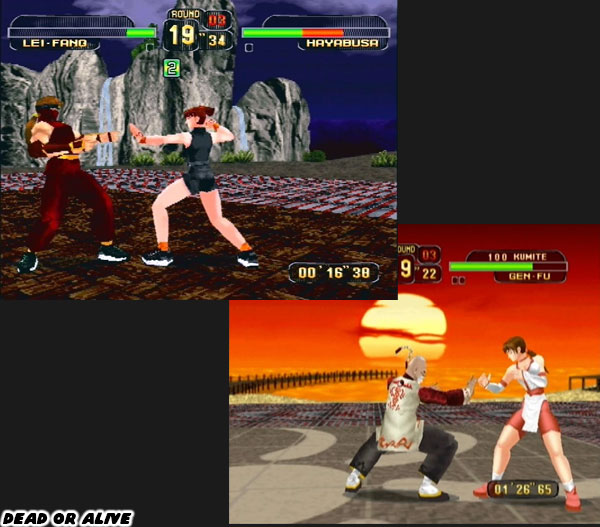
It may seem hard to believe but Virtua Fighter was such an important game that it changed the direction of the industry. In 1991 Capcom already created a global phenomenon with Street Fighter II. This made every studio in Japan, and the US start developing their own fighting games. A few years later Sega demonstrated that 3D would be the next step in the process. Companies that weren’t already developing their own 3D engines were at a loss. They could however license the work from Sega for their own titles. Some gamers may not know this but the original Dead or Alive arcade game was built on the Model 2 engine, the same one that powered Virtua Fighter 2. The game’s creator Tomonobu Itagaki had been described as a creep. It was no surprise that the girls in his fighting game had very bouncy breast physics applied to their models. He left Tecmo with many of his Team Ninja developers to strike out on his own. He eventually closed his studio in 2024. Dead or Alive managed to make it to DOA 6 which was released in 2019, with no word on another sequel.
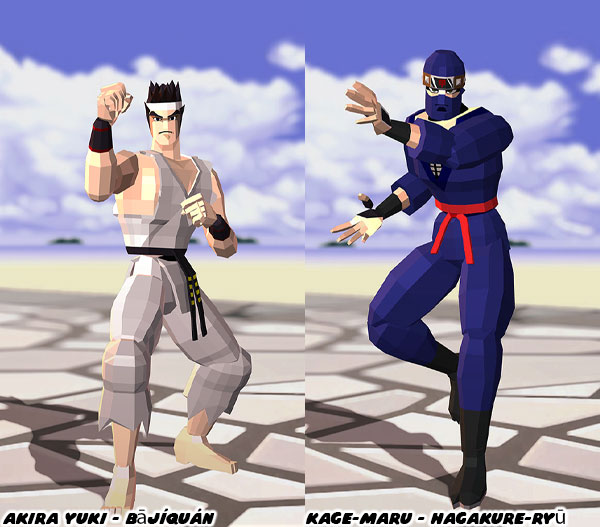
That was not to say that Virtua Fighter was a superior experience to Street Fighter II, or many other sprite-based fighting games from the early ‘90s. The game play was not as quick, or as intuitive as audiences were used to from 2D fighters. Visually however Sega was offering something that was unlike anything else in the arcade. When you saw a Sega 3D engine in a racing game, air combat, or Star Wars title then you immediately took notice. The visuals were so unlike anything else in the arcade that players were instantly drawn to them. In the early 1990’s 3D human models were still in their infancy. People were so blocky that the team at Sega referred to them as robots. They looked embarrassingly like somebody wearing cardboard boxes. To my knowledge the only fictional style in the original game was given to the ninja Kage-Maru. Yet it was still inspired my elements of actual ninjitsu.
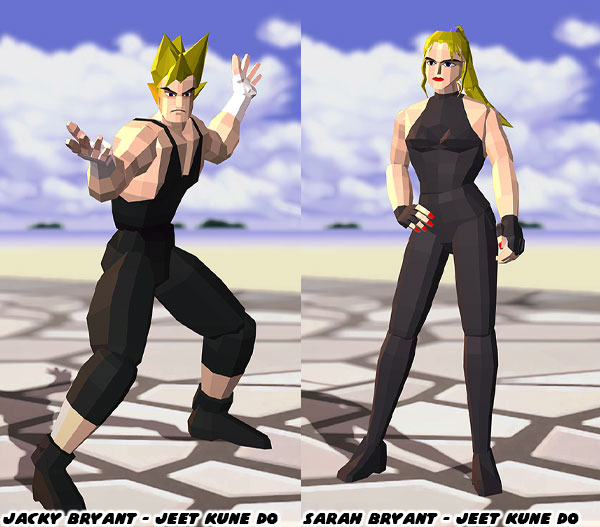
Series creator Yu Suzuki knew what he was doing. Smooth, perfect 3D characters were not his goal. The team at AM2 were using every trick at their disposal to create a solid engine that they could improve upon. Knowing that people would look more realistic in every future iteration. The team also focused on creating a library of characters that represented a broad spectrum of fighting arts. Each sequel would introduce another fighting style. The brother, and sister team of Jacky, and Sarah Bryant used Bruce Lee’s very own Jeet Kun Do aka the Way of the Intercepting Fist. They were fast, flashy, and designed to appeal to western audiences. They were not the only relatives in the game.
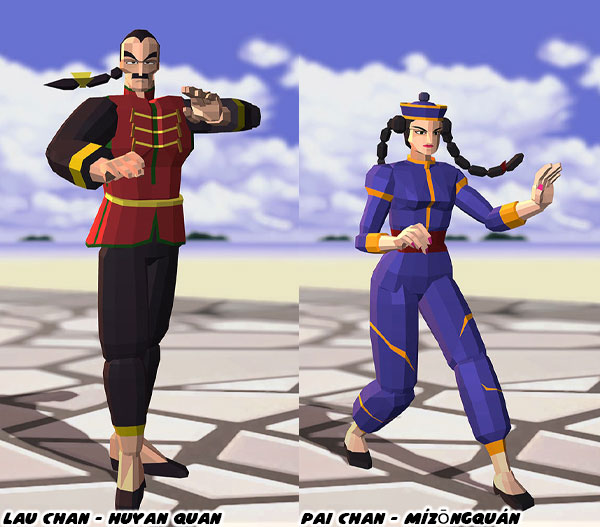
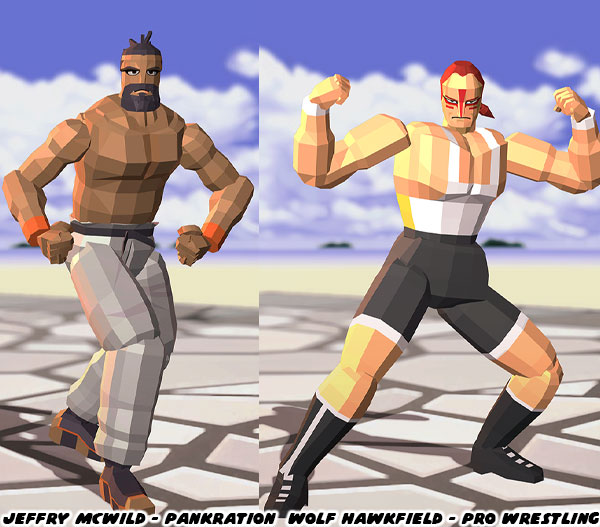
The Chinese father, and daughter pair of Lau, and Pai Chan were central to the story as well. They were a sort of classic martial arts cinema archetype that was universally understood. Anyone that approached the game could tell that they used some form of kung-fu. Then there were the two heavy hitters in the game, the ones that I favored. The Native character Wolf Hawkfield, and the Caribbean Jeffry McWild. Although Wolf was light skinned it was nice to see some form of Native representation in a game. The same applied to Jeffry. The duo were so popular that they would appear in future pro wrestling games as well.
With a cast, and engine in place it was only a matter of time before the rival studios would have an answer to VF. The first would be Tekken. Namco had been going back-and-forth with Sega on everything they released. Just because they went from 2D sprites to 3D polygons didn’t mean the rivalry would end. There was not one genre where the two publishers did not have direct competition. Tekken floored audiences with their textured polygons. These stood apart from Sega's flat shaded polygons. Visually Tekken looked like the superior game, even if the frame rate or other elements weren’t as well done as VF. Each sequel from the two companies felt like a call, and answer.
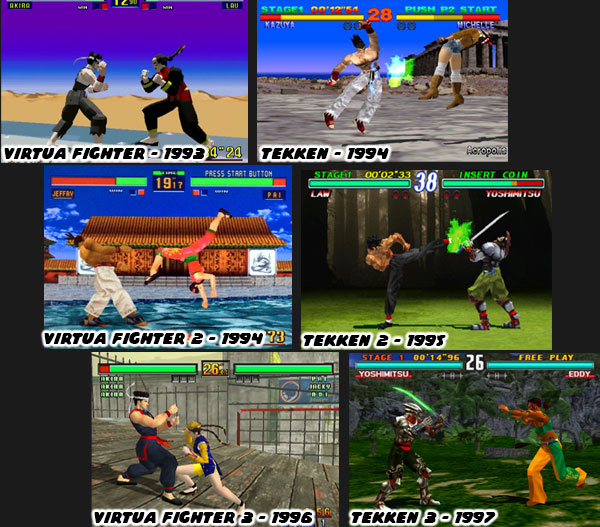
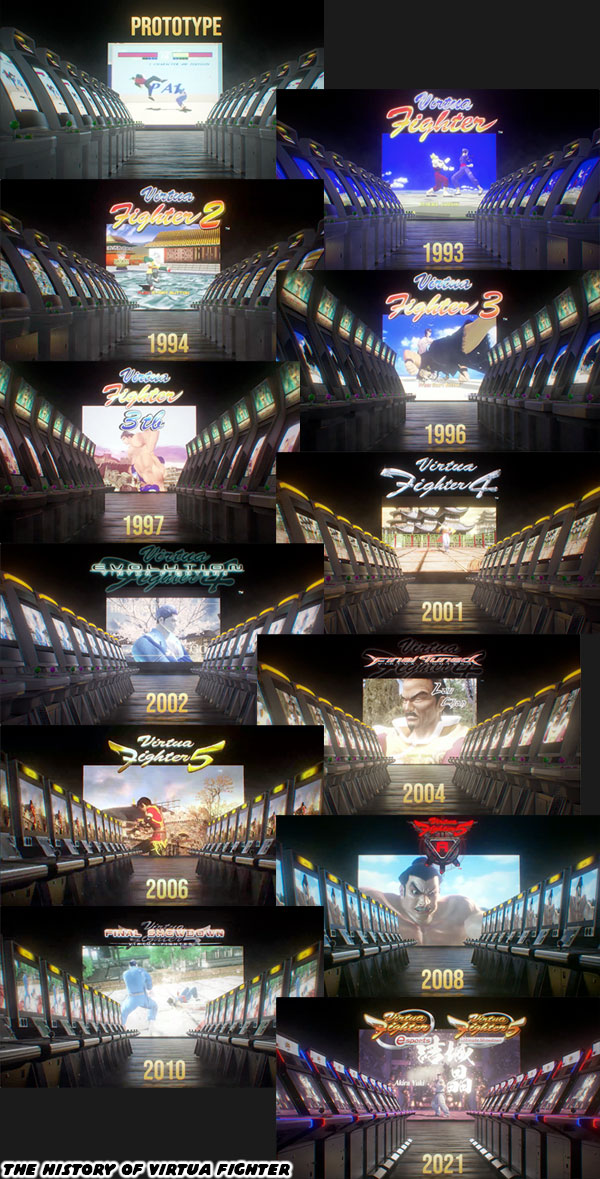
The differences between the two games were tiny, but their impact to the community was tremendous. The four years from the release of the first VF in 1993 to Tekken 3 in 1997 was a technological leap. The improvement on textures, engine, animation, and frame-rate was apparent in the Virtua Fighter 2 arcade intro. Virtua Fighter was focused on realism rather than the more fantastic Tekken. By the time Sega released VF 3 the characters could not only turn their heads to follow opponents, but even turn their eyes as well. Not to mention when they stepped in sand, or snow they left tracks. Doing tiny things like having head tracking, showing damage, and even breathing was an unheard detail in any other game. Suddenly Capcom’s reputation as the best fighting game developer was in doubt.
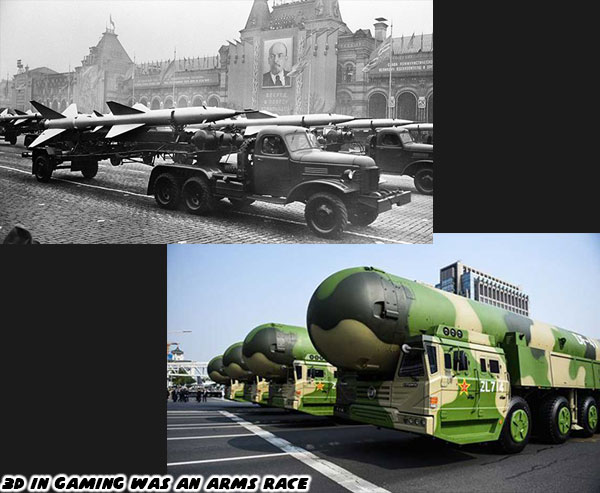
Sega, and Namco had turned the fighting game community upside down in the mid-‘90s. This made every major publisher increase funding into 3D R&D, helping push the entire entertainment industry forward. What many people didn’t realize was that Sega, and Namco relied on outside contractors to help create next generation 3D graphics. Namco built their System-22 engine on simulator tech from Evans & Sutherland. Sega developed the Model 3 board with military-level technology from General Electric Aerospace Simulation & Control Systems. The two publishers created an arms race. This applied equally to arcade, and console developers. Whichever company could bring 3D graphics home for a reasonable price would win the war.
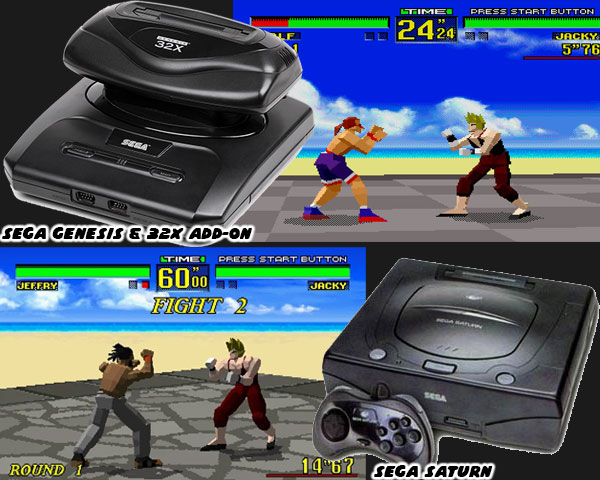
Sega was able to bring some 3D games home. They made a decent 16-bit adaptation of VF using the 32-X add-on for the Sega Genesis. A closer arcade-quality version would appear on the 32-bit Sega Saturn as well. Not to be outdone Namco partnered with Sony to create an arcade-perfect version of Tekken for the new Playstation console. Fighting games were not the only titles to help move consoles, but they certainly helped. The shift from 2D to 3D was pushed along thanks to Sega and Namco. More than 30 years had now passed. Mr. Harada, and his team were still keeping Tekken alive. Sega had drifted away from many of their biggest hits through the 2000's and 2010’s. How would Virtua Fighter become relevant once more, and especially with Mr. Suzuki talking about retirement? We’ll talk about it in the next blog. Were you a fan of 2D fighters, 3D fighters? How long had you been playing video games? I’d like to hear about it in the comments section. As always if you would like to sponsor me please visit my Patreon page and consider donating each month, even as little as $1 would help make better blogs and even podcasts!
follow the Street Writer on Patreon!

Thursday, December 26, 2024

The Return of Virtua Fighter, part 1...

On December 12, 2024 the fighting game community was given an early Christmas present. During the annual game awards Sega revealed that there would be a new Virtua Fighter (VF). Sega would once again return to their roots in honor of the 30th Anniversary of the first 3D fighter. Needless to say this announcement made me, and millions of fans around the world extremely happy. The first details of the project would be revealed during a stream immediately following the awards show.

For those keeping track the last numbered VF entry was Virtua Fighter V in 2006. There were however various remixes for different platforms as recently as 2021. For long-time fans it seemed surreal that going into 2025 we might see the next evolution in the franchise that many of us thought was dead. In fact the idea of a resurrected game was more than coincidence.

The VF stream began with two lines from the poem Morning Has Broken by Eleanor Farjeon. This almost 100-year-old poem was designed to be a celebration of the Christian faith, without it necessarily calling out a specific Bible passage, or parable. The last part of the poem was particularly important considering they were reintroducing Virtua Fighter. 

Mine is the sunlight,
Mine is the morning,
Born of the one light Eden saw play;
Praise with elation,
Praise every morning,
God’s re-creation Of the new day.

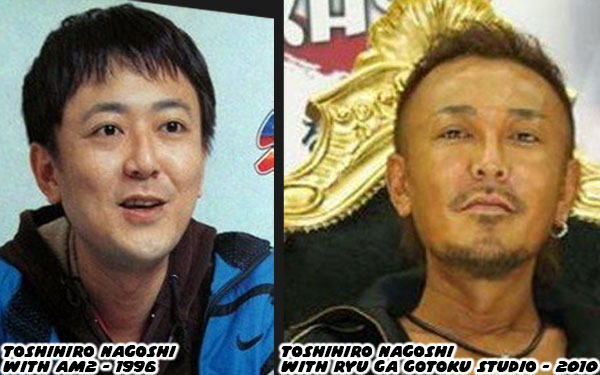
After the poem the new developers were revealed. Ryu Ga Gotoku Studio aka Like A Dragon Studio would be doing the heavy lifting. The company was founded in 2011, however their core team went back to 1998 when they were known as Sega’s internal team AM11. Dragon Studio founder Toshihiro Nagoshi was the guy that created Super Monkey Ball, but he was also the mastermind behind the Yakuza series. Mr. Nagoshi had been with Sega for decades. He first joined the company in 1989, and helped bring Daytona USA to arcades. His insight to the series, his team of programmers, and artists were easily the best choice to reintroduce VF. I’ll talk more about the studio, and Mr. Nagoshi shortly.

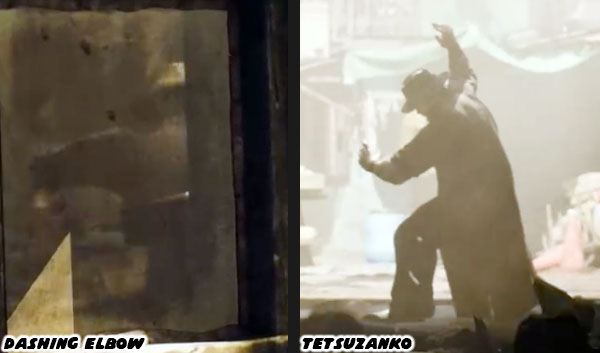
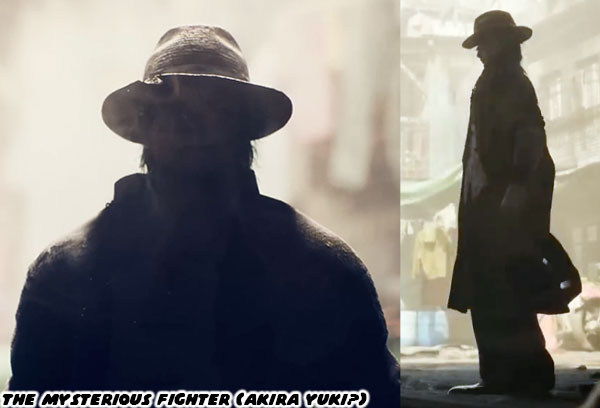
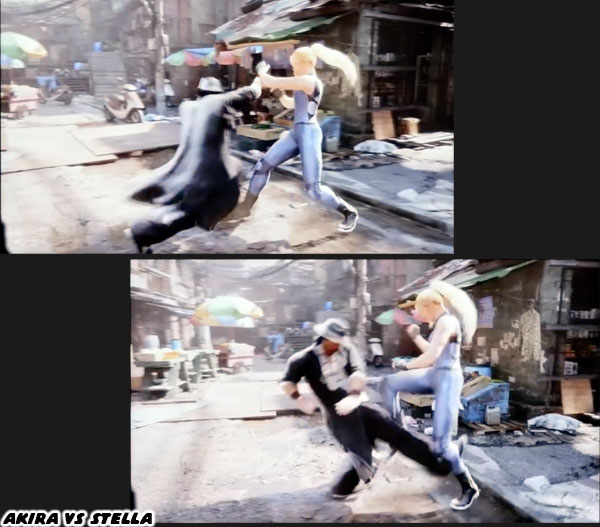
The teaser for the game showed a mysterious figure in a back-alley fight. We only caught glimpses of the figure in a window reflection, or in a pool of water. Even without a clear look at the guy the eagle-eyed fans could identify him based solely on his attacks. The dashing elbow, and tetsuzanko (which was used to throw his opponent through a wall) were trademark moves for Akira Yuki. Yet this didn’t look like the character that we had come to expect. His jacket, hat, and uniform looked tattered. A good amount of time must had passed since we last saw him.

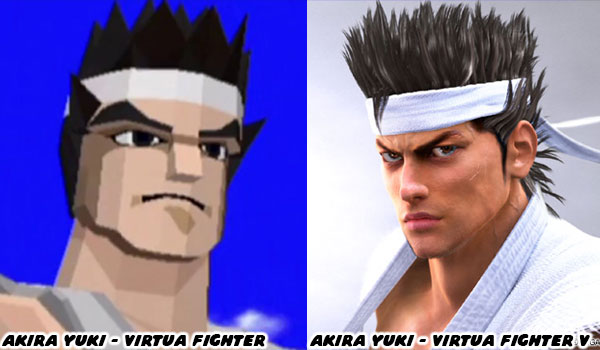
Akira was traditionally presented in the VF games as a young master with spiky hair, and a white headband. The martial artist was the star of the series, not unlike Ryu was for Street Fighter, or Terry was for Fatal Fury. This new presentation was shocking

The studio went out of their way to build up the dramatic tension with the mysterious fighter. We never got a clear look at him during any of the footage. Instead he was presented in shadow. We could see tears in his hat, and even what appeared to be bullet holes in his jacket. This acted as both a storytelling device, to let us know that our mystery man had been in some dangerous battles, but also to show off the next generation rendering of the characters. The realistic cut of his coat, faded colors, and wrinkles were a far cry from his earlier crispy white uniform. This was a more grounded, more experienced fighter.

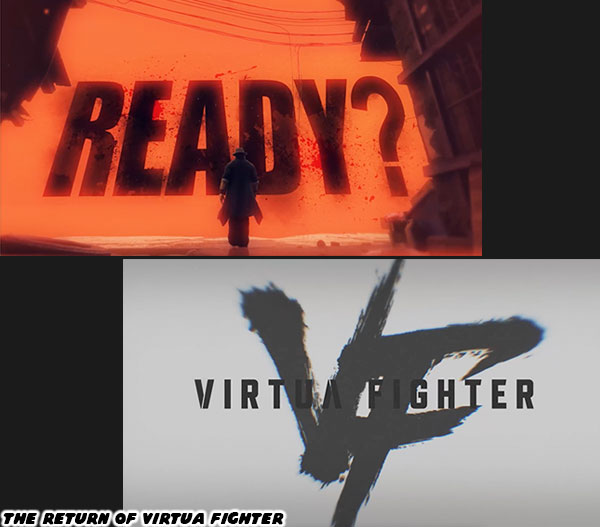
After Akira threw the unknown opponent through a wall the teaser reveals the official return of the Virtua Fighter franchise.

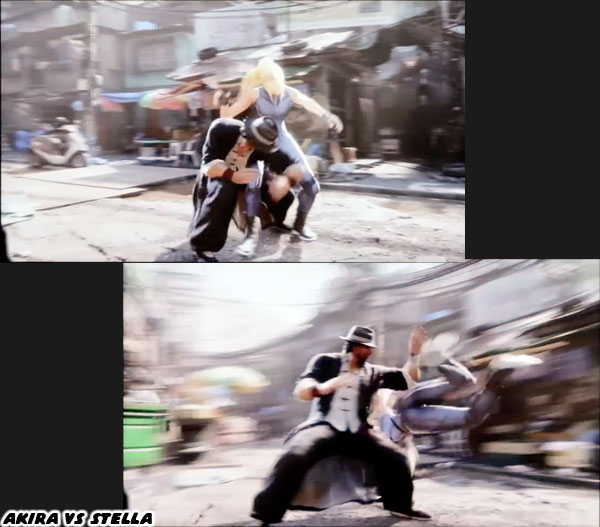
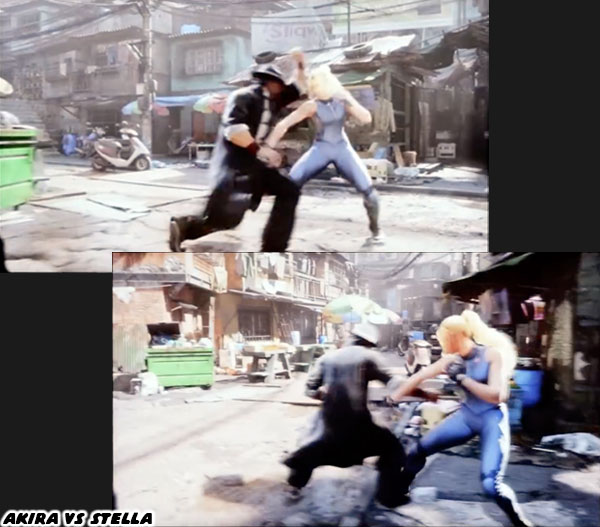
The last few seconds of footage showed off what appeared to be Akira fighting with another star of the game. The blonde woman with a blue skin suit was assumed to be Sarah Bryant. However it was later revealed to be a character called Stella.

The stages were highly detailed, but they lacked any pedestrians or other people in the background. I don’t know if this was because it was very early in production, or if it was a design choice. In either case this was one of the most detailed environments that I had ever seen in a fighting game.

The few seconds of footage between Akira and Stella were among the most impressive of any modern fighting game. I mean more than just in terms of graphics, and animation. The way the moves, countermoves, blocks, and angles flowed between the two were dazzling. They were unlike the combat in Tekken, the nearest contemporary to the 3D franchise. The moves almost seemed choreographed the way the two traded strikes. They skirted the line between the realistic and the fantastic battle you might see in an action movie.

The weathered environment was stunning. It signaled a change in tone, and direction for the series. Yet at the same time it honored the legacy that came before. The world of Virtua Fighter had always been grounded in realism, and not necessary reality. The stages were often set around the world, and were often pristine environments. Now we were seeing a more subdued area, some place that might have been arounds for decades, possibly centuries. It was dirty, worn down, and essentially lived in.

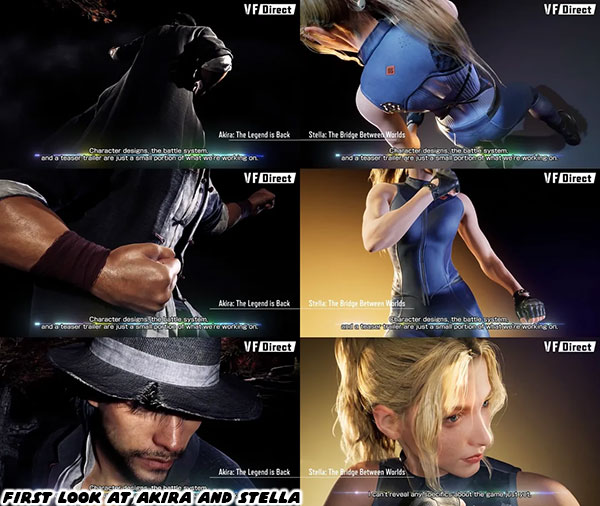
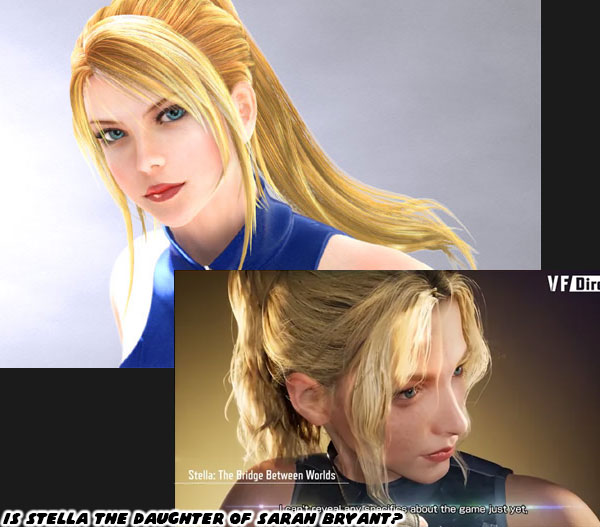
The first high resolution shots of the featured characters were unveiled. Akira was rightfully labeled “The Legend is Back.” This was when most of us found out that the blonde in the early footage was named Stella. She was described as the “Bridge Between Worlds.” This gave fans of the franchise two possible ideas. The first that it was a mistranslation of Sarah. The other was that the youthful character was actually the daughter of Sarah Bryant. Her looks, and moves were spot-on for the iconic character. To many it didn’t make sense that she would be replaced.

The idea of a daughter being featured in a reboot of a franchise was not a new concept. The most recent example of that was with the character Cassie Cage from Mortal Kombat X in 2015. Cassie was a special forces agent that combined the moves of her parents, Sonya Blade, and the martial arts star Johnny Cage.

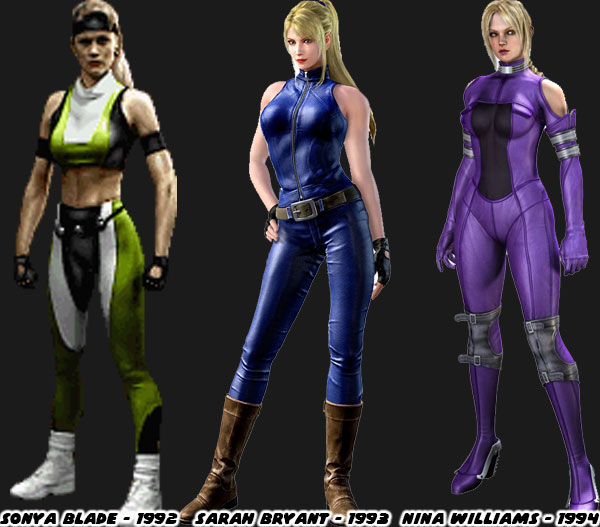
Sonya Blade was an icon in the fighting game community. She was the first notable western blonde in fighting game. Her military-inspired look actually predated Cammy in Super Street Fighter II by a year. I would argue that the Mount Rushmore of fighting game female characters should include her as well as Chun-Li, Mai Shiranui, and Nina Williams. The first few games of Mortal Kombat were sprite based, and not in 3D. It didn’t matter because Mortal Kombat gave the world a taste of western aesthetics, and confirmed to the Virtua Fighter, and Tekken teams that a strong blonde female character could be a star in their fighters as well.

Looking back at the history of the fighting game genre made me think about how unique Virtua Fighter was. It also made me realize that not a lot of people knew what it meant in context. The gaming industry was different 10 years ago, 20 years ago, and especially 30 years ago. High resolution 3D gaming was available today on every console, handheld, mobile, and even web browser. If you go back three decades high resolution 3D gaming wasn’t even possible. Back then the 2D sprites were the standard in the graphics department. This was not a bad thing, in many instances sprites were superior to 3D models when a studio was trying to capture a certain aesthetic.

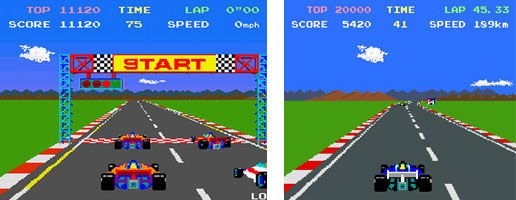
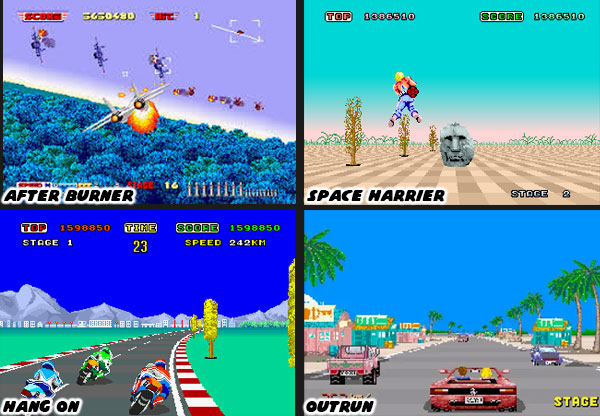
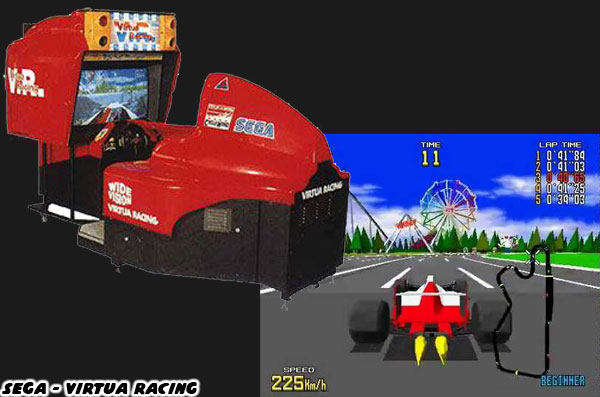
Many arcade firsts came from Namco. At the start of the ‘80s their breakout racing hit was Pole Position. Yet the company knew that sprite graphics had a technological limit. So they started development on 3D engines while also cranking out arcade, and console hits. This investment in polygon rendering would pay off before the end of the decade. Winning Run came out in 1988. It was the first 3D racing game. Sega started development on 3D technology not too long after. Sega’s Virtua Racing would blow the genre wide open in 1992. The back-and-forth would lead to Sega and Namco having an amazing rivalry.

Sega had developed a number of racing video games in the late 1970’s that set the standard for the arcade. When Namco released Pole Position in 1982, and claimed the racing crown a friendly rivalry in the genre was launched. Both Sega, and Namco would try to beat each other every year in genre. The part that people tend to forget was who helped keep Sega one step ahead of their rivals.

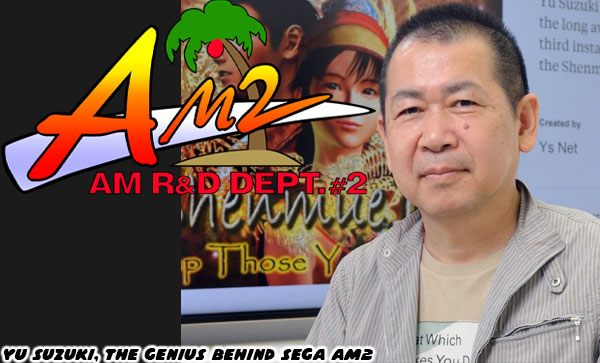
The game designer / director / producer Yu Suzuki was a major reason why Sega succeeded in the arcade, and console markets. I had talked about Mr. Suzuki previously on the blog, calling him the racing fan that started a revolution. The thing that I did not realize was how much his passion, his insight helped make every game that he worked on into something truly special. Mr. Suzuki was a huge fan of motorsports, movies, pop culture, anime, and the like. The things that influenced him helped color the games he produced. The majority of Sega’s earliest arcade hits were created under his direction. To say that he was a brilliant game designer would be a severe understatement.

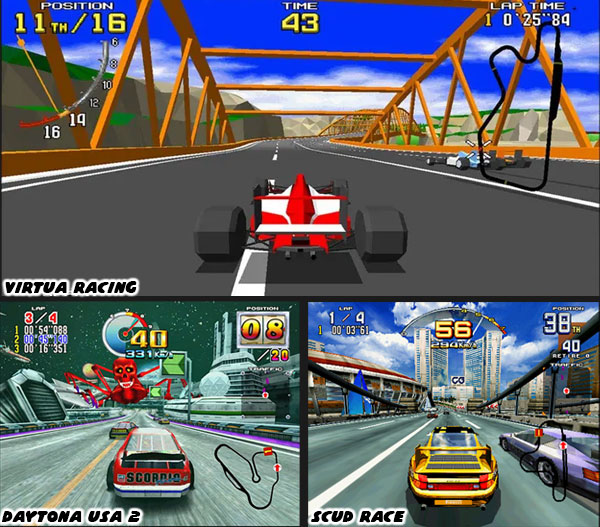
Mr. Suzuki seemed unrivaled with everything he created whether it was air combat, racing, shooting, and sci-fi titles. His games were all groundbreaking. It was his passion for racing, and his love of the Ferrari badge that really elevated the genre. One of his greatest hits was OutRun from 1986. It made everyone forget about Pole Position in the arcade. OutRun introduced a branching path, and rally narrative to arcade visitors. Each year the racing games he produced got better and better. His entry into 3D with Virtua Racing in 1992 made everyone forget about Namco’s Winning Run, and Driver’s Eyes.

I would argue that the tracks in Daytona and Super GT set a standard by which all racing games in the arcade would be measured. The peak of Mr. Suzuki’s influence came at the end of the ‘90s with the brilliant Scud Race aka Super GT. Visually the last 3D racing games he created were cinematic masterpieces, compared to the very simple pixel racing games that he started off with a decade earlier. The question was whether his vision could put Sega on the map for fighting games. Through the ‘80s, and of course early ‘90s Capcom had few peers. Sega needed a hit just to get noticed. Would Virtua Fighter be enough? We will talk a little bit more about it on the next blog (Saturday). Are you excited with the announcement? Will this be a game you get on Day 1, or will you wait and see? What do you think the series needs to really hit with the modern fighting game community?  I’d like to hear about it in the comments section. As always if you would like to sponsor me please visit my Patreon page and consider donating each month, even as little as $1 would help make better blogs and even podcasts!
follow the Street Writer on Patreon!

Monday, December 16, 2024

Freeze frame, my poster collection, part 21…

I love fighting games of all kinds, and today I’d like to look at the posters for some of the rarer games. Everyone knows about the versus series between Marvel and Capcom. Arguably a better crossover was between Capcom and SNK. Who knows if those two worlds might come together again, especially now that a few Fatal Fury characters have popped up in Street Fighter 6.

One of the biggest posters I have is for Fighting EX Layer. It took forever to track down this poster. It’s a little rough around the edges but I love it. I think it was only available with the collectors edition of the game in Japan. However it is larger than regular posters, so this might have come from an actual arcade, making it even rarer than I thought.

I don’t want to get a copy of every fighting game poster that was ever made, but I am partial to rare fighting games. That was why I had to track down a copy of the Groove on Fight poster. I had talked about the Noise Factory series on the blog previously, which had art by the amazing Range Murata. I’m eager to see, and share what other rare fighting posters I can find on my searches.

This Rage of the Dragons poster had been on my bucket list for two decades. I've talked about the game before on the blog. I didn’t think I would ever find for less than $100 in any condition, let alone a good condition. This poster popped up on eBay one day with a buy it now price of $15. At first I thought it was one of those replica wall scrolls out of China. But I researched the seller and saw that he was selling off a bunch of old game items so it seemed legit. I bought it, and sure enough it was a genuine poster in great condition that I got for a steal. Now if I can luck out with a low priced Capcom Alien vs Predator poster (which currently goes for around $800) then I’ll be a happy man.

Do you have any posters for rare fighting games, or other games in general? I’d like to read about it in the comments section. As always if you would like to sponsor me please visit my Patreon page and consider donating each month, even as little as $1 would help make better blogs and even podcasts!
follow the Street Writer on Patreon!