Friday, January 27, 2023

Learning how to tell a story from movies, and the studio that sold the Playstation to me

We’ve been going through a bit of personal history in the past couple of blogs. I’m going to keep digging in because these things definitely helped shape what I enjoy in my favorite forms of entertainment, and will tie back into my love of the God of War series. Bear with me please. All through my childhood repeatedly consuming games, comics, and movies made me aware of the types of stories I enjoyed. I learned the techniques that writers used to help shape a story thanks to my English teachers. I copied my favorite artists work hoping that I would pick up how they see the world. I’d rewatch movies on VHS, and later DVD to pick up how sometimes movie studios got things right, and sometimes they missed the point. It was easier to figure out what worked best when creating big budget projects. When movies were at their best it seemed almost easy to make a sequel. There were a lot of amazing sequels that my brothers, and I grew up with. I didn’t always believe in trilogies, and often wished that some stories ended sooner.

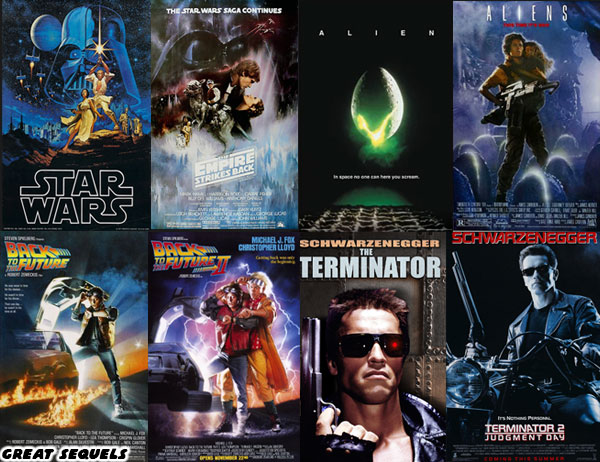
There were a few things that I thought made up great sequels. First is that the stakes had to be much higher in the next movie. It couldn’t simply be more of the same thing. Yes there had to be familiar elements, but the challenge had to be cranked up tremendously. From Alien to Aliens for example, Ripley went from surviving a single xenomorph in a horror film type setting to being an action hero against an army of xenomorphs. In Back to the Future II the original villain Biff completely changed history. It was up to Doc, and Marty to restore the timeline. In Terminator 2 the killer T-800 cyborg was sent back in time to protect Sarah Connor from an even more dangerous robot. Terminator 2, Aliens, and Back to the Future II were almost a complete reversals of the original movies. Audiences loved it, and to me the film series could have wrapped up then. My favorite blockbusters created heroes, and villains that I wouldn’t mind seeing for a movie, or two. Ripley, Sarah, or Marty would be fun to follow for a few adventures. However at some point I thought their story should wrap up. There were a few characters that seemed better suited for a series of adventures. People like Indiana Jones, or Rick O’Connell (the Mummy 1999) were the types of heroes that I thought could easily carry a series of films. The sequels could raise the stakes in unique ways, such as Indy being a father figure in the Temple of Doom, or helping his own father recover the literal Holy Grail in The Last Crusade. The video game equivalents of Laura Croft, and Nathan Drake were adventurers that we’d be happy to follow along with as well.

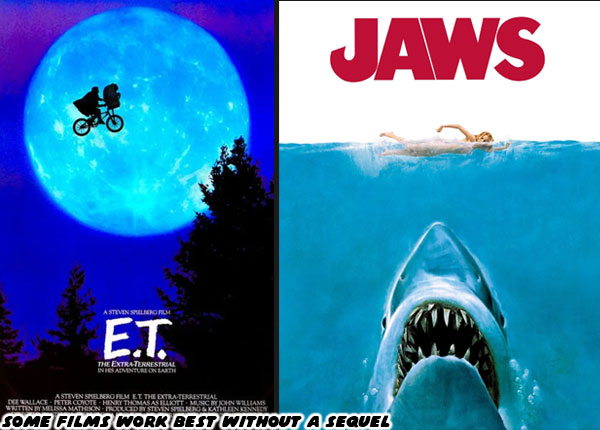
Then there were some films that I thought worked so well that they didn’t need a sequel. I’m forever grateful that E.T. never got a sequel despite calls to do this from the studio. That film wrapped up so well that there was nothing else that needed to be said. The pressure to revisit the property was tremendous, but thankfully Steven Spielberg stuck to his guns. He wanted to focus on original stories. Then there were films that didn’t really need a sequel. The Jaws films for example were nothing more than cash grabs from the studio. The most interesting characters in the original film died after all, those being the shark, and the shark hunter Quint. Even if Police Chief Brody, or ichthyologist Hooper turned up in other movies the plot, and chemistry couldn’t repeat the magic of the original. I applied what movies had taught me to the games I played. Did some games deserve a sequel? Or were they better as one-off experiences? If they did get a sequel then how did they raise the stakes, or completely rewrite the direction of the franchise? The leap from 16-bit pixel games, to the early stage of 32, and 64-bit polygons helped make sequels much stronger. Developers had a chance to expand on the worlds they wanted to create thanks to a bump in storage capacity, audio, and graphic technology.

We were blessed to have the several consoles while growing up. Our parents sacrificed a lot of time, money, and sanity making sure that they could keep their three boys happy. Starting with the Atari 2600, then every few years another console. The NES, Super Nintendo, Genesis, Saturn, GameCube, and Dreamcast to name a few. After the Genesis our parents made sure that my older brother, and I worked (part-time) to pay for our own games, and consoles. My younger brother was able to get out of that rule for a few more releases. None of us ever believed in console bandwagons. We knew that great games were on every platform. Nobody could claim to be the absolute best. We also knew that the best developers made the best games, regardless of hardware. Sony was the newest entry in the console wars, by having Namco bring arcade hits Tekken, and Ridge Racer to the Playstation helped us decide if we’d be spending money on it. Remember that 3D games were still relatively new for home consoles. Seeing polygons with textures, and higher frame rates than we had seen in the past was revolutionary. Although near arcade perfect adaptations helped sell the PS, it was actually original hits by independent studios that made the console matter to us. We started to notice that some studios really spoke to us. As if everything they did was gold. One of those was SingleTrac.

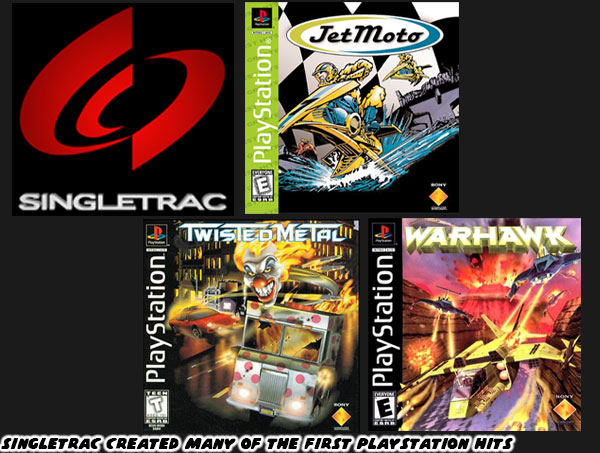
Three of the first games they released for the PS were amazing. Jet Moto, Twisted Metal, and Warhawk. Each of these games was an original idea, something new to the genre, if not carving out a new niche altogether. Jet Moto was a sci-fi racing game, Twisted Metal a vehicle combat game, and Warhawk an air combat game. Many early PS fans would remember WipeOut as Sony’s response to Nintendo’s F-Zero, but that wasn’t the only futuristic racer on the console. Jet Moto was as good, but at the same time a different kind of beast. The flying jet bikes went over land, and sea, allowing it to play like the best parts of Namco’s Ridge Racer, with Nintendo’s WaveRace 64. Warhawk was a futuristic air combat game, with a plane that could both fly, and hover. It found the balance between fighter jet, helicopter combat, and third-person shooter. Twisted Metal was a post-apocalyptic vehicle combat shooter. Of the three it was a breakout hit for the console. The graphics, control, sound, characters, levels, game play, and storyline were brilliant. They were a far departure from the mascot-driven games of the late ‘80s, and early ‘90s. The crazed contestants of the Twisted Metal tournament could never be mistaken for the friendly faces of Mario, Pac-Man, or Sonic. If there was something that SingleTrac understood better than their contemporaries was that audiences was getting older, and looking for more mature themes in their gaming.

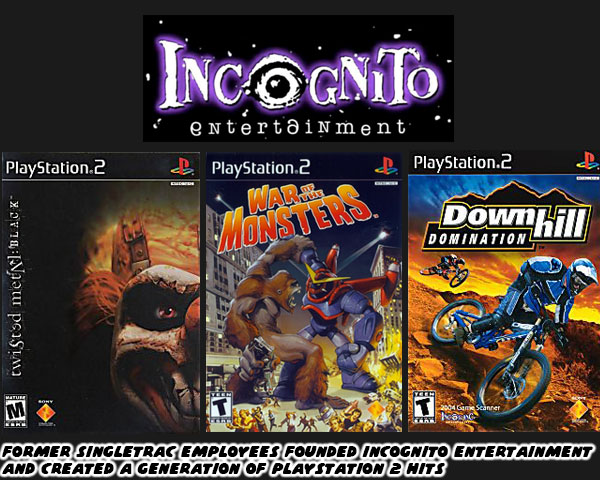
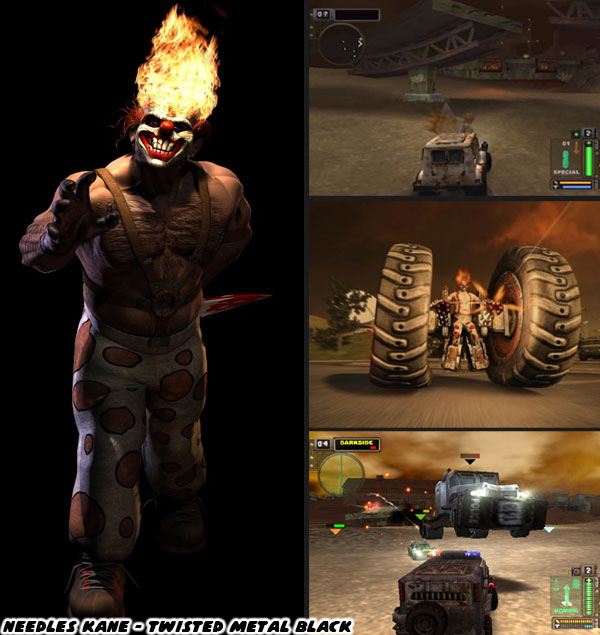
Twisted Metal, the most recognizable character Needles Kane, and his Sweet Tooth ice cream truck became synonymous with the console. For a while many fans, including Sony, considered him a mascot for their platform. The studio had a hit, and the sequel was even more amazing. New characters were introduced, the story was fleshed out, and every element of the game became better, and more polished. What happened next was Sony shooting themselves in the foot. Imagine how important it was to have a studio capable of cranking out so many memorable first generation titles, and all original so that Sony didn’t have to pay for an IP? You would think that Sony gave SingleTrac a massive budget to continue building hits. What actually happened was the publisher turned around, and gave the property to 989 Studios. 989 released the dismal Twisted Metal 3, and 4. The backlash against the game was almost instant from critics, and gamers. My brothers, and I could tell that the new studio was not at the same caliber of SingleTrac. We were sorely disappointed in what happened. Their version of the franchise was a sluggish, and ultimately forgettable mess. I talked about it extensively on an earlier blog when I compared what Sony did to Twisted Metal, to what SCI did with the Carmageddon game. In the end SingleTrac broke up, but from the ashes an even more amazing studio named Icognito Entertainment was born. Sony went back to the game creator, a guy named David Jaffe, and asked if they could develop a new Twisted Metal for their follow-up console the Playstation 2. David said yes, as long as they would get more creative freedom. Sony agreed, and the rest was history.

Twisted Metal Black was one of the darkest games seen in any generation. At the same time it was also one of the best PS2 games ever released. Jaffe, and the team knew better than most Hollywood studios on how to craft a sequel. They kept their content fresh, even when revisiting familiar themes. They added new faces to the lineup, upped the challenge, but made sure the game was still easy to pick up, and play. You didn’t necessarily have to have played the previous versions to get the most out of it. The studio once again demonstrated that they had the pulse of the audience. More so than just about any other studio in the industry. The Gen-X community that made up a huge portion of the video game market was entering adulthood, and they wanted their games to mature as well. Yes they still wanted a challenge, and they still wanted a diversity of traditional gaming experiences. But they also wanted the serious games to become more serious, or in the case of Twisted Metal, to become more over-the-top with the violence, and carnage. Incognito Entertainment was the second coming of SingleTrac. Every title they developed was completely new, and unique. They didn’t bother with nailing down an IP from any movie, or comic book. They didn’t copy what other studios were doing. The proof of was in their other PS2 games.

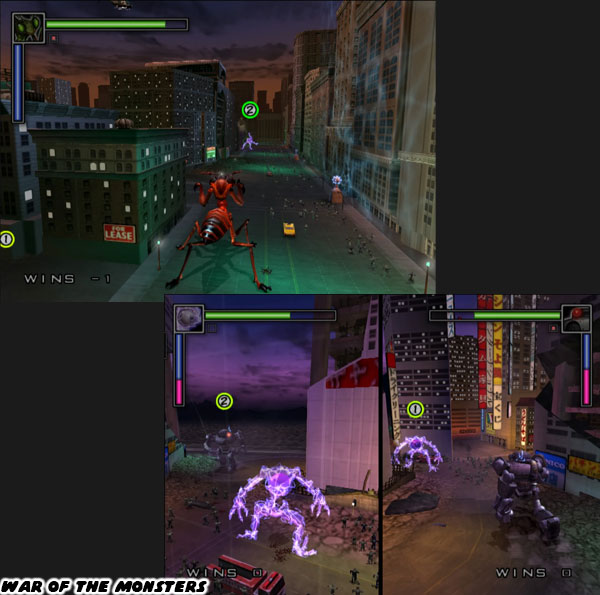
War of the Monsters was one of the greatest games for the Playstation 2. It showed off what the hardware was capable of from an animation, graphics, sound, music, and control aspect. It was easily one of my favorite games of all time. It was almost criminal how little buzz it generated from audiences, and critics. Jaffe, and the studio created a giant monster fighting game that played better than most 3D brawlers, and believe me when I say I’ve played almost every brawler that’s ever been released. None were as smooth, as memorable, or as addictive as what Incog Ent. had delivered. You might think a game without licensed giant monsters wouldn’t be any good, but by the lineup was inspired by a mixed theme of creatures from the golden age of monster films. We’re talking gigantic baddies from the ’50s, through the ‘70s. The studio was able to deliver archetypes from the US, the UK, and Japan. Yet somehow they all managed to work well together. It’s one of the few games that I sorely wish had gotten a sequel. It wasn’t the only critically underrated game that Incog developed.

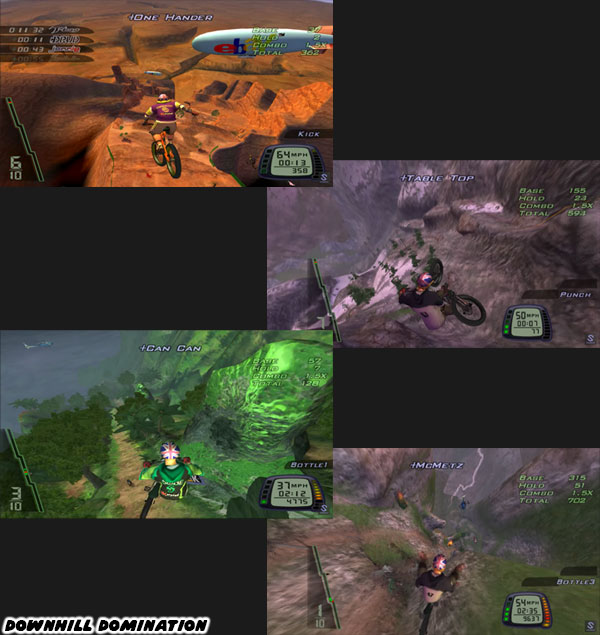
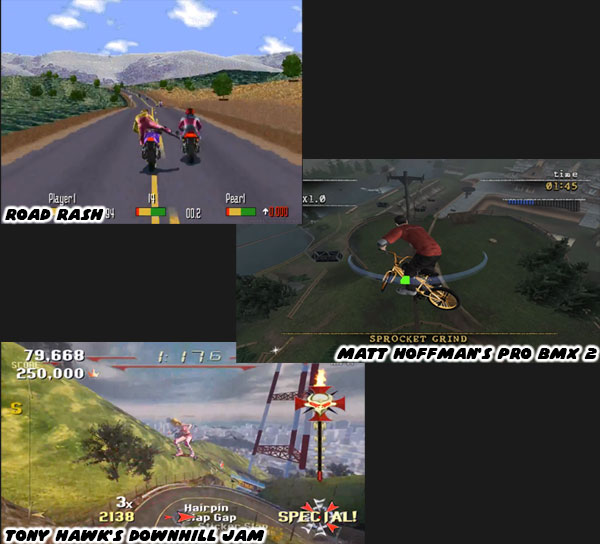
Downhill Domination was an arcade style mountain bike racing game. From a visual standpoint it was one of the best-looking PS2 games ever released. Players took riders down several mountain stages scattered all around the world. Incog got a chance to show off all the tricks they had been learning with the hardware. Every stage had a mix of different elements, terrain, and even weather. This included snow, gravel, dirt, grass, rocks, and even lava. Tracks were set along ski courses, they had waterfalls, and rivers running through them. You'd have to watch out for hikers, and wildlife scaling the mountain. There were tons of lines to find, and hidden paths down the courses. There was nothing as amazing as racing side-by-side with another maniac while trying to survive a lightning storm sparking a forest fire in your path. As if racing down a mountain wasn't challenging enough the computer opponents could kick, and punch you. You could return the favor, and earn upgrades like sticks, and bottles of water to throw at them. In order to earn better weapons, and sponsorship money you could perform freestyle tricks while racing. The enormous leaps you had down precarious cliffs gave you several seconds to perform all sorts of freestlye moves. Incognito had approached the racing genre with the same sort of creative freedom that went into JetMoto. The best way I could explain the brilliance of Downhill Domination would be to say it took the racing combat of Road Rash, the BMX freestlye tricks of Matt Hoffman Pro BMX, and the fun characters, and massive stages of Tony Hawk's Downhill Jam. It didn't do these things okay, in many ways it did these things better than the aformentioned games.

I was in awe of how wonderful each game the company developed turned out. The diversity, and game play they created over the years should never be understated. When I heard the studio was absorbed by Sony I was heartbroken. That meant I'd more than likely never see another War of the Monsters, Dowhnill Jam, or any other original idea. It would probably all be licensed IP, or sequels to other hits. I wouldn't mind the team creating another Twisted Metal, but that was up to the publisher now. I had little faith in Sony. Thankfully they proved me wrong with what they were working on. David Jaffe, and many of the team members he had worked with in the past were cooking up something new. It would be an action fantasy game the likes of which had never been seen before. The game was called God of War. I was not ready for it. We'll talk more about it in the next blog. Did you ever play any of the SingleTrac, or Ingonito Entertainment games? Did you have a favorite? Let me know in the comments section please. As always if you would like to sponsor me please visit my Patreon page and consider donating each month, even as little as $1 would help make better blogs and even podcasts!
follow the Street Writer on Patreon!

Wednesday, January 25, 2023

What came before the gods? Pop culture makes me obsessed with mythology...

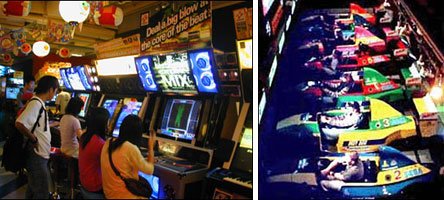
In the previous blog I talked about a conversation I had with my cousin on whether Elden Ring, or God of War Ragnarok would win the 2022 game of the year. It got me thinking about the GoW series, about what made it stand out to me. Why did the adventures of Kratos resinate so much with me? I suppose it all goes back to the movies, and stories I grew up with. I’m a Gen-Xer, like most we were born in the 1970’s. It was a sweet spot where arcades were transitioning from pinball machines, to video game cabinets. So we were the first generation to enjoy the last of the mechanical games, and the first of the digital games. Also we were the generation that was introduced to home game consoles as well. I was lucky to have parents that took my brothers, and I to many different types of movies. Animated, live action, comedy, horror, action, suspense, and just about everything in between. Of course they’d tell us to close our eyes if there was nudity, but we enjoyed most everything we saw. Then of course we would watch TV after school, and see all sorts of classic films while doing our homework. It would be a few years before we got our first game console. So comic books, cartoons, and classic movies pretty much fed our imagination.

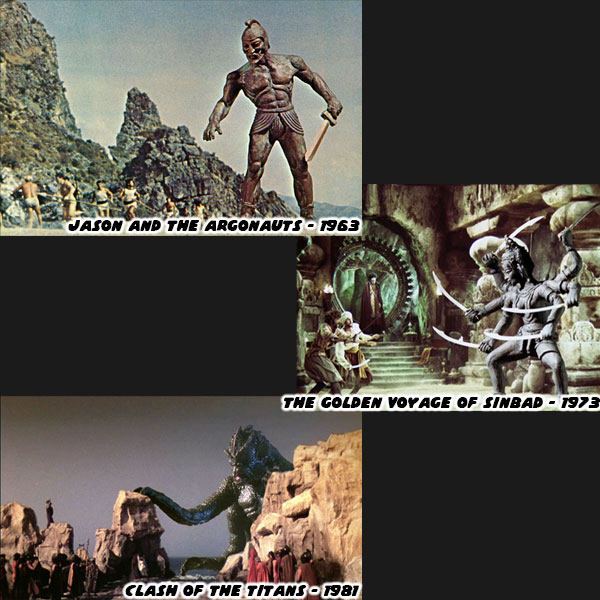
There were a few films that we always tried to catch on TV whenever they played. Chief among them were the ones featuring Sindbad, sometimes written Sinbad. The films covered the stories of the famous Arabian sailor. We got to see a world of fantastic adventures, filled with mythical monsters, evil wizards, and memorable archetypes. While we enjoyed the movies about Robin Hood, and King Arthur as well, it was always nice to see dark-skinned characters play the heroes. The Golden Voyage of Sindbad was possibly our most favorite. It didn’t hurt that I had an instant crush on the chesty Caroline Munroe. The makeup, costumes, and special effects were amazing. We knew how green screens worked thanks to the local weatherman, but couldn’t figure out how they got giant monsters onto the same frames as the actors. The scene where the evil wizard Koura brings the statue of Kali to life was forever burned into my memory. We’d eventually learn about stop motion animation, claymation, and the like. It was an animator named Ray Harryhausen that brought the fantasy monsters to life. I would be forever in debt to his creativity.

Every movie sparked questions from us. We were in awe of the myths from the Mediterranean, Middle East, Africa, and South Asia. Who were the Greeks? Who were the Romans? What about the Persians, Akkadians, Babylonians, and Sumerians? What was a colossus? Where did the giants come from? Were these based on actual legends? Were they original stories? Did these places, did these people exist in real life? Where did flying carpets, and genie’s come from? We’d pester our parents with these questions day, and night. Thankfully mom was familiar with many of the stories. She had grown up with seven brothers, and a sister. They learned all sorts of things in school. She told my brothers, and I about Shahrazad, and the Thousand and One Nights. She talked about how the ancient cities, as well as some of the magics, and monsters were even mentioned in the Bible. As practicing Catholics that was all I needed to hear. I was convinced that a lot of these fantastic stories were based on reality. The thing that really intrigued me was that every legend was built on an earlier story. Like it was King Solomon from the Bible that cursed all djinn, and made them servants. So demons, and monsters used to just run over ancient civilizations. The film Clash of the Titans was the first Greek mythology film we saw in a theater. I learned about the gods that existed before the Bible from that movie. More important, I learned that there were monsters called the titans that existed before the gods of Olympus. They all had names, they all had origins. The idea of something existing before the more well known gods inspired me. It created a desire to learn what came before. I wanted to read more about the ancient gods, and monsters. Of course there weren’t many story books about that in elementary school.

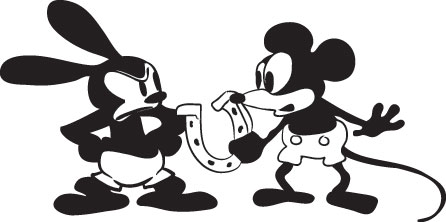
That desire to learn what came before never faded. It was how I discovered that Oswald the Lucky Rabbit existed before Mickey Mouse. At the very least our library had books about cartoons. My fascination with Oswald stayed with me for decades. It was the bit of trivia that I could always bring up to stump the other die-hard Disney fans in school. I never forgot about the titans, and when we took field trips to the main brach library in downtown Long Beach I would seek out the mythology books. I would find out the names of the heroes, people like Jason, and Perseus, and the adventures they went on. I’d wonder why the statues of the classic heroes were always naked, but seeing them wrestling monsters was proof to me that the stories were based on reality. Every now and then I’d learn the name of a titan. Oceanus, Hyperion, Coeus, Iapetus, and their young brother Cronus. I’d learn there were female titans named Rhea, and Phoebe as well. Studying that titans also had parents named Gaia, and Uranus to me meant that they must have been the ones that helped shape the cosmos. It was heretical thinking, but I was sure that the Catholic god was the one that created them, grew tired of their battles, and banished them from Earth. He ended their reign before the Olympian gods showed up. Teachers always wondered how I knew about Roman, and Greek gods whenever they talked about where ancient traditions like Valentines Day came from.

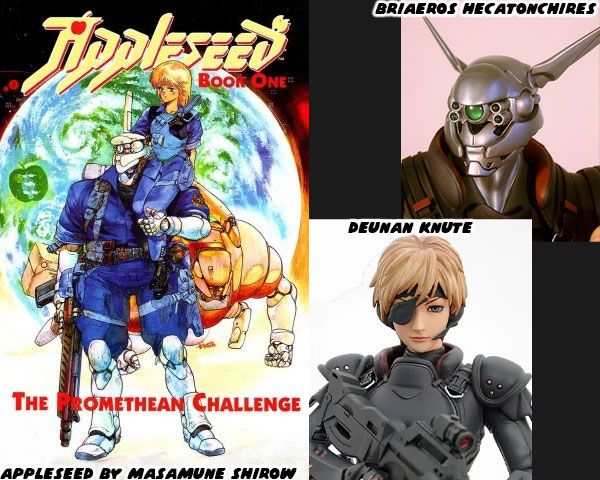
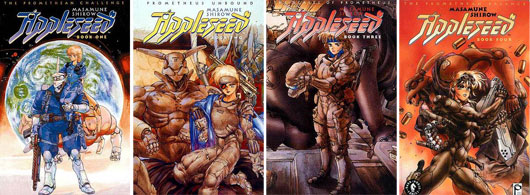
Middle school (then called Jr. High) was more of the same, picking up bits of information about the oldest mythologies. The comic world was undergoing a radical changing of the guard. Jim Lee, and Chris Claremont had redefined the look, and writing for the X-Men. Frank Miller, and Alan Moore made Batman a true heavy hitter. Peter David, and Dale Keown crafted brilliant Hulk comics. Mr. David had even introduced the Pantheon into Hulk continuity; Ajax, Hector, Agamemnon, Andromeda, Atlanta, Delphi, Jason, Paris, etc. These were just a few of the artists, and writers that exploded the comic book market. The indy publisher Eclipse, and later Dark Horse comics was translating a few Japanese mangas at the same time. It was how I discovered Masamune Shirow, and his Appleseed series. The post-apocalyptic story was brilliantly written, and illustrated. The fact that they used classic Greek names, but in a science fiction setting blew my mind. The cybernetic hero Briaeros Hecatonchires, and his girlfriend Deunan Knute were mercenaries recruited into the Olympus E-SWAT team. Nike, Athena, Poseidon, Aeacus, Hades, and Uranus were characters, and places visited in the series. Shirow’s groundbreaking mecha, and weapon designs, several of which were based on insects, were unlike anything I’d seen in any western comic. Shirow was quickly becoming an art god for me. The fact that Briaeros was a Black Mediterranean man underneath the cybernetic armor was also inspiring. Of course I was furious that the more recent CGI movies had white-washed him. The name Hecatonchires was the type of brain augmentations he had, the name was based on the hundred-handed giants that aided the Olympians in defeating their cousins the titans. Briaeros was the name of one of the three Hecatonchires. His brain implants were so advanced that they scared other cyborgs. It was said that he could control an aircraft carrier all by himself by plugging into its computer.

I remember vividly as a kid that several classes got a chance to take a field trip to the University of California Irvine. We were treated to an entertaining presentation in their massive gymnasium, where we were encouraged to go to college. Then we were allowed to attend an actual university class. We had a list of possible classes to sit in on, I was split between the science, and art classes. I sat in on the art, and it turned out to be a history class. The professor was discussing the importance of a classic Greek statue. I was absorbed by the details that he pointed out. The sculptor captured the correct anatomy of throwing a javelin, how the foot placement, turn in the hips, and torso was actually mid throw. There was a shift in balance, on the balls of the foot, and these were motions that happened in a hundredth of a second, but was accurately recreated in bronze. After the class wrapped up most of his students packed up, and left. I ran up to him, and asked if there were any statues, paintings, or other representations of the hecatonchires recorded. Because I only had the stories to go from, but wondered how the Greeks actually imagined a hundred-handed giant looked like. The teacher stared at me with a puzzled look. “Heck-a-ton-cries, uhh, I’m not sure what you’re referring to. I don’t think I’ve seen anything like that.” I insisted that they were the monsters that helped the gods defeat the titans. He nodded, and said “I’m not sure, sorry.” He couldn’t put away his notes, and get away from me fast enough. I’m sure he was wondering who the hell this young brown boy was asking such a strange question. I was deflated. How could a teacher that studied ancient art have no idea what I was referring to?

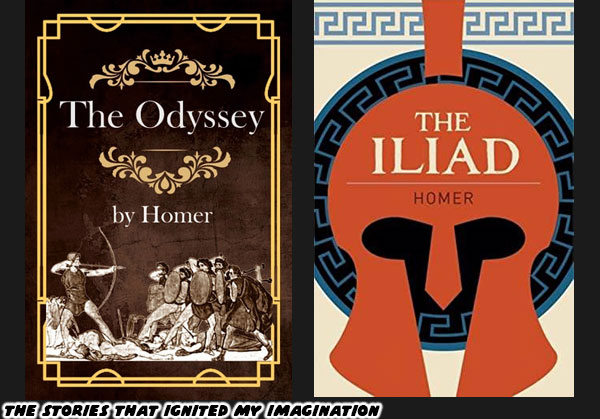
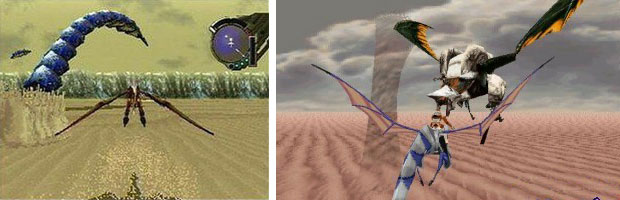
High school allowed me to finally get credit for my fascination with ancient myths. Each time an English teacher would assign book reports we’d get a list of acceptable titles to read, and write about. I’d gravitate to the oldest stories that I could find. I got a chance to read the Iliad, and the Odyssey over those years. It helped me discover the relationships between the various characters. It also allowed me to appreciate the classic movies when I rewatched them. The teachers would then add to my love of mythology by introducing Beowulf, and the other stories from the north. All the while my brothers, and I continued enjoying movies, and playing video games. They were evolving in the arcade, and at home. Stories became bigger, and more complex. The best games were soon rivaling Hollywood for our attention. It was only a matter of time before they would surpass cinema as the biggest form of entertainment. The ‘90s saw Final Fantasy, Zelda, and Phantasy Star made even more amazing with the introduction of 3D to home consoles. The Sega Saturn for example featured Panzer Dragoon. It was a rail shooter the likes of which we had never seen before. Sega had managed to create something fantastic with heavy influences from mythology, but in a fresh new way. Similar to how Appleseed reinterpreted the names, and relationships from the classic gods into science fiction.

As I got older I was convinced that my favorite games were created by people that also believed in ancient legends. Stories of heroes against impossible odds. Enormous beasts, swords, and sorcery were brought to life once more thanks to their talented teams. Video game studios rather than Hollywood still believed in the power of myth. In creativity, and imagination as being the most important element to a successful title. At least it was for a little bit. Even from the earliest days we saw how publishers tried to turn a popular IP, like Star Wars, into a video game. Sometimes these adaptations worked, sometimes they didn’t. Star Wars worked thanks to Atari working with vector graphics, the predecessor to polygon technology, and sound clips from the movie. Then there was E.T. a home console adaptation by Atari that was so bad that many think it tanked the industry, and extra copies of the games were notoriously buried in the desert. I paid attention in English class how stories were built. How heroes, villains, and challenges placed to create drama. It made me watch movies, read comics, and play games with a more critical eye. I became very aware of how sequels worked, or didn’t in some cases. I’m going to talk a little bit more about this on the next blog. I’d like to know if there was something you were obsessed about as a kid that you carried into adulthood. Or was there a comic book, manga, or game that forever influenced you. Let me know in the comments section please. As always if you would like to sponsor me please visit my Patreon page and consider donating each month, even as little as $1 would help make better blogs and even podcasts!
follow the Street Writer on Patreon!

Monday, January 23, 2023

What was your favorite game of 2022? Explaining to my cousin why I thought Elden Ring was better than God of War Ragnarok.

We’re going to go on a journey over the next few blog entries. The idea behind it started as a conversation with my cousin. One day over the holiday break my cousin, and I were talking about the game of the year contenders for 2022. The biggest titles competing were God of War Ragnarok, and Elden Ring. My cousin loves a challenge, and was absolutely smitten with Elden Ring. He enjoyed it so much that he went back through the entire FromSoftware catalog to play, or replay the other Souls games as well. He asked which I think would be game of the year. I said while I enjoyed Ragnarok (GoWR), I thought that Elden Ring (ER) was going to take the title. He knew that I was a massive God of War fan, and was getting my niece into the series. He asked why critics were also learning towards ER. I told him that I understood where new players, and long-time fans were coming from with their praise, and criticism of GoWR, compared to ER. I said both games were beautiful, both told an amazing story, both immersed audiences into a unique world, and both helped set the bar higher for the next generation. You didn’t have to play other games in each respective series, but you would get a lot out of both if you had played prior versions as well.
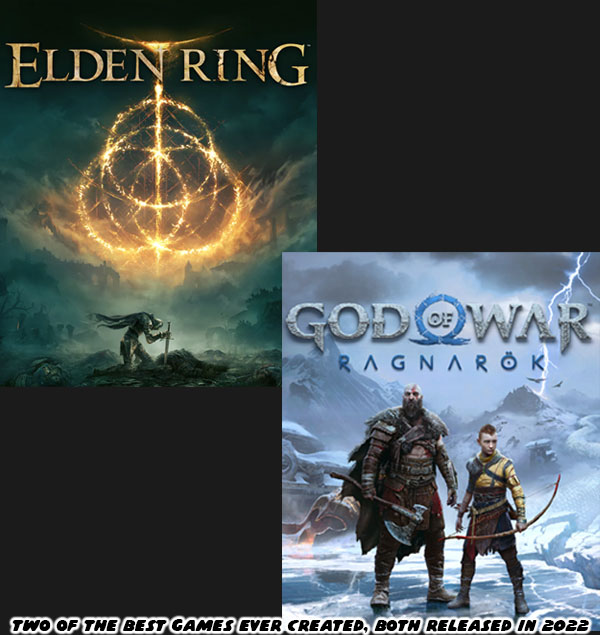
He wanted me to explain more because I always sung the praises of GoW. I told him to be honest, I don’t think GoWR topped the 2018 GoW. I said it was as good, but not better. It had many improvements on game play, control, combos, and visuals. As a whole, however, I don’t think the story, and features topped the previous game. Because of this Elden Ring was going to take the major awards. He wanted to know what it was specifically that I thought was lacking. He appreciated my love of gaming, and wanted to see if I could figure out the intangibles. He wanted to know which God of War game was my favorite, if it wasn’t Ragnarok. I said the best way I could explain it was in theme park terms. I told him to think about the best rides in Disneyland, what were his favorite attractions. I said for many theme park fans there were two at the top of the list; Pirates of the Caribbean, and The Haunted Mansion. I said to think about all of the things that you enjoyed in each attraction. The Imagineers responsible for the attractions were former animators, brilliant painters, writers, engineers, effects artists. They not only broke new ground for rides, but for storytelling as well. Each attraction would completely immerse the rider into an experience. From the time they got in the queue, all the way until they exited the ride. Every moment was in a world that Disney had created. The Imagineers accomplished this by controlling every element. The colors of each scene was painted in was chosen with the insight of a master painter. The angle of each turn was framed with the care of a director of photography. The fanciful pirate scenes were lit as if they were stage plays. Every material created, or purchased building, queue, and ride vehicles helped to convey a narrative.
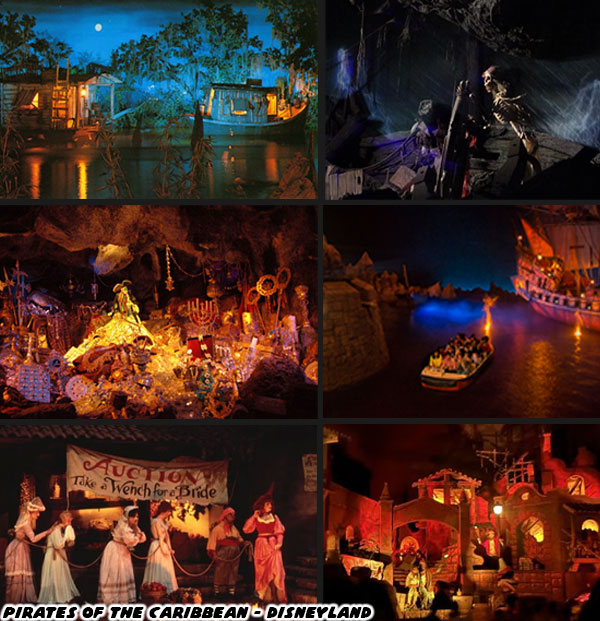
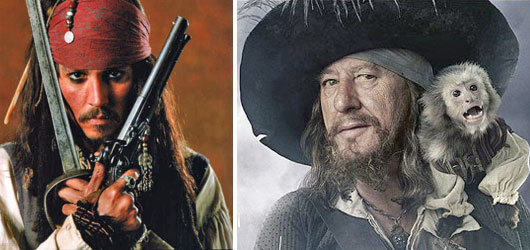
I told him to imagine your favorite part of Pirates of the Caribbean. If you were to ask any seasoned visitor what their favorite part was chances are they would give you a list of things. Maybe it was the Blue Bayou, the perpetual nighttime swamp where the attraction begins. Heck, even the musky smell of the water that hits you as soon as you enter the show building has inspired small candle companies to recreate the scent. Maybe it was the waterfall that riders went down. Maybe it was the skeleton helmsmen perpetually sailing against a storm. Maybe it was the treasure room of an unknown pirate king. Or the battle between the Wicked Wench, and a Spanish fort. Maybe it was the sacking of a village, or any other number of things that were all cutting edge for the time, and still unparalleled in many other parks. Audiences would be hard pressed to say what the best part of the ride was. It was the whole that made it a legendary dark ride.
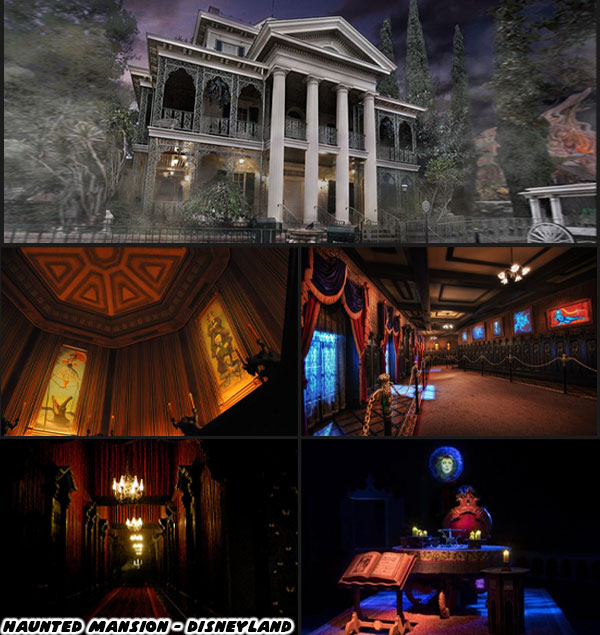
I told him to then think about what was the best part of the Haunted Mansion. An attraction that was longer in development, and allowed them to improve on the storytelling that they learned in Pirates. For the Haunted Mansion the best part could be the building itself. A plantation style mansion that was immaculate, and nothing like the dilapidated buildings that we usually consider possessed. It could be the queue that worked past a mausoleum, and graveyard. The Stretching Room, corridor leading up to the “Doom Buggies” with paintings that changed, and statues that followed the riders. Maybe it was the endless hallway, or the seance hosted by Madame Leota. Maybe it was the Hatbox Ghost, the ballroom scene, the graveyard party, or even the Hitchhiking Ghosts that were the best parts. Just as in PotC it was impossible to pick out a single best thing. It was the collective experience that was unlike anything else on Earth. It was rare to say this about any attraction. It was an experience that even 50+ years later people would never get tired of.

I explained to my cousin. It wasn’t about the speed of the attraction that made it so memorable. Neither Pirates, or Mansion was a roller coaster. In fact both attractions were deliberately slowly paced, so that the Imagineers could pull audiences in. They wanted to bring them into the world that they created, let them forget about the outside world, even for just a few minutes. But at no point did the action stop, they kept pushing audiences forward, little by little. The Imagineers wanted to tell a loose story by using a series of vignettes. They controlled the pace, and time required to absorb a scene by slowing each attraction. This let audiences look at the tiny details in each area, while never losing the overall picture. People could notice new things each time they rode, they could hear the action, feel it, and in some cases smell this world to complete the illusion. This was especially true with Mansion. The sides, and back of the Doom Buggies helped block out the ride, and directed the visitor to look at each scene, framed perfectly each, and every time. Then the buggy would swivel, turn, and reveal another scene just as amazing as the last. I told him that my favorite God of War games was just about evenly tied between God of War Ascension, and Ghost of Sparta. I said I considered them to be the Pirates, or Mansion of the franchise, even if they were less well received by fans.
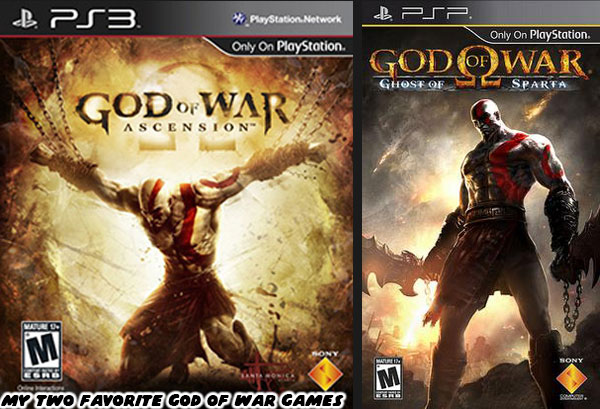
I explained that not only did I love the magic, combat, and control of the games. I also appreciated the pace, storytelling, and framing of each level as well. From the first time I played, through the next dozen play throughs, I never grew tired of the games. Even though I knew where the story was headed I loved the way that the developers paced each section of the titles. The developers were doing much more than creating an action game. They were acting as Imagineers letting audiences play in the fantastic mythical world they had created. In my opinion these games captured the essence of the series better than any other entry. I then told my cousin that the difference between the older, and newer GoW games had nothing to do with quality, or storytelling. Sony Santa Monica was creating absolute gold, and honoring the legacy of the earlier teams. I said GoW (2018), and Ragnarok were not theme park dark rides, they were instead entire lands. There was so much to see, and explore in each game that they were more like Batuu, or Pandora. The two newer lands at Disneyland, and Walt Disney World respectively. Players could not only walk, run, and fight, they could now control the camera. They could look around, and see every detail in these fantasy worlds. Whether it was a massive fortress, a soaring dragon, a poisonous swamp, a loaf of bread, or an exotic flower. There was no detail overlooked. The developers populated the realms with thousands of such things.
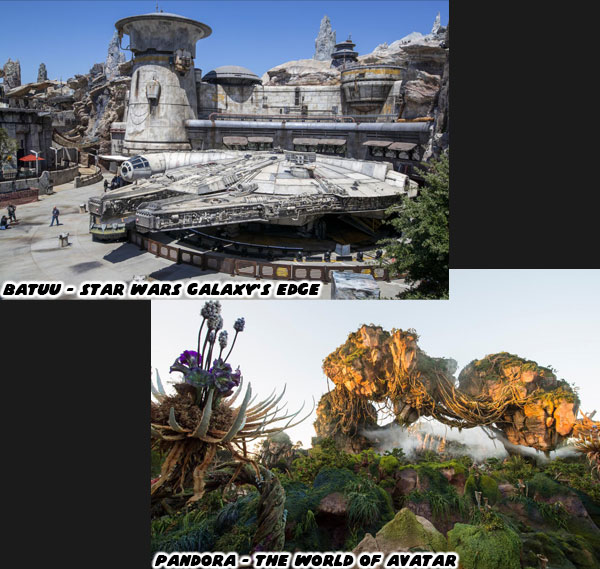
Players in the new GoW games could take their time traveling back, and forth between realms. Exploring at their own pace, absorbing the features of each realm, and appreciating everything that the developers had layered into the experience. I felt that the developers had slowed down the experience to the point that it would come to a dead stop. Which to me was a frustrating experience in a theme park, as well as game. I flat-out told my cousin that I didn’t have time for any of that. I worked all day, raised a family, and at the end of my day I want to enjoy the game, not spend 20 hours wandering back and forth across a map searching for pieces of slag. Grinding, leveling up, and exploring helped control the pace. It was much more difficult to simply rush through the two newest GoW titles because of the difficulty, and various side missions. There were encounters in the game that acted as attractions in these new lands. Enormous set pieces that helped push the plot forward, and make for memorable portions, like say knocking down a giant hammer, or fighting a dragon at the top of a mountain. I had no sense of when these major action pieces would pop up. Maybe it was just around the corner, or maybe it was 10 hours away. In previous GoW games we could just about guarantee that the next major battle was five or ten minutes away from any part of the stage. In the meantime we could enjoy the battles against waves of weird monsters, and figuring out fun puzzles.
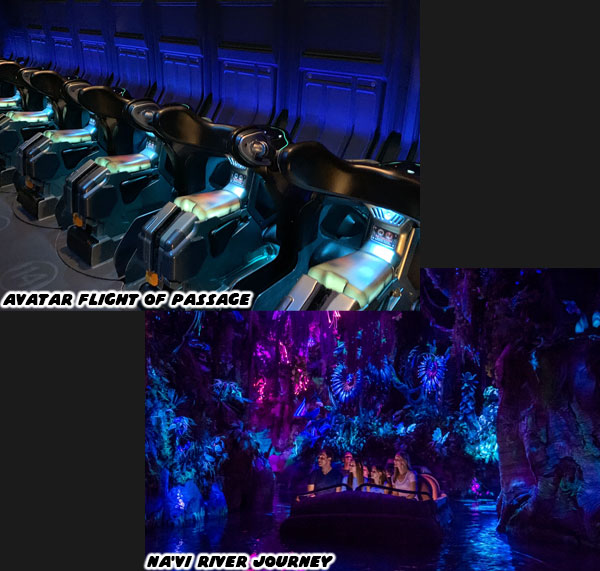
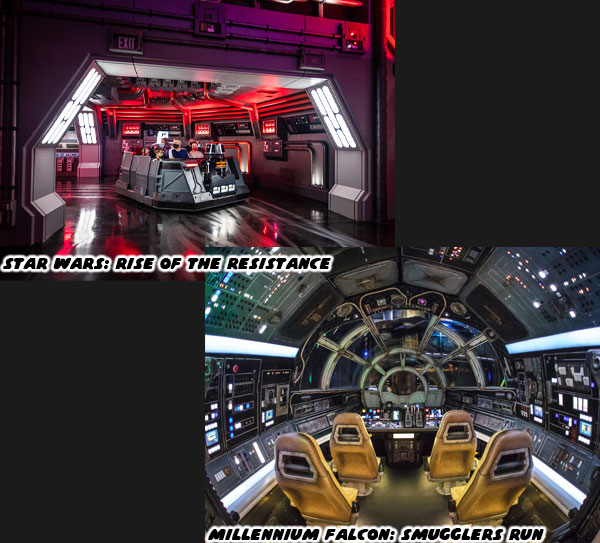
A slow, and deliberate pace were all things that modern audiences expected to see in a AAA title. Uncharted, Red Dead Redemption, the Last of Us, and Horizon were examples of games that had become longer, slower paced, and more immersive than at any other point in history. Like a Hollywood tentpole movie these games required the eyes of a talented director, a team of writers, hundreds of employees, millions of dollars in development, and years to be released. I explained to my cousin that although I appreciated that the studio had given us multiple worlds to explore, what I wanted to enjoy was the attraction. I didn’t want to wander through Batuu, or Pandora, poking around at everything all day. It was part of the reason I didn’t vibe with some of the newer Disney rides. I didn’t want to be forced to press a bunch of buttons while sitting in the Millennium Falcon, nor did I want to stare at the foliage of the plants of Pandora. Modern rides, and modern games were breathtaking works of art-meets-technology. They were built from the lessons of previous Imagineers. They did many things great, but storytelling, and action was the part of the experience that I thought suffered most in the new attractions. Rides, end even entire lands based on an existing IP felt limited. It would be hard to create a Star Wars attraction featuring a popular character that did something, said something, or acted in a way that would not be considered canon. Not to mention the ride could feel awkward if the character died in a film, or television series, yet their animatronic remained as vivid as ever. This is why I think the best Star Wars attraction like Star Tours, or games like Star Wars Jedi: Fallen Order featured an original character, and story. But I digress.
I would argue that the best attractions couldn’t, and shouldn’t be dated against a movie, comic book, or cartoon. The films of Star Wars, Avatar, the Avengers, and Tron were all cultural touchstones, but that didn’t mean they were perfect for attractions, or games. This was especially true if audiences didn’t see frequent updates to the IP. Plus what happens when the parks try to incorporate the likeness of an actor that may turn out to be problematic, or controversial? Millions of dollars gets wasted updating the attraction, and the the likeness of that problematic actor, or actress remains seen by millions of people each year. Again I digress. God of War, like many great games, created its own mythology. It took many liberties with classic Greek, and Norse fables. Characters, and settings that were familiar to audiences were sprinkled throughout the various titles. By centering the experience around a new hero named Kratos, rather than Athena, Ares or Zeus then the developers had the creative freedom to bring us along all sorts of amazing adventures. They could incorporate characters from the Odyssey, the Iliad, or the Ring Cycle. By running with an original idea the GoW series could cross into different pantheons without ever losing the audience. By this same reasoning an original attraction like Pirates of the Caribbean which opened in 1967, and The Haunted Mansion from 1969 still withstand the test of time.
For my final point I said that God of War (2018), and God of War Ragnarok was the difference between the Haunted Mansion in Disneyland, and the Haunted Mansion in Walt Disney World (1971). There were changes in the show building, the queue, and various improvements between the two, but they were still fairly similar. Elden Ring was a whole new attraction by comparison. My cousin completely understood my analogy. As he had a family as well he understood how precious his free time was. Although he enjoyed the challenges of Elden Ring, he also wished he had more time to play through other games. Experience other adventures as well without being bogged down in remembering where he was in a 40-hour adventure. I’d like to know your thoughts on the best games of 2022. Do you agree with the critics? Was there a smaller game that you think was the best of 2022? Let me know in the comments section please. As always if you would like to sponsor me please visit my Patreon page and consider donating each month, even as little as $1 would help make better blogs and even podcasts!
follow the Street Writer on Patreon!

Friday, December 16, 2022

The Street Fighter 6 pre-order trailer, a look at Marisa, the modern gladiator

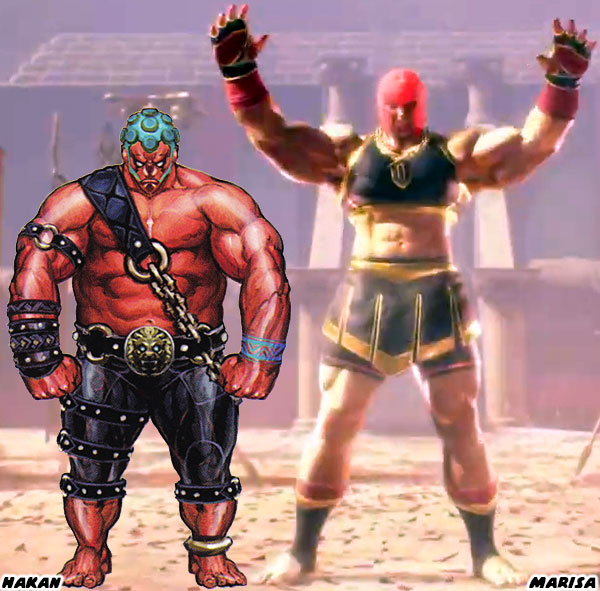
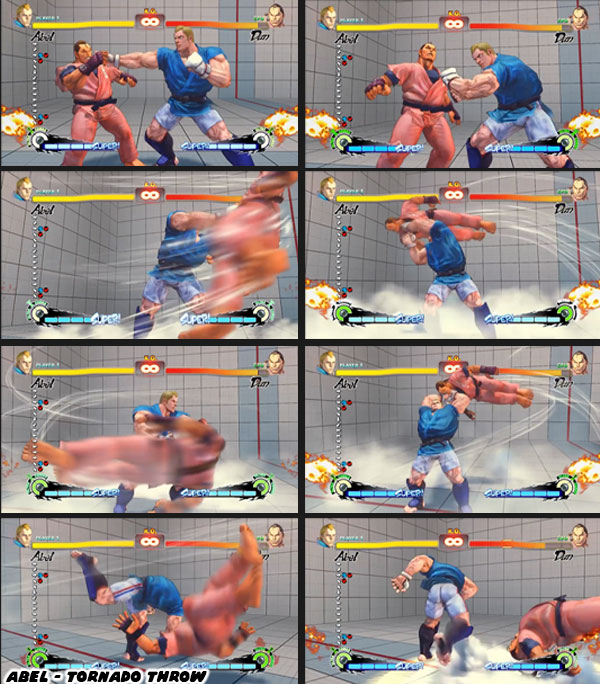
One of the things that I despised in SFIV, and SFV were over-the-top characters, moves, and animations. They often broke the fourth wall, and turned the fighting game into a series of sight gags. The way that Abel would spin opponents over his head with ease was one example. But also the way Rufus would bounce, or F.A.N.G. would flap his arms, and fly all over the stage. These silly animations took me out of the game. In the previous blog I mentioned that Marisa was a second take on one of the cringiest characters in the franchise. I honestly believe that she was a way to make up for Hakan, the Turkish oil wrestler. Let’s examine the roots of both characters.

YaÄŸlı güreÅŸ is an actual form of wrestling from Turkey. It’s among one of the oldest forms of wrestling in the world, and certainly deserves some respect. In Street Fighter IV any appreciation of the art was thrown out the door. Making a joke character out of Hakan was more than likely a call from Producer Yoshinori Ono. His sense of humor colored both SFIV, and SFV. I think it was unnecessary what the studio did with Hakan. If you have a moment I want you to review the idiotic special moves given to the character. Hakan would slather himself in oil, and slide across the screen. He would squeeze opponents until they slipped out of his arms, or roll with them on the ground with the frenetic energy of a Beyblade. Remember the amount of detail that I mentioned went into the judo moves of Manon in the previous blog? Well, none of that went into the moves of Hakan. Instead we have a beet-red character with a strange haircut that continuously breaks the fourth wall with his attacks. I believe that the SF6 team wanted to show more respect to the Mediterranean this time around. While at the same time revisiting many of the same elements that worked for Hakan.

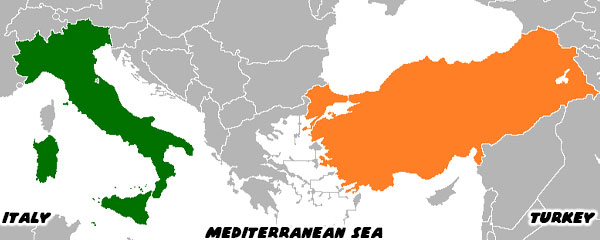
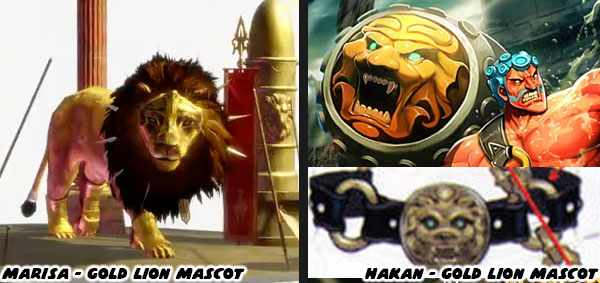
The obvious connection between the two is the area of the world that they inhabit. Turkey, Greece, and Italy share a long history in the grappling arts, we are talking about thousands of years of cross-pollination with the wrestling arts of the East, and West. Their respective cultures helped plant the seeds of modern wrestling, boxing, and even MMA. From a storytelling perspective their body types have to show what type of fighter they are. Both Hakan, and Marisa are very muscular. They do not wear boxing gloves, or boots. So we can tell they are likely very powerful grapplers, with some striking thrown into the mix. Both also have odd hair styles, which are reminiscent of ancient warrior helmets. They also each share a golden lion motif in their design. There is a lion in the decorations of Marisa’s stage, as an actual lion parades in the background while wearing a golden mask. Hakan wore a gold lion on his belt, and his brand of oil featured a lion as well. The ways that each character was presented demonstrated the new direction that the franchise was taking.

Everything related to SF6 shown so far was a love-letter to the series, and the genre as a whole. The developers were not trying to make gag characters, or special attacks this time around. They respected the martial arts that they were trying to capture. At no point were any of the SF6 cast revealed to be joke characters, with silly styles. Yes they could be carefree like Dee Jay, energetic like Kimberly, or flamboyant like Juri, but they were all serious about their craft. Audiences can tell by looking at Marisa that she is heavy hitter. However she is also a multidimensional character whose background shapes her appearance. According to the official bio she is “An up-and-coming jewelry designer from Italy who claims ancestry to ancient Greek warriors. As a child, she was inspired by a vision of the Colosseum in its prime. Today, she seeks glory with a smile—and an eye for beauty.“

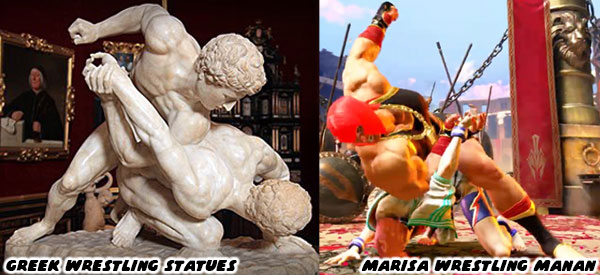
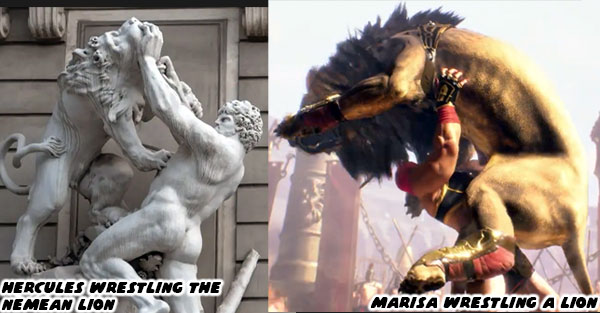
In my first take on the character I called Marisa a gladiator. All of the superficial elements placed on her told a story. The cut of her hair, the plates on her shorts, even the sword jewelry all spoke of Ancient Rome. Seeing her in action in the SF6 trailer shows that the team wanted to make her an awe-inspiring fighter. Several of her poses are taken right out of the history books. Her step over grab into a punch was immortalized in Greek statues that highlighted the roots of Greco-Roman wrestling. These were not the only things that we could make out in the pre-order trailer. Marisa is very tall, not as tall as Zangief, but still a titan in build. She’s actually shown picking up an adult African male lion in the footage. These lions weigh over 400 lbs. and are nowhere near as docile as a house cat.

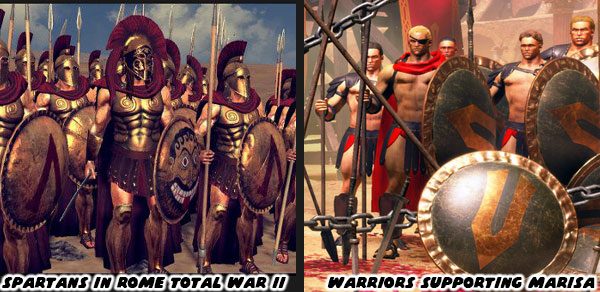
The mythological figure Hercules, father of pankration the original form of MMA, was said to have wrestled the Nemean Lion, the Erymanthean Boar, and the Cretan Bull during his famous labors. These wild animals were bigger, more ferocious, and stronger than their regular counterparts. Marisa is a callback to the Greek hero, and moreover is making the lion motif part of her identity. It makes more sense in her context than as a mascot on a bottle of olive oil, wouldn’t you agree? In her stage we see other warriors, possibly actors, wearing costumes reminiscent of ancient soldiers. The blade logo featured on their shields, as well as the jewelry piece hanging around the neck of Marisa is reminiscent of the Lambda symbol found on some Spartan shields.

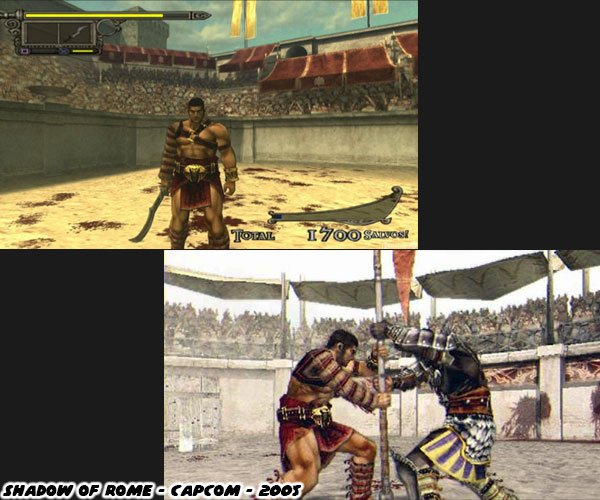
I think that part of the reason that the SF6 team went so deep in the creation, and details of Marisa was because of an earlier Capcom game. Shadow of Rome was a title from 2005, that believe it or not was produced by Yoshinori Ono. It centered around gladiatorial combat in the ancient Roman era. It was violent, barbaric, and played very much like a spin-off of Monster Hunter. Both of which I assume shared the same engine. The sights, and sounds of the old world were faithfully captured. The fashion, armor, weapons, and combat of the title were fairly accurate. There was a lot of creative license with many of the encounters, but as a whole it did a good job of turning the brutality of gladiator battles into a fun game. It was forgotten, partly because the original God of War did a better job at recreating the mythical era that same year.

Marisa is a very interesting character that seems to maintain the same level of care that the other new faces in SF6 have. She doesn’t seem to be a joke character, nor does she have any silly moves like Hakan. A bit of planning, and some respect for the subject matter is what it takes to make a good character design, into a great one. These are the things that I believe Mr. Ono was lacking in SFIV, and SFV. As of this moment I will probably main Zangief in the game, but as I did with Alex in Street Fighter III, I will be looking at Marisa to act as my secondary heavy hitter. What do you think of the character reveal? What do you think of the new characters revealed so far? Who are you eager to see, and what are you eager to try in the game? Let me know in the comments section please. As always if you would like to sponsor me please visit my Patreon page and consider donating each month, even as little as $1 would help make better blogs and even podcasts!
follow the Street Writer on Patreon!

Wednesday, December 14, 2022

The Street Fighter 6 pre-order trailer, a look at Manon, the graceful judo practitioner

In the previous blog I mentioned that Street Fighter 6 Director Takayuki Nakayama, Producers Kazuhiro Tsuchiya, and Shuhei Matsumoto, and Designer Yusuke Hashimoto were doing a much better job with design, diversity, and inclusion than in either SFIV, and SFV. Although they were working with Capcom on the previous games the final direction of the series was in the hands of Yoshinori Ono, whom as a director I had argued took the franchise into some dumb places. The roots of some great characters were in both SFIV, and SFV, however some of the best ideas seemed left on the cutting room floor. The decision to put Rufus in the game instead of King Cobra set the tone that Mr. Ono would be going with during his time leading the projects. I had mentioned previously that Capcom was able to make a memorable character out of an ugly stereotype in the early days of SFII. Mr. Ono didn’t seem to have the same level of insight that I believe the franchise deserved. I contend that many of the new cast members in Street Fighter 6 are an attempt to redo the plans the staff had much earlier.

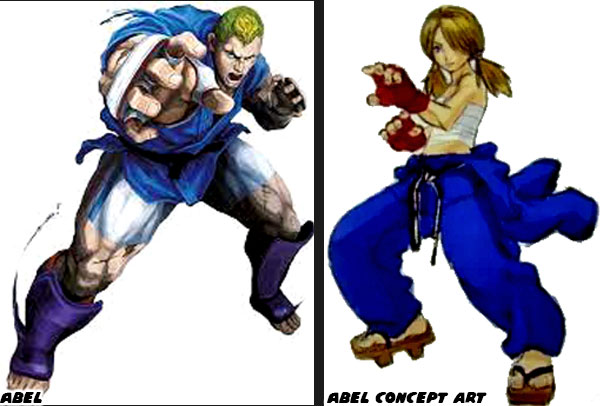
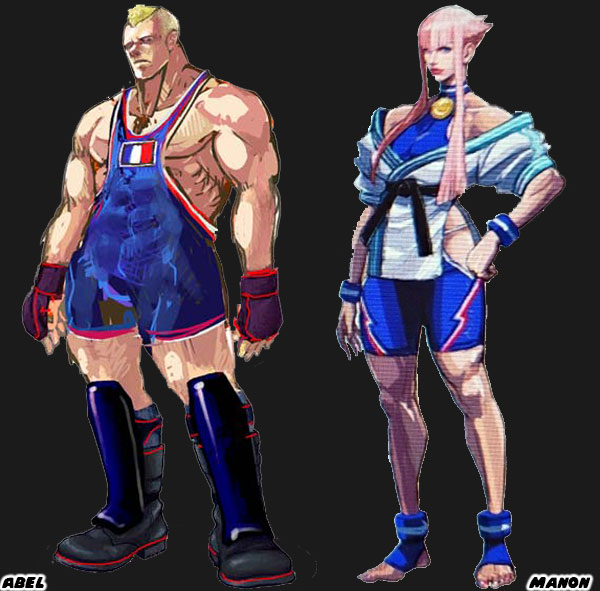
In the planning stages of SFIV the team wanted to introduce an androgynous young grappler.The skinny boy in pigtails would eventually evolve into the hulking Abel. The French-raised fighter was a master at judo. The game series had always had a spot open for the various fighting arts, including judo. The decision to make Abel large, and muscular, along with the rest of the cast, was specifically to make him appeal to western audiences. Capcom saw that the most popular games in the USA featured buff characters. Popular FPS titles like Doom, and Gears of War had characters that were more bodybuilder than standard body types. Hence Abel was hyper muscular, as were Ken, and Ryu. Even skinny characters like Dhalsim now had broad shoulders, and developed pecs, and biceps. Not only that, but the game also gave Abel some absurd judo throws to show off his strength.

It was the animation that I found most jarring with the new characters introduced in SFIV. The fact that the obese Rufus could move faster than the skinniest fighters took me out of the game. But that was just a part of a bigger trend. The best grab moves in the series were impossible, but plausible. The fact that Abel would grab an opponent by the collar, and easily swing them around like a Tom and Jerry cartoon made little sense in context with the lineup. It was certainly believable against small, and skinny fighters like Sakura, or Dhalsim, but looked absurd when doing that to E. Honda, Zangief, or Hugo. Plus what exactly was Abel grabbing if the opponents did not have a collar? These were things that the designers did not seem to consider. Not only that but some of his moves lacked the setup that coded the special attack as a judo move. Street Fighter 6 needed a cast whose moves were grounded more in that plausible reality. In order to do that the studio had to literally go back to the drawing board. What they gave us was a new take on the original SFIV plans.

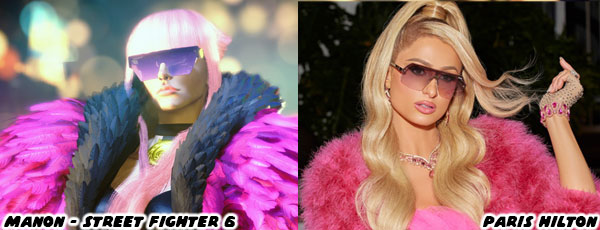
A fighter that we could identify was French was on the menu. Accomplishing this was easy. Using the colors of a national flag was one way that the artists at Capcom would code the lineup. In an early Abel draft, as well as an alternate costume we see him wearing wrestling tights, and a gold medal. Manon’s costume features similar colors, and striping on her outfit as well. In order to make her appear as more of a judoka rather than a wrestler she is wearing a juka top, along with her medal and black belt. Notice however that Manon is wearing her top off-the-shoulders in a very fashionable way. Not only that but her hair is colorful, and stylish. These are all details that support her story. According to her bio she is “A super model and world champion judoka, Manon is an idealist, forever seeking self-improvement in the pursuit of beauty. She struts the catwalk of street fighting to become the world's strongest model.” We can see a bit of her flair in the trailer, and can make comparisons to other fashion icons, and beauty figures like Paris Hilton.

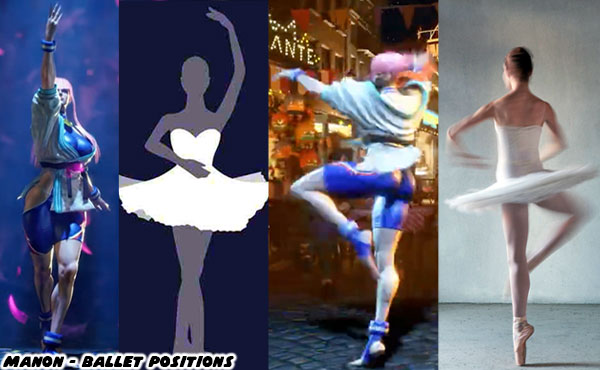
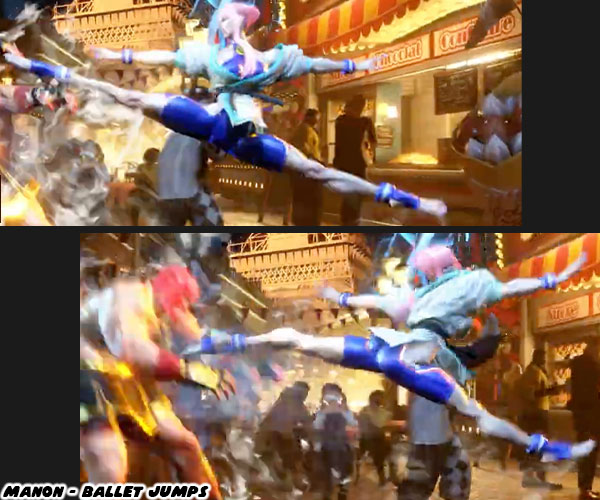
I strongly hoped that Manon was a practitioner of Savate, and with the cut of her outfit even predicted her to be one. It turned out that was not the case, but there was a reason for the tights after all. The range of motion they provided complimented the grace she fought with. We see her spin, leap, and twirl in the air with the ease of a ballerina. If she is a supermodel, then it stands to reason she might be an accomplished dancer as well. Manon might be the most polished model in the genre. No doubt she knows more about the world than other affluent girls that attended a prestigious finishing school.

The SF6 pre-order trailer is filled with many examples of Manon fighting with the grace of a dancer. The moves of Juri, or Chun-Li are focused on delivering strong attacks with their legs, and not so much with their hands. Chun-Li is rooted in sweeping kung-fu strikes, whereas Juri has more open tae kwon do kicks. Manon’s legs are long, and lanky. Her thighs are nowhere as thick, and developed as Chun-Li. This means she does not do a lot of striking with her legs, however her flexibility as a dancer helps her cut down the space between opponents with a leaping kick, while setting up another grapple.

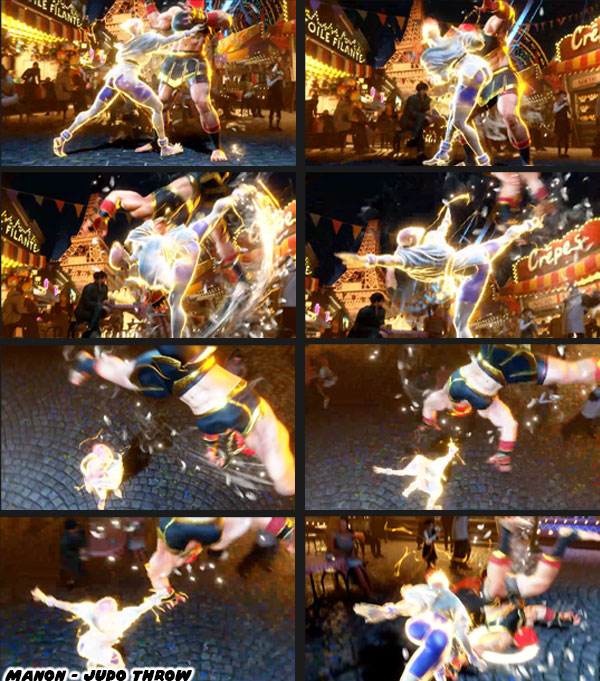
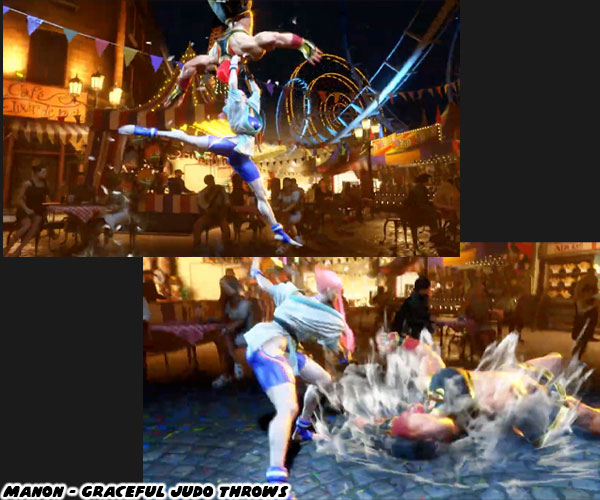
Manon's moves are more plausible for the character, and more important, are more believable for a judoka. Unlike other martial arts judo, and ju-jitsu are not about size, and strength. Certainly a large person with a grasp of the martial arts could do some serious damage. Judo is not about strength, it works through leverage, balance, and a fulcrum. A smaller opponent can easily flip a larger person. Anyone that has tripped over a bench could tell you that gravity does most of the work of falling over. We see these things in action in the SF6 footage. Manon may have dance-like moves, but she also grips her opponent like an actual judo practitioner. In all of her throw moves we see her drop her hip under the opponent’s center of balance. Then she sweeps the leg, and flips them upside down. She grabs their wrist, and controls the landing. It doesn’t matter if the character has a collar to grab onto or not, she is simply tipping them over. They may be exaggerated attacks, but these are fundamental judo moves.

Unlike the cartoonish moves that Abel was given in SFIV, the ones that Manon employs are grounded in actual judo. She doesn’t swing opponents in the air, or toss them like rag dolls. Her throws do not require her to be overly strong. Even massive characters like Hugo, and Abigail would flip head over heels if someone tripped them over their center of gravity. The best moves in the series are inspired by actual martial arts, whether it is a karate uppercut, Muay Thai knee, boxing punch, or wrestling suplex. They can all be made to look fantastic, while not breaking the suspension of disbelief for the audience. In paying attention to all of these elements in the costume cues, moves, and animation of Manon I think that the SF6 team has created a fighter that has more staying power than Abel. The thing that Capcom does better than most studios is exaggerate the method, and outcome of the attacks in animation without going overboard. This is the magic of creating Street Fighter special, and super attacks.

I have established that Kimberly is another take on the Guy template, JP follows closely on the heels of Falke, and that Manon appears to be a new version of Abel. What about Marisa, the other new character revealed in the SF6 pre-order trailer? Is she a new take on an existing character, or is she an entirely new idea? I would argue that Marisa was a redo of one of the cringiest characters in the series. I will explain how, and why in the next blog. I hope to see you back for that. I would like to hear your take on any of the new characters slated for SF6. Who are you going to main when the game drops in 2023? Let me know in the comments section. As always if you would like to sponsor me please visit my Patreon page and consider donating each month, even as little as $1 would help make better blogs and even podcasts!
follow the Street Writer on Patreon!

Monday, December 12, 2022

The Street Fighter 6 pre-order trailer, a love letter to the series, and a look at JP

Thank you for dropping by the blog. We have a lot to talk about with the release of the Street Fighter 6 - Pre-Order Trailer. Make sure to watch it if you haven’t already.
   
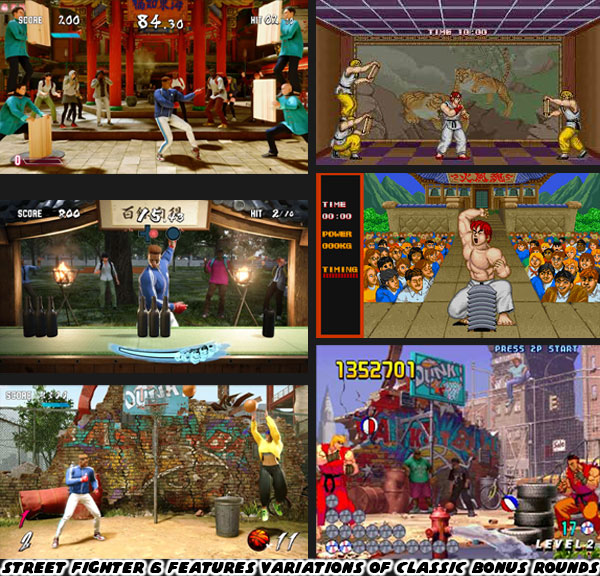
There is a tremendous amount of new information revealed about SF6, including official reveals of some new faces. One of the things that surprised me was the re-introduction of bonus stages. Ways to earn extra points, learn skills, and practice special attacks have been a part of the SF franchise since the very first game in 1986. In fact one of the earliest bonus stages involved board breaking. After 35 years this returns in the game. Long-time players would spot nods to other classic bonus stages, and even new challenges.

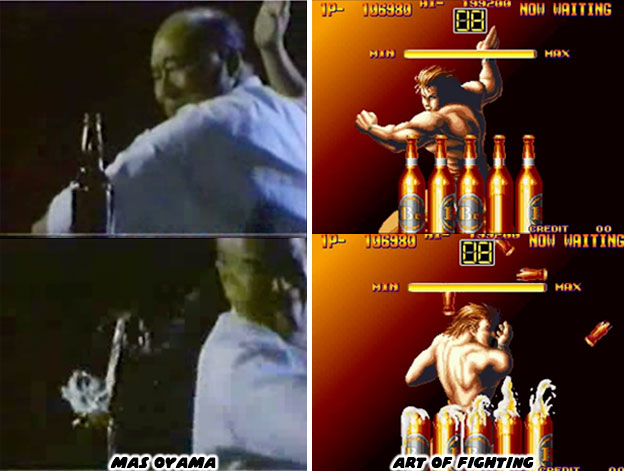
There was a shot of the player character chopping the tops off of glass bottles in one bonus challenge. Those of us old enough to remember would know this bonus was first used in the Art of Fighting in 1992. The SNK game directed by Hiroshi Matsumoto, and Akashi Nishiyama was a sort of updated take on the Street Fighter formula. The duo had developed the original SF before leaving Capcom to join SNK. They took with them a number of their martial arts influences, and translated them into game form. I have written a lot about Mas Oyama, and his influence in the creation of fighting games. The “God Hand” of karate could legit kill bulls with his bare hands. He was the basis for Mr. Karate / Takuma Sakazaki, arguably the most power karateka, and one of the top bosses in the SNK universe. Oyama would put on demos where he would cut the tops off of bottle with a knife hand chop. SNK used the bottle chop as a bonus stage in the original Art of Fighting. This skill now gets a nod in the SF franchise as well.

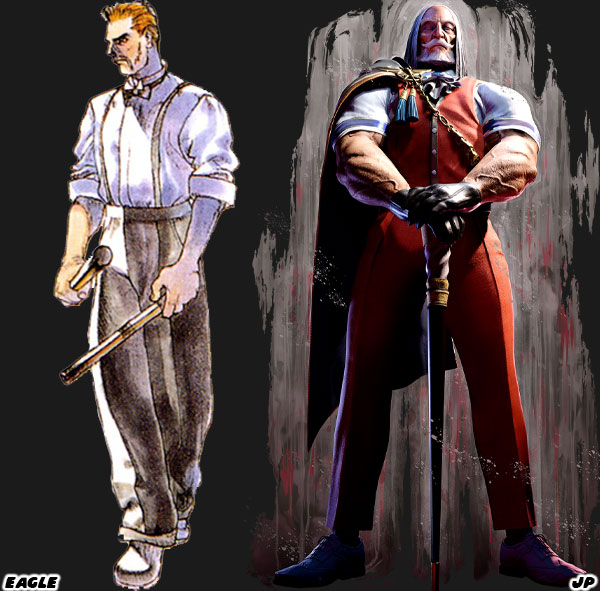
I have said it before, and it bears repeating. Street Fighter 6 Director Takayuki Nakayama, Producers Kazuhiro Tsuchiya, and Shuhei Matsumoto, and Designer Yusuke Hashimoto have all demonstrated a better understanding, and love of the culture than the previous director Yoshinori Ono with every SF6 update released. The game is not only pushing the genre forward, it is also a love letter to the games that came before. These influences are from Capcom, and from other studios as well. I am not going to focus on Dee Jay this time because he is a returning character. Instead I want to talk about the new faces revealed. Let’s start off with the sharply dressed older gentleman. According to the official bio “JP is the head of an international NGO (nonprofit organization, designed to address social or political issues) responsible for many successful investment projects, and the man behind Nayshall's present prosperity. Has a beloved cat named Cybele.” I did a quick look at JP earlier on the blog. As far as his look, and use of weapons is concerned there is a lot of precedence in the series.

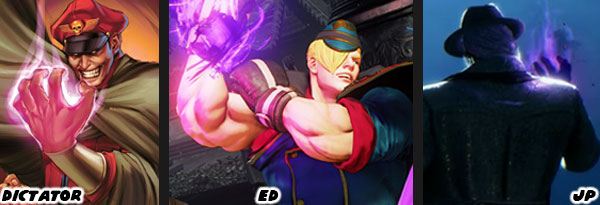
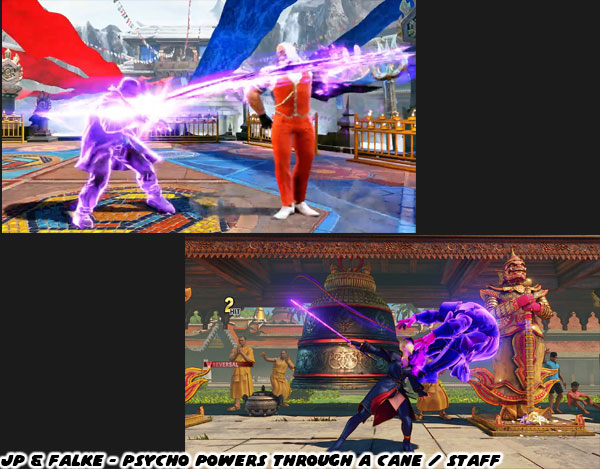
The gentlemanly fighter Eagle was the top British striker in the original Street Fighter. He dressed sharply, and fought with the use of two sticks. JP is a continuation of other well dressed fighters who use a weapon in combat. The closest one that I compared him to would be White from the Fatal Fury sequel Real Bout Garou Densetsu Special: Dominated Mind. It could be considered fair for him to use a cane because JP was an older gentleman competing against fighters half his age, and twice his size. Of course as with any fighter in the franchise looks were often deceptive. JP was more than just skilled with a cane, in the trailer we can see he harasses some sort of psychic ability. The purple glow of “psycho power” had been featured as early as 1991 through Vega / Dictator, as well as in later games with Rose, Menat, Ed, and Falke.

It was established in previous SF games that psychic powers could be funneled, or rather focused through objects. Menat used a crystal ball for example. Falke used a military staff. The vast majority of characters in the SF universe fought with their bare hands, but a select few fought with weapons. These characters helped add balance to roster. From a storytelling perspective it made sense that a Mad Gear boss like Sodom would fight with a weapon. But it also worked when smaller fighters, or older fighters, were allowed to use weapons in combat. To learn more please read the blog on Falke, and how military design works in fighting games.

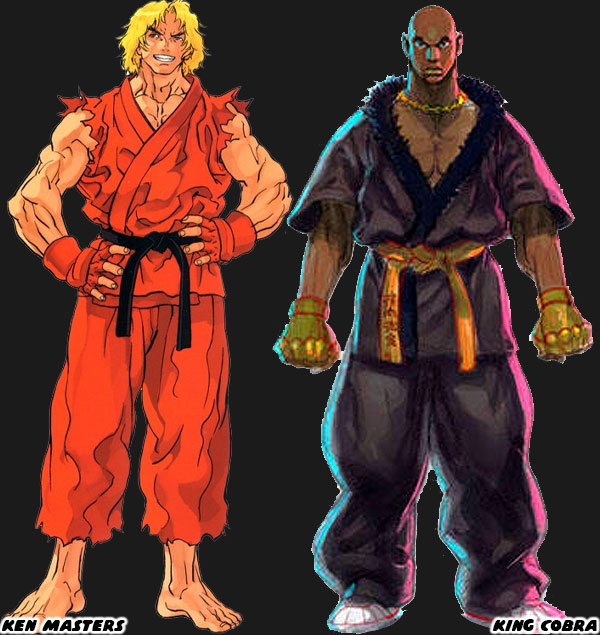
The other two fighters revealed in the Pre-Order Trailer were more interesting to me. They seem to cement the idea that a lot in the online community had. Namely that the SF6 team was trying to redo the characters introduced in SFIV, to redo not only their looks, but also their over-the-top, cartoonish special attacks. Let’s do a recap of what we know, and then what we can infer. Many SF fans learned that the rival to Ken was not originally planned to be the obese, and stupid Rufus. A young Black, “breakdance kung-fu” fighter named King Cobra was going to be his arch-rival. Audiences felt this was a very strong design, one with tremendous potential. Producer Yoshinori Ono insisted on adding a “fatty” for comedic effect instead. The world was robbed of a potentially fantastic design.

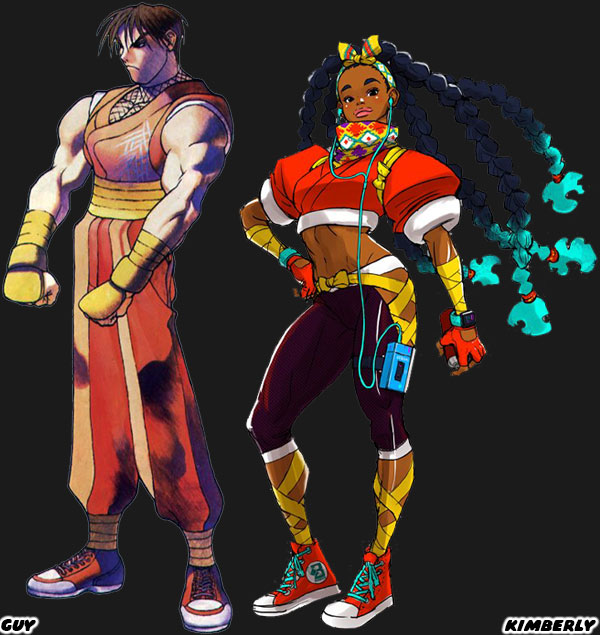
Of course no great idea really dies. At least not at a major studio. I believe that the fighting style originally planned for King Cobra was instead assigned to Jamie, the rival to Luke in SF6. The idea of giving a strong balance, or younger upstart to compliment to a franchise character was expanded on with others in the cast. Chun-Li as you may know finally had a worthy rival with the villainous Juri in SFIV. Juri’s design I believe had finally been perfected in SF6. Although we have not been introduced to A.K.I. officially as of this writing, many online also believe her to be a redesigned version of F.A.N.G. from SFV. One who loses the silly personality, to become a much more sinister archetype. Not every new face in the series is designed to be a rival to an established character. For example, Kimberly is the young ninja that is designed to be the understudy to Guy.

Guy was a featured character in the 1989 hit Final Fight. He was originally designed to be the replacement for Ryu in the Street Fighter series. As Cody was designed to replace Ken as well. The wrestler-turned-mayor Mike Haggar was the prototype for Zangief. But I digress… The sneaker-wearing ninja was certainly cooler than Ryu in design. Bringing just a hint of urban fashion into a traditional martial arts world. Kimberly carries a lot more of that same forward thinking. Mr. Nakayama, Mr. Tsuchiya, Mr. Matsumoto, and Mr. Hashimoto have gone all-in on incorporating the western influences that helped create the SF series. In doing so they expanded the diversity, and more important, created much better representation than in either SFIV, or SFV. They understand, perhaps better than the majority of Japanese designers, that Black culture is pop culture in the west. Not only that Black culture is the backbone of pop culture the world over. Using the fashion, the music, and art of Hip-Hop without including Black characters would have been a disservice to the community. The two other women introduced are other great examples of representation. I will dig into those on the next blog. What are your thoughts on everything revealed with SF6 so far? What are you looking forward to? Let me know in the comments section please! As always if you would like to sponsor me please visit my Patreon page and consider donating each month, even as little as $1 would help make better blogs and even podcasts!
follow the Street Writer on Patreon!

Friday, November 18, 2022

Is Dhalsim a fan of curry? A rare Street Fighter collectable from Japan turns up on my birthday!

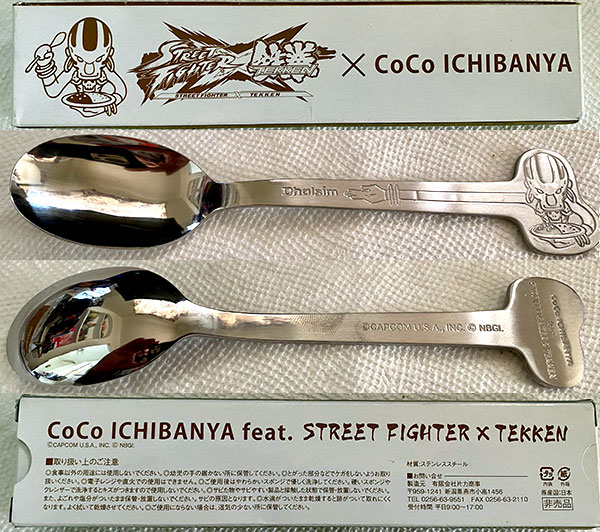
I got tons of goodies for my bday. Games, comics, toys, and lots of Disney stuff, including Oswald the Lucky Rabbit. My favorite gift is something that’s been on my radar for almost a decade. Capcom had a cross promotion with CoCo Ichibanya to celebrate the release of Street Fighter X Tekken. They sold a limited number of spoons featuring the stretchy armed Dhalsim. The restaurant serves Japanese style curry in case you haven't heard of it. It's super tasty if you ever get a chance to visit it.

Dhalsim is Indian as you may know, and seen eating a plate of curry on the spoon. When the promotion started I asked the manager at the Torrance California location if they would be getting any. He gave me the strangest look. I never forgot about the spoon but it would only pop up intermittently on bidding sites. Anyhow, it’s finally off the checklist. I’ll keep it with my official Charlie Nash dog tags, Chun-Li bracelet, and Balrog/Claw mask. Do you have any odd Street Fighter collectables? I'd like to hear about it in the comments section. As always if you would like to sponsor me please visit my Patreon page and consider donating each month, even as little as $1 would help make better blogs and even podcasts!
follow the Street Writer on Patreon!