Sunday, May 22, 2016

The King of the Iron Fist Tournament is going strong through 2016!


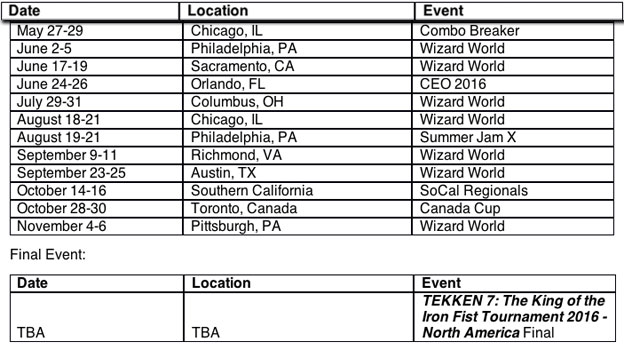
If you like fighting games you are on the right blog. If you like fighting game tournaments and big prize money then you might not be at the right place. BANDAI NAMCO Entertainment America Inc. have kicked off the North America King of the Iron Fist Tournament 2016. Hopefully you have gotten a chance to compete as it has already travelled through a few states. For those that are big on conventions you can actually catch the tournament if you also happen to be going to Wizard World. Only about a quarter of the scheduled dates have passed and there are many more to come. The best part for competitive players is that each tournament event will feature a prize pool of $3,000 with $1000 going to the top winner. If you manage to get to the North American Final the prize pool sits at $20,000 with a cool $10,000 for the champion.


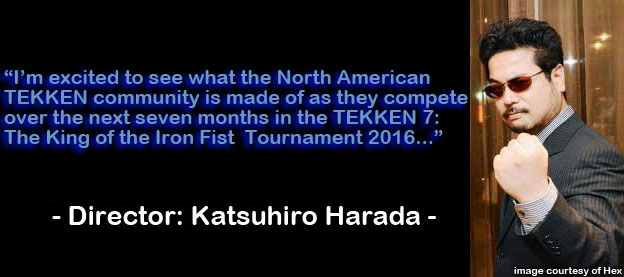
If you need some encouragement the Director of the Tekken Project, Katsuhiro Harada is keeping a close eye on North America and wants to see how our fighting game community competes. Of course knowing about the tournament and entering are two different things. Here is a link to the official rules and dates from BANDAI NAMCO. If you manage to win at one of the 18 locations you will receive travel and lodging to the final, scheduled to be at an unknown location. Sources say it might be the G Corporation Headquarters. I'll keep you posted as I learn more. For a list of upcoming and remaining tournament dates see the list below.


I hope to see you at one of these tournaments! As always if you enjoyed this blog and would like to sponsor me please visit my Patreon page and consider donating each month, even as little as $1 would help make better blogs and even podcasts!

 follow the Street Writer on Patreon!

Saturday, May 21, 2016

Painted faces, where have I seen that sumo before?

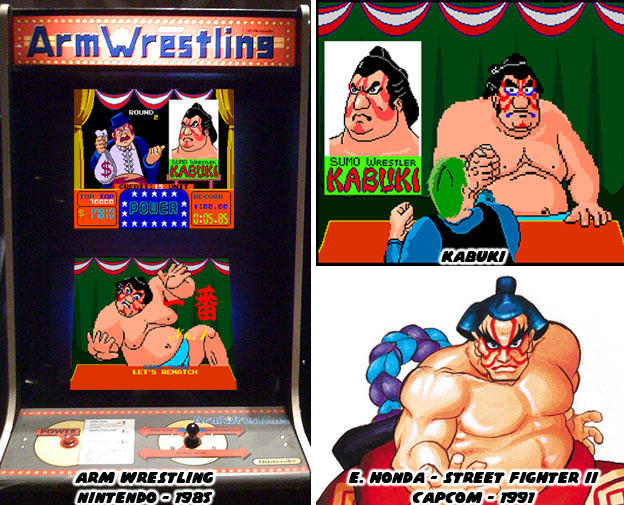
If you are a long-time arcade fan then chances are you are familiar with a rare Nintendo game called Arm Wrestling. It was a sort of spiritual successor to Punch-Out!!. The game came out in 1985 and it featured a cavalcade of silly arm wrestlers, including Frankenstein's monster, a burly Texan and pro boxer Bald Bull in a mask. One of the standout rivals was a sumo wrestler named Kabuki. What made this character unique was his face paint. Apparently this character had a flair for the dramatic. I'm not sure if the idea of mixing kabuki theater face paint with a sumo wrestler was solely Nintendo's idea or if the designers had mixed elements from various pop culture sources. I'm leaning towards the latter. The thing was that the seeds were planted for over-the-top characters to be featured in fighting games.


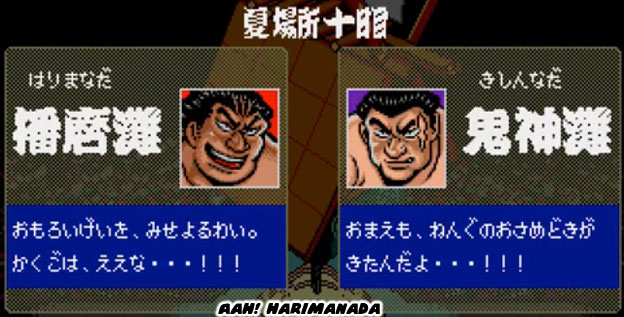
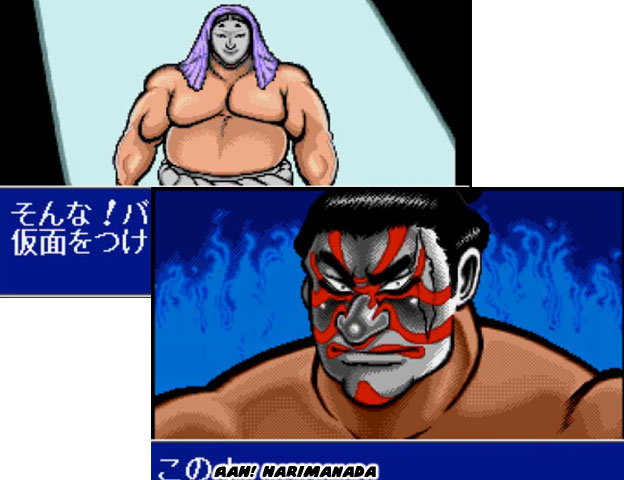
I credit Nintendo with developing a series of international archetypes in the original Punch-Out!! The various boxers from around the world had unique personality traits to go along with their memorable appearances. These caricatures would be emulated by Capcom and various studios when designing the first crop of fighting game all-stars. In 1991 E. Honda would take a page directly from Kabuki. Few remembered the Nintendo character came first and that was okay. Capcom was helping spread fight culture through their characters. The same year that Street Fighter II came out a manga called Aah! Harimanada debuted. The series was by Kei Sadayasu and would eventually be adapted into an anime series and fighting game as well. The series featured the brash Isao Harimanada, a sumo wrestler who was arrogant and insulting to opponents. He was a very dramatic character that would wear masks and headgear to the tournaments, including samurai helmets. The character would boast that that he would beat the 69-consecutive win streak of Sadaji Futabayama or retire trying. The series was kind of boring. It was a definite "Mary Sue" sports hero from Mr. Sadayasu. Isao could be rude and self absorbed and was somehow supposed to be appealing to young readers. As far as fictional sports figures go there was nothing that stood out for the hero. Audiences could guess that he would indeed reach 70 consecutive victories over the series. There was no real chance that he would lose any match. The only thing that changed were which techniques he used in order to beat his opponents. For that matter the rivals were far more interesting than the main character. One of the former champs that gave Isao a run for his money was named Kishin-Nada. The character had a nasty scar on the side of his head.


Kishin lost the match and felt humiliated by Isao, as did many of his opponents. They were all working hard to get a rematch but none took it more personal than Kishin. At the end of Isao's streak a mysterious figure appeared. This sumo was a former champ and he wore a creepy wakaonna, or girl mask from the Noh plays. It was as if Isao would have to wrestle someone with the same flare for the dramatic. When the wrestler removed the mask audiences gasped at his painted face. It was sacrilege that a sumo wrestler would actually wear kabuki face paint into the ring. This figure was trying to create a personae that was every bit as dramatic as Isao. Of course eagle-eyed readers saw that despite the face paint there was a noticeable scar on the side of this new character's face. This fighter called himself Kishin-Ryu, the dragon or ultimate version of Kishin-Nada. I'd like to think that this was Mr. Sadayasu's nod to E. Honda.


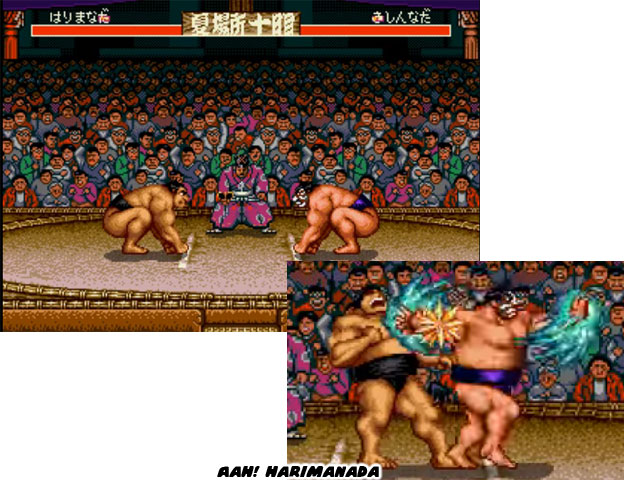
There was a Mega Drive (Sega Genesis) version of Aah! Harimanada that came out in 1993. The game by Megasoft was sorely lacking in the control department. Audiences could play through a campaign mode and every battle in the manga was presented in the same order within the game. After a few matches the game felt tedious. It would be a grind to try and beat 70 opponents in a row. What was cool however was how each sumo had their own strength and weaknesses. These things manifested as special attacks and super strikes. Imagine a version of Street Fighter but solely made up of sumo wrestlers. Super thrusts, headbutts, throws and slaps were some of the many techniques players could learn. A dozen characters each had their own super attacks that could be figured out and mastered in a two-player mode. I often wonder how Street Fighter would have been if characters had entirely new move sets applied to them in each sequel. What would have happened to E. Honda if he had new moves added to his library in Turbo, Hyper and Super versions of the game.


I hope you think about this rare series and the flamboyant sumo wrestler that appeared in other games the next time you play Street Fighter. Truth of course was much more interesting than fiction. Isao Harimanada was nowhere near as interesting as the real Futabayama. The record-setting sumo wrestler was blind in one eye but he never revealed this to anyone until after he retired. His opponents could have of course used this information against him. He was certainly much more humble about his abilities than Isao. Maybe a fighting game might base a character after a real legend. Stranger things have happened! As always if you enjoyed this blog and would like to sponsor me please visit my Patreon page and consider donating each month, even as little as $1 would help make better blogs and even podcasts!

 follow the Street Writer on Patreon!

Friday, May 20, 2016

The Abridged History of the Brawler, part 22


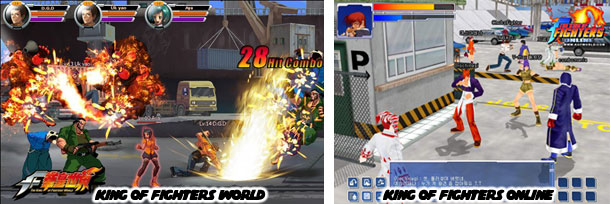
In China Shanda Games partnered up with SNK to develop a new sprite-based MMO named King of Fighters World. The game was set to feature the same dot-arts technology used to create the amazing graphics for the King of Fighters XII game.


The title was cancelled in 2011 after several years in development. Had it been completed the title would have turned out to be more of a brawler than the fighting game. Allowing multiple characters to take on opponents on multiple 2D planes, similar to Guardian Heroes. It would have been a slightly different experience than what was proposed in the original trailer. The sprites would have been among the most detailed ever produced for any fighting game or brawler. Unfortunately the game never came to be, killing any chance of rekindling the classic brawler by throwing in new technologies.


By a similar token the King of Fighters Online game was an MMO designed for Korea by Dragonfly. The beta version of the PC-only title lacked the cel-shaded stylings of the promotional video


It too would be scaled back for retooling in 2010. No news on when (or if) the final build would be ready for audiences.

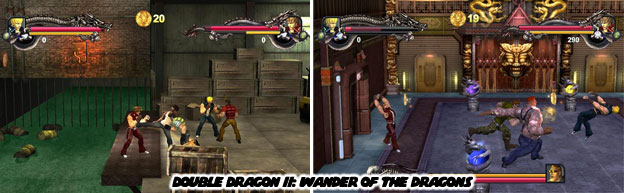
The final title I would be mentioning in the brawler series would bring the genre full circle. Double Dragon II, Wander of the Dragons was announced as a remake by Barunson Interactive Co. for the Xbox 360. The game would be a complete remake of the arcade classic with updated 3D graphics. Unfortunately the game seemed to contain nothing of the classic gameplay from the arcade original. Based on the preview footage the game seemed to be a fixed side scrolling title with a full 360 degrees of control. Making it more like The Warriors Street Brawl or Demolish Fist than the original title.


The developers had clearly made themselves blissfully unaware of the failings with the 3D format for the brawler. Worse they ignored how remakes had been received by game players. Final Fight Streetwise showed that "updated" realistic art and graphics did nothing to win back long-time fans or help the experience. Nor did the change of characters from sprites to 3D models do anything to help the game. It was not the only 3D remake to suffer a strong backlash from players. Konami's arcade gem, Teenage Mutant Ninja Turtles: Turtles in Time, a sequel from the original TMNT arcade game got a remake for PSN and XBLA. The Reshelled version was a 3D remake that rated a 55 to 60 point average out of 100 on Metacritic. It lacked the humor, control, animation and art of the original title. The villains, levels and characters were all there but the combat was frenetic, redundant and more difficult than the original. The classic experience had suffered during the migration to 3D. It was so poorly received that it was pulled from the DLC services shortly after release. The exact same things that plagued the Reshelled Turtle game seemed to be happening to the Double Dragon II remake.


Unless the game were delayed at the end of 2011 to address all of the concerns and pay attention to the failures of other 3D brawlers then it too would be destined to fail. New players would look at this game and ask why older gamers were so passionate about the genre. An insipid game would harm the name of the brawling godfather. It would be a sad way to end the legacy of the genre and this series.

If readers were to go by this blog alone it would have appeared that the brawler died a slow and humiliating death over the past decade. While the more familiar version of the genre did indeed lose popularity it never completely went away. The brawler actually evolved and became something more profound on consoles than it was in the arcades. I am not talking about re-releases of classics on the Wii, Xbox Live Arcade or Playstation Network either. The brawler itself became part of a bigger gaming picture. In order to find out how it got there we have to go back in time to the era of Kung-Fu Master and find out how the experience evolved. I hope to see you back for the first part in a new series. As always if you enjoyed this blog and would like to sponsor me please visit my Patreon page and consider donating each month, even as little as $1 would help make better blogs and even podcasts!

follow the Street Writer on Patreon!

Wednesday, May 18, 2016

The Abridged History of the Brawler, part 21


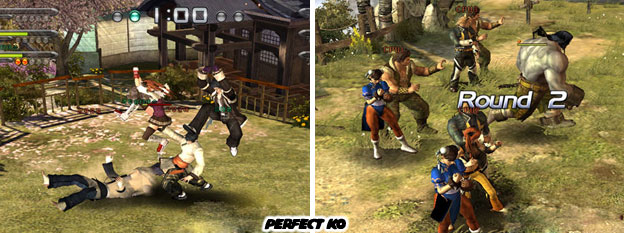
In 2007 Thingsoft developed a 3D MMO brawler titled Perfect KO. It was published in Korea by MMO giant Pmang. To help make the concept more appealing and help distinguish it from the scores of MMOs that come and go in Korea the game licensed the Street Fighter characters Ken and Chun-Li.


From all reports the game had a decent fighting engine and customizable characters, Ken and Chun-Li could not be customized. Thingsoft designed certain generic archetypes that could be clothed differently by players. Each character had a certain style, like judo or jeet kun do, and list of attacks that could not be swapped to a different character. Players chose their archetype and went at it in team battles over Asian themed levels. From everything I could gather the game played very closely to Urban Reign, which was like Tekken 5 with double and triple-team attacks.


Unfortunately even the addition of Street Fighter characters was not enough to get more players to support the title. The game lasted online from late 2007 through most of 2008 before closing down permanently.

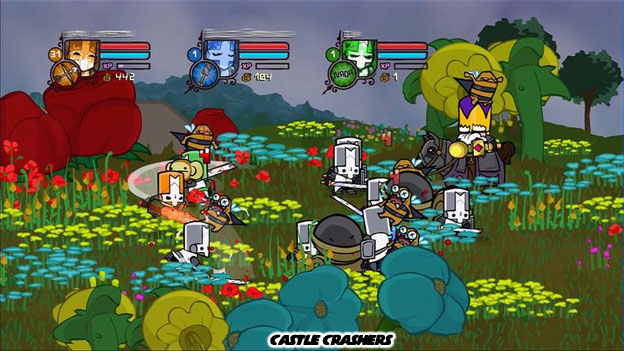
In the US there was a brawler that seemed to come out of nowhere that proved to be much more successful and much longer lived than Perfect KO. Independent studio The Behemoth released a 4-player hack-and-slash style brawler called Castle Crashers. The game was nothing short of inspired mayhem.


Castle Crashers succeeded on several fronts. It used the tried and true gameplay mechanic of allowing characters to attack only to the left or right. Players could upgrade their weapons and team up against larger opponents. Best of all the game featured a distinct animated style. The "soulless" 3D models from other brawling attempts could never match the artistic stylings of sprite-based artwork. The 2D figures in Capcom's Dungeons and Dragon titles were aesthetically superior to the 3D models used in Brezza's The Crystal of Kings In Castle Crashers the levels, characters and opponents were all created in the 2D Flash format. This vector-based engine could be scaled in our out by the game camera without the pixelation issues that plagued earlier sprite-based brawlers. Flash also allowed for effects, layers, transparencies and filters to be applied to the game. Those would have been slightly harder to program in sprite-based brawlers. The Flash format also allowed the game to be distributed online through webpages and reach a broad audience. The game was so well received that it eventually found its way onto Xbox Live where even more players got a chance to experience the mayhem with their friends.


I am not a fan of the over-stylized character designs in Castle Crashers or The Behemoth's previous Flash-based hit Alien Homonid. Artistically speaking the character and level designs looked dis-proportioned and rough especially when compared to Earthworm Jim, a console game that predated it by a decade. But my personal tastes aside, The Behemoth showed that the genre still worked, was viable and could be popular if only studios would observe the importance of preserving the 2D play mechanics and stop trying to force the genre to adopt the 3D standard. The last three games for this blog series would challenge the concepts of the brawler and try to reinvent arcade classics for a new audience. I hope to see you back for the final blog in this series. As always if you enjoyed this blog and would like to sponsor me please visit my Patreon page and consider donating each month, even as little as $1 would help make better blogs and even podcasts!

follow the Street Writer on Patreon!

Tuesday, May 17, 2016

The Street Writer Blogcast, Episode 2

Every time I release a new Podcast I will release the text version for my hearing-impaired friends. I don't want them to miss anything that I cover. Also you are welcome to leave comments and questions for this podcast as well as future podcasts on this blog.


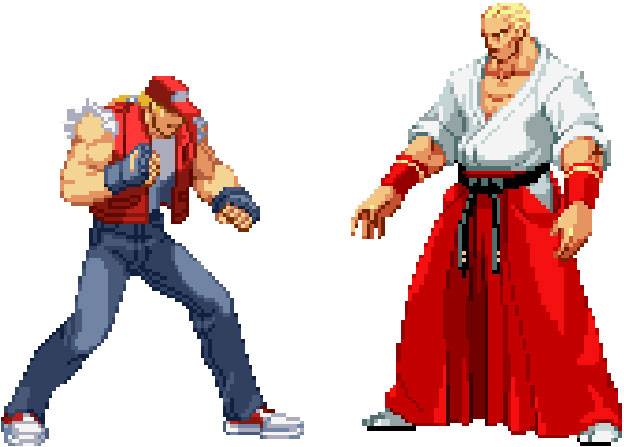
Takashi Nishiyama was the designer on the original Street Fighter and had left Capcom to work on a new fighting game for the crosstown rivals at SNK. His title was called Garō Densetsu Shukumei no Tatakai aka Legend of the Hungry Wolf: The Battle of Destiny, which was changed to Fatal Fury: King of Fighters in the west. The game from 1991 was the first entry in the King of Fighters franchise and appeared months after the release of Street Fighter II. In the Fatal Fury series there have been countless rivalries, the most outstanding of which was between Geese Howard and the Bogard family. Mr. Nishiyama had created a classic rivalry in Street Fighter by basing traditional martial arts masters against each other. For his follow-up game he wanted to modernize the concept. The ones that dressed like traditional practitioners became supporting characters. He wanted audiences to recognize that a person dressed in regular street clothes could be the modern martial arts master. The three main characters in his game knew each other, two were brothers Terry and Andy Bogard and their best friend Joe Higashi. Andy studied a form of ninjitsu and Joe was a muay thai champ. Their costumes were riffs on classic outfits. Terry stood out most of all, his blue jeans, white shirt and red leather jacket screamed Western hero. He was inferred to be the true star of the game. Geese on the other hand was dressed in a traditional costume, reminiscent of samurai clothing. It was actually an aikidogi and hakama or akido pants. Geese had studied many different martial arts, including secretive ones. He had walked away as a master of ancient techniques whether the teachers wanted to reveal these secrets to him or not was a moot point.
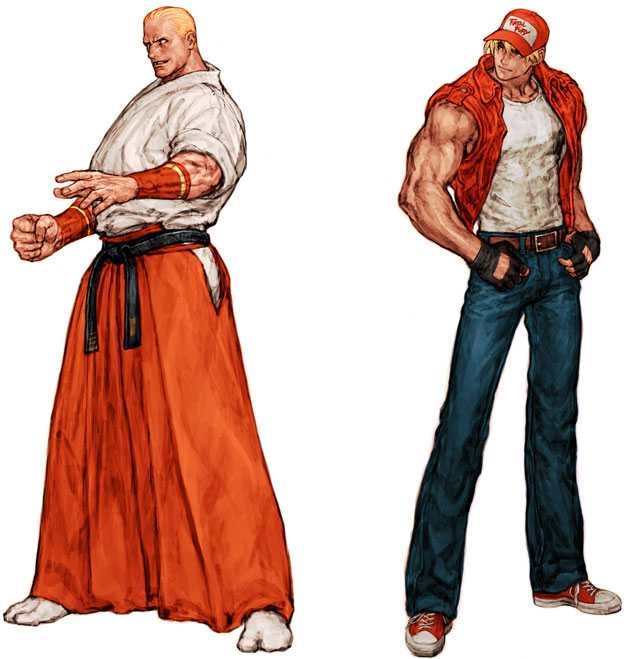

Geese and Terry, like many of the main characters in SNK fighting games had moves based on fictional styles and supernatural abilities. They could direct energy waves from their bodies to their hands and feet. They could even send energy waves through the ground and bowl over opponents. While Geese had studied traditionally under different masters Terry was more of a "Lone Wolf." He learned how to fight in the street and picked up various techniques along the way. His unorthodox style was very different from Geese's. Terry had moves that were more aggressive, the Burn Knuckle punch that allowed him to fly across the screen and the Crack Shoot kick that spun through the air and caught opponents off guard. He fought unlike anybody else out there including characters from other studios. He bobbed on the toes of his feet and kept his fists up like a boxer yet threw diving strikes like a football player going after a tackle. This loose style was a stark contrast to Geese's more reserved power attacks. Geese stood calm with his hands relaxed and open. He waited for the perfect moment to strike. Like a true samurai warrior he did not waste any effort and tried to make every move a lethal hit. The contrast of styles helped define the two. The rivalry between the two was much different than the one between Ryu and Sagat. Geese did not have any moves in common with Terry or Andy Bogard. Geese still had a tighter defense, a greater range, could stuff any physical attack and counter all the special attacks of the brothers. Yet he had not always been powerful.
 

Geese grew up in Southtown, a fictional USA city connected via a few roads to the mainland. It was not unlike New Jersey sitting just outside of New York. But for a more accurate comparison Southtown was to the USA what Taiwan was to China. It was a powerful modern city that pretty much had its own economy, trade and industrial portions and didn't need to be a part of any other country in order to thrive. Geese was abandoned by his father leaving him and his mother poor while growing up. Geese struggled to provide for the household but his mother died poor and hungry. He wanted to track down his father and kill him for abandoning him. Along the way he ran into his half-brother Wolfgang Krauser. He learned his father was Rudolph Krauser Von Stronheim, a terrorist and a powerful man in his own right. If he wanted revenge he would have to become more powerful and more dangerous than his father ever was. Geese set out to do this by studying the most dangerous fighting arts. He picked techniques up from Toji Sakata, a character that later appeared in Fatal Fury: Wild Ambition, as well as the grandfather of Mary Ryan aka Blue Mary, a detective from Fatal Fury 3. Geese's most influential teacher was an elderly Chinese master named Tung Fu Rue. He was learning Hakkyokuseiken: the Eight Extremities Holy Fist technique alongside another gifted martial artist named Jeff Bogard.
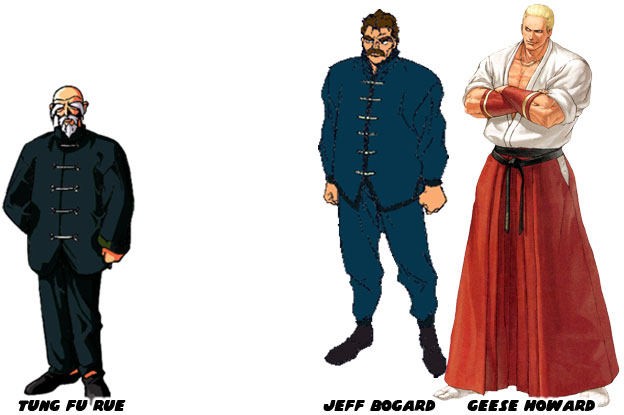
 

Jeff had adopted two orphans from the streets of Southtown, young brothers Terry and Andy. He gave them a last name, cleaned them up, put them through school and took care of them the best he could. He even began teaching the two how to fight. Jeff did pretty much the opposite of what Geese's father had done. It was just one thorn in the side of Geese. The other was that the final techniques of Tung Fu Rue would only be taught to his best pupil. Rue could tell that Geese would only use the techniques to hurt people and attain power. When Tung Fu Rue named the senior Bogard the new master of the dojo it sent Geese into a frenzy. He killed Jeff in front of Terry. Terry was barely 10 at the time and could do nothing to stop the murder. From that point on the two brothers swore that they would become great fighters and take their revenge. Geese disappeared shortly after and set about completing his goal. He would take over Southtown from the inside, starting with the gangs and mobs and work his way up to taking control of the corporations.
 

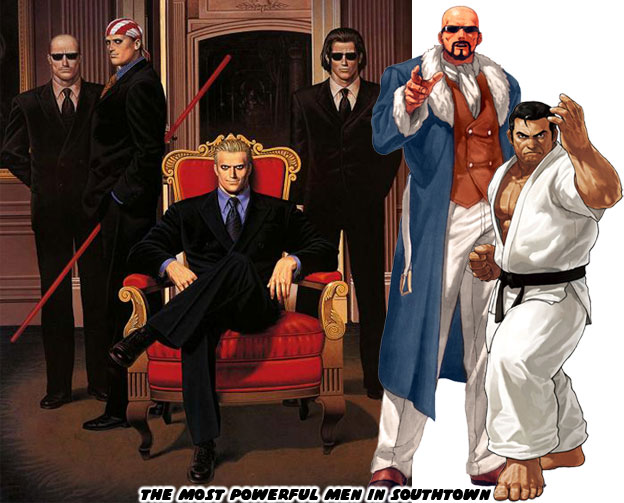
To outsiders Geese was a self-made tycoon, respected in business and political circles. To everyone on the street Geese was to be feared. Even before he murdered Bogard he had already started his own criminal empire. His first henchmen were Ripper and Hopper, two guys in suits and sunglasses, one bald and one with long black hair. They were often seen in stage backgrounds and official art. They were ruthless enforcers that helped infiltrate rival organizations. The previous crime lord of Southtown was a tall man named Mr. Big. Like all villains in video games he was also a martial arts master. Mr. Big wore fine suits, fur coats and fought with two sticks. He was eventually dethroned by Geese and rather than being executed he was turned into a right hand man. Geese believed in the old saying, keep your friends close and your enemies closer. Geese also recruited a master of stick fighting from Great Britain known as Billy Kane to act as a bodyguard. Those that Geese couldn't buyout or intimidate he often killed. Yet there were some people that he saw as threats but kept around to fulfill a purpose.

Takuma Sakazaki was possibly the most dangerous fighter in all of Southtown. He was the founder of Kyokugenryu Karate, the Extreme Utmost Limit Way of the open hand. Takuma was somebody that Geese could not beat in a fight. Mr. Big was aware of this and also respected and feared the fighter. When Mr. Big was trying to muscle out more territory in Southtown he decided to kidnap Takuma's daughter Yuri and blackmail him into becoming an enforcer. Takuma did as he was ordered but he wore an ancient tengu mask and called himself Mr. Karate. He wanted to hide his identity and distance himself from what he was being forced to do. The Mr. Karate personae of Sakazaki was completely ruthless. He wanted people to fear the character more than any crime boss. He was eventually stopped by his son Ryo Sakazaki and their family friend Robert Garcia.

Now the reason that I bring all of this backstory up is because Mr. Nishiyama and his team were creating a narrative that would bridge several games together. The story of Geese Howard and Terry Bogard would be explored in the Art of Fighting. The story between Mr. Big and Mr. Karate would be revealed in the Art of Fighting, an SNK game released in 1992. The events of both franchises laid the foundation for the King of Fighters series which debuted in 1994. Having an understanding of where the characters came from, where they were going and how they fit into the world took a tremendous amount of planning. The team at SNK didn't want to move from game to game and have nothing supporting the characters. They wanted every fighting game to be interconnected. They didn't want to have throw away characters or bosses that simply faded away either. By thinking three moves ahead the games were consistently good. Audiences were hooked with the series because of memorable good guys and bad guys. Mr. Nishiyama had done something similar, albeit to a lesser extent while with Capcom.

Many of the original Street Fighter characters were inspired by the martial arts but none had much depth to them, at least not much in the sense of a purpose. The more interesting ones would return and the studio began exploring their back story. Think about where Sagat came from, it wasn't really explained in the first game. He was simply the champion when Ryu met him. Later on the studio invented the character that took his eye, someone named Gou Hibiki that just so happened to like Mr. Karate. Capcom and SNK had been trading jabs with each other because they were early competitors in the market. It didn't hurt that the team members at the studios knew each other as well. Capcom began designing more fighting game characters with histories. If you look at Guile and Chun-Li they were much better developed than the original Street Fighter cast and became bigger hits with the community than the first characters. SNK demonstrated that fighting game characters with planning and a back story tended to be more memorable than those with just cool looks. This level of detail did not just apply to the characters but also to the world that they inhabited.
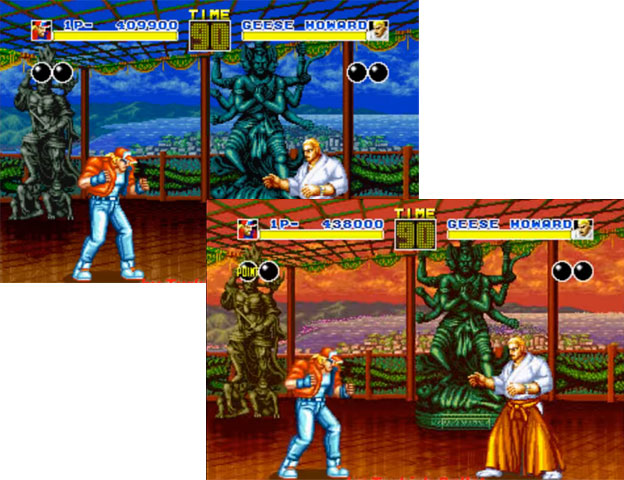

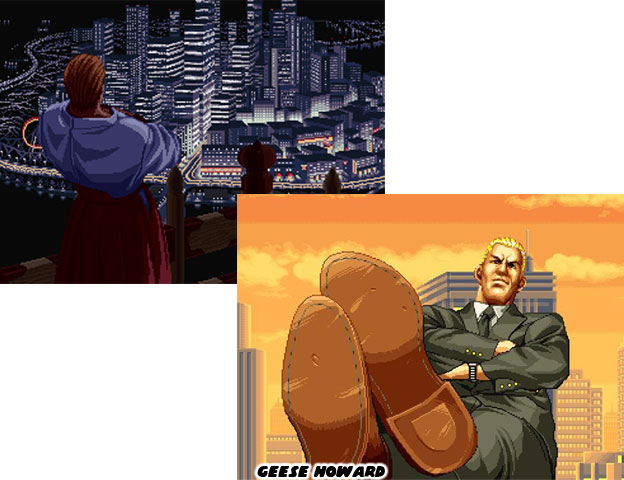
Geese was a very powerful man and a very arrogant man. He surrounded himself with treasures from Asia, various statues and temple guardians were on display. In his fancy robes Geese looked like the opposite of Terry, whose torn jeans and sneakers showed that he was poor. The penthouse on Geese Tower looked like a temple, this would be the setting of the final battle in Fatal Fury. It told a story and framed the battle between Terry and Geese. Players could see Southtown from high above the city. It was one of the most memorable stages in early fighting games. Not only that but from round to round the time of day changed. This was to illustrate that the fight had taken a long time to finish. Neither man could get the upper hand so the battle raged on. The team at SNK wanted to show that stages evolved in their fighting games. Perhaps it would rain between rounds, you would notice the audience clear out, or perhaps the stage would transition from day to night. They were doing things for the genre that other studios didn't even consider. Evolving levels were rarely done even in modern fighting games. The climax of the final battle came with Terry kicking Geese right off the rooftop. The setup and execution of the final stage meant a little bit more than the fight between Ryu and Sagat. Audiences could tell that the stakes were high. Every rival defeated in the original King of Fighters tournament had some sort of secret agenda but none was more important than the revenge of the Bogard brothers. Players felt a sense of relief that the evil villain fell to his death.
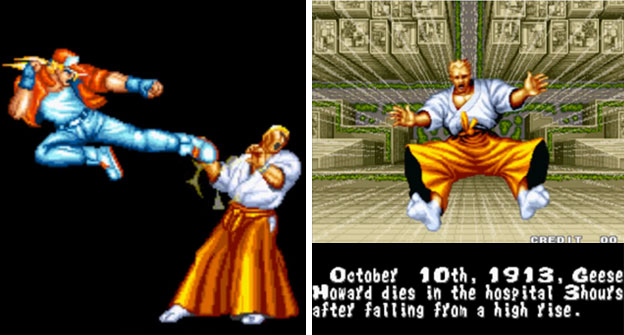

In the ending screen it said that Geese died October 10, 1913. This was mistranslated, the studio meant to say 19:13 hours, or 7:13 pm in the hospital. He fell from the building at dusk and died 3 hours later. So why was his death important? It helped give audiences a sense of closure. This fighting game came with a story, it had a beginning, middle and end. The King of Fighters tournament had nothing to do with winning a belt or trophy. Geese simply wanted to meet and beat the best, what he didn't expect to see where two brothers that wanted him dead. The game was a tale of revenge, like many of the great martial arts films. Stop and think about how important a story was to Street Fighter II. The tournament was a front for a much bigger plot involving Shadowlaw and a rogue Dictator. There was a connection between Ryu and Sagat that made that battle much more memorable. For the supporting cast there was a reason why they were fighting as well. For some it was fame, for others it was a national duty, still for others it was a shot at redemption.

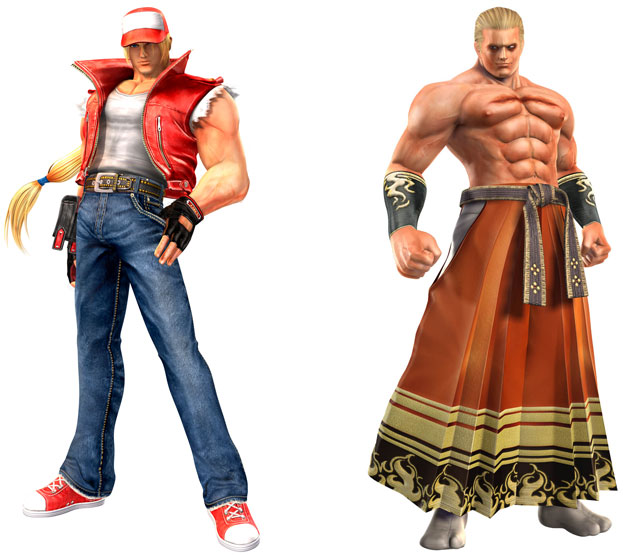
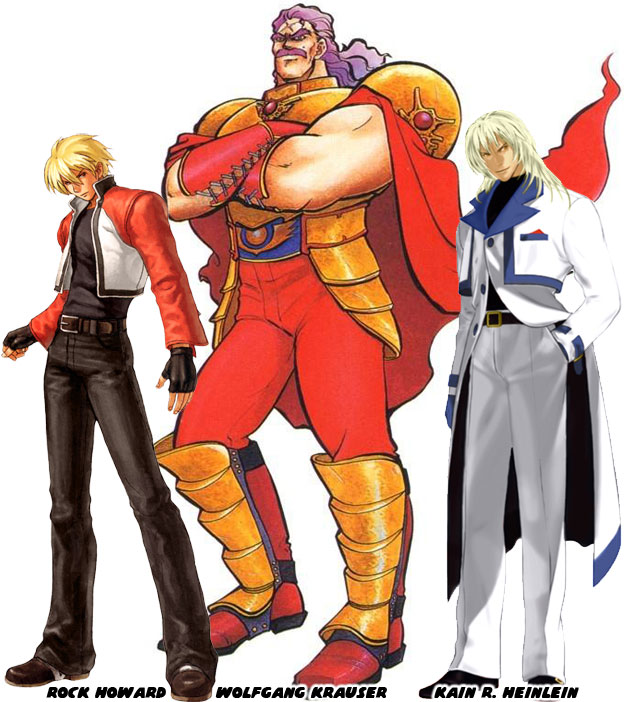
If Mr. Nishiyama was such a good director then why would he kill the main villain in his very first appearance? Why would he develop such a rich back story if the character was a throw away figure? Well it turned out to be a false death. Geese survived the fall thanks to an outside influence. He would actually continue pulling strings from the shadows while he recovered. Audiences didn't know this until years later. The series would continue and players would get to fight as the Bogard brothers, Joe Higashi as well as knew friends and enemies. These new faces would have to fight Geese's half-brother Wolfgang Krauser and his brother-in-law Kain R. Heinlein in the various sequels. The rivalry between Geese and Terry had just started. It would be a cornerstone of the franchise for almost a decade. Rather than focus only on the hero the two were featured in SNK promotional material. A hero was only as popular as his rival after all. The two were also used to highlight the changes in technology. When the studio looked at leaving sprite graphics behind and developing the next generation of fighting games in 3D they made sure to show off the new models for Geese and Terry right away.
 

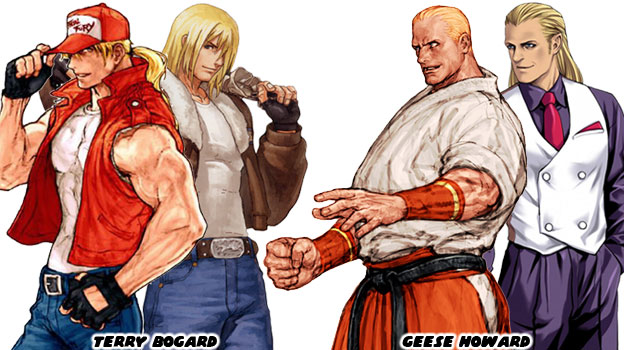
Identity was very important to the characters in the King of Fighters (KOF) universe. Every figure was treated like a franchise fighter. Each character had the potential of being a breakout star. They could be featured in their own game if the fan reaction was strong enough. Some KOF fighters were already stars from a different genre. All of the heroes and all of the villains were building an identity and helping strengthen the SNK brand. The development teams wanted the audience to know that the universe of KOF was constantly changing. The main characters were not set in stone. Other studios, namely Capcom, tried to keep their fighting stars locked into one look or one style. Ryu could only wear the white gi for example and Chun-Li could only wear a blue dress. While this rule has been relaxed a little thanks to the costume pack updates from Capcom most fans still expect to see the iconic characters in familiar costumes. The studio assumed that anything else might be a disservice to the series and turn off fans. SNK on the other hand didn't have a problem revising their main characters between games. They wanted audiences to see that the world was constantly evolving. Not only that but they could create sequels and prequels to show how the characters appeared at any point in time. At a future point in the universe Terry had changed his look completely. His red, white and blue costume gave way to a brown bomber jacket and jeans. He ditched his cap and let his long hair fall loose. The design for Geese Howard was different when he first started taking over Southtown. In his younger days he wore a business suit and had long hair. This was an aesthetic decision from the team at SNK. It was okay to play with the costumes of the characters as long as they retained their moves, purpose and personality. The two were still as dangerous as they had ever been and audiences more or less accepted the change in their appearance.
 

SNK did not want to have audiences think that Geese was indestructible. Players saw him get dropped from the top of a building in the first game. So how did he survive the fall? It turned out that all of the treasures he had been surrounding himself with had a purpose. In his travels he discovered a scroll of ancient techniques. It was called the Phoenix Scroll and allowed its owner to recover from mortal wounds. It took a long time but sure enough he came back with a renewed purpose. Geese learned that there were two more scrolls, known as the Jin Scrolls, these scrolls were part of the Qin Book of Secrets. Legend said that the person that had all three would obtain the secret to immortality. This became a plot point in the Fatal Fury sequels. The Bogard brothers had been robbed of their revenge. They tracked down Geese several years after the first encounter during the events of Fatal Fury Real Bout. Terry once again found himself at the top of Geese Tower. He knocked Geese through a railing but this time he did not mean to kill him. Terry reached out and grabbed Geese at the last moment. Refusing the gesture, or confident that he had indeed become immortal, Geese shrugged off the help and fell once more. He laughed the entire way down. It was a shocking ending. I don't remember the last time a villain had committed suicide on screen. Since Geese had been unable to secure all three Jin scrolls it was assumed that he died for real this time. Time would prove otherwise...
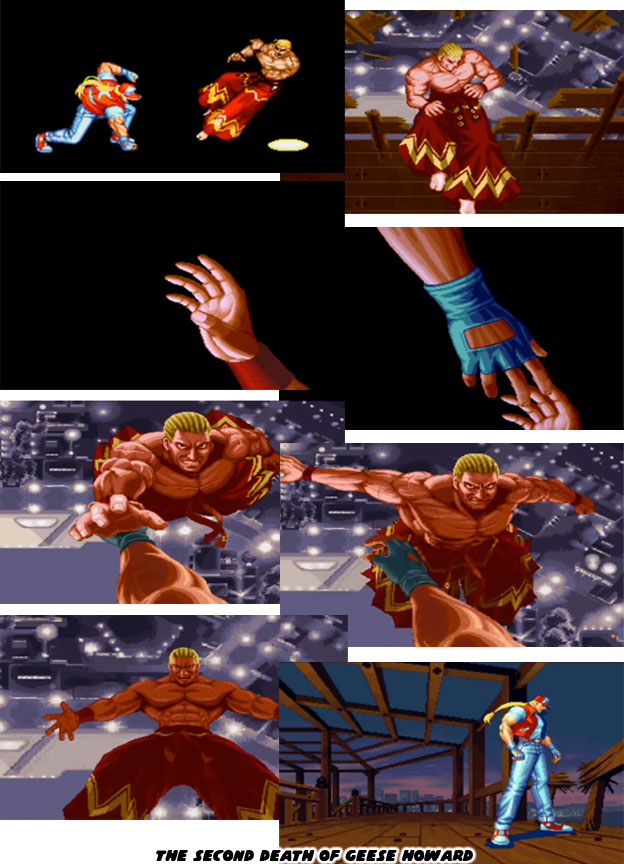

When Terry first knocked Geese from the tower he did so out of rage. As time went on he realized that he had made a mistake, of course not getting caught by the police for the murder of Southtown's biggest crime boss was a blessing in disguise. Killing Geese would not bring his father back. If anything Terry dishonored his own family name by fighting for the wrong reasons. Terry tried to make amends the next time they battled but Geese refused the gesture. The death weighed heavily on his conscience. It was not every day that you could say that a great rivalry ended with the hero feeling guilty. Just like you could say that it was not every day that a rivalry started with the hero killing the villain. This story did not end there however. Terry discovered that Geese had a son named Rock Howard. Geese had abandoned his son just as he himself had been abandoned. Terry became the surrogate father for Rock, guided him and taught him some of his own fighting techniques. What made Rock unique was that he had a mix of both Geese and Terry's moves but thankfully none of his biological father's evil tendencies. His uncle Kain R Heinlein did try to get Rock to side with him and throw Southtown into chaos and create what would be known as Second Southtown. Rock refused and battled his uncle during the events of the King of Fighters Maximum Mayhem tournament.

One of the great all-time fighting game rivalries was a clash of ideals. Terry Bogard and Geese Howard each came from broken homes, both had lost their parents at a young age. Each made it to adulthood and each became a powerful fighter in the process. The decisions they made along the way defined one as good and one as evil. The two were very similar otherwise, and I don't mean just on a physical level. At the core they had strong wills a were fiercely determined to overcome all obstacles and achieve their goal. This was something that Sagat and Ryu did not necessarily have in common. They were rivals but did not share many traits. Both fought to become the strongest Street Fighter and defend that title. SNK had a completely different approach to the genre and it was refreshing. The pre-planning by Mr. Nishiyama and his team paid off in Fatal Fury and the various sequels. Terry, Geese and the rest of the King of Fighters cast would enjoy an incredible fan following.

The success of the series demonstrated that there was more than one way to frame a rivalry. Planning had a lot to do with it. Think about successful books and movies, the creators had to know their world and how it worked backwards and forwards before sharing their story. J.K. Rowling had to know the history of her magical world, who came before and how everyone was related. She then sprinkled those details all throughout the Harry Potter books. George Lucas had to know how the Force worked and the history between the Sith and Jedi as he told the Star Wars trilogy. Mr. Nishiyama had a clear picture of Southtown and the origins of the King of Fighters tournament. He was very familiar with the most dangerous men in that universe before he told the story of Fatal Fury. These were important lessons for budding creators to remember. You must always know where your story comes from before you can tell people where it is going. Revenge was a powerful motivator but what about the other great rivalries in fighting games? What else caused a rivalry to start? We'll take a look at one of the most important ones in the next broadcast. As always if you would like to sponsor me please visit my Patreon page and consider donating each month, even as little as $1 is better than nothing..
 follow the Street Writer on Patreon!

Monday, May 16, 2016

The Abridged History of the Brawler, part 20


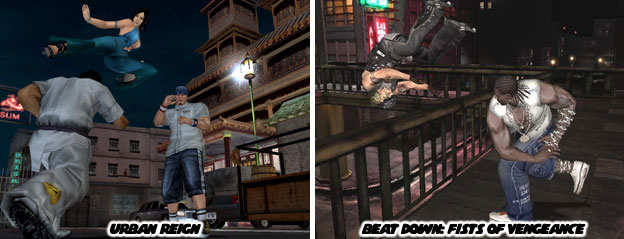
In 2005 games were becoming dark and brooding, they were following the trends from other studios as well as from cinema. The bright colors and over-the-top designs from brawlers in the early 90's seemed passé. In order to appeal to players the characters had to be dark and gritty. The universes they were set in also had to be dark and ugly. Hence the new Capcom brawler from that year, Beat Down: Fists of Vengeance, was one of the darker and more violent games they've ever produced.


Beat Down was designed to be an online brawling game, with a customization feature, complex story and various locations characters could visit. It was a brawler with RPG and MMO elements. However it did not capture the gamer's imagination. The characters looked like generic bruisers, an exercise in pop character design for an art college class. Guys and girls wearing leather and sporting tattoos seemed enough to make them tough characters. They lacked the archetypical traits that made the Final Fight cast so memorable. Capcom had rewritten the book on brawlers through the 90's and in the new decade had released a cast that lacked presence in a game that was average at best.


Capcom did not get off on the right foot while rival developer Namco faired slightly better. Urban Reign by Namco was their first 3D brawler and it was a good game. While Capcom was mastering 2D animation in their fighting games through the 90's Namco had been building a franchise in 3D technology. The programming experience that they had developed through the Tekken series was paying off for the publisher. The lessons they learned in arcade development was quickly translated for the Playstation platforms. They were among the first studios to have a version of Tekken available on the original Playstation and Playstation 2. With Urban Reign they saw potential for the Tekken engine beyond the traditional 1-on-1 fighting game. Specifically the Tekken 5 engine worked quite well for a brawling game for the PS2. It worked so well that it was also used in Death by Degrees the action game released the same year featuring Nina Williams, also from the Tekken fame.


Urban Reign featured a cast of distinct archetypes including a karate fighter, a street brawler and a female martial arts master. Visually they had greater diversity than the cast in Beat Down. The game was dark and gritty as well, but not as depressing as the world from Beat Down. From a gameplay POV the camera system drew far enough away for players to keep an eye on opponents as well as teammates and did not suffer from the blind spot problems from SpikeOut. The moves and control worked well within the 3D environments Players could set up special attacks and even perform double team attacks on multiple as well as single opponents with relative ease. Some of the double team attacks were spectacular, like the high risk moves from pro wrestling. Those familiar with the Tekken series could see where moves and animations were placed on the new models.


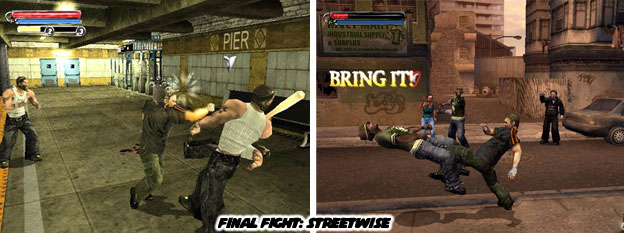
The game had a bonus feature in that any defeated character, including bosses, could be unlocked and played as in a fighting game format. Tekken characters were hidden in the game and could be unlocked for the fighting game portion as well. As well as it was done it faired only slightly better with gamers than Beat Down. The 3D brawling genre just could not gain momentum in arcades or home consoles. What Capcom did next would harm their reputation more than help it. Final Fight: Streetwise was a sequel to the arcade classic. It was the antithesis of everything that made the original brawler legendary. It was dark, ugly, slow, cumbersome and brooding. The controls lacked the simplicity and finesse of the original title, making it less accessible to gamers. Capcom's Production Studio 8, a US-based developer released the abysmal title in 2006, just a year after Beat Down failed to impress audiences.


The designs featured in the title were another exercise in character interpretation, possibly from some art college graduates not old enough to remember the original title. The new versions of the characters were as dark as the premise. A washed-up Cody was reunited with his (surprise!) brother to try and clean up the streets of Metro City from a new drug. The game was bad on all fronts and the attempts to make it visceral and adult just hurt the reputation of the arcade classic. Characters and situations like the infamous Weasel scene did nothing to help the genre or make it relevant to gamers. It was ugly, sloppy and classless design from the former masters of the genre. Thankfully Capcom would stop trying to reboot franchises and instead focus on releasing their actual brawling classics on the Playstation Network and Xbox Live Arcade in latter years.

There was one western studio that did manage to get the genre right, and also give players a compelling 3D experience without the problems suffered by previous brawlers. Rockstar released The Warriors in 2005. The game was based on the 1979 movie about a small gang trying to get past rival gangs through New York en route to their home turf on Coney Island. Rockstar managed to capture the spirit of the movie by recreating the details in the film and then expanded that universe through careful, period piece, interpretations. The game featured a more open ended sandbox-style gameplay than other brawlers. A modified version of the Grand Theft Auto III engine served as the backbone. There were no invisible walls, or camera problems that plagued earlier 3D fighting attempts. A brawler without a countdown clock, or facing nonsensical gigantic level bosses was a refreshing change of pace for gamers. The gang warfare highlighted in the Warriors brought back the energy and emotions that classic brawlers once pulled from gamers. It could appeal to fans of the GTA series without including all of the vehicle and mission hijinks featured in that game. Rockstar redefined the genre by ignoring convention and earned the praise of gamers and critics alike.


Five years later Rockstar released an Xbox Live Arcade version of the game that limited all of the play elements to the traditional format. The Warriors Street Brawl from 2010 used a fixed, side-scrolling camera, with 3D characters. The game did introduce a "store" to the genre where players could buy weapons and upgrades for their characters, but it failed to win over new fans. Street Brawl lacked the substance of the previous sandbox experience and if anything highlighted the deficiencies of the classic format with modern visuals. Without Sega, Capcom or Konami developing new brawlers after 2006 the genre would only be kept alive by independent studios. Many experiences faded away but at least one became an example of what still worked in the genre. Find out about the first major attempt at a brawling MMO as well as the little title that became a smash hit in the next blog. As always if you enjoyed this blog and would like to sponsor me please visit my Patreon page and consider donating each month, even as little as $1 would help make better blogs and even podcasts!

 follow the Street Writer on Patreon!

Friday, May 13, 2016

The Abridged History of the Brawler, part 19


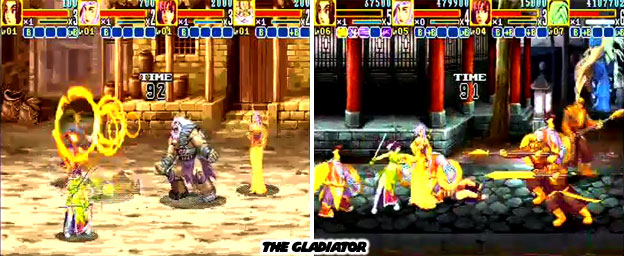
IGS, the indy studio that could, released The Gladiator aka The Road of Sword in 2003. This was the last sprite based brawler in the arcade that was worth a damn The quality of the title was head and shoulders above the half-hearted efforts from other small publishers over the past few years. The character designs, levels and animations were on par with the best from Capcom and Konami during their peak. When new filters, more colors, animations and effects were rendered thanks to the more powerful graphics engine, then Gladiator actually appeared to be even better than brawlers from the big publishers.


Like previous IGS titles it was set in an Eastern mythology world. The archetypes were pulled from classical legends but stylistically updated for modern audiences. The game was very much in the vein of the Capcom Dungeons and Dragons titles. It allowed players to choose which of three paths they would take to reach an evil warlord, but unlike the D&D games there were no shops to purchase upgrades to the characters. The game had a level-up system which affected the speed, strength and special moves of the characters, the more battle points a character earned the more techniques they could perform in game. The title even provided a complex brawling engine. A player could select automatic combos so that all they had to do was press the same attack button over and over to do multiple hits, or advanced players could manually enter the commands and perform a multitude of attacks and special moves that would be the envy of many fighting games. Players that worked well together soon learned that they could activate a special attack simultaneously to get special animations and even more powerful attacks to bring down bosses.


The game was beautiful. The character designs and architecture were not strictly based on one Asian region but reflected a myriad of cultures including Chinese, Mongolian and Korean. IGS was clever with this approach as they could localize the game relatively quickly in most Asian countries. I would rank this game up there with Guardian Heroes and then go a step further without sounding sacrilegious and say that it was more important to the industry because it was so rare. An independent studio working on a brawler with archetypes they were familiar with, in a style that was decidedly Asian but not anime’ plus not based on a license, could defy the expectations of gamers. It could inspire an entirely new wave of great design. The Gladiator never saw a console release, nor any English localization to the best of my knowledge. If not for the imported Chinese arcade games in Downtown LA arcades I would have never seen this title, or a couple other IGS gems. For those reasons the Gladiator deserved to get just a little more exposure and the hopes that word would spread and the title might yet find a home on Xbox Live.


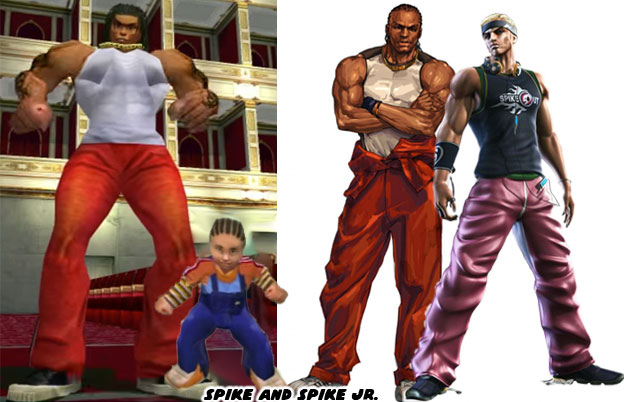
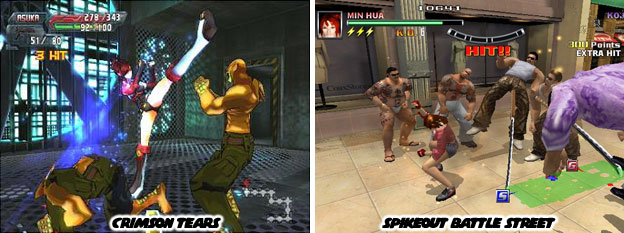
By comparison the big publishers were still pushing for the brawler to be in 3D. Sega released Spikeout Battle Street in 2004 for the original Xbox. The title was actually developed by DIMPS. This was the sequel to the rare arcade brawler and actually set years after the earlier SpikeOut titles. The game revolved around a new gang, made up of the next generation of brawlers, including Spike Jr. It was a good way to honor the legacy of the publisher. Spike Jr. was previously seen in SpikeOut Final Edition. He followed his father around and imitated his moves. As he grew up he gained a style all his own. Players could actually unlock the original team in the game and have father and son fight side-by-side like the good old days. The game was unique because it provided access to the Sega battle network so players could enjoy competing online.


Battle Street was a fun title that rekindled the magic of the original SpikeOut but at the same time could prove to be difficult if you didn’t know the nuances of 3D brawling. Players that tried this game and didn’t have some experience playing games like Virtua Fighter, Fighting Vipers or the earlier SpikeOut would be at a loss The genre was difficult to get into and master once it had moved to 3D Yes Double Dragon and the other classics could be difficult but gamers could pick up techniques and strategies quickly. Once the format had moved to 3D the experience became exponentially more difficult but not exponentially more rewarding. Opponents were harder to defeat and they came in wave after wave, striking at blind spots and eating up the health and patience of gamers. Players were eager to find more rewarding brawling experiences. They looked at the young publisher to try and deliver that.

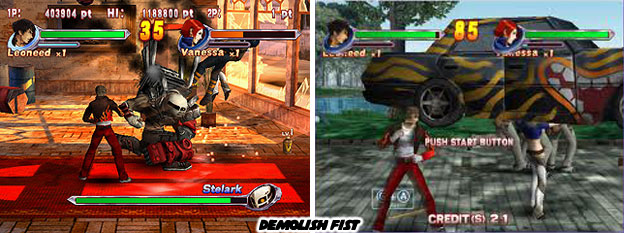
Demolish Fist was developed by Sammy and DIMPS in 2003. Sammy had developed the Atomiswave arcade hardware which featured interchangeable carts, similar to SNK's Neo Geo and IGS's PGM. The hardware was so well done that SNK used it to power the King of Fighters XI, Samurai Showdow VI and Metal Slug 6 games. Their main developer, DIMPS, was made up of former Capcom and reportedly SNK employees. Their flagship fighting game Guilty Gear had caught the attention of the community. Guilty Gear used HD sprites and brilliant 3D backgrounds. With Demolish Fist they were trying to rewrite the 3D brawler. The game featured a quartet of typical Japanese street designs, cool-looking androgynous guys similar to the Bouncer from Squaresoft. The engine was 3D but the camera was a traditional fixed side-scrolling perspective. Just because the camera was fixed it did not mean the characters could only face left or right, players were free to fight in a full 360 degrees.


The designs of the heroes and villains looked very typical and bland. Some thugs with helmets were pulled right from the Hokuto No Ken / Fist of the North Star comics. The animations seemed stiff and sluggish and the fighting mechanics were insipid. Demolish Fist was the complete opposite of the Guilty Gear. The combat was poorly paced and characters could perform feats of superhuman strength, like lifting and throwing motorcycles and cars with ease. It made little sense that they could be harmed by a punch or kick from anything less than a gigantic robot. The one redeeming gameplay element that it did introduce was the "Vertigo" mode. Characters could power up a separate energy bar and then activate the Vertigo attack which sped up the player and moved them automatically between opponents. All a player had to do was press attack quickly while in this mode. The computer would automatically target the nearest opponents and throw punches and kicks between them in rapid succession. The Vertigo mode was not unlike the fighting mechanic given to the Flash in the Justice League Heroes. It looked impressive and made players wish that all 3D brawlers could be as simple to control.


Unfortunately there was little else in Demolish Fist to bring new fans to the genre. The title was still important for the the developers. The experience working with 2D and 3D technology, techniques and gameplay would be merged a year later. The fighting game, the Rumble Fish, released in 2004 used rotoscoped 3D models to build 2D sprites. It kept the pacing from Guilty Gear but updated the techniques used to build sprites based on the models they had created for Demolish Fist. These lessons of combining 2D and 3D elements would find their greatest success a few years later when DIMPS was tapped by Capcom to develop Street Fighter IV. Before Capcom had even conceived Street Fighter IV however they had tried to bring the brawler into 3D. Their first attempt was a well done but little known title.


Crimson Tears, another 2004 title was a sci-fi, cel-shaded, rpg brawler featuring three humanoids, err “mutanoids” named Katie, Amber and Tokio. Since the game was set in the future the grinding system was set inside of giant corporate towers and factories fighting soldiers and robots rather than against monsters inside an evil wizard’s lair.

The game allowed characters to build techniques and master weapons as well as collect items to help get them through levels. Players could trade items and upgrade their stats. Once players had achieved higher levels then the true heart of the combat system could be explored. Players could perform multi-branched combos that allowed them to juggle opponents, or stun them and set up an attack on rivals closing on from the sides or behind. Combos could be as diverse as a player allowed with button presses rather than controller commands. This combo system was easier to get into than even SpikeOut. Other studios would work on comparable fighting mechanics going forward. While Rocksteady studios would like to claim they invented the "freeflow combat system" for its Batman / Arkham games a variation of it was seen in both Demolish Fist and Crimson Tears five years earlier.


Unfortunately Crimson Tears was very repetitive and it took ages for characters to reach their full potential. It is possible that very few players actually took the time to max out their stats and explore the combat engine. That difficulty curve was a missed opportunity for Capcom and developers Spike, of Fire Pro Wrestling fame, to bring the brawler into 3D. The brawler was experiencing growing pains through the new millennium. Having been taken out of the arcade, put on consoles and made into 3D did nothing to improve the experience. The next blog will look at Capcom's attempts to reinvent the experience for a new generation of console players. As always if you enjoyed this blog and would like to sponsor me please visit my Patreon page and consider donating each month, even as little as $1 would help make better blogs and even podcasts!

 follow the Street Writer on Patreon!

Wednesday, May 11, 2016

The Abridged History of the Brawler, part 18


Home consoles had been trying to get in on the brawling action through most of the 90's by the turn of the millennia they had found their rhythm. Unfortunately at that point the brawler had lost popularity. This blog will highlight the arcade influence on console versions of the brawler as well as independent brawlers inspired by arcade hits.


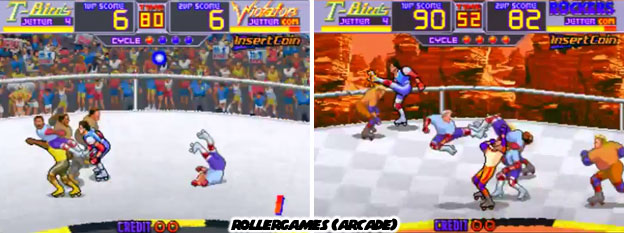
In 1990 Konami released RollerGames in the arcade as well as on the Nintendo Entertainment System. The game was licensed from the television show about an updated version of roller derby. The teams and players in the league were very over-the-top, not unlike pro wrestlers. It was great fun on TV and part of that spirit made it into the arcade. The game took place on one of several roller rinks located throughout the USA. Players actually could move all over the screen as they could in other brawling games while their characters automatically skated on the rink. The effect could be dizzying if players focused on the changing track instead of the approaching opponents. While fun the arcade version was a shameless quarter waster.


The player had to win a set amount of matches between the male and female teams. All the while the opponents were relentlessly dropping teammates and earning points. The battles were nonstop as teams seemed to have an unlimited supply of opponents right up until the clock ran out. Players that did not manage to throw, dropkick or punch out enough opponents could kiss their quarters goodbye.

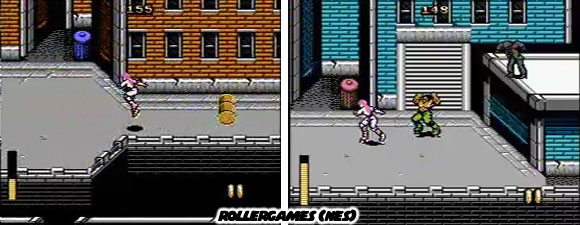
The experience changed completely when RollerGames was brought to the NES. The game became an adventure platformer featuring one playable character from each team. The character traveled from city to city, avoiding obstacles and pitfalls en route to defeating a boss, or manager from each team. At the end they fought through a corporate tower and defeated the big boss. It was nonsensical, just like many things that were popular in the 80's!


Very few brawling titles worked well on the 8-bit systems. The limit on sprite sizes, animations and colors made the brawler look like a minimalist genre. The next generation of hardware would be able to create experiences much closer to the arcade.

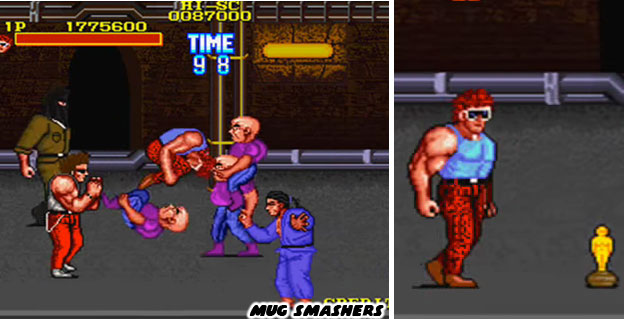
Of course there was always the PC, which promised to bring arcade-quality graphics home. For the most part they did. The gameplay, design and animation however were sorely lacking in many of the independently produced PC brawlers. One of the worst of the lot was by a British company called Electronic Devices. In 1990 they created a brawler set in San Francisco that was simply horrendous.


There were generic heroes and villains. Audiences could tell that they had poached various titles in order to recreate the genre. The control was bad, the villains were silly, there was one bad guy made up of three little people riding on each other's shoulders! The power ups made no sense, one even looked like an Academy Award! The prize for worst PC brawler was clearly won here.

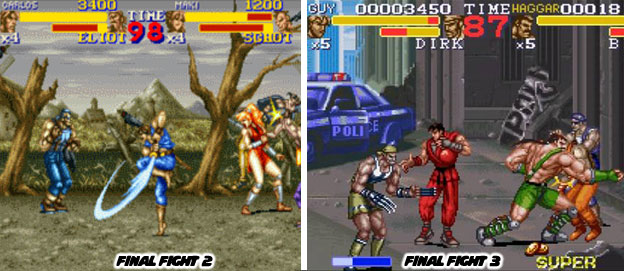
The consoles on the other hand had a lot of promise, especially once they transitioned to 16-bit systems. Capcom, as always, was one of the first to develop console titles based on their popular arcade games. Final Fight 2, released in 1993, was a Super Nintendo exclusive. The sequel to the arcade gem came out years after the original and featured new characters, locations and gameplay elements. It expanded the universe of Final Fight by taking Mike Haggar and his associates Maki and Carlos out of Metro City on a trip around the world.


Players learned that Mad Gear was a global crime syndicate that touched just about every continent. The bosses in this game were as memorable and diverse as they were in the original. The control was solid and Capcom had finally learned how to make a brawler that featured three characters. In the original Final Fight release for the SNES only Cody or Haggar were playable characters. A special edition featured Guy and cost more because of the memory costs associated with storing the information for one more sprite-based character.


In 1996 Final Fight 3 had returned to the streets of Metro City. Haggar returned to clean out the scourge of a new gang that had moved into town. The game introduced super attacks for the main characters. Dean and Lucia had replaced the other supporting characters in this story. A separate energy bar could be filled up and a screen-clearing super attack could be unleashed on bosses or groups of Skull Cross gang members alike.


It was a fun play mechanic that helped keep things fresh. The details in the sprites, animations and character designs did well to mirror the original title, however the sprite-based engine was beginning to show its age. Consoles were quickly moving to 3D experiences and players expected the genre to follow suit.


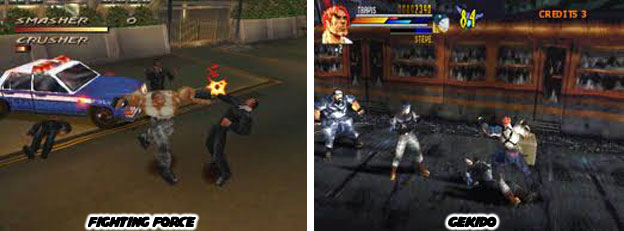
Fighting Force, released by Core Design in 1997, was originally pitched to Sega as Streets of Rage 4. Sega passed on the title so the title name was changed. The game was an early attempt at moving the brawling franchises to 3D. The polygon characters were large and animated slowly. The fighting mechanics lacked the speed or accuracy of 2D titles. The camera focused the attention of the player towards a particular direction and could not be changed. Core Design gave a clear example of how difficult it was to create the brawler in 3D using console hardware.


A few year later, in 2000, Naps Team tried to improve o the 3D brawler formula with Gekido. The animation was faster, camera improved, levels slightly more interactive and designs a bit more polished than Fighting Force. The console still lacked the raw 3D rendering power of most arcade cabinets but they were quickly catching up.


Very shortly the Playstation 2, Dreamcast and original Xbox would debut 3D brawling titles that were visually as impressive as anything released in arcades. Gekido could have been considered a forerunner to the Bouncer, which had been looked at in the previous blog.


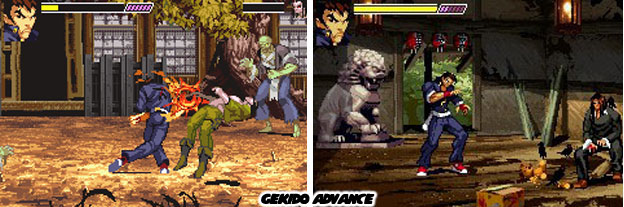
Naps Team had released a sequel on the GameBoy Advance in 2002. Gekido Advance; Kintaro's Revenge was a step back to traditional 2D, sprite-based gameplay. Which at this point was very unique. Most studios were struggling to bring 2D franchises into 3D. Naps Team made a sequel that convinced most gamers that the series was originally rooted in 2D. It was well done, well animated with solid character designs.


The game was decidedly Japanese animé influenced. The villains ranged from typical goons to monsters and mutants, a sort of Night Slashers meets the King of Fighters. The main character, Tetsuo, looked and moved similarly to Kyo from the KOF series. The game did well at recreating the classic feel of a brawler but kept things fresh by incorporating some fighting game mechanics and visuals.

The PC market in the west had a lackluster history with original brawlers however in the east things were different. In parts of Asia the PC market was often more popular than the console. The PC allowed DVD playback of course but also homebrew apps and small publishers could flourish. The PC's were of course online well before the consoles. Places like China and South Korea had a rapidly growing PC market. The studios in both countries were catching up with the trends in gaming. They were creating their own brawlers and fighting games less than a decade after they hit it big in the USA and Japan. That window of following the trends had grown shorter and shorter every year after 2000. The countries were able to develop and release their own mobile and MMO games a year or less after a popular title in the west had debuted. In other cases they were experimenting with the genres at a rapid pace.


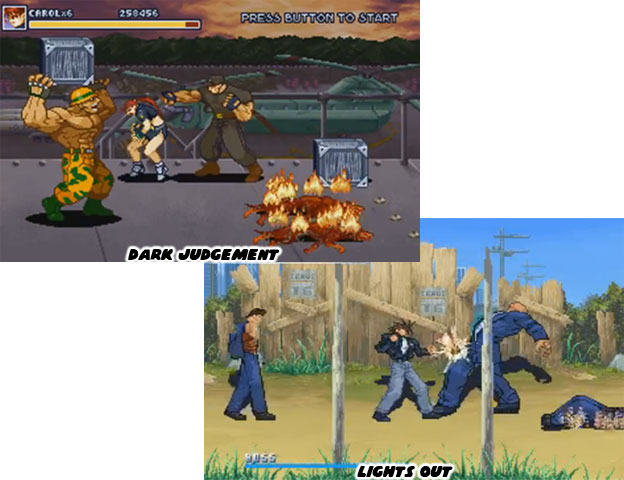
Two of the better brawlers released in South Korea were Dark Judgement: by SOHO Studio of Hong Kong and localized in Korean by Frankenstein Studio, the other was Eojjeonji Joheun Il-i Saenggil Geot Gateun Jeonyeok by TG Entertainment. The second game had a long title but it was based on the manhwa "Lights Out."  Comics in Korea were known as manhwa, comics in China were called manhua and you probably know that comics in Japan were manga. The two games came out in 1997 for Windows. Dark Judgement borrowed the aesthetic from the Capcom brawlers and mixed in some of the action of the Konami ones as well. It was created by a small team from Hong Kong and distributed by a Taiwanese Publisher. The SOHO Studio name was removed when it was released in South Korea. Thanks to the graphic artist, Lambonbon, who worked on the game for the bit of insight. Lights Out had a more distinct Korean style of animation and character design that was based on a bunch of high school tough guys fighting. Both of the games were well done and helped bring back a sense of the classic era of the brawler. There was something to be said about 2D graphics. They seemed to work better for the genre. In the arcade an indy developer would do similar things and release fantastic sprite-based titles within a sea of 3D releases. This game and more will be featured in the next blog. As always if you enjoyed this blog and would like to sponsor me please visit my Patreon page and consider donating each month, even as little as $1 would help make better blogs and even podcasts!

 follow the Street Writer on Patreon!

Tuesday, May 10, 2016

The Street Writer Blogcast: Episode 1

Every time I release a new Podcast I will release the text version for my hearing-impaired friends. I don't want them to miss anything that I cover. Also you are welcome to leave comments and questions for this podcast as well as future podcasts on this blog.


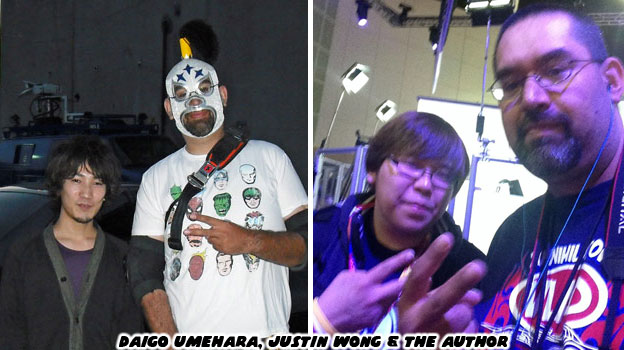
Thank you for tuning in to the first episode of the Street Writer Podcast. I am your host Noe, on my personal and Capcom-Unity blogs I'm also known as BigMex. Today I'm going to look at one of the elements of great fighting games; specifically rivals. Not just any rivals but the best ones in the genre. Rivals are something you've seen many times and possibly one of the things you might enjoy most about fighting games. Great games know how to build a rival. Whether it's a friendly rival or a sworn enemy the best games knew how to build the tension in the story and through the gameplay. They knew how to make you root for a hero or jeer the bad guy. Even some forgotten titles knew how to create great rivalries. Think about how the developers made some characters heroes and others villains. What techniques did they use? Just because there were both good guys and bad guys in a game did it automatically create a rivalry? Not always, some of the best ones were planned while others developed by accident. When it came to great rivals who was on your list? Was it Ken versus Ryu? Kazuya versus Jin? Daigo versus Justin? What did you think made them great rivals? Which rivals were the best in the genre and why? Over the next few episodes I'm going to point out some of which I feel were the best. I'll begin with Street Fighter, it's pretty much the reason why I'm still writing and now doing podcasts. The template for a great rivalry started in the very first game.


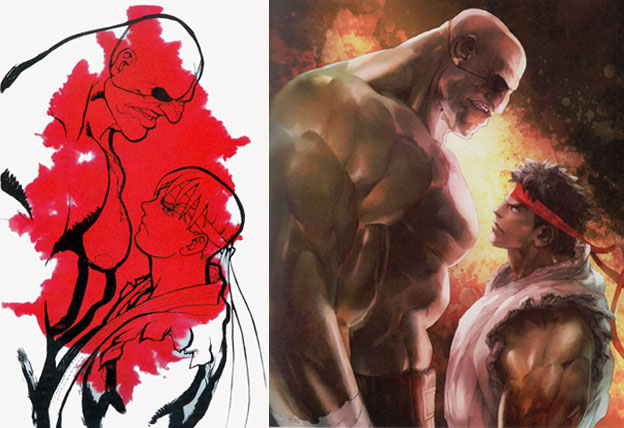
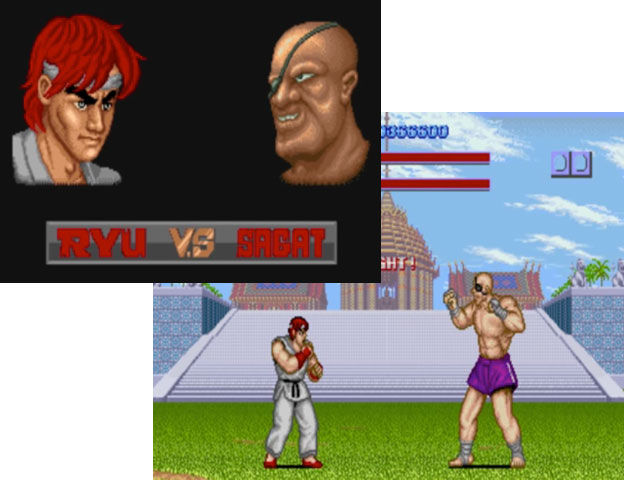
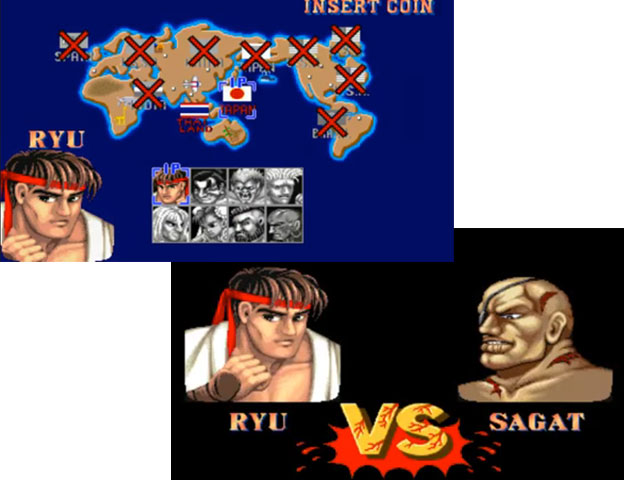
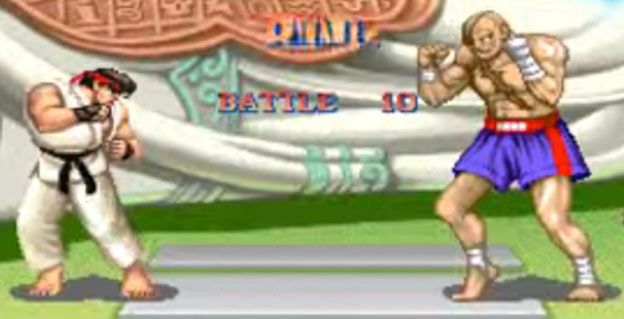
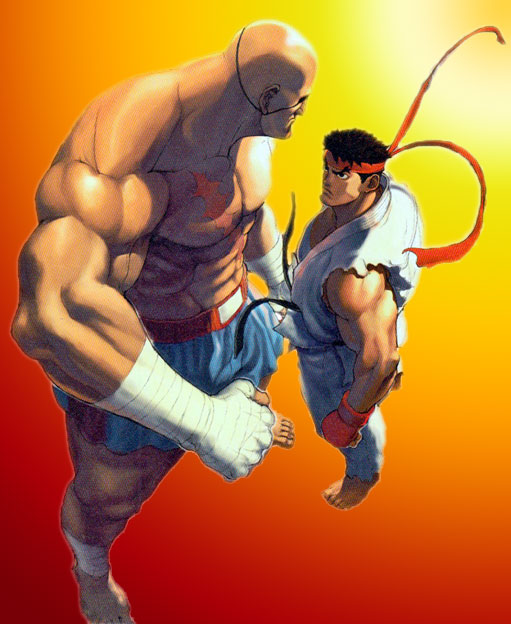
Sagat and Ryu were the oldest and longest standing rivals in the history of fighting games. They had been going toe-to-toe for almost 30 years. There were a lot of things that made them work as opponents as well as really popular individual characters. They represented a clash of styles, a clash of nationalities and at the heart a clash of purpose. Why did they fight? The designers at Capcom had to give them a reason to fight, the way they did this gave each character a personality. You could see it in the way each character was animated. You could see it in the official character art, in the game endings and through the story of the series. One fighter was the established champion. Sagat absolutely destroyed opponents and was feared by many. He knew what it took to get to the top, and it was much more than natural ability. Sagat was unusually tall and strong, making him a standout fighter at a young age. Before he became a champion he lost an eye in a fight. That event changed his life, he became cold-blooded fighter after that. He was willing to put his life on the line, and more important he was willing to put his opponent's life on the line in each fight. The other warrior, the man who would be king was new to the world of combat. Ryu was insanely talented, had a strong desire to win and was trusted with secret martial arts techniques. He was looking for a purpose in his fights, a sort of guidance that could only be found by fighting the best. Ryu was trying to find meaning whereas Sagat was trying to prove no one could beat him. In temperament they were night and day, destined to be opposites in every regard. The animosity between the two slowly faded over the years and was replaced with an intense respect. It was a level of respect that few characters in any genre would be written about. But it wasn't a friendly rivalry when they first met. That was something that the developers at Capcom managed to get through to audiences way back in 1987.


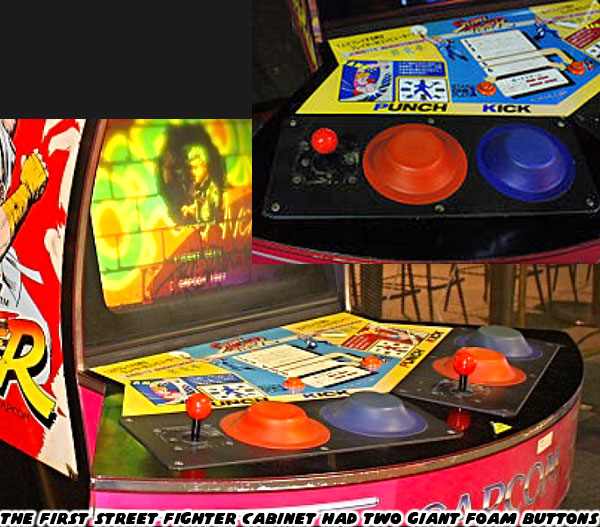
Imagine if you were a kid going to the arcade in the '80s. There were no cell phones, no really powerful home consoles. The best games could only be found in the arcade. If you were lucky maybe your parents gave you a dollar to play some games. You could spend four quarters on one game or play four different games. Every cabinet was fighting for your attention. Every company wanted your money. The fighting game was still finding its voice in the mid '80s. Other genres like space shooters and maze games were more popular. Studios were experimenting with different formats, different types of control setups to win players over. Capcom took some very big chances during this era. The first Street Fighter machine really stood out from other machines. The first cabinet had two enormous foam buttons, they were the size of overturned cereal bowls and much harder than the foam used in Nerf toys. The buttons were red and blue and you had to punch each one in order to get the character to punch or kick. As a kid I learned that I had to hammer down on the buttons with the edge of my hand instead of trying to punch them straight on. Tapping the buttons translated to a jab whereas the hardest hammer punch was a fierce strike. If you were lucky or knew how to perform the fireball, dragon punch or hurricane kick then you probably kept it a secret. Those were super attacks that could beat any opponent. You could use them to beat other players in a two-player match and feel like a real champ. Imagine what was going through our minds. Imagine being a kid and Street Fighter was your first introduction to the genre. You could punch the buttons as hard as you wanted and sometimes your character would perform these super moves. It was a high-energy concept that paid off for Capcom. Okay, so maybe it didn't pay off as well as they wanted. A few months after the game debuted the studio had to create a new controller for arcade operators, one with the more familiar six-button layout because people were having problems using the foam buttons. Some kids ended up breaking the controls because they were playing too rough, while others were injuring themselves for the same reason. I can still remember the machine in the local arcade when it came out. I can still remember seeing the foam buttons torn on one side because somebody was trying to rip it off the cabinet.
 

Ken and Ryu were amazing characters. All of the sprites in the game were big and colorful. They were much more animated than any other martial arts game. Ken and Ryu stood out because they weren't boring like the red and white characters in Karate Champ. They fought to a single hit while Ken and Ryu flew all over the screen like the characters in kung-fu films. One by one all of the rivals fell. It didn't matter what form they studied, whether they used a weapon or even if they could even teleport around the screen. A player that learned timing and how to perform the secret moves could actually go through the game on one quarter. That was a rare for most arcade games. Operators and companies made their money by creating titles that were challenging and often required a few credits to complete. Finding a game that had a good challenge yet you could beat with one credit was rare. Even in the early days the team at Capcom knew that they had to make each and every battle difficult but not cheap. If the game was too hard then a player had no incentive to continue. But if the game kept the action even and rewarded the player for having a superior technique or sense of timing then they were likely to pay a few extra credits to continue. Street Fighter did a good job of capturing the unpredictability of a fight. A player could dominate one round and then be taken out the next. A lucky punch might be the difference between becoming the champ and losing everything. It happened in the real world and was expected to happen in a game too. Thanks to this level of balance people were more than willing to put in an extra credit and continue from where they left off. Balance also made every opponent unique. Fights gradually got harder the further a player went into the game. No two opponents fought the same so it kept things fresh from match to match. If a player made it to the nation of Thailand then they felt confident that they would be able to beat the final opponents. Adon was a difficult fighter with his unique flipping "Jaguar" kicks. It was his master than was on a different level.


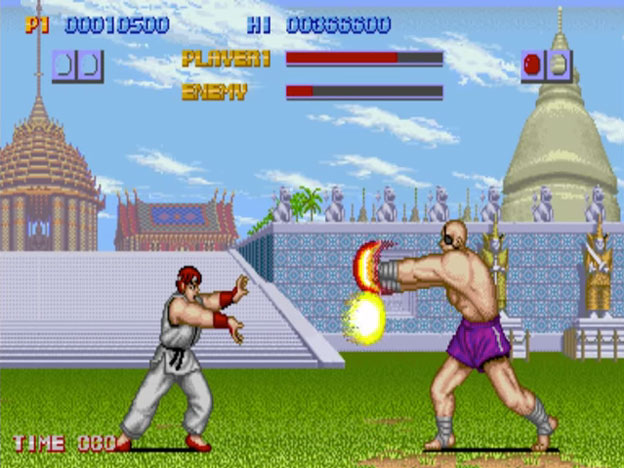
As colorful as the cast was there wasn't really an equal to the main characters. I mean everyone was roughly the same size but nobody looked or fought like Ken and Ryu, especially not the final boss. Yet this boss stood out because he was visually so different. The final match in Street Fighter had to be unlike the other battles. It couldn't be easy but again Capcom didn't want it to feel cheap. To help make the fight memorable they wanted to shake the confidence of players. There was a bald, dark skinned eyepatch-wearing character staring at the player in the stage intro. The guy was ugly, about two hundred pounds heavier than Ken or Ryu and easily a head and a half taller. He was biggest character in the game. Up until that point we thought that Birdie was largest and strongest brawler. We had no idea who we were dealing with. What made Sagat much more dangerous than any other opponent was that he had technique and not just mass on his side. Karate was seen as a sort of ultimate empty-handed fighting style. It was the style of fighting used by the heroes in movies and tv shows. What Sagat used was Muay Thai, an older and more brutal fighting art. Players learned to fear the man right away. He could stuff just about any attack and was surprisingly fast despite his size.


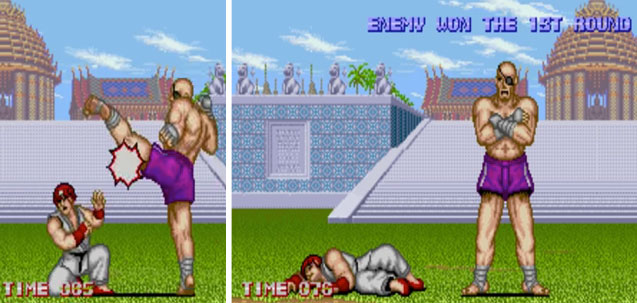
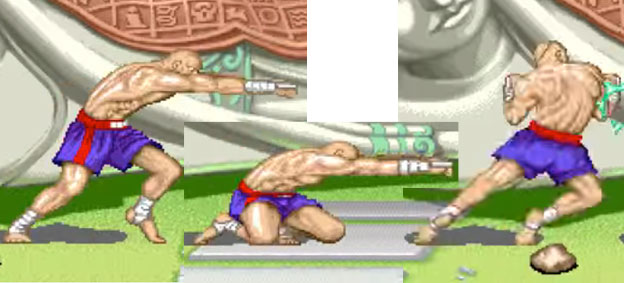
Capcom made sure to level the playing field by giving Sagat his own special attacks. Everything that made Ryu or Ken unique was stripped away on the final stage. The developers knew that the last opponent in the game had to be everything the main characters were and more. He needed his own ranged attack. Something that was not a throwing star or dagger. A bolt of fire that erupted from his hands, the Tiger Shot was something no other opponent could perform and equal to the fireball from the main characters. He also had a leaping knee strike, this would become known as the Tiger Knee. If cut down the distance on the stage and was a counter for the hurricane kick. More than that Capcom knew that he needed to be able to beat the players move for move. His range had to be greater, his kicks longer, his strikes faster and his defense tighter. Players that underestimated the giant were beaten very quickly. Capcom even gave Sagat a personality trait. He was cruel in his victory animation. He would cross his arms, face the audience and laugh. It was an early example of a taunt in a fighting game. He laughed as if the player was not even remotely good enough to take on the champ.


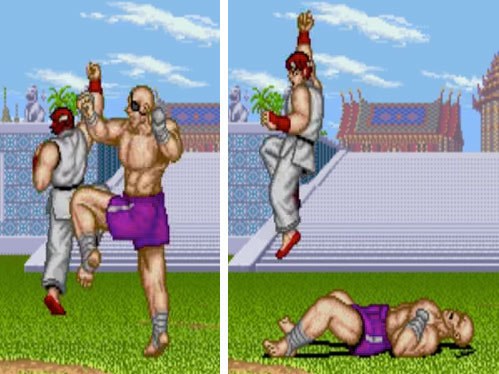
Gamers had to use all of the secret techniques and use them fast if they wanted to make it through two rounds. The original Street Fighter could be tough, special moves took way more energy than in any sequel. Just a few hits from Sagat was enough to knock you out. The dragon punch was the great equalizer, it was the one move that Sagat didn't have a counter for. It would become the punch used in story to defeat Sagat. The final battle was supposed to be a fight to the death. Sagat didn't care what happened to his opponents once they dropped. If someone were powerful enough to beat him then he accepted he would die in the process. Many people didn't notice this but if he was beaten he laid there with his eyepatch torn from his face. It was the insult to injury. At that very moment the rivalry was born. What made the character unique was that players and even Capcom did not know Sagat would become an important piece of the story until years later. He was just another boss guy in another arcade game. In hindsight the original Street Fighter was a fun game but it was not extraordinary. There was nothing that really kept people coming back. I remember playing it a few more times once the local arcade replaced the big foam buttons. But each time I visited the arcade there were always new games that seemed more interesting.


Part of the reason why some people didn't really remember the first Street Fighter was because the climb to the top happened very fast. It happened so fast that the story didn't really have a chance to sink in. Who were these fighters? Why should we care about them? Aside from some really neat moves what else did they have going for them? For that matter why should we care about the main characters? This kid named Ryu, did he really become the world champ because of his heart, his skills or because of a lucky punch? Every battle in the original game ended with the opponent saying "What strength!! But don't forget there are many guys like you all over the world." Ryu did indeed travel around the world, putting on breaking demonstrations to pay for his journey. He beat all of those guys until he earned his title. It was something that real life martial artists did more than a half century ago, before mixed martial arts matches were broadcast on TV. If a fighter wanted to prove they were the best then they actually had to go out there and show it. They would put on breaking demonstrations, Mas Oyama would even fight bulls in public exhibitions and kill them with a punch to the head. Perhaps a newspaper might cover those martial arts pioneers but often it was word of mouth that created the legends.


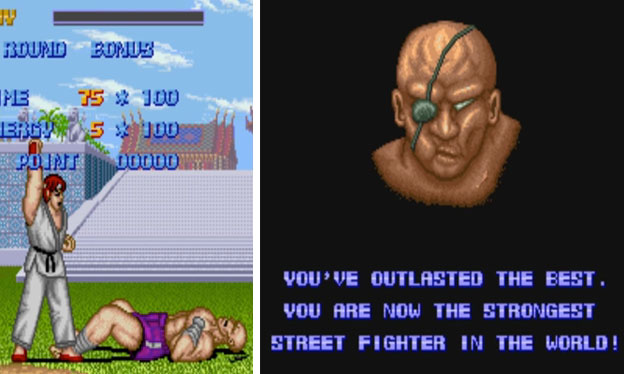
Ryu did become the best in the world when he beat Sagat. This was something that many people seemed to miss in the story of Street Fighter. In every sequel Ryu was the best and he was defending his title against new opponents. Ryu's first championship however did not come with a belt or trophy. Ryu won the war by attrition. Sagat even said it himself "You've outlasted the best. You are now the strongest street fighter in the world!" Note he didn't say best street fighter or even greatest street fighter, but rather strongest. Ryu outlasted them all thanks to his incredible conditioning, superior techniques and physical gifts. Because of his age there would only be room for improvement, this was something that the developers at Capcom could use to their advantage. Sagat on the other hand was the tired champion with no where else to go but down. For that character the challenge was internalized. If he wanted to reclaim the title, if he wanted to beat Ryu then he had to become stronger. So how does a seven-foot, one eyed former world champ become stronger? There was room for improvement but we wouldn't see it for years. The team that created the original Street Fighter would be broken up and be put on different projects. Some left Capcom to join other studios. The rivalry would have to be put on the back burner while Capcom figured out where else they could take the genre.

Arcade operators wanted Capcom to do a follow up fighting game. The studio saw that Technos / Taito's Double Dragon was a bigger hit in 1987 and decided that they should create a brawler instead of a fighting game as the sequel to Street Fighter. When they showed arcade operators the game called Street Fighter '89 featuring the characters Guy, Cody and Mike Haggar they go push back. It had nothing in common with the original game. So Capcom called the game Final Fight and released it anyway. They went back to the drawing board and began putting together all sorts of ideas for Street Fighter II. There were some influences from Hokuto No Ken aka Fist of the North Star. There were influences from real world pro fighters and wrestlers as well. There were also some really ugly characters that were stereotypes if not racist caricatures from other countries. A new karate fighter was planned as the star but Ryu and Ken were the ones that would return. The original plan did not include Sagat. The new boss character and sub boss were some sort of knight and ninja in armor. They eventually became Vega and Balrog, the Claw and Dictator for international fans. The decision to bring back Sagat was done after the studio came up with the concept of multiple boss characters. His re-introduction was supposed to mean something to audiences. Capcom had created a terrorist organization, the main character a Dictator named Vega surrounded himself with bodyguards / hit men that were the most dangerous men ever. A heavyweight boxing champ, a Spanish assassin and the former strongest fighter in the world became generals in this organization. Each fighter was more dangerous than the last.


In Street Fighter II, after players beat the main roster and went through the first two generals they were surprised to discover the boss from the original game was waiting for them. Okay, not everyone remembered that Sagat was the original boss, the early generation of Street Fighter fans were young kids when the first game came out and didn't pay attention to the cast. Anyhow Sagt was back and he was as big and as ugly as he had always been. There was something profoundly different about him though. He had a massive scar across his chest. Who gave him this scar? Why did he return? What else was different about him? These were things that people who remembered the original game wondered out loud. Capcom would later on explain that it was Ryu that scarred him, it would create an incredible narrative. The main hero of the series had actually tried to kill the villain in the first game. Granted he was possessed by the Dark Hadou, a sort of evil energy living inside Ryu. So he wasn't quite himself at the time but nonetheless there was blood on his hands. If Sagat was smaller or weaker he would have been dead. Think about it for a moment. What other game had a main character that was like this? Sagat did not forget the fight and became an even more dangerous opponent because of it.


Sagat seemed a little bit leaner the next time he fought Ryu. He was indeed a little bit faster than before. Audiences saw that his library of moves had grown as well. He still possessed the Tiger Shot, the counter to the Hadoken or fireball. Yet he could now launch his attack while crouching or standing, which was something that neither Ken or Ryu could do. He still had the Tiger Knee, a leaping kick attack that was a counter to the Tatsumaki senpuu kyaku or Hurricane kick. Lastly he had developed his own punch. The Tiger Uppercut was the answer to the Shoryuken or rising dragon punch. Sagat's version started lower and rose higher than either Ken or Ryu's. These three special moves pretty much cemented his status as the ultimate rival. There was nothing that Ryu could do that Sagat could not do better. Combined with his strength and range he was a very formidable boss. The team at Capcom wanted audiences to understand that the time spent recovering from the first Street Fighter tournament had turned him into a much more dangerous opponent. The generals all reinforced that idea that there was more at stake in this tournament than a trophy. The most important part was having the previous boss return with a vendetta. It made for a much stronger narrative. The audience was hooked from that point on.


Fighting games could have depth and character growth, things that were usually reserved for role-playing games or adventure titles. Fighters were not throw-away characters after all. They would develop a strong following and influence characters in other games as well as in animated projects and comic books. Sagat and Ryu would do battle a few more times in canon. They would also fight a number of the other main characters in the stories but none of those battles had the intensity of the original rivalry. Sagat and Ryu crossed paths in the various sequels and VS titles from the studio. Each time they met the legend grew. Every encounter came with a certain level of intensity. It was palpable. Fans knew that the two had a history. After 20 years it had grown to mythical proportion. Fans were eating it up. When the artists at Capcom drew the pair, which actually wasn't that often, they made sure to capture the menace of Sagat and the defiance of Ryu.


When it came to rivalries I couldn't think of any one that stood out more than the one between the Capcom legends. Was it the only great rivalry in fighting games? Oh no, not by a long shot. We're going to dig a little bit deeper and in the next episode and see what Capcom's rivals were working on, I hope to see you back for that. If you have any questions, comments or want to share a story please let me know. If you enjoyed this broadcast and would like to see more then leave a comment and consider sponsoring the Street Writer on Patreon.

Sponsor Me on Patreon!