Monday, July 6, 2015

How fight culture became fighting game history, part 3

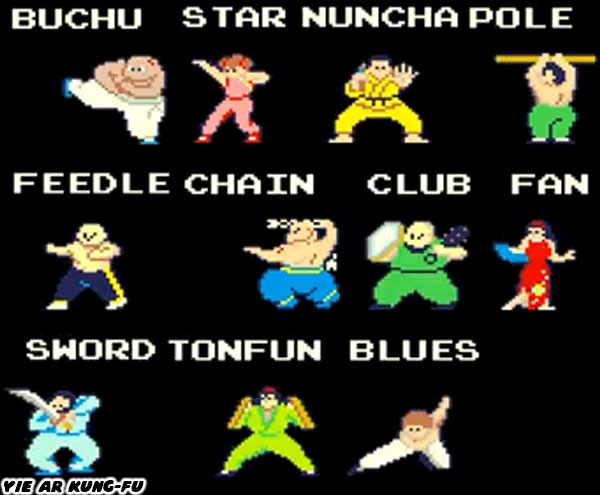
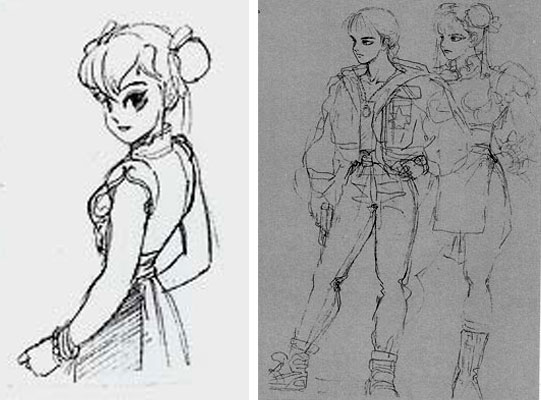
Chun-Li started out like most Street Fighter characters as a basic concept. The game already had karate archetypes through Ken and Ryu. The developers at Capcom wanted to spread out the styles including pro wrestling, boxing and sumo wrestling through different characters and nationalities. It was a given that the Chinese character would represent kung-fu, especially since it was the cradle of the Asian martial arts. In order to make the character stand out it was decided that she would be a woman. There were no female characters in the 1987 release of the original Street Fighter. To be fair Konami had featured two Chinese female martial artists named Star and Fan in their 1985 arcade game Yie Ar Kung-Fu. Chun-Li differed in that she was the first playable female fighting game character and the only female in the lineup for the 1991 release of Street Fighter II. At first the design for the "China Daughter" was very simplistic. She was a young girl dressed in a traditional uniform.

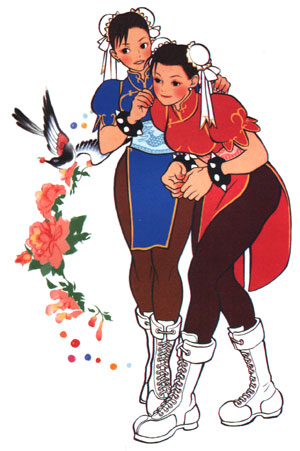
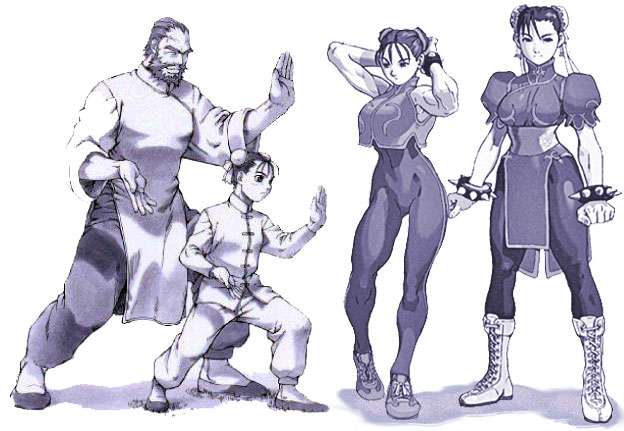
The designers wanted to make her more interesting not to mention strong enough to be believable against a cast of seasoned brawlers. They decided to make her an adult police officer. The older Chun-Li and urban uniform were better but the artists wanted to make sure that her appearance worked when placed against fighters wearing more traditional clothing. She was revised yet again and placed in an outfit that reflected her heritage. As such her costume took a lot of liberties with cuts from traditional Chinese clothing. This costume was designed not to inhibit her during a fight, yet also not to be too revealing. The costume tricked gamers into thinking that it was somewhat authentic. A closer look at the uniform would reveal how these things worked together to help build a memorable design.

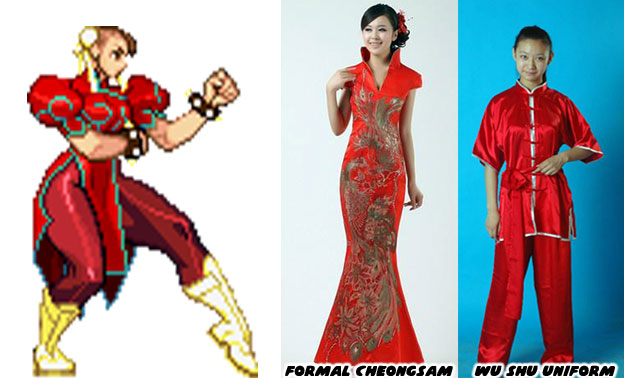
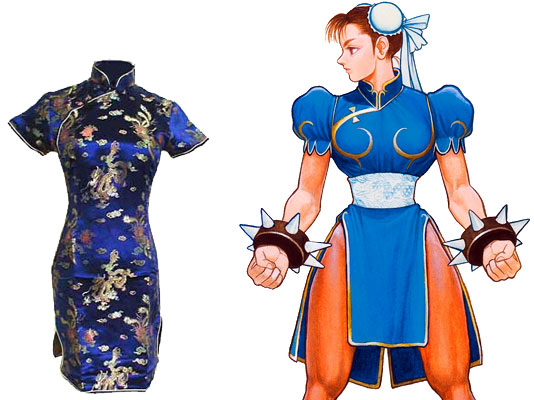
A kepi or cheongsam was a traditional tailored Chinese dress. Depending on the length, material and embroidery featured on the cheongsam it could be used as work wear, casual wear or even formal wear. It was never designed for fighting. A traditional Chinese martial arts uniform was far more loose-fitting, allowing for flexibility and freedom of movement in the arms and legs. Unfortunately the female figure would be difficult to make out in a videogame if she wore loose clothing. The designers struck a balance between the modern and the classic for the cut of Chun-Li's dress. It was so subtle that not many noticed that the individual elements were completely made up.

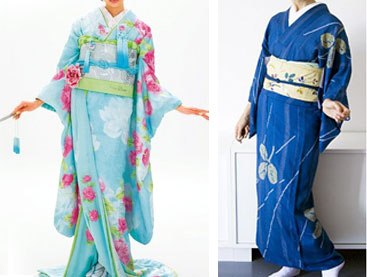
The hair buns and gold filigree on the costume were non-traditional but there to make her appear more feminine. The oversized spiked weights and wrestling boots signaled that she was a fighter. Chun-Li's costume appeared tailored to flatter her figure, like a traditional cheongsam it followed the curves of her body. However it also featured puffy sleeves which allowed her shoulders to have a wide range of movement. To give her legs the freedom to kick there were slits on the front sides of the dress that rested on top of her hips. To help make the leg show more modest the character was given dark tights. Her slender waist was framed with a decorated belt. The cheongsam was rarely if ever worn with a belt and wu shu uniforms used a bright sash in the place of a belt but never anything fancy. The ultra-wide belt was possibly inspired by the decorative belts worn with Japanese kimonos.

The character was given moves that were every bit as impressive as the fireball or dragon punch. Her "Spinning Bird Kick" and "Lightning Kick" became trademark attacks. Arcade visitors quickly learned that she was a top-tier fighter and not some sort of token female character. The look of the fighter was set but she needed to be infused with personality. Chun-Li could have been a dainty, "girly" fighter but instead she was presented powerful and confident, only occasionally letting a giggle slip out when she was proud of herself. She would remind players that "I am the strongest woman in the world" in between rounds. Previously in fighting games the female was the prize that the hero had to rescue. Such was the case for Sylvia in the 1984 hit Kung-Fu Master and Marian in the 1987 hit Double Dragon. Chun-Li was the polar opposite of those women. In fact she could have easily replaced the heroes in those games. Her strong personality and proud heritage were undoubtedly inspired by the actresses in Hong Kong cinema.

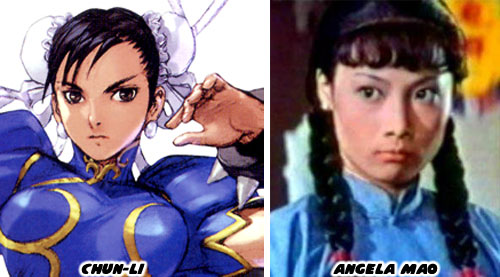
Females had always been an important part in the martial arts movies from China. Many women that appeared in the films took an active role in the stories. There had been female martial artists in Chinese cinema since the early part of the 20th century however the one that got the ball rolling for leading ladies was Angela Mao in the 1972 film "Lady Whirlwind." The actor was a dynamo that studied traditional Chinese wushu as well as the Korean art of Hapkido. In the film Angela's character, Miss Tien, was a fiercely independent woman looking to seek revenge on the death of her sister. She fought practitioners of different styles including Japanese karate and judo masters. It was possibly the first action film featuring a female lead against non-Chinese styles. People in the US would see Angela for a brief moment in the Bruce Lee film Enter the Dragon, she played the part of Lee's sister. Characters like Miss Tien undoubtedly influenced the development and presentation of Chun-Li.

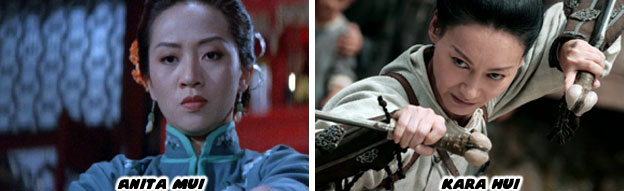
Fiercely determined, capable and independent women were a rarity in gaming but never in martial arts cinema. Many actresses had become icons in the movies, appearing in as many films as most of the biggest male stars. These stars appeared a decade or two before the original Street Fighter was released and helped influence the world of the young developers at Capcom. Some actresses played villains as well as they did heroes, like Kara Hui, the 13th Madam in the film Wu Xia. She was a ruthless killer that gave Tang Lung, as played by veteran actor Donnie Yen, a run for his money. Others were not only capable fighters but also had tremendous comedic timing. Anita Mui (RIP) was a great fighter but also was experienced at physical comedy and actually upstaged Jackie Chan in the film Drunken Master 2.

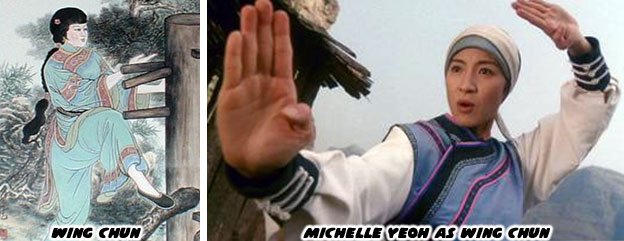
The myth of the female martial arts master were inspired by an actual historical fighter. In the mid 18th century Yim Wing-Chun had to master various fighting styles to protect herself from the unwanted advances of suitors. Her biggest influence was Ng Mui. Ms. Mui was a Buddhist nun that lived in secrecy. She survived the Qing government burning of the Southern Shaolin temples and lived life on the run. She befriended Yim and trusted her with a new technique. Ng Mui was inspired to create a fighting style after watching a snake and crane battle. She saw ways of striking, trapping and intercepting attacks from a close range. If it worked in nature then it should help in practical fights as well. This boxing style was dubbed Wing Chun after her best student. It was perfectly suited for self defense, not only for women but for people of any age or athletic ability. The legend of Wing Chun was well underway by the time Huo YuanJia was born. The template of Chun-Li predated that of Gen.

Eventually the Wing Chun style found its way to Ip Man, sometimes spelled Yip Man. Yip was born at the end of the 19th century and fought against the Japanese occupiers during World War II, albeit only to keep his family and friends alive. He was a figure whose martial exploits inspired the Chinese nationals similarly to how Huo had done previously. Yip Man became a Chinese folk hero and survived an assassination attempt by the Japanese. He continued teaching Wing Chun and passed down many lessons to a young fighter named Bruce Lee. Bruce of course became more famous for his kicks than punches, but he was considered equally dangerous at any range. As for the origin of the name Chun-Li, let's just say that that the fighting spirit of Yim Wing Chun and the kicking speed of Bruce Lee had something to do with it.

Yet Chun-Li was a classic character cast in the modern world. Her costume was only disguise for her police background. The spiked weights and wrestling boots grounded her in the present. What was interesting was how Hong Kong cinema had developed similar characters. The Jackie Chan film Supercop began filming at about the same time as SF II was released. It also featured a strong female protagonist that was an undercover Chinese police officer. Actress Michelle Yeoh played inspector Jessica Yang, in the film she was trying to help Jackie infiltrate a drug ring. She dressed in simple country clothing and sported pigtails. Like a modern Angela Mao her disguise beguiled her training. Michelle took part in some amazing fighting and stunt sequences to rival Jackie's. She even appeared as Wing Chun in a film a few years later. When Chun-Li first appeared she was an instant sensation. She was feminine but powerful. She might have been conceived originally to fill in a slot on the roster however there was nothing token about her inclusion in SF II. She appealed to players of all types. Part of the reason she worked with audiences was because she reminded them of the heroines from kung-fu cinema.

The name Wing Chun could be translated as "Forever Spring" and she would always be remembered as a spirited young fighter by her fans. Similarly Chun-Li was presented as a vibrant young lady in all of her official art. By comparison all of her male counterparts were older and looked more rugged. Chun-Li represented power and beauty, her moves and athleticism redefined femininity in videogaming. Just about every piece of art based on the character made sure to get the cut of her costume and the shape of her muscular legs right. Female players could finally fight for themselves and no longer wait to be rescued in a game. In her game endings she achieved justice for her murdered father while remaining independent. Despite fan fiction and some questionable licensed comic books she was never presented in game as falling hopelessly in love with her co-stars, especially not Ryu. She was the definition of what was admirable for fighting protagonists in gaming. Her costume was cute but modest, her personality was strong but friendly. Capcom demonstrated that a fighting female could be powerful and beautiful, as well as sexy without being slutty.


The martial artists spread by Bodhidharma had survived persecution and strife for well over a thousand years within China. The arts continued on with the help of brave Buddhist monks and nuns. The mysterious fighting arts continued to shape the world even past the industrial revolution and well into the atomic age. In pop culture the Shaolin monks became legend. Some of the oldest schools of fighting were still around and continued to crank out disciples that could perform impossible feats of strength and endurance. In the next blog we will go further back in time and see how ancient Chinese spiritual beliefs intermingled with the martial arts traditions of Bodhidharma. As always if you enjoyed this blog and would like to sponsor me please visit my Patreon page and consider donating each month, even as little as $1 would help make better blogs and even podcasts!

Friday, July 3, 2015

How fight culture became fighting game history, part 2

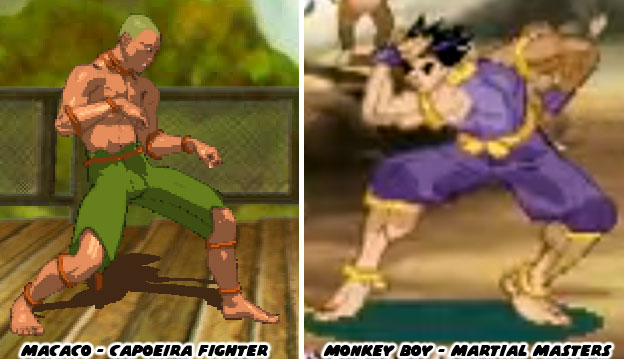
The codified techniques of striking and grappling called wushu or gongfu (kung-fu) in China were drawn from countless schools and styles. The origins of some of the oldest systems were said to have been based on watching how creatures fight. Some styles were formed by monks and others by regular people. According to legend there was a man named Da Sheng Men that was schooled under the Di Tang method of fighting. He was imprisoned deep in the jungle for a crime he committed. The security was light on one side of the compound and heavy on the other. If a prisoner tried to escape on the heavy side they would get cut down by the guards. On the light side they could make a run through the jungle to freedom. Or so they thought. There were some vicious monkeys that lived in the woods and would tear an escapee to shreds. Da Sheng Men served out his short sentence but all the while studied the way the monkeys fought and incorporated it into his style. It became one of the forms of Monkey Kung Fu. This form looked amazing on film and was adapted a few times in gaming. Yet this particular form came into being at the end of the 19th century, many of the animal forms created by the Shaolin were a thousand years older.


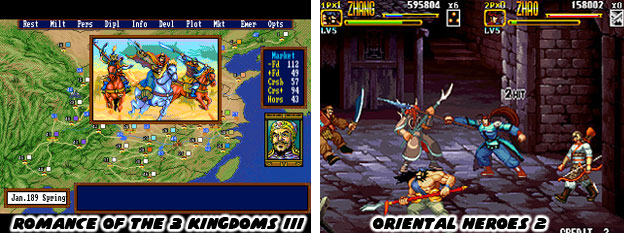
The known martial arts have existed since the earliest empires and just like those kingdoms they have experienced revolutions of their own. Art, science, religion and philosophy changed and evolved at the whim of the cultures and kings. The fighting arts survived the changes and have become immortalized in popular culture. One of the most storied celebrations of the amazing men and women of the martial arts coming from Luo Guanzhong's Romance of the Three Kingdoms. The events of the actual second century Han Dynasty in China were retold to audiences in the 14th century. Creative freedom and a great deal of historical fact made legends out military leaders and strategists. Warriors, heroes, criminals and soldiers have all been celebrated in other classic adventure stories. These fighters had never seemed more real than when they were presented in cinema. The end of the 20th century would signal the rise of a new form of entertainment. The average person would get to play as the legendary fighters in videogame form, marrying Eastern fables with Western technologies. Real and fictional battles could be experienced in any genre, from the role-playing series named after the Three Kingdoms to the action brawler Dynasty Warriors and Oriental Heroes.


This immersion in martial arts folklore gave audiences an entirely new experience. The martial arts would continue to change the face of popular culture. The sciences and philosophies of ancient Asia had to be explored in order to understand and appreciate the origins of the fantastic fighters. The roots of the Eastern Martial arts and philosophies were based in China. Even karate practitioners had to acknowledge that the origins of their systems were based in kung-fu. Mas Oyama, the main inspiration behind Ryu of Street Fighter fame, had defeated hundreds of men in his illustrious career but had known defeat only once. Early on in his karate career he decided to test out his style against a master of Taiji Quan. Taiji is a variation of the same Tai Chi you might see being practiced in a park. The Taiji master, reportedly named "Mr. Chen" was elderly and invited Oyama to a sparring match. Oyama thought that he would make quick work of him. Instead he discovered that no matter how hard he tried he could not land a single blow on the master. The elderly Chen used simple circular motions and smooth footsteps to evade the attacks. With tears in his eyes Oyama thanked the man for showing him that he still had room to grow as a martial artist. The life story of Mr Chen was lost to the pages of history, but the encounter was not. It helped perpetuate the myth of the ancient martial arts masters, characters like Gen in the Street Fighter series for example was one such person.


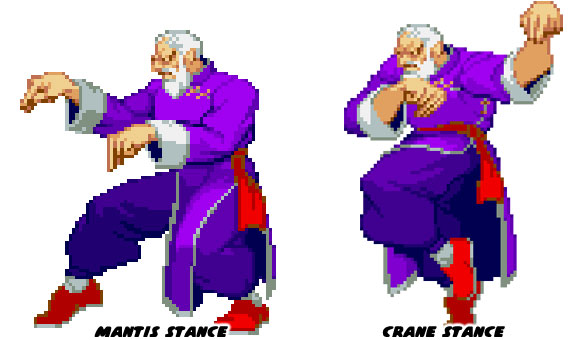
Gen was actually the first and only Street Fighter character to have two sets of fighting stances. Arcade players could switch between them in the middle of a match. Each stance also came with its own special and super moves. The character actually had a few strikes based on Tiger and Eagle Claw but his primary stances were Crane and Mantis. The early forms of Kung-Fu were inspired by the predatory animals in nature. These were considered noble fighting forms. Of course villains developed "evil" versions of Kung-Fu based on the poisonous animals like the scorpion and centipede as well.

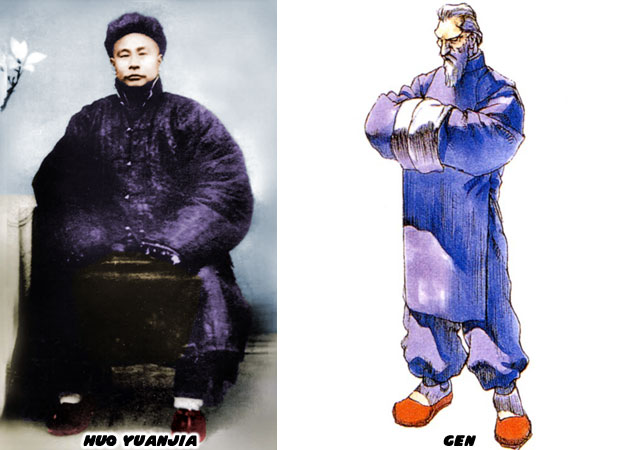
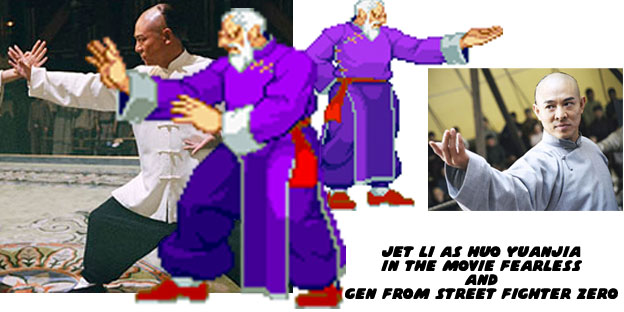
The character of Gen was inspired mainly by Huo YuanJia. Although they do not share many physical traits, it is the legend of the Kung-Fu master that bears the similarities. Huo was born in 1868. He was a sickly child who was kept away from the martial arts by his overprotective father. He proved that he was an amazingly gifted fighter when he defeated the older person that had beaten his brother in a match. From that point on he was allowed to study the martial arts. He had beaten the masters of various styles at a young age. He killed a man in one fight and put himself in exile.


It was similar to what Mas Oyama did when he was younger. Oyama was already an experienced karateka (karate practitioner) and had gotten in a bar fight. He killed the man that pulled a knife on him. Oyama knew that he had the ability to disarm the attacker but instead lashed out. This shame of not being able to control himself in a fight caused him to live like a hermit and become a stronger fighter mentally and physically. Both Huo and Oyama returned from their exile at the peak of their abilities. Of course the legend of Huo goes back almost a century earlier. Huo came out of "retirement" to face the foreign invaders. The Japanese and British had begun colonizing China. The nations would put on matches that surmounted to imperialist propaganda. Having boxers, judo experts and wrestlers take on all so-called kung-fu masters and beat them up in public matches. It was disheartening to the Chinese that their fighters and their arts seemed ineffective against the occupiers. They sorely needed an icon to rally around and Huo came along at the right time. He soundly beat the best fighters from abroad to demonstrate that the Chinese were not inferior people, nor were their fighting styles.


Huo became a national hero when he proved himself against the best Western and Japanese fighters. A fantastic retelling of his life story was done by Jet Li in the film Fearless. The question you may have is why is Gen depicted as an old man whereas Huo was young when he became an icon. Huo died at the age of 42. He suffered from health issues most of his life, including asthma and jaundice. Near the end he had contracted tuberculosis. His health deteriorated quickly and he died just a decade into the new century. The rate at which his health declined was questionable to many. Huo was fast becoming a symbol for national unity, which concerned the occupiers greatly. The Chinese suspected that the Japanese doctors that were treating him for his condition had poisoned him instead.
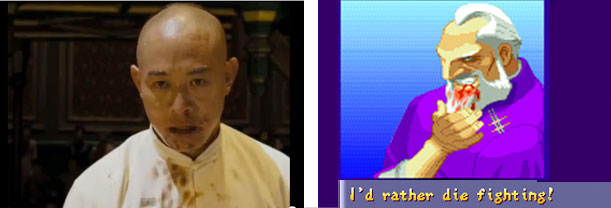
Gen was a symbolic character. He represented the legendary Kung-Fu masters from 18th and 19th century China. He was what would have happened if Huo had lived long enough to fight the greatest martial artists of the 20th century. Huo would have been elderly but still a dangerous man in the eyes of many. In Street Fighter canon Gen was not only considered a legitimate threat to Ryu but even the main villain Gouki. People suffering from tuberculosis sometimes cough up blood due to the deterioration that the disease has on their lungs. Gen could be seen suffering from this affliction in several endings in the Street Fighter Zero/Alpha series. He was such a proud man that he wanted to die fighting the best opponents in the series rather than to succumb to the disease.


Eventually Gen died, whether by the hand of Gouki or not was never officially stated by Capcom. His secrets did not die with him. As an elderly man he helped mentor Yun and Yang. Each of the Chinese twins learned just enough of his fighting style to make them popular opponents in Street Fighter III. His greatest student however became an international darling. Gen was good friends with the father of Chun-Li. When her father was killed in the line of duty it was Gen that stepped in and continued training her. She became the best female martial arts master in the world but also became a great police officer and avenged the death of her father. Gen would turn up in manga and anime films to cement his status as one of the best fighters in the universe. We should be thankful that Capcom was able to incorporate a mythological Chinese hero in their martial arts fable.


Chun-Li was rooted in a myth that was even more important to the identity of the Chinese martial arts than Gen. The next blog will look at her origin. As always if you enjoyed this blog and would like to sponsor me please visit my Patreon page and consider donating each month, even as little as $1 would help make better blogs and even podcasts!

Thursday, July 2, 2015

Representation Matters! Or, what happened to Birdie, part 3...


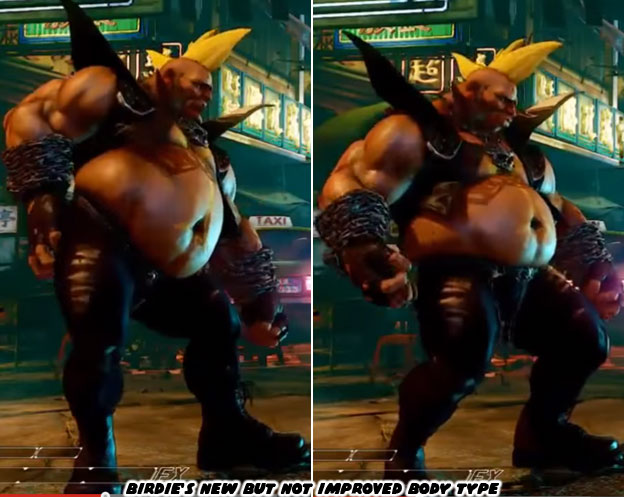
I'll get right to the punchline, fat characters were introduced into the recent crop of fighting games because they were funny to look at. For some reason Capcom producer Yoshinori Ono had decided to steer several characters into the absurd. When I saw what the team had done to Birdie in Street Fighter V I was deeply saddened. I thought to myself why would they do such a thing to such an original design. I could not think of a context where his transformation was justified. None of the other characters brought back had gotten fat. If the excuse was that punks got fat and lazy in their old age I would have to ague against that. Sure everybody may get out of shape as they get older but some in the punk rock community would argue that sentiment.


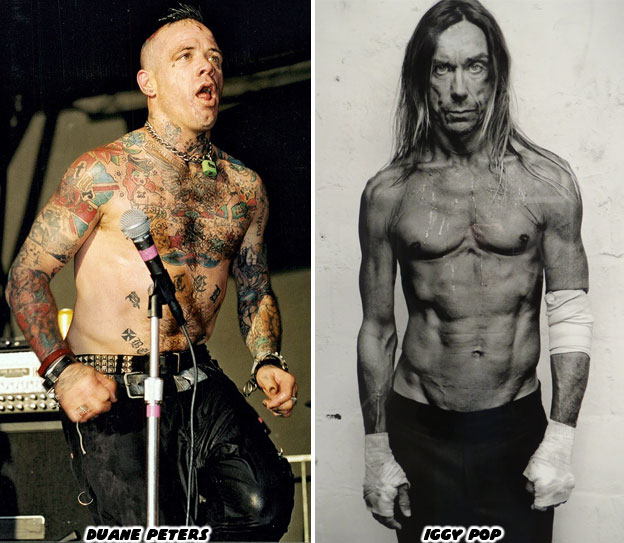
Singer, skateboarder Duane "The Master of Disaster" Peters was into the punk scene from a young age. He was as tough as any long-time punk and had lived a life that would have killed many other people. A veteran of the road he skates as hard as he ever did. He was also born in 1961, during the golden era of skateboarding in Southern California. But let's go even further back. The iconic Iggy Pop also works hard and rocks harder. He was born 1947 and was a catalyst of the punk movement. Iggy has a body better than most men half his age and also shows no sign of slowing down. So when everything about Birdie (up until) now says punk I don't think of fat bikers (which is really what he became). Instead I think of rockers like Iggy and Peters. Birdie should remain as timeless as the other Street Fighter characters. If the developers cannot meet the character with that basic understanding then maybe he shouldn't be in the game.

 So are you against fat characters in fighting games? 


No.

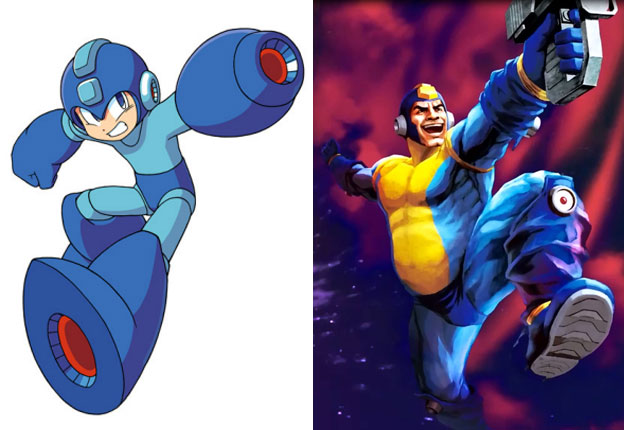
Let's make this perfectly clear. I am not against fat characters in fighting games. I am against silly gimmick characters in franchises that do not need them. Before Birdie got a makeover an even older, and more popular Capcom icon had gotten the same treatment. Mega Man was announced as a playable character for Street Fighter X Tekken. When most people thought of Mega Man they imagined a blue robot that looked like a kid wearing a blaster on his arm and a helmet on his head. What no one could have imagined was a fat guy with a laser pistol and some tights.


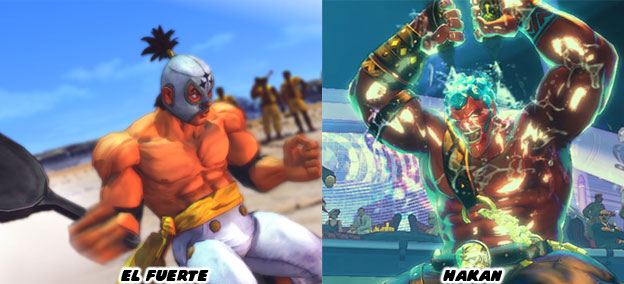
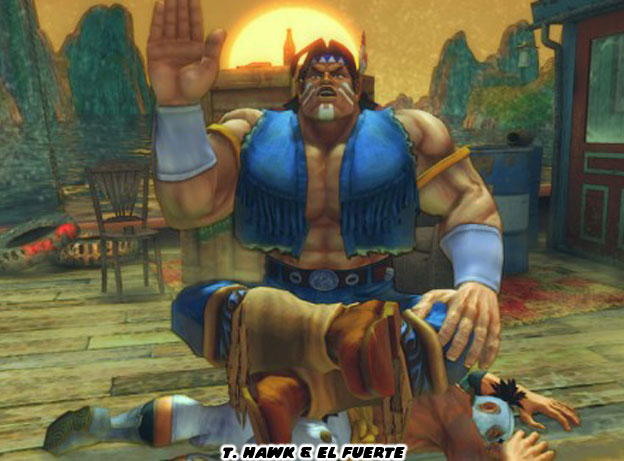
It was an absurd redo of a classic character, one that was based on the poorly designed NES box art from North America. It was more outlandish presentation than say the Bionic Commando as a morose ex-soldier in dreadlocks. Yet somehow somebody at Capcom not only thought this was a good idea, they pushed for it to get done. The artists, animators, programmers and developers all had to model and create this fat guy in a costume and balance him out against the rest of the Street Fighter and Tekken cast.  I would assume that it was the producer, Mr. Ono that made the call. Let's go back and look at his short list of questionable decisions in the fighting game arena. He was ultimately responsible for getting Hakan into Street Fighter IV and giving him the silly oiled up attacks. For having T. Hawk sit on opponents and make the Native "how" gesture. For turning El Fuerte from a traditional masked wrestler to a cooking obsessed parody. Of course there was the greatest misstep of all, the addition of Rufus to the Street Fighter universe.

 A-ha! I knew it, you do hate fat people in fighting games! 


Pay attention because I do not want to repeat myself. 

I do not hate fat people in fighting games. I love fat people in fighting games. I love to see diversity in body types, body shapes, skin color, age and ability more than anybody else I know. I love the fact that fat characters have been a part of fighting games since the earliest days. King Hippo in Nintendo's Punch-Out!! and Buchu from Konami's Yie Ar Kung-Fu were two of the earliest fat characters in the genre. The were swift, powerful, had great attacks and distinct looks. Hippo was a likable character and was paralleled in real life by people like super heavyweight boxer Eric "Butterbean" Esch. Capcom had even included fat people in their action games before Street Fighter II debuted.


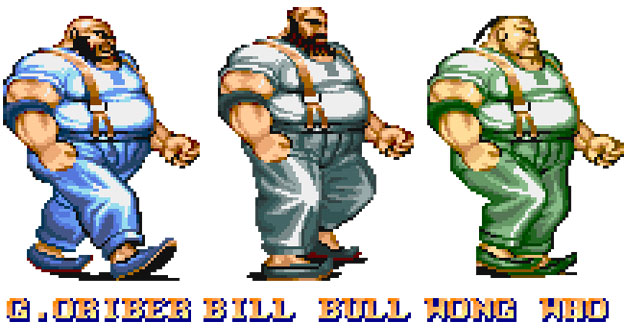
G. Oriber, Bill Bull and Wong Who were members of the Mad Gear Gang. They fought the heroes in Final Fight. The trio, like the rest of the gang, would get beaten up then return for more punishment later on in the stages. The three characters were heavy set but also very muscular. Being nothing more than pallet swaps (simple color changes) with a few cosmetic changes to the heads they were a quick way for the developers to make the cast of villains look numerous. These characters also showed a range of diversity. Oriber and Bull looked Western and Who was presumed to be Chinese. The archetypes were actually inspired by a heavy-set man that used to menace the local bars near Capcom's headquarters in Japan. This added an extra layer of dimension to the brawlers as I could imagine the Capcom employees had to sidestep this person after a night out on the town. I always thought that the fat characters worked well in the series and looked forward to their counterparts in the Final Fight sequels.

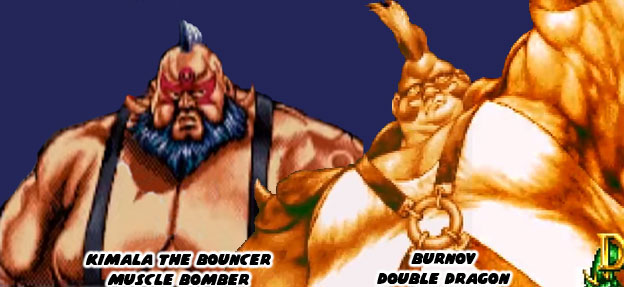
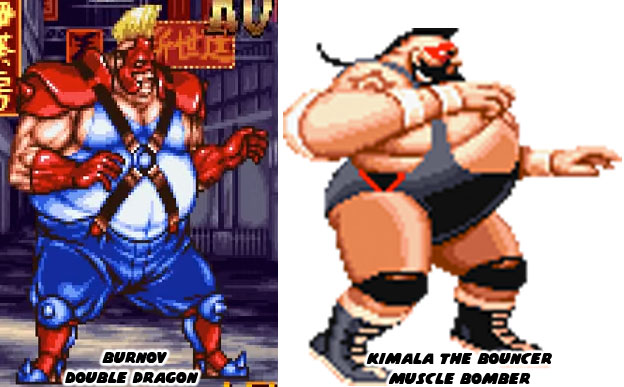
The tradition of adding respectable fat fighting game characters was actually observed by several studios and not solely Capcom. Two of the most massive fighters in a fighting game turned out to be eerily similar. Kimala the Bouncer from Capcom's Muscle Bomber / Saturday Night Slam Masters series (1993) and Burnov from SNK's Double Dragon (1995) fighting game were two of fattest game characters ever created. Their arms and legs were often wider than their entire opponents torsos. The two also happened to have Mohawk haircuts to add to their already imposing presence. There was nothing playful or silly about the fighters. They were there to brutalize opponents. Kimala was actually the BWA (Blood Wrestling Association) Heavyweight Champ. Burnov was a post-apocalyptic warlord, not far removed from the villains in Hokuto No Ken / the Fist of the North Star manga series.


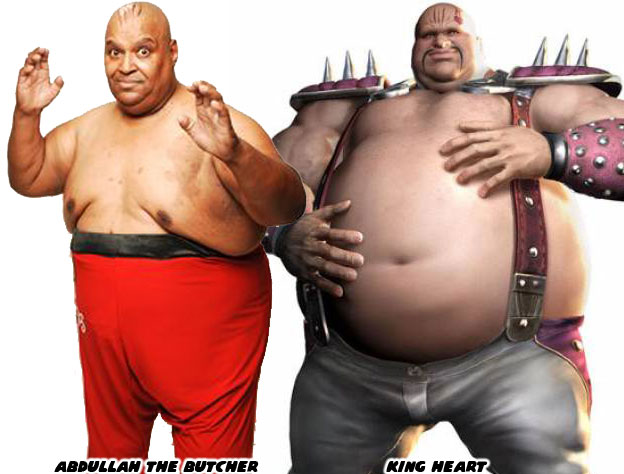
Speaking of which, Hokuto No Ken was a very influential manga series from the early '80s. It colored the development of many fighting games. One of the evil warlords from the comics was called King Heart. He was tall and fat, with deep scars on his forehead. He also had a distinct tattoo on the side of his head. It was a heart with a K for King, modeled after the classic Bicycle company playing cards. The heart tattoo placed on the head of Birdie as a nod to the character. Despite dying a gruesome death in the comics King Heart turned up in a few fighting games, including an arcade version.

Hokuto No Ken series creator Tetsuo Hara was actually a fan of the Street Fighter series and was called in to help with character designs for the wrestling game Muscle Bomber. He created a lineup that was in almost every way as unique as the original World Warriors from Street Fighter II. He modeled Kimala after the Sudanese (actually Canadian) wrestler Larry Robert Shreve, better known by his ring name Abdullah the Butcher. Abdullah was six feet tall and over 350 pounds. He had studied some karate and judo growing up. He found a living through pro wrestling. Abdullah had a very distinct look. He wore red pants with a sash and had curly-toed shoes, a costume that was supposed to bring up images of ancient Arabia. His most defining feature was his forehead. After years of blading (cutting himself to make the matches bloody) his head was left with very deep scars. Abdullah was never much of an athlete so his matches were often standing brawls where he would bring out illegal weapons, like a fork, which he would then use to stab opponents and bust them open so that they bled as well.


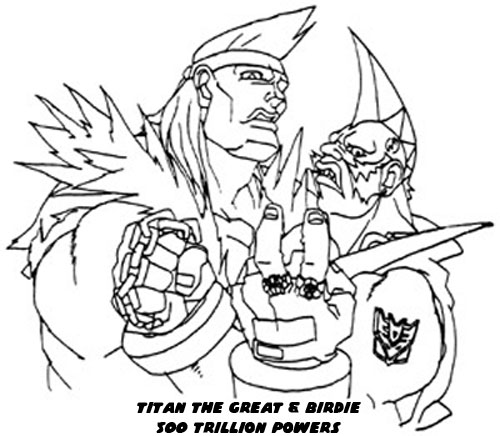
Tetsuo Hara did more than develop fighters, he helped create the backstory for Capcom's wrestling universe. Brutality was what the BWA was known for. The "good guys" wrestled in the CWA or Capcom Wrestling Association. The wrestlers would cross between promotions and have an all-out war trying to find out who was the best wrestler of all. I always admired Kimala as a character and also what Hara was trying to represent through him. The influence that he had on Street Fighter was immeasurable. The boots of Abdullah were paralleled in the curly-toed shoes worn by Birdie. But that was not the only thing that Hara had shaped for the character. Birdie was actually tag team partners with Titan the Great. Titan was the giant of the Muscle Bomber series. He was absolutely massive and just a centimeter or two shorter than Hugo Andore from Final Fight / Street Fighter. In the official character art between Titan and Birdie we could see that Optimus Prime and Megatron from the Transformers were characters on the rings of Birdie. Not only that but Birdie had a Decepticon tattoo on his shoulder. These were details that the people working on Street Fighter V had overlooked or simply did not know.


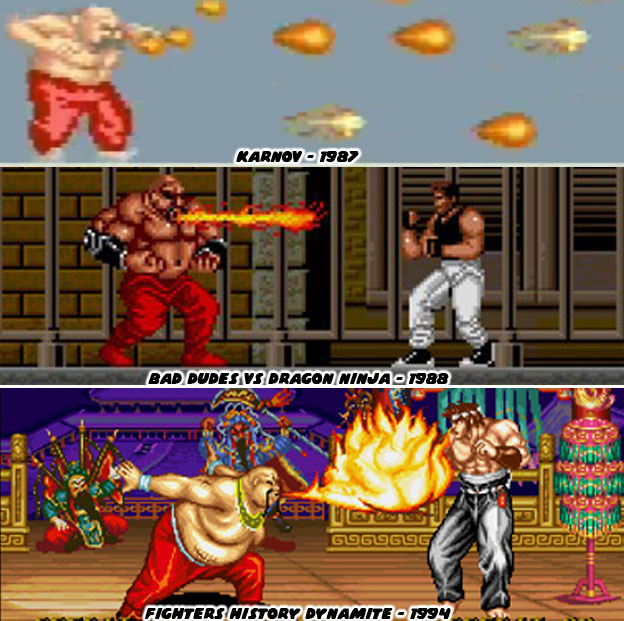
As an aside Abdulah had a hand in influence other fat characters in gaming. The wrestler had been at his craft through the '70s, often touring Japan. There was no doubt that Hara as well as other artists and developers were familiar with the character from his trips. The Middle Eastern look of the Butcher influenced the creation of one of the early console and arcade adventure heroes. Jinborov Karnovski aka Karnov was a fire breathing, ex-circus strongman from East Russia. His red pants, curly-toed boots and heavyweight frame were distinctly Abdullah's. If they were not then he was at least based on old Arabic folklore. The arcade game and NES adaptation of Karnov appeared in 1987. Data East was one of the forefathers of the fighting genre, they had created Karate Champ after all. Instead of focusing on one-on-one combat with fighters of different abilities they instead decided to wrap adventure games around these fighters. Karnov would face fantastic monsters on his journey, similar to a character like Sindbad, the pirate of Arabian legend. In addition to his strength Karnov also had the ability to breath fire. This was an important detail that would shape other characters and games.


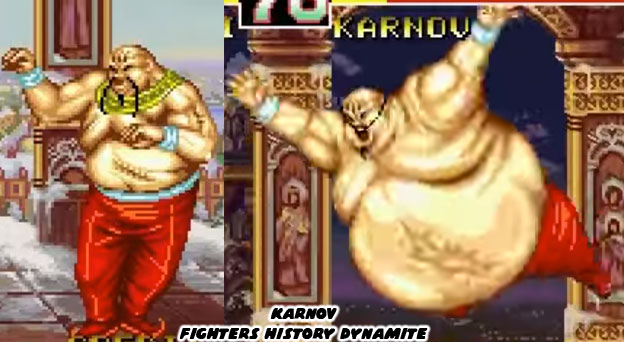
A year after his debut Karnov appeared as the first level boss in the game Bad Dudes vs Dragon Ninja. This appearance meant that Karnov was a modern character but with ancient powers. His adventure was therefor not set in ancient times but instead in a part of the world where mythical creatures and demons existed. Karnov would fall off the radar for a few years. He would return in Fighters History Dynamite: Karnov's Revenge in 1994. Data East could not ignore the runaway success of Street Fighter II in the arcade and on home consoles. The publisher decided to create their own entry. The characters and controls in the original Fighters History were very similar to Street Fighter II. They were so similar in fact that Capcom took Data East to court for copyright infringement. Capcom lost the case and that precedence allowed other studios to create fighting games that also poached ideas from Capcom.


Here's the thing that I want all of my readers to pay attention to. In the original Karnov the character was heavy-set and each time he returned he became a bit fatter. This evolution of the character made sense in continuity. His ability to breathe fire, and his newfound ability to make himself a large balloon were based on ancient magic rather than martial techniques. It also made sense based on the origins of his look and powers. The costume that Abdullah the Butcher wore, the same costume of Karnov was based on ancient Arabia. In the classic story traditions of One Thousand and One Nights, Ali Baba and the Forty Thieves and the Seven Voyages of Sinbad there was a certain body type that kept turning up.

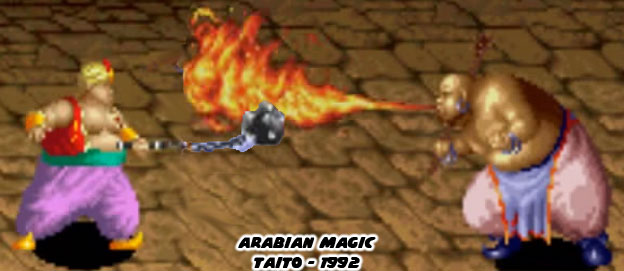
The fat characters were the strongest figures in the stories. Remember that thousands of years ago there were no such things as gyms or weight training programs. Big characters, fat characters, were universally understood as being the strong ones. Also fat characters could sometimes be seen as having status in society because they could afford to eat well. Fighters from these legends sometimes had magical properties. They had to have superhuman strength, be able to breath fire, and run across the sky in order to battle against the mythological characters. Sometimes these mythological characters could partner with them. Djinn or genie's could be summoned by the heroes. The would do this when they needed visit far off lands or destroy their enemies. These classic archetypes were actually featured in the game Arabian Magic by Taito in 1992.


Heroes and villains in Arabian Magic could actually be fat fighters. They were not silly and they did not have some sort of gimmick (like eating bananas and donuts) in order to make them more interesting. Abdullah the Butcher would probably have fit into one of the old stories and definitely would have worked in the games as well. This is where the genius of Hara came into play. Not only was he a huge fan of pro wrestling, he was also very familiar with the classic storytelling traditions. Kimala was influenced by Abdullah but he maintained some of the special abilities from myth. The character could spit poison (a trick used by the Graet Mutah) or breath fire as well. This was a tradition that SNK was familiar with. They used it when they created Burnov. The character could breathe fire and even engulf himself in flames and run over opponents. If you study the costume of Burnov you can see how it was a modernized version of the ancient Arabian costumes.


These fat characters were well designed and demonstrated that those body types could work in a fighting game as well. It turned out that characters like Kimala and Karnov were actually the exception instead of the rule. In the next blog we shall take an even closer look at fat characters in the fighting genre and see how the industry changed the purpose of those figures. I hope to see you in the next entry. Please leave any questions or comments if you'd like. As always if you enjoyed this blog and would like to sponsor me please visit my Patreon page and consider donating each month, even as little as $1 would help make better blogs and even podcasts!

Wednesday, July 1, 2015

How fight culture became fighting game history, part 1

If you've been reading my blogs for a minute then you know that I love fighting games. The genre is sorely underrated for its contribution to the game industry. It means more to the community of gamers than most genres and despite its combative nature it actually unites audiences all around the world. The success of many franchises is due to the influences from hundreds of real life and fictional sources. There is a reason that some of the best fighting myths have withstood the test of time. They speak to the collective human experience. The most storied fighting game heroes are a reflection of us, our hopes, desires and aspirations. They are playable fables where good and evil are pitted against each other and the outcome depends on how well the player can rise to the challenge. The ability to assume the role of the main character is really the biggest selling point behind the greatest adventures. Players are not passively watching the action but are instead engaged on multiple levels. What they see, what they hear and what they learn are all internalized. Very few forms of media allow audiences that luxury. But before I become too long winded let me try to explain the purpose of this series. I was going to repost some of my best fighting game blogs from 1UP and Capcom-Unity but thought twice about it. Rather than just copy and paste those entries I decided to edit them together and come up with a sort of comprehensive history of the martial arts and fighters that inspired some of the greatest characters introduced into the genre. We will explore the origins of the martial arts, the mythology behind them and how they were represented in pop culture. I'll try to go chronologically but will have to jump forward and back in time because I will try to explore the Eastern and Western myths that inspired the earliest games.

Normally I start a fighting game series in the early 20th century but this time around we are going back more than a millennia. It is understood that the roots of the Asian martial arts stem from China. Even the popular forms of karate and tae kwon do from japan and Korea respectively have roots in Chinese martial arts. Yet how did those styles get introduced to different nations? How did they evolve? What differences did they carry? Is there any sort of common ancestry? The answer to that is actually rooted in the spiritual beliefs from India.


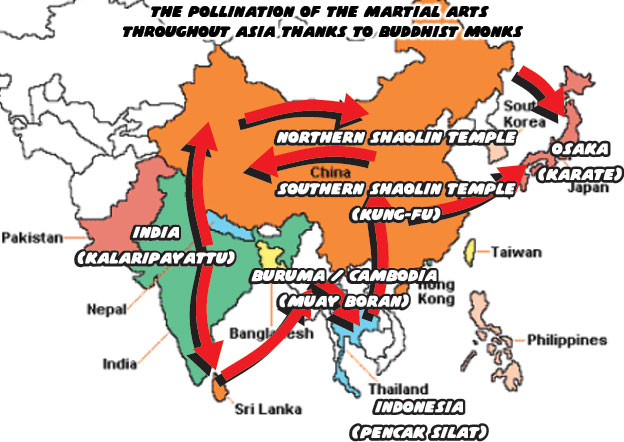
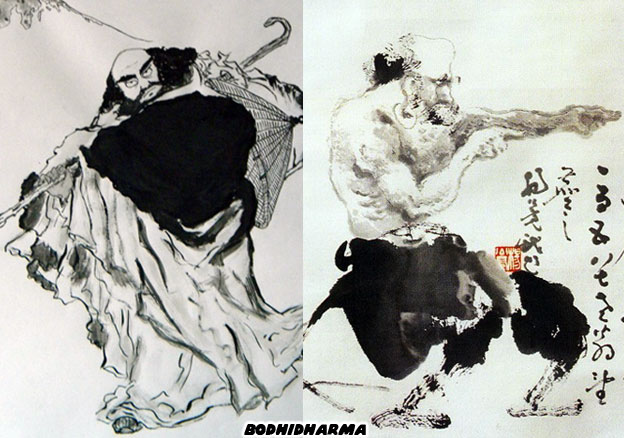
Buddhism, as a path towards finding enlightenment began in the heart of India over 1500 years ago. The system spread throughout Asia over the next 1000 years. It travelled north and south via monks and disciples. It crossed boundaries and nationalities and became ingrained with the art, language and culture of every place it visited. The symbols of Buddha were adapted and refined to fit the customs of local tribes. Whether they lived in the Himalayan mountains or in the monsoon belt of the Southeast Asian peninsula the followers of Buddha tried to reflect the lessons and remain ever vigilant against worldly corruptions. This meant that many practitioners had to learn how to strengthen their mind, body and resolve as to not give into temptation. A series of exercises was developed to help monks maintain focus and protect themselves and their communities wherever they travelled. These early forms of fighting were rooted in the Indian fighting art Kalaripayattu. It was the predecessor to Kung-Fu and Karate. The person that was most influential to the spread of the martial arts and Buddhism throughout China was a man named Bodhidharma. He was described as a dark skinned man that was treated rather unkindly by Chinese villagers. They were suspicious of foreigners, even if they professed to be spiritual men. Little by little he won over their trust and eventually respect by sharing his insight and instructing the early Shaolin Buddhists in the arts of self-defense.

In Mainland China kung-fu is more commonly known as kempo or whushu. It is well known and understood as one of the oldest forms of fighting on the face of the Earth. Take the description of one of the oldest forms, Shorinji Kempo, into account. According to this webpage highlighting the various forms of martial arts.

"Shorinji Kempo traces its origins back almost 5000 years to India. From India, Buddhism spread to many countries, including China. Bodhidharma, the sixth century founder of Zen Buddhism, introduced kempo to the legendary Shaolin Temple ('Shorin-Ji' in Japanese), located in Honan prefecture. Here kempo became the main form of spiritual training for the buddhist monks and the monastery became famous for its fighting arts. Wall paintings can still be seen today in the Shaolin Temple of dark-skinned (Indian) monks practicing and teaching kempo to light-skinned (Chinese) monks. The Imperial Chinese Government, feeling threatened, destroyed the temple and persecuted the monks. The techniques however continued to be taught and practiced by various secret societies as a means of protection against bandits and corrupt officials. Many different forms of kempo were developed and kept alive by these secret societies."


Bodhidharma had introduced physical exercises to the Shaolin monks to strengthen their bodies and minds. He wrote the manuscripts which established the physical regiments that the monks were expected to adhere to and even a book on dieting to achieve the maximum results from exercise. His manuscript Included a diet of teas which would help the monks focus and concentrate during long meditation sessions. It was said that Bodhidharma became enraged with himself when he fell asleep during his meditation and created the manuscripts so that his physical body would no longer fail him. The manuscripts disappeared over the centuries but many of the fighting techniques that he taught, including the use of the staff, survived to this day. Bodhidharma became synonymous with the martial arts and became a symbol for its lineage.

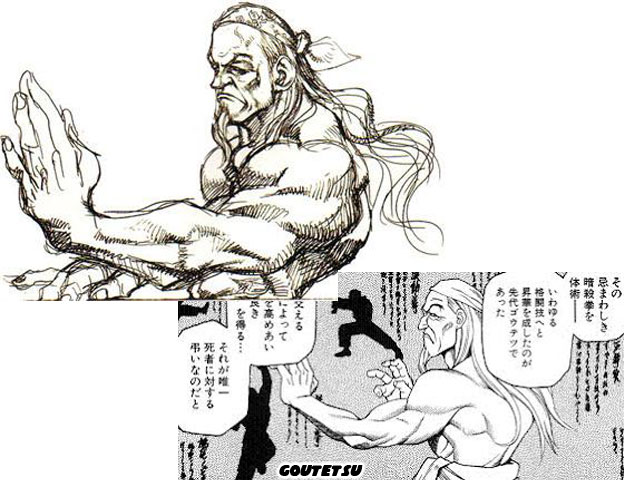
When Buddhism arrived in Japan and mixed with Shinto traditions the personification of Bodhidharma became almost subversive. He was dark and brooding, the polar opposite of the white and chaste symbols of divinity and purity in ancient Japan. His influence, especially in the martial arts seemed primitive, almost backwoods. There was no denying its effectiveness however, the early practitioners of the martial arts in Japan were immigrants that had arrived from China. Before Karate became synonymous with the "Empty Hand" techniques it was instead known as "China Hand" in Japanese. The original martial arts masters in Japan had brought with them the techniques that Bodhidharma coveted. In Japanese pop culture this lineage would be celebrated again and again in the manga, or comic books, that told the stories of turn-of-the century masters. The character Goutsetsu, the master of Gouki and Gouken from Street Fighter mythology was Chinese. He had brought with him the secret techniques of an "Assassins Fist" or Ansatsuken from China and trusted his students with them.


The influence that Buddhism had throughout Asia was immeasurable. It went well beyond what Bodhidharma did for the martial arts. Systems of fighting had been around since recorded history. The bigger the civilization was the more likely it had several forms of fighting taught in each provence. Some styles were created for military conquest and some for sport. What Buddhism did was cross pollenate spirituality, culture and the martial arts throughout Asia. As the Buddhist monks went from village to village they adapted the customs and art of the locals. They traded symbology and philosophy with many spiritual leaders and traded blows with bandits that attacked them on their travels. If you were to study the history of the martial arts you would actually see how certain systems predated others and how some forms were based on older schools. The oldest forms began in India and progressed east. It was no accident that the rise in martial arts ran parallel with the spread of Buddhism.

In a thousand years the fighting forms that would withstand the test of time had developed along the roads taken by merchants and travelers but especially by monks. By the time the monks reached the Sea of Japan they had brought with them countless lessons from their travels. The closest point between the Asian mainland and the main island of Japan was from a peninsula of what was now known as South Korea. Early immigrants from China and Korea, some monks and some merchants crossed the channel and settled in the center of Japan. The largest town being Osaka, where the seeds of what would become Karate were planted. Before we cross the channel ourselves this blog will take its time and see how various fighting arts were created and how they were represented in pop culture, but specifically in video games. As always if you enjoyed this blog and would like to sponsor me please visit my Patreon page and consider donating each month, even as little as $1 would help make better blogs and even podcasts!

Tuesday, June 30, 2015

Representation Matters! Or, what happened to Birdie, part 2...


In the previous blog I talked briefly about the influence of Street Fighter around the world. There were many reasons why the franchise was so successful. From a move selection, balance and control standpoint Capcom had done a superb job. The controls were experimental, many developers thought that anything more than two buttons might confuse players, six was going to be overkill! Despite the fears of the industry (and the extra expense to Capcom to put in all those extra buttons) players seemed to quickly pick up on the nuances of multiple buttons and joystick combinations. From week to week gamers were becoming exponentially better at the title and were uncovering secrets and techniques over months. The studio had a hit on their hands with Street Fighter II and decided to refine the game. Unlike other companies that would publish a title and move to something else Capcom was looking to fine tune Street Fighter II and offer arcade owners more repeat business. They would release upgrades to the game, known as the Hyper, Turbo and Super versions. The changed the way certain characters played and modified the balance accordingly based on location tests and feedback from player. Each upgrade to the arcades was met with great success.

From a technical standpoint the developers at Capcom were unparalleled. Yet with certain updates and sequels the characters introduced into canon did not have the staying power of the original Street Fighter II "World Warriors." The designs of the subsequent characters did not evolve as greatly as the game engine had. In some cases the characters were ill informed, if not crude and stereotypical. Birdie had started out as a typical punk character in the original Street Fighter but turned into an icon in Street Fighter Zero. It had been 17 years since Birdie was last featured in a Capcom game. In Street Fighter V the years had not been kind to him.


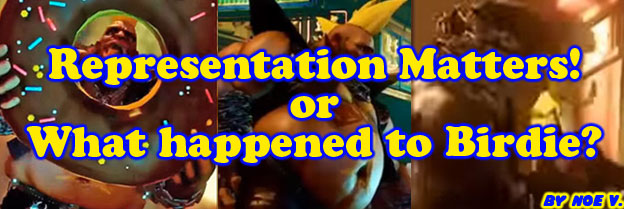
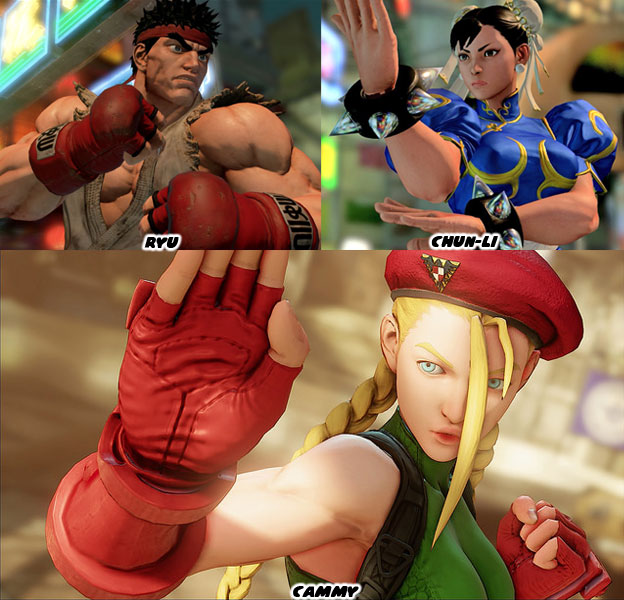
Actually it was the designers that were not kind to Birdie. They turned the character into a slob. A fat, junk food craving shadow of his former self. I wondered why Capcom would do such a thing. The other characters announced thus far had not changed at all. Ryu (who happens to be friends with Birdie in canon) was still muscular, Chun-Li was as beautiful as her previous incarnation, and Cammy seemed a minute older than her previous appearance but was still beautiful. None of the characters were fat or out of shape.


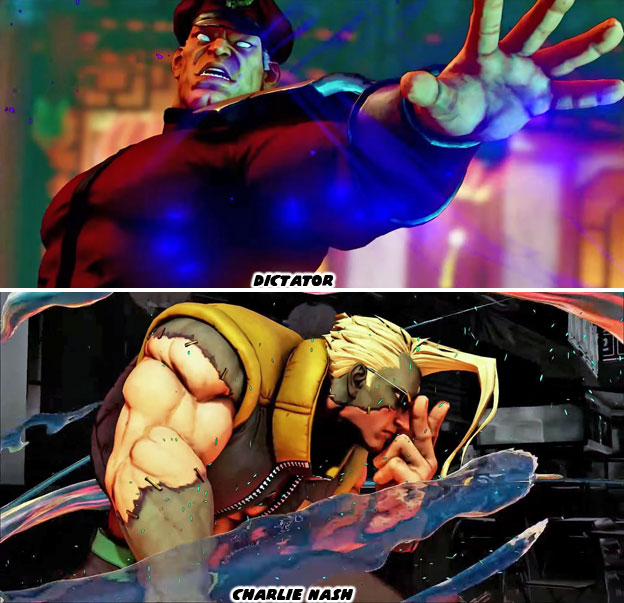
The Dictator, known as Vega in Japan and M. Bison in the USA, leader of the terrorist organization Shadowlaw was the main villain in Street Fighter II. He had also returned for Street Fighter V. He appeared very much the same as he did in Street Fighter IV only that now his hair was white. It didn't seem to go white due to his age but instead due to his mysterious "Psycho Power." The surprise announcement was that of Charlie Nash asa  returning character. Charlie had last been seen in Street Fighter Zero. Like Birdie it had also been 17 years since his last major role. Nash had changed somewhat as well. The character was presumed dead following the events of SF Zero, he had been shot in the back by Shadowlaw soldiers and thrown off a cliff. Revenge spurred his military friend Guile to enter the SF II tournament and track down the Dictator. In canon Nash was brought back from the dead, brainwashed and turned into an assassin. His discoloration and Frankenstein's monster-like appearance were done deliberately. Of course neither the Dictator or Charlie had returned fat and out of shape.


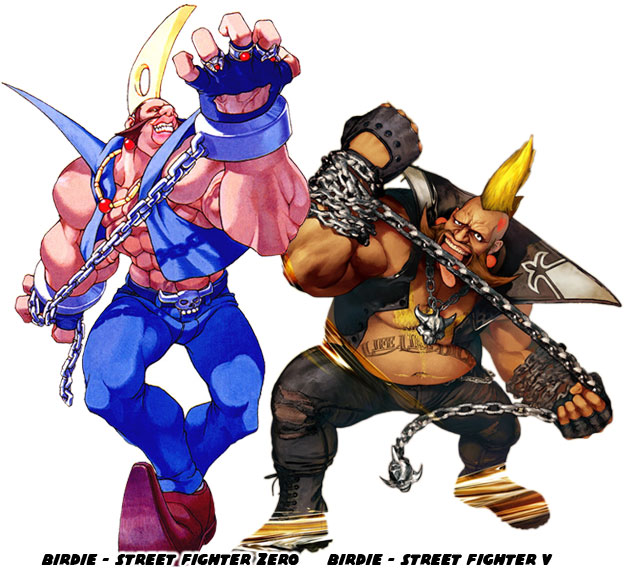
I wondered why Birdie had been turned into a slob. What did the character do to deserve such a disservice from the  new developers? Did the team of artists and animators not like him? Was it because they did not like punk culture? Was it because they did not like minority characters? Perhaps they simply didn't understand the appeal of the character in the first place. Unlike the radical redesign of Birdie from the original game to Street Fighter Zero the designers used the Zero version and tore him down. They did not even bother to use the cues that were placed on him in his previous incarnation. For example he didn't wear chains on his wrists because it was his primary weapon but because they were attached to a pair of handcuffs that he had broken. The newest version is missing the handcuffs as well as some other details that I will let you figure out.

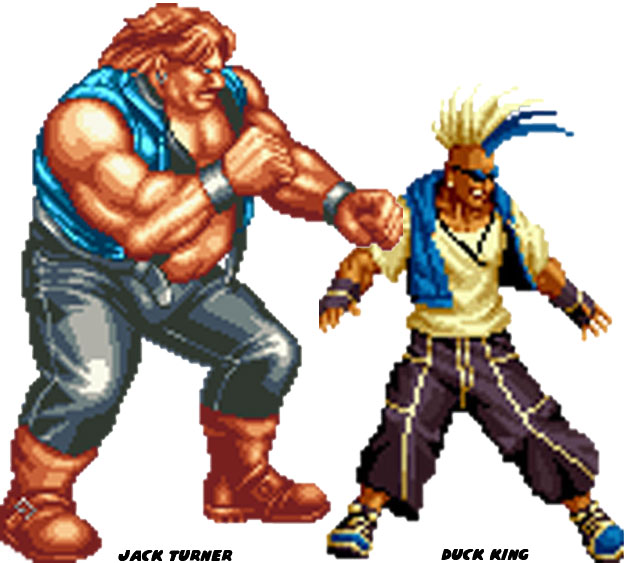
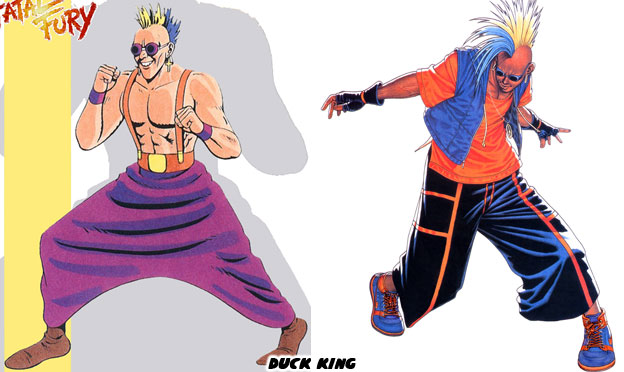
So what exactly did Birdie's new point of reference come from if it was not from previous games? I would say that the new Birdie is now a mash up of SNK's Jack Turner and Duck King. Both characters appeared in 1991. Jack appeared in the Art of Fighting. He was a mob enforcer in South Town. The character was modeled after the stereotypical fat bikers from the West. He hung out in bars and seedy back alleys looking for trouble. His costume and fat belly had a lot in common with the Birdie redesign.


Duck King appeared in Fatal Fury. Despite the Mohawk haircut he was not supposed to be seen as a punk character. He was instead based on party kids, ravers and b-boys (break dancers) from the USA. His bright colors and costumes were pulled from trends in the West. There was a difference between how he was put together versus J and Two-P. In the early character art we could see that his costume, especially sunglasses and fat pants was inspired heavily by MC Hammer. He was never meant to be seen as any sort of gang member. As dance trends and pop culture changed the look of Duck King evolved. He was still a colorful character but now dressed in more street appropriate costumes. I would argue that neither Duck King nor Jack Turner were ever as popular as Birdie. In fact I remember the first time that I saw Duck King in the game I thought to myself that SNK was trying to create their own Birdie. I mean even the name was similar.


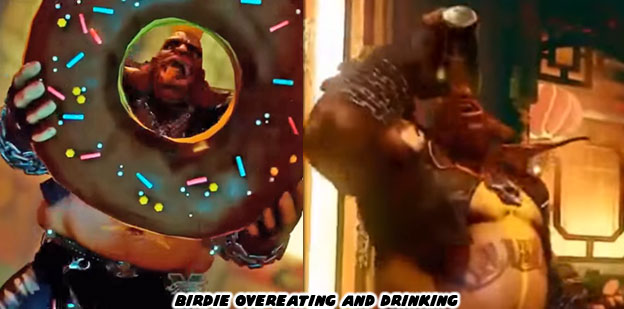
Yet anything that SNK did was nothing compared to what Capcom would do to their legacy character. Everything the designers did to Birdie in Street Fighter V reinforced what a slob he had become. For example some of his "attacks" consisted of him sneaking a donut from his back pocket or guzzling an energy drink. In fact in his character animation after winning a match he would pull a gigantic donut out of thin air and bite into it. It was an odd visual that nothing but demean him. Not only that but unlike previous representations of punks in the series the team did not seem to have the insight as to what Birdie would have eaten to gain so much weight. Donuts were considered more of a USA treat than a British one. Perhaps fish and chips and a warm beer would have made more sense.


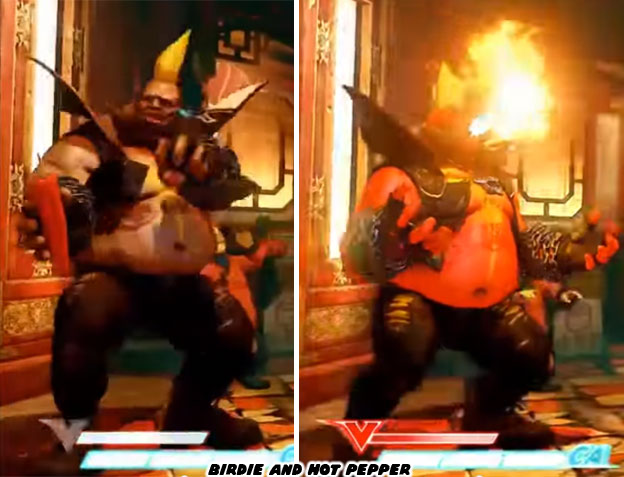
Having Birdie drink and eat and throw his garbage at opponents would hardly be considered "punk." He was just being crude and nasty. The most absurd of his mid-match snacks was a hot pepper. It would cause Birdie to breath fire, have his skin glow red hot and do more damage to his opponents with each hit. Birdie had never had any moves in previous versions of the game that were similar to these new food-based attacks. I could not figure out what made the developers think that this radical direction was appropriate for the character.


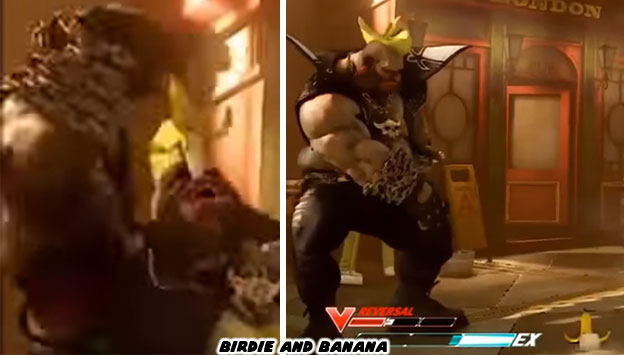
When I saw his last food-based attack it raised a red flag in my mind. Birdie would eat a banana and throw the peel on the ground. Opponents could slip on this banana. It was supposed to be a funny attack that also helped keep aggressive opponents at a safe distance. It was an ill-informed choice to make a black character enthusiastically eat a banana, There were heavy racial overtones that Capcom could have done without. In many parts of the world black professional athletes are often called monkeys and bananas are thrown at them from the stands. Seeing as how Street Fighter V is going to become an international title then I would strongly suggest avoiding anything that could even remotely be taken in the wrong context.


Since Birdie had never had these types of silly attacks before I wondered why the studio would start adding them now. If they are giving Birdie absurd attacks why not do the same for Ryu, Chun-Li, Cammy, Dictator or Charlie? If Birdie is now fat and sloppy but none of the other characters are why is that? All of the other characters seem to be played very straight. The way they were in previous games is the way they are now. I would hate to think that Capcom is doing this because of the color of his skin or the minority status of the character but it just might be true. Consider for a moment the previous nationalities represented in Street Fighter IV. There was a lot of diversity in the lineup but the new characters created for the game were very odd as well. The Mexican wrestler El Fuerte for example was obsessed with cooking and named several of his moves after plates. There was also a Turkish wrestler with beet red skin and bright blue hair named Hakan that practiced the art of Yagli Gures, or Turkish oil wrestling. That character was obsessed with finding the perfect oil recipe to help him dominate in his matches. Players could splash themselves with oil in the game and slide across the floor. The gimmicks placed on El Fuerte and Hakan were done to give the characters a personality and make them more interesting. Yet gimmicks and throw away attacks were not something that was used with the original Street Fighter II cast. Those characters were far more interesting without being silly or sloppy.


The trend was becoming apparent in the more recent Capcom fighting games. El Fuerte, Hakan and Birdie had something in common. They were all minority characters. The designers had no point of reference for the characters, their cultures or their specific fighting arts. So instead they gave each of them a gimmick and made them silly. I sincerely doubt that the developers would have done the same to a Japanese character or one of the female characters. Before Birdie had the silly food attacks applied to him the developers had done something similar in Street Fighter IV. The Native Mexican character T. Hawk  was given an update to his "Raging Typhoon" special attack. In Super Street Fighter II the character would grab an opponent by the head, spin them in the air and slam them into the ground. In Street Fighter IV an extra animation was added where T. Hawk would then sit cross-legged on top of the opponent making a stereotypical "how" pose for Native Americans. This was a trope used by television to depict the ways that Native North Americans would greet each other.


I would hate to think that the developers at Capcom were being racist with the characters. I like to think that these choices were made out of ignorance (which is a root cause of racism) rather than racial bias. Unfortunately the silly makeover was a trend that was becoming more and more apparent for the series. Something that could be measured over the past few years were how odd the character selection had become. What was done to Birdie was part of a pattern. The next blog will question the choices from the developers. As always if you enjoyed this blog and would like to sponsor me please visit my Patreon page and consider donating each month, even as little as $1 would help make better blogs and even podcasts!

Monday, June 29, 2015

Representation Matters! Or, what happened to Birdie, part 1...


Capcom has to do a better job at representing minority characters in their gaming franchises. In recent years the quality of the design choices have been questionable.

 It's just a game. 


No. 

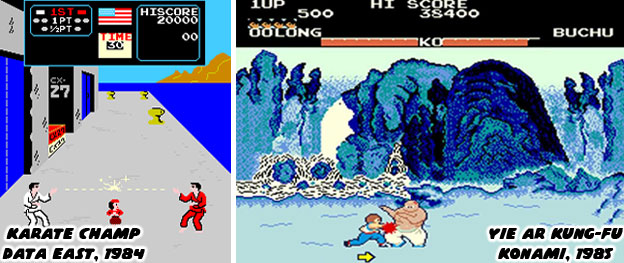
Street Fighter is the definitive fighting game series. The genre that it represents is now over 30 years old. The series did not appear out of thin air moreover, the developers at Capcom were following a new trend and trying to improve on it. The forefathers of Street Fighter were Karate Champ and Kung-Fu Master by Data East, released in 1984, as well as Yie Ar Kung-Fu by Konami, released in 1985. Street Fighter, released in 1987, was developed by Takashi Nishiyama. He happened to be the producer on Kung-Fu Master, and after his stint at Capcom he went on to work at SNK and help develop the Neo Geo arcade platform as well as Fatal Fury, Art of Fighting, Samurai Showdown and the King of Fighters series. Nishiyama should be remembered as the godfather of the fighting game genre. Street Fighter set itself apart from the crowd early on. It had amazing graphics, unique controls and a fantastic library of characters. It became one of the few titles played by several generations and is one of a few franchises that is currently being enjoyed by kids, parents and even grandparents.
   

When Street Fighter II was released in 1991, produced by Yoshiki Okamoto, it became a global sensation. The series made over $2 billion in sales with arcade and console versions added up. Over 14 million copies of Street Fighter II were sold on the consoles and sparked the love of an entire generation. The more recent version of Street Fighter, Street Fighter IV released in 2008, has sold over 8 million copies. These are global sales. Each copy of the game may be played by a friend or family member, in essence double or tripling the audience. Every revision of the series, including Ultra and Super Street Fighter IV may have easily reached 20 million people or more. Now imagine how much of an impact the series as a whole has had on the global community.

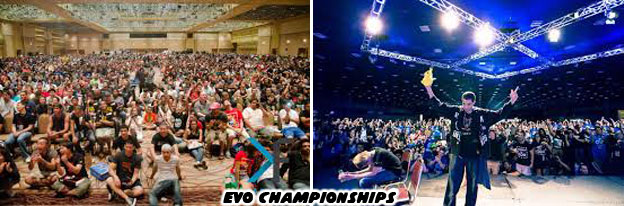
If you were to count every game featuring Street Fighter characters, including the crossover titles, Capcom has sold over 30 million copies. In three decades how many people have played or even been influenced by Street Fighter? Perhaps 50 million, maybe  even 100 million? It is possible that the game has reached many more people than that. The genre may rise and fall in popularity, just like any other genre, but it seems to have reached a plateau where it has finally reached a permanent following. When a country hosts a fighting game tournament players from around the world are invited and often attend. The biggest matches, like Evolution in Las Vegas, draw thousands of participants from dozens of nations. They bring in thousands more as fans and draw hundreds of thousands of spectators online to watch as the matches stream live. The majority of the time the most viewed tournaments are those where Street Fighter is played. Even non-game players are familiar with the franchise. Very few gaming companies could claim to have created a brand with as much recognition.
 

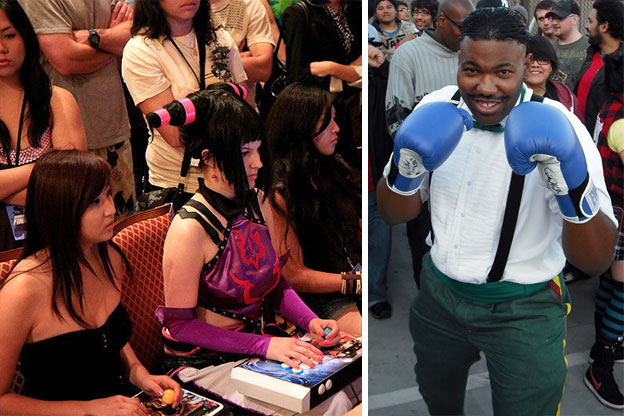
I get worked up when people try to patronize the franchise and say that Street Fighter is only a game. That somehow the game is not worth discussing, debating and even criticizing. Street Fighter has been around for decades, from a pop culture standpoint it has paid its dues and is deserving of some respect. The series has influenced the entertainment industry, it has transformed game players into celebrities, and has even introduced new words into our language. To say that Street Fighter is only a game is akin to saying that Mickey Mouse is only a cartoon mascot, or that Captain America is only a comic book character. Those figures are icons, they are global ambassadors and represent something much more than a drawing. In a similar way the fighters in Street Fighter represent the pinnacle of the various fighting arts. They are snapshots of a particular culture and could teach developers a great deal about making universally recognized figures. The fighters are such popular figures that many fans (myself included) often dress up like them at conventions and events. The characters are so well regarded that men and women from every ethnic group dress up as the icons. Sometimes women dress up as male characters and sometimes men dress up as the female characters. What other series could claim that level of devotion? The love of the franchise is so deep that few within the community question this level of dedication.

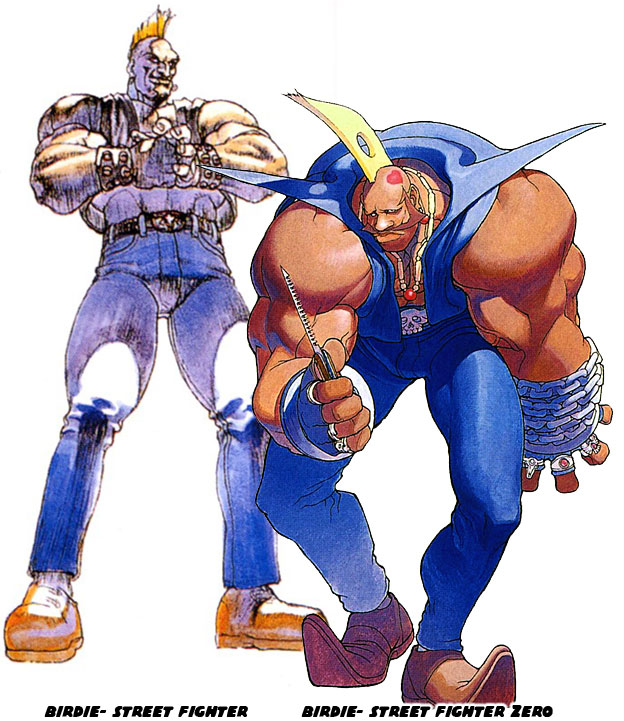
Yet in recent years Capcom has steered away from the elements that made their original "World Warriors" such iconic figures. Let's take a look at one of the returning characters announced for Street Fighter V and see what the current group of developers has done to the him. Birdie was a British punk character from the original Street Fighter. He was a non-playable character and absent in Street Fighter II. He did not return until Street Fighter Zero / Alpha in 1995. When players saw him again he had received a radical makeover. Of course one of the biggest changes was his skin color. Birdie had gone from white to black. There were many other details that set apart the new Birdie from the old Birdie. His costume retained the boots, pants and vest but each had changed slightly. His pants were now leather instead of denim and not torn, his boots were very exaggerated with an upturned pointy toe and his vest had a long spiky collar. He now sported jewelry, including a large number of rings that doubled as brass knuckles. A pair of over-sized handcuffs were worn as bracelets, and apparently Birdie had broken the chain on them and wrapped them around his massive forearms. Birdie now sported a tattoo, a large heart on the side of his head. He retained his trademark Mohawk hairdo, only now he had a circle cut out of the middle of it. He was certainly an attention grabber from a visual standpoint but Birdie had much more depth to him.
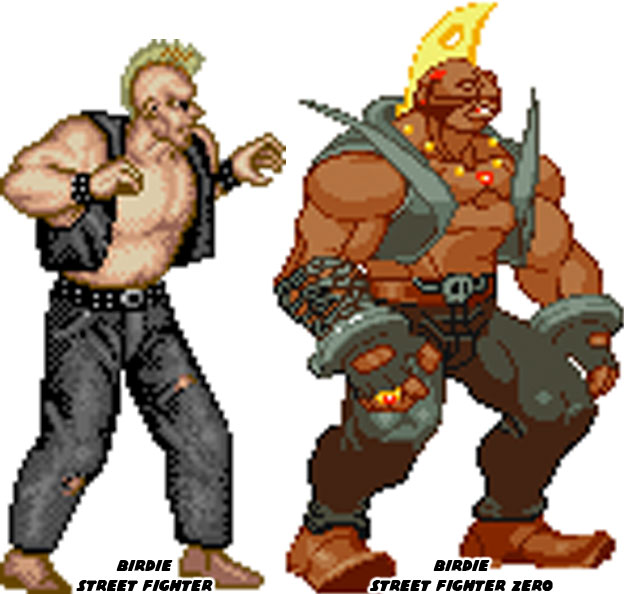

Players discovered that Birdie had a unique collection of brawling and grappling attacks that complimented his frame. He had a powerful headbutt attack in the original Street Fighter and a new library of moves was built around that attack in SF Zero. In the game endings players could see him breaking down steel doors using his head. This was nothing to laugh at. To round out his moves he could wrap up opponents in his chain and slam them to the ground. For a large person Birdie was fairly quick. He balanced out characters like gang member Sodom and the Russian wrestler Zangief. Birdie developed a following among players for his moves as well as for his personality. In game animation and official character art Birdie had a light side. He would comb out his hair as an in-game taunt and sometimes even lick the chain on his arm. His character art used very exaggerated proportions to make him appear freakish. He had a powerful upper torso but his legs looked very skinny by comparison. These exaggerated proportions would be applied to every character in the game. The designs were created by Bengus, my favorite Capcom artist. These designs influenced many other fighting games by rival studios.

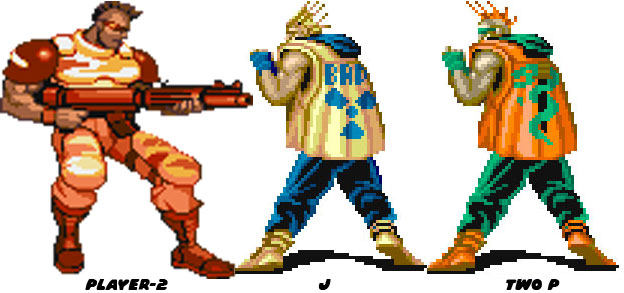
Punks were not a new concept in the gaming, especially not for Capcom. In the 1988 game Forgotten Worlds there was a futuristic soldier (known only as Player-2) that was also dark-skinned and sported a Mohawk. A year later Capcom released Final Fight, originally titled Street Fighter '89. In it there were two punk characters, J and Two P (a send-up of the name Player-2) that fought the heroes. They were members of the Mad Gear Gang and had very bright costumes which were very over-the-top for gang characters. During this time the Japanese developers were experimenting with Western character designs. They were incorporating costumes and trends that they had seen in cult action movies like Escape From New York (John Carpenter, 1981) and Streets of Fire ( Walter Hill,1984). Jumpsuits, leather jackets, hoodies, long coats, and neon color were not usually seen on the streets of Japan. While the point of reference was a little dated by the time the games came out the characters were a unique contribution from the designers.

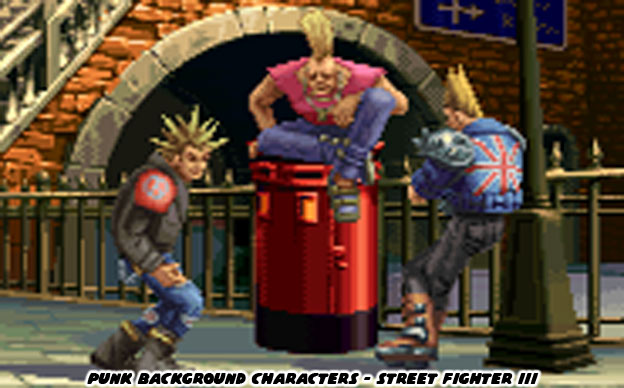
Capcom never forgot the influence of punk culture on the Street Fighter series. When Street Fighter III debuted in 1997 there were a few punks loitering on the streets of London. The stage was designed to bring in heavy British themes. The cobblestone road, bridge and buildings were Victorian in appearance. A silhouette of Sherlock Holmes, advertising the Sherlock Holmes pub was on a sandwich board sign. Some of the characters standing in the background looked like they had come from a Charles Dickens story. Only a few elements put the city in a modern context. The Mini Cooper parked on the side of the road and the punk characters hanging out near a post box. Even with this long-running tradition of showing punk culture Birdie was the first and in my opinion the best punk character in any series.


The popular fighting game site asking fans to vote on which character they would like to see in Street Fighter V. Birdie was actually #15 on the list, ahead of 50 other popular characters.  Over the past few years Capcom has released surveys in the US and Japan to find out which characters fans like best. These surveys have undoubtedly influenced which characters get to return in a franchise title, like Street Fighter V. When it was announced that Ryu and Chun-Li would be returning characters most players were not surprised. They were the first two characters that were in development with the announcement of Street Fighter IV a few years earlier. The big surprise came with the announcement that Birdie would be returning. I was elated at the news. I was always a big fan of Birdie and looked forward to his inclusion in the newest game. Unfortunately that elation would quickly turn to disappointment. It seemed that Birdie had become a joke character for the new developers.


I would reserve my final judgement until I saw and played the character in person. Thankfully I would get a chance to do so at the 2015 E3, the first playable unveiling of the character. I will highlight my issues with the redesign in the next blog. As always if you enjoyed this blog and would like to sponsor me please visit my Patreon page and consider donating each month, even as little as $1 would help make better blogs and even podcasts!