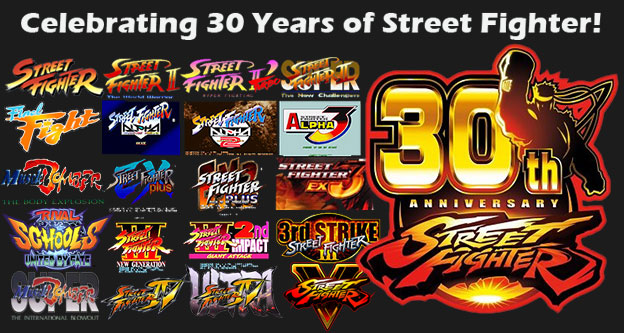
Sunday, June 10, 2018

30 years of Street Fighter, 30 Days of Characters; #21


Can you believe I've celebrated many unique characters in the 30 year history of the Street Fighter universe and not once brought up a boss character? Well today that changes! We're looking at the most evil villain in franchise history. I am talking about a literal demon named Garuda. Now I know many of you are asking what about Gouki / Akuma? He did kill his brother and that is absolutely evil. Well Garuda is a killer as well, in fact he killed so many while alive that not even death could stop him. This character debuted in Street Fighter EX back in 1996 but his origin is centuries older.
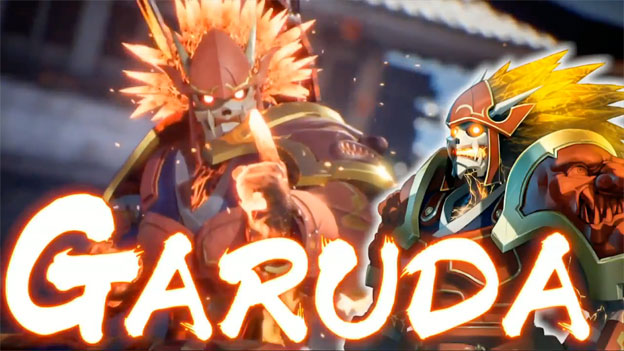

Garuda was a warrior during the Sengoku era in Japan (1467-1603). This was a very turbulent time with nonstop political strife and war all across Japan. This was the era that was the backdrop for countless movies, television shows and even a few dozen games. Garuda was a bloodthirsty samurai, killing many men in his wake. When he was struck down in combat he was furious, not because he was dying but because he could no longer continue killing. A demon was attracted to his rage and possessed the man, turning him into an undead killing machine. He was sort of the Jason Voorhees of feudal Japan. Garuda was eventually sealed away in a sacrificial ceremony where he remained for over 300 years. This seal was broken during the events of Street Fighter EX. What was unleashed was one of the most unique fighting game bosses in the history of the franchise.  
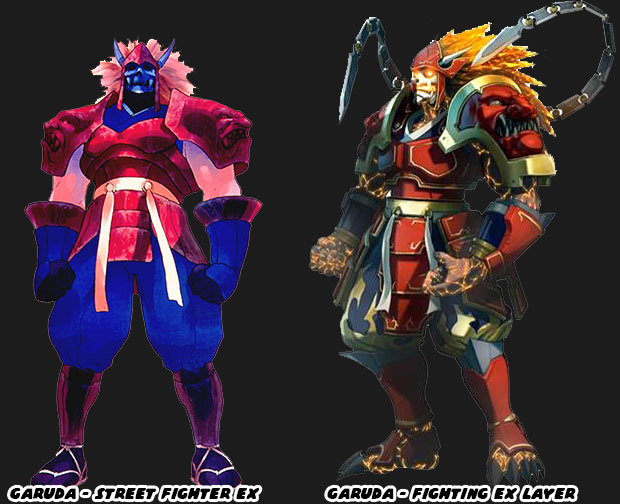

Garuda did not have a samurai sword to attack with but rather living metal spikes that would grow out of his skin and armor. He could spin like a whirlwind while slashing at opponents. He could impale opponents on his shoulders and then run them into the ground. He was insanely strong, able to slam any opponent easily. He could also teleport all over the stage avoiding a barrage from his enemies. Garuda demonstrated how the Street Fighters would hold up against a supernatural villain. There was nobody else like him before or after in franchise history. For these reasons and more we clebrate the living demon on the 30th Anniversary of Street Fighter. As always if you enjoyed this blog and would like to sponsor me please visit my Patreon page and consider donating each month, even as little as $1 would help make better blogs and even podcasts!
 follow the Street Writer on Patreon!

Saturday, June 9, 2018

30 years of Street Fighter, 30 Days of Characters; #22


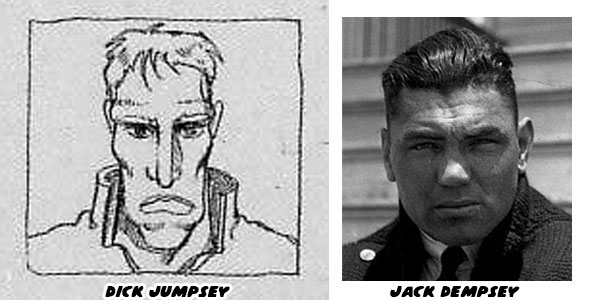
Boxing characters are as old as the fighting game genre itself. Every generation of the Street Fighter series has featured at least one boxer. In the original Street Fighter (1987) it was a scrappy young man named Mike. No doubt influenced by Mike Tyson, the young heavyweight champion. In Street Fighter II (1991) the boxer had grown up and went by the name M. Bison, as in Mike Bison. At least that was his name in Japan. As you already know the Shadowlaw boss names were swapped around when the game came to the USA. Did you know that Mike was not the original choice for a boxer in the Street Fighter II? In the planning stages the designers were looking at a classic boxer named Jack Dempsey. Jack was active from 1914-1927, he was notable for winning and defending a championship, being the first fighter to break a million dollars at the gate and ranked among the best of all time. Dempsey influenced the character Makounochi Ippo in the manga and anime Hajime no Ippo. He uses the "Dempsey Roll" a nonstop barrage of punches and dodges to take down opponents.


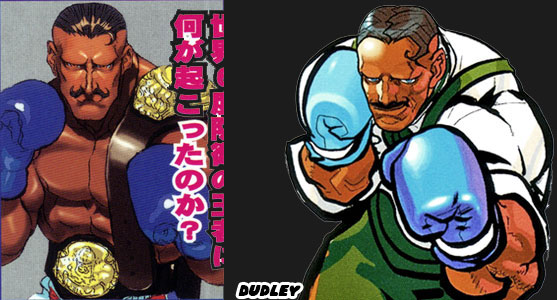
The boxer for Street Fighter II was called Dick Jumpsey but he seemed a little bit antiquated. That was why a more contemporary Mike Tyson served as the template for Bison. The seeds for a classic boxer had been planted at the Capcom offices. It would take a while for that archetype to return. Many studios had their own variation of a boxer. Most wore shorts or training clothes. They looked exactly like a pro fighter should have in the current era. That was until 1997 when Street Fighter III debuted. The gentlemanly boxer Dudley was literally cut from a different cloth. He was an aristocrat that happened to be a boxer. He traveled in luxury automobiles, with butler Ortho K. Gotch at his side. He fought while wearing fine suits, he simply rolled up his sleeves when it was time to teach an opponent some manners. There were no fighters before or after that had as much personality.  


Dudley was a change of pace from the thuggish boxers that had taken over the world of pro fighting. Loud braggarts like Mike Tyson and Floyd Mayweather Jr. that flashed their money and acted questionably seemed to hold the title forever. When classy fighters Evander Holyfield and Lennox Lewis captured heavyweight gold in the '90s it was a refreshing change of pace. Dudley was created as a reflection of this new reality. Of course he was a way over-the-top in his mannerisms and ability. There has never been a character as eccentric as him and there probably never will be again. Because of this we want to celebrate Dudley on Street Fighter's 30th anniversary. As always if you enjoyed this blog and would like to sponsor me please visit my Patreon page and consider donating each month, even as little as $1 would help make better blogs and even podcasts!
 follow the Street Writer on Patreon!

Friday, June 8, 2018

30 years of Street Fighter, 30 Days of Characters; #23


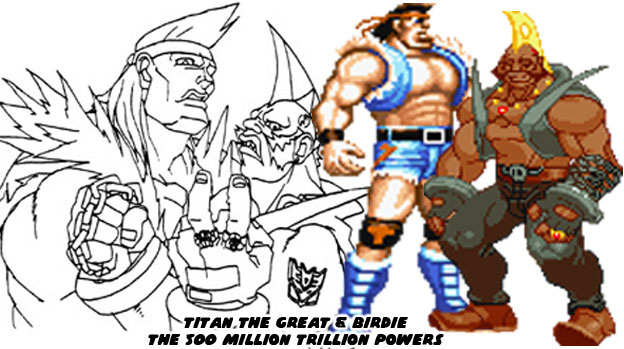
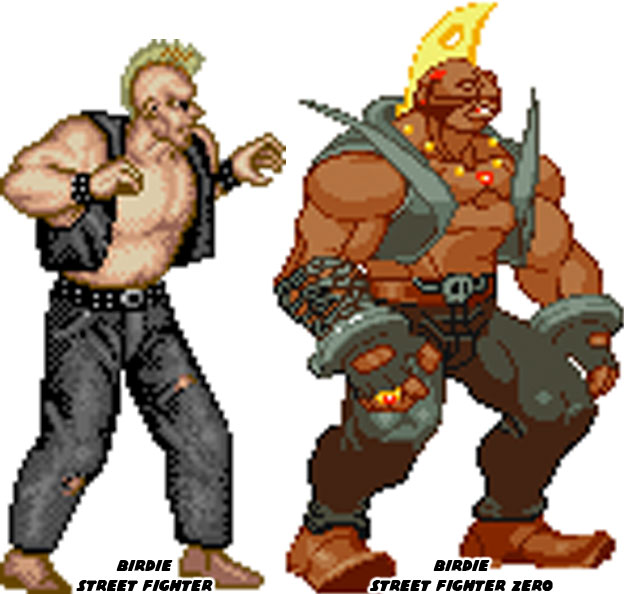
Today we celebrate Birdie, one of the original Street Fighter characters. He is one of the select few that appeared in 1987 and was brought back a few times as a playable character. Those old enough to remember the original game also recall that there were only two playable characters, Ken and Ryu. The duo traveled the globe and fought masters of various martial arts. Birdie was significant for a number of reasons. His size was one of them but aside from that he had a strong look. His mohawk haircut, leather vest, pants, and spiked bracelets let people know that he was a punk and not afraid of a fight. Also Birdie didn't represent any style of fighting, he was a legitimate street fighter. He swung his massive arms wildly and headbutted his opponents. There was nothing graceful about the character but he was very good at what he did.


Birdie wouldn't return again until 1995 with the debut of Street Fighter Zero / Alpha. When audiences saw him again he had a radical new look. Actually his look didn't change as much as the aesthetic. The legendary Bengus redrew all the characters and greatly exaggerated their proportions. Birdie was always a physically strong character, only now he appeared absolutely massive. His arms were now as thick as his legs. His mohawk, leather vest, and brown boots all returned. He had a few new accessories; jewelry, a tattoo, handcuffs and a chain all solidified his makeover. Of course the other thing that audiences noticed was his skin color. Birdie went from a white guy to a black guy in the span of eight years. The moves that he had in the original Street Fighter were preserved. He still relied on his club-like punches and headbutt. He could even use the chain on his arm as a makeshift lasso. The style wasn't pretty but it was very effective. 


Despite his odd appearance Birdie was a sympathetic character. His friendship with Ryu was explored in the Street Fighter Zero manga. He also happens to be a character that bridges together the various continuities. Birdie helped connect the Street Fighter and Street Fighter II timelines in Street Fighter Zero. He also helped bring wrestlers into the fold as well. Mike "Macho" Haggar, the mayor of Metro City, was one of the stars of Final Fight (1989). Most people know that he also appeared as a pro wrestler in the Muscle Bomber / Saturday Night Slammasters series. In the game they mentioned that the giant Titanic Tim aka Titan the Great was the tag team partner of Birdie. This became canon when the official team art was released for Street Fighter Zero. Birdie was always a fun character to play as. Up close he could mangle opponents with his "Murderer Chain" and he could even leap across the screen for a surprise beating. I'm not fond of what the designers at Capcom did to him in Street Fighter V but I will nonetheless remember him for how unique he made the Street Fighter universe. As always if you enjoyed this blog and would like to sponsor me please visit my Patreon page and consider donating each month, even as little as $1 would help make better blogs and even podcasts!
 follow the Street Writer on Patreon!

Thursday, June 7, 2018

30 years of Street Fighter, 30 Days of Characters; #24


We cannot celebrate 30 years of Street Fighter without also celebrating 20 years of one of the most oddball characters introduced in the universe. When designing Street Fighter EX the team at ARIKA wanted to create a balance between the classic World Warriors, those featured in Street Fighter II and a new lot of fighters. Blanka and Dhalsim were on the extreme end of designs and ARIKA wanted at least one odd character as well. They decided to create a sort of superhero into their franchise.


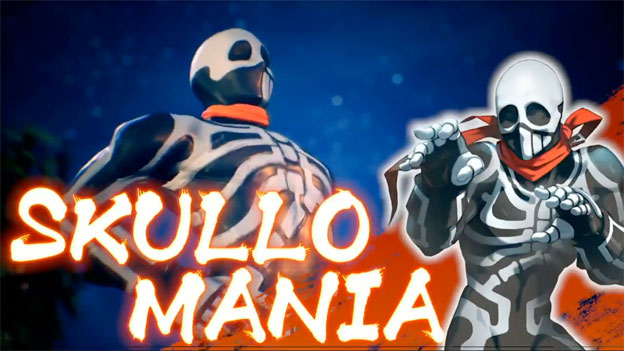
Skullomania is actually an homage to the classic Japanese super sentai shows. Live action heroes like Kamen Rider and the Power Rangers were wildly popular in Japan. These heroes and their over-the-top villains were the types of characters that the designers at ARIKA grew up with. They figured out a way to incorporate one of these archetypes into the lineup without completely breaking Street Fighter's lore. Skullomania was a salaryman that made some extra money as an acrobat at an amusement park. He stopped some robbers as they stole from the ticket booth and the visitors cheered. He became enamored with the attention and became a real life hero. This premise was very believable. It was the intensity of being a hero that Skullomania took over the top.


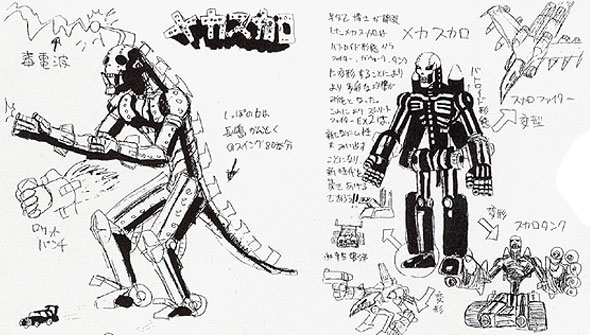
Skullomania does not have a transforming car or a giant robot at his disposal, these are only seen as pages in a sketchbook. He has no super-powers, although he imagines that he can fly and change his size. He also does not have any actual martial arts training. Instead he throws his whole body into his attacks. He dives headfirst at opponents and sweeps their feet with his breakdance-like acrobatics. His appearance is odd but memorable, his moves are absurd but also mostly realistic. He manages to be as unique a character as Dhalsim or Blanka but without coming across as fake. Skullomania is a very creative fighter, there is nobody else like him. Today we celebrate the uniqueness that Street Fighter brought to the genre. What do you think about this oddball? Please let me know in the comments section. As always if you enjoyed this blog and would like to sponsor me please visit my Patreon page and consider donating each month, even as little as $1 would help make better blogs and even podcasts!
 follow the Street Writer on Patreon!

Wednesday, June 6, 2018

30 years of Street Fighter, 30 Days of Characters; #25


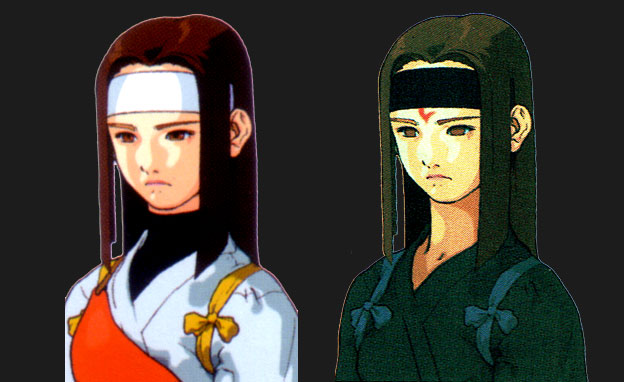
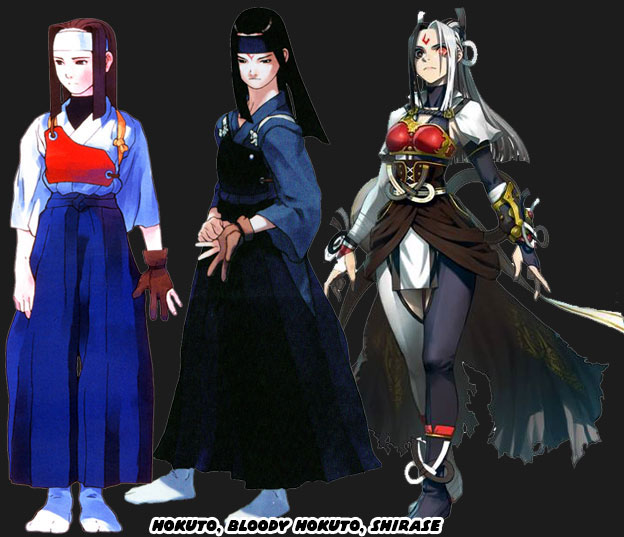
Hokuto is one of the most interesting characters in the entire Street Fighter universe. In the span of 30 years she is possibly the most complex fighter ever designed. In canon she has actually played both the good and evil roles. Her true nature is only now being told. When she debuted in 1997 she appeared like a kyudoka, somebody that practiced traditional archery. She didn't have a bow and arrows but instead used her spirit force to shoot energy projectiles at opponents. It was a unique mix of classic aesthetic and modern fighting game character. Hokuto came from a cursed lineage, her older brother was Kairi, a fighter suffering from amnesia. Kairi posed a threat to himself and other people so Hokuto was tasked to bring him in or kill him trying. The latter of the two options came in the form of Bloody Hokuto. Her evil personae was much more dangerous and filled with the same murderous intent of Kairi. Hokuto and Bloody Hokuto shared a few similar moves however Bloody Hokuto had a few more lethal strikes including a dim mak or death strike. 


Hokuto was presented as a sympathetic character. She was a young, noble woman that had the bad fortune of having to track down her brother. Audiences knew that the evil energy coursing through her veins was making her do things she did not want to do. Just as Ryu, the star of the Street Fighter series, was battling the dark Hadou energy as well. The designers at ARIKA were actually keeping an important part of her story a secret for 20 years. Hokuto was indeed related to Kairi however they were step-siblings. Hokuto was an illegitimate child. She was trained as an assassin and had been planted into the clan with her memories erased. When the seal was broken she didn't become "Bloody Hokuto" but instead regressed into her true self. She was an assassin named Shirase.


Shirase debuted in Fighting EX Layer. She was a redesign with a mix of good and evil Hokuto elements. The black and white motif on her hair and costume were strong opposites. They were the literal yin and yang, the good and evil fighting within her. With her true potential unlocked would she be able to strike down her brother? Was she on track to be the first female boss in the Street Fighter universe? That was a strong possibility! Audiences were eager to see how the developers at ARIKA changed her relationship with Kairi and step-sister Nanase. At least I wanted to find out what happened next. I can't say I was as interested for how many of the other characters evolved over the years. What do you think? As always if you enjoyed this blog and would like to sponsor me please visit my Patreon page and consider donating each month, even as little as $1 would help make better blogs and even podcasts!
 follow the Street Writer on Patreon!

Tuesday, June 5, 2018

30 Years of Street Fighter, 30 Days of Characters; #26


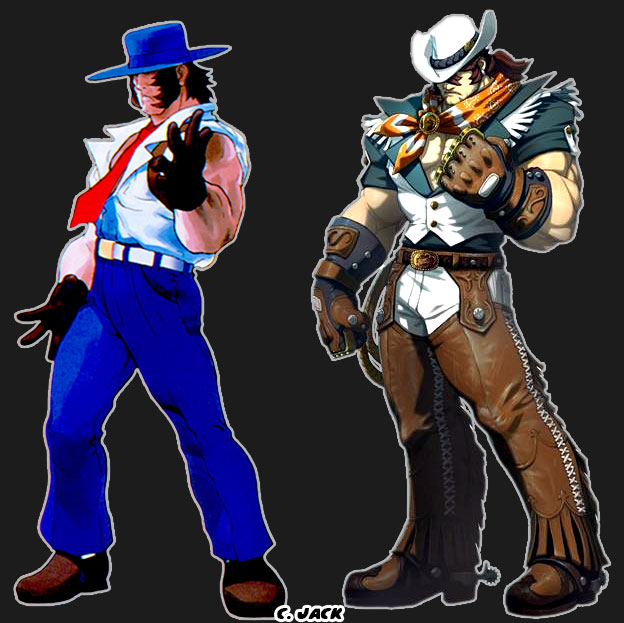
If there were a contest as to who was the coolest Street Fighter universe character ever the front runner might be Cracker Jack, aka C. Jack or simply Jack. The character made his debut in 1996 in Street Fighter EX. Jack was designed to be mysterious and interesting at the same time. The shirt and tie, and even hat were supposed to be reminiscent of Shadowlaw field agents. It was actually an old trope from comics and cartoons. Tough guys like mobsters and sometimes detectives wore the dark suit and tie. Except that Jack was not a bad guy. He was a bodyguard / double agent working for an organization fighting crime. Jack was like a super cop that played by his own rules. 


Jack fought with mostly punches in the series. He had an occasional grapple and body slam he could execute but he was a pure striker. He didn't have any fireball or other supernatural attacks to give him a ranged advantage but he did have something that none of the other characters had; a baseball bat. Jack could strike quickly and cut the distance between himself and his opponent. He really controlled the screen with the swing of his bat. He could strike away fireballs from a distance and smash the ribs of an opponent that wandered too close. This no-nonsense brawling that he had made him stand out from the traditional Street Fighter characters which were mostly based on martial arts.


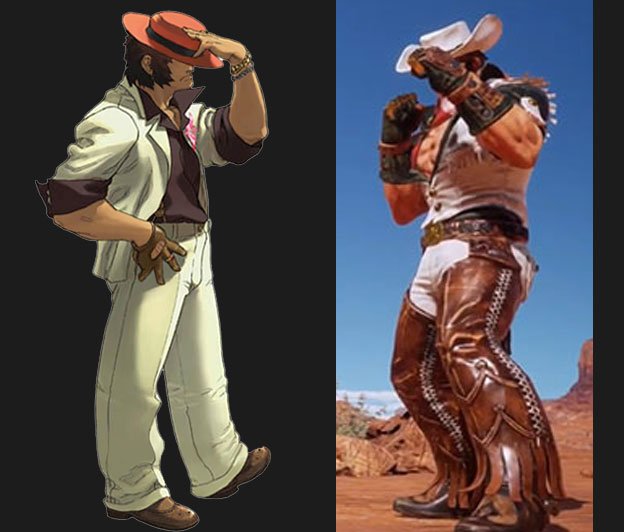
The team at ARIKA that designed the character kept him mysterious on purpose. They were vague on his affiliation, vague on his allies and even vague on his origin. They even made sure to make it difficult to see the face of the character. With his shaggy hair, sideburns and hat you could never get a clear look at his face. In canon the fighter went missing for years. He was found hiding out in the American Southwest. Whether is was to protect his former employer, on stakeout for a top secret mission or just to avoid his past was unknown. His transition from city brawler to fighting cowboy was one of the great redesigns in fighting game history. What do you think about non-traditional fighters in the Street Fighter universe? Would you like to see more of them? Please let me know in the comments. As always if you enjoyed this blog and would like to sponsor me please visit my Patreon page and consider donating each month, even as little as $1 would help make better blogs and even podcasts!
 follow the Street Writer on Patreon!

Monday, June 4, 2018

30 Years of Street Fighter, 30 Days of Characters; #27


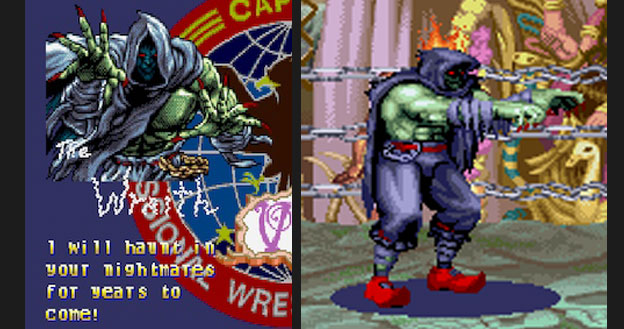
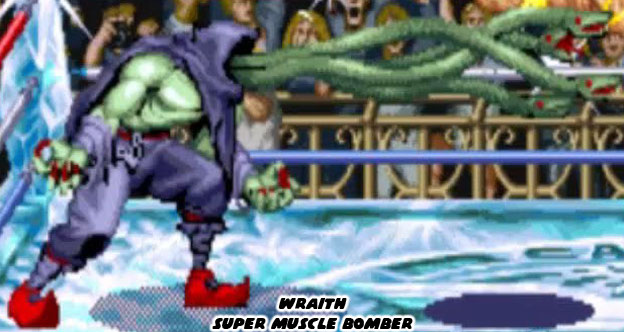
The Wraith, like many of the characters at the start of my list of 30 is on the extreme end of designs. He exists in a group with characters like Blanka and Dhalsim. These fighters are designed to be visually shocking. They are used very sparingly by Capcom otherwise they lose their impact. As the list of Street Fighter universe characters I'm talking about gets smaller expect them to be more normal looking. But I digress... The Wraith as you can guess was never in a numbered Street Fighter game. He exists in the extended universe. He appeared in the game Super Muscle Bomber / Ring of Destruction: Slammasters II (1993). This character, like the others in the series (except for Mike Haggar) was designed by Tetsuo Hara, the artist behind Hokuto No Ken / Fist of the North Star.


As I mentioned previously Mr. Hara is a huge wrestling fan. He knows the wrestlers from different eras, different countries, and different organizations. He created exaggerated versions of real people and in some cases amalgamations of several different performers for the Muscle Bomber lineup. For the Wraith he wanted to make a nightmarish villain. He used Mark Calaway the wrestler known as the Undertaker as the template. The Undertaker in the WWF / WWE had a very strong gimmick, he was a giant of a man, seemingly undead with great strength and purported supernatural powers. The Wraith pushed that concept even further, he was a green-skinned giant (like Frankenstein's monster), moved like a zombie with long red claws. He also had supernatural powers. He could breathe fire and produce snakes from his head! The Wraith was also from India, but his look couldn't be any further from Dhalsim or any other Tiger Jeet Singh archetypes.


The Wraith was a very memorable Street Fighter universe character, not only for his look but also for what he represented in canon. He could have been interpreted as a wrestler that painted himself green and used some sort of showbiz magic to conjure snakes, or this guy was genuinely a death cultist that happened to be a wrestler. Like many of the best Street Fighter characters he was open to your interpretation. That was something that I really loved about the most iconic fighters. It was up to you to fill in the blanks. What do you think about over-the-top characters like Dhalsim, Blanka or even the Wraith, do they make the Street Fighter universe more or less interesting to you? The next character in the series also happens to be a mysterious fighter. I hope to see you back for that. As always if you enjoyed this blog and would like to sponsor me please visit my Patreon page and consider donating each month, even as little as $1 would help make better blogs and even podcasts!

 follow the Street Writer on Patreon!

Sunday, June 3, 2018

30 Years of Street Fighter, 30 Days of Characters; #28


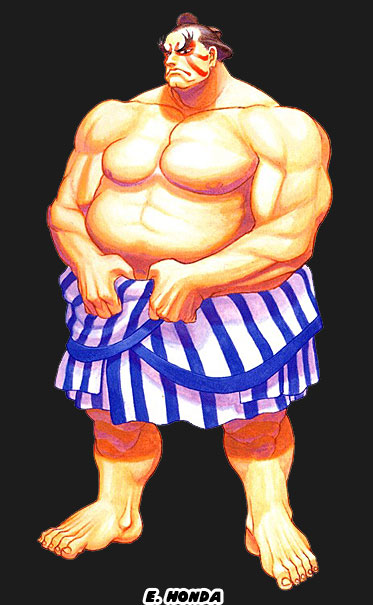
E. Honda has easily earned a spot in my list of 30 memorable characters. His look is so bold and his moves so imaginative that it would be a shame to ignore him this anniversary season. The origins for the character are more cartoon than reality. There was actually a sumo wrestler with a painted face that appeared much earlier in the arcade. The look of E. Honda was meant to grab your attention. He was supposed to be an over-the-top character, borderline parody. He was on the extreme end of designs like the wild man Blanka or the skinny yogi Dhalsim.


E. Honda was unique for a number of reasons. Sumo wrestling had not really been covered in early fighting games. This was a chance for Capcom to write a new page in history. In order to work in Street Fighter it had to be an exaggerated version of the real art, just like the other forms represented. We could tell Honda was strong just by looking at him. His muscles could still be made out under a layer of fat. What audiences never expected was for him to be quick and agile as well. Sumo wrestlers could be surprisingly quick despite their size but E. Honda was on a whole new level. 


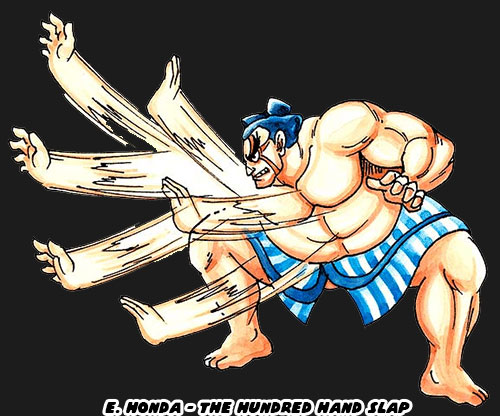
Sumo wrestling was known for being a contest of strength and force. There was a lot of technique involved but moves such as kicks were off limits. Since Honda was competing in an underground tournament his arsenal was expanded. He could jump and kick, trip opponents, sweep the leg and even throw himself head first into a rival. Sumo wrestlers often fought for position by slapping their opponent's head, neck, chest and shoulders. E. Honda was so good at this he could do it with one hand, thus earning the legend of the Hundred Hand Slap. While it wasn't as flashy as a fireball it was still an impressive move. E. Honda's appearance combined with his library of moves made him one of the best heavyweight characters ever created. I'm glad that the character has been a part of the Street Fighter universe for almost three decades. What do you think about him? I'd like your take in the comments section. As always if you enjoyed this blog and would like to sponsor me please visit my Patreon page and consider donating each month, even as little as $1 would help make better blogs and even podcasts!
 follow the Street Writer on Patreon!

Saturday, June 2, 2018

30 Years of Street Fighter, 30 Days of Characters; #29


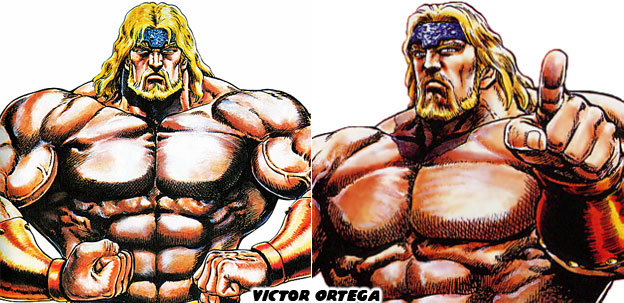
Victor Ortega is probably someone that you don't even think about when it comes to Capcom fighting games. This is probably because Ortega has never been in a numbered Street Fighter. He appears in the extended universe, in the Muscle Bomber / Saturday Night Slam Masters series to be precise. This character is important to the history of Street Fighter for a number of reasons.

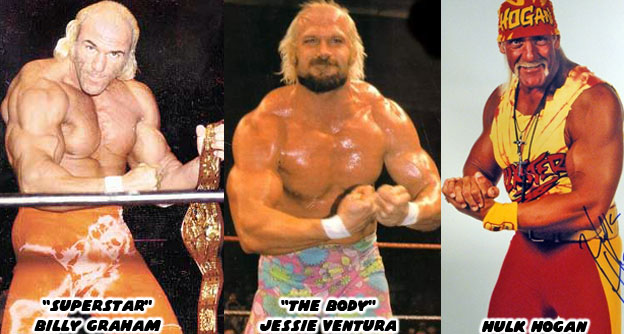
Victor represents the pinnacle of pro wrestling in the Street Fighter universe. He was the only CWA (Capcom Wrestling Association) athlete to go undefeated in his career. He retired with the belt but came back years later when a new crop of wrestlers sprang up. Victor's design was very much rooted in actual wrestling history. Going as far back as the '70s with bodybuilder-turned-wrestler Superstar Billy Graham. Graham had an amazing physique and was brilliant on the microphone. Some of the best wrestlers were memorable for their interviews rather than their in-ring ability. The Superstar was the template from which characters like Jessie Ventura and Hulk Hogan were cut.


The person that designed the majority of the pro wrestlers in the Capcom universe was Tetsuo Hara. He was the artist and half the creative team behind Hokuto No Ken / Fist of the North Star. I have already mentioned that the muscular boss with facial hair was most likely inspired by the character Toki. Mr. Hara was a big fan of pro wrestling and helped create a variation of many of the top babyfaces (good guys) and heels (bad guys) for Capcom. It stood to reason that the wrestling champion for the Capcom universe would look like an exaggerated version of a real title holder. Victor Ortega had an amazing physique, possibly the most muscular person in the Capcom universe, including Mad Gear bosses Abigail and Freddie.


Despite his age Victor Ortega is impossibly fit but thanks to his age he is also an incredibly experienced. Combining his insane strength with his striking and grappling ability makes him one of the most underrated fighters in the universe. It would be nice to see this undefeated champion make an appearance in the Street Fighter series. Who do you think was the best wrestler in the Street Fighter universe? I'd like to know. As always if you enjoyed this blog and would like to sponsor me
please visit my Patreon page and consider donating each month, even as little as $1 would help make better blogs and even podcasts!
 follow the Street Writer on Patreon!

Friday, June 1, 2018

30 Years of Street Fighter, 30 Days of Characters; #30


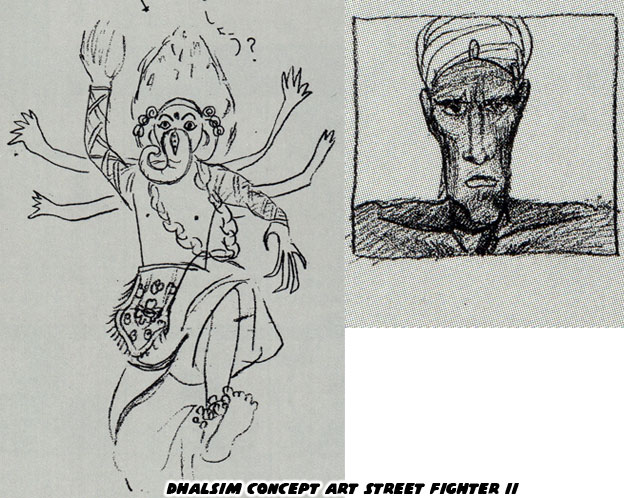
Over the next 30 days I will be celebrating 30 characters from the Street Fighter universe. This will not be a ranking of who I think is the most powerful, or who is the best in canon. Instead it will be a look at 30 influential characters and why I find them interesting. First up is one of the most unusual characters in the library. Dhalsim started off like many other Street Fighter II designs. He was a trope based on a certain nationality. In this case he represented the mystical fighter from India, originally known as the Great Tiger.


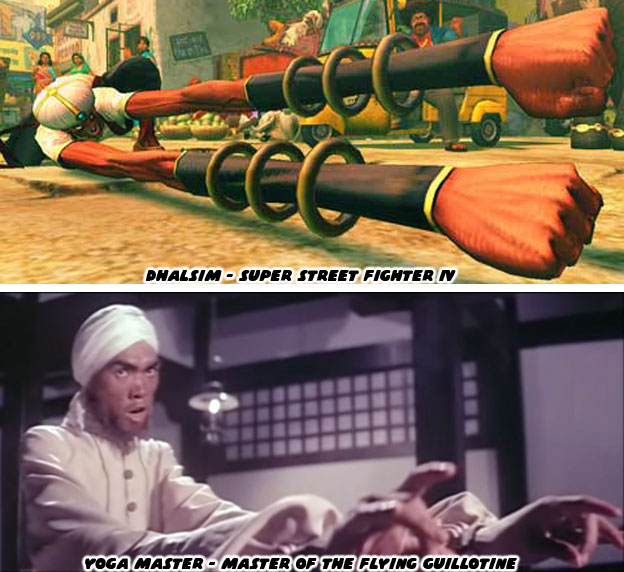
The character was alarmingly racist with his many arms and Ganesha costume. Even the name Great Tiger was a call back to an earlier trope were citizens of a certain country were identified by the local animals. Indians were sometimes identified with the animals native to South Asia; elephants, tigers, cobras, etc. The designers at Capcom went back to the drawing board. They wanted to make the character really stand out and not necessarily by relying too heavily on those caricatures. That was part of the reason they left the turban behind. One of the ways they improved on the Great Tiger was by recalling a fantastic villain from the film Master of the Flying Guillotine. In it there was an Indian character that could stretch his limbs. This film and the earlier One Armed Boxer helped shape the development of the Street Fighter cast. In pop culture some Indians were said to have had mystical powers. A few of them were the gatekeepers to ancient magics. This stereotype was repeated in film as Chinese actors wore brown face and pretended to be Indians that could teleport, stretch their limbs and even be impervious to stabs. The stereotypes about Indians were ugly but they became ingrained in pop culture.


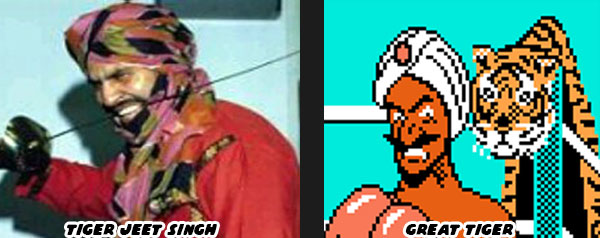
If there was a real person that helped cement the idea of a fighting Indian in pop culture it would be professional wrestler Jagjeet Singh Hans better known as Tiger Jeet Singh. The Canadian-Indian started wrestling the '60s and developed a memorable gimmick that carried him for decades. Tiger Singh was never a technical wrestler, he didn't perform power moves or take risks by leaping off the top rope. Instead Singh was known for having violent matches that ended with lots of blood. He would storm the ring while swinging a sword over his head, kicking chairs, pushing audience members around and shouting like a madman. He began wrestling in Japan in the 1970's. The developers at Capcom and other studios were incorporating elements from the things they grew up with in their games. Popular comics, cartoons, movie and television characters from the '70s influenced the designs in the '80s. The '80s influenced the '90s and so on. An example of a character that was not far removed from trope was The Great Tiger. The Indian boxer wore a tiger-skinned robe, a jeweled turban and had a magic ability that allowed him to teleport around the ring. This character was featured in the arcade version of Super Punch Out!! (1984) and the NES console version of Punch-Out!! (1987).


Capcom started with a turbaned fighter not far removed from Tiger Singh but then stripped away the unnecessary elements. They ditched the turban, the clothing and even facial hair. When they were done the character looked more like a beggar than a brawler. Dhalsim worked because he didn't look like a traditional fighter. It was easy to think the rail-thin, half-naked man didn't stand a chance in a tournament. Then you saw how far his range was and how he even breathed fire. Suddenly he became very interesting. Players wanted to find out more. Capcom decided that he was a yogi that was humbled by tragedies in the past. That was when he gave up most of his worldly possessions and shaved his head. He carries the burden of his people and fights to give them a better life. Dhalsim is far from a perfect character in terms of representation but he is certainly a memorable one. That is why I am bringing him up for the 30th Anniversary of Street Fighter. As always if you enjoyed this blog and would like to sponsor me please visit my Patreon page and consider donating each month, even as little as $1 would help make better blogs and even podcasts!
 follow the Street Writer on Patreon!