Showing posts sorted by relevance for query fatal fury. Sort by date Show all posts

Saturday, August 24, 2024

Mai Shiranui returns in Fatal Fury the City of the Wolves...

I don’t know why but I had a massive spike in views the other day. I’m betting it had something to do with the character reveal trailer for Mai Shiranui in Fatal Fury / Garou City of the Wolves. This was a long running series and I had blogged a much earlier this year I even did some character breakdowns for the game for both new, and returning faces. Takashi Nishiyama was the Godfather of the fighting game genre, while he may not have designed Mai Shiranui, he certainly deserved respect from the entire community for the direction of the SNK titles.

I’ve never talked at length about Mai, or most of the characters in the Fatal Fury / King of Fighters franchise by SNK. I played through most of the games, but enjoyed the titles by Capcom just a little bit more. I still loved the characters, and canon they created for audiences. Mai was unique among all the early fighting game girls. The Capcom titles tended to make caricatures of the fighting arts with their cast. The difference for the SNK universe was in their costuming. Very often the Fatal Fury characters were also masters of the fighting arts, but they didn’t always dress the part. That was the genius of the SNK school of art. They hid the masters in plain sight. A world champion level boxer for example could show up in a dress suit, an assassin might sport a fur coat.

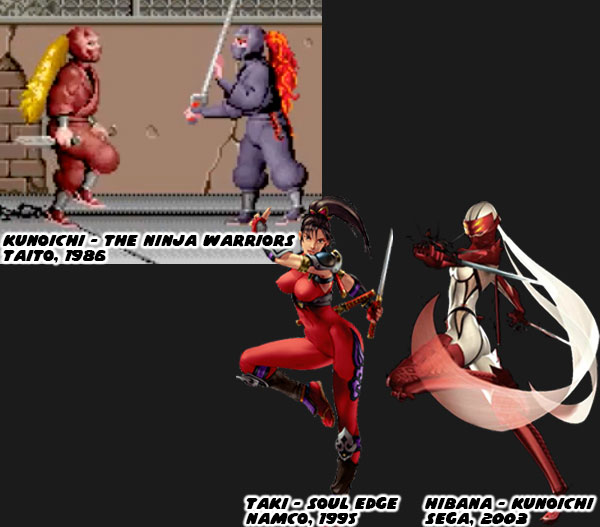
Female ninjas were referred to as kunoichi. They were normally presented with a dark outfit, and a mask. The very first kunoichi in gaming that I remember was in the game The Ninja Warriors. The Taito game used multiple screens, and featured rotoscoped animation. It was an important contribution to the genre with a shocking ending. From there on kunoichi weren’t featured very often in fighting games. I could remember Taki from the Soul Edge series by Namco. To be fair Kunimitsu was a hidden character in Tekken from 1994, she was a boss for Michelle Chang. The last new lady ninja that I could remember was Hibana from the action game Kunoichi (Nightshade) by Sega. She was the successor to the Shinobi franchise. In essence it seemed that a new lead female ninja character would appear once a decade in gaming. 

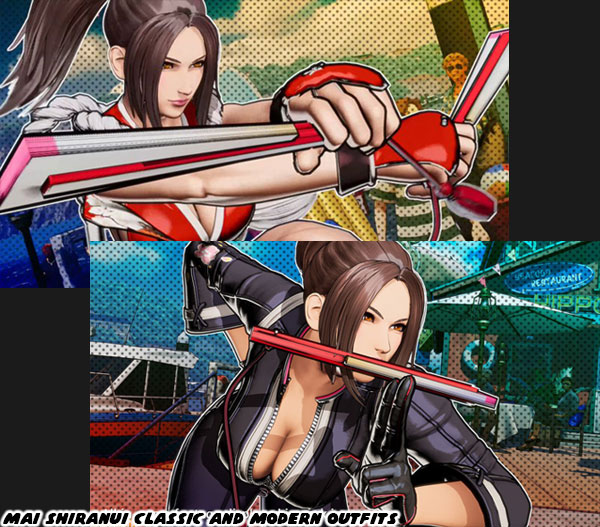
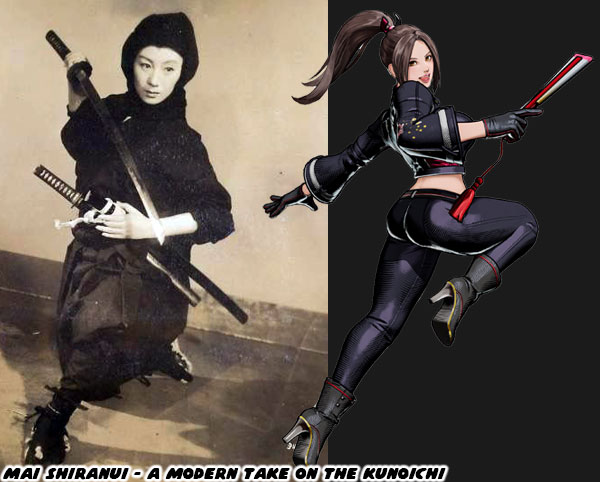
Mai looked nothing like any of the classic lady ninja characters in pop culture. She wore a bright red outfit, that revealed her bosom, and backside. Mai was anything but shy or demure. She was the heiress of the Shiranui clan. Her form of ninjitsu went back centuries, and was closely guarded. Despite protecting her form of fighting the team at SNK made sure she stood out from her contemporaries. This tradition continued into 2024 with an updated form-fitting leather outfit.

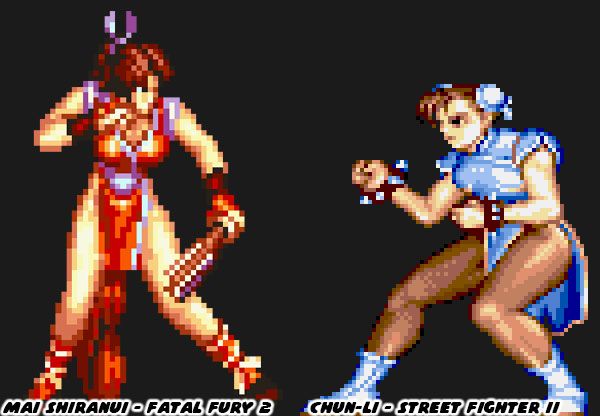
Mai was meant to be a response to Chun-Li. Street Fighter II was more than a fighting game. When it came out in 1991 it became a global phenomenon. A few months after it came out SNK released Fatal Fury, which helped keep the momentum going. Fatal Fury was more than a lucky break, it was more than a studio trying to capitalize on the moment. The game was designed by Mr. Nishiyama. He had created the original Street Fighter back in 1986. He was planning new ideas for a Street Fighter sequel, some of which would inspire Street Fighter ’89, which would later become the arcade hit Final Fight. Mr. Nishiyama changed companies and wanted to try out entirely new play mechanics through Fatal Fury.

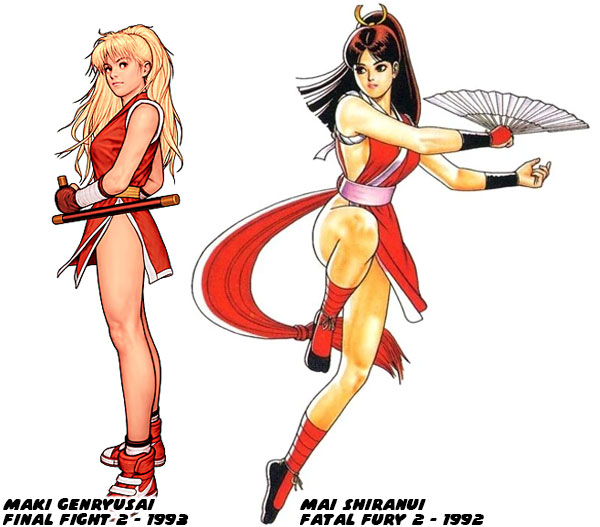
Mai was not in the original Fatal Fury, she debuted in 1992 with the release of Fatal Fury 2. During this time Capcom was developing a Super Famicom / Super Nintendo follow up to Final Fight. The game from 1993 would introduce some new faces, among them a female ninja wearing red, and white. The blonde Maki Genryusai debuted in Final Fight 2. Despite outward appearances she was not a clone of Shiranui. Maki had a completely different move set, her costume, and sneakers were designed to parallel Guy. It was simply coincidence that Mai, and Maki had similar looks. Not only that but Mai was meant with a fighting game in mind, rather than a brawler.

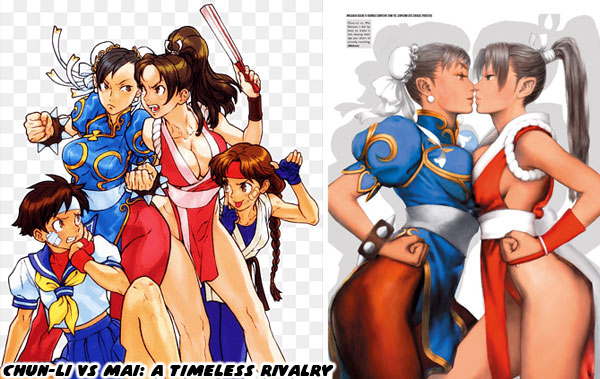
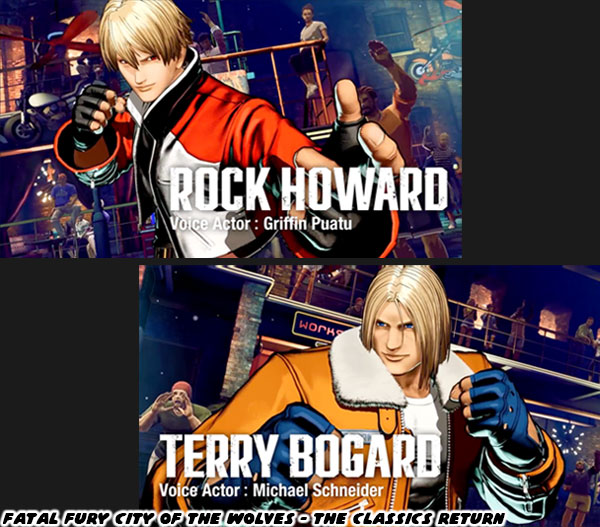
Terry Bogard, and Ryo Sakazaki (Art of Fighting) were a sort of male equivalent to Ken, and Ryu, but the studio needed a strong female lead as well. From the very first day audiences knew that Shiranui was a scene stealer. There was no doubt in our minds that she was going to be the face for the franchise, similar to how Chun-Li was embraced by the global community. When it came to fan art the two female leads were in a category all their own. Capcom and SNK would play up the friendly rivalry in official art, and often present Chun-Li and Mai Shiranui as opponents. Sakura was considered a little sister clone, a jab at Yuri Sakazaki from the Art of Fighting 2. In fact Dan Hibiki was also a parody of Ryo, and Robert Garcia from the Art of Fighting. This is why they sometimes turned up in the Mai vs Chun-Li art as well.With her leather outfit the most recent version of Mai was one of the better contemporary remakes for the character. It was not the first time she was presented with a mostly black costume.

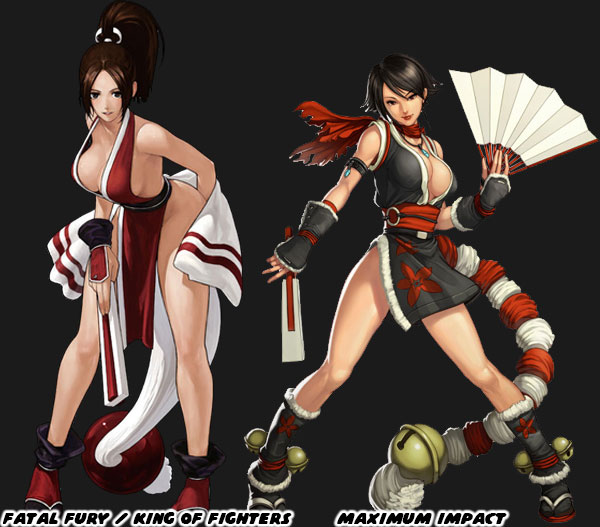
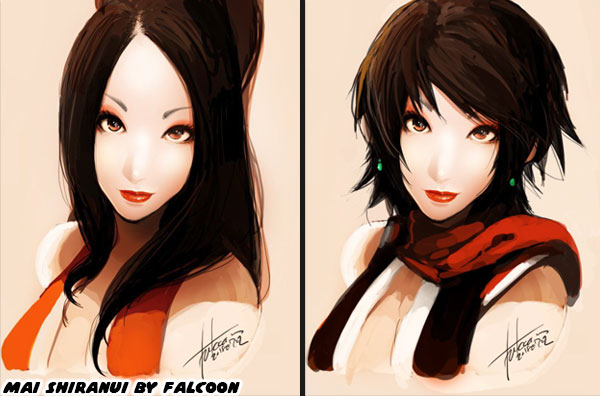
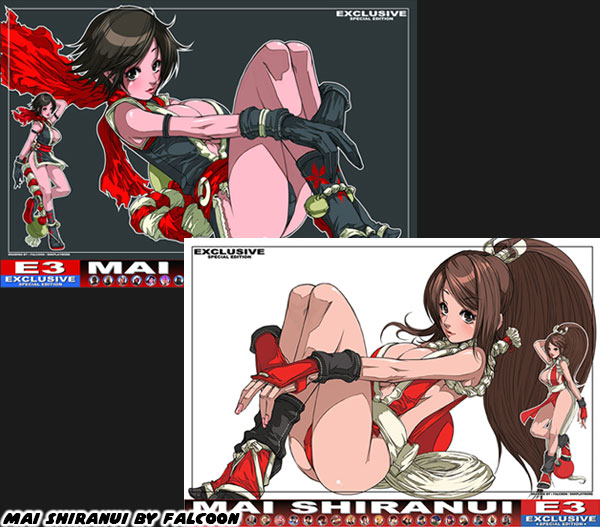
When the Fatal Fury games went to 3D many of the main characters got makeovers in the form of alternate costumes. Noise Factory developed the King of Fighters Maximum Impact in 2004. The updated looks of all the returning characters were well done, and Mai specifically had a bold new design. Her long hair had been cropped short. Her trademark red outfit was swapped to black. The occasional redraws by Tatsuhiko Kanaoka aka Falcoon were memorable.

I am a big fan of Falcoon’s art. I consider his bold style to be the BENGUS equivalent of the SNK art team. Back in 2005 the studio released two limited edition posters at the E3 in Los Angeles. I was able to get the black version of Mai for my little brother. I wish I had known about the signings both days so I could have scored the two prints.

It was great to see the Fatal Fury series continue into the 2020’s. I was glad that there were teams still passionate about the classic fighters. They were keeping the genre alive, and sharing them to an entirely new generation of fans. I’m certain that Mai would reclaim her spot on the fighting ladies Mount Rushmore. What did you think of Mai, and her new look? Were you a fan of any of her redesigns, or did you prefer her classic look? Tell me about it in the comments section. As always if you would like to sponsor me please visit my Patreon page and consider donating each month, even as little as $1 would help make better blogs and even podcasts!
follow the Street Writer on Patreon!

Friday, May 9, 2025

Why I'm not talking about Fatal Fury: City of the Wolves

Hello friends. Thank you for dropping by. You probably know that I’m a huge fan of fighting games. I’ve been playing them for 45 years. The first fighter I remember playing was Warrior by Vectorbeam. I wrote about this when I was doing a look at the Virtua Fighter relaunch. With that said I’ve avoided posting on the Fatal Fury: City of the Wolves for some time now. People may think that I’m biased against SNK, or only write about Street Fighter, but that is far from the truth. In fact the very first blog that I posted here in 2014 was dedicated to Mr. Karate from the SNK universe. I’ve written a lot about the history of Fatal Fury, the creators, and the characters on this blog. I was such a fan of the Garou series specifically that I tracked down the manhua (Chinese comics) based on Garou: Mark of the Wolves. I loved all fighting games, it’s just I loved some titles more than others.

I was very passionate about the Garou / Fatal Fury: City of the Wolves project for some time. I started talking about the development of the game in 2022. It had been ages since I was excited for a classic game to return. By March of 2024 I shared everything that I could pull from the character reveal, and gameplay trailers. I did a look at how the characters featured in the game evolved from concept art. With the guest character reveals of Mai, and Terry in Street Fighter 6 I had to mention why Mai Shiranui was important in fighting game history. Yet once the final details of the game were announced this year, and released on April 25, 2025 I had yet to say anything.

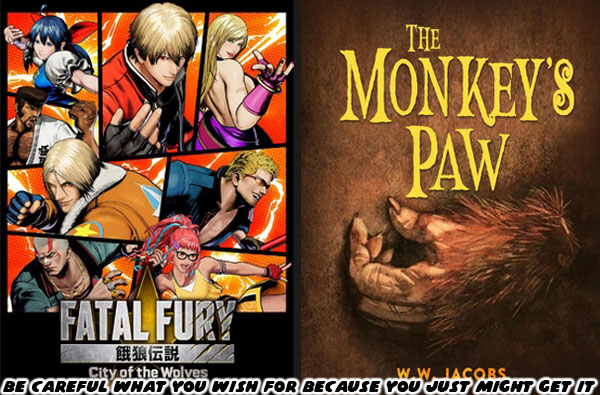
Why would I walk away from a sequel that I had been waiting on since November 26, 1999? That was when the original Garou: Mark of the Wolves came out. After a quarter-century wasn’t it going to be worth the wait? Sadly the answer would be no. The game was the embodiment of The Monkey's Paw. The short story taught us to be careful of what you wish for. Sometimes it’s better for things to stay dead, and buried. Even though SNK said that their new Saudi owners would not influence the direction of the games it was obvious that wasn’t entirely true. The game would be pandering to pop culture, rather than celebrating the fighting game legacy that built an industry. Will Borger with Digital Trends summed up everything that needed to be said about Fatal Fury: City of the Wolves. Mr. Borger's review touches all the basis for the game itself, but does us all a favor and explains why it doesn't reflect the fighting game community at all.

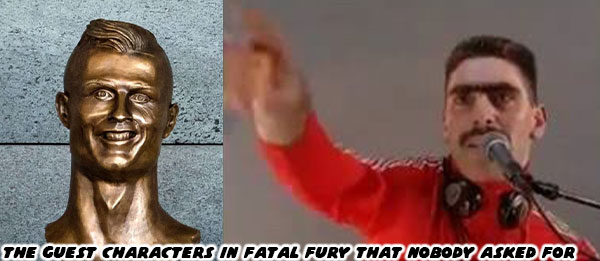
There was a quick answer as to why I walked away from the game after a release date was announced. The two guest characters revealed were shockingly disappointing. Rather than include a classic character from the SNK universe, or any crossover characters from Capcom, Sega, ARIKA, or Namco. The developers decided that a professional futbol / soccer player, and a DJ would be the welcome additions. These two people were so outside of the fighting game orbit that they would have never been voted on by the actual players. The athlete himself had been in the news for sex crimes. As for the Swedish-Bosnian DJ... he might be a global superstar but I had never even heard of him. Apologies to Super Greg for being overlooked as a better Hip Hop representative. It was obvious that the Saudis were directly influencing the development of the game. SNK would not bother to do as much of a cultural deep dive as Capcom did with Street Fighter 6.

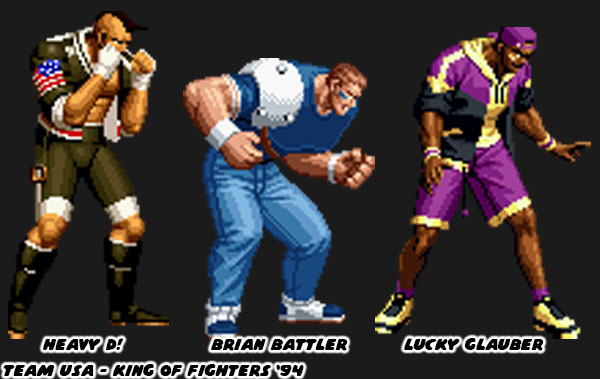
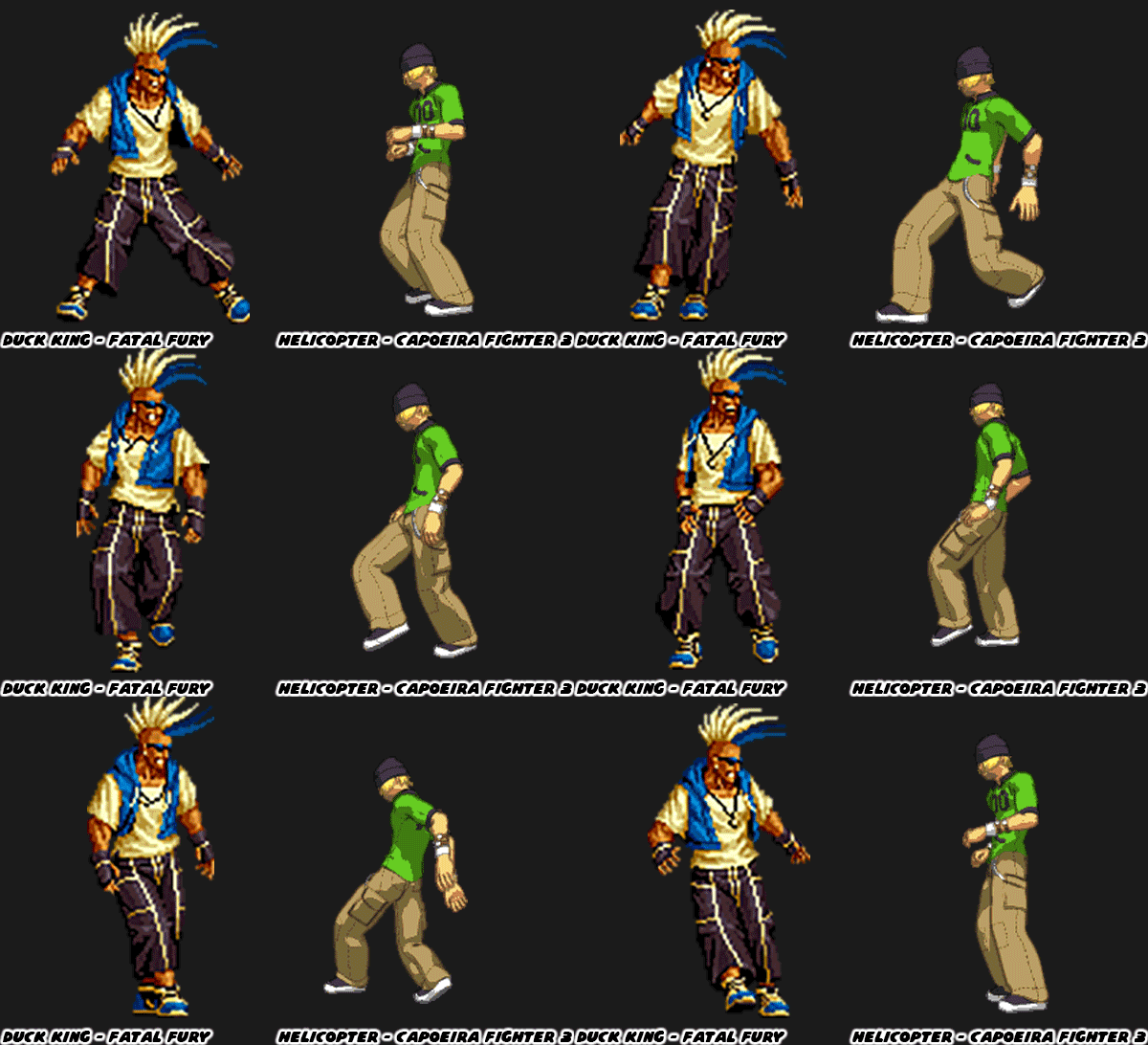
That is not to say that a soccer character couldn’t be used in a fighting game. Roberto Miura from the Capcom game Rival Schools: United by Fate showed us that it was possible way back in 1997. Not only that but athletes had already been used in an SNK fighting game. Team USA aka Team American Sports appeared in King of Fighters ’94. These was a professional boxer named Heavy D! A pro football player / race car driver named Brian Battler. Lastly there was the basketball pro named Lucky Glauber. So yes the game could have used pro sports athletes, as long as they were made somewhat fantastic, and not just a copy / paste of an existing athlete. As for the DJ… fighting breakdancers could be done well. See Helicopter in Capoeria Fighter 3.

In many ways the bigger insult to the Fatal Fury series was in adding a real DJ to the game (whom I would also not name). Hip Hop already had a representative in the series called Duck King. This character debuted in the original Fatal Fury on November 25, 1991 then appeared another 11 times over the decades. The mohawked star was a literal street fighter. He was a battling b-boy (breakdancer) using tumbles, and sweeps to great effect. He was followed by a crew of baby ducks, wore street clothes, had a flamboyant personality, and was beloved in the fighting game community. Even if it was revealed that mentored the DJ in the new game it would have been better to stay with the original South Town legend. It was clear that the people working on SNK today didn’t understand the tone, and feel of the original series.

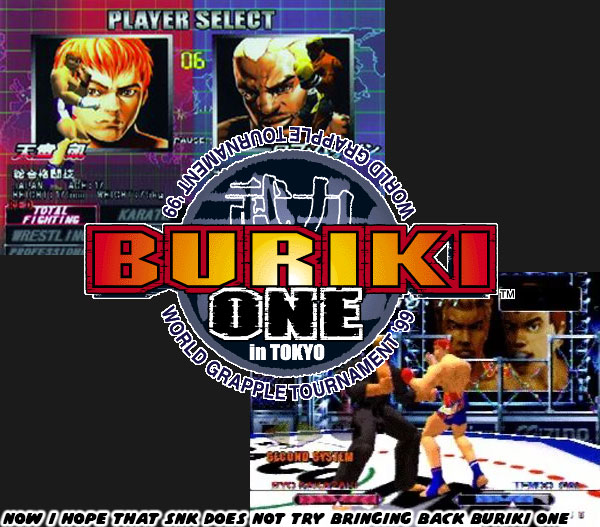
The early days of the arcade era were very experimental for most studios. In the ‘80s SNK was known for its bold game designs. They did combat game exceptionally well because SNK founder Eikichi Kawasaki was a boxer in his younger days. He wanted the fights in his games to be more visceral. This meant that masters of various forms were welcome to be represented in their releases. That was why SNK introduced Capoeira to arcade goers way back to 1989. The developers had a great appreciation for fighting in all styles. When MMA started to surpass all combat sports in the late ‘90s they developed a rare 3D title called Buriki One in 1999. It was the same year that they released Garou: Mark of the Wolves. Many of those team members had since retired, or moved to other studios. The current team at SNK was good at recreating themes, and elements of classic games with modern art, aesthetics, controls, and game play. The thing they seemed to lack was the imagination, and appreciation of the influences that created the iconic series. 

The new developers didn’t seem to know how to add a new character into the franchise that wasn’t pulled from old design notes. Worse yet they were listening to the whims of their Saudi owners, and just throwing in real people for no reason. This made me afraid that they would try to reboot Buriki One next. Or they might reconsider bringing back other games based on the cold reception of Fatal Fury: City of the Wolves. At least I hoped they would do better if they were thinking about it. What about you? Did you pick up the game? Was it your first time playing an SNK game, or were you a veteran player like me? I’d like to hear about it. Tell me about it in the comments section. As always if you enjoyed this blog, and would like to sponsor me please visit my Patreon page and consider donating each month, even as little as $1 would help make better blogs and even podcasts!
follow the Street Writer on Patreon!

Wednesday, August 10, 2022

Garou Mark of the Wolves 2, the return of a legendary series.

The EVO 2022 Tournament in Las Vegas had a lot of entertaining matches, and reveals over several days. On the Street Fighter front both Kimberly, and Juri were officially unveiled. I had already covered their look on this blog. My guess that Kimberly was a ninja turned out to be correct. She seems to be fascinated by ‘80s pop culture. That she probably has in common with the new Street Fighter developers. I’ll be talking more about SF more in the future, as the rest of the cast gets unveiled. Right now I want to talk about SNK, and all the buzz they have been generating in the past few weeks. It all started when someone got their hands on beta material for the unreleased Garou Mark of the Wolves 2. Sprites, unfinished stages, and some other content was dropped online. It set the community on fire.

The original Garou MOTW was released in 1999. The game was set in the shared universe of the King of Fighters franchise. This includes the characters, and relationships unveiled in Fatal Fury, Art of Fighting, Buriki One, Ikari Warriors, and more. Garou MOTW was centered around a young star named Rock Howard. He was the son of Marie Heinlein, and Geese Howard. Geese, as you may know was the main villain in the Fatal Fury series. Geese was one of the great fighting game heavies, and was such a profound character that my second podcast for this blog was about the rivalry between Terry Bogard and Geese Howard. The Fatal Fury games were created by Takashi Nishiyama, the creator of the original Street Fighter. Once he left Capcom to join SNK he (and many members of the fighting game community) considered Fatal Fury to be the spiritual successor to Street Fighter.

Rock Howard was created by Nobuyuki Kuroki in 1998. Mr. Kuroki, and Yasuyuki Oda wanted to create a young successor to Terry Bogard. They decided that Rock would carry the torch in the Garou series. Terry would still be in the game for fans of the original star, however the plot, and cast were centered on Rock. The game was a generational love letter. Kim Kaphwan was the taekwondo star of the Fatal Fury series. His sons Kim Jae Hoon, and Kim Dong Hwan were also youthful stars of Garou MOTW. Terry was presented as a mentor to the young Howard. Many assumed it was because he had a guilty conscience. That was a fair guess considering that he kicked Geese off the roof of his office building. Over the years it was revealed that Terry had become a father-figure for Rock. He had a genuine affection for the kid. It was revealed in the official character art. In the sprites used through the series, and in the game cinemas.

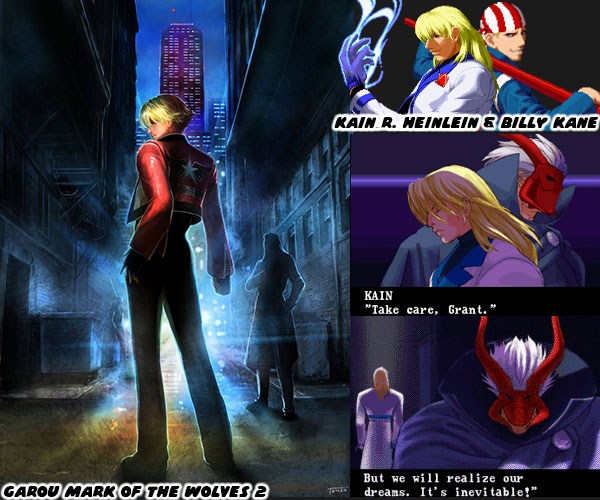
Every fighting game needs a villain. It would have been interesting if Rock had to battle his father, but that rivalry was usually reserved for Terry. Not to mention that the father, and son rivalry had already been done in the Tekken franchise. Instead the Garou series would pull in not one, but two heavies for Rock. There was Kain R. Heinlein his biological uncle, and Abel Cameron aka Grant, his other father figure. This dynamic would make for an interesting plot. Abel was an enforcer for Kain, he wore a mask while performing his dirty work, not unlike Takuma Sakazaki as “Mr. Karate” when he worked for Geese. The reason Terry was helping raise Rock was because his mother had died. Geese wanted nothing to do with his son, Kain kept his distance for a large chunk of his life. So it was Abel, and Terry that took over duties, especially Terry. One of the biggest revelations in the game (BIG SPOILERS) was that Rock’s mom was allegedly alive. Sadly there was no resolution to this plot twist as SNK was in a bad financial situation post 1999. They cancelled development on the sequel, and had to restructure the company. Fans could only guess what was the fate of Rock, and the rest of the cast.

The game had a very strong reaction from audiences. It was considered one of the greater sprite-based fighters of the ‘90s. The animation was brilliant, balance was spot on, and cast memorable. On the aesthetic front the game looked like the Street Fighter Zero / Alpha version of Fatal Fury. It was such a beloved game that fans never gave up hope on seeing a sequel. Even before the actual sequel sprites were released there were developers that wanted to pick up the license. DotEmu developed Streets of Rage 4, a sequel to a beloved ‘90s brawler series by Sega. They created some fan art of what their version of Garou 2 would look like. It set the FGC ablaze. The community would create animations, and concept backgrounds for what they wish had been. The Jaguar Bridge concept level by Jesús “Nerkin” Campos was an absolute work of art. Many artists never forgot how great the game was, and never gave up hope for a sequel.

After more than 20 years it looked like nothing would ever become of Garou 2. That was until EVO 2022 when SNK dropped what could be argued as the biggest bomb of the tournament. SNK talked about the updates to KOF XV, and Samurai Showdown, including new characters, cross play, and rollback support for online play. Then they showed an illustration by Tonko aka Aki Senno featuring Rock Howard. The framing of the art was clearly done with purpose. The alleyway might be in Second Southtown, the large building in the distance may be Geese Howard’s. In the background are Billy Kane, a well known enforcer for Geese, and Kain Heinlein. From a storytelling perspective this might be Rock Howard being pulled to the “dark side” in a power struggle over Second Southtown. As of this writing we have no idea who else is going to be in the game, or what the story could be. We don’t even know if the studio is finishing the sprite-based version, or starting from scratch with a whole new cast.

As far as the canon of the game went, there were the events, and relationships specifically mentioned in the title. Some had straightforward endings, some were open-ended. These things really didn’t influence the direction of the King of Fighters tournament in one way or the other. There was not much else in terms of anime, or manga that covered the events of the game. For sure I thought it would have gotten highlighted in the King of Fighters Destiny cgi series. Sadly it did not. Many popular games had a corresponding show or comic book series. Capcom had one of the first illegal, and licensed comics in the world for Street Fighter II. SNK was just behind with the Art of Fighting, and King of Fighter manga. Through the ‘90s the various games would get a licensed manga in Japan, and sometimes that book was translated, and released in the US as well. Licensed books were also created in the Chinese market, these were known as manhua.

I had collected both Street Fighter manga, and manhua, and more than a few manhua books from the various SNK games. Only recently did I learn that there was a manhua series based on Garou MOTW. I managed to get all 10 issues of the limited run comic. As far as I know they have never been translated into another language. I scanned in several pages, and will be sharing them on this blog over the next few days. I hope to see you back for that. I’d like to know if you collect any comics, manga, or anime on a favorite game. It doesn’t have to be a fighter. What do you collect, and what’s one of your favorite pieces? I’d like to read about it in the comments. As always if you would like to sponsor me please visit my Patreon page and consider donating each month, even as little as $1 would help make better blogs and even podcasts!
follow the Street Writer on Patreon!

Thursday, September 28, 2017

Hiding the master in plain sight, the genius of SNK's character design...part 2

Fatal Fury introduced audiences to the SNK school of fighting game design. Audiences could now choose between traditional masters like Joe Higashi, street fighters like Terry Bogard, or a hybrid fighter like Andy Bogard. By contrast the Capcom school of design was rooted closer to featuring only martial arts archetypes. The fighters all wore costumes that looked classic, they each represented a certain school of fighting. Almost none of the characters in Street Fighter II wore street clothing, whereas many of those in Fatal Fury did. This boiled down to the people that were developing the games. Takashi Nishiyama and Hiroshi Matsumoto put literal street fighters in the original Street Fighter. People like Mike, Joe and Birdie fought in their everyday clothing. These things carried over into Fatal Fury’s cast. It was Yoshiki Okamoto, Akira Nishitani and Akira Yasuda that decided to focus on archetypes for Street Fighter II. SNK boss Eikichi Kawasaki wanted his fighting games to be the biggest and the best, his new title, developed by Mr. Matsumoto was the most ambitious.
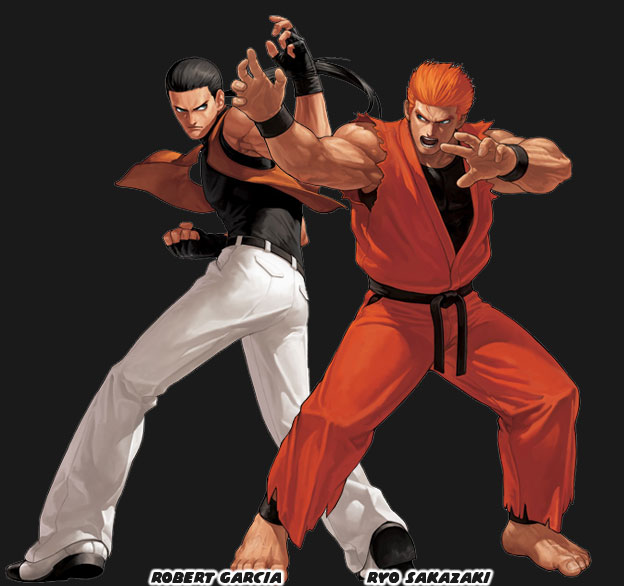
 

Mr. Matsumoto wanted The Art of Fighting (AoF) to be more cinematic, to look and feel like an action movie. To be more visceral than any game before it. Like Street Smart and Fatal Fury there was a mix of the traditional martial arts master and the street fighter as playable characters. The fictional Kyokugenryu Karate style was placed on both Robert Garcia and Ryo Sakazaki. The two were evolved from the Ken and Ryu template respectively. This new game was really pushing the power of the Neo Geo console. It featured more color, more detail and sprites bigger than the competition’s. Not to mention that it had graphics that zoomed in and out of the action. These sprites could also reveal damage. Characters bruised and their clothing tore from round to round. There was even a slight RPG element as characters could grow and evolve thanks to the lessons learned in the bonus stages. The genius of this game came in the planning stages. If SNK wanted to dethrone Capcom as the best fighting game developer then they had to offer the best experience. Although Fatal Fury and the Art of Fighting looked and played differently they were part of the same shared universe. This meant that at some point there would be a crossover game featuring a massive library of established characters.
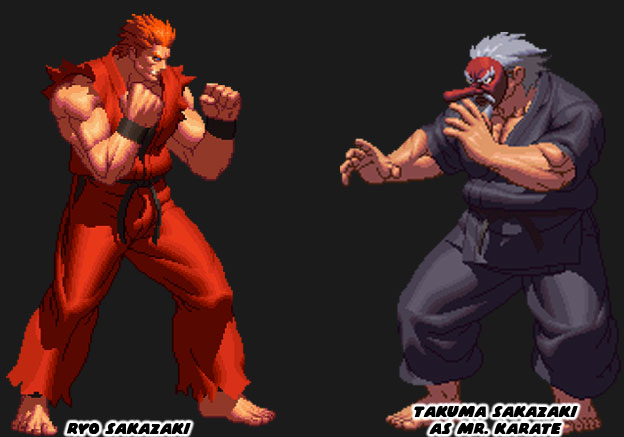
 

The entire cinematic feel of AoF was not lost on audiences. The figures in the game had more realistic proportions and looked less cartoonish than their rivals. It was much easier to get pulled into this world as bits and pieces of the story were revealed in between every stage. Yuri Sakazaki, the young sister of Ryo had been kidnapped. It was up to Ryo and Robert to find and save her. Every person that the duo faced had been hired or bribed by Mr. Big, a South Town mob boss. Each encounter brought them one step closer to the truth. At the end of the journey Ryo found out that the kidnapper was a martial arts master known as Mr. Karate. At the climax of the game Yuri stopped her brother from killing Mr. Karate. She cried out that man was their father. This was an exceptional plot twist and something that set up a sequel. It turned out that both Mr. Big and Mr. Karate answered to Geese Howard. Now that Yuri was safe there would be a reckoning between the Sakazaki family and Howard. Imagine how confident Geese must have been in his abilities by also starting a war with the Bogard brothers at around the same time. Story points aside the AoF game is one of the perfect examples of the SNK school of design. I’ll begin with one of the best masters hidden in plain sight.
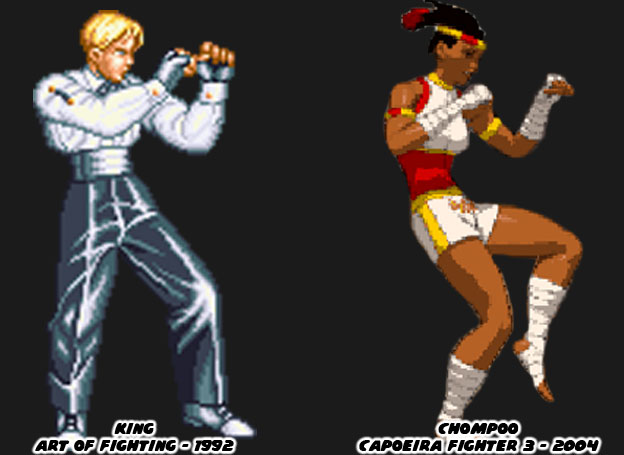
 

A while back I talked about how the traditional Muay Thai master ended up in fighting games. I called Chompoo the first notable female Muay Thai master in a fighting game. This angered a lot of SNK fans because the character King predated her by more than 20 years. In context I was talking about actual Thai fighters that dressed in the traditional fighting uniforms. Chompoo had the shorts, taped up hands and feet and even headdress. I was not talking about characters that knew Thai boxing. With that said let’s actually look at the elements that went into making King and why she had a fantastic design. First off she wore a suit, close to that of a bartender in a high class restaurant. She had the familiar stance, hands up for striking and moving on the balls of her feet. If you had asked any other designer to create a female Muay Thai master you probably would have ended up with someone that looked more like the character by Saeed Jalabi. Saeed hit all of the traditional notes perfectly. The shorts, headdress and even wrapped cords of older, classical forms of the Thai boxing arts. Any audience member could look at the design and know instantly this was some sort of fighter. Even if the gamer was not familiar with the fighting arts they could still tell a few things about her. The athletic frame, toned muscles, wrapped hands and feet were meant for striking. This was not a ceremonial costume but one for competition.
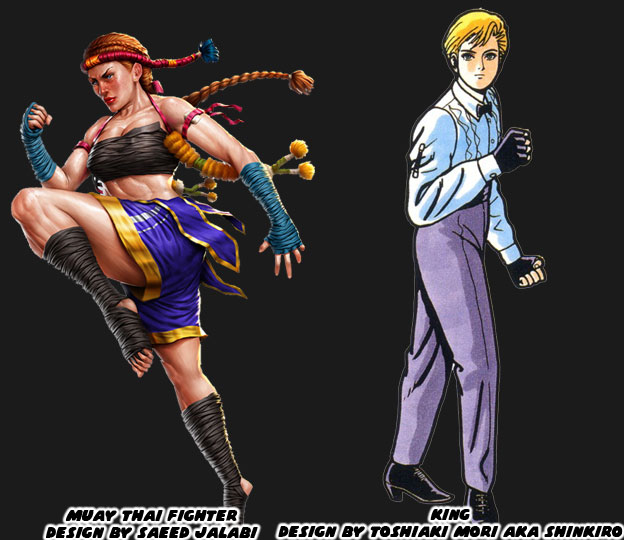
 

By contrast look at the design that Toshiaki Mori came up with. The SNK designer would become one of the most influential artists of all time. Most people would recognize him by his pen name, Shinkiro. He didn’t approach his designs the way one would have expected. What made his work so great was how down-to-Earth every figure was. When he was helping create the costumes for the AoF cast he knew to make each character fit the story. As Robert and Ryo made their way through South Town the people they fought reflected a certain part of the city. The thugs looked like biker gang members, those in the military wore fatigues. Having a half-naked Muay Thai fighter in a classy restaurant would not have made any sense. But what about one dressed like a bartender? The uniform was central to the character. Modern martial arts movies featured characters that wore deceptive clothing. One the first examples was the tuxedo that Robert Baker wore when he fought Bruce Lee in Fist of Fury (1972). Bruce Lee helped bring classic wuxia or Chinese hero stories into the modern era. The same thing was true of the suit that Benny Urquidez wore when he fought Jackie Chan in Wheels on Meals (1984).
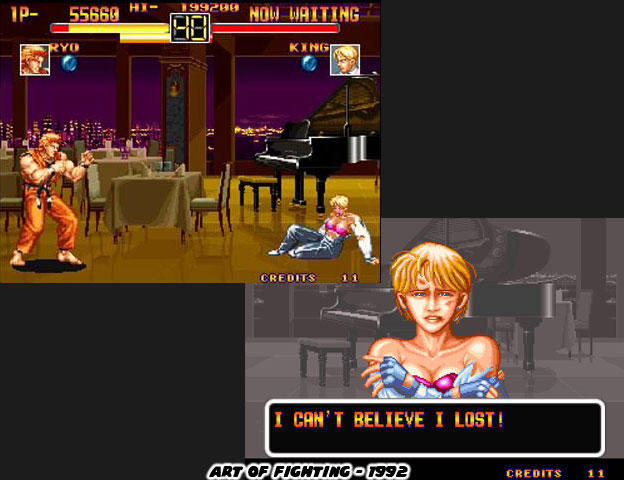
 

The suit was deceptive but that was only one layer of Shinkiro’s design. King looked like an effeminate man, or perhaps a boy. Audiences had been conditioned to expect 99% of the people they fought to be men. Up until that point Fan from Yie Ar Kung-Fu was the only female opponent in a fighting game and Chun-Li from Street Fighter II was the only playable female character. Audiences expected a female martial artists to be wearing a traditional dress. That whole idea was turned upside down if players tore the blouse off of King with a special attack. That was when it was revealed that she was wearing a bra underneath. That violent act made the game feel far more mature than any other title. This sort of turn was something that you would expect in a movie and certainly not in a game. SNK hid the reveal right until the end, going so far as to name the character King instead of Queen. In doing so it made the design very memorable. This master of the fighting arts was hiding in plain sight. She would be the perfect example as to what set SNK apart from the competition.
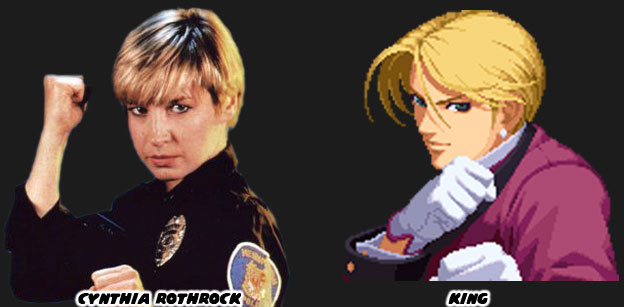
 

If you have been reading my blogs for a while then you know that I like to dig into the influences behind the various characters. For King the most obvious comparison would be with the martial arts star Cynthia Rothrock. Since 1985 Cynthia had been featured in a string of movies, mostly produced overseas. Women hadn’t really been considered for leading roles in most Western-produced martial arts films. There have been exceptions of course in other action films such as the Black Widow from the Avengers films, Furiosa from Mad Max or Gazelle from the Kingsmen. Those characters were almost always in a supporting role and not the stars of the film. In Hong Kong however women could be the stars of the film. This was a tradition going back to 1928. Heroes came in all shapes (see the chubby Sammo Hung), sizes, and colors even. When Cynthia couldn’t land a role in a US film she was almost always guaranteed to find a spot in Hong Kong. The same thing was true for Ron Van Clief. As a black martial artist, and Army veteran he faced tremendous racism in the USA but was a welcome star in Hong Kong cinema.
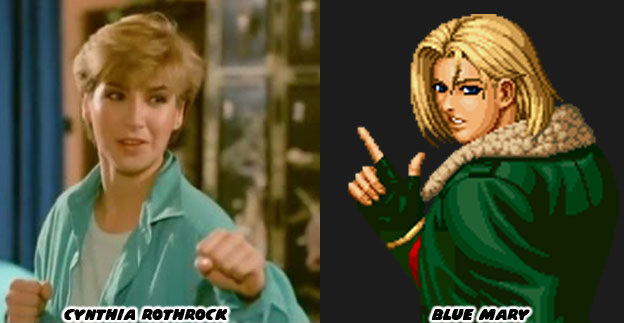
 

Cynthia’s trademark short haircut, lightning fast kicks and array of martial arts moves made her a stand out star. She had been actively involved in martial arts for a long time and was trained in different schools, including Tang Soo Do, Tae Kwon Do, Eagle Claw, Wu Shu, and both Southern and Northern Shaolin. She was able to hold her own against many men and women artists from Hong Kong, some of which learned fighting and acrobatics from the Chinese Opera, just like Jackie Chan. Cynthia often played a street smart cop, nicknamed China O’Brien in one of her more famous recurring roles. She was such a formidable figure that I would argue she not only influenced the design behind King but also Blue Mary, who turned up in the Fatal Fury series. This made Cynthia one of the rare real world figures that inspired the creation of more than one character, in more than one game series.
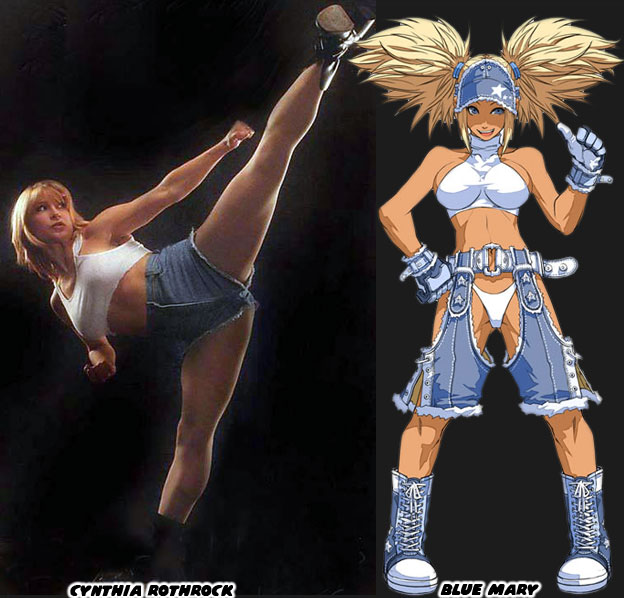
 

Cynthia was not shy about using her good looks in the roles she played. When the part called for it she would show some skin, tastefully of course. The people working at SNK were keenly aware of how the actress sexed up some of her parts or modeling shoots. Shinkiro did not outright try to make King a voluptuous, overly sexualized character. It would have destroyed any surprise waiting for audiences when they first saw her. It was the other artists working at the studio that started putting her in form-fitting suits, they turned her vest into a bustier and starting pushing her breasts out further and further. She would not longer appear androgynous following the AoF. Blue Mary had always been presented as the more sexualized of the designs. She was top heavy with an exposed midriff, wearing uniforms that were not standard law-enforcement. A very skimpy white top and denim bottom was created as an alternate costume for her in King of Fighters (KOF): Maximum Impact 2 Regulation A. This costume was inspired by an outfit worn by Rothrock in a modeling shoot. However we should confuse the two. The design behind King and her planning extended far into the lore or the SNK universe.
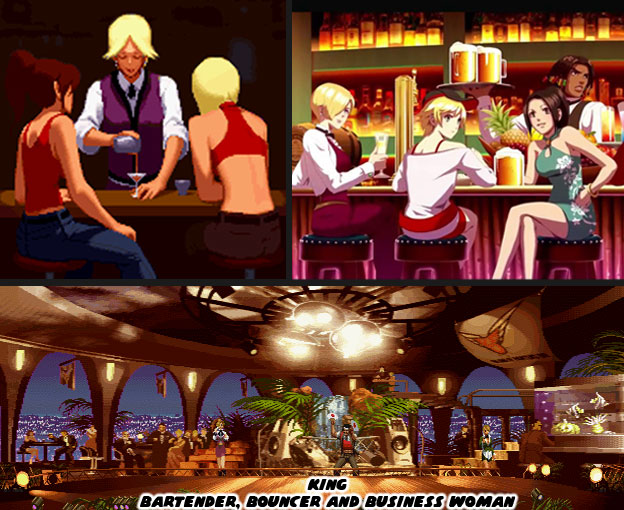
 

On the surface King was a very simple design. She had the skills and grace of a top bartender but with the power of a no-nonsense bouncer. On top of everything she was not going to remain as a bit player in South Town. The figures in the SNK universe had room to grow and the did in the various KOF sequels. The Sakazaki family opened Kyokygenryu schools, with Ryo entering tournaments to help spread its name. Andy and Terry Bogard travelled the globe following the trail of Geese Howard and making new allies along the way. King made fast friends with the other leading females in the KOF series. She partnered with the ninja Mai Shiranui and Kyokugenryu prodigy Yuri Sakazaki to form an all-women team. This was a first in fighting game history. She also partnered with them to open a club in a later timeline. King had taken her experience, including learning from Capoeira master Richard Meyer and his infamous Pao Pao Cafe, and applied it to her own business. She was ambitious and was destined to be a major player in South Town, yet unlike Geese Howard she was going to do this without resorting to extortion. King was an exceptional character design and easily one of the greatest fighting game characters ever created, female or otherwise. Artists and developers try to break into the genre should learn from SNK and see how they were able to hide these martial artists in plain site. The studio was able to hide masters in many ways. We will explore the ways they were able to do this in the next blog. As always if you enjoyed this blog and would like to sponsor me please visit my Patreon page and consider donating each month, even as little as $1 would help make better blogs and even podcasts!
 follow the Street Writer on Patreon!

Wednesday, April 30, 2014

The Legend of Kyokugen Karate, Marco Rodriguez

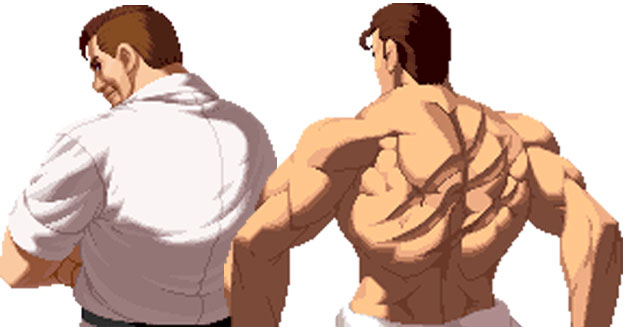
Mr. Karate represented the unbreakable will of Takuma Sakazaki. The man himself was flawed, aging and losing presence within the SNK universe. It was his alter ego that was the true boss that all of the other fighters feared. Mr. Karate never seemed to age, never seemed to get hurt and was an all powerful martial artist without equal. Takuma by comparison had lost his friends and wife in the rough city of Southtown. His children and students helped keep him together but there was always something bubbling under the surface. Many gamers could tell that even without the mask on there was a good portion of Mr. Karate living inside of Takuma. It was obvious by looking at the massive scar over his chest but not that many had seen the marks on his back. This was a person that had survived knife fights, sword fights and gun battles using his bare hands. This was also a person, like Mas Oyama, that had tested himself against wild animals.


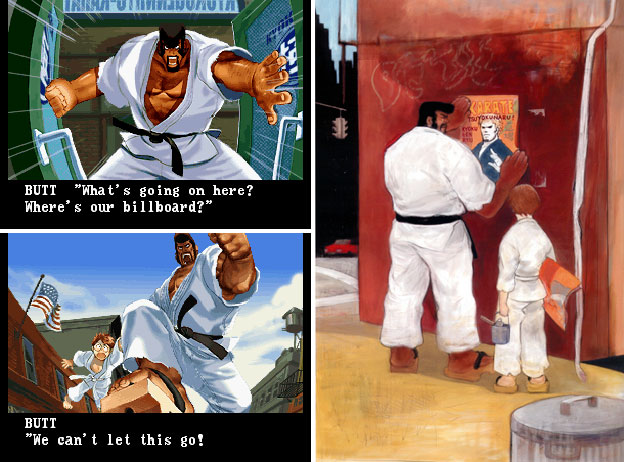
The legend of Mr. Karate was what drew practitioners into Southtown, none of them was more important as a student and a character than Marco Rodriguez. This character was absent from my Coloring Perception series. I could not find a proper place to mention him with regards to black character designs in fighting games. Marco had one foot in the absurd design typical of many fighting game developers, yet he was not a clown. He had as many abilities and attacks as Takuma, Ryo, Robert or Yuri. It was his zest for the Kyokugen style that made him a standout. Rodriguez was not only the star pupil but also its biggest supporter. While the Sakazaki's were competing in the KOF tournaments, Buriki One tournament or chasing bad guys around in the Art of Fighting titles it had been Marco that kept the school alive, paid the bills, promoted the system. His eyes would well up with pride whenever he thought about Ryo and how much the school meant to him.


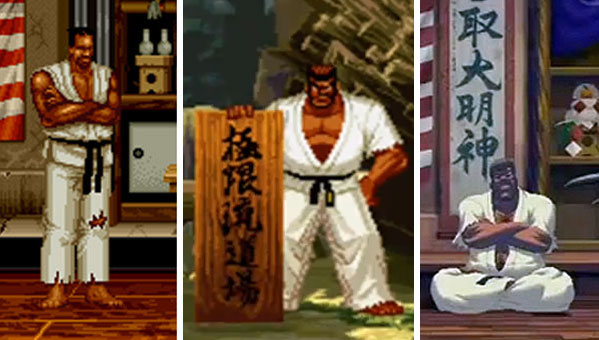
Marco had first appeared as a background character in Takuma's Art of Fighting (AoF) 2 stage. The designers never forgot him so when they redrew the stage for the King of Fighters XII they made sure to include his updated look with a pompadour and sideburns instead of braids. He was also sitting in the dojo laughing at the fighters, it said about the personality and the abilities of Rodriguez. Marco had first appeared as a playable character in Garou: Mark of the Wolves. It was notable because Marco was trained by Ryo and was the first Kyokugen fighter to appear in the Fatal Fury (FF) series. Released in 1999 Mark of the Wolves was the final game in the Fatal Fury series. Most fans of the SNK titles had wondered which star was the best fighter in the universe. Was it Ryo from the Art of Fighting or Terry Bogard from Fatal Fury? SNK would only tease gamers by saying that both universes were connected and even set within the same city and timeline. The boss character from Fatal Fury appeared as a boss in the Art of Fighting 2 yet none of the heroes ever crossed over until the original King of Fighters was released in 1994. However to fans it was a bit of a cop-out. The KOF series had mixed in a lot of other characters and changed the gameplay so that it was neither Fatal Fury nor the Art of Fighting. Both of the earlier games had a unique design aesthetic and control scheme. The sprites featured in the FF series were smaller with the gameplay being focused on allowed characters to jump between to or three different planes so that they could go around opponents. It was a precursor to the first 3D games. By comparison the AoF featured very large, highly detailed sprites and tried to capture a more realistic feel for the fighters. The characters could bruise and their clothes could even tear depending on how much damage the players sustained. Yet neither development team would allow for the stars from one title to appear on the other game.


Garou: Mark of the Wolves was the closest that the two universes would come together outside of the KOF. An older, stronger Terry Bogard was the star of the game yet there was one Kyokugen master in the game as well only it wasn't Ryo Sakazaki or Robert Garcia. Marco Rodriguez was a student of Ryo's and had committed himself completely to the art form. He was so dedicated in fact that he was living like a hermit in the nearby Sarah Forest, training in complete isolation in the same ways of the founder of Kyokugen. Marco had the same moves of the main AoF stars but the control and presentation was decidedly FF. It was a way to finally get both universes in one title without upsetting the rival fans.


Marco was an absolute zealot of the Kyokugen way. He even carried around a large wooden sign of the dojo whenever he fought. He was inspired by Willie Williams, a black US fighter that dedicated himself to the Kyokushin style back in '70s. He believed in the system with tremendous fervor and even moved to Japan to follow in the footsteps of Mas Oyama and train in many of the same places. In 1979 during second ever Kyokushin World Tournament, held in Tokyo Japan, Williams representing the USA competed and came in third. At the time it was the highest ranking for a non-Japanese and the record remained until 1987 when the Swiss-born Andy Hug came in second. In 1980 Williams fought Japanese wrestling icon Antonio Inoki in a highly publicized bout. Inoki had fought Muhammad Ali a few years prior to a draw in the pro wrestling vs boxing contest. This time he wanted to take on the massive American and see if karate was stronger than pro wrestling. The two battled for just over 5 minutes, the first half of which was mostly both men posturing and putting on a show but the last few were rough. This match also ended in a draw but Inoki would suffer from a broken rib and Williams from a broken arm. Williams would be kicked out of the organizing body of Kyokushin for participation in the fight.


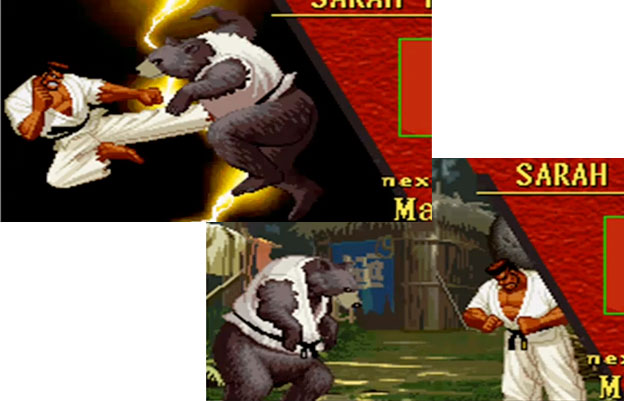
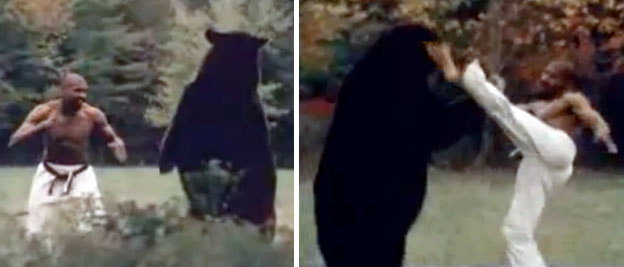
Williams, like many people in the '60s and '70s, had become obsessed with Oyama's total karate system. The martial arts had exploded in popularity thanks to the kung-fu films of the Shaw Bros. and Bruce Lee. Westerners were eager to master these exotic arts and signed up for kung-fu, karate, judo and jujitsu classes. Those that stuck with the arts became some of the early masters outside of Japan. Marco was a caricature of Williams. The character not only trained like Takuma but he even lived like a hermit out in the woods in order to focus on just his training. At the start of his stage players actually got to see Rodriguez sparring with a bear dressed in a karate gi. It was a funny visual however players that were familiar with the legend of Mas Oyama remember that he had fought a bear during his many adventures. This encounter was retold in the Karate Baka Ichidai manga and animé series. The fight made the man a legend, yet to Willie Williams he saw it as a testament to Kyokushin. Williams was actually filmed sparring with a bear for the documentary "The Strongest Karate" which was a thinly veiled Kyokushin propaganda piece. Williams was tall and strong but even the 6' 7" man seemed hopelessly ill prepared to fight the bear. Most witnesses said that the bear seemed drugged and confused. Even in such a state the bear managed to throw aside Williams with ease and handily absorbed the punches and kicks from the karateka.


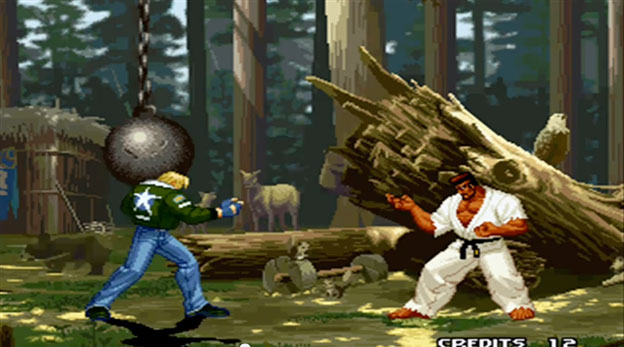
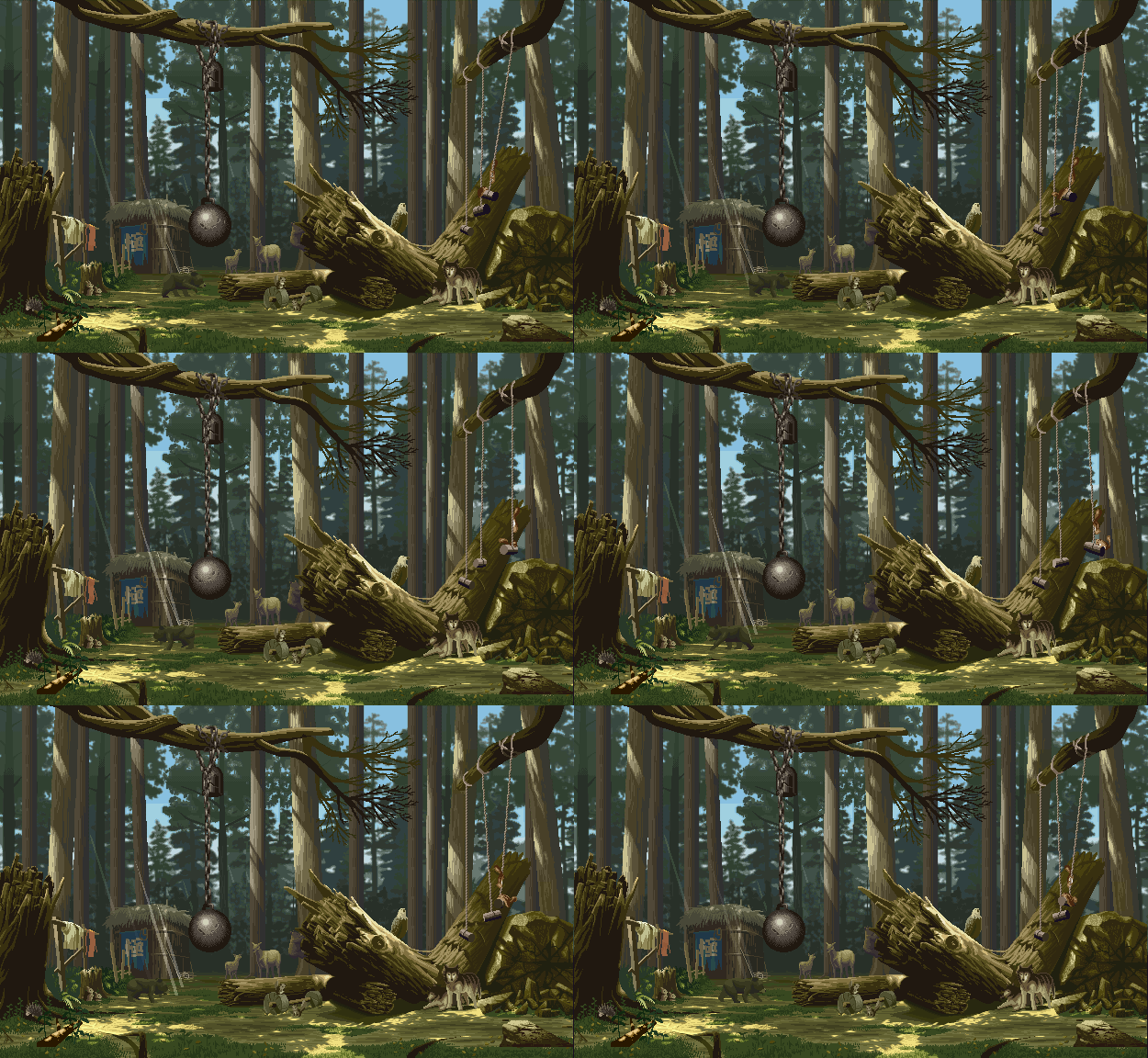
In the videogame however Marco was something else entirely. Just as Takuma Sakazaki was a super powerful version of Mas Oyama so too was Rodriguez when compared to Williams. There was a reason that Rodriguez was smirking and laughing at the characters in the KOF stage. He felt superior to them thanks to his hard training in Kyokugen. After all real men sparred with bears and lived off the land. His stage painted a clear picture as to his level of power. The man made a dumbbell out of boulders and used a wrecking ball as a punching bag. He even chopped down trees with his bare hands and feet. These weren't little trees either but giant hardwood trees that were wider than most cars. It was assumed that he had developed the level of power of Takuma, Ryo and Robert. This made him a perfect ambassador for Kyokugen in the Fatal Fury game and a fitting rival to Terry Bogard.


Marco was extremely passionate about the fighting art and vehemently defended it in the game. He was the ad campaign that the Sakazaki's needed to keep their gym alive. As much as he idolized Ryo he was probably not aware of the dark secret that Takuma was hiding. This complexity made Takuma and his fighting system very unique. His alter ego would be elevated to the status of major villain. With the mask on the character was ruthless in battle. He did not tire, did not suffer injuries and never seemed to age. Mr. Karate was the superior character in every regard. It was as if the mask had relieved Takuma of his responsibilities. He could put everything on the line because his children were safe. The person he fought knew nothing of the man behind the mask or his legacy. It was the same reason why superheroes wore a mask in Western comics, except instead of protecting innocent lives Mr. Karate was seeking out worthy opponents to destroy. While Takuma had an interesting life story he was the reason why I could not rank him higher in my list of greatest fighting game bosses. The character kept Mr. Karate grounded. Truly great villains had no family and held no allegiance. In fighting games this meant that the last man standing was the greatest fighter.

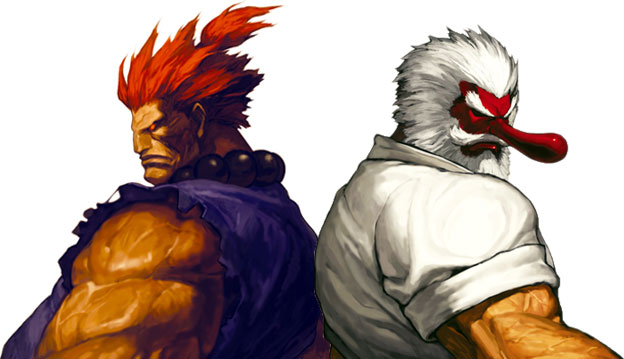
I would always consider Gouki to be the perfect fighting game boss because nothing held him back. Gouki had even made sure of that by killing his master and his brother. Zumbi had ditched Cobra and sold his soul to Macumba in order to become Zumbi Azul. Silber actively pursued the masters of fighting styles like a predator in nature stalking its prey. None of my top three had any regard for their opponents on themselves. Mr. Karate might be considered the greatest boss that ever appeared in an SNK game but he also had a weakness. Mr. Karate had an unbreakable will but Takuma Sakazaki's could still be bent by threatening the lives of his children. Silber did not have that going against him and that was why I ranked him higher.


What do you guys and girls think? Who would you consider the greatest fighting game bosses ever designed? I'd like to hear about it in the comments section. If you would like to sponsor me please visit my Patreon page and consider donating each month, even as little as $1 would help make better blogs and even podcasts!
follow the Street Writer on Patreon!

Monday, July 4, 2016

The legend of Blue Mary, or girls in fighting games, part 3

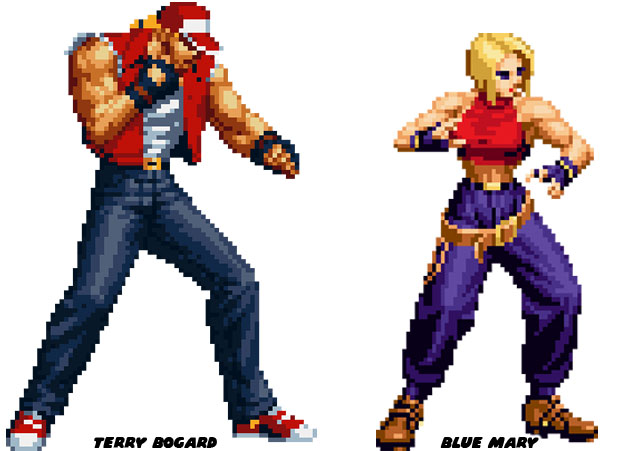
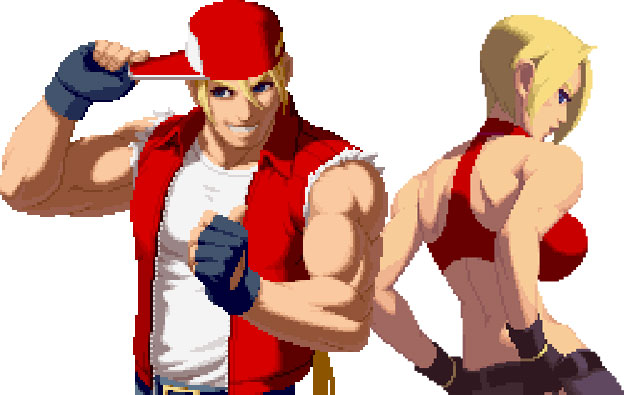
Fatal Fury had built a tremendous fan following in the '90s. The story, characters and fighting styles represented were very unique. SNK had done a great job of introducing characters from around the world and connected many of them to real martial arts. Even the characters that did not represent a particular style, like Terry Bogard, still fit into the universe. SNK was showing audiences that the modern masters of fighting did not have to dress up in robes or gi's in order to be legitimate threats. When the studio wanted to introduce a new female lead in the series they had a perfect template to pull from. Blue Mary had many design cues that were based on Terry. Put the two side-by-side and it's easy to see what I'm referring to. The red top, blue pants and gloves was only the beginning.


Notice how well defined Blue Mary's muscles were. Usually female characters in fighting games were slim. Some were voluptuous but none were presented muscular. Many of the early female characters in fighting games were Asian. Many Asian cultures (and many Western nations) did not consider women with big muscles to be attractive. The male stars in fighting games were always expected to have huge muscles. It made them look more believable as serious brawlers. The same rules applied to comic book heroes of course. Blue Mary changed all of that. As a female balance to Terry she maintained a certain level of athleticism and raw power. Her abs, shoulders and biceps were all well defined and much larger than the muscles on her female co-stars. This seemed acceptable on an "American" character. Her femininity remained, as did her large breasts, and to many players she remained attractive.


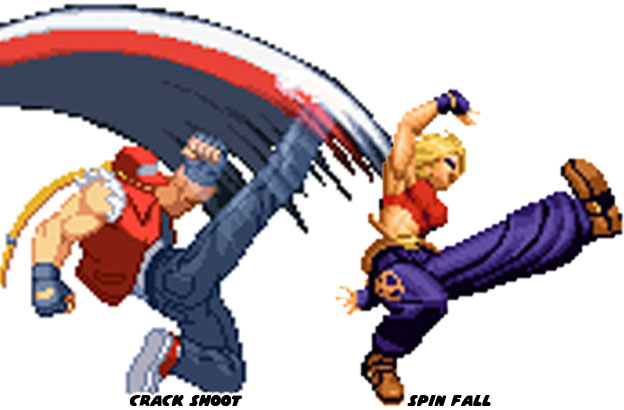
On a surface level Blue Mary had the same design cues as Terry. None of her moves, except for Spin Fall even remotely resembled the power moves of Terry. Blue Mary had far many different techniques going for her, not the least of which were having some of the first grapples, submission takedowns and strikes into grapples of any fighting game character. I consider Blair Dame from Street Fighter EX to be the first mixed martial arts character in a fighting game. She debuted in 1996, yet Blue Mary appeared one year earlier and had many similar techniques. So what gives? Blue Mary had moves that were more in line with combat Sambo, a Soviet-era form of fighting that gained exposure in freestyle and vale-tudo tournaments. These were the sorts of no-holds-barred contests that predated modern mixed martial arts tournaments. Sambo would be used by Russian soldiers to help subdue enemies in close quarters combat. There were many lightning quick strikes mixed with takedowns and painful joint lock techniques. The 3D fighting games would features these techniques on characters like Sergei Dragunov and Bayman from the respective Tekken and Dead or Alive series. It made sense that cops and soldiers would be masters of these techniques.


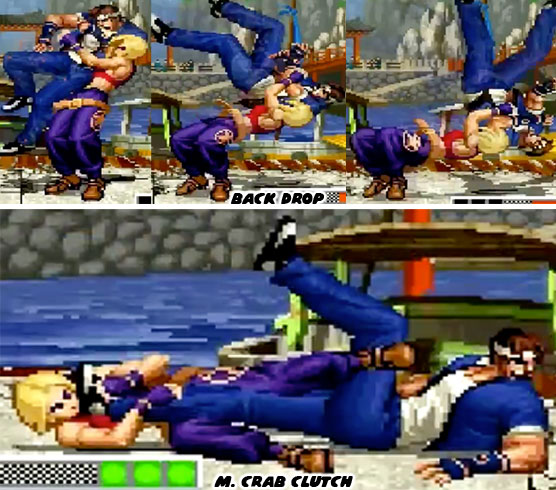
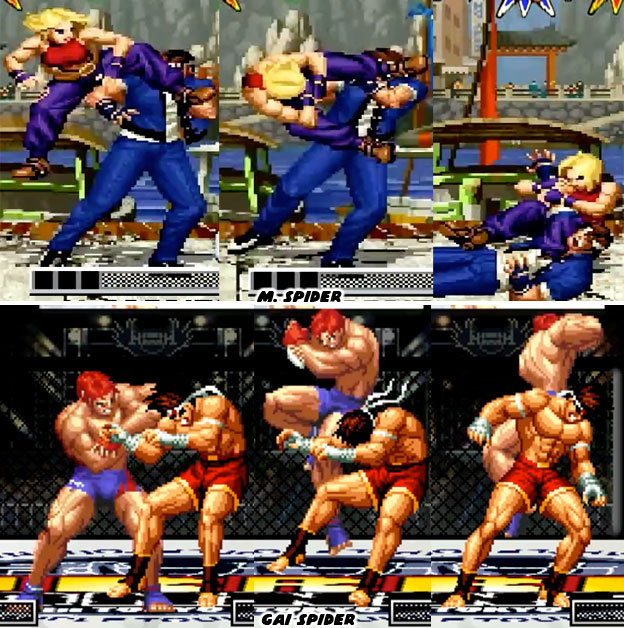
Blue Mary was a vicious grappler with amazing strength. She could hoist her opponents overhead and perform a Back Drop. It was an incredibly dangerous move made popular by the late . The move was banned in the WWE for being too risky. I could easily imagine Mary doing this to unsuspecting criminals. When she didn't go high with her attacks she knew how to shoot low for a takedown. The ankle lock called the M. Crab Clutch could snap a leg as easily as a chicken bone. These were only a few of her awesome moves. It made sense that Butch and her father had shared some of their Secret Service training with her. For opponents that were stand up fighters Mary had a way of breaking them down as well. She was equally fast and strong. She was able to cut into any defense and perform a rolling arm bar. This move would be known as the M. Spider. A variation of the leaping arm bar was given to Gai Tendo, the star of the Buriki One Tournament. His version was known as the Gai Spider. As great a character as Gai was just remember that Mary was doing some MMA moves many years earlier!

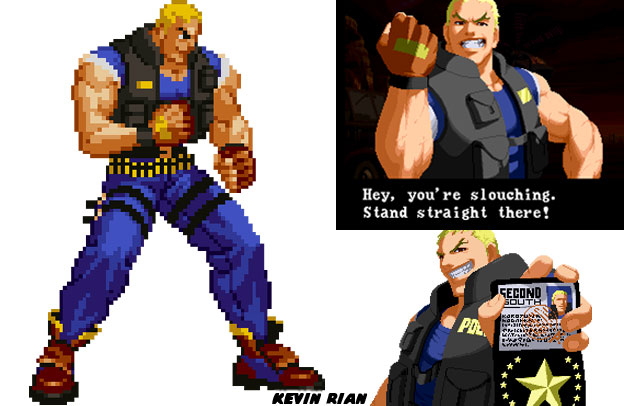
Blue Mary would grow in popularity over the years. Like some of her Fatal Fury co-stars she would eventually turn up in the King of Fighters series as well. Her moves and purpose filled a void that had been missing in the series. To be specific law enforcement officers weren't usually represented in fighting games, especially not in Japanese ones. There were heroes of all sorts but they were usually traditional martial arts masters. There were even military characters from time to time because audiences could accept them as dangerous fighters. Cops on the other hand didn't always have the reputation for being great martial artists. Chun-Li and Blue Mary certainly changed that perception while also serving as powerful female role-models. Blue Mary's distant relative appeared in Garou: Mark of the Wolves, a game from 1999. The game was set about a decade after the events of Fatal Fury 3. The new brawler was known as Kevin Rian, he was a cop, a representative of the Second South Town police force. His last name was mistranslated by the localization team as it was supposed to be Kevin Ryan. He was big with a few grappling moves and heavy hands. His design fit somewhere in between Ralf and Clark, the Ikari Warriors from the King of Fighters tournament crossed with Blue Mary. Kevin, like the other characters in Mark of the Wolves, reflected almost a decade of fantastic character designs. The studio had experimented with graphics, controls and aesthetics and was really hitting its peak by 2000.


From a physical standpoint Blue Mary had all of the same design elements that were originally applied to Terry Bogard. Many of these things were due to the Japanese trying to introduce a "cool" Western fighter into their franchise. It was mostly relying on stereotype, that white Americans had blonde hair, blue eyes, wore jeans and sneakers. The Japanese animé aesthetic paid off when combined with the trope. Mary was young, athletic, and confident. The same characteristics that made Terry appealing to the first generation of fans worked years later and would continue to work in future titles. Mary had staying power as did the better fighters from the Fatal Fury and Art of Fighting franchises. When variations of those characters turned up in Garou: Mark of the Wolves it worked extremely well.

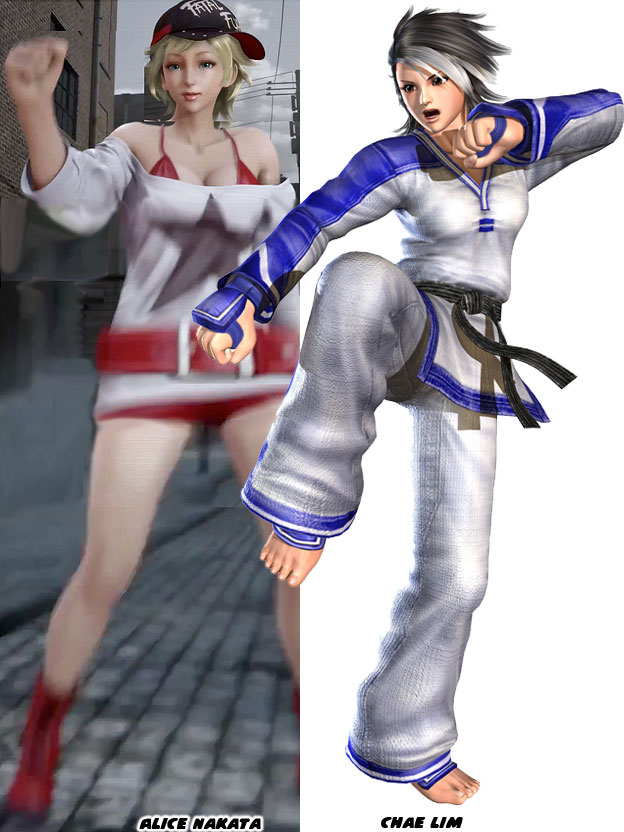
When variations of the look turned up in pachislot machines (a combination pachinko and slot machine popular in Japanese arcades) it still worked. Take a look at Alice Garnet Nakata, the idol character featured in the game. She was a sort of crude talking cheerleader that followed Terry around. Her look was planted in between the style of Terry and Mary. The familiar red, white and blue motif, the cap, the red heels instead of sneakers. Of course you can't miss the extra-wide belt. It's almost as if somebody at SNK had wondered out loud what would have happened if Terry and Mary had a daughter. What would she look like? Well the truth is a little bit backwards. In the planning stages of Fatal Fury 3 there was a new female character in the works called Alice Chrysler (the Japanese aren't the best at making up Western-sounding names). Alice was an understudy of TaeKwon-Do master Kim Kaphwan. She had an affinity for Terry Bogard and was designed to replace Mai Shiranui as the female lead. From a design standpoint she would have beaten Sakura as the younger girl version of the star by one whole year. SNK decided against the original Alice and went back to the drawing board. She got a little older, stronger and was working with different fighting forms and a new name, Mary Ryan. All great ideas however never really die. The studio revisited the understudy of Kim and a new character came out called Chae Lim. The scrappy "secret weapon" with short feathered hair would debut in the KOF Maximum Impact Tournament in 2004. Almost a decade later the studio revisited Alice for the pachislot machine. Her long ponytail gave way to short feathered hair in her makeover. In 2016 SNK would make her a formal character in the King of Fighters XIV.


Competition between SNK and Capcom meant that both studios were taking chances with character designs. In the early days the studios were influenced by action cinema and manga. The heroes of those first games were based on real martial artists and mythical fighters. In time the studios learned that fighting games did not have to be solely about burly men trading punches. They could be about cops, soldiers, gifted orphans, girls and women. If these people had a talent, a solid design and a reason to fight then audiences were willing to come along for the ride. Through the '90s SNK had made some of the biggest advances in diversity for the genre. When the studio decided that the King of Fighters should be about team play then it meant that the roster would have to be filled in with dozens of new faces. There was no way that they could all be men. The women they started with were already well known and all the new ones introduced, both good and evil, found a following. Blue Mary was near the top of the list. She was well regarded and many fans wanted to see if SNK planned any sort of resolution between her and Terry Bogard. It was the unspoken thing that fans had wondered about all fighting games. What sort of relationship did the main characters have and would the male and female stars of the games ever get together. Capcom fans from both sides of the Pacific wondered out loud if Ryu and Chun-Li were a couple. That was the case in the licensed Hong Kong comics and of course many fan pieces.


For SNK fans many wondered if Terry and Mary ever "hooked up." SNK and Capcom avoided the question for most of their characters. This was because when they designed them they didn't have romance in mind. Each and every fighter, male and female, was a stand-alone design. They did not need to have a relationship with any other character in order to be accepted. Kevin Rian and Mary Ryan may have been related but both looked and fought very differently from each other. Even if one character were introduced because of the success of a previous icon it didn't matter. Sakura and Sean for example were not Xerox copies of Ken and Ryu despite being labeled "Shotoclones." Each subsequent fighter from the biggest studios had to hold up to the designs in other titles. When Blue Mary and Sakura debuted they were a sort of balance to the male stars of the games. They had just enough design cues so that audiences knew where they came from, and also enough originality to them as to make them unique fighters. Yet that didn't stop fans from asking the question, especially between Terry and Mary. Terry after all was a lone wolf. His brother Andy had a relationship with the busty ninja Mai Shiranui but poor Terry was all alone. Then there was Mary, she lost her boyfriend and father and was living with a dog. If there was someone in South Town that needed a new relationship it would have been her. Only it didn't come to pass. At least not in the first decade of the Fatal Fury timeline. Terry was busy raising a surrogate son and Mary was busy with her career of keeping South Town from imploding. What SNK did do however was give fans a hint of closure.


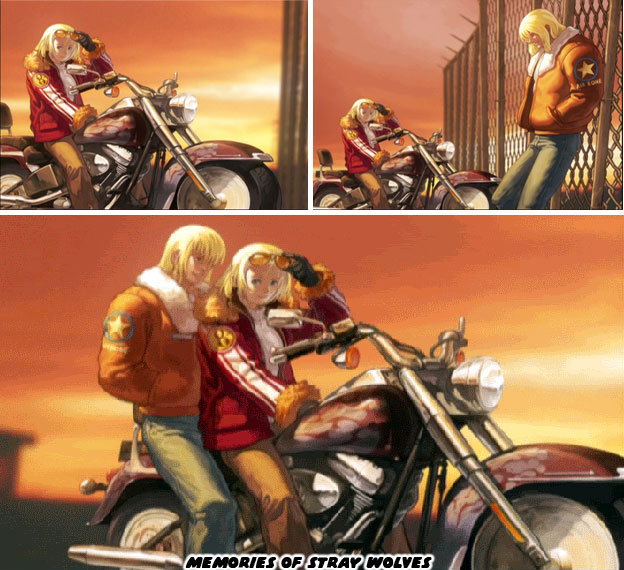
In the drama CD Memories of Stray Wolves Terry and Rock Howard were putting together a narrative. Where did it all begin for the main characters, why were they fighting, where did the time go? Rock was on the eve of his first King of Fighters tournament, he was a little nervous but he also wanted some answers. This story was set during the timeline of Mark of the Wolves, a decade after the demise of Geese Howard. Fatal Fury alumni Duck King, Richard Meyer and Blue Mary all made appearances. Mary was dealing with a few difficult cases and hadn't had a chance to visit with them as often as she'd like. Rock left to find his way and Terry seemed a little blue. Mary showed up on her motorcycle at the end of the story. The years had been kind to both as they still made an attractive couple. While it was never implied in the games there was a relationship between the two. Terry jumped on the back of her motorcycle to look for some fun. It was a creative risk that worked well for the canon and character development at SNK. It was something that was not introduced for the characters until years later and it made sense. It was an evolutionary shift for character designs which gave them more dimension and made the more personable. While I don't think that Ryu or Chun-Li should ever be seen the same way it would be nice to see Capcom age and mature the characters more in the Street Fighter series. There has been too much rehashing of the same characters year after year. We will see how else things have changed post King of Fighters XIV and Street Fighter V. I am looking forward to that. How about you? As always if you enjoyed this blog and would like to sponsor me please visit my Patreon page and consider donating each month, even as little as $1 would help make better blogs and even podcasts!
 follow the Street Writer on Patreon!