Monday, May 12, 2014

Fighting Layer, return of the dragon, part 2...

A Chinese girl and a stylish American had been invited to the Fighting Layer tournament as well. They seemed like friendly rivals to Tesuo Kato and were both approximately the same age. Where or where have we seen these archetypes before? There was much more to Lan-Yinghua and Allen Snider than simply being revisionist versions of Chun-Li or Ken from Street Fighter. They actually had origins with the developers that went back a generation.


Karate and Kung-Fu were cornerstones of the Asian martial arts. Each style of fighting had countless schools within. What Capcom, ARIKA and the other developers did was create archetypes that symbolized the best fighters in each discipline. Ryu and Ken had come to symbolize karate for the Street Fighter series and Chun-Li was the embodiment of kung-fu. However in the planning stages of Street Fighter II it wasn't a given that Ryu or Ken would even be returning to the series. The studio knew that they had to have a karate representative in the game but the original design was very traditional and lacked the visual cues given to Ryu. The studio had been criticized for moving too far from the Street Fighter formula when they introduced Final Fight to arcade owners. In response they pulled back and tried to reinvent the fighting game by going very traditional with the early designs.

The downside to the prototypical Ryu and Chun-Li were that they were very generic designs. Both lacked a creative spark. The karate character was a 25-year-old stone faced fighter. Who would ever find him interesting? Ryu had the torn sleeves, red gloves and red headband that broke up the consistency of the all-white costume. Just a few changes gave him more visual flair. Tetsuo Kato was similar, with taped-up hands and a wood-block-print of blue ocean waves on his gi he could never be mistaken for a traditionalist. The original plans for Chun-Li were not much better. Her design was very dated and lackluster.


Akira "Akiman" Yasuda went back to the drawing board. Instead of going with a token girl fighter, as would be the problem for the majority of fighting games following SFII, he instead turned Chun-Li into a woman. To give her more presence she was imagined as an undercover cop. The costume she wore was a disguise for the Street Fighter tournament. The spiked weights, dark tights and wrestling boots broke up the visual consistency for the character like the red garnishes did for Ryu. There were many reasons why Chun-Li worked from a design standpoint as well as within the game. I wrote more about the importance of the character in the Female Equation blog from a few years back. The karate and kung-fu characters were revised countless times until they set the new standard.


Lan-Yinghua was a nod to the original concept for Chun-Li. She was young but also a seasoned fighter. Her costume was also pseudo-traditional. The nunchaku tied into her braids could testify to the designers having fun with the character. The Fighting Layer designs are not far removed from the Street Fighter II ones. Looking at the FL cast is like playing "what if?" with Street Fighter. The characters put into the Capcom series could have turned out like the ARIKA designs depending on what the producer was looking for. Akira Nishitani and his team had a specific vision for their new franchise. The new Chinese female lead would remind players of Chun-Li just as the new American would reflect Ken Masters.

Allen Snider had been introduced as a sort of friendly rival and understudy of Ken during Street Fighter EX. Ken was supposed to represent the best martial artist from the USA. His long blonde hair and bright red gi made him stand out from the crowd. His design cues said something about Western culture. The Japanese considered themselves more reserved by comparison so Ryu was slightly more traditional in appearance. Snider was created to be as flamboyant as Ken but without copying the same costumes worn by either he or Ryu. Snider was also an amalgamation of real life fighters that had influenced the Street Fighter developers. Enter the Dragon had influenced the creation of Street Fighter II, Mortal Kombat and even Fighting Layer. The real martial artists and actors found within also influenced the games themselves. Allen Snider was inspired by Chuck Norris and Bruce Lee. His hair and facial features were very similar, as was his desire to become a movie star. Lee and Norris battled in the 1972 film Way of the Dragon. That film came out a year before Enter the Dragon. The fight was memorable for many reasons but one of which was because the backdrop was the Roman Colosseum. That location would be recreated in Street Fighter Zero / Alpha many years later.


ARIKA demonstrated that they still had a fondness for the characters they had introduced in Street Fighter EX. Those characters met many of the same conventions as the original World Warriors and some had the same staying power as well. The inclusion of Allen Snider in the series meant to many SF fans that there was a chance that this game, and these characters, might fall within Street Fighter canon as well. A crossover was certainly not impossible. Of course there would be a lot of legal wrangling between ARIKA, Namco and Capcom if that day were ever to happen. What the game was lacking however was a strong female lead. Lan-Yinghua was not quite a Chun-Li tier character and the game needed someone more powerful. ARIKA reached back to their Street Fighter EX catalog and brought in Blair Dame. She, like Allen, was designed to balance out the SFII icons.

 Blair was the first mixed martial arts character in SF continuity. Her costume was revealing, as she was meant to represent the more sexual designs for female leads from the West. Her selection of strikes and grapples was pandering to male audiences but in a different way. Chun-Li had grace and style behind her attacks. Blair was a hard hitter by comparison, capable of throwing spinning backhands, knee strikes and drop kicks in rapid succession. She also had arm bars, ankle locks and take-downs which would make most MMA champions proud. Blair was created to balance out Chun-Li in Street Fighter EX, as such she had to be a woman and not a girl. Lan-Yinghua was a great character but she was more like Cammy than Chun-Li in scale and purpose.


When ARIKA designed Fighting Layer they included all of the control options that modern fighting game audiences had expected in the second or third revision of a game. They also included a robust cast that might have been included in an upgrade as well. Fighting Layer was not only an attempt at redoing the original plans for Street Fighter II but also for Super Street Fighter II. The parallels between Chun-Li and Blair, as well as Cammy and Lan were there but so were the other characters introduced in the game. The title was going to feature different traditional fighting styles but not make the practitioners appear strictly formal.

The three mid-sized fighters were pulled from other nations. The "cool" American guy, George Jensent had kickboxing type moves. He was an undercover officer trying to dig up information on the sponsor of the tournament. He was not far removed from the character that Bruce Lee played in Enter the Dragon. The roots of George's designs were based on C. Jack, the baseball bat-wielding supercop in Street Fighter EX. Both C. Jack and Jensent were designed to balance out Guile, the token US soldier in SFII. Hong Gillson was a prideful Korean and Taekwondo practitioner. He was looking to destroy Tetsuo in the tournament. Hong was the first TKD character in ARIKA and SF mythos, predating Juri Han by more than a decade. He could be likened to a striker like Dee Jay but without the obnoxious racial pandering of the character.


The third character, Shang Fenhuan, was a dangerous kung-fu master. He was taught the martial arts by a very secretive family that also ran the criminal underworld. He was trying to seek his path and was advised by a sage kung-fu elder that it would be found in the Sea of Japan, during the Fighting Layer tournament. Shang was lighting quick and had a very unconventional design. He could be likened to Fei Long, the Bruce Lee clone introduced in Super Street Fighter II. Shang could never be mistaken for yet another Lee wannabe.

Of course what would a fighting game lineup be without dedicated wrestlers? ARIKA did their homework and introduced three distinct characters into canon that represented different grappling arts. Jigjid Bartol represented the ancient Mongolian / Tuvan wrestling form known as Bökh. The form and rules of that school of grappling were said to have been the forefather of Japanese sumo wrestling. Jigjid was not a mountain of a man, like Zangief, but his lack of mass did not mean he lacked muscle. He was still fairly strong and his powerful attacks could shake the Earth. Jigjid entered the FL tournament to help lift an ancient curse. There were many strange occurrences plaguing the villagers in rural areas of Asia and both Jigjid and Lan-Yinghua were sent by their elders to investigate the cause of it. A secretive tournament on a private island in the Sea of Japan seemed to be the destination for all of these martial artists. A different type of wrestler, non-traditional and very flamboyant was also called to the competition. The gold spandex wearing Exodus represented the pageantry and spectacle of modern pro wrestling. Exodus wrestled in only the loosest concept of the word. He was an exceptionally dirty fighter. He could stab opponents with a fork he kept in his belt. He could also set opponents on fire and hit them with chairs or drop them through tables as well. He had come to represent what many had considered the worst aspects of modern pro wrestling.


There was a wrestler in the game however that subscribed to the classic catch-as-catch can school of wrestling. Clemence Kleiber was considered the greatest pro wrestler in the modern era. When he ran out of opponents he simply disappeared. Exodus declared himself the de facto champion. Critics would not accept his claim until he had proven himself by beating Kleiber in the ring. Exodus had to seek out the champ at his last known destination. The secretive Fighting Layer tournament. Kleiber was actually one of three sub-boss characters in the game and not initially a playable character. The bosses would be released by the game over the weeks that it had been played. Only after all of the sub bosses had been unlocked would the final boss become playable.

During the planning stages of Street Fighter II the developers wanted to include a pro wrestler in the lineup. Two different characters were sketched out. One looked very much like the popular Japanese wrestler Tiger Mask while the other had a more generic star mask. This character was dubbed "Maskuman" or Masked Man. These characters were in the lineup well before Zangief was ever finalized. They were meant to capture part of the showmanship of the wrestlers had during the formative years of the Capcom developers. The inclusion of Exodus and Clemence could have been a chance to revisit the original pro wrestler ideas from the company.


There were many other playable and hidden characters in the game. We shall look at them in the next blog. If you would like to sponsor me please visit my Patreon page and consider donating each month, even as little as $1 would help make better blogs and even podcasts!
follow the Street Writer on Patreon!

Friday, May 9, 2014

Fighting Layer, return of the dragon, part 1...

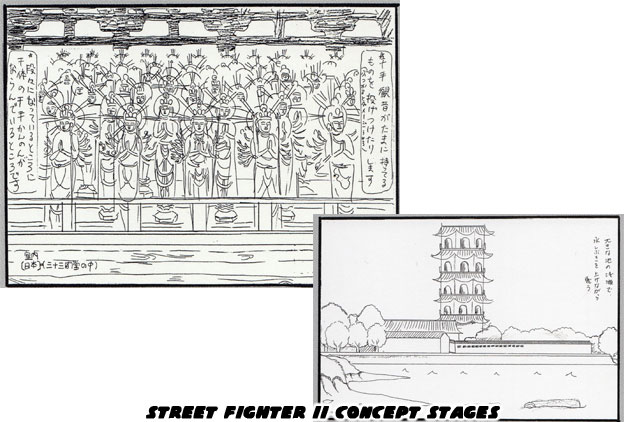
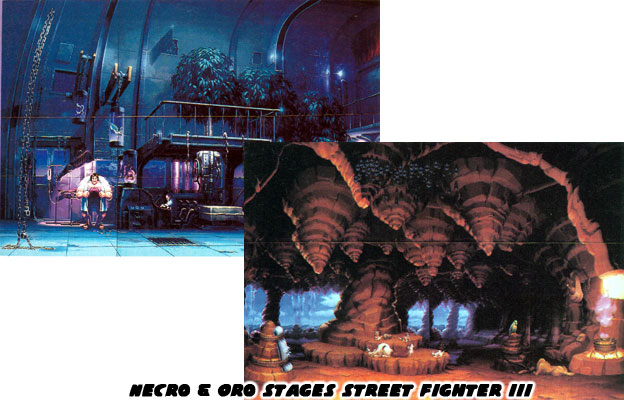
The previous blog mentioned that the unused concept art for Street Fighter II would return in future sequels. Street Fighter Alpha / Zero, Street Fighter III and IV all had at least one level that was inspired by earlier concept art. In the early days Capcom was looking at having the entire game take place on one island. Unique areas on that island were highlighted as stages. Even the transportation around the island was considered as the basis for a stage. A cave was envisioned for a bearded hermit-like character in the earliest concept art. The character and his cave was scrapped but returned a few years later with some new refinements. An ancient Brazilian named Oro lived in seclusion. He made an outcropping on the side of a mountain his home and training ground. The previous cave was barren but the new one included animal guests, a cooking pot and punching bag. One of the levels that was also dropped was set on top of a speeding train. Other fighting games that followed Street Fighter II in 1991 did create stages on top of a train. Some were set on top of a moving bus or cable car. Some were featured in titles for the consoles rather than arcade. Capcom did not revisit the idea until 1997 with the release of Street Fighter III. However instead of setting a level on top of a speeding train it was instead set inside of a speeding train. The level was as exotic as the cave in Brazil. The train was actually a two story science lab that the character Necro called home. The mad scientists that had created him were conducting experiments in the background as the European countryside passed in the distance. This was a unique spin on an already unique level design.


The team that worked on Street Fighter III had very few members that had worked on Street Fighter II. Most of the senior members went to work at a new company called ARIKA. It was founded by Akira Nishitani, the programmer credited as "NIN" in many Capcom classics. His team was responsible for the first adaptation of Street Fighter into 3D with the series Street Fighter EX. Many of the same designers that created the original World Warriors went to work creating the EX cast. Many of the new characters served as counterparts if not outright rivals to the original cast. I had talked about many of these characters in my Based on a True Story series on 1UP. Bruce Lee and several real martial arts masters had inspired the development of the series. Akira and his co-workers then infused more mythology into the series than prior directors. Although the game had amazing fighters that were capable of awe-inspiring attacks, they were grounded in some sense of reality. Anything that couldn't be explained through science was skirted over. ARIKA went in with a slightly different perspective. Although they did not get as far to the magical / demonic extreme as the Mortal Kombat cast they certainly came close through the characters Kairi and Garuda. Those characters had spirit-based special attacks and broke the consistency of the universe to some fans.

ARIKA was having legal challenges with Capcom regarding the use of Street Fighter characters in the EX series. The studio wanted to expand the franchise but found that the publishing arrangement that they had with Capcom was limited. They created a new partnership with Namco, the long-time rival of Capcom. A new fighting game was being developed that would expand on the world that they had created without infringing on any of Capcom's IP. ARIKA did not forget the legacy and designs that inspired Street Fighter II. The movies, locations and characters that inspired the World Warriors remained influential to the designers years later. The original plans for Street Fighter II, especially the ideas that were left on the cutting room floor were revisited. Although their new game was non-canonical it nonetheless paralleled the original vision for SFII. It also introduced many new gamplay elements to audiences. The studio titled this game Fighting Layer.


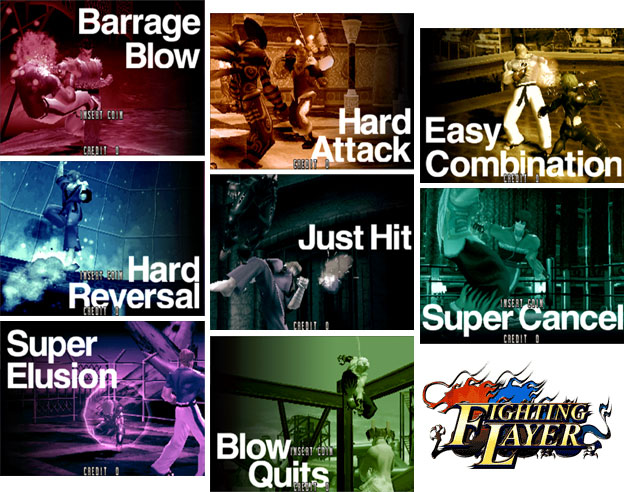
The graphics engine was in 3D but the majority of the gameplay was in 2D, in keeping with the traditions of the company. Even Street Fighter EX had featured traditional 2D mechanics. Other 3D fighting games like Tekken and Virtua Fighter made limited use of three-dimensional space. The pacing and gameplay for those titles was completely different to 2D fighters like SF, Mortal Kombat or Killer Instinct. Fighting Layer kept the super attacks and special attacks that made Super Street Fighter II popular. The studio also included hidden attacks and combos for players to figure out. The game engine also allowed for ways for players to break out of combos on the ground or in the air. This was a way to help balance the engine against players that were good at performing long combo strings. Players could quit out of their own combos and super attacks and switch them up to keep opponents guessing. This was a mechanic that the studio had employed in the EX series with some success. For beginning players there were simple attacks and combos that could be triggered by pressing one punch or one kick button multiple times. It took several revisions for most fighting titles to get all of these features included in the game engine. Most studios went through a learning curve where they balanced and rebalanced character attacks and abilities. Upgrade kits for Street Fighter II labeled Hyper, Turbo, Championship and Super added many new elements to the game. Arcade owners could purchase these upgrade kits to keep the gameplay fresh. ARIKA tried to roll out a game that had all of the modern mechanics expected in a fighting game. It was an ambitious task. To keep gamers coming back they had hidden content that would be released by an internal clock.

Fighting Layer was not the first 3D fighting game, it did not have the most powerful graphics engine and it was not the first to feature time release characters. It was released in 1998, at a time when fighting games had become passé and the arcade industry was dying off in the US. Most fighting games, including the 3D ones would transition to the consoles thanks in part to the success of the Sony Playstation. When 2000 saw the release of the Playstation 2 there was little reason for long-time gamers to visit the arcade. Fighting Layer was also rarely seen outside of Japan. As such not many players saw or played the title. Those fortunate enough to live near an arcade that imported titles could be considered lucky. Fighting Layer (FL) was not the second coming of Street Fighter II as ARIKA had hoped. It was nonetheless a very solid fighting game.


The title pitted masters of various fighting styles against each other. That was nothing new. However the FL lineup was closer to the plans for the original World Warriors than what Capcom had released. The parallel to the World Warrior designs were eerily familiar yet not in the same way as the Data East game Fighter's History. The Data East game did a wholesale rip-off of Street Fighter II, with a similar control scheme, similar characters, similar levels and even special moves. Capcom took Data East to court for copyright infringement and actually lost the case. The results of which opened up the doors for numerous copycat games to be released. Now that I think about it, I've never spent a blog dissecting Fighter's History. But today is not the day so I'll bring it up some other day. Anyhow Fighting Layers was almost a point for point retelling of the Street Fighter II mythos. It could have been called derivative if not for the fact that the majority of the team also created SFII. Almost a decade separated the two games but ARIKA did not try to make modern versions of the World Warriors. They wanted to make sure that the majority of the fighters wore traditional or pseudo-traditional costumes when possible moreover they also wanted to push the boundaries for what made up those classic designs. While they did not go to the extremes of other studios like Namco, Midway or Rare, they certainly created a lineup that was as memorable as the Street Fighters.

What fighting game from former Capcom employees would be complete if it did not start with a powerful Japanese protagonist? Many gamers expected the return of Kairi from Street Fighter EX. ARIKA designed him to be a rival to Ryu and eventually replace Gouki in canon. Not many behind the scenes or in the fighting game community thought that was a good idea. Regardless Kairi had been elevated to boss-tier character by Street Fighter EX 3 and would not appear in Fighting Layer. The new protagonist was young and heroic. Tetsuo Kato appeared brash and unconventional. With torn sleeves and taped up hands he did seem partially inspired by Kairi but seemed even less refined than Ryu. He was a very powerful karateka that was constantly testing himself against the greatest fighters around the world. Although not a dead-ringer for Ryu he certainly shared his fighting spirit.


Audiences could guess where the influences behind the character were pulled from. The wild spiky hair made him look like Tetsuo, a main character from the manga and animé film Akira. The surname is common in Japan but could also be based on a character that Bruce Lee played in the TV series the Green Hornet. ARIKA followed a tradition that they started with Street Fighter EX. Almost every character that they added to canon had a last name. The designers never included last names for most of the World Warriors and boss characters in the original Street Fighter, SF II or III. However the ones in the planning stages for Street Fighter III that were shoehorned into SF II as the "Super" upgrade did get last names. Cammy White, Dee Jay, T. Hawk and Fei Long all had surnames. It makes you wonder if they were not created from the future ARIKA designers. Tetsuo Kato needed other heroic fighters to accompany him in the newly created Fighting Layer tournament. The core of the group had to be equally passionate as Kato and equally gifted in combat. Although none of the characters knew each other there was something eerily familiar about them. We will go down the rabbit hole in the next blog and take a closer look at the roots of the Fighting Layer designs. If you would like to sponsor me please visit my Patreon page and consider donating each month, even as little as $1 would help make better blogs and even podcasts!
follow the Street Writer on Patreon!

Thursday, May 8, 2014

Enter the Dragon, the legend inspires a game, part 2...

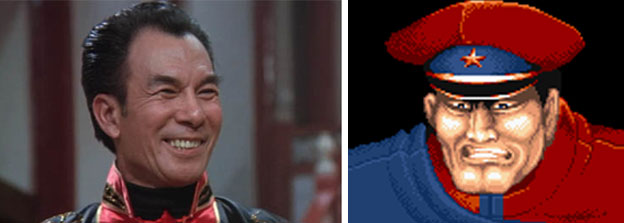
When Street Fighter II debuted the final villain Vega / M. Bison / Dictator (depending on your territory) had overtly Asiatic features. He looked overtly like a communist dictator. So much so in fact that he had to be toned down for the international market. His features were changed to give him a more Eurasian in appearance. The core of the character and his secret organization, Shadowlaw, were influenced very much on Han and the locations featured in Enter the Dragon. It was a little more obvious in Mortal Kombat that the locations and tournament were influenced by the Bruce Lee classic.


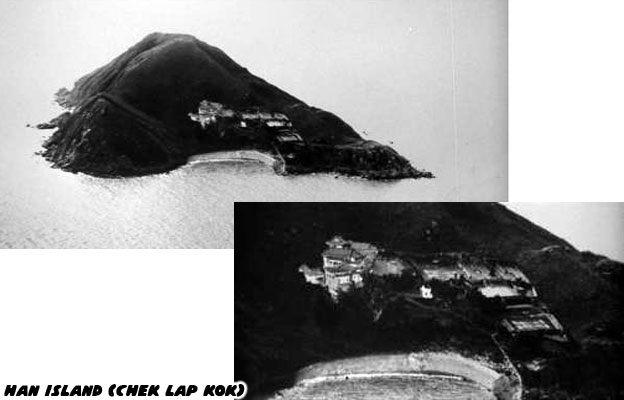
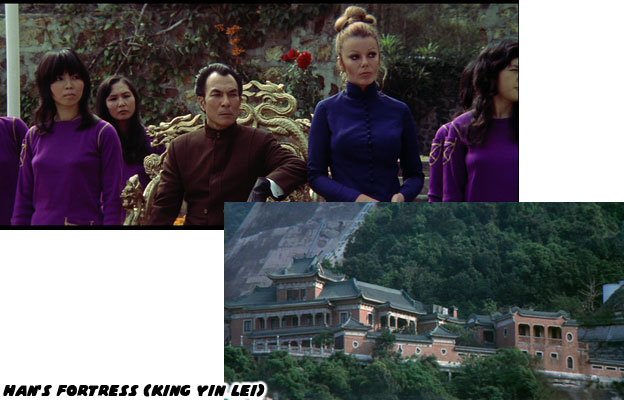
All of the early work surrounding the development of Street Fighter II were eerily similar to the actual locations featured in Enter the Dragon. For example, Street Fighter II ends in Thailand, however the original plan for the game was to have the tournament on an island controlled by a crime lord. The original design for Shadowlaw island was not far removed from Chek Lap Kok, the island used in the aerial photographs shown to Lee at the start of the movie. The fortress where Han was hiding out, King Yn Lei, was actually a different location that was superimposed on the island. Shadowlaw was not supposed to be a landlocked country bordered by Thailand and Cambodia but instead a small island nation. The design of the original Shadowlaw island would follow the developers through to the final stages of production on Street Fighter II and well beyond.


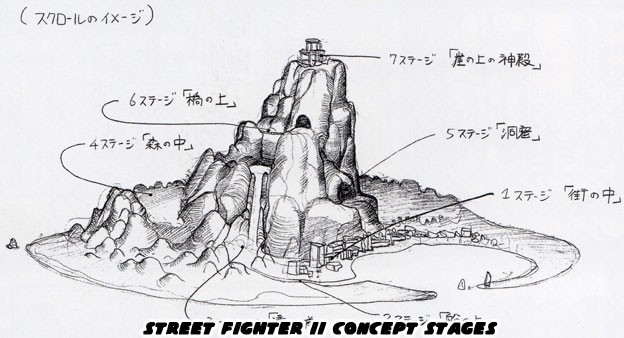
The developers on Street Fighter II (SFII) wanted to create a game that had a loose narrative. In the original Street Fighter Ken and Ryu travelled the globe seeking out the best fighters. Capcom did not originally want to repeat that idea but instead wanted a group of "World Warriors" to visit a single area that hosted the tournament. In this case it was supposed to be Shadowlaw island. The island was supposed to be massive enough to feature unique terrain, weather and locations for players to explore. Each opponent in the series would have their own dedicated stage on the island. The game started at the harbor where the industrial met the city. As players progressed in the game they went around the island and ended at the proverbial top of the mountain. Each stage was supposed to feature unique visuals and battles were supposed to get harder the further along players went.


Factories, cities, jungles, caves and planes were proposed on the island. All the locations were supposed to set the tone for players. It would be a unique learning curve for Capcom designers. Many had worked on other arcade and console hits however the company was banking on Street Fighter II being something special based on the feedback that they had gotten from arcade owners. Many owners wanted a follow-up to Street Fighter and Capcom showed off Street Fighter '89 at trade events. The change in mechanics to brawler, in which one to three people had to fight off waves of opponents, was a stark contrast to a dedicated 1-on-1 fighting game. Capcom listened to the vendors and renamed the game Final Fight. There was pressure to develop a new game and set the bar even higher than Final Fight. The studio put 20-30 designers in charge of character and stage designs alone. This was more than double the size of the teams put together for any other game. The extra eyes, insight and tastes helped shape Street Fighter II tremendously over the next year in development.

It wasn't obvious during the early days that Capcom was working on something historic. They were nonetheless writing the book on stage design. The artists actually went through the same learning curve that animators and filmmakers had during the early days of motion pictures. The designers had to create single screen stages that told a story. The way that each stage was framed was important. The lighting, color pallet, details and atmosphere put into the backgrounds would be almost as important as the fight at the forefront. The Capcom employees had to relearn level design, even after the work on the original Street Fighter and Final Fight. The engine for SFII would be able to put more colors on the screen than ever before. It would be able to support larger sprites, more frames of animation than any other game they had worked on. As a result the designers had to spend a little more time in the planning of each and every stage and character.


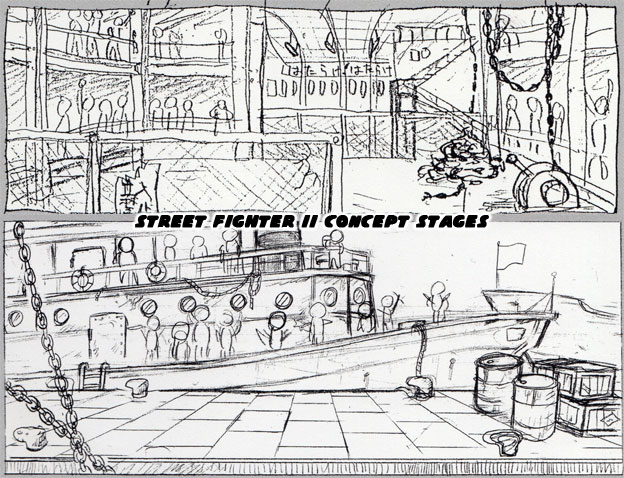
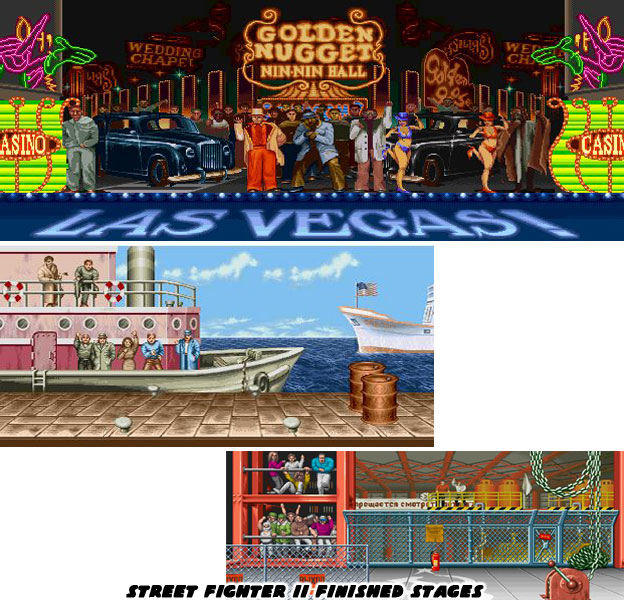
Since the first plans for SFII were to set the entire game on an island the designers wanted to bring each and every fighter through the port first. Bruce Lee had arrived to Han's Island on boat after all. A battle on a pier and a battle in a factory were some of the first stages laid out. The characters selected for the levels had to reflect the location. Zangief the Russian for example was originally a large and burly sailor named Vodka Gobalsky. He could have worked equally well in the port or factory. Instead the designers refined the character until he became the wrestler that most players were familiar with. In the game he was surrounded by steel frames and chain link fences. He was as tough and unyielding as the concrete floor on which he would drop opponents. By comparison the rich playboy Ken Masters would make the pier his home. His luxury yacht was docked off shore. This detail said a lot about the character and both the pier and his yacht would be revisited in sequels. The same happened to Zangief and the factory in which he battled in. The stages were beginning to develop a distinct personality.

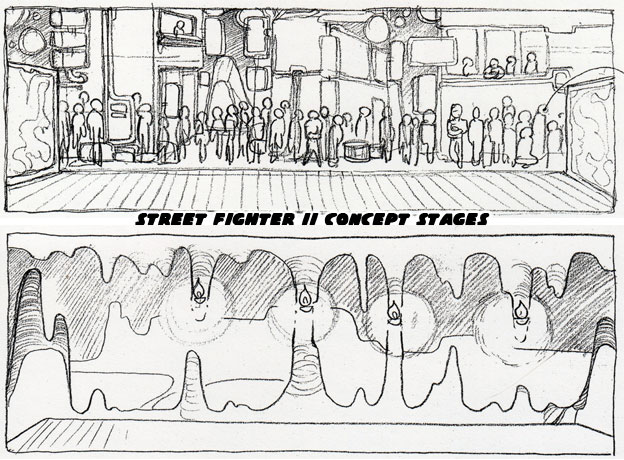
The designers then began mapping out the other areas on Shadowlaw island. The city was next stop for the fighters. There was a busy intersection that the characters would battle on. Residents and visitors to the island would make up an impromptu audience. This stage would give the artists a chance to create multiple layers of animated sprites and show off the processing power for the CPS-II hardware. The electronic billboards and neon signs in the background would be more eye candy than gamers had seen before.


The other location, a secretive cave illuminated by lanterns would not make the cut. The cave was interesting in concept but it was lacking something unique. The designers did not want to spend too much time trying to figure out what was missing. They saw that the modern levels, the dock, city and factory had set precedence for the types of stages that the characters would be fighting in. They wanted to keep the game grounded in the modern world so they cut out the cave early on. It was not to say that the cave would not make for a good stage in a future game (and it would return) but that this game could not find a use for it. The designers at Capcom allowed themselves to make mistakes. They created more art and locations than they would ever need so that it would be easier to edit the levels down. These concept pieces could always be revisited in the future.


Shadowlaw Island was dropped for the final build. The developers decided to return to the globetrotting adventure from the original Street Fighter. The locations for each encounter were now scattered all around the world. Each of the locations still reflected their respective fighters. The sites also worked within the context of the universe. In particular they were all supposed to have modern cues. Details that might have put the levels out of the era would be refined or cut out until they made sense to the gamer. The levels featured in SFII were memorable and not far removed from the original concept art. The graphics for the levels may be considered quaint today but at one time they were cutting edge. They helped ground players in the world that Capcom had developed.
  

These stages were very much like backdrops in a movie. Even average martial arts fights were more memorable when they were set in a unique location. Street Fighter and most fighting games differed from motion pictures in that any playable character was the star. Bruce Lee may have shared screen time with John Saxon and Jim Kelly but the match-ups were always the same. Audiences would never see a fight between Kelly and Lee for example. Cinema like literature was limited in that regard. Fighting game players got a chance to pit heroes against heroes and villains agains villains. That tradition started very much with Street Fighter II. The best fighting games created a narrative around the cast and allowed players to explore all of the possibilities. The Bruce Lee films always featured unique locations and it was the island fortress featured in Enter the Dragon that set the standard that Capcom and Midway would try to match. It was much more interesting that the main villain had enough wealth and power to draw in fighters from around the world.

Up until that point game bosses were just like other martial artists and the ending could actually be anticlimactic. Additionally having one central opponent that had powers and abilities different than the traditional martial arts masters made fighting games in the East and West more unique. The multiple exotic locations that framed each battle helped gamers suspend their disbelief and get drawn into the world of Street Fighter. The best martial arts features were filmed on-location many decades before Street Fighter was created. Several of the Bruce Lee films were shot in unique areas to help bring viewers into his world. Street Fighter II would not have been as memorable without the extra artists working on level and character designs. The influences that these artists pulled from martial arts cinema as well as comics and animation could never be understated. Enter the Dragon did more than influence the development of Street Fighter II and Mortal Kombat. The themes featured in the movie would be carried over by the Street Fighter creators long after they had left Capcom. In fact several of the team members returned to the original concept of Street Fighter II and fleshed out one of the most thematic fighting games ever produced. The next blog will look at this game more closely. If you would like to sponsor me please visit my Patreon page and consider donating each month, even as little as $1 would help make better blogs and even podcasts!
follow the Street Writer on Patreon!

Wednesday, May 7, 2014

Enter the Dragon, the legend inspires a game, part 1...

All great games, like all great works of fiction, are inspired creations. The lives, memories and lessons of the creators help shape the final product. Whether a story is about a young wizard or a space cowboy there is something that inspired their creation. Fighting games for example are the result of thousands of years of history. Whether the developers made conscious or even subconscious choices in the way their game looked or played the influence from real heroes and mythological monsters, actual fighting arts and even made up martial arts helped root the biggest franchises. In my previous life on 1UP I had mentioned the influence that motion pictures had on fighting game history. The longest-lived titles were heavily influenced by cult films. I often credited the 1976 film, the Master of the Flying Guillotine for inspiring the creation of Street Fighter II and Mortal Kombat. The film introduced a tournament featuring characters of diverse martial arts backgrounds from around Asia. The template would be copied dozens of times in film, television and gaming. It was actually the sequel to the 1971 film The One Armed Boxer. That film also included martial artists of different regions fighting against each other. I even credited the 1972 film Lady Whirlwind for inspiring the creation of Chun-Li. I am here to admit that I have been ignoring a major influence on the world of Street Fighter and other fighting game franchises for a long time. For almost a decade I have failed to mention the precedence that the sensational Enter the Dragon had on the genre. I intend to spend today and the next few blogs correcting that oversight.


The Bruce Lee film was centered around good and evil fighters in a tournament. It predated The Master of the Flying Guillotine by three years. The characters were very diverse and reflected the international flavor that the martial arts had adopted in the 20th century. Unlike the previous films that I credited, Enter the Dragon like the Street Fighter series was set in modern times. The majority of martial arts pictures up until that point were done in China or Taiwan and were set in a classical period. Few martial arts films before Enter the Dragon featured non-Asians in leading roles. Bruce Lee inspired countless minorities and not solely Asian-Americans to pursue the martial arts. In the same way Jim Kelly became a role model for young black fighters. Lee insisted that his films break from tradition and be set in modern times. Earlier films revolved around mythological fighters and early Chinese heroes. Lee wanted to give the classic fables a contemporary retelling. He wanted to mix the gunplay and espionage from western films with the well choreographed fights from the east. He wanted to take the pictures out of the country and into the city. Lee desired to make them gritty and more realistic. Emperors gave way to drug lords and guns replaced ancient Shaolin weapons. Instead of dangling from wires Lee wanted the fights to be believable. As a result his films were incredibly original and very successful.

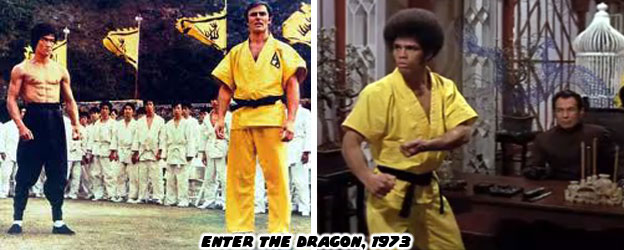
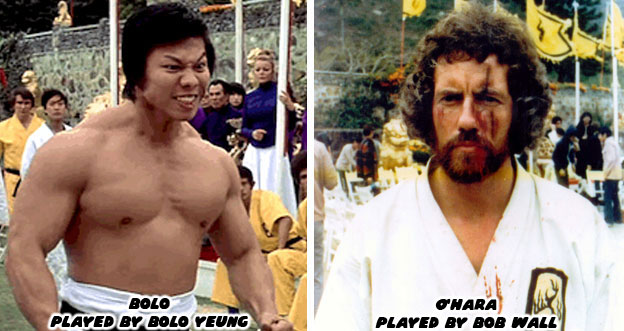
To help bridge the different styles of storytelling Lee had assembled a cast that reflected the west and east. Heroes and villains were equally diverse and played by both Asian and US actors. The main villain was a crime lord named Han, as played by veteran actor Kien Shih. Two of his fighters had very distinct looks to them. The muscular Bolo Yeung played Yang Sze, a bodyguard that enjoyed breaking his opponents. The wild haired Bob Wall played O'Hara. Aside from being a crazed-looking person he had a vendetta against Lee. He was scarred by Lee's sister Su Lin, as played by Angela Mao (a martial artist that helped inspire Chun-Li). Yang Sze and O'Hara were very distinct characters. They had unique features that made them stand out from the crowd. They could be considered the templates for the sub-bosses in fighting games.


Lee had been recruited to spy on Han and try to find evidence of his illegal activities. In order to make the reliance on martial arts more believable Lee was told that guns were not allowed on the island and that was why his expertise was needed. Lee would be able to demonstrate to the world that his eastern philosophies and hybrid fighting style were the real deal. Multiple locations were filmed to create the fictional base of operations for Han. The sets would have to be large enough to accommodate dozens of extras and show off the wealth of Han. Audiences had to be convinced that the villain had enough wealth to support a small island nation. Han was in the lap of luxury and was presented in tailored suits and silk robes. He was protected by a small army of armed guards and surrounded himself with beautiful and dangerous women. His fortress and the backdrop for the tournament was a Chinese castle. He observed the tournament from a throne just above the courtyard. It framed his status and ego in equal measures. Han thought of himself as superior to the fighters he had assembled and would get a chance to show that at the end of the tournament.


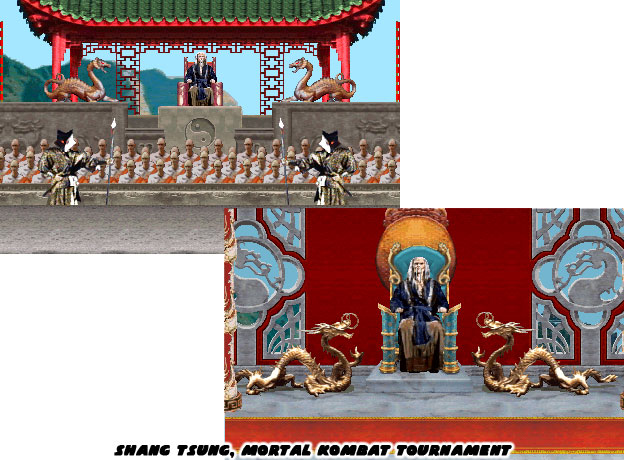
The use of a main villain overseeing a tournament from a throne would become a staple in fighting games. Mortal Kombat took several cues from pop culture including Enter the Dragon. Shang Tsung, the host of the original Mortal Kombat was not far removed from Han. His palace looked very much like King Yin Lei, the actual location used in the movie. The game series was split between the demonic "Outworld" and human world. Locations were not only exotic but also dangerous. Han's island fortress was so massive that the film could have several battles over the course of the film without having to use the same backdrop. The dragon ornaments became synonymous with Mortal Kombat, however the Bruce Lee film made use of the mythical creatures as well. Han's throne, his robes and palace were decorated with dragons. Shang Tsung officiated over his tournament, like Han, on a throne decorated with dragons.


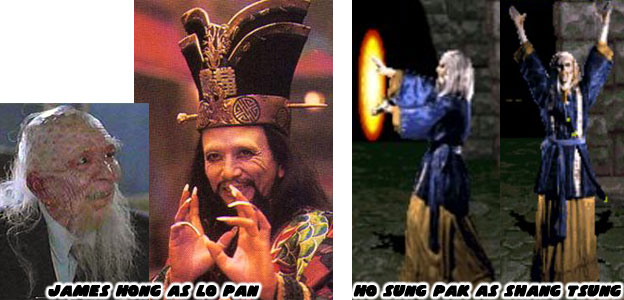
To be fair the characters in Moral Kombat and its universe were also influenced by the 1986 film Big Trouble in Little China. In the John Carpenter film the main villain was an ancient sorcerer named Lo Pan. He made up for his lack of marital prowess with magical power. Many assumed that the centuries-old character, as played by James Hong, would be easy to defeat by the much younger cast. It did not turn out to be the case as Lo Pan easily steamrolled over the heroes and villains. The twist with the villain being a capable fighter was done in both Enter the Dragon and Big Trouble in Little China. Shang Tsung would continue the tradition in the startup game. His speedy moves and powerful attacks caught many a player off guard. The game character was actually played by Ho Sung Pak. Pak. He also played Liu Kang, one of the heroes of the series. Shang Tsung had the ability to teleport and fire screaming skulls from his hands. It was a fearsome sight from a character that was supposed to hail from ancient China.


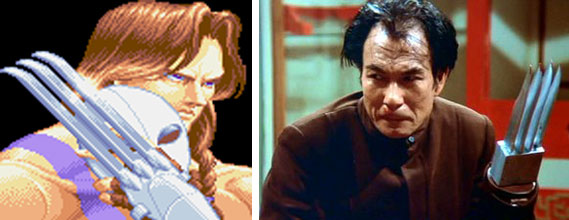
Han was a different type of villain. He did not have supernatural powers but was nonetheless dangerous. He was actually a drug lord that was a master martial artist. He had one prosthetic hand that he swapped with different hands and weapons throughout the movie. He could use the weighted metal hand to block powerful kicks, break bones and deliver lethal strikes to his opponents. When he wanted to maim an opponent he would use a hand that was an iron claw or even a hand made out of blades. The knife hand was something that undoubtedly influenced the creation of Vega / Balrog / Claw from Street Fighter II. The costume and tattoo for the Spanish matador was pulled from San Po, the villain from the classic film Project A featuring Jackie Chan. The combination of influences from two different films with distinct villains made for a tremendous game character.


It was however the final villain of Street Fighter II, Vega / M. Bison / Dictator, and his organization, Shadowlaw, that more closely mirrored Han and the elements featured in Enter the Dragon. The next blog will look at how the film shaped the legacy of memorable stages featured in Street Fighter II. If you would like to sponsor me please visit my Patreon page and consider donating each month, even as little as $1 would help make better blogs and even podcasts!
follow the Street Writer on Patreon!

Tuesday, May 6, 2014

Are fighting games losing their identity?

Do you ever get the feeling that the biggest fighting game franchises are losing their identity? Many of the most popular titles are becoming predicable. The characters, moves and play mechanics that haven't changed much in over 20 years for the most successful titles. What alarms me is how much they are starting to look the same. I think the community really took notice at the 2013 E3. When Killer Instinct 3 was announced for the Xbox One long time players cheered at the Microsoft press conference. Attendees stood in long lines to try out the few playable characters during the show. Killer Instinct had last been seen in the arcade in 1996. The sequel to the runaway fighting game sensation did not manage to top the popularity of the original. It was not a major step forward as was the difference between the first and second Street Fighter games. Speaking of which, many in the fighting game community called out the developer Double Helix for taking many design cues from Super Street Fighter IV (SFIV).


The scratchy font, the painted streaks underlining the characters, the dark outlines contrasting the figures and flashy particle effects for projectile attacks looked like a page out of Capcom's playbook. The aesthetic for the past few Capcom fighting games had been very similar. Large, muscular 3D models of most of the Street Fighter II, Alpha and III characters had been developed and used over a series of games. In fact the character models were reused between Street Fighter IV and Street Fighter X Tekken. While this helped Capcom save on development time and costs it also meant that the studio would not be returning to the elements that made their fighting games memorable in the first place.


Original character designs and brilliant 2D animation put Capcom on the map. The studio had created a library of fantastic IP in other genres as well. When they stopped innovating and started following the trends they began to fail their franchises and fans. Certainly the cost of developing 2D versus 3D games had grown as had the expectations of their audience. What gamers did not expect on seeing were Street Fighters that were big and ugly. The cast featured in SFIV looked as if they were designed by Western developers. They had proportions that one might expect to find in Gears of War rather than an animé. Big muscles and all it was a deliberate aesthetic choice in fact. For most of the early millennium fighting games were ignored by the major publishers. If Capcom hoped to get audiences behind a reboot of the franchise then they had to go out of their way and appeal directly to westerners. Gamers in the US, UK and Europe made up the majority of the consumer sales.

What SF IV lead designer Daigo Ikeno ended up doing was emulating a style of art that he did not completely grasp. The subtleties in western comics and cartoons were much different than the art featured in the manga and animé produced in Japan. There were many differences between character sizes, proportions, inking and rendering styles. Western gamers were actually attracted to the Japanese aesthetic because it was different than what western studios produced. Street Fighter II may not have been as a big a hit if tried to copy comic book character design. What helped sell most fighting games in the early '90s were the aesthetics and not necessarily the graphics. Even if there was some crossover with character types three of the biggest franchises had their own visual identity. Street Fighter II, Mortal Kombat and KIller Instrinct looked and played completely unlike each other.


Street Fighter II looked like an animé-turned-fighting game. It was unlike anything that western audiences were used to and they flocked to it. Underneath the brightly-colored characters was a game engine that had tremendous depth. The success of SFII caused many western publishers to try and capture the market. The early developers wanted their games to look unique as well so they tried out different rendering techniques. Midway turned videotaped moves from actors and martial artists into a series of sprites for Mortal Kombat. Rare was one of the first adopters of CGI technology yet no arcade cabinet or console in the early '90s was powerful enough to render high resolution 3D models on the fly. They did the next best thing and converted Silicon Graphics Workstation (SGI) models into sprite data to make Killer Instinct. The three games complimented each other and helped build a foundation that would carry the arcade scene for another decade. The titles also helped spark a revolution in fighting game design. Every publisher was beginning to experiment with graphics engines to try and get their game noticed by players. Everything from polygon models to stop motion "claymation" was employed as the backbone of new fighting game experiences.

Audiences that confuse Graphics for Aesthetics had been talked about on Penny Arcade earlier this year. I shouldn't have to retread what was so well put but I want fighting game aficionados to ask themselves when was the last time that they saw a fighter that looked completely original. Street Fighter IV did a good job at relaunching a franchise and starting another fighting game renaissance. However since the debut of the game in 2008 there has been little innovation from rival publishers. In fact the other franchises have only become homogenized. Almost all of the current fighters look identical. They do take advantage of modern graphics engines and are capable to rendering details, lighting and particle effects that were not possible a decade earlier. However the dark, gritty details do nothing to set themselves apart from the rest of the crowd. Fighting games have become ugly and too similar.


Capcom is in the unfortunate position of playing by the rules of western developers and pandering to western audiences. Western publishers are notorious for playing follow the leader and running a genre, any genre, into the ground. They did it in the '90s for fighting games and are on track to do it again. As a result of following the trends Capcom has not been as profitable as it once was. Western developers like NetherRealm (Mortal Kombat and Injustice Gods Among Us) are able to capitalize on western tastes better than most other studios because they know their audience much better. In the '80s and '90s Capcom had little competition. They broke new ground with Mega Man, Street Fighter, Strider, Ghouls 'n' Ghosts, 1942 and Bionic Commando. On the fighting game front they had Street Fighter, X-Men, Power Stone, Rival Schools, DarkStalkers and Plasma Sword. Western gamers had never seen anything like those franchises and flocked to them. Capcom had done little to innovate those fighters years later. They did little to honor many of the properties that celebrated a 25th anniversary in the new millennium. There was no new Mega Man or Street Fighter V for example despite the voices of the most adamant of fans. 

With around $154 million in the bank there was actually very little breathing room for Capcom to do much of anything. A single AAA title could easily use up that entire budget. Capcom was expected to keep Monster Hunter, Ace Attorney and the other franchises floating with their remaining cash. In better days, with better developers and better management the company could have bet all their chips on a new fighting game. They would have come out winners. Those days are long gone but I will never admit that Street Fighter is a bad bet. Except for Street Fighter the Movie the Game. But I'm not talking about that game… ever. What are your thoughts? Do you think that there is more to the crop of modern fighting games than visuals? Would things have been different if arcades were still viable sources of income for publishers in the US? Let me know in the comments. If you would like to sponsor me please visit my Patreon page and consider donating each month, even as little as $1 would help make better blogs and even podcasts!
follow the Street Writer on Patreon!

Monday, May 5, 2014

The manga and fighting game connection, part 3...

ARIKA was founded by former Capcom employee Akira Nishitani and some of the other developers behind Street Fighter II. The studio was the first to push for the creation of a 3D version of Street Fighter with the series Street Fighter EX. ARIKA developed the 1996 game and Capcom published it. The two studios worked to create the arcade and Playstation releases of the various titles. Capcom began shuttering their arcade division and focusing exclusively on consoles by the end of the '90s. A rift developed between the two companies. Released in 2000 Street Fighter EX3 would be the last joint venture and first EX game that was console-exclusive. ARIKA knew that there was still an audience for arcade fighting games and was eager to create a successor to the EX series should Capcom completely shut down their arcade division. They found a new publisher with Namco, the long-time rival to Capcom. ARIKA did not want to create a new universe as many fans had enjoyed the world that they had presented in the EX series. The studio wanted to keep the new game out of Tekken canon in case they could sign a new deal with Capcom. At the same time ARIKA could not include all of the EX characters as they were mostly owned by Capcom. To make sure that they did not have a breach of contract in 1998 ARIKA pulled two characters from the EX series before the release of EX2. Blair Dame and Allen Snider were two popular characters from the original EX but were absent in EX2 and EX3. They were featured in Fighting Layer instead. This allowed arcade visitors to accept that any new characters introduced in the title might fall within SF continuity but not necessarily canon. I will talk at length about Fighting Layer in a future blog but for now I will focus on a sub-boss that was also featured in the game. This fighter was inspired by Osamu Tezuka's mysterious medical protagonist.


Black Jack, the title character from the medical drama series had a unique look. His face and body were laced in scars. These were the results of countless reconstructive surgeries during his rehabilitation from a mine explosion. His complexion had two different tones because the donor for his skin grafts was a Black-Japanese. The hair on half of his scalp had gone white from the shock of the explosion as well. The contrast between light and dark features made the character look macabre. When people described him as looking as Frankenstein's monster it was a valid comparison. In the manga he rarely had to rely on physical violence to solve a crisis. He knew how to throw a punch when challenged but was more dangerous when throwing a scalpel. Black Jack had a strong identity yet the adaptation to fighting game character was not a straight path.

ARIKA wanted to create a fighting game character that had the same presence as Black Jack but did not diminish his rivals. The studio managed to capture the aesthetics and even tragic origin that made Black Jack memorable. They did so first by giving the character a history that complimented the universe of Fighting Layer. Preston Ajax was a military specialist, a mercenary and a specialist in explosives. His combat training made him an excellent fighter and much more dangerous than the "regular" martial artists that were featured in the game. He was not initially a playable character in the Fighting Layer tournament but instead a sub-boss.


The first thing that players noticed about the character were the scars, discolored skin and hair. It was easy for audiences to see how similar Preston appeared to Black Jack. The origin of his scars were also familiar. He had been caught in an explosion but it was a bomb that he had set along with his brother, who was a fellow soldier. The two had set explosives the world over to create instability and fear in various nations. Their campaign of terror was not always against military installations but sometimes in public sectors were they could count on high amounts of collateral damage. When a bomb went off prematurely it killed his brother and left Preston with only half a body. He was rescued and the remains of his brother were used to piece him back together. His benefactor and biggest contractor was an eccentric dictator named Vold Ignitio. The disfigured Ajax was obliged to continue following orders from Vold and keep planting bombs. Preston was close to his brother and the loss coupled with what had been done with his remains began to warp his mind. Ajax began hearing the voice of his brother. Asking him to bide his time and complete one final mission.

The template for a psychotic mercenary fighter had actually been done previously by ARIKA. The character Doctrine Dark, featured in Street Fighter EX, had also suffered from the horrors of war. Colonel Guile, one of the star characters from Street Fighter II, had mistakenly lead his unit into an ambush. The resulting firefight decimated his soldiers. When the fighting was over there were only two survivors, Guile and Doctrine. The two were separated in the melee. Guile returned home and became a decorated hero. Doctrine was left behind and assumed as a casualty of war. Doctrine felt betrayed by his commanding officer and abandoned by his country. His psyche had completely snapped after that day. He became a mercenary and learned to trap and kill his opponents without the aid of the army. He was adept at using knives, explosives and a wire garrote in hand-to-hand combat. He swore revenge on Guile and spent several years tracking his prey and finally caught up with him during the EX tournament. The back story made the character interesting but it was the diversity of attacks that made him a great fighting game character.


Preston and Doctrine shared similar fighting techniques. Both had solid strikes and combos but relied on the garrote for ranged attacks. Both could also plant explosives on their opponents for tremendous damage. This was a way to balance out the characters that had fireball-type projectiles. Doctrine made good use of the knives hidden in his sleeves for close-up strikes. ARIKA focused less on weapons and more on punches and grappling attacks for Preston. He was certainly the more powerful striker of the two. Dark was playable right at the start of EX however gamers had to wait to try out Ajax. Fighting Layer actually had a time-release feature and each of the sub-bosses were unlocked over the weeks that the game was featured in the arcade. Preston eventually became a playable character and like the other bosses he also had his own unique story.

Ajax played the role of a sub-boss very well. He was a good all-around fighter with a unique complement of special attacks. His level was based inside of a military complex to help reinforce his theme. Preston was also a melancholy character. His origin was certainly very tragic and the character knew that he should have perished in the explosion years ago. He was like the monster created by Dr. Frankenstein, an abomination that the natural world would reject. But like the creature from the classic Mary Shelly story he was also waiting to meet his maker alone and hopefully destroy him. Every character in the Fighting Layer tournaments had a unique ending after they faced Vold, the boss of the game. The majority wanted to get out of his castle and off of his cursed island as it was collapsing around them. Preston was the only character that did not try to leave the island as it was breaking apart.


Preston made his final mission to destroy Vold and himself in the process. Vold was a monster that hid his cruelty behind the guise of royalty. In reality he was even more twisted than Ajax and needed to be stopped. Who better for the job than the trained killer that Ignitio had pieced together? Only then would Ajax atone for the horrors of war and let his brother rest in piece. Once Ignitio was defeated Ajax stood his ground as the castle that hosted the final stages crumbled around him. A giant stone fell on him and players assumed that he had been killed in the process. The other sub bosses died in the collapse but by accident or mistake, not by choice. The other characters in the game could be seen making a daring escape from the Zausu Island during the ending credits. They would run through a stone corridor as bricks fell from the walls and ceiling. If a player got the "best" ending they would see their character floating away from the island on a small raft. For the ending of Preston the final shot was simply the island burning in the distance. The character did not make it out after all. It was a tragic ending for a tragic character. ARIKA made the brief appearance of a fighter inspired by Black Jack a memorable one.


The studio never followed up with a sequel for Fighting Layer or even Street Fighter EX4 despite pleas from the community. It is unknown what plans the studio had after Fighting Layer was published. Thankfully the game was well done and stood on its own merit. ARIKA worked on different genres over the years and tended to steer clear of fighters. Although they did develop Tekken 3D Prime for the Nintendo 3DS in 2012. Perhaps some day Akira Nishitani might reconsider his stance on the genre and Capcom might once again be willing to partner with the studio. Like the work produced by Osamu Tezuka, the characters, stories and worlds developed by both studios deserve to be revisited again and again by generations yet to be born. If you would like to sponsor me please visit my Patreon page and consider donating each month, even as little as $1 would help make better blogs and even podcasts!
follow the Street Writer on Patreon!

Friday, May 2, 2014

The manga and fighting game connection, part 2...

The long-standing fighting games had a number of unique elements that made them rise above the crowd, especially during the '90s when arcades were packed with the genre. Solid animation, control, character design, music and levels were all important to the most successful franchises. Some of the titles had a serious tone while others were more cartoonish. Tekken by Namco was one that superbly incorporated science fiction, fantasy and horror elements into the series. It was one of the first franchises in 3D and did not rely solely on the spectacle offered by early 3D models and textures but had the balance and control scheme that arcade visitors expected from more popular 2D titles. The game actually revolved around a very dysfunctional family. Heihachi and Kazuya Mishima were the father / son pair that loved to hate each other. Heihachi was the original boss in the series. The man was the head of the Mishima Zaibatsu corporation and the organizer of the King of the Iron Fist Tournament.


The Tekken series was the first game that really embraced dark characters as leads. Gamers were not aware of what Heihachi had done to gain his position of power, or what terrible things he had done to his son. Heihachi for example overthrew control of the company from his father, Jinpachi and went so far as to imprison him under a mountain, letting him starve to death. Heihachi had been raised brutally by his old man. The upbringing turned the man spiteful. Jinpachi said that having a son made him weak and when Kazuya was born he said Heihachi was weak as well. To prove that he was not weak, nor was his son, Heihachi dropped a then five-year-old Kazuya off of a cliff. He said if he was a true heir to the Mishima clan that he would not only survive but return many years later as a powerful man.

Mind you, most game players had no idea of the sordid history between the father and son. They only saw two characters that looked different than the leads in other fighting games. The ending for Kazuya was one of the most unnerving cinemas that gamers had seen at the time. In it Kazuya gently lifted Heihachi and carried him away. Players did not know right away that the two were related but assumed that it was a father and son. It was touching the way Kazuya carried the elderly man until he got to the edge of a cliff and then dropped him. The camera panned in to the face of Kazuya and caught a smile. It turned out to be the same cliff that his father had dropped him off of years earlier.


When the game first came out audiences had no idea how depraved the Mishima family was. Most fighting games of the era played the story very straight. Good guys fought the bad guys and the winner won a trophy. The endings reflected these simple scenarios. Tekken forever changed the formula. Players enjoyed the fighting style and design of Kazuya but had no idea that he had developed such a mean streak. It turned out that his physical and mental scars were mostly due to the abuse suffered at the hands of his father. Gamers had no idea that he was a bad guy until he end of the game. Even then the psychology of the character was understandable. The sequels expanded on the canon of the universe and the history between the father and son came to the forefront. Only in time did players realize how unique the world of Tekken really was.


It turned out that the protagonist and antagonist that spawned a franchise were actually rooted in the work of Osamu Tezuka. In an issue of Black Jack titled "Amidst Fire and Ashes" the doctor was introduced to a cruel tycoon. The issue opened with a volcano, Mt. Roar, that was erupting near a research center. There was a man in a suit looking down into the volcano before he turned and walked away. A park ranger spotted a charred body in the crater and lowered himself down to rescue the man. The body was badly burned but the person was still alive.

The body was taken to a visitor's center. A man sprung forward and announced himself as the father of Ryohei, the burn victim. He seemed distressed that his son was dying. Black Jack offered his services but for some ungodly high rates. He knew full well that the man was the CEO of Nippachi Trading and could easily afford the ¥20 million bill to save his son. The man reluctantly agreed but only after Black Jack produced a note from the son, saying that something may happen to him and he wanted the brilliant surgeon there when his father visited. Ryohei had a suspicion that his father may do something drastic and his hunch was right. Despite the lack of witnesses the CEO certainly felt the pressure to save his son. He agreed to Black Jack's demands and let him operate.


Mt. Roar continued erupting and the visitors were evacuated. Unfortunately Ryohei was in no condition to travel and only Black Jack and the CEO were left behind. The CEO actually tried to leave with the crowd until he was called out by the doctor. Even after Black Jack had saved his life the father was eager to kill the son. He tried wheeling out the body towards the volcano when he was stopped by Black Jack. The doctor punched out the suit and said he would never allow harm to come to the man he just saved.

It didn't take too much prodding from Black Jack to get a confession. It turned out that Ryohei did not want to inherit the company. It had dealings that he found unsavory. His first action would have been to dissolve the corporation. His father could not let that happen to the company he built himself. He wanted his son to be strong, in the business world people had to be cutthroat as he was. Eventually the CEO came to terms with what he had done and was willing to stay with his son and make sure that he recovered. The name Ryohei actually could be translated to "good boy," making the betrayal sting harder to readers. The two actually died on the mountain when it exploded. When rescuers found the bodies they said their hands were clasped tight together.


It was a bittersweet ending for Black Jack, but then again most of the stories were melancholy. The seeds for the evil corporate archetype had been planted in that adventure. The CEO was without a doubt the basis for Heihachi Mishima. The haircut and mustache were the obvious physical traits. Namco actually went one step further and tied the relationship between the story and game in Tekken 2. Kazuya did take over the company during his father's "absence." Heihachi survived the fall and used the time away to train and become stronger. When he returned he made sure to go after his son once more. In his ending Heihachi did not drop his son off of a cliff but instead right into the heart of an active volcano. When the camera panned into the face of Heihachi they could see a smile, mirroring the ending of the original game. Heihachi demonstrated all of the traits that made for great fighting game villains. He was cold, relentless and concerned only with power. In my personal ranking of fighting game villains he was number four. He was behind Silber but ahead of Mr. Karate. Not to say that I thought Heihachi was more powerful or even a greater fighter than Mr. Karate but Takuma Sakazaki did at least care for his own family. The top four villains in my book had no friends or family to speak of, two of them even tried killing off the family that they did have!


The evil CEO was such a well done villain that a variation returned in manga form years later. Daikenjuro Kanzuki, the father of Karin Kanzuki from the Street Fighter Zero / Alpha series, was another dead-ringer for the CEO. He was not in the game series but instead the manga based on the game. He shared the same haircut and mustache of the Nippachi Trading CEO. Daikenjuro was similar to Heihachi in that the two had amassed a fortune that could only exist in a fictional world. I'm talking about Scrooge McDuck levels of wealth. They both had private armies at their command, corporate offices in every corner of the globe, residences that stretched over several hundred acres of prime real estate and politicians in their back pocket. They both seemed untouchable. Of course both also had family members who were eager to dethrone them. This made for an interesting dynamic in the game and manga titles.


The characters in Tekken were based on other sources including cinema, animé and actual fighters. The canon of the universe however, specifically the two main villains, were rooted in the work from the "God of manga" Osamu Tezuka. It stood to reason that the series had the depth to carry it forward for almost 20 years. One studio however decided that it was not enough to use incidental characters from Black Jack but instead to try and adapt the main character for a game. The next entry will look at this character in depth. If you would like to sponsor me please visit my Patreon page and consider donating each month, even as little as $1 would help make better blogs and even podcasts!
follow the Street Writer on Patreon!

Thursday, May 1, 2014

The manga and fighting game connection, part 1...

Hello friends, today we are going to look at the relationship between manga characters and fighting game icons. While going through some classic stories by Osamu Tezuka, the creator of Astro Boy and Simba the White Lion I found some similarities between his characters and several fighting games. The series that specifically spawned the inspiration for some titles was Black Jack. The manga revolved around a gifted Japanese surgeon named Kuro Hazama. When the character was a young man he and his mother were caught in a bomb blast. The island he lived on had been allegedly cleared by mines after WWII. People were allowed to move in by some crooked contractors and politicians. The explosion destroyed the limbs of his mother and left her brain damaged. The blast also tore through the young Kuro, left him paralyzed with half his face burned off. Half of the hair on his head also turned white from the shock. His father abandoned his family as he could not fathom having to take care of his wife and child if they managed to survive their operations. Kuro's mother died shortly after, leaving the young man an orphan.


In the origin story Dr. Jotaro Honma was trying to replace the half of Kuro's face that had been burned off. The skin graft that the hospital had was no good and they needed a transplant. The doctor pleaded with the children from Kuro's school and their parents for a donor. They all turned their back on Kuro and walked out of the hospital. Well, all except for one little boy. A half-black, half-Japanese student named Takashi Hazama. He was the only friend that Kuro had left and was willing to give up his skin. The two used to play together and help each other catch bugs or do homework. Dr. Honma wasted no time and used a small patch of skin to aid his patient. The other doctors were concerned about the donor because his skin color was dark and would mark a pronounced difference once healed. Honma proceeded because life was clearly more valuable than vanity.


Kuro had a long and painful road through therapy. He was actually pleased with the contrast of skin and felt that he would always be connected to his best friend through it. On top of the skin operations Dr. Honma helped restore the use of Kuro's limbs. It was at this stage in his life when the character set himself on being a doctor as well. It was during this stage that the psychology of the character had been developed. As he grew older Black Jack became a very secretive person with a strong sense of loyalty, honor and complex personal code. Black Jack was a gifted student and superior to every other surgeon that ever lived. He ditched the exam process and became an unlicensed practitioner. This meant his clients were sometimes connected to crime and were willing to pay Black Jack's extreme fees with cash up front. Many characters in the series wondered aloud why money was the only thing Black Jack was interested in. He had few friends and seemed to obsess over money like Scrooge McDuck. Osamu did not reveal the desire for money until many issues down the line. When Kuro was saved by Dr. Honma he promised two things, to become a doctor and to make lots of money to pay Takashi back.


Kuro was true to his word and became a brilliant doctor. Unfortunately Takashi had moved away by the time Kuro was able to return to school. After medical school he spent years searching for his friend but never managed to be in the same country at the same time. Eventually he discovered that Takashi had become a doctor of sorts as well. He had become an environmental activist and traveled the globe organizing protests against the gross polluters. He wanted to be an advocate for the Earth and try to help it recover from the wounds inflicted by man. Takashi, along with his friends, was gunned down by soldiers for his protests. Kuro never got a chance to thank his friend. That oath that he swore stuck and made the doctor obsessed with money. As if he amassed enough money it would somehow help fulfill his promise.


Black Jack never sought out further operations to replace his skin or mend the scars. His name actually had another connotation which was worked into his skin color. Kuro means black in Japanese, the kanji for the character could also be read as man. IE black / man. Jack was a common name that rhymed, when combined with the honorific "O" as in Kuro'o it became his nickname. The character was unique and is considered one of the greatest manga characters ever created. The obsessions, genius and design of the character had made him an icon in manga and animé. It would be decades before developers at Namco could unravel the elements that made Black Jack and his series unique. The studio would be the first to repurpose the Black Jack legacy into a fighting game. The next blog will look at this title. If you would like to sponsor me please visit my Patreon page and consider donating each month, even as little as $1 would help make better blogs and even podcasts!
follow the Street Writer on Patreon!