Showing posts sorted by date for query ridge racer. Sort by relevance Show all posts

Wednesday, March 25, 2026

Bookmark This Page; The Ridge Racer Legacy

The Ridge Racer series was a result of an intense rivalry with Sega. If you want to find out all about Namco’s flagship racing series then Bookmark This Page.

The Ridge Racer Legacy, part 1...

The Ridge Racer Legacy, part 2…

The Ridge Racer Legacy, part 3…

The Ridge Racer Legacy, part 4…

The Ridge Racer Legacy, part 5…

The Ridge Racer Legacy, part 6…

The Ridge Racer Legacy, part 7…

The Ridge Racer Legacy, part 8…

The Ridge Racer Legacy, part 9…

The Ridge Racer Legacy, part 10…

The Ridge Racer Legacy, part 11...

The Ridge Racer Legacy, part 12…

The Ridge Racer Legacy, part 13…

The Ridge Racer Legacy, part 14…

The Ridge Racer Legacy, part 15…

The Ridge Racer Legacy, part 16…

The Ridge Racer Legacy, part 17…

The Ridge Racer Legacy, part 18…

The Ridge Racer Legacy, part 19…

The Ridge Racer Legacy, part 20…

The Ridge Racer Legacy, part 21...

The Ridge Racer Legacy, part 22…

The Ridge Racer Legacy, part 23…

The Ridge Racer Legacy, part 24…

The Ridge Racer Legacy, part 25…

The Ridge Racer Legacy, part 26…

The Ridge Racer Legacy, part 27…

The Ridge Racer Legacy, part 28…

The Ridge Racer Legacy, part 29…

The Ridge Racer Legacy, part 30… 

Have you played Ridge Racer in the arcade or the consoles? Let me know about it in the comments section. As always if you enjoyed this blog, and would like to sponsor me please visit my Patreon page and consider donating each month, even as little as $1 would help make better blogs and even podcasts!

follow the Street Writer on Patreon!

Friday, March 21, 2025

The horse jumped over the moon, the story of Namco, part 19

In the previous blog I mentioned the classic attractions that Wonder Eggs featured. These were traditional things that would be found in the oldest fairs around the world. Things like a carousel, a carnival midway, a creek ride, fortune tellers, and even bumper cars were expected in any amusement park the world over. By the late 20th century however the parks had to keep up with the times. They couldn’t rely on sticking with the classics, and expect repeat visitors. This was especially true in a city as big as big as Tokyo. Tourists, and locals had a million places to see. Any new park needed to make sure they gave clients different reasons to stick around, and spend their money.

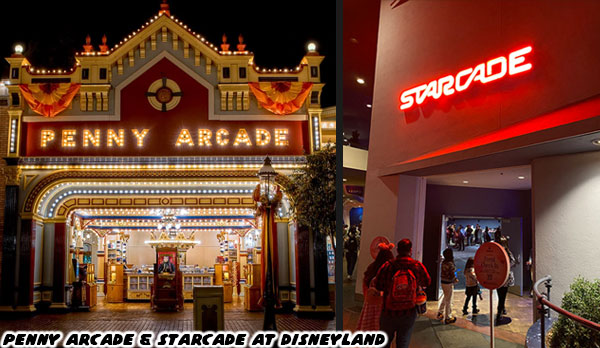
One of the easiest things that a park could do would be to provide arcade games. They were popular with guests of every age, but especially with kids. Best of all these games could be put in any corner, and were guaranteed to make money with minimal maintenance. Even Disneyland wasn’t immune to this. In the early days of the park they had a literal Penny Arcade. The machines were turn-of-the-century devices that cost a penny to play. A few of which you could still find in the corners of the stores on Main Street. In the ‘70s, and ‘80s video games started being added into the arcade. There was a larger arcade in Tomorrowland called the Starcade. It was two stories of the latest titles, and some classic hits. In its prime I would rank it one of the top three arcades in all of Southern California.

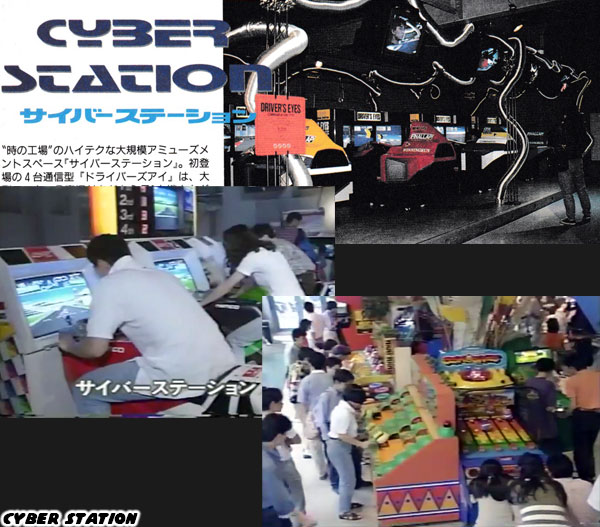
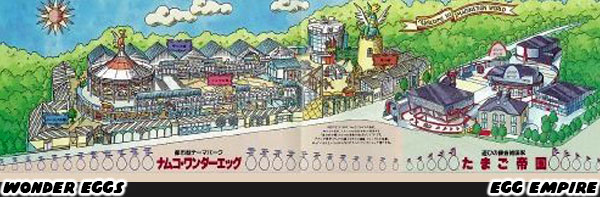
Wonder Eggs had their own arcade called Cyber Station. Actually they had an enormous building that hosted several attractions. It brought an industrial feel to the rustic village. This area of the park was known as the “Factory of Time.” In the canon of the park this was the place that was previously used to build war machines for the Devil Godot, but was liberated by the Goddess Elds, and turned into a portal for the future. It could be considered the Tomorrowland equivalent for the park. The Factory of Time also hosted Phantomers, which I featured on a previous blog.

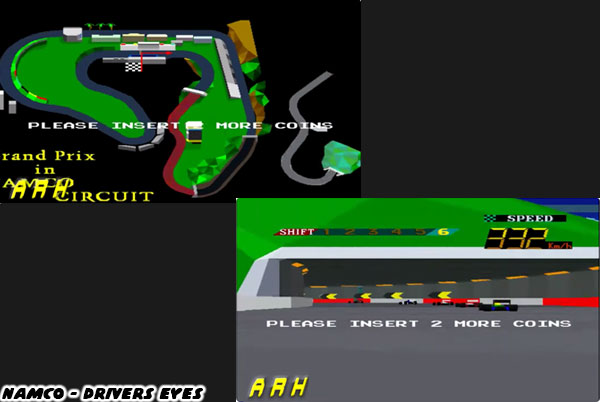
One of the big draws to the Cyber Station arcade was a four-player, interconnected cabinet of Driver’s Eyes. Namco was not the first game studio to make a racing game, but they were arguably the best (not named Sega). Pole Position was Namco’s arcade sensation. A few years later they released Winning Run, and Driver’s Eyes. Their hardware was growing by leaps and bounds, and as early as 1988 they were developing polygon games. They pushed the industry to 3D, including their rivals at Sega. Driver’s Eyes was a massive three-screen arcade racing game. The one featured in the Cyber Station in 1992 was four interconnected cabinets. It also featured in game commentary, and a massive display for audiences to follow the action as if it were an actual live Formula-1 race. It was a spectacle to say the least. Not to be outdone Sega would be able to connect up to eight cabinets when Daytona USA was released in 1994.

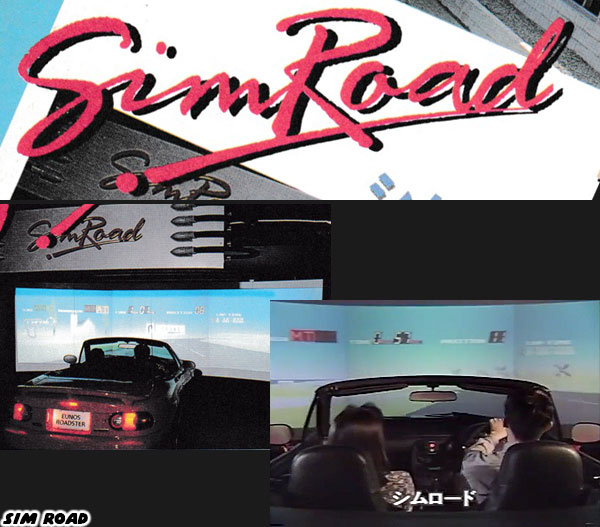
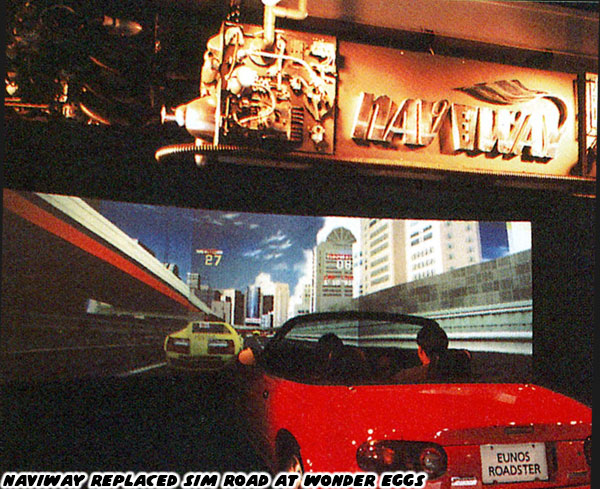
There was an even more impressive attraction that was available for dreamers to play. Sim Road was not an arcade game as much as it was a real driving simulator. Sim Road featured a real Eunos Roadster (Mazda Miata) with a bright red body. According to a description of the attraction; “The screen that stretches across the front is made up of three 100-inch large screens connected together. Once you fire up the engine, first select one of three difficulty levels. Eunos original course where you can ride with your girlfriend in the passenger seat. It feels great!”

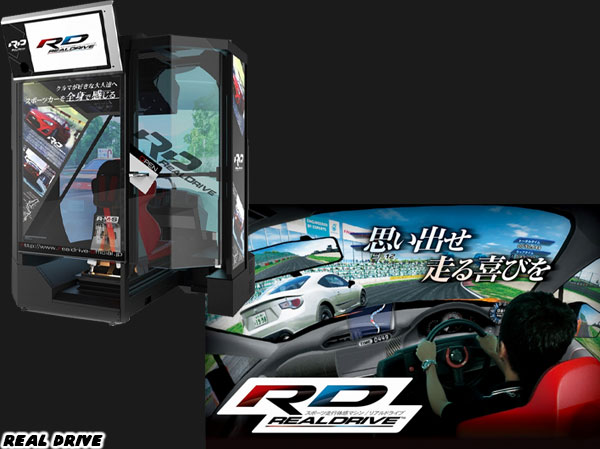
The things the company learned from Sim Road would be applied to a full scale version of Ridge Racer. Sim Road would eventually be replaced with the Full Scale Ridge Racer, the experience was called Naviway. Ridge Racer had a notable bump in graphics when compared to Sim Road, Driver's Eyes, or Winning Run. It featured the next generation of 3D graphics engine, and challenged the supremacy of Sega in the racing department. More than 20 years later Bandai Namco kept the tradition alive. They published a spiritual successor to Driver’s Eyes, Sim Road, and Naviway. The wraparound screen simulator called Real Drive was released in 2015.

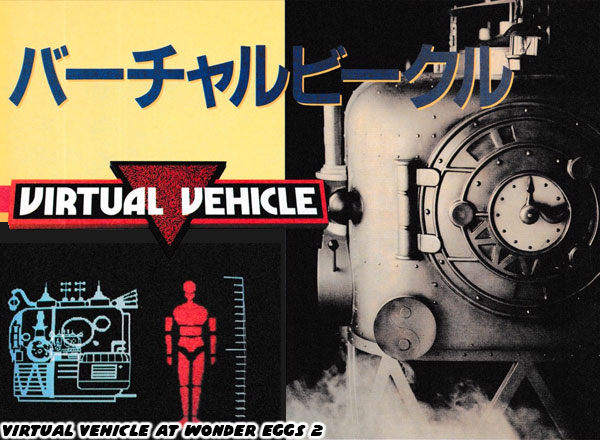
A year after Wonder Eggs was opened they unveiled their 15th attraction. Virtual Vehicle was a unique simulator-style ride that mixed live video with a shooting game. Dreamers would get into a metal rig that looked like a clockwork pressure cooker. Once inside the riders would be “shrunk” to a microscopic scale. They would use the video screen or “electronic eyes” in front of them to control the direction of their exploration vehicle. They were tasked to hunt down cybernetic viruses called “Rusu” that were infecting the power source of the Cyber Station. The ultimate virus which was difficult to track down, and defeat was called the “Mother Bug.” The attraction actually “flew” through a physical environment with the use of a microscopic camera. Viruses would pop up on the screen. Players would chase them down in the miniature world, and shoot them with their lasers. Of all the attractions at Wonder Eggs it was the one that had the least images, or corresponding video. I guess it wasn’t a popular attraction.

Being able to fail while designing an attraction was something that the team at Namco was allowed to do. They built many things in the few years that Wonder Eggs was in operation. Many of them went relatively unchanged over eight years. If an attraction didn’t work then they were allowed to update, or fix it. The changes they implemented happened within the span of weeks, to months, rather than years. This was an issue when updating areas of the Disney parks. Disney needed to figure out the logistics of any new build or renovation so that it had the least impact on daily operations. In a few cases the team at Namco updated an attraction multiple times. This was what happened with Mirrorona.

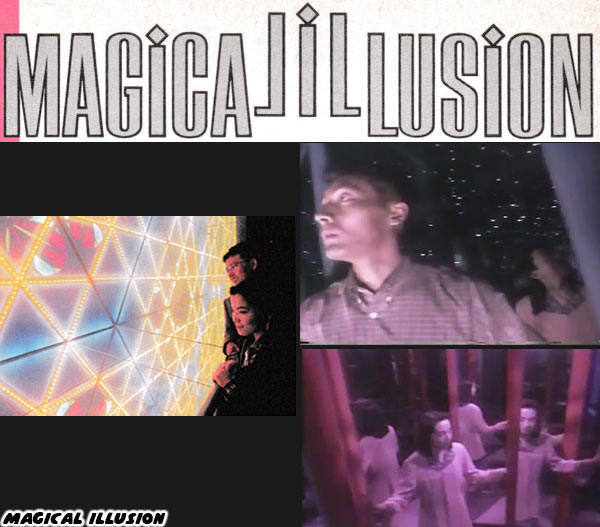
This attraction was part mirror maze, part art installation for couples to explore. It was similar to the pop-up installations for influencers to take selfies inside of in the current era. Once people experienced it then they had no reason to return. This didn’t sit well with the team at Namco. They began looking at how they could incorporate storytelling elements into this place. How could they make a mysterious building into a place for play? We will look at this in the next entry of the blog series. I hope to see you back for that. Were there any defunct parks that you visited? Please tell me about it in the comments section. As always if you would like to sponsor me please visit my Patreon page and consider donating each month, even as little as $1 would help make better blogs and even podcasts!
follow the Street Writer on Patreon!
Wonder Eggs, and Egg Empire research collected from: Wonder Eggs Guide Map, Namco Graffiti magazine, the book “All About Namco II", NOURS magazine, The Namco Museum, Namco Wiki, Ge-Yume Area 51 Shigeki Toyama Collection, mcSister magazine, first person attraction details from Yoshiki. Event details from Hole in the Socks

Wednesday, March 19, 2025

The horse jumped over the moon, the story of Namco, part 18

On a previous blog I mentioned that Wonder Eggs was inspired by the same history that Walt Disney looked at when he created Disneyland. The team at Namco studied the trade caravans, carnivals, pleasure fairs, and world’s expositions that predated amusement parks. They wanted the village of Laperot to have a timeless quality to it. To appeal to every generation. In order to do that they had to fill the park with updated versions of some classic experiences. For example fairs had live entertainment in the form of musicians, jugglers, clowns, and dancers. The Disney, and Universal parks were known for their live entertainment. Wonder Eggs had these things as well. Ancient fairs also had entertainment in the forms of sideshow attractions. I’m not talking about the tattooed man, or the bearded lady, but rather acts like mystics, and fortune tellers.

Tarot readers, and fortune tellers were a staple at classic fairs, and carnivals. These mystics were known for reading palms, letting visitors know what to expect in the future, or for the more curious who they would marry. They often traded their skills inside an ornate tent, or a caravan. For the sake of being more conscious of history remember that the term “Gypsy” was actually a slur. The correct ethnic term for many of these fortune telling traditions could be traced to the Romani people. Please try and remember this when speaking of the culture. Romani fashion, and traditions were often caricatured by many acts. The costumed characters extending back to the renaissance inspired the creation of arcade machines that dispensed wisdom, fortunes, and winning lottery numbers. These machines went back more than a century. There was even a version that played audio from 1904!

Wonder Eggs had its own unique spin on the fortune telling tradition. In this case the “servants of play” were blessed with wisdom. The Pyrallis Fortune Telling statues were their own mini attraction. Guests could insert their Wonder Ticket aka Karla Card into one of the four bronze statues. Each statue had a unique daily message. I’m certain that they were appropriate for the temperament of each Pyrallis. Not to mention that guests could only request one fortune per day. The other Pyrallis would refuse the card if it had already been used. It was not the only attraction they were in charge of. If you listened to the Pink Monorail podcast that my wife, and I hosted then you would know that carousels were among the oldest amusement rides in the world. The carousel was originally a simulator attraction for jousting. Riders would sit on a saddle mounted over a sort of half barrel on a wheel. As they went in a circle they would try to lance a ring. This tradition of going for the brass ring was carried over to latter carousels. If you grabbed the brass ring, and were able to toss it into a hoop then you would earn a free ride.

The Carrousel of Pyrallis didn’t have a brass ring, but it was nonetheless a classic attraction. Just an FYI “carrousel” was a historically accurate alternate spelling of the ride. Here was the description from the Wonder Eggs guide “A nostalgic carousel at the top of the stairs overlooking Elds Square. It has a Pyrallis (Ilinx) on its roof and is a symbol of the entire park. The night view from the carousel is also beautiful. Of course, the carousel is also lit up, and you can't help but be transported to a dream world.” My wife was happy to learn that the Carrousel of Pyrallis rotated clockwise, a tradition that started in the UK. The ones that went counter-clockwise were built later. They were more popular with the rest of Europe, and North American builders. The fortune tellers, and carrousels I’ve mentioned were carried over from ancient history, and updated for Wonder Eggs. What about popular amusement attractions from the 20th century? How did Namco incorporate those into the park?

The bumper car was invented by Theophilus Van Kannel, who also invented the revolving door. The bumper cars that we know today could be traced back about 100 years ago to the Dodgem Corp. in Lawrence, Massachusetts. According to the Coney Island History Project One of the first bumper car rides may have been the Witching Waves at Coney Island’s Luna Park. These were motionless and propelled by undulating rollers under a flexible road. USA Today compiled a brief pictorial history of the attraction. Witching Waves was an historical flat ride that was installed at several amusement parks worldwide. The first was at Luna Park on Coney Island, New York, United States, in 1907, where it was one of the most popular rides. Luna Park was synonymous with the first American amusement park, and was covered on our podcast. Namco wanted to update the concept of the bumper car, and turn it into a form of play.

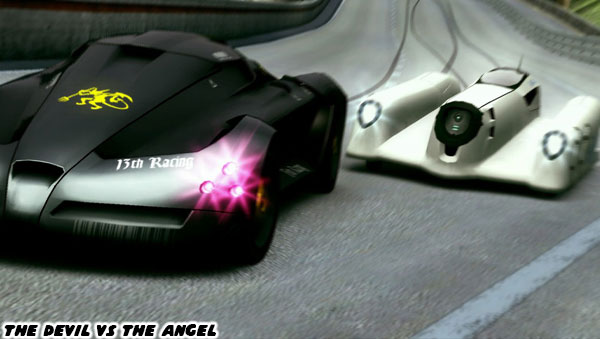
Namco turned the bumper cars into a game of tag called “Future Colosseum.” The description from the Wonder Eggs guide didn’t make much sense. “Future Colosseum” is an exciting kart battle where 16 karts violently collide with each other and compete for points. That shock when you hit it with all your might without hesitation. A futuristic cart that is sure to become addictive.” Namco gave each car a unique design. The bodies had a similar aesthetic to the Laperopter designs from Shigeki Toyama. These bodies had a function, the cars lit up with different colors when they hit each other. The way the game worked was that the cars were divided between eight “Angels” and eight “Devils.” Angels added points, and Devils deducted them. If an angel hit a devil they would earn a point, and they would turn the devil into an angel as well. Alternately Devils converted angels, and deducted points. There was an electronic scoreboard on the wall that showed the points for each player. The last 30 seconds of the ride was pure chaos as it became a free for all against everyone. Future Colosseum predated the release of the original Ridge Racer arcade game by a year. I believe it inspired the developers at Namco to make the two best cars in the series an angel, and a devil.

Early amusement parks had boat rides where boats followed a closed circuit on a stream. They were originally called “old mill” rides where visitors would see scenes as they passed by. They might see pirates, monsters, native villages, or other things depending on the theme of the attraction. Variations of which inspired the creation of the “tunnel of love,” and flume “log” rides. The Möbius Creek, sometimes written Moebius Creek was a classic gondola ride around Laperot village. Here was the official description “The Möbius River flows around the entire park. A romantic excursion is the water ride “Möbius Creek.“ Enjoy the park's performances to your heart's content…” mcSister magazine added “The “Eternal Sacred River” is very popular with parents and children during the day and couples at night. The concept behind the river that flows through the park is that it is a “sacred stream that continues forever.” Ride on a round gondola and stroll through a mysterious world. Möbius Creek is very popular with couples at night.”

Not every attraction in the early parks were rides, or fortune tellers. Games of skill were possibly the biggest draw at every midway. A part of Laperot was named the Carnival Arcade. It had updated versions of the most popular Namco games featured in their play centers, and the original ones that they created for Expo ’90. There were nine carnival attractions in total including games like Hurry Up Chef, Wani Wani Panic Land, and Lucky Monkey. The prize at each was a small stuffed animal. These were easily the most family friendly games on the market. What I thought was really special were the coins required for play. Instead of paying for the games with the egg currency on the tickets, the dreamers could buy individual Carnival Coins. The coins could be used to play any one of the games. These coins were slightly larger than traditional arcade tokens. They were minted with a portrait of Laperot Village on one side, and engraved with a message in “Elds Character” on the other.

Wonder Eggs had all of the elements of a textbook fair, hometown carnival, and traditional amusement park. The introduction of Elds the Goddess of play, the Pyrallis as the servants of play, and Laperot as the village of play helped transform it into a theme park. Modern parks relied on modern technology, new attractions, new midways to pull the experience out of the past. How did Wonder Eggs find the balance for visitors? We will look at this in the next entry of the blog series. I hope to see you back for that. Were there any defunct parks that you visited? Please tell me about it in the comments section. As always if you would like to sponsor me please visit my Patreon page and consider donating each month, even as little as $1 would help make better blogs and even podcasts!
follow the Street Writer on Patreon!
Wonder Eggs, and Egg Empire research collected from: Wonder Eggs Guide Map, Namco Graffiti magazine, the book “All About Namco II", NOURS magazine, The Namco Museum, Namco Wiki, Ge-Yume Area 51 Shigeki Toyama Collection, mcSister magazine, first person attraction details from Yoshiki. Event details from Hole in the Socks

Wednesday, March 5, 2025

The horse jumped over the moon, the story of Namco, part 12

The previous blog talked about the origins of Wonder Eggs. The urban theme park from Namco opened February 29, 1992. It had been influenced by the world’s expos, pleasure fairs, and amusement parks. These were the things that had also inspired Walt Disney to create Disneyland. The theme of Wonder Egg was “The World of Wonder Imagination.” Every element that went into the park were planned out by some of the most brilliant minds in game design. For example visitors to the park were referred to as “Dreamers.” These Dreamers were the central players of a town called Laperot Village. Elds was the Goddess of Play, she was the patron Goddess of the village. She had liberated the citizens from the clutches of a great evil named the Devil Godot. There were music cues, and full themes written by legendary composer Hiroyuki Kawada that could be heard in the different areas of the park. Dreamers didn’t know the context of the music until the park had been open a year. An official story, and the full history of Laperot Village was only then revealed. I got my hands on the soundtrack, and translated the notes from Mr. Kawada.

This album consists of two parts. “Music from ELDS STORY” is a story that was originally written in order to unify the image of the people involved in Wonder Eggs, and has been completely translated into the colors of sound, light, and shadow. Like the park, the production of this song was carried out in a way that embodies the “world” that exists within the story, which has ethnic, cultural, and historical characteristics. The six-act musical piece was created by first compiling the story from different moments of time into a scenario, then breaking it down into motifs before converting it into sound, and then recomposing it according to the story. Furthermore, the motif was created as a result of a complex and organic collaboration in which the six members brought their ideas together, another person compiled them into music for each act, and then another person edited them again as a story. It is also true. “Music from Wonder Eggs” is a newly edited version of the music actually used in the park. Here, music acts as a guide through the park. Even if you haven't been yet, you can enjoy the experience of walking around the park while listening to the music. - Hiroyuki Kawada

Play was created by the Goddess Elds’ Eggs, which the utopia of Wonder celebrates its second anniversary this year, has been the theme of Wonder Eggs since its conception. “Elds” is a goddess who enriches people's hearts through play and fosters interaction and friendship between people. Innocent “Elds” uses the hands of the clock as scissors, turns conflicts into games, and turns things in “Laperot Village” into fun things one after another. The warm, playful, and mysterious world of Wonder Eggs is brought to you by Elds. This album is also a kind of game. The rules of this play are that each listener relives the story while reconstructing their memories. Everyone has memories of events and scenery that lie dormant in their hearts. I would like you to reweave time with color and rhythm, centered around a single story. Create endless memories of your own. - Hiroyuki Kawada

In the story of Elds we were introduced to an archeologist named Leptoro. He was digging deep within the caverns of some ancient ruins, very similar to the Tower of Druaga. He was obsessed with recovering the “Baal Stone Tablet.” He didn’t realize that he was being summoned by the Devil Godot who was trapped within the tablet itself. When Leptoro touched the slate Godot traded places with him. The devil unleashed a wave of monsters on the nearby Laperot village. A young man visiting Laperot described how welcoming, and happy the tiny village was during the daytime, but how fearful they were of the monsters that lurked in the outskirts at night. He narrated what happened when Godot attacked. We assumed he perished in the conflict. Godot rounded up the survivors, and turned the residents into mindless tin slaves. He made them construct a great airship so he could spread his evil throughout the world. When the tin slaves collapsed from exhaustion he would dump them in a pile outside of the village. Godot poisoned the air, and waters, covering the “Ruler's Forest,” and the “Eternal River” with a heavy gray cloud that seemed to rain metal. When all hope seemed lost a young lady showed up, it was the goddess in disguise.

The young man we were introduced to earlier was now covered in metal. He was stuck on a pile of tin villagers. He was awoken by Elds. He began following her, and played hide and seek with the lovely goddess. As they played the tin fell off, and he became human again. It felt like ages to him but the Goddess Elds had finally returned. She was bringing joy back into the world. The other villagers soon began playing as well, and becoming human once more. Godot sensed that something was wrong, and summoned his army of monsters. The girl jumped on the back of a dragon that was hidden in the ruins of Laperot. She summoned three more dragons, they were actually subservient gods that tore through the clouds. Their breath was fire to monsters, but life for the forest. The four dragons easily dispatched the monsters, turning them into flowers, and meadows with every swipe of their claws. Godot tried to get away in his great airship. Before he got far the goddess made an enormous tree erupt from the ground, and trap the ship within its gigantic branches. She tricked Godot by sneaking up on him and covering his eyes. Throughout the story she would suddenly appear behind a person and play “guess who?” The shocked Godot dropped, and shattered the stone tablet, the source of his power. Elds crafted a new prison for him. She made Leptoro swear to remain his guard forever. She then sealed the duo away in the recesses of the Tower of Babel. One of the giant dragons rested on top for added safety.

Elds, and her four dragons helped rebuild the village. The broken remains of the Tablet of Baal were engraved with a new mythology for Laperot. They could actually be seen at the entrance of the park. The sky became clear, and the river flowed with fresh water once more. The factory for Godot’s war machines was torn down. The gates which used to close at night now remained open. They invited travelers to celebrate with them. Laperot became filled with joy, music, and most important play. Before Elds disappeared she left behind eggs which hatched into new games, and adventures for the villagers. She would check in on them from time to time, often covering their eyes and saying “guess who?” before joining them once more in play. The story of Laperot was simply fantastic. It was not only embraced by the public but was embraced by the game developers at Namco. They were able to immortalize Elds Square into a stage in the Tekken 3 fighting game.

The team at Namco went above and beyond in crafting a unique story for the park. It was not only a memorable fantasy, but it also incorporated elements from western mythology. For example the name Baal, which was the stone tablet that Godot was trapped in had a meaning. Baal was the ancient Syrian god of war, storms, fertility, and the seasons. He was also considered the rival to the Hebrew god, or the first “devil” in early history. The Tower of Babel was one of the oldest locations, and parables from civilization. Namco had been incorporating these ancient mythologies into many of their games. For example the use of angels, devils, Babylonian, Egyptian, and Assyrian myths were explored in the Druaga, Tekken, and Ridge Racer titles. Namco knew how to sprinkle in these various historical callouts when they were creating a new legend for Wonder Eggs. Its story was literally carved in stone near the entrance of the park. Guests didn’t necessarily know that the runes used throughout the park were an actual language that could be translated.

The alphabet featured in Laperot was called “Elds’ Character.” The Elds alphabet was written horizontally, and not vertically like many Japanese signs. It was also written in pairs (with one vowel) like the Roman alphabet. However special proper nouns and abbreviations were not subject to this rule. It was similar to Japanese, which was a mixture of kana, and alphabet, only that it was read from left to right like English. Elds’ Character was presented on the architecture of the park, but also on the tickets, maps, and even Carnival Coins. Eagle-eyed visitors could spot many of the details from the Story of Elds engraved on the tokens used to play carnival games. Over the past few years I managed to get my hands on Wonder Eggs ephemera. With the help of my kid who was studying Japanese here were the best translations that we could come up with,

The Carnival Coin translation. 
1. This, distant future (goes) 
2. It is easier to do something than worry about it: Possibly based on the proverb "fear overruns the danger; it is easier to bear (a child) than to worry about it" 
3. To cut; to cut through; to perform (surgery); sever connections 
4. Something of great value; something golden (e.g. silence) 
5. Elds’ burden / responsibility; accomplishment; lessons (in an art, skill, etc.); practice

On the back of the Wonder Eggs Guide Map (which happens to fold like a letter) we have a longer message: 
Laperot 
This is a village of long lasting happiness 
The goddess of play Elds makes sure that it normally is 
Inside it is our custom to play with all our heart 
Bring back the love 
This village of long lasting happiness you know 
The goddess of play Elds the way it normally is 
Inside / we customarily play heart/mind/spirit 
Take back / restore

Elds may have been the patron Goddess of Wonder Eggs, she was not however seen in the park itself. There were no costumed characters dressed like Elds playing with dreamers. Instead her four dragon protectors became mascots for the park itself. The genius behind play would shine through the four whimsical characters. We will look at them in the next entry. Were there any defunct parks that you visited? Please tell me about it in the comments section. As always if you would like to sponsor me please visit my Patreon page and consider donating each month, even as little as $1 would help make better blogs and even podcasts!
follow the Street Writer on Patreon!
Wonder Eggs, and Egg Empire research collected from: Wonder Eggs Guide Map, Namco Graffiti magazine, the book “All About Namco II", NOURS magazine, The Namco Museum, Namco Wiki, Ge-Yume Area 51 Shigeki Toyama Collection, mcSister magazine, first person attraction details from Yoshiki. Event details from Hole in the Socks

Friday, February 21, 2025

The horse jumped over the moon, the story of Namco, part 7

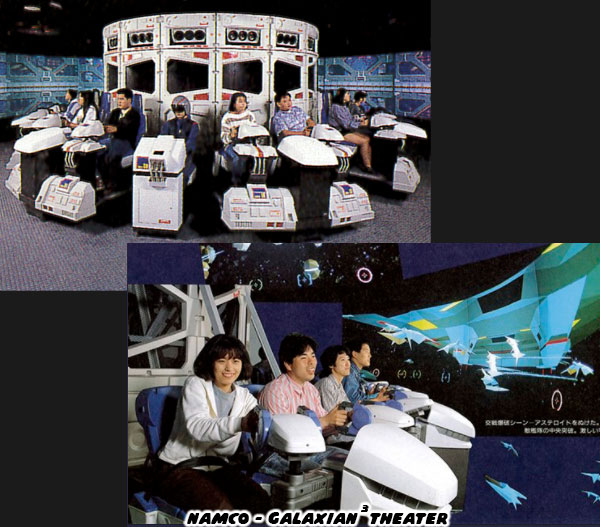
Expo ’90 at Tsurumi Ryokuchi, Osaka Japan was a turning point in the world of entertainment. Namco was able to evolve the amusement park experience with what they called “Hyper Entertainment.” This was the hybrid attraction that was part arcade game, part amusement ride, and part themed environment. The fantasy RPG Tower of Druaga in the previous blog was one of their arcade hits-turned-hyper entertainment attraction, and the other was the science fiction shooter Galaxian³. When astronaut Neil Armstrong took his first steps on the Moon in 1969 he said “That’s one small step for man, one giant leap for mankind.” Namco took the “giant” part literally when designing this attraction. I had already sung the praises for this game previously on the blog, and I would no doubt talk about it again in the future.
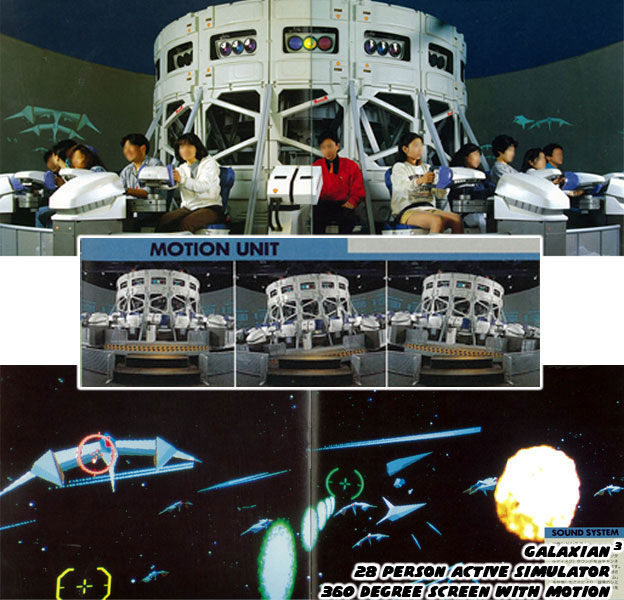
If you had no idea what I was talking about, the Galaxian³: Project Dragoon attraction was the largest video game in history. It was a polygonal interactive shooter on a gigantic moving platform that supported 28 people at the same time. Shigeki Toyama was in charge of concept planning, system design, mechanical design, graphic design, logo design, decorative design, etc. He had a singular focus; revenge on the 1985 Tsukuba Expo committee for not giving Namco a proper Pavilion. Revenge for not being prepared to have Namco show their best work five years prior. He literally challenged his team to make audiences feel like they were the heroes of Star Wars. They were already fans of the Star Tours attraction in Disneyland, and Tokyo Disneyland. They still wanted to make something far superior. His goal was to get the nation talking about how fantastic Namco’s showing was in the ’90 Expo in Osaka. Since I was still praising it 35 years later I would argue that it was mission accomplished.
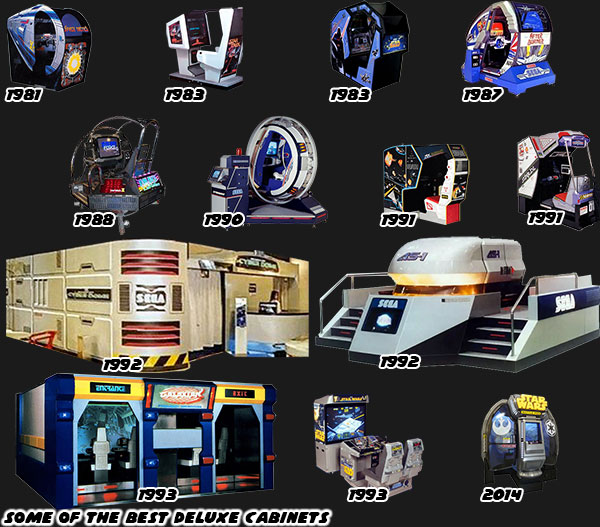
I don’t think you understand how epic this experience was to Generation-X in Japan. Up until that point the evolution of space simulator cabinets had been slow but steady. Although the space shooter video game genre started in the ‘70s, the use of deluxe cabinets to immerse the players started in 1981. Sega/Gremlin released Space Tactics, the deluxe sit down cabinet was very much a Space Invaders-meets-simulator. Instead of a joystick the player sat behind a gunners yoke, with an illuminated display. It was one of the early space shooters that reinforced the idea of fully realized simulators. They followed up in 1983 with Star Trek: Strategic Operations Simulator. It was a vector graphics space combat simulator. It had the same synthesized voice from Space Fury. The game was poorly received, especially when compared to Star Wars by Atari which came out that same year. Sega would elevate the cabinets by adding motion to them starting with After Burner in 1987. The full timeline, and importance of these gradually bigger, and bigger cabinets was discussed previously on my blog.
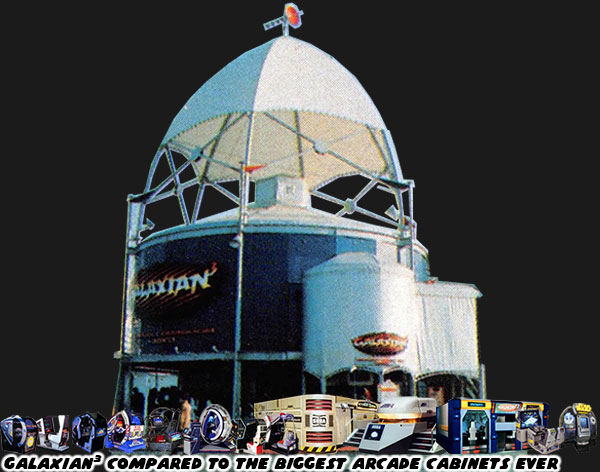
Namco, and Sega had been going back-and-forth in the racing, and space genres for decades. Everything from game design, to gameplay were hotly contested by fans of the studios. Sega’s motion cabinets could be seen as superior to anything Namco had ever released. While Namco lead the shift to polygons for the industry, Sega managed to get a lot more attention for their efforts. I would argue that Galaxian³ was created in part because it would be all but impossible for Sega, or any other studio to top. How confident was I of that statement? My friend asked if the Mario Kart attraction at the Super Nintendo World at Universal Studios could be considered a bigger video game. While it took a bigger footprint I would argue that it wasn't a bigger game. The Mario Kart attraction had six groups of four riders each for the Mario, Luigi, Daisy, Peach, Toad, and Yoshi teams. That's 24 concurrent players on the same game, still four shy of Namco’s record.
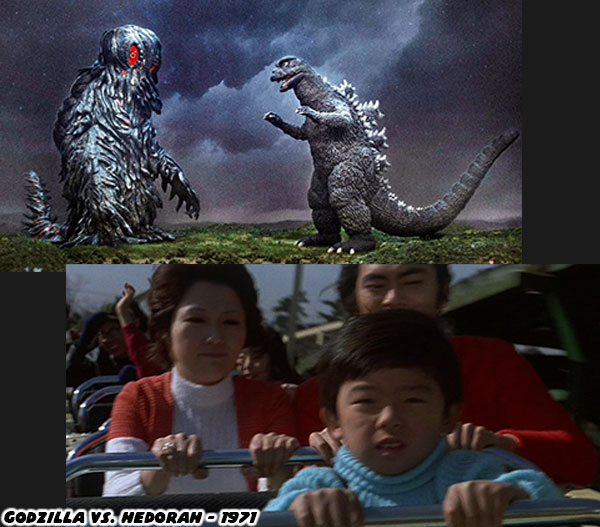
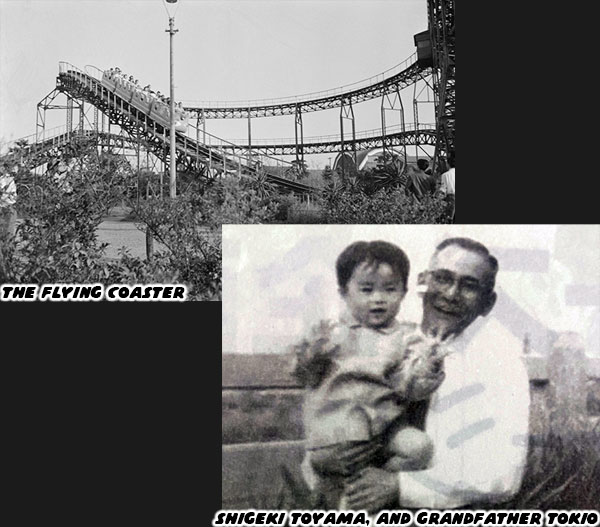
Mr. Toyama joined Namco as an industrial designer in the early '80s. He said that he knew nothing about video games. That part was true, but his love of out of home entertainment ran in the family. His grandfather Tokio designed the “Flying Coaster” at Futakotamagawa Garden in Setagaya, Tokyo. Here’s a bit of trivia for you, the flying coaster appeared briefly in the 1971 film Godzilla vs Hedorah. While the movie was in theaters before I was born, I remembered seeing it in reruns. When I was a little kid the local drive in theaters would feature a Godzilla movie marathon during the summer. It was a cheap way for our parents to keep my brothers and I entertained. We would stuff our faces with hot dogs, and popcorn while watching the rubber suit battles. I was terrified of the smog monster because it melted people with its toxic spray. But I digress…
As a kid Mr. Toyama would practice his illustrating skills by drawing the various attractions in Futakotamagawa Garden. He would end up working at the park before graduating from college. This history would help him plan arcade cabinets for Namco, and later on the largest attraction of his career. The location of the park would become very important for Namco’s history, but we would get to that in a future blog. Mr. Toyama’s team, included fellow designers Hideyuki Kikuchi, Wataru Yanagawa, Tatsuya Ishikawa, Takashi Yano, and Katsunori Mizuno. Yasunori Tashiro as the producer, Koichi Tashiro who was in charge of parts, and assembly, Hajime Nakatani directing, with planning from Hiroyuki Takejima. Kimimasa Matsuura, Norimasa Matsuura, and Jinto Saito handled programming duties. The mechanical structure, and external negotiations were handled by Akira Osugi and Takashi Sano, the electrical design was handled by Masataka Yamada. Fumio Ishikawa was in charge of overall operations, including production, installation, and removal. The team had quite an adventure putting together the enormous Galaxian³ machine.
Osaka was a massively busy city on the island of Honshu off the coast of mainland Japan, it was known for turbulent changes in weather, this was especially true during the construction of the “Flower Expo.” Namco arrived in February, and the expo started on April 1. Remember that the company had to get both of their untested Hyper Entertainment attractions up, and running in that window. While they did the majority of the work at Namco, taking everything apart, and putting it back together on site was a different battle. They wanted the best graphics, and simulator experience they could get . This meant that they ended up literally debugging, and programming the gigantic hydraulic cabinet with entirely new software, and hardware on site. The team actually had a small office hidden off to the side of the platform where they could troubleshoot any problems during the expo. They were 99% certain that they would not be able to get it ready for opening day. In order to accomplish the impossible Namco added a couple new faces. Mr. Satoru Yano, who designed the motion unit, and Mr. Katsunori Mizuno, who designed the visual, and hydraulic data joined late into the project.
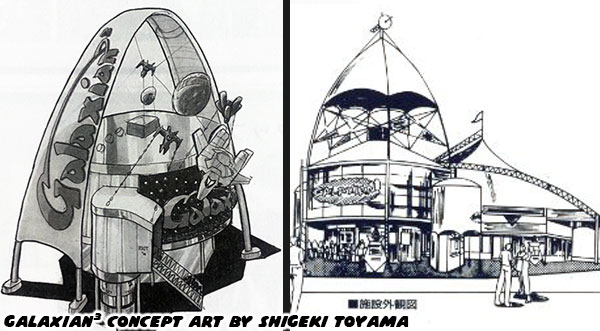
The team worked around the clock in the chilly winter weather. Mr. Toyama placed a sleeping bag under the hydraulics of the attraction, he called it “Hotel Galaxian.” The staff said they survived the freezing winter rainstorms thanks to consuming a massive amount of hokaron (hand, and body warmers). Several of them called it the "Cursed Galaxy" as team members kept getting seriously ill. Mr. Nakatani contracted acute hepatitis, Mr. Takahoku was run over by a motorcycle while riding his bicycle, breaking his arm in the process. The team didn't slow down because Masaya Nakamura, the president of Namco would be visiting on opening day. The final touches, the facade, hallways, airlocks, lights, bulkheads, and other decorations were done within a set budget. Mr. Toyama was not happy with the initial look, he felt it looked sparse, and even cheap. He spent his own money adding additional details, pipes, lighting, painting, and weathering the sets. Sleeping on the floor, and detailing everything down to the very last second when guests arrived. Their biggest compliment came from visitors who assumed they had spent millions on the attraction instead of a fraction of that. According to them it rose to the standard of the Star Tours by Disney Imagineering.
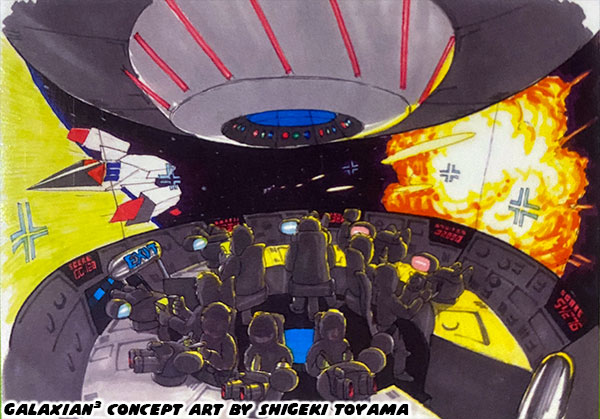
The group in Osaka teased the Namco sound team as having the easiest part of the job. Shinji Hosoe aka Megaten, Ayako Sasou, and a few others were indeed the luckiest during the entire ordeal. Megaten was the main composer, and musician. He was most famous for scoring Ridge Racer, and a number of Namco’s biggest hits. He even worked on Street Fighter EX, which was one of my favorite SF soundtracks. For Galaxian³ he was tasked to come up with five original pieces that were cinematic, and a response to John Williams’ Star Wars music. It was no small task. Especially since he started at the end of February, as the attraction was being put together. The genius composer shocked his coworkers. He cranked out his five pieces in five days. He would write the songs in the morning, and arrange them in the afternoon. The team said great, from that point on he should compose everything that R&D threw at him.
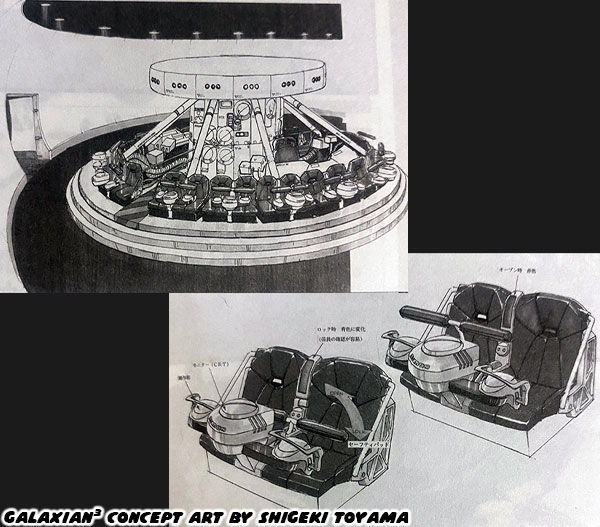
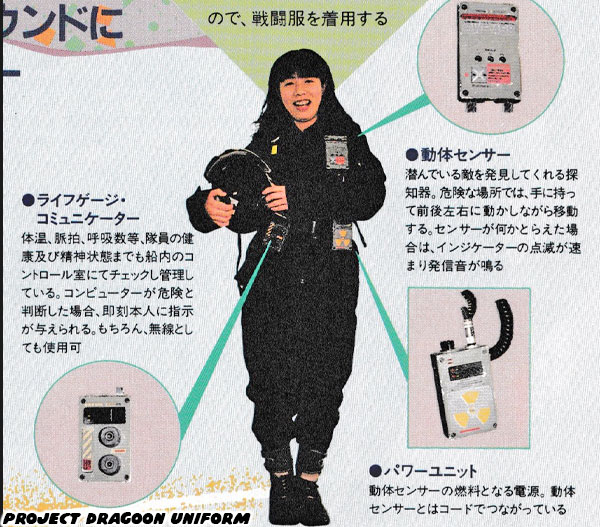
The guests that played the “Active Simulator” absolutely loved it. Best of all the staff loved the employee uniforms that ride operators were given. They said they looked very cool, up until they had to clean up the seats whenever a guest vomited. Namco conducted surveys of the visitors “most people said it was amazing and they were impressed, but 2 out of every 1,000 people said, "I don't want to do it again!" This reaction was mainly from people that got motion sickness from the rocking action. The platform would rise, and fall up to six feet. This happened dozens of times over the course of eight minutes. The guests were warned about the movement during the pre-show video that played in the queue. Of course some people still thought that stuffing themselves with carnival food, and then riding a motion ride was a good idea. 
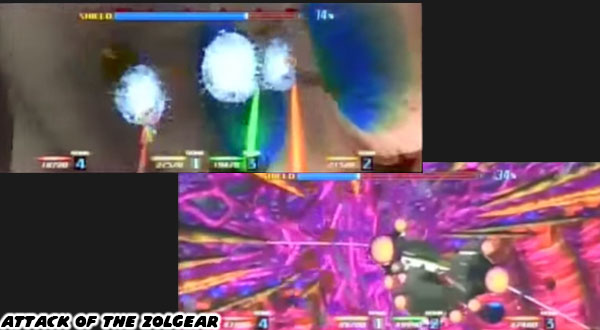
Between the classic carnival attractions they built, many of them still operating decades later, as well as The Tower of Druaga, and Galaxian³ Namco had proven they were the best entertainment company at Expo ’90. This forced all of the other studios, especially Sega, to step up their game. There was little else Namco could do except dismantle the attractions after September 30th, 1990 when the expo had reached its conclusion. The thing was that the company, and its employees had poured so much of themselves into the attractions that they didn’t want to see it all end. That was with the exception of the sales department, who asked them to never again to spend so much building a one-off attraction. The team scaled down Galaxian³ to a 16-person screen for dedicated locations. They even offered a 6-person Galaxian³: Project Dragoon cabinet for arcades that wanted to advertise the “World's Largest Video Game.” Their revolutionary engine would even get two expansions, The Rising of Gourb, and the Attack of the Zolgear.
Variations of Galaxian³ lived on after Expo '90, and however the Tower of Druaga would have been lost to history if it wasn’t for a bold idea. President Masaya Nakamura believed in the power of play. His company flourished because they created games at a time when society (and corporate culture) said it was a waste of time. What if his teams could combine everything they had learned over their 35 years in business? What if play was the critical to the next evolutionary step of themed entertainment? They might end up creating something wonderful. We will explore the roots of this revolutionary idea in the next blog. Were you a fan of the Namco space shooters? Had you ever heard of them before today? I’d like to hear about it in the comments section. As always if you would like to sponsor me please visit my Patreon page and consider donating each month, even as little as $1 would help make better blogs and even podcasts!
follow the Street Writer on Patreon!
Wonder Eggs, and Egg Empire research collected from: Wonder Eggs Guide Map, Namco Graffiti magazine, the book “All About Namco II", NOURS magazine, The Namco Museum, Namco Wiki, Ge-Yume Area 51 Shigeki Toyama Collection, mcSister magazine, first person attraction details from Yoshiki. Event details from Hole in the Socks

Friday, February 7, 2025

The horse jumped over the moon, the story of Namco, part 1

This new series was actually the part of multiple things coming together at the same time. At the end of 2023, and the start of 2024 I convinced my wife to start recording a new podcast series. A lifetime ago she taught a college class on the history of theme parks, she called it “Manufacturing the Magic.” I posted the links on this blog at the start of 2025. We will continue those episodes intermittently on her Pink Monorail Podcast. When she originally taught the class it was everything that lead up in world history to the creation of Disneyland.

I convinced her to redo her notes, and even put together slideshows for any instructors that wanted to teach the class as well. She said that it would be roughly 10 lessons from pre-history leading up to Disneyland. Then she had nothing after planned. Since she was an exceptional researcher, and storyteller I convinced her to continue the series, and talk about how theme parks evolved from 1955 to today, as all new lessons. She obliged, and we started recording in February 2024. We agreed that there was an important chapter that had to be added during the late ‘70s through the ‘90s with the rise of video games. I offered to record those episodes of the series. We would trade roles, I’d be the teacher, and she would be the student sitting in as the cohost. The entire reason why this fit into the episodes was because the Themed Entertainment Association (TEA) in 2012 had a keynote speech in where they lamented that an entire generation of potential theme park creators were instead developing video games. 

I had to explain why Gen-X wanted to work on a new form of entertainment, instead of at the biggest theme parks, and amusement parks in the world. In doing research I put together the links that connected one of the oldest game companies, and the first, and only video game theme park in history. This fortuitous coincident happened as I was going to write about Namco anyway. The studio had an aesthetic in some of their games that I wanted to highlight, but would also make a fun blog to put together. The details for this blog were pulled from Wikipedia, journalist Kazuhisa Maeno, and Namco Graffiti magazine. I encourage you to support Wikipedia with a donation. I do so every year for how much they help me get dates, and names right for blogs.

In order to tell the story of the first video game theme park, we had to go way back in time to the foundation of Namco (now Bandai Namco Entertainment) . When you thought about the company what came to mind? Was it Pac-Man, Tekken, Galaga, Dragon Ball, Ridge Racer, Dark Souls, or any of a thousand other games? Maybe it was appreciating the entire genres that they pioneered? Did you have a favorite Namco title, or character? Would you believe that they were making waves in amusement for decades before video games came around? The story of the company, and its founder were very unique. Masaya Nakamura was born in Tokyo December 24, 1925. He graduated from the Yokohama Institute of Technology in 1948, having earned a degree in shipbuilding. He worked for his father, and sold air guns for a few years, then went on to found his own company in 1955; Nakamura Seisakusho, Ltd., which produced pop-cork guns, electromechanical (he would call them elemecha for short), and coin-operated mechanical rides for Japanese department store rooftops. That same year Disneyland was founded. His and Disney's paths would cross in the future.

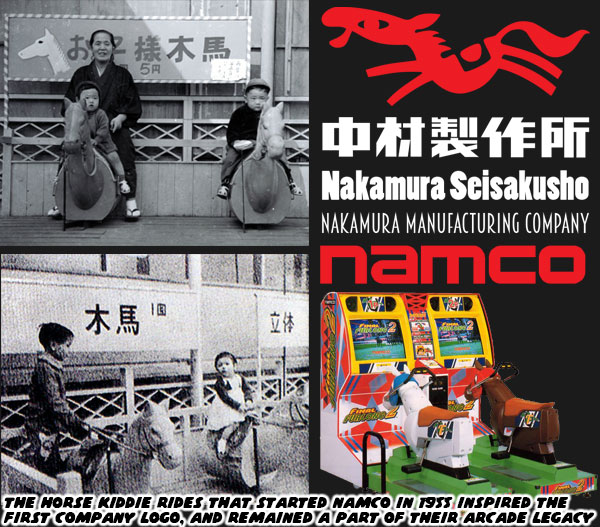
There were only three employees at the start, including Mr. Nakamura. Their first sale were two wooden horse kiddie rides with serial numbers N10001 and N10007. The iron legs of the horses could be moved up and down by turning a crank much like the merry-go-round horses in traditional amusement parks. The rocking horses inspired the creation of their original logo, a cartoonish race horse, whose saddle also was reminiscent of the Japanese flag. These rides were installed on the rooftop of the then Matsuya Department Store in Isezakicho, Yokohama City. Soon after they won a contract to build a small amusement park on the roof of Mitsukoshi Department Store in downtown Tokyo's Nihombashi shopping district. Mitsukoshi was the biggest department store chain in Japan, and its branch stores all over the country started turning their rooftops into playgrounds. Nakamura got the contract at all of these locations. In less than a decade his company had become Japan's leading amusement park operator.

That wasn’t the only big break that the young company had. In 1956 Periscope was published by Sega, but manufactured by Nakamura Seisakusho Co., Ltd. It was one of the most successful elemecha games of all time. You could still find some cabinets in operation to this day. This helped a young Sega, and Namco get a foothold in arcades. In 1959 Walt Disney Productions provided Nakamura with the resources to expand his operations. This relationship also turned to officially licensed rides which they would put in their amusement centers. Nakamura, and his designers were heavily influenced by the audio animatronics they had seen in Disneyland, and would create their own androids as well. Namco would also build kiddie rides featuring Godzilla, and other high-profile IP in their various arcades, and game centers.

Thanks to PONG (1972), and later Space Invaders (1977) studios around the world saw that video games were the wave of the future. Namco got the rights to distribute Atari games in Japan in the early 70’s. In 1974 they bought the Japanese division of Atari from Nolan Bushnell, and formed the Nakamura Manufacturing Company, this would give them the head start on video game production before many other publishers. In 1977 they changed their name to NAMCO. In 1978 they debuted Galaxian. It was their answer to the Space Invader craze. Namco’s first shoot ‘em up game innovated on the space shooter genre including being one of the first to feature score bonuses, and have an RGB monitor. The board would also be used in future games including King & Balloon which was the first arcade game to incorporate speech. When the king was kidnapped he would yell “help”, and “thank you” when he was rescued. Galaxian would be the cornerstone that the entire UGSF universe had been built on.

Being in the amusement industry allowed the company to grow steadily through the ‘70s, and ‘80s. They lacked the capital to buy out Atari in Japan as no bank would loan them the money, but Mr. Nakamura was able to secure smaller loans, and pay off Bushnell in a few years. Rooftop attractions allowed Namco to become synonymous with family entertainment. The company would not only operate the majority of rooftop attractions in the densely packed Japanese cities, but they would begin developing several different types of arcades, in malls, as stand-alone storefronts, and even massive gaming centers. Each one had its own sort of theme, and branding.

Generation-X in Japan would have fond memories of the Namco brand. Chances were the first kiddie rides, carousels, trains, and monorails they rode were by Namco. The first carnival-type games, including whack-a-mole were probably built by Namco. Their earliest video game memories were also associated with Namco. The company was aware of this, and their arcade experience evolved with the tastes, and age of their fans. In the early ‘90s the company was opening game centers, that folded in shopping, and restaurants. The company even opened up pool halls, and medallion centers (similar to casinos, without breaking the strict gambling laws in Japan). These were places for college-age people to visit, or when dating, or even recently married young couples. These locations mirrored the growth of Dave & Busters (founded in 1982), and predated the rise of GameWorks (founded in 1996) in the USA. In 2015 Namco announced that they would be opening arcades with the Hooters brand, again demonstrating that they were evolving with the times.

It would be a fair to say that the Namco brand was as important to the hearts, and minds of several generations in Japan as the Disney name was in the USA. In order for that comparison to be valid then we have to take a look at the leader of the company. Walt Disney had few, if any peers in his era. How would Masaya Nakamura hold up in comparison? You might be surprised. We will look at this on the next blog. As always if you would like to sponsor me please visit my Patreon page and consider donating each month, even as little as $1 would help make better blogs and even podcasts!
follow the Street Writer on Patreon!


Wonder Eggs, and Egg Empire research collected from: Wonder Eggs Guide Map, Namco Graffiti magazine, the book “All About Namco II", NOURS magazine, The Namco Museum, Namco Wiki, Ge-Yume Area 51 Shigeki Toyama Collection, mcSister magazine, first person attraction details from Yoshiki. Event details from Hole in the Socks