Showing posts with label pyrallis. Show all posts

Friday, March 6, 2026

The memories of Wonder Eggs in my collection

Heya friends, I hope that you are doing well. Today I wanted to share some gems from my collection of Wonder Eggs merchandise. If you don’t know, from 1992-2000 Namco ran a video game theme park called Wonder Eggs in Futakotamagawa, Setagaya Ward Tokyo. When the park opened it was so successful that Namco added a sister park next door called the Egg Empire. I wrote about it extensively on this blog.

I had a great number of items that I had gathered in a few years of searching. I loved that I had an entire set of the plush Pyrallis figures. There were some larger ones that they sold in the park, however I had never seen them for sale in any of the Japanese auction sites, even when I searched via the history of products that had already sold. Chances are that they would ever pop up were extremely slim. It didn't stop me from checking. 

I had various ephemera from the parks. I had both the Guidebook, as well as the Map of the park. I also had several stickers. Not all of them were featured here. One of the nicest ones I got was from the opening of Virtual Vehicle, which came with a Pyrallis celebrating the first anniversary of the park. 

I managed to get several tickets to the park. These were called Karla Cards. They kept track of the attractions you went on, what scores you achieved on certain attractions, and even if you got a fortune from the Pyrallis statues. In this way visitors to the park would have a memento of their visit. The silver card was actually a telephone card from the park. I hadn't seen any other phone cards pop up in years of searching, so this was a score. I even managed to purchase rare stickers from the park. A couple of the stickers you could not buy, but could only win if you got the top score in their attractions. I was lucky that somebody in Japan was willing to part with them. 

The map of the park was gorgeous. Of course the people that worked on the Namco games had also lent their talents into creating the art for the park, attractions, and costumes for employees. The world building that Namco did at Wonder Eggs was exceptional. It had its own mythology, its own calendar, and even its own language. This was apparent on the “Carnival Coin” which you would use to pay for the games on the classic midway. The town of Laperot village appeared on one side, and the message of play from the Goddess Elds was on the other. Once I learned the history of the village I enjoyed going over the details engraved on the coin.

The other things I managed to get from the park were pins that visitors could buy. I got a classic pin back button featuring the Pyrallis Ilinx. I also got a really nice pin of the Wonder Sun. I found out that they also offered a Wonder Moon pin, which I hope to track down some day.

Some of the items you could buy or win could only be done during seasonal events. Such was the case for a jack-o-lantern pin that I found. This was only available during the fall season at the park when they ran a Wonder Halloween Festival. Interestingly enough the Halloween event at their park existed before the ones offered at Disneyland or Walt Disney World.

Even though the park was in existence for less than a decade it was constantly evolving. Every few years they would change attractions, and even the story carried in the park. In 1999 Namco ended the cycle for Wonder Eggs 2, and they had limited-edition pins available. These pins celebrated the closing of Wonder Eggs 2, and heralded the updated Wonder Eggs 3. If you got one of these pins, and attended Wonder Eggs 3 you would get a one-time free pass to the park, and other perks during your visit. It was a unique concept that I don’t think had been explored at any other park.

A thing that I never thought would turn up at auction was a Wonder Rally Passport. The park was designed with gamers in mind. One of the events they had was called the Wonder Rally. It debuted in 1998. In it kids, and adults were given passports where they were required to complete a certain amount of challenges during their visit. Guests would get stamps, and stickers in the passport to mark how well they did. The goals varied depending on the age, or ability of the player. People that competed the challenges could earn “Master of Play” pins. The lowest level was a bronze pin, followed by a silver and gold pin. The gold pin was actually labeled the “Iron Man of Play.”

There was a fourth exclusive pin that went to the “Superman of Play.” It was difficult to earn in one visit as it required the best scores or outcomes in some of the attractions. The pin was colored green. You could imagine how surprised I was when one popped up on the Japanese auction sites. Sadly the passport from the grand master was not included in the auction. The passport that I secured came from an earlier auction. It was sold by a gamer that would have earned a bronze award. I wasn’t complaining about that because every item I managed to get from the park told a story.

At the end of 2025 a couple of items popped up that I hadn't seen before. The first were a couple of mini pins featuring the Pyrallis. These were fairly tiny, a little smaller than a nickel in size. The characters were Alea which represented chance, and Ilinx which represented dizziness. I was now wondering if I'd ever see the other two mini pins.

I didn't see or collect anything for a long time after my mini pins, however in the middle of 2026 a pinback button that I had never seen before popped up. Thankfully it was very inexpensive, however shipping from Japan was absurd. But it was a small price to pay to add some more rare items to my growing collection. 

A few months later something else turned up. I had seen pictures of the keychain from the park, but had never seen one turn up for sale. I think this one sold for less than $5. It was much shinier than the picture below shows. It's brilliant, almost like polished silver. Thankfully whoever owned this took good care of it, and I was grateful for that. Since I was going to pay a ridiculous amount for shipping then I also got a bunch of manga for my kid, and a few rare Oswald items as well. Thankfully the online seller bundles everything for one price. Then I get it a couple days later. I would expect nothing less than shipping that costs four times more than the products. Even then it was less expensive than getting the same things through eBay. If they even turn up. 

As cute as these finds were there was something even more surprising on a Japanese auction site. When wonder Eggs closed in 2000 Namco offered a token that was a thank you to visitors. In all the years of doing research I had never seen it mentioned in any Japanese blog or news article. On the face was a flying egg logo, with tiny impressions of the various attractions. It had the word FINAL at the bottom. On the other side of the token was a thank you message from Namco. Thankfully it didn’t cost a lot as the seller offered it for a buy it now price, rather than try to auction it off.

There were a few gems from the park that hoped might turn up. Even if they didn’t I was super happy with every piece that I managed to win. I was sharing the memories of visitors to the actual parks. I was keeping it alive for people that never got a chance to experience it. Were there any theme parks past or present that you collected items from? Let me know about it in the comments section. As always if you enjoyed this blog, and would like to sponsor me please visit my Patreon page and consider donating each month, even as little as $1 would help make better blogs and even podcasts!

follow the Street Writer on Patreon!

Monday, February 23, 2026

Designing Wonder Eggs merch...

Hello friends, I hope that you are doing well. Work has been going well, and a few projects are chugging along over here. I was thinking the other day about the rare Oswald watch that I got my hands on. It gave me an idea for an illustration; I was wondering it might have looked like if Namco created prize watches for their Wonder Eggs theme park. As I was doing some research on the merchandise from the park I found out that one of their old shopping bag designs featured a pyrallis on the face of a pocket watch. So that was more than enough inspiration. Here were what I think the watch faces would have appeared. I used the classic Ingersoll “Mickey Mouse” movement for the arms.

The symbols on the outside edge of the watch were the actual numbers from “Elds’ Character” the fictional language used in the theme park. As an art study I actually recreated the fonts for myself a year or so ago. In this way if I ever wanted to do art on Laperot Village, or anything else Wonder Eggs related then it would be accurate. Since I was already drawing the pyrallis I came up with a design for a tee shirt for their seasonal Wonder Halloween Party at the actual park. The pumpkin character was a walk-around costume used in the park.

I had fun coming up with costume ideas for the different pyrallis characters. I just wish I had gotten a chance to visit the park when it was around. Thankfully I have a collection of items from the park that will always remind me of its greatness. Were there any theme parks or attractions you wish you had visited before they were torn down? Let me know about it in the comments section. As always if you enjoyed this blog, and would like to sponsor me please visit my Patreon page and consider donating each month, even as little as $1 would help make better blogs and even podcasts!
follow the Street Writer on Patreon!

Wednesday, January 28, 2026

The rarest Japanese item in my Wonder Eggs collection...

Hello friends, I hope that you are well. It’s been a few months since my birthday, but I wanted to share something that I got at the end of 2025. As you may remember I was the co-host on the Pink Monorail Podcast. My wife Shelly was a theme park historian, and teacher. On the show we did a deep dive on the parks, technology, and the people that shaped the industry. Her favorite park was E.P.C.O.T. which was Walt Disney’s secret project before he passed away in 1966. It took all of his remaining team members in order to complete it in 1982. Shelly has a collection of rare E.P.C.O.T. items from Walt Disney World over her workspace. She used to have a much larger, and much rarer collection of animation, and theme park items from all around the world. Unfortunately they were stolen by a family member, and sold for drug money. The few things that remained she was very proud of.

By comparison I was a huge fan of Wonder Eggs which was the first video game theme park. I did a multi-part series on it, the links are below. I had a much smaller collection of Wonder Eggs items which I had been slowly acquiring over the past decade. I could literally put everything I collected in a shoebox. One of the things I got for my bday was an old issue of Namco’s magazine NOURS which covered the opening of Tamago Teikoku aka the Egg Empire. This was the sister park built next door to Wonder Eggs.

I can often find Nours magazines from 1998 and later, but issues from 1993-1995 rarely come up on the Japanese auction sites. I got the fifth issue which was from Autumn of 1994. It was filled with photos, and a complete write up of the Egg Empire. It also covered what changes happened with the Wonder Eggs attractions. I was fascinated with how much had changed in the few years since its opening. It was a time capsule of one of the most important eras in theme park history, and sadly not a lot of historians were even aware that it existed.

The most important thing that I was able to score for my birthday was an actual employee badge from Wonder Eggs. It belonged to a person whose name was "Suzuki." Up until that point the only items I had acquired were from visitors. Or could be purchased in the gift shop. Things like plush mascots, tickets, pins, flyers, and even the official park soundtrack on CD. Getting something that was from an employee was astounding. I had never seen one for sale previously, and even when searching through previous auctions none had never come up. I just so happened to be at the right place, at the right time when it appeared.

The name tag wasn’t cheap, however given its rarity it was worth the price to me. It looked great in my collection. There were very few items left on my wish list, but I don’t think I’ll get anything cooler. If you collect anything unique tell me in the comments section. As always if you enjoyed this blog, and would like to sponsor me please visit my Patreon page and consider donating each month, even as little as $1 would help make better blogs and even podcasts!
follow the Street Writer on Patreon!

Friday, April 4, 2025

The horse jumped over the moon, the story of Namco, final part

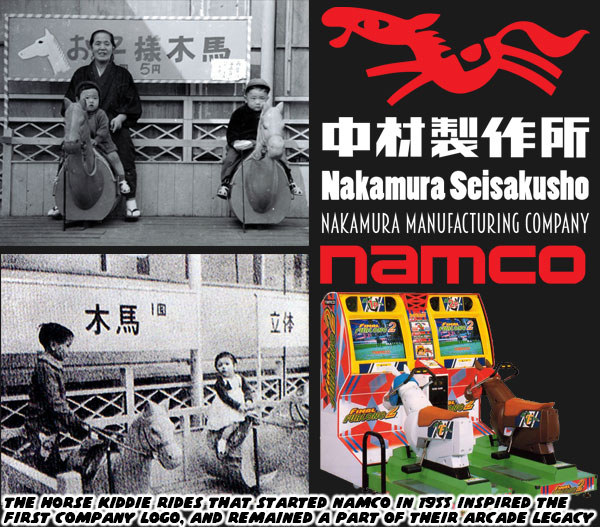
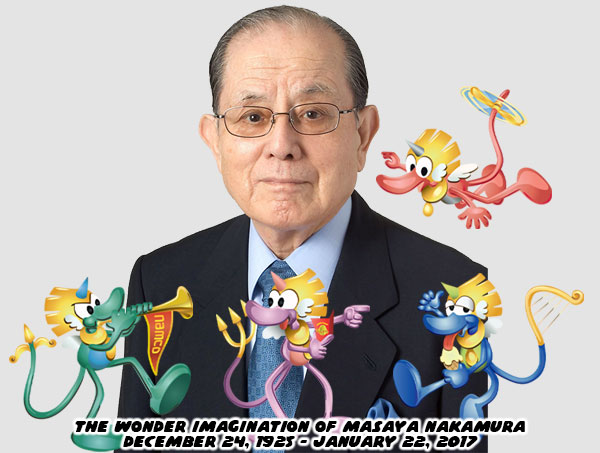
Masaya Nakamura believed in the power of play. He founded his company in 1955, and made kiddie rides for Japanese department stores. In the ‘60s he made electromechanical games for a young company called SEGA. In the ‘70s he saw the future of play, and begged banks for a loan to start up a video game business. In the ‘80s Pac-Man, DigDug, Pole Position, Galaga, and many more arcade hits made him an industry icon. By the ‘90s Namco was a billion dollar company. Before the end of the century he wanted to build the first video game theme park. He ended up building two: Wonder Eggs, and the Egg Empire. They were a grand experiment in play. They also predicted the future of theme park attractions by years, if not decades. There was nothing in the world like Wonder Eggs, and there would never be another park like it. Namco taught the world that play was crucial to society. So what was the legacy of the parks? How were they remembered?

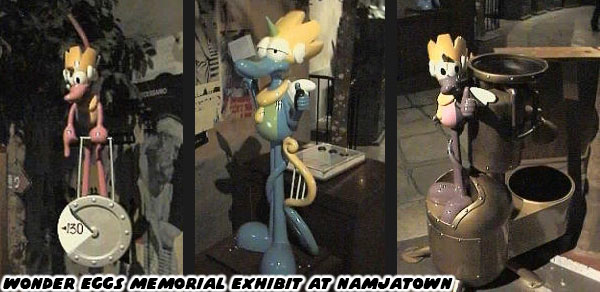
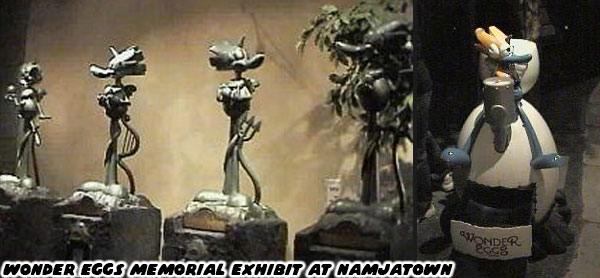
Shortly after closing the park Namco curated its own exhibit celebrating the legacy of Wonder Eggs. A number of park items, specifically those featuring the Pyrallis were on display at Namjatown. The exhibit ran for a number of years. The company was proud of what they had accomplished in the decade of the ‘90s. They had every right to be. The lineup of attractions, and shops at the end of Wonder Eggs 3 was far more impressive than how it started. 

Wonder Eggs 3: Final attraction lineup 
1. The Wedding Judge 
2. Future Colosseum 
3. Carnival Arcade 
4. Galaxian³ 
5. Zombie Coffin 
6. Phantomers 
7. Cyber Station 
8. Tower of Druaga 
9. Hotel Murder House 
10. Möbius Creek 
11. The Star Audition 
12. Laperopter 
13. Oracle of Pyrallis 
14. Pyrallis Carousel 
15. Virtual Vehicle 
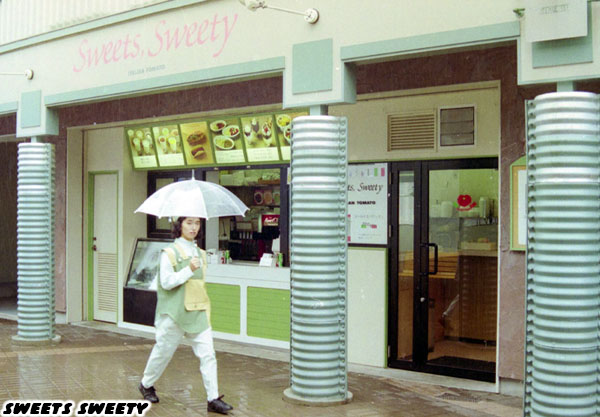
16. Italian Tomato Sweets Sweetie (Dessert House)

17. Hatch Batch Pot (Fast Food) 
18. Greedy Moon (Hamburger Shop) 
19. Italian Tomato (Pasta Shop) 
20. Wonder Market (Souvenir Shop) 
21. Wonder Chapel (Memorial Shop) 
22. Wonder Caricature (Portrait Shop)

The sister park started off with a lot of promise, but fizzled out with its collection of off-the-shelf attractions. It was still an important lesson in theme park design, and operations. When both parks opened they had a combined 23 rides, and shops. When they closed they had over 30. 

Here was the Egg Empire: Final attraction lineup: 
23. Funhouse Express 
24. Drift King 
25. Q-Zar Arena / The Mummy 
26. Cyber Station II 
27. Fighter Camp 
28. Tomato Empire Kitchen 
29. Wonder Pitching 
30. Virtual Coaster - Max Flight VR2002 
31. SFX Movie Ride - Venturer: Featuring Space Race, Alien Encounter, The Snowman the Ride

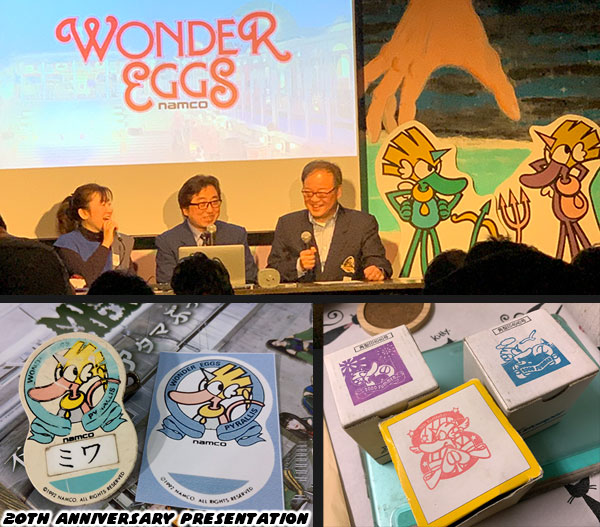
Audiences never forgot the urban theme park. As they got older they shared stories with their kids about the magical Laperot village which used to be on the outskirts of Tokyo. On February 29, 2020 the former employees, and fans got together to celebrate the 20th anniversary of the closing of Wonder Eggs. The event opening team members Yoshitaka Sadakata, and Hisako Shimizu hosted the presentation. The special guest was Mamoru Ikezawa, the former head of Namco’s Theme Park Division. They brought memorabilia from the park. Signs, stamps, employee uniforms, standees, and the like. Other employees brought in the items they had managed to secure in the closing days of the park. It was a packed turnout with many fans in attendance, including one that showed up in a homemade Pyrallis costume.

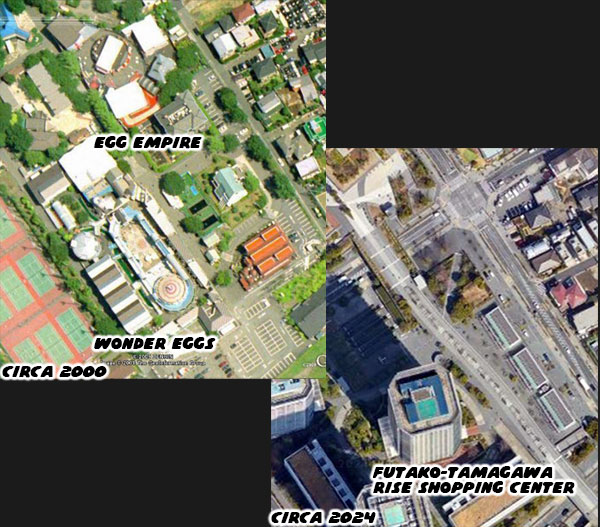
Futakotamagawa Garden amusement park ran from 1956 to 1985, and then Wonder Eggs was built on a corner of the park from 1992 to 2000. When Namco decided to close down them down they sent a few attractions to other parks, zoos, and play centers. Sadly by 2024 any physical trace of either park was long gone. A shopping complex was built on the path that used to separate Wonder Eggs, and the Egg Empire. There was a high-rise apartment complex standing approximately where the Pyrallis Carousel once turned. I was kind of surprised that there was no memorial plaque or statue honoring what used to be there. When I started this series I wanted to talk about the designs featured in a few Namco games. Researching them lead me to discover the art of Shigeki Toyama. The more I read about Mr. Toyama the more I learned how forward-thinking his boss was.

Play was not only an essential need for individuals, it was also a critical element of society. That realization allowed Mr. Nakamura to grow, and defend his business. As the chairman of JAMMA, he helped get arcade manufacturers to standardize technology, giving them all a boost. The lawsuits he brought against piracy defended not just Namco, but his contemporaries as well. In 2002 Mr. Nakamura stepped down as CEO, and in 2005 his company merged with Bandai. He was given an honorary role as the President of the video game division. Mr. Nakamura forever changed the landscape of gaming at home, and in the arcade. His lesser known contribution was how he created the templates for interactive theme park attractions.

Masaya Nakamura earned many accolades in his illustrious career, and left a huge void after his passing. He succeeded in life because he believed in the power of play. As we got older many of us forgot how play shaped our lives, shaped our friendships, and shaped our identity. Mr. Nakamura never forgot. Play allowed his mechanical horse to jump over the moon, and take us all along for the ride. In his memory we should never stop playing. 

I hope you enjoyed this part of Namco’s history. Did you have a favorite entry in the series, or Wonder Eggs attraction you wanted to try? Please tell me about it in the comments section. As always if you would like to sponsor me please visit my Patreon page and consider donating each month, even as little as $1 would help make better blogs and even podcasts!
follow the Street Writer on Patreon!
Wonder Eggs, and Egg Empire research collected from: Wonder Eggs Guide Map, Namco Graffiti magazine, the book “All About Namco II", NOURS magazine, The Namco Museum, Namco Wiki, Ge-Yume Area 51 Shigeki Toyama Collection, mcSister magazine, first person attraction details from Yoshiki. Event details from Hole in the Socks

Wednesday, April 2, 2025

The horse jumped over the moon, the story of Namco, part 24

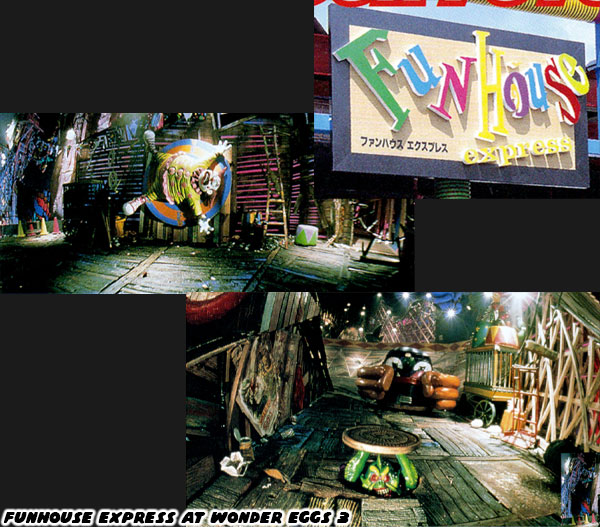
Namco had an ambitious goal. To build an urban theme park in one of the busiest cities of the world. Wonder Eggs would be located in Futakotamagawa, Setagaya Ward Tokyo. It was originally meant to be a temporary park, but ran from February 1992 to December 2000. It had a strong theme, its own origin myth, and even its own language. It did so well that a sister park named the Egg Empire was built shortly after. Sadly the second gate lacked the creative spark that went into Wonder Eggs. A majority of the attractions featured at the Egg Empire were off-the-shelf rides which could be found at other amusement parks, and even shopping malls. The opening of Wonder Eggs 3 in 1999, featured the massive 56-seater 4D attraction “Fun House Express” starring Jimmy the Clown. This attraction was produced by Showscan Entertainment Inc. The company I talked about previously.
The Egg Empire was in dire need of more direction. It was struggling compared to Wonder Eggs. The Q-Zar Arena in particular, the laser tag center, seemed to be underperforming. I felt that this was the only attraction at the park where the financing people at Namco came crawling to the design team, and begged them to fix up the space. Those designers saw that the building had a huge area to work with. Plus elevators, tunnels, and ramps they could dress up. They would be able to create an entirely new experience relatively quickly. The Q-Zar Arena would be replaced with a Participatory Story Attraction, similar to the Hotel Ghost that I described earlier. The Mummy - Hamunaptra - The Lost Desert Capital was based on the 1999 Hollywood movie “The “Mummy”, the Japanese name of the film was “Hamunaptra.”
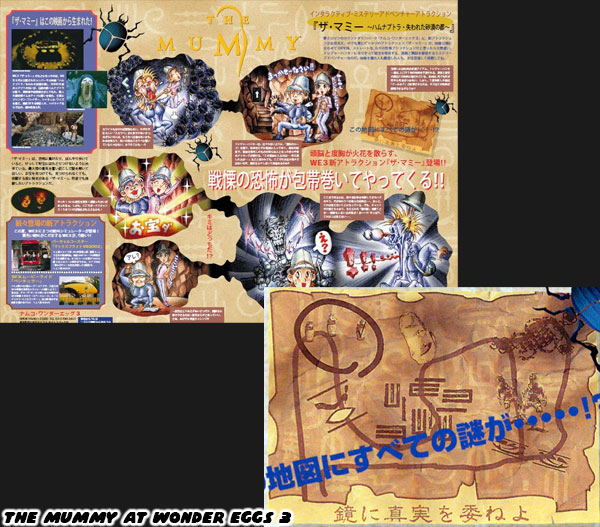
The attraction allowed eight people to play at once. The multiple-story interior of the Q-Zar arena was unrecognizable to visitors. It now looked like a series of caves, and ancient Egyptian temples. The guests would all hold onto a rope as to not get lost. They went from puzzle to puzzle looking for clues. It featured actors in costumes, animatronics, smoke, moving sets, and projection effects. It also featured original music from composer Yuka Watanabe. She not only wrote for different game studios, but also wrote original compositions for Sega’s Joypolis. If player figured out how to access the tomb of Hamunaptra then they could pick a magnetic “Karla Card” out of the pile of “treasures.” If they solved the puzzles, and answered the question correctly at the end then the employees would reward them with a prize. It very much had all the magic of the Participatory Story Attractions across the street.
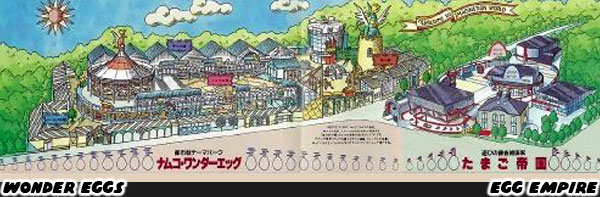
When the Egg Empire was built it was treated as a separate park. It was very close in distance, but had its own gate. It also allowed customers to pay cash at certain attractions rather than use the Karla Card magnetic ticket system. Namco did not invest as much changing, and plussing attractions at the Egg Empire as they did at Wonder Eggs. In order to bring in new visits they started adding more off-the-shelf attractions to the park. Specifically motion rides. These were created by any number of companies, and often featured a live action, or CGI film projected at the front of a motion simulator. The SFX Movie Ride - “Venturer” was added to the park circa 1999. The description from Namco was; “Experience a simulated world of powerful SFX images on a large movie ride that seats 15 people! The highlight is the two-part SFX film Space Race and “Alien Encounter" produced by ILM led by George Lucas. Rush through the universe with powerful images!! ¥500 yen per person.” I could not find an Alien Encounter VR ride, but I did find an Alien Ride at the Speed of Fright attraction which might have been the same thing.
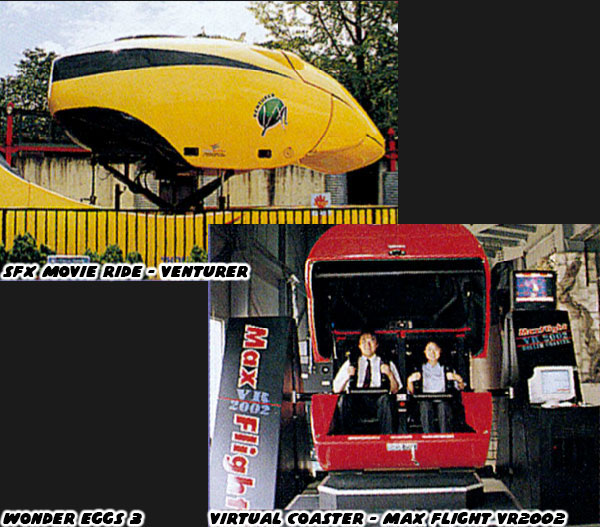
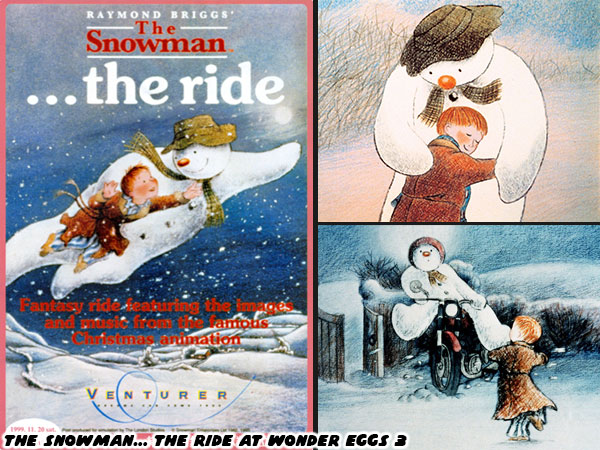
A seasonal The Snowman the Ride ran between November - December in 1999, and 2000. The “Virtual Coaster” was also added to the park. This simulator was a much different experience. The Max Flight VR2002 was according to Namco; “a two-person ride that takes 90 seconds to soar, drop, and turn sharply up, down, left, and right. The excitement of continuous 360° loops will hit you directly. You can select 9 courses and design more than 1 million courses. The presence of a "stop button" within the ride is proof of its intensity. ¥500 per person.
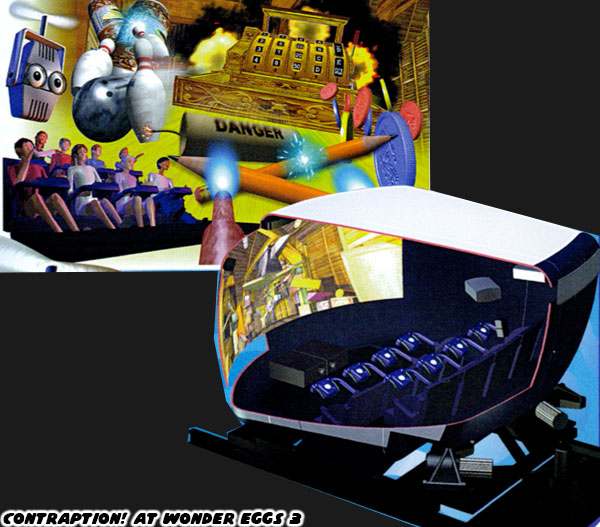
There was also an eight-seater motion ride developed by Hitachi. It was a shooting game called “Contraption!” Each rider was an active participant in a crazy game show. They were “shrunk down” to three-centimeters in size and had to race against the other players to reach the finish line first. Finishers would be returned back to normal size. The employees would say if you don’t make it to the finish line then you’ll remain three-centimeters tall. Ha-ha, very clever! Players could shoot at computer generated targets that popped up on the screen with the use of a trackball controller. From the descriptions I could find it was very difficult. You couldn’t spot your target as you were being bounced around the simulator.
The successes, and failures of different VR, and motion rides helped the theme park industry evolve. Showscan forever altered the course of attractions, and movie development. Max Flight was still in business, and Hitachi was still in manufacturing. The companies, and their patents would help shape attractions for Universal, Disney, and other park operators over the next 30 years. There was much more to the industry that creating a unique ride. I’ve met people from all over the world that could name a handful of memorable Disney attractions. I couldn’t find many blogs, or articles written about how great the Egg Empire rides were.
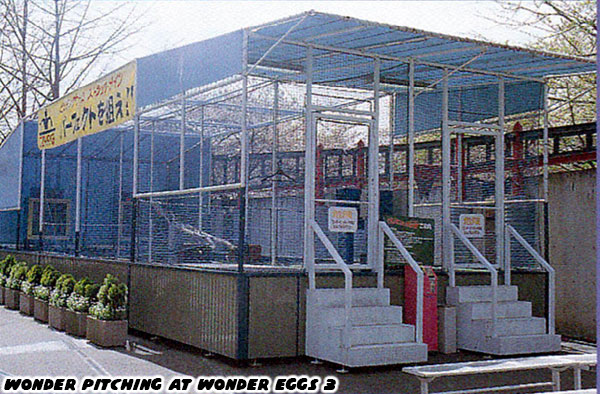
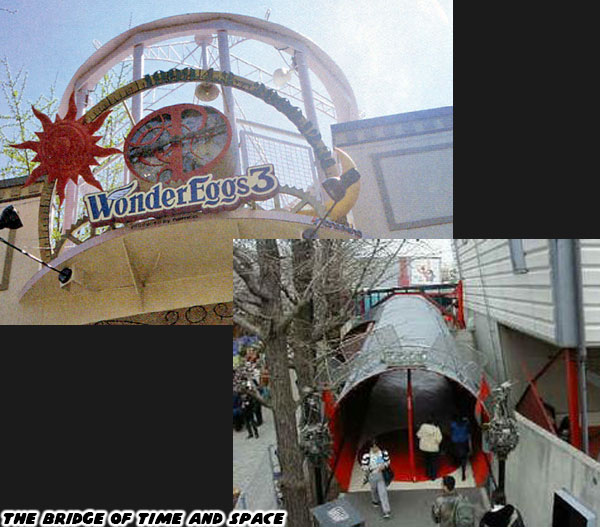
The final days of Wonder Eggs 3 were lackluster. The influx of the motion rides, and attractions like “Wonder Pitching” made the parks feel cheap. Namco managed to preserve some of their reputation. They began expanding their seasonal events. Creating unique shows, collectables, and “rally’s” for Easter, Halloween, and Christmas. To help with overall attendance they built The Bridge of Time and Space. Previously visitors would have to leave each park, cross the road, and buy a separate admission. They changed their policy, and a ticket to one park, allowed you to visit the other. To avoid the crosswalk visitors could take the "Era no Kakehashi" aka the Rainbow Bridge, and remain within the Namco property.
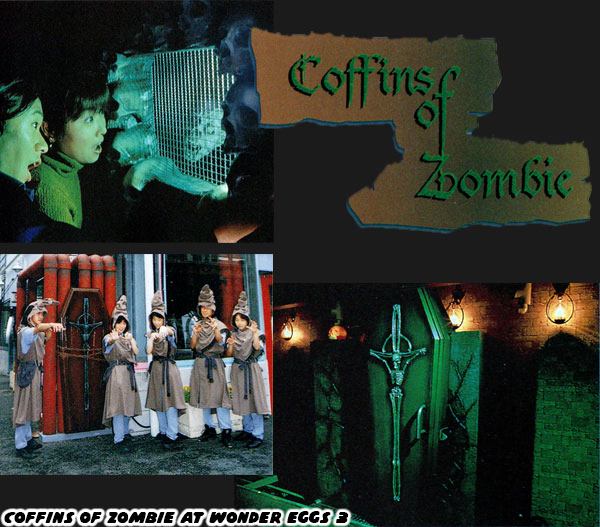
One of the last attractions added to the park was one of the most alarming. It even had more cautions than the other rides in the park; “People using pacemakers are not allowed to use the facility. People living in the city or who are otherwise in poor health are not allowed to use the facility. People under elementary school age must be accompanied by a junior high school student or older (fees apply).” Coffins of Zombie was a spooky two-person ride. The official write up said ““We're going on a "Catacomb Ghost Tour" to test your courage. Can you withstand the series of terrifying experiences that await you?” Riders had to hold onto “sweat sensors” with their hands in order to complete the attraction. Couples were asked to hold hands while riding. The sensors must have sent some sort of electrical current to determine if guests stayed connected. This ride was not for claustrophobic people. Passengers rode standing up in a vertical coffin, as it moved along a track. There were different scenes, and all manner of scary pop up monsters would leap at the guests. The goal was to not let go of each other’s hands until the end. For an extra touch of the macabre there were 13 coffins on the track at any one time.
Wonder Eggs certainly went out on a high note. The final year, and especially final few months in operation saw the park reach record attendance. It lasted twice as long as Namco had originally planned, and surpassed 6 million visitors in the process. Despite the stumbles along the way it was a certifiable hit. It would be remembered fondly by people the world over. We will look at that in the next blog. I hope to see you back for that. Were there any defunct parks that you visited? Please tell me about it in the comments section. As always if you would like to sponsor me please visit my Patreon page and consider donating each month, even as little as $1 would help make better blogs and even podcasts!
follow the Street Writer on Patreon!
Wonder Eggs, and Egg Empire research collected from: Wonder Eggs Guide Map, Namco Graffiti magazine, the book “All About Namco II", NOURS magazine, The Namco Museum, Namco Wiki, Ge-Yume Area 51 Shigeki Toyama Collection, mcSister magazine, first person attraction details from Yoshiki. Event details from Hole in the Socks

Monday, March 31, 2025

The horse jumped over the moon, the story of Namco, part 23

Namco’s Wonder Eggs opened in 1992, and the Egg Empire opened up in 1994. The game company made famous for creating Pac-Man, DigDug, Xevious, Pole Position, and a slew of other arcade classics managed to create two urban theme parks where play was the core experience. Both parks were popular with locals, and visitors from outside of Tokyo. Part of the reason why was because they tapped into timeless elements. Wonder Eggs was inspired in part by carnivals, amusement parks, pleasure fairs, and world’s expos of the past. These were similar to the things that influenced the creation of Disneyland. Their sister park across the street was decidedly more futuristic in origin. Namco looked at what the theme park experience might look like in the next millennium.

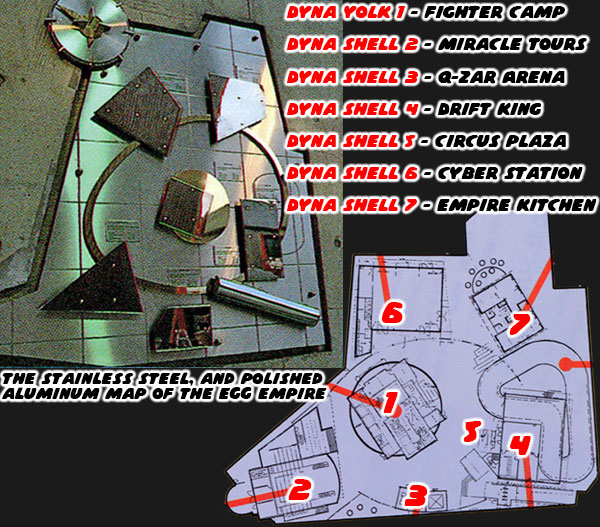
The Egg Empire was supposed to be more experimental, if anything I would liken it to a virtual theme park. There would be a lot of video game elements to this park. From top to bottom this park had an entirely metal facade. All of the buildings were painted in gray, black, and red. They looked as if all the architecture was carved out of a giant steel block with a laser cutter. It was a stark contrast from the wood, brick, and handmade quality of Laperot village. The concept behind the hangar-like buildings was sound. If an attraction needed repair, or replacement then they could simply close that particular building, and get to work. Namco really embraced the egg motif from both parks, but double so at the Empire. The center of the campus was called the “Dyna Yolk,” and the surrounding hangars were numbered “Dyna Shells.” Let’s talk about the central attraction.

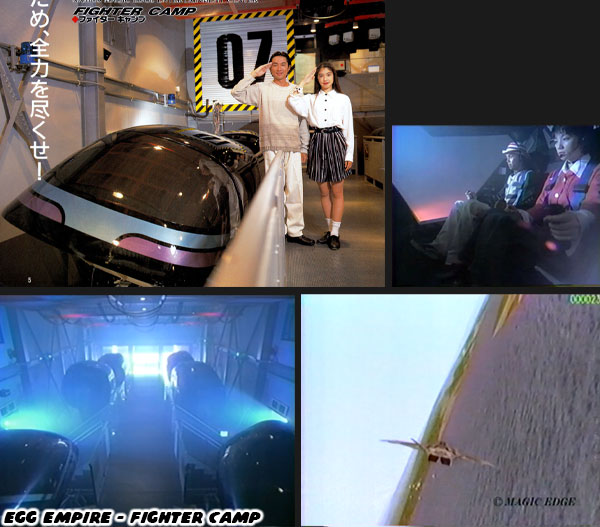
The Fighter Camp was a 40 minute experience. It was a fighter jet simulator that seated two players side-by-side in each cockpit. Dreamers would dress in flight suits, sit through a briefing, as if they were in the Top Gun academy. They would then get a short test flight in order to get used to the controls. They would then get called into service to enter a battle. They would be recorded, and get a debrief after their mission was concluded. From the description that I read about the attraction it was realistic, and at the same time difficult to control. This attraction was put together by Magic Edge in partnership with Namco. It used some cutting edge hardware, and software to build an experience that Namco would take to California later the same year. The Fighter Camp was one of the pricier experiences at the Egg Empire as well. It was charging dreamers 100 Eggs per session or ¥1000 Yen which was about $10 US

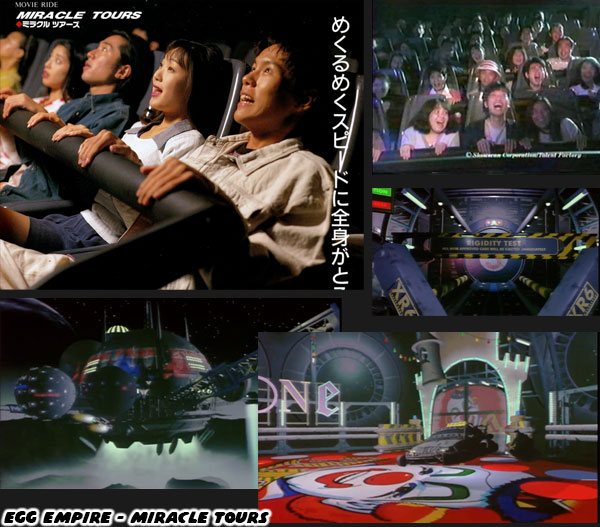
When I read the descriptions for each attraction I noticed that this park had an option for cash at each ride, instead of buying tickets at the gate. This was anathema to the magnetic Wonder Tickets sold at Wonder Eggs. It made me wonder if the business wing of Namco were playing armchair theme park designers. The attraction located in Dyna Shell 2 was called Miracle Tours. It was a movie ride recreating the sense of speed at different scales, including being bounced around on a pinball table. The CGI footage was created by Showscan Corporation/Talent Factory. Showscan had been building movie rides since 1985. Director, special effects expert and Showscan owner Douglas Trumbull produced the show film. The ride system and its controls were later the basis for Disneyland's Star Tours ride. The specific ride at the Egg Empire was Cosmic Pinball, and thankfully the reel was on YouTube. It was a 10 minute ride worth 50 Eggs.

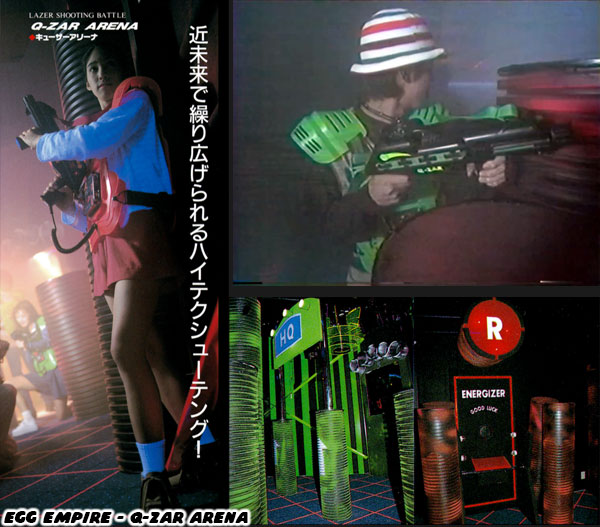
The attraction in Dyna Shell 3 was called the Q-Zar Arena. It was a massive laser tag game course. Laser Tag was a popular activity among kids, and there were many arcades that featured arenas to this day. The technology behind it actually stretched back to the 1970’s when it was used for US Army training exercises. As a toy it hit its peak in the 1980’s. The history of Laser Tag according to Main Event was a fascinating read if you had the time. Visitors got armor, and laser rifles at the Q-Zar arena. Matches lasted 25 mins, and cost 50 Eggs. I noticed how little planning, and forethought the attractions had at the Egg Empire. It seemed like the people controlling the finances at Namco had gone through a catalog of amusement rides, and selected the cheapest ones that could fit within each hangar. That was not to say that the Miracle Tours, or Fighter Camp attractions were inexpensive. They probably cost a quarter-million dollars just to install. They were sadly forgettable rides, and not very cost effective as Magic Edge went bankrupt a few years later in 1996. As far as park design went the Egg Empire seemed like a lazy cash grab.

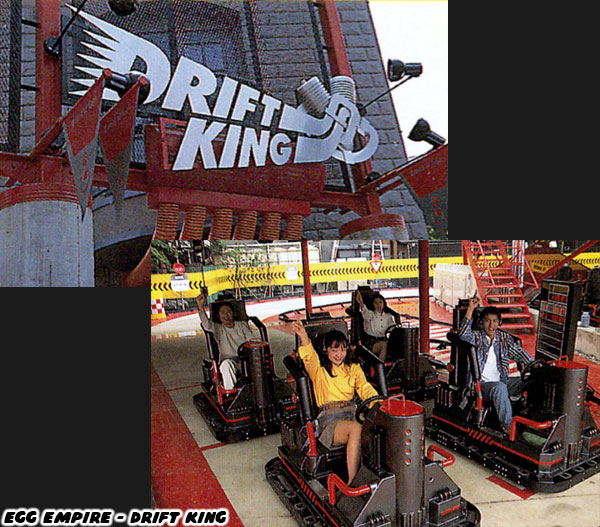
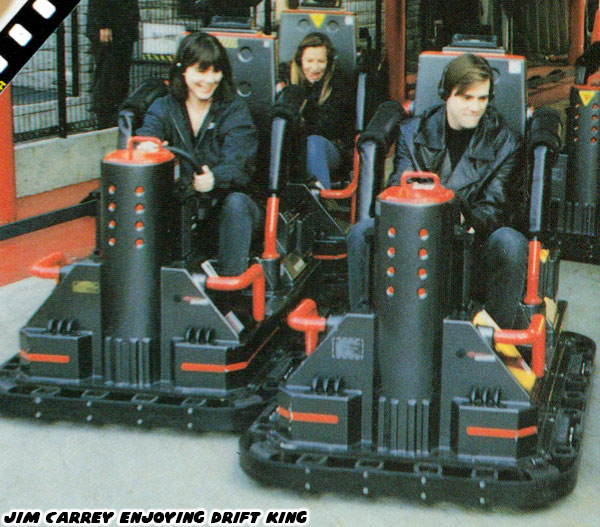
The designers at Namco were still working hard to create a theme, and aesthetic for the park, and its attractions. They needed to make sure they stood out from their peers. The goal was to make everything appear futuristic, and cutting edge. Just look at how they approached the attraction in Dyna Shell 4. The Drift King was a kart racing attraction on a slick course. In the mid ’90s drifting was starting to become popular. It was nothing new for the people at Namco. They loved racing in all forms. The designers were turned on to street racing from the Megalopolis Expressway films from the ‘80s, and the Wangan Midnight manga, and anime of the ‘90s. So how could they turn a slippery kart race into a futuristic proving ground?

They gave each kart a visual makeover. The bodies now looked like some sort of cybernetic hovercraft. They also provided headsets to each racer. In this way they could communicate with each other, hear the lap counts, and more important so they could talk to their cars. The more vocally excitable you were during the race the more energy your ride had. If you yelled “turbo” then it would give you a short speed boost. It was the same bold approach that turned traditional bumper cars into the Future Colosseum. The six-minute race was worth 50 Eggs like most of the experiences in this park.

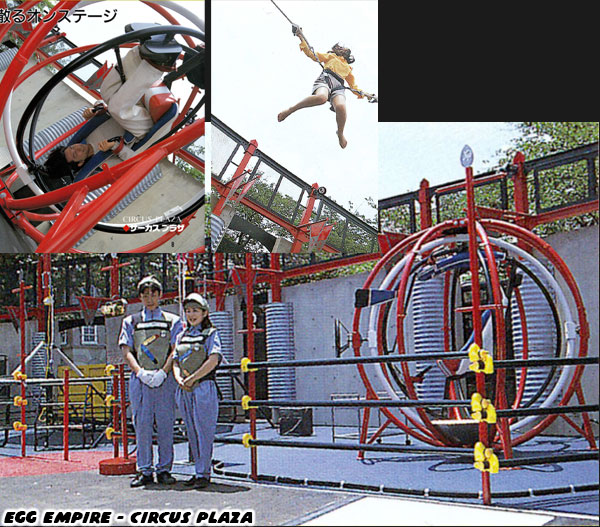
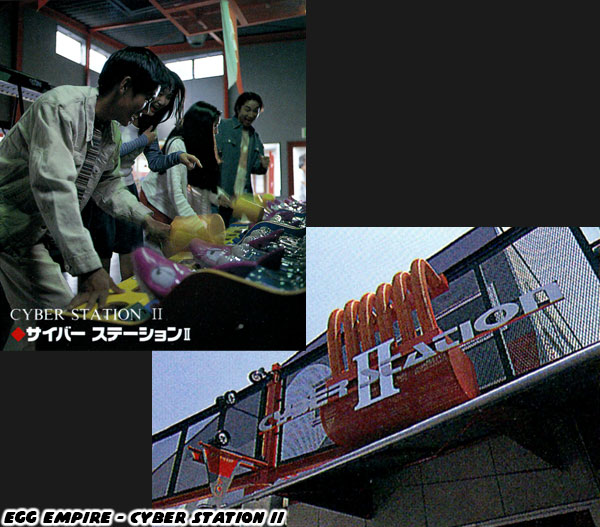
The remaining attractions filling out the Empire felt lacking. They were the kind of things you could find at a mall. For example Dyna Shell 5 had something called The Circus Plaza. It was an outdoor collection of tumbling equipment. A gyroscope, and bungee trampoline. It was 30 Eggs, or ¥300. I assume the experience ended when the guest got bored, tired, or injured with the equipment. Dyna Shell 6 had the Cyber Station II. This was an updated version of the arcade at Wonder Eggs. This one featured the latest games, and prize machines. It also featured networked cabinets, but I could not find out if it featured any gigantic games like Sim Road or Naviway. This arcade was the third location that accepted cash as well. Dyna Shell 7 contained a quick service restaurant called the Empire Kitchen.

It took me about 10 blog entries to break down everything that went into the creation, and execution of Wonder Eggs. This post summed up the entirety of the Egg Empire. The attractions were nice, but not extraordinary. The elements of play that were the foundation of Wonder Eggs were lacking. There were no shows, no secret language, no rallies, or seasonal events to look forward to at the Egg Empire. Namco needed to make it more relevant to visitors or else it would close just as fast as it was built. We will look at what happened in the next blog. I hope to see you back for that. Were there any defunct parks that you visited? Please tell me about it in the comments section. As always if you would like to sponsor me please visit my Patreon page and consider donating each month, even as little as $1 would help make better blogs and even podcasts!
follow the Street Writer on Patreon!
Wonder Eggs, and Egg Empire research collected from: Wonder Eggs Guide Map, Namco Graffiti magazine, the book “All About Namco II", NOURS magazine, The Namco Museum, Namco Wiki, Ge-Yume Area 51 Shigeki Toyama Collection, mcSister magazine, first person attraction details from Yoshiki. Event details from Hole in the Socks.