Wednesday, June 20, 2018

30 years of Street Fighter: 30 years of Characters #11


In the 30 years since Street Fighter was created there have been many characters that have come and gone. One of those that remains timeless is Guy. The origin of Guy and his friends was the stuff of legend. The short version goes like this; Street Fighter wasn't a smash hit when it debuted in 1987. Technos on the other hand had ruled arcades with their game Double Dragon. When Capcom decided to create a sequel for Street Fighter they went in the direction of making a better version of Double Dragon. With three playable characters named Guy, Cody and Haggar, who were supposed to replace Ryu and Ken as the stars of the game. This new brawler would be called Street Fighter '89. Arcade owners didn't like the shift from one-vs-one fighting game so Capcom relabeled it Final Fight and started working on Street Fighter II instead. Guy was supposed to replace Ryu, as Cody was supposed to replace Ken in the series. This time around the Japanese and US fighters would look and play completely different.
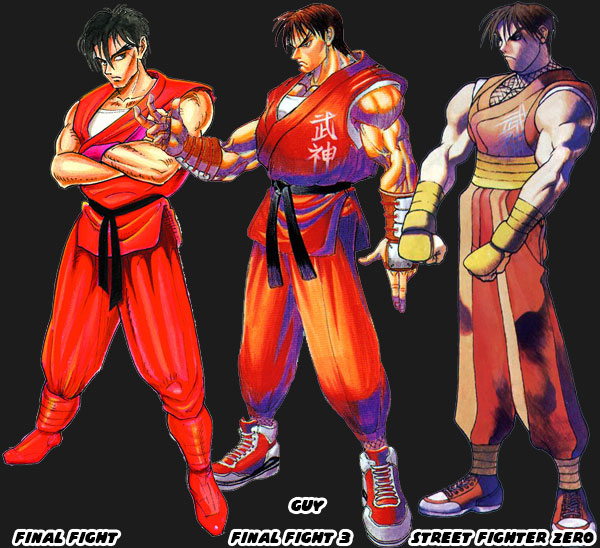

The DNA of Final Fight could be seen in SNK's Fatal Fury. Takashi Nishiyama and Hiroshi Matsumoto helped create the original Street Fighter and had a lot of notes about a radical new sequel. One which featured three main characters instead of two. They never got to start work on this new fighting game at Capcom. The duo left the studio and went to SNK where they developed the King of Fighters universe. The trio of characters they created turned out to be Terry Bogard, Andy Bogard and Joe Higashi. The reason why Guy worked in the lineup was the same as why Terry worked. These were the new fighting archetypes. Instead of looking like a character from an old martial arts movie they had cues from modern heroes. Guy looked like some sort of classical ninja until you noticed that he was wearing sneakers. It was a subtle but stylish upgrade to the classical look. It was Bruce Lee that we had to thank for this shift in thinking. Lee pulled the action movie genre into the future. He didn't have to play a master in ancient China when he could be a present-day hero. He could wear sneakers, sunglasses and ride a motorcycle while still being a realistic fighter.
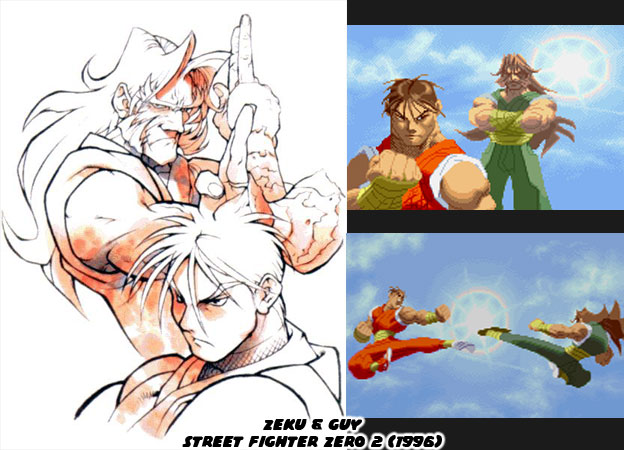
Guy's red solid-color uniform and sneakers had the same level of coolness as Bruce Lee's yellow outfit in the movie Game of Death. It wasn't hard to imagine that he could easily dethrone Ryu as the main character in the Street Fighter universe. The fact that his lightning quick speed, leaping kicks and backhand punches easily made the transition from Final Fight in 1989 to Street Fighter Zero in 1995 showed that he was always ready for the spotlight. Throw in a mysterious master named Zeku that only recently became a playable character and you had all the makings of a Street Fighter Legend. Guy was just one of the many reasons why the series has lasted for 30 years. The game had now multiple generations following it and it showed no signs of slowing down. As always if you enjoyed this blog and would like to sponsor me please visit my Patreon page and consider donating each month, even as little as $1 would help make better blogs and even podcasts!
 follow the Street Writer on Patreon!

Tuesday, June 19, 2018

30 years of Street Fighter: 30 years of Characters #12


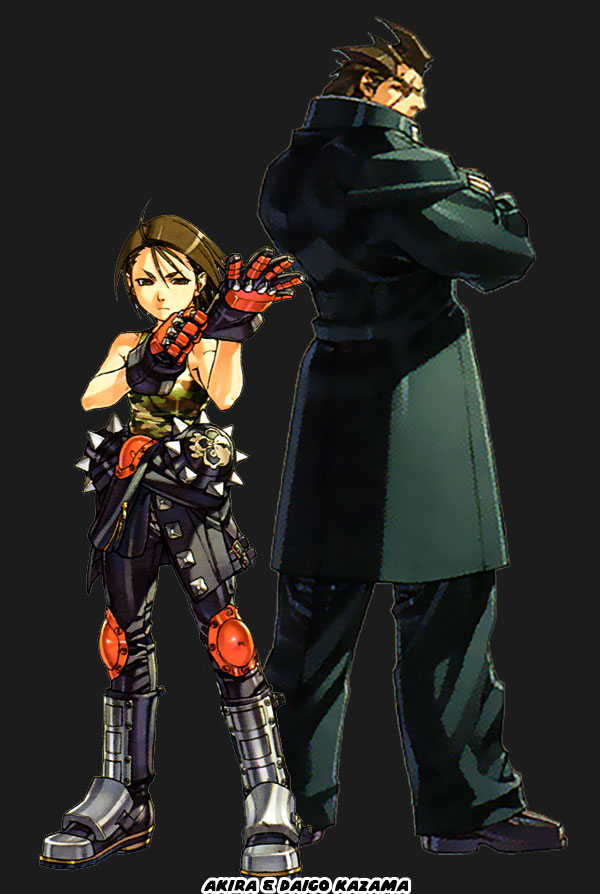
Akira Kazama is probably not a name that you know off the top of your head. She's also a character that you've probably never played as. Hundreds of characters exist in the Street Fighter universe, of those a few dozens are main characters and the rest are supporting players. Akira is a very interesting because of her role in the Rival Schools series. The game was a high school mystery featuring fighting game archetypes. They were in essence like the next generation of Street Fighter characters. In the game a Gedo High School senior and gang leader named Daigo Kazama began ordering his crew to begin attacking other schools. It was out of character for him as he mostly kept the peace at his own school. Daigo represented the classic bancho, or tough-guy gang leader that was popularized in film and manga. Most people in society wouldn't have cared that he was acting strangely, after all, wasn't fighting the only thing delinquents did? 


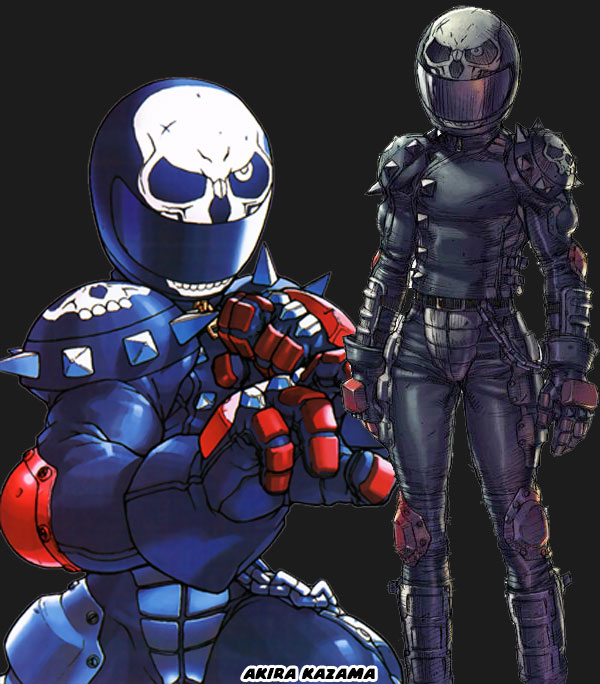
His friends, fellow gang members and especially his family knew something was wrong. Daigo had gone missing for a short while before he returned and began orchestrating attacks on rival schools. His sister Akira was trying to find out what had happened to him and if there were other forces at play. When the game debuted audiences didn't know that Akira and Daigo were related. In fact audiences did not know that Akira was a girl until the end of the game. Capcom created a prototypical fighting badass and did a great job at hiding her gender. Akira was a neutral name and her costume of heavy motorcycle padding was androgynous. The skull motif, chains and spiked padding made her very menacing. It wasn't hard for most to assume that this gang member was just another guy.


Akira was a shining example of the Street Fighter school of design. When we looked at the lineup in a Street Fighter universe game we could right away tell that they were meant for fighting. The costumes, the colors, the details all said they were people you didn't want to mess with. None did it better than Akira. At the same time characters in the Street Fighter universe came from every walk of life. I had previously mentioned that pro wrestlers, circus acrobats, boxers, mercenaries and even demons worked within Street Fighter continuity. Akira was a schoolgirl with a heart of gold, but anime schoolgirls were a tired trope. She had to undergo a transformation so that audiences would believe that she was serious business. Anime schoolgirls were becoming a tired trope, that was why Akira looked like somebody else entirely. This motorcycle riding badass was a great brawler and could swing a mean chain. After 30 years there wasn't anyone in the series that had such a great reveal until the end of the game. That was one of the reasons why we should celebrate Akira and characters like her every time they appear. Did you enjoy the Rival Schools series? If so I'd like to hear about it in the comments. As always if you enjoyed this blog and would like to sponsor me please visit my Patreon page and consider donating each month, even as little as $1 would help make better blogs and even podcasts!
 follow the Street Writer on Patreon!

Monday, June 18, 2018

30 years of Street Fighter: 30 years of Characters #13


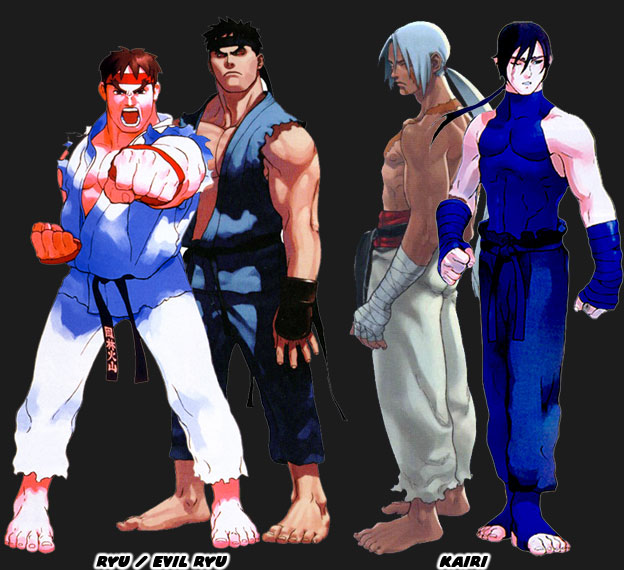
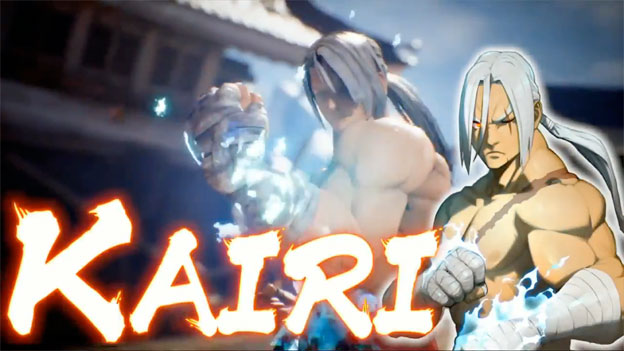
After 30 years of Street Fighter there were few characters as fascinating as Kairi. This boss-level figure struggled with personal (and literal) demons during the events of Street Fighter EX tournament. Very few in the universe had as complex a back story. His half-sister Hokuto / Shirase was certainly one of those rare exceptions. Kairi was a mysterious figure central to the plot of the EX series. He was an exceptional fighter but was suffering from amnesia. His look was unique, he wore a dark blue uniform, more ninja-like than karate. He was covered in scars and even had a large one over his eye. His super moves caused him great pain. He was tortured by the energy flowing within him. This caused him to evolve within the series. He went from an average character to someone with boss-level power between the first and second EX titles. If this sort of evolution sounds familiar there was a reason why.


Kairi was created by the staff at ARIKA, many of whom worked on Street Fighter II. Kairi was a star character and designed to be an evolved version of Ryu. A sort of second-take on the character. By the same token Allen Snider was designed to be a new version of Ken. Both fighters had similar inspirations, and similar origins. Capcom explored giving Ryu more power and more moves by turning him evil in the middle of the Street Fighter Zero / Alpha series. This was to demonstrate that Ryu could become a villain like Gouki / Akuma. It also set up the possibility that he could assume his role in continuity. Ryu was able to overcome his dark personae by the end of the Zero series. The same thing did not happen with Kairi. He gave in to his dark power and it made him much stronger. His hair even changed from black to white to signify this transformation. 


What made Kairi unique was that he didn't become a villain. Instead he became a boss-level character that wasn't necessarily good or evil. He was a melancholy fighter that sought a challenge, and possibly death in battle. In EX canon he defeated Gouki as well as the demon Garuda. Kairi became a warrior without peer, destined to walk the path alone. I certainly look forward to how the character has evolved in the next EX game as well as how his relationship with his sisters has changed. Do you enjoy characters with unique stories as much as I do? I'd like to hear about your most memorable characters in the comments section. As always if you enjoyed this blog and would like to sponsor me please visit my Patreon page and consider donating each month, even as little as $1 would help make better blogs and even podcasts!
 follow the Street Writer on Patreon!

Sunday, June 17, 2018

30 years of Street Fighter: 30 years of Characters #14


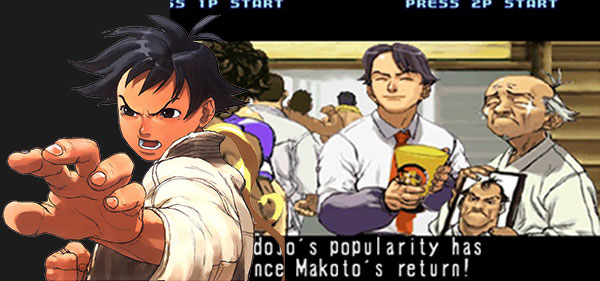
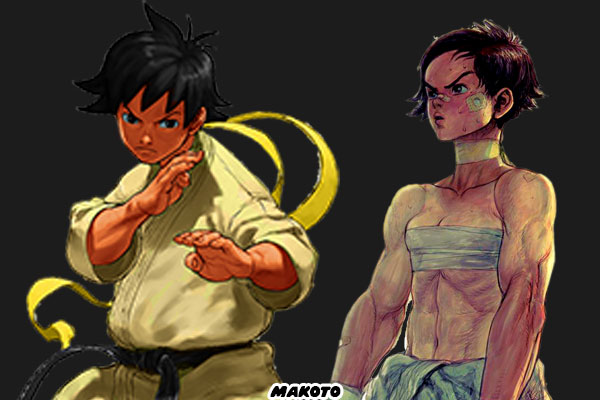
Makoto is a gem in the history of Street Fighter. Originally appearing in Street Fighter III: Third Stike she deserves to be celebrated this anniversary. In the '90s within a few years of each other Capcom created Sakura and Makoto. On paper both seemed identical. They were young Japanese girls, from a small family, tomboyish in appearance, yet also karate savants. The two actually had origins and abilities that were very unique. As I mentioned previously Sakura was a jab at SNK for the character Yuri Sakazaki. Thankfully Sakura wasn't so much as a clone but an evolution of the concept for the Street Fighter series. She mirrored Ryu but with weaker versions of his attacks. Makoto was something else entirely.  


Makoto looked like a karate fighter, but remember up until 1999 all of the karate characters moved and fought a certain way. The sprites, animations and input commands for Ken, Ryu, Sean, Sakura, Dan and Gouki were almost identical. There were a few differences in the damage they did but the characters were more or less the same. Audiences may have assumed that all karate fighters were like that in the Street Fighter universe, but that wasn't the case. Makoto was completely new, she used none of the sprite data from the other karate masters. In fact every move of hers, down to the way she walked, was built from scratch. Her animation was brilliant in 2D and among the best ever rendered in any series. From a technical standpoint Makoto required new strategies, new setups and new understanding of the fighting arts. The team at Capcom reinvented the way players thought about karate. 


The studio gave Makoto a unique origin. She was the daughter of Masaru, the founder of the Rindoukan school of karate. In typical video game fashion this was a made up method. In the Art of Fighting the fictional form was Kyokugenryu, the Utmost Limit style of karate. Dan Hibiki practiced a parody version called Saikyo Style aka the Strongest Style. Makoto was the young master of Rindoukan or the Severe school of karate. When her father passed away she became the new headmaster. In order to keep her dojo alive she needed new students and sought them out in the Street Fighter tournament. Makoto had all the underpinnings of an anime archetype. She was small and very boyish, in fact she was often mistaken for a boy. At the same time she had strikes that were among the most powerful in the series. Her power was a legitimate threat to the toughest fighters. These things would have gone over great in an animated series. She shook up the Street Fighter universe in a good way. I'm grateful that Capcom took a chance with the design and made her work in canon. I look forward to seeing this character evolve when Street Fighter celebrates another milestone. As always if you enjoyed this blog and would like to sponsor me please visit my Patreon page and consider donating each month, even as little as $1 would help make better blogs and even podcasts!
 follow the Street Writer on Patreon!

Saturday, June 16, 2018

30 years of Street Fighter: 30 years of Characters #15


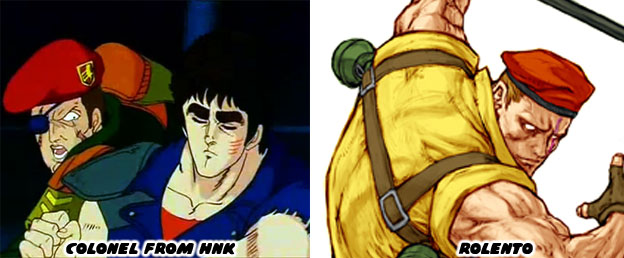
If you plan on going into battle make sure you are ready for war. Today we celebrate Rolento; the Mad Gear boss that is actually a mercenary and one of the most wily Street Fighters that you will ever come across. Rolento is easily one of the most memorable characters in the universe for reasons you might not be aware of. I had previously mentioned how military design works in fighting games. With the introduction of the character Falke in Street Fighter V I spoke a little bit about other military-inspired designs in fighting games. The Ikari Warriors; Ralf and Clark. Leona, Whip and Heidern all had military cues. Heidern specifically had something in common with Rolento. Both characters were a call out to a villain from Hokuto No Ken / Fist of the North Star. A deranged mercenary known as the Colonel was terrorizing post-apocalypse survivors. He had a beret and wore an eye patch. He moved stealthily, leaving a trail of shadows behind him, he was also a master of hand-to-hand combat. There were other military characters in the series like Sargent Mad but the Colonel seemed to leave a lasting impression on the designers at Capcom and SNK.


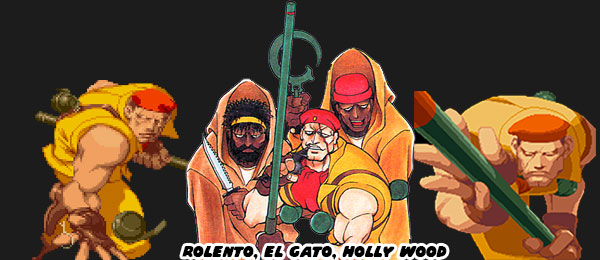
Rolento made his debut in Final Fight. He was the top ranking Mad Gear boss, second only to the founder Belger. Rolento fought with a staff and moved very quickly all over the screen. He would leave a blur of shadows in his wake, just like the Colonel, before dropping a dozen grenades on his opponents. This made for a difficult fight when compared to the previous bosses. He turned up again in Final Fight 2 and the fighting game Final Fight Revenge. His unique library of moves carried over into Street Fighter Zero / Alpha 2, when Rolento officially entered the Street Fighter tournament. Rolento was possibly the most proficient character in the universe with a weapon. Whether it was a knife, staff, tripwire or grenade, he could use them all with deadly precision.


It was Rolento's mentality that made him stand out in the universe. He approached every fight with a win-at-all-costs attitude, even when battling young girls and pro wrestlers that weren't a threat to his rule. He was a fighter with lethal efficiency that made use of his weapons and environment. He could ambush his opponents with a wire and strangle them, the move was called Take No Prisoners. Fellow mercenaries and Mad Gear members El Gato (sometimes written as El Gado) and Holly Wood waited in the rafters with a hook and knife to help trap opponents. Rolento was the type of madman that worked well in the Street Fighter universe. That is why I'm happy to bring him up for this 30th anniversary series. I hope that someday in the future his rivalry with Doctrine Dark and Guile is reignited. As always if you enjoyed this blog and would like to sponsor me please visit my Patreon page and consider donating each month, even as little as $1 would help make better blogs and even podcasts!
 follow the Street Writer on Patreon!

Friday, June 15, 2018

30 years of Street Fighter: 30 years of Characters #16


I think it's fair to say that Sakura stole the show when she debuted in Street Fighter Zero / Alpha 2 in 1996. Young female fighters were nothing new to the genre. I had mentioned previously that Cammy was the younger variation of Chun-Li but outside of Capcom the young female fighters were already established. Girls that practiced judo, taekwondo, kung-fu, fencing and other martial arts had been featured by rival studios in other games. So what was it that made Sakura a stand out character? Why was she worth celebrating on the 30th anniversary of the franchise? Sakura and Dan Hibiki were a sort of parody to the characters in the Art of Fighting series by SNK. Specifically Sakura was a call out to Yuri Sakazaki, the little sister of Ryo Sakazaki. Sakura was meant to be a type of little sister to Ryu. A cute character that had weaker versions of the main character's attacks. Only she turned out to be more important than just a clone.


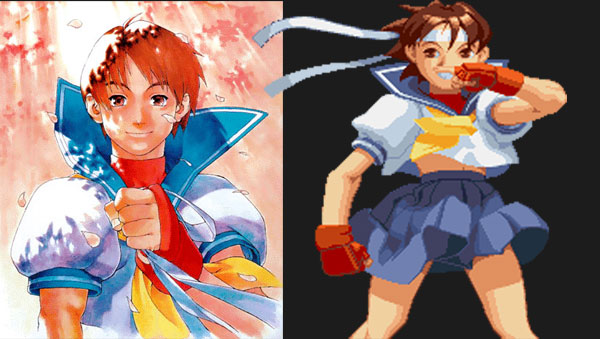
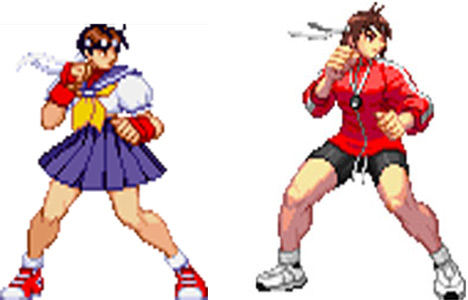
Sakura's look stood out right away. Before audiences even got a chance to play as the character we could tell there was something different about her. She was wearing a school uniform, not a martial arts costume. Characters that wore street clothing or non-traditional martial arts costumes were rare in the series. On closer inspection we could make out that her school uniform broke from tradition. Sakura wore big red punching gloves, and a long headband, just like her idol Ryu. She wore red bloomers and a red sports bra underneath her outfit to create an athletic undertone. She had a short, sporty haircut, instead of the usual long anime girl hairstyle. Her red sneakers helped ground her in the modern era and reflected her personality. Sakura was a spirited fighter yet still growing into adulthood. She perfectly captured the Street Fighter school of design. On first glance you got one idea of the type of character you were dealing with but on closer inspection every design cue told a story. She was not a typical schoolgirl, just like Ryu was not a typical karate guy.


Sakura was the next generation of Street Fighter. It was okay that she didn't wear a karate gi. It was okay if she wasn't as powerful as her heroes, this meant she had room to grow. Most important, it was okay that she was a girl from a middle-class family in Japan. The best fighters in the world came from every walk of life. They didn't have to dress like characters in a movie or comic book to be recognized as masters of the fighting arts. In fact those traditional figures had become campy. They belonged to the older school, the people that founded the Street Fighter Tournament. Sakura was the new face of the series and represented an overdue change in tone and design. I'm glad she got a chance to shine in the game series and especially manga series. I look forward to seeing this character grow and evolve over the next 30 years. As always if you enjoyed this blog and would like to sponsor me please visit my Patreon page and consider donating each month, even as little as $1 would help make better blogs and even podcasts!
 follow the Street Writer on Patreon!

Thursday, June 14, 2018

30 years of Street Fighter, 30 Days of Characters; #17


The Street Fighter universe is filled with dozens of amazing characters, most of which are very popular for a number of reasons. Think about your favorite character and then think about the international presence of the game. Your favorite character is probably a favorite character for a kid living in a tiny Latin American country. Or a university student programming his first game in Singapore. Or your favorite might be the same as a professional soccer player living in the UK. You are fave-ing a character that is followed by millions of real world people. How crazy is that? The series has made it to 30 years, with no sign of slowing, because of this international appeal. At the core of the game is a library of memorable heroes and villains. In the history of the game there has never been a fighter more destined to become a superstar than Allen Snider. At least in his mind there is nobody more deserving of being called a star. I hope once you get a chance to understand the character you'll also agree. Allen is one of the fighters that I am genuinely happy to see return in Fighting EX Layer. It's been too long since we last saw the legend in action. 


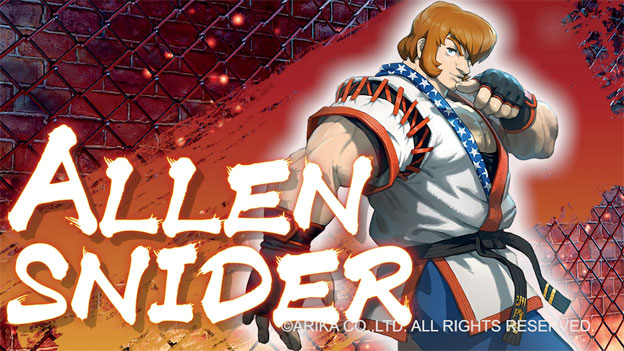
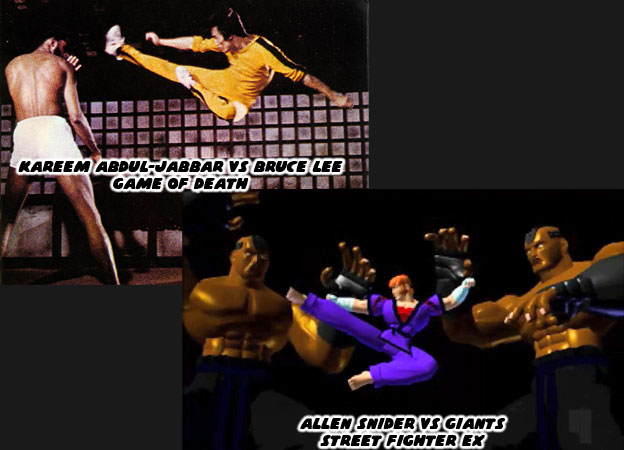
Allen Snider and Kairi debuted in Street Fighter EX back in 1996. They were an attempt by the developers at ARIKA, who happened to work on Street Fighter II, to recreate the Ken and Ryu archetypes. Ken and Ryu had subtle differences in the Street Fighter series. Their uniforms and moves were practically mirrored. ARIKA wanted their versions to be much more obvious. The costumes, moves and special attacks had a greater variety when comparing Snider to Kairi. In a nutshell Allen was the new American legend, the new Ken. He was a self-absorbed karate champion that fancied himself a star in the making. The team at ARIKA based his design cues from movie legends Bruce Lee and Chuck Norris. His mannerisms, face, hair and even game endings were pulled from martial arts cinema. His tacky red, white and blue costume was decidedly non-traditional and based on real world fighters like Bill Wallace and Joe Lewis. Snider was like a cartoon version of some genuine heavy-hitters.


Allen, just like the other characters that we are celebrating this month, has a lot of real world influence. But set those influences aside and you still have a character that is fun to play as. Snider's flair for the dramatic, his poses in between strikes and loud yells are all very over-the-top and ensure that he will never be mistaken for just another Ken. His moves in fact are not a mirror of Ken or Ryu but something that tries to counter them. His "Justice Fist" can punch right through a fireball, his "Vaulting Kick" is a rising answer to the hurricane kick. He makes you wonder how different the series would have been if Capcom put more effort in making its karate characters more unique. I am happy to bring Allen up for this series and look forward to seeing more of him in the future. What are your thoughts on the character? As always if you enjoyed this blog and would like to sponsor me please visit my Patreon page and consider donating each month, even as little as $1 would help make better blogs and even podcasts!
 follow the Street Writer on Patreon!

Wednesday, June 13, 2018

30 years of Street Fighter, 30 Days of Characters; #18


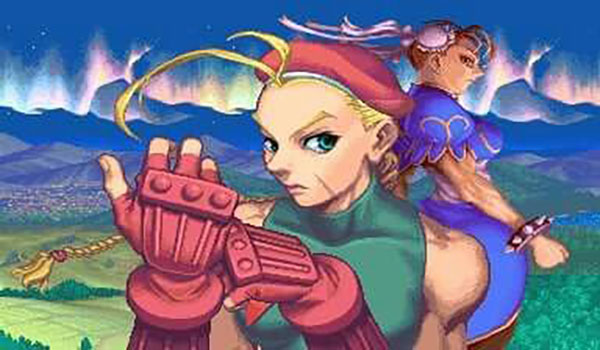
If you've been playing Street Fighter for some time you know when some characters are fan favorites and others not so much. Cammy entered the Street Fighter universe like a wrecking ball. The tiny blonde secret agent from Great Britain was an immediate success. There were a number of reasons why she took off in popularity. She debuted in 1993 with the release of Super Street Fighter II. She was accompanied by Fei Long, Dee Jay and T. Hawk. As you probably know the four characters were originally going to appear in Street Fighter III. Capcom had a runaway hit when Street Fighter II debuted in 1991. SNK was breathing down their neck with the Fatal Fury and Art of Fighting series. The US was making waves with Mortal Kombat. Capcom needed to stay a step ahead of the competition so they released upgrade kits for Street Fighter II, known as the Turbo and Championship versions of the game. These updates balanced the game play, added the ability to play as boss characters and introduced other new features. It was much cheaper for an arcade to get an upgrade than to outright buy a new game. Plans for Street Fighter III were scrubbed and the characters meant for it was rolled into the Super upgrade.


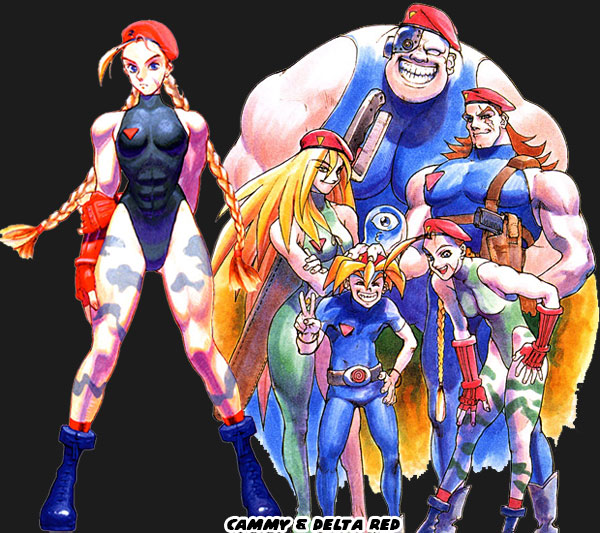
So what was it about Cammy that made her stand out in Super Street Fighter II? She was originally going to be the female lead in Street Fighter III. She was designed to be a replacement for Chun-Li. As such she had to be as powerful and visually memorable. Only Ken and Ryu were scheduled to return in SF III. The rest of the cast would be created entirely from scratch. Much more forethought was given to Cammy than any other new fighter and it showed. The choice of color, the cut of her uniform, the use of metal gauntlets and heavy boots all mirrored the design elements from Chun-Li. When Chun-Li was in the design phase she looked like a generic female character. The studio had to go back and rework her costume and background in order to make her interesting. With a template in place Cammy was much easier to design.


Cammy is a member of Delta Red, an elite special forces unit from overseas. Chances are her teammates would have been more involved in the plot of Street Fighter III, possibly even one or two might have been made playable. Instead they were reworked to fit into the story of Street Fighter II. Cammy's strength and speed is explained as she is a product of Delta Red and also an agent of Shadowlaw as well. She was brainwashed at the time but received additional training from the main villains in the series. As far as I can recall Cammy is the only character in the game series to actually appear on both sides of the Shadowlaw conflict. This unique origin combined with a solid design and some great moves made her stand out in the Super Street Fighter II upgrade. After 25 years she enjoys continuing popularity in the series. Like the most unique characters in the series Cammy is here to stay. I look forward to seeing how she evolves over the next 30 years. As always if you enjoyed this blog and would like to sponsor me please visit my Patreon page and consider donating each month, even as little as $1 would help make better blogs and even podcasts!
 follow the Street Writer on Patreon!

Tuesday, June 12, 2018

30 years of Street Fighter, 30 Days of Characters; #19


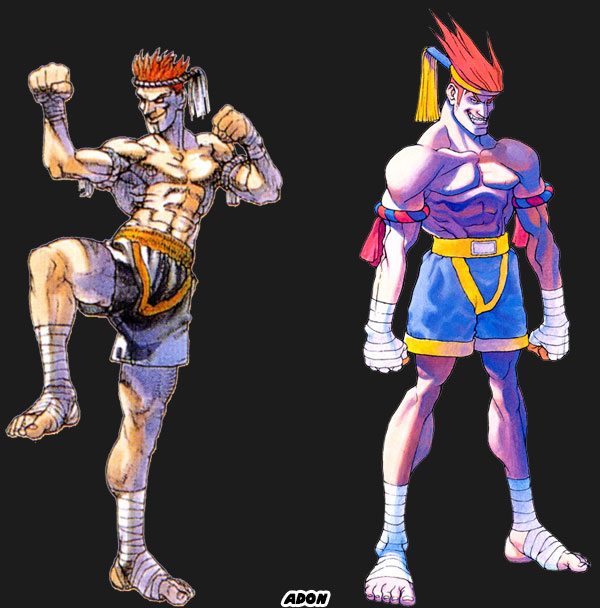
The greatest heroes in Street Fighter are only be as good as the villains allow them to be. If we're celebrating the most influential fighting game series of the past 30 years we have to celebrate the bad guys as well. Adon is a fantastic character and somebody that I just love to hate. In the story of Street Fighter Adon is a master of muay thai. He is the understudy of Sagat and possibly the best pure muay thai specialist in the universe. Adon has an arsenal of kicks, elbows and knee attacks known as the Jaguar strikes. His mentor Sagat named his most powerful moves after the tiger. When Ryu defeated Sagat to become the strongest fighter in the world it signaled to Adon that his time had come. The tiger had lost his teeth and the era of the jaguar was just beginning. 


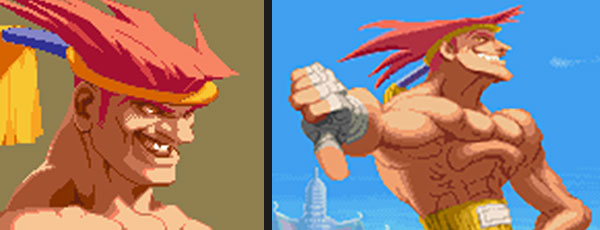
Adon is lean and muscular. His moves are flashy and his personality absolutely shines in every animation. When he beats an opponent he drops to his knees in celebration of how awesome he is. Adon is a very arrogant character. He has a wide smile and a face that's just begging to be punched. I mean, just look at it! Of course just because he's arrogant doesn't mean he's not dangerous. Do not confuse Adon for a joke character like Dan Hibiki. Dan thinks he is a greater fighter than he actually is. This mentality usually means he gets beat up in the canon of the universe. Adon doesn't just boast about his ability in the game and various comics and manga, he backs it up with lethal precision. In all of Thailand he is second only to Sagat in the rankings. As far as muay thai and the Street Fighter universe is concerned he is the second most dangerous fighter in the world. Adon is way above any other muay thai fighter, or most fighters in general, he is at the elite level. His power and speed are so amazing that he can take on fighters two or three times bigger than he is.


Adon doesn't have the size or strength of his mentor but what he lacks in raw power he makes up for in precision. Adon is quick on his feet and can trade kicks faster than most people can punch. Also as the young master Adon has room to grow and become more dangerous with age and experience. The idea of the young surpassing the old has been an important part of the Street Fighter mythos. Adon reminds us of that lesson. He also serves to remind us that not every character in the universe is humble or good. Some people are happy causing pain and suffering to their opponents. Adon is this type of villain. In the next entry we will look at a character that actually played both sides of the fence. As always if you enjoyed this blog and would like to sponsor me please visit my Patreon page and consider donating each month, even as little as $1 would help make better blogs and even podcasts!
 follow the Street Writer on Patreon!

Monday, June 11, 2018

30 years of Street Fighter, 30 Days of Characters; #20


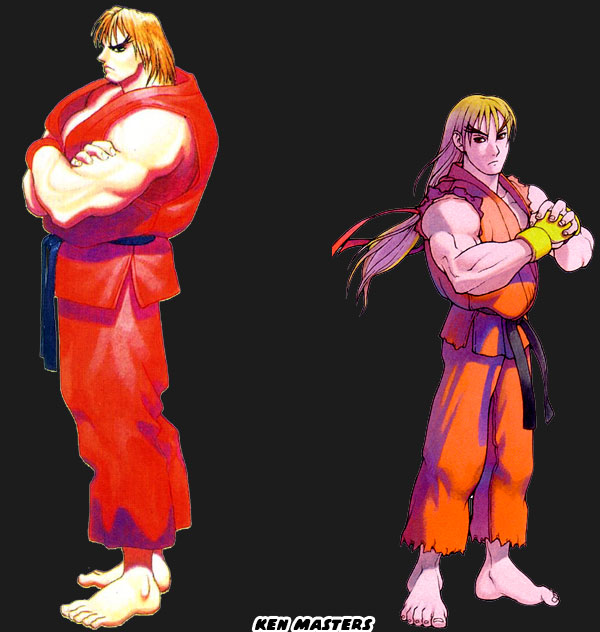
After 30 years it's tough to improve on perfection. When Street Fighter came out there were only two playable characters, Ken or Ryu. There was very little separating the characters. Aside from a change of color the characters were identical. Even their special attacks were exactly the same. Capcom was wise enough to realize that western audiences might not want to play a game without some representation. Ken was pandering to the US audience and it worked. Every studio following in the footprints of Capcom had to make a fighter to represent the USA. But if he was just like Ryu then what was it that made Ken so appealing? The two would develop their own identity over the next 30 years.


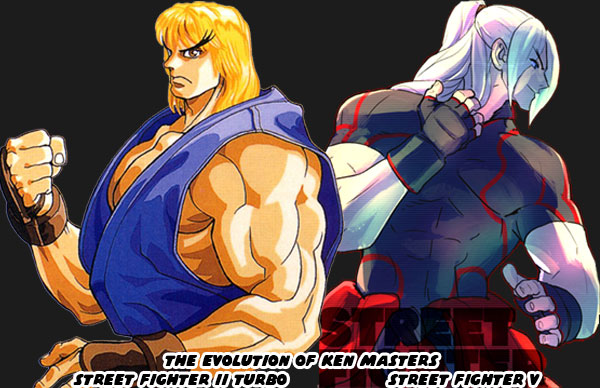
In the history of Street Fighter nothing stayed the same, not even Ken and Ryu. The first changes were subtle, just in appearance really. This was a detail often overlooked in their character designs. Costumes told a story and Ken's version of the gi was subtly different from Ryu's. It wasn't just the color that made him stand out. Ken's pant and gi top were hemmed by comparison Ryu's were torn. Ken's image was that of clean-cut martial arts superstar. We saw him grow up, win championships, marry his long-time girlfriend Eliza and even have a child in the various sequels and prequels. Ken projected success in his personal and professional life. His moves in Street Fighter evolved to distinguish him from Ryu. In the Street Fighter Zero / Alpha series there was greater attention paid to the special attacks they could perform. Ken's dragon punch became synonymous with fire. His burning dragon punch moved vertically instead of horizontally. His version of the hurricane kick also traveled higher and had a burning effect. Ryu's version of the super attacks were not as flashy but instead focused on stripped down power.


As the series grew in popularity so did Ken. He wasn't seen as solely a token USA character but just a great character to play with. Capcom made sure to give him and Ryu more distance as the franchise was resurrected with Street Fighter IV. The changes kept coming and he got a radical makeover in Street Fighter V. His look and his moves had stirred up some strong feelings in the community. They felt that the designers were steering Ken away from the elements that kept him consistently great. In the end they learned to embrace the change. I'm glad that Ken has been around for 30 years and I hope to live long enough to see him celebrate another 30. As always if you enjoyed this blog and would like to sponsor me please visit my Patreon page and consider donating each month, even as little as $1 would help make better blogs and even podcasts!
 follow the Street Writer on Patreon!