Monday, March 12, 2018

The Giant Monster Series, part 16...


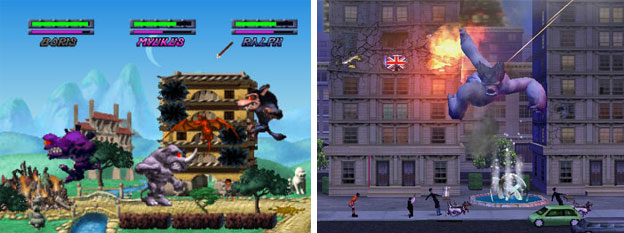
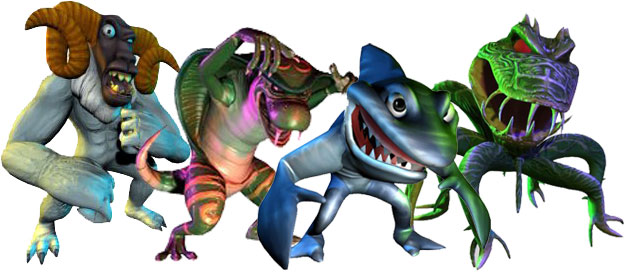
War of the Monsters is the best giant monster video game ever made. Nothing before or after could hold a candle to it, certainly none of the Godzilla or Rampage games. Yet it also held a tremendous debt of gratitude to those titles for paving the way and teaching the developers where the pitfalls of the genre were. War of the Monsters was released in 2003. It had favorable reviews but most audiences slept on the title. Those that got into it enjoyed the experience. They appreciated the layers of substance put into the game by Incog Inc. (later absorbed into Sony Santa Monica). The game began as a love letter to the classic giant monster genre. It was dreamed up by gaming icon David Jaffe and his Twisted Metal colleagues. War of the Monsters evolved from a simple idea into something that gamers could really sink their teeth into. In order to pull off a great giant monster experience the developers went to the roots of the genre, the cinema. The game began in the classic movie broadcast format. The entire set-up of involving an alien invasion and where the monsters came from was explained in the first few moments. Eagle-eyed players noticed a couple of cars from the Twisted Metal series in the opening shot.


After the film played the camera panned back to reveal the title screen was set on a drive-in movie screen. Classic cars, circa the late '50s and early '60s were in the lot waiting for the feature to start. The tiny details on the menu screen rekindled memories of another era. The light coming from the background had the same hues of dusk setting in. Houses, telephone poles and even a water tower could be seen beyond the tall wooden fence. Movie fans in the suburbs would enjoy going out to the local drive-in because it was an altogether different experience. This was a slice of Americana that Incog Inc. wanted to bring bring players into.
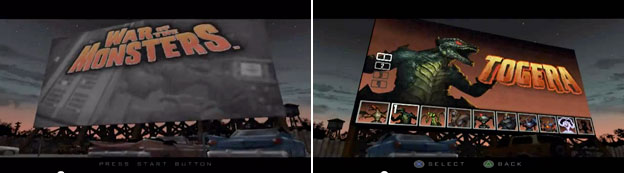

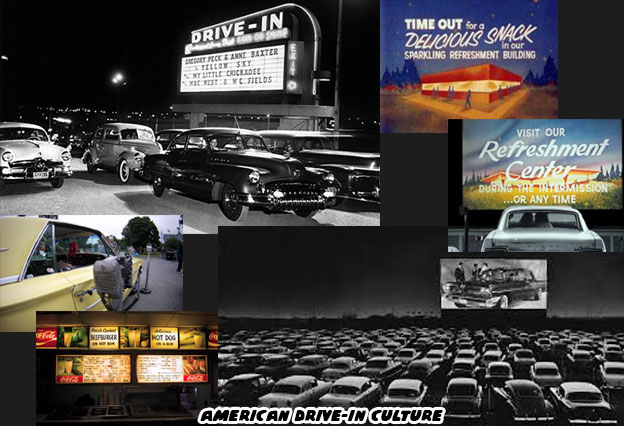
No movie palace could ever have the same atmosphere of an open-air arena. On a warm summer night patrons would get mixed sensations. A soft breeze, the sounds of crickets softly chirping in the distance, the smell of popcorn, pretzels and hot dogs wafting in from the concession stand. Even the sound of kids running through the gravel could only be experienced there. Patrons could enjoy the film from the privacy of their own cars. Families would sometimes pack an entire picnic to enjoy during the movie. Tiny steel boxes were hung on the car door to pipe audio directly to them. This was a prosperous time for the USA. We had just gotten out of WWII. Industry was booming, the middle class had grown exponentially and people were enjoying a culture that revolved around the automobile. Drive-in movies and drive-in fast food restaurants were the hottest trends. The greatest memories of a generation were tied to the drive-in. Some of these details were clearly seen on the title screen and in the various game menus.

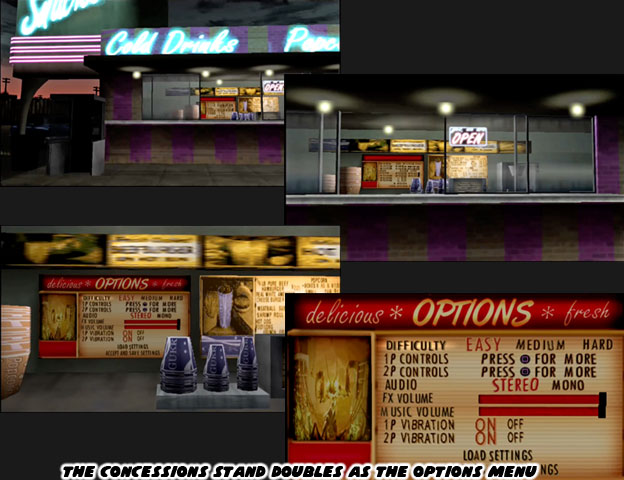
The main menu and character select menu were split between two different movie screens. The camera would pan between them as the player made a selection. The amount of detail placed on the drive-in was amazing. It was a way to ease audiences into this world. If the gamer went into the settings menu they were taken to the concession stand. The sign was certainly retro, the color of the settings menu was off white-almost plastic, like an old '50s drive in or even diner menu would have appeared.

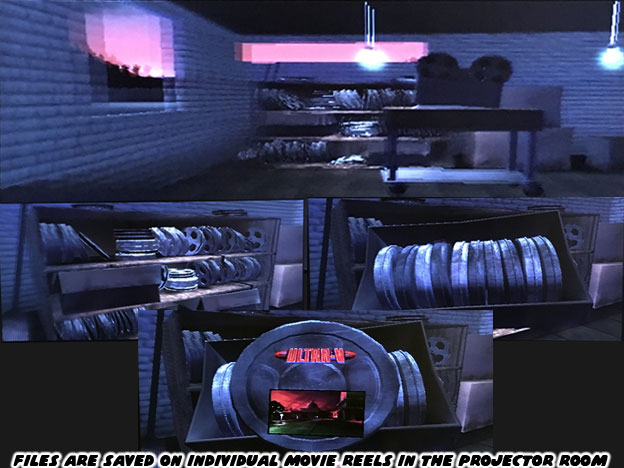
If a player went to load a saved file then the menu would take them into the projector room. Inside there were multiple projectors for each screen. The players were shown a cardboard box, it would be empty at first but as they saved games it would slowly fill with movie reels. Each reel had a picture of the level being saved and the title of the monster they were playing as. It was a nice touch making the monsters the stars of each picture. The format allowed players to save up to two cardboard boxes or two memory cards worth of reels. Friends could bring over their own saved files and share them on the Playstation 2.

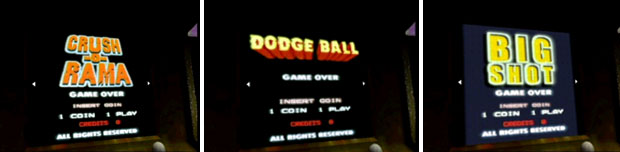
If a player wanted to try a 2-player mini game then the menu screen would shift. Next to the concessions stand was a bench for families to enjoy their food. There was a pinball machine and a weathered arcade machine. The camera would focus on the arcade cabinet. There players could scroll between three 80's looking titles; Crush-o-Rama, Dodge Ball and BIG SHOT. Incog went to the trouble of discoloring the font and adding scan lines onto the screens as if they were projecting onto a CRT monitor. If players wanted to see what items could be unlocked they went outside the projection room. In front of the coming attraction posters was a list of characters and levels that could be unlocked with enough credits.
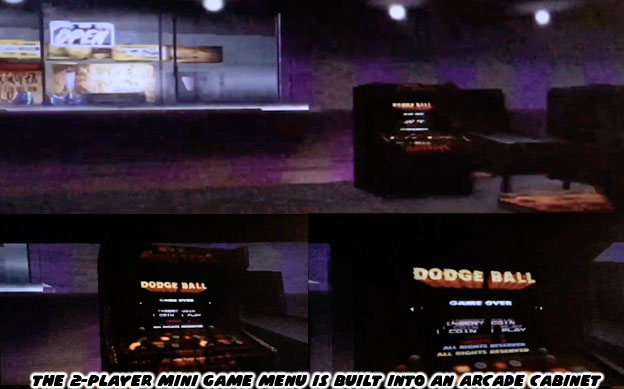

No other studio had ever put this amount of detail just for the menu screens in a game. To be fair however The Movie Monster game by Epyx and I was an Atomic Mutant by Canopy Games certainly came close to recreating the feel of the classic cinema. Remember that Epix even included the interior of the theater and previews to enjoy before starting the game. The publisher could have never imagined what technology would have allowed for in the future. The mix of aesthetic elements from the late '50s through the early '80s in War of the Monsters was done for a reason. Incog wanted to bring players into the world they had developed. They wanted players to understand what the US was like during this era. They had to provide enough sounds and visual elements to help them do that. For many players and most working at Incog Inc. this was their childhood they were reliving. The developers wanted to recreate the excitement of being a kid and getting to go to a drive-in to watch a monster movie. At the same time they wanted to make it visually interesting to contemporary audiences. The designers were reproducing the golden era of monster movies, which would have been experienced by the majority of their parents, and the final years of the drive-in which they would have remembered as kids. They certainly managed to do all of that with style.

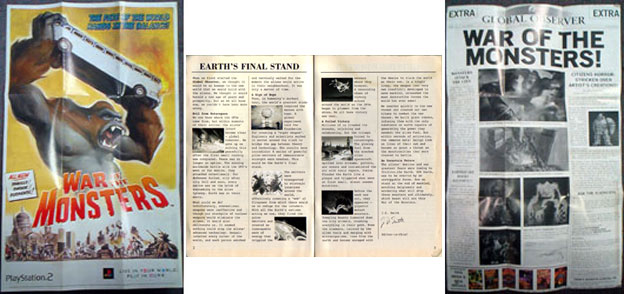
The details that Jaffe and Co. included did not even start there. The instruction booklet included with the game was written as if it were the journal from the Editor in Chief of the Global Observer. It was the fictional newspaper featured in the opening moments of the game. It described the alien invasion and how the alien menace was defeated with gigantic pulse emitters. Then it explained how the radioactive goo released by the spaceships created giant monsters. A poster page was included with the instruction manual. On one side there was a special edition of the Global Observer, complete with articles on the monsters and some secrets and tips for players. On the other side was a movie poster for players to frame.


The level load screens were absolutely brilliant. They were made to look like movie posters. Each one highlighted the level details and sometimes opponents that players would be facing. The poster art, created by the talented Owen Richardson was stunning and looked genuine for the era. In fact the colors used for all the levels and environments had very solid hues and distinct lighting.
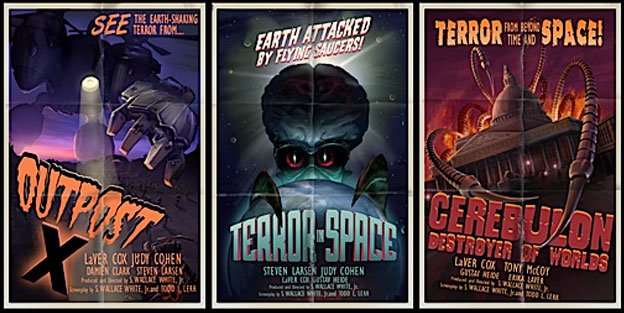

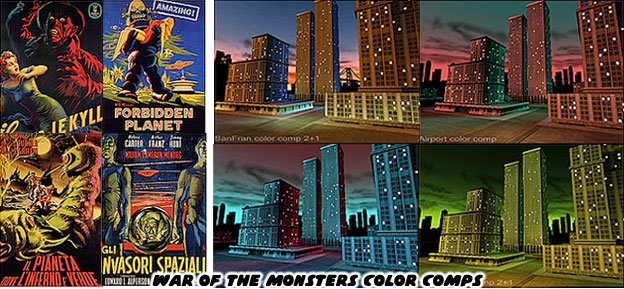
The color palette applied to each level was more than just good planning. The developers actually created color compositions for the stages inspired by the art used on actual classic movie posters. Every detail placed in the game built on top of the previous, these were meant to trigger memories and build emotional responses. Older gamers that remembered the drive in and the classic sci-fi and monster films would get the inspiration on the posters and levels. Younger gamers would be hooked by the art. All of the players would learn that the lighting created specific atmospheres for each level. From the eerie green glow that illuminated Atomic Island to the rose and yellow neon trappings of Gambler's Gulch, no two levels shared a color scheme or layout.

On the character select screen audiences had to choose from one of eight available monsters. An additional two monsters could be earned with battle points. Whichever creature the audience chose became the star of the game. The plot was very straightforward. The star was going to do battle with whatever other monster, or monsters they came across. War of the Monsters set players right in the middle of the action and did not waste too much time with backstory. The levels began with a portion of a "film" playing out before them. It highlight a specific rival and stage setting. In one stage there was a monster chasing police and military vehicles, in another it was giant robots fending off UFOs. In each case the camera would then turn and focus on the player-controlled monster and start the action.
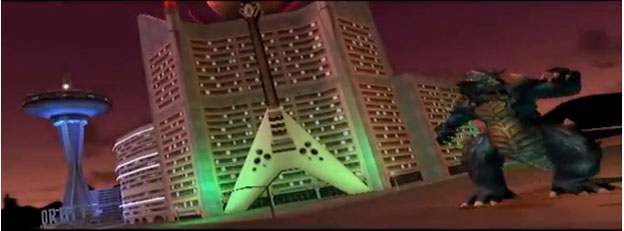

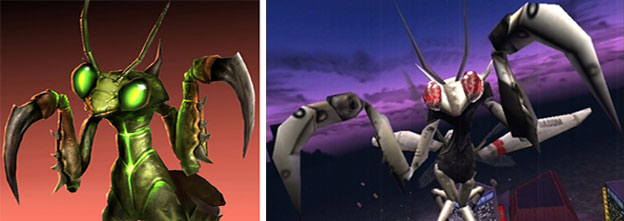
The monsters were fairly diverse and inspired by several generations of icons. The giant lizard Togera and ape Congar were expected as were the giant Japanese mecha Ultra-V and giant praying mantis Preytor. Those four represented the classic archetypes from cinema. The other characters were inspired by various creatures but came off as fairly original. To help diversity the cast players could unlock "costumes" for the creatures. The game rewarded credits for the damage players caused and the number of opponents they defeated. Boss characters were worth tremendous points. Players could turn in these credits at the concession stand to unlock costumes and levels. The new skins were meant to be seen as completely new characters. It was not unlike what Pipeworks had attempted to do with Rampage.

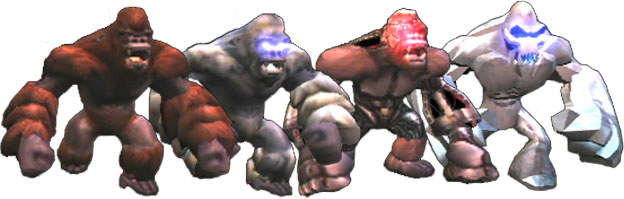
In the first level Congar was being pursued by the military. It was assumed that they recovered the body after the player had defeated him. Congar was returned by military transport choppers a few levels later with an entirely different look. He had been turned into a weapon to fight the other monsters. The newly created cyborg Congar had half a robotic face and eerie glowing eye. Even his limbs were replaced with machinery. This costume was available to be purchased as well as an albino ape, possibly interpreted as an abominable snowman. The fourth costume for each character often turned out to be the most original and the one least likely to be confused as just another re-skinned character. For Congar that was an alien with metallic skin. All four of the costume choices for each monster were well done.

The visuals hooked the players but the game play itself was what kept them coming back. I would like to spend the next blog looking at the game in depth. I hope to see you back for the next entry!

Friday, March 9, 2018

The Giant Monster Series, part 15...


A few games flew in under the radar that had were centered around the giant monster menace. Canopy Games was one of the first studios to revisit the genre in the early 2000's. Their PC game I Was An Atomic Mutant followed the classic Epyx Movie Monster formula almost to the letter. The 2003 game used the movie theater as a set up for character and mission selection. The main difference was in the diversity of monsters made playable. The Canopy title made a nod to several classic b-films including the 1958 feature Attack of the 50 Foot Woman and the 1957 movie the Brain from Planet Arous. Talk about going way back to the archives!


The game was very simplistic. Players went around destroying things with one of the available monsters until they met an objective or died along the way. The graphics were okay, the effects were good and character designs very predictable. Just like Movie Monster the level would start and end inside a movie theater. The control was good but the gameplay was flat. Players went from town to town repeating themselves. Sort of like a wandering 3D version of Rampage. Although the game didn't make any waves with critics it did remind me of the era where PC titles allowed players to suspend their disbelief and once again get drawn into the experience. Part of the way the studio accomplished this was through their patented Canopy-Vision 3D screens. Audiences could play through a level in full screen mode, in black-and-white, or with a movie theater frame or while projected onto an outdoor drive-in screen.


Some giant monster titles never got the chance to shine. The cancelled Big Freakin Monsters game was being developed by 3DO (yes, that 3DO) for the Sony Playstation 2. The environments being created seemed very spacious for the genre. A sort of free-roaming Rampage that would have made it unique for the console.

Other games came out of the woodwork and surprised a lot of players by their ease of use, features and even price point. Eat Them! was a downloadable by FluffyLogic from the Playstation Network. The game featured cel shaded graphics and a cast of player-created monsters. The diversity of missions, decent controls, creation mode, weapons and unique visuals made it one of the more interesting giant monster games released in the past decade.


Sadly it was a bit difficult and lacked some depth once the various modes were explored. There was little else behind Eat Them! and not one daikaiju cameo, yet for $10 it was tough to argue about the price.

A different indy studio had a more popular take on the giant monster genre. Double Fine had a reputation for coming up with refreshing new ideas and turning them into games. The 2005 cult favorite Psychonauts was no exception. The main character, Raz, could enter the minds of people and see memories and subconscious thoughts. In one he became a giant monster named Goggalor. The world of Lungfishopolis was presented in a smaller scale for him to terrorize. Double Fine mimicked the b-movie trumpet blasts during the orchestration of the level music to bring back a certain sense of nostalgia. Goggalor maintained the same abilities of Raz as he traversed the tiny town and collected memories to unlock.


Five years later the studio released Costume Quest. The game centered around a group of kids trying to save Halloween. Players could freely roam a neighborhood but all of the combat used a traditional RPG turn-based system. When in the combat mode the children became gigantic avatars of the costumes they were wearing. A cardboard box covered in paint and foil became an impressive giant mech, while a plastic helmet and glowing wand turned into a space ranger. The town that they were traveling through was recreated in miniature while fighting the candy-stealing goblins. The details included tiny pumpkins on the fronts of houses, smoke rising from chimneys and the perfect autumnal lighting. It was a fantastic visual that helped sell the imagination of the kids involved. Every battle seemed epic in that mode and was reminiscent of the final battle in the first God of War. Double Fine demonstrated that giant monsters could be the subject of a memorable gaming experience without falling into the traps of other developers. With all of these innovations there was still something missing.

Gamers wanted to have the freedom to play as giant monsters, not against them. They wanted to experience the sense of unstoppable fury from creatures several stories tall. Creatures that could shrug off the most powerful military strikes and topple the largest skyscrapers. Players wanted new heroes and villains added into game history instead of tired licensed characters. They wanted to see monsters pulled from the darkest corners of our collective subconscious and made playable. They wanted to be immersed in the experience in the same ways that only great books or movies could. There was one game that did all of that and more. We shall look at this title in the next blog.


Wednesday, March 7, 2018

The Giant Monster Series, part 14...


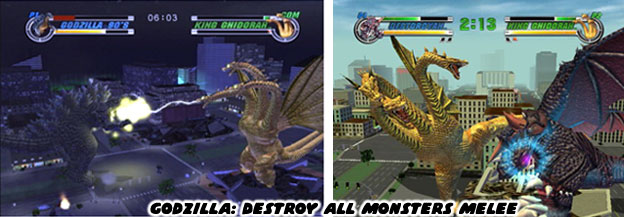
In 2002 Pipeworks software developed Godzilla: Destroy All Monsters Melee. The game had several modes of play and featured a pretty good cast of Toho monsters, and even a few variations of Godzilla from the different movie eras. Pipeworks allowed audiences to settle into the universe with a story mode. An alien invasion had spurred Godzilla and his monster allies to defend the Earth. Players were taken to highly detailed cities all around the world to battle the forces of evil. The game was in 3D and had far mode advanced visuals than the previous Dreamcast game. Buildings had more realistic physics applied to them, better textures and lighting as well. All of the details for each monster were preserved, including the various roars and special attacks. These abilities became part of the game play.


Players could roam each arena in any direction and fight with an assortment of close and ranged attacks. The characters had grappling moves and combos on top of the regular attacks. The diversity of moves made it one of the most robust giant monster games ever created. The amount of detail placed on the levels was absurdly high. Traffic moved on the streets, neon billboards blinked, buildings were lit from the inside, strike fighters shot missiles, tanks fired artillery shells and UFOs zapped monsters with laser beams. An announcer broadcast the outcome of each battle to the world media. Players could roam each arena in any direction, hide from incoming attacks, knock down buildings and fight with an assortment of close and ranged attacks. The borders of each level were cordoned off by bright laser beams that could injure opponents. Destroy All Monsters Melee could be considered a 3D version of King of the Monsters. There were a couple of things holding back the game however.


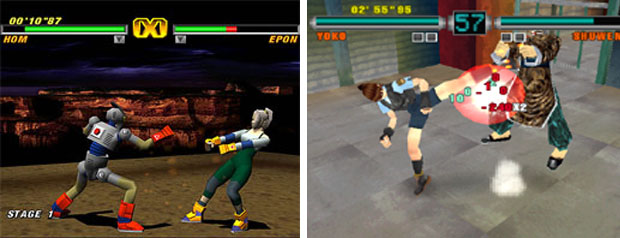
The monsters moved sluggishly, the camera was not always cooperative and the combat system was not well balanced. A good 3D fighting game like Tobal No. 1, or 3D arena fighter like Power Stone or even 3D brawler like Urban Reign figured out that the levels, camera and combat had to compliment each other. If any element were ignore then the entire experience would suffer. When playing in 3D it was paramount that the player be able to move where they wanted to while still being able to keep enemies in frame. The camera seemed to pivot randomly in Destroy All Monsters Melee, sometimes being blocked out by a tall building and other times floating high above the action. This random camera could be troublesome during a heated battle. The studio tried to fix the camera by allowing buildings to become transparent to show which characters were behind them, however the other buildings between opponents were solid and offered no line of sight. The game had items to regenerate health and power up attacks randomly pop up all around stages. Players often found themselves making a run for the item only to have the camera rotate in the opposite direction and hide it behind a building. The split second that it took the player to reorient themselves was enough for the opponent to snatch up the item. It could be maddening when trying to finish a close battle.


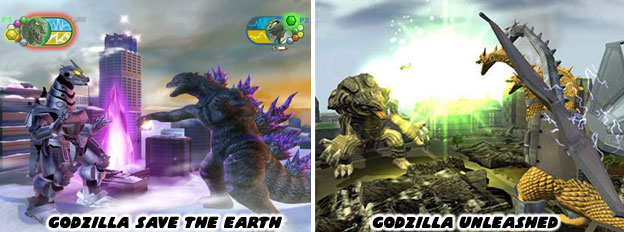
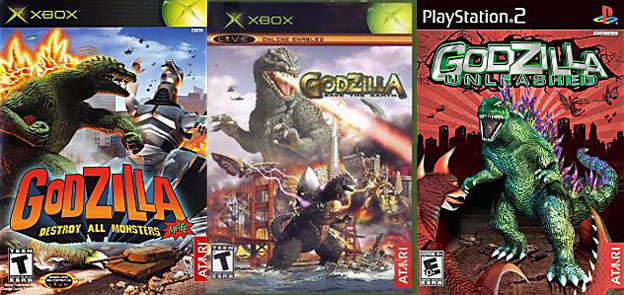
Pipeworks tried again and again to do the genre justice. Godzilla Save the Earth was released in 2004 and Godzilla Unleashed in 2007. In 2006 the same studio had also released Rampage Total Destruction. Their attempts at owning the giant monster genre fell flat with many gamers and reviewers especially. Only the die-hard monster fans, or young boys seemed to enjoy the series. If the studio had one thing going in their favor was the addition of multiple two-player mini games. Each successive Godzilla added new modes of game play which were refreshing. Players could spend time throwing buildings at Naval assaults, play kaiju bowling (which was more like dodgeball really) or even swim underwater as Godzilla. To be fair the games also had another thing going for them, playing as different characters resulted in having different story modes play out as well. But these game play additions were on top of an average experience.

The studio appeared obsessed with trying to put in as many daikaiju characters as they could and didn't bother to spend any time balancing the combat system, adjusting the sluggish control or fixing the camera. The studio would have fans vote on which characters they wanted to see in the next game and then try to secure the rights to those characters. They would appeal to the fans on giant monster fan boards to get the vote out. Moving according to popularity vote was something for American Idol and not a respectable game developer. Focusing on fanservice rather than game play was the antithesis of good game design, yet that seemed to be the goal of the company. The review scores reflected their decision accordingly. On a 10 point scale with 10 being the highest here were what some reviewers gave Godzilla Unleashed; Game Informer: 4, GameSpot: 3.5, GameTrailers: 5, IGN: 4.9 and Nintendo Power: 5.5.


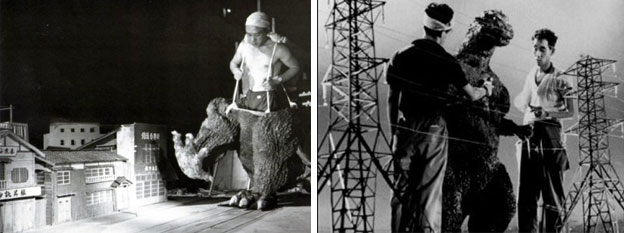
The Godzilla games looked great but played poorly. They were far too sluggish to be enjoyed by most audiences. Pipeworks did a mediocre job in convincing players that they were controlling massive creatures. Godzilla moved slowly in the films for several reasons. In canon Godzilla only appeared to move slowly but actually reacted quite rapidly. He could cover miles in a few seconds. There were two practical reasons why the character moved slowly in real life though. Part of it was for dramatic tension. Human characters trapped in the same city occupied by Godzilla were constantly in danger. The slower the character moved the longer the tension could built up on the big screen. Cloverfield used this understanding equally well. The other reason Godzilla moved slowly was because of the set up time that it took for each movie shot. Model cities took months to build and ate up the majority of the film budget. If the person wearing the Godzilla costume walked in a regular human stride then he could cross a warehouse-sized set in a few seconds. All of those models would have been wasted if they were on screen for only a moment.


Instead the costumed actor would move slowly and allow miniature missiles to be launched at him. The pyrotechnics engineers could then explode the models as he walked through, making for a many more interesting shots. In the Godzilla games the characters were slow and cumbersome because that was how Pipeworks programmed them. They did not convince players that the characters had any sort of mass. The could instead bounce, twirl and be thrown about as if they were Styrofoam-filled mannequins.

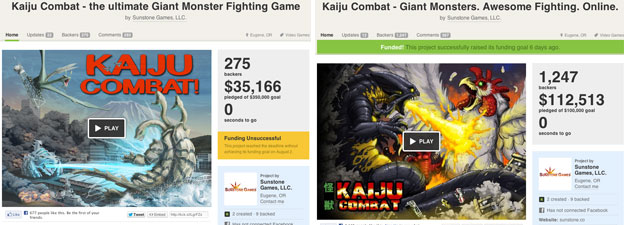
The control and combat designer for the Godzilla games, Simon Strange, left to start his own company. His newly formed Sunstone Games wanted to make the ultimate online giant monster battle game. They wanted to allow players to design their own creatures and give them unique powers as well as include every possible daikaiju ever, including those from Toho's rival studios. They appealed to the public through Kickstarter to help sponsor Kaiju Combat. I had learned about this pitch early on but decided not to publicize it on my blog. I felt that the Godzilla titles Mr. Strange had worked on were visually impressive but offered nothing for gamers. It seemed that the audiences themselves let Sunstone know by not supporting their ambitious goal. They had to run the Kickstarter campaign twice. Earlier in 2012 the studio was looking to secure $350K in funding but managed to get only $35K worth of pledges. They tried again later that year and lowered the investment to $100K. They barely managed to get over the goal with $112K and over 1200 backers.


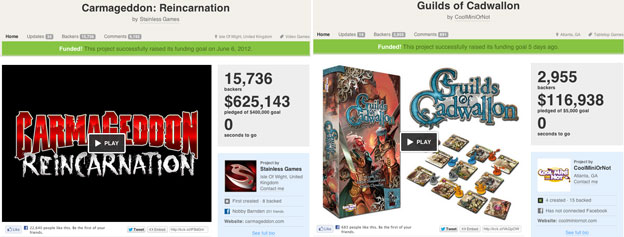
To put the demand for a kaiju game by Sunstone in perspective compare it to other Kickstarter projects for independent studios. Stainless Software had only developed 2 Carmageddon games for the PC and Mac. It had been 15 years since their last Carmageddon title. Stainless ran a Kickstarter campaign looking to get $400K in backing in the same one month window that every studio got. They managed to secure $625K and over 15,000 pledges. That wasn't even a record for a game. One of the biggest success stories on Kickstarter was a card-based game set in the IP of the now defunct Rackham Studios universe. The Guilds of Cadwallon was trying to get $5000 in backing and raised over $116K in a month. A card based game based on an expired French tabletop system had raised more funding than a giant monster video game with a high profile track record attached to it. Why did this happen? The damage to the daikaiju genre had been done thanks in part to the Pipeworks series. Carmageddon and Cadwallion were much more enjoyable experiences and had less flaws to their game play. When those developers needed funding then more than enough people were willing to help them out.


The difference between funding three different types of games was in the game play experience and not popularity. Godzilla had millions of followers the world over, far more than Carmageddon or Cadwallon combined. The character could sell almost anything on name alone. Yet great gaming experiences always seemed to elude the creature. Pipeworks had four giant monster releases; three Godzilla titles and one Rampage game, each one was reviewed worse than the previous. Had Pipeworks delivered a great experience again and again then there would not be a doubt that a publisher would have funded an online project. In fact if the genre as a whole had a better track record then any number of developers, like Capcom or Konami, would have already started work on a daikaiju MMO. Truly great giant monster games were rare, extremely rare, like footage of the elusive giant squid. Gamers wanted to believe that they were out there, they just had to be patient and wait an extraordinarily long time to see one in person. Audiences didn't have the luxury of waiting. Developers couldn't find a way to make a decent gaming experience out of the creatures, so instead the giant monster simply became an obstacle to overcome. It did not stop some developers from trying to work with the genre though. We shall look at some of the hits and misses in the next blog.


Monday, March 5, 2018

The Giant Monster Series, part 13...


Godzilla is widely considered the king of all monsters. There were giant monster movies before Godzilla (1954) and of course hundreds after. But for many reasons we keep circling back to the atomic-fire breathing lizard. Part of the reason was because there was nothing like the monster. No force on Earth could stop it and even the most powerful military weapons of man could barely slow it down. You would think that a character this popular would be the perfect subject for a game. The hard part was figuring out what type of game could developers make around the character? Would it be a real-time strategy game where you line up the military forces and try to divert Godzilla away from a city? Or would it be an exploration adventure where you took on the role of a civilian trying to survive an attack? Of course most audiences wanted to be Godzilla and feel what it was like to have that type of power.

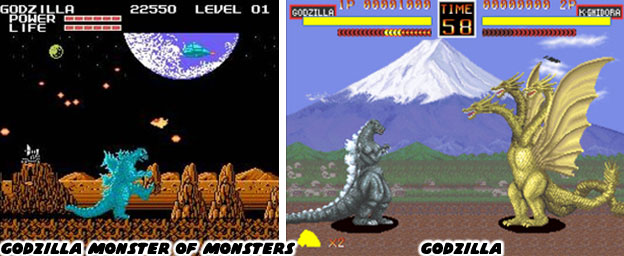
Godzilla Monster of Monsters for the Nintendo Entertainment System (NES) put gamers in charge of the title character. The title from 1988 was well received by fans. Just about every monster that had ever appeared in a Toho movie was featured in the game. Players took on the role of either Godzilla or Mothera as they fought wave after wave of aliens and other giant monsters en route to Planet X, the home of King Ghidorah. The game featured very large sprites with unique level visuals. If it had one failing it was that audiences couldn't appreciate the scale of the character as it was as big as human characters from other console games.


Godzilla console titles had limited game play. Most designers just followed the trends and put Godzilla in whatever was popular at the time. In the '80s many NES games were platformers, vs. Mario Bros, Bionic Commando, Rygar, Castlevania, etc. all had a character move left to right on screen and fight various bosses. As fighting games became more popular in the early '90s the Godzilla games evolved to follow suit. In the Super Famicom (Super Nintendo) versions of Godzilla: Battle Legends (1993), Super Godzilla (1993), and Godzilla: Monster War (1994) the game play was changed so that monster encounters played more like a modern fighting game. As fun as these games were they didn't really capture what it meant to play as the monster.

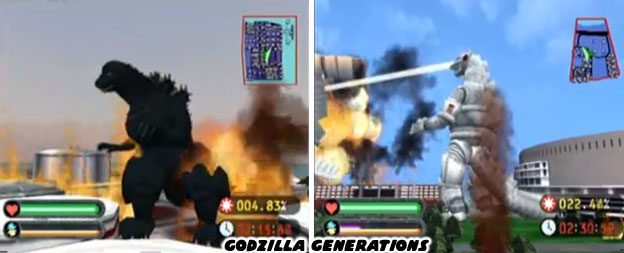
All of that changed in 1998 with the release of Godzilla Generations for the Sega Dreamcast. For the first time in a generation the awesome power of the monster was presented in 3D. The game revolved around Godzilla or one of a handful of monsters (including the abysmal USA Godzilla) destroying a city. Players could walk through skyscrapers, watch them break apart and come tumbling down. They could blow up refineries and even fight the G-Force military special units. There was little to the game play aside from destruction. It was a throw-back to the Epyx game Movie Monsters. For a little kid this was more than enough to make them happy but long-time players expected much more of an experience.


Godzilla Generations was the perfect example of why the character never became a gaming icon. It was difficult to make an enjoyable experience out of a creature that was famous for moving slowly, smashing cities and fighting other monsters. It didn't stop developers on both sides of the Pacific from trying to create a hit game with the license. We will explore these better attempts in the next blog. I hope to see you back for that.

Friday, March 2, 2018

The Giant Monster Series, part 12...


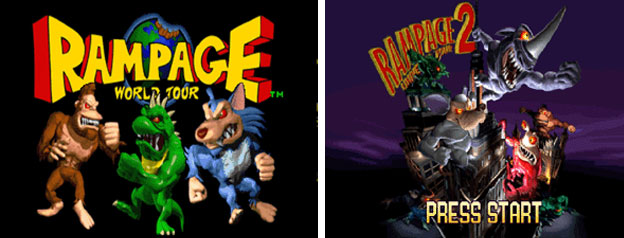
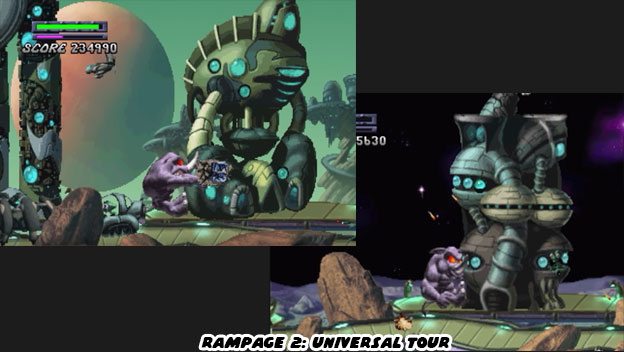
Midway returned to the giant monster series in 1997. It had been a pretty quiet time for the genre, more than a few years after the last King of the Monsters by SNK in fact. In a previous blog I talked about how Rampage World Tour was a reboot of the franchise. It brought back Lizzie, Ralph and George and had updated the graphics, level designs, opponents and game play elements. The title did okay in the arcade but really found its stride on the home consoles. Midway realized that the era of the arcade was coming to an end and began developing the next title with the new consoles in mind, the Nintendo 64 and Playstation to be precise. In 1999 the studio came out with Rampage 2 Universal Tour.


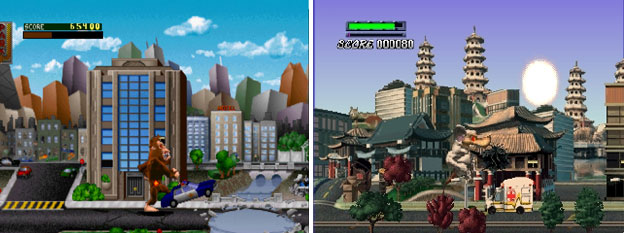
Avalanche Software developed the title for Midway. The game had a slight visual upgrade over World Tour. The studio used the same rendering techniques of the arcade game. They created models for the characters on CGI workstations and then converted that data into sprites for the consoles to use. The consoles at the time were still not powerful enough to render, light and texture complex 3D objects, that's why sprite workarounds were used. Even with that shortcut to the visuals it was apparent that the backgrounds in Universal Tour were modeled from 3D data as well. Avalanche also added a foreground layer at the bottom of the screen to add an additional sense of depth to the stages. In the original Rampage the background was either a black outline of a city or mountain. In World Tour the background was made of flat shapes with gradients applied to them. By Universal Tour they were actually buildings and scenery as far as the eye could see.


Midway decided that the game needed a plot and a reason for players to become invested in the series once more. The original trio had been captured by SCUM Labs and were locked up in different cities. It was up to three new giant mutations to free them. The gigantic Ruby, Boris and Curtis; respectively a lobster, rhinoceros and mouse. The new monsters searched the world for the original trio and once they were freed they became playable characters as well. The game then switched over to the second act, involving the group of monsters fending off an alien invasion. Two more monsters ended up joining the fray; Myukus and Noobus the cyclopses. The giant monsters ended up following the aliens from planet to planet until they ended up on their home world.


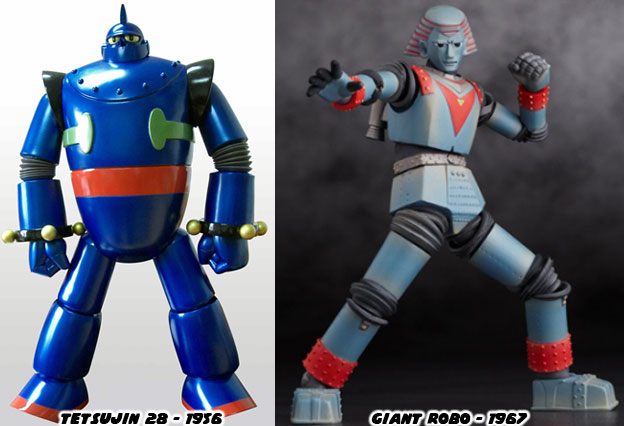
This was not the first time that giant monsters had thwarted an alien invasion. Godzilla had been deterring would be conquering aliens going as far back as 1964 when he took on King Ghidorah, the challenger from Mars. The daijaiku series had become very popular among young kids, boys especially, and Godzilla changed roles. When he originally appeared he was the symbol of the atomic menace, the cautionary tale of Hiroshima. By the end of the 60's he had become a sort of super-powered hero. Other giant characters came out of the woodwork to help fill the demand for daikaiju heroes. Gamera made his appearance in 1965 on the big screen and Ultraman in 1966 as a television star. These creatures were very much like the giant robots that were also popular in Japan. Mitsutero Yokoyama had created both Tetsujin 28 and Giant Robo. Tetsujin-28 was actually as old as Godzilla. The giant robot was more like a protective big brother in the stories than a weapon of mass destruction. They were created to fight other giant robots or even daikaiju in their own shows.


The giant monsters-as-heroes switch had happened in Rampage 2, technically the third game in the series. Midway and Avalance Studios were keenly aware that the series had to offer a bit more than the same mechanics and jokes that had sustained the first two titles. As such Universal Tour had to become more appealing to younger players, especially those that weren't even born when the first game was released. The studio dropped Dr. Betty and toned down the violence and gore slightly. The game became a little more campy. The humor was a bit forced. The better monster games used a slight amount of camp but felt more sincere about the genre.


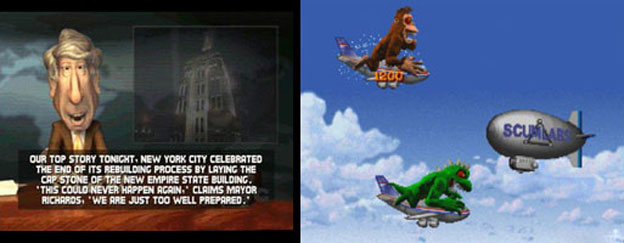
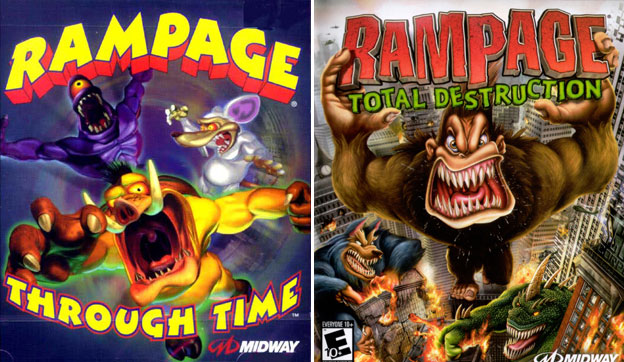
Midway kept the tone of the series light and developed another sequel for the consoles in 2000. Rampage Through Time introduced yet more new characters and locations for the monsters to visit. Unlike the serious announcer that instantly hooked players in the original King of the Monsters the news reporter in Rampage Through Time was very silly. Despite making a game about mass destruction the titles had become very kid-friendly, perhaps to the point of losing their own identity. From a technical standpoint the games kept improving. The graphics remained sprite based on Rampage Through Time but they didn't just reuse old assets. The character models, buildings, levels and enemies were completely redone. The characters kept their cartoonish styling but had greater fidelity. All of the classic monsters and Universal Tour monsters returned as well.


Rampage Through Time was notable for the diversity of locations and opponents. Since players were going backward and forward through time the buildings they destroyed and enemies they fought were period appropriate. Chicago in the 1920's had gangsters shooting at the monsters with tommy guns, whereas Sapporo in the far future had flying robots defending the town. The game also introduced mini-games for the players which were very much like the arcade classics Asteroids, Snake and Dog Fight. Of all the versions Rampage Through Time was possibly the best multiplayer experience. Unfortunately the review scores had been anything but kind as the titles had progressed. It was not hard to imagine that the franchise had become overexposed.


There was an 11 year gap between the original and the reboot. That was plenty of time for new gamers to jump on board and veterans to be reintroduced to the title. Unfortunately the massive collection of similar levels with repetitive game play wore out their welcome. Then two more sequels just two years apart with minor bumps in the graphics department were not enough to keep players interested. In fact, the destruction game play that first drew people to the title had become very redundant by Rampage Through Time. Players climbed buildings, ate people and kneecapped teammates to get ahead in the rankings. Although there weren't as many levels as World Tour the franchise was beginning to burn out.


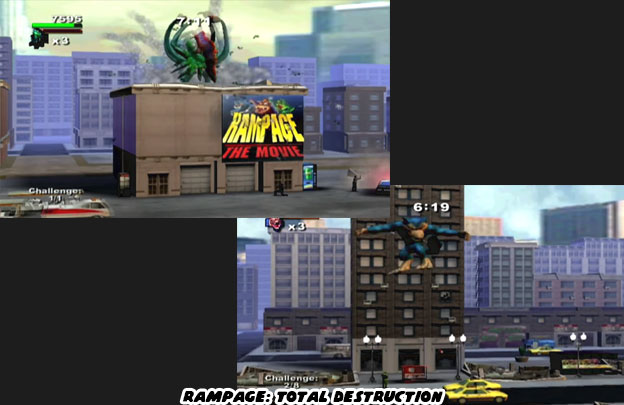
Midway took a six year break from the game. Pipeworks took over development duties from Avalanche. The next console exclusive title Rampage: Total Destruction was the first to be entirely rendered in 3D by the console itself. The format hadn't changed much in the time off. The opening scene was very cartoonish and felt more like a CGI film than a game. It had the comedic timing of a DreamWorks picture as it recreated Rampage canon. It turned out that SCUM Soda was causing genetic mutations in people all around the world and the CEO was trying to keep things under wraps. The writing was targeted at younger audiences as was the game play itself. The levels were still presented in a two-dimensional format although the monsters could now punch the fronts of the buildings as well as the sides. This pseudo 3D gameplay made the title slightly more interesting but for veteran players the game held little interest.

The ad campaign for Total Destruction fell as flat as the comedy bits in Rampage Through Time. This was despite the best efforts of an artistic team that included 1UP community member Ryan Braman. The game seemed to have a very specific demographic, young boys that enjoyed smashing things and collecting monsters. I know that if I were 10-years-old when the game came out then I would probably be vehemently defending it right now instead of deconstructing it. The handful of monsters added in Universal Tour were well done but by Total Destruction the series had added over 60 monsters with only the slightest difference in control and ability between them. These new creatures included a plant, french poodle, chicken, ram, tarantula and porcupine. The series had figuratively and literally "jumped the shark" when they added Marco the giant shark.


Despite the declining review scores the game still managed to sell very well, over a million units in fact. The focus on the younger gamer seemed to have paid off for Midway, at least for the short run. It turned out that Total Destruction was the swan song from the original publisher. The company filed for bankruptcy in 2009 and sold off the rights to the games soon after. Warner Bros. picked up most of the games but the fate of Rampage was unknown. It was a sad end to a once popular and well regarded series. Of course no giant monster ever stays dead for long. Like the creatures that inspired the series expect Rampage to return from the depths of our subconscious when we least expect it. Possibly in a summer or two when the kids are out of school and looking for something to entertain them. In the next blog we shall explore the original king of the box office and find out more on Godzilla's contribution to gaming.


Wednesday, February 28, 2018

The Giant Monster Series, part 11...


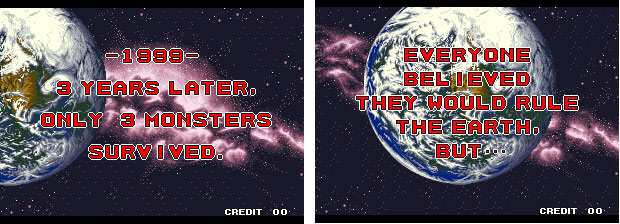
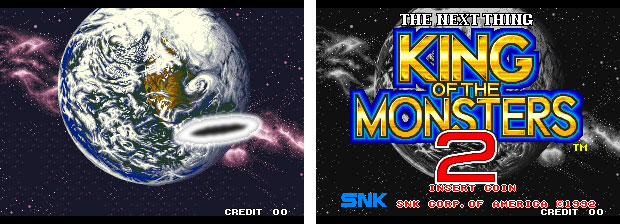
In 1992 SNK returned to the giant monster genre. The sequel to King of the Monsters was set three years after the events of the original game. As a fan of the first I couldn't wait to check it out.


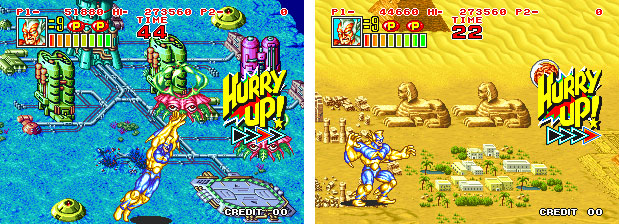
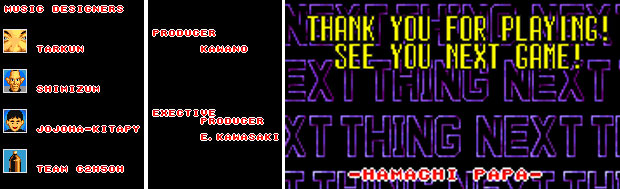
It seemed that a UFO landed on Earth and introduced a new challenge to the monsters. This creature was dubbed the Next Thing.


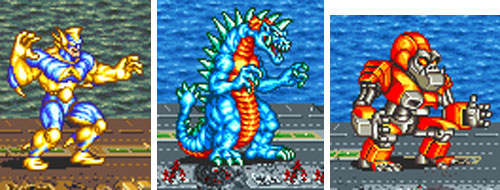
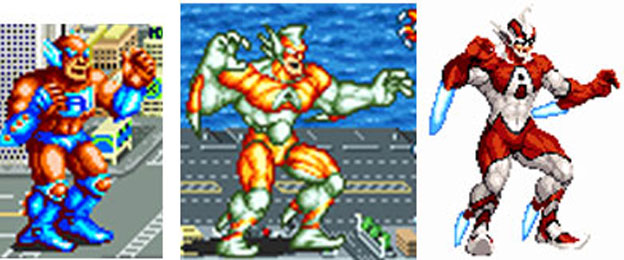
I was a bit surprised to find that only three of the monsters survived the original battle. Technically only two characters found their way back; Astro Guy and Geon. Both of them looked more evolved, more distinct than the last time players saw them. Cyber Woo replaced Woo as a playable character. He was a sort of Mecha Kong to King Kong. I was bummed because my favorite character, Rocky, didn't make the cut.


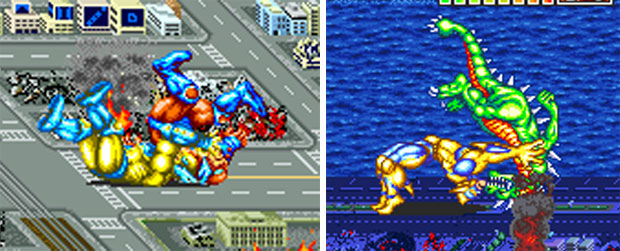
The control changed slightly from the original as well. Players could still punch, kick and jump. Some of the grappling moves were preserved as well.


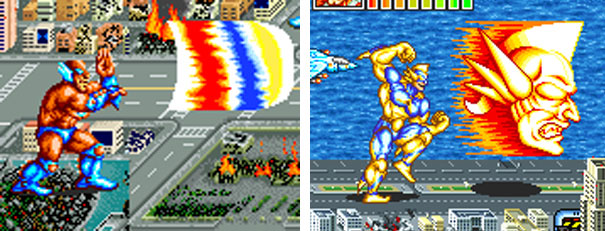
The characters could also get their special attacks powered up two levels, also like in the original. The difference was that players didn't need to collect 20 Power orbs, instead they only needed to collect two. Each power upgrade gave a special attack more range and power. The downside was that players could lose the power upgrades in the sequel, players never could lose them in the original.


The biggest change to the sequel was in the gameplay. Instead of a wrestling game SNK created a brawler for the giant monsters. Imagine playing Double Dragon or Final Fight with giant creatures! I was a fan of brawlers and even chronicled many of the best last year. I had even mentioned how SNK came up big for the brawler but had left King of the Monsters 2 off of the list. I knew that I would be writing about giant monsters eventually so I left it out on purpose.

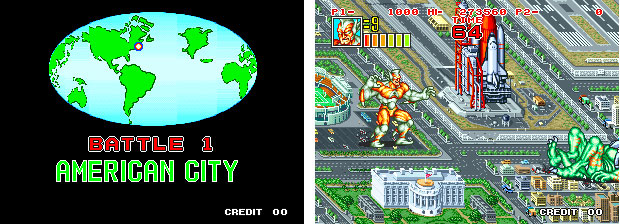
The original KOTM was set entirely in Japan. The sequel took place in cities all around the world. In keeping with the theme of the original, actual landmarks were incorporated into the levels. Instead of being hundreds of miles apart all of the landmarks appeared in one relatively small area. For example in the "American City" the White House, a football stadium and space shuttle were merely blocks from each other. The amount of detail crammed into the tiny cities was mind boggling, even more so than the amount of detail that went into the original game.


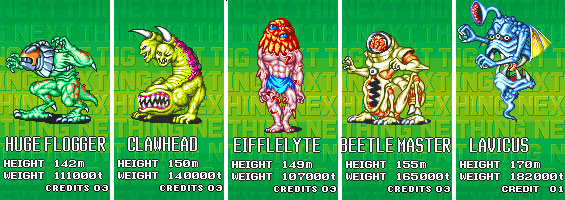
The locations were not all limited to actual cities. The monsters visited a sea base at the bottom of the ocean as well as the inside of an active volcano which turned out to be the crater left behind by the UFO in the opening of the game. The design in the levels were heavily influenced by science fiction. Enemy monsters were very cartoonish, to the point of being silly with giant lips and googly eyes. The military weapons were highly stylized and looked right out of an anime series, had Gerry Anderson's Thunderbirds influence not also been present.


At the end of each level the players fought a boss monster. The monster was generally much larger than the main characters. The creatures in the original KOTM looked very much like pre-existing characters. The villains in the new game had unique designs. Each had their own sets of strikes, grapples and special attacks.


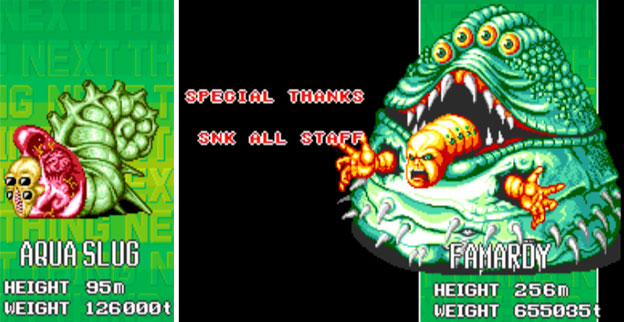
Players travelled through six locations while on the hunt for the master of all these new creatures. The final stage actually had players fight all of the bosses in succession before the final monster revealed himself. The enormous Famardy appeared, usually after the player had exhausted several continues. Famardy could flatten the players with ease. The creature was a four eyed reptilian-like mountain that was mostly mouth with a long tongue that had a face at the end of it. The visual was pretty gross. The battle against the creature was one of the most lopsided encounters ever created. There was simply no way for any single or two-players to defeat the creature on one credit.


In fact, the entire game fell into the same traps that turned players off of Rampage and Rampage World Tour. The game was designed to separate the player from their money as fast as possible. Players had no time to get settled into the world that SNK had created. There was no broadcaster announcing the destruction, there was no clever soundtrack supporting the action. If a player stood still for longer than a few seconds an alert would appear prompting gamers to "Hurry Up." The warning to continue pushing forward was very loud and annoying. The game would have players rush through the highly detailed cities the team had created. Players were prompted past the military vehicles shooting missiles at them and past the landmarks just to get to an unbalanced boss battle. If they ran out of time then their monster would get killed by a bolt of lightning and it would be game over.

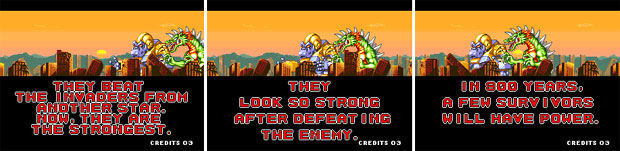
Each level and boss fight was designed to result in the player losing their life and credits as fast as possible. In the original game I could figure out a way to beat it on one quarter, it was tough but balanced. The new one had zero balance. Players lost their energy very quickly and every boss had a special attack that made them invulnerable for a moment. The fact that the final level consisted of players having to battle every boss all over again was proof of the cheapness of the design. The end of the game did not even offer a twist or a satisfactory resolution. The players were simply reminded of how powerful the monsters were and how in 800 years a few survivors would have power. Whether this meant that the monsters would be the last things left in 800 years or whether they were walking through the remains of the Earth 800 years from the end of the Famardy encounter was ambiguous.


As the end credits played I felt disappointed by the new direction of the series. All of the heart had been taken out of the game. The new designs were fun and the amount of detail placed on the characters and enemies should be applauded. As far as games went it was one of the most unbalanced brawlers ever made.


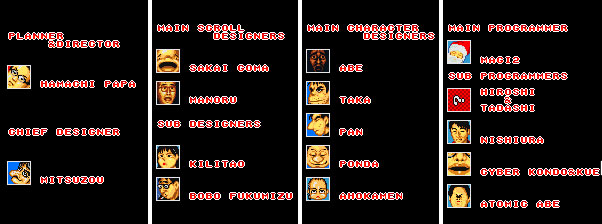
Hamachi Papa and company had let me down and worst yet, had failed the giant monster genre less than a year after sending it soaring.


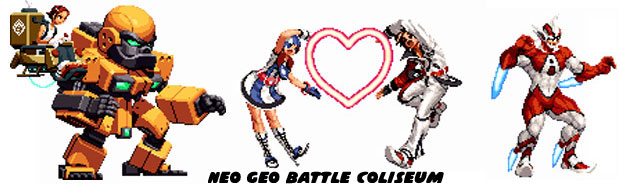
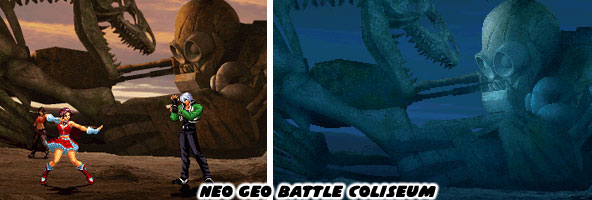
SNK never forgot the contribution of the KOTM staff. When they created Neo Geo Battle Coliseum the publisher wanted to include at least one cameo from every major game the company had published over the past two decades. The title from 2005 managed to include two characters from the KOTM series in the game.


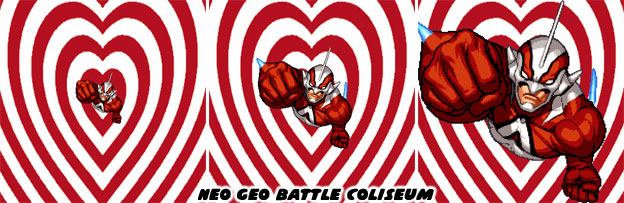
A small remote-control version of Cyber Woo was playable. The mechanical ape had an assortment of laser, machine gun and missile attacks at his disposal. He was the only character in the game that was built from a rotoscoped 3D model. The game also introduced two new characters Yuki and Ai. The duo could combine forces in a special attack known as the Double Assault. When they did they became a small version of Astro Guy for a limited amount of time.


Cyber Woo was good redesign but the makeover that Astro Guy got was amazing. The character burst into the game with a transformation just like Ultraman.


Astro Guy had attacks similar to those featured in KOTM 2, he was an arrogant character and enjoyed posing during his super attacks. it turned out that SNK was not finished giving a nod to their giant monster entry. A level in the game was included featuring the skeleton of Geon grappling with the rusted remains of the actual Cyber Woo. The enormous characters in the background were awe inspiring.


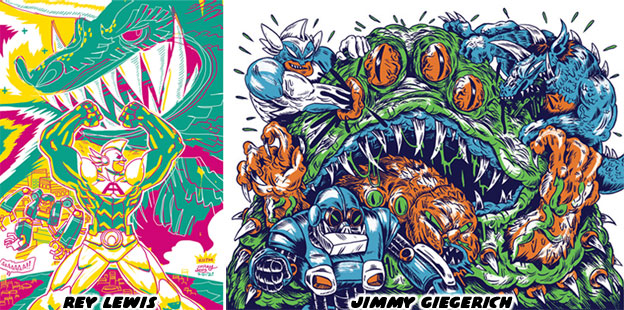
It had been 13 years since King of the Monsters 2 was released but SNK did not forget. Knowing that they cared enough about the game to give it a nod for Battle Coliseum made me appreciate the publisher even more. As it turned out fans the world over never forgot about the series either. Comic
book artist Corey "Rey" Lewis and illustrator Jimmy Giegerich each created a print in homage to the King of the Monsters 2 recently. The developer was not celebrating the 20th anniversary of the series, the fans were.


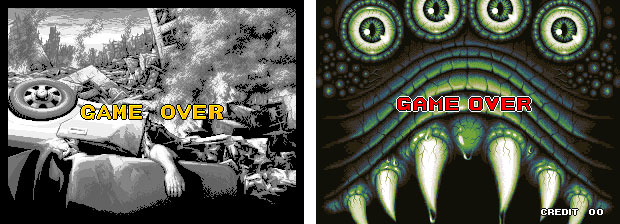
I did not enjoy King of the Monster 2 nearly as much as the original but I will concede that the game did have some fun moments. Both titles were important in the history of giant monster genre. They showed how well the creatures could work in other genres. Before SNK no developer would have attempted to make a wrestling game or a brawler using daikaiju. SNK demonstrated what elements from cinema could be adapted to help bring players into the universe. The orchestrated music and the panicked announcer were prime examples. In the end the genre held onto the classic traditions. Here were beings capable of tremendous destruction, on a scale of which no human could ever hope to survive. The final screen on both games reminded players of that cold truth.


Both King of the Monsters had actually been ported on multiple consoles yet many did not
remember them. The reason why so few people could recall the series in comparison to Rampage was quite simple. The games were released around the time that Street Fighter II had debuted in arcades. Many fun titles were overlooked during 1991-1992 because of the Capcom juggernaut. There was only one monster series that could bring the public back to the genre but would it be enough to draw in new players? We shall explore this game in the next blog.