Wednesday, October 14, 2015

How fight culture became fighting game history, part 46

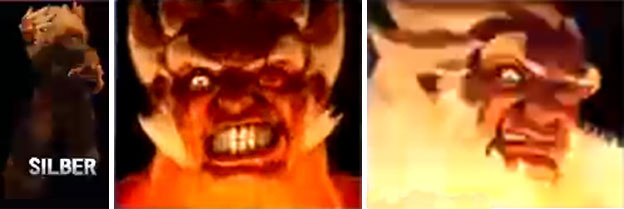
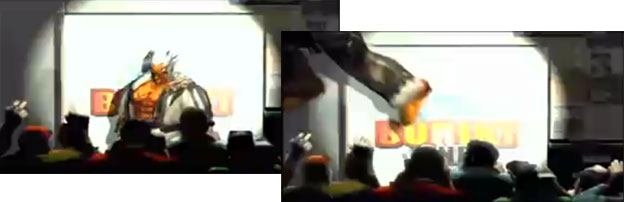
When the designers at Capcom created Gouki they demonstrated all of the elements that were required in making a memorable fighting game villain. The senior people at Spiritonin, Scott Stoddard and Adam Ford were clearly aware of what made Gouki such a unique character. Yet the studio did not want to simply copy the template verbatim, as SNK did when they introduced Silber in Buriki One. Instead they wanted Zumbi to be seen as a unique character that brought the same level of design to the Americas. In order to do this they had to pull actual elements from cultures and traditions that would explain the forces that allowed Zumbi to grow exponentially in power. Since Capoeira was grounded heavily in Brazilian and African history it was important not to separate the religious and spiritual beliefs that were brought over as well. By preserving the elements of the old customs it was easier for audiences to follow the shift in Zumbi's personality and power.


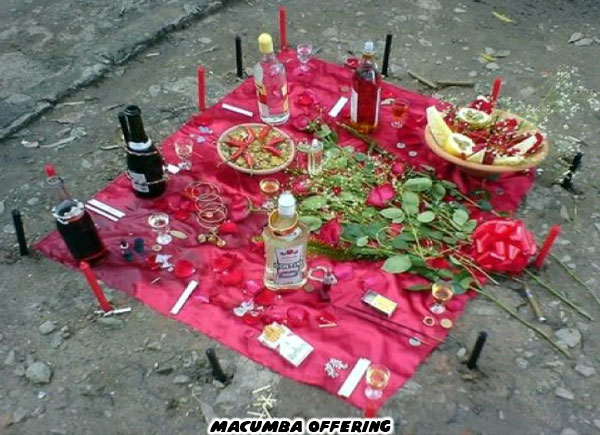
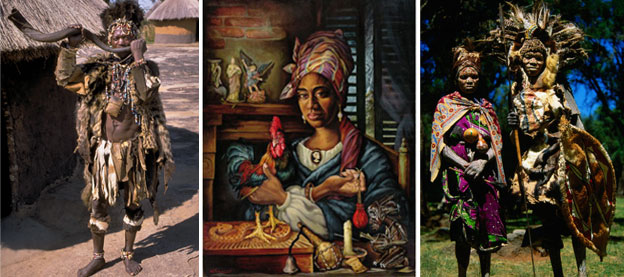
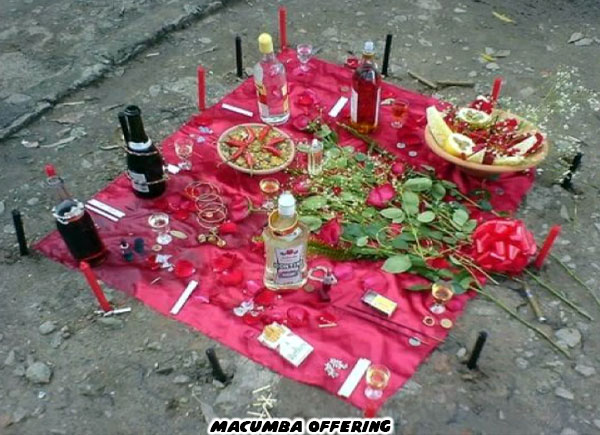
There were many unique forms of spiritual beliefs scattered throughout the African continent. The slaves brought from West Africa included the people from Nigeria and the Congo. They observed the Bantu custom and traditions. They had strong beliefs in the ability to barter with the spirits. They could have a practitioner, a shaman or holy man summon the spirits make offerings and sacrifices to them in return for any number of favors. Some wished for protection from their enemies. Others desired health and fortune. Still others wished the spirits to cause harm to their enemies. These belief systems were combined with native traditions in the Caribbean and Spanish Catholic-hybrid religions like Santeria that were practiced in the New World. The indigenous Brazilians incorporated elements of the Bantu into their own beliefs. The Bantu or Macumba customs were best observed in the Haitian Vodou beliefs.
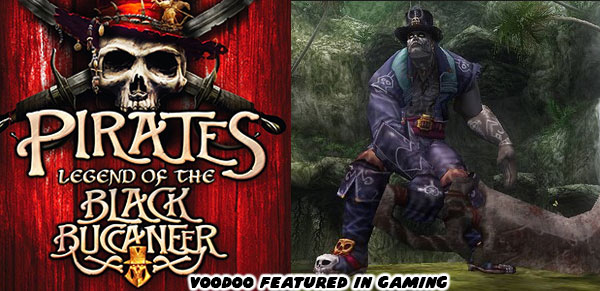

People in North America were familiar with the spiritual beliefs, hexes and spells from Voodoo due to the popularization of the religion on film and television. Voodoo dolls, zombies, shrines and altars with sacrifices had been featured in popular media over the past century. Those things were often attributed to ancient practices from exotic locations. The ability of a witchdoctor, or Voodoo Priest or Priestess to cast spells over people had been romanticized as well. The movement began in the US circa the 18th century when West African Slaves were transported to parts of the Caribbean and the early plantations in Louisiana and other French-controlled portions of North America. The African practices and indigenous Haitian beliefs were outlawed. Slaves and other conquered people were converted, some forcefully, to Christianity. The violent conversion of religious ideas resulted in a people that practiced a hybrid spiritual system. The religious iconography of African, Christian and island cultures blended together. Votive candles, sacrifices, offerings of tobacco, alcohol, crosses and skulls mixed to create a religion that was macabre and fascinating at the same time.
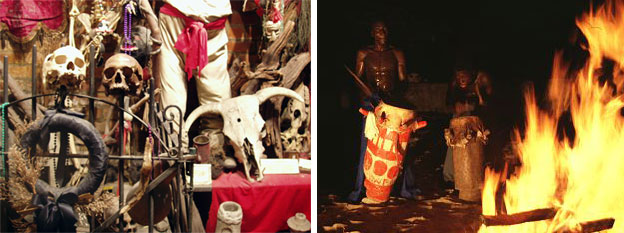

Voodoo practitioners were known as servants of the spirits. They carefully walked the line between the physical and spiritual worlds, catering to the wishes if not outright demands from the voices in either dimension. These practitioners were either well regarded or well feared by the population. The Macumba traditions differed slightly from the Voodoo customs. The indigenous tribes from North, Central and South America were also based heavily in different animistic, and spiritual beliefs. They had their own languages, symbols and ways of worship. When French and Spanish traders forced Catholic and Christian beliefs onto the tribes it also twisted their customs and influenced the creation of Santeria. The hybridization of spirituality in the Americas would take on many unique properties. The spirits of Macumba, sometimes called Orisha or Spirit Gods could manifest themselves in animals. Some of the more powerful spirits could make themselves appear as people. One symbolic figure in the Macumba tradition was that of a black man wearing a white Fedora. The Lord of the Crossroads, sometimes intertwined with the spirit of mischief, had a powerful influence on fate and could use his powers to cause trouble or convey a lesson to his believers. This character was known as Exu and was one of the named Orisha.
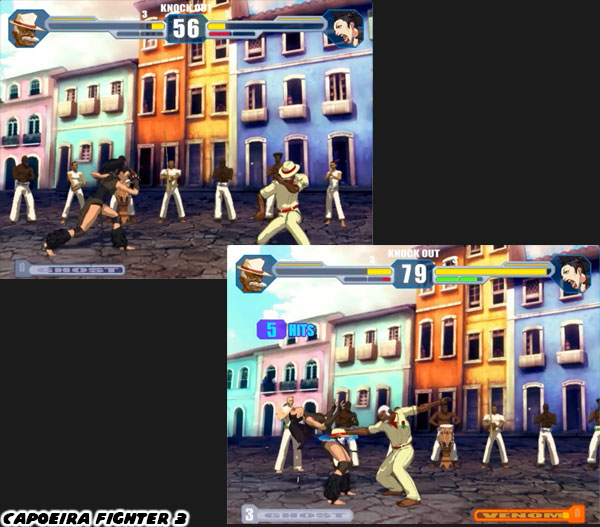

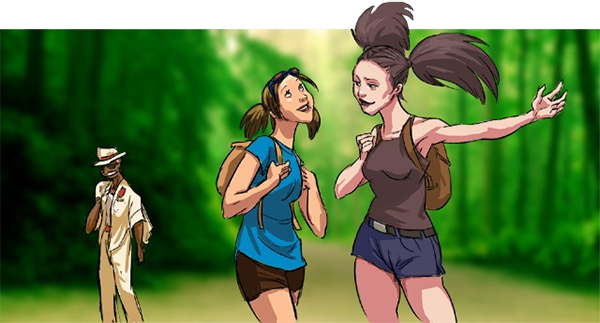
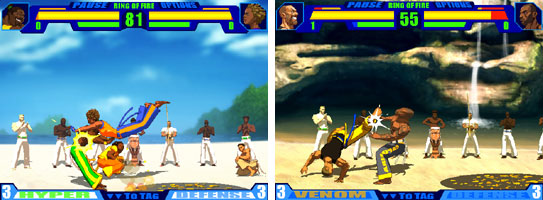
In Capoeira Fighter 3 there was a gallant fighter named Angoleiro. Although he was not a mystical person he certainly reflected the classic traditions of the African cultures. The elderly man was dressed in white yet walked barefoot, he also wore a white Fedora which he used in battle. They eye patch and sly grin added a bit of mystery to the man. Perhaps he was Exu in his human form after all. Angoleiro was sent to Brazil by a vision from his deceased wife Rosa. It seemed that there was a great conflict and a girl needed his help. He was not sure what the girl looked like as she was blurry in his dream. He found a native girl named Pantera dressed in animal skins. There was a land developer clear cutting the rainforest in order to build a hotel. It turned out that she was on the one that needed his assistance. Apparently the animal spirits had worked through his dreams in order to get him to a place where he could help. Although he was the oldest fighter in the game he still was still a master of capoeira. With his techniques and guile players could complete his mission.
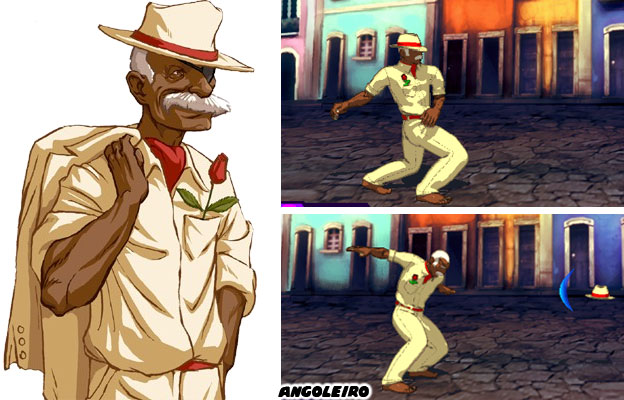

Angoleiro was reflective of the positive forces of the Orisha. When he came upon Pantera and even the character Coelha upon the crossroads he offered each a chance to change their destiny. Angoleiro was using his visions to elicit change in other people's lives. These were the natural courses that Macumba practitioners preferred. Using a vision for selfish reasons would often cause strife or worse end up cursing the practitioner. The spirits of the Orisha did not like to be toyed with. Angoleiro had made it to a ripe old age and was still a fighter to be reckoned with because he followed the right path. In Brazilian legend there was a slave that was a master of Capoeira but was also protected by the Exu. His name was Besouro Maganga, he was nicknamed after the junebug. Officials tried hunting him down but he was too quick for them, he could run along treetops and seemed impervious to bullets. It was said that no weapon forged by man could kill him. A jealous rival found out about the myth and crafted a knife made of palm leaves in order to assassinate him. Figures like Besouro and the contemporary Angolero reflected the positive aspects of the spirituality that followed Capoeira over from Africa.
There was somebody in Capoeria Fighter canon however that did not follow the right path and never had. Mestre Zumbi had spelled trouble for the other Mestres and was a menace to the young practitioners of Capoeira since the very first game. He was confrontational, proud and jealous. It was a dangerous combination for the strong bruiser. Zumbi was lacking something, aside from his look, to set him apart from the other characters in the game. He was a powerful bully but what the game needed was a boss character. He discovered, or rather the team at Spiritonin discovered, that Macumba could be the power that elevated Zumbi from bad guy to major villain.

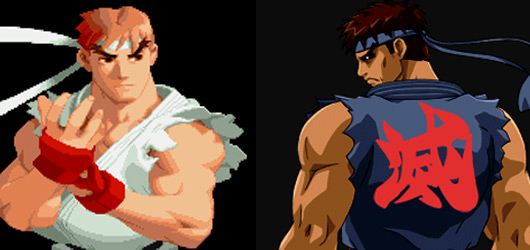
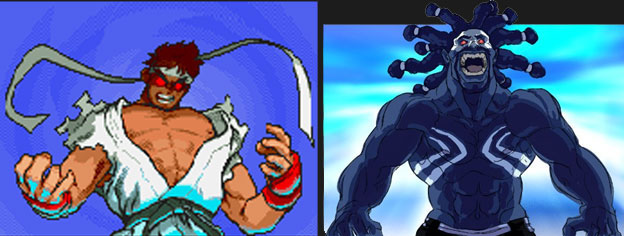
This would be the first fighting game that actually showed the evolution of a character from "regular" fighter into a boss-tier one. Moreover, this was the first fighting game that allowed players to start as one type of character and end the game with a completely new persona. The evolution of Zumbi was unique compared to all of the other fighting games, especially Street Fighter. The changes of Zumbi in CF3 contrasted Ryu in Street Fighter Zero. Ryu had always been a hero in the series. In Street Fighter Zero Ryu had to battle his own dark urges. The Evil Ryu personae was what he would have become if he had gone down the same path that created Gouki. After the events of Street Fighter II, III, IV and V it was apparent that Ryu was and always would remain the hero of the series. Much to the chagrin of some players, there would be no second coming of Gouki. Zumbi on the other hand had always been the bad guy and would always be the bad guy. Given his personality it made sense that he did not fight the dark elements but instead sought them out. It was like watching the great betrayal of Gouki to his master and even himself. Zumbi wanted to put fear into the heart of Loka and the other fighters. He embraced the forces of Macumba and became a vessel for their dark powers. In doing so a new character was born; Zumbi Azul, or Blue Zumbi. This dark master of Capoeira would now reign as the supreme force in their universe.

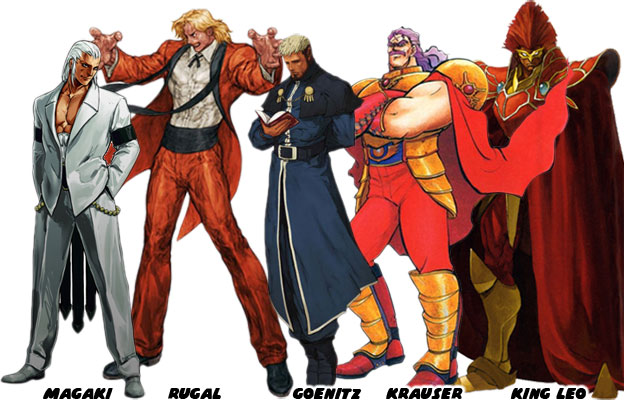
Previous to Capoeira Fighter 3 the studios in Japan and the US had been trying out many different types of characters from which to build a main villain from. Martial artists were the original boss characters however as time went on the final villains began to move away from the traditional arts. Most of the characters appeared to have been pulled from other genres like science fiction or even fantasy. SNK made a name for themselves by featuring well dressed but overpowered characters as bosses. They were supposed to look regal and in some instances even combined sharp clothing with vintage armor. The studios broke the balance in the game by assigning absurdly powerful attacks to these bosses, far more than the Dictator even. Some could kill regular characters with a few hits and often without having to even physically touch the opponent. This seemed cheap and reduced the impression that boss characters were supposed to give players.

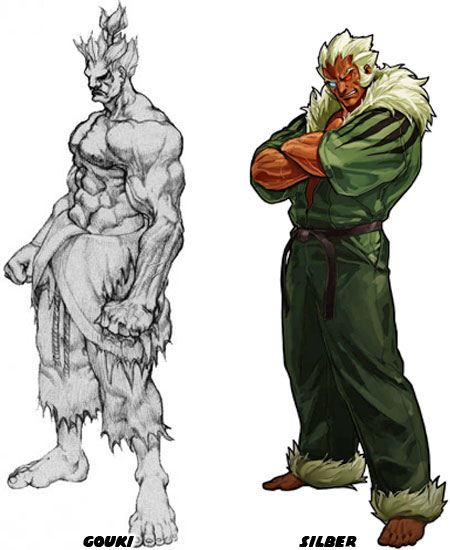
Capcom had demonstrated through Gouki that with a healthy dose of cultural cues the most memorable villains could be grounded in reality. For a fighting game it only made sense that the ultimate villain also had to be a fighter and not simply an overpowered man in a suit. Gouki had established a tradition that would be hard to top. His design incorporated animal as well as demonic cues but not to the point as to be absurd to players. Silber from Buriki One had been the closest to follow the formula, especially in form and function. He was a fearsome predator that hunted down martial arts masters all over the world. Like Gouki he appeared suddenly during the last fight to surprise players and vanished just as mysteriously. Silber was missing something however, an awe-inspiring super attack that made him more than just a superior karateka. This small detail was not missed by Spiritonin. Zumbi Azul had become the Gouki equivalent in the series. He controlled similar to the regular Zumbi but all of his attacks were much more powerful. It mirrored how Gouki controlled similarly to Ken and Ryu but with stronger attacks.

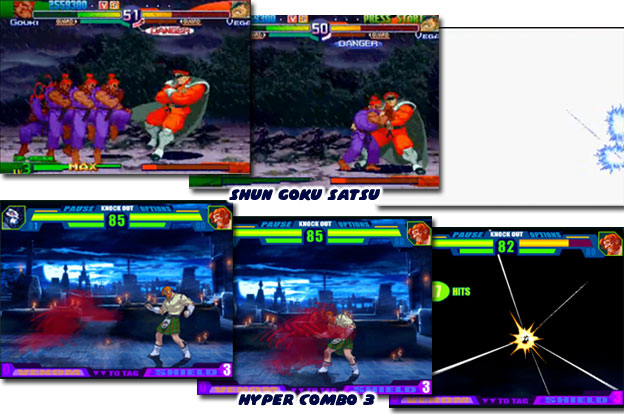
Gouki was famous for his Shun Goku Satsu. The character would hop on one foot and "teleport" over to an opponent. He would grab them and then proceed to pummel them with a flash of unstoppable strikes. The Instant Hell Murder was near impossible to escape at close range and could even reach most opponents at mid-range before they could counter. Zumbi Azul was given a similar attack for his Hyper Combo 3. The character would turn a ghostly, transparent red and then slide over to his opponent. Once caught Zumbi Azul would pummel his opponent with a flash of rapid strikes. A well timed final attack would all but guarantee victory for both bosses. The thing that made the special attacks slightly more interesting in CF 3 were that they could be combined with a "Power" modifier like Shield, Poison or Speed. If Zumbi Azul had Vampire, which was how the PC usually controlled the character, then not only would a player lose a tremendous amount of health from the Hyper Combo 3 but Zumbi Azul would gain all of that energy in return. It made the special attack all the more fearsome and the character more difficult for players to deal with.

Spiritonin had introduced a villain that had as much presence as Gouki. This was not only rare for a Western publisher but was rare for the entire industry. The studio placed Zumbi Azul as a boss for several but not all of the characters in the game. It only made sense considering the long standing rivalry that Zumbi had against certain cast members. Players could unlock the character if they earned enough credits. Players earned credits for each character they beat the game and various modes as well. They were encouraged to beat both paths of the game with each character so that they might earn enough credits to unlock all of the hidden characters including Zumbi Azul. The differences between Zumbi and Zumbi Azul were subtle but each required precise timing to master. Spiritonin took all of the lessons that Capcom had laid down regarding boss designs and created a new chapter to the legacy of fighting games. The next blog will look specifically at how a minority character evolved to become one of the great all-time villains. As always if you enjoyed this blog and would like to sponsor me please visit my Patreon page and consider donating each month, even as little as $1 would help make better blogs and even podcasts!
Monday, October 12, 2015

How fight culture became fighting game history, part 45

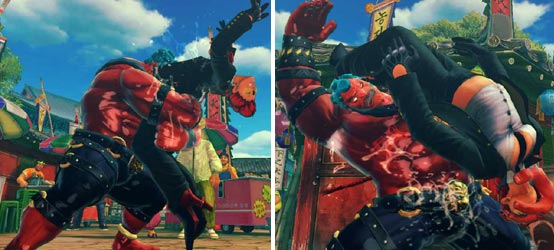
Minority characters had been incorporated into fighting games for over 30 years. Players were exposed to generic as well as recognizable figures in that time. Some of the best stayed with a series while others simply faded away. Earlier in this blog I had shown how some of the worst elements in fighting games were based on broad stereotypes and assumed truths about a culture thanks to limited exposure by the media. Asian and white characters seemed to have the best forethought and presentation while minority characters were usually pinned with a gimmick. For some the gimmick was the defining trait of the character. Look at Hakan from Street Fighter IV, the character was obsessed with oil for his style of fighting and nothing else. What would Turkish players make of him or his over-the-top version of yagli gures, the actual form of Turkish wrestling? For blacks it was usually sports or entertainment that they questioned. The challenge was for developers in Japan and the US to create iconic characters that would withstand the test of time. The idea that a minority character could ever take on a lead role had rarely been explored. The idea that a minority character could ever become a great villain was almost an absurd thought.


A previous blog had highlighted the Capoeira Fighter series by Spiritonin. The game was a love letter to the genre and presented within it many influences pulled from Street Fighter and Tekken. The game had actually been shaping the development of one of the main characters into a villain over the course of three titles. The Capoeira Fighter series originally did not feature a boss character and only the most basic of plots. By the third game each of the characters had a clearly defined goal from beginning to end. Players were allowed to choose from one of two outcomes. Not that players necessarily chose between a good or evil path, most paths actually had indifferent resolutions. However each variation hinted that either outcome was acceptable in canon. Moreover each path ran parallel with the rest of the cast so that all of the encounters in the game were possible.


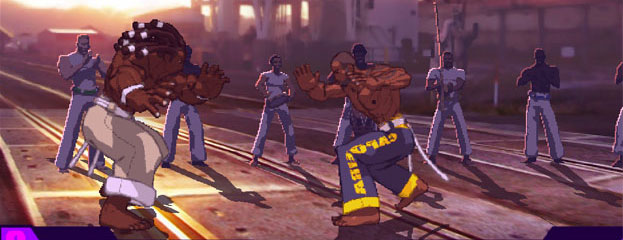
Mestre Zumbi could be considered the most identifiable character in the game but he seemed to be a thorn in the side of the heroes. Imagine a fighting game that used the images of a villain as a selling point. It was rarely done by developers. The large muscular black man wore white pants and had thick braided hair. The contrast of dark and light elements on his costume helped him stand out from the cast. His massive frame and powerful moves let players know that this character was not one to be messed with. It turned out that the other masters in the game, Loka and Rochedo had a number of confrontations with Zumbi over the course of the series. The two masters were very consciences of their students and wanted them to learn the most positive aspects of Capoeira. Zumbi by contrast was jealous of the other Mestres and wanted to prove that he was simply the best fighter. He was willing to beat up all of the students and masters along the way to make his point. This made Zumbi very unpredictable and dangerous through the series. Loka and Rochedo accompanied their students where they could or sent elder students to keep an eye on the young ones whenever they traveled.


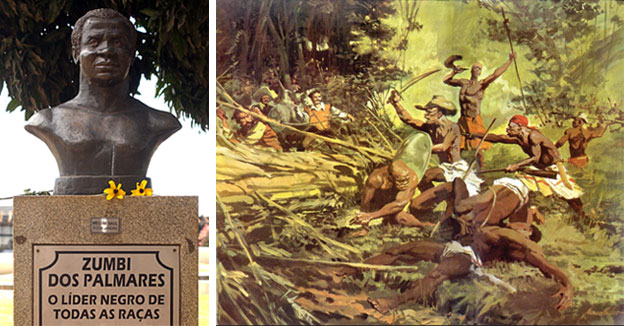
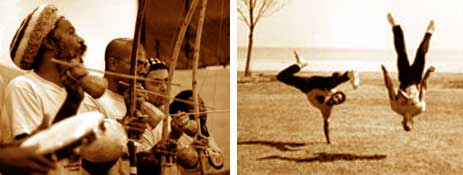
Zumbi was actually a well known name in Brazil. In the 17th century Zumbi dos Palmares had been born in the Quilombos, a settlement established by escaped slaves, prisoners, natives and refugees. There were a few settlements hidden on the east coast of Brazil just outside the jurisdiction of the Portuguese. Freedom fighters would try to help other slaves escape or stage insurrections from the Quilombos. Zumbi was an excellent fighter and a descendant of the Imbangala warriors of Angola. He became famous for his bravery as well as his military strategy. When his uncle Ganga Zumba was killed in battle he assumed the leadership of the warriors from the Palmares. A good number of their ranks were made up of exceptional capoeiristas, these fighters had proven the worth of the old African customs and helped spread the form through the Quilombos.


When the Portuguese raided his settlements they never managed to capture him. Slaves believed that he was blessed by the spirits, an immortal. Zumbi developed a sort of hero worship which was beginning to spread and became a concern to plantation owners and local governments. Eventually he was betrayed by a prisoner and his location was given to the authorities. As soon as they captured him they beheaded Zumbi and put the head on display in Recife, one of the largest cities in Brazil. The government hoped to break the will of the slaves. Afro-Brazilian pride did not die then and never would. The day that Zumbi dos Palmares was killed, November 20, would become celebrated as black awareness day in Brazil. The fact that Spiritonin gave the villain in their series the name of a hero was meant to be ironic. The characters in the game wondered to each other why the noble name was assumed by a madman.


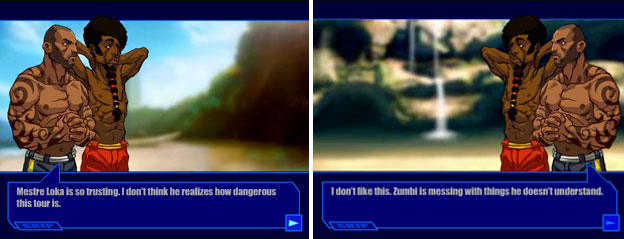
The dangerous obsessions of Zumbi were revealed little by little over the course of Capoeira Fighter 3. Loka and Rochedo warned their students to watch out for him. There were rumors going around that Zumbi was beginning to practice some dangerous things. These were not solely forbidden fighting forms but also supernatural elements, perhaps the fictional Zumbi was trying to find out how to become "immortal" himself? Rochedo warned his student and confidant Saturno that Zumbi was "messing with things he doesn't understand." Not everyone in the game actually crossed paths with Zumbi. Scott Stoddard, designer of the series, made the plot believable in the sense that Zumbi would have only crossed paths with those he had previous dealings with. The heroic characters that were trying to stop the man would have fought him in his ultimate boss form. Otherwise characters that did fight him only saw him in his "regular" form. Many did not see him on the way to their own resolution.


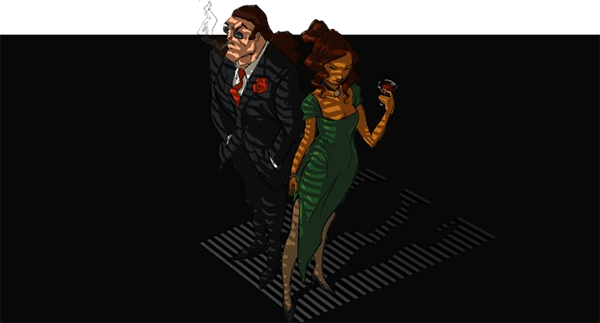
Even his allies were becoming leery of Zumbi. Cobra, the daughter of crime lord Arcenio Rodrigues was obsessed with power, but not the same form of power that Zumbi was seeking out. She was partnered with him early in the game. When Zumbi revealed to Cobra the forces he had aligned himself then the players were given the choice to leave him for his understudy, the ponytail sporting and almost equally massive fighter named Maestro. Zumbi had ignored the traditions of capoeira and gave Maestro a nickname without having him go through a Batizado and earn if from the community. Maestro had originally appeared in Capoeira Fighter 2 under the alias Primo. He also had ties to the criminal underworld. Primo / Maestro was actually a parody of the villain Silverio from the film "Only the Strong." Maestro and Cobra seemed a perfect pairing and allowed Zumbi to fulfill his destiny within the game as a solitary figure.


Villains in fighting games rarely had partners. They were usually so powerful that they could take on one, two or even three fighters all by themselves. If anything they had minions, other dangerous men and women that would obey their orders. These people acted as sub-bosses. In Street Fighter II the Dictator had Sagat, the ex-pro boxer M. Bison and the Spanish assassin Balrog working for him. His "Generals" would keep the other World Warriors at bay. Only those powerful enough to go through his men deserved a chance to fight him as well. Of course Gouki broke all the rules and destroyed the Dictator at first sight, cementing his reputation in the universe. Capoeira Fighter 3 did not have the luxury of going through countless revisions so that players could be eased into the canon and history of Zumbi. Instead the entire transformation of Zumbi was done within game, and masterfully at that.


Cobra had told Zumbi that his rival Loka was taking his students on a world tour. When Zumbi learned of this it spurned him to chase after his sworn enemy. He was eager to show off the things he had learned. Cobra wondered aloud if the rumors were true, was Zumbi messing with Macumba? These were the ancient spiritual beliefs brought over from West Africa during the slave trade. Macumba was a sort of catch-all phrase for the Brazilians to describe magic. It was a force that could alter the fates or levy powerful curses on people. In his quest for absolute power Zumbi had submitted himself to the mysterious forces. The folly was whether or not he could hope to control such power or be bound in service to it. The next blog will explore the creation of this new villain. As always if you enjoyed this blog and would like to sponsor me please visit my Patreon page and consider donating each month, even as little as $1 would help make better blogs and even podcasts!
Saturday, October 10, 2015

The road to Rising Thunder, part 1...

Have you thought of what the future of fighting games is going to be like? There will be advances of graphics and gameplay for certain. Fan-favorite titles like Street Fighter and Tekken will continue to receive updates. They will explore new stories, take chances with radical character designs and tweaks to the balance of the genre. One of the big changes that has happened over the years has been the delivery of the fighting game experience. The genre pretty much started in the arcade in the late '80s and as consoles became more powerful that experience migrated to homes by the mid-to-late '90s. The genre is now over 30 and still going strong. There are some console exclusives but more and more audiences are choosing to download their games rather than buy a traditional copy in the stores. The method of distribution has changed but so has the console of choice. Many gamers that grew up with consoles now have a PC at home for gaming as much as for doing work. But they also have phones that are more powerful than most computers from the early '90s. Between the computer and phone companies are trying to find a sweet spot for gamers of all types. What is the best console, if there is even such a thing? What about web-based game development? A game that only needs a good computer and a web browser? Is it possible for a web title to be as good as a $100+ million AAA title from the big publishers? Well, we may not be there yet but I can say with certainty that some amazing game experiences are web based. When it comes to fighting games some really great entries in the genre. The newest one, Rising Thunder by Radiant Entertainment is carving a niche all its own.


Before I talk about the game I should mention that the founders of Radiant Ent. are Tony and Tom Cannon. The brothers are computer science grads and have worked at VMware as well as Microsoft. But unlike their peers the duo are well known in the fighting game community. Tom founded the EVO fighting game championship and Tony engineered the GGPO technology which helps keeps the lag to the barest of minimums and allows fighting games to run smoothly online. They brought Seth Killian, a pro gamer-turned community manager-turned fighting game advisor on board to make sure that Rising Thunder has all of the elements that makes a great fighting title. What's not fair is for me to review a game that is still in Beta. For a title this early in development it has a tremendous amount of polish and will easily be one of the best fighting games of the new generation. Instead of focusing on the game, lets talk a little bit about the road that brought us here.


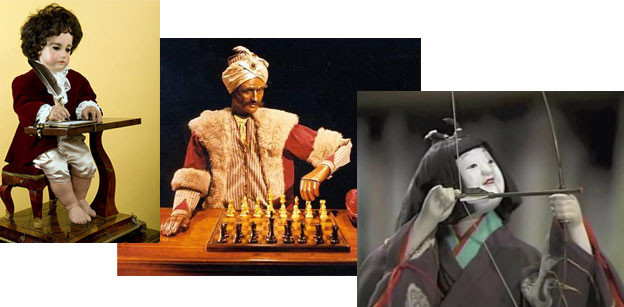
Robots and clockwork automatons (known as Karakuri Ningyo in Japan) had been a part of popular culture for centuries, if not millennia. Many of the earliest robots were created well before the age of silicon and microprocessors. These machines were created often by clockmakers as a way of showing off their mechanical engineering skills. Some robots were as small as a doll while others were full human sized. Some could play musical instruments, others could write messages, shoot arrows and even beat humans at chess. They inspired countless legends and had a hand in shaping pop culture when they debuted. Of course no sooner was an artificial person created than people began to wonder if it could beat a human in combat. Well before automations there were ancient Jewish folklores that spoke of golems made of clay that were brought to life by spirits. These legends predated Mary Shelly's Frankenstein story. It was a cautionary tale at the root; could man create life from nothing and if he did so would he abandon it or guide it? Since man was not an all-seeing-all-knowing god the stories often ended with man abandoning the creation and letting it run amok, an unstoppable symbol of his ego. These creatures would show up in pop culture in movies, comics and of course even video games.


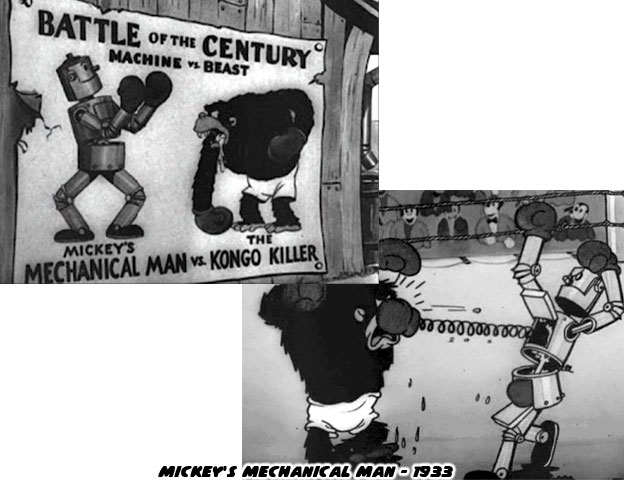
The first modern concept of a brawling robot was explored in the 1933 Disney cartoon Mickey's Mechanical Man. In the film the champion fighter was a powerful ape. Disney didn't even consider the notion of man versus beast but instead jumped at the chance to present beast versus machine. Mickey Mouse built a robot that would take on the champ and settle the question of who would win in a fight. What made the cartoon unique was how robots were imagined as fighters. Since they were not human, the did not have the limitations of muscles, internal organs or ligaments. They could turn 360 degrees at the waist, spin their arms like propellers and even throw spring-activated trick punches. These things were great visual gags but stuck with audiences. Many of the gags would be copied by cartoonists and animators around the world for the next 80 years.


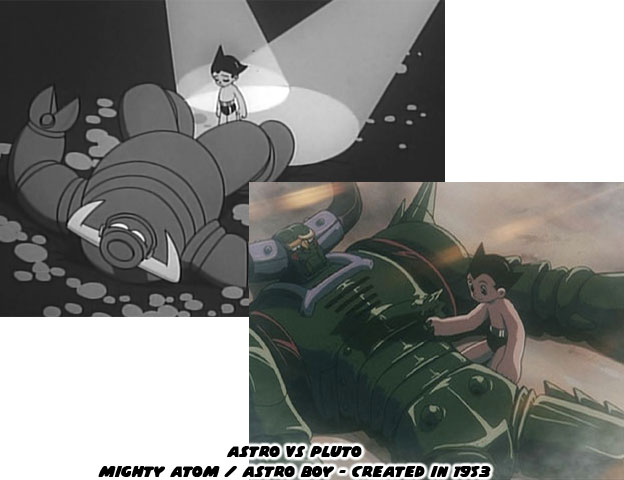
Robots were unique in how they could take punishment and deliver it without every feeling pain or empathy. It was a scary concept when applied to Dr. Frankenstein's biological monster. Yet something profound happened in 1953. An artist by the name of Osamu Tezuka created a manga series about a robot boy named the Mighty Atom. This little robot boy was not unlike a super powered Pinocchio. He was brave and naive at the same time. He had a great sense of justice but was also curious about the world he was born into. Tezuka was inspired to become a cartoonist at a young age. He saw the animated feature Bambi as a boy. Although he did not understand English he learned the story through the large expressive eyes of the characters. Because of this Tezuka created characters with large eyes and set a standard that would be copied by countless generations of manga artists. Many of the works that Tezuka created were morality plays.

The Mighty Atom, localized as Astro Boy in the USA, was no different. Astro was born into a world where robots were becoming sentient and they were not happy as slaves to their human creators. Some thought to rebel and this alarmed the humans. Dr. Umataru Tenma created Astro as a surrogate for his deceased son. Yet he abandoned Astro when he realized the machine could never replace his only child. Professor Ochanomizu, a scientific rival to Tenma, adopted Astro and decided to raise him to help humanity. Astro was granted amazing powers and weapons which easily rivaled the coolest heroes from the west.


Astro Boy was a revolutionary title because audiences learned that people could be as heartless as the machines they created. In a way the robots they created represented the greatness that we should hope to achieve. We learned to feel sorry for many of the robots that Astro had to fight. They were often misguided in their conflicts. Tezuka did an amazing job at creating sympathetic beings. These characters would color the industry itself. A generation that was raised on a steady diet of anime would create the first video games, many times they reflected the animation and comics that they had grown up on. The first video game heroes were also influenced by the animation pioneers. Mega Man and his creator Dr. Light were nothing more than a retelling of Astro and Dr. Umataru.

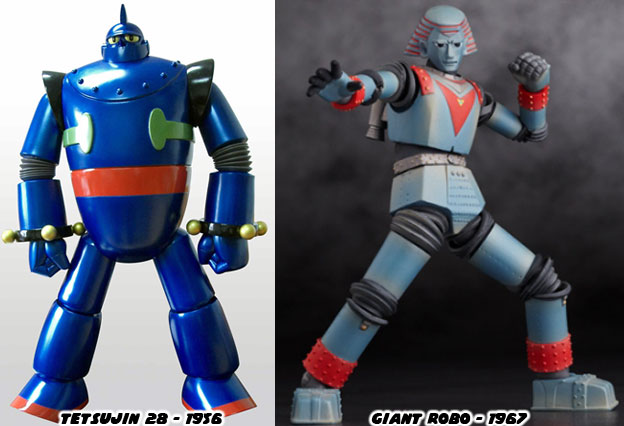
Few titles based on robots ever matched the greatness of the Mighty Atom. That did not stop other writers and artists from trying to create lasting characters. One of the best went by the name of Mitsuteru Yokoyama. In 1956 Mitsuteru created Tetsujin 28-go, a manga about a giant robot and his young master Shotaro Kaneda. Tetsujin literally translated to iron man. Just an FYI, Marvel's Iron Man did not debut until 1963 in an issue of Tales of Suspense. Tetsujin 28 was a remote control robot that fought crime and other giant robots. The character gained symbolism as a sort of big brother and protector for Shotaro. It was possibly the first time a mechanical surrogate was presented in such a light. The series was rebooted several times in manga and anime form. There was a certain charm to the barrel-shape of the character and he retained his look in most every reboot. If you look at the Rising Thunder lineup I'm sure you'll be able to spot the influence that Tetsujin 28 had on the design team.


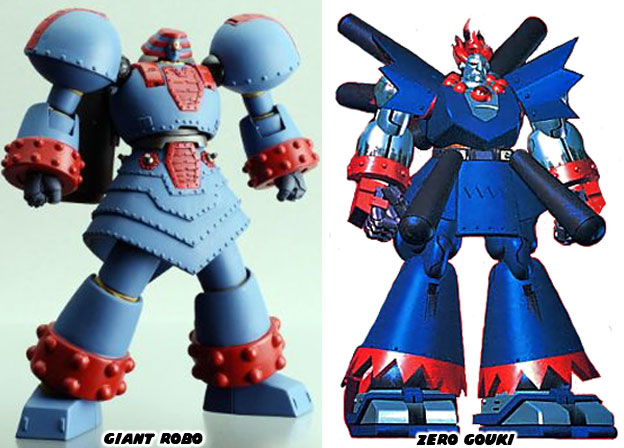
Mr. Yokoyama's biggest hit was yet to come. In 1967 he created a new series, this time meant for television, which was a new take on the Tetsujin mythos. The new robot and series was named Giant Robo. This pharaoh-headed robot obeyed the commands of his young master Daisaku Kusama. Unlike Tetsujin the robot showed signs of free will and could choose to ignore his master. This character was not only seen a a surrogate family member, he literally stood in for Daisaku's father, the creator of Robo. The live-action Giant Robo series was a staple in many households, not only in Japan but also in the west where it was translated for young Generation-X fans to enjoy. The series had great action, an incredible assortment of heroes and villains and easily one of the most melancholy endings for a children's show ever written. In the eyes of many it would not be matched until the original animated series Giant Robo debuted almost 20 years later. The redesigned Giant Robo was heavily armored, much larger than his live-action counterpart and armed with missies, cannons and more explosives than a battleship.


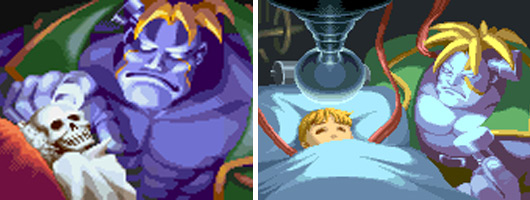
The heavyweight redo of Robo did not go unnoticed by the game community. In the 1995 Capcom game Cyberbots: Full Metal Madness, there was a hidden character modeled after Giant Robo. The game was set in the far off future. Where giant piloted robots fought in the place of armies. Of course since this was a Capcom fighting game the studio wanted to put their own spin on the character. Gouki from Street Fighter would be lending his likeness to the new robot. Fans of the genre as well as Giant Robo saw this as one of the greatest homages yet designed. Robots were perfect for gaming. They could change shape, carry far more weapons than any human and of course take tremendous amounts of damage. Finding ways to adapt the abilities of small robots like Astro Boy or giant robots like Tetsujin 28 into fun gameplay elements would take a long time to figure out. But that was okay because many of the best game developers were small children when the shows came out. They had plenty of time to think about how to make a game out of the battling robot.


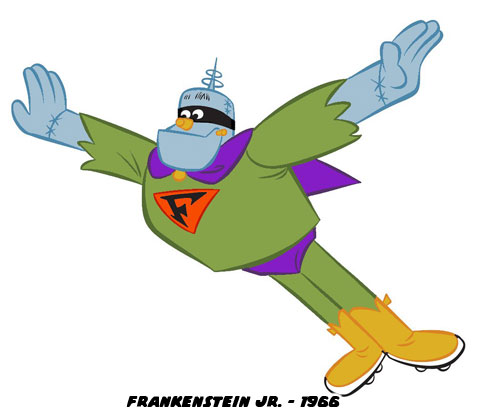
Thanks to the work of Mr. Tezuka and Mr. Yokoyama writers and artists around the world were learning that a robot could be the star of a series. Depending on how they were presented a robot could be menacing or sympathetic. This was not an idea that was exclusive to Japan however. In 1966, as an answer to the runaway craze that Tetsujin 28 had started for Japanese animation, the US studio of Hanna Barbera created a cartoon called Frankenstein Jr. In it Professor Conrad created a giant robot for his son Buzz to command using a ring, instead of a watch. Frankenstein Jr. fought all manner of giant monster and robot on his adventures. Hanna Barbera was good at responding to changes in pop culture. They created Space Ghost and Johnny Quest as the first animated answers to the comic book craze of the '50s and '60s. Robots were apparently becoming a thing and Hanna Barbera wanted to ride that trend as well. The trend was inescapable for novelists as well. The Iron Giant by Ted Hughes was published in 1968, after the debut of Giant Robo and Frankenstein Jr. A few decades later would be the basis for the fan-favorite animated film sharing the same title. The robot genre was only beginning to gain momentum. In the next blog we will explore the titles that shaped the evolution of the genre in animated and even game form. I hope to see you back for that! As always if you enjoyed this blog and would like to sponsor me please visit my Patreon page and consider donating each month, even as little as $1 would help make better blogs and even podcasts!
Friday, October 9, 2015

How fight culture became fighting game history, part 44

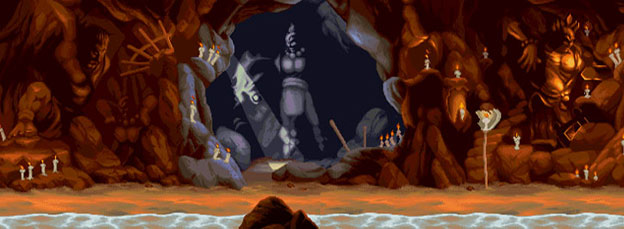
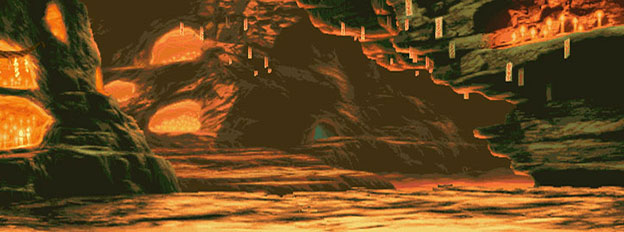
When Capcom first introduced Gouki he did not have a stage to call his own. He simply appeared where the Dictator usually was and fought players there. As the Street Fighter series evolved Capcom knew that they had to give Gouki his own unique stage. It had to include many of the elements that made him an imposing figure. Since part of his mythology was rooted in Eastern religion and traditions then the stages had to reflect those origins. The character never trained in public or anywhere else where he may have been spotted by locals. This meant that even the depths of the forest may not have been secluded enough for Gouki. Capcom began to develop a theme which would follow him through the series. He seemed to make an island his home. He could have lived in complete isolation in any one of the tiny unoccupied islands that surrounded Japan. Even then it might not have been private enough for the fighter.

Gouki was a hermit that seemed to live within a cave. These caves were often decorated with votives and powerful symbols. The Nio that Gouki emulated were carved into the walls of the caves. Whether he had come across an ancient temple or whether he had carved these figures himself was never explained. Either interpretation said a lot about the character. This open inference that Capcom allowed of their characters, their thoughts and desires always made them unique. Other fighting games often presented a fixed take on the characters which followed them through canon. Each designer of Street Fighter was allowed to interpret the world as they saw it. This meant that the canon between the original Street Fighter and Street Fighter IV was nebulous at best. Each character had a small piece of a bigger puzzle. Even if players were familiar with all of the stories from every sequel none of the pieces seemed to fit perfectly together. This could be maddening for some and cause heated debates on several gaming boards as to the "true" canon of Street Fighter.


For Gouki the mystery surrounding his stage helped make the character more unique. As the character was fleshed out between Super Street Fighter II Turbo, Street Fighter Zero and Street Fighter III his stages became more imposing. The designers and artists slowly weaned the levels off of bold Asian religious icons and began to put in elements that were more universally recognized. The stages that Gouki called home still had spiritual connotations. To gamers in the West the exact origins did not have to be known in order to be understood. Players that had been following the series were familiar with the dark secretive levels that Gouki appeared on. As the series progressed the player seemed to progress deeper and deeper into a cave. The only light in the stages came from candlelight. They cast an eerie glow on the level. The candles seemed limitless, tucked in the darkest recesses of the cave by an unseen hand. The colors given off by the candles gave the cave in a myriad of hues, some cold and others hellish. The end result was the same. By advancing into the world of Gouki the player had left behind the mortal world. The stages were meant to invoke images of the afterlife. Gouki was no longer seeking opponents. He let those foolish enough to seek him out do so. Players symbolically descended into Hell to face the demon himself. Perhaps they did not really cross over but were at the very least standing at the Gates which he guarded. A person that lost a fight down there would remain there for all time.

Most Japanese audiences could pick out the details on these ethereal stages. They could see Shinto symbols in several of the levels. None were more profound than the use of the rope or Shimenawa. Ropes were used to bind spirits, called Kami, into objects like rocks or trees in Shinto spiritual beliefs. The objects that attracted kami were known as Yorishiro. When the ropes were adorned with paper streamers called shide they marked the spiritual sacredness of the location or object. Throughout Japan there were trees and even islands bound by shimenawa and shide. Street Fighter, Samurai Spirits and a few other Japanese developed games often made use of shinto iconography. The unique thing for the spiritual belief was that kami could not only possess natural objects but also people as well. A Yorimashi or "Possessed Person" was a person that took the place of a Yoshiro. The rope belt that Gouki wore, instead of the cloth belt worn by traditional karate masters, would be a way for him to symbolically bind the kami to his body. The prayer beads he wore would be a way to keep the spirits under his control and not vice-versa. When Gouki would go crazy in the comic stories his prayer beads would break and scatter. Gouki would not longer be aware of himself as the Dark Hadou had completely taken over.


This layering of spiritual themes made Gouki a much more profound character, especially to Asians. Previously gamers in the West thought he was just a cool-looking martial arts master but the more they learned about him the more unique he became. Despite all of the supernatural elements Capcom still managed to ground him in reality. Gouki was amazingly strong and powerful, but real martial artists had demonstrated that they too could kill man and animal alike with a single punch. What made Gouki dangerous was his lack of empathy for life. He would not give a second thought to murdering any person or animal. This was what made the man dangerous. His obsession was power and his objective was to be the greatest fighter ever. Past that he had no other purpose. His life was devoid of humanity and this was what turned Gouki into a monster.

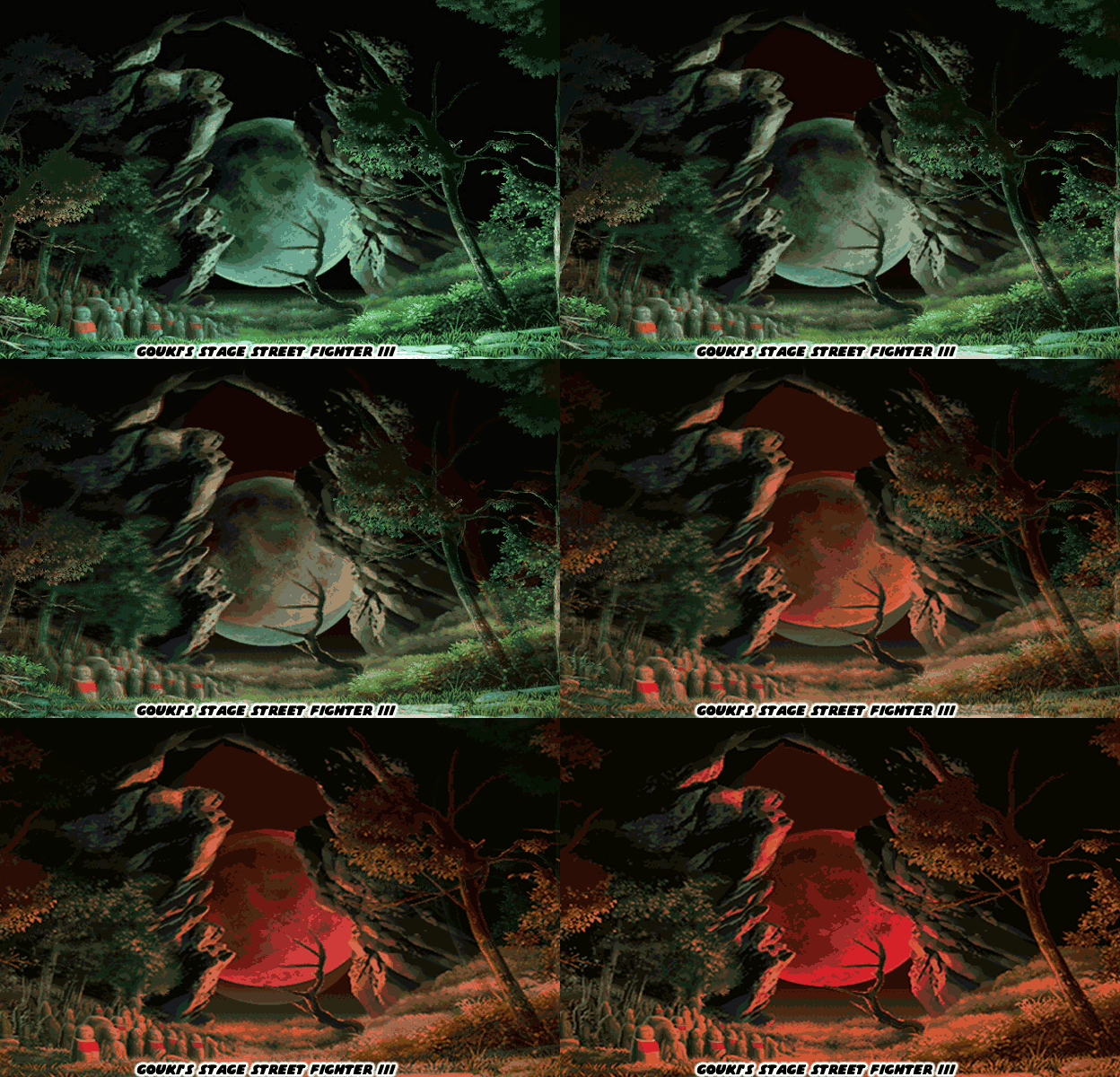
Players that entered a battle against the character knew they were in for something special. The time and the place for each encounter was carefully crafted by the artisans at Capcom. The mystique surrounding Gouki would have been lost if his stage was in the middle of Times Square. The bright lights and traffic of a metropolis would have made the character appear absurd. Instead players seemed to face him in underground caves or secret temples. Always at the middle of the night and during the full moon. Or worse yet, during the Blood Moon aka the Hunter's Moon. This was the first full moon after the Harvest Moon, signaling the end of the growing cycle and the beginning to the sleep cycle for nature. In some cultures it was also the death cycle. The illuminated stage, whether by candlelight or moonlight made shadows dance in the dark corners of the screen. Gamers had to take a second glance at the background to make sure the levels weren't looking back. The stages were often devoid of life. As if the creatures of the forest had abandoned their homes.


Capcom had learned that the most effective characters included elements from the real world. The most effective villains were believable even when they demonstrated supernatural origins and powers. Their stages painted a sinister picture on an animated canvas. The purpose of the most evil characters was clearly conveyed to audiences. Capcom needed to learn that they could apply similar lessons to characters from other nations. SNK had taken a step forward in that regard. Silber was a unique German, whose monstrous appearance harkened back to old-world mythologies and the villains from fairy tales. He replaced the previously all-Japanese karate masters in fighting games. With these lessons observed the minority characters that left behind stereotypes and embraced an actual African or Afro-Caribbean heritage were much more interesting. They did not need to be presented on a dance floor or in front of a basketball court so audiences would get that they were "black." It would be possible to combine the lessons learned from characters like Gouki and Silber and create a powerful but believable black villain in a fighting game. The next blog will look at this in detail. As always if you enjoyed this blog and would like to sponsor me please visit my Patreon page and consider donating each month, even as little as $1 would help make better blogs and even podcasts!
Wednesday, October 7, 2015

How fight culture became fighting game history, part 43

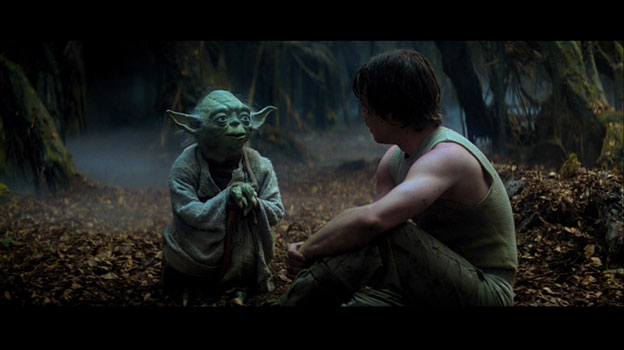
Creating a great villain had been the challenge of storytellers since the dawn of humanity. The villain was historically face of evil and the hero was the force for good. The battle between good and evil was nowhere else better defined than in pop culture. The movies, cartoons and comics of the past century have been filled with amazing battles between these forces. The most dramatic of these battles however were not the fights between the main character and the villain, but instead between the main character and him or herself. Great films highlighted the dilemma for the main character. For example, in the original Star Wars trilogy Luke Skywalker was being trained by the Jedi Master Yoda to do battle against Darth Vader, at this point Skywalker did not know that Vader was his father. The evil Lord of the Sith was very powerful and the young Skywalker feared he was too powerful because he had harnessed the Dark Side of the Force. Yoda was the second master for Skywalker, as most readers know Obi-Wan Kenobi was killed by Vader. Skywalker had questioned Yoda and wanted to know which side of the Force was the strongest. The exchange was one of the most memorable lessons instilled by the feature.

Yoda: Yes, a Jedi's strength flows from the Force. But beware of the dark side. Anger, fear, aggression; the dark side of the Force are they. Easily they flow, quick to join you in a fight. If once you start down the dark path, forever will it dominate your destiny, consume you it will, as it did Obi-Wan's apprentice.
Luke: Vader… Is the dark side stronger?
Yoda: No, no, no. Quicker, easier, more seductive.
Luke: But how am I to know the good side from the bad?
Yoda: You will know... when you are calm, at peace, passive. A Jedi uses the Force for knowledge and defense, NEVER for attack.
Luke: But tell me why I can't...
Yoda: No, no! There is no "why".


Yoda was not willing to explain to Skywalker that the greatest battle he would perform would be with himself. Those gifted with control of the Force would have to be ever vigilant as to which side they wanted to remain on. The dark side was the easier path but would ultimately corrupt every user that tried to master it. A variation of that theme was explored in martial arts storytelling. When that myth was introduced into Street Fighter the balance between good and evil, right and wrong could be clearly seen by arcade players. It was not done in the first or second games but in the third, which was actually a prequel named Street Fighter Zero in Japan and Alpha in the USA.

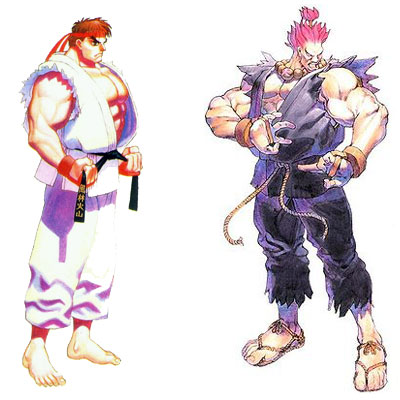
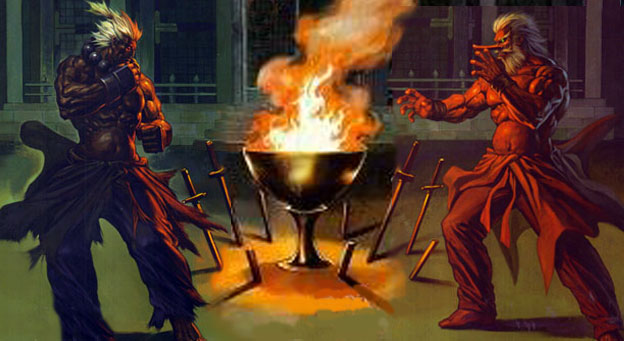
Ryu and his techniques were like the good side of the force, wise, patient and understanding. He wore all white, a color used to symbolize purity and life. He was perpetually young and handsome. By comparison Gouki was the ambassador of evil. His features twisted and grotesque. He wore all-black, symbolizing the impure and death. Both of them actually practiced the same form of fighting, a Karate / Kung-Fu variation known as Ansatsuken or the "Assassin's Fist." The form learned by Ryu and his friend Ken was handed down to him by his master Gouken. The Chinese Goutetsu had refined the lethal style into a powerful form of fighting and took it to Japan. He tried to keep the killing strikes a secret from his students Gouken and Gouki. But as most gamers know he failed at that when Gouki went on a murder spree and killed his master and brother using the dark techniques.


The relationship between Ryu and Gouki was very much like that of Skywalker and Vader. The master of evil seemed too powerful to be defeated. Vader had killed Obi-Wan Kenobi in front of Skywalker just as Gouki had killed Gouken in front of Ryu, The fears for the young martial arts master were palpable because both villains were so well presented in their given titles. Whenever Gouki appeared in the game series a little bit of that fear and intimidation was passed onto new players. Capcom had done as good a job defining their villain as George Lucas had done for Vader.
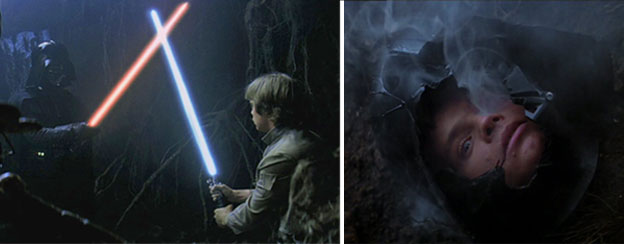
The final trial for the young Jedi was something that Skywalker could only face by himself. Yoda would not be able to guide him but had to hope that he had taught Skywalker enough to carry him through his own path. This was symbolized in the film series by a battle that Skywalker had against an image of Vader. The two had a Lightsaber duel in a dream-like sequence. Skywalker conquered his fears and managed to gain the upper hand in the contest. He struck down Vader by decapitating him. The next portion was something that haunted Skywalker and audiences for the rest of the film. The mask of Vader blew up and his face was revealed. Behind a puff of smoke Skywalker ended up looking down at himself. This was foreshadowing the big reveal at the end of the film but was also meant to be a warning against the corruptive influence that the Force had.


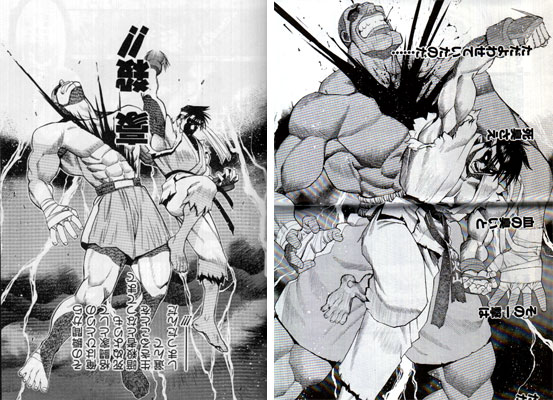
Ryu had a similar crisis of conscience in Street Fighter Zero. He was not worried that Gouki might be his father, although many gamers had speculated that he may have been. Instead Ryu was worried that all the lethal strikes in his fighting style may begin to overpower his self control. The Dark Hadou was like the Dark Side of the Force. If Ryu set down the path of learning all the killing strikes then it would consume him. Ryu was finding it more and more difficult to maintain his composure during battles, especially after he had defeated Sagat in Thailand. What he failed to acknowledge was that he had used a killing strike in order to defeat Sagat in the original Street Fighter. Ryu would not have won the fight under normal circumstances. Sagat was fighting with everything he had, he was doing so knowing that the battle could very well kill him. Ryu was young and lacked the experience to realize what he had gotten himself into. The only way to stop Sagat was with a lethal blow. That was something that master Gouken had forbidden him from performing in battle. In a moment of weakness or rage depending on your interpretation, Ryu succumbed to his Dark Hadou. Even if it was only for a moment Ryu was not himself, he became somebody else. The Shin-Shoryuken or True Dragon Punch would have killed a lesser fighter. Sagat was so large and powerful that he managed to survive the punch but was left with a massive scar burned across his chest.


By exposing himself to the lethal elements Ryu had tapped into the Dark Hadou. That one act had begun to poison his soul and would slowly try to consume his body. If he were willing to disregard his training and value for human life then perhaps he had what it took to become a master of the Dark Hadou. Unfortunately this would mean that he would have to kill Gouki to truly claim this status. Ryu in his innocent "good guy" form seemed incapable of standing up to Gouki. With the newfound dark techniques he looked like a decent rival. This was the heart of the material that Capcom had created when they introduced Evil Ryu into Street Fighter Zero. The studio even gave him the Ashura Senkuu a familiar "teleport" move and Shun Goku Satsu to make him appear like the understudy of Gouki. This change to the character and canon excited players.


Although gamers were aware of the outcome of that storyline they were still surprised at the turn of events that Capcom had created. The story of Zero took place between the first and second Street Fighter Tournaments. In Street Fighter II Ryu was the pure hero and Gouki was the dark villain. Apparently Ryu had overcome the Dark Hadou and would never need to tap into it again. However for each of the Zero sequels (there were three games in all) the future of Ryu was in constant jeopardy. Several of the characters he crossed paths with tried to help him stay on the good side. Several of the villains tried to pull out his dark tendencies. Like Skywalker however this was a fight that Ryu could only face himself.

The best part for gamers was that they could play as Ryu or Evil Ryu in the game. They were allowed to explore the canon as if it were written for a villain rather than a hero. This was something that the movie-watching experience could have never accomplished. Imagine two cuts of the Empire Strikes Back, one that audiences knew and one where Luke turned against Yoda and joined Vader. George Lucas and Irvin Kershner had a hard enough time conceiving and directing the second film in the trilogy without having to worry about filming two concurrent story lines. The battle between good and evil, right and wrong and even the self was solid enough that it only had to be filmed once for the series. Of course fighting game fans would be at a loss if they were not allowed to pit good guys against other good guys and bad guys against other bad guys. The best possible scenario for the canon of SF was to allow gamers to have Ryu battle his own evil half. The stages where the fights between good and evil took place had developed a personality all their own. They helped place the gamer in the scene and made the struggle against dark and light forces have more of an impact. The next blog will look at these locations. As always if you enjoyed this blog and would like to sponsor me please visit my Patreon page and consider donating each month, even as little as $1 would help make better blogs and even podcasts!
Monday, October 5, 2015

How fight culture became fighting game history, part 42

Gouki and Silber demonstrated the price that had to be paid to be two of the best fighting game bosses ever. They were willing to fight to the death at each and every encounter. Very few fighting game characters were ever written with that level of intensity. The pair were willing to kill in order to achieve their goals. The Dictator and the other bosses were willing to do the same but Gouki and Silber did not have a different agenda. They did not want to rule the world or even a small nation. They simply wanted to be the greatest fighters that had ever lived. By their definition the most lethal art proved who had true power. This took them out of the realm of bosses and made them symbols of evil.

The lack of respect that the two villains had for human life extended to themselves. These boss characters were willing to enter a fight even if the numbers were against them. They were willing to punish their own bodies, cripple their own bones and deform themselves for the sake of mastering killing strikes. Gouki and Silber had powerful bodies but gruesome expressions. Their faces were a mockery of the humanity they left behind. In the official character are they almost looked like they were wearing masks. Their features carved by a life of constant battle. The scars that Silber wore were clearly visible but Gouki's were hidden, they were scars on his soul. When Gouki killed his own master and brother he had done damage to himself that he would never be able to undo.

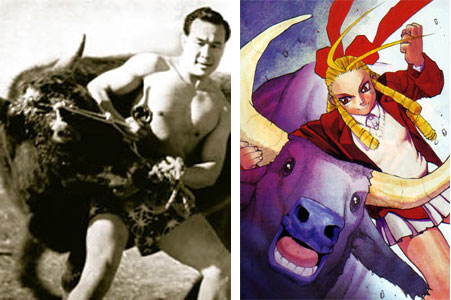
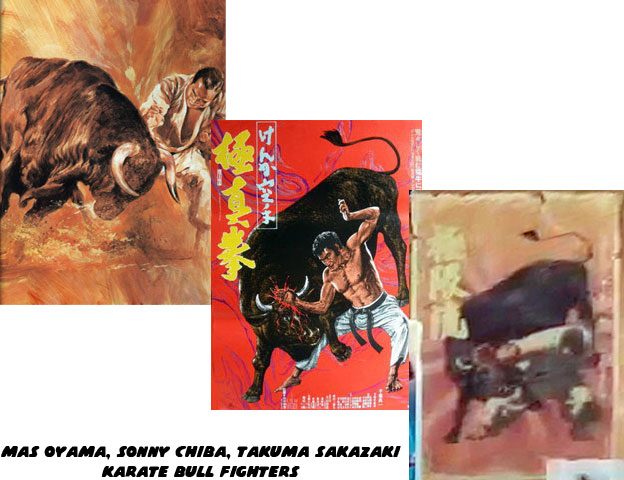
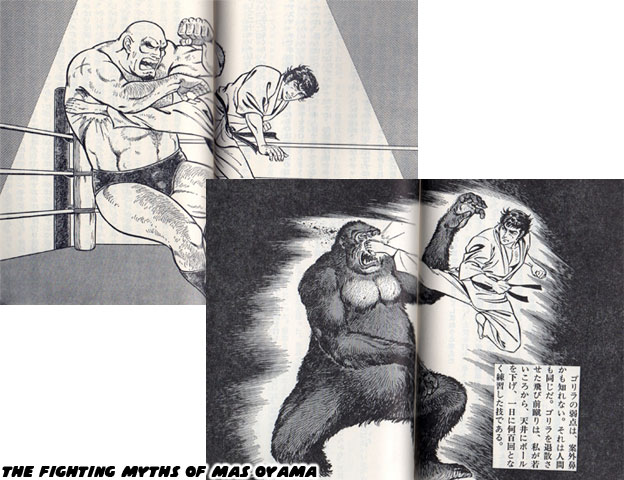
The pair had achieved a level of power that few could ever hope to reach in canon. Their training was so hard that no opponent was strong enough to spar with them and live to talk about it. The two had turned to nature to push themselves further. Instead of breaking rocks and trees they began fighting predators from the animal kingdom. This legend was taken from reality itself. Mas Oyama had travelled the world, defeating masters of just about every fighting style. When he ran out of people to fight he turned to animals. He would put on demonstrations of his Kyokushin karate style by fighting a bull. He would wrestle with the bull, break off its horns with a chop and then kill the bull with a punch to the head. When the bull was examined by a local butcher they would discover that Oyama had broken its ribs in several places and had actually shattered enough bone to make portions of the animal unfit for consumption. This legend evolved to make several Street Fighter characters seem as powerful in comparison and at a younger age at that!

It was such a powerful story that one of Oyama's students played his master in the film Karate Bear Fighter. Sonny Chiba appeared in several other moves based on the life of Oyama. These movies and characterizations helped shape the development of Takuma Sakazaki in the Fatal Fury and King of Fighters series.

Oyama inspired millions with his exploits and made many people believe that they too could follow in his footsteps. However none have proven to be a Godhand since. This was the cautionary tale of karate, the master that never quite made it. This was the lesson and legend of Willie Williams. Some karate practitioners took Soeno's fight against a bear as a literal challenge. Willie Williams was one of those. At 6" 7" and 230lbs. of lean muscle Williams was an imposing karateka. The African-American moved to Japan to train and follow the path laid out by Oyama. He immersed himself completely in the training regiment and wanted to prove that Kyokushin was indeed the Ultimate Truth.

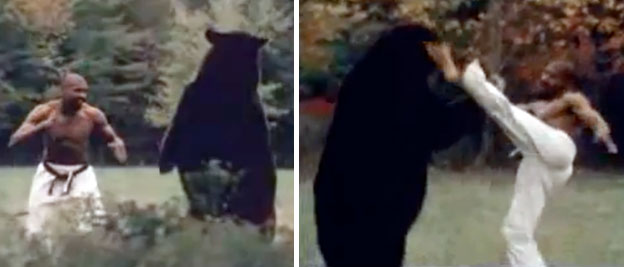
You can imagine that a tall black man in Japan studying karate, dressing in traditional garb, training in the traditional format was a strange sight for conservatives and traditionalists. Surely no gaijin could grasp the nuances of Kyokushin, the fighting spirit. Williams, and most Americans are want to believe that anything is possible and a form can be learned and understood by the people, not solely the Japanese. To prove the authenticity of the karate format and dispel the legends from the truth Williams and his trainers staged some fights. One pitted the man against a bear. News reporters were invited to capture contest on film.When news of this encounter reached the states a few die-hards like Willie Williams began training in the Kyokushin style to become fighting machines as well. Williams even staged a match against a bear for the documentary "The Strongest Karate."

The "fight" was highly debated as the bear seemed disoriented. Critics argued that the bear was clearly drugged and possibly even declawed so that Williams wouldn't have been mauled by the animal. Despite the imposing frame that a young Williams carried his strikes seemed ineffective against the bear. The press that covered the event ended up participating is what was called nothing more than a propaganda film. Williams and his instructor, sensei Shigeru Oyama (no relation to Mas Oyama) spent a lot of time trying to prove the authenticity and effectiveness of the art. In 1980 he and Shigeru were suspended from the International Karate Organization Kyoukushinkaikan because of a fight they had participated in. Williams fought Antoni Inoki to a draw. Williams had suffered a broken arm and Inoki a broken rib. The legend of Inoki grew after the battle while Williams was relegated to the footnotes. It seemed that the best he could do was inspire characters for pop culture.

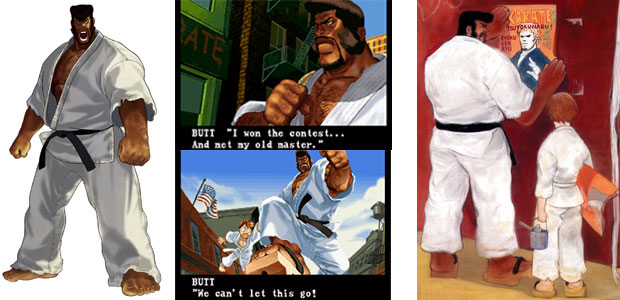
Marco Rodrguez (translated to Khushnood Butt for the US) for the game Garou, Mark of the Wolves was very closely modeled after Williams. To be fair he was inspired by William Oliver, Willie Williams and Charles Martin, the three black Americans better known as the Fighting Black Kings, from the 1976 documentary on the first world Kyokushin fighting tournament. Marco had immersed himself in the study of the fictional Kyokugen (extreme) form of Karate. This is the form invented by Takuma Sakazaki and passed onto his son Ryo and his friend Robert Garcia. Marco believed in the form as the absolute best and touted its superiority with a fanatical zeal in the game, his eyes welling with pride every time he thought about the art and his master. This level of passion, combined with his moves actually being solid, enamored him to gamers. The character worked abroad despite the double stigma of race and karate fool. Gamers were able to see past those conventions because he was a reliable karate-style fighter who played like the traditional Art of Fighting heroes even within a Fatal Fury title. Marco worked very well within the game as well as canon and wasn't simply a joke character for the sake of being a joke character.

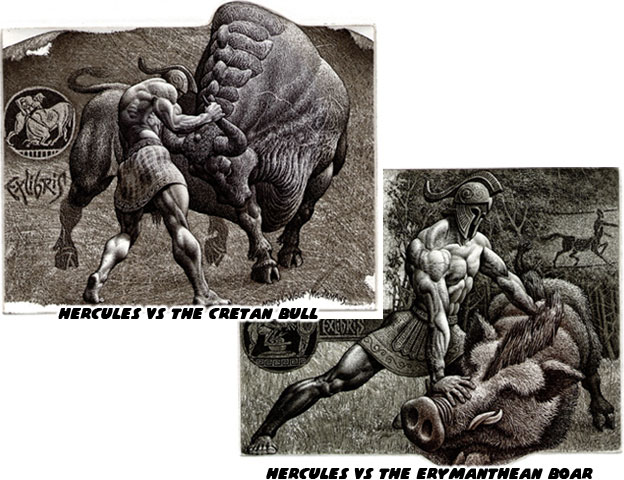
There was a world of difference between a bull and and actual predatory animal however. According to legend Oyama had once staged a battle with a bear. He did not dominate the creature and ended up fighting for his life. A version of that fight was featured in the manga and animé series Karate Baka Ichidai.The idea of a martial artist versus a wild animal had inspired many legends, but the stories themselves were sometimes inspired by actual events. In ancient tradition the heroes of a story were the ones that fought off a colossal beast. Sometimes these animals were real and sometimes they were mythical. In ancient Greece the hero Hercules was said to have wrestler both a lion and boar with his bare hands. The fabled 12 Labors included Hercules against The Erymanthean Boar, The Cretan Bull, The Nemean Lion, The Lemean Hydra and The Cerberus. These were certainly monsters perfect for a video game. Also unlike Mas Oyama the contest was not a fight for survival but a chance for the character to cement his legendary strength.

Oyama and his fans would pontificate on his karate and how it was used to defeat other fighters and other forms. Some of his lessons were based on actual encounters. He would describe in detail how his karate form was used to beat boxers and pro wrestlers from the west. These lessons would then be applied in the abstract and authors (including Oyama himself) would come up with scenarios where karate could be used against wild animals. Imagine the situation where a karate expert is ever wandering through a forest and is attacked by a wild ape. The fighter would be no match for the strength of the beast but they would be able to use their long legs to target open spots on the body. Not unlike fighting a musclebound wrestler I'm sure. The story of karate versus an ape would be used by other manga storytellers over the years. The ape would take on demonic features in many retellings and become more of a monster than wild animal when the legends became animated.

Some of the myths that Oyama shared were based on recorded history. Such as a samurai having to defend himself from a pack of wild dogs. The fighter would have to find a way to use the environment to their advantage and not allow themselves to be surrounded by the dogs. Then they would have to focus their attacks so that every strike was lethal. A miss could leave the fighter open to a counter-attack and that could be the difference between life and death. Wandering swordsmen in feudal-era Japan were sometimes targeted by bandits and these same lessons would have been used to ensure their survival. But when it came to bare handed fighting against natural predators there weren't too many success stories to rely on. Oyama had defeated bulls but he often wondered how he, or his karate form would have faired against a more aggressive predator.

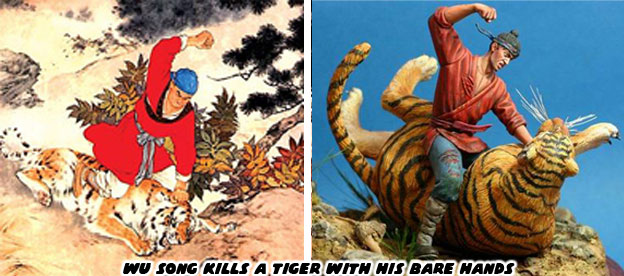
It turned out that a thousand years ago there was an encounter that could go down as something too amazing to be true. The pilgrim Wu Song was traveling through a village in China. He had stopped by an in for some rest. The villagers warned Wu that there was a man-eating tiger nearby and that it was dangerous to take a certain bridge out of town, especially once it started to get dark. After a few drinks Wu thought that it would be a good idea to take the bridge and see what happened. Sure enough the tiger was there and being courageous (or crazed with booze) Song attacked the tiger. He had a stick with him but the tiger broke that quickly. Song in a fit of rage managed to get close to the tiger and kill it with repeated blows to the head. Wu Song was a character in The Water Margin. The character was fictional but many of the men and women in the novel were inspired by actual events. It was possible that a kung-fu practitioner with more ability than sense actually did kill a tiger with his bare hands. When the writer of the Water Margin heard of the legend he figured out a way to incorporate it into the series.

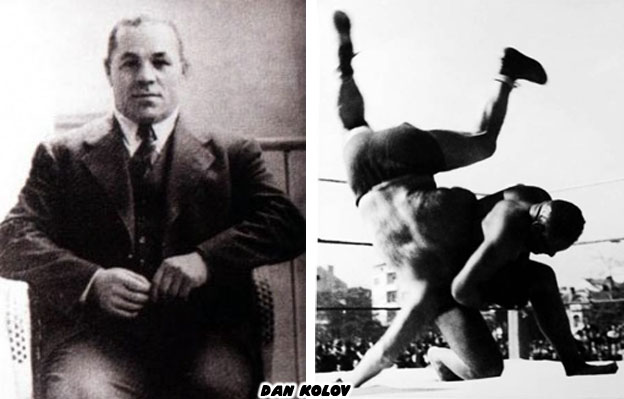
Oyama wasn't the first time that the man versus bear legend had been based on reality. The Bulgarian Dan Kolov was a wrestler and had to fight off a bear attack while he was out hunting. He lost his rifle for a moment when the bear was upon him, he grabbed and pulled at the bear with such ferocity that he pulled chunks of skin and fur off of the creature. Kolov was a self-taught catch wrestler, and circus strongman that was considered by some the greatest wrestler that ever lived. He regained his rifle after a brief struggle and killed the bear with a shot. With such a reputation he became a big draw for wrestling promoters. It was possible that the legend of Kolov had a hand in inspiring the legend of Zangief, who was known to wrestle bears in Street Fighter canon.

Domesticated bears had actually been used in some circus sideshows for over a century. The bears would usually only "wrestle" their trainers, because they were comfortable with them. Bears felt like they were playing and not actually fighting. In some rare cases a circus might let an audience member try to wrestler a muzzled bear. The bear would usually knock the person over and sit on them easily to end the match. But every now and then a story would come out where a person got the upper hand. This was the inspiration behind the Australian folk song about William Sinclair who defeated a bear in a match in Queensland.

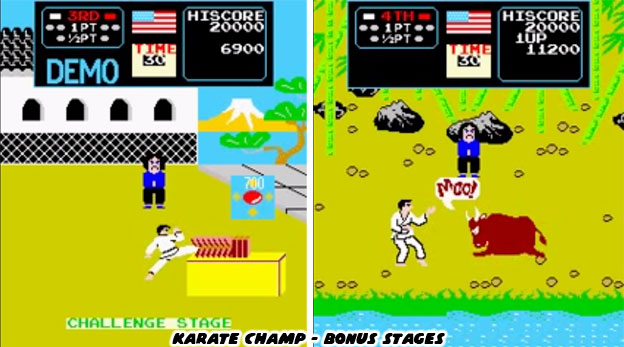
It's easy to imagine that a version of these man-vs-beast myths could end up shaping the development of various fighting games. In the early days of the genre the developers did not have to go very far to bring the legends to the game screen. In Karate Champ the designers at Data East introduced a bonus stage that had fighters kicking stacks of tile. Oyama and his karate predecessors had often given breaking demonstration to audiences wherever they went. Sometimes they broke stones, bricks and blocks of ice. Karate Champ was the first fighting game to feature the bonus level and even had players take out a charging bull with a punch or kick.

As the developers got more comfortable with the genre they began experimenting with enemy types. The early fighting games had masters of various fighting styles competing against each other. After the studios ran out of identifiable forms they started throwing in monsters, animals and even robots and aliens to keep the genre interesting. A tiger, giant falcon, and even shark would be included in Fighting Layer, a game developed by former Street Fighter II designers.

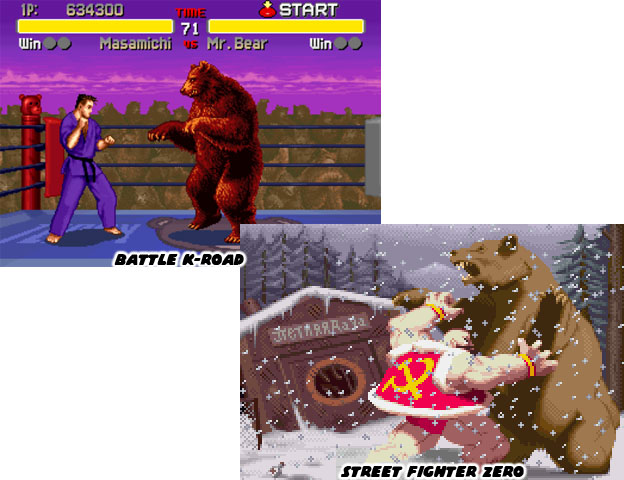
In Battle K-Road the secret boss was named Mr. Bear. It turned out to be an actual grizzly bear and was among one of the most difficult opponents in any game. The game was over-the-top as one could imagine but it retained some charm. These types of encounters would not have been acceptable in the genre if not for people like Oyama and Kolov who actually fought the beasts and lived to tell the story.

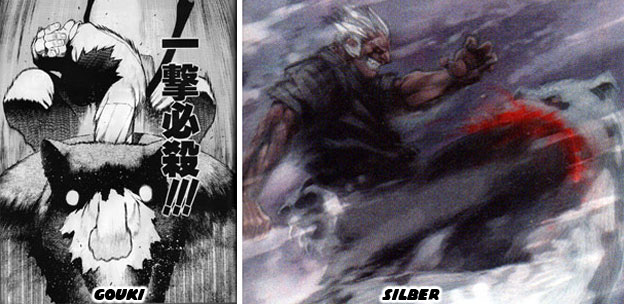
Gouki and Silber should not be confused with the previously aforementioned legends. They did not spar against wild animals with their bare hands, they hunted them down. The two could not only dominate the other fighters that they came across but also the biggest and strongest creatures in nature. In canon Gouki had killed a large bear that was the terror of a nearby forest. A young and inexperienced Ryu went out trying to kill the bear himself but was almost gutted by the creature. Gouki jumped into the fight and punched a hole through the head of the bear. He did not do it as much to save the life of Ryu but to warn him there were things in the world that should be feared and respected more than any animal.

In a similar fashion Silber traveled the globe putting down the animals he tested himself against. He showed little mercy for the other fighters he faced and was willing to put them out of their misery as well. Silber seemed to relish in his power and technique. It had been speculated that the fur on his uniform was taken from a polar bear he had killed and not from a wolf. Few aside from Silber himself knew what points around the world he had visited. Gamers were left to believe that he had wandered into the frozen arctic looking for a new challenge and had returned with the pelt after finding no suitable opponent.

Gouki and Silber were fantastic character designs from Capcom and SNK respectively. They commanded the attention of the audience and held their interest throughout the battle. Each time they appeared in game they were treated with the same sense of awe and respect. Although they were powerful bosses and seemingly superhuman fighters they were not cheap characters from a balance perspective. They did not have attacks that were overpowered or could defeat a player with one or two hits. Even the Shun Goku Satsu at the most took 2/3 of an opponents energy and not the entire health bar. Every character in the game stood a chance against these villains provided that the player were willing to play aggressively and make few mistakes.

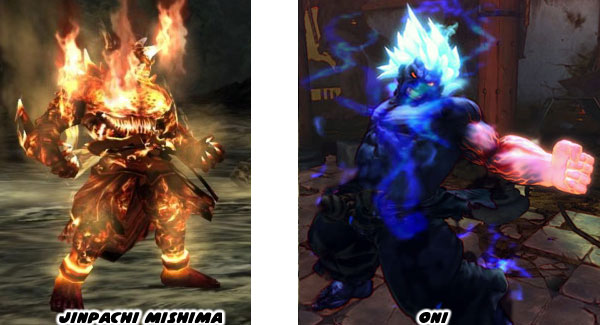
The physical appearance and attacks of the two bosses made them stand apart from the cast and even other villains. Yet there was a point where villains were too powerful and too evil for the genre. When pushed to the extreme ends the evil characters could break the suspension of disbelief from the gamer. Gouki had one such makeover in Street Fighter IV. It turned out that Gouki or even Shin Gouki (the white-haired variation) were not the most powerful incarnation of the character. A third form known only as Oni or Demon in Japanese was introduced by the SF IV designers. Oni was the manifestation of the Dark Hadou, or evil power which Gouki possessed, or rather which had possessed Gouki. The character grew long, spiky white hair, and a large underbite like an ogre with small tusks protruding. His skin even went from clay-colored to blue. Gouki no longer had the elements of a humanized lion but instead the wholesale appearance of a Nio, or protector of the underworld.

In Tekken a similar character had been unveiled as well. Jinpachi Mishima was a warlord and founder of the Mishima clan. He had spent a few decades locked under the Mishima castle. It was a sentence in Hell but Jinpachi had become so powerful that he broke out and returned to the real world. Oni and Jinpachi were so overpowered that seemingly no other character in the series could have even hurt them. Capcom had ignored all of the elements that made Gouki such an interesting character. They moved right into the realm of the absurd with Oni. The same thing could be said for Namco and the Tekken universe which Jinpachi now occupied. The two studios had been skirting the line between what was good character design, what was bad and what was simply pandering to the masses. Before Oni and Jinpachi the major challenge for the studios was showing gamers the creation of a villain right in the middle of a series. The next blog will look at how Capcom used the template of Gouki to rewrite the Street Fighter mythology. As always if you enjoyed this blog, and would like to sponsor me please visit my Patreon page and consider donating each month, even as little as $1 would help make better blogs and even podcasts!
follow the Street Writer on Patreon!
Friday, October 2, 2015

How fight culture became fighting game history, part 41

When Gouki debuted in 1994's Super Street Fighter II Turbo he set the standard for boss characters and villains in fighting games. The other studios took notice and tried to create legends of their own. SNK was a long time rival to Capcom. They had a masked fighter named "Mr. Karate" that predated Gouki by a few years. Takuma Sakazaki was the masked villain and final boss in the Art of Fighting. He was also the father of the heroes of the game Ryo and Yuri Sakazaki. The 1992 title did not originally feature the character as a pseudo demon but instead had him wearing a Tengu or devil mask. As the series went on the character of Mr. Karate grew more and more powerful until he took on a number of the same traits that Gouki had. His attacks became more powerful and he seemed to be a completely different person behind the mask. Most fans would consider the characters to be evenly-matched villains.


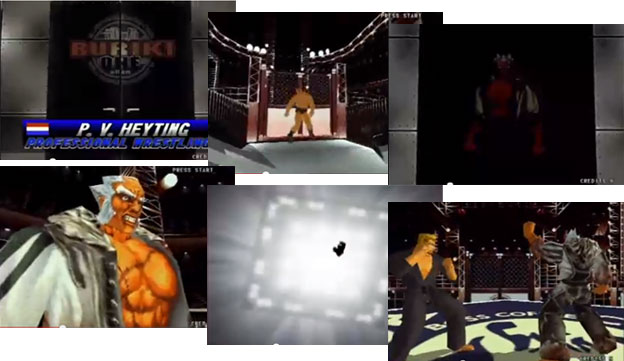
Not many fighting game aficionados however would remember that SNK had introduced a character that was eerily closer to Gouki in form and presentation than Mr. Karate. The 1999 arcade release Buriki One was one of SNK's first attempts at moving their IP into three-dimensions. The game had a cast of mostly new faces with the exception of Ryo Sakazaki, who had entered the tournament under the name of Mr. Karate II. Players fought masters of various styles and could beat the game by winning the tournament. The secret character in the game had an entrance that was reminiscent of the first appearance of Gouki. Players would go through their usual opening animation; where the selected character walked from backstage to the tournament platform. When the rival was announced the screen switched to the locker room. The opponent would be thrown through the double doors and crash into the caged-off platform. The true boss character would then appear. He was a muscular German named Silber. The character had a terrible gash over one eye and was covered in grizzly scars. The white-haired fighter looked nightmarish. He would rush the stage and take a superhuman leap over the barrier.


Silber had a very unorthodox stance and fighting style. The story behind the character was very interesting. The German had spend the last 30 years traveling the globe, fighting the best masters of other fighting arts and leaving few witnesses in his wake. He had developed his own form of karate which was unlike the traditional Japanese schools but just as lethal if not more so. When he learned there was a tournament to find out which was the best fighting style he decided to enter without an invitation. Silber was the first non-Japanese karate villain in a fighting game. The fact that SNK made him the boss character was even more impressive. It was as if the Japanese developers had suddenly come to realize that people from other nations could not only master foreign fighting arts, but they could also create their own contributions to the form. To help Silber stand out from Mr. Karate or the other bosses from SNK history the studio took a page from Capcom's school of design. They made the German look like a supernatural character. The patchwork of scars that covered his body made him appear like Frankenstein's monster. It was more than coincidence that his look was pulled from classic literary traditions.

Gouki had elements from Eastern mythology and Silber's design observed many Western ones. Centuries ago the Black Forest in Germany had been romanticized in fairy tales. The Brothers Grimm brought imps, dwarfs, witches and shapeshifters from classic folklore into popular culture. Snow White, Little Red Riding Hood and Sleeping Beauty were just some of the old stories that the brothers had adapted not only to entertain but to also put the fear of the unknown into children. In fact, some of the stories were not called fairy tales but instead "warning tales." The Black Forest, like many other forests in Germany, was once very dangerous. It hosted wild boars, bears and wolves that killed many a settler. Many of those creatures were hunted to extinction but the legends of dangerous predators remained in the stories. The designers at SNK thought to develop a new fable out of a creature that came out of the woods to hunt down man as well. Silber would take on the appearance of the animal-turned-human in the Buriki One tournament. The artists did not look at a lion for inspiration this time. The bright white hair and sideburns stuck out like the mane of a timber wolf. The look was enhanced by the fur-lined gi that he wore in competition. The character was certainly an alpha-predator. It was assumed that he had killed an animal and skinned it to line his uniform. The cold German winters would have made outdoor training unbearable without some protection. His clothing had dark black stripes that looked like claw marks to perpetuate the myth of the animal-like survivalist. The character art and profile featured in the game was unmistakable. This was a major villain, a nightmare from classic storytelling traditions.


SNK wanted to make the character very mysterious. They gave him no dialogue or lines in the game. If a player managed to defeat Silber an ending animation would play before the credits. He survived the fight, stood up and took another superhuman leap to escape from the ring. If gamers managed to beat Silber with all of the regular characters then he too would become a playable character. This meant that Silber had his own stats, alternate costume and even ending cinema. Each character held a press conference at the end of the game where they talked about the fighting style that took them to the top. The credits would roll during the press conference and players could get filled into the plot.

Players that wanted to learn a bit more about Silber were disappointed with his ending. Nothing was revealed during his interview. He looked at the room full of reporters with disdain in his eyes. Instead of answering their questions he simply jumped off the screen. This bit of mystery would follow the character in all his future appearances. He was the boss character that would never stay down for long no matter how badly the player had beaten him. He would leap out of each game just as quickly as he arrived. It helped add an air of mystery to him and kept fans of the SNK universe guessing when he would turn up again. For older fans of animé the spectacular leaps that Silber made were a nod to the classic series Karate Baka Ichidai. The show was a serialized retelling of the life of Mas Oyama featuring his encounters against various fighting styles. This hinted that Silber was like a modern Oyama, only without scruples or compassion for other fighters.


There was something outside of the gruesome appearances that made Gouki and Silber similar. The two were not solely boss characters but also villains. They were not villains in the traditional sense of the word. They did not kidnap princesses or take Gotham City hostage. They were villains in the sense that they were both very evil men. They were both obsessed with power and were willing to achieve that power at any price. For professional and underground fighters this meant that they had to be the best that ever lived. In order to achieve that the duo had focused on nothing else except for training and fighting. They had no friends, no family and no sense of loyalty. Silber was rumored to have mentored the pro boxer and criminal Rob Python, also from the Buriki One universe. Gouki had a run in with his brother Gouken at several points during the training of Ken and Ryu. The wisdom and warnings from Gouki did not fall on deaf ears then. Despite these limited interactions with younger fighters the two had almost no contact with anyone else in canon or the games. There was something that made the characters truly evil though. The next blog will talk about the elements of evil design and how it inspired minority villains. As always if you enjoyed this blog and would like to sponsor me please visit my Patreon page and consider donating each month, even as little as $1 would help make better blogs and even podcasts!