Showing posts with label rising thunder. Show all posts

Wednesday, April 8, 2026

Bookmark this page; A look at Rising Thunder and the robot based fighting games

I love fighting games of all types. Did you ever play the ones featuring robots? If not then Bookmark This Page.

The road to Rising Thunder, part 1...

The road to Rising Thunder, part 2…

The road to Rising Thunder, part 3…

The road to Rising Thunder, final part 

Did you have a favorite robot fighting game? Let me know about it in the comments section. As always if you enjoyed this blog, and would like to sponsor me please visit my Patreon page and consider donating each month, even as little as $1 would help make better blogs and even podcasts!

follow the Street Writer on Patreon!

Thursday, October 22, 2015

The road to Rising Thunder, final part

Rising Thunder, the fighting game from Radiant Entertainment was a long time coming. It was offering something that had been lacking in the genre for a long-long while. It was one of the few all-robot fighting games and had the most potential of any previous title. Some long-time fighting game fans hoped that it would undo the legacy of the horrendous Rise of the Robots from more than 20 years prior. Yet like the modern crop of fighting games there was the challenge of what platform it would appear on. Would it be PC-only, or a console exclusive title. Radiant Ent. took a good look at the market and decided that it should be a PC title that could be downloaded for free, at least the beta-version. It would support online and local play as well. The fighting game was born in the arcade but that era was long gone. Radiant had to bring the game to the people and not convince them to leave the house in order to play. Other web-based fighters had found success with the community.


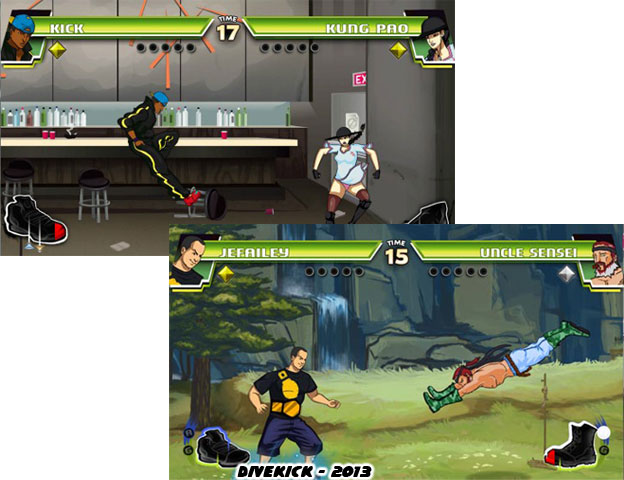
The 2013 game Divekick by One True Game Studios spread like wildfire. It was an insanely addictive web-based fighting game that had all the momentum of a viral meme. It was easy to play, audiences really only needed one button and some strategy to win. The purpose was to be the first person to hit the opponent. Players did not have to worry about learning complex combos, they did not have to learn secret moves or anything else. They only needed to learn how to pace themselves and be the one to deliver a kick to their opponent. Now audiences could "buy" upgrades to make their character react faster or move in different directions while kicking, but for the most part audiences enjoyed the rudimentary gameplay. They enjoyed it so much that it became a featured title at the EVO fighting game championships.


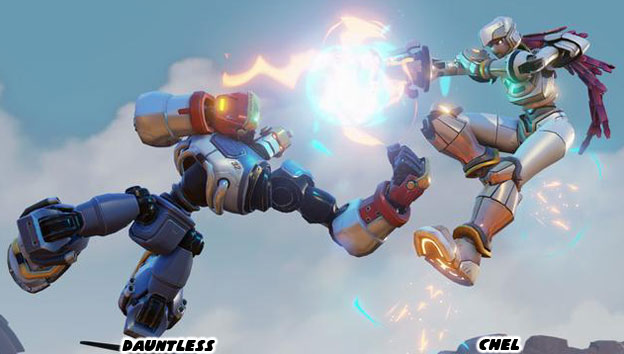
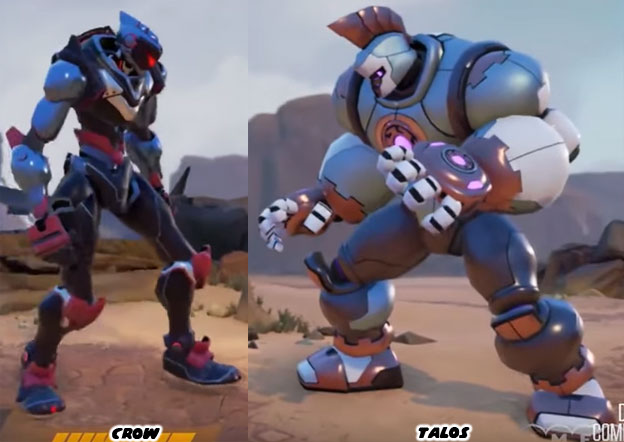
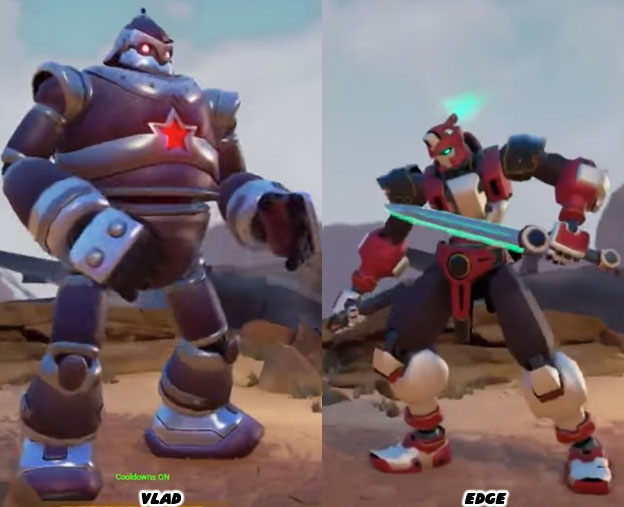
Rising Thunder would be far more robust than Divekick. It would have far more features, greater graphics, tighter balance and a control scheme reminiscent of the best fighting games. The stars of the game would be sentient robots about 2-3 stories tall. They were humanoid in their construction and moved very much like people. It would be easier for a gamer to learn effective ranges and strategies if the robots controlled like people after all. Some of these robots could make use of ranged gun-type weapons, not unlike Vector and Omega from the Star Gladiator series, and others had use of close range weapons like energy swords. What appealed to me were the designs used on the robots. They did not have to have "genders" but I'm glad the designers at Radiant Ent. decided to do just that.


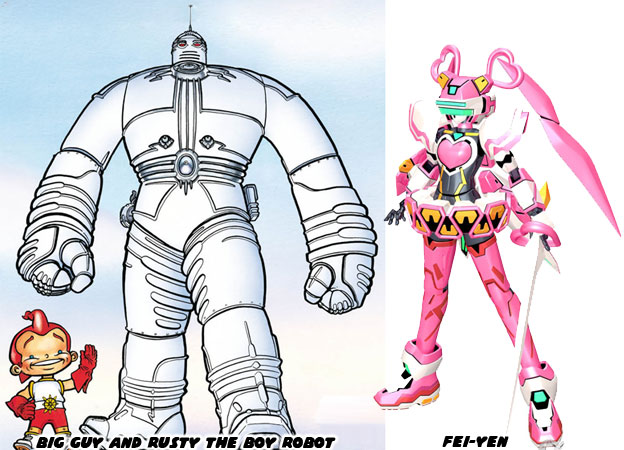
The idea of gendered robots has been around for centuries. In pop culture these ideas were often repeated in movies and animation. Mickey Mouse after all built a mechanical "man" in 1933. Also the first full length feature was a 1927 expressionist movie called Metropolis. Director Fritz Lang introduced the world to a female robot named Maria. Comic books were not immune to the idea of gendered machines either. Astro Boy was presented as a child but his origins were parodied years later. The Big Guy and Rusty the Boy Robot was a post-modern send up of the robot genre. Writer Frank Miller and artist Geof Darrow did a great job at reinventing the robot myth in 1995. It was far more graphic and disturbing than Osamu Tezuka had ever presented. Around that same time Sega was incorporating boy and girl robots in their Virtual On fighting series. Hints of these characterizations could be seen in the cast of Rising Thunder.


The characters in Rising Thunder were reminiscent of the square-jawed Rock 'em Sock 'em robots, and Atom from Real Steel. The classic anime robots like Tetsujin 28 and the modern EVA Units were also reflected in these new robot designs. Yet they also had their own unique look, a very smooth and seamless aesthetic that had one foot in Japan and one foot in the USA. The figures lent themselves very easily to a toy line or at the least a series of collectable statues. I would only hope that Radiant Entertainment had plans for merchandising should the game become as big a hit as they anticipate.


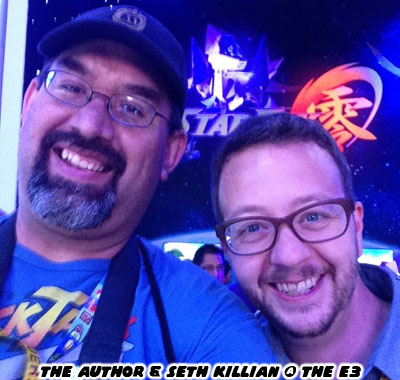
Of course the game was not all style without substance. Radiant Ent. was experimenting with the play mechanics, since these were robots and not human martial arts masters they wanted to introduce some new ideas to the genre. These robots were internally powered but their special attacks could drain their batteries which left them vulnerable to counter attacks. The characters would have to let their weapons recharge before they could fire off another powerful attack. It was a balance issue that even studios like Capcom had a problem figuring out. Energy aside there were many great ideas that Rising Thunder had going for it. Even as early as in the public beta there was a certain sense of polish that Rising Thunder had going for it. This was not going to be just another web-based fighting game but something more profound. I'm glad that the studio took a risk on basing the characters on robots. They are after all the ultimate machines and something that just about every generation had grown up reading about in comics and watching in movies. It was a long time before we got to experience the freedom and power of controlling these characters in a game. Audiences had to wait for the technology and platforms to be ready for the next evolutionary step in the genre. I wish Seth Killian and everyone at Radiant Entertainment the best of luck and can't wait to see where this game takes us. As always if you enjoyed this blog and would like to sponsor me please visit my Patreon page and consider donating each month, even as little as $1 would help make better blogs and even podcasts!

Thursday, October 15, 2015

The road to Rising Thunder, part 2...

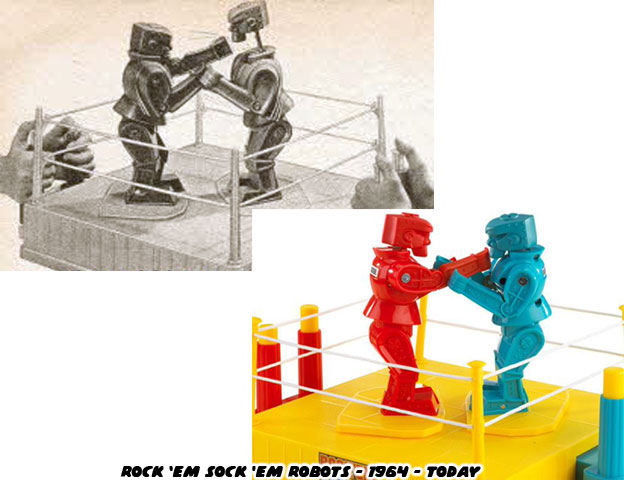
The giant robot genre really took off in the '60s thanks to the imaginative shows in Japan and the USA. Of course the shows were only half the fun, the other half were toys that celebrated the robots themselves. There were of course toys based on Astro Boy and Tetsujin 28 (localized as Gigantor in the USA). One of the most popular robot toys had nothing to do with comics or cartoons. In 1964 the Marx toy company released a two-player toy game called Rock 'em Sock 'em Robots. The game was a rapid paced affair with players looking to punch the jaw of the opponent and cause the spring loaded head to jump up. The generic red and blue figures became icons in the toy community.


Mattel eventually got the rights to the toys and continued releasing them over the next 40 years. The company did a good job of keeping the packaging, and designs unchanged through the decades. The only thing that they did do was make the figures and ring slightly smaller. Perhaps this was a cost-cutting measure, it did nothing to make the game any less fun. The hard edges, exposed bolts and blocky shapes of the Sock 'em robots were very classic. They looked like the robot designs from turn of the century magazines like Popular Science and Popular Mechanics. With heavy brows and chiseled jaws they looked like battle worn gladiators. They had a sort of endearing quality about them. It took a long time for robots in the US to have the same sort of appealing design in film.. In fact it was post 2000 when the success of the Transformers movies by Michael Bay made toy companies realize that they could option the rights to their toys and make a franchise film as well. Everything from board games (like Battleship) to dolls (like My Little Pony) was optioned to get a movie or at the vert least a television show. The film version of Rock 'em Sock 'em changed the title but kept the heart.


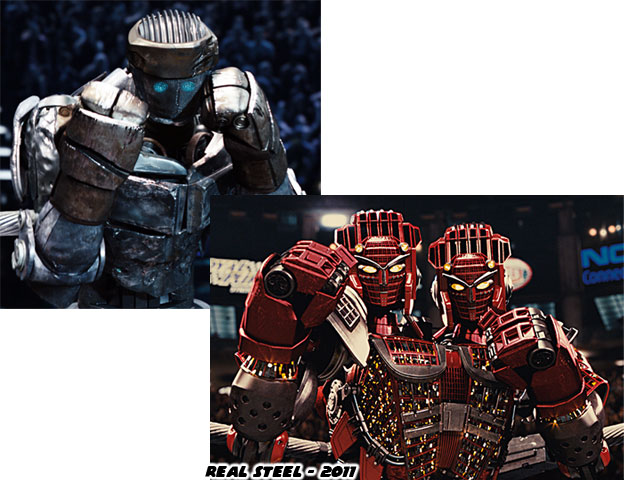
The 2011 family film Real Steel was based on a world where eight-foot tall robots did the boxing instead of people. The film starred Hugh Jackman and the robot he trained to fight named Atom (not a coincidence!). The title had a lot of imagination and introduced robots with over-the-top designs. They were actually well done updates of the classic Sock 'em robots. The studio could have gone a million different ways with the robot designs. They could have had them fighting with guns and weapons like the Transformers films. They could have made them into mechanical bugs and animals as well. But the design team learned that the more human traits they shared the easier it was for audiences to identify with them. So some robots had hair made out of plugs, eyes and in some cases jaws and teeth as well. The humanized designs worked well in Real Steel just as they had on Rock 'em Sock 'em almost 50 years earlier. The same lessons, use of proportions and human traits were applied to the cast in Rising Thunder. But where else did these robotic / humanoid cues come from?


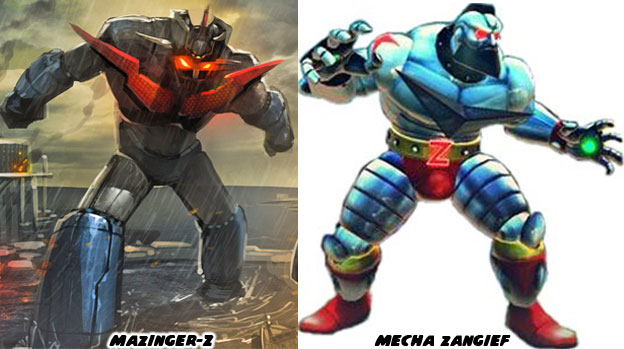
Japan by far had the biggest influence on giant robot culture. The 1972 series by Go Nagai (of infamous Devilman fame) created one of the most popular giant robots ever. Mazinger Z, adapted to Tranzor-Z in the USA, was a piloted robot with an assortment of non-traditional weapons. Unlike the robot designs that used missiles and artillery blasts as a form of attack Mazinger instead had a mix of mechanical and energy weapons. He had a patented rocket punch which allowed him to fire his fist at opponents. On his chest were two red shields that emitted the Breast Fire attack, allowing him to melt most opponents. These were only a few of the assortment of weapons he had at his disposal. The design and abilities of Mazinger Z would be copied again and again by the industry. Some were following the trends but others, like the Mecha Zangief in Street Fighter IV were well done homages. 

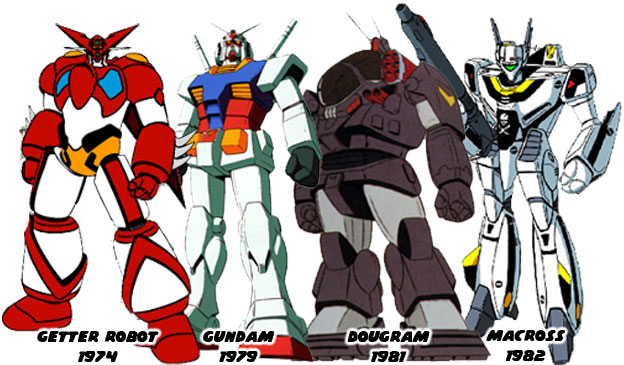
In the 1970's piloted robots became all the rage. These were considered less to be robots and more like mechanized suits of armor, or mecha for short. Writers and artists were looking for new ways to introduce their creations to audiences. Some were lighthearted adventures for kids and others were dramas set against an eternal war. During the era the robots themselves followed a common design trend. The 1974 series Getter Robo by Ken Ishikawa had a robot that was not unlike Mazinger Z. the colors were almost reversed but the character retained the same cylinder-shaped arms, legs and torso. The roots of those designs could be traced back to Tetsujin 28-go. By the end of the decade the artists working on the shows began experimenting with new styles. Possibly the most important was Gundam. The 1979 show by Yoshiyuki Tomino had robots using more angular shapes and sharper edges. The robots themselves reflected futuristic versions of samurai armor and helmets. The artists working on the series over the next 30 years kept a consistent design aesthetic.


The '80s would continue to build on the new trend started by Gundam. One of the most unique robot shows from this era was Fang of the Sun Dougram. The 1981 series by Ryosuke Takahashi had a unique blend of mecha-meets-western artillery. The shapes of the robots were very similar to US tanks and attack helicopters from the post-Vietnam era. It was easy to imagine that each robot was deployed depending on the type of conflict, whether it be a steamy jungle or the bottom of the sea. The Dougram series went on to influence the creation of the western tabletop game Battletech. The trend started by Dougram would be short-lived as another anime series was set to take over the world. The 1982 series Macross by Shoji Kawamori went one-step further towards Japanese mecha and western weapons. The robots in the series could change shape and become full-on aircraft and artillery. It subtracted the artificial intelligence of the Transformers for the piloted weaponized combat of Gundam. It was genius design and set a standard that would be copied around the world.


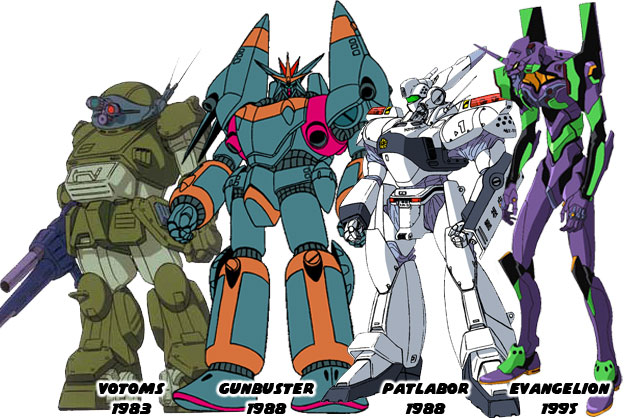
Through the '80s the creators of the robot shows would experiment with the scale and themes of their machines. Some robots were not very large, they were designed for urban combat environments. Some were created as the evolutionary replacement to tanks, such was the case for Armored Troopers VOTOMS, the 1983 series by Ryosuke Takahashi. Other robots were created as the answer to an alien invasion and had to be built on a massive scale with more high-tech weaponry than had ever been seen. This was true for the Gunbuster, a colossal giant robot created in 1988 by Hideaki Anno. that same year a new manga series asked the question of how would we deal with human-controlled robots if they were ever put in the wrong hands? Even something as standard as a construction machine could wreak havoc on a populace. So mecha police officers were introduced in Masami Yuki's Mobile Police Patlabor. Between Gundam and Patalabor the animation studios were allowed to explore all sorts of concepts. The 1983 series Aura Battler Dunbine by Yoshiyuki Tomino had robots that resembled giant beetles. Whereas the 1986 series The Five Star Stories by Mamoru Nagano had robots that resembled paladins and knights.

In the '90s the giant robot trend saw another aesthetic shift. This was due in part to the success of the OVA series Giant Robo: The Day the Earth Stood Still. The episodes debuted in 1992 and showed the industry that retro designs could find an audience as long as the character development and story supported it. About the same time animator Bruce Timm and writer Paul Dini had found success using the same formula with the Batman Animated Series. Years later Kazuyoshi Katayama combined the Giant Robo and Batman animated aesthetics with the series The Big O. The show from 1999 lacked character development and a story and relied more on looks rather than substance. The new Giant Robo broke the mold and allowed creators to go wild with their designs. The Gunbuster designer Hideaki Anno learned from this and went in a direction much different than Gunbuster with the new series Neon Genesis Evangelion. The new robots were rail-thin, enormous and quick, a far departure from the heavy-set Tetsujin 28. The series debuted in 1995, that's right, 20-years-ago! Are you starting to feel old? The evolving designs of these robots did not go unnoticed by the game industry. In the next blog we will explore how they were adapted to early arcade and console titles. As always if you enjoyed this blog and would like to sponsor me please visit my Patreon page and consider donating each month, even as little as $1 would help make better blogs and even podcasts!

Saturday, October 10, 2015

The road to Rising Thunder, part 1...

Have you thought of what the future of fighting games is going to be like? There will be advances of graphics and gameplay for certain. Fan-favorite titles like Street Fighter and Tekken will continue to receive updates. They will explore new stories, take chances with radical character designs and tweaks to the balance of the genre. One of the big changes that has happened over the years has been the delivery of the fighting game experience. The genre pretty much started in the arcade in the late '80s and as consoles became more powerful that experience migrated to homes by the mid-to-late '90s. The genre is now over 30 and still going strong. There are some console exclusives but more and more audiences are choosing to download their games rather than buy a traditional copy in the stores. The method of distribution has changed but so has the console of choice. Many gamers that grew up with consoles now have a PC at home for gaming as much as for doing work. But they also have phones that are more powerful than most computers from the early '90s. Between the computer and phone companies are trying to find a sweet spot for gamers of all types. What is the best console, if there is even such a thing? What about web-based game development? A game that only needs a good computer and a web browser? Is it possible for a web title to be as good as a $100+ million AAA title from the big publishers? Well, we may not be there yet but I can say with certainty that some amazing game experiences are web based. When it comes to fighting games some really great entries in the genre. The newest one, Rising Thunder by Radiant Entertainment is carving a niche all its own.


Before I talk about the game I should mention that the founders of Radiant Ent. are Tony and Tom Cannon. The brothers are computer science grads and have worked at VMware as well as Microsoft. But unlike their peers the duo are well known in the fighting game community. Tom founded the EVO fighting game championship and Tony engineered the GGPO technology which helps keeps the lag to the barest of minimums and allows fighting games to run smoothly online. They brought Seth Killian, a pro gamer-turned community manager-turned fighting game advisor on board to make sure that Rising Thunder has all of the elements that makes a great fighting title. What's not fair is for me to review a game that is still in Beta. For a title this early in development it has a tremendous amount of polish and will easily be one of the best fighting games of the new generation. Instead of focusing on the game, lets talk a little bit about the road that brought us here.


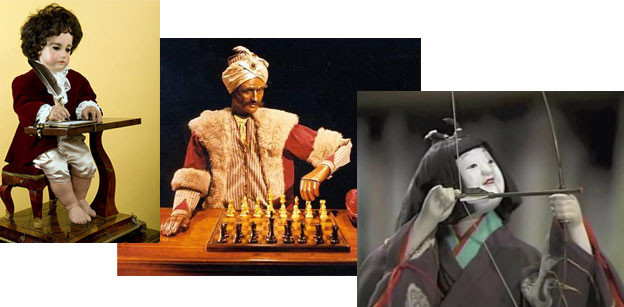
Robots and clockwork automatons (known as Karakuri Ningyo in Japan) had been a part of popular culture for centuries, if not millennia. Many of the earliest robots were created well before the age of silicon and microprocessors. These machines were created often by clockmakers as a way of showing off their mechanical engineering skills. Some robots were as small as a doll while others were full human sized. Some could play musical instruments, others could write messages, shoot arrows and even beat humans at chess. They inspired countless legends and had a hand in shaping pop culture when they debuted. Of course no sooner was an artificial person created than people began to wonder if it could beat a human in combat. Well before automations there were ancient Jewish folklores that spoke of golems made of clay that were brought to life by spirits. These legends predated Mary Shelly's Frankenstein story. It was a cautionary tale at the root; could man create life from nothing and if he did so would he abandon it or guide it? Since man was not an all-seeing-all-knowing god the stories often ended with man abandoning the creation and letting it run amok, an unstoppable symbol of his ego. These creatures would show up in pop culture in movies, comics and of course even video games.
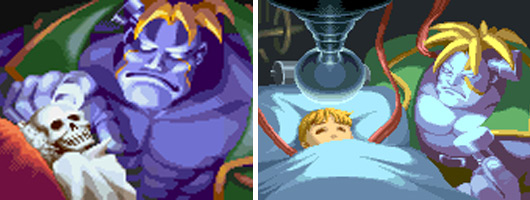

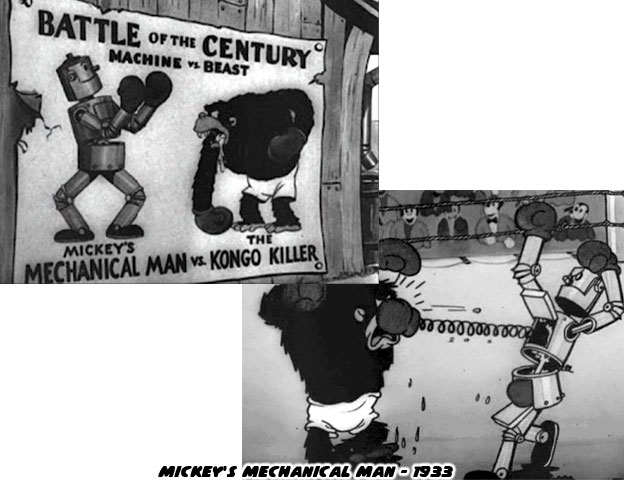
The first modern concept of a brawling robot was explored in the 1933 Disney cartoon Mickey's Mechanical Man. In the film the champion fighter was a powerful ape. Disney didn't even consider the notion of man versus beast but instead jumped at the chance to present beast versus machine. Mickey Mouse built a robot that would take on the champ and settle the question of who would win in a fight. What made the cartoon unique was how robots were imagined as fighters. Since they were not human, the did not have the limitations of muscles, internal organs or ligaments. They could turn 360 degrees at the waist, spin their arms like propellers and even throw spring-activated trick punches. These things were great visual gags but stuck with audiences. Many of the gags would be copied by cartoonists and animators around the world for the next 80 years.

Robots were unique in how they could take punishment and deliver it without every feeling pain or empathy. It was a scary concept when applied to Dr. Frankenstein's biological monster. Yet something profound happened in 1953. An artist by the name of Osamu Tezuka created a manga series about a robot boy named the Mighty Atom. This little robot boy was not unlike a super powered Pinocchio. He was brave and naive at the same time. He had a great sense of justice but was also curious about the world he was born into. Tezuka was inspired to become a cartoonist at a young age. He saw the animated feature Bambi as a boy. Although he did not understand English he learned the story through the large expressive eyes of the characters. Because of this Tezuka created characters with large eyes and set a standard that would be copied by countless generations of manga artists. Many of the works that Tezuka created were morality plays.

The Mighty Atom, localized as Astro Boy in the USA, was no different. Astro was born into a world where robots were becoming sentient and they were not happy as slaves to their human creators. Some thought to rebel and this alarmed the humans. Dr. Umataru Tenma created Astro as a surrogate for his deceased son. Yet he abandoned Astro when he realized the machine could never replace his only child. Professor Ochanomizu, a scientific rival to Tenma, adopted Astro and decided to raise him to help humanity. Astro was granted amazing powers and weapons which easily rivaled the coolest heroes from the west.
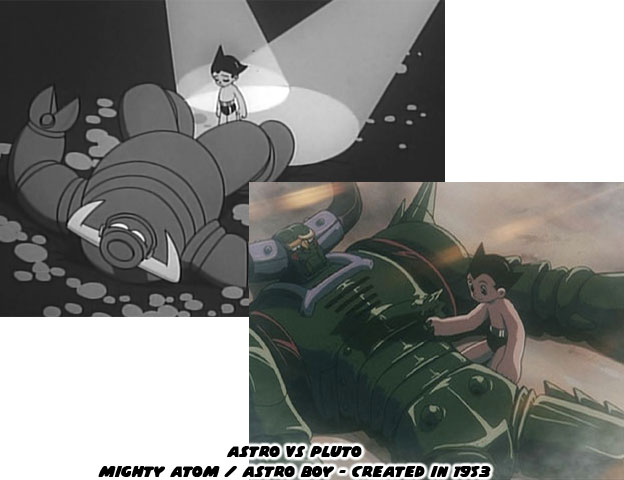

Astro Boy was a revolutionary title because audiences learned that people could be as heartless as the machines they created. In a way the robots they created represented the greatness that we should hope to achieve. We learned to feel sorry for many of the robots that Astro had to fight. They were often misguided in their conflicts. Tezuka did an amazing job at creating sympathetic beings. These characters would color the industry itself. A generation that was raised on a steady diet of anime would create the first video games, many times they reflected the animation and comics that they had grown up on. The first video game heroes were also influenced by the animation pioneers. Mega Man and his creator Dr. Light were nothing more than a retelling of Astro and Dr. Umataru.

Few titles based on robots ever matched the greatness of the Mighty Atom. That did not stop other writers and artists from trying to create lasting characters. One of the best went by the name of Mitsuteru Yokoyama. In 1956 Mitsuteru created Tetsujin 28-go, a manga about a giant robot and his young master Shotaro Kaneda. Tetsujin literally translated to iron man. Just an FYI, Marvel's Iron Man did not debut until 1963 in an issue of Tales of Suspense. Tetsujin 28 was a remote control robot that fought crime and other giant robots. The character gained symbolism as a sort of big brother and protector for Shotaro. It was possibly the first time a mechanical surrogate was presented in such a light. The series was rebooted several times in manga and anime form. There was a certain charm to the barrel-shape of the character and he retained his look in most every reboot. If you look at the Rising Thunder lineup I'm sure you'll be able to spot the influence that Tetsujin 28 had on the design team.
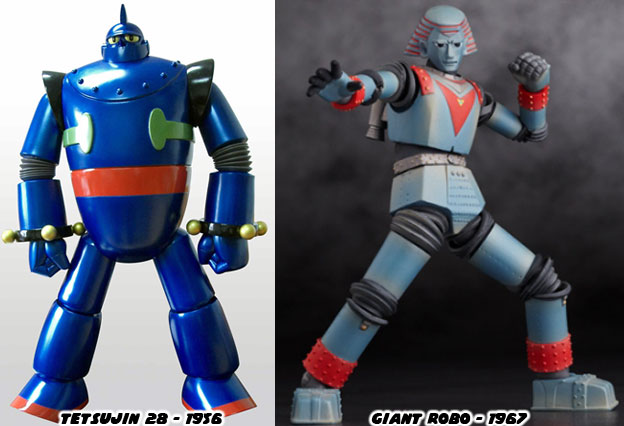

Mr. Yokoyama's biggest hit was yet to come. In 1967 he created a new series, this time meant for television, which was a new take on the Tetsujin mythos. The new robot and series was named Giant Robo. This pharaoh-headed robot obeyed the commands of his young master Daisaku Kusama. Unlike Tetsujin the robot showed signs of free will and could choose to ignore his master. This character was not only seen a a surrogate family member, he literally stood in for Daisaku's father, the creator of Robo. The live-action Giant Robo series was a staple in many households, not only in Japan but also in the west where it was translated for young Generation-X fans to enjoy. The series had great action, an incredible assortment of heroes and villains and easily one of the most melancholy endings for a children's show ever written. In the eyes of many it would not be matched until the original animated series Giant Robo debuted almost 20 years later. The redesigned Giant Robo was heavily armored, much larger than his live-action counterpart and armed with missies, cannons and more explosives than a battleship.
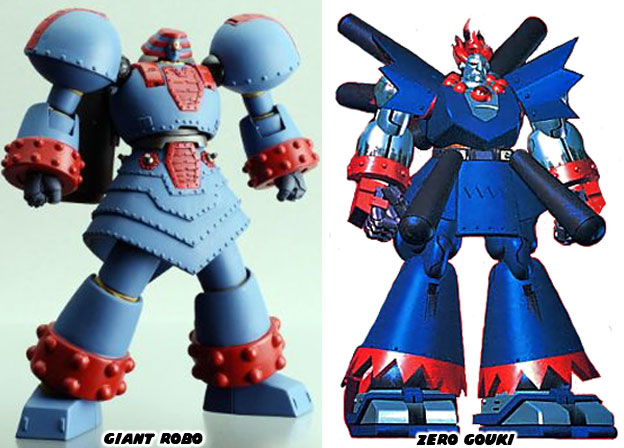

The heavyweight redo of Robo did not go unnoticed by the game community. In the 1995 Capcom game Cyberbots: Full Metal Madness, there was a hidden character modeled after Giant Robo. The game was set in the far off future. Where giant piloted robots fought in the place of armies. Of course since this was a Capcom fighting game the studio wanted to put their own spin on the character. Gouki from Street Fighter would be lending his likeness to the new robot. Fans of the genre as well as Giant Robo saw this as one of the greatest homages yet designed. Robots were perfect for gaming. They could change shape, carry far more weapons than any human and of course take tremendous amounts of damage. Finding ways to adapt the abilities of small robots like Astro Boy or giant robots like Tetsujin 28 into fun gameplay elements would take a long time to figure out. But that was okay because many of the best game developers were small children when the shows came out. They had plenty of time to think about how to make a game out of the battling robot.
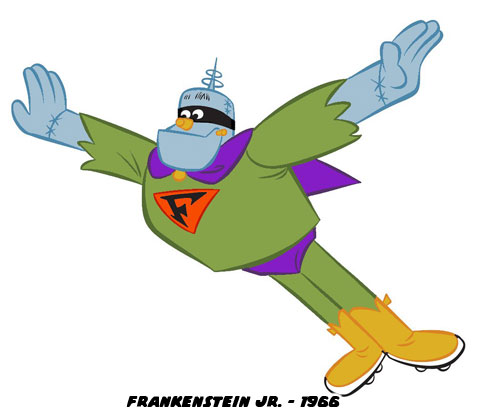

Thanks to the work of Mr. Tezuka and Mr. Yokoyama writers and artists around the world were learning that a robot could be the star of a series. Depending on how they were presented a robot could be menacing or sympathetic. This was not an idea that was exclusive to Japan however. In 1966, as an answer to the runaway craze that Tetsujin 28 had started for Japanese animation, the US studio of Hanna Barbera created a cartoon called Frankenstein Jr. In it Professor Conrad created a giant robot for his son Buzz to command using a ring, instead of a watch. Frankenstein Jr. fought all manner of giant monster and robot on his adventures. Hanna Barbera was good at responding to changes in pop culture. They created Space Ghost and Johnny Quest as the first animated answers to the comic book craze of the '50s and '60s. Robots were apparently becoming a thing and Hanna Barbera wanted to ride that trend as well. The trend was inescapable for novelists as well. The Iron Giant by Ted Hughes was published in 1968, after the debut of Giant Robo and Frankenstein Jr. A few decades later would be the basis for the fan-favorite animated film sharing the same title. The robot genre was only beginning to gain momentum. In the next blog we will explore the titles that shaped the evolution of the genre in animated and even game form. I hope to see you back for that! As always if you enjoyed this blog and would like to sponsor me please visit my Patreon page and consider donating each month, even as little as $1 would help make better blogs and even podcasts!