Monday, May 15, 2023

The car series, an introduction... - Originally published on 1UP - March 2, 2009

Friends, today is the start of something very important to me. It is something that I've been meaning to share with you for some time. Over the next few weeks I will profess my love of cars on this blog. If you have no interest in the automobile then you might want to move on. If you do that however you will miss plenty of things that you would like. We'll be looking at art, videogames and culture with a special emphasis on our four-wheeled friend. We'll learn how man shaped the car and how the car shaped our world. The racing genre goes back nearly to the first videogame but that is not where we'll begin. Instead we'll go further back and narrow down the topic. Rather than talk about how the horseless carriage became a phenomenon and the origins of racing we'll begin with the advent of hot rod culture.

You could read about the hot rod at Wikipedia but then you would be missing out on why the culture is special. You'd miss out on the psychology of rod enthusiasts, why their passion runs so deep. Most important you would miss out on why rodding might be considered the second original American artistic movement as a part of Rock and Roll.

A long while ago I said that Hip Hop was the second original artistic movement created in the US. The first (and only) according to most is Jazz. In hindsight I was being very disrespectful to Rock and Roll because I could not see how all the components fit together. It should have been considered the second original art form from the US. Like Jazz and Hip Hop it included it's own voice, music, forms of dance and graphical representations. The customized automobile between the 40's through the 60's had become a rolling 3D representation of the culture.

Like rock and roll stripped music down into powerful chords and a driving beat so too did the hot rod deconstruct automobile. Both worked because they broke the idea down to the bare essentials, to the elements that were most important. Both were forms of expression unique to their generation. Taking things familiar to their parents but remaking them in their own image. The hot rod seemed a perpetual work in progress. It began by taking the familiar cars from the 20's and 30's and knocking off the heavy sheet metal components. Making the car lighter and faster was only part of the goal. Mechanics predated "fabricators" and "tuners" by a few generations. The mechanics pushed the envelope on the hot rod. By removing fenders, engine covers, side rails at first. then chopping, stretching, painting, welding, tweaking and discovering that although the hot rod had a beginning, only a lack of imagination could end it.

The music of that generation was too loud and reckless for parents, these cars perfectly embodied that spirit. For those in authority it all seemed too much, too rebellious and too dangerous for society. Right when rock and rod culture were crossing paths World War II broke the momentum. It was the break during the earliest stages that caused me to overlook the culture as a whole. The community wouldn't go full-force into rodding until the 50's. I failed to see that Rock and Roll was every bit as relevant and original an artistic movement as Jazz and Hip Hop ever were. The Hot Rod turned the automotive world on end while it absorbed the language, music and culture of an entire generation. For failing to realize that earlier and share it on the blog I apologize. Allow me to make amends and share how the spirit of hot rod culture helped influence the art and gaming world and turned me into the fine upstanding citizen you see today. Tomorrow we'll look at a defining slice of hot rod culture that is alive and well. I hope to see you back!

If you have a favorite car memory I'd like to hear about it. Let me know in the comments section please. As always if you would like to sponsor me please visit my Patreon page and consider donating each month, even as little as $1 would help make better blogs and even podcasts!
follow the Street Writer on Patreon!

Friday, May 12, 2023

The rail shooter revolution, part 2 - Originally published on 1UP - October 21, 2011

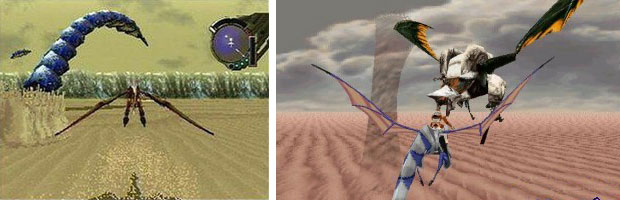
The previous blog talked about rail shooting games and talked slightly about their evolution. As technology advanced so did the gaming experience. Thanks to new processors and more powerful software games moved from pixels onto polygons. Thanks to advances in hardware arcade machines were changed from stationary to immersive experiences with moving seats, force feedback controls and surround sound. At home the rail shooter was experiencing a shift as well. There was a quantum leap in graphics technologies from the previous polygon attempts featured in Silpheed and Star Fox to the new 32-bit generation. Many could pinpoint the start of the era to 1995 with the release of Panzer Dragoon on the Sega Saturn.

The game was still set on rails, yet like Star Fox players could fly around on the screen, while tracking and shooting down opponents. The game was visually stunning. The new consoles were able to render polygons with textures, transparencies and a myriad of colors. The designers at Team Andromeda created some fantastic designs including flying creatures, floating battleships and citadels that defied gravity and were able to present them convincingly in game form. They took full advantage of the 32-bit processing power and expanded memory available to them. While Panzer Dragoon was not the commercial success of Star Fox it did herald the arrival of the arcade quality rail shooter to home consoles.

A year later Sega expanded on the elements of the rail shooter through the sequel Panzer Dragoon Zwei, released in 1996. This new game featured improved visuals and even more intense boss battles than before. The game also featured a dynamically evolving dragon as part of the gameplay. In the story the new dragon was young and lacked the speed and maneuverability of the original dragon. Players were encouraged to explore the game and paths by flying through them or having the dragon run along the ground similar to a horse. The more time the player spent doing either activity the better the dragon became at it. Speed and maneuverability in one environment were sacrificed so the dragon could become stronger in the other. Players that balanced their time between flying and running had a dragon that had good all around skills, attacks and defense. No rail shooter in the arcade had ever given the player a dynamically changing protagonist. These changes effected the gameplay in profound ways but not as much as Team Andromeda's magnum opus, Panzer Dragoon Saga. Released in 1998 this game really fleshed out the universe of Panzer Dragoon.

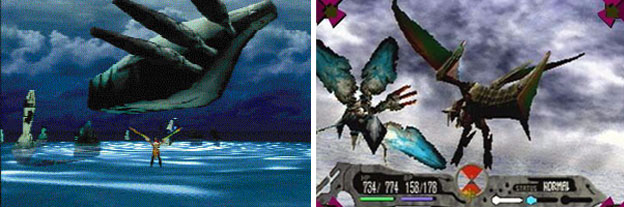
Panzer Dragoon Saga was a hybrid title combining the rail shooting mechanics with a role-playing experience. Players could upgrade the stats and abilities of their dragon after major boss battles. These changes affected the physical appearance, including the color and armored scales of the dragon as much as the way it handled in far more dimensions than was possible in Zwei. Players could make their dragon defensive with lots of heavy armor and stubby wings, or speedy with long skinny wings and physical features. They could also blend in the changes that came along with having an attack or magic based dragon. Of course there could be a blend of all four types to have a well rounded dragon that looked unique as well.

Where the home consoles lacked in the physical aspects of the arcades, things like moving seats and force feedback controls, they made up for with exclusive gameplay elements. A linear, level by level version of Panzer Dragoon could have been made in the arcade. However an RPG using the same Dragoon mechanics spread over an entire world with customizable dragons that play differently would be very hard to recreate in the arcade. Console games allowed for broader experiences with more freedom of gameplay while arcade titles were focused on very intense but controlled gameplay. The final, formal, title in the series was Panzer Dragoon Orta. Released in 2002 it was a bare-bones Dragoon experience. Harkening back to the original game in which graphics and gameplay were the major selling points.

By the year 2000 the rail shooter seemed to have run out of steam. The indy game and mobile gaming were beginning to wean players away from arcades and the rail shooter genre.

A few years earlier, after publishers had moved exclusively to polygons for arcade titles Sega had created a new generation of light gun game that required more physical effort than usual. Gunblade NY, released in 1995, put the player in the role of a SWAT officer shooting at high-powered opponents from a helicopter. Already the . Up until that point the light guns in the arcade were molded after automatic or revolver type pistols. Players could easily handle the weapons and target opponents as they moved across the screen. Gunblade NY featured a much heftier gun, undoubtedly meant for older players. The gameplay was still rail based as the screens automatically progressed as the helicopter camera system flew over and around objectives. What made Gunblade unique was that the light gun was very large. It was a heavy machine gun that was mounted to the cabinet itself. The gun was difficult to move and recoiled with some force. It vibrated far more violently than any rumble-based controller and gave players quite an upper body workout.

The light gun mechanics used in some rail shooters made the transition to consoles very well. Gunblade NY and its sequel LA Machine Guns (released in 1998) was ported over for the Wii. Part of the arcade experience was lost as handling the Wiimote would be much easier than swinging around the hefty machine guns. It was good to see the rail shooters get a new lease on life. Games that started out in the arcade, like House of the Dead from 1996, found their way onto consoles as well. An arcade style console exclusive sequel titled House of the Dead Overkill was released on the Wii in 2009 and the PS3 in 2011.

The rail mechanics were a stark contrast to the wide-open survival horror FPS title Left 4 Dead. The scenarios, levels and designs were similar but the gameplay was different. Some players enjoyed the freedom than came with exploring the world in Left 4 Dead while others enjoyed the quick point and shoot mechanics with a tangible gun controller in hand.

After years of honing the rail shooter on consoles and arcade cabinets Sega married those technologies with amusement park attractions. In 1997 Sega built a roller coaster titled Rail Chase, themed after the videogame. The ride appeared at their Joypolis location in Tokyo Japan and at Sega World, the Sydney version of Joypolis. At the time it was Sydney’s only indoor roller coaster. Players went through a series of scenarios which were inspired by the locations featured in the game, including snowy peaks, dark caves and desert valleys. Best of all the riders could shoot at targets with light guns and interact with the scenery.

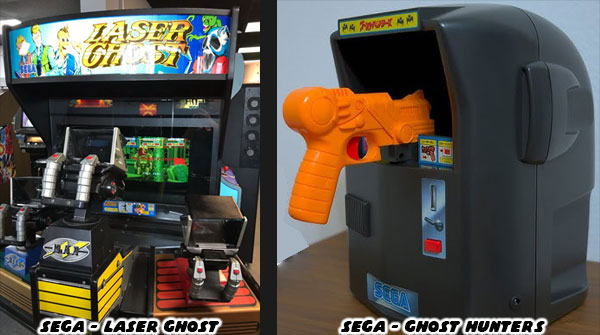
Sega also married the dark ride with arcade technology. The attraction Ghost Hunters was not based on any particular arcade game, although one of their earliest rail shooters released in 1990 was titled Laser Ghost. In that game players took on the role of ghost fighters, shooting at ghosts with laser firing machine guns. The title, like many early Sega arcade games was based heavily on Western pop culture. Shinobi for example had unlicensed cameos of Spider-Man, Batman, the Terminator and Godzilla.

Laser Ghost was poaching the successful Ghostbusters movie and animated series. The gameplay was set around a big city (which looked an awful lot like New York) being invaded by ghosts. The three ghost catchers traveled through the city shooting up everything in sight. The 1991 follow-up Laser Ghost on the Master System console was not an arcade port. Instead players used a light gun to help protect a little blonde girl as she made her way through a haunted house. The blonde girl and scenarios for the console version were lifted from the film Poltergeist. A small cabinet for the home was released of the evolved Ghost Hunters attraction. The toy featured light up plastic ghosts in a miniature cabinet for kids to shoot with the included light gun.

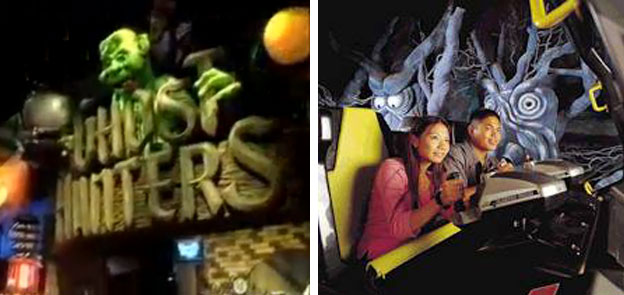
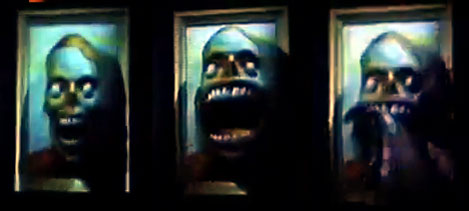
Ghost Hunters was a sit down ride that went through a dark maze. On the walls were mirrors and projections with holograms, black light paintings and polygon-generated spirits. Players could use the plastic cannons mounted in front of their seats to shoot projected beams of energy at the ghosts on the screens. The effect was somewhere between an electrical arc and the wavy beams from the Ghostbuster’s Proton Packs.

The visuals shifted between scary, macabre and humorous. It was very much a riff on Disneyland’s Haunted Mansion as much as it was on the Ghostbusters. Audiences were welcome not to be passive participants on the ride and be startled or creeped out by the visuals but instead fight back against the spirits and demons inhabiting the house. Sadly all the rides at Sydney’s Sega World were sold off or torn down in 2001 leaving only a rare glimpse online and the occasional shared memories for those that got a chance to experience the park.

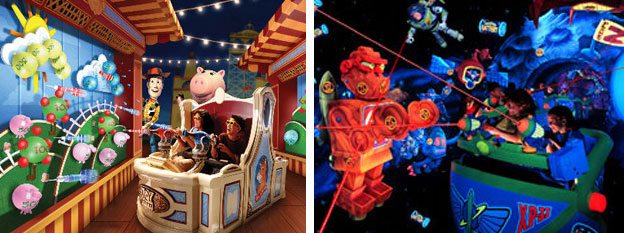
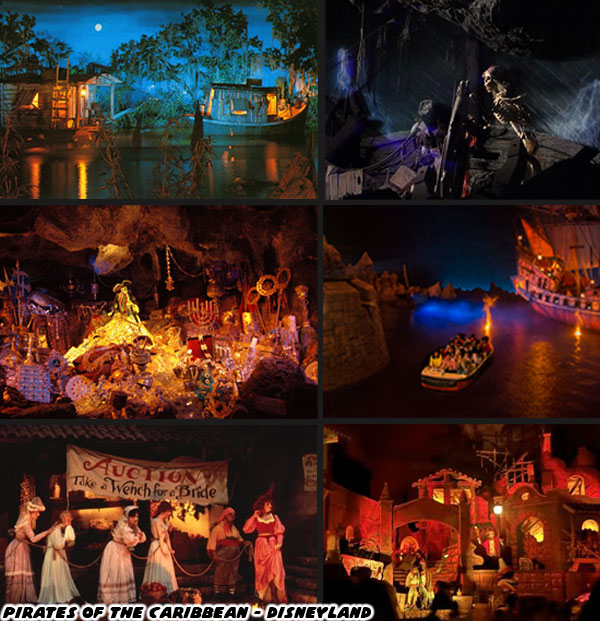
The rides at Joypolis and Sega World paved the road of interactive attractions at theme parks. One of the adopters of the format would be the biggest name in the industry. Disney merged the dark ride, animatronics and the interactive light gun experience in 2004 through Buzz Lightyear's Astro Blasters. In that attraction audiences got to play the part of a Space Ranger taking on Zurg. Guests were able to shoot at targets and score points using a light gun as they traveled through a series of rooms. Scores were tracked by the ride itself. What made the attraction unique was that the rooms were painted in fluorescent paint which had a soft glow under the black light. Plus all throughout the ride there were giant models, moving props and a couple of large animatronic figures. Everything in the ride was a tangible object.

Disney’s next interactive ride did away with the animatronics, save for a great Mr. Potato Head in front of the attraction. Midway Mania, which made its debut in 2008 was a mix of classic carnival games with light gun mechanics. Riders would wear 3D glasses and shoot at targets on a series of giant displays. The rides would spin down tracks and keep score on an LCD build into the cab. Some of the games would blast players with a shot of air to add a little more dimension to the experience.

By using LCD screens instead of building physical animatronics Disney would be able to go back into the attraction and add new games and characters whenever they wanted. Such was the case when Toy Story 3 was released. The Disney Imagineers were able to incorporate the characters introduced in the film within a year of its release. Visitors to the park were amazed at the fast turnaround that the game technology provided.

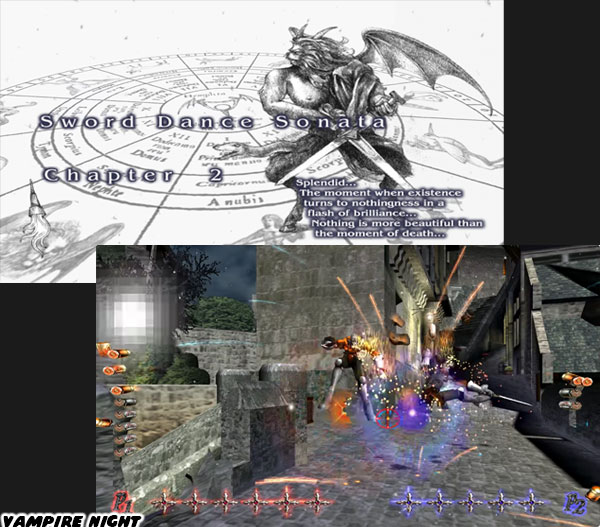
The end of the 90’s and start of the 2K era saw a global decline in arcade sales and a shift to console and mobile gaming. Long time market rivals Sega and Namco even partnered up in 2000 to release a rail shooter Vampire Night on the PS2. The shift away from the arcade combined with poor business planning hurt many companies. Many publishers were forced to merge to stay afloat or become profitable again. SNK merged with Playmore, Sega and Sammy partnered up and Bandai merged with Namco. These changes in the companies did not mean that they stopped innovating in the arcade. They simply had to be more practical with their titles.

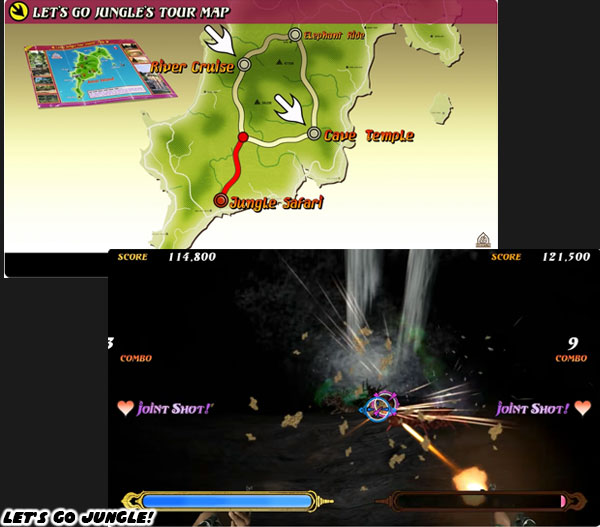
Sega found its rail shooting rhythm in 2006 with the release of Let's Go Jungle! The game was a frenetic rail shooter. Players assumed the role of tourists trapped on an island with giant angry animals. Hordes of bats, spiders and other creatures threw themselves at players in relentless waves. The artistic design for the characters was more comedic and campy than Sega had done in the past. The pacing of the game was also much faster than anything they had done before. The tempo of the game made it more difficult than previous titles, causing players to use plenty of credits to try to beat it. This made arcade owners happy as you could imagine but left some long-time players wondering what happened to the creativity Sega used to exploit. Where did the Rail Chase or Jurassic Park experiences go?

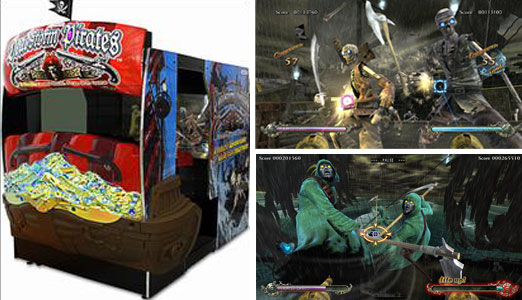
Actually those experiences were being created by Namco. In 2010 they released Deadstorm Pirates, an arcade shooter that incorporated both light guns and a ship’s wheel. The light gun was for shooting down waves of opponents of course but the several of the quick time events were handled by turning or spinning the ship’s wheel. In other portions of the game the wheel actually steered the ship or row boat around obstacles.

The game was well received by audiences. It presented some amazing battles and scenarios using a great rendering engine. Like Let’s Go Jungle! this game was one of the early rail shooters in the arcade to be presented on a high definition display. The themes featured in the game were very rich, combining classic Western pirate designs with a hint of anime and other Japanese aesthetics. It did not hurt that the game came on the heels of the Pirates of the Caribbean trilogy. As Sega had found success taking cues from pop culture in the 80’s and 90’s Namco was now doing by poaching many of the ideas from the PotC films and attractions. The game did so well in the arcade that Namco updated the technology for new builds and offered a stereoscopic (glasses free) 3D version of the game and a motion-based 4D version. The game eventually found its way onto the Playstation 3.

Not to be outdone Sega had stepped up the development of the Let’s Go series by releasing a glasses free 3D version of the sequel, Let’s Go Island in 2011.

The deluxe versions of the games incorporated the motion seat technology and encapsulating themed cabinets, going so far as blasting players with air as Disney had done in Midway Mania. The mix of the classic arcade and amusement park designs was a step at bringing Sega back to the elements that made their earlier rail shooters memorable.

Where the rail shooter goes from here is only limited by the imagination of designers and of course the budget allotted to them by the publishers. In this regard Disney is in a favorable position over game developers. Disney has a built in audience visiting the parks and usually a tremendous budget to satisfy expectations. Interactive attractions at their parks are built to reward visitors at every skill level, not just the gamers. Unlike arcade games the theme park experience does not end if the player fails to score enough points.

The arcade industry survives by squeezing money out of players for each interactive experience. The games have to start easy enough for beginning players but the challenges then have to ramp up quickly to keep them engaged and spending money. The games also have to be difficult enough for advanced players and not easy enough for most of them to get through on their very first credit. It is a fine line between design and difficulty, arcade owners can actually set each cabinet for how difficult it should be and how many credits the title requires based on the market. The smaller the turnout at a local arcade then the lower the price is for playing. Arcades or restaurants that can pack in the customers can get away with charging a dollar or more a game instead of a quarter. 

Theme parks do not charge visitors for every ride they get on nor do the interactive experiences ever change in difficulty. The visitors themselves choose how hard they are willing to play while the park makes a profit elsewhere, like in food and merchandising. Visitors to theme parks do not expect to get kicked out of an interactive ride for playing poorly, so each ride through Astro Blaster or Midway Mania is guaranteed to come to a conclusion. There are no guarantees that gamers in the arcade will ever see the final screen. However to their credit the games in the arcade usually last much longer than any dark ride, some games could go for 45 minutes or more, the Pirates of the Caribbean attraction lasts around 16 minutes by comparison.

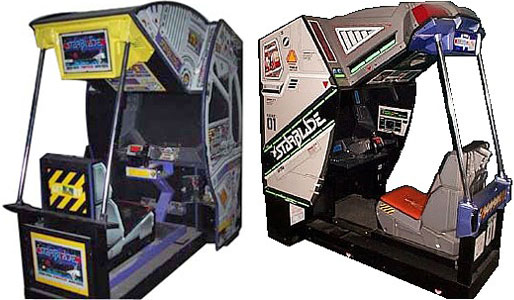
Some of the better interactive arcade games could feel more rewarding to players because of the participation they demanded. There was a stark difference between watching the Last Fighter and playing through Operation Star Blade for example. The interactive experience could make many feel more connected to a game than any other form of entertainment in this regard. However what Sega, Namco, Disney and other developers were finding out through the early 2K’s was that the arcade and interactive ride experience did not have to be mutually exclusive.

The rail shooter has a bright future in parks, arcades and at home. The best ideas and technologies seem destined to meet for the benefit of gamers. The evolution of pixels to polygons, from stand up arcade cabinets to immersive “4D” motion rides, the rail gunner has pushed the development of some of the greatest titles ever made. I would like to be around for another century just to see where else the genre could take players. Of course the greatest rail shooter in my book was never released at home and not many people got a chance to experience the title themselves.

Sega’s The Ocean Hunter, released in 1998, set a standard for storytelling and design yet to be topped. Now that the publisher is revisiting their library of classic games and re-releasing them on consoles then perhaps there is a chance that many more people might get a chance to experience one of my favorite games of all-time. Until that day comes I implore the reader to support the local arcades and share with us experiences with the rail shooter genre. What were your favorite games and why? Let me know in the comments section please. As always if you would like to sponsor me please visit my Patreon page and consider donating each month, even as little as $1 would help make better blogs and even podcasts!

follow the Street Writer on Patreon!

Wednesday, May 10, 2023

The rail shooter revolution, part 1 - Originally published on 1UP - October 9, 2011

Reminiscing about Star Blade the other day made me think about other games in the genre, not solely the space shooters, but the arcade games that made an impact and were truly memorable experiences. When I was going through my notes on Star Blade I thought about what element the best arcade shooters had in common. Then I thought about what console games provided an equally memorable experience. What did these games have in common? What did they offer that was unique among them? Which were the groundbreaking titles and which were the trendsetters? How did the arcade innovate when home consoles were catching up in the graphics department?

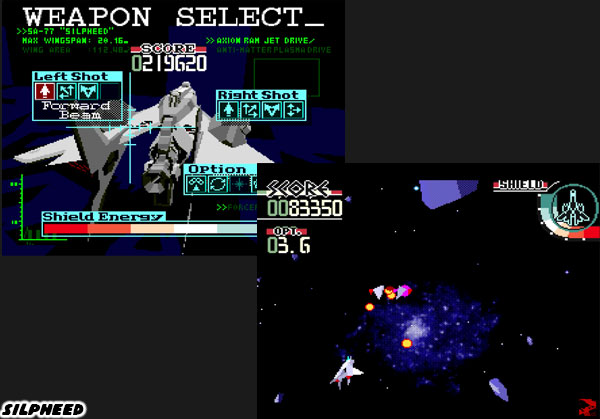
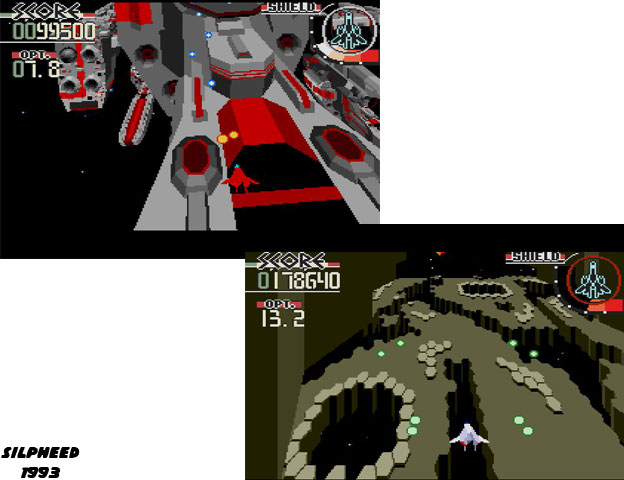
We should begin with the other titles in the space shooter department that, like Star Blade, were cutting edge experiences. One of the earliest polygon shooters was Silpheed for the PC released in 1986 this Sega title as revolutionary graphics for what was traditionally called a "Shoot-em Up" or SHMUP for short. These types of games were some of the oldest types of arcade games and included the classic titles Galaga, Space Invaders and Gradius. The original Silpheed was unlike these titles because it exploited the processing power of home PC's to deliver vector graphics and polygons into the home. None of the aforementioned classic SHMUPS were even built using that technology.

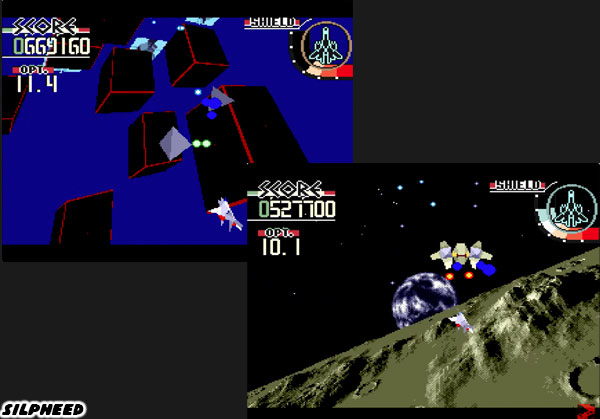
Games became more robust and visually stimulating as arcade technology found its way home in the guise of processors used in PC's and consoles. Silpheed would actually enjoy a revival of sorts exploiting the processing power of 16-bit engines and the amazing storage capacity of CD's. Silpheed for the Sega CD and add-on to the Genesis, was released in 1993. The game was a SHMUP that rivaled the best of the early polygon titles in the arcade. The graphics were cutting edge and lauded for the diversity of locations and difficulty factor. The game was so well made that it could have been considered a contemporary title to Star Blade.

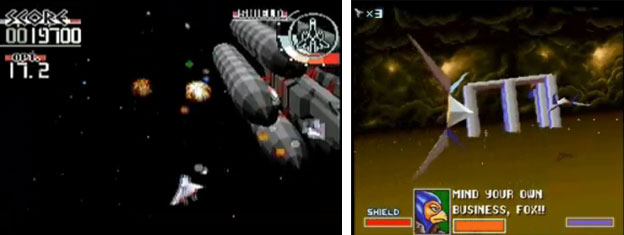
In fact 1993 was a dramatic change in the perception of home consoles bringing arcade-quality graphics home. Silpheed was popular when released but it did not achieve the level of success that another space shooter received that same year. The Super Nintendo had an exclusive polygon-based shooter titled Star Fox that completely caught gamers off guard. Instead of playing through a side-scrolling SHMUP as they were used to, gamers were actually flying through 3D space in 3D ships. The blocky graphics were overlooked as the tight control scheme, fun character designs and massive boss battles were unlike anything else available at home.

One of the interesting things about Star Fox was that it combined the polygons with sprites on the graphics engine. Nintendo did not rely exclusively on polygons to create the game. Sprites, or raster art made up images for the game characters as well as some of the background graphics as well. The use of sprites allowed the game to have certain color and effects, like an atmosphere on an alien world or cannonballs heading right towards the player. Silpheed featured similar techniques for backgrounds. These visuals could not have been achieved by relying exclusively on polygon technology.

Aside of the obvious aesthetic draw that a sprite or raster art had over early polygon games, these consoles simply did not have the processing power to render polygons for every detail. Sprites accepted more colors than polygons at the time and they could even be scalable. In oder to achieve the illusion of movement and depth sprites were layered in an overlapping method and then rotated or scaled by the game engine. This technique was used to create pseudo-3D effects in both arcade and console titles.

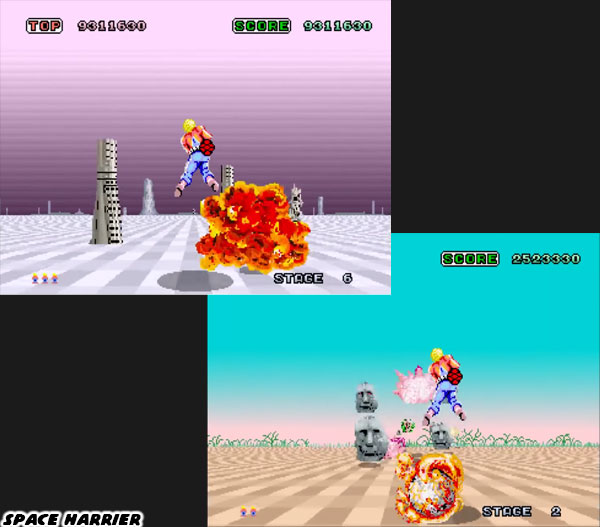
One of the earliest and most recognized uses of sprites that overlapped and scaled to create 3D object was the arcade hit Space Harrier. Released by Sega in 1985 it was revolutionary for the illusion that the main character was flying forward through the world in three-dimensions. The sprites had a limited color palette and looked very blocky as they passed underneath the main character. As processors got more powerful and storage got more robust the sprite layering technique had improved as well. One of Sega's latter titles, Thunderblade (released in 1987) featured the illusion of depth and movement through top-down and behind-the-back camera perspectives.

The polygons remained blocky but scaled slightly better than in previous titles. Through the mid 1980's and into the early 1990's this technique was employed to create the illusion of 3D objects on 2D engines.

The thing that all of the aforementioned games shared in common was the gameplay. All of the titles, whether they were set in space, on the ground or in the air, or whether they were in first-person, top-down or third person perspective used a similar game technique. The games advanced on a pre-determined path. They gave players the illusion of freedom, allowing them to move almost any direction across the screen. By allowing gamers the slightest bit of freedom the developers could create the illusion that they were actually traveling to exotic locations. Gamers could enjoy the virtual landscapes that they were taken through without having to actually pilot themselves there.

The term "Rail Shooter" was created to describe these types of games. Star Blade was an example of a rail shooter set in space. The player acted as the gunner while an unseen pilot whisked them throughout the galaxy. The rail shooter became a standard in the arcade. Sega seemed to be among the best developer for these types of games with Namco punctuating some exceptional experiences as well. As graphics technology improved on consoles new things would have to be tried out to keep audiences coming back to the arcades. The rail shooter found an audience in the mid 1990's and hit a creative peak in the late 1990's. After a slow start in the early 2K's it recently found some renewed interest at the end of the decade thanks to emerging technologies.

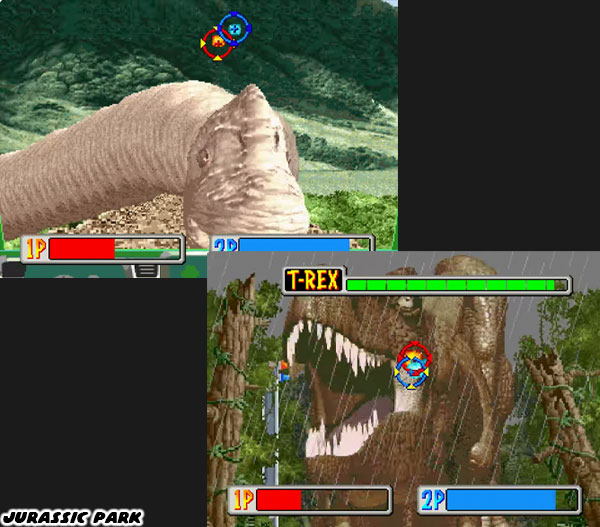
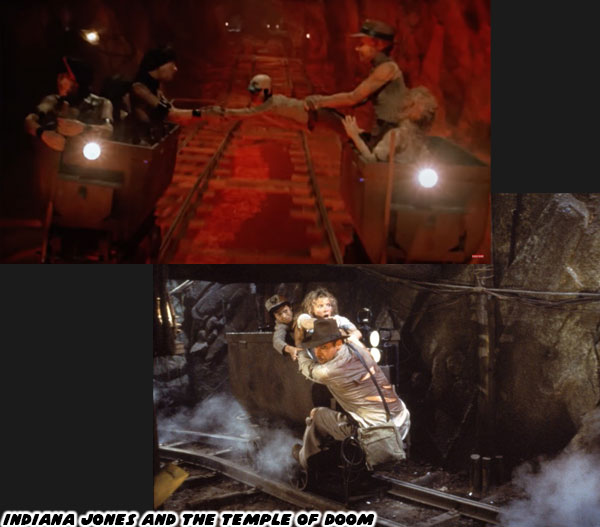
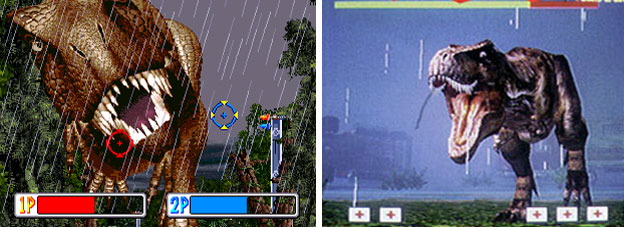
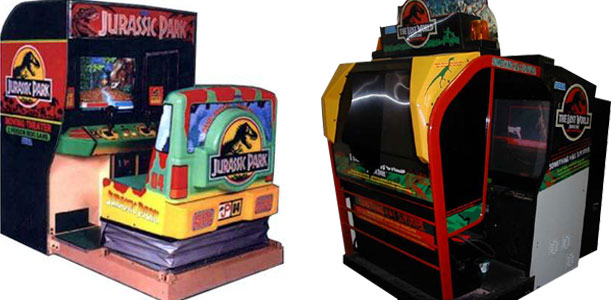
Creatively speaking the rail shooter found its niche in the arcade by exploiting elements that would be next-to-impossible to recreate at home. In 1991 Sega released a game called Rail Chase. This was a sit-down game cast players in the role of an adventurer and his female partner riding inside of a runaway mine cart. It was unabashedly a rip off of the famous chase scene from Indiana Jones and the Temple of Doom. The duo were being chased by thugs in turbans along a long and twisting course. Players could defend themselves and even throw switches and change paths by shooting a machine gun at targets. The game used scaling sprites to create the illusion of 3D. To add an extra layer of excitement the seats on the cabinet were set on top of hydraulics that dipped and bumped in time with the scenes on the screen. The last noteworthy Sega rail shooting game that was sprite-based and used the moving seats was Jurassic Park, released in 1994.

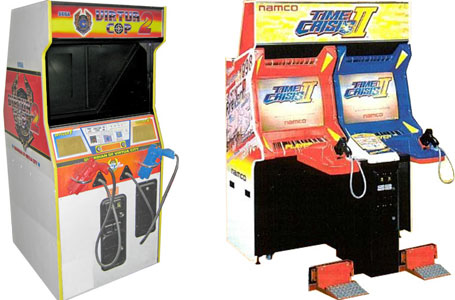
Just a short year later Sega and Namco would be working almost exclusively on polygon titles. Sega's first foray into a polygon light gun game was Virtua Cop, released in 1994 and Namco's was Time Crisis, released in 1995. Both games used the shooter on rails formula, only that a handheld light gun was used to target enemies rather than a space ship. Light gun games have an equally long and storied history in the arcade but I will not be spending too much time talking about that genre here. I would like to emphasize however the idea that the light gun arcade shooter helped shape the dramatic scope and scale covered in the rail shooter.

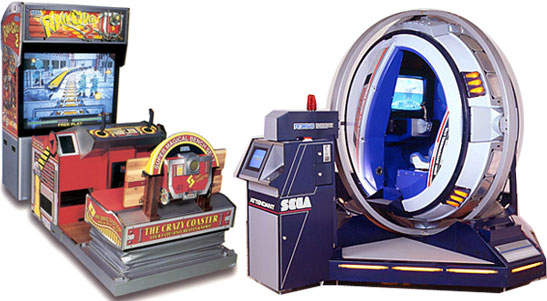
In 1995 Sega created Rail Chase 2. This time the scalable pixels were completely replaced by polygons. The hydraulic seats returned, pitching gamers side to side and tilting them in all sorts of directions as the mine cart found itself perpetually rolling through obstacles. The levels were lavishly themed environments created with plenty of imagination.

The term rail shooter could never seem more appropriate than with the Rail Chase series. Sega did not limit the genre by keeping the entire game on railroad tracks. The mine cart often found itself being thrown down chutes, bouncing through caves, floating down rivers and even sliding over frozen lakes. It had become the perfect, if improbable, vehicle. Sega had a luxury that could never be afforded any theme park. They had created an interactive experience with motion through a series of scenarios, boss battles and locations that did not require the construction of multi-million dollar attractions. They could even broaden the experience by creating alternate paths that players could take just by shooting a switch. This increased the replay value among gamers and gave arcade owners a reason to celebrate. What the genre had needed previously was an engine capable of rendering 3D visuals to go along with the moving seats. The new polygon powerhouses did just that.

Sega continued to push the limits of arcade cabinet design along with the advances in graphics technologies. Force feedback had made game control more interactive. Started with racing games and then applied to flight sims, force feedback controls helped create a new dimension of immersion for players as well. Past a certain point the games were becoming less arcade experiences and more amusement park ones. Seats that moved and rumbled were the start for Sega, with the culmination of movement technology appearing in the R-360. The cabinet allowed a full 360 degrees of movement and could even rotate the player on multiple axis, completely flipping them upside down if they wanted to. Due to size and cost restrictions very few players actually got a chance to see, let alone try the flight sims G-LOC and After Burner on this cabinet. Sega was not deterred from turning their games into more interactive experiences through experimentation. They could achieve a memorable experience with creative level design and by exploring rich themes on every subsequent title.

The last generation of sprite-based rail shooters allowed for some very detailed graphics. Near the end of sprite-based development the engines could support large sprites with hundreds of colors on the figures. When they scaled in size the pixelation was negligible. A few years after the first Jurassic Park game, and following on the footsteps of Rail Chase 2, Sega revisited the franchise with the Lost World. The sprite-based dinosaurs and island were replaced with polygon models. The new dinosaurs were more detailed that even the last generation and the experience was far more intense to players. To increase the reaction among players Sega had created a deluxe cabinet that shrouded the players inside a canopy, making them feel more isolated on the island. Add in seats that vibrated and a loud surround sound system and the experience was as memorable as any motion arcade title that Sega had worked on. This game from 1997 was so well produced it could still be found in arcades, movie theaters and restaurants more than a decade later.

Rolling back the clock a few years we would see that the development of rail shooters from Sega extended to home consoles. We shall explore these titles and connect them back to the arcade in the next blog. If you had a favorite rail shooter, or remember any of the titles mentioned above then I'd like to know about it. Let me know in the comments section please. As always if you would like to sponsor me please visit my Patreon page and consider donating each month, even as little as $1 would help make better blogs and even podcasts!

follow the Street Writer on Patreon!

Monday, May 8, 2023

If I updated my favorite games of all-time for 2023 what would be different?

Thank you for stopping by my humble blog. If you’ve been keeping up with my recent series it was a repost from an earlier run that I had on 1UP. I certainly miss that community of gamers, and the many stories, reviews, and articles that they shared. Many of the staffers went on to get jobs in the gaming industry, and a good number of mutuals kept in touch thanks to Twitter, Facebook, and Instagram. I enjoyed posting every weekday, and had well over a thousand blogs written before the site closed down. I saved a good portion of them, and have been sharing them on, and off here for the past few years. The favorite games series got a lot of feedback from the community. I think it worked best to figure out what type of player that I am. If you went through the list you would notice there were no MMOs, no RTS, no games from LucasArts, and no games from Nintendo. This doesn’t mean that I do not think they have developed a top-20 game. Far from it. The list I created was specific to a certain question. If I was stuck on a deserted island which game would keep me entertained longer than any other one. Which one hit the notes of the game play experience that I enjoyed best. Some people might read into it which were the games that took me longer to get bored of than any other. If I were to create a list of 20 essential games that everyone must play, or 20 games that changed the market then it might be entirely different. 

Below is my favorite games of all-time list as of 2006. 

I went back to the list after the series, and thought about all the games that’ve played since the days of 1UP. It’s hard to believe it’s been 17 years since I originally posted it. So I decided to update it, and see how much would really change. I’m sure it might be different in a couple of years, or even next month if I think about it long enough.

As of May 2023 here is how my new list stands. 
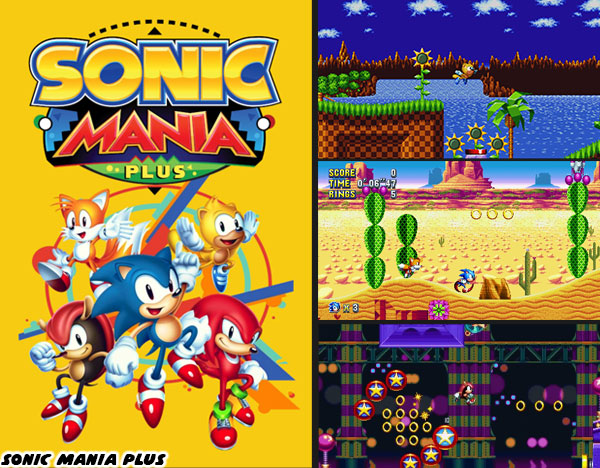
3. Sonic Mania Plus.

This was actually a gift from my kid to me. I was absolutely blown away by the experience. I told my family if I went back in time to 1992, and told myself that there would be a Sonic game made by an independent studio that was as good as the best work from Sonic Team then I would have never believed it. On top of that this game would bring back Mighty, and Ray from what EGM called the greatest arcade game ever made; SegaSonic the Hedgehog, then I would have called myself a liar. And yet here I am, happy to admit that as a Sonic fan, all of the things I wished had happened with the franchise eventually did. It just took 26 years to get there. This is a credit to Christian Whitehead, PagodaWest Games, and Headcannon. I just hope the team is secretly working on a worthy follow-up. 

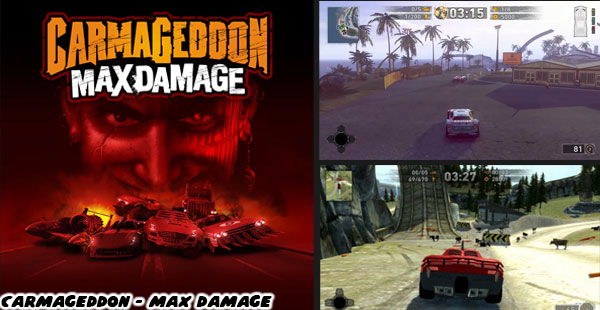
5. Carmageddon Max Damage

To be fair I think that Carmageddon Max Damage, and the original Carmageddon with the Splat Pack are just about even. I could find a hundred things that I enjoyed in one over the other, and yet never decide on which was the better game. I appreciate that Stainless Software got the rights back to the franchise they created, and were able to bring it up to modern platforms. I only wish their team, and budget were three times larger. I hope that in another decade the studio, or at least former members might get one more crack at the title. 

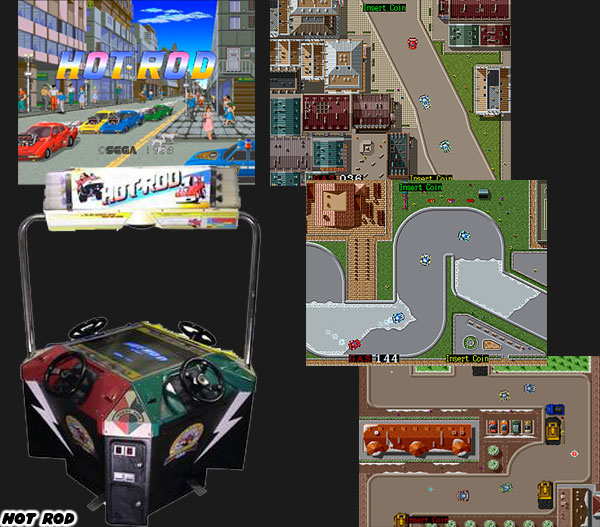
10. Hot Rod

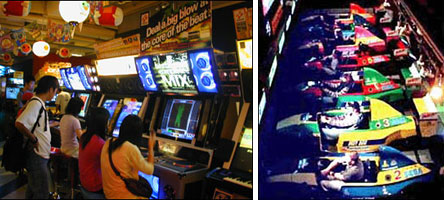
As wonderful as DragonBall Z 2 is, and as passionate as I am about it there were other fighters that I enjoyed more than it in the past two decades. Plus that game came with a lot of negative baggage, so I think it's better to replace it on my list. The game now taking up this spot is Hot Rod. Not just any version of this Sega gem, but the 4-player cabinet with the dip switches set to default. That was a racing game that I could literally play forever. In fact one summer I played this game on one quarter for more than six hours. If I ever win the lottery this is definitely one that I’m putting in my game room. 

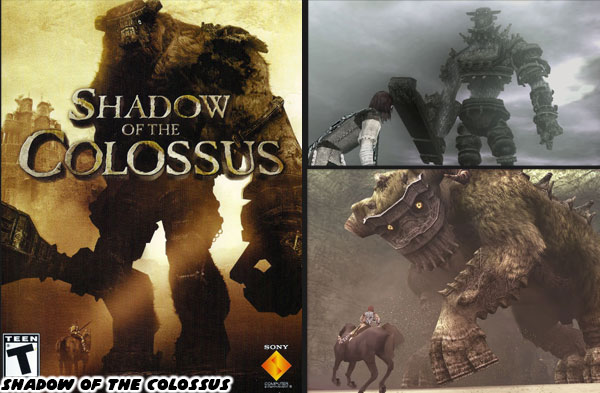
12. Shadow of the Colossus

As much as I loved Resident Evil, I think I enjoyed the experience created by Fumito Ueda even more. Shadow of the Colossus should be in every Sony player’s library. I’m still partial to the original Playstation 2 version. There is something to be said about how much performance Team Ico was able to squeeze out of the hardware. You can’t look at modern Zelda games, and not see the influence it had on the industry. I pray that The Last Guardian wasn’t really his final goodbye. I want to return to his world at least one more time. 

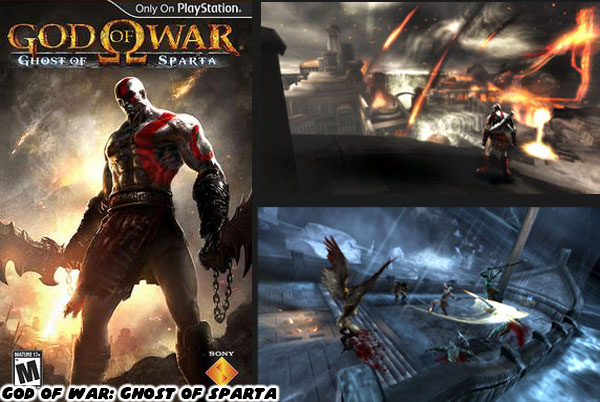
13. God of War Ghost of Sparta

It takes a very special game to push Top Skater down one spot, and take Chrono Trigger off the list. When I originally put together my list God of War II had yet to come out. That might have been on the list instead of Chrono Trigger. In fact every subsequent GoW game raised the bar higher, and higher. To me the peak was actually in the Ghost of Sparta. You can go back to the series I wrote to see how amazing this game was over every other title in the library. 

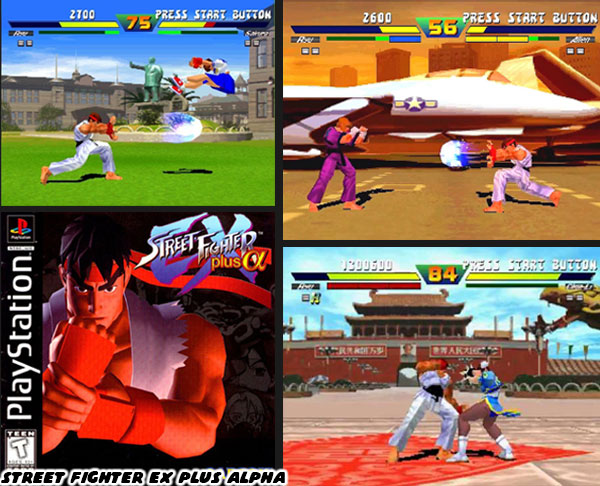
15. Street Fighter EX Plus Alpha

Samurai Showdown II is easily a top-5 fighting game in my book, however I think I got more miles out of Street Fighter EX Plus Alpha. The game, balance, animation, and of course character design from ARIKA will always be the best generation for the series. 

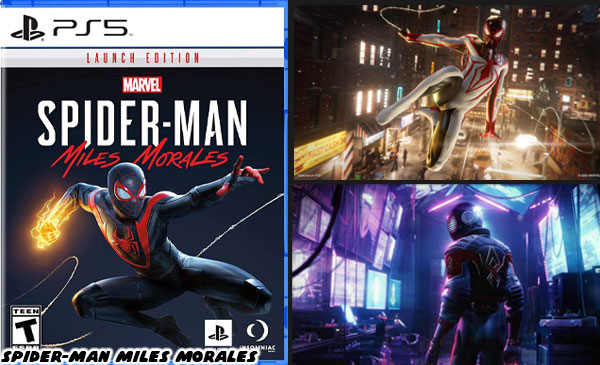
17. Spider-Man Miles Morales

For a moment I thought about replacing the Incredible Hulk Ultimate Destruction with Insomniac’s Spider-Man game. The Sony title does owe a lot of the locomotion, and wall running mechanics to the Hulk. The sense of power it much different. I really enjoyed the Miles Morales version more than the Peter Parker story. It was almost neck-and-neck to be fair. These are the only pick up, and play games that recreate the magic of Bionic Commando. 

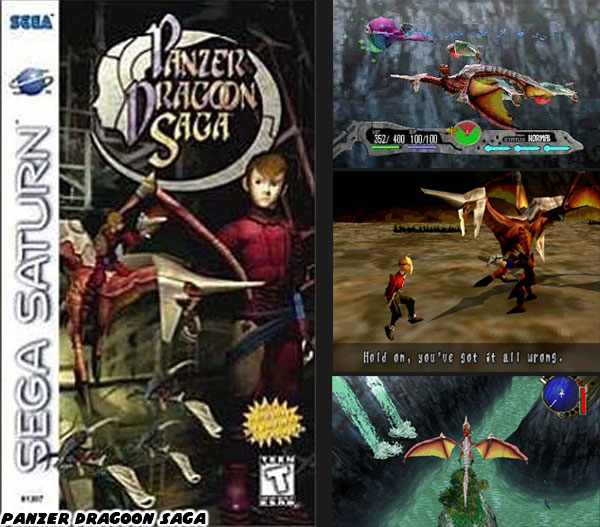
18. Panzer Dragoon Saga

Final Fantasy VI may be the best game in the series, but in the end I thought of the game that I enjoyed a little bit more. This was Panzer Dragoon Saga. The rare, and now highly collectable game for the Sega Saturn. The mix of action, storytelling, and adventure made it unlike any other RPG I have ever played. I only wish more people got a chance to play it too. Perhaps someday Disney will buy out Sega, and start cranking out sequels to their amazing library. 


I would like to know how your gaming tastes have changed over the years, and if you were stuck on an island which would be the only game you couldn’t live without. Let me know in the comments section please. As always if you would like to sponsor me please visit my Patreon page and consider donating each month, even as little as $1 would help make better blogs and even podcasts!
follow the Street Writer on Patreon!

Friday, May 5, 2023

My Favorite Games of All-Time: #1 NiGHTS into dreams... - Originally published on 1UP - August 25, 2006

It's been slightly more than 20 weeks to get to this point. Almost a half-year really. I thank those who have been patient enough to check every Friday. Anime Expo, the E3 and X Games all cut into the countdown so the list is past due. The good news is this is it. Today is the day that settles the question. What is my favorite game of all-time?

If you go back to when I put the list together I said I knew what number 1 was from the onset. My brothers and cousins knew as well that no game has meant more to me than this one.
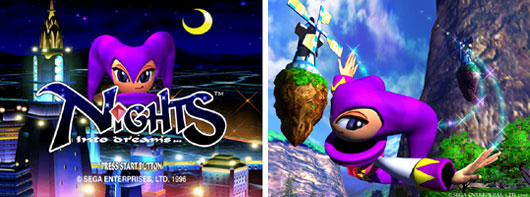
Even though it's been called one of the top-10 overrated games by the people at 1UP it has also been called one of the top 10 cult classics by the same people. So what gives?

NiGHTS into dreams... is an anomaly. A game that is very simple to get into, play and beat. You only use one button in the entire game. Of all the games on this list NiGHTS is the shortest by far. But there is substance in NiGHTS, layers of detail, level design and gameplay that turns it into my favorite title ever.

It doesn't matter if the "game journalists" see it, recognize it or admit to it. These details, gameplay and level design have influenced the industry for the past decade.
I am a firm believer that Yuji Naka is a genius. I believe that he was able to accomplish more with less. When he turned the platformer upside down with Sonic the Hedgehog 2 I knew it was true. When he created Burning Rangers the legacy was capped (BR uses the NiGHTS engine). Sonic Team, at it's peak, could not be beaten, not even by Shigeru Miyamoto and his team at Nintendo.

NiGHTS was the peak and Yuji knew it.
Mr. Naka, lead director Takashi Iizuka and director Naoto Ohshima managed to craft a game that was more than the sum of its parts. Inspired by a plane trip shortly after completing Sonic the Hedgehog 2, Naka knew the next big game would be about flying and not about the blue hedgehog. The heart of Sonic Team would be put into NiGHTS. Now you guys know a little bit more why Sonic 2 made my list and not Sonic 3. The game was also inspired in part by the idea of a collective unconsciousness, the work of Carl Jung, magic, mythology and universal ideals. NiGHTS became a title that could be enjoyed by hardcore and casual gamers because it offered something for everyone.
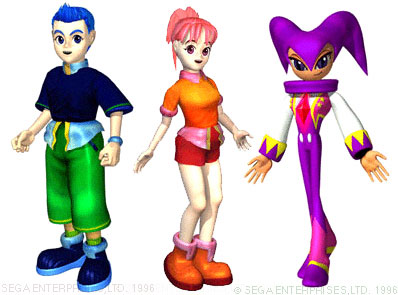
NiGHTS is a story about a boy, Elliot Edwards and a girl, Claris Sinclair from the fictional Twin Seeds city. These two face challenges in the real world and shy from them. By fighting nightmares to liberate the dream world they build the confidence to face the real world challenges.

The entire game is told without any dialogue. There were no localization changes to the game itself, nothing lost in translation. The story unfolds in three acts, the first being the cinema at the start of the game which shows why our heroes are running from their nightmares. The second act is the game itself, it picks up literally where the cinema ends and forces us to challenge these nightmares. The third act is the conclusion, a cinema that shows what becomes of Claris, Elliot and their newfound friend NiGHTS.
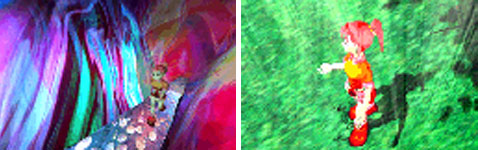
The game was panned by critics because of the brevity.
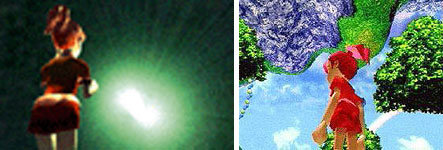
I contend that the game was panned because gamers and critics didn't "get it."
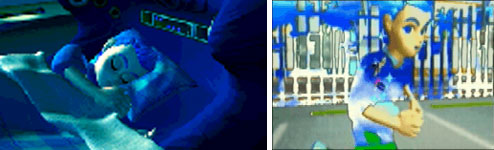
NiGHTS has no dialogue, no convoluted stories or plot points. It is up to the gamer to connect the dots, to build every link between the cinemas and game. When you realize that everything in the game was done with forethought, every detail, every camera angle and shot becomes magical. Nothing in the game was a mistake. Nothing in the levels or cinemas were wasted. It did not matter if you were from Japan, the US or Europe. NiGHTS was as pure and sublime as a videogame will ever get.
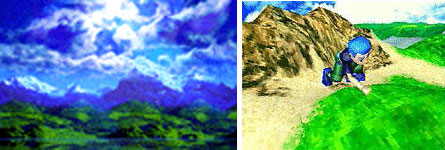
Those that look past the brevity learn that the game is much deeper than we give it credit for. Sonic Team was running on the clock, Sega wanted a killer app to debut before Sony or Nintendo could drop the new mascot games. Because of that Yuji had to pair down his ambition and rush NiGHTS out the door. In doing so Yuji learned that he could keep his vision intact and provide gamers with an experience that defines the word "next gen."
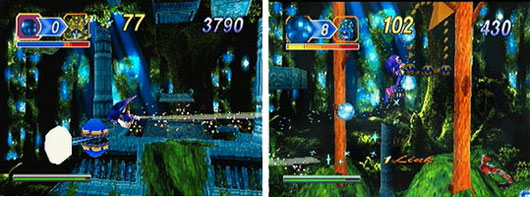
There is a lot of exploration that Yuji wanted players to do as either Elliot or Claris but Sonic Team did not have enough time to fully implement that side of the game. Rather than just cut the exploration part out completely they left it in. Elliot and Claris were allowed to free-roam the worlds but levels could only be completed as NiGHTS. To force players to become NiGHTS an alarm clock would chase around Elliot and Claris until they came in contact with the title character.
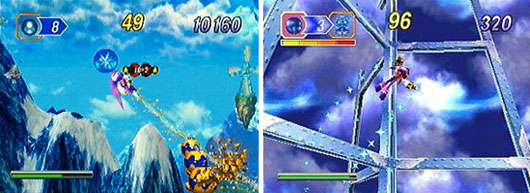
Rather than just leave it at that Yuji made sure that players that wanted to explore were given more leeway. They could temporarily knock out the alarm clock and wander through the level, absorbing as much detail as they wanted. Claris and Elliot could get into rooms, bounce around in all three dimensions, ride a train and even take an elevator not accessible to NiGHTS. In doing so gamers developed a new understanding and firm appreciation of the game Yuji wanted to give us. Despite the time and technology constraints I can argue that he still delivered on his vision 100%.
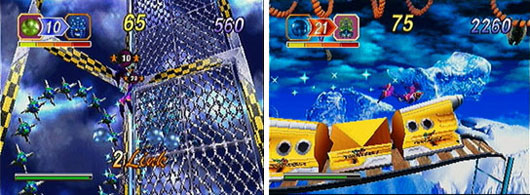
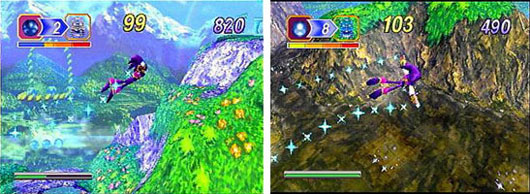
The crux of the gameplay is flying as NiGHTS. Sega used this game to debut their analog controller, in my opinion, the best analog controller ever made. NiGHTS flies on "tracks" in a 3D world. The original plan was to have free roaming but it proved too difficult to design objectives around so NiGHTS was put on a track.

The flying engine was amazing. For the longest time flying had not been used to its full potential in a platformer. Previous to NiGHTS, Mighty Bomb Jack was the only game to get it right. The flying and floating of Jack set the standard by which many games could never outdo, not even in the Superman titles. NiGHTS allowed gamers the truest sensation of flying in every direction, floating gracefully down or dashing like a rocket. This idea of flying, dreaming of flying rather than falling is empowering. It lifts our spirits and for a moment lets us believe in the impossible.
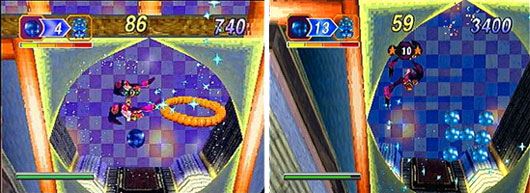
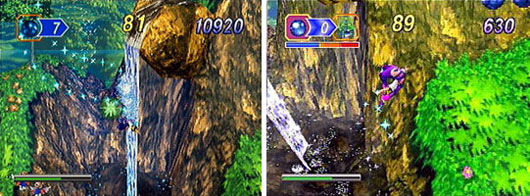
Although limited by a track, Yuji broke the barrier by making the level a character in the game. Previous to NiGHTS, other 3D or polygon games had nice backgrounds but you really couldn't interact with them. Invisible barriers always prevented the character from climbing walls, going through holes, open windows, or under bridges. NiGHTS shattered that type of design. If you saw it, chances are you could reach it, fly around it, or through it. Bridges, windows, waterfalls were all incorporated into the design of the tracks. These tracks (four each on every level) twisted and turned every which way, allowing us to see and explore every inch of the dream world.
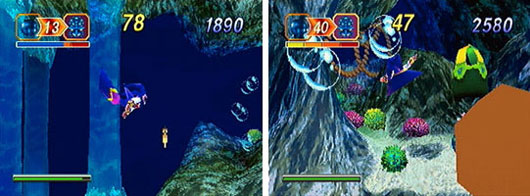
As if exploring with Claris and Elliot, or flying with NiGHTS wasn't already light years ahead of the competition, Yuji added an additional gameplay experience in just about every level. When NiGHTS entered a floating water bubble, or a water filled cave (this is a dream after all) his/her legs turned into fins and allowed players to swim in a behind-the-back POV. When NiGHTS approached a bobsled track he changed into a bobsled and Elliot would ride on his back, collecting power-ups.
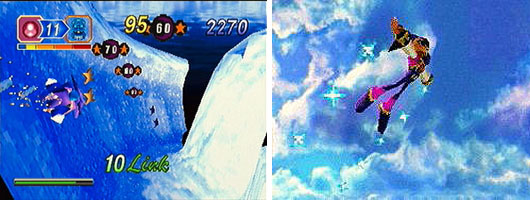
When NiGHTS was hit with some static electricity he would attract details in the environment and become a flying Katamari ball. When NiGHTS entered a museum whose walls were like rubber he would take on the shape and characteristics of a bouncing beach ball. The transition from NiGHTS into a shape or into one of the kids and back was seamless. Yuji showed the world that 3D was the future and being able to explore the world in all three-dimensions was only the beginning. Characters would also have to become plastic and malleable in the game as well.
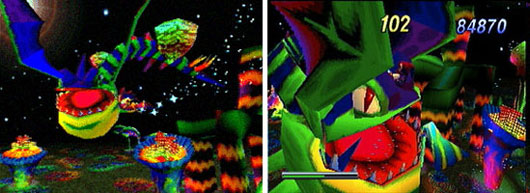
The boss battles in the game were just as amazing as the levels themselves. The main boss, Wizeman, is the leader and creator of the evil Nightmaren. The bosses were massive, larger than any other boss at the time. The giant dragon Gillwing, balloon opera singer Puffy and giant fish Gulpo could swallow the main characters whole. The freakish cat Clawz and diabolical jester Jackle helped create a creepy atmosphere. Reala was the evil reflection of NiGHTS in form and function. Fghting against a character that has all of the same moves as you makes for a very formidable showdown. As for Wizeman... lets say that the level, music and challenge are one of the most memorable in all boss battle history.
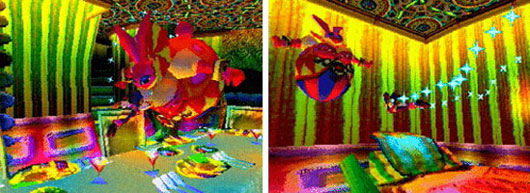
NiGHTS was the only one of Wizeman's nightmaren given free will. When NiGHTS realized that Wizeman was trying to turn all dreams into nightmares, and in the process hurting the dreamers and the dream world he rebelled. For his insubordination NiGHTS was locked away and only the dream "Ideyas" could release him. Claris and Elliot possess four Ideya's that the nightmaren steal, Purity, Wisdom, Hope and Intelligence. The nightmaren could not steal their fifth Ideya, Courage. With courage the kids free NiGHTS from his prison and begin the crusade against Wizeman.
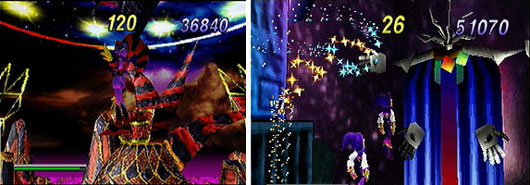
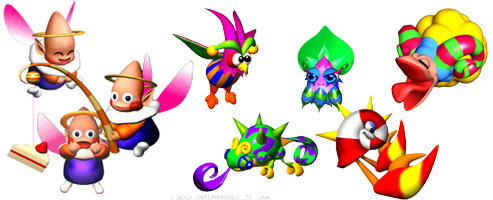
Yuji managed to pioneer several other things in NiGHTS that would end up in future Sonic Team games. The little characters that inhabit the dream world are called Nightopians, "Pians" for short. They are original AI scripts that behave in their own way and react to the world differently from game to game. If you manage to beat the Nightmaren and keep the Pians happy then they effect the world. They might sing songs, wave to you or go fishing. You can also mix Pians and Nightmaren together to sort of breed new characters, or "Meepians." In case you couldn't guess Pians were the template for the Chao in Sonic Adventure games.
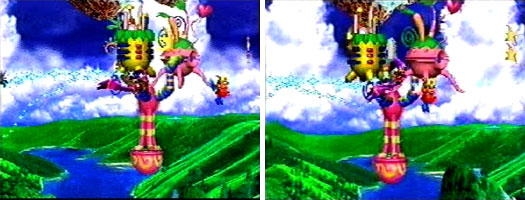
If you manage to have enough content Pians and Meepians then their king, the SuperPian would show up and build a magical floating castle in the middle of the level. This castle would actually be saved in the game, and would only disappear once the Saturn's memory battery ran out. The castle could be constructed in any part of the early stages, and was not scripted to only one location. The idea that the game could permanently add a new detail in the background was amazing. Especially if you could get it, while your friends never even saw it. 
NiGHTS actually has multiple endings, the endings vary in length depending on if you complete the game with an A-Ranking or not, as well as completing it with Claris and Elliot. I am a big fan of the total package, a game that can deliver an experience that ties up all of the loose ends and can stand alone without a sequel. The full story is revealed at the very-very end of NiGHTS, after the cinemas and even after the credits. This ending compliments and even works itself into story.

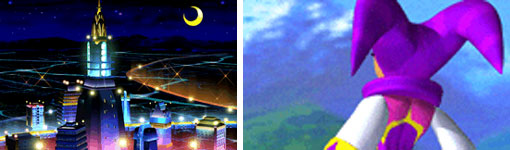
In the beginning of the game we see a long shot of Twin Seeds city at night. We fly through the empty streets and up the massive Twin Seeds Tower. Perched atop, standing with one foot on the spire is NiGHTS. Then the following cinema shows either Claris or Elliot having a bad day, that day quickly becomes a nightmare. At the start of the game Elliot and Claris do not know each other and do not realize they live in the same city and share the same dreams. At the end of the game they realize that they know each other and stand quietly knowing that their dreams were real. After the final cinema for each character, their joint cinema and credits we are taken back to that first night, the moment right when the kids wake up from their nightmare. They look out the window and wonder... The camera flies out to the same overture featured in the first shot of the game, through the streets, up the Twin Seeds Tower and see NiGHTS on top of the spire. That is when we realize that NiGHTS has always been there, watching over the kids and over Twin Seeds city... the game ends exactly where it began!
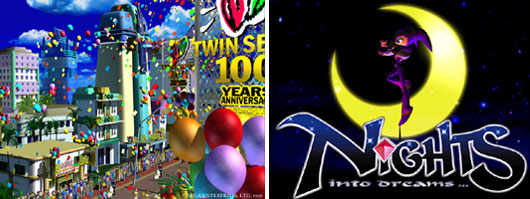
A similar effect was achieved in the beginning and ending of God of War. However Kratos' adventure doesn't exactly end where it began. There was some of the Empire Strikes Back "but the story doesn't end there" jive to it. This gives NiGHTS Into Dreams... the perfect, closed ending of all-time.

I feel I would not be giving this game justice if I did not at least mention the layers of detail and multiple meanings in the "real" world of Twin Seeds and the dream world. There is a parallel between the name of Twin Seeds and the two main characters. Although not related, Claris and Elliot share a common experience. These "twin dreamers" are the only ones in contact with NiGHTS, whom can save the city from the nightmares. The dream world they visit pulls abstract cues from the city. A car that's broken down, not far from where Elliot plays basketball with his friends, shows up in one of the dream worlds. As a secret objective players can lead this dream car "home" to its garage and earn points for doing so.
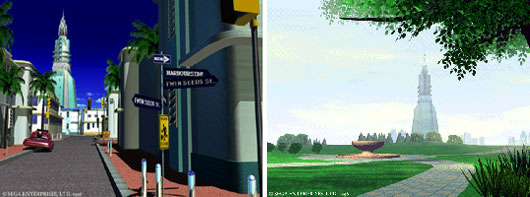
When Claris and Elliot run from their nightmares and into the dream world they are headed toward a physical location in the real world. For Claris she runs off a stage in an auditorium, into the background of hills and greenery, when the level begins she is dropped right into said world. When Elliot has a nightmare of the basketball court he plays on, he runs toward the mural painted under one of the baskets. When he enters the dream world it has the same beach featured on the mural. These cues are actually presented in the game. You have to be paying close attention to each cinema at the beginning of the game and pictures in the end credits in order to realize that these worlds are connected. Yuji treats us like mature gamers and allows us to discover the relationship between what we see and what we play.
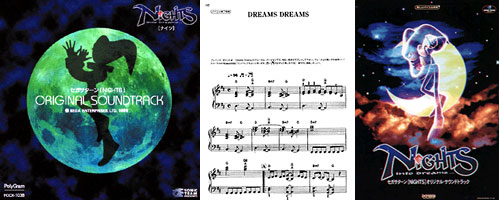
The music complimented the entire game. Arguably the greatest soundtrack ever put in a Sega game, rivaling the work in the Jet Set Radio series. Sonic Team, Talking Moon and Tomoko Sasaki create a score that uses as much tone and color as the game itself. A version of the title song "Dreams Dreams" is the theme that Claris sings in the end cinema and versions of this theme pop up in other Sega games.

I'm only getting started talking about NiGHTS. A few months after the release, Sega gave away free demo copies of the game with certain magazines. Known better as "Christmas NiGHTS into dreams..." this demo cd was more than just a quick level for fans. This game included all of the bonus material that Yuji had planned for the final release and if was only given about three more months in development it would have all been included in the master CD.

Christmas NiGHTS is calibrated with the internal clock on the Saturn. In late November/ early December the "Limited Edition" title would drop from the game and instead be replaced with a "Winter" screen. The two demo levels suddenly had snow and Claris and Elliot were bundled up for the cold weather. A couple of weeks into December the front screen would change yet again into "Chrismas NiGHTS."
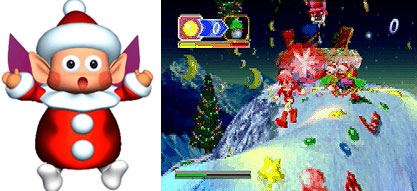
The snow remained in the levels however with more Christmas-themed decoration. Trees had candles and lights, boost machines went off like party poppers and Pians could be seen building snowmen and singing Christmas carols. Claris, Elliot, NiGHTS and the Pians also had a change in wardrobe.
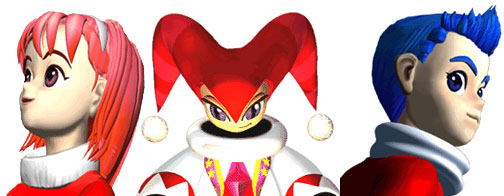
The best part of the change was the addition of a story that went along with the Christmas theme. The set-up was short and sweet. Claris and Elliot noticed that the people in Twin Seeds city were in a rush this holiday. Rather than slowing down and appreciating the season, everyone was too caught up in the hustle and bustle. Claris and Elliot figured out that the Christmas spirit was missing, symbolized by the star on top of Twin Seeds Tower. The tower was dressed up like a Christmas tree but alas, missing the star. So together with NiGHTS they decided to scour the dream world and get it back from a brightly-colored Gillwing.
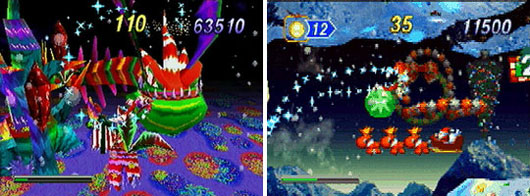
The story could be played over and over, at certain hours throughout the day the level details would change. There would be an actual daytime, dusk and night level depending on when you played. This little detail was missing in the final release. On the hour instead of snowflakes it might snow stars or moons. If you played late night December 24th or early morning December 25th you would actually see Santa Claus flying through the background. He doesn't appear at any other time in the demo.

After defeating Gillwing and bringing the symbolic star back to Twin Seeds city, the heroes manage to get everyone to slow down and smile. The game ends with a season's greeting for the players and yes, I have played this through every holiday for the past 25+ years (and I still manage to get a little weepy when I think of how awesome an experience it is).
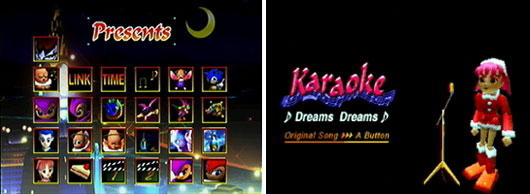
What good is a Christmas game without some additional presents? If you beat the matching game at the end of the level you unlock a present on the disk, that can be accessed at any other time of the year. These range from wallpapers, art, movies, karaoke and even some very special surprises...
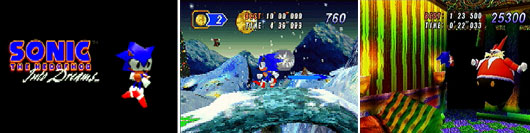
Sonic makes a cameo in the game and plays through a level as himself. His boss is Puffy, as played by Dr. Eggman. This marks Sonic's first appearance in 3D and plants the seeds for Sonic Adventure.

After Christmas the game reverts back to Winter NiGHTS. On New Years the screen changes for a day to "A Happy New Year NiGHTS." When spring starts the levels go back to normal and Claris and Elliot are in their original NiGHTS clothes. On Valentines Day heart shapes fall from the sky. If you happen to play on April 1st something odd will happen. NiGHTS will be replaced by his arch-rival Reala. If you save the game then you can access Reala in this "April Fools" mode.
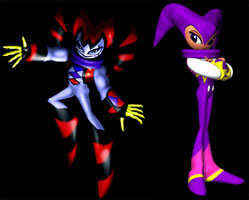
Damned if there was never a sequel.

Yuji knew he couldn't top NiGHTS. The vision remained but the more technology he had to work with, the less stellar his releases were. Still, those that "got" NiGHTS were forever changed. Even Shigeru Miyamoto once pulled Naka aside and asked when the sequel would come out. Yuji's reply was the same. How can you top NiGHTS? That is what happened to Spielberg when he finished ET, everyone kept asking him when he was going to make a sequel.

The critics and game journalists might not be able to draw the line between Mighty Bomb Jack and Just Cause, they might even think NiGHTS is overrated but what would they know? Every time I see Mario flying, especially in Super Mario Galaxy I know where Shigeru drew his inspiration from. When small games like Cloud generate buzz it is because we still long to fly, to experience that sense of freedom. Journalists argue that they need a Lester Bangs to legitimize their work, if they can't see the greatness that is NiGHTS then it is a lost cause.

Although Yuji is no longer with Sonic Team he did mention something interesting. If they ever were to bring back NiGHTS then the Wii would be the perfect system to develop it for. Like all die-hard NiGHTS fans I hold my breath, as I have for more than a decade. I hope that someday you too might experience the greatness of my favorite game of all-time.
Thank you for reading and most important, peace!

As always if you would like to sponsor me please visit my Patreon page and consider donating each month, even as little as $1 would help make better blogs and even podcasts!

follow the Street Writer on Patreon!