
Showing posts sorted by date for query mas oyama. Sort by relevance Show all posts

Sunday, December 29, 2024

The Return of Virtua Fighter, final part

In the previous blog I talked about how important Virtua Fighter, and the 3D revolution was for the gaming industry. I highlighted the precursors from the ‘80s including Karate Champ, and Yie Ar Kung-Fu that set the stage for the modern fighting game. I also talked about the mortality of the pioneers, and how it was important to pass the torch to new directors, and producers. This would help ensure their survival in the long-run. I was extremely happy with the announcement at the 2024 Game Awards about seeing a new Virtua Fighter. There were however a few problems for Sega. First off if you weren’t a 50-year-old Generation-Xer like me then it wasn’t really a major announcement. Millennials, and Gen-Zers didn’t grow up in the arcades, nor did their kids. To them fighters were always on home consoles, and in 3D. They had always had online matchmaking, frame data, and rollback code. Players today had countless choices on every platform imaginable. How could you make a fighting game rooted in realistic arts more interesting than Street Fighter, Guilty Gear, Tekken, or Mortal Kombat? The answer might lay in making a new Virtua Fighter a modern fast-tempo modern experience. I would argue the opposite.

It was crucial, and necessary that the developers at Ryu Ga Gotoku Studio would slow down the game. I don't mean the fighting itself, but everything surrounding the build up to the fight. Adventure titles had slowed down the action, but not the difficulty or challenge in the past 20 years. The biggest studios were creating living, breathing worlds that you could spend 40+ hours exploring. The evolution of the From Software “Souls” games, Sony’s God of War titles, or Rockstar’s GTA, and Red Dead Redemption had all changed the pacing of AAA titles. The latest Street Fighter, and Mortal Kombat games also slowed down the experience so you could savor the worlds they were set in. I had no doubt that Virtua Fighter would also get the same treatment. Yet unlike the aforementioned games it was actually part of Yu Suzuki’s long term vision. I didn’t understand it when I was younger, and could only now appreciate what he had been trying to do for the past 30 years.

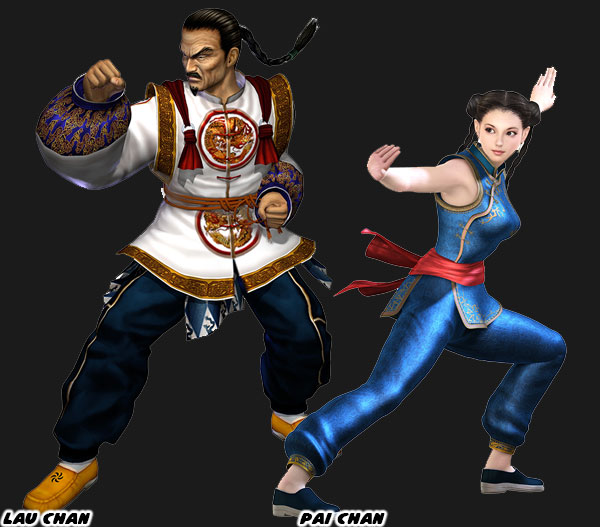
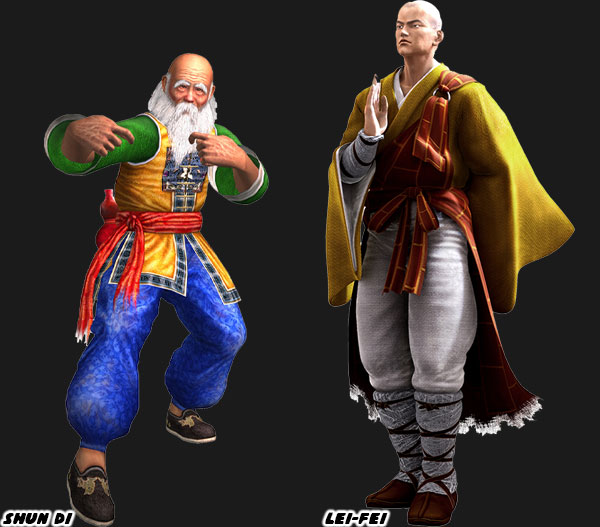
Yu Suzuki had poured tremendous insight into every game he created for Sega. The thing about his fighters was how much he appreciated, and almost mythologized the Chinese martial arts. It was evident in the styles he assigned Akira, Lau, and Pai in the original VF. It was why even though Akira was younger, and stronger than most of the characters, at the end of the first tournament it was Lau Chan that was victorious. Akira still had a ways to go before he could topple the older master. Upon hearing the news that Lau Chan had bested the new crop of fighters the even older Shun Di decided to throw his hat into the ring. Seeing the bearded master do his thing in the opening animation of VF2 surprised the arcade visitors. Only in Mr. Suzuki's world did it make sense that two elderly Chinese fighters could beat people half their age. As the sequels came out he would incorporate other arts from around the world. Such as sumo, judo, and aikido from Japan. Lucha libre from Mexico, Muay Thai from Thailand, and Vale-Tudo from Brazil. He would always return to China for the most colorful techniques, including Praying Mantis, Drunken Fist, Shaolin, and Monkey Kung-Fu. 

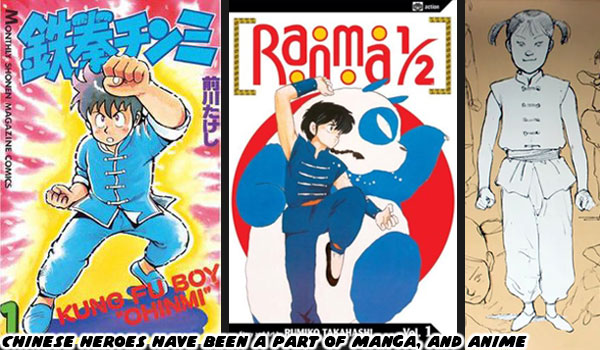
There was no escaping the impact of the Chinese martial arts with the birth of fighting games. Everything from legendary kung-fu masters, to the more popular Hong Kong cinema influenced a great number of fighting game designers that came from Capcom, as well as SNK, but also the team at Midway that created Mortal Kombat in the USA. It was almost impossible to create any sort of martial arts title without featuring a number of classic Chinese elements. The fighting styles, fashion, and history had been sprinkled throughout Japanese history. Even in pop culture, kung-fu heroes had always been a part of manga, and anime. The early ‘80s featured a lot of the fashion, and arts from China including the Himalayas. Iron Fist Chimi debuted in 1983, Genma Wars Harmagedon was an animated movie from 1983. Which was created from an older manga which began in 1967. One of the characters in Harmagedon named Tao inspired the creation of Chun-Li. 3x3 Eyes, and Ranma 1/2 first appeared in 1987, these manga also had heavy Chinese themes. This was around the time that Mr. Suzuki was crafting the greatest hits for Sega. Chinese backdrops had always been a part of Japanese pop culture.

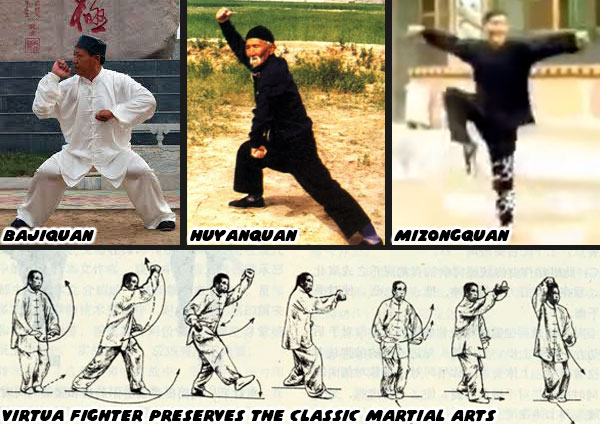
Virtua Fighter looked, and played different from every other title out there, not just because it was in 3D. It was because Mr. Suzuki had a genuine belief in the mythology of the Chinese arts. It was evident in his series. He was doing everything he could to not only promote the classic arts, but to keep them from fading out of existence. Any other fighting game developer would stick to the generic karate, boxing, kung-fu archetypes for their title. Yet Mr. Suzuki made sure to show the world that kung-fu wasn’t one catch-all style from China. There were distinct forms, and some of the most beautiful like bajiquan, huyanquan, and mizongquan all deserved to be featured. In doing so he was exposing new generations to these beautiful forms of combat. Whether they were functional in an actual fight was a conversation for a different blog. Mr. Suzuki was helping preserve their reputation.

Mythology was very important in spreading the reputation of great martial artists. People didn’t have film, or pictures of the masters from the early 1900’s. Even the records of the champions that came up in the 1940’s, and 1950’s seemed too good to be true. Would you believe the stories of martial artists that killed a bear, a bull, or a tiger with their bare hands? It was word of mouth, not pictures or video that turned regular people into immortal legends. There was a tremendous amount of mythology used in the creation of many fighting games, especially in the weapons-based titles like Samurai Shodown, and Soul Calibur. Virtua Fighter was more than a game. It was a way of holding onto the truth behind the myths. Mr. Suzuki asked what if the last of the Chinese masters was still alive? How would they actually hold up against a modern style of fighting? The seed was planted with the apocryphal story of a young Mas Oyama (the real-life inspiration behind Ryu). When he was traveling the world he was humbled by a master named "Mr. Chen" it was then that he decided to give everything up in order to becoming the best fighter. Mr. Suzuki believed so much in the mythology of the lost arts that he wanted to explore it in an entirely new type of game.

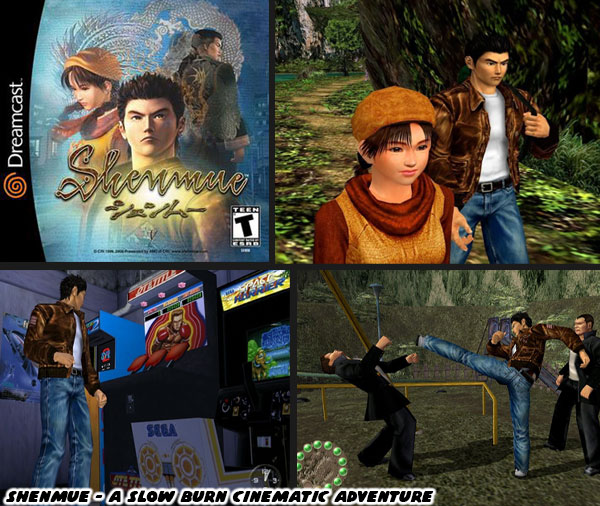
Shenmue was a precursor to the modern adventure game. Released in 1999 it set a template that would influence AAA releases over the next 20+ years, including the Last of Us, and Drake’s Fortune. The game revolved around a hero named Ryo Hazuki trying to avenge the death of his father Iwao Hazuki at the hands of the Chinese martial arts master Lan Di. It was unlike other games of the era, not quite role-playing, not quite fighting game, not quite sim, but instead something in between all three. Yu Suzuki wanted to tell a cinematic adventure across multiple sequels. His project was ambitious to say the least. It took years, and millions of dollars to produce. Mr. Suzuki had underestimated what it would take to bring his vision to life. The finished game was good, but seemed lacking. Fans could tell that he wanted to have an immersive experience that you could lose yourself in. Unfortunately is was lacking in some regards. Since no one had ever attempted anything remotely close to it Sega didn’t realize that it would take double the team size, and at least double the budget to make it fulfill Yu Suzuki’s vision. Little did we know that he had predicted the most popular types of AAA adventures by decades.

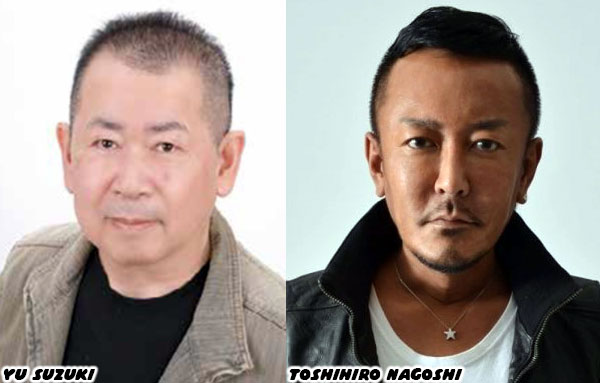
Shenmue was a commercial flop, but a hit with audiences, and critics. Sega had already invested a considerable amount in a sequel so they had to see it through to completion, the third part in the story was dead in the water. It would take a crowdfunding effort from 2020 to get the trilogy finished. The big publishers learned that titles this ambitious were a risky gamble. We wouldn’t see anything remotely close to it for many years. In the decades following Sega downsized, and a number of their internal teams were consolidated, or closed down. A lot of talent was lost in the 2000’s. There was one person however that had worked under Mr. Suzuki and learned the art of game design. His name was Toshihiro Nagoshi. He started with Sega in the late-80s and learned from Mr. Suzuki, and also the best people at the company.

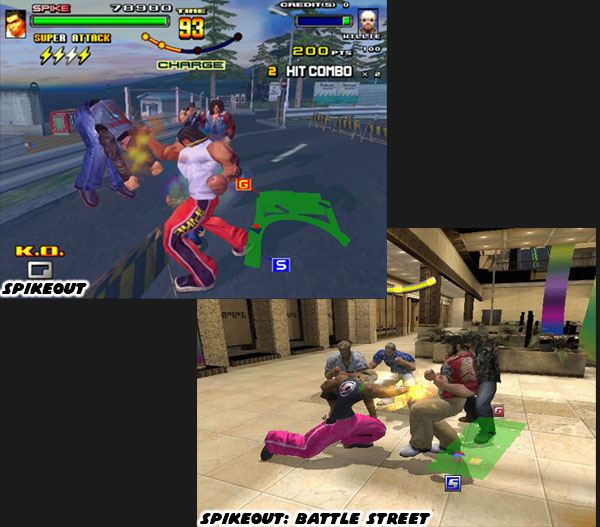
Mr. Nagoshi had an ambitious idea for a brawling game. He thought the classic 2D format used in Double Dragon, Final Fight, and countless Konami hits were too limiting. He wanted to take everything he learned from the Virtua Fighter team, and set it in an open 3D world. The 1998 title SpikeOut was an important game in the evolution to the brawler genre, it was also rarely seen in arcades. Sometimes I think that my brothers, and I were the only ones that ever played it in Southern California. It was fast paced, violent, and extremely difficult. It featured networked cabinets making it easier for multiplayer action without having to share one screen. It was not without its flaws as the difficulty, and camera angles seemed to work against the action.

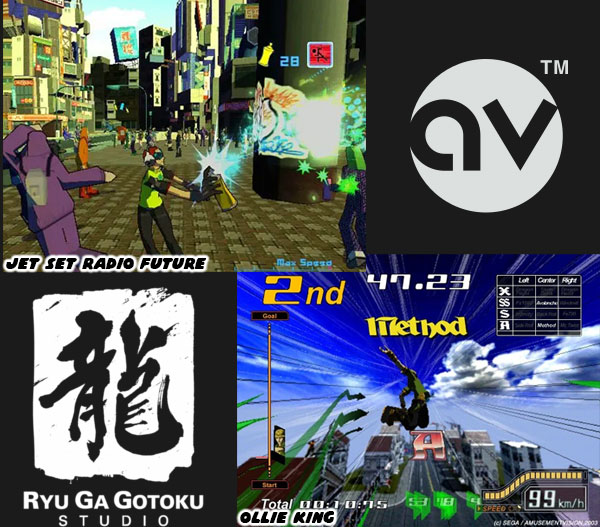
Mr. Nagoshi learned an important lesson about combat balance from SpikeOut. He also picked up other things while working at Amusement Vision, alongside the Jet Set Radio designers at Smilebit. It was possible to create a fun, accessible, original game that featured stylized graphics. More important it could respect street culture, while simultaneously exposing it to audiences. I considered the 2002 title Jet Set Radio Future the greatest Hip Hop game ever made. When Sega wanted a skateboarding arcade game with the JSRF feel in 2004, that was also a spiritual successor to the 1997 classic Top Skater Ollie King was created. When Sega wanted an Xbox exclusive they revisited the world of SpikeOut, and dropped the much improved SpikeOut Battle Street in 2005. To be fair DIMPS did most of the programming for it. The team at Ryu Ga Gotoku Studio was galvanized by everything they experienced at AM2, and Amusement Vision. That was why they were able to slide into the development of Virtua Fighter V Ultimate Showdown so easily. 

When he began his career at Sega Toshihiro Nagoshi ran headlong into his work like Akira Yuki. The older he got the more he understood the deliberate pace of Lau Chan, or should I say Yu Suzuki. Mr. Nagoshi took the entirety of what he learned since joining Sega, and put it into the Yakuza series. He featured the detailed world building of Shenmue, added the street vibes of Ollie King, included the arcade classics from his mentor, built easy to learn mini games, and improved the 3D combat of SpikeOut. With nine main Yakuza games in the series (23 including spin-offs) his team was the best equipped to bring back Virtua Fighter. This was a world where the last descendants of ancient kung-fu masters were ready to pass on their forbidden techniques, or die protecting them. After 30 years of following in the footsteps of his master it was time for Akira Yuki, I mean Toshihiro Nagoshi to take over. I was eager to immerse myself in his world. What about you? Did you think this was the right time, and the right team for a Virtua Fighter reboot? I’d like to hear about it in the comments section. As always if you enjoyed this blog, and would like to sponsor me please visit my Patreon page and consider donating each month, even as little as $1 would help make better blogs and even podcasts!
follow the Street Writer on Patreon!

Monday, August 19, 2024

Ryu Final, the real Street Fighter III and IV - A 1UP classic from January 30, 2008

Welcome back friends. We're here to talk about Ryu Final, the last book Masahiko Nakahira created for Street Fighter. The book was set in the SF III continuity, to be precise it is set during 2nd Impact: Giant Attack. Nakahira never did a SF II book for Capcom, those were covered by Masaomi Kanzaki and Mami Itoh. So how does Nakahira's story go? How does it progress? If you read it once then go back through you'll notice that everything that went into this story was done so deliberately. Every character, location, fight and moral was done with forethought. Nakahira is a genius when it comes to plotting the events of his book. He doesn't just plot out a linear story but carefully intersects flashbacks which keeping you turning the pages. The weakest part of his story is better than anything I've seen with Udon. Overall it is perfect storytelling and great art combined. Let's touch on the events of the first collected book.

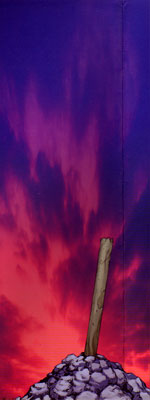
This comic begins with a rock pile and a stick. It is a grave marker, but for whom?

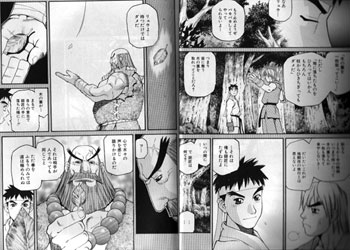
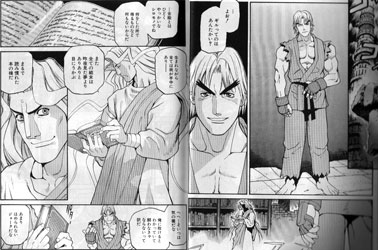
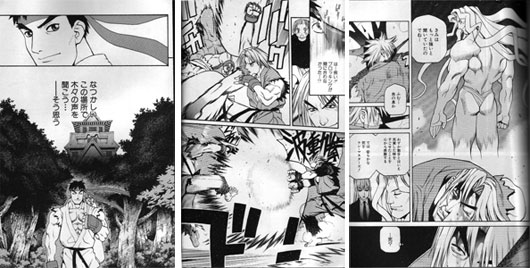
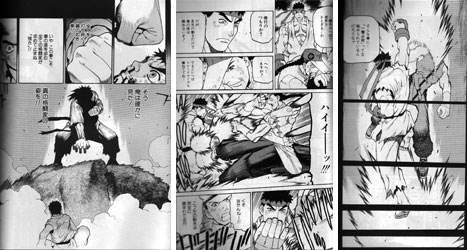
Ken and Ryu are much older, stronger and wiser than when we last saw them. They are possibly at the peak of their abilities. Ryu begins the tale, he is training in the shadow of his old dojo. He remembers the lessons learned from his master Gouken. Nakahira presents Ken and Ryu younger than they appeared in the Zero books, as young as they appear in some Udon flashbacks. The sage advice is not lost on Ryu as he remembers, in Jedi style, that he and Ken are part of the living, breathing world, not apart from it. It is up to Ken and Ryu to catch a falling leaf, the task sounds simple but has profound meanings. In almost all the Nakahira books you see a big oak tree and leaves come up time and again. The leaves and lessons of Gouken also return in the ending credits of SF III: 3rd Strike. The cycle of growth and change, the eternal strength with roots deepening as they grow. The hard training of Ryu and the trees that shake with his blows are inspired by actual accounts of Mas Oyama's tremendous power.

Ryu is fully confident in his abilities and decides it is time for him to return to the circuit and prove himself. His first stop is San Francisco where the understudy of Ken, Sean, taxis Ryu to a yacht. Young Mel, the son of Ken and Eliza is crying because he's afraid that Ryu is going to beat his father. After a few formalities the classic rivalry gets underway. The outcome isn't even close. Ryu is soundly beaten by Ken and can't even manage to get a hit in. Somehow his best friend and rival has surpassed him. Ken has worked harder than Ryu and has become a true martial artist. The reason is told in flashback.

Ken had challenged the man-god Gill and was beaten within an inch of his life. He came to the realization of his purpose as he was lying in a pool of his own blood. He could not allow this defeat to happen, he would never allow himself to be defeated in combat by anyone. His life was not forfeit as he remembered his wife and son. They were his foundation and Gill be damned for trying to sever those ties. The fight became a stepping stone for Ken. From that point on Ken realized he was not only fighting for himself, but for his family and with that conviction he would never fail them. With his remaining strength he leveled Gill with a dragon punch and did the same to Ryu. A clear-cut victory.

The scenes and plot with Gill were covered in the shortest span of time. Nakahira knew the important part of the story was not in trying to explain the plot of SF III but instead allowing the reader to discover how much the cast had grown. Ryu walked away from the encounter a little humbled but grateful. He knew now that he had room to grow. So he said farewell to his friends and set out again. While sleeping in a park he was awoken by Oro, who was trying to walk away with his duffel bag. Ryu tries to teach the old man a lesson but is instead beaten by the aged master. To make things fair Oro even puts one hand behind his back and still manages to beat up Ryu. FYI: remember that Capcom has been trying to use a one-armed boxer in their series because their template for SF II, the Master of the Flying Guillotine sparked the idea. Ryu becomes progressively angry with his aged opponent and finally decides he's had enough. Ryu tries to counter with a fireball but he is instead knocked silly when Oro unleashes a massive Yagyou Dama, or two handed fireball the size of a Volkswagen Beetle. It turns out that Oro was testing him. Hoping to find a student worthy to train. Ryu is the one and from then on he is under the hard tutelage of the 140-year-old master. He begins by making Ryu carry a massive boulder on his back with Oro riding atop.

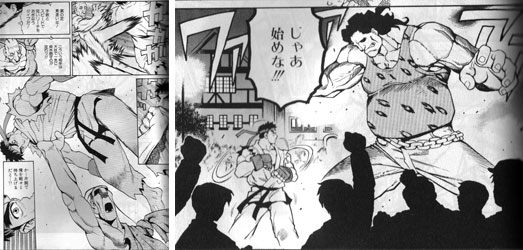
At this point of the story Ryu has pretty much hit rock bottom. This is important because he must be rebuilt as a person and as a fighter. The battles he has had in the past, against opponents like Sagat and Vega should have made more of him. Instead he is still locked in the rigid system taught to him by his master and unwilling to progress. It is up to Oro to show Ryu his true potential or kill him in the process. Somewhere in Germany Ryu's first battle turns out to be against the giant Hugo. The battle is brutal on Ryu as Hugo dominates him for most of the match. Pounding him into the ground and throwing him like a ragdoll, Hugo is a force of nature against Ryu. Nakahira uses exaggerated perspective to make Hugo appear 20 feet tall rather than the 7'8" he is. This is in the same dramatic technique that Tetsuo Hara would do to make gigantic opponents for his Kenshiro to battle. After losing for most of the match Ryu is able to defeat Hugo with a well placed dragon punch to his stomach.

It is not easy for Ryu to win battles. Unlike the Udon books where fan-favorites can knock out opponents in one hit, nothing comes easy in the Nakahira books. This importance of this fight is to show him, and the reader, that there will always be bigger and stronger opponents waiting for the challenge. Ryu will always bring out the best in his opponents and he can't always out-muscle them. The moral of the Hugo battle is that strength is tempered by technique. Ryu continues his training with Oro from there, having earned the respect of Hugo and Poison. He travels south and eventually encounters Yun and Yang. The brothers are brash and inexperienced fighters. The determination of the young kung-fu masters is a parallel between Ryu and Ken's legacy. Even though Yun and Yang are beaten by Ryu they will not quit. Ryu is reminded of how stubborn he was in his youth as well. Yun and Yang establish the core of the Ryu story.

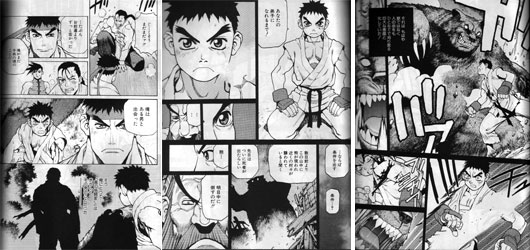
In flashback we see a young Ryu, much younger than he's ever been presented. His build is skinny, his hair unkempt, but he has a determination that impresses Gouken. He wants to prove that he is worthy to learn under the master so he says he will strike out to chase away a bear terrorizing the local villages. Gouken discovers his bloody duffel bag a few days later. Gouken fears that the bear has killed Ryu. This adventure, like much in the life of Ryu is inspired by the fictional retelling of the life of Mas Oyama, better known as the Karate Baka Ichidai anime. In particular the battle here is between Ryu and a dangerous bear, the same thing that happened to Yoshiji Soeno in the cartoon. We catch up to Ryu in the woods and see that a bear is indeed slashing at him ferociously.

The bear pounces on Ryu and is about to finish him when he is struck from behind. The force of the punch travels through the head of the bear and stops inches from the face of Ryu. It is a wild-haired Gouki that has saved Ryu and killed the bear. Gouken arrives to take Ryu away. Gouki cares not for man or beast, saving Ryu was an afterthought. It was that day where Ryu saw the face of evil. He saw that the techniques he wanted to learn was lethal in the wrong hands. These were techniques that could easily be used to kill if left unchecked. In present time Ryu thanks Yun and Yang for the fight and hopes to see them again someday. Like they Ryu has room to grow and many more battles to come.

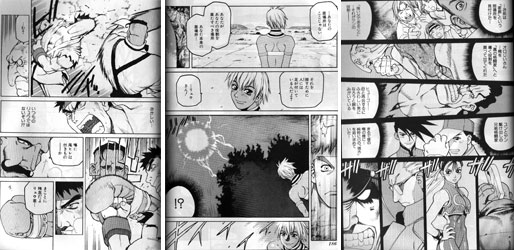
The next battle Ryu faces is nowhere near as easy as the battle with Yun and Yang. Dudley the boxer, the undisputed heavyweight world champion, wishes to challenge Ryu. You would think that with Oro as his new master he would have become a better fighter by now. Dudley beats the tar out of Ryu and has a counter for every move. Ryu is simply not fast enough to catch the champ with his guard down. Even his dragon punch is caught and countered. Round 1 goes to Dudley but Ryu will not stay down.

This is the abstract part of the book, the weakest reason for a character to be introduced. Elena is brought in an aside and doesn't fight in any way. She is in Africa, a continent away from where Ryu is. Yet she, like every other fighter in the world is connected. It all goes back to the lessons that Gouken planted into the young Ken and Ryu. They are part of this living world, their roots have grown deep and they have more potential than they realize. It is up to them to wake up to that and release their true potential. With that Ryu comes to his senses and catches his second wind. The leaves in the mighty oak tree in the background shake. Ryu plants his feet and prepares a new fighting stance. Oro and Dudley are intrigued at this newfound intensity in Ryu.

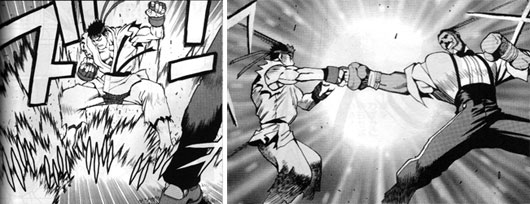
Oro wonders how Ryu will face his opponent now. Dudley is the culmination of the boxing arts, possibly the oldest fighting arts in the world, dating back thousands of years. Boxing is a refined sport, called the sweetest science by practitioners. Embracing the culmination of the art Dudley represents a fighter in the purest sense of the word. He is taller than Ryu and has a longer reach than Ryu, there is no way he can get caught by Ryu's blows. A pure fighter cannot be defeated by traditional strategies and technique. Ryu has learned that he is not fast enough for a special move, he has also learned that he can't always out-muscle his opponents. In order to evolve he must be willing to change his strategy. He decides to use the force of a killing strike but use it in a new way. In one strike they go at each other with everything they have.

Dudley was aiming for the head of Ryu and failed to notice that Ryu's punch was headed for his hand. Ryu has learned to harness the power of a killing strike but not in the way that was used against Sagat. The force of the blow destroys Dudley's boxing glove and breaks the bones in his arm. The force of the blow also travels through Ryu's arm and tears part of his gi off. Ryu remained grounded and the remaining energy returned to the Earth. Dudley concedes defeat. Ryu has learned the fist of the wind, a technique unique to him. He is now ready for an even greater challenge.

End of book 1.

As always if you would like to sponsor me please visit my Patreon page and consider donating each month, even as little as $1 would help make better blogs and even podcasts!
follow the Street Writer on Patreon!

Wednesday, October 25, 2023

Muscle Bomber - the Capcom wrestling series, part 1

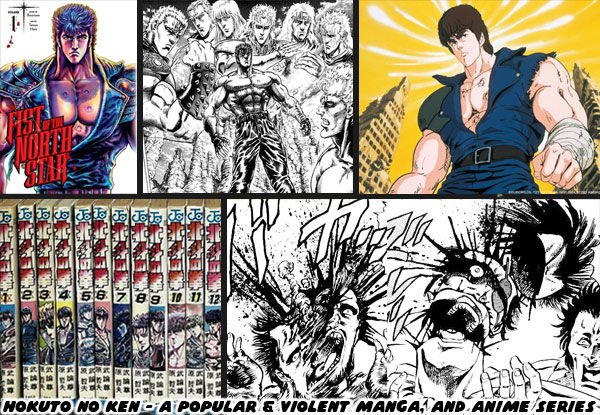
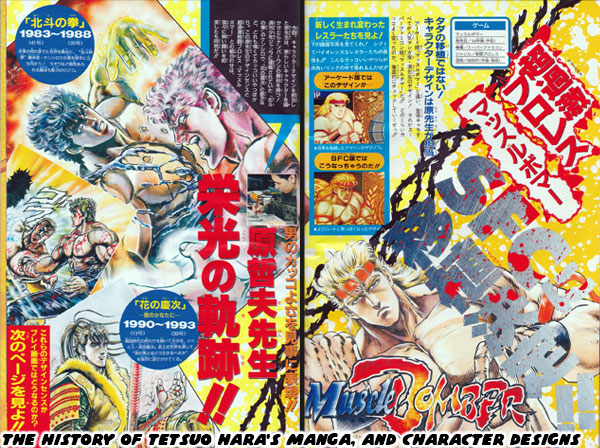
The developers at Capcom that brought us the early hits were heavily influenced by pop culture. The movies, manga, and anime that they grew up with helped shape the creation of their games. One of the most influential manga, and anime shows that influenced the creation of Street Fighter (as well as World Heroes, and many other titles) was Hokuto no Ken (HNK), better known in the USA as Fist of the North Star. The manga issues were published by Shonen Jump from 1983-1988, it would be collected, and translated into multiple languages over the next 30+ years. It was so successful that it got a 109 episode TV series from 1984-1987, and an additional 43 episodes from 1987-1988. Not to mention an anime movie in 1986. It should not be understated how important that series was in shaping the tastes, and presentation of games coming out of Capcom.

For those unfamiliar with HNK, it was a post-apocalyptic story that revolved around Kenshiro, the master of Hokuto Shinken. It was a fictional martial art that allowed practitioners to control the pressure points, or meridians of a person. Kenshiro wandered the wastes, righting wrongs with his bare hands. He could cause body parts to explode with a few touches. His victims, often marauding gang member had grisly deaths. Their arms, and legs would break backwards, heads would split open, with bones, and brain shooting in every possible direction. The violence in the series was very graphic, even with a lot of censorship, and selective edits the anime shows were almost as gory as the manga. The series was more than just violence, a very colorful cast of heroes, and villains were as memorable as the biggest comic book stars. Most of the characters influenced the designs coming from Japan, and the West for decades.

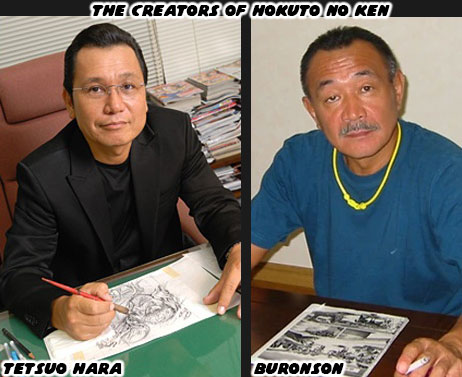
The series was illustrated by Tetsuo Hara, and written by Buronson. The duo didn’t just create a fantastic manga, they shaped pop culture for years to come. Hokuto no Ken ranked among the most successful properties ever created. As far as brands went it had generated some $22 billion in revenue. This was of course split across licensors, and not the creators themselves. The comics inspired many games over the years. I had discussed Hokuto no Ken in the history of the brawler. There were even a few fighting games in the arcade, and home consoles based on HNK. The most successful franchises however were influenced by the series, rather than based on it. Nowhere else was this more apparent than with Capcom, and the development of Street Fighter.

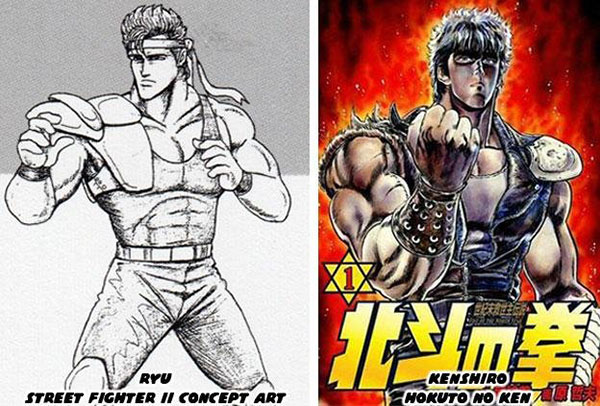
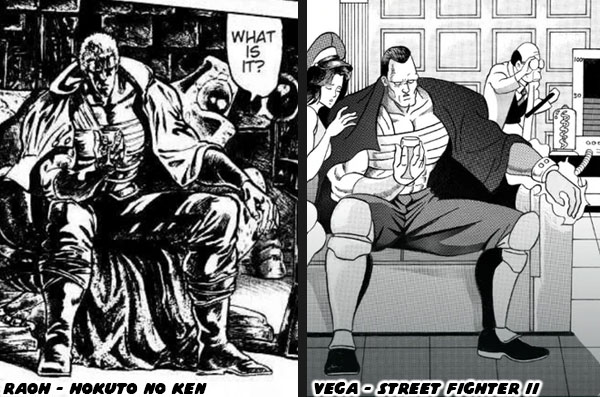
The first Street Fighter was inspired by the real world adventures of master karate fighters Mas Oyama, and Yoshiji Soeno. The karate hero had a redesign for SFII, and had become more of an action star. Early concept art had Ryu ditch the karate gi for a costume more like Kenshiro’s. The similarities didn’t end there. The giant characters in Hokuto no Ken influenced the creation of giants in the Street Fighter series. Even the villains like Rolento was inspired by Colonel from HNK. Meaning the series had influenced the world of Street Fighter, and Final Fight through the ‘80s, and early ‘90s. Some of the influences were subtle, and others were very overt. Look at the official art for Vega / Dictator, he was posed just like Raoh, the ultimate rival to Kenshiro.

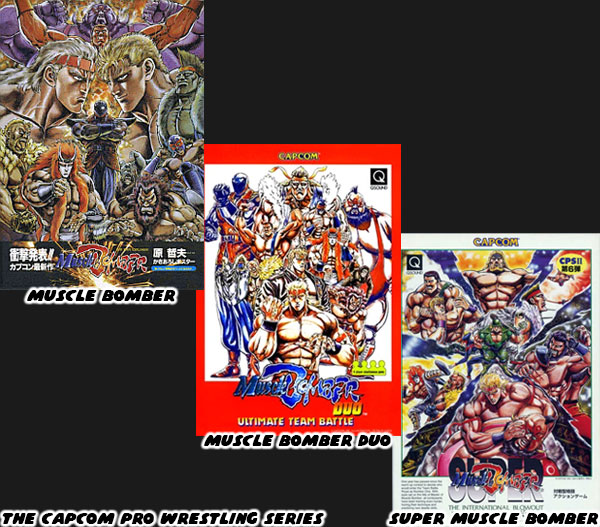
In 1991 Street Fighter II put the fighting genre on the map. Capcom couldn’t release updates to the game, and begin developing home ports fast enough. At the same time they wanted to strike while the market was hot. The publisher wanted expand their library of fighters, but without cutting into the success of SF. They were successful, and experienced with brawler games, but needed something that played more than a fighter. They were indebted to Tetsuo Hara for his influence on their biggest hits. They decided to work with him on a new project. The publisher looked at what might work in that format, but wouldn’t take people away from their hit. The wrestling game was an obvious solution, and Capcom owed Tetsuo Hara some work. They asked him to design the cast of characters. These fighters would be set in the shared universe of Street Fighter, and Final Fight. The game would be called Muscle Bomber (MB). It would spark the creation of a trilogy.

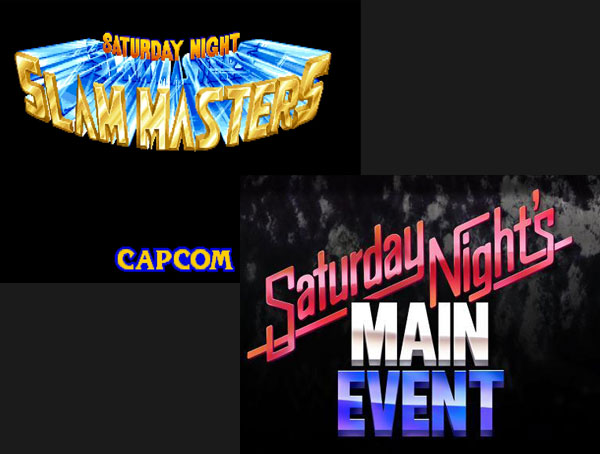
Muscle Bomber - The Body Explosion came out in 1993, Muscle Bomber Duo came out later that same year, and Super Muscle Bomber - The International Blowout debuted in 1994. Muscle Bomber Duo was an expansion to the original game, sort of like Turbo was for Street Fighter. Duo added tag team matches to the story of the original. The first two MB games in the series were not well known to many arcade visitors. The mix of wrestling, brawler, and fighting game moves didn’t capture the magic of Street Fighter. The third game in the series Super Muscle Bomber played more like a traditional fighting game. It was a rarely seen cabinet, and not really known to the majority of first generation SF fans. When the games were being brought over to the US the studio renamed it Saturday Night Slam Masters. This was most likely due to the popular late night WWF (WWE) show Saturday Night’s Main Event.

Capcom made sure to get the collaboration in front of as many gaming outlets as they good. All of the magazines, and even weekly manga anthologies made sure to write about the father of Hokuto no Ken creating a library of wrestlers for the Street Fighter universe. The stakes for this new franchise were pretty high after all. During development of SFII Capcom had more people working on designs than at any other point in time. Each employee poured their heart, and soul into a the fighters. Countless revisions were made in order to ensure that The World Warriors were as strong as they could be. They built a following in the few years they were around. The challenge was whether or not Mr. Hara’s style worked for the genre, and if he could make anybody as memorable. Audiences were worried that his style of art, his character work had become dated. After HNK the artist worked on a feudal-era piece called Hana no Keiji / The Flowery Keiji, between 1990 - 1993. It didn’t have the same impact as his previous series.

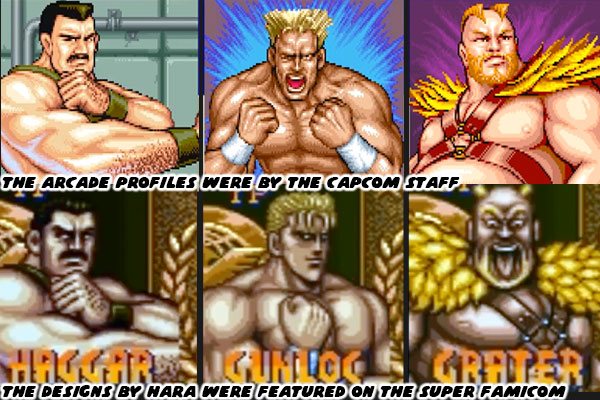
It turned out that Mr. Hara was more than up for the challenge. He let the various outlets know that he was a huge fan of pro wrestling. He wasn’t just familiar with the happenings in Japan, but also with international wrestlers as well. It was apparent that many of the villains in HNK were based on actual wrestlers. For example King Heart was inspired in part on Abdullah the Butcher. This deep understanding translated to the game. Sheep the Royal was based on Big Van Vader, and Victor Ortega was inspired by ‘70s wrestling icons like Superstar Billy Graham, Jessie “the Body” Ventura, and Hulk Hogan. Fans of Mr. Hara’s work noticed that although his concept art was used in magazine articles, and the game cover, it was not seen in the actual game itself. All of his work was redone by the staff at Capcom, I think it was Kinu Nishimura in a number of portraits. I’m sure these changes disappointed Mr. Hara. I’d like to think there was a backlash for this change from fans, as well as some of the developers when the game was published. When the game was adapted for the Super Famicom / Super Nintendo, they made sure to go back to all of the original art.

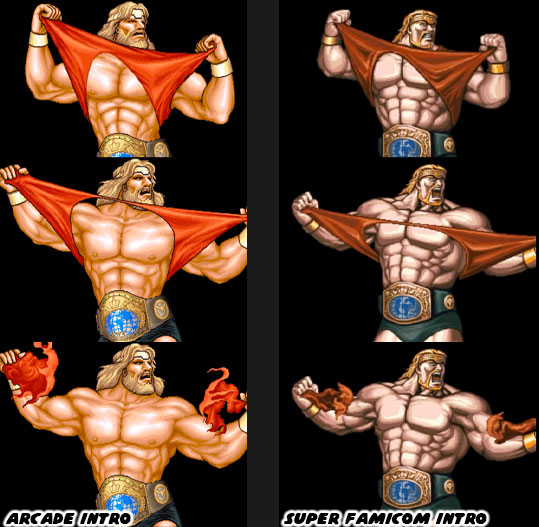
This was not to knock the Capcom art team. After all they had Akiman, SHOEI, Sensei, Bengus, and other icons. However the wrestlers that they presented were watered-down versions of what had been promised in previews. Mr. Hara stood out from his manga, and even US contemporaries, by creating hyper masculine figures. He predated, and influenced Karate Apocalypse, Berserk, JoJo’s Bizarre Adventure, Grappler Baki, and Toriko to name a few. His heroes, and villains were not only strong, they had bodybuilder physiques. They were far more swollen than any other heroes on the market. It was no where more apparent than with the introduction of Victor Ortega, the first Capcom Wrestling Association (CWA) champion. He was featured in the intro animation.

In the arcade he was strong, but not absurdly huge. The original arcade intro version of Victor seemed anemic compared to what Mr. Hara had designed. The studio not only returned the original character profiles from Mr. Hara in the Super Famicom version. They also redid the intro animation to match Mr. Hara’s vision. The story, and characters of Muscle Bomber were fleshed out by Mr. Hara, and Capcom in far greater detail than either Final Fight or Street Fighter. Audiences wouldn’t know the full story until the game hit home consoles. We will dig into this in the next blog. Did you ever play this game? Were you a fan of the series, or pro wrestling? I’d like to hear about it in the comments section. As always if you would like to sponsor me please visit my Patreon page and consider donating each month, even as little as $1 would help make better blogs and even podcasts!
follow the Street Writer on Patreon!

Saturday, September 2, 2023

The Martial Myths; the lessons from manhua applied to Street Fighter. A 1UP classic from Apr 09, 2012

In the wuxia tradition there was always a price to be paid for using killing techniques in a battle. A person that attempted to use a powerful strike for evil purposes would receive a consequence. The most powerful techniques required a pure mind and heart, if a person struck with malicious intentions then it was unnatural, it caused damage to the internal organs and chi meridians. Chi was generated after all from nature and the elements, anything that manipulated chi outside of natural purposes had consequences. Those that continued down the dark paths of chi manipulation often did so at the cost of their soul.
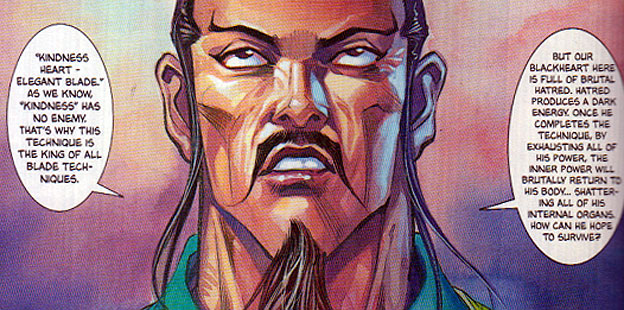
In the fighting stories there were always practitioners of the dark fighting arts. These were fighting styles meant to poison, cripple and kill opponents. In the case of Gouki he was studying a pure version of the assassin's fist and was using the strikes exactly as they were meant to be used. This took him off the path of a martial artist and turned him into a murderer. In many stories these techniques were cursed. Only the most villainous clans would have ever taught these techniques. To use them meant to turn away not only from society but from humanity as well.

The early practitioners of the dark arts in wuxia legends were said to have been masters of the poison styles of kung fu. The early fighting forms of Shaolin focused on “animal styles.” These were punches and strikes that tried to mimic the most dangerous predators in the animal kingdom. The tiger and eagle were just some of the styles that the monks helped to develop and preserve through the centuries. It made sense that man would try to study and emulate the creatures that depended on fighting for survival. It was not enough for the villains in stories however. They studied the poisonous animals including the scorpion, centipede and toad to develop their own killing techniques.
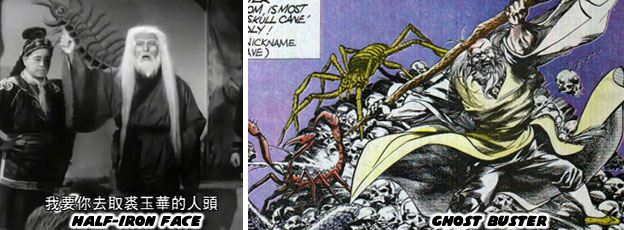
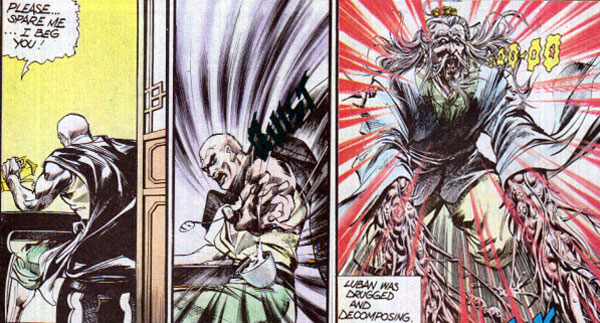
These evil masters were often major players in film and manhua. The evil master in the classic film the Furious Buddha's Palm was named Half-Iron Face. The icon on his banner was the centipede and he used its poison to kill opponents. When he wanted to torture them instead, like the heroine in the movie, he would implant a centipede into them and made it bite their heart whenever he played a drum. Talk about being an evil bastard! Of course it was completely over-the-top but entertained audiences that loved mixing superstition in with their action. This archetype was explored in various manhua like the poison master by the name of Ghost Buster in the Iron Marshal comic. He had developed ways of distributing poison through the air, weapons or in touches. In one instance he had poison dust hidden in the feathers of a bird, as it flew it poisoned the air around it. It was intercepted by the Iron Marshal before it had reached the emperor.
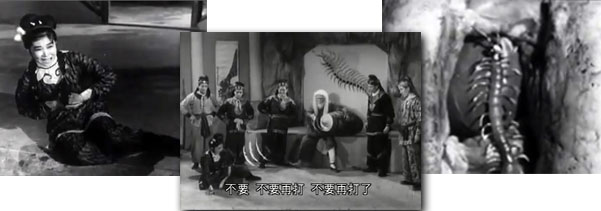
Poisons and poison techniques could be used to torture and brainwash opponents. The toxins that did not kill character would sometimes disfigure them in the wuxia legends. Many of these techniques had an antidote known only to the masters. A hero would have to defeat these people in order to learn the secret. In other instances if a hero were powerful enough he could use his chi to burn away the poison. The Iron Marshal for example used his chi to evaporate the poison dust carried by the bird without harming the bird itself. He then let the bird fly back as a warning to its master.
Chi could be used to control the natural elements, including air, water, fire and lightning. The most powerful characters tapped into this to deliver their fa jin attacks. The evil characters could send out poison attacks these ways. A hero could counter that attack and send it back provided they were strong enough.
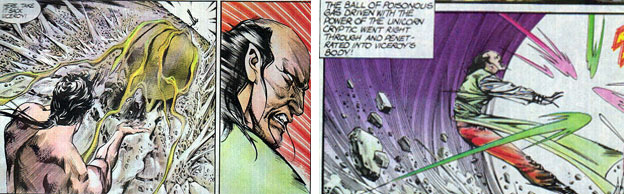
The Iron Marshal had a showdown with one particular villain that had tried to poison an entire court. Iron used his chi to gather the poison out of the air and delivered it back to the villain. This was an example of an evil or poisoned fireball attack. The villain had once started out as a good character, a court advisor that had turned against his emperor and subjects. A lust for power had turned a few characters in the series into villains. When they did that, when they were willing to kill countless innocent lives, they started becoming ugly or disfigured. The poison arts and evil fighting techniques corrupted even formerly noble men.

The Iron Marshal had a second major story arc that turned the mentor of both Iron and Duke into a villain. Tienway Champ had been secretly studying stolen martial arts and the dark arts as well. These philosophies and practices actually allowed him to return from the grave after he was assassinated by the Bloody Duke.
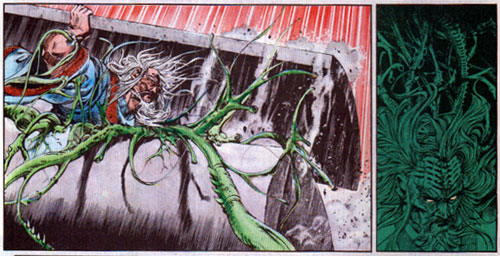
Tienway did not return from the dead to get revenge on the Bloody Duke, instead he returned so that he could get his hands on the Unicorn Sword and unlock the mysteries of the Unicorn Cryptic. These were a series of techniques that could have made him the most powerful martial artist in the world. This quest for absolute power was a mad obsession. The wuxia parable was showing how evil could corrupt the once great Tienway Champ.
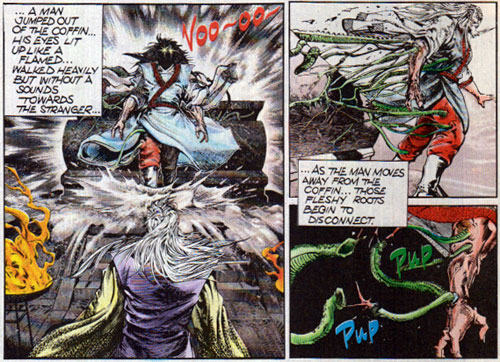
The techniques that Tienway had mastered had turned him into a monster. His lust for power and worship of the dark arts had caused him to be rejected by both heaven and hell, his body would not rest at peace and this explained his resurrection. Tienway had become a master of the "God Forbidden" techniques. A visage of the Buddha was shown with tears in his eyes. Demonstrating the pity and compassion felt for a person lost to the darkness. The figure of the Buddha as the all-powerful force returned again and again in the wuxia tradition. The Buddha represented righteousness. The martial arts techniques associated with the deity were said to destroy evil. The Buddha's Palm film and manhua titles were examples of the religious associations that the martial arts had, particularly when it came to expressing qigong and the battles between good and evil.
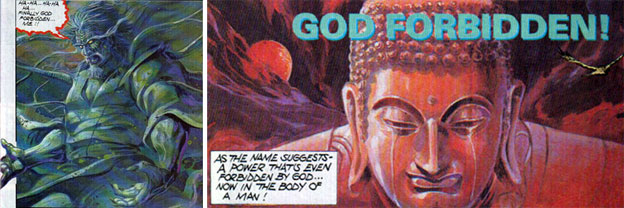
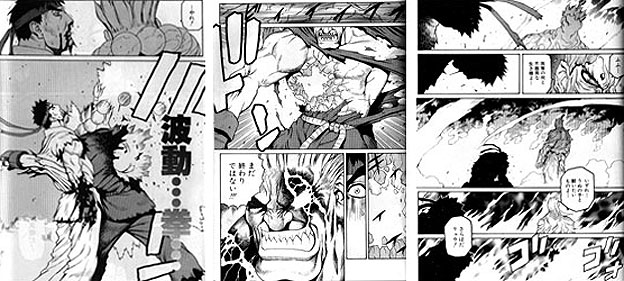
Characters that succumbed to the dark arts were very powerful in the stories, easily rivaling the most gifted masters. They were incredibly strong, fearless and seemed to not feel any pain. The trade off for all this power is the corruption of the physical form. Villains became grotesque creatures in these stories. They looked fearsome and animalistic. Gouki for example was designed with the features of a lion, a large head of spiky hair, a flat nose and sharp teeth to make him intimidating to players. In canon Ryu attempted to defeat Gouki with a well placed hadoken to the chest. What he discovered instead, and what was revealed to audiences, was how little of Gouki remained human at all. The Dark Hadou, the evil chi, had consumed Gouki and there was nothing left of the man on the inside. He became a physical manifestation of rage, a literal shell of skin over a core of evil energy.
There was a duality to chi, same as the Force in the Star Wars mythos. The good and the bad, the light and the dark, were constantly seeking balance. No force was greater or lesser but both forces were constantly fighting. The dark chi sought to corrupt people who lusted for power while the good chi was meant to heal and grant power to those who are not ambitious. The forces of good must be ever vigilant to protect themselves and the community from the influence of evil. What this did was place the martial arts heroes in the role of the equalizer. Through the stories and adventures the hero discovered that every battle required an outcome and that even mercy had its limits. When it came to absolute evil there could not be a compromise. The hero was placed in a position where he had to use all of his techniques, including the lethal ones, to defeat the forces of evil. This did not turn the hero into a killer, but rather a force for justice. The person was trying to restore balance to nature.
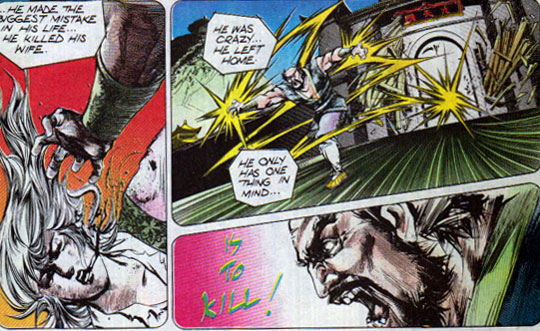
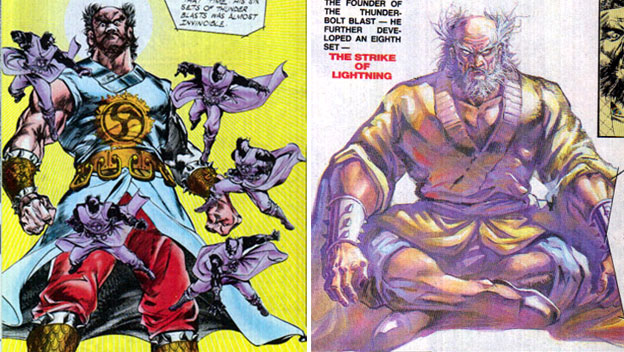
Near the end of the Iron Marshal story the origin of the Great Thor was revealed. Thor was a great martial arts master that had developed the Thunder techniques. Those techniques were stolen by by an assassin named Raving Eagle who was working for Tienway Champ. This assassin raped the wife of Thor and kidnapped his only son. When Thor returned from training and discovered what had happened he became filled with rage. Unable to deal with what had happened Thor accidentally killed his wife and went mad with revenge. Another martial arts master by the name of Immovable Creep offered to give Thor a reprieve from his torment because Thor had no way of knowing the identity of the assassin. Thor agreed and took the non-emotional formula which gave him amnesia for 30 years. During this period he trained the Iron Marshal and revealed onto him the techniques he had meant to show his son.
Western mythology had featured similar tragedies to the story of the Great Thor. The Greek hero Hercules was also a mighty warrior that let his pride and temper get the best of him. He ended up killing his own family in a fit of blind rage. To atone for his crime he was sent by the gods to perform a series of labors. A similar plot was explored in the God of War series as well. After Kratos killed his wife and daughter he was sent out on a series of missions by Athena to forgive his crimes.

The Great Thor had vowed never to teach anyone these secretive techniques after what happened to his family but fate intervened. The story showed the penitence of the Great Thor as he tried to help those on the side of good without quite knowing why he was doing it. When the memory of Thor was restored he vowed to atone for his sins and restore his family name. The opportunity presented itself later in the series. Thor went into battle with a clear mind. He knew that evil must be destroyed and did not hesitate when it came to performing his most lethal technique. The power of the Thunderbolt at close range destroyed Raving Eagle. The use of this technique was completely warranted unlike the Metsu Shoryuken that Ryu used on Sagat.
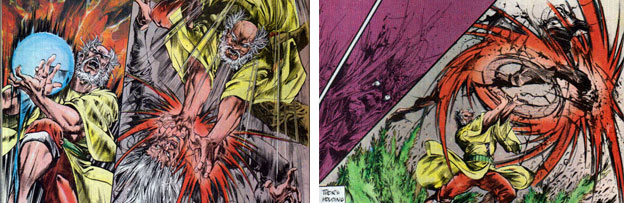
The heroic tradition dictated that a good character, no matter how lost, had a chance at redemption but the most evil and corrupt did not. Ryu learned from his over-reliance of lethal techniques and vowed to stay away from the dark had. He became a better fighter because of it. All characters in the classical tradition evolved. The young heroes particularly grew into maturation over the course of a story. The ways in which this evolution happened was almost universal between the manhua and manga editions.

The hero was hopelessly unprepared to fight the main villain early on in the stories. They had to develop his or her skills considerably. In wuxia stories the hero could often be aided by more than one master, especially after they have learned all of the techniques from the current mentor.
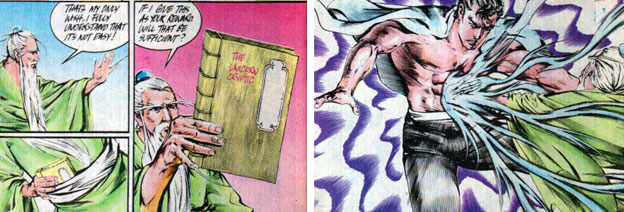
The Iron Marshal was actually aided by a martial arts genius and former emperor disguised as a peasant. This was after Iron was trained by Thor. The elderly man gave Iron a book with the secrets to the Unicorn Cryptic. This was the technique that Tienway had returned to steal. The techniques contained within the book could take over a century to master, even for somebody as gifted as Iron. What the emperor did was speed up the process by transferring his power and knowledge as chi into Iron. Doing this caused the emperor to age terribly but he was satisfied knowing that the powers were in the hands of a lawful person and capable warrior. With this newfound power the Iron Marshal could put an end to the strife caused by his former master.

Characters were often depicted as growing and maturing in manhua through physical changes to the character. The easiest way for an artist to do this was by changing the color of the practitioner's hair. This visual cue had been explored in western literature as well. In the biblical story of Moses the voice of God guided him. At each of these encounters his hair became progressively lighter until it went completely white. This physical change showed that something profound has happened to the character. In the bible story it was tremendous wisdom being passed down onto a leader. Those with white hair in the wuxia stories were also sage masters, yet capable fighters whose physical appearance beguiled their ability. Some characters grew exponentially in their levels of power through the stories and seem to age instantly. Such was the case for the former Emperor and the Great Thor.
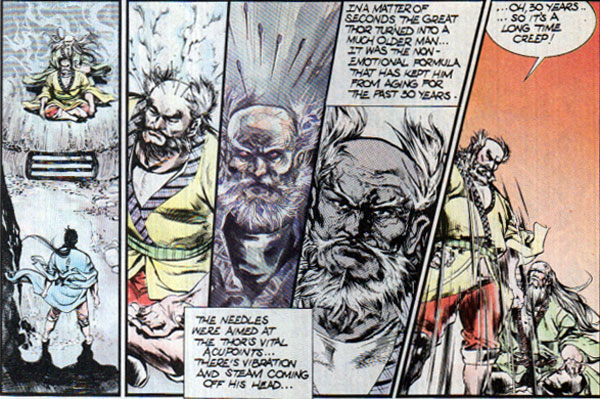
When the Iron Marshal first met the Great Thor he had dark hair and was enjoying his days living in seclusion. Thor was an incredibly powerful martial artist that did not look to be over 40. Yet in one issue Thor aged tremendously. In doing so also became a more powerful master. What caused this transformation was the lifting of the curse of amnesia he had placed on him. When this formula was undone by the Immovable Creep then Thor aged rapidly and his hair went stark white.
The usual visualizations of chi were placed on the character in the story. The Immovable Creep opened up all of the meridians on Thor using acupuncture needles, this release of chi was presented as steam. Remember that chi meant steam or breath in qigong. The release of energy and changing of hair color was also explored in manga and animé titles. None had made this more apparent than the Dragon Ball series. When the main character, Son Goku, went beyond his mortal power he became a "Super Sayan." At this point his hair went from jet black to golden yellow and energy flowed from him in crackling waves. This tradition of having an ultimate version of a person had begun in Eastern religions. Blogger Art-Eater created an extensive look at the relationships between the character design in Asura's Wrath and Buddhism. These observations also applied to the physical presentations of power, tenacity and wisdom in manhua and game design.
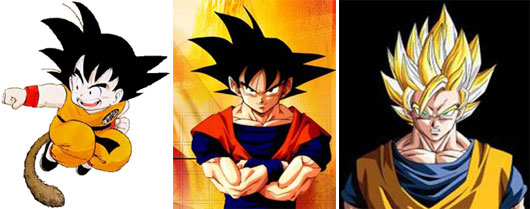
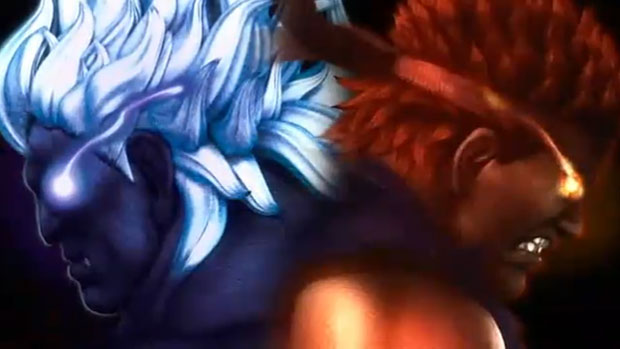
In Street Fighter Gouki was a master as well, yet he too had an ultimate or "true" version of his persona known as Shin Gouki. At this point Gouki's hair went from red to white. Any humanity that the character had was eliminated and he became nothing short of a living demon ready to destroy his opponents. Every fight for that version was a fight to the death. The "regular" version of Gouki knew when a fighter was no match for him and warned them to stay away. Shin Gouki would more likely kill a fighter that wandered too close than say anything. In the game he had more diverse and powerful attacks than Gouki. In order to challenge him in game the player had to meet certain criteria, like not losing any rounds and defeating multiple opponents with super attacks, thus proving that the player was also a fighting master. The Shin Gouki character was more aggressive and relentless than Gouki and only very good Street Fighter players could claim to have a winning record against him.
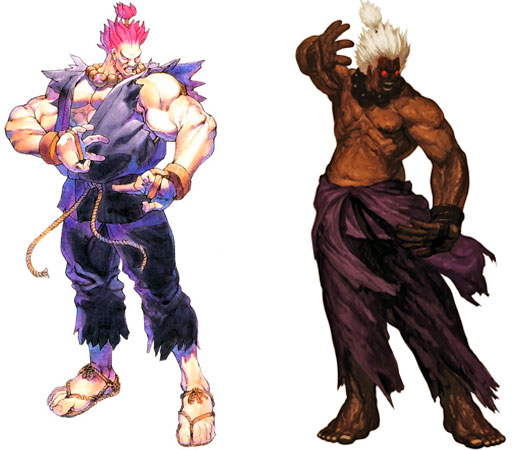
Super Street Fighter II was the first game to introduce a wuxia-type boss villain into canon. In the original game Ryu defeated Sagat. This was a variation of the Mas Oyama battle with Reiba. Sagat was not an evil person and had nothing to do with the death of Ryu's master. The boss character simply followed manga conventions by being large and powerful. In the sequel Ryu fought Vega (M. Bison in the USA) who was even more like a manga character. Vega was presented as a militaristic dictator, similar to a Hokuto no Ken-type villain. Gouki was actually meant to be the boss for SF III. The martial arts basis of the character, dark chi powers and revenge plot was pulled from wuxia storytelling. This combination of elements made him a very popular character. Instead of letting the developers introduce him in a proper SF III title he was placed into Super SF II as a hidden character. This inclusion and list of criteria to unlock him was inspired by the "Sheng Long" April Fool's joke.

Gouki was a formidable character that set the standard for all fighting game bosses. He had the perfect balance of move designs that made him believable and well rounded rather than cheap. The decision to give him animalistic features only added to his presence. The powers of the Dark Hadou were based in Buddhism but physically he was also inspired by the Nio, the fearsome guardians of Heaven and Hell in Eastern mythology. Gouki and even Mr. Karate from SNK's Art of Fighting / King of Fighters series were symbolically powerful characters rooted in spiritual beliefs. Those brave or foolish enough to fight these characters were willing to risk crossing over into the afterlife, or simply put, enter a fight to the death. Similarly Tienway Champ had returned from the dead more powerful than ever in the Iron Marshal story ready to take more souls on his quest for power.
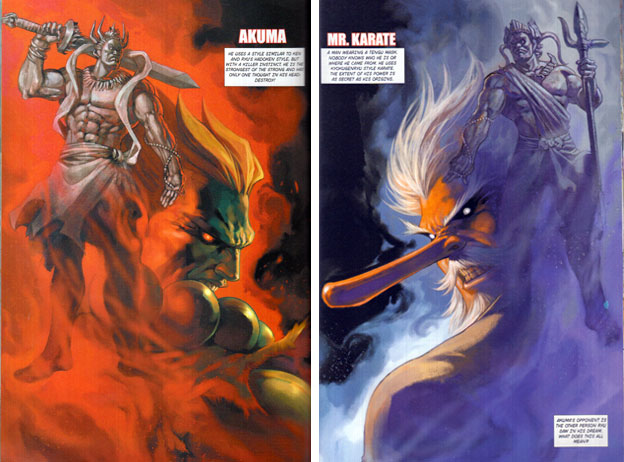
The hero in the wuxia tradition had to be able to rise up to the challenge, even the supernatural ones, and develop powers greater than the villains or die trying. At some point in the story the main character had to become aware of the powers they possessed and energy they could draw upon. The force of chi that flowed through the masters was almost limitless. If they could consciously tap into that energy then they had a chance against even the most powerful villains. In the qigong understanding almost everything in nature had chi. The wind for example was the chi of the Earth. Fire radiated heat as a form of chi and even water generated chi, but none of the elements had consciousness or perceptivity. Animals had perceptivity and chi but not “yi” a concept of right and wrong. Humans had all three and could learn to master them through the study of qigong. In martial arts fiction the hero was able to tap into this unseen energy and stage a spectacular comeback against even the most hardened opponent.

Qigong combined with the lessons handed down by the martial arts masters gave rise to the superhuman legends. The practitioners of Shaolin Quan, mentioned in the first blog of this series, demonstrated these amazing abilities by breaking stone with their bare hands and repelling spear tips with their throats. They had a fierce religious belief system and were known for defending villages during times of strife. The Shaolin fighting style was said to have really been created around 609 AD by a monk who used a broom to fight off invaders. At first the bandits thought he was crazy and laughed at him but when he proved that he was a capable fighter they ran away. His mastery of the staff was so impressive that other monks requested he teach them as well. It was said that he was a reincarnation of Kinna, the Fighting Buddha. Thus the Shaolin style was sometimes referred to as the Kinna Quan. These newly formed warrior monks with their devout origins were the template for the Jedi in the Star Wars films. They were also the biggest influences in latter wuxia comics and movies. The spiritual connection allowed the masters to fight even the most powerful forces of evil with their bare hands. These battles between good and evil were always the most spectacular in the manhua stories.
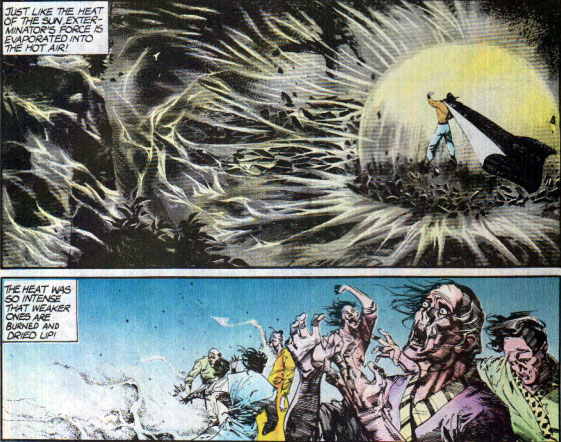
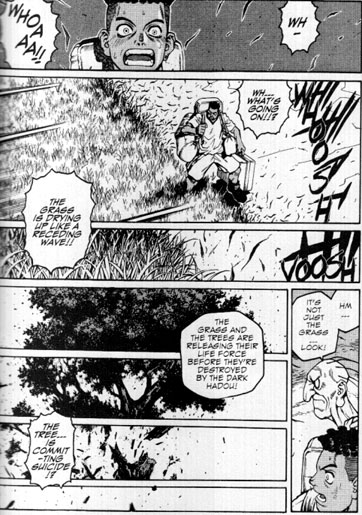
When the masters of good and dark chi battled they often caused collateral damage. They did not even have to physically touch a person in order to harm them. Only those that were strong in body and mind could divert the energy that these battles expelled. Regular people with no martial arts training would explode or burn up from the release of chi. Giant waves of chi were drawn in the manhua titles, flowing back and forth from hero to villain, upsetting nature and harming those in the way. Dark chi, or evil hadou could draw out the essence of living creatures and destroy it, this was visualized in the Ryu: Final manga as vegetation burned off by an unseen force.

These battles were always awe-inspiring in the comics and perfect for a fighting game. Street Fighter presented these chi battles as super moves, allowing gamers to play vicariously as the ultimate masters of the secret arts.
During the climactic battles between good and evil the hero often came to a realization. The techniques that they had learned during their travels were not enough to defeat the final opponent. It was at this point that the hero unleashed a new self-taught technique. This move often combined lessons from the previous masters as well as the latent chi energy that the hero could tap into. They did this in the heat of battle but with a calm and collected resolve.

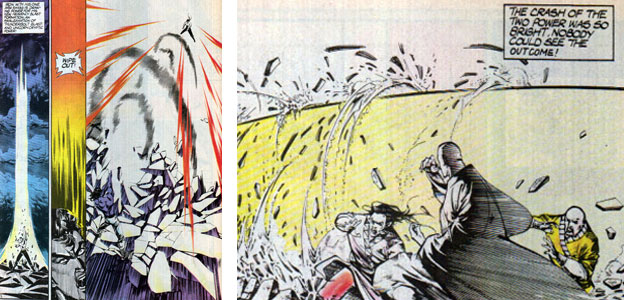
The final lesson of the wuxia narrative demonstrated was that the hero was most powerful when they were in control of their emotions. Their yin and yang chi, the earthly and heavenly energies could best be harnessed by an enlightened mind. The Iron Marshal for example developed a powerful chi blast called the "Wipe Out" which was a combination of the Thunderbolt techniques of the Great Thor and the power of Unicorn Cryptic. He did this in a calm and collected state while his opponent was furiously trying to kill him.
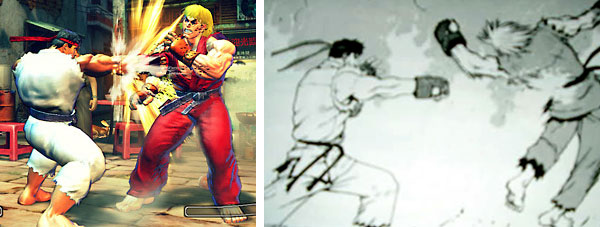
Ryu had done something similar in both the SF Zero and Ryu: Final manga. Before facing the final opponents he did not let his emotions get in the way and let the dark hadou take over, instead he fought Vega and later Gouki bringing all his abilities to the match with a calm resolve. The move invented for the character was the "Fist of the Wind". It was a direct punch that had the focus of a shoryuken with the lateral range of a hadoken. This strike allowed Ryu's punch to meet the opponent head on and transfer his power into a single point, destroying any chance for a counter. This move was placed into SF IV as a counter attack rather than a super move. Ryu was able to find the power required to defeat the boss characters by using all of his external and internal techniques. Ryu, as any great wuxia legend, was forged by the experience of facing different opponents and taking on new masters.
The heroes in martial arts fables were similar to the heroes in other genres. They were flawed characters but personable. They often rose from tragedy to become something extraordinary. They demonstrated the ways in which people should learn from their mistakes, especially during the most difficult parts of their lives. When called to sacrifice they do so without hesitation.

Players became fans of Ryu for the same reasons that audiences identified with Joe Yabuki in the manga Ashita no Joe some 20 years earlier. Joe was flawed and sometimes unsure of himself. He did not win all the fights but he never stopped striving and working hard to be the best. Through his dedication he was able to hold his own against formidable odds including the world champ. By extension Ryu and the Street Fighter cast also carried over the best qualities of earlier manga and manhua heroes. They had powers and abilities that were awe inspiring but placed on personable characters. The diversity of the cast; black, white, Asian, Hispanic and European reflected the audiences that were playing the game. This cast more so than any other cast in the history of fighting games had a deeper connection to the classical martial arts heroes and villains. It tapped into the subconscious associations that players had with fighting and heroic archetypes.
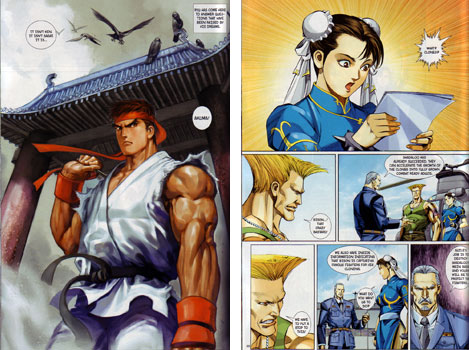
The developers at Capcom were placing the wuxia story in a modern context and making the masters not exclusively Asian. Audiences not only accepted this form of entertainment but willingly incorporated the art, language and designs into popular culture. A quarter century later these fans were still passionate about the Street Fighter series. They were producing art, music and their own games inspired by the legends. The heroes in the original game heroes came from somewhere. Their origins and inspirations should be emulated and celebrated equally. Those working at Capcom in the late 80's and early 90's had grown up in a culture that popularized the fighters of legend in the pages of comics, television and movie screens from the late 60's through the early 80's. They in turn created the legend of the virtual masters, new characters that videogame players could identify with and legends that they could spread onto the new generations. Perhaps centuries from now people might discuss the martial myth of Street Fighter in the same way that they refer to the heroes of the Water Margin, or Romance of the Three Kingdoms. A gamer could only hope. As always if you would like to sponsor me please visit my Patreon page and consider donating each month, even as little as $1 would help make better blogs and even podcasts!
follow the Street Writer on Patreon!