Wednesday, September 16, 2015

How fight culture became fighting game history, part 34

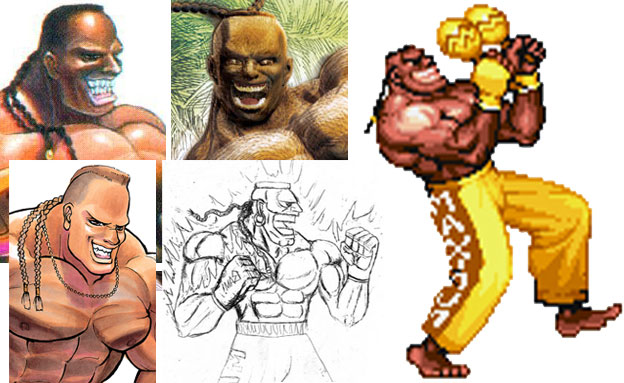
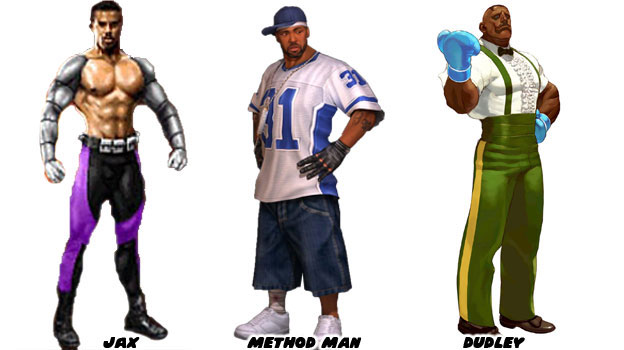
Characters in the fighting game genre did battle for any number of reasons. Some were noble, like police officers trying to bring criminals to justice. Others to prove their fighting style was the best. Some simply for the sake of achieving fame and glory. Black fighters seemed focused on the fame and glory part but to all things there were exceptions. The military officer Jackson "JAX" Briggs from Midway's Mortal Kombat II (1993) and the gentleman boxer Dudley from Capcom's Street Fighter III (1997) were contrary to the typical portrayal of black characters in most games. They were noble, powerful, fit well into their respective franchises and never allowed old conventions to dictate their presence or personality. Unfortunately both Jax and Dudley were rare in that regard. Japanese and US developers seemed to find it easier to rely on the trope that a black fighter was a brute, a thug. EA Sports BIG even created an entire fighting game series based on the Hip Hop / Thug characters in 2003. Def Jam Vendetta put actual rappers like DMX, Ludacris and Method Man against fictional thugs in an underground fighting tournament. The game did well enough to spawn a couple of sequels. It seemed that as long as fighting games were halfway decent then audiences would play characters of any color or background and support the publishers. Yet long-term success seemed to elude the games that only pandered to the lowest common denominator. The demand for a Def Jam fighting game had never been very high, especially when compared to the demand for Street Fighter.


It seemed that substance did matter to the core fighting game audience. Respect for the genre and the audience was good for the long term success of a franchise. The gameplay, control, and animation featured in the Street Fighter series was better presented than any other series. The characters featured within had become more iconic than those from any other game. Most players were familiar with Balrog, the name of M. Bison in the USA, They knew that he was based on pro boxer Mike Tyson. However during the development of Street Fighter II there was going to be a boxer as a playable character. This boxer was named Dick Jumpsey. He was inspired heavily by Jack Dempsey, a prize fighter from the turn of the century. The stance, moves and techniques of those early legends like Dempsey were the stuff of legend, especially in Japan. Boxing was made popular in the manga and anime series Ashita no Joe (Tomorrow's Joe) and the more contemporary Hajime no ippo. The influences of popular culture on the decision to use a boxer and even how he appeared should not be underestimated. These elements have been influencing designers for decades. The Joe story would have been something that the team at Capcom had grown up with in the early 1970's while the Hajime no ippo story would have been a contemporary manga running parallel to the development of Street Fighter II in the late 80’s.
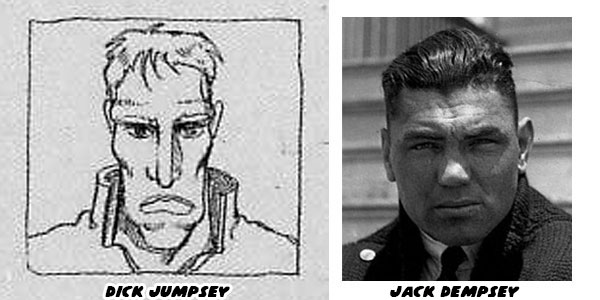

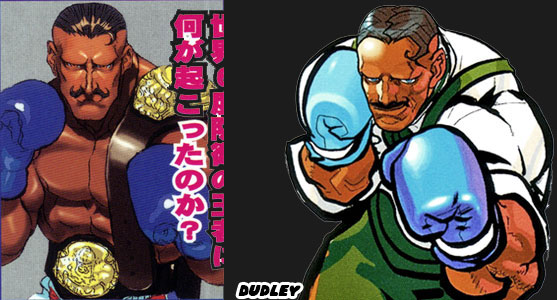
A Dempsey-inspired character would not appear until years later. Dudley, featured in SF III was a gentleman boxer whose timeless qualities made him an instant success and a perfect fit for the SF universe Dudley could be argued as a complete vision for the Dick Jumpsey character abandoned previously. The "Dempsey Roll" was a technique that the actual Dempsey used to dodge under opponents and throw a flurry of punches while bobbing and weaving. This was a rarity as a real life technique rather than a fantastically impossible one would end up in a videogame. In anime form the move looks fantastic, in game form it was doubly so and could be used in combos with relative ease. Dudley's Rolling Thunder in SF IV was based largely on the Hajime no ippo version of the attack and makes for a very visceral super. Dudley may not have been based on a real person but he had a better reputation as a fighter than Method Man.

Hip Hop was influencing global culture at an alarming rate. From the rise in New York through the '70s through the exposure on mainstream media in the '80s Hip Hop had pushed for a major shift in pop culture. Blacks were becoming very prominent influences. The points of reference that the Japanese were using to recreate blacks and black culture had evolved greatly between the time the first and second Street Fighter games were released. The Japanese didn't always manage to keep up with those changes. When that happened the studios ran to two extremes of depiction for black characters. They were either over-the-top, boisterous and flamboyant characters. Or they were the opposite, completely devoid of personality and simply a dark skin tone on a 3D model. Jeffry McWild was the first black polygon-based character in a fighting game. He was one of the original faces in Sega's Virtua Fighter released in 1993. The character was neither thug nor cop. He did not have a basketball, nor did he dance. He was a powerful fighter from the caribbean that muscled through opponents with his unorthodox grappling style. Jeffry was a rarity in fighting games, especially for the 3D fighters. He had a personality, proud and confident but not silly like Dee Jay. It was unique that the two characters came from the same region but had vastly different design cues and presentations. The Japanese had demonstrated once more that they could have tremendous respect for black character designs. In 2001 Sega released their second black character in the series. Virtua Fighter 4 added Vanessa Lewis, the first black female mixed martial artist in gaming. She was similar to Jeffry in that she had striking and grappling moves but past that had zero personality. She was a stunning 3D model that was simply designed to appeal to male players. She demonstrated that the developers, while respectful of their audience, had less of a cultural understanding about strong black female characters than they had of black men.

Tecmo licensed the Virtua Fighter 2 engine from Sega when they started their own 3D fighting franchise, Dead or Alive. When Tecmo did not have a point of reference for an acceptable personality trait among the black community they made one up. The character Zack was a DJ that had entered the fighting tournament. He was not a Hip Hop DJ but seemed to be a flamboyant party DJ. To be honest he was never shown on the turntables in the series. Zack became obsessed with fame and attention and became more and more outlandish in each revision of the game. Absurd would not even properly describe the character, he went well beyond the excess of Dee Jay or any other character mentioned thus far in the series. Zack was not representative of black culture, Hip Hop culture or even Western culture. The basis for the character could be likened to Dennis Rodman, the eccentric NBA player. Yet Zack was simply a clown, a buffoon that happened to have dark skin. The defense once more would be that the character made sense within the context of his game and was a satire of typical character designs in a fighter. It was not a surprising defense of the series considering that the title was famous for its jiggling breast "physics" and objectification of its women characters.
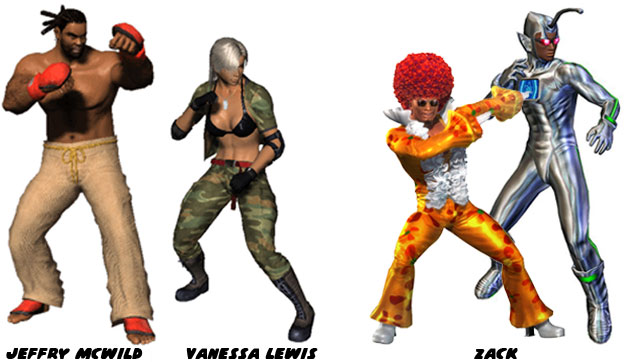

There was a world of difference between Jax, Dudley, Jeffry, Dee Jay and Zack. Developers, publishers and even gamers may have dismissed the relevance of the designs over the past two decades but something had to be said. It was a duality that the industry and audience observed about gaming. Players wanted the mainstream culture, and especially the mainstream media to identify games as art. However when questions were raised about games being too violent or sexual for some audiences then it became an argument about entertainment and freedom of speech. The industry and the gamers themselves could argue the fundamental rights protected by the First Amendment, however they seemed to do that when it was most convenient to them. Gamers were passionate about their favorite titles and characters but only when it served their own interests. Many did not want to infer or interpret any controversial themes within their favorite games or even question the developers. There were many fighting game fans extremely passionate about the genre but to not question the characters featured in some of the most popular titles would be irresponsible of them as consumers.

To say that Zack or Dee Jay were just game characters and appropriate within the context of their title would be an attempt to bypass the argument. Without a cultural touchstone the Japanese studios seemed to rely on trope. The patterns of minority character designs were starting to become demeaning to audiences. Yet none of the gaming outlets seemed to call the publishers on that. But again, if I looked for the bad in fighting games I would find the bad. There were positive minority role models in fighting games and videogames in general. Characters like Dudley, Jeffry and Jax were created by Japanese and Western studios to show that diversity was alive and well. Games could still be art and entertainment in equal measure and publishers could still be socially responsible to their supporters. The next blog will look at the recent character that Capcom tried to create out of Hip Hop culture, classic cinema and black sports superstars. As always if you enjoyed this blog and would like to sponsor me please visit my Patreon page and consider donating each month, even as little as $1 would help make better blogs and even podcasts!
Monday, September 14, 2015

How fight culture became fighting game history, part 33

The fighting game characters highlighted in the previous blog were examples of how pop culture had colored the design of minorities. Unfortunately the pop culture choices that the Japanese designers were pulling their cues from were built from old stereotypes. The black characters featured in many Japanese games were often happy-go-lucky characters. They were presented as smiling, friendly figures, yet also never the lead character in any game. Minority characters were usually never featured in anything but a supporting role in either Eastern or Western produced titles. Could any gamer remember the last time there was a black lead in a game or even a black villain? CJ from San Andreas or the Agent from Crackdown were possibly the first and last entries of a console generation. They were well rounded characters but more the exception than the rule for the industry.

Unfortunately the perpetually grinning, carefree black man was one of the oldest negative stereotypes about African-Americans. That distorted caricature was called a Sambo. He was always happy but had no desire for work. By making the black characters happy and one-dimensional it was easy for bigots to think of them as less than human. The Sambo was created during the final years of slavery in the United States. Half a century after slavery had been abolished that image had permeated US culture to the point that the grinning figure was seen on advertising, in cartoons and even on household items. It was not until the civil rights movement that the mass consciousness grew to accept that the image was demeaning and hurtful to an entire population. Products lost the offensive art and black characters began to be drawn more realistically by advertisers. People the world over did not get that memo however. They did not experience the civil rights movement and had no idea what was to be considered offensive. They may have assumed that this was an acceptable way to present black characters.


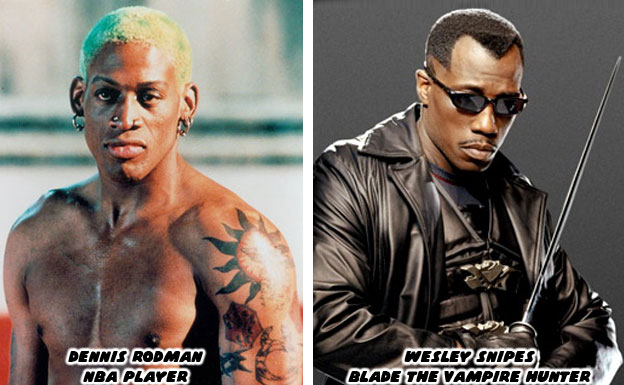
There was a period of time where I wondered if Sega were capable of introducing a black character into an arcade game that was not perpetually grinning. The games the characters appeared in were very well done but the minority characters looked tokenized. This was not an issue exclusively with Sega. When many Japanese studios began incorporating black characters into their games they went to the long standing designs from the West. In some cases they did not dig deeper than recreating the look of popular athletes and actors from the late '80s and early '90s. The controversial NBA player Dennis Rodman and action movie star Wesley Snipes were just two people that ended up inspiring a series of characters through the golden years of the fighting game genre.


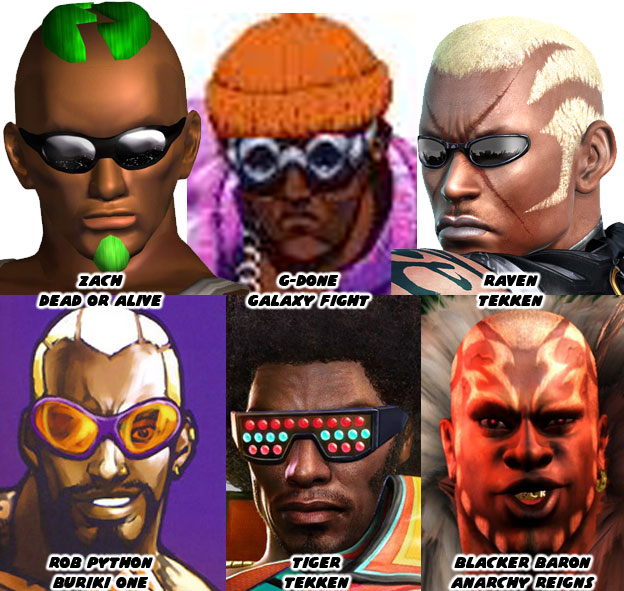
Being a black wasn't enough to make the character unique to the Japanese developers. The characters almost universally had to be very "cool," almost to the point that they were too cool to be seen in the game itself. How did the developers accomplish this? Quite simple, they often gave black characters sunglasses and unique hair styles. Sometimes they would even have gold teeth. Truly right out of a rap video! Rare and unique fighting arts were often assigned to all of the other characters but it often seemed secondary to black fighters. They had to appear cool first and foremost or else audiences would not know what to make of them.


Sega, Capcom, Namco, Square-Enix and SNK were some of the Japanese publishers that ended up running with the skewed look at minorities. By making a non-threatening black person the studios thought they were showing diversity. The colored characters were like cartoon mascots however, emotionless and simply there to make people feel good about diversity. The fighting genre never had a Sambo, although Dee Jay from Super Street Fighter II certainly came close. The character wore a perpetual grin and danced with maracas whenever he won a fight. No other fighter in the series had ever carried such a silly expression while battling or celebrated with dubious overtones. The celebratory dance of Dhalsim though, whose head shaking and wide armed gyrations could have been considered as culturally insensitive and out of place.

DeeJay was actually designed and named after James "DJ" Goddard, a former Capcom USA employee. The Japanese therefor assumed that the character was appropriate. The basketball playing, breakdancing, fighters that emerged in the mid '90s could be considered leftovers from a less enlightened era. In the history of the US there were actually multiple racial caricatures that had been created to demean and dehumanize African-Americans. The Sambo was one of the earliest but the ones that followed became uglier and more widespread. The nicknames given to these representations of blacks were so grotesque that I wouldn't want to repeat them on this blog. There was an excellent documentary that explored the history of the stereotypical images. I would advise that everyone reading this blog should watch Ethnic Notions. Readers would be able to look at black character designs, especially in fighting games with a more critical eye thanks to the film.


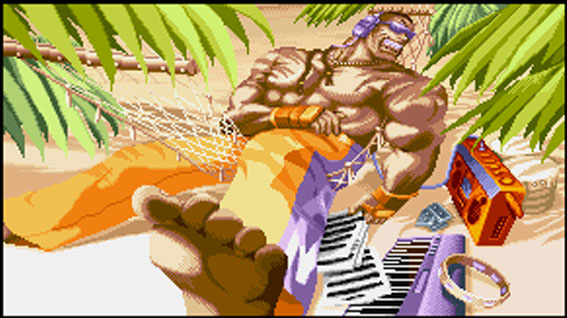
The defense sometimes used to explain characters like Dee Jay, Magic Dunker or Boggy were that the studios were simply trying to show the personality of the fighters from within the game. Many of the characters carried with them some sort of national pride. Guile was in the military and therefore the US Flag tattooed on his shoulders and camouflage pants made sense. Chun-Li was Chinese and had gone undercover in the fighting tournament so her pseudo-traditional costume also made sense. Like his namesake Dee Jay was a Jamaican entertainer first and foremost. He was a musician and happy about life in general. It just so happened that he was also a master of kickboxing and according to canon more powerful than the Thai boxers Sagat or Adon. Of course you would be hard pressed to find a game player that would consider Dee Jay a better character in canon or design. In context it was appropriate that Dee Jay carried maracas or a boombox with him wherever he fought. However the impact on gamers would have been wasted if the final boss in the original Street Fighter were a Jamaican layabout (that could not lose the ugly grin even in his sleep!) instead of a seven foot Thai boxer with an eye patch.


Dee Jay was inspired in part by martial artist and movie star Billy Blanks. Blanks had played an assortment of heroes and villains throughout his movie career but none were as lacking as Dee Jay. Aside from skin color and haircut there was not much that united the man and caricature. Dee Jay certainly skirted the line of Sambo. His carefree, perpetually grinning facade hid a lack of empathy and understanding about powerful black fighters and the ways they should be presented in gaming.

The Japanese studios by and large did not recognize that they could have associated a genuine fighting style with a minority character. It would not have offended the sensibilities of the game players. It would not have "broken" the game in any way. Characters like Dee Jay, Boggy, Ten Count, J. and Magic Dunker would have obviously remained black but their personality did not have to be dependent on sports or entertainment. Unfortunately the only alternative to basketball-playing fighters was to have those characters be arrogant, womanizing boxers.


Again, if people in the West were offended by the image it was most likely because this was the mirror that Japan was holding up to them. In athletics the black man had been depicted as a brute, loudmouth or womanizer for the last half of the 19th century and the better part of the 20th century. Changing global perception would mean undoing almost 200 years of negative campaigning. Some of these myths were reinforced by actual personalities throughout history. Part of the stigma was due to the bravado of fighters like the legendary heavyweight champ Muhammad Ali and fighters that came before and after. Ali would put on press conferences denouncing the stereotypes perpetuated by his rivals. He would carry on with boisterous and very arrogant overtones. In the eyes of many he was as misrepresentative of black culture as he accused his opponents of being.

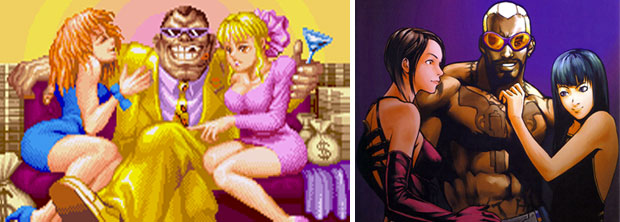
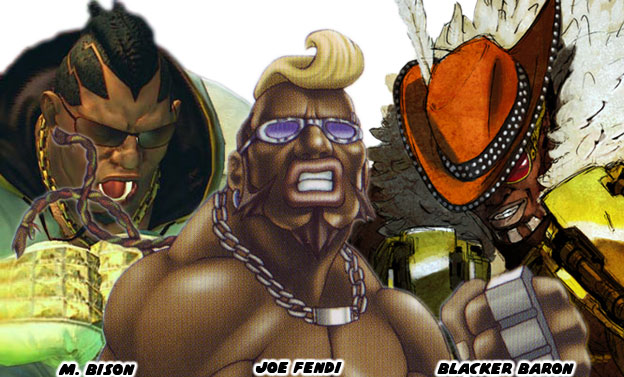
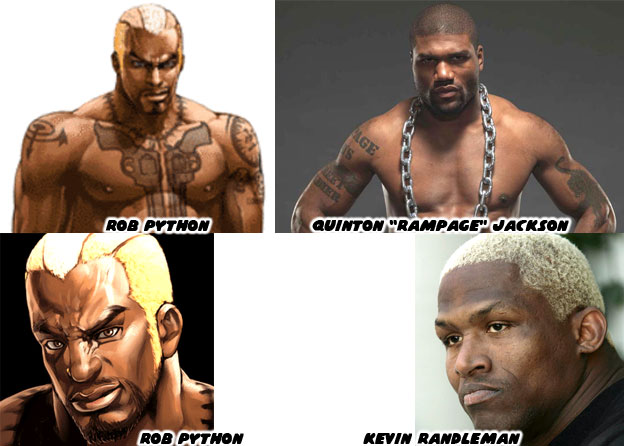
In the later part of the 20th century several fighters began combining that showmanship with demonstrations of excess. Fighters like Floyd "Money" Mayweather would flaunt their success, travel with full entourages and flash gold and money as if they were living out a rap video. Since it seemed that all of the boxing champs acted this way on television then the stereotypes must have been true. M. Bison, Joe Fendi and Rob Python were just a few of the black boxers presented in fighting games that reflected these images.


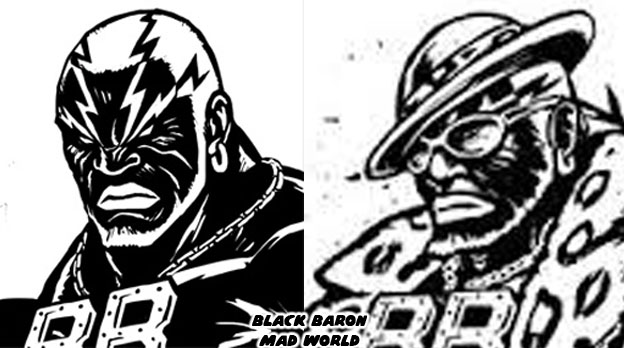
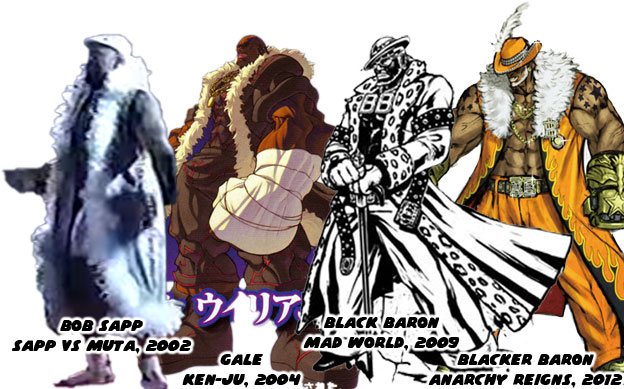
The Japanese developers were a little heavy handed with the pandering through most of the '90s. Black fighters in the games were almost all boxers. Yet it wasn't enough to be a boxer. These characters had to once again look and act cool otherwise audiences might not give them a chance. What could be cooler than boxers that wore sunglasses, jewelry and fought with gold and silver gloves? In the offshoot of the fighting genre, the brawler, the trope could not be escaped. The Blacker Baron from Anarchy Reigns was a revised version of a character that had appeared previously in Mad World. Both games were completely over-the-top and meant to shock players. In Mad World the Black Baron sported large lips and wore a "pimp" costume. I have been accused of being too sensitive to the portrayal of minorities in fighting games. But I have to ask if past a certain point is it not the responsibility of the gamer to ask why the characters have to appear this way?


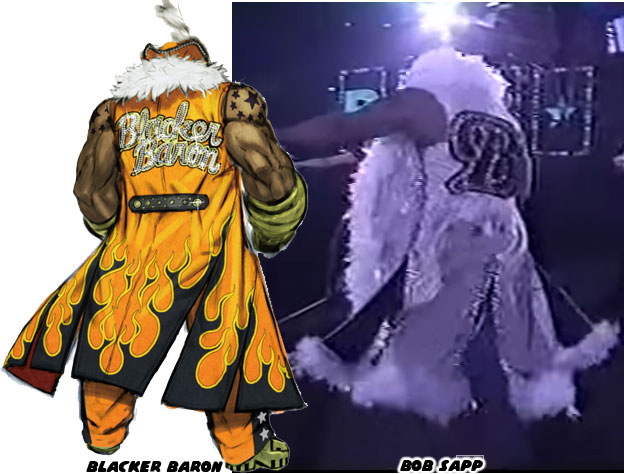
The Japanese designers seemed locked in a circular school of design. They would borrow points of reference from each other but never bother to venture outside of what they knew. The occasional bell bottoms and platform shoes here, or the big afro and sunglasses there. This was what it meant to be a black character right? They could not seem to break the mold when it came to black boxers. Even the characters for cancelled projects had the same aesthetics as designs from years later. The jewelry, the long pimp coat and exaggerated proportions were almost interchangeable between titles. It did not help that the wrestling and sometimes MMA promotions would have the black fighters wear costumes that perpetuated the stereotypes. The long coat with the fur trim, jewelry and sequins was not really from the "street" as much as it was from show business. The origins of the costumes did not seem to be a concern for the fans as long as they were being entertained.


In order to make black fighters more endearing to Japanese audiences they often had to be very flamboyant. Dancing, entertaining and always smiling. The thing was that a one-time appearance like this from a big-name fighter, like football player-turned-mma-turned-pro wrestler Bob Sapp, would carry forward in game design for years and years. Japanese promotions were not the only ones to push a heavy handed stereotype on audiences. In the US the WWE had Mexican characters that rode lawn mowers and low riders and had to "lie, cheat and steal" in order to win. They had Irish wrestlers get accompanied to the ring by leprechauns. They had black pimp characters call out the Ho's so they could dance with them in the ring. Minorities had to have a gimmick first and foremost. In-ring talent was an afterthought.


In other cases it was an attitude or even a hairstyle that would be most ingrained in the minds of Japanese developers. The contribution of black martial artists to wrestling and MMA would become secondary to a sneer.


Not all of the studios were following these trends however. Some of the more memorable black fighting game characters were making waves in early 2D and 3D releases. The next blog will look at these pioneers. As always if you enjoyed this blog and would like to sponsor me please visit my Patreon page and consider donating each month, even as little as $1 would help make better blogs and even podcasts!
Friday, September 11, 2015

How fight culture became fighting game history, part 32


For the next portion of this series I would like to take an extended look at how one fighting art was tied into the history and culture of the slave trade. To mention the fighting art and separate it from its racial origins would be a disservice to the practitioners. This series will cover some sensitive topics so if you do not want to read about minority figures in fighting games then please return at the end of this series. In previous blogs I had mentioned that the Japanese had become almost notorious for perpetuating certain takes on African-American culture. No where else was this more apparent than in fighting games.

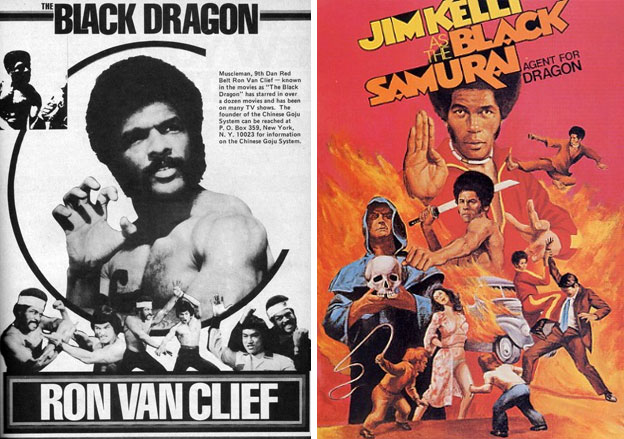
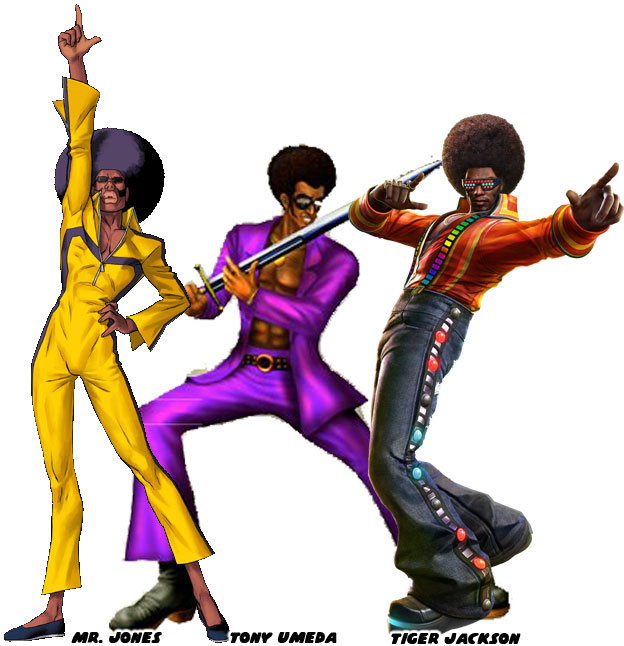
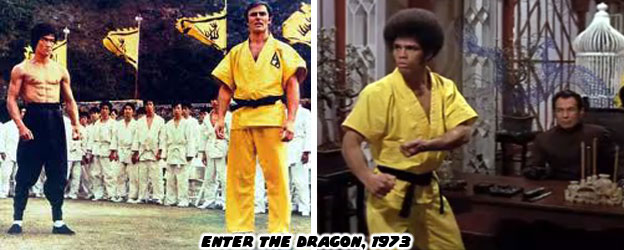
The flamboyant afro-sporting black man had become a gaming trope. Look at Tiger Jackson a hidden character in Tekken 3. The Namco title from 1997 was one of the first 3D games to exploit this dated character concept. A year later Square released Tony Umeda in their sword fighting game Bushido Blade 2. He was a mixed ancestry character being half-Black and half-Japanese. Of course that didn't explain his costume. Bell bottoms, platform shoes and afros had fallen out of favor at the end of the '70s. Years later it would return in arcade titles. Tiger Jackson and Tony Umeda was followed by Mr. Jones / Jones Damon from Rage of Dragons. Both characters were undoubtedly influenced on the classic Jim Kelly character Black Belt Jones as well as the "Black Dragon" Ron Van Cief. Black fighters created by Japanese developers seemed incapable of escaping the look. Even Zack from the Dead or Alive series became an afro wearing clown at one point in the series. Believe it or not Mr. Jones was considerably worse.
 

The 2002 game by Evoga was set in the Double Dragon universe. The game actually had a pedigree. It was a descendant of what many consider to be the original arcade brawler. Double Dragon was held in high regards by long-time arcade players. Sadly the fighting games based on the franchise were lackluster. They demonstrated a lack of originality and innovation. Evoga was borrowing gameplay elements from titles like the King of Fighters and even graphic styles from Street Fighter Zero / Alpha. Copying rival studios and introducing characters like Mr. Jones into the genre just about guaranteed that it would be forgotten by audiences. The studio ended up doing a disservice to those long-time players by failing to respect the legacy they were drawing from. Things had been slowly devolving for the genre before Rage of Dragons had even been released. The mid '90s gave game players reason to believe that the Japanese did not know their audience as well as they should have. At best they were just filling a niche but at worst they were negatively coloring the perception of audiences.


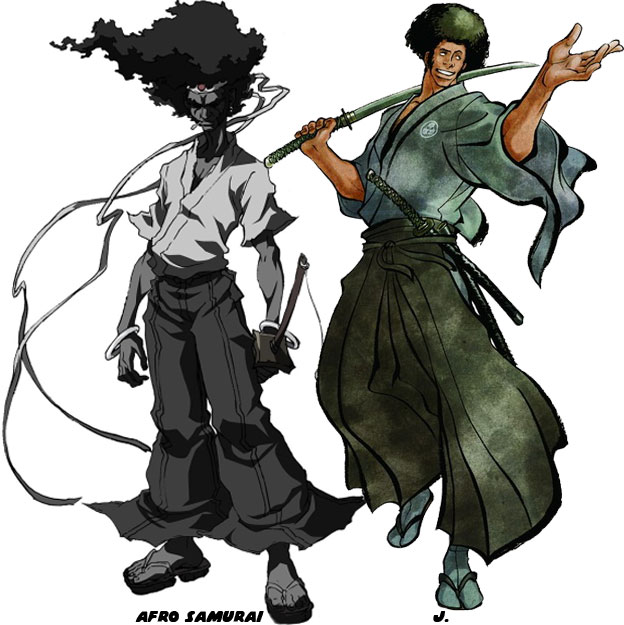
Not every character that came from a Japanese artist was done so out of willful ignorance. Afro Samurai was written and drawn by Takashi Okazaki and published in manga form in 1999. It would be serialized and even adapted into an animated mini-series and game a few years later. The creator was actually a huge fan of Hip Hop culture, the music, the fashion and the movement. He saw his titular character as an homage to the super-cool characters Ron Van Cief and Jim Kelly had played in the "Blacksploitation" films all those years earlier. What was unique about the martial arts films that the black actors were cast in was it was the first time they were allowed to be the stars of the films. As long as they could fight and act they were invited again and again. The films even had the occasional relationships with Asian women on screen. The studios in China and Taiwan had a much more progressive attitude towards blacks than the US had. It was no surprise why Van Clief chose to work there when his own country didn't welcome blacks.


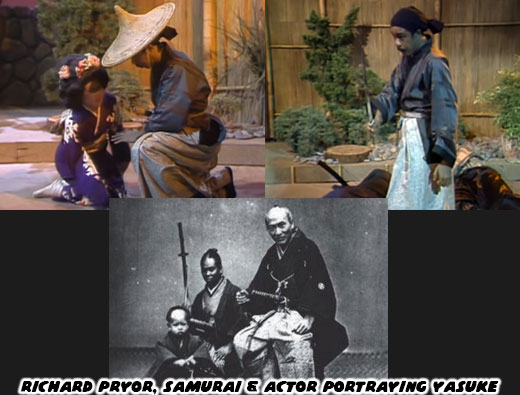
The first black samurai character in pop culture appeared in 1977, around the height of the Blacksploitation movement. This character, who mumbled in fake Japanese, was portrayed by Richard Pryor on his short lived comedy show. There had been an actual historical precedence set for this character however, his name was Yasuke and he first appeared in the 16th century. Yasuke was the first and only recorded black samurai from feudal-era Japan. His name was actually given to him by the warlord Oda Nobunaga. While this person is not really known about in the west the Japanese would have recognized the archetype. It was what allowed characters like Tony Umneda and the Afro Samurai to be accepted.


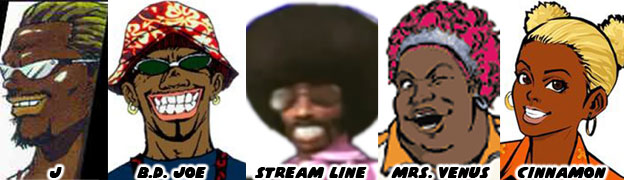
Some artists working on the black sword master didn't quite grasp the subtleties that Mr. Okazaki was going after. His work was bold, violent, stylish and very avant-garde. The things that made the Afro Samurai popular in manga and animation circles was lost on many other Japanese designers. To many artists and consumers black people were gimmick characters. They could never really carry a series. In 2008 SNK introduced the first black character in their popular Samurai Spirits / Shodown series. J. was a sailor that was shipwrecked on Japan. He learned the art of sword fighting, he nicknamed his sword Elvis (I'm sure the designers thought they were being clever) and he became a hired swordsman. Most people were scared of his skin color more than his fighting ability. They called him the "Black Devil." To make him more empathetic to Asian audiences his goal in the game was to free a geisha that had shown him kindness and wasn't scared of his color. Japan had been on the wrong side of black character design for years but were beginning to give them more dimension. Only time would tell if the trend would continue. Things weren't really much better on the other side of the ocean.


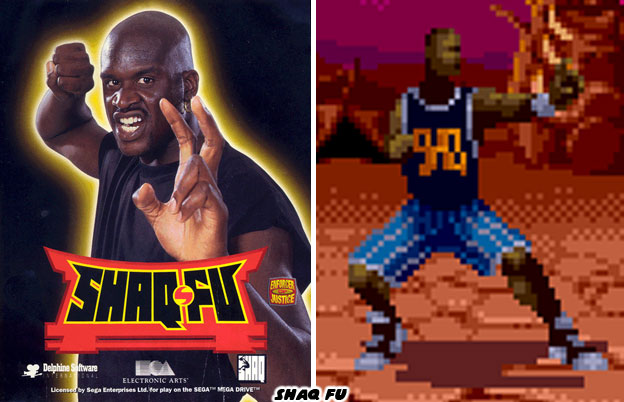
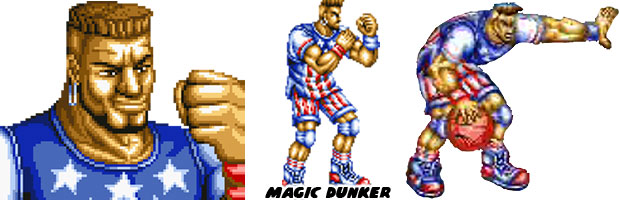
The United States Congress had gone out of their way to interpret every corruptible influence they could from fighting, action and shooting games through the '90s. They tried blaming violence in video games as having a detrimental affect to children and society as a whole. It was a similar argument that they had about comic books and rock and roll music a few generations earlier. In the end these accusations were baseless but ended up in the music, comic book and video game industries creating a form of self censorship. Some things that was never addressed in the Congressional hearings and something that the gaming industry and the gaming media managed to ignore were the subtle racial undertones placed on characters. Violence was one thing but racial bias was apparently something too taboo to bring up. Things were especially bad for Black characters in 1994. They were not always African-American but when they were they could be guaranteed to share similar traits. Magic Dunker was just one character in a series of black, basketball playing, fighting game characters. It was not hard to tell who the token "American" character was in the game given his Star-Spangled costume. He originally appeared in the game Fight Fever by Viccom. Apparently the Japanese had been keeping up with trends. Magic Dunker and the other black fighting game characters appeared the same year that western publishers had released the dismal Shaq Fu, a fighting game featuring Shaquille O'neal the master of "Shaquido." Japanese developers were giving audiences what they assumed they wanted.


In reality the developers in Japan had mainly pop culture as a point of reference for the USA. When they wanted to make a character that would be popular with the Americans they looked at the trends. The biggest stars in the US seemed to be music stars and sport icons, at least according to television. Singers in general did not have the physical traits of a fighter but athletes were spot on. Magic Dunker had the stylings of Magic Johnson and Michael Jordan, two of the biggest stars of the era. The hi-top sneakers, flat top haircut, tank top and sweat bands were slightly behind the fashion curve though. Perhaps the Japanese were working from dated information. The athlete-as-a-fighter carried over several times on other titles.

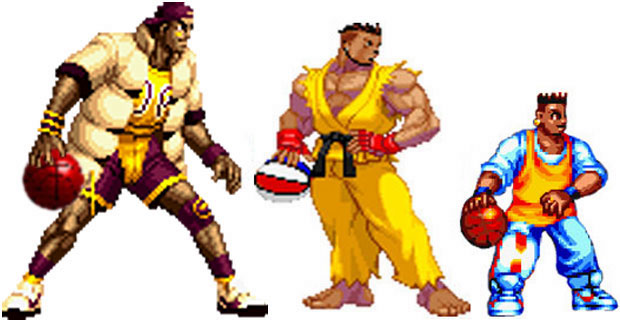
Shaq and Magic Dunker were joined by Bobby "Brown Bullet" Nelson. The breakdancer and basketball playing prodigy from Aggressors of Dark Kombat was one of the youngest fighters ever devised. The SNK title was developed by Alpha Denshi Corp. and there was little originality in his basketball-based and dancing attacks. Not that Lucky Glauber from the King of Fighters USA team was any better but at least he was an adult. Glauber did not have any named style of fighting but instead relied on his long legs for sweeping kicks and basketballs he could summon out of thin air to throw at opponents. At least fighters of other nationalities or ethnicities were allowed to have more convincing fighting styles. The Neo Geo arcade cabinet seemed to be a magnet for these ill-advised characters. A few years later Capcom introduced Sean in Street Fighter III. The game from 1997 did not force the character to have either dancing or basketball-based attacks but the studio did incorporate basketballs into his opening animations and taunts. It was unsettling how similar the fighters were, what traits they shared in common and how little the Japanese seemed to know about black culture, at least about blacks in the USA.


If gamers were offended by these characters, not that they were necessarily, it was because the Japanese were holding up a mirror to Western society. What the developers had learned and assumed about the US was pulled from media from the West. The biggest icons for black culture were featured in Nike ads and McDonalds campaigns, ten times out of ten they were athletes. The news did little to help the image of blacks as well. A person watching television that didn't speak English would see a black criminal, entertainer or sports star, sometimes all three were the same person, within the span of an hour. Was fame the most important thing a black person could strive for? The positive role models in science, politics or education were not as visual or as celebrated on television. This perception skewed the view that the world and not just Japan had about Americans. For African-Americans it was more divisive. Some of the cultural cues that were being picked up by developers were insensitive to the black community and actually reinforcing stereotypes. Basketball was one thing to pin on the fighting characters but it soon became more subversive than that.


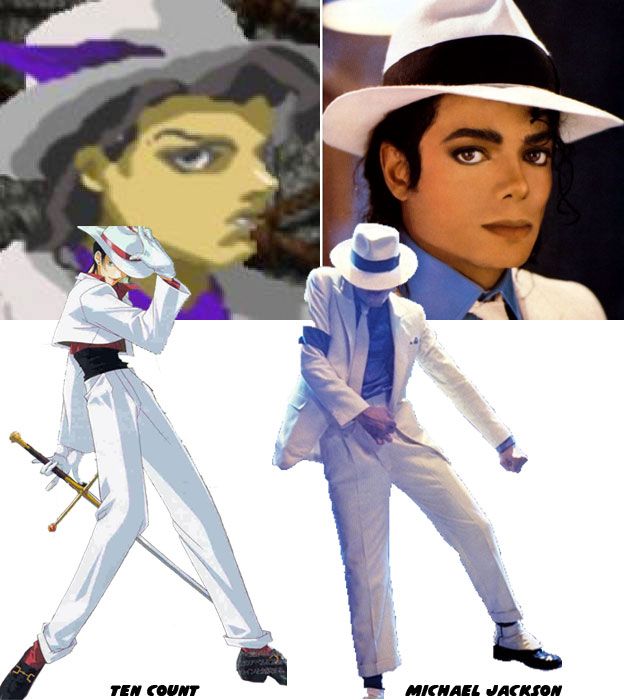
In 1997 Takara released the third part in their 3D weapon-based fighting game. Battle Arena Toshinden 3 introduced a character that danced, did a high pitched yell and moonwalked with a saber in hand. His name was Ten Count. The similarities between himself and the legendary performer Michael Jackson were too much to ignore. It was a shame too because the series was a ground breaker. It was the first notable 3D weapon-based arcade fighting series. It came out in the middle of 1995. The more popular Soul Edge, the first in the Soul series by Namco, didn't debut until the end of the year. While Ten Count was a blatant rip-off character the other black fighters from the '90s didn't fare much better.

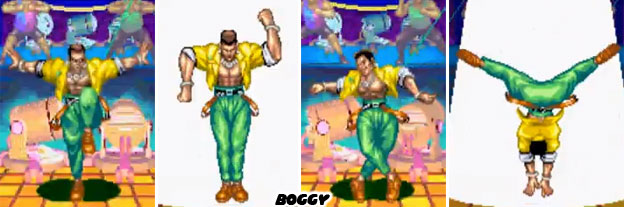
Boggy, a character from Kaiser Knuckle, made his debut in 1994. The game by Taito was one of the worst fighting games developed. It gave Fight Fever and Aggressors of Dark Kombat a run for their money. Boggy was an entertainer and a fighting man at that. Apparently the Japanese developers were a bit behind the times when they introduced the breakdancing brawler to audiences. His look, clothing and mannerisms were all dated. His fighting stances were not from any named fighting art but mostly made up of dance steps. Where else could these influences have been pulled from than from television, specifically music videos? Were the developers really so detached from Western audiences as to only use second-hand sources for inspiration or did they assume that these characters were appropriate?


An important thing to consider was cultural relativism. The reaction to Boggy, Magic Dunker, Bobby Nelson and the rest was different outside of the US. Other countries might have had the same ideas about black characters based on the same television shows and movies they saw from the West. For all they knew these things were true of all black people. The view that the global television audience had was broken from the get-go. Reality rather than sensationalism was seldom shown on television. Poor, rich and middle class blacks existed but were never covered by the news. Their stories had not been shown on sitcoms or dramas. At leas not since the '80s. To the developers overseas it was okay to have dancing, basketball playing black people in fighting games. Minority characters in fighting games appeared as marginalized as they had been in society. Very few countries ever had the minority groups push for change at the local, state and national level in the way the Civil Rights Movement had in the USA. Even today stereotypes, racist attitudes and institutionalized segregation were very real issues the world over. There were not laws against discrimination in all of the nations. Minorities and women could be denied benefits, rights and privileges because their employers and even government were immune to reprisal. The characters that debuted in 1994 skirted the sensibilities of Western audiences, they were borderline racial caricatures that harkened to a dark era in US history. The next blog will look at the fine line that the Japanese developers walked during the fighting game boom. As always if you enjoyed this blog and would like to sponsor me please visit my Patreon page and consider donating each month, even as little as $1 would help make better blogs and even podcasts!
Wednesday, September 9, 2015

How fight culture became fighting game history, part 31

The old Soviet Union had long and proud tradition of fighters, war heroes and genuine, old fashioned, tough guys. After the collapse of the Union and the rise of the independent Soviet States the Ukrainian Fedor Emelianenko carved his own legacy. Fedor studied under the formidable school of SAMBO. It was a fighting system that began in the '20s by the army to improve soldier hand-to-hand combat. SAMBO was an acronym for SAMooborona Bez Oruzhiya, or "self-defense without weapons" It was not the only commonly used word to denote a system with a unique meaning. Judo meant "the gentle way" and Aikido meant "the Way of Harmonious Spirit." The word Karate evolved from "Tang Hand" (as in Tang Dynasty 618 - 907 A.D.) or "Chinese Hand." Chinese traders and immigrants had been settling in Okinawa and the surrounding islands for centuries, they brought with them their fighting styles. The Japanese Ryukyu Kingdom began incorporating their lessons in the 14th century after they began their conquests of the islands and its inhabitants. Karate became to mean "Empty Hand" as in fighting without weapons.

The military application of Sambo made practitioners very dangerous. Crippling holds, bone breaking strikes and peak conditioning were the things that soldiers relied on to keep them alive when facing down an opponent without the aid of a weapon. Even in sparring the judo-like throws and constantly shifting wrestling positions could severely injure a person that did not focus on training. The more dangerous combat elements, things like neck locks and certain strikes, were taken away to develop Sport Sambo. By 1940 the Russian states had developed more or less a foundation for professional MMA competition, they had even tried to get it to be considered as an Olympic event. All of this happened more than a decade before Oyama began on his world tour, and well before Labell fought Savage in the USA's first MMA competition.


Fedor had established a natural acclimation for the system which mixed elements of grappling, striking and wrestling. He had a relentless dedication to training, working out in seclusion and surrounding himself only with trusted friends and family. Like Oyama before him, it was his focus and drive that allowed him to develop the iron will to reach the top. Fedor had already won several regional and national championships in Sambo before he began competing on the international stage of MMA competitions in Japan and the US. He, along with his brother Aleksander AKA the Grim Reaper seemed to come out of nowhere and dominate opponents through the new millennia, just like the Gracies had in the '90s. Of course there were no flukes in MMA. Kazushi Sakuraba made the most of his wrestling and catch abilities so too did Fedor exploit everything he had picked up in Sambo. He could adapt seamlessly between grapplers and strikers and try to finish off opponents with maximum efficiency. Long time fans of shoot-fighting, vale tudo and other global fighting competitions had known of the system for some time and were waiting for the Europeans to begin exporting their best fighters. Casual fans were intrigued by the techniques and began investigating its history.

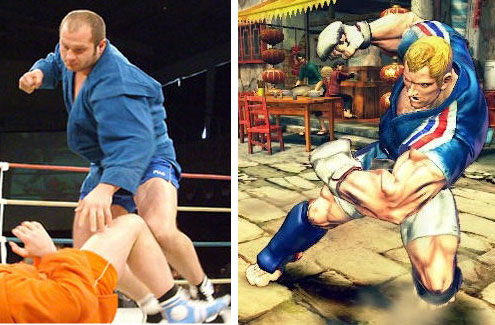
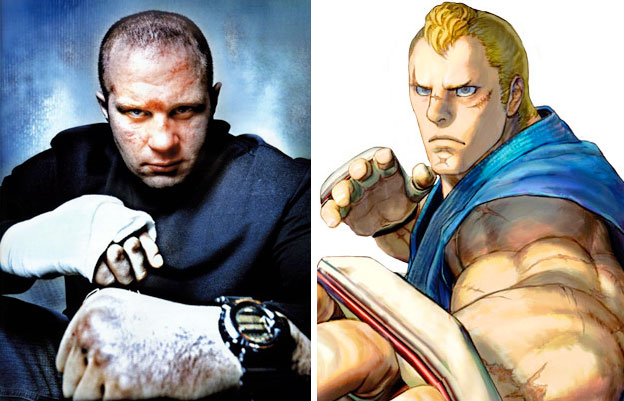
By 2008 the legend of Fedor had been established. When Capcom was developing Street Fighter IV they wanted to include a fighter that represented the next generation of combatants. Instead of bringing back Alex they introduced a new character named Abel. His costume was very much like a traditional Sambo uniform of shorts and a Gi-like top. Although the character was French most fans saw the influence from the Ukranian master. Despite his size Abel was fast and agile, able to duck under many attacks and close the distance against his opponents in the blink of an eye. He was also tough and had a great diversity of strikes and grappling moves. Essentially the first Sambo fighter in the Street Fighter series. Many players in the US were eager to try out the character in early play tests. This surprised Producer Yoshinori Ono who had created the spy vixen Crimson Viper with the US audience in mind. He had underestimated the global appeal that fighter like Fedor commanded.


Sambo had been used to train thousands of soldiers in Russia by the time Helio Gracie was teaching his new form of Ju-jitsu to the people of Brazil. Almost twenty years later, when Helio fought Kimura, the sport version of Sambo had been exposed to million of Russians on television and arena battles. Fedor had not appeared out of thin air. He had inherited a culture that had been scientifically identifying the most effective moves from multiple arts and refining them for practical use in battle and on the street. Making interesting game characters and incorporating the Sambo style had been the challenge to the Japanese. Ad Abel demonstrated they were ready for the challenge.

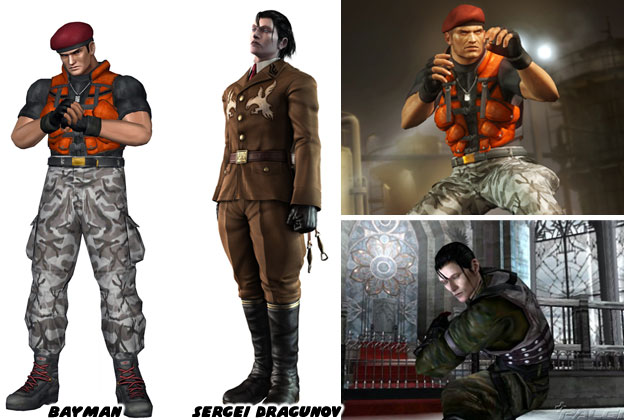
Namco had introduced Sergei Dragunov into their Tekken series and Tecmo had put Bayman into Dead or Alive. By presenting them in military uniforms they wanted audiences to know that these fighters used Combat Sambo and not Sport Sambo as their fighting method. Of course Abel was also written as a soldier in SF canon and one of his alternate costumes had him in camouflage, but I digress. Not since the character Guile in Street Fighter II had another military character demanded as much respect from game players. The Eastern Block MMA fighters had finally arrived on the arcade scene. They would remain relevant so long as Sambo practitioners continued to show and prove on the global stage.


With Fedor achieving an Ali-like status the style would never fall out of favor. For those interested the cable television show the Human Weapon had a great feature on Sambo, its history and applications as both a military and fighting art. Even with the documented success of Fedor why was it that when people thought about what a martial arts master they almost immediately conjured up images of an elderly Asian with a long beards?

The undefeated streak reported by some masters of the martial arts was always subject to criticism. Some claimed to have hundreds of victories over their lifetime. Their criteria for a "fight" was always questionable. Did the masters include sparring or training sessions as an actual fight? What about street fights? Or did only sanctioned battles with witnesses and a judge count? If sparring matches counted then the best would have been able to claim thousands of victories without a single loss. The self-professed champion Rei Zulu said he had a record of almost 200 victories without a defeat before he was beaten by Rickson Gracie. Of course Rickson also claimed that the had won over 400 fights without a loss. Helio Gracie said that the number was inflated based on his opponents and "fight" qualifications. If Helio had counted his battles in the same way then he would have won a million encounters.

The introduction of film and video allowed new legends to be created, verified and ranked almost overnight. Fighters that had merit could be documented. Opponents could also now study techniques of their rivals, making the fights more interesting. Analysts could dissect every fight with slow motion replays and explain why the fighter deserved a championship. Film and video also allowed a number of so-called fighting masters to be debunked. Inflated numbers aside, there were masters that allegedly had super techniques that no previous mortal could ever possess. In ancient times these characters relied on word of mouth to spread the myth of their fighting prowess. Undoubtedly many a martial artist set out trying to track down these masters hopeful that they could learn their secrets. Thanks to video the absurdity of these "masters" could finally be exposed.


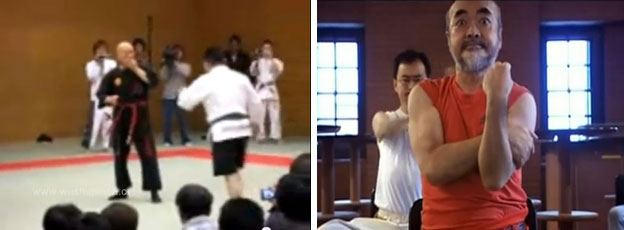
Take for example Yanagiryuken the Kiai Master. Allegedly he had compiled a record of 200 battles with 0 defeats. He was such a powerful fighter that he didn't even have to touch his opponents to throw them or knock them down. He proved this by recording his training sessions with his students. He seemed to have the same mythical powers exploited by videogame characters. Of course his students acted as accomplices and seemed to throw themselves around at the whim of their master. He challenged fighters of any style to compete against him, offering a $5,000 reward to the person that could beat his superior style. A young MMA practitioner accepted the challenge. After signing a contract and death release form he took the kiai master to task. He grabbed him by the sleeve and punched him in the face repeatedly until he dropped. Unfortunately nobody had gotten a chance to repeat the fight against Master Sasaki, the sage of Hida-shiki Kyouken-jutsu. According to his own legend he could disable or even kill a man with the sound of his voice.

Sadly these charlatans existed and duped a large number of people. In older times the false masters would be supported by word of mouth and other willing accomplices. Most people lacked the means to travel across the planet to seek them out so the legends stood at face value. Sadly in the day and age of instant access to media anywhere in the world there are still people tricking the public into believing that they have superhuman powers. Take for example the Qigong master projecting his chi and throwing several people with ease by touch alone. According to ancient philosophies chi is made up of positive and negative energy, like positive and negative energy currents, some practitioners of qigong can harness this energy and direct it to their hands and feet for stronger punches and kicks. It can also be used to increase physical toughness and heal wounds. Western science has tried to debunk or explain the force of chi for some time. Chi was the myth that spawned the creation of "fireball" attacks in fighting games. Unfortunately these modern masters had yet to perform their chi attacks on an actual randomly selected persons let alone real fighters in competition. Proof or not there was no denying the appeal of fabled martial arts master. Comics, movies and cartoons had carried the myth into modern times. Somewhere in the world there was an elderly man that held onto ancient secrets and was waiting for the right person to come along and train. This old fighter had moves and techniques that could beat any man regardless of age or strength.


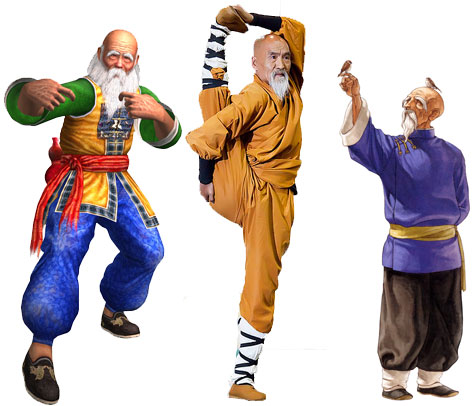
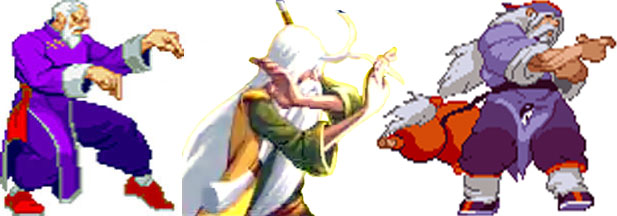
The elderly master was turned into a videogame trope at the dawn of the fighting genre. Shun-Di from Virtua Fighter and Tung Fu Rue from the Fatal Fury series were two such icons. In the games the two were able to compete against brawlers, wrestlers and martial artists that were three times larger and a third their age. The difference between a character Oro and his Street Fighter III rivals was even more profound. Where else could a 140-year-old be able to beat up on seven-foot giants? There was actually an intersection between myth and legend however. Some of the best fighters that had ever lived could be held to a stalemate. It had happened to Bruce Lee early in his career. The fight against Wong Jack Man was not as interesting as the movie Dragon made it out to be. If anything Lee attacked for almost a half hour and never managed to knock down his opponent or even hospitalize him. There were no padded gloves or soft mats to prevent injuries either! The fighting styles and methods that Lee had been taught had failed him. Although he "won" the encounter if forced him to re-evaluate the old traditions and begin rewriting the book on unarmed combat.

Something similar had happened to Oyama according to legend. After he had defeated the best fighters he had come across in his travels through the US, Japan and Thailand he went to see about a legendary fighter in China. He discovered an elderly man teaching Taiji Chuan and asked if he were the "Mr. Chen" from legend. The older man said he was but Oyama was ashamed to ask for a sparring match. The older man offered first much to Oyama's surprise. The two squared off and Oyama was amazed at the efficiency at which the older fighter was able to deflect all of his strikes using small circular motions and footwork. After a few minutes Oyama realized that he could not land more than a glancing blow to the older fighter and conceded defeat. It was the first time in over 200 battles that he had ever done so. He cried, according to legend, not because he lost but because he had much more room to grow as a fighter. The elderly man invited him to stay and learn what he could. After a few weeks of training Oyama was capable of competing against the best students at the school. Oyama said in later interviews that Taiji was good for health but not a practical fighting art, only 1 in 10,000 people could ever achieve the understanding and ability that Mr. Chen had. The lesson he learned was that no system was perfect and the fighter must constantly be willing to learn and grow. Although Oyama was credited as an icon for karate he had actually learned a lot from boxing, judo, jujitsu, wrestling and kung-fu in all his travels. The same thing helped make Bruce Lee a well rounded fighter in later years and had been incorporated into the Sambo that Fedor had learned.


Perhaps the story of Oyama versus Mr. Chen was what spawned the myth of the elderly master that could humble even the most powerful fighter. People wanted to believe that there might still exist a master of the ancient arts and not one of the charlatans that had been putting on phony exhibitions like Sasaki and Yanagiryuken. Ever since that moment the all-powerful master had been a staple in movies, comics and now video games. People had been hoping that some day a real master might reveal himself at an MMA competition and take out a competitor half their age and twice their size. But that day would probably never come. Age robbed the speed, strength and reflexes of the best fighters. It had been proven with Fedor, Ali, Royce and Sakuraba. Even if there were a master out there chances are the bright lights and gaudy excesses of MMA "superstars" would be the antithesis of everything they had learned. They would surely shy away from the cameras or fame seekers.

Many fans were left believing in these mythical characters, too good to ever come down from the mountain, instead the best fighters had to go out and track them down. The stories of the mythical masters would be mixed in with the legends that actually walked the Earth. These stories would become more embellished as word of mouth spread the myth. Even with the advent of film, video and the internet the line between fact and fiction blurred. Whatever the case was the grappling arts had forever changed the way the world perceived fighters. The wrestlers that were once mocked for coming from a carnival lineage, for being "fake" or having no practical fighting ability had flipped the martial arts world on its head. The oldest techniques from the dawn of civilization were alive and well and helping shape 21st century fighters. Hopefully comics, cartoons, movies and video games would begin to expose the next generation to the classic traditions.  If you'd like to learn more about Catch and the history of the art please check out Say Uncle! Please leave a question of comment about the series so far and I will try to get back to you. As always if you enjoyed this blog and would like to sponsor me please visit my Patreon page and consider donating each month, even as little as $1 would help make better blogs and even podcasts!
Monday, September 7, 2015

How fight culture became fighting game history, part 30

There were many manga writers and artists that had published comics on real and fictional wrestlers. These comics had a hand in inspiring many game characters also. One of the more famous artists, Tetsuo Hara, who was co-creator on  Hokuto No Ken / Fist of the North Star was a huge fan of wrestling. He had used wrestlers like Abdullah the Butcher and Big Van Vader as the basis for some of his characters. His work had heavily influenced the development of Street Fighter II. In some early designs Ryu looked very much like Kenshiro from Hokuto No Ken before his design was taken to a more karate form.

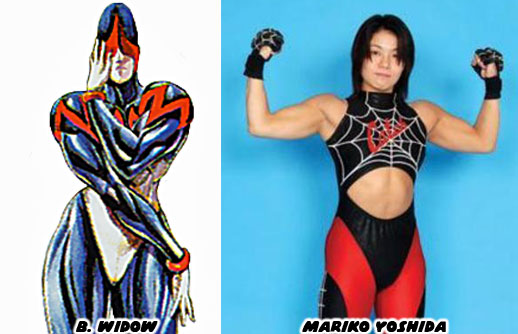
Hara stayed in contact with the developers at Capcom and when they asked the artist if he could help design the wrestlers for the Muscle Bomber / Saturday Night Slam Masters series he was happy to oblige. His intimate knowledge with wrestlers from the world over allowed him to put a unique spin on many figures. For example, the only female playable female character in the Muscle Bomber series was Black Widow. Her look and gimmick was modeled after Mariko Yoshida.


Hara was also the designer for adapting Big Van Vader into the Muscle Bomber series as Sheep the Royal aka Alexander the Grater. There were many masked wrestlers featured in his title, many from around the world. Hara helped demonstrate that great characters in fighting games came in all shapes and sizes. They did not all have to look like karate or kung-fu masters in order to be memorable. Best of all by extension the characters he created became part of the Street Fighter universe.

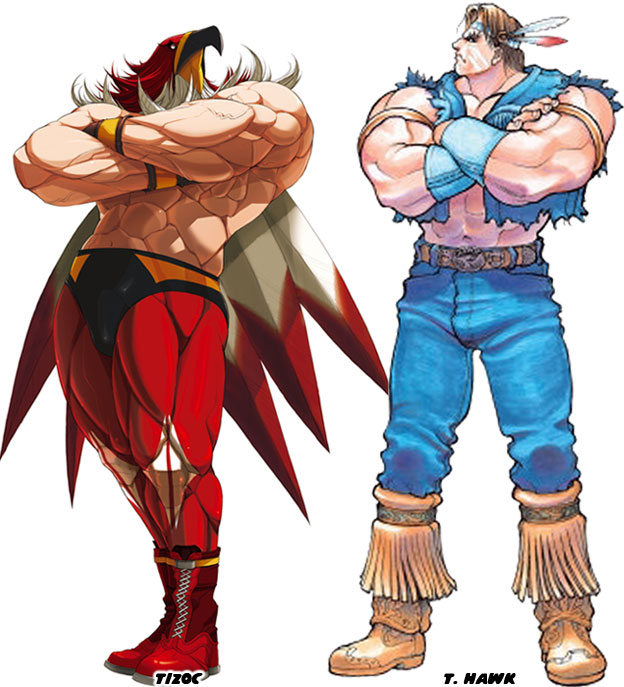
Game designers had an incredible diversity of designs for over 25 years. In early arcade and console games there could always be a masked wrestler to help break up the traditional karate and kung-fu characters that were all the rage. Many times the designers would push the idea of what a luchador could be and what fantastic moves they could contribute to the fighting game genre. Like the other characters in the title the moves that the wrestlers were given were great exaggerations of the actual fighting arts. A suplex was a dangerous throw but imagine how much greater it would look if the performer would leap and spin in the air with their opponent as they performed it. The same thought process was applied to pile drivers, power bombs and all sorts of real wrestling moves. They were made fantastic for the sake of the game. The luchadors and enmascarados that appeared in fighting games were sometimes mild adaptations, as with El Blaze or they were completely over-the-top as with King in Tekken or Tizoc in Garou Mark of the Wolves. 


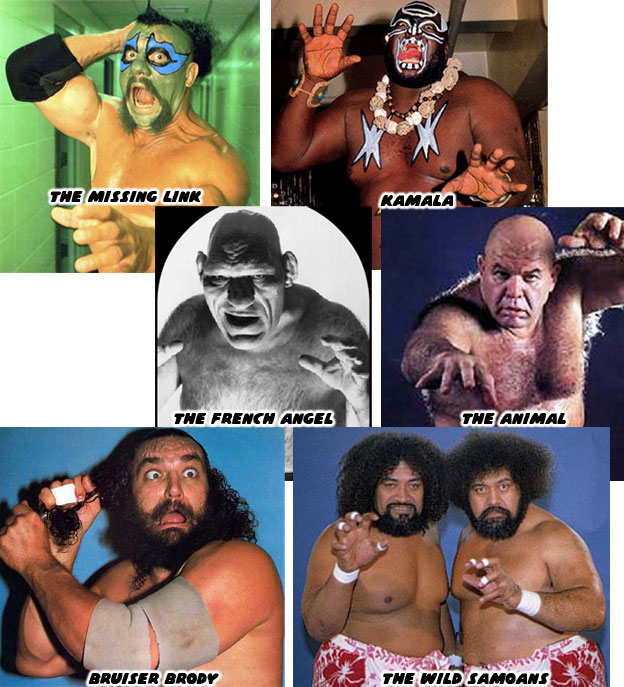
Pro Wrestling did not need masked wrestlers in order to create mysterious personas. Some of the most most popular characters often came "From Parts Unknown." It could be seen as lazy writing from bookers or inspired creativity by the performers themselves. By leaving the country of origin unknown the audience was allowed to imagine what far off island, or lost civilization these fighters came from. In many instances having a strange physical appearance was enough to keep the illusion alive. Some wrestlers were tall, gangly, obese, muscular or outright grotesque. George "The Animal" Steele was a heavy set and hairy man that would paint his tongue green. This plus his erratic mannerisms was enough to scare audiences into thinking that he was some sort of Neanderthal in wrestling trunks. Maurice Tillet aka the French Angel was an even earlier version of the monster man. Maurice suffered from Acromegaly which caused his hands and head to expand through most of his life. His features were proportioned for somebody much larger, making him look gruesome even against other less-than-handsome wrestlers. Some wrestlers used a little face paint or body paint in order to enhance their appearance. Dewey Roberts was a mid-card wrestler until he discovered his gimmick, a crazy haircut and some face paint, then he was elevated to stardom. He was known as the Missing Link and would brutalize his opponents by using headbutts over and over. The large Southerner James Harris was nicknamed the Ugandan Headhunter Kamala. Sometimes teamed with the Missing Link and formed Devistation Inc.


The origins of these gimmicks went back to the earliest days of wrestling in North America. Back when many performers worked the Sideshow in the circus. Sometimes the wrestlers were legitimate fighters and sometimes these fighters needed a gimmick to get them over with audiences. Sadly some of these gimmicks could actually be linked to racial biases and ignorance on foreign cultures. Previously on the blog I had mentioned how ignorance about the Indian fighting forms led to Chinese filmmakers exploiting Yoga as a fighting art. This in turn influenced the creation of characters like Dhalsim and the Great Tiger. Through the history of wrestling the islanders from the South Pacific were often presented as savages and wild men. In the early days of televised wrestling audiences in smaller markets genuinely believed that these men, and sometimes women, with large heads of hair were indeed Headhunters.

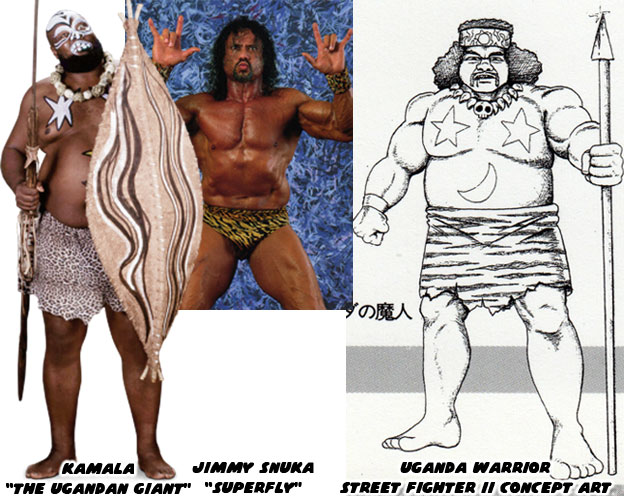
A savvy promoter might help develop a gimmick and convince audiences that their new talent was indeed from some sort of far off land. The wrestlers sometimes did not have to speak to the camera, and the gimmick worked better when they didn't, so that they could be presented as uncultured savages. The designers working on Street Fighter II had used wrestlers as a point of reference for several characters. One of those that ended up on the cutting room floor was an amalgamation of several "wild" wrestlers. The Uganda Warrior had a physical build similar to Afa and Sika, the Wild Samoans, as well as Jimmy "Superfly" Snooka but with the body paint of Kamala.


The savage wrestlers had a big presence in the ring. When promotions went from local television to the mainstream bookers knew to hire wrestlers that looked great on television. Those that had bodybuilder physiques and handsome faces were easier to book than the chubby ones that had actual fighting ability. Masked wrestlers were always great mystery opponents that would boost the ratings. Something that also worked great on television were the gimmick wrestlers that worked the wild man angle. These characterizations translated very well to fighting games. These savage figures were less like traditional wrestlers and more like animals when they fought. They sometimes scratched and bit opponents when the ref wasn't watching, they often celebrated when they were able to draw blood. The line between man and monster would be blurred depending on the performer, or in the case of gaming, depending on the designer.


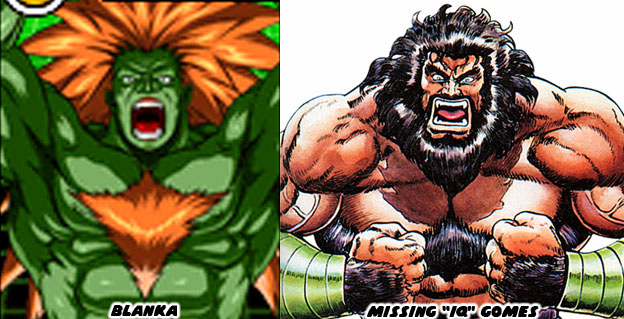
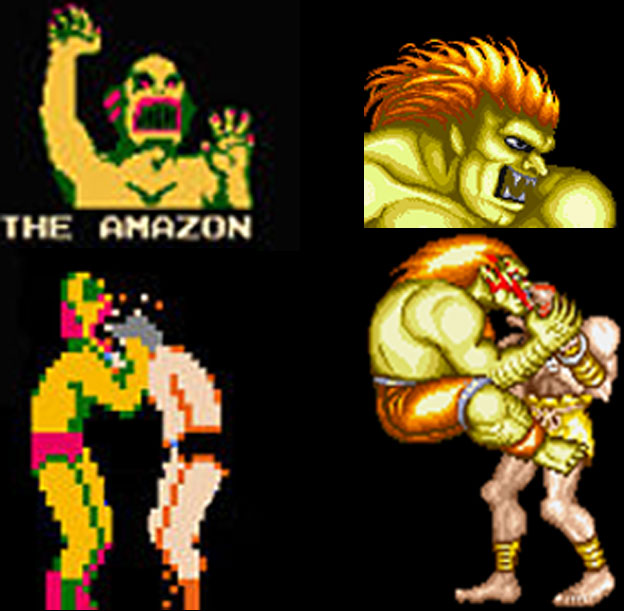
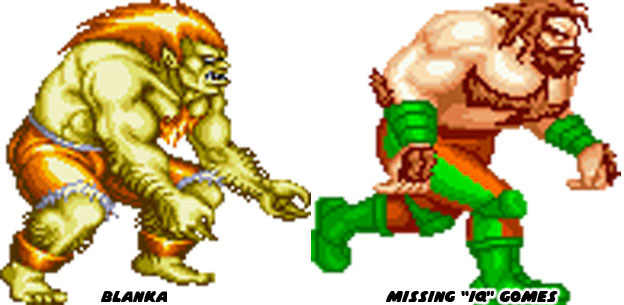
Take the character Blanka from the Street Fighter series and Missing IQ Gomes from the Muscle Bomber series. Both were featured in a Capcom title and both fell within the canon of Street Fighter. The figures were both extremely muscular, very hairy and had features that were almost ape-like.The major difference between the two was skin deep. Blanka was colored green with bright orange hair whereas Gomes had a more natural skin color. The senior designers working on Street Fighter II wanted to see how far they could push the wild man concept and still keep the attention of gamers. Blanka was rooted mainly on an earlier character called The Amazon that was featured in Nintendo's Pro Wrestling game.  Artist Akira "Akiman" Yasuda wanted to make players feel powerless as Blanka would bite the face of his opponents as the Amazon did to him on the old Nintendo console.

Capcom could go way out with the look and Blanka would still work within the context of the series. Blanka had long extended ears, sharp teeth, claws (which were simply long nails) and shackles as if he were an escaped animal. He was a good counter-point to the character Dhalsim. Both featured very odd fighting styles and represented mysterious origins. They added a sense of wonder and fantasy to an otherwise traditional cast of boxers, kung-fu and karate experts.


By comparison Gomes had many of the same features yet could have existed in an actual promotion. Like George Steele he was a very strong hairy man that acted irrationally in the ring. The wild outbursts performed by Gomes was something that a wrestler like Frank "Bruiser Brody" Goodish excelled at in real life. Tetsuo Hara tried to keep the majority grounded in reality. He had such tremendous respect for the art of pro wrestling that he didn't want to push the envelope as far as the Street Fighter II team had done. The gimmicks Hara exploited were strong for most of the wrestlers and even the more "exotic" characters could have existed in some promotion. The roots of Blanka's design were not as harmless as those used by Hara.


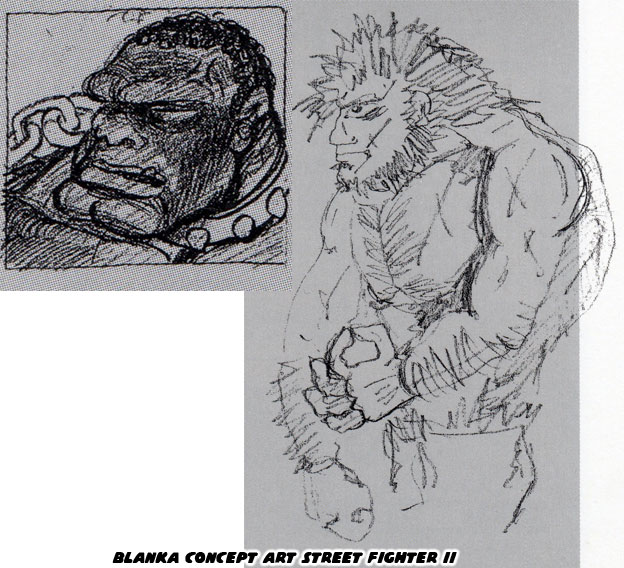
In the earliest concept art Blanka was a savage black man that was in chains. Tight curly hair, big lips and distorted proportions made him appear more ape than man. Somebody at Capcom had enough sense to change the design. The character known as Anabebe could have been a potential disaster, especially in the black community. Arcade games depend on making their audiences happy and keeping them happy. Street Fighter II would have offended many players overseas if figures like "Great Tiger" and Anabebe had not been rethought.


There was still an unmistakable draw to the wild man as a fighter. Many great characters in literary and movie history were based on the idea of a man becoming more like a monster. Think about the classic characters Dr. Jeckyl and Mr. Hyde, Frankenstein's monster, the Mummy, Dracula, and the Wolf Man. They were the inspirations for some of the longest-running movie characters. Universal Studios would revisit those characters time and time again. Modern retellings of these characters could be seen through comic book icons like The Incredible Hulk, Bane and Gorilla Grodd. The influence of these monsters with human traits was universally appealing. A version of the monster-as-a-man was in every culture and storytelling tradition. Capcom had even experimented with the genre by putting the iconic movie monsters in a fighting game known as Vampire / Darkstalkers. Yet for the Street Fighter franchise they wondered how far they could push the wild man, or savage man concept without losing the audience. Blanka had done very well for the series but the developers were looking to recast the game in Street Fighter III. The stretchy-limbed lab experiment named Necro was a variation of Dhalsim. The Chinese twins Yun and Yang were younger takes on Ken and Ryu.

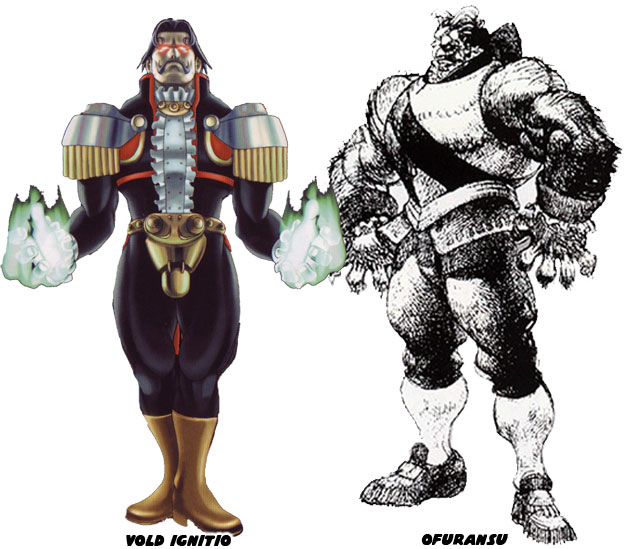
The Blanka-type character for the game never made it past the planning stages. Ofuransu was described as being "a noble field beast." He was an aristocrat that had the features of a wolf man. This combination of royalty and hulking brute was very unique. It was not the only time that Street Fighter designers had kicked around the idea. Half of the team that worked on Street Fighter II left Capcom to form ARIKA. They created a game called Fighting Layer. It incorporated many ideas from Street Fighter II, including ideas left on the cutting room floor. The main villain of the game was an aristocrat named Vold Ignitio. He was more vampire than werewolf in the game, his regal costume beguiled his savage attacks. He would slash at opponents with his long fingernails and even pounce on opponents and bite at their necks.


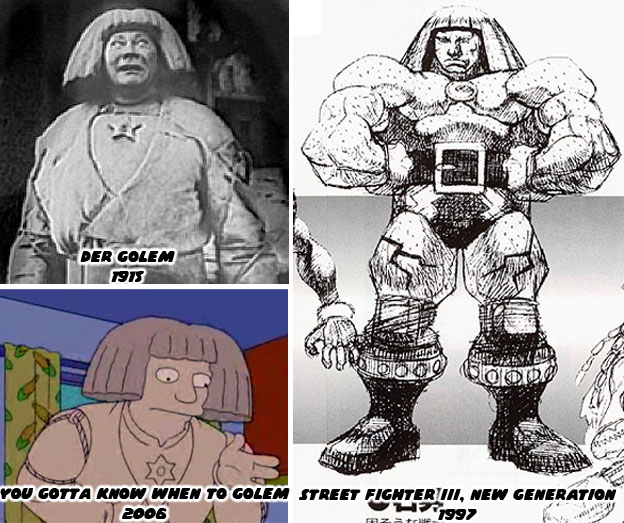
Wild men, monsters, savages and demons were on the extreme edge of designs that worked for the fighting game genre. The team working on Street Fighter III had even kicked around the idea of having a man made of stone, instead of the MMA fighter Alex, or the giant Hugo be the "strong" character in the title. The Golem was actually based on a character featured in what was considered the earliest horror film ever made, an experimental German film from 1915 titled Der Golem. The Golem was a man made of clay from Jewish myth. A person seeking revenge against a great adversary could bring the monster to life by using magic. He would write the name of the person he wanted to kill on a piece of paper and feed it to the Golem. The Golem would then go out and hunt his victim, never tiring, impervious to harm and never stopping until his mission was accomplished. This character was considered the basis for Frankenstein's monster. The character was obscure compared to the more famous movie monsters. That didn't stop the designers at Capcom from putting him on the table or even from the writers on the Simpsons from using him in a Halloween special.


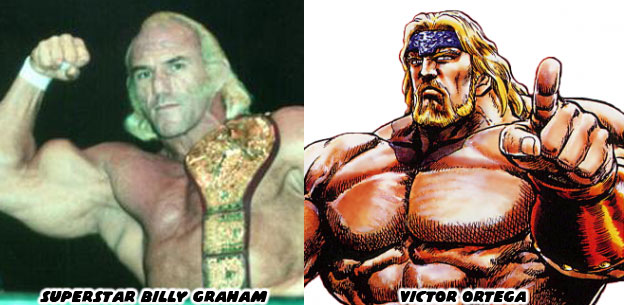
The designers at Capcom came to their senses and scaled back their character choices. They found a good balance between new fighting forms and returning characters as the Street Fighter III series took off. Wrestlers would remain popular choices while casting other fighting games. Artists like Tetsuo Hara would find success in adapting real wrestlers into the Muscle Bomber games. The champion of the universe was a semi-retired fighter by the name of Victor Ortega. The character was modeled after "Superstar" Billy Graham, one of the most colorful wrestlers from the '70s and '80s. Graham was a great in-ring worker and had an amazing bodybuilder physique. His look and gimmick would be copied for generations by Jessie "the Body" Ventura, Hulk Hogan and Scott Steiner. Ortega was one of the most muscular characters ever featured in a Capcom fighting game, easily beating the massive frames of Zangief and Darun Mister.


Despite its long and colorful history pro wrestlers, masked or not, were thought of as the bottom tier of the fight circuit. Television and motion pictures had convinced audiences that the best fighters stood on their feet and traded punches and kicks with each other until one person fell. Wrestlers did not really throw punches and kicks therefor they were not "real" fighters. The reality of combat was completely different. Most street fights and even professional fights ended up on the ground. It would be anticlimactic in most fighting games to have the final boss simply tackle the player and break their arm, even if that was what would work best in the real world. It was rare when a fight stayed upright but allegedly not for the best fighters. People like Bruce Lee and Mas Oyama were said to have ended fights quickly, before they could be taken down. When Oyama would have an open challenge sparring match he would often dispatch opponents with a single punch, usually to the torso instead of the head. Even with that said both men knew the importance of being well rounded fighters. They studied the grappling arts and knew how to stay on their feet even when people were desperate to take them down. Judo, jujitsu and wrestling were forms that they had learned a tremendous amount from. This made them much more formidable than any one style could have ever taught them. Achieving that level of expertise was not easy for the fighters.


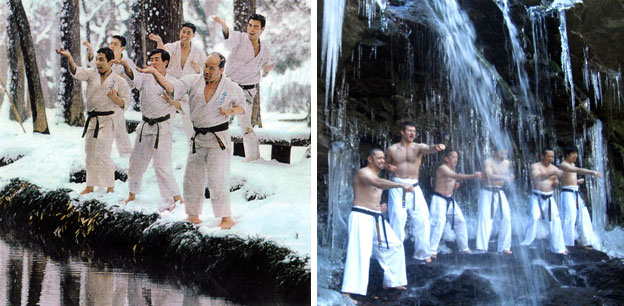
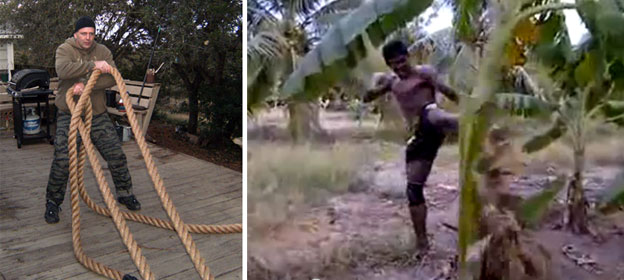
In his pursuit of perfection Oyama lived like a hermit in the mountains for years. He lived in relative isolation, free from distractions and tried to unite the body and mind through his rigorous training. His physical conditioning was brutal. Running, punching, kicking were the only things on his mind, that was when he was not trying to clear his mind through meditation. It wasn't as if he were punching a bag filled with sand either. He would punch and kick hard wood, or trees wrapped in rope and canvas. His skin became rough, his hands and feet calloused. The micro-fractures his limbs suffered by hitting hard surfaces had calcified, making his bones thicker and stronger. He could actually break rocks, stones and bottle necks with the edge of his hands. He trained day and night, in good weather as well as miserable weather. He worked out barefoot, even during the winter. He would run and train under icy waterfalls to harden his mind as well as his test his willpower. When he returned to challenge the community of martial artists he was able to drop most opponents with a single punch. The training regiment would be repeated by other karate practitioners. Many of his Kyokushin students joined Oyama on his journey as his legacy grew. Even after his death his die-hard students kept up with the practice. People would fly in from around the world with the hopes of becoming hardened like steel under the harsh conditions.

Older martial arts systems had their own training techniques which could be considered as brutal as anything that Oyama had suffered through. The Shaolin school, the ancestor of the kung-fu schools, had very strict guidelines. Practitioners ate a diet of vegetables and trained and mediated from morning until night. They too would harden their bones by punching hard wooden dummies, running up and down hills and even focus on strengthening tendons. The feats of superhuman strength and endurance shown by the masters of the fighting arts grew into legend. They truly seemed superhuman, even when compared to other fighters. Those that were strikers had gotten all of the glory. However there were men that had fought just as many opponents if not more than the fabled masters. There were men that had compiled 100, 200 or more undefeated battles in their lifetime. Because they settled the contests through the grappling arts rather than the striking arts they weren't as well remembered. It did not make them any less formidable though.

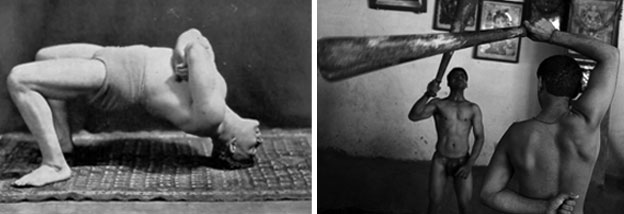
Wrestlers of the various forms applied themselves just as hard at their craft as the Japanese or Chinese fighters did. The conditioned themselves by running, sometimes with a teammate over their shoulder. They developed exercises to help them build strength in their joints, neck, back, shoulders and core. By swinging heavy weights and clubs they developed insane grip strength. They would perform rigorous calisthenics, sometimes thousands of repetitions per day to build stamina. Some of the grappling legends did not have the punches or kicks that made other fighters immortal there were still extremely dangerous. The best wrestlers could dislocate and break bones with ease. They knew how to cut, gouge, stretch and maim opponents without a weapon. Yet they also learned to temper their ability so as not to permanently disable an opponent. The same code of conduct almost chivalrous observed by other martial artists was also practiced by most world class grapplers.


Players realized that the grapplers featured in fighting games were pulled from real world and pop culture influences. Some characters wore masks, others bizarre costumes, most wore traditional uniforms and let their abilities speak for themselves. The grappler was an appealing character because they were grounded in realism. They demonstrated that even mere mortals stood a chance against the martial arts heroes. In fighting games the grapplers did not have projectile moves. The lack of a "fireball" attack did not necessarily hold them back. The most extreme caricatures of a grappler made them iconic to gamers. Zangief, Darun Mister, Alex, Abel and Tendo Gai were just some of the wrestlers featured over the years in some fighting games.

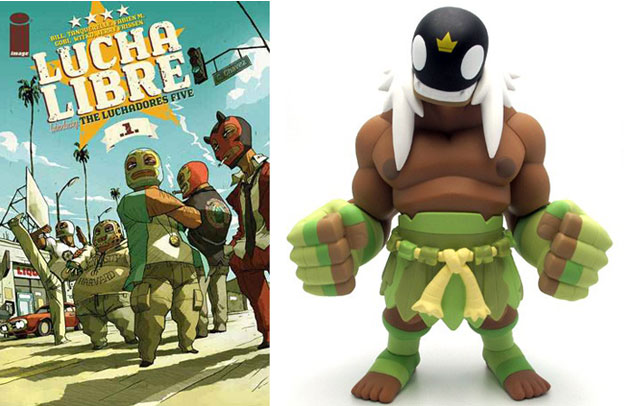
Fans of wrestling history never forgot the influence of Catch on modern wrestlers and MMA fighters. Even comic book artists had been eager to put their spin on the wrestling legacy. The French writers and artists that worked on a series called Lucha Libre highlighted the various genres featured in wrestling matches and even movies. Masked wrestlers, monsters, mad scientists, damsels in distress, cool cars and even tikis had all been featured in one way of another. The most powerful fighter in the series was called King Catch. The masked warrior lived on a tropical island and would be a run in character featured with the Tikitis. The character was designed by Fabien M. Although he never crossed over into the Luchadores Five comics the people at Muttpop hired Monster5 to create a vinyl figure that would fit with the other heroes.


The Catch icons in MMA had shown the limitations of relying on one school of grappling for all the answers. They demonstrated that for every attack there was a defense, and for every hold there was a counter-hold. Fights were fluid and had to be approached as a series constantly changing situations. The people that froze up or relied too heavily on what they had been taught without adapting found themselves on the losing end of a battle. Lee, Oyama and the other fighting masters had come to this realization early on in their careers. The best fighters of the modern era learned that no one school held all the secrets to being a great fighter. The lessons in conditioning and strength training from various disciplines could help make a person physically capable of competing but the mental toughness required was something entirely different. The reason that Oyama and his students studied under harsh conditions was to help train their minds to deal with pain, fatigue or other forces that were beyond their control. The various schools of Karate, Kung-Fu, Judo, Wrestling and Ju-jitsu had taught the world that the striking arts were to be tempered with self-discipline. Knowing how to fight was never an excuse to fight.

Modern gladiators began to pick and choose the best elements from the traditional arts and began re-writing the book on training. They took the hard training from the Asian fighting arts. Building strong bones through repeated striking. Then the new generation of fighters then began developing core and grip strength workouts using classic tools like ropes and kettlebells but with cross training applications as well. The most important thing was the sharing of knowledge between martial arts schools. Students no longer had to limit their training to one system or another. If a fighter learned muay thai strikes from one teacher they were free to go to a different teacher and learn the nuances of boxing as well. Previously there was a stigma associated to "betraying" one school to learn from another. Now many instructors encourage diversity and experimentation. No one school was perfect for every build, body type, expertise or age. Exploration into the various systems meant that competing schools had to become more diversified. This would allow a person to cater to their strengths and build on their weaknesses. The end result were fighters that were well-rounded and would have made the early MMA pioneers proud.


Despite the difficult cross training that the best fighters endured there always seemed to be the one fighter that was better than them. Maybe it was a classmate, a former friend or a bitter rival but there always seemed to be a superior fighter waiting in the wings. Perhaps the opponent got lucky or maybe they had indeed developed a better fighting system. Whatever the case was the loss often changed the path for a legend in the making. The next blog will look at the evolution of MMA in Eurasia as well as the myth of the elderly masters. As always if you enjoyed this blog and would like to sponsor me please visit my Patreon page and consider donating each month, even as little as $1 would help make better blogs and even podcasts!