Wednesday, July 22, 2015

How fight culture became fighting game history, part 10

Manga and animé from the late 70's through the 80's had shaped the world that the designers at Capcom and several other Japanese studios had grown up with. When these people began producing games they were trying to emulate those influences. Some of the clearest inspirations were shown by comparing Karate Baka Ichidai, and Hokuto no Ken (Fist of the North Star) to Street Fighter. Yet even those stories were predated by other martial arts fables. The Chinese had been telling martial arts stories for millennia, known broadly as Wuxia, the legends existed before the Romance of the Three Kingdoms. However it was printing technology that allowed the wuxia to reach across borders. At the start of the 20th century the printing press made many new stories accessible to the Chinese masses. Take the Man Fu Daily from 1909, which was one of the first modern sources of news and the occasional stories exposing modern fighters to the world.


By the mid-century the comic book was finding a place in China. At first the comics were gag stories or political cartoons. Some of the earliest comics rooted in the martial arts were adaptations of the Journey to the West and the Water Margin, which was even referenced in Fist of the North Star. The story of the Water Margin was based on the 108 Stars of Destiny. The rogues, soldiers, bandits and outlaws that made up the cast of 108 heroes changed the landscape of popular fiction. These heroes came from different walks of life, some were fishermen and scholars simply fed up with oppressive regimes and fought back in their own ways.

The Water Margin created the archetypes that would be featured in many martial arts stories, films and even games. Everyone from the large brutish brawler to the gentlemanly fighter was highlighted in the Water Margin. The story of a martial arts pilgrim that travelled the countryside looking for battles sounded familiar. Add that this character became legend by killing a tiger with his bare hands. People might assume it was attributed to Ryu or Mas Oyama but in actuality it was a character named Wu Songsome 800 years earlier. The Water Margin was translated into Japanese centuries later where the 108 Heroes would form the Suikoden legends and become ingrained into Japanese culture.


It was impossible for Japan to separate the influences of the Chinese especially when it came to feudal-era legends. The Romance of the Three Kingdoms and Water Margin adventures inspired the modern RPG, fighting and brawling videogames. These characters were visualized first in wood block prints but really reached the masses in comic book form. The Chinese comic book, or manhua, was considered a contemporary to the Japanese manga. Both words have Chinese roots which roughly translated to comics or cartoons. Both the weekly serial manga and manhua formats that audiences recognize today originated in the 1940's.


There was a sub-genre of the manhua that had gained prominence through the 1960's, running in parallel with the boom in Hong Kong cinema. The lianhuantu were Chinese-stye action comics, they were not always martial arts stories. Some were crime, horror or science fiction stories. The lianhuantu tried to present the fighting and philosophy in a context familiar to the mainstream, in this case using qigong and kung-fu as a point of reference for the character's amazing powers and abilities. It was not uncommon to see popular Western horror characters like Dracula fighting martial arts masters. This mixing of genres was something not usually seen in US comic books. The manhua books came out weekly in newsprint form. Successful writers and artists had to crank out material at a feverish pace.

The person that had the largest impact on martial arts manhua was Wong Yuk Long aka Tony Wong. Considered the godfather of martial arts comics, Tony began producing art and stories as a teenager. He was one of those artists that had to have dozens of pages finished every week in order to keep up with the writing. His output and influence was the equivalent of Jack "King" Kirby, the creator of such icons as the Fantastic, Four, the Avengers and the X-Men. Mr. Wong's first breakout hit was Little Rascals which was released in 1970. The title had a simple style, with large cartoonish characters drawn in early-manga proportions, with large expressive eyes and rough anatomy. The title was later renamed Lung Fu Mun / Oriental Heroes in 1975. The series was notable because it put kung-fu masters in a modern context. The heroes would fight mobsters, thugs and crooked officials to keep the people on the street safe. It was a violent and sometimes culturally insensitive series not for the faint-of-heart. For example, early on in the run the main hero got put in jail where three prisoners drugged and tried to rape him. A fourth prisoner named AIDS scared them off because of his namesake disease.


One of the things that Tony contributed to the genre was gratuitous gore and violence. His work had predated Hokuto no Ken and Baki the Grappler by decades. It was entirely possible that Tetsuo Hara and Keisuke Itagaki, the creators of the Japanese manga titles, were inspired by the Wong stories. However his contribution to martial arts comics was much more important than that.


Tony was not all gore without substance. He penned many different types of stories and heroes through the decades. The majority of which were not as violent or graphic as the subject matter in Oriental Heroes. In fact, a good deal of his work was actually beautiful to look at with just the right amount of comedy, action and drama for readers. The comics with his name on it were either written or drawn by him, in many instances he did both. He would pencil in his work and then go over it with a fountain pen and traditional Chinese hair brush, giving his inking style and those of other manhua artists a distinct look. He had a team of artists fill in details, patterns on clothes or scenery. These artists learned to draw in his style and had incorporated their own elements to the development of the manhua.

The one thing that seemed to make Hong Kong comics inferior to titles from Japan or the west was a lack of print and coloring technology. A great deal of comics were still using four color presses on news stock paper well through the 80's and the early 90's whereas comic studios in the USA had gone to digital color and printed on magazine paper. The one advantage that the manhua had over US comics were the painted and airbrushed panels and pages. The major story scenes or close ups of characters would actually be paintings. When the Chinese black and white ink brush format was mixed with full-color paintings then the panels would jump off the page. The art style would remind audiences why manhua was its own unique comic format and not all that inferior to other graphic novel formats.


Tony Wong worked feverishly to get a comic book company off the ground, creating and closing several studios through the 1970's. In the 80's Tony found his niche when he formed Jade publishing. He had partnered up with rival writers and artists to put just about all the manhua titles under one umbrella. This monopoly on the industry did not go right to his pockets. He worked on promoting the brand through Asia and even the US. He bought up state-of-the-art printing presses and modernized the Hong Kong comics industry almost single-handedly. The company became so large that it was listed on the HK stock exchange, making Tony an overnight millionaire. Unfortunately a Wall Street crash at the end of the '80s saw the end to his first empire. He tried forming a new company right away but was convicted and sent to jail for forgery. After a few years he got out and went right back to work. Trying to find new partners and set up another publishing house. His new company was labeled Jade Dynasty, that company grew and by the end of the '90s had evolved into King Comics, becoming again the largest publisher in Hong Kong. Tony's rags-to-riches-to-rags-to-riches story was inspiring but not as much as what Jade contributed to the martial arts format.


The Street Fighter universe itself was inspired by the manga format and real life fighters. In the 90's artists like Mami Itoh, Masahiko Nakahira and Masaomi Kanzaki from Japan returned the favor by making manga titles out of the games. The influence of the artists to the games became cyclical. The oldest of the manga, Kanzaki's Street Fighter II which was released in 1993, put a face and a name on the master of Ken and Ryu. The other artists enjoyed having their contributions recognized by Capcom as well. Nakahira designed Karin Kanzuki to be a rival to Sakura in the Zero / Alpha series. The character went over so well that she was added in SF Zero 3. The artists and contributors at Udon for the modern Street Fighter comics were even selected to create the endings for Capcom Fighting Jam as well as other related promotional material.


Believe it or not it was Chinese manhua that started the trend of basing comics on fighting games. As much praise as was heaped on the manga and comic book artists the first official and unofficial Street Fighter comics were published in Hong Kong. King of Street Fighter featuring art by Hui King-sam and written by Lee Chung-hing was a 1991 best seller. It presented the cast in a familiar manhua format with powers and abilities based in Chinese philosophies. It predated the Kanzaki and even terrible US Malibu SF comics by two whole years! The comic was officially licensed by Capcom and published by Tony Wong's Jade studios. A knock-off title named Street Warrior written and drawn by Chi Man was released the same year. That comic featured characters that looked an awful lot like the SF cast, except mixed into a science fiction universe.


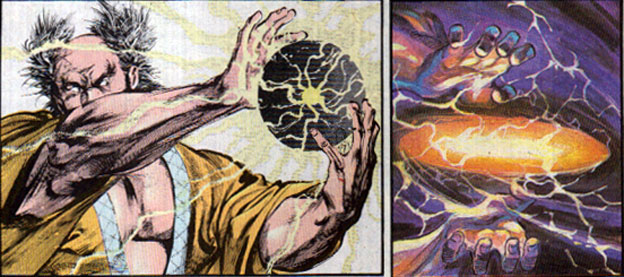
The biggest contribution of wuxia and lianhuantu to the world of design were the artistic representations of the fighting arts and the special techniques that the fighters possessed. The amazing moves featured in the Street Fighter series, including the trademark fireball, were not all based on anime or manga shows like Hokuto no Ken or Dragon Ball Z. Those special attacks and the energy that was associated with them were performed much earlier in manhua. The Chinese and Japanese-speaking audiences that enjoyed fighting comics were used to seeing all sorts of special attacks exploited by the main characters. They were in a way similar to the super-powered characters in US comic books. The audiences knew the basis for their powers were rooted in the martial arts rather than some fortuitous accident or mutant ability. These characters could do things that seemed impossible but did not have to be explained to audiences because the majority were familiar with the concepts of chi.


Masters of the fighting arts could harness and build their chi and concentrate it for a devastating special attack. Some fighting styles allowed the masters to project this chi energy as a ranged attack. Others held onto their chi energy and used it to reinforce their physical attacks. It was not uncommon for comics to feature characters with different types of chi-based abilities doing battle. It was a way to visualize the challenge of irresistible force versus immovable object. The variety of manhua stories and battles created the visual template for how Street Fighter would be presented years later.


The roots of these amazing attacks were planted in qigong philosophy. Chi travelled through the meridians of the body. It could be gathered by a practitioner through meditation and exercise. This chi could then be directed through the body and even transferred from person to person to harm or heal. The use of qigong for meditation or healing was known as wuji / wuchi zhuang. In manhua stories characters could often be seen in a meditative pose gathering chi and allowing compatriots and doctors even to transfer energy onto them. All of the classical concepts of qigong were presented visually. Chi appeared as steam. In some cases it appeared like fire or electricity, evoking the elements that affected qigong practitioners.


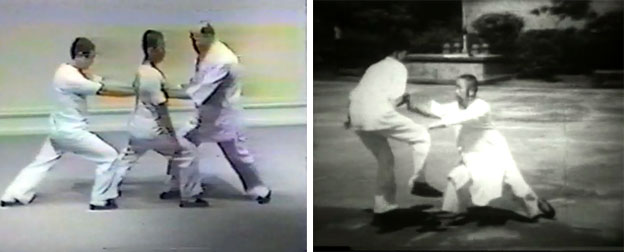
Severe injuries and even poisons could be healed but consumed large amounts of chi. If the afflicted person did not have enough chi to balance out the condition then they could die. In cases like this then someone would have to voluntarily transfer their life force, their chi, onto the injured person to help them survive. According to wuji zhuang belief several people could transfer chi onto one person to help save their life. This could shorten the time it took to heal and could even burn poisons out of a system. The practitioners of this type of medicine were usually seen standing behind an afflicted person and transferring the energy by placing their hands on the shoulders of the person ahead of them. The longer the chain, the stronger the chi. This energy could actually be rejected if the person believed they were beyond saving.

Chi appeared to have a constant push and pull of energy that only martial arts masters could freely control. Chi could be used to increase the energy behind an attack. For example, if a martial arts master wanted to severely injure another master then they might enlist the power of a colleague. The comic series the Iron Marshal, aka Steel Warrior Adventures (circa 1991) by Khoo Sheilung covered just about every reference to chi and the ways in which had been used in manhua. The series introduced the character "Three In One." He was made up of three brothers that were powerful martial artists in their own right but always attacked as one. The force that they emitted was exponentially stronger when they transferred their chi into the lead brother. This allowed them to take down any master that was far more powerful than them individually.


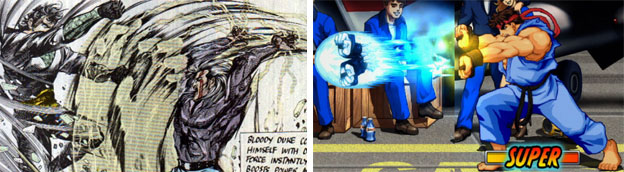
Of course every rule had an exception. Energy did not have to be absorbed by a recipient, it could always be redirected by experienced masters. In another Iron Marshal story two masters, named Elephant and Little Dragon teamed up against a character named the Bloody Duke. They sprung into action and hit the Bloody Duke with their fists and weapons. According to manhua tradition the force of the attack should have destroyed the Bloody Duke's internal organs and broken his bones.


Instead the Bloody Duke grabbed the nearest enemy soldier and transferred the force of the attack to him. The poor soldier could do nothing to block the energy he had received.


The hapless soldier swelled like a balloon and burst, spilling his entrails all over the battlefield. This type of gory spectacle and outlandish martial arts power was one of the reasons why Hokuto no Ken became popular. It also reinforced the rules of chi and the manipulation of power in the graphic arts.


Chi manipulation colored the stories featuring martial arts characters. These stories became legend and were turned into comics and films. As the myth of chi manipulation grew so too did its influence on Western culture. Chi was the inspiration behind the Force in the Star Wars series. In Western-produced fighting games characters could project energy from their hands, it didn't matter if the developers knew how or why this tradition was started. Chi was not the only Eastern myth that influenced the evolution of fighting game characters. The next blog will dig deeper into Buddhist and Shinto traditions. As always if you enjoyed this blog and would like to sponsor me please visit my Patreon page and consider donating each month, even as little as $1 would help make better blogs and even podcasts!
Tuesday, July 21, 2015

Representation Matters! Or, what happened to Birdie, part 8...


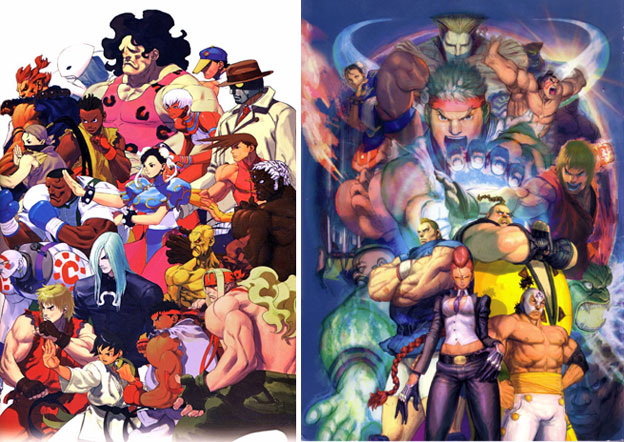
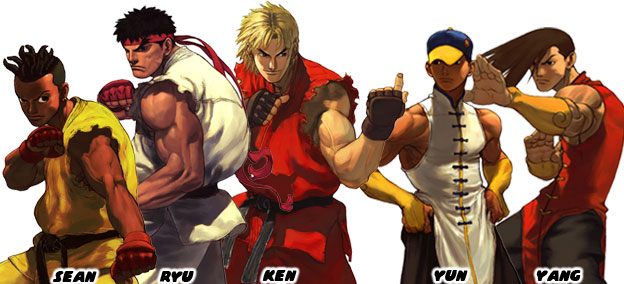
Past the mid '90s Capcom was a completely different studio. The rise of 3D and the 32-bit consoles had changed the gaming landscape. Successfully publishers could no longer ignore home systems market. The arcade market had yet to decline but the writing was on the wall. Studios had to branch out or they would fail. Capcom found success with new franchises such as Breath of Fire and Resident Evil. The fighting game genre was starting to peak and the studio wondered if they had one more great title left in them. Street Fighter III tried to use the elements that made Street Fighter II work. The project began by starting off by deciding who should return. Ken and Ryu were selected to be the only familiar faces and an entirely new cast would fill out the roster. I would argue that there was a lot of redundancy in the new faces. There were a pair of Chinese twins named Yun and Yang that played similarly to each other. They were meant to be a sort of younger Chinese equivalent to Ken and Ryu. Their red and white uniforms were reminiscent of Ken and Ryu's. There was also understudy of Ken called Sean that had similar moves to the stars of the game. I think the team was having too much fun with the names of the new faces. There was the obvious Yin and Yang jab but also the more subtle Sean-Ryu-Ken which was a play on the fireball attack or Shoryuken.


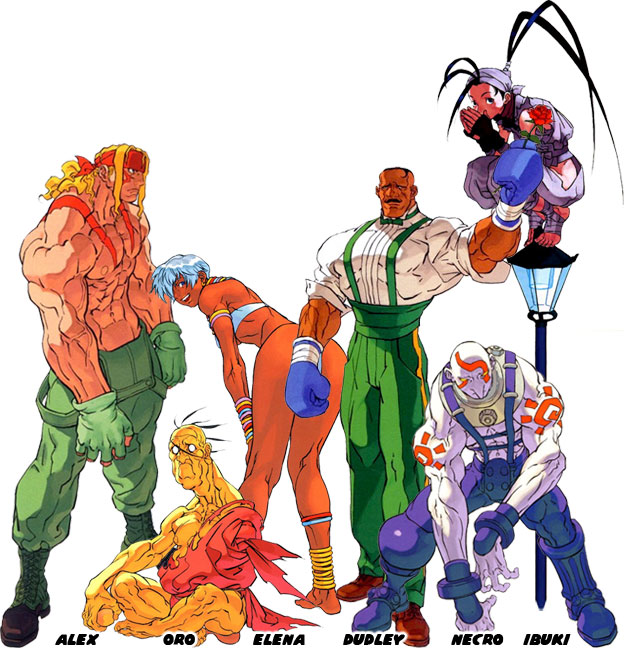
The three karate fighters in all and two kung-fu fighters ate up a lot of the space in the roster. The only duplicates in the original Street Fighter II lineup were pro wrestlers and those were dropped early on so that the team could fit in different styles. Sean was well received, especially as a black minority character. Unfortunately he lacked the impact of Sakura when she debuted. The rest of the cast was more unique. Alex was the star of the new game. He represented an entirely new style of fighting, MMA actually, and was somewhere in between a striking character and a grappler. He actually had elbow attacks similar to Adon, headbutt attacks similar to Birdie and suplex throws similar to Zangief. His size, speed and strength were unique in the genre. The rest of the cast took some chances with the character designs and forms represented. A heroic boxer had finally made it into the series. Moreover Dudley was a very positive black role model. He was not the only minority in the game. Elena was an African that had studied abroad, in Paris first and then Japan. Her dark skin was contrasted by bright blue eyes and white hair. Her costume left little to the imagination. She didn't have the same forethought into her design as Chun-Li. Instead Elena was very much like the characters in anime, pandering heavily to fan service, which was a trend that Akiman was trying to break when he finalized Chun-Li. This was odd considering that the lead artist on this project was Kinu Nishimura, she was heavily influenced by Akiman. Elena did have a unique form of fighting. She used capoeira and there had been some rotoscoping work by the animators to make sure that the moves looked as fluid as possible. Capcom designer Daigo Ikeno was a capoeira practitioner and helped with the reference work.

The game also introduced a female ninja practitioner named Ibuki. Her look was unique and not as grounded in history or anime making her a fantastic addition to the title. The game was not without its own Blanka and Dhalsim, or two extreme characters. An elderly one-armed Brazilian (he actually kept his other arm tucked inside his gi) was a master of a unique fighting art, it was a mix of psychic attacks and judo throws. He was very strong and fast despite his age. Oro was based on Helio Gracie, the co-founder of the Gracie school of Brazilian ju-jisu. The character design was unique because he was the oldest character in Street Fighter mythology, almost twice as old as Gen, the previous elderly character. He demonstrated that age did not make some fighters less dangerous. The other unique character was Necro. The young Russian teen had been experimented on by a mysterious group of religious and scientific zealots. The various experiments they did to him left his muscles, skin and bones like rubber and gave him the ability to shock opponents like an electric eel. Meaning he had some of the best qualities of both Dhalsim and Blanka,


The game did well with audiences. The upgraded arcade engine allowed for larger sprites, a broader color palette and more frames of animation. Having three black characters, including a woman of color was a tremendous credit to Capcom. They were showing an active interest in inclusion and diversity with their lineup. Unfortunately for many audiences and arcade owners this was not the game they had expected. The lack of returning characters and redundant new characters gave the game an unfinished feel. Capcom had established a president in Street Fighter Zero that was tough to beat. They could bring back classic characters and make them work again and again. Upgrade kits were in the planning stages. Each one could introduce a new character if not classic character. Before long Chun-Li and the giant Hugo were put in the game. Hugo was actually meant to be in the first release but the team didn't finish his animations in time. There was no doubt that the time spent creating the redundant Yun, Yang as well as Sean may have been better spent on entirely new figures. Hugo was representing the Final Fight cast as Chun-Li was a return to the SF II lineup. Gouki / Akuma had returned as well but was a hidden character in the first few builds.

The new characters Urien, Q, 12, Remy and Makoto were a mixed bag. Urien was a pallet and head swap for the new final boss Gill. Meaning that another redundant character was also featured in the title. Q was a nonsensical masked secret agent that moved and fought like a robot. Remy had many of the attacks from Guile and Nash but with a look that was pulled from the rival King of Fighters series. 12 was a shape-shifter that was reminiscent of Necro but was also heavily anime-influenced. Of the final new characters added Makoto had the most traditional design elements applied to her. She was a karate fighter, yet her form was completely different than Ken, Ryu, Sean and Gouki. This meant that for audiences she also controlled differently and required some new strategies to use.


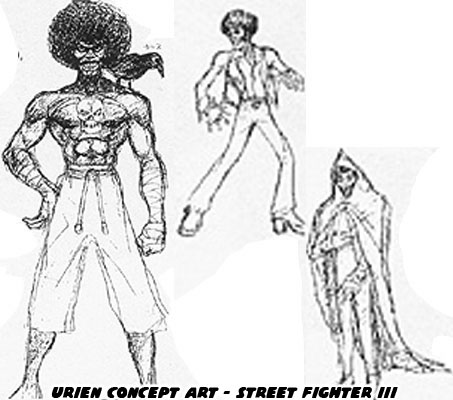
With the exception of Makoto, the last new faces added to SF III were lacking. They didn't have enough time to be evaluated or redesigned. In fact the original plan for Urien had once again fallen on old stereotypes. Had the studio not gone with the pallet swap of Gill who knows how audiences would have reacted to the afro-sporting, disco pants wearing antagonist. I don't think it would have been a warm reception. When development began on Street Fighter IV the approach for new fighters was completely the opposite of SF III. The studio started with Ken, Ryu and the original World Warriors from SF II as all returning members. Then they had a small group of new faces that they would introduce to fans. The characters were designed mainly to appeal to the West, where Capcom had hoped to gain a lion's share of the games profits. The sexy spy Crimson Viper was meant to appeal exclusively to US players. Despite the pandering most gamers in the US ignored the character. Of course the fatty Rufus was forced onto audiences because he was funny. The final two spots would be taken by a judo-ex-military fighter and a masked Mexican wrestler.


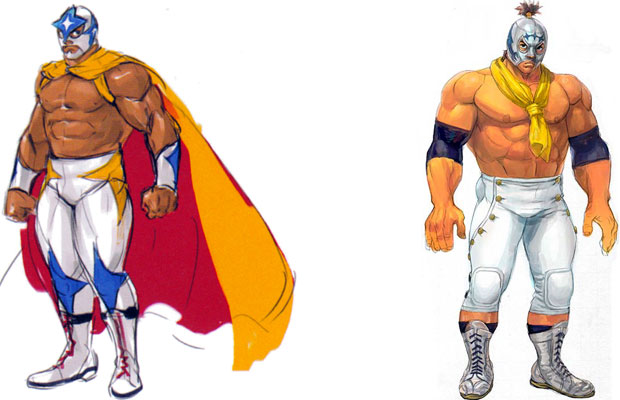
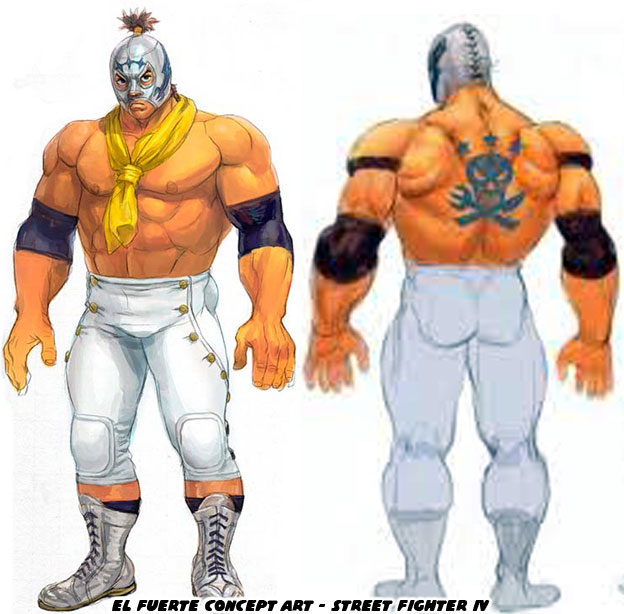
The lead designer on this game was Daigo Ikeno. He could not seem to find designs that worked as well with audiences as the SF II cast had. I think that the choices pushed by producer Yoshinori Ono had something to do with why the characters were lacking. A few blogs back I mentioned how there was a strong black character planned for the game that was eventually turned into Rufus. Something similar happened with El Fuerte the enmascarado, or masked luchador. In the early planning stages El Fuerte had a unique costume that was inspired by actual lucha libre livery. He had the mask, the tights and even a cape. Which was something that performers had worn to the ring since the earliest days of pro wrestling in Mexico, which would be over 80 years ago! In the earliest stages the design was every bit as good as something that Tetsuo Hara could have come up with for the Muscle Bomber series. In fact I would say that the original El Fuerte was a better design than El Stinger, the Mexican wrestler created by Hara. El Fuerte did not necessarily poach and designs from a masked wrestler living or dead. The star on his mask was even a nod to the masked wrestler that had been planned for SF II. But then something happened…


It was decided that El Fuerte was not unique enough. At least not unique enough to be ranked against the World Warriors. So his costume was redone, his mask was redone and even his purpose for fighting was redone. The team decided that it would be great if he was a masked wrestler that was obsessed with cooking. In this way they could name his attacks after food. The Habanero Dash, Tostada Press, Fajita Buster, Gordita Sobat, Calamari Slide Propeller Tortilla, Picadillo Jump, Quesadilla Bomb and Guacamole Leg Throw. The names were an insult to the fantastic and dangerous moves that Mexican pro wrestlers performed on a weekly basis. To add insult to injury, the mask, which is sacred to the performers was even stripped of its origin to reflect the silly obsession with cooking. There were forks coming out of lighting bolts in the early redesigns. The tights were turned to chef pants, at one point El Fuerte even had tattoos or a fork and knife on his back. The three stars that adorned his mask was meant to mimic the Three Star Michelin rating given to the top restaurants around the world. Each decision that the team made took away from the character, it did not add to him. It was as if the designers were bypassing the lessons from previous generations and were focused on the punchline.


It was up to the team to decide how the tone of the game was supposed to be. The new graphics engine allowed for some realistic 3D models. When the majority of the cast fought each strike looked like it had weight and power behind it, giving the game a serious tone. But then all of the models had silly expressions applied to them when certain characters performed super moves. It was a mix of cartoon and realism that was sending a mixed message to audiences. Either the game was a return to the classic challenging Street Fighter II, or it was more anime influenced like SF Zero and SF III. Being caught somewhere in between did little to improve the game itself. The only signal that was not missed was how minorities and their fighting arts were being presented. Mexican and later on Turkish wrestling was seen and shown as an absurd form of fighting not to mention that Americans were stupid, morbidly obese participants.

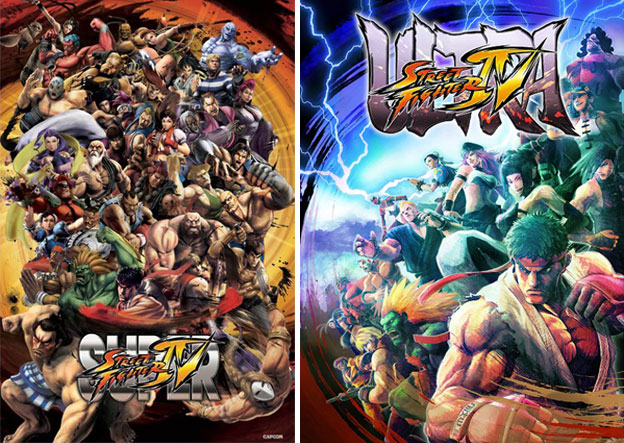
 As the reception to the new characters were met with a lack of interest the team went back in time and started putting in as many classic characters as they could with each update. The majority of characters from SF III and SF Zero had returned by the time Ultra Street Fighter IV. In the rush to return to fan favorites the designers missed a number of important details. The characters from Zero had not matured. Remember that in continuity Zero happened shortly after the events in the first game. Ryu, Ken and Chun-Li were still young adults and Cammy and Sakura were girls. In Street Fighter III Ryu, Ken and Chun-Li were adults. During this timeline Sakura and Cammy would have been adults as well. Instead Street Fighter IV was pitched like the Zero series. It would tie together the events of SF II and SF III. Only this time Daigo Ikeno would not go out of his way to redesign the cast so that they were all unique to this continuity. Instead the team picked and chose the various incarnations that would appear in the game even if their designs were from two or three different games.


It had been almost 10 years since the last Street Fighter III and the first Street Fighter IV had appeared. In that time audiences never forgot what the series meant to them while growing up. Seeing a diversity of male and female characters in SF IV was fantastic. It was also nice to see different nations represented, mainly because they were the original World Warriors. Audiences from around the world would be able to identify with a character or two, including the new ones. It would go a long way in making kids feel validated, especially when they were being underrepresented on television and movies. I only wish that Capcom had done a better job at presenting minorities. They were never as disrespected in any previous version, why did the team start now? Street Fighter IV had missed the boat with new faces and after seeing what was done to Birdie in Street Fighter V I shudder to think what else the studio had planned for non-Asian and non-White British characters. As always if you enjoyed this blog and would like to sponsor me please visit my Patreon page and consider donating each month, even as little as $1 would help make better blogs and even podcasts!
Monday, July 20, 2015

How fight culture became fighting game history, part 9

Ancient Chinese medicine was based around the principals of Chi (spelled qi) in a collective form known as Quigong. It was internal energy, sometimes considered life force. It was constantly flowing through everyone and everything. It was the philosophical concept that George Lucas had based "the Force" on in the Star Wars film series. The most obvious example was that qigong was used as the root for the name of Qui-gon Jin, the mentor of Obi-won Kenobi. It was best reflected when Yoda gave Luke Skywalker the famous speech about the force flowing through all things. Substitute the Force with chi and the philosophies were almost interchangeable. "Size matters not. Look at me. Judge me by my size, do you? Hmm? And well you should not. For my ally is the Force, and a powerful ally it is. Life creates it, makes it grow. Its energy surrounds us and binds us. Luminous beings are we, not this crude matter. You must feel the Force around you; here, between you, me, the tree, the rock, everywhere, yes. Even between the land and the ship."


In the Star Wars films the Jedi that used the dark side of the force (the Sith) could shoot electricity from their fingertips. In manga and manhua some characters could generate similar powers in the form of chi and direct them at enemies. The fireball in SF was one of the most famous of the chi-based strikes. The origin of the fireball was based on qigong practice. The word Fa Jin best described the ranged special attacks in Street Fighter. The word roughly translated to “release of energy,” or in western circles "explosive power." Fa meant strength while jin meant energy. An example from popular culture would be Bruce Lee's one inch punch. This punch originated with the wing chung style of boxing and was featured as a technique in the Kill Bill movie. Lee was able to generate tremendous power for the strike at close range using a combination of rotational mechanics with his wrist and torso as well as a concentrated use of chi.


The way that fa jin worked was a focus of particular hard and soft qi techniques. Muscles had to be loose, chi had to be concentrated, tendons had to be contracted and the skeleton extended simultaneously. This released physical force and chi energy as one. Bruce Lee had a very loose and fluid style, he never tensed up before delivering punches or kicks and as such delivered strikes with tremendous power. In the film Enter the Dragon Bruce Lee explained part of his philosophy. "A good martial artist does not become tense, but ready. Not thinking, yet not dreaming. Ready for whatever may come. When the opponent expands, I contract. When he contracts, I expand. And when there is an opportunity, I do not hit. It hits all by itself."

The best martial artists were able to fight almost instinctively. They could observe a fight objectively as it was happening and look for nuances in spacing and angles of attack while trusting in their techniques and letting the strikes flow automatically. Practitioners of fa jin had tremendous mental and physical strength in order to perform these strikes. The average person could spend years developing one successful fa jin strike. In the Street Fighter series the characters could perform many types in rapid succession, demonstrating that they were far more than regular martial artists. The movement of the hadoken, and many other fireball attacks in manga and animé derived from the core of a person's chi and exploded from within, they were examples of ranged fa jin. Ryu's hadoken, Chun-Li's kikoken and Guile's sonic boom attacks were all types of this explosive energy.


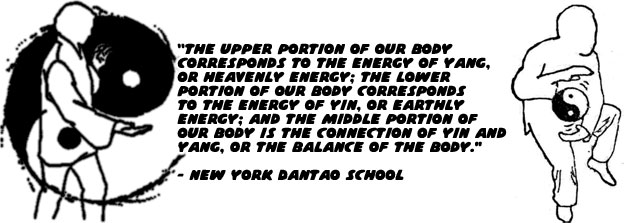
The physical core of a person, near the lower abdomen, was the center of gravity. In qigong it was also the spiritual core as well. The meridians constantly cycled energy through the body and circulated at the core. The upper half of the body was closest to heaven and was constantly striving to clear the mind from distractions and elevate the consciousness. The lower half was concerned with expelling energy and satisfying physical impulses or Earthly concerns. This constant exchange of energy circulated and found a balance in the core. In a martial arts the full release of a strike originated at the core of a person. The focus of breath came up through the diaphragm and was expelled in a short but powerful burst, the resulting expel of energy was accompanied by a yell. In karate this was a “kiai” literally a spirit yell or a spirit meeting. This focus on breathing, generating energy and striking at the same time was passed down from Chinese kung-fu and distilled into Japanese karate. The concept of a core of energy and vitality existed in several schools of martial arts, and not solely in Asia. Strength and power were drawn from the core and could be expelled as fa jin. Study the art and animations for Ken and Ryu's hadoken, the energy came from the core, was gathered in the palms and was drawn out before the characters struck.


This concept was exploited in the boss character Seth in Street Fighter IV. He had a literal yin and yang sphere where his abdomen should have been. This "Tanden Engine" was generating power for him and allowing him to absorb the attacks of his opponents as well as sending energy out.

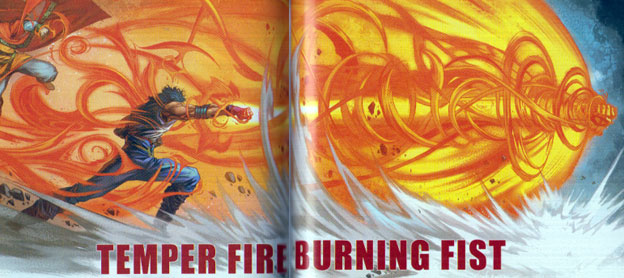
Fa jin explained the philosophy behind the ranged attacks but visually they were inspired by manga and manhua stories. The attacks used in the martial arts had various naming conventions. The first blog of this series mentioned how early Shaolin Quan used metaphors for nature to describe techniques like "flood sweeping the land and floating like a feather." Other schools of martial arts also had developed similar naming conventions for the attacks. These names were popularized in films like Buddha's Fist and Crouching Tiger Hidden Dragon. In fact a character from the Four Constables manhua named Yuxia Tie aka Iron Hands used the crouching tiger hidden dragon technique as one of his moves. Another one of his moves, the Temper Fire Burning Fist was more reminiscent of a fireball attack featured in Street Fighter.


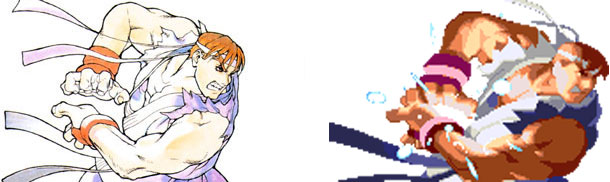
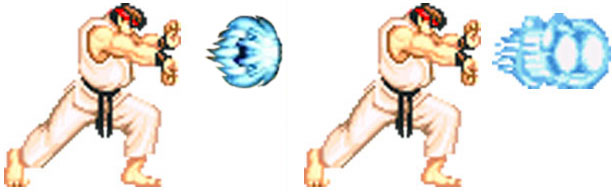
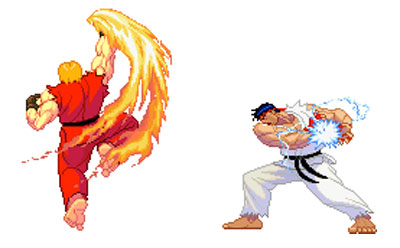
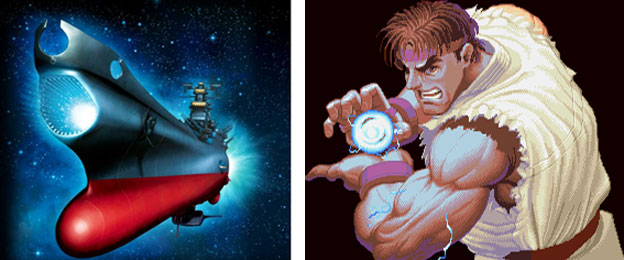
Street Fighter was filled with moves that were either metaphors or literal translations describing the attack. Hadoken was made up of three Japanese words (HA, DO, KEN) that translated to punch wave fist. In the original Street Fighter the attack was presented as a golden ball of energy. In Street Fighter II the same attack appeared as a light blue ball of energy with two palms traveling within it. The hands were in the same pose that Ken and Ryu had struck when sending out the energy blast. This was very similar to how ranged strikes appeared in manhua stories. A fa jin slash, chop or punch was actually drawn as a force of energy with the same position of the hands. The manhua titles that featured this artistic stylization predated those of Hokuto no Ken / Fist of the North Star.
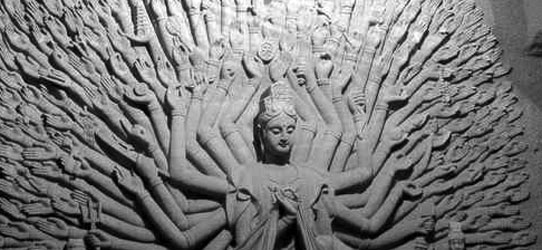
The attacks of Kenshiro in Hokuto no Ken were not completely original either. The drawings featuring multiple hands in different poses were pulled from the Indic Mudra which were spiritual gestures featured in Hindu and Buddhist iconography. Each position of the hands and fingers in the mudra represented a state of consciousness. There were 108 poses in total. Whether the number had influenced the 108 heroes in the Water Margin or the 108 stars of destiny was not known.


Each of the punches delivered from the 100 Crack Fist of the North Star was drawn in different pose as well. These hand positions were not accidental but had been seen in earlier manhua stories. Hokuto no Ken featured a great deal of spiritual iconography based in Buddhism.

It was originally difficult to see the palms hidden in the fireball animation on the original SF II. The redrawn SFII HD sprites made it much easier to see how the attack was supposed to look.


The choice of color for the special attacks in the SF series was also done with forethought. The light blue color associated with Ryu's hadoken signified strength and purity. The attacks of other characters also had their own individual colors. In the previous blog I had mentioned how special moves in HNK had distinct colors and shapes as well. The more aggressive characters and fighting styles had moves that looked jagged, or appeared frightening like a ghastly specter, or elemental like fire and lightning. The good characters had attacks with smoother lines and softer colors.


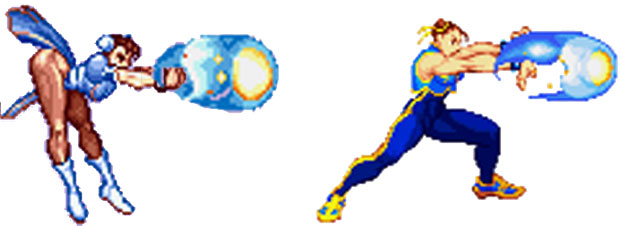
Street Fighter enjoyed the use of fireballs with unique shapes and coloring schemes. The "Sonic Boom" from Guile rotated like a helicopter, which was appropriate for a military fighter pilot. The "Kikoken" of Chun-Li not only reflected her mastery of fa jin, but it also highlighted the grace and beauty of the character. Kung-fu was considered to have more superfluous moves than were actually required for fighting by the modern fighting schools. Styles like karate and muay thai focused heavily on direct strikes and maximum force whereas kung-fu seems caught up in preserving techniques and traditions even if the forms were redundant. This contrast and comparison to kung-fu might explain why Chun-Li's ranged attack was presented as a swirling multicolored force. It glided across the screen like a jellyfish. While beautiful to look at, it did not have the speed or range of the hadoken from Ken or Ryu.


In manhua stories these ranged attacks were constantly growing and evolving. Both good and evil characters were developing variations of their own techniques or even of stolen techniques.
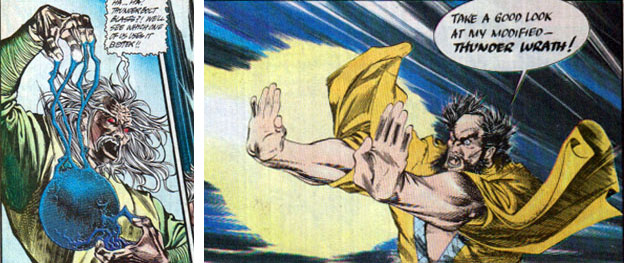
In the Iron Marshal comic two of the main characters were pursuing ultimate forms of the Thunderbolt Techniques. Tienway Champ, the mentor of the Iron Marshal, stole these techniques from a maser named the Great Thor. When Tienway's dark chi was combined with the technique he was capable of forming Thunderbolt Blasts of evil energy, represented as a dark fireball. By comparison the Great Thor never stopped evolving his technique and formed a more powerful variation called the Thunder Wrath. This new blast was bright by comparison and could overpower the dark version.


In the SF series the characters had developed their own variations of striking moves as well. Ryu had a focus on more powerful hadoken strikes, in Super SF II his fireball attack had changed shape from palms-shaped to a glowing sphere of energy. In SF III Ryu's had several variations, one of his most powerful ones, the Denjin Hadoken had lightning effects added to the attack. A focus on the shoryuken (rising dragon punch) was put on Ken. These attacks began to be animated with fire effects and did more damage than a regular shoryuken. By SF III Ken had several variations of the move as well, including the Shoryu Reppa (rising dragon destroyer) and Shinryuken (divine dragon fist) to distinguish himself from Ryu. The use of effects like lightning and fire harkened back to the elemental inspirations of kung-fu. Qigong observed the elements as having chi and effecting the meridians of the body. If these forces could be tapped then the striking power could be stupendous.


The creator of the original Street Fighter, Takashi Nishiyama actually credits an animé series for inspiring these moves. Takashi stated in a 1UP interview "…the Hadouken was inspired by a Japanese anime called Space Battleship Yamato. In that, the battleship has a laser missile called Hadouho -- it collects energy and then blasts it into space, destroying the enemy. That that's where I got the idea for the Hadouken. The Shoryuken and Tatsumaki Senpuukyaku were original ideas -- I took martial arts moves and exaggerated them so they looked like special attacks."


The Space Battleship Yamato series was originally aired in 1974 and several remakes have appeared since. The battleship would gather cosmic energy like a martial artist would gather chi and then expel it in a brilliant flash of energy. The wonderful moves used in Street Fighter were pulled from the martial arts as well as things well outside of the culture. These influx of ideas and influences would continue shaping the world that the developers were growing up in. As always if you enjoyed this blog and would like to sponsor me please visit my Patreon page and consider donating each month, even as little as $1 would help make better blogs and even podcasts!
Sunday, July 19, 2015

The return of Charlie Nash, or how zombies make the best fighters...

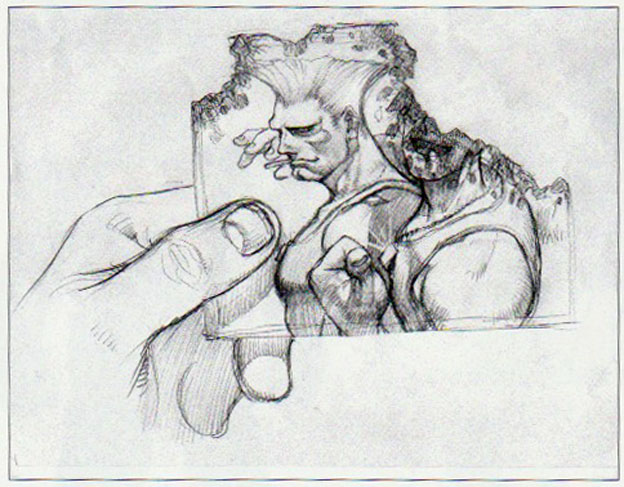
Of the characters announced so far for Street Fighter V I think the most interesting was the return of Charlie Nash. I thought he was a great character in the Street Fighter Zero / Alpha series. I liked him partially because he wore glasses. For those that didn't get a chance to play as the soldier he was essentially the American representative for the series. He was created the person whose death Guile was avenging during Street Fighter II. What was most interesting was that this character did not have a face, only a name when Street Fighter II came out. In fact even the developers at Capcom didn't know what Charlie looked like originally. In some unused art by Bengus the only picture that Guile had of his friend had the face burned out. Making him the original gaming unknown soldier.


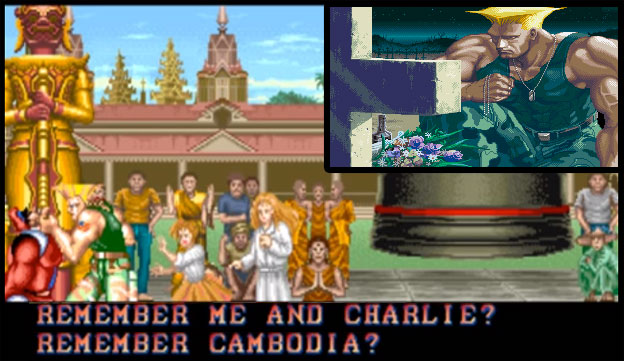
Audiences didn't know if Charlie was a friend or family member killed in the line of duty. Guile would hoist his dog tags in the air in some victory animations. The myth behind Charlie grew as the endings in the Street Fighter II were changed and new details were added. At first Guile would threaten the Dictator and in other versions Guile would visit the grave of his friend. Guile was a visually unique character, with his military look and odd haircut, but he became interesting thanks to his ending. He attacked the Dictator after his defeat, grabbing him by the collar. It was a palpable rage when he brought up the names of Charlie and Cambodia. Audiences didn't know quite what happened but it sounded like something serious went down. When Charlie Nash was killed Guile was younger, considered a runt, Only Guile's wife and daughter were able to talk him out of killing the Dictator. Some of the endings in the game were silly but most were played out like a dramatic movie, Guile's ending was no exception. He had abandoned his family in the pursuit of revenge and was reunited once his vendetta was completed.


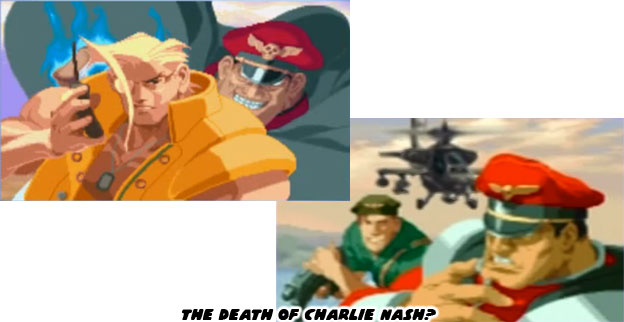
Charlie Nash died officially during the events of the Street Fighter Zero / Alpha series. What was unique was how differently he died during each release of the game. In one version he had found a hideout for Shadowlaw and was radioing home base for reinforcement. The Dictator snuck up behind him and attacked him. All that was left was a bloody dog tag. It didn't really look like Cambodia but more like the US Southwest.


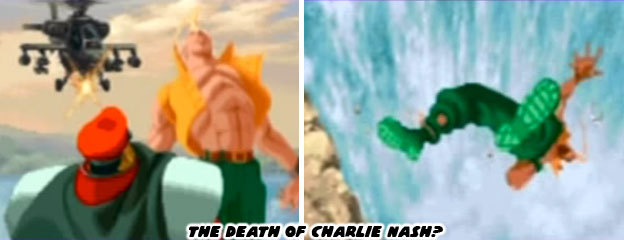
In the second release of the game Nash had the Dictator on the ropes, somewhere in Brazil, possibly the Iguazu Falls, when he was shot in the back by a Shadowlaw helicopter and fell to his presumed death. When the Shadowlaw soldier asked the Dictator if he wanted to confirm the kill the Dictator said that no one could have survived the fall. Again, all that was left of Nash were some dog tags. By the third release of the game Nash was flying a jet and had blown up the base of operations for Shadowlaw but was still on the hunt for the Dictator. So in one out of the three endings he did not die.


It was an interesting contrast from the previous game and this was something that the Street Fighter series had become known for. There were multiple endings in the games yet each ending did not necessarily work with every other one. There were even endings that contradicted the ending of a previous game. Sure the Dictator could have captured Nash and turned him into one of his brainwashed soldiers. He had done this before to soldiers and special agents the world over, including his prized subject the Delta Red agent known as Cammy. 


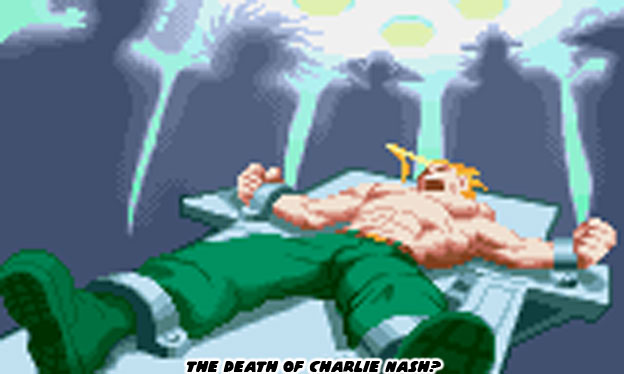
Then again Nash could have been captured and brainwashed by a different group. In Marvel Super Heroes vs Street Fighter the Shadow version of Nash made his debut. He even popped up in X-Men vs Street Fighter. During the crossover games it was hinted that some mysterious group was responsible for his new form. Were these mad scientists, or cultists of some sort? All gamers could do was speculate as to the "true" fate of Charlie.


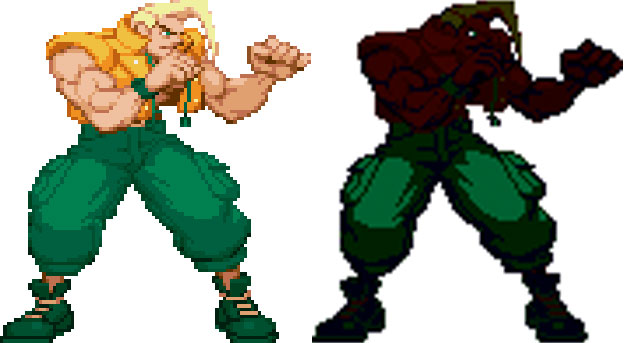
The dark Shadow version was literally a sprite of Charlie from the Zero series that had been discolored to make him look as if he were in a perpetual shadow. His eyes glowed and his attacks took on a blue hue. He had the same basic attacks and audiences began wondering if the character had returned from the dead. It did not become official until Udon began writing about the character and his history and of course when Street Fighter V was announced, almost 20 years since the character had debuted.


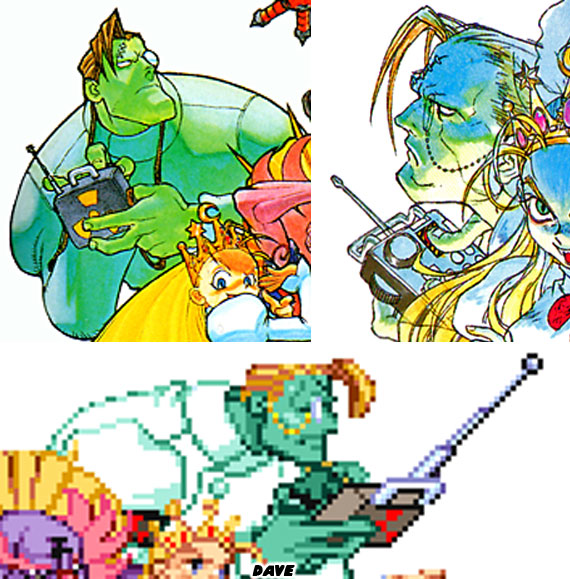
Of course many eagle-eyed Capcom fans said that the new Charlie Nash looked an awful lot like Dave. He was one of the alien henchmen characters from Cyberbots: Full Metal Madness. He served under Princess Devilotte de Deathsatan IX, an over-the-top lolita-dressed alien bent on universal domination. I could see where people would see the same hair and glasses on both characters. Dave debuted a few months before Charlie Nash, it's entirely possible that the artists liked the look of the character and incorporated some of his visual cues on Charlie as well.


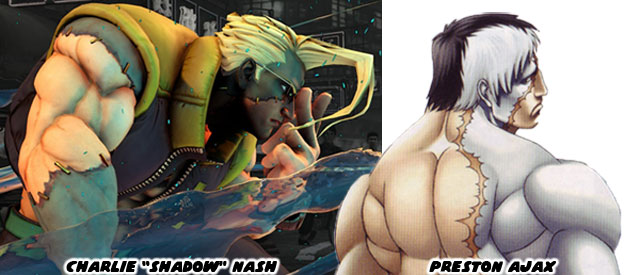
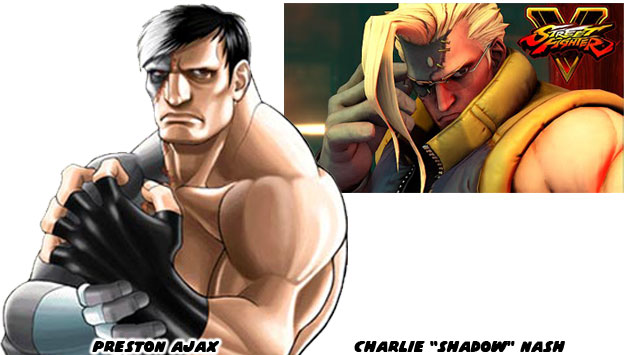
When I saw Charlie back from the dead, complete with stapled and stitched body parts, I was reminded of a different fighting game character. Preston Ajax was a sub-boss character from the game Fighting Layer. The character was a mercenary that had been mortally wounded in a bomb attack. He was pieced together with the remains of his brother, who was a fellow mercenary. The discolored portions of his skin were like dead tissue, very macabre. I got the same feeling while looking at Charlie. Ajax was actually inspired by the manga character Black Jack. He was injured when he stepped on a land mine as a young man. His only friend, a young black boy named Kuro, donated his skin for a transplant. This contrast made him one of the most memorable manga heroes ever created. Black Jack went on to inspire the creation of the Tekken series as well, but I digress...


Preston was created by ARIKA, the studio that was founded by many Street Fighter II members. The game Fighting Layer that Ajax appeared in could be considered a revisit to the original plans for Street Fighter II. I wonder if it was a coincidence that two military characters with similar "back from the dead" origin stories ended up in fighting games or if it was an idea that the SF II team had kicked around before they split up. I guess the world may never know.

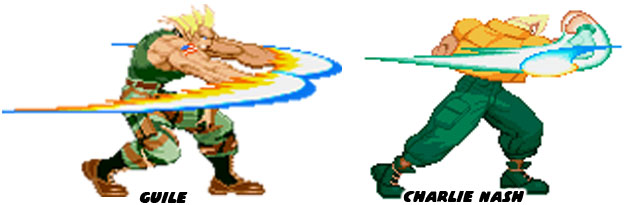
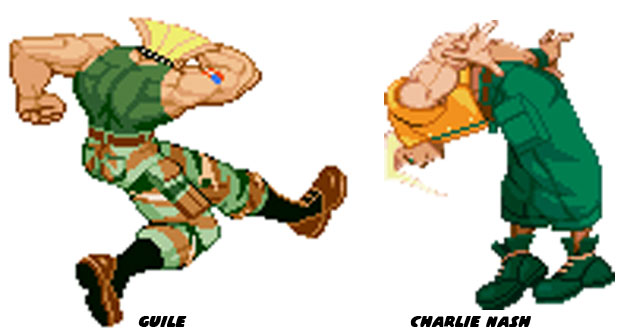
But there was more to the character than a cool background and a connection to one of the Street Fighter II characters. The series had always been about combining a great fighting game engine with characters that could perform amazing moves. Ken and Ryu had the Shoryuken or "Fireball" attack. In the original game only they and Sagat could perform the move. In the sequel it was the same thing but Guile was one of the new characters that could also perform a ranged attack. Guile's version was called a Sonic Boom. When Charlie appeared as a playable character a few years later he too was given the Sonic Boom attack. However there were nuances that separated Guile from Charlie.


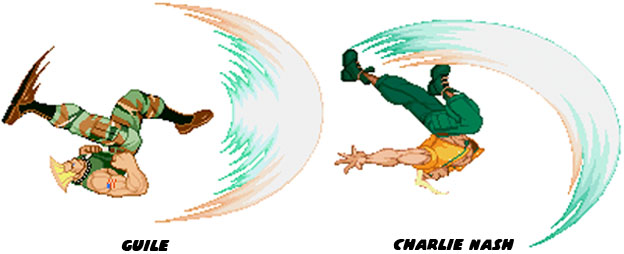
It was assumed that Nash had taught Guile the special attacks. As a master of these unknown fighting arts Nash was able to perform the same moves with a little more ease. For example he would perform his Sonic Boom attack with one hand while Guile used both. That was not the only special move that Guile possessed. He also had a Flash Kick, which was a backflip and kick combined into one. Nash also had a version of this move except he did it with his back turned to his opponent. Again the move looked a little bit easier for Nash to perform.


Both moves happened so fast that audiences didn't always catch the frames of animation that Capcom placed on them. There was a tremendous amount of forethought that went into how each fighter tumbled in the air. Each actually led with the opposite kicking leg in order to create the momentum for the attack. Since Charlie had his back to opponents he needed to be able to kick as well as twist in the air, this translated to him leaping cross legged. He would kick his back leg out and then tuck it in as his other leg created the arc for the Flash Kick. Then just before he landed he would complete the twist and land facing his opponent.


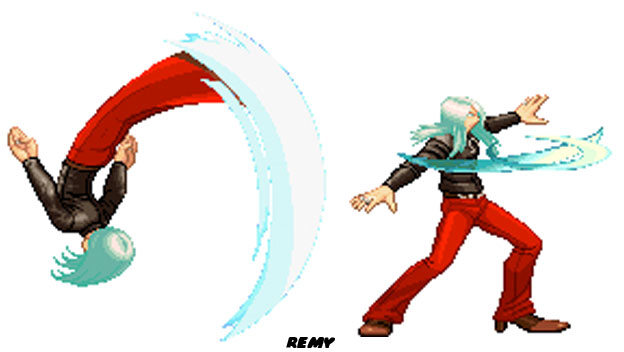
Both moves looked fantastic even if audiences didn't spend the time dissecting how each was performed. If assigning special attacks was all it took to make a character memorable in the genre then it would apply to any new character introduced. Right? Capcom pushed their luck in Street Fighter III 3rd Strike with a new character called Remy. This character had all of the moves of Guile and Nash and could perform them with even greater ease than the military fighters.


This character didn't have a fraction of the forethought that went into the design of Guile or Nash. It was a bit insulting to the legacy character that some skinny Frenchman with no build for fighting or no interesting origin would have the same techniques. Not only that he could also throw Sonic Boom attacks while crouching which was something that neither Charlie nor Guile could do. Audiences wondered why put in a character with all of Guile's attacks in Street Fighter III rather than just return Guile. After all the studio had brought back Chun-Li in the series as well. Remy was one of the more forgettable characters that the studio produced and had not been brought up since.


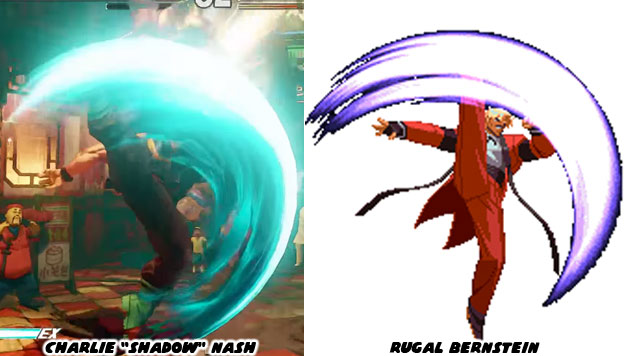
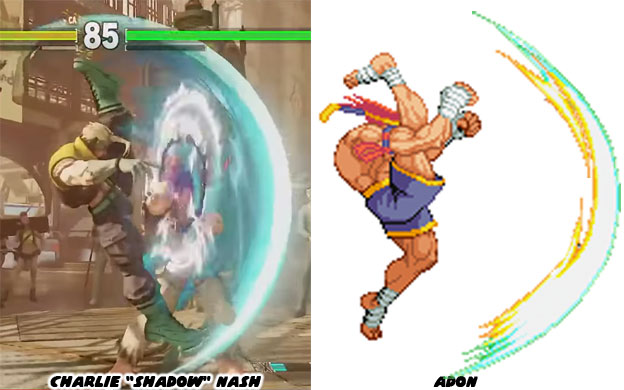
The physical appearance of Charlie was not the only thing that had changed with his return. The Flash Kick was gone, in it's place were two new special kicks, the Sonic Scythe and the Moonsault Slash. Nash now performed the trademark kick with one wide arcing leg movement. It was reminiscent of the special attacks of Rugal Bernstein, a boss character from the King of Fighters series. I kind of miss his original backwards flip.


The other kick was a front tumbling heel strike. It was very similar to the Jaguar Kick pioneered by Adon. Charlie's super attacks had been changed as well. The character not only looked new but played new. What do you think about the return of Charlie? What do you think of the changes of his strikes and abilities? Are you a fan of the new look? Who do you want to see in the new lineup? As always if you enjoyed this blog and would like to sponsor me please visit my Patreon page and consider donating each month, even as little as $1 would help make better blogs and even podcasts!