Tuesday, June 7, 2022

A look at Marisa, the Street Fighter 6 gladiator...

Today we’re going to look at Marisa, the new heavy hitter featured in Street Fighter 6. Marisa was leaked along with the rest of the lineup when only Ryu, Luke, Jaimie, and Chun-Li had been confirmed. So what do we know about her, and her fighting style? Nothing yet. At least nothing officially. But what can we infer from her design? Let’s start with the most obvious thing, her size. Marisa is huge. She’s easily the biggest female in a SF game, and possibly the tallest female character in the SF universe. I have to double-check, but I’m pretty sure of it. The easiest explanation for why a fighter like her appears goes to SF6 Designer: Yusuke Hashimoto. He Produced Bayonetta, and Directed Bayonetta 2. The leggy witch is actually eight feet tall, not as tall as Lady Dimitrescu from Resident Evil, but it is fair to say that Capcom has a thing for tall ladies. Not that I’m complaining, let alone the community.

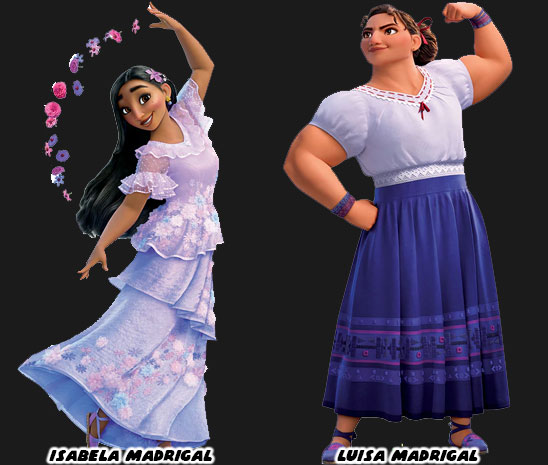
Women of different sizes, and body types had been missing in pop culture. Little by little big women, strong women, and fat women started showing up. More important, they began being accepted. The gigantic Zarya as a tank character in the 2016 game Overwatch was a milestone. More recently Luisa Madrigal in the 2021 film Encanto gave Disney a wake up call. Studio executives were sure that her sister Isabela, who looked like a traditional Disney princess, would be the most popular character in the film. So they made sure there were dolls, and other merchandise of her available when the movie came out. Instead the big, and strong Luisa was the show-stealer. Both girls, and boys clamored for products featuring her. The company scrambled to put together soft goods, and get toys on the shelf due to the demand. Women have typically been presented as very curvy, and feminine in the SF series. Based on just her build Marisa is a welcome addition to the SF6 cast. To weigh all opinions let’s bring up a point. Pro E-sports player Ricki Sophie Ortiz wondered if Marisa was possibly a trans character. It would be cool if she were, but we will find out in time. Whether Marisa is, or isn’t, the question demonstrated how far society had progressed since the series had started over 35 years ago.

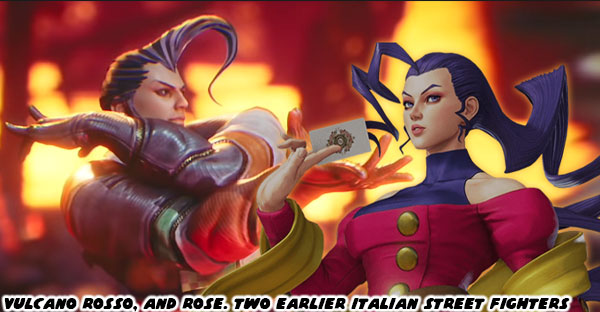
Let’s talk about where Marisa comes from so we can figure out who she is as a character. She represents Italy in the newest tournament. Italy had been represented before in the SF universe in both 2D, and 3D games. Rose debuted in Street Fighter Zero / Alpha in 1995. She did not look anything like a traditional martial arts master. Her appearance mirrored that of Vega / Dictator. She had psychic powers, wore a dress, with heels, and fought with a scarf. It was inferred that she was Romani fortune teller (try not to call her a gypsy because that word is actually a slur). This combination of elements worked in her favor, and she became popular with the fans. Her use of mystical powers brought the supernatural into the canon of SF. Vulcano Rosso was an entirely different type of fighter. His outfit seemed to be zipped together pieces of different colored leathers. Also making him look anything but a traditional martial arts master. He debuted in Street Fighter EX2+ in 1998. The flamboyant secret agent used quick strikes, and fire-based special attacks that he named after Roman landmarks. Marisa broke the trend, and looks like an MMA champion that could destroy someone in the octagon, as well as the street. To figure out her fighting style we should look at the clues that Capcom has given us.

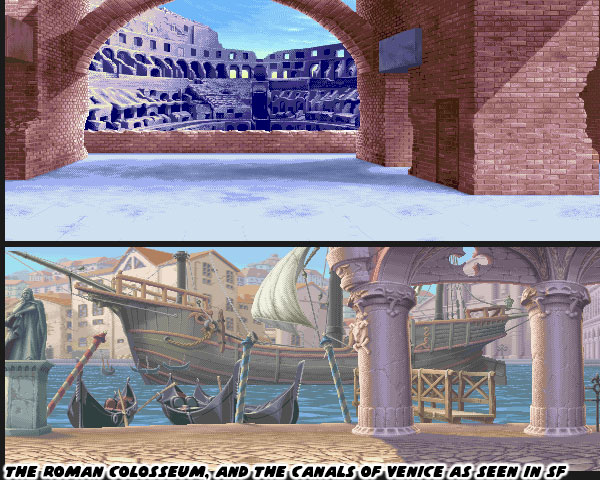
The studio has created some beautiful stages set in Italy. The Roman Colosseum featured in SFZ was based on the location of the legendary fight between Bruce Lee, and Chuck Norris in the film The Way of the Dragon. The canals of Venice, and the ship the Neptune are the backdrop of Rose’s memorable stages. With all of this history, and attention to detail I think that the team at Capcom went deep into the creation of Marisa. When I first saw her I thought of two things; ancient Italian football, and the roots of MMA. Let me explain.

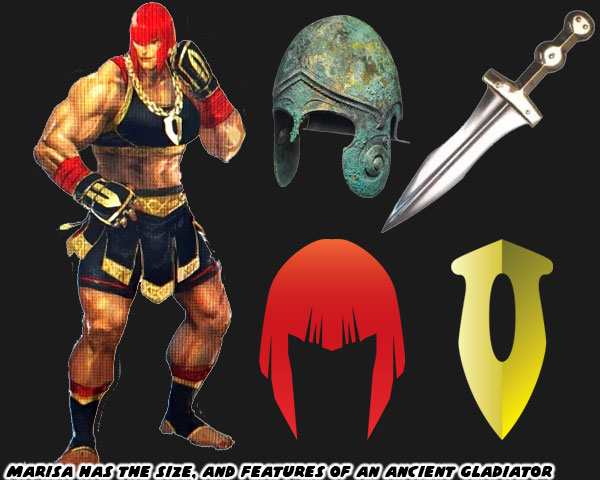
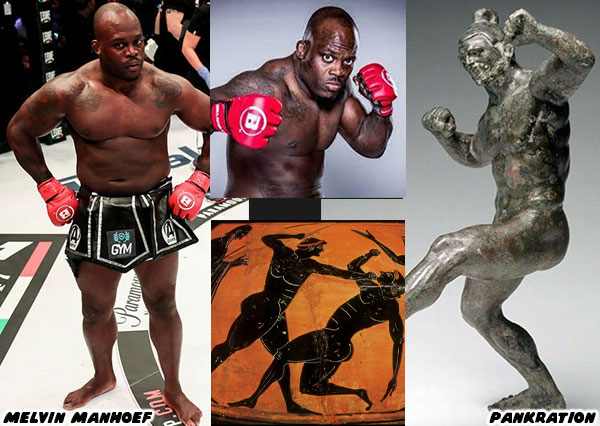
Marisa’s costume, and even her haircut is very distinct. Over her trunks she is wearing a tabara, or armored skirt. This fashion item was worn by soldiers for thousands of years. From ancient Roman times, all the way up to Middle Ages there was a version of the skirt all throughout Europe. You can even see MMA fighters like Melvin Manhoef, and boxers wearing a version of this skirt. The shape of her hair is also distinct. Look at the way it falls flat over her ear, and around her eyes. Most female boxers, and MMA fighters wear thier hair in tight braids. This way it avoids getting in their eyes, or pulled inadvertinly in a grapple. Marisa's hair is shaped more like a Chalcidian Helmet. Then there are the markings on her gloves. They look like a dagger, the same shape that she wears around her neck in a gold chain. This could be seen as a dagger carried by a the Legionary or professional heavy infantryman. Unlike Guile, or Cammy, she doesn't appear to be dressed as a soldier. With the armor, and dagger motifs applied to her I would say she was designed after an ancient Roman gladiator.

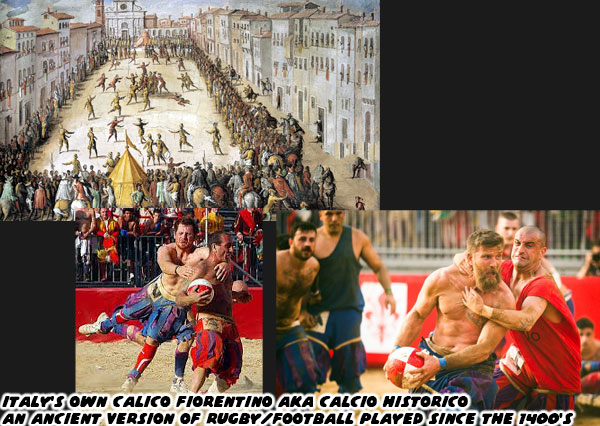
Even though she is wearing gloves, the fact that she is not wearing boots suggests that she is not representing professional boxing. Also based on her other visual clues I'm going to say she is not practicing modern MMA. I am going to say that Marisa studies pankration, an ancient form of boxing, and wrestling that was essentially the mixed martial arts of the first Olympics. According to legend pankration was created by Heracles, and Thesius in ancient times. Marisa may be representing the oldest form of western combat in a series dominated by Eastern traditions. As an aside, given her size, and build Marisa was probably familiar with Calico Fiorentino. This was an ancient version of rugby / football that is still played today. I coud imagine her plowing through guys in her youth, and giving her the confidence that she could take on the strongest fighters regardless of gender. This in turn lead to her identifying as the modern gladiator.

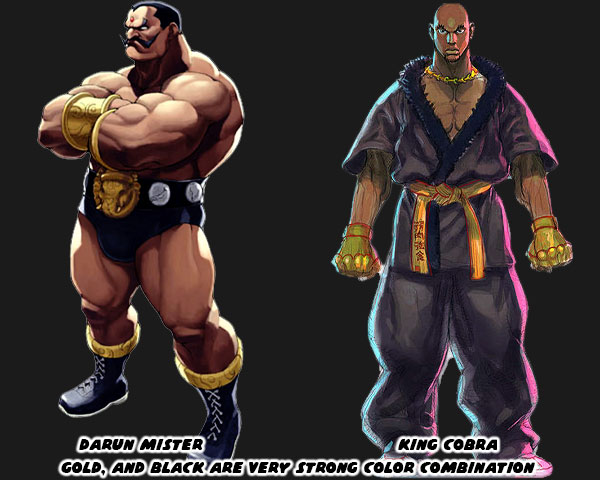
As for the colors assigned to her, I think they may be among the best choices in the new SF lineup. When it comes to color choices for a costume I am firm believer that less is more. Having one main color, and one or two accent colors defined the original World Warriors. Black is her main color, accented in gold. There is also red thrown in for contrast. We have seen examples of black, and gold as solid color choices previously. Darun Mister in the EX series, and King Cobra in the planning stages demonstrated that the combination worked surprisingly well. They also demonstrated that gold, the metal, worked as details on jewelry, and costume without distracting from the overall presentation.

The SF series has always had someone representing pro boxing. Ed may fit the bill in SF6, and we saw Luke throw some powerful punches in the trailer. I think Marisa is also set up to be a great puncher, and moreover be thought of as the heavyweight champ in the game. Ed, and Luke appear more like cruiserweights by comparison. I am eager to see a full trailer, and move breakdown for Marisa. Zangief has always been my go-to character, but it would be fun to have a grappler, and puncher as well like Alex, or not Marisa. What about you? What do you think she brings to the lineup? Is there a detail that stood out to you for this character? I'd like to hear your thoughts in the comments section. If you would like to sponsor me please visit my Patreon page and consider donating each month, even as little as $1 would help make better blogs and even podcasts!
follow the Street Writer on Patreon!

Monday, June 6, 2022

Luke in Street Fighter 6, what's different?

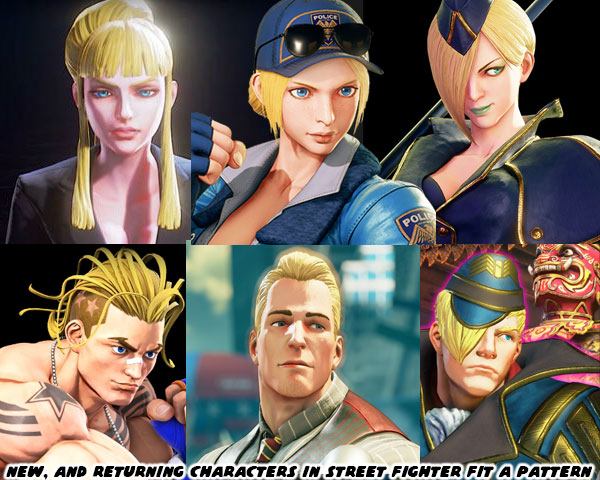
I think it’s fair to say that the team working on Street Fighter 6 has been paying attention to feedback from the community more than previous teams. Street Fighter 6 Director: Takayuki Nakayama, Producer: Kazuhiro Tsuchiya, and Designer: Yusuke Hashimoto have talked about the game, features, and community briefly. Despite everything revealed in the trailer, the team itself is still playing their cards close to their chest. The reason for this secrecy was foreshadowed following the release of Street Fighter V: Arcade Edition. Yoshinori Ono who, to be honest, I never cared much for his direction of the series, was said to have been rubbing the team the wrong way with his ideas, and development of SF6. He was let go in 2020 to join another company. One of the inescapable things that the studio had done, aside from the silly fat joke characters, and fourth-wall breaking gags, was the insistence of adding blonde haired, blue-eyed characters across Street Fighter IV, and V. 

The global community saw every slot taken by mostly white characters as a missed opportunity. Could there have been a native, Black, brown, Asian, or female character in that spot instead? When Luke was unveiled as the new star of the franchise, Capcom got a lot of heat online. I mention some of the responses on my original take on Luke in Street Fighter V. There was nothing I could have said better  about the disappointment of seeing another blonde-haired, blue-eyed, white character get set to carry the franchise. It had been tried before with Alex in Street Fighter III, and Abel in Street Fighter IV. By the time Luke was announced it was 21 consecutive years of not letting any other minority sit in the driver’s seat. Just for the record Street Fighter V: Arcade Edition had 12 blonde, and light-skinned characters (13 if you count Rainbow Mika).

The amount of native, Black, brown, and minority Street Fighter fans the world over had never been bigger. They were gaining momentum in cartoons, and comics, in the pop culture convention circuit, in the cosplay community, as well as in gaming tournaments. People had followed the series since the original was released. I remember playing with oversized foam buttons in the arcade way back in 1987. Some of these Gen-X players raised their own children on the franchise, and a few had even become grandparents. That’s right! There were third-generation Street Fighter fans being introduced to the series, and many had never even seen an arcade cabinet to begin with! It’s not hard to imagine that the millions of fans around the world were feeling left out of the conversation. Following the pushback on Luke, the leaked lineup for Street Fighter 6 was like night, and day. The new game seems to have five returning blonde, and light skinned characters. More important; it adds zero new ones. There are eight women from around the world, and five of which are brand new characters.

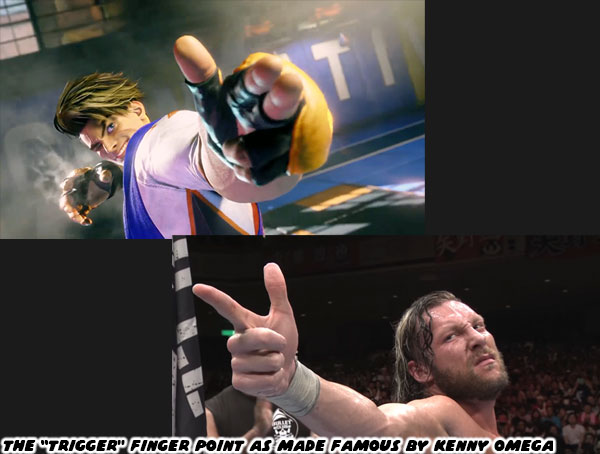
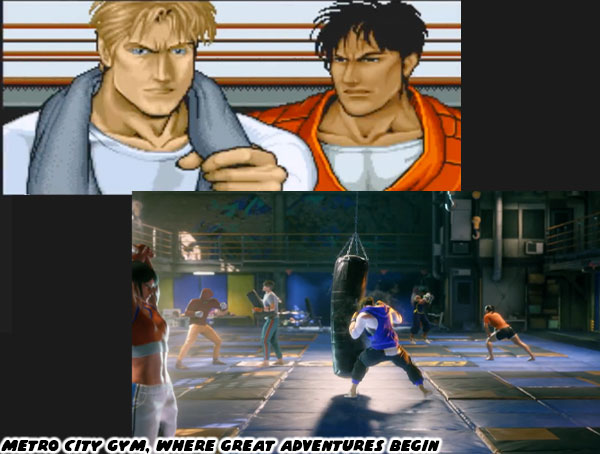
Luke is still central to the plot, but his appearance has been altered somewhat. We get an entirely new take on the young striker in the SF6 trailer. We see Luke punching a heavy bag in the Metro City Gym. He strikes a familiar pose before he smashes the bag with his hardest strike. Wrestling fans would note his pose appears like Kenny Omega's "V-Trigger." Omega is a huge gaming fan, and pro wrestler. He played Cody in the Street Fighter V: Arcade Edition trailer. They gym itself appears to be the very same one that Cody, and Guy were training in at the start of Final Fight more than 30 years ago.

Final Fight was originally dubbed Street Fighter '89. Some of the team that created the original SF had left Capcom to join SNK. They would go on to develop the Fatal Fury, Art of Fighting, and King of Fighters franchises. The remaining members at Capcom decided to capitalize on the popularity of Double Dragon, and replace Ken, and Ryu with Cody, and Guy respectively. The new game would still feature lots of fighting, but a bigger narrative to go along with it. Arcade owners, and studio heads asked to change the title, and work on a proper SF sequel. Thankfully they did, but many long-time fans were left wondering what if the SF series had gone down the path of an open world brawler. Street Fighter 6 actually seems to be a return to that idea. At least parts of it do. The new leads are Luke, and Jamie, recreating the partnership of a white guy brawler, and lightning quick Asian martial artist. For the most part Luke seems much more approachable in his SF6 makeover. Let’s take a look at how he changed.

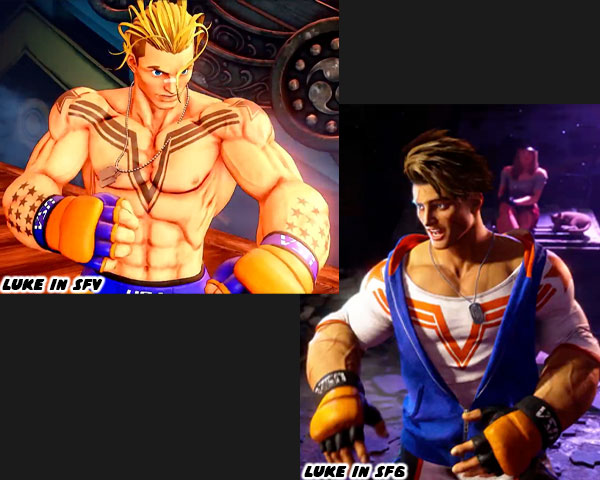
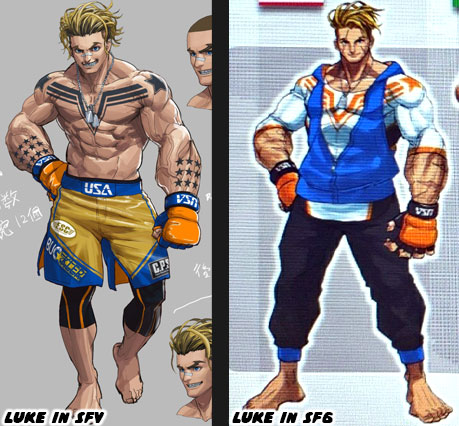
Luke’s frame, and build have changed considerably. I always believed that the 3D models featured in SF IV, and V looked too bulky. When every character was hyper-muscular, then none of them really stood out. It was one of the directions that Mr. Ono had supposedly insisted on. If you look at Luke you will notice that his shoulders are not as protruded as before. His hair is not as stringy, and the stars shaved into the sides of his head have been removed. The star tattoos on his forearms have been replaced with scars. The wing tattoo across his chest, and back, are gone, and now represented by a tee shirt instead. I had commented previously that solid black tattoos like these were being appropriated by white nationalists in the USA. It would have been possible for far-right groups to hold up this character as an example of true patriotism. I’m glad that Capcom had the sense to eliminate most of the markings.

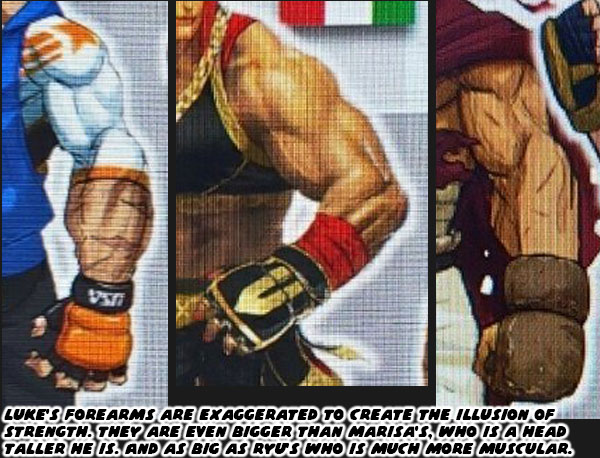
Luke had a bandage across his nose previously. This was removed, and replaced with a long scar running over the right side of his face, from the forehead, down to his cheek. You could say that he's not a pretty boy any more. His boxing trunks have given way to training pants. He still looks like an MMA practitioner, but no longer a poster boy for white nationalism. The one thing that didn’t change, and I think is his stand-out feature are his massive forearms, and fists. Exaggerated muscles, oversized hands, and feet had been used in Street Fighter Zero / Alpha in 1995 to convey the adolescent cast. Luke’s forearms are obscenely huge by comparison! He has the biggest forearms in the game, proportionally to his height. They are in fact bigger than his biceps.

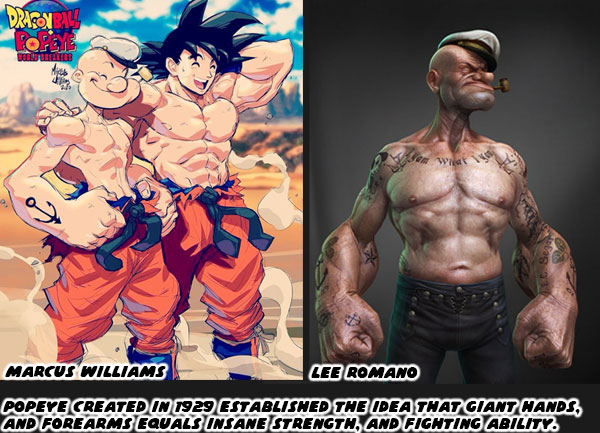
This is a cartoon quality that I think works well in the lineup. Characters are not as hyper-muscled as before. They still appear strong, but are nowhere near as bulky as they had been in the past decade. There are more pronounced differences in height, weight, and build. Their bodies were closer to the proportions used in Street Fighter III. In fact I did not see any comedic “fatties” or odd-colored characters in the leaked lineup. I’m willing to bet that the team working on Luke gave him intentionally big forearms, and fists as a nod to Popeye. This would help make him appear as one of the most powerful punchers in the game, even if he wasn’t the tallest.

In case you don’t know Popeye was first seen in the Thimble Theater comic strip in 1929. He was the original cartoon brawler, and capable of superhuman feats almost a decade before the creation of Superman. Most comic, and cartoon fans would agree that Popeye was technically the first superhero. If indeed this influenced the changes to Luke then I appreciate the effort. Much more seems to be going into the development of the SF6 lineup, than the previous two games. Although the rest of the cast has not been finalized, let alone announced, I will be discussing them over the next few weeks. I hope to see you back for those entries. For now I’d like to know your take on Luke. What do you think about this character as the face of SF6? Would you like to see more representation in the game? Is this a bad idea? Let me know your takes in the comments section. If you would like to sponsor me please visit my Patreon page and consider donating each month, even as little as $1 would help make better blogs and even podcasts!
follow the Street Writer on Patreon!

Sunday, June 5, 2022

A first take on Jamie, the new Street Fighter 6 character

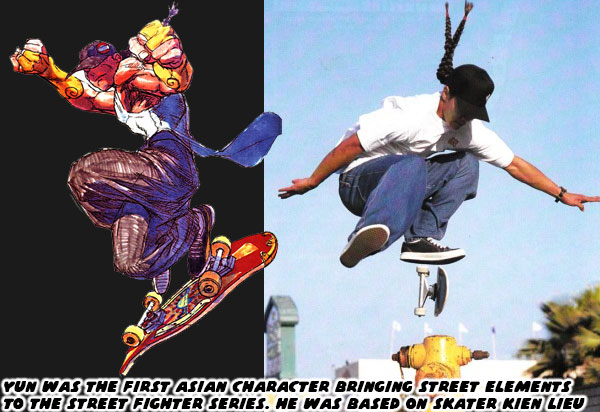
The full Street Fighter 6 trailer dropped recently. Make sure to check it out before continuing. Today we are going to focus on Jamie, the young kung-fu fighter. He is one of the new characters introduced in the footage, and apparently the friendly rival to Luke. I will be going through every character announced so far, the changes made to those returning, as well as those that were leaked in more depth. But for now let’s focus on Jamie. The character is listed as from Hong Kong. As you may know it was previously under British colonial rule before being handed over to China. Culturally they people from Hong Kong had more western influences, and freedoms, thus the transfer to a more authoritarian government was met with resistance. Jamie is similar to other young Street Fighter (SF) characters in that he wears what appears to be traditional martial arts gear, with a hint of modern touches. This trend for the series started in 1997 with Street Fighter III. Yun, and Yang were twin brothers that wore what appeared to be traditional outfits, but skateboarded, and inline skated respectively.

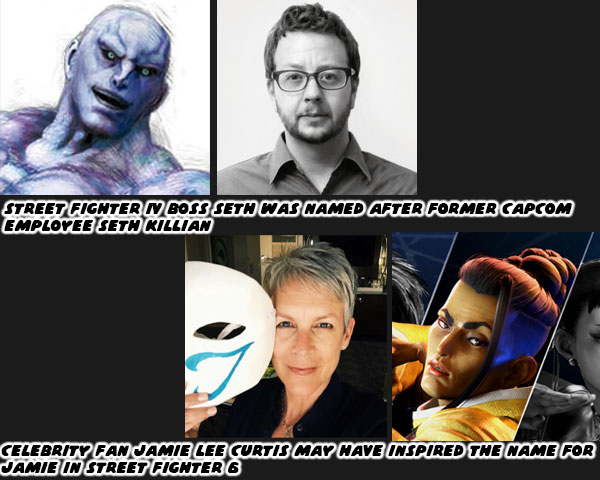
The other thing that stood out for the character was the name. Jamie is not a name that we might consider traditionally Chinese. To be fair, a number of Asians have both traditional names, and adopted western names. For example Lee Jun-fan was the birth name of Bruce Lee, and Fang Shilong is the birth name of Jackie Chan. Capcom often gives the staff leeway on the names they select. James Goddard named his Black kickboxer DeeJay in Super Street Fighter II. It is well known that pro fighting game player, and Seth the boss in Street Fighter IV was named after former Capcom Community Manager Seth Killian. If I were to guess where the name Jamie came from it would be from actress Jamie Lee Curtis. She famously attended the EVO tournament in a full Balrog / Claw costume. She has been known to dress up as various pop culture icons in order to attend conventions incognito with her family.

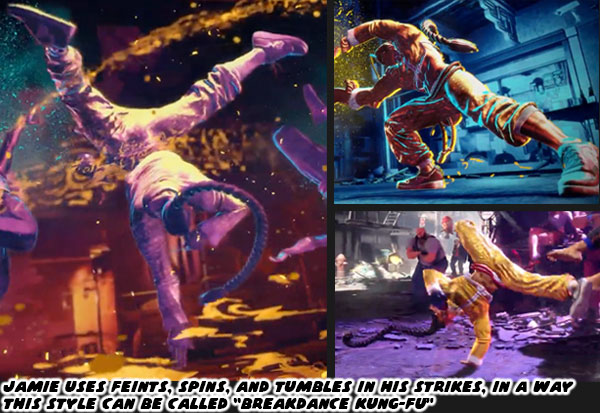
Jamie moves unlike almost any other character in the series, or in fighting games in general. In the trailer we see footage of him spinning, flipping, and tumbling with a ton of dexterity. He has quick strikes which are a mix of kung-fu punches, but with the footwork that appears like an uprock, the foundation of competitive breakdance. His stance, and movement is dance-like, it stands out like a “ginga” does for capoeira practitioners. Given his design, it stands to reason that the young fighter is having fun with his natural abilities, as well as his training.

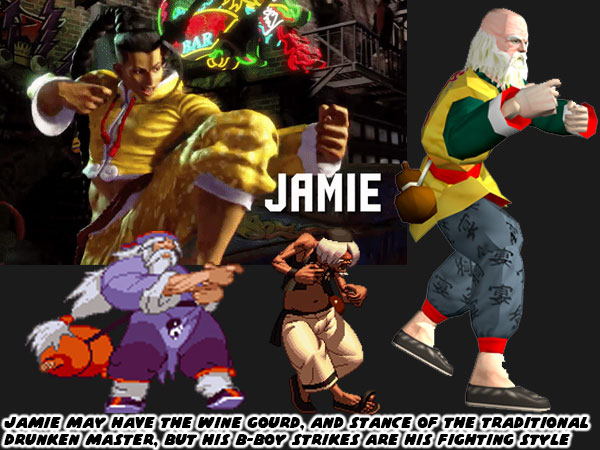
At first glance the character appears to be a master of Drunk Fist kung-fu. He carries a gourd, which is often filled with wine, according to popular media. Although his stance, and fist positions seem to be those of a traditional kung-fu master, very few of his strikes appear to be based on any traditional form of kung-fu.

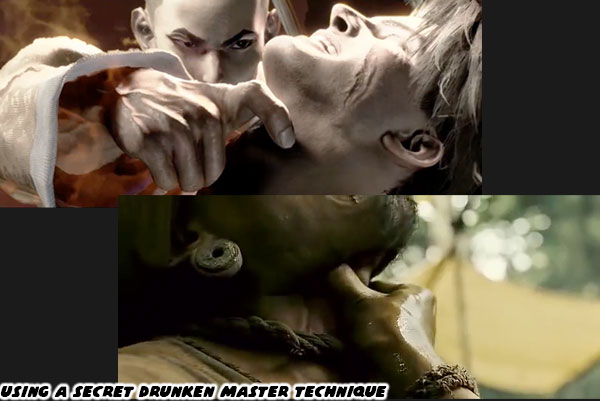
There is a part in the trailer where Jamie says “my secret art” then goes for Luke’s throat. This was similar to a move used by Tony Jaa in Ong Bak 2. Jaa was playing the mythical fighter Tien in the film. Tien was a young prince that got kidnapped by pirates, and trained in multiple forms of combat. The character makes his way to some bandits that had brutalized him, and his friends earlier in the film, and fights off a slave trader using Drunken Fist. He grabs the villain by his Adam’s apple before throwing him through a stand via fishhook to the mouth. I sincerely hope that Jamie doesn't have the full attack in SF6.

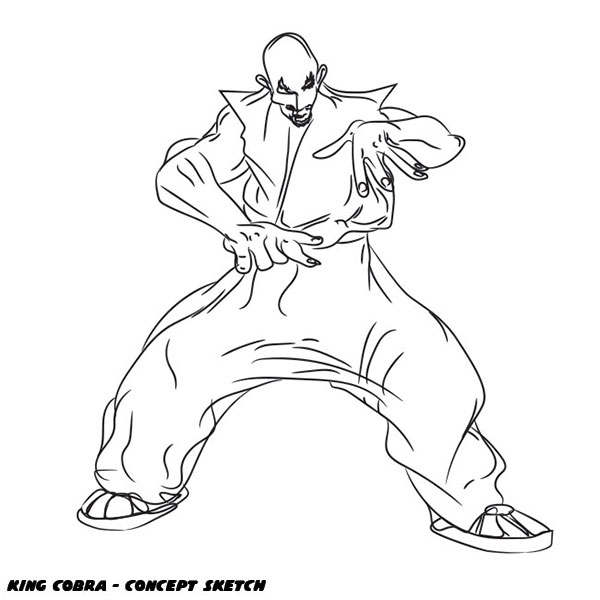
Jamie’s style can be best described as “Breakdance Kung-Fu.” If you remember your SF history you will know that before Rufus there was a young Black fighter in the planning stages called King Cobra. Although he wore what appeared to be a traditional karate gi, his method of fighting was said to be a form of breakdance kung-fu. He sported sneakers, and a gold chain, showing just hints of an urban background. Sadly there was never a 3D model, or sprite built for this character, let alone the actual animated moves. All we have to go on are concept sketches.

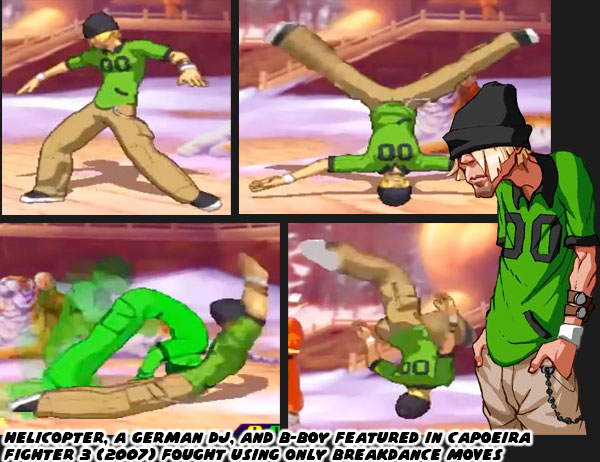
To be completely fair, there was a fighting game character whose entire arsenal was based on breakdancing. Helicopter from Capoeira Fighter 3 used nothing but b-boy moves. Even his stance, and movement saw him performing the wave as he danced through the stages some 15-years-ago.

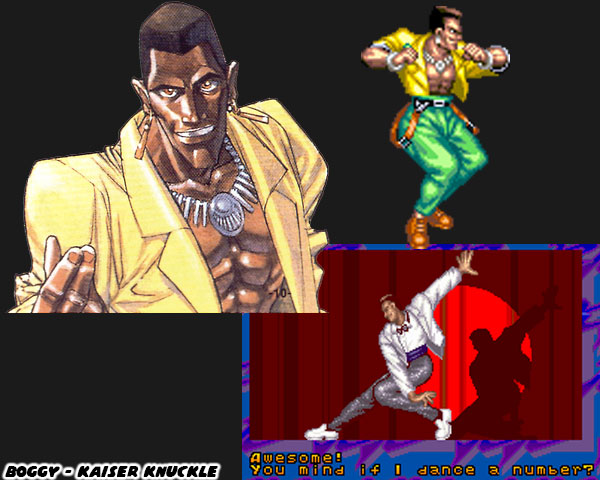
Many people feel that no great idea goes to waste. Elements of King Cobra eventually found their way into the series. Ken was given an alternate costume in SF IV that looked just like King Cobra’s. Also the fictional form of striking eventually found its way to Jamie. Which makes more sense than to give it to the Black kid from the US. Since Jamie is from Hong Kong, and blends eastern, and western cultures. So what exactly are the origins of dancing as a form of fighting? The roots are based on tropes, and racial undertones. The Black athlete, and Black entertainer are stereotypes known the world over. In many of the early fighting games Black characters were presented often as basketball players. At least one was presented as a dancer.

Mind you, before the internet, it was tough for Japan to get a finger on the pulse of US culture. All the gaming studios had to go by was pop culture references. The way Blacks were portrayed in movies, music videos, and TV shows did a lot to color their perception. Hip Hop was, and continues to be a major part of that perception. The cultural revolution moved into every corner of the world. The four elements of Hip Hop; rap, breakdance, DJ, and graffiti influenced everything from advertising, to fashion, language, and music of course. The trailer for Street Fighter 6 even begins with a graffiti styled version of the Capcom logo. 30+ years ago the Japanese studios were not as in tune as to the proper ways to reflect, let alone incorporate that culture.

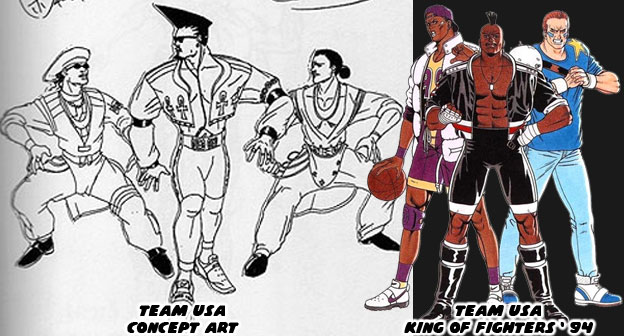
The concept for Team USA in SNK’s iconic King of Fighters series was laughable. The trio of men in costumes that were reminiscent of back-up dancers for Salt n Pepa, or Janet Jackson made little to no sense in a fighting tournament. Yet the Japanese designers persisted. They continued putting in elements of Hip Hop into the games. Jamie may yet be the most in tune the studio has ever been to the elements.

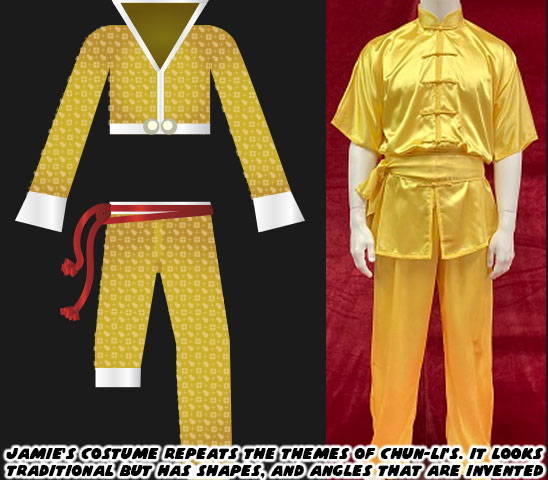
Pay very close attention to the cut, color, and design of Jamie’s costume. It looks traditional, but is far from an actual outfit worn in classic China. The illusion of a certain form, and fit is a long-standing design legacy of Street Fighter. I spoke about it at length with Chun-Li’s costume. Most wushu, or tai chi uniforms are made of soft, silk material, but the shirts usually hang long, and the pants are baggy. Jamie’s has a cut top, exposed midriff, and the the shirt, and pants fit more snugly. Also instead of a sash belt, Jamie wears a red cord belt, to hold his gourd. Also note that in all of the footage revealed of the character he wears one pant leg rolled up. Sure enough the Hip Hop elements are not lost on this kid.

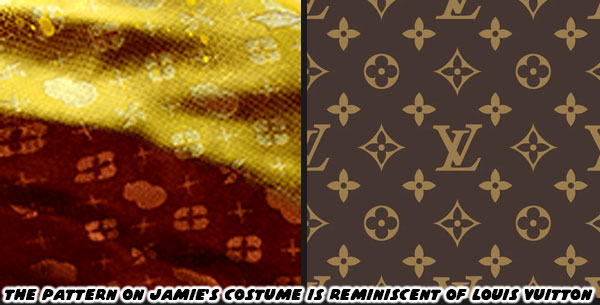
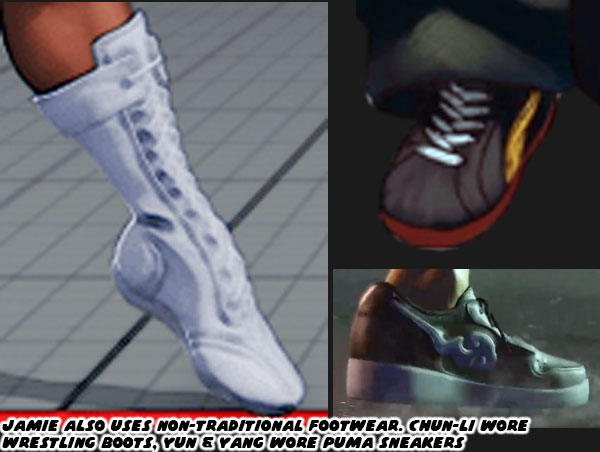
If you look carefully at his costume there is a repeated pattern over it. Some competition uniforms may feature an embroidered phoenix, lion, or dragon on them. However Jamie has a pattern reminiscent of the Louis Vuitton brand. As you may know a lot of rappers promote material displays of wealth. In videos, and photo shoots they are often showing off, or “flossing” diamonds, gold, and rocking brands like Louis Vuitton, Gucci, Prada, Dolce and Gabanna, etc. Jamie’s version of the pattern uses the stars, and gourd motif, as a clever nod to the designer. Also Jamie is rocking some Cloud-label sneakers, instead of the flat-soled shoes that most practitioners wear. The cloud motif shows up on other parts of his outfit. Perhaps to denote his light, and airy fighting style. The use of non-traditional footwear again goes back to Chun-Li, who wore white wrestling boots instead of dainty slippers. Yun, and Yang sported Puma brand sneakers. As a nod to Keen Lieu, who was sponsored by the brand when Street Fighter III was developed.

These were the things that I was able to pick out about Jamie after seeing the footage of the character. I will be digging in to the rest of the cast over the next several weeks. I hope to see you back for that. Is there a character you would like me to look at sooner, rather than later please let me know. Also any feedback would be appreciated. What details did you notice about Jamie? What do you think of the SF6 announcement so far? Are you interested in playing this game when it’s released? Let me know in the comments section please. If you would like to sponsor me please visit my Patreon page and consider donating each month, even as little as $1 would help make better blogs and even podcasts!
follow the Street Writer on Patreon!

Friday, June 3, 2022

Capcom Fighting All Stars, the fighting game that never was. A reprint from 1UP / Capcom-Unity.

Since I've been on a fighting game kick I've decided to keep things rolling along by looking at a game that never got published. The title was Capcom Fighting All Stars: Code Holder (CFAS).

The 2003 title was an early exercise by Capcom in trying the crossover experience with the 3D fighting game featuring their own cast. The game tested poorly while it was being developed and the producer left Capcom to pursue other projects. The game served as an example of the errors with early 3D fighting game attempts from Capcom. As I had mentioned on previous blogs, the 3D figures could appear stiff and robotic, especially when they were programmed by studios that had more experience in 2D. Characters from early SNK and Capcom 3D fighters appeared boxy and lacked the fluidity of characters from Sega or Namco 3D titles. Despite not being well know there was actually a lot of information and material regarding CFAS. First off the cast was made up of Capcom veteran fighting game characters.
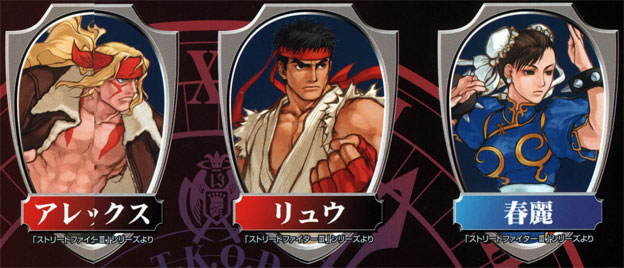
There were representatives of the major fighting games including Alex from Street Fighter III, Ryu from every numbered SF game and Chun-Li from SF II.
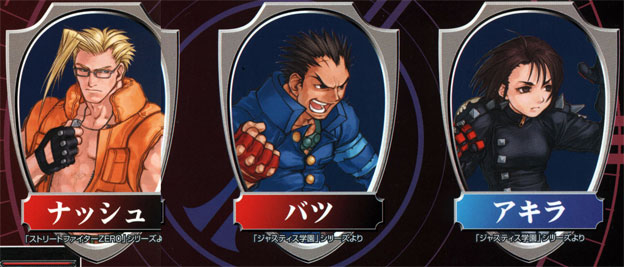
Charlie Nash from SF Alpha / Zero was in as were Rival School heroes Batsu and Akira.
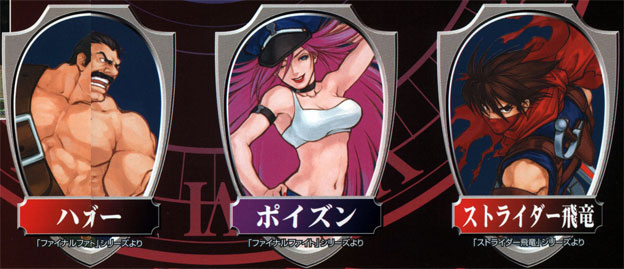
Mike Haggar and Poison from the Final Fight series appeared because the game was set in Metro City. Strider was added to fill the cool character quota.
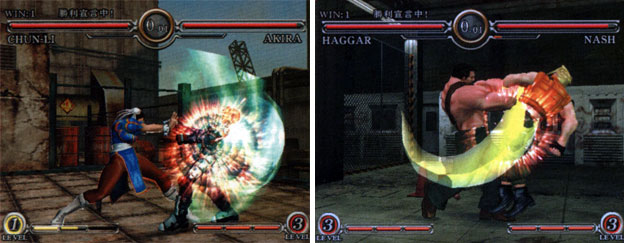
The title was interesting for a number of reasons. This was the first 3D fighting game featuring Street Fighter characters that was not produced by ARIKA. It would be five years after this title was cancelled before SF IV would be published.
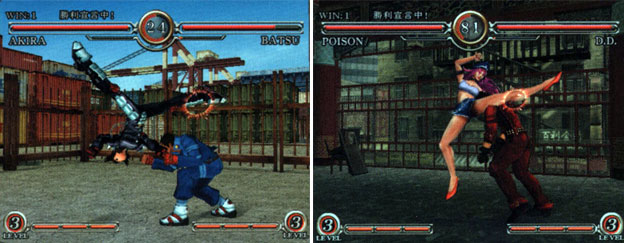
The game was also interesting because the game was heavily integrated into a dramatic story, featuring three new characters that Capcom had meant to be the next generation of fighting game archetypes.
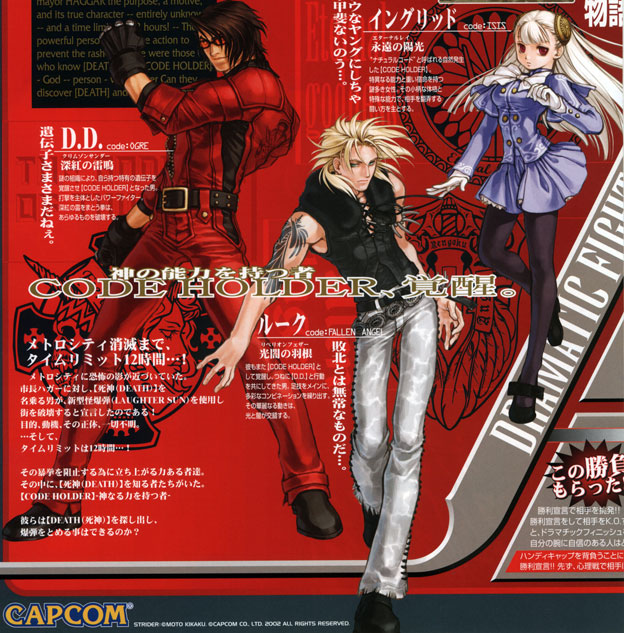
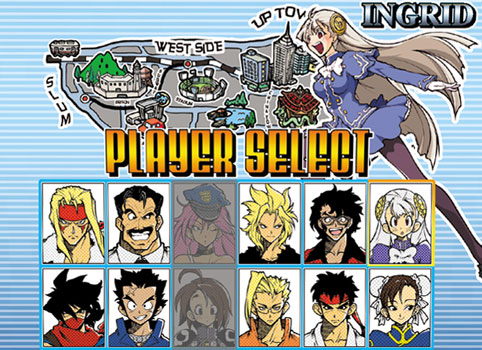
The three new characters were stylistically more like the designs that would have been used in a King of Fighters game rather than a SF title. There was D.D. whose code was Ogre, Rook (Luke) whose code was Fallen Angel and the blonde girl Ingrid whose code was Isis. Each of the three new characters was assigned a code that worked itself into the plot.
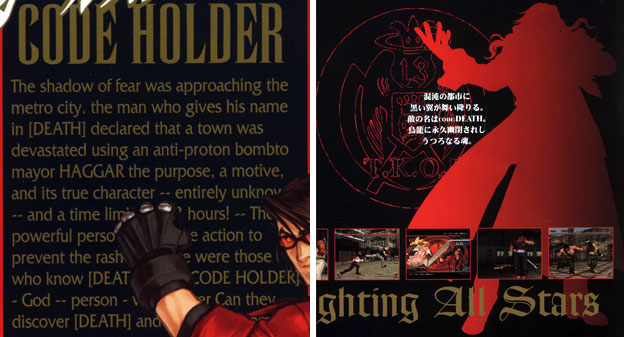
There was a villain nicknamed Death. The only known art of the figure is actually a silhouette of a man with long hair and a long coat on the information pamphlet sent out to arcade owners. 2022 EDIT: In 2017 Capcom dug up some rare art, and actually gave us a look at the boss.
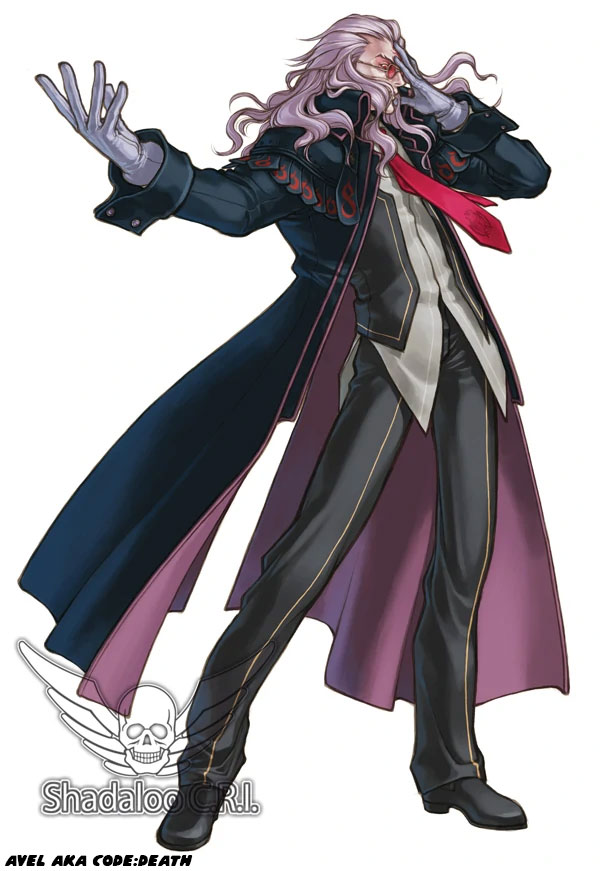
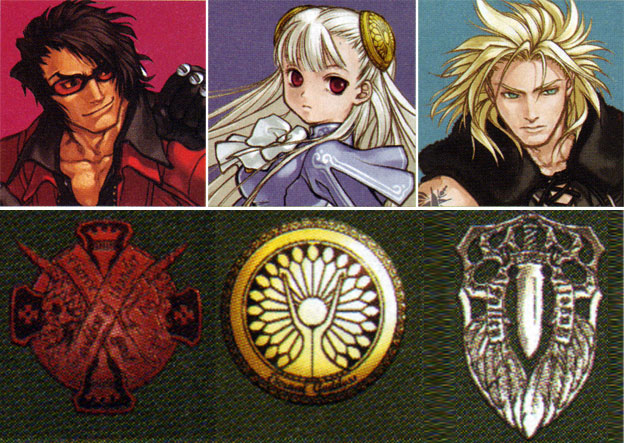
This Death character had planted an explosive device somewhere in Metro City dubbed the Laughter Bomb. Players had less than a day to find and defuse the bomb with the help of the code holders. The plot was very esoteric, again, not unlike something that would have been used in a KOF game.

The designers went overboard with the details. Every code holder had their own iconography and logos including Death. Why these were important was beyond me. None of the classic Capcom characters were given icons as well.
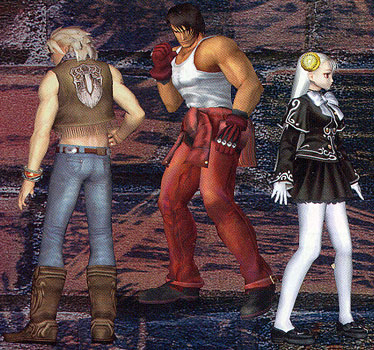
The designers even made the Player-2 costumes very distinct. They did this for all of the characters in the game, not solely the code holders.
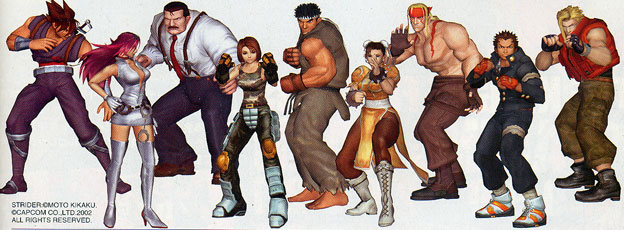
Some of the costume choices and colors made sense, but Strider without his trademark red mask? That was sacrilegious! I was surprised that the owners of the design signed off on this.
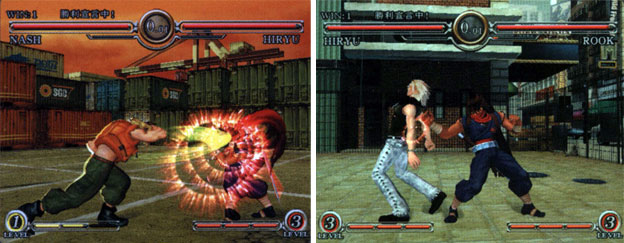
The game did seem to have a faster pace than earlier 3D titles.
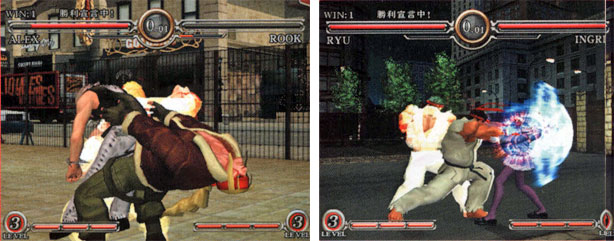
Capcom did develop a new control element for the game. Dubbed the "Dramatic Counter" it was a way for players to engage in a sort of live parry.
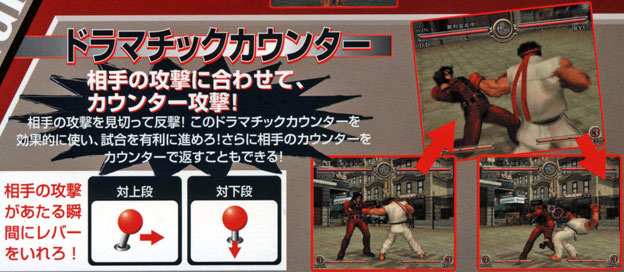
The parry system allowed players to block strikes once they had been initiated in SF III. The dramatic counter was different in that players could use the joystick to dodge and attack and then respond with a strike without losing health. Dodging attacks was nothing new in a fighting game however the dramatic counter allowed players that were fast enough to counter, dodge and counter a long string of attacks. In the preview footage a fight between Ryu and D.D. was shown to have seven consecutive Dramatic Counters, then dubbed "Dramatic Combo" because neither player could easily get an attack in.
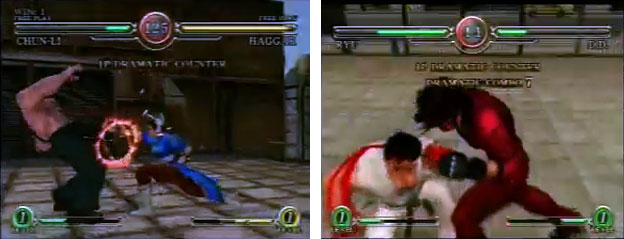
Whether the mechanic was intuitive, worked with the control scheme improved or ruined the feel of the game was unknown. In the heat of a battle only top-level players could hope to make use of the mechanic, not unlike those that became adept at parrying in SF III.
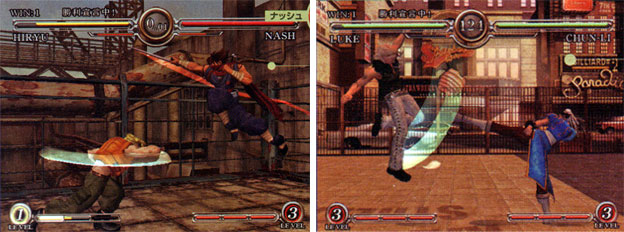
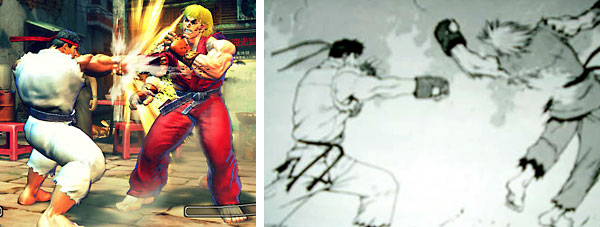
The next item that the game exploited were new supers and unblockable attacks, something that was carried over into SF IV. Ryu's "Fist of the Wind" for example appeared in CFAS first.
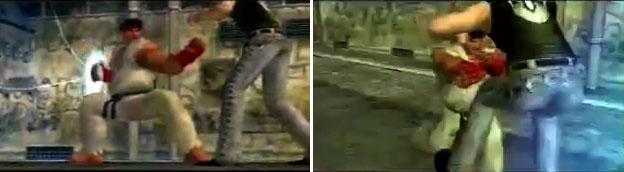
This move was inspired originally in the Ryu Final manga.
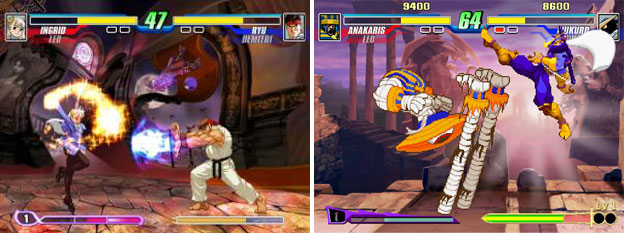
The game was eventually scrapped by Capcom. From its ashes Yoshinori Ono was tagged to put together Capcom Fighting Jam. A sprite-based title featuring more cameos than Fighting All-Stars.
As you may know Yoshinori was coming off of a cancelled War of the Grail when this project was assigned to him. After which he went on to push for the creation of Street Fighter IV. So if you ever wonder why SF IV looks or plays a certain way, just remember that the road leading up to it was paved with two cancelled arcade fighters and one sub-par fighter.
What was more interesting than a cancelled 3D fighting game by Capcom would be one developed by Sammy which was cancelled about a year later, it paralleled CFAS in a few ways. The next blog will explore this game. If you would like to sponsor me please visit my Patreon page and consider donating each month, even as little as $1 would help make better blogs and even podcasts!

follow the Street Writer on Patreon!